Full self-driving is a feature in Tesla cars that allows them to drive themselves in some situations, but the driver still needs to pay attention and be ready to take control.
Acceleration is how fast a car can speed up. It's usually measured by how long it takes to go from a complete stop to a certain speed, like 60 miles per hour.
Autopilot is a driving feature in Tesla cars that helps with steering and speed. However, the driver still needs to pay attention and be ready to take control.
Car
Rivian
Rivian is a company that makes electric trucks and SUVs. They are updating their vehicles for 2025 with new features to improve how they drive and connect with users.
A level two system means the car can help drive itself, like steering and speeding up or slowing down, but the driver still needs to pay attention and be ready to take control if needed.
Level 3 and Level 4 are categories that describe how much a car can drive itself. Level 3 means the car can do most driving but you need to be ready to help, while Level 4 means the car can drive itself completely in certain situations.
A digital key is a way to unlock and start your car using your phone or watch instead of a regular key. It makes it easier to access your car without carrying a physical key.
Instrument cluster customization means you can change what you see on your car's dashboard. You can choose different styles and information to make it easier for you to read while driving.
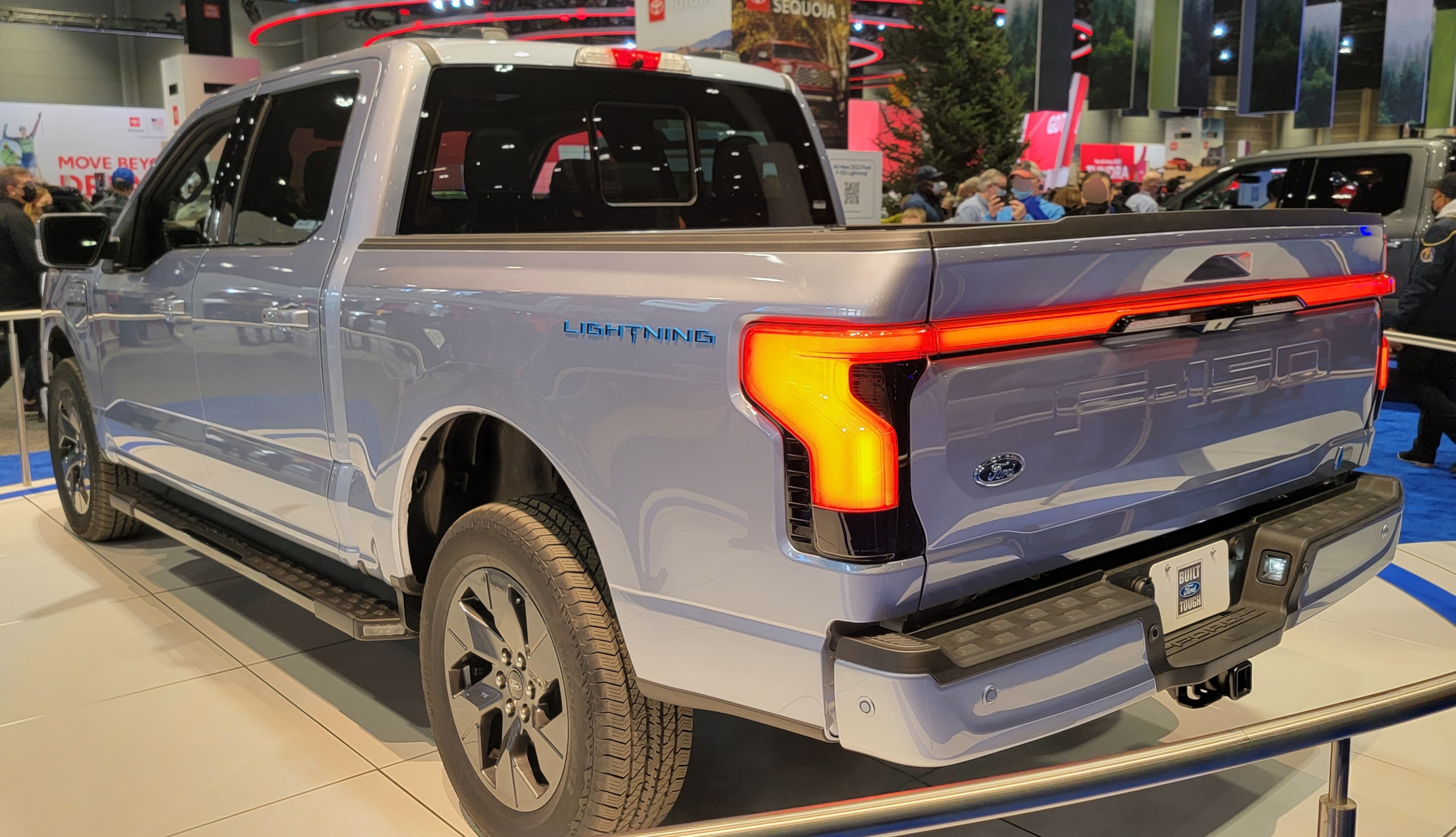
The Ford F-150 Lightning is an electric truck that looks like the regular F-150 but runs on electricity instead of gas. It's important because it shows how traditional trucks are changing to be more eco-friendly.
A kilowatt hour is a way to measure how much energy a battery can hold. The bigger the number, the more energy it can store, which usually means the car can drive further before needing to recharge.
An electric vehicle is a car that runs on electricity instead of gasoline. This means it uses batteries to power the motor, which can be better for the environment.
The Tesla Model X is a large electric SUV that has unique doors that open upwards. It's popular for its high-tech features and lots of space for passengers and cargo.
The Cadillac Escalade is a large luxury SUV that offers a lot of space and high-end features. It's popular among those looking for a comfortable and stylish vehicle.
The Tesla Model Y is a type of electric car that looks like a small SUV. It's known for being roomy inside and can drive long distances without needing to recharge too often.
The Volkswagen ID. Buzz is a new electric van that looks like the old VW buses from the past. It's special because it combines a classic design with new electric technology.
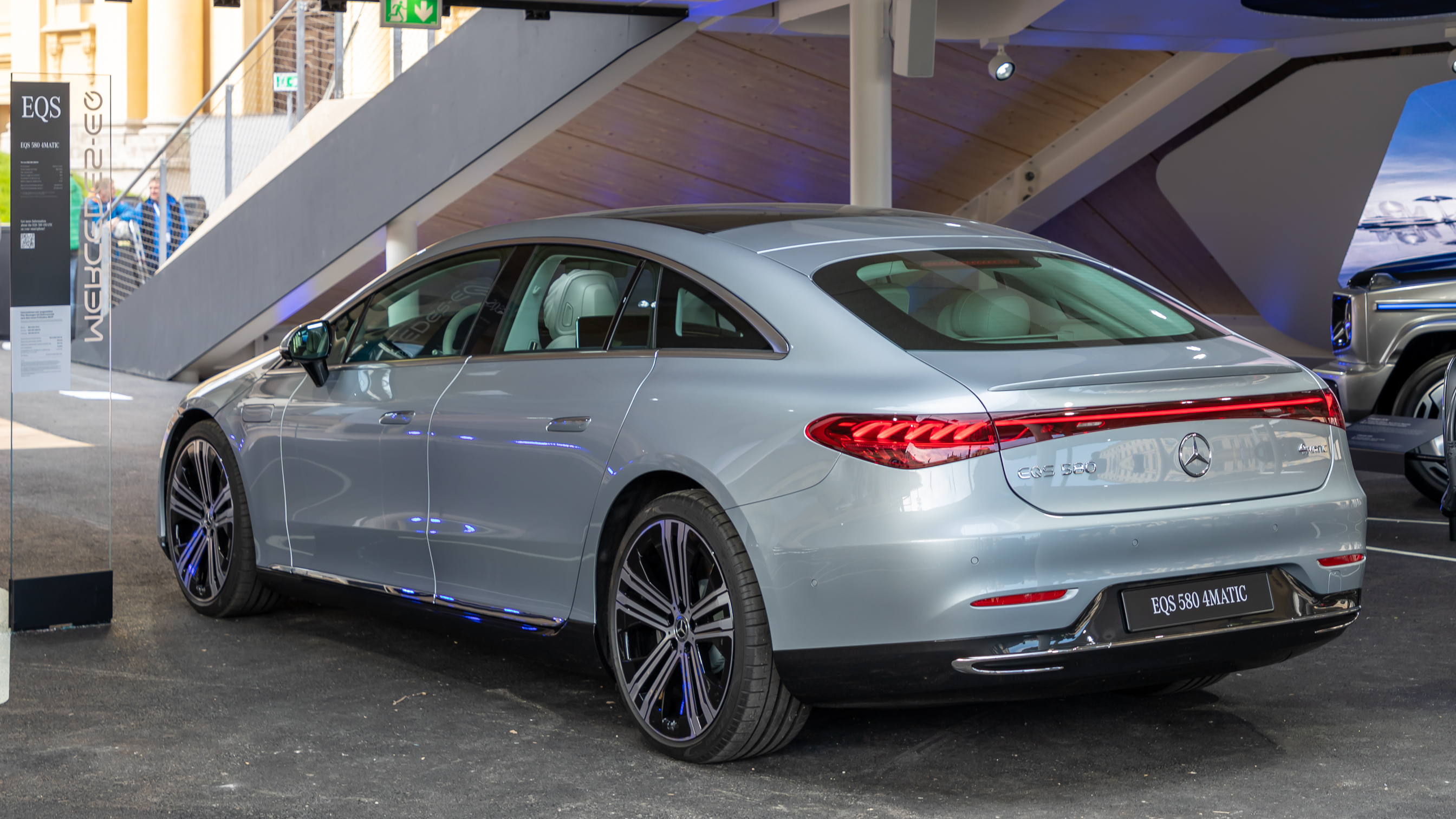
The Mercedes-Benz EQS is a high-end electric car that is very comfortable and packed with luxury features. It's part of a new wave of electric cars that are made to be both fancy and environmentally friendly.
The Porsche Taycan is a fancy electric car that is designed to be very fast and fun to drive. It's important because it shows that even luxury brands are making electric cars now.
The Ford Mustang is a famous sports car that is known for being powerful and stylish. Recently, Ford has also made an electric version called the Mustang Mach-E, which is a different type of vehicle.
The Ford Maverick is a small truck that is easy to drive and useful for carrying things. There are talks about making an electric version, which would be better for the environment.
LIVE
We are alive for a new episode of the electric podcast. I am Fred Lambert, your host. And
as usual, I'm joined by Seth Wynch. How are you doing, Seth?
I'm good.
All right. I hope you're good. Because I don't have it yet, right?
What do you mean?
The new car.
Oh, I have it.
Oh, you already have it. Geez, you bought it. Like, oh yeah, it was Monday. So it goes
fast.
So Seth and I each got a new EV. Well, for Seth, it's not a new new, but it's a new vehicle
for him, but it is used for me. It is brand new. And you guys are going to know pretty
quick which car I'm getting because it's I think it's the first article we're discussing
this week. Yeah, yeah. So you'll know real quick, but we'll keep Seth's new car because
it's a little bit it's a more scarce vehicle. It's not as popular as it's not something
you would think necessarily. I guess if you if we were to I mean, you talked about it
on the podcast a little bit, I think a few times, but not not in details, but you like
you pitched it as like, maybe it's a good idea. So I can buy I think if you guys have
like three or four guests, you probably wouldn't guess it. So we're going to talk about that
later on the show, the last portion of the show when you take you guys question, but
we're going to remind you guys of that later on as more people trickle in into the live
show. But you know, for for the second to last week of December, normally we don't have that
much news to discuss, but this this week is quite different. We have a lot of things to discuss
and a lot of different things. We're going to talk about full self driving. We'll talk about
rural taxi. We're going to talk about this as patents. We'll talk about the California
self driving that was the ruling was released this week. Talk about Rivian's update. Last
week, we talked about the Rivian's autonomy day. They are already releasing stuff related
to the autonomy day in consumer vehicles. We're going to talk about that. And then a bunch of
other things. So plenty of things to talk about. So stay on for the whole show. It's going to be
interesting. And at the end, as usual, we are we're going to take you guys question. So if you
guys any question, you can put them in the chat when you get to it a little bit later. So I guess
I'll kill the suspense right away. I got a new Tesla. Now, before all of you just get super mad
at me, you would say, oh, you're encouraging Elon Musk and everything like that. My argument is
simple. Tesla is not making any money on the car that I bought. Why and why I bought it is the reason
is that I had a bunch of Tesla credits from last year from a worry. I mean, some of them are even
older than that. For not the Tesla points credit, but the actual cash credit from Tesla that were
expiring starting yesterday, actually, so I had to make a decision real quick. What do I do with
that? And there was there was two things that influenced that. There was like $9,000 of that,
which is basically Tesla's profit on the car. So I was like, yeah, I cannot just leave that on the
table and to the full self-driving. Okay, so I had full self-driving on my Model 3 2019.
Well, 2018, but not all year 2019, I guess. And if I don't get a new Tesla, I let that go away
and I cannot test the latest self-driving updates. So basically that's what I did. I got a new Model
3 Island 2025 in quick silver, wide interior with full self-driving transfer and the 19 inch wheels,
but the long range dual motor, I should say. And on the 19 inch wheels, though, I did get the 18 inch
wheels with the winter tires, something that I wanted to do for my performance for a while.
And it's kind of a downgrade a little bit to a certain degree. But that's my my logic was like,
it's basically the same car in terms of the performance. I don't have the suspension a little
bit more aggressive suspension, but I do gain a lot of comfort. And then in, yeah, that's honestly
beyond the comfort gains, a little bit more range, obviously, well, quite a bit more range,
like 100 kilometers more range. No wow. Yeah, 60 miles. So it's like, it's significant because
I go from the performance version, which was already shorter range and degradation over the
seven years I had a car. So yeah, that's the thing. And I do I do get the new computer and I can test
out the new full self-driving, which already tested out when it came out in the France car, but
briefly, now I put over 200 kilometers 125 miles on it, just the first two days that I got a car.
And I can give you a little bit of a review here. A few caveats, it is winter here in Quebec, and
it's definitely not the ideal conditions to test out full cell driving. But it works. It still
works, especially on the highways and on roads that are clear snow, it works better. It's like
the snow is obviously the biggest issue in winter and also the dirtiness of it's like your windshield
gets dirty real quick. And that's not ideal because the wiper situation is just, you know,
everyone that drove in the northeast in the winter, you know, like you just get a lot of
of smudge and things like that. That's just doesn't wipe properly and your cameras looks
through the same windshield you have to go through. It's just maybe not as efficient as you are through
to detect what is a smudge rather than what is something else on the road. Still, I had
my experience is mostly positive. As always, I like to frame it when it comes to full self-driving
that I always said it. FSD is the most impressive level two driver assistance system out there by far.
If it was developed and sold as such, it would be a celebrated product for the most part. I mean,
we would still have naysayers. But since Tesla sold it as something that would become
full self-driving and unsupervised, we have to compare it to that. And if you compare it to
that, it's obviously failure. It's just not that. And then the next best thing we have to do is like
see how Tesla can get there from that, sorry. And I just, I still don't see it even after
trying it. Even though in those 200 kilometers, I didn't have a critical disengagement or anything
like that. So that's good. But obviously 200 kilometers is quite nothing. It looks like Tesla
is getting like 2,000 kilometers between critical disengagement right now on FSDV 14,
which is something to, I think with a grain of salt, because when you look at the crash rate of
the river taxi and city streets, it doesn't look like that. But anyway, the end of the 2,000
kilometers, I mean, includes highway driving without any disengagement, I would think.
And for me, it was a good mix, probably mostly highway driving, but a good mix of city driving
also. And while I didn't have any critical disengagement, I had plenty of actual disengagement,
mostly related to the navigation. So, and this is something that I actually got worse for me
from V12 on order 3 to V14 on order 4. I feel like it's making just decisions
regarding a navigation that makes less sense. It doesn't go into the right lane to take an exit
at the right time. And I leave it chances. So my way that I approach full self-driving is that,
you know, I'm not, I cannot be a problem for the road users. Like it's not their responsibility that
I'm beta testing autonomous driving features. So I don't push it to the point where, you know,
I would be a hazard for anyone who I would be, even not a hazard, even just like an
inconvenience or someone. So yes, I don't maybe push it as hard as some of the other
beta testers that you've seen on YouTube or X. But in this case, I did leave it a lot of
chances. Like I was 100 meter away from, I needed to be on the right lane to take that exit and
it just wouldn't. So I had to take over, accelerate, pass a car and then get into the right lane. So,
you know, you see what I'm saying here. So something like that happened twice.
Then the other thing on the highway is, so you're going to see a kind of team here is like
coming from V12, you expect a big improvement. And to be fair, there is some improvement in the
all natural. I think that the V14 drives, it feels like more like a human driving in term of
the acceleration, deceleration, the way it takes a lane, the way it makes a turn.
Less robotic, let's say. So that is an improvement. But in terms of, and obviously the point to
point stuff is a big improvement, but we already discussed that quite a bit. That's probably the
biggest thing that removed this engagement for owners is the point to point stuff, because you
can actually get from parking to parking situation. And that's good. I've tried the parking situation,
it works pretty well, but not better than V12 when I actually like click on the parking spot that I
want and it would do basically the same thing. Like a three point parking, parallel parking,
it's just the same thing. So where I saw some actually rollback is on the highway, which is
where I use FSD the most. I think it's where it's most useful on the highway driving,
because the highway driving is not necessarily fun to do too. So that's the other thing, man. The
set the model three island is even though I went from performance to non performance dual
motor, still a fun car to drive like you want to drive that car is just so much such a great car
to drive. So you just you want to drive it too. But the acceleration is not quite a half a tenth
of a second difference from my model three. I think my most performance it gets gets pretty
close and also I can unlock some some power and it's fine if I want right. Yeah, I think that'll
be interesting. So I had kind of a different experience. I drove a highland model three.
And I found it kind of sluggish. It didn't didn't feel that great as a driving car.
Maybe maybe I don't even remember maybe it was just like a rear wheel or something.
Yeah, might have been because it's pretty peppy on the dual motor. Yeah. Okay. Or you know,
maybe they had it neutered or something. Or yeah, valley mode or kids mode or something. Right.
Yes. Yeah, go ahead. No, so one of the things I obviously enjoy the most about Tesla's is the
full self driving. And that's like kind of the one thing that made me think about sticking with a
Tesla. I have a model why I still have the model why 2020. I have the version 12 FSD.
And it kind of gets me where I'm going usually. But the upgrade to version 14,
the new hardware is super tempting. But I didn't take that plunge.
Honestly, for the way that I know you use it and the way I use it. So that's where I was getting to.
I'm a bit underwhelmed with the jump from V14 to V12. Like I said, the biggest one is the point
to point stuff. But honestly, like, that's where you have to pay the most attention point to point
like when you actually like parking situation and everything. So I might as well do it. Like I
know I'll drive I know I just you can just like park and go you also take probably better decision
than the system when it comes to exactly where you want to park if it's like a street parking
situation, an actual parking situation, an underground parking situation cannot handle it. So
there's there's a lot to to that still remains to be fixed there. So for me,
FSD is always more useful for long distance highway driving. And there it was quite frustrating.
First off, losing the ability to change the actual speed to exactly the speed you want
on on on the fly directly without having just to choose between the hurry. Now Mad Max is
the had Mad Max. So but the way I like to drive personally in Quebec is on the highway 118
kilometers an hour, which is 18 kilometers an hour over the normal speed limit on the highways
in Quebec. But that's right below where normally a couple stop us cup won't stop you until you're
120 kilometers an hour, which is like 82 miles per hour. So that's when they will normally
start to stop you. So I like to put it 118. And you see on the picture on the screen here. So
this is a picture that I took when I pick up the car on Sunday. And if you do hurry now,
it's 116 is going to be the max. So I'm two kilometers under where I usually drive. And if
I put it in Mad Max mode, it will go to 124, which I don't I don't want. So it's a little
bummer there. But the bigger bummer is, and we talked about this a lot is like,
when I pass someone on the left lane, I go back into the right lane as soon as it makes sense.
And v12 wouldn't always do it. Sometimes it would, it would especially do it if it has a
core behind you pushing you, then it will do it. But you obviously don't want to wait for that,
you want to do it before and and with the latest version, it will do it like half the time I would
say, and then the rest of the time I would, you know, press the
turn signal and it would do it for me, which is, you know, fine. With v14, there's this issue,
especially I should say the exact version that I was testing earlier this week,
v14.2.1.25, which I think at the time was the latest version.
You, it will try right away to go back into the right lane. So I'm like, this is a plus,
this is an improvement right away past it tries, but I'd say that half the time, if not even a
little bit more than half the time, it doesn't do it. It starts, it puts the turn signal,
starts moving into the right of the left lane. And then as soon as it's about to go into the right
lane, it gives up and go back in the middle. And then so that's half the time. And then one out
of three times, they would, it would just, it would try again and actually do it or try again and not
two out of three times, not, not a give up on it. So I don't know what this is about. And it's
not exactly, it can be dangerous, but it's not like high priority dangerous. I don't count it as
a critical disengagement, but I had to force it into the right lane quite a few times. So
even though I'd say that I had probably only two or three actual disengagement, I had probably a
dozen intervention where I had to force to go back into the right lane. But again, so not that bad,
not critical disengagement, but still like we are a long way from, I think, unsupervised self-driving
in the consumer vehicles. And also just not a great, an underwhelming improvement from V12 to
V14 for me at least. Just let me see if I forgot anything in the pros and cons. I had articles
where I listed the whole pros and cons here. That's pretty much it. Yeah, I have, I have a
theory of like why some people are so implicit in V14. I think there's like three categories,
though one is like less useful is like, everyone that's never tried FSD and he tried it for the
first time is impressed. That's, I think that's fair to say, like that's, that's normal. But then
there's the people that are expert in FSDs, like they are like literally like influencer
in Tesla community. And then every new update is like mind blowing every time. This is where I
like, I have some issues. I'm like, because like I just said, it's a bit underwhelming for me to
go from V12 to V14. So like, why are you so impressed? So I think one of the reasons people
are so impressed is that they forget now that Tesla is actually promising on supervised self-driving
is just, is just the, the, the compare it to maybe other ADS system, which again, Tesla is
impressed on that front. The other one through is bad drivers. And this, this is something to
consider because a lot of people are bad drivers. Let's be honest, humans are not great at driving
and like most thing on average, we suck. So there's a big spectrum of drivers. There's
if you are a bad driver, it's a lot easier to be impressed by FSD because FSD for the most part,
you know, other than like being very good at staying centered in the line and things like that,
it's, it's not a great driver. Like, like I just said, like you, you see someone putting their
flasher, not turning or putting the flasher and engaging at turn and then coming back, like,
this is the things exactly that you see from bad drivers and FSD 14 does that. So I'm concerned
that it is a bad driver, but again, achieving the level of being a bad human driver for a full
or self-driving system is somewhat impressive. Let's be honest about that. But again, remember
that the jump between that and unsupervised self-driving is quite, quite immense when we're
far from there, I think. Here I did a little cool little visualization. So it was a slow morning
today. So I'm like, on the slow morning, I tied to like just come up with unique article ideas.
And I was, I did a patent application from Tesla or you're this year, an article on Tesla. And I
was, I was going through the patent application, the recent one, and I saw that most of the recent
patent applications are all related to AI, whether it's autonomous driving, like we just discussed
or, you know, AI hardware, like Silicon, things like that. So I'm like, I thought maybe if I do
a deep search on all the patents, and I find a way to classify them in a certain way, which now
you can do fairly easily with AI, maybe I could see an actual trend of Tesla's evolution from a car
automaker, well, it still is a car automaker to a AI company, just like Elon claims, Elon claims.
And you know what, this actually works out. It's, it's true. So I came up with this thing here.
So this is the Swiss patent application broken down in four categories, automotive, batteries,
and energy, manufacturing slash industrial and AI hardware and software over the last 10 years,
over 4,000 patents application in there. And you can see two peaks, you can see 2018,
there's one peak, and that peak is due to manufacturing. So if you remember, said that's
the production hell time where Tesla was having a lot of issues, and they were investing heavily
in finding new ways to manufacture things, and you can see the exact time that happened around 2018.
After that, a big slump. So a lot of slowdown in Tesla R&D, which also matched the time where
Tesla focused on being profitable. So a lot more money was spent on cost cutting and all that
until 2021, then 2022, there was another peak in Tesla patent application, but this time is due
to AI hardware and software. I'll produce a second chart here to give you a better idea
of the last two years, 2023 and 2024. And you can see the exact split for those here,
which is now majority AI hardware and software for the patent application, confirming Tesla's
transition from an automaker to an AI company, like you can you can make this argument, obviously
not on the financial level, Tesla still makes most of its money from making cars and that is
in clear decline. But at least on the R&D front, I think we can give Elon a point where yeah,
they have shifted the company now it's whether it's going to pay off or not. That's the question.
I thought that was an interesting little view at the data. Yeah, that is a really interesting
It's not with Gemini, by the way. Oh, really? Yeah. I mean, I figure with Google, because Google
has a Google patents where all the patents are listed in there. So you can give it like you
can say search the patents and then I work with Gemini to classify them in those categories,
and then he can pull this. It's really useful. So wait, did we do the Robotaxi crash?
No, we're doing it. Oh, I skipped that. You're right. So this this is from mostly last weekend.
So last weekend, right after the podcast, Elon announced that, well, first, a car was spotted
with a Robotaxi effigy on it that said that then there was no one in the driver's seat or the
passenger's front seat. So it was the first time that there was a vehicle that didn't have anyone
in either of those seats in Austin, other than the one time that they delivered a car to customers.
But that I think everyone agrees by now that that was just a marketing stunt because if that was a
real thing, then they would have kept doing it and they haven't in like six months. But yeah, so
in terms of the Robotaxi, that was spotted and then Elon confirmed that they were testing it.
And then two days later, and it's updates their autonomous crash reporting and Tesla reports
another Robotaxi crash, bringing the total to eight Robotaxi crashes now since June. Well,
actually July because it was late, late, late June that they started operation.
So, so it confirms that these cars, these Robotaxi are still crashing despite having,
during all this time, supervisors inside the car. And yet Elon now wants to remove the supervisor
without even having proven a safer crash rate with a supervisor. It's, I'm dumbfounded by it really
because based on my data, and I can for sure I can see that this is crash rate, you know,
as of the last crash was around 40,000 miles between crashes with the supervisor, which is about
like 10 times more often than the human crash. Again, with a supervisor, which I assume has
prevented some crashes. Now we have had another crash to it, but it's getting harder and harder
to figure out the actual mileage rate, because while Tesla has not said anything since the 250,000
miles mark, and people assume that since Tesla had it a few cars, the rate is going up. But I'm
looking at something here is someone that has a tracker for the Robotaxi and forget his name. I
think it's Ethan. I don't have it linked here. I need to I'm working on a report on this. I just
don't want to change page because I'm having issues with this page. But Ethan is put a tracker where
he does he pings the Tesla Robotaxi app in different locations to know if it's available or not.
And it is often completely unavailable. And Tesla's excuse is like, Oh, it's because it's because of
high demand is just is just that all the cars are taking care of. But there's no there's zero proof of
that. And the app suggests more that Tesla just doesn't have any cars available period
for the for for times where it's supposed to have them. So even though Tesla we confirm that
Tesla 31 cars, different plates of cars in the Robotaxi fleet in Austin, there's no evidence
that those 31 are, you know, always in operation. I think I think the bull neck at this point is
the driver, literally. So this does few drivers and they cannot operate these vehicles. So the
mileage rate might actually be going down rather than up even with more cars. And the argument here
is that Tesla obviously believes that he doesn't even need the drivers. So he just can keep adding
cars and then but not the drivers or the safety supervisors. And the cars will become more useful
like that. But again, serious concerns here, due to the crash rate.
Yeah, you would imagine that if they're actually in service, then, you know, they're not driving and
then driving immediately after they have to there's got to be some time between drives where they
pick people up. So you would imagine that that service would would see those cars. So it's
interesting that it doesn't. Yeah, no. And you can see like the different areas to like, you know,
Austin is not that big, like it's not a giant city or that and you can see depending on the on
their area like where it's like completely blank and it makes no sense. So so you're telling me
that you have 31 cars and they are all in the same spot, all serving customer in the same spot.
No, it's not that it's just there's not that many cars in operation in the or just in that spot.
All right. Yeah, it doesn't make any sense to me. All right, still on the fsd stuff, one last one
before we move on from Tesla here is the California DMV case that we discussed a few times before,
where the DMV was accusing Tesla of misleading the customers with deceptive marketing,
mainly due to the names of the system autopilot and full self driving, but also on some other
marketing materials on their website and social media. And yeah, there was a big back and forth.
We talked about it before. There was the guy that wrote the guideline for the SCS AE and
on the SCA, the engineer association. And Tesla, on the other hand, brought some linguists to try
to talk to you about the origin of the word autopilot and self driving and all that. It was a
mess and the DMV made a much better case than Tesla. And the DMV was seeking to suspend Tesla's
manufacturer license in California over these concerns. And it was granted, though there is the
Tesla has a lot of leeway here. So Tesla has 60 days to comply so they can instead of having
their manufacturer license suspended, they can just change the name of their system, which would
be interesting. So they have 60 days to do that or 90 days to appeal so they can appeal the case.
So this is probably not something we'll see resolved for another few quarters.
It would be interesting to see if Tesla bends the knee and actually change the name or if they
do it, are they only doing it in California? I guess they probably can just more explicitly add
supervised inside the name full self driving, like supervised full self driving, I don't know.
It's a bit dumb of a name when you have supervised to that because it's full self driving with
supervised. No, it's one or the other. Right. It's a little bit of oxymoron. Exactly.
All right, Rivian came out with their new update 2025.46. And it brings a lot of things like the
digital key for our pull and enjoyed user. But the biggest one is undoubtedly the ends free
driving on now 3.5 million miles. So a lot of the one from 135 miles in US and Canada to now 3.5
million miles. So it's a lot more roads. And it's, you know, it's similar to supercruise now the
level two system from GM. So you're able to set your destination and it's going to drive
towards there, keep you in the lane and adjust to traffic. It doesn't end all intersection.
So don't expect it to stop at stop signs or traffic lights. It's a bit like the original
enhanced autopilot where, you know, if you were behind a car, the light will stop and then
start again. But it's not, it's not what it's meant for really. But yeah, so that's the first step
that was announced at the autonomy day last week. And now the next big step is obviously
eyes off the road. That's, well, before that, there's point to point that's coming next year.
So point to point is more like Tesla FSD doing that right now, which, you know,
in those intersection and everything and goes from, you know, door to door, just like v14.
And then after that, it's eyes off, which is level three, level four system.
So there's this new key digital key to that you can add in your wallet for
Apple and Android user, you can have it on your watch and everything. That's cool.
There's the ability to customize your instrument cluster. So that's something that
people have been asking for a long time. So a lot more customizability in there.
And then for the quad owners, you have the kick turn slash tank turn now that's available.
You can see it here on ice, which is pretty cool.
No, not exactly super useful, but still.
Yeah, it was funny when they did the, they took us out to
Lake Tahoe to test the kick turn. They like came up with like a scenario like, all right,
you're going up, you know, you don't have to do turn, like you can do a very sharp turn.
It's cool. It's cool as, cool as heck, but not, not going to use it very often, I don't think.
Not the most useful though. Jamie wrote this dragon quest
article. I wasn't sure if it was, if he was writing it or not.
Yeah, I tell you what, it's just not on a fun roll these days.
All right. The other Jamie post there and pull the battery swapping company has gone bankrupt.
It's the latest battery swapping company to go bankrupt. And I want to give it a little bit
different context here. It's the, another EV battery swapping company that goes bankrupt in
North America, I should say, or in, in the West, because I think the other one was
Israeli, but I think they were in operation in North America also because we, there's a lot of
people that look at this as like battery swapping just doesn't work. And I think you have to add
an asterisk on this, like battery swapping doesn't work in the West or doesn't work,
especially in North America. And now, because in China, it works in China,
Neo has proved it. Now, CATL is on board. Now there's a bunch of other companies falling on
board. They've been working on some kind of standardized battery swapping system so that
a bunch of different brands that want to tag along can, you know, adapt their battery pack
to be able to do it. So, you know, I think there's a lot of, you know, localization context to it.
There's the fact that the, the idea of not owning your battery pack and renting it is a lot more
popular in China. But now Neo is trying to bring it to Europe. So maybe, maybe it's going to work
in Europe too. I don't know. But MPOL, MPOL, it didn't work. And we had, we had someone that
sent an anonymous text on a tip, on the tip line on an electric that, you know, looked to be serious
engineer at the company for a while. And the tipster described a situation, the company that was
more related to the way that the cash position was managed. So the MPOL managed to
to get a lot of money between the company says it has also that is the asset, but it raised $230
million. So that's something that happens quite a bit when you raise a lot of money. We saw it with
Tyga here in Quebec too, where they raised I think $200 million. And you raise that amount of money
and you're like, I made it. I cannot fail. I cannot fail with that amount of money in the bank account
because, you know, I know I have a great product and I can just throw money at it until, you know,
it works. And it doesn't work like that. You still need to be frugal. You still need to
spend your money efficiently. And apparently that's not what happened there. And a lot of money was
spent on prototypes that didn't make sense. Not enough testing, the employee said. And even though
that the concept was smart and the product itself could have worked, the thing that just, it was
not an efficient way to spend $330 million. Yep.
All right, a little bit more news on four last week, we talked about the situation with the
battery plants with the SK joint venture being dissolved. At the time, only SK was talking
and not Ford. Ford didn't want to comment on it. Ford weighed in on this this week and the Ford
now as came out and said that they were writing down a $19 billion lost related to their electric
vehicle programs. They are officially killing the F-150 Lightning, stopping production. You know,
they had halted production before, but now they are killing it completely. And one of their two
plans that they inherited from the joint venture with SK, from South Korea's SK,
will be repurposed for energy storage. So Ford's going to become kind of a Tesla competitor on
that front, which is somewhat interesting. But they also made it clear that they're going to
invest more in REV, so extended range EVs. And they shared some new images of their
lightning REV that's going to come. Is there a timing on that thing?
Don't remember. I think they were saying next year, maybe 2027 model.
Yeah, that would make sense. Compete with Scout coming out.
Right. This was interesting. They're basically building a Scouts version. And it'll be interesting
to see how big the battery is. If they make it with 130 kilowatt hour battery, then it's basically
a lightning with a generator in the back. But if they make it with a 50 kilowatt hour battery,
then that'll be a different story. Yeah. And normally, there's not that much of a difference
technically between a plug-in hybrid and an ERV. But in general, when someone calls it an ERV,
it's because like you said, they make it with a bigger battery pack. And the electric range is
an actual feature rather than an afterthought. And the range extender is more of the afterthought,
but we'll see. Yeah. I mean, it's got to have enough battery power to power the vehicle by itself
without a gas backup. Exactly. All right. We have three more news items to discuss before we jump
into the comments section. So if you guys want any question for us, you can put in a comment
section right now when I get to it in just a few minutes. It can be about any of the topics we
discussed today, any of the other topics in the EV world you want us to discuss. And we're going to
talk about sets, new car that they just got. And you can also, you know, roast me for buying another
Tesla or whatever. All right, let's talk about the ID Polo. So it's one of the most anticipated
next gen electric vehicle from Volkswagen. It's the it's been teased for years. I think it was the ID
2 for a while. Now it's the ID Polo. And they released some new image this week and the range
and some spec, but not all the range. So in terms of the size, well, it's very simple, obviously.
The it's a little bit longer and the interior length. So yeah, almost you can optimize better
with the electric version. 24% larger luggage compartment than the classic Polo. So that's
good. In terms of the powertrain, it's nothing crazy. But again, this is a super entry level
vehicle. So 85 kilowatts, 185, 114 horsepower. And the base version, then 99 kilowatt hour,
133 horsepower for the mid version, 155 kilowatt, 208 horsepower. And then a GTI version is going
to launch next year at 166 kilowatt, 223 horsepower. So for the 85 and 99 kilowatt version, it will be
equipped with the embrace yourself here, 37 kilowatt hour LFP pack. So that's, that's the big
question mark here, because I don't think they released a range for that pack, they released
a range at least based on Peter's article here on the bigger batch pack, which is going to be 52
kilowatt hour is going to be an NMC batch pack rather than phosphate, let's run phosphate.
And this, they talk about 280 miles of range, 450 kilometers on the WLTP. So we could expect the
EPA to be over 200 miles on this. That's good. Not too crazy, 130 kilowatts of DC fast charging.
Nothing crazy either. But this is a small car, probably not too heavy, especially
if it's an MC battery pack. You know, I think over 200 miles of range is very, very possible
on the EPA, you know, those probably not going to come on the EPA, but just for reference,
because people on the podcast probably know more about the EPA range in the WLTP.
But we don't know the price of this because the base price has been teased at 25,000 euros, I think.
And that, so that's $29,000 US, but that's with that. So like it's basically a $25,000 car
here that you're talking about. But that's for the, I would assume that's for the base batch
you pack, which we don't know the range of on the 37 kilowatt hour LFP pack. You know, I don't
know about you said, but 150 miles of range, I would think 37. Yeah, that's optimistic. Yeah,
probably. I mean, it's going to be a lighter battery pack. It's small. It's small. It's,
yeah, I mean, it's going to be barely over 100 miles. Yeah.
But everything else, like the interior looks sick. The exterior looks really good too. It's,
you know, a little sporty hatchback. There's a lot to love about this is just, you know,
I, my optimism for the program just went a little bit down based on the standard
batch you pack. But at the same time, I don't think that the 52 kilowatt hour pack,
which makes a lot more sense. I think it's going to be that much more expensive. It's
going to be probably like a $28,000 car. I don't know.
Um, oh yeah, we had an interesting post this week here and, uh, about, uh, we are,
we are hearing from Bloomberg that GM's Mary Barra is starting to think about succession.
She has been at the helm of the automaker for a long time now. She's 63, you know,
she's getting closer to the retirement age, even though, you know, it's not an obligation to retire.
But, um, she's apparently floating, having Sterling Anderson replace her as CEO. So for
was hired by Tesla to lead the model X program. And then he was the first autopilot, uh, program
manager wasn't the head for long. Uh, I remember him, you know, I talked to him a few times back
in the Tesla days and the, and the aftermath where he launched Aurora, which is now a
multi-billion dollar company and one of the leader, if I would say the leader in autonomous
trucking, uh, which she left earlier this year to join GM as chief product officer.
So, uh, back in the Tesla days, I remember him as being like a little bit more realistic,
like a counterbalance to what Elon was seeing publicly and him was like, yeah, I mean, I don't
know about that. It's a little bit nuts. Like he would probably widen last too long as the
head of autopilot. But, um, yeah, he seems like a more tech oriented person than GM would normally
go for. Byra is an engineer, but, uh, uh, I mean, she's, she's been an executive like
at such a high level for a long time. You kind of become a politician at this point, I feel like.
Yeah. So I was at that GM event a couple of months ago, uh, about the, um,
Lear or sorry, the, um, Escalade, uh, getting the, uh, hands or the eyes was a level, level four.
I don't know. Anyway. No, like two plus they called. Yeah. And Mary Barra spoke, um,
uh, Royce, Royce spoke and Sterling Anderson spoke. And it was clear to me that he was just like
two or three steps ahead of, of the kind of old guard in terms of new technology.
Um, just much seemed like he really had his act together on that, um, on, on what was going on.
Um, Mary Barra was very like high level, like press release reading type where he was going
into like, you know, the nuances of self-driving and, and stuff like that. So I think that would
be a really good move for GM. I just also wonder if they are like daring enough to do that.
You know, probably very tempting to pick, you know, a lifer.
Yeah. Someone that's more automotive oriented. I mean, he was at Tesla and Aurora. So it's kind
of, it's in the automotive world for sure, but it's definitely more on the techy side of the
automotive world rather than, uh, you know, old school, making metals and convention engines.
All right. The last piece of news before we jump into the comment section is about Waymo,
who's reportedly seeking to raise $15 billion at a $100 billion valuation to fuel its
Rebel taxi expansion. Yes, it's, uh, it's a big deal. So prior to that, uh, the last
funding round for Waymo, which has been like spun out of alphabet Google,
was a 5.6 billion around just over a year ago in October of 2024 at a $45 billion
valuation. So over a year, they would have, they would double the valuation and triple the amount
raised. Uh, so that's, uh, that's good news. I think, uh, I made some like quick math here.
Like even worst case scenario, like if this round goes through,
they could build just with this cash, a hundred thousand autonomous vehicles,
40 X the fleet, and that's with like a high cost. I think they are with their six gym
driver Waymo driver, they call it. They have reduced the, the actual cost of converting the
vehicles quite a bit, especially with the new Z-cur that's already built with the hardware.
It's, uh, they could, you know, it could easily be 200,000 vehicles that they built with that,
with that money. And even with that, they would have like still $5 billion left for operation.
And you, I could see them becoming financially sustainable with a hundred to 200,000 vehicles
easily. Uh, it's, uh, it's very possible for me. That's, that's good news for Waymo.
All right. Let's jump into the comment section, but before that, before that, let's do it.
Let's do a reveal. Let's do a reveal set. All right. Did anybody guess like, I don't,
I don't know if there were any guesses in the comments, but, um, I got a Mercedes EQS 2023.
I got the 580, like kind of the decked out version with massaging chairs.
The reason I got it is, uh, my model Y is no longer making it to Vermont. It's a 170 miles in the
snow, up a hill at the end, and it can no longer make it in one trip. So I needed something else.
I need to take my dog up there. I got two kids. Sometimes I have more people. So having a third
row was beneficial. Um, there's not a lot of third row EVs that I love. Like, you know,
there's the Kia, um, even nine. Yeah. Uh, Hyundai. Um, you know, I kind of got a ID buzz,
although it sounds like those are being phased out, but, uh, I did. So Mercedes about two and a
half years ago, let us have a, um, EQS, uh, SUV for our, our trip in Los Angeles. And we went to
Bear Mountain with that. And we had all the snowboards and stuff in the car. And it worked
out really well. So I had that in the back of my mind. I'm also looking at, uh, I used a site
called Auto Tempest to find, uh, you know, best cars around it, kind of searches like Carvana
and cars.com and all the car sites. And, um, I found for 45, or I, it was like 47. I talked to him
down to $45,000 a, uh, 2023 EQS. It's green. It's really nice color. Third row. It's got kind of
all the bells and whistles. It's got massaging chairs and whatever. Um,
let's, for people who get some contacts here, $45,000,
brand new, if you want a brand new Mercedes, EQS, 580, Formatic today, $128,000.
Right. So the depreciation was crazy on that car. Absolutely nuts. So I guess that's, that's good
for you because like that, that depreciation has already happened. So with it, like now it's
going to keep going. Like it's a car, but it's, uh, I mean, a lot slower at this point. Right.
And so it has lost some, uh, range. I think it starts to start out about at 280 and it's now at 256,
I think. Oh, still. And I'll get miles on it. It's got like 40 something thousand miles on it. So
it's not, you know, it's been used a lot. Yeah. For the two years. Yeah. It rides really well.
Like I'm super impressed by the ride. Um, you know, the inside is just absurd. You know,
it's got all the lighting effects and stuff that I don't need, but you know, it's kind of cool.
But you know, it's just a really comfortable ride. It'll go like, you know,
a Tesla that has 260 miles is not going to go to 160 miles. This probably gets closer to that,
range. They're a little bit more conservative with their range estimates. Right. So I think
I'll have no problem making it up to Ramon and back. Um, yeah, I haven't done it yet. Are you
going to do it this weekend? Uh, no, I don't think I'm going to do it this weekend. It's
raining or it did rain. So it's going to be a mess up there. Um, but yeah, I'm going to do it quite
a bit. Um, you know, it's got 108 kilowatt hour battery, which is pretty big, but it's not,
you know, the size of a Rivian, which is, you know, 140 kilowatt hours or, um,
um, you know, like some of the other, um, bigger vehicles, but it's super aerodynamic, gets pretty
good efficiency for a car that big. Um, you know, I was looking at, um, some sedans as well, but
like I have the dog that the SUV is going to be more comfortable for the dog. I was actually
looking at the EQS sedan, EQE SUV. Um, I was looking at, um, the Audi GT, uh, Porsche Taycan,
you know, a little bit more, um, sporty side. Yeah, the sporty side. I obviously like would
have loved to have like, you know, I'm already kind of fighting with the technology on the EQS,
just like, you know, it's telling me like, um, you didn't lock your car. I'm like, okay, lock it.
And there's nowhere to tell it to lock your car. So I'm like, all right, just those, these are very
simple things that it hasn't done yet. You know, Mercedes is not a technology company. So it's
going to be a little bit of a unlearning curve for me to, to have to pull back all that stuff.
So, but so far it's been fine. And I'm, I'm looking forward to driving around. It is a nice car to
drive. Very comfortable. Yep. All right. Should we jump in the comments here? Yep. All right.
Did Google change the chat format? Oh yeah. I saw a couple of people talking about that. If you
jump into the mobile version, which I don't know if you can see here, it looks a lot different than
the. No. So try to get the. Yeah. On YouTube, we have a vertical version and our horizontal
version. So choose the one that's best suited for you. But normally it's your own mobile. It's
going to be the vertical one. Uh, Dan, I was wondering if you got a Roadster 2.0. Yeah.
In my dreams sometimes. Yeah. Yeah. Now that my divorce is finished, we can go after Tesla
and get our money from. All right. Uh, congratulations on your new Model 3. It'll
be interesting to hear how you're experienced with the latest FSD on Hardware 4. We talked about the
experience. Yeah. Yeah. I guess if, if there's enough demand for it. So I have a setup already
that I bought for like a, to, to fix a camera to the, to the roof and do some like regular
testing. So if there's enough demand for it, I'll do a regular testing on the, on the article
and then I check in on YouTube channel. Um, yeah, I'll try that.
All right. Inconvenience to other drivers, AKA being a jerk is the reason I very rarely use my FSD.
Yeah. Sometimes when I'm using FSD, I'm going so slow that I'll just lay on the
gap, like the accelerator and then it'll kick me out of FSD sometimes. But what's your good
to mode that you use now? I go Mad Max. I just, you know, scroll up as far as I can.
All right. Uh, 2019 V3 computer. That's, that's what I have. If I were to hit me in a Tesla,
I would have lawyers depose them about language like beta testing on public roads and FSD try to
kill me. No excuse when you know it's dangerous. Fred, you're in trouble. Yeah. But because
I know it's dangerous, I'm surprising. So suppurizing it, uh, properly, which do mean that
if I do get into a crash with it, yeah, for sure. I'm the one responsible. This is,
trust me, I'm, I'm, I'm using it responsibly. So if there is a crash with it, it's my fault.
All right. For now, unless this tells me I don't have to pay attention, that's going to be another
thing. Uh, yeah, we're, we're, we're covering, uh, VW just canceling the buzz in the USA.
Will VW ever build another EV in the USA? Um, I think you're still building the ID four in
Chattanooga, right? Yeah, I would assume so. Um, I, so I have a very strong opinion on VW and the
buzz in the USA. They charge a ton of money for the buzz. It's not that great a vehicle. What they
should do is charge a reasonable amount for the money for that vehicle. I would say somewhere in
the forties, um, build it in Chattanooga and get the price down and they would sell tons of those.
The fact that it's, you know, at a premium, I mean, you know, it's absurd amount for that car. So
yeah, I mean, there's good deals sometimes. I don't know if that's going to happen now that
they are stopping production and all of like, uh, I think depends on how fast they can work
through the inventory. Yeah. Question. Ford is also down to a single EV, the Mustang Mach-E built
in North America. When is Ford's next new EV? That's the nice way to put it. It's built in North
America. Mexico is in North America. Yeah. Um, but, um, yeah. It's built in St. Louis.
Oh, that's fair. Yeah. There's another EV. It's not a single EV. Um, yeah. I mean, what's the next
thing is the, is the next generation pickup trucks still coming next year? Like what's
happening now? I'm not, I'm not on day to day Ford, but I think they still plan on releasing it,
but the T line, um, it sounded like it was going to be like a Maverick, uh, electric Maverick,
but maybe they're going to do all E revs now or something. Yeah. It's still, it's still not clear.
I think I'm going to have a better idea next year, but an all electric Maverick size pickup,
I think would be, would be great. Yeah. All right. I've always thought that FSD is missing a
watch me mode for tricky parking and common routes or maneuvers that differ from FSD's choices.
All modes are watch me. I was going to say there is no not watch me mode. Yeah.
If there was one, they would imply that some or not, which is not a case.
Yeah, that's funny. I like a lot of room ahead of me. So I leave a lot of room ahead of anyone
I'm passing. They may be maybe a safety conscious as me. I just follow up from Dan.
I do too. I do do that too. And if everyone would do that on the highway too,
they would be a lot less traffic. Yeah. I maintain that FSD is an impressive party
trick by the third or fourth drive. You start getting annoyed by how poorly it makes decisions
compared to a competent driver. There it is compared to a competent driver. Like that's
the thing. Most people, they don't know how to drive. Let's just say most people like on average,
I would say like maybe like 40% of the population are like terrible driver. Right. And I think
I think that's part of what FSD is training on. Like it's learning how to like stay in the left
lane from these awful drivers. You remember that when the like that driver that autopilot engineer
in California was like, I use FSD now and I get to work 10 minutes faster. And I'm like,
I figured out where he lives in California. I figured out where he works at Palo Alto.
And I'm like, if you're saving 10 minutes of your commute by using FSD, you're the worst driver in
the world. So, if the Tesla engineers are working on autopilot or terrible drivers,
if the Tesla influencers who keep saying that it's my blueprints or terrible drivers like that,
it's starting to all make sense. Like, yes. But at the same time, I understand everyone
that yes, it is impressive that an autonomous system has reached the level of being a bad driver
itself can be impressive. Yes, but we compare everything here at what was sold to customers,
which is unsupervised self-driving. And from that, we are still far away.
FSD Supervised is being offered in the US at Death's Drive. I've seen videos and I'm impressed.
I'll test it myself in February. Yeah. First time driving on FSD is impressive
for everyone. That's, that's, we've said that already. That's true.
All right. What are your thoughts on the Volvo EX60?
I haven't had any experience with it personally. Yeah. Last Volvo I drove was the EX30, which I
liked, but there's been some software stuff on that. The EX60 follows up on the other 60s.
Then it's a nice form factor. I don't think Volvo had great range on those, but pretty good cars.
Question. If everyone completely gave up on self-driving, would anybody really care?
It's a lot like AI infatuation falling, failing and flailing at replacing proven
human ability. I don't know if that's the right way to look about, I mean,
we do have Waymos driving around people. Yeah. I mean, I get your point where
I think a lot of people love to drive and for them, like the value proposition is just not quite there.
But you have to look at the full spectrum of the population and not everyone has a car.
Everyone use different modes of transportation, whether it is public transit, whether it is
ride hailing services, whether it is taxis, whether it is personal cars. A lot of people cannot afford
a personal car. A lot of people doesn't make sense in the city situation having a personal car.
A lot of people have to rely on public transit for whatever reason.
And ride hailing is a big part of someone's transport or a small part or not at all.
For again, a bunch of different reasons too. Some people just love to drive themselves also.
I think you need to take all that into account and then you see the impact of reducing the
cost of ride hailing through autonomy. That in itself is going to have a huge impact. If you
can reduce that cost by like 50%, it's changed the whole scenario. It's going to
steal from public transit mileage. It's going to steal from consumer vehicle mileage. It's going
to steal from everywhere. So the impact itself is big skeptic. It would be big, but it's not
for everyone. A lot of people seem to be in that camp. That wouldn't change anything for them.
And I agree with that. But then you have two aspects. You have that aspect, the ride ailing
from. So way more taxable taxi. And then you have the consumer level autonomous vehicle,
which obviously I think a lot of people can see value in that. You have your own car that's
self-driving. Even if you like to drive, there's the idea of, for example, if I want to go to
Toronto from Montreal, I need to drive to the airport for five to five minutes, park my car
at the airport, get through the airport process, which is my best case scenario an hour, then
fly to Toronto, which gate to gate is on an hour, and then end all traffic there for another hour
or two. And then I'm at the destination. So it's a lot and it's expensive and everything.
Or I can drive, just go to sleep, drive to Toronto autonomously and wake up there in eight hours.
It's a good value proposition. Obviously, we're not quite there yet. But yes, I think there's a lot
of value in self-driving both at the consumer vehicle level and at the ride ailing level.
But the ride ailing level, it's very different. It's going to be like a race to the bottom.
And honestly, I think Uber might be the biggest winner of that. I think the owner of the actual
network that can match, has already all the customers and can match them as efficiently as
possible is getting more valuable than the actual autonomous riding system. Because
your autonomous riding system is like, as soon as you have one that's proven to be safer than
human, it's about making it as cheap as possible. So yeah, I think Uber is going to be the winner
on that, not the one that should be providing the service. It's going to be a big service,
but it's going to be like a commoditized service. Uber is going to be the electric grid and Waymo
and Tesla is going to sell power to that grid, basically. Interesting. All right, Seth, what
kind of battery degradation are you guessing you had on your Tesla? It charges to like, it says 262
miles on the Model Y. I think originally it had like 310 miles. So that's like 83%. So I had about
17% degradation. And that's what it says. Obviously, my real real world miles were,
especially in the winter, going to Vermont, going up a mountain, much less. It's about 170 miles,
and I can't do it anymore. Can't even make it. Did you do a battery held test on the car?
I think I have, you know, I think I have in the past that I haven't done one in a while. I mean,
I still have it. So yeah, you should do that. Yeah. I think it's warranted to 70%.
Yep. So I got a ways to go before I can get a new battery.
I think he was meaning learn from me mode. Oh, that would make a lot more sense.
Yeah, that would be cool. I would like that a lot, especially,
yeah, one of my other issues with V14 is, you know, you cannot live adjust the speed
by scrolling. And it after time, it doesn't recognize properly new speeds limit signal.
So you go from a 70 kilometers an hour, which I'm going to be driving at like 85 kilometers
an hours. And then I hit a 90. And then I don't move because it doesn't recognize the new 90
limits. So I'm stuck at 85. I can I cannot scroll up. I need to either just move to Mad Max mode
or, you know, wait until it finally wakes up. That's a 90 kilometers wrong. And there's just
no knowing what's going to happen. And that's no joke from my area. It's like right now it's like
half the time like that. So I would love to tell it like, Hey, look, I'm driving right right now,
like drive like that. That would be nice. Yeah. And hopefully at some point, one of these car
manufacturers can get more ingrained into how you like to drive because that's a big deal. Like
even passengers, like, you know, people who drive with me sometimes are like, Hey, you're too aggressive
or, you know, like whatever. So it would be nice to be able to fine tune that a little bit more.
All right. Last comment from Carl. Autonomous ride hailing cannibalizing public transit is far
worse for climate and decarbonizing head, dead heading increases traffic too.
That's true. That's true. There's no there's no way around it. But I mean, it's still if you if
you do the autonomous ride hailing with all that you vehicle and you power those with renewable
energy, it's still a net benefit. Is it better than than than just people using public transit?
No. But I mean, then like I said, like I've been saying, like I'm an environmentalist,
I like the environment, I want to conserve the environment. But I'm convinced that it's easier
to have technological solution rather than than changing people's habit. And
convincing people to use public transit is hard. The best way, of course, is to have great public
transit. But then for to have break, you need to have good government. That's another thing
that's really hard to to have these days. So so yeah, that thing to have like solution,
technological solution that works within the current frame weight without like government
approval, even though if you go into autonomous stuff, then you go through government approval too.
It's easier than convincing government like hey, I have like good public transit,
even though we still still put efforts toward that, I think, obviously, that makes sense.
And then Carl's had autonomous cars, non experience, individual learning, if they did,
the cars would become insanely unpredictable. Yes, yes, there's there's there's that concern. I
mean, like, like I said, I thought the 14 will like blow my mind compared to v 12, like there was
literally a full year full extra year of development here, where I didn't get any update on my car
or anything, I think an update. And v 14 got a bunch of them. I mean, v 14 has been out for two
months, but you know, it was v 13 before that. So it was like a full year of improvement. And I'm
like, it's just, we're not there yet. And I don't like I'm the for me, like I give Tesla like it's
15% chance now not even 10% chance that the deliver level four on consumer vehicles.
Even though I know we're both taxi has the same hardware and everything is just,
I don't see it. Sorry. Yeah. Alright, that's it for us this week. I hope you enjoyed the show.
If you did, please give us a like a thumbs up or subscribe wherever it is on the app you're
watching. It helps the show a ton. We appreciate when you do it. It's free to do it takes a second.
If you're listening on Spotify or Apple podcast, Google podcast, you can give us a five star rating
only if you think we deserve it. That also helps the show a ton. So we appreciate when you do it.
And we'll see you. Same time. Same week. Are you going to be down to do a podcast on 26? Oh, yeah,
let's do it.
About this episode
Fred and Seth share their recent purchases of new EVs, diving into the details of Fred's new Tesla Model 3 and Seth's used Mercedes EQS. The episode also covers significant automotive news, including Tesla's full self-driving updates, Ford's $19 billion EV charge, and the implications of recent crashes involving Tesla's Robotaxi. The hosts discuss the future of autonomous driving, the challenges faced by companies like Rivian and Waymo, and the evolving landscape of electric vehicles. Listeners can expect insights into the latest technology and trends in the EV market.
In the Electrek Podcast, we discuss the most popular news in the world of sustainable transport and energy. In this week’s episode, we discuss Seth and me (Fred) each buying a new EV, Tesla Robotaxi progress, Ford's $19 billion charge on EVs, and much more.
As a reminder, we’ll have an accompanying post, like this one, on the site with an embedded link to the live stream. Head to the YouTube channel to get your questions and comments in.
After the show ends at around 5 p.m. ET, the video will be archived on YouTube and the audio on all your favorite podcast apps:
We now have a Patreon if you want to help us avoid more ads and invest more in our content. We have some awesome gifts for our Patreons and more coming.
Here are a few of the articles that we will discuss during the podcast: