Fred and Seth share their recent purchases of new EVs, diving into the details of Fred's new Tesla Model 3 and Seth's used Mercedes EQS. The episode also covers significant automotive news, including Tesla's full self-driving updates, Ford's $19 billion EV charge, and the implications of recent crashes involving Tesla's Robotaxi. The hosts discuss the future of autonomous driving, the challenges faced by companies like Rivian and Waymo, and the evolving landscape of electric vehicles. Listeners can expect insights into the latest technology and trends in the EV market.
In the Electrek Podcast, we discuss the most popular news in the world of sustainable transport and energy. In this week’s episode, we discuss Seth and me (Fred) each buying a new EV, Tesla Robotaxi progress, Ford's $19 billion charge on EVs, and much more.
As a reminder, we’ll have an accompanying post, like this one, on the site with an embedded link to the live stream. Head to the YouTube channel to get your questions and comments in.
After the show ends at around 5 p.m. ET, the video will be archived on YouTube and the audio on all your favorite podcast apps:
We now have a Patreon if you want to help us avoid more ads and invest more in our content. We have some awesome gifts for our Patreons and more coming.
Here are a few of the articles that we will discuss during the podcast:
"So Seth and I each got a new EV. Well, for Seth, it's not a new new, but it's a new vehicle"
An EV is a car that runs on electricity instead of gasoline. This means it can be better for the environment and might save you money on fuel.
EV stands for Electric Vehicle, which is a vehicle that is powered entirely or partially by electricity. These vehicles can reduce emissions and often have lower operating costs compared to traditional gasoline-powered cars.
"And to the full self-driving. Okay, so I had full self-driving on my Model 3 2019."
Full self-driving is a feature in Tesla cars that allows them to drive themselves in some situations, but the driver still needs to pay attention and be ready to take control.
Full self-driving is an advanced driver-assistance feature offered by Tesla that enables the car to navigate and drive itself under certain conditions, though it still requires driver supervision.
"the long range dual motor, I should say. And on the 19 inch wheels..."
Long range dual motor means the car has two electric motors, which helps it go further on a single charge and can make it faster.
The long range dual motor configuration in electric vehicles like the Tesla Model 3 provides enhanced performance and increased driving range by utilizing two electric motors.
"...It looks like Tesla is getting like 2,000 kilometers between critical disengagement right now on FSDV 14..."
FSDV 14 is a version of Tesla's software that helps their cars drive themselves. It's like an upgrade that makes the car smarter about driving.
FSDV 14 refers to Tesla's Full Self-Driving software version 14, which includes advanced autonomous driving features. This software aims to improve the vehicle's ability to navigate and make driving decisions without human intervention.
"...the acceleration is not quite a half a tenth of a second difference from my model three..."
Acceleration is how fast a car can speed up. It's usually measured by how long it takes to go from a complete stop to a certain speed, like 60 miles per hour.
Acceleration refers to how quickly a vehicle can increase its speed, often measured in seconds for specific speed increments, like 0 to 60 mph.
"...which is 18 kilometers an hour over the normal speed limit on the highways."
The speed limit is the highest speed you are allowed to drive on a road. It helps keep everyone safe by preventing cars from going too fast.
The speed limit is the maximum legal speed at which a vehicle may travel on a particular stretch of road. It is set by local authorities to ensure safety and reduce accidents.
"...a car was spotted with a Robotaxi effigy on it that said that then there was no one in the driver's seat or the passenger's front seat..."
A Robotaxi is a self-driving car that picks up and drops off passengers without needing a human driver. It's like a taxi, but it drives itself.
A Robotaxi is an autonomous vehicle designed to operate as a taxi without a human driver. Companies like Tesla are testing these vehicles to provide ride-hailing services using self-driving technology.
"...the names of the system autopilot and full self driving..."
Autopilot is a driving feature in Tesla cars that helps with steering and speed. However, the driver still needs to pay attention and be ready to take control.
Autopilot is Tesla's semi-autonomous driving system that assists drivers with steering, acceleration, and braking. It is not fully autonomous and requires driver supervision at all times.
"...All right, Rivian came out with their new update 2025.46. And it brings a lot of things like the digital key for our pull and enjoyed user..."
Rivian is a company that makes electric trucks and SUVs. They are updating their vehicles for 2025 with new features to improve how they drive and connect with users.
Rivian is an American electric vehicle manufacturer known for its electric trucks and SUVs. The mention of a 2025 update indicates new features and improvements in their vehicles, highlighting the brand's focus on innovation.
"...it's similar to supercruise now the level two system from GM. So you're able to set your destination and it's going to drive towards there..."
A level two system means the car can help drive itself, like steering and speeding up or slowing down, but the driver still needs to pay attention and be ready to take control if needed.
A level two system in autonomous driving refers to partial automation where the vehicle can control both steering and acceleration/deceleration but requires the driver to remain engaged and monitor the driving environment at all times.
"...after that, it's eyes off, which is level three, level four system..."
Level 3 and Level 4 are categories that describe how much a car can drive itself. Level 3 means the car can do most driving but you need to be ready to help, while Level 4 means the car can drive itself completely in certain situations.
Level 3 and Level 4 autonomy refer to stages of vehicle automation defined by the SAE. Level 3 allows the car to handle most driving tasks but requires the driver to be ready to take over, while Level 4 can operate independently in specific conditions without driver intervention.
"...there's this new key digital key to that you can add in your wallet for Apple and Android user..."
A digital key is a way to unlock and start your car using your phone or watch instead of a regular key. It makes it easier to access your car without carrying a physical key.
A digital key allows users to unlock and start their vehicles using a smartphone or smartwatch, replacing traditional physical keys. This technology enhances convenience and security for vehicle access.
"...there's the ability to customize your instrument cluster. So that's something that..."
Instrument cluster customization means you can change what you see on your car's dashboard. You can choose different styles and information to make it easier for you to read while driving.
Instrument cluster customization refers to the ability to change the layout and information displayed on a vehicle's dashboard screen, allowing drivers to tailor the interface to their preferences.
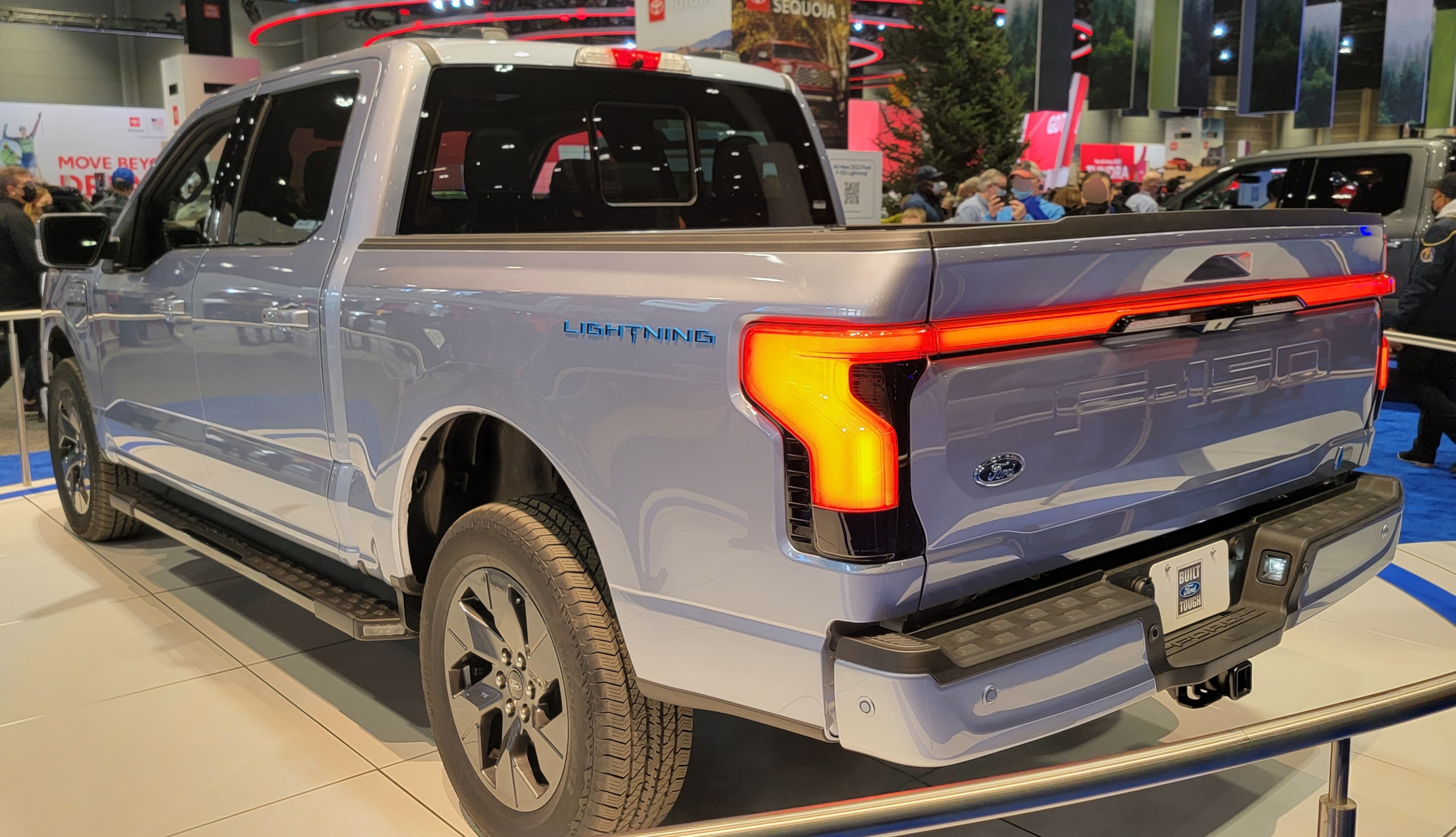
"now as came out and said that they were writing down a $19 billion lost related to their electric vehicle programs. They are officially killing the F-150 Lightning, stopping production. You know, they had halted production before, but now they are killing it completely. And one of their two"
The Ford F-150 Lightning is an electric truck that looks like the regular F-150 but runs on electricity instead of gas. It's important because it shows how traditional trucks are changing to be more eco-friendly.
The Ford F-150 Lightning is an all-electric version of the popular F-150 pickup truck, designed to offer the same utility and performance as its gas-powered counterparts. Its recent production halt highlights the challenges Ford faces in the electric vehicle market.
"...to see how big the battery is. If they make it with 130 kilowatt hour battery, then it's basically a lightning with a generator in the back..."
A kilowatt hour is a way to measure how much energy a battery can hold. The bigger the number, the more energy it can store, which usually means the car can drive further before needing to recharge.
A kilowatt hour (kWh) is a unit of energy that represents the amount of energy consumed by a device using one kilowatt of power for one hour. In electric vehicles, the size of the battery is often measured in kilowatt hours, indicating how much energy it can store and how far it can potentially drive on a single charge.
"...it's got to have enough battery power to power the vehicle by itself without a gas backup..."
An electric vehicle is a car that runs on electricity instead of gasoline. This means it uses batteries to power the motor, which can be better for the environment.
An electric vehicle (EV) is a type of car that is powered entirely or partially by electricity, using batteries instead of traditional fuel sources like gasoline. EVs are known for being more environmentally friendly and often have lower operating costs.
"with the electric version. 24% larger luggage compartment than the classic Polo."
The Volkswagen Polo is a small car that's great for city driving. It's known for being reliable and easy to park.
The Volkswagen Polo is a subcompact car produced by the German automaker Volkswagen. It is known for its practicality and efficiency, making it a popular choice in the entry-level vehicle segment.
"it will be equipped with the embrace yourself here, 37 kilowatt hour LFP pack."
An LFP pack is a type of battery used in electric cars. It's known for being safe and lasting a long time.
LFP stands for Lithium Iron Phosphate, a type of battery chemistry known for its safety, longevity, and thermal stability. LFP batteries are commonly used in electric vehicles for their robustness.
"which is going to be 52 kilowatt hour is going to be an NMC batch pack rather than phosphate."
An NMC pack is another type of battery used in electric cars. It's known for being powerful and efficient.
NMC stands for Nickel Manganese Cobalt, a type of lithium-ion battery chemistry that offers a good balance of energy density, safety, and cost. NMC batteries are often used in electric vehicles for their performance.
"...er as CEO. So for was hired by Tesla to lead the model X program. And then he was the first autopilot, uh,..."
The Tesla Model X is a large electric SUV that has unique doors that open upwards. It's popular for its high-tech features and lots of space for passengers and cargo.
The Tesla Model X is a luxury electric SUV known for its distinctive falcon-wing doors and spacious interior. It features advanced technology, including Tesla's Autopilot system, making it a significant player in the electric vehicle market.
"...where he launched Aurora, which is now a multi-billion dollar company and one of the leader, if I would say the leader in autonomous trucking..."
Aurora is a company that works on making cars that can drive themselves without a human driver.
Aurora is a technology company focused on developing self-driving vehicle technology, founded by former leaders from Google, Tesla, and Uber's autonomous vehicle programs.
"...and one of the leader, if I would say the leader in autonomous trucking..."
Autonomous trucking means using self-driving technology in big trucks so they can drive themselves without a driver inside.
Autonomous trucking refers to the use of self-driving technology in commercial trucks, allowing them to operate without human drivers, which can improve efficiency and safety in freight transport.
"...I was at that GM event a couple of months ago, uh, about the, um, Escalade, uh, getting the, uh, hands or the eyes was a level, level four..."
The Cadillac Escalade is a large luxury SUV that offers a lot of space and high-end features. It's popular among those looking for a comfortable and stylish vehicle.
The Cadillac Escalade is a full-size luxury SUV known for its spacious interior, advanced technology, and powerful performance. It has been a flagship model for Cadillac since its introduction in 1999.
"...massaging chairs. The reason I got it is, uh, my model Y is no longer making it to Vermont. It's a 170 mil..."
The Tesla Model Y is a type of electric car that looks like a small SUV. It's known for being roomy inside and can drive long distances without needing to recharge too often.
The Tesla Model Y is a compact electric SUV that offers a blend of performance, range, and advanced technology. It's significant for its spacious interior and impressive electric range, making it a popular choice among electric vehicle buyers.
"... Yeah. Uh, Hyundai. Um, you know, I kind of got a ID buzz, although it sounds like those are being phased ..."
The Volkswagen ID. Buzz is a new electric van that looks like the old VW buses from the past. It's special because it combines a classic design with new electric technology.
The Volkswagen ID. Buzz is an electric van that pays homage to the classic VW Microbus while incorporating modern electric vehicle technology. Its design and functionality make it a symbol of Volkswagen's shift towards electric mobility.
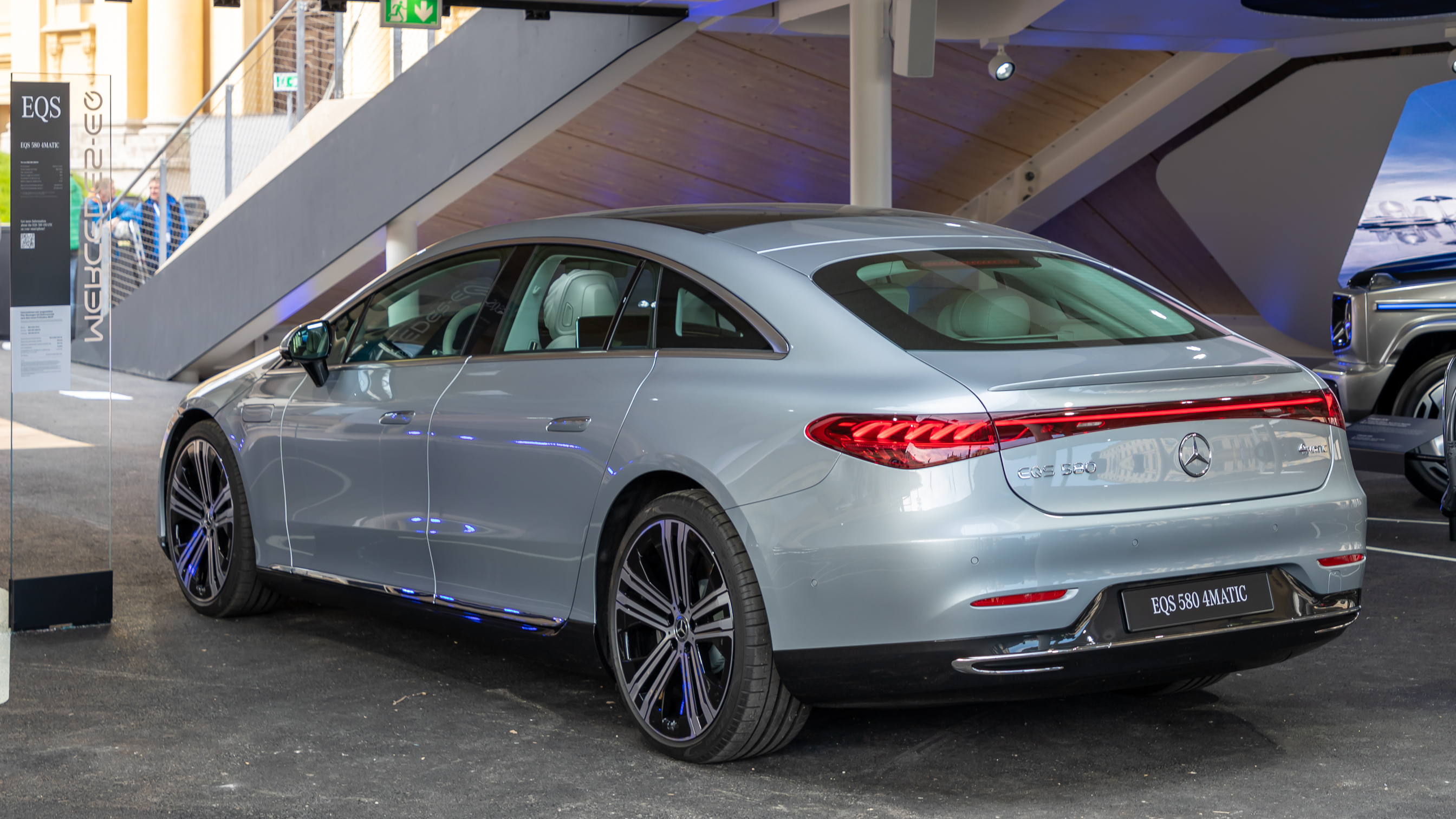
"... 47. I talked to him down to $45,000 a, uh, 2023 EQS. It's green. It's really nice color. Third row. I..."
The Mercedes-Benz EQS is a high-end electric car that is very comfortable and packed with luxury features. It's part of a new wave of electric cars that are made to be both fancy and environmentally friendly.
The Mercedes-Benz EQS is a luxury electric sedan that represents the brand's flagship electric vehicle, combining high-end features with sustainable technology. It showcases Mercedes' commitment to electric mobility and offers a premium driving experience.
"...m, I was looking at, um, the Audi GT, uh, Porsche Taycan, you know, a little bit more, um, sporty side. Y..."
The Porsche Taycan is a fancy electric car that is designed to be very fast and fun to drive. It's important because it shows that even luxury brands are making electric cars now.
The Porsche Taycan is a luxury electric sports sedan that combines high performance with advanced technology and sustainability. It represents Porsche's entry into the electric vehicle market, showcasing their commitment to innovation.
".... Question. Ford is also down to a single EV, the Mustang Mach-E built in North America. When is Ford's ne..."
The Ford Mustang is a famous sports car that is known for being powerful and stylish. Recently, Ford has also made an electric version called the Mustang Mach-E, which is a different type of vehicle.
The Ford Mustang is an iconic American muscle car known for its performance and distinctive styling. The recent introduction of the Mustang Mach-E, an electric SUV, represents Ford's shift towards electrification while maintaining the Mustang legacy.
"...ne, um, it sounded like it was going to be like a Maverick, uh, electric Maverick, but maybe they're going ..."
The Ford Maverick is a small truck that is easy to drive and useful for carrying things. There are talks about making an electric version, which would be better for the environment.
The Ford Maverick is a compact pickup truck that offers versatility and efficiency, appealing to a new generation of truck buyers. Its potential electric version indicates Ford's commitment to expanding its electric vehicle lineup.
Select text to request an explanation
We are alive for a new episode of the electric podcast. I am Fred Lambert, your host. And
as usual, I'm joined by Seth Wynch. How are you doing, Seth?
I'm good.
All right. I hope you're good. Because I don't have it yet, right?
What do you mean?
The new car.
Oh, I have it.
Oh, you already have it. Geez, you bought it. Like, oh yeah, it was Monday. So it goes
fast.
So Seth and I each got a new EV. Well, for Seth, it's not a new new, but it's a new vehicle
for him, but it is used for me. It is brand new. And you guys are going to know pretty
quick which car I'm getting because it's I think it's the first article we're discussing
this week. Yeah, yeah. So you'll know real quick, but we'll keep Seth's new car because
it's a little bit it's a more scarce vehicle. It's not as popular as it's not something
you would think necessarily. I guess if you if we were to I mean, you talked about it
on the podcast a little bit, I think a few times, but not not in details, but you like
you pitched it as like, maybe it's a good idea. So I can buy I think if you guys have
like three or four guests, you probably wouldn't guess it. So we're going to talk about that
later on the show, the last portion of the show when you take you guys question, but
we're going to remind you guys of that later on as more people trickle in into the live
show. But you know, for for the second to last week of December, normally we don't have that
much news to discuss, but this this week is quite different. We have a lot of things to discuss
and a lot of different things. We're going to talk about full self driving. We'll talk about
rural taxi. We're going to talk about this as patents. We'll talk about the California
self driving that was the ruling was released this week. Talk about Rivian's update. Last
week, we talked about the Rivian's autonomy day. They are already releasing stuff related
to the autonomy day in consumer vehicles. We're going to talk about that. And then a bunch of
other things. So plenty of things to talk about. So stay on for the whole show. It's going to be
interesting. And at the end, as usual, we are we're going to take you guys question. So if you
guys any question, you can put them in the chat when you get to it a little bit later. So I guess
I'll kill the suspense right away. I got a new Tesla. Now, before all of you just get super mad
at me, you would say, oh, you're encouraging Elon Musk and everything like that. My argument is
simple. Tesla is not making any money on the car that I bought. Why and why I bought it is the reason
is that I had a bunch of Tesla credits from last year from a worry. I mean, some of them are even
older than that. For not the Tesla points credit, but the actual cash credit from Tesla that were
expiring starting yesterday, actually, so I had to make a decision real quick. What do I do with
that? And there was there was two things that influenced that. There was like $9,000 of that,
which is basically Tesla's profit on the car. So I was like, yeah, I cannot just leave that on the
table and to the full self-driving. Okay, so I had full self-driving on my Model 3 2019.
Well, 2018, but not all year 2019, I guess. And if I don't get a new Tesla, I let that go away
and I cannot test the latest self-driving updates. So basically that's what I did. I got a new Model
3 Island 2025 in quick silver, wide interior with full self-driving transfer and the 19 inch wheels,
but the long range dual motor, I should say. And on the 19 inch wheels, though, I did get the 18 inch
wheels with the winter tires, something that I wanted to do for my performance for a while.
And it's kind of a downgrade a little bit to a certain degree. But that's my my logic was like,
it's basically the same car in terms of the performance. I don't have the suspension a little
bit more aggressive suspension, but I do gain a lot of comfort. And then in, yeah, that's honestly
beyond the comfort gains, a little bit more range, obviously, well, quite a bit more range,
like 100 kilometers more range. No wow. Yeah, 60 miles. So it's like, it's significant because
I go from the performance version, which was already shorter range and degradation over the
seven years I had a car. So yeah, that's the thing. And I do I do get the new computer and I can test
out the new full self-driving, which already tested out when it came out in the France car, but
briefly, now I put over 200 kilometers 125 miles on it, just the first two days that I got a car.
And I can give you a little bit of a review here. A few caveats, it is winter here in Quebec, and
it's definitely not the ideal conditions to test out full cell driving. But it works. It still
works, especially on the highways and on roads that are clear snow, it works better. It's like
the snow is obviously the biggest issue in winter and also the dirtiness of it's like your windshield
gets dirty real quick. And that's not ideal because the wiper situation is just, you know,
everyone that drove in the northeast in the winter, you know, like you just get a lot of
of smudge and things like that. That's just doesn't wipe properly and your cameras looks
through the same windshield you have to go through. It's just maybe not as efficient as you are through
to detect what is a smudge rather than what is something else on the road. Still, I had
my experience is mostly positive. As always, I like to frame it when it comes to full self-driving
that I always said it. FSD is the most impressive level two driver assistance system out there by far.
If it was developed and sold as such, it would be a celebrated product for the most part. I mean,
we would still have naysayers. But since Tesla sold it as something that would become
full self-driving and unsupervised, we have to compare it to that. And if you compare it to
that, it's obviously failure. It's just not that. And then the next best thing we have to do is like
see how Tesla can get there from that, sorry. And I just, I still don't see it even after
trying it. Even though in those 200 kilometers, I didn't have a critical disengagement or anything
like that. So that's good. But obviously 200 kilometers is quite nothing. It looks like Tesla
is getting like 2,000 kilometers between critical disengagement right now on FSDV 14,
which is something to, I think with a grain of salt, because when you look at the crash rate of
the river taxi and city streets, it doesn't look like that. But anyway, the end of the 2,000
kilometers, I mean, includes highway driving without any disengagement, I would think.
And for me, it was a good mix, probably mostly highway driving, but a good mix of city driving
also. And while I didn't have any critical disengagement, I had plenty of actual disengagement,
mostly related to the navigation. So, and this is something that I actually got worse for me
from V12 on order 3 to V14 on order 4. I feel like it's making just decisions
regarding a navigation that makes less sense. It doesn't go into the right lane to take an exit
at the right time. And I leave it chances. So my way that I approach full self-driving is that,
you know, I'm not, I cannot be a problem for the road users. Like it's not their responsibility that
I'm beta testing autonomous driving features. So I don't push it to the point where, you know,
I would be a hazard for anyone who I would be, even not a hazard, even just like an
inconvenience or someone. So yes, I don't maybe push it as hard as some of the other
beta testers that you've seen on YouTube or X. But in this case, I did leave it a lot of
chances. Like I was 100 meter away from, I needed to be on the right lane to take that exit and
it just wouldn't. So I had to take over, accelerate, pass a car and then get into the right lane. So,
you know, you see what I'm saying here. So something like that happened twice.
Then the other thing on the highway is, so you're going to see a kind of team here is like
coming from V12, you expect a big improvement. And to be fair, there is some improvement in the
all natural. I think that the V14 drives, it feels like more like a human driving in term of
the acceleration, deceleration, the way it takes a lane, the way it makes a turn.
Less robotic, let's say. So that is an improvement. But in terms of, and obviously the point to
point stuff is a big improvement, but we already discussed that quite a bit. That's probably the
biggest thing that removed this engagement for owners is the point to point stuff, because you
can actually get from parking to parking situation. And that's good. I've tried the parking situation,
it works pretty well, but not better than V12 when I actually like click on the parking spot that I
want and it would do basically the same thing. Like a three point parking, parallel parking,
it's just the same thing. So where I saw some actually rollback is on the highway, which is
where I use FSD the most. I think it's where it's most useful on the highway driving,
because the highway driving is not necessarily fun to do too. So that's the other thing, man. The
set the model three island is even though I went from performance to non performance dual
motor, still a fun car to drive like you want to drive that car is just so much such a great car
to drive. So you just you want to drive it too. But the acceleration is not quite a half a tenth
of a second difference from my model three. I think my most performance it gets gets pretty
close and also I can unlock some some power and it's fine if I want right. Yeah, I think that'll
be interesting. So I had kind of a different experience. I drove a highland model three.
And I found it kind of sluggish. It didn't didn't feel that great as a driving car.
Maybe maybe I don't even remember maybe it was just like a rear wheel or something.
Yeah, might have been because it's pretty peppy on the dual motor. Yeah. Okay. Or you know,
maybe they had it neutered or something. Or yeah, valley mode or kids mode or something. Right.
Yes. Yeah, go ahead. No, so one of the things I obviously enjoy the most about Tesla's is the
full self driving. And that's like kind of the one thing that made me think about sticking with a
Tesla. I have a model why I still have the model why 2020. I have the version 12 FSD.
And it kind of gets me where I'm going usually. But the upgrade to version 14,
the new hardware is super tempting. But I didn't take that plunge.
Honestly, for the way that I know you use it and the way I use it. So that's where I was getting to.
I'm a bit underwhelmed with the jump from V14 to V12. Like I said, the biggest one is the point
to point stuff. But honestly, like, that's where you have to pay the most attention point to point
like when you actually like parking situation and everything. So I might as well do it. Like I
know I'll drive I know I just you can just like park and go you also take probably better decision
than the system when it comes to exactly where you want to park if it's like a street parking
situation, an actual parking situation, an underground parking situation cannot handle it. So
there's there's a lot to to that still remains to be fixed there. So for me,
FSD is always more useful for long distance highway driving. And there it was quite frustrating.
First off, losing the ability to change the actual speed to exactly the speed you want
on on on the fly directly without having just to choose between the hurry. Now Mad Max is
the had Mad Max. So but the way I like to drive personally in Quebec is on the highway 118
kilometers an hour, which is 18 kilometers an hour over the normal speed limit on the highways
in Quebec. But that's right below where normally a couple stop us cup won't stop you until you're
120 kilometers an hour, which is like 82 miles per hour. So that's when they will normally
start to stop you. So I like to put it 118. And you see on the picture on the screen here. So
this is a picture that I took when I pick up the car on Sunday. And if you do hurry now,
it's 116 is going to be the max. So I'm two kilometers under where I usually drive. And if
I put it in Mad Max mode, it will go to 124, which I don't I don't want. So it's a little
bummer there. But the bigger bummer is, and we talked about this a lot is like,
when I pass someone on the left lane, I go back into the right lane as soon as it makes sense.
And v12 wouldn't always do it. Sometimes it would, it would especially do it if it has a
core behind you pushing you, then it will do it. But you obviously don't want to wait for that,
you want to do it before and and with the latest version, it will do it like half the time I would
say, and then the rest of the time I would, you know, press the
turn signal and it would do it for me, which is, you know, fine. With v14, there's this issue,
especially I should say the exact version that I was testing earlier this week,
v14.2.1.25, which I think at the time was the latest version.
You, it will try right away to go back into the right lane. So I'm like, this is a plus,
this is an improvement right away past it tries, but I'd say that half the time, if not even a
little bit more than half the time, it doesn't do it. It starts, it puts the turn signal,
starts moving into the right of the left lane. And then as soon as it's about to go into the right
lane, it gives up and go back in the middle. And then so that's half the time. And then one out
of three times, they would, it would just, it would try again and actually do it or try again and not
two out of three times, not, not a give up on it. So I don't know what this is about. And it's
not exactly, it can be dangerous, but it's not like high priority dangerous. I don't count it as
a critical disengagement, but I had to force it into the right lane quite a few times. So
even though I'd say that I had probably only two or three actual disengagement, I had probably a
dozen intervention where I had to force to go back into the right lane. But again, so not that bad,
not critical disengagement, but still like we are a long way from, I think, unsupervised self-driving
in the consumer vehicles. And also just not a great, an underwhelming improvement from V12 to
V14 for me at least. Just let me see if I forgot anything in the pros and cons. I had articles
where I listed the whole pros and cons here. That's pretty much it. Yeah, I have, I have a
theory of like why some people are so implicit in V14. I think there's like three categories,
though one is like less useful is like, everyone that's never tried FSD and he tried it for the
first time is impressed. That's, I think that's fair to say, like that's, that's normal. But then
there's the people that are expert in FSDs, like they are like literally like influencer
in Tesla community. And then every new update is like mind blowing every time. This is where I
like, I have some issues. I'm like, because like I just said, it's a bit underwhelming for me to
go from V12 to V14. So like, why are you so impressed? So I think one of the reasons people
are so impressed is that they forget now that Tesla is actually promising on supervised self-driving
is just, is just the, the, the compare it to maybe other ADS system, which again, Tesla is
impressed on that front. The other one through is bad drivers. And this, this is something to
consider because a lot of people are bad drivers. Let's be honest, humans are not great at driving
and like most thing on average, we suck. So there's a big spectrum of drivers. There's
if you are a bad driver, it's a lot easier to be impressed by FSD because FSD for the most part,
you know, other than like being very good at staying centered in the line and things like that,
it's, it's not a great driver. Like, like I just said, like you, you see someone putting their
flasher, not turning or putting the flasher and engaging at turn and then coming back, like,
this is the things exactly that you see from bad drivers and FSD 14 does that. So I'm concerned
that it is a bad driver, but again, achieving the level of being a bad human driver for a full
or self-driving system is somewhat impressive. Let's be honest about that. But again, remember
that the jump between that and unsupervised self-driving is quite, quite immense when we're
far from there, I think. Here I did a little cool little visualization. So it was a slow morning
today. So I'm like, on the slow morning, I tied to like just come up with unique article ideas.
And I was, I did a patent application from Tesla or you're this year, an article on Tesla. And I
was, I was going through the patent application, the recent one, and I saw that most of the recent
patent applications are all related to AI, whether it's autonomous driving, like we just discussed
or, you know, AI hardware, like Silicon, things like that. So I'm like, I thought maybe if I do
a deep search on all the patents, and I find a way to classify them in a certain way, which now
you can do fairly easily with AI, maybe I could see an actual trend of Tesla's evolution from a car
automaker, well, it still is a car automaker to a AI company, just like Elon claims, Elon claims.
And you know what, this actually works out. It's, it's true. So I came up with this thing here.
So this is the Swiss patent application broken down in four categories, automotive, batteries,
and energy, manufacturing slash industrial and AI hardware and software over the last 10 years,
over 4,000 patents application in there. And you can see two peaks, you can see 2018,
there's one peak, and that peak is due to manufacturing. So if you remember, said that's
the production hell time where Tesla was having a lot of issues, and they were investing heavily
in finding new ways to manufacture things, and you can see the exact time that happened around 2018.
After that, a big slump. So a lot of slowdown in Tesla R&D, which also matched the time where
Tesla focused on being profitable. So a lot more money was spent on cost cutting and all that
until 2021, then 2022, there was another peak in Tesla patent application, but this time is due
to AI hardware and software. I'll produce a second chart here to give you a better idea
of the last two years, 2023 and 2024. And you can see the exact split for those here,
which is now majority AI hardware and software for the patent application, confirming Tesla's
transition from an automaker to an AI company, like you can you can make this argument, obviously
not on the financial level, Tesla still makes most of its money from making cars and that is
in clear decline. But at least on the R&D front, I think we can give Elon a point where yeah,
they have shifted the company now it's whether it's going to pay off or not. That's the question.
I thought that was an interesting little view at the data. Yeah, that is a really interesting
It's not with Gemini, by the way. Oh, really? Yeah. I mean, I figure with Google, because Google
has a Google patents where all the patents are listed in there. So you can give it like you
can say search the patents and then I work with Gemini to classify them in those categories,
and then he can pull this. It's really useful. So wait, did we do the Robotaxi crash?
No, we're doing it. Oh, I skipped that. You're right. So this this is from mostly last weekend.
So last weekend, right after the podcast, Elon announced that, well, first, a car was spotted
with a Robotaxi effigy on it that said that then there was no one in the driver's seat or the
passenger's front seat. So it was the first time that there was a vehicle that didn't have anyone
in either of those seats in Austin, other than the one time that they delivered a car to customers.
But that I think everyone agrees by now that that was just a marketing stunt because if that was a
real thing, then they would have kept doing it and they haven't in like six months. But yeah, so
in terms of the Robotaxi, that was spotted and then Elon confirmed that they were testing it.
And then two days later, and it's updates their autonomous crash reporting and Tesla reports
another Robotaxi crash, bringing the total to eight Robotaxi crashes now since June. Well,
actually July because it was late, late, late June that they started operation.
So, so it confirms that these cars, these Robotaxi are still crashing despite having,
during all this time, supervisors inside the car. And yet Elon now wants to remove the supervisor
without even having proven a safer crash rate with a supervisor. It's, I'm dumbfounded by it really
because based on my data, and I can for sure I can see that this is crash rate, you know,
as of the last crash was around 40,000 miles between crashes with the supervisor, which is about
like 10 times more often than the human crash. Again, with a supervisor, which I assume has
prevented some crashes. Now we have had another crash to it, but it's getting harder and harder
to figure out the actual mileage rate, because while Tesla has not said anything since the 250,000
miles mark, and people assume that since Tesla had it a few cars, the rate is going up. But I'm
looking at something here is someone that has a tracker for the Robotaxi and forget his name. I
think it's Ethan. I don't have it linked here. I need to I'm working on a report on this. I just
don't want to change page because I'm having issues with this page. But Ethan is put a tracker where
he does he pings the Tesla Robotaxi app in different locations to know if it's available or not.
And it is often completely unavailable. And Tesla's excuse is like, Oh, it's because it's because of
high demand is just is just that all the cars are taking care of. But there's no there's zero proof of
that. And the app suggests more that Tesla just doesn't have any cars available period
for the for for times where it's supposed to have them. So even though Tesla we confirm that
Tesla 31 cars, different plates of cars in the Robotaxi fleet in Austin, there's no evidence
that those 31 are, you know, always in operation. I think I think the bull neck at this point is
the driver, literally. So this does few drivers and they cannot operate these vehicles. So the
mileage rate might actually be going down rather than up even with more cars. And the argument here
is that Tesla obviously believes that he doesn't even need the drivers. So he just can keep adding
cars and then but not the drivers or the safety supervisors. And the cars will become more useful
like that. But again, serious concerns here, due to the crash rate.
Yeah, you would imagine that if they're actually in service, then, you know, they're not driving and
then driving immediately after they have to there's got to be some time between drives where they
pick people up. So you would imagine that that service would would see those cars. So it's
interesting that it doesn't. Yeah, no. And you can see like the different areas to like, you know,
Austin is not that big, like it's not a giant city or that and you can see depending on the on
their area like where it's like completely blank and it makes no sense. So so you're telling me
that you have 31 cars and they are all in the same spot, all serving customer in the same spot.
No, it's not that it's just there's not that many cars in operation in the or just in that spot.
All right. Yeah, it doesn't make any sense to me. All right, still on the fsd stuff, one last one
before we move on from Tesla here is the California DMV case that we discussed a few times before,
where the DMV was accusing Tesla of misleading the customers with deceptive marketing,
mainly due to the names of the system autopilot and full self driving, but also on some other
marketing materials on their website and social media. And yeah, there was a big back and forth.
We talked about it before. There was the guy that wrote the guideline for the SCS AE and
on the SCA, the engineer association. And Tesla, on the other hand, brought some linguists to try
to talk to you about the origin of the word autopilot and self driving and all that. It was a
mess and the DMV made a much better case than Tesla. And the DMV was seeking to suspend Tesla's
manufacturer license in California over these concerns. And it was granted, though there is the
Tesla has a lot of leeway here. So Tesla has 60 days to comply so they can instead of having
their manufacturer license suspended, they can just change the name of their system, which would
be interesting. So they have 60 days to do that or 90 days to appeal so they can appeal the case.
So this is probably not something we'll see resolved for another few quarters.
It would be interesting to see if Tesla bends the knee and actually change the name or if they
do it, are they only doing it in California? I guess they probably can just more explicitly add
supervised inside the name full self driving, like supervised full self driving, I don't know.
It's a bit dumb of a name when you have supervised to that because it's full self driving with
supervised. No, it's one or the other. Right. It's a little bit of oxymoron. Exactly.
All right, Rivian came out with their new update 2025.46. And it brings a lot of things like the
digital key for our pull and enjoyed user. But the biggest one is undoubtedly the ends free
driving on now 3.5 million miles. So a lot of the one from 135 miles in US and Canada to now 3.5
million miles. So it's a lot more roads. And it's, you know, it's similar to supercruise now the
level two system from GM. So you're able to set your destination and it's going to drive
towards there, keep you in the lane and adjust to traffic. It doesn't end all intersection.
So don't expect it to stop at stop signs or traffic lights. It's a bit like the original
enhanced autopilot where, you know, if you were behind a car, the light will stop and then
start again. But it's not, it's not what it's meant for really. But yeah, so that's the first step
that was announced at the autonomy day last week. And now the next big step is obviously
eyes off the road. That's, well, before that, there's point to point that's coming next year.
So point to point is more like Tesla FSD doing that right now, which, you know,
in those intersection and everything and goes from, you know, door to door, just like v14.
And then after that, it's eyes off, which is level three, level four system.
So there's this new key digital key to that you can add in your wallet for
Apple and Android user, you can have it on your watch and everything. That's cool.
There's the ability to customize your instrument cluster. So that's something that
people have been asking for a long time. So a lot more customizability in there.
And then for the quad owners, you have the kick turn slash tank turn now that's available.
You can see it here on ice, which is pretty cool.
No, not exactly super useful, but still.
Yeah, it was funny when they did the, they took us out to
Lake Tahoe to test the kick turn. They like came up with like a scenario like, all right,
you're going up, you know, you don't have to do turn, like you can do a very sharp turn.
It's cool. It's cool as, cool as heck, but not, not going to use it very often, I don't think.
Not the most useful though. Jamie wrote this dragon quest
article. I wasn't sure if it was, if he was writing it or not.
Yeah, I tell you what, it's just not on a fun roll these days.
All right. The other Jamie post there and pull the battery swapping company has gone bankrupt.
It's the latest battery swapping company to go bankrupt. And I want to give it a little bit
different context here. It's the, another EV battery swapping company that goes bankrupt in
North America, I should say, or in, in the West, because I think the other one was
See something that's not quite right? Our annotations are AI-generated and can sometimes miss the mark.
Click the flag icon on any annotation to suggest a correction.