The hosts kick things off with a playful automotive prediction market, tossing out bets on 2026 sales, OEM layoffs, a Camaro comeback, and aftermarket growth. From there, the conversation widens into podcast production realities, YouTube-driven discovery, and the challenge of staying mission-focused while growing an audience. They also touch on car culture events, automotive photography, market strength, sim racing, meeting discipline, and practical AI use in shops.
No guest this week, just Jamie and Justin working through what's actually going to happen in the automotive industry in 2026.
We introduced a new segment: a live prediction market where we debate five real automotive questions and put our takes on the record. New vehicle sales, Detroit Big Three moves, the Camaro's return timeline, NASCAR manufacturer titles, and aftermarket revenue. One of us had to legally abstain from a question. You'll know which one when you get there.
From there we recapped some of our recent guest episodes — Donnie Walsh Jr., Les Rudd, Ty Damon, and Johnny D — and what's been sticking with us since those conversations. We got into automotive photography as a brand strategy tool, the event season that's ramping up, what we're planning at HPX, and our ongoing AI Watch segment including shop robots, Claude throttling, and what $10,000 a month in AI spend actually looks like for a real business.
Drop your own automotive prediction in the comments. We want to build this market out.
Automotive Advantage | Where serious automotive professionals come to think bigger, build smarter, and grow faster.
"Let's start the first predictive market for the auto industry. Are you ready? Sure. Okay."
A predictive market is a way to crowdsource guesses about the future. People vote with their money, and the result shows what the group thinks is most likely.
A predictive market is a market where participants make forecasts about future events, and the “price” reflects the collective probability of outcomes. In this episode, the hosts are applying that idea to the auto industry by turning questions into trackable bets.
"The first one is U.S. new vehicle sales. Will total U.S. new vehicle sales exceed 16 million units in 2026?"
This is the total number of brand-new cars and trucks sold in the U.S. It’s a big indicator of how strong the car market is.
“U.S. new vehicle sales” refers to how many brand-new cars and trucks are sold in the United States over a given period. It’s a key industry metric because it reflects consumer demand and overall market health.
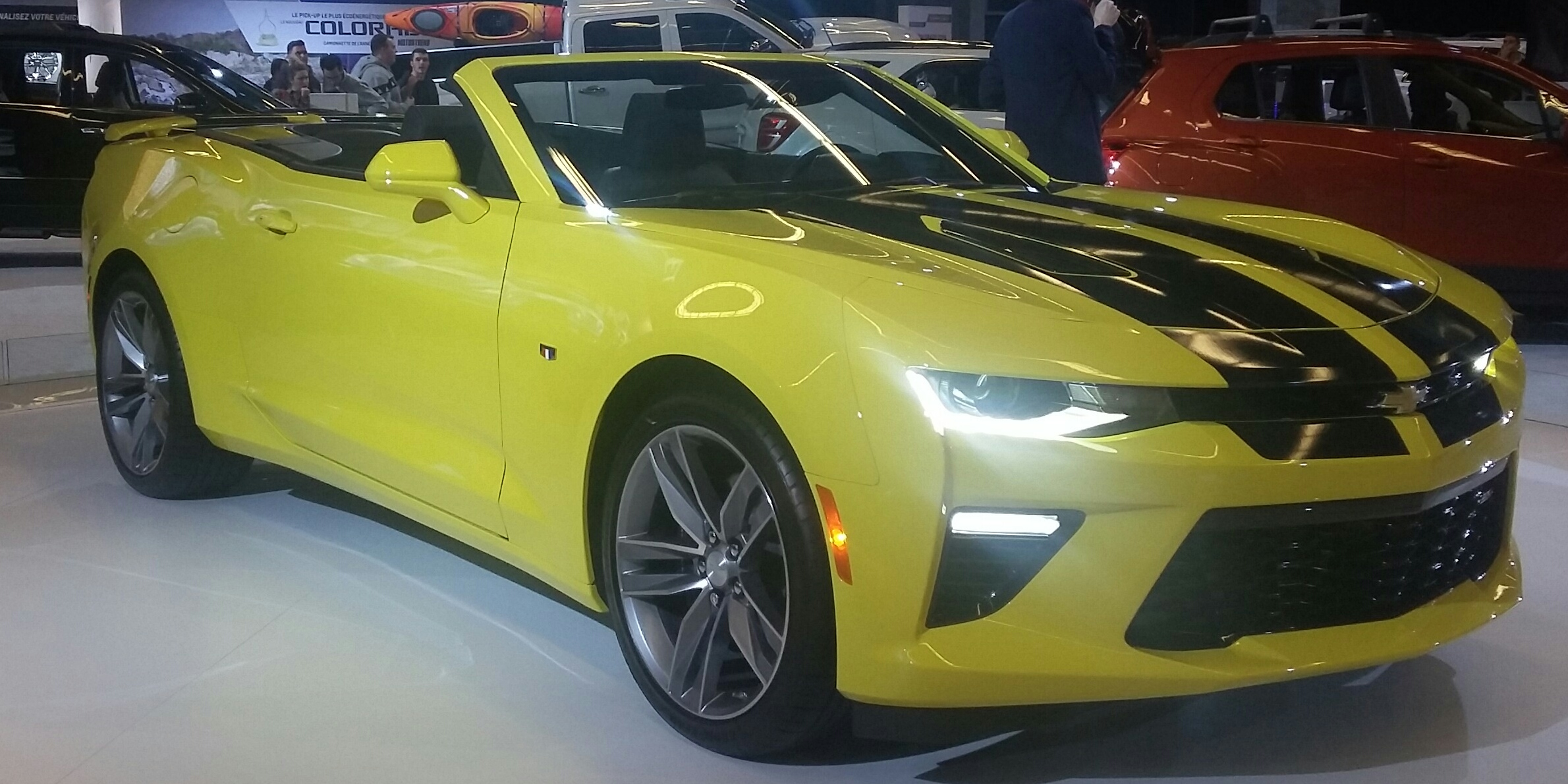
"Yeah. Camaro returns. Will GM bring the Camaro back in any fo..."
The Chevrolet Camaro is a sporty car made for fast driving and strong performance. People talk about it a lot because it’s a well-known model that has been offered in different generations over the years. It may be discussed because it’s common among performance-car owners who need repairs and maintenance.
The Chevrolet Camaro is a performance-focused American muscle car known for its sporty styling and engine options. In a podcast discussion about whether it “returns,” it’s typically brought up as a flagship model that GM uses to keep interest in its performance lineup. It may come up because it’s a popular platform for enthusiasts and for shops that service high-performance vehicles.
"I'm going to say no. Okay. All right. You ready for number four? Yep. We're going to go racing with this question. Okay. NASCAR manufacturer title, will a non-Detroit brand win the NASCAR Cup Series Manufacturers Championship in 26 or 27?"
NASCAR has championships for drivers, but it also has a manufacturers title. That one is about which car brand performs best over the season, not which individual driver wins races.
The NASCAR Cup Series Manufacturers Championship is a points-based title that awards manufacturers (like Toyota or Ford) based on how their cars perform across the season. It’s separate from the driver championship and focuses on brand-level performance in NASCAR’s top series.
"I have one question. It would be Toyota is what that means, or there's rumors of Honda wants to go NASCAR racing. Well, that. So you got to play the whole..."
Toyota is the car brand being discussed as a possible winner in NASCAR’s manufacturer competition. In NASCAR, it’s not just about one race—it’s about earning points over the whole season.
Toyota is mentioned here as a likely NASCAR manufacturer contender. In NASCAR, Toyota’s success depends on how well its teams’ cars perform and accumulate manufacturer points across races.
"It would be Toyota is what that means, or there's rumors of Honda wants to go NASCAR racing. racing. Well, that. So you got to play the whole..."
Honda is mentioned as a brand that might get more involved in NASCAR. The discussion is about whether another automaker could compete for the manufacturer title.
Honda is referenced as a brand that could enter or expand its involvement in NASCAR. The key idea is that NASCAR manufacturer competition can include multiple automakers, and rumors often focus on which brands will field competitive cars.
"We have a market.
Go on.
Is that it?
Oh, we got one more."
A prediction market is like a betting pool for future events. Instead of just guessing, people buy and sell bets, and the bet price shows how likely the event seems.
A prediction market is a betting-style market where people trade contracts based on the outcome of future events. The “price” of a contract reflects what the crowd collectively thinks is likely to happen.
"Will the aftermarket performance parts industry report year-over-year revenue growth for
2026?"
Year-over-year revenue growth means comparing sales this year to sales last year. If it’s positive, revenue went up compared to the prior year.
Year-over-year (YoY) revenue growth compares a company’s revenue in one year to the revenue from the previous year. It’s a common metric for judging whether a business is expanding or shrinking over time.
"Will the aftermarket performance parts industry report year-over-year revenue growth for
2026?
Yes.
We just said the market's up, right?"
They’re talking about a wager on whether the car parts aftermarket will make more money in 2026. The hosts debate what the “right” prediction should be.
This segment is about placing a bet on whether the aftermarket performance parts industry will grow its revenue in 2026. It frames the discussion around market direction and bullish assumptions.
"For every little thing that pops up, there's this whole streaming side of it that Automotive has been kind of closed off from, but Twitch streamers haven't."
Twitch is a website where people stream live video, especially games. Streamers can earn money and grow an audience by broadcasting and interacting with viewers.
Twitch is a live-streaming platform best known for gaming, where creators broadcast in real time and build audiences through chat and ongoing streams. In the segment, the hosts use Twitch streamers as an example of creators monetizing content through streaming and clips.
"Then you have to make a thumbnail. Then you have to make a YouTube title and a YouTube description."
They’re saying the text you add to a YouTube video—like the title and description—matters for getting clicks and helping YouTube understand what the video is about.
The hosts emphasize that the YouTube title and description are key parts of how viewers decide to click and how the platform indexes the video. Even though this isn’t automotive-specific, it’s a concrete part of their content-distribution workflow.
"The title has to be something someone wants to click on because 75, 80, 90% of where people come from to watch your video is from YouTube recommendations. If YouTube isn't recommending your video, you don't get a lot of views."
They’re describing how YouTube’s algorithm suggests videos to people. If your video doesn’t get suggested, fewer people will see it.
The hosts talk about how YouTube decides which videos to surface to viewers via its recommendation system. If a video isn’t being recommended, it typically gets fewer views regardless of how good the content is.
"What you're trying to do is optimize the description for the SEO and now for AEO, which is answer engine optimization."
AEO is about getting your content to show up when someone asks a question online. It’s like trying to be the “best answer” that systems pull from.
AEO (answer engine optimization) is the idea of formatting content so it’s more likely to be used as a direct answer by “answer” style search systems. The hosts frame it as a newer companion to SEO for how people discover content.
"What you're trying to do is optimize the description for the SEO and now for AEO, which is answer engine optimization."
SEO is about making your video easier to find in search. You do this by using the right wording in the title and description.
SEO (search engine optimization) is the practice of shaping a video’s title, description, and metadata so it ranks better in search results. The hosts mention optimizing the description for SEO so the episode is easier to find.
"I don't think I saw the last couple out on Spotify and Apple.
[667.8s] Is that right?"
They’re talking about which apps people can listen to the show on—Spotify and Apple Podcasts. It’s about getting the episode uploaded, not about cars.
The hosts discuss where the podcast episodes appear in major podcast apps, specifically Spotify and Apple Podcasts. This is about distribution logistics rather than car-specific content.
"What's nice now, we edit in DaVinci Resolve.
[680.7s] In Resolve, you can export your project, which takes, like on a 90-minute thing, it takes
[687.0s] about 65 minutes to export, and then you can upload within Resolve now, which is cool,"
They’re using DaVinci Resolve to edit their podcast. They also talk about exporting and uploading using the same tool.
DaVinci Resolve is a video editing program used to cut and finish podcast video/audio. The hosts mention exporting a project and uploading from within the same software workflow.
"So yeah, it's working.
[815.8s] I think, I think one of the recap items in my notes that I sent you earlier.
...
[840.7s] So I thought maybe we've referenced Ty a lot.
[835.5s] So I thought maybe we've referenced Ty a lot.
[840.7s] Ty Damon from Jack Morton, who has this incredible career path of working with
[845.3s] LEMs and doing multi, you know, tens, hundreds of millions of dollars worth of
[849.7s] ad deals with some of that one."
Jack Morton is a company that does marketing and advertising. The host is saying Ty Damon works there and has experience with big auto-related ad deals.
Jack Morton is a marketing/advertising company mentioned as part of Ty Damon’s career. In automotive, firms like this often support brand campaigns and large ad deals tied to vehicle launches or sponsorships.
"We're really excited to see what he does at HPX and how he brings the industry to
[866.3s] life, but I've gotten a lot of feedback about that."
HPX is a group the host is excited about. They’re implying it’s connected to the automotive industry and will help showcase or improve how the industry works.
HPX is referenced as an organization the guest is working with, where they’re expected to “bring the industry to life.” The context suggests it’s an automotive-industry platform or event/initiative rather than a car part.
"Les was really good.
[873.2s] You and I both kind of discovered like, wow, we don't think our people are using
[877.9s] manufacturers reps like they should be.
[880.6s] I think there's, I'm going to say an old guard, but I think there's more
[886.0s] established automotive aftermarket companies that just grew up using
[889.4s] manufacturers rep, but I think the newer shops and the newer manufacturers could
[893.7s] really learn from less and what he's got going on."
Manufacturers reps are sales people who connect car part makers with repair shops or stores. The hosts think some shops aren’t using them as much as they could.
“Manufacturers reps” are sales representatives who act as intermediaries between automotive brands (manufacturers) and parts retailers or shops. The hosts are discussing how some shops underuse these reps, which can affect access to product information, pricing, and support for the aftermarket.
"Chase and Sam are going to be on that Ryan. But Chase and Sam, who we know are going to be a huge part of the high-performance expo, but incredible entrepreneurs."
A “high-performance expo” is a show where people interested in fast cars and upgrades gather. Expect booths, demos, and talks related to making cars perform better.
A “high-performance expo” is an event focused on cars, parts, and services aimed at improving performance—often including vendors, demonstrations, and enthusiast programming. In this segment, it’s referenced as a major upcoming event where the hosts’ guests will play a big role.
Topic
vengeance pre-party
"It was just the chaotic, you know, streets were getting shut down. People are, you know, behaving themselves, but just a lot of folks. But Chase is going to be a really interesting guy. And Sam's got an incredible entrepreneurial background and he's built big businesses."
A “pre-party” is something that happens before the main event. “Vengeance” sounds like the name of that earlier hangout where they talked with Chase.
A “pre-party” is an event held before a larger main event, and “Vengeance” appears to be the name of that specific gathering. Here it’s used as context for where the hosts met Chase and Sam and why they wished they’d recorded the conversation.
Topic
Mod Detroit
"There was, was it Mod Detroit? Is that the right group of Modded Detroit? Had a car show here locally in Detroit."
“Mod Detroit” sounds like a local group that puts on car events in the Detroit area. Here, they’re being referenced as the organizer of a car show.
“Mod Detroit” appears to be a local group or organizer associated with a car show in Detroit. In this context, it’s mentioned as the group behind a locally hosted event rather than a specific vehicle or part.
"Had a car show here locally in Detroit... But like, you know how people say, oh, my car show shut the streets down. It was so busy."
A “car show” is an event where people bring cars to display them and meet other car fans. In the conversation, they’re treating it like a sign of what the upcoming season will be like.
A “car show” is an organized event where vehicles are displayed and enthusiasts gather, often with categories, judging, or community activities. The hosts are using it as a barometer for how the local season is shaping up.
Topic
gridlocked
"They, they shut like a major highway down and Detroit was gridlocked and good for them."
“Gridlocked” means traffic got so backed up that cars couldn’t move. They’re saying the event was big enough to cause that kind of traffic jam.
“Gridlocked” describes traffic that becomes completely stalled because intersections can’t clear. In the segment, it’s used to emphasize how large the event was after major roads were shut down.
"And then you hosted an event here in the studio... which is the city of Pontiac has asked for, you know, what an art display every Friday night."
Pontiac is a city mentioned in the discussion. They’re talking about the city asking for an art display every Friday night.
Pontiac is referenced as a city that has requested an art display every Friday night. While not a car-specific term, it frames the local community context around events.
"Noah's were straight up and down because he's an Instagram kid.
So yeah, that was the four of them."
Instagram is a social-media platform where users share photos and videos, and the speaker uses it to explain the younger photographer’s style. In this context, “Instagram kid” refers to someone whose photo habits are shaped by that platform’s norms.
"And then what an artist is going to do is like put a motion into it, you know, like Jeremy has that mirror barn find photo back there."
A “barn find” is a car that’s been sitting unused for a long time, usually in a barn or garage. People love the idea because it feels like a rare discovery with a story behind it.
A “barn find” is an old, often forgotten vehicle that’s been stored away for years—commonly in a barn or similar outbuilding. In car marketing and storytelling, barn-find photos are used to evoke history, rarity, and discovery, which can make a vehicle feel more special than a standard product shot.
"And the best car photographers and the best car video people do that. ... You know, McLaren does a great job of blending this like futuristic speed with these like very technical photographs."
McLaren is a car brand famous for fast, modern supercars. The hosts are saying McLaren’s marketing photos often look very technical and futuristic, not old-school.
McLaren is a British supercar and motorsport brand known for a modern, high-tech design language. In the segment, the hosts use McLaren as an example of how a brand can blend “futuristic speed” vibes with technical-looking photography.
"And when you think about McLaren, that's kind of the brand that you think about. Whereas Porsche does like this very nostalgic vintage, simple look and feel."
Porsche is a well-known sports-car brand. The hosts are saying Porsche tends to use a more old-school, nostalgic style in how it’s photographed and presented.
Porsche is a German sports-car brand with a strong identity tied to classic design cues and heritage. Here, the hosts contrast Porsche’s “nostalgic vintage” look with McLaren’s more futuristic, technical style in photography and branding.
"[1842.1s] Audi is a great example.
[1844.0s] Jeremy Cliff does all of Audi USA's photography.
[1846.9s] So if you've ever seen anything from Audi, even if you're in an Audi right now,"
They’re using Audi as an example of a car company that wants its photos to look a certain way. The goal is that when you see those images, you immediately recognize the brand’s style.
Audi is used here as an example of how a car brand controls its visual identity. The hosts talk about consistent photography across touchpoints (like in-car center-console images) so viewers associate the same look and “feel” with Audi every time.
"[1844.0s] Jeremy Cliff does all of Audi USA's photography.
[1846.9s] So if you've ever seen anything from Audi, even if you're in an Audi right now,"
Jeremy Cliff is the person doing the photography for Audi’s U.S. materials. The hosts are saying the brand hires the right photographer to keep the look consistent.
Jeremy Cliff is named as the photographer responsible for Audi USA’s imagery. The point is that brand presentation depends on a specific creator who can execute the brand’s visual direction repeatedly.
"[1896.6s] I didn't like it before if you asked me, but now I'm in love with this thing.
[1900.0s] So like, yeah, if you have brand guides as a brand, you have a brand direction,
[1904.6s] you have a target market, those people all like things."
Brand guides are the instructions a company uses to keep its branding consistent. They help ensure the photos and visuals look like “the brand” every time.
Brand guides are rules for how a brand should look and sound—covering things like style, composition, and visual consistency. The hosts connect them to creating repeatable imagery that matches the brand direction and appeals to a target market.
"[1904.6s] you have a target market, those people all like things.
[1907.7s] Eventually you make a mood board, you have your aesthetics.
[1910.9s] Then you need someone who can look at that and make that image and then make it every time."
A mood board is a collection of example images that show the style you’re aiming for. It helps the photographer or designer create visuals that match the intended look.
A mood board is a curated set of visual references used to define the look and feel of a campaign or product imagery. Here, it’s part of the workflow: define aesthetics, then hire someone who can translate that into consistent images over and over.
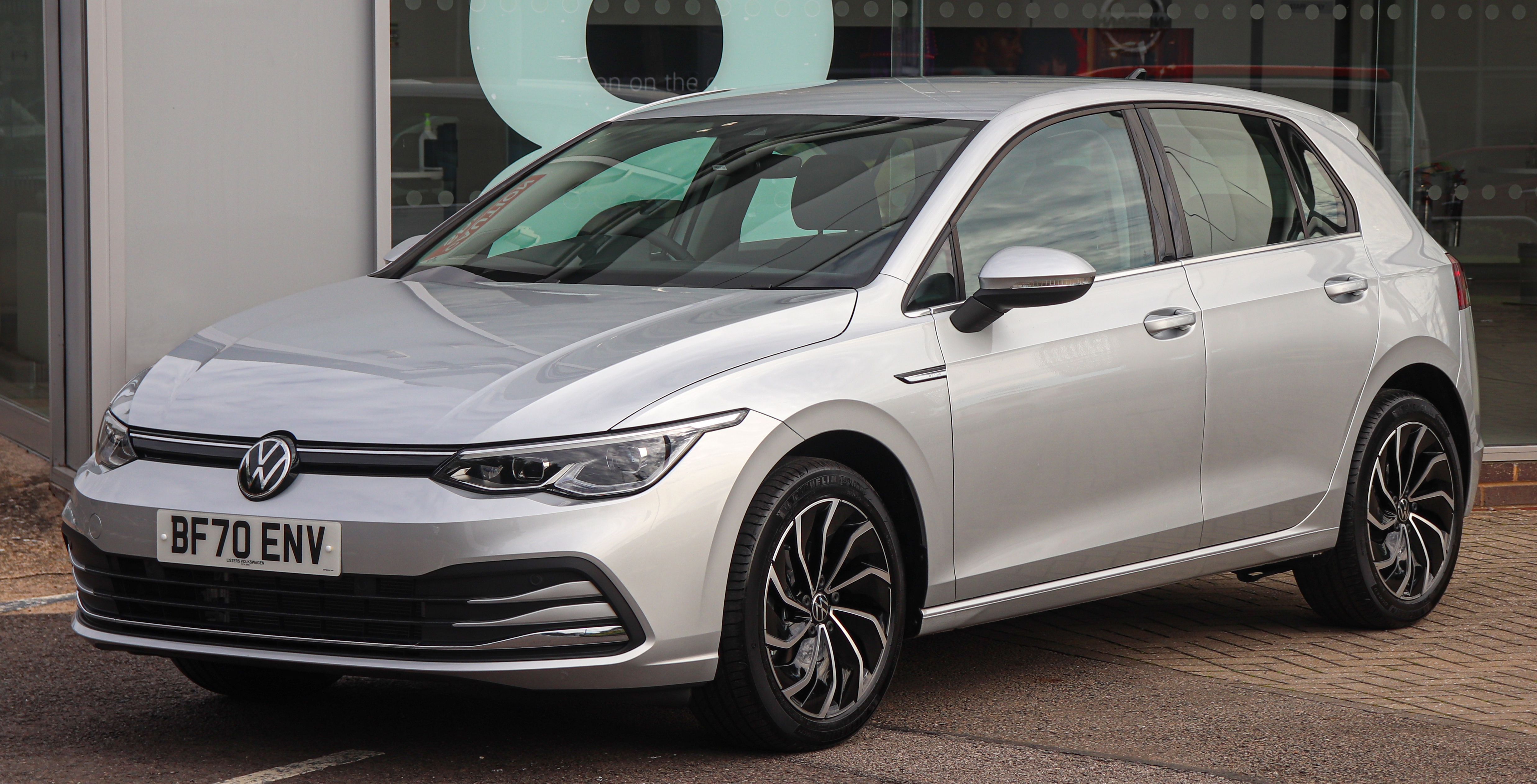
"...ll these cars. New cars everywhere, Ford selling GTDs and then making even more expensive GTDs. Like i..."
The Golf is a compact car made by Volkswagen. It’s designed to be practical for daily driving, not just for racing. The podcast mentions it because it’s a common type of car that many people buy.
The “Golf” refers to the Volkswagen Golf, a compact car known for being practical while still offering a sporty driving feel. In the podcast context, it’s grouped with “new cars everywhere,” which points to how widely these models are sold and how they fit into the broader market of everyday vehicles. It may be discussed because compact cars can be frequent participants in the overall flow of new inventory and ownership.
"we were talking about increased prices of vehicles, increased pricing of all aftermarket components. Like where does it end?"
Aftermarket components are parts made by companies other than the vehicle’s original manufacturer, typically sold as upgrades or replacements. The host’s point is that not only new cars but also aftermarket parts are getting more expensive, which suggests broader pricing pressure across the enthusiast ecosystem.
"He's like, look, the cars are being repossessed at a record rate, but they still somehow people are still getting funded for these things."
Repossessed means the lender takes the car back because the buyer isn’t paying as agreed. The host is saying it’s happening a lot, but people still somehow get approved for financing.
“Repossessed” refers to lenders taking back a vehicle when a borrower falls behind on payments. The host connects record repossessions with continued vehicle funding, arguing that credit and pricing dynamics are still allowing purchases even as defaults rise.
"Rolexes sell well because I know if I can buy one at retail, it's worth more on the secondary market. Same arguably better watch quality from another brand. Let's take Omega, for example. I know that they're around and they're cheaper on the secondary market, so I'm not that interested in buying them new."
The secondary market is the resale market—where people sell things after they’ve already been bought once. Prices there can be higher or lower than what you’d pay new.
The secondary market is where you buy and sell items after their original retail sale—often at different prices than the store. In car and collectible talk, it’s used to describe how a vehicle or brand holds value over time after purchase.
Concept
depreciates again
"I think as soon as that slows to where when I buy something new, it depreciates again like how it used to be."
Cars usually lose value after you buy them. The host is saying that once the market cools down, prices might start dropping again like they normally do.
In car terms, depreciation is how much a vehicle’s value drops after purchase. When the speaker says it “depreciates again,” they mean the market may stop rewarding certain cars and their prices could fall back toward normal levels.
Concept
market watches
"The other thing to keep in mind about market watches, we do have several educational programs with High Performance Expo."
A “market watch” is just keeping an eye on how prices are changing. For cars, it means watching what buyers are paying so you can decide when to buy or sell.
A “market watch” is a way of tracking how prices and demand are moving over time. In the automotive world, it often refers to monitoring used-car or collectible-car pricing trends so you can time buying or selling.
"But they were talking about the huge economic impact of Grand Theft Auto and Grand Theft Auto 6 is about to come out."
Grand Theft Auto is a very popular video game series. The hosts mention it to make a point about how massive some entertainment can be for the economy.
Grand Theft Auto (GTA) is a major video game franchise that the hosts cite as having a huge economic impact. While it’s not an automotive product, it’s relevant here because the episode is discussing how big media can influence markets and consumer behavior.
"[2563.0s] Like I remember it used to be a big deal to be on the cover of Gran Turismo, [2568.0s] like Animoya Garage is right across the street from us."
Gran Turismo is a popular racing video game. When a real car brand shows up in it (even on the cover), it can make that brand feel more “real” to car fans.
Gran Turismo is a long-running racing video game series that became a major marketing platform for real-world car brands. Being featured on the cover or in prominent content helped brands reach enthusiasts and new fans through a highly car-focused game.
"[2592.0s] Now with SimRacing, the manufacturers are interested in that, [2597.3s] but I think they should be tripling down on SimRacing."
SimRacing is racing in a realistic video game setup with real controls like a wheel and pedals. Car companies pay attention because it’s a big community of people who love cars.
SimRacing is competitive driving using racing simulators, typically with steering wheels, pedals, and realistic vehicle physics. It’s become a marketing and product-development channel because manufacturers can reach sim racers who care about how cars behave.
"[2601.1s] And you can't really, at least not yet, [2604.3s] there's not like a modification market for iRacing, [2609.8s] but that's not really true because people do sell setups now. [2614.6s] So in iRacing, you can adjust everything."
iRacing is an online racing simulator where people race against each other. You can change car settings to make the car handle and drive the way you want.
iRacing is an online racing simulator where drivers compete in organized series and can tune setups for different cars and tracks. The mention of adjusting everything highlights how sim platforms model vehicle setup details that affect lap times and handling.
"You can make the sway bar stiffer. You can make the shock stiffer."
A sway bar helps control how much the car leans to one side when you turn. If you make it stiffer, the car usually feels more stable in corners, but it can also feel less comfortable.
A sway bar (also called an anti-roll bar) connects the left and right sides of a car’s suspension. Making it stiffer increases roll resistance, which can reduce body lean in corners but may also make the ride harsher and change front/rear balance.
"You can make the shock stiffer. And now there are marketplaces where you can go"
Shocks help the tires stay in contact with the road by controlling suspension movement. If you stiffen them, the car can feel more controlled in turns, but it may ride rougher over bumps.
A shock absorber (often just called a shock) controls how quickly the suspension moves up and down. Making the shock “stiffer” typically means higher damping, which can improve grip and responsiveness on track but may reduce compliance over bumps.
"and exactly what you're describing, which is aftermarket modifications. It's the industry we talk about."
Aftermarket modifications are upgrades you add to a car that weren’t included from the factory. People do this to change how the car drives—like making it handle better or feel faster.
Aftermarket modifications are changes to a car using parts or tuning options not installed by the original manufacturer. In performance contexts, these can include suspension upgrades, brakes, engine tuning, and other changes aimed at improving handling or acceleration.
"It was a global General Motors call.
[3289.9s] And if I remember right, there were 700 people on those calls every month."
General Motors (GM) is a big car company. The host is talking about how many people were on internal calls while working there.
General Motors (GM) is a major global automaker and one of the “Big Three” in the U.S. The speaker references working there, specifically on internal social media team calls, to illustrate how large and structured the organization was.
"Charlotte in June. Easy flight to get to from wherever you are. It's going to be cool."
They’re saying the event is in Charlotte in June, and they’re excited about it. It’s just location/date context.
“Charlotte in June” refers to the event location and timing. It’s mentioned to set expectations for travel and what the hosts are looking forward to at the show.
"Like the shop car challenge is going to be cool. There are cool shops bringing cool stuff."
They mention a “shop car challenge,” which sounds like a contest where different shops bring cars to compete. They’re highlighting it as a fun thing to see at the event.
The “shop car challenge” appears to be a competition or featured activity at the expo involving participating shops. The segment frames it as something exciting to watch, but doesn’t provide rules or technical details.
"“And then if you want, streetcar takeover on the weekend is great.” ... “It’s not easy to draw the kind of people that streetcar takeover draws.”"
A “streetcar takeover” is a big car event where lots of street-legal cars show up and take over an area for meetups and driving. It usually brings a huge crowd and a lot of excitement around cars.
“Streetcar takeover” refers to organized gatherings where street-legal cars meet up and then take over public roads or areas for driving, shows, and informal racing. It’s a car-culture event format that can draw large crowds and a lot of industry attention.
Topic
NMRA
"“...because I grew up in the Steve Wolcott era of NMRA, NMCA and announced hundreds of those races...”"
NMRA is a drag-racing organization/series. The host brings it up because they’ve been involved in announcing those races for years.
NMRA is a U.S. drag racing organization/series name referenced by the host as part of their background. It’s mentioned to set context for their experience announcing races.
Topic
NMCA
"“...because I grew up in the Steve Wolcott era of NMRA, NMCA and announced hundreds of those races...”"
NMCA is a drag-racing organization/series. The host mentions it because they’ve been announcing races in that scene for a long time.
NMCA is another drag racing organization/series referenced alongside NMRA. The host uses both names to describe the era and level of events they announced.
"“And all of a sudden we're going to be at the drag races having a ball.” ... “So that first week in Charlotte is, I'm really looking forward to,”"
“Drag races” are races where cars go as fast as they can in a straight line over a short distance. The winner is usually the one that gets to the finish line first.
“Drag races” are straight-line competitions where cars accelerate over a short distance to determine the fastest time. In the context of the episode, it’s part of the event schedule the hosts are excited about.
"“Like we haven't been in a trade show in a while.” ... “That face-to-face interaction seems like it's coming up fast”"
A trade show is an in-person event where people from an industry meet up. Companies and attendees can talk face-to-face and check out what’s new.
A trade show is an industry event where companies and enthusiasts gather in person to network, see products, and discuss the market. The host contrasts it with not being able to attend one for a while.
"I can't get enough people, I can't get enough technicians. If I had two more technicians, I doubled my business... But if he had one robot and added another one every year, after five years, he's got a whole workforce that could handle anything."
They’re talking about a shortage of trained mechanics in car shops. Because of that, shops can’t fix as many cars as they want. They suggest robots could help cover the gap.
A major theme is that shops can’t hire enough technicians, limiting how much work they can take on. The hosts argue that automation could expand effective “workforce capacity” by adding robotic capability over time. This frames AI/robotics as an operational solution, not just a tech novelty.
"I said, well, Donnie, you know, the next phase of this thing is the physical robot. I'm like, what if you could buy an AI-powered robot that is technically skilled to do any modification to any car that could ever come into your shop?"
They’re talking about using an AI robot in a car shop that can learn a modification once and then do it again and again correctly. The goal is to help shops keep up with demand even when there aren’t enough trained mechanics. It’s basically “robot technicians” for custom work.
The hosts are describing an AI-powered robotic system that could learn and repeat complex car modifications in a shop setting. The key idea is “teach once, repeat flawlessly,” so the robot becomes a flexible technician for many different jobs. This is positioned as a way to offset the technician shortage by automating skilled work.
"...t walk into Donnie Walsh's shop to fix all of the Hellcats Corvettes and Mustangs and F-150s he's got on th..."
The Dodge Challenger is a muscle car, meaning it’s built for strong acceleration and performance. The podcast brings it up because it’s the kind of car that owners may bring to a repair shop, especially if it’s driven hard. It’s known for being a popular choice for people who want a powerful car.
The Dodge Challenger is a muscle car built around powerful engines and a classic, performance-oriented design. In the podcast context, it’s mentioned alongside other high-performance cars that a shop services, which suggests it’s a frequent vehicle for maintenance and repairs. That makes it relevant when discussing how many performance cars are in circulation and what owners typically need to keep them running.
"We're never going to have enough people that walk into Donnie Walsh's shop to fix all of the Hellcats Corvettes and Mustangs and F-150s he's got on the rack."
They mention the Chevrolet Corvette as another car type that shops work on. Corvettes are popular performance cars, so they often get modifications. They’re using it to show how many different cars a shop may need help with.
The hosts reference the Chevrolet Corvette as one of the performance cars a busy shop might have to service and modify. The Corvette is known for being a major enthusiast platform, so it commonly shows up in aftermarket and custom-work scenarios. Here it’s part of the example list showing the breadth of vehicles shops can’t keep up with.
"We're never going to have enough people that walk into Donnie Walsh's shop to fix all of the Hellcats Corvettes and Mustangs and F-150s he's got on the rack."
They mention the Ford Mustang as another car that shops have to work on. Mustangs are very common performance cars, so there’s a lot of variety in what comes through a shop. It’s part of their example of how hard it is to find enough mechanics.
The Ford Mustang is called out as another common performance car that a shop might have lined up for repairs or modifications. The Mustang’s huge popularity means many different variants and aftermarket setups can show up in one shop. In the episode, it supports the argument that staffing shortages limit throughput across many car types.
"We're never going to have enough people that walk into Donnie Walsh's shop to fix all of the Hellcats Corvettes and Mustangs and F-150s he's got on the rack."
They also mention the Ford F-150, which is a very common pickup truck. Shops may see these alongside performance cars. The point is that the workload isn’t just one type of vehicle—it’s a lot of different ones.
The hosts mention the Ford F-150 as part of the mix of vehicles a shop can’t staff enough technicians to handle. The F-150 is a mainstream pickup, so it broadens the example beyond just exotic or track-focused cars. This reinforces the idea that automation would need to cover both performance cars and high-volume daily vehicles.
"The industrial robotics sector that the OEs are using, very impressive, obviously. They're still, they're putting doors on a car, they're holding it there, the machines are coming in, they're welding."
They mention that car companies already use robots in factories. Those robots do predictable jobs like holding parts and welding. The point is that making robots do custom, one-off car work is harder, but they think it could improve.
The segment references industrial robotics already used in automotive manufacturing by automakers (OEs). These systems handle repeatable tasks like holding parts in place and performing welding operations on the production line. The discussion contrasts that with the harder challenge of robotics for variable, custom modifications in repair/aftermarket work.
Select text to request an explanation
Well, Justin, if you'll allow me, I think you and I might be onto something here.
Let's start the first predictive market for the auto industry.
Are you ready?
Sure.
Okay.
I asked my friend Claude to come up with five automotive predictions that we could launch
this sucker with.
So I'm going to give you five market questions like a predictive market, and you and I are
not bet on this.
Okay.
You ready?
Okay.
All right.
The first one is U.S. new vehicle sales.
Will total U.S. new vehicle sales exceed 16 million units in 2026?
Yes.
Just immediately.
Yes.
What year are you taking yes or no?
I'd want to think about this a little bit.
What was the volume in 20...
We don't have time for this.
Yes or no?
No.
16 million is a lot.
I'm going to say, we got a war in the Middle East.
Gas prices are five bucks.
I'm going to say no.
I don't think we're going to exceed 16 million.
We have two people willing to place a prediction, which means we have a market.
We just built one.
Go.
All right.
This one's going to hurt a little bit more.
All right.
Number two would be Detroit big three cuts.
Will any of the Detroit three OEMs announce a plant closure or layoffs exceeding 5,000
workers or more in 2026?
No.
I'm going to go no.
That's too much.
I don't even want to...
I wouldn't...
I don't want to vote or even bet on that.
That hurts people.
So I'm going to say no.
That's impossible.
All right.
We don't have a market.
See, this is what's fun about this.
If you and I both say no, there's nothing we can bet on now, but someone can come out
of nowhere.
Yeah.
People in the comments are going to say we're crazy.
All right.
Number three, you ready?
Yeah.
Camaro returns.
Will GM bring the Camaro back in any form before 2027?
Okay.
So this is the worst part about predictive markets is you never know what insider trading
is going on at any moment.
We're in Detroit.
We're in Detroit.
We know a lot.
Chevrolet is one of my clients.
I am abstaining from a vote here.
You can't do that.
I have to do this.
I am legally required to abstain from this market.
So I'm out.
What do you think?
All right.
I know some stuff too.
I'm not going to carry on like you did, but I will say I know how long it takes to make
a car.
2027 seems really quick.
That would be 18, they'd have to really hustle.
I don't think you can build the car that fast.
I'm going to say no.
Okay.
All right.
You ready for number four?
Yep.
We're going to go racing with this question.
Okay.
NASCAR manufacturer title, will a non-Detroit brand win the NASCAR Cup Series Manufacturers
Championship in 26 or 27?
I have one question.
It would be Toyota is what that means, or there's rumors of Honda wants to go NASCAR
racing.
Well, that.
So you got to play the whole...
I won't do it in two years, but what does Jordan run?
Those are Toyotas.
Then I'm going to say yes.
Well, that's a good call.
I'll just say no.
That way...
Okay.
We have a market.
Go on.
Is that it?
Oh, we got one more.
Got one.
Aftermarket revenue.
Oh, okay.
Here we go.
Will the aftermarket performance parts industry report year-over-year revenue growth for
2026?
Yes.
We just said the market's up, right?
Then we just...
We went on a whole thing about it.
We just said I'm bullish, so I have to say yes.
The performance parts sales will be up.
Okay.
We have two bets.
Two predictions.
Yeah.
Be careful.
Don't get us...
Two predictions.
But this is another one of those things, though.
To your point about Grand Theft Auto, I was watching a thing about Clippers.
So, if you're a big celebrity now or you're a big YouTuber or whatever, they have farms
of people they call Clippers.
And the Clippers take your content and clip it into little subcontent.
And they pay, the creators pay the Clippers on a cost per million.
And depending on who you are, that cost per million moves around like Mr. Beast has a
way.
People like you and me would have a very high CPM because we don't go viral that often,
so we'd want to pay someone to do that.
But I've heard of people having 300 Clippers on their payroll, taking all their content
and clipping it and putting it on different pages like Automotive Advantage Fanpage and
Funny Clips About Businesses, whatever.
And for Grand Theft Auto, that's going to happen.
People are going to play the game.
They're going to stream it.
People are going to take clips from that and make money clipping things.
Here, like in this predictive thing, you could get involved or you could make an Instagram
page about interesting predictive markets or you can make a YouTube channel going into
detail about these things.
For every little thing that pops up, there's this whole streaming side of it that Automotive
has been kind of closed off from, but Twitch streamers haven't.
They're doing it for everything else.
I want to see more of that.
I would love to see, okay, Grand Theft Auto just came out.
I'm just going to review every car in Grand Theft Auto on a YouTube channel.
Someone's going to do that and they're going to make a ton of money doing it.
Every time you see one of these little things pop off, it's like there's the activity and
then there's the making content about the activity part.
I want people to comment on what poll would they want to have a predictive market in the
auto industry.
Get in on this.
See how this sides.
We'll predict against you, so that's what they call it.
Welcome to the Automotive Advantage.
Grow your business and get smarter in just one hour.
Welcome back to the Automotive Advantage, everybody.
We're going to get going here, Justin.
Is that all right?
I'm ready.
Okay.
Did you get your notes?
Could you hold your notes up that I prepared for you so everybody could see them?
Yep.
It just says podcast with a little arrow.
So I'm ready.
All right.
Here's the agenda you and I agreed on.
We're going to do a recap.
You prepared to talk a little bit about podcasts because I've got a few things I want to ask
you about how it's going.
We've done a bunch of events.
I think you've been out doing some shoots, so I want to maybe go through what we're
seeing out in the real world.
We got to do an industry report because things are crazy out there, but still a bright light
in the automotive aftermarket space and the automotive industry.
I think the fun section, we're going to talk about the prediction market and how it applies
to the auto industry and how it could apply.
We're going to have a little fun there.
Justin, hang with me.
It's going to be okay.
Okay.
I want to talk a little bit about how to run a meeting because I see across the industry
just different ways of how people run meetings and communicate, and I thought it might be
kind of fun for us to share our best practices.
We got a really good HPX update, so I want to go through some of that, and then we'll
wrap it up with some AI stuff that you're doing, I'm doing.
I had a neat conversation with Donnie Walsh after we did his podcast about AI and kind
of how he's going into that space, so you ready to get going?
Go.
All right.
Justin, we've got a lot of feedback about how easy it is to run podcasts and put these
things together.
I thought you might want to talk about how easy this is to produce a podcast.
You got any tips there?
Yeah.
If you're thinking about doing a weekly podcast, hire someone to do the weekly podcast for
you.
I mean, having a producer would be huge here.
People don't realize, like, evidently, you do pre-work, so there's some amount of time
there.
Then you got to film the thing.
Then you got to edit the thing, which for our podcast is about 60 to 90 minutes long.
It takes about four hours, four and a half hours to edit down to the final thing.
Then you have to make a thumbnail.
Then you have to make a YouTube title and a YouTube description.
Then you have to do copy all that and put it on Spotify.
You have to optimize those things.
The title has to be something someone wants to click on because 75, 80, 90% of where people
come from to watch your video is from YouTube recommendations.
If YouTube isn't recommending your video, you don't get a lot of views.
You can see that on our channel.
Where David Freiberger is a searchable YouTube personality and people consume a lot of Freiberger
stuff, then our episode shows up there and people are like, oh, I'm interested in that.
When we do people that maybe don't have a YouTube presence, there's no reason for YouTube
to put that into most people's algorithm, so they don't show up there.
What you're trying to do is optimize the description for the SEO and now for AEO, which is answer
engine optimization.
Yes, you got to do all that and then you got to publish it, then you have to review it
and then we make it live and then people start watching it and then we comment on it and
then you have to make all the shorts and cut all those down.
Use opus clip is what we use for those things.
We used to do this manually, but it's too much effort for how much volume you need.
If you can afford a full-time person to do that, great, but in our case, we can't do that,
so we use AI.
It does a great job and those shorts like 20x, 100x, how many views we get for any given
episode air quotes, so that's awesome.
I was actually surprised how well they do on Instagram, but also how well they do on YouTube.
We've had shorts on YouTube do 5x the views of what the long form does, which makes sense,
but yeah, that's the short form of making a podcast.
It's at least eight to 10 hours per episode, per week, I would say, if you're thinking
about starting one.
Yeah, good.
I don't think I saw the last couple out on Spotify and Apple.
Is that right?
Yeah, I think we're missing one on Spotify right now, plus Johnny's, so two.
Okay.
Yeah.
So we're going to do that?
You're going to have to put it out there, right?
What's nice now, we edit in DaVinci Resolve.
In Resolve, you can export your project, which takes, like on a 90-minute thing, it takes
about 65 minutes to export, and then you can upload within Resolve now, which is cool,
but normally that's happening at night, like 10, 11 o'clock at night.
By the time it's uploaded, I'm asleep, and then I wake up in the morning and you've reviewed
it, and then we go.
So I need to find a better way to schedule that export to then get put on to Spotify,
because you can't do them at the same time, which is a lot of bandwidth, and if there's
an issue with the YouTube one, then we got to deal with Spotify one at the same time.
So that is something, if someone has a better way to do that, I would love to know.
Well, good.
And then when you publish it, I share it out on socials, and I'm still texting people
every week, so there's about 100 to 200 people that I'll text just the link to the YouTube.
The responses are interesting, and there's a good little tip in there for everybody that's
playing along, right?
It allows me to have a conversation with like 100 to 200, who I think are really important
people, at least in my life, but they're industry folks for sure, and sometimes I get comments,
you know, a few have said you don't need to text me every week.
I already follow you guys.
I have had people that run big companies give me other people in the company that they want
to be on that distribution list.
They want to watch the guests that we have on what we're talking about, which is really
cool.
And then today for the first time, it does take me, I'm doing this manually.
There are, I did do some research, there's a way to send text messages out, but they're
just as groups.
How annoying is that?
You know, we've probably all been on some text threads that you're like, yeah, I don't
want to be in here.
But today for the first time, I had someone text me back while I was going through my
list, and they were like, yeah, I watched this already.
So thanks for, you know, and here's some feedback, and I was like, wow, so that's cool.
So yeah, it's working.
And I get a ton out of this.
I've learned a lot.
I think, I think one of the recap items in my notes that I sent you earlier.
Right, which I received.
Right.
We had Donnie Walsh Jr.
on, we had Les Rudd on, we had Ty Damon and Johnny D are our most recent guests.
I thought you and I really don't get a chance to react to some of this stuff.
So I thought maybe we've referenced Ty a lot.
Ty Damon from Jack Morton, who has this incredible career path of working with
LEMs and doing multi, you know, tens, hundreds of millions of dollars worth of
ad deals with some of that one.
If you're in the auto space, Johnny D was our most recent one.
We kind of that touchy-feely motivational topic, which he does a great job with.
We're really excited to see what he does at HPX and how he brings the industry to
life, but I've gotten a lot of feedback about that.
It's only been out for a few hours.
Les was really good.
You and I both kind of discovered like, wow, we don't think our people are using
manufacturers reps like they should be.
I think there's, I'm going to say an old guard, but I think there's more
established automotive aftermarket companies that just grew up using
manufacturers rep, but I think the newer shops and the newer manufacturers could
really learn from less and what he's got going on.
And then Donnie Walsh might take away was wow, man, 36 years probably has gone by
really fast for all of us legacy company that's still doing great.
And you can see him start to adjust to this new space that we try to talk about.
But give me your, give me how you're feeling about some of these most recent podcasts we've done.
I think they're great.
I think the bummer to me is like this algo problem where it's like, if you've
never heard of the motivational cowboy or less rod, or it's just hard for you to
find these things.
And like, unless you're listening right now and then you were like, oh, I missed
that one, but like each of them have a different outlook.
And I love, we had a clip recently where it's like, I think it was less where he's
like, even if I don't know what the person's talking about, I can take something from it.
You know, if you're having a bad day, Johnny D is your guy.
He's going to get you hyped back up for sure.
If you want to just understand what's going on in a modern shop or if you own a
modern shop and you're like, someone just has to feel the same way I do.
Donnie, perfect for that one.
You know, the Ty Damon one still bums me out personally because I'm like, man,
I just want to go back to that.
I actually, I saw on Instagram real yesterday where someone was very
nostalgically talking about the, like a rock campaign and how pivotal that was.
I was like, all right, I'm not saying maybe they watched our podcast and got
the idea from there, but we're probably one of the most recent people to be
talking about that.
So I thought that was cool, but also like just the staying power of that
campaign and seven years of doing some one thing really well is awesome.
And then yeah, last run, like I still, even after spending an hour and a half
with them, I'm like, okay, I need a meeting with him to figure out how to
actually do this with some of our clients because like it still seems like a, oh,
that's cool.
It probably works for Holly.
It wouldn't work for me.
And he's like, no, it would absolutely work for you guys.
So it feels like going back to any of those and then there are even older ones
in there that we haven't talked about lately that are just great.
And I'm waiting for those to pop off at some point, but yeah.
We got to go back and do the clips from some of the older ones.
Right.
I was thinking about, you know, some of the gleamies and the Brian long stuff.
Kurt was it.
Kurt chances it really well for some YouTube, you know, some really good
stuff about putting on events.
So what I know, I know we're not ready for the numbers and stuff, but what
do you think we have to do to keep growing the show?
I'll answer my own question first.
I think just our consistency is going to pay off over time.
But what's your feel?
Yeah.
I mean, consistency is you have to do that.
That part is mandatory.
The growth comes from the big YouTube personalities being on the show, for
sure, because it's such a discovery based deal on YouTube.
So like a fry burger was just, you know, people are going to watch it and he did
a great job and he talked about things he doesn't normally talk about.
But getting more guests that are YouTube famous would obviously be great.
But we want to be a business podcast about the automotive, you know, aftermarket.
So this is the problem that every content creator has is they start because
they love something and then they learn where the clicks are.
And then you have to make a decision.
Do I go for the clicks or do I keep doing what I set out to do?
There's a huge YouTuber in the video space.
Gerald Undone is the name of his YouTube channel.
He's been reviewing video equipment, cameras, microphones, lights for a decade
now, and he just retired and he had a video just called, I'm done.
Gerald Undone, I'm done.
Kevin Diasi texted it to our group of all the video children.
And I didn't even watch it.
I just said, let me guess, he doesn't want to do these big reviews anymore.
He's burnt out and he's just going to do stuff he loves again.
And people are going to watch him because he has a big following.
And yeah, that was it.
He was basically like, I don't want to do this.
It's performative.
I'm doing it because it's optimized for the algorithm.
I'm doing it because I know exactly how to be good at YouTube, but I hate it.
I don't like coming into my studio anymore.
I don't like any of this stuff.
So like, that's the fine line.
You know, some people get lucky and they can build these huge audiences
doing exactly what they want to do.
But even someone like Cletus, I'm sure, if you're like, you really want to be
doing all of these things every day, he would say not all of them, you know?
So for us, it's like, how big do we need to get?
Versus what's our mission, right?
And I think as long as we balance those two things out, that's going to be the key.
Yeah, I think it's a good reminder.
I think, you know, we've had guests on that are super interesting to us.
You know, unfortunate to know these folks and say, bring them in to share.
But we, we still, like we just talked about, we're still discovering
stuff from people that we've known for years.
And that's, that's what's been really valuable for us, I think.
100%. Yeah.
And again, like if five people text you about a thing and say, oh, yeah,
that was really cool.
I learned about that.
Like that's a huge impact.
A million people would be sick, obviously, but I'd rather have the people
that we want to be listening to be listening and be engaged with it.
So yeah.
Good.
I can tease a little bit about what we've got coming on.
This is the end of April, first part of May.
We do have the streetcar takeover guys coming in here.
They've booked flights.
They're coming into Detroit.
Chase and Sam are going to be on that Ryan.
But Chase and Sam, who we know are going to be a huge part of the
high-performance expo, but incredible entrepreneurs.
So stay tuned for that one because you and I had a great conversation
with Chase at the vengeance pre-party and we were both like, man,
we should have been recording that.
It was just the chaotic, you know, streets were getting shut down.
People are, you know, behaving themselves, but just a lot of folks.
But Chase is going to be a really interesting guy.
And Sam's got an incredible entrepreneurial background
and he's built big businesses.
So that one's going to be an interesting, that one might go over an hour.
So yeah, for sure.
Well, I mean, those guys are doing so many things.
They have so much energy.
They're in so many different little buckets of the industry.
And they get to interface with a lot of companies.
So it's going to be great.
Very good.
You want to do some quick events, rundowns.
The one I was thinking about, I think we talked about streetcar takeover
and being at the one in Georgia, but just a great event.
Very diverse cars and people, younger, really neat crowd.
You know, grew up on social and I just like where they're headed.
So we had streetcar takeover.
There was a, was it Mod Detroit?
Is that the right group of Modded Detroit?
Had a car show here locally in Detroit.
I think, I think the win was it was the first one of the year.
But like, you know how people say, oh, my car show shut the streets down.
It was so busy.
This was no bullshit.
They, they shut like a major highway down and Detroit was gridlocked and good for them.
Big show in Detroit, but a good indicator of the season we're going to have.
Yeah, I think everyone knew that was going to be a big show.
And then that made it even a bigger show.
Like you just had this hype to it.
And then yeah, it was like kind of the first big show of Southeast Detroit,
you know, Southeast Michigan pack though.
Yeah, I'm glad I didn't have to wait in line to get in there.
So that was good.
And then you hosted an event here in the studio.
I don't think we talked about it, which is the city of Pontiac has asked for,
you know, what an art display every Friday night.
And you really attacked it.
What, what went on here?
Yeah, so the new mayor of Pontiac, Mike McGinnis is just an awesome dude,
but he wants to bring the arts and culture back to Pontiac.
If you live in Michigan, arts beats and eats used to be in Pontiac.
And then it moved to Royal Oak and it's huge for Royal Oaks.
And Mike is a big arts guy.
So he's like, man, I'd love to get something going here.
They don't want to do that.
But so every Friday in April and May,
they're doing an arts crawl downtown so people can come down and walk around
and cause a lot of the businesses here, you don't even know what they are really
until you get invited in and get to go in there.
So we did an art gallery.
You can see some of the photos back there.
They're going to stay back there forever.
It was really just a scam for me to get all my favorite photographers
to send me their photos so I could print them.
But yeah, it was great.
We had a ton of people here.
We had local Pontiac people here.
We had a bunch of kids here because there was a little painting station in the back.
And then our neighbor behind us did a cool activation of making key chains
out of old film canisters, which was fun.
And then Jeremy Cliff and his wife brought their little business in here as well.
So they had coloring books for kids and then they make awesome merch for kids
and all kinds of cool stuff.
So that was fun.
But yeah, we had all of my favorite photographers, not all of them.
All the ones that could make it.
We're here on display and it was just great.
We had engineers.
We had marketing people.
We had Pontiac people.
We had the mayor came by, which was cool.
We had clients and it was a cool event, I think.
Give a shout out to the photographers that were here.
Rattle them off so people know who to look for.
Yeah, so we had Andrew Link, one of my favorite automotive photographers.
In the world was here.
He shot, well, it's back there, but he shot my favorite McLaren photo of all time,
which is in New York City.
We did together.
We got the Ken Block car, which was an iconic one.
Chris Dyson's Porsche is up front there.
I don't know if you know it was Chris's, but that's his.
Yep.
So yeah, Andrew, it's funny because Andrew sent in things and then he was like,
well, I don't know if they're any good and I know everyone else is going to be amazing.
But here's what I have.
Pick the best four that don't suck.
I'm like, bro, these are all unbelievable.
So yeah, Andrew.
And then Kevin Diasi came in from Florida.
Kevin has become like an amazing portrait photographer and automotive photographer,
which is really cool.
So we had like a bunch of his automotive stuff,
but then this cool portrait of Murray Faff back there,
which is one of my favorite like portrait shots.
Because it's hard to do a car and a person all in one thing.
So that was really cool.
Jeremy Cliff, who I mentioned, had some really cool like vintage stuff.
He has the Mira barn find photo, which is incredible.
He has like that iconic Audi shot.
Jeremy was the same way.
He's like, here's, here's what I have.
It's all bad.
Let me know if any of its principal, of course, it was unbelievable.
And then we had Noah, who's a local photographer here
out of the out of office garage camp.
Noah's like much more of a vibe, right?
He's like shoots on VHS, shoots on film,
kind of got a vintage look and feel,
although he's the youngest of all the photographers.
And he really just captures like the moment where, you know,
like Andrew and Jeremy and me and Kevin are like all the lights
and all the things and making everything pixel perfect.
Noah is more just like, yeah, that's a cool scene right there.
It reminds me of like a young Richard Thompson type of character.
So Noah shot that Porsche that, how do you point?
It's always back right there.
And he was the only one, you can tell he's the youngest
because he's the only one who's sending vertical photos.
All of us old guys were wide.
Noah's were straight up and down because he's an Instagram kid.
So yeah, that was the four of them.
I think we're going to do more in depth ones in the future.
So Andrew and I have been talking about doing like a bigger Andrew Link expose.
Maybe around dream cruise time.
So that would be cool.
And then there's a million photographers that I love that we didn't get to have here.
So we'd love to have them in the future.
But yeah, it's great.
Yeah, I was here to support you and the guys.
There were a few takeaways.
I liked the kids that were getting exposed to this.
Tony Romo was here, chief engineer, executive chief engineer for Corvette with his son Leo,
who wants to be an automotive photographer.
And Kevin Diasi was the first one that I went to.
And I'm like, hey, talk to him about what it takes to be in this industry.
And I don't know anything about photography, but I loved Kevin's lesson that he told Leo,
which was, hey, take pictures of everything.
And then he talked about what he learned from shooting real estate.
And then the one thing he said was I was shooting for a DJ friend in night clubs.
I think that was the story.
But he was talking about the terrible lighting in a night club and how he took advantage of that.
So I think these types of activities can really allow that.
And look, the creative part of the automotive industry is so critical and tell them a story,
which leads me into the question of, you just listed off great photographers.
I'm looking at it.
I've run big brands.
I still have a few that I'm helped organize stuff.
Maybe talk about, educate me about why is a good photographer important to me?
And it's not a commodity.
Like you touched a little bit about the story of the scene of a car.
But what does it do for me to help me sell products better when I hire a photographer that
charges, I don't know what the numbers are, $10,000 a day versus $100 a day?
Like what does a brand get out of great artwork?
Yeah.
Well, I think there's capturing historical references of things.
And then there's making art.
And those are two very different things.
And I think a lot of people think about photography sometimes as like,
well, we're going to have the car there and I want pictures of the car there.
And then what an artist is going to do is like put a motion into it, you know,
like Jeremy has that mirror barn find photo back there.
Everyone who sees that has a emotional reaction to like, oh man, that was how it was found.
That's the mirror.
I love that car for these reasons.
I can't believe there's a concrete bag laying up on the fence.
Like there was a way to just capture that.
Like you and I would capture it on a cell phone, which is like,
we found this in a barn.
People are like, okay, that's cool.
And there's a way to do it that way where immediately people are telling you a story
about, oh, I found a car in a barn one time where my grandfather knew about this guy who had this
car, it was over here and where was that?
And you know, so like you can't do that with just historical photos of things.
You have to have like some emotion to them.
And the best car photographers and the best car video people do that.
And sometimes they're not even technically good photos.
They just make you feel away about the thing.
So if you have a brand that's like, I want people to feel nostalgia,
you can do that in a photograph.
You can make a photograph nostalgic and you can make people,
even if they're not car people, be like, oh man, my grandpa had X or whatever.
If you want people to feel technical, you can do that in a photo and make it very technical.
You know, McLaren does a great job of blending this like futuristic speed with these like very
technical photographs.
And when you think about McLaren, that's kind of the brand that you think about.
Whereas Porsche does like this very nostalgic vintage, simple look and feel.
Audi is a great example.
Jeremy Cliff does all of Audi USA's photography.
So if you've ever seen anything from Audi, even if you're in an Audi right now,
if you go to the center console and pull up the images they have in there,
Jeremy shot those things.
But Audi has a very specific brand and they want it displayed in a very specific way.
And not everyone can take a photo in that way.
And when you find someone who can and they understand the brand,
then every time someone sees one of those images, they're understanding the whole brand, right?
Link, same thing.
He has a very Andrew Link style.
It's like, you know an Andrew Link photo when you see one,
but brands that want to tap into that have to and should go to Andrew to do that.
Richard Thompson.
Richard Thompson takes photos that like, I don't even technically understand how he does them,
but they make me feel a way about a car where I'm like, I love this car now.
I didn't like it before if you asked me, but now I'm in love with this thing.
So like, yeah, if you have brand guides as a brand, you have a brand direction,
you have a target market, those people all like things.
Eventually you make a mood board, you have your aesthetics.
Then you need someone who can look at that and make that image and then make it every time.
Over and over again.
So that's the art.
Like the taking the photo part, that's just the clicking part, you know?
That's not what you're paying for.
Will the average person know if I change photographers to save money or because it's
more convenient or I want to try something else?
Do, will I even notice that in an ad?
100%.
Yeah, 100%.
I mean, this goes back to the Ty Damon conversation, right?
Where he was like, we just have people that were just modelers and just lighters and just
painters and just set designers and like, think about a Hollywood movie.
Like if you change the cinematographer, if you change the DP, if Christopher Nolan directs
the movie versus someone else, you know when you're watching a Christopher Nolan movie versus
another one.
It sucks that photography has become and video has become commoditized where people are just like,
well, they all have the same equipment and they're all taking photos at the same place.
So this guy's cheaper than this guy.
I'm going to go with that.
Such a huge mistake.
I mean, it's just, you're doing a disservice to all the brands you've built and you know,
we talk about this all the time, like you're only as strong as the weakest part of your brand,
right?
Because a consumer is going to find that and then the whole thing starts to fall apart.
So it's like, we say this with shops, like if your website's beautiful and your social's beautiful
and your business card is beautiful, but then I come to the shop and there's just like a hand
written, we work on car sign.
It's like, wait, this doesn't match up with everything else I saw.
So same thing.
If you have a beautiful shop and your website sucks, but your business cards are hand written,
it's like, oh, this whole thing's falling apart, right?
So yeah, I think it's absolutely critical.
I will, I got in the GM kind of at the tail end of the good old days, right?
The tie talked about and I will never forget going into brand days or agency day meetings
and we had a campaign coming up multiple times has happened, right?
And the agency had gone and got sample work from three photographers, you know,
obviously prepped them on what the shoot was about, what the product was about.
And having never been brought up through art school or design school or the things that
you have done in the photographer zone, it was shocking if you had three different portfolios
of artists pitching you on what your brand could look like.
It was shocking how different they were and you would pick the right one and it did make
a difference in the campaign.
And it's weird when you're first starting out, at least for me, like I always used to
not like strong creative directors because it's like, well, hey, man, let me shoot it my way
because I like this style and a strong creative director be like, no, absolutely not.
We're not shooting it that way.
It's not supposed to gritty and street racy.
It's supposed to be high end and elegant.
And but they were right the whole time.
Like they need to know their brand and know what every piece of thing needs to look like.
So a lot of times photographers think, oh man, I lost this job to X and was probably for
budget or whatever.
Most of the time it's just a fit.
It's like, no, his portfolio fit perfectly.
I should say that is true when you're dealing with
brands that have good creative directors and really understand that assignment.
A lot of times now it is you will lose work because people are just cheaper.
But then the assets don't look great.
They don't fit with the brand.
The brand doesn't grow, right?
And on and on and on.
All right.
Well, that was more than I expected, but I think those are some good lessons and
you know, keep people thinking about how does their brand get impacted by some of the stuff.
Let's move on to a market watch.
I'm interested in what you're seeing out there.
And I think this is going to blend into some of the shows and events that we just talked about.
But we're through the first quarter.
We're darn near through the second quarter.
We're well into it.
I'm actually hearing really good things.
And I got to be careful because I have a few people that tell me numbers that I can't share.
But Big Media Company is up really, really strong, more than 10 percent.
And then I've got some big vehicle manufacturers that are up, you know, again, double digits.
I don't have the broad stroke of the industry, but I think what I'm hearing on the street,
what I'm feeling and then kind of how I'm seeing people respond
and who's looking for business and who's trying to make moves.
I think the industry is up really big.
And I mean, if you're not 10 percent, 15 percent or better,
I think you've got some opportunities.
That's how I would put it to people.
We say that Justin.
There's just, you know, we've got still got conflict in the Middle East.
Gas prices this morning were like they're going up a dollar here in Detroit.
They're going to be over five bucks a gallon for regular.
You know, we've been preaching about big trucks and high performance.
And here we go, you know, do things swing back to electric vehicles.
I'm not ready to say that.
I think most people would say no.
But I got a really good feeling all of that, right?
Well, all of that context, I think the market's really strong.
Shows especially seem to be very hot.
People want to get out and do stuff.
But I am very bullish on the automotive aftermarket right now.
So how do you feel?
It was the master's just happened.
It was the biggest master's that had ever existed.
Like every time I get a report on anything,
it seems to be like this is the biggest one and people were spent.
Coachella, you know, people were spending $250,000 on VIP tickets for that thing.
So, but it does seem like I will say it feels like people are either up big or down big.
So I don't know if it's growth or it's just like if I'm down 20 percent and you're up 20 percent,
you are actually taking legitimate market share in customers.
But yeah, it's still, you would think with, if you turn on the news,
you would think we're in the Great Depression.
And if you look at charts, it does also seem that way.
And then you go to any cars and coffee and everyone is rolling in in a brand new Pagani.
So I don't really know.
I think if I take out all of the factors and I just showed up in a parking lot
and you said, how's the market doing?
I'd be like, it's crushing it.
Look at all these cars.
New cars everywhere, Ford selling GTDs and then making even more expensive GTDs.
Like it seems fine.
And everyone is going to events, which is great.
So yeah, I think just keep going while you can.
Definitely, we've seen these before.
Keep some money around.
You can save some money because who knows when the song is going to stop,
but it's been strong since 2020.
It's been five years.
So I had a conversation last night with a loyal listener of the podcast
and we were talking about increased prices of vehicles, increased pricing of all
aftermarket components.
Like where does it end?
He had a really interesting take on it.
He's like, look, the cars are being repossessed at a record rate,
but they still somehow people are still getting funded for these things.
He's like, the question is where does it stop?
And he had an incredible answer.
He's like, it's going to stop when the banks stop financing these very expensive vehicles.
I hadn't considered that, but there is a ceiling to that
and how much money a bank will put at risk for an average daily driver that's 100 grand,
which is not uncommon.
We've talked about that a lot.
I also think because everything is just weirdly appreciating still,
there's not as much risk to a lot of these purchases that people would have reconsidered
in the past.
It was kind of the Rolex thing, right?
Rolexes sell well because I know if I can buy one at retail,
it's worth more on the secondary market.
Same arguably better watch quality from another brand.
Let's take Omega, for example.
I know that they're around and they're cheaper on the secondary market,
so I'm not that interested in buying them new.
And I think with Porsche, it's just been free money by Porsche.
It's worth more.
With any hard to get thing, that was kind of the thing like, oh yeah,
if you can get a 4GT, of course, why wouldn't you buy one?
You only have to make years worth of payments and then you can sell it for double.
So I wonder when things will stop appreciating all the time.
You can buy Pokemon cards.
They're worth money.
You can buy baseball cards.
They're worth money.
Any collectibles just like going up in value.
I think as soon as that slows to where when I buy something new,
it depreciates again like how it used to be.
Then maybe everyone chills.
But people seem to be getting afraid of catching that knife if it does fall though.
Because it's gone.
You know how this works.
The other thing to keep in mind about market watches,
we do have several educational programs with High Performance Expo.
We're going to have finance folks and industry leaders
and some business owners that are going to really tell you what their numbers are
and where they're going.
So I'm looking forward to that.
We're only 30 days away.
So let's see.
I think the other part of what you and I can do to help folks that are out there are
look for any opportunities in the market.
And I had a weird one on the way here.
I was listening to my first million which was my favorite podcast
other than yours, Justin.
But they were talking about the huge economic impact of Grand Theft Auto
and Grand Theft Auto 6 is about to come out.
And this video game is bigger than any movie ever produced.
Video games are bigger than Hollywood.
And I sat there thinking, wow, they're talking about it from a video game business standpoint.
I think about it as there's automobiles in that video game.
So I don't know if there's an opportunity.
And most people are going to hear this and go, wow, that's ridiculous or something.
But there are brands that have gotten into video games, automotive brands,
and they've carried the day for that brand.
And they've found young, new money in the market.
So I don't know any other opportunities that we haven't routinely discussed
that come to mind that you're thinking about in 26.
I'm very surprised more automotive brands don't do more in the video game space.
Like I remember it used to be a big deal to be on the cover of Gran Turismo,
like Animoya Garage is right across the street from us.
They had the Team Orca Viper in there that I remember being the cover thing of Gran Turismo.
So I see that car, all the memories.
I want it. How much is it? Can't afford it.
OK, I'll just look at it kind of a thing.
But those are iconic.
I think the skyline was iconic because of Fast and the Furious,
but also because of old video games back in the day.
Now with SimRacing, the manufacturers are interested in that,
but I think they should be tripling down on SimRacing.
And you can't really, at least not yet,
there's not like a modification market for iRacing,
but that's not really true because people do sell setups now.
So in iRacing, you can adjust everything.
You can make the sway bar stiffer.
You can make the shock stiffer.
And now there are marketplaces where you can go
and be like, this is the car I'm running.
This is the track.
Who has the best setup?
Oh, this guy.
OK, it's 15 bucks to download the manual.
And then I tune my car that way.
Like, selling of setups is a market.
And we know people that set up race cars for real
that probably have no idea that exists, right?
So yeah, the numbers on Grand Theft Auto,
and I think this supports exactly what you're saying,
they did a billion dollars worth of sales in three days.
The last game came out 15 years ago,
and it still makes 500 million a year,
and exactly what you're describing,
which is aftermarket modifications.
It's the industry we talk about.
I'll tell you my favorite Grand Theft Auto story,
still one of those brilliant marketing.
Remember when Grand Theft Auto first came out?
There were like all of these news stories
about how violent it was and how horrific it was.
And there were like op-eds in the New York Times about how
that was done by Rockstar.
I never knew that at the time, but
Rockstar planted the stories.
Rockstar wrote the stories.
Rockstar had writers that would write these stories
and submit them.
And they were like, the best advertising we can have
is for a mom to read that this game is so violent
that her kid can't have it.
The kid's going to demand to have it now, right?
So like that little counter of like,
okay, the more bad press we get,
the more people are going to buy our game.
That was Rockstar, which is so cool.
So every time I think about Grand Theft Auto,
but that was, there wasn't even the internet back then.
This was a long time ago.
So think about what you could do now,
with that kind of thing, so.
Smart, I love it.
All right, let's move to something kind of fun here.
Justin, there are prediction markets available today
on the internet.
So I imagine on your phone too.
One's called Polymarket and the other is Kelsey.
Did I get that right so far?
I don't know how to say it.
I say Kalishi sometimes or Kalashi or I don't know.
I don't know how to say it.
All right, I'm going to give you my quickie.
You can go on these websites.
There are political or celebrity topics
and you can, it's positioned as a poll,
but you can wage your money on the poll
and the questions will be like,
will the economy collapse in 30 days or something like that?
Are you aware of these things?
No, yeah, yeah.
I mean, it's the greatest loophole
in betting of all time, right?
Because they're not, you're not betting.
You're, somehow a prediction market
is outside of a roulette table.
I guess for now, for now.
So yeah, you can basically, anyone can enter a prediction
and then if people are interested,
they can take your side of that prediction
or the other side of that prediction.
It's basically, my understanding is a lot of this came
from polling back in the day
and eventually with enough polling data,
that's more accurate than anything else you can do
because it's like, well, everyone thinks
this guy's gonna win, which means they probably voted for him.
So that's gonna be the guy that wins
and sure enough, it is until it wasn't that one year.
But like, it's a crazy kind of unregulated space.
There are definitely trillionaires
that are being made there
that don't want anyone to know that it's happening,
but yeah, it's crazy.
So, yeah, right on.
So it got me to think it.
Justin, what do you think about the predictive market
for the auto industry?
Do you think this might be fun to explore this idea a little bit?
The way people have been using it lately is terrifying.
There was that soldier who evidently knew
about the Maduro rate and made $400,000.
There's definitely people in this administration
that are betting on things that they shouldn't be.
It's not technically illegal, but kind of seems like it is.
Used in a more fun way.
There was just a guy actually,
they were betting on the temperature in a certain city
and he broke into the weather station
and used his little hair dryer to heat it up
so he could win the bet.
So there's a lot of manipulation that's possible, of course,
but I mean, you could do it for racing, right?
Who's gonna win XYZ?
I think it's this guy.
I think it's that guy.
Like all these grudge racers, I feel like that would be cool.
They have other ways of doing it, you know,
with just straight cash, but like now the whole internet
could get in on it.
It would be fun to like maybe
will XYZ car get released in this year or that year?
There's a lot of little fun ways you could do this.
And it's also good for data.
Like you could go on there and just look at things
and be like, oh, 90% of people think this is gonna happen.
Should I do something with this information?
Is this helpful to me?
So, you know, you can do it both ways.
Let's, I want to change it up.
This is more kind of an operative thing,
but you and I have just been talking about
the efficiency of meetings and what works for different clients
and different brands and different teams of people.
So this is kind of for the team leaders
and the people that want to, you know,
some of the Johnny D stuff.
I like, I think a good meeting can really motivate people.
You get in, you get the project moving.
And then you go do it.
I'll talk a little bit about what I did at GM
and then kind of some of the smaller teams I've been on.
But we're also, let's talk about favorite communications types too,
because I've had several people say, you know,
why do you pick on Justin about text messaging?
Some forms of communications don't work for everybody.
And I was thinking about this, this morning,
when I started GM, one of my first directors was
a great guy named Eric Cunningham.
And when he came on board and he addressed the team,
he actually went through the forms of communications
and what he preferred.
He liked emails, texting really wasn't a thing then.
So that was in there.
Call was in case things were really important, you call me.
And then in semester, I think was still starting to become a thing
and he was kind of like, I don't really care for that.
But I don't know, have you ever seen that where people roll out
like how I like to be communicated and what's what's your picks?
Yeah, I think it's essential to know that some people,
you know, there used to be like an order.
It was like, if you send me an email, that's the most,
that's a serious thing.
If you text me, that's a less serious thing.
If you call me, that probably trumps all of them.
That's the most important.
And then if we have to meet in person, you're right,
I'm going to be ready for that.
Now it seems like, especially in our world,
we'll get a text on a group thread that was evidently very important
but didn't register as like, oh, this is critical
because it didn't come into an email inbox
or it didn't come as a phone call.
So yeah, it's good to know like how people want to interact.
We have some clients that we basically only text with,
like almost no emails at all.
We'll text and then we'll jump on a call
and then we'll go back to texting.
We have other clients where like,
we don't text with them at all.
It only comes through as an email and then a meeting.
So it's like, knowing that is important.
Also like, even how people like zoom meetings,
one of our clients for the last five years had a,
you don't need your camera on policy
and then they have a new leadership team
and the team's like, they're all on all the time.
Like we got to see each other.
We got to, you know, we got to communicate.
I want to see you.
So even those are small changes,
but it's easier to be a little more removed
if your camera's off.
You know, you got to pay more attention if it's on.
So yeah, I think all of those styles matter.
And then what works best for you,
what works best for the team, right?
I think you used to just meet in one place and that,
so that was easy.
But now there's so many forms of communication.
It's tough.
Yeah.
And I think every team is in a different location now, right?
So the whole get into a room and hash it out.
That's only for special long-term strategy sessions
or emergency situation, right?
Yeah, but one of the things that I don't like now
is that like everyone has, any meeting you're in now online,
you know there's only an hour total time in this thing.
So like if you start to get on a really good task,
it's like, oh, everyone's got to jump off
because they got other things going on.
It's like, man, it's hard to just fit some ideas,
don't fit into a one hour block of time.
So making room for that is tough.
You know, we have meetings where we're doing big strategy things,
you know, that are five, six hours
because you got to think through things
and you got to keep coming back to it.
I hate the like, you know, you're halfway into a meeting,
half the teams already dropped because they had another call
and then it's kind of like, all right, well,
let's just wrap it up and we'll talk about it next Tuesday again.
It's like, man, that's tough.
It's broken everything up a little bit too.
I think for me, I like a good email,
but if an email goes too long, I ask,
why aren't we having a meeting?
Because if it's a thousand word email with multiple steps,
it's just too much, it doesn't, people don't read it.
And I find that as a mistake.
It's amazing how many people want to do business by text.
This isn't really an inner team thing,
but I can't believe how many customers come in
through DMs to some of my clients.
It's fascinating, it really is, which seems so informal to me.
Back at, when I'm in my GM days, I just hated IMs.
I just, I felt that was super rude.
Like, just send me an email.
Like, why have you got a flash up on my screen
and interrupt whatever I'm working on?
So I always had that stuff turned off.
But for folks that are used to only wanting to do business by text,
if you really need someone's attention,
you may have to pick up a phone and call them.
You know, we had to coach some of the younger engineers.
Hey, if you really need to go see someone on the platform team,
you might have to walk across campus,
go up on the fifth floor and sit at their desk
with a box of donuts to get the answer
that we have to get by Friday or whatever the situation was.
So, you know, all of those are important.
I've run some really big meetings.
I was thinking about this, early on when you were with me at GM,
remember we were on some of the social media team calls?
It was a global General Motors call.
And if I remember right, there were 700 people on those calls every month.
Is that right?
Yeah, the center of expertise.
So, we had 700 people on a call.
You can't manage that.
So, they would just run through an agenda.
The agenda becomes super important.
So, I think, let me transition to like what I did at GM,
which worked really well, which was I would run a pet meeting,
product engineering team, and I was a program manager.
And there were 30 to 60 people on the call.
The agenda was super important.
We ran it minute by minute because teams would come in,
present to senior leadership, then they would bounce out.
Another team would come in.
They knew they were on a half an hour later.
So, you had to get an agenda.
You had to get a deck.
Those folks wanted a pre-read because they were going into multiple meetings a day.
Some of these things are probably way too technical for small shops.
They're like, what's a deck?
What's a pre-read?
Whatever the presentation is going to be, a lot of executives want to just at least
scan it so they know what's coming and then have their questions ready for
when the expert is up presenting it.
Those flowed very well for big teams.
Those are some critical points in there if you're going to pull it off.
And then you've got to get these things ready beforehand.
You can't surprise people the day of, hey, Justin,
you're going to be presenting it noon today.
Nobody likes that.
You want to know a couple days ahead of time.
You can get your slides ready.
You can think through it.
You can anticipate questions.
The one other thing I thought about that may help people is we had
templates for presentations at GM where you filled out,
on the first page, was what was the topic?
Do you need a decision?
Does it impact the budget?
So, on that first slide, an executive director could look at it and go,
okay, I need to pay attention.
These guys, these marketing idiots are going to be asking for more money or whatever it is.
I don't know.
Does that think that helps people at all?
Yeah, I think especially post-COVID, meetings just got way too informal.
I'm on a lot of meetings still where it's just like, why are we meeting?
And it's like, oh, because we set up this meeting and the first 10 were really good.
And then we just kind of devolved into now we're just giving updates that don't really have to be given.
So, one thing I would say is only have the meeting for as long as you need this thing to be around.
And have a clear, this is the objective of this meeting is to get by off on this one thing.
And until we do that thing, we're not going to do all these other things because you've been
to a million meetings as well where the thing you were supposed to be doing doesn't even get
discussed because you get stuck on something else and then it just kind of spirals.
Good leaders who seem harsh at first are just like, I don't want to talk about any of this.
We're here to do this.
Let's do that instead.
And it's like, oh, but we're blah, blah, blah, this came up.
It's like, yeah, but we need by off on this thing or the car's not going to get made.
So let's talk about this thing.
Amazon famously, they make for big meetings, important meetings, they make people write
what the meeting is going to be about and they start their meeting with reading time.
So the first like 10 or 15 minutes of the meeting, everyone in the meeting is reading
whatever you've prepared for them so that you don't forget to say something or miss something.
And then it's like, okay, what questions do we have?
And like, to me, that's when I first read about that, I was like, that's an insane,
that's insane, who would do that?
But then everyone's on the same, literally on the same page.
They all understand the thing.
You had to articulate it well.
If anyone has a question, they're going to ask it.
So yeah, somewhere between that and just updates for the sake of filling an hour
is where meetings seem to be.
I think the more formal you can make them, the better.
That's good.
For big projects, there are professional facilitators that can move an organization.
I've been a part of some of those things.
They're usually two days long and they're completely disruptive, but you get movement
on a very tough topic or something that needs a lot of experts.
So that'll work.
I think some of the smaller companies that I work with, I think I might be too structured.
And some of the lessons that I can learn are, hey, you probably don't need a meeting if you
can just get two people connected and move a project forward.
That's the most efficient use of time.
So don't underestimate the good old pick up the phone and just get the shit done.
Yeah, I mean, I'm a big fan of the, this is a Facebookism, but like move fast, break things
kind of a thing.
Like I would rather people do something with good intent and maybe sometimes that goes awry
than wait a week to be like, oh, we wanted to talk to you about this last meeting,
but we didn't get to it.
So it's like, oh my God, we haven't done anything about that in a week.
Like that's way worse than just making a move on it.
So there's definitely some of that that people can learn from too, which is like,
okay, I got to do something.
Jamie, I'm doing this thing.
Client, what do you think?
I just need a yes or no.
Yes, do it.
Okay, we're moving on.
I find that people that are more biased towards action, especially in this day and age,
can just move so much faster.
Yeah, I think it's smart to reconsider how people are communicating and really moving
projects forward in all business right now.
And, you know, I'm open to suggestions.
We get a lot of really smart people that listen to us.
So tell us what you guys do for meetings.
We'd love to hear about it.
Yeah.
All right, good.
Justin, let's do a high performance expo update.
We talk about the high performance expo every day.
We're 30 days away.
We got the streetcar takeover guys.
They're going to go nuts.
Fox factories signed on as a title sponsor, which is a massive deal.
Fox is going to have a huge presence there.
They're very excited about the high performance expo.
Hendrick is back.
So you got that hometown NASCAR feel.
We got a ton of people coming out to come to the show.
We've talked about shop car channels, but I think we got six or seven cars now signed up.
The best shops in the world are going to go at it.
The car show collective, which is just what it sounds like.
We got the greatest car clubs up and down the East Coast.
They're going to send their best representative to battle at this car show at the high performance expo.
And then we got an educational lineup that is absolutely crazy.
And I'm looking forward to listening to a lot of stuff.
But high performance expo, what comes to mind as we step back and start getting ready for the show?
I mean, at this point, it's just commit, just go.
If you're listening to this part of the podcast, I don't know how far into this we are.
You've heard us talk about this a lot.
You know all the cool things that are going on there.
The momentum is real.
Charlotte in June.
Easy flight to get to from wherever you are.
It's going to be cool.
Like the shop car challenge is going to be cool.
There are cool shops bringing cool stuff.
And it's going to be the first one.
It's going to be exciting.
Car club collective cool.
I have always felt like car clubs get kind of like pushed to the side in a lot of these things.
So I think that's that's good.
And then it's weird because obviously I know all of the power talks,
but that we've been moving around on the schedule and stuff.
So I kind of forget about them.
I'm just excited to be walking around and being like, oh, that's happening right now.
Let me stand here and listen to that for a minute.
And I mean, it's been a while since we've been to a trade show.
So like, you know, just in months.
And so it'll be cool to see everyone again.
You don't have to wait a whole year, right?
You can just see them in June, which is awesome.
It's going to be fun to catch up with everybody.
So yeah, I think just grab a hotel.
There's a ton of them down there all within walking distance.
The weather is going to be amazing.
Let's go have fun.
It'll be great.
And then if you want, streetcar takeover on the weekend is great.
Streetcar takeover guys are pumped.
Like I said, they're going to be in a couple of weeks.
Even watching them operate.
I'm just fascinated because I grew up in the Steve Wolcott era of NMRA,
NMCA and announced hundreds of those races, dozens of those races.
I don't want to exaggerate, but it felt like hundreds of times.
But anyways, it's not easy to put on a big event.
It's not easy to draw the kind of people that streetcar takeover draws.
You're going to start your week with all the industry activity,
and then it'll slowly start getting consumed by these streetcar takeover people.
And all of a sudden we're going to be at the drag races having a ball.
So that first week in Charlotte is, I'm really looking forward to,
but it's a great point.
Like we haven't been in a trade show in a while.
That face-to-face interaction seems like it's coming up fast
because we've had such a long, crazy winter in Detroit.
Spring is here, and we're ready to get back at it.
So yeah, I'm looking to reconnect with a lot of people face-to-face,
do a little business myself, and put on a great show.
Well, it's funny.
We were talking about it as a drive-line studios team the other day.
And it's like, all right, we got automotive advantage podcasts going on.
Obviously, all of the HPX stuff is going on.
In the little bit of time in between all of that, it's like,
well, there are new clients there that we don't work with today.
Like what's our plan for that, right?
And that's exciting because it's like, hey, you're in the middle of the year.
What happened? Oh, man, our marketing guy quit,
or this is the new marketing guy, or we have a new plan,
or we thought this was going to go well, and now we're doing this,
or we're listening to that.
And it's like, oh, great.
This is a great time.
I always feel like the end of the year,
it's easy to come up with these grand plans,
but it's hard to get traction on them.
In the middle of the year, it's like, what do you want to do tomorrow, right?
Like on June 8, we can get to work on some of this stuff.
So that's going to be cool.
I won't do any of that because I'm going to run out of time,
but theoretically, it would be a huge place to meet new clients.
Yes.
I've got to get our list, I guess, pulled together.
You and I have secretively looked at who we want to talk to,
but I think for now, it will probably be on our list.
We have access to any NASCAR driver we want to talk to.
Are you aware of that?
Yeah. Michael Jordan.
He's, I don't think he's a driver or owner.
He's an owner, so.
I will formally put in a request for Michael Jordan to appear on the automotive event.
What would be your first question to Michael Jordan after you stop,
after we got you off the floor, because you're going to pass out?
Yeah, I probably wouldn't even, I wouldn't have anything of value.
I would not have any good questions for him, honestly.
That would be, like, I don't get star struck at all,
but I mean, it's Michael fucking Jordan.
That would be crazy.
So, yeah, I don't know.
Probably said nothing.
I have one Michael Jordan rookie card left from a massive sports card collection,
and I would whip that thing out and be like, would you be so kind, sir?
You know what's funny?
We were talking about this the other day.
Like, remember, sports cards had a bad run.
Oh, dude, worthless.
Literally worthless.
And then, was it Instagram?
Was it YouTube?
Like, what brought them back?
It had to be something modern.
Yeah, I can't remember the platform,
but it's opening them live and selling them live.
And yeah, yeah.
Because they're back.
I remember walking by baseball card shops a decade ago,
and being like, this has to be bankrupt.
Like, this guy's just holding on because he already paid for the building.
Now they're swimming in money again.
So that's an interesting example of, like, that curve sometimes.
Anything else about HPX?
I'm pumped.
Yeah, just go.
And if you want it to be great five years from now,
which we all do, then go to year two.
All right, let's bring it home with the AI watch,
because we haven't talked about artificial intelligence enough here.
I'm going to give you the little stuff I'm dabbling with and things I'm seeing,
and then I know you got some cool stuff you want to lay on me.
I've switched to Claude, although I'm using ChadGPT just because I paid for it.
And then Manus, I've got that thing open just because it's free,
and I just figured I'm just going to try it.
It's doing a lot of good stuff.
They did heavily throttle Claude.
I don't know if you got caught up in this, but son of a bitch,
it's nothing worse than you're working with your best work buddy,
and it says, sorry, you're out of credits till midnight,
and it's eight in the morning.
Has this happened to you?
No, but I pay an absurd amount.
Okay, I pay a bunch.
I'm not where you're at, but not good.
As soon as the throttling started, I just paid for the max super plan,
because it's too important to me now.
It is no longer, for sure, it's crossed into I need this tool now.
It would be like if Photoshop was like, you can only edit three photos a day.
That's not going to work for me.
I need to edit more.
I need to have it.
I look at my usage limits and I'm like, man, I'm way overpaying.
I'm not using the majority of these, so I think I'm going to scale back,
but now I'm like, well, I feel like I'm safer here,
because when they put a new one out and then they throttle that,
but I was seeing stories recently that to replace an engineer,
they're paying more for credits than they are for the engineer's salary already.
So this whole like, oh, it's cheaper than an engineer.
It's not, and I could see how that can happen.
I could see very easily a year, 18 months from now, even a business my size,
spending $5,000, $10,000 a month on AI tools,
because look at how good they are now, scale that up.
I think that's too much.
Don't get me wrong, but I see how that could happen.
That's a big number, dude.
Are you sure?
I mean, that's a person.
That's a full-time equivalent head, right?
We talked to someone at HPX last year.
There was already spending thousands, and they are a more successful business than I am,
but that was when there weren't really plans like that,
like Claude wasn't even out yet.
So like, I think people are going to spend more and more here,
and depending on your workflow, depending on what you're using it for,
some of the credits add up really fast.
So that's going to be the game, like how many credits can you afford?
How accurate does it need to be?
If you buy the cheaper one or you use Sonnet instead of Opus,
do you have to review it so many times that you end up at the same level again?
Right, there's going to be a lot of that.
Well, and that's obviously going to be the fight for the AI agents, right?
Like one of them is going to be cheap, and for 20 bucks a month I get what you get for 10 grand,
and that's how Gemini rules the world or whoever is going to be the winner, right?
Have you used Higgs Field?
Probably not.
HiggsField.ai is this very interesting site.
It's for image and video generation and AI voice generation.
Well, you pay Higgs Field, and then they go subscribe to all these other things now.
In our Higgs Field subscription, you get Seed Dance, Kling, Gemini, or Nanobanana,
and you can try one prompt over several models, and then you're just using credits from Higgs Field
to do that, and then they're paying, you know, they're getting a discounted rate.
So I think more tools like that will start to pop up where it's like you have an AI, but
it's going to go to Manus and Claude and Chat and then kind of bring you back
different versions of the answer than the one that you like, but like
whoever thought there'd be a marketplace for marketplaces of, you know, but Higgs Field has
been great because they get stuff that a normal person wouldn't want to subscribe to 500 different
image generators, but now I can test all of them and be like, oh, that one's working really well.
Let's dive down into that further.
So I'm wondering when you'll see more of that come into the regular chat space.
So I'm still waiting right from, I want a physical AI, right?
So I'm waiting for the robots to start hitting and they're already coming. There's
a dozen big companies in China, Tesla, no surprises, kind of leading the way in the states,
and there's Boston Dynamics, there's a bunch of robots.
So this, I mentioned this early, that Donnie Wallace Jr. and I had dinner after our podcast,
you couldn't join us, but we were just talking through like, where does a shop now take advantage
of this and how does Donnie, right, who is this very traditional shop that has been successful
and sees all this technology and we're just exploring this concept of AI and kind of where
we're headed. And I said, well, Donnie, I'm sure he said it to us either on the podcast or not,
but he echoed what everybody, every shop that you and I've talked to for the last decade,
I can't get enough people, I can't get enough technicians. If I had two more technicians,
I doubled my business. You and I have heard this a lot. I said, well, Donnie, you know,
the next phase of this thing is the physical robot. I'm like, what if you could buy an AI-powered
robot that is technically skilled to do any modification to any car that could ever come
into your shop? And if it's a custom modification, you could teach it once and it would do it
flawlessly. And I said, I'll make up a price. What if it was 100 grand to buy a robot like that?
And without even thinking, he's like, I'd buy one tomorrow morning. And I think that is where
you're going to see this industry just catapult into a new place where we're not going to get
enough people. It hit me really because we've got so many educational programs and we're reaching,
not exaggerating, hundreds of thousands of students to come to the High Performance Expo to fill
some of these jobs. And it just hit me, we're never going to fill all these jobs. We're never
going to have enough people that walk into Donnie Walsh's shop to fix all of the Hellcats Corvettes
and Mustangs and F-150s he's got on the rack. But if he had one robot and added another one every
year, after five years, he's got a whole workforce that could handle anything and I think it would
be cheaper to mess with cars. So I went a long way there, but what you're feeling on where we go
with AI in that space? The industrial robotics sector that the OEs are using, very impressive,
obviously. They're still, they're putting doors on a car, they're holding it there, the machines
are coming in, they're welding. So for certain businesses, like if I were an exhaust manufacturer
and I could do that and I knew that other OEs were doing that, like that would be huge.
I think when you're modifying cars, it's hard because you know how engine bays are and like
whatever, but there's nothing to say it couldn't do it in the future. You never thought they'd
modify a picture. I bet two years ago you thought that was impossible. Yeah, it's funny. I used to,
before AI was a thing that I knew about, I always wondered to myself like, if you have a
thing in Photoshop that's a thousand pixels by a thousand pixels,
you can just fill those thousand pixels in any way and one of those ways would be
the photo that I'm looking at right now and another way would be a totally different car.
And it was always like, okay, so it's just a thousand by a thousand pixels.
Some version of those pixels being arranged is the photo I'm looking at, obviously.
Some other thing is a photo of you, some other thing. And then AI comes along and it's like, yep,
we can do that now. Just give me the size. I can imagine it. I can fill the pixels and it's
whatever you've ever imagined. Yeah, that happened quicker than you would think it could happen.
I think for Donnie, building a transmission, something that's the same kind of every time
or how much time is wasted just boxing things. Can you automate the boxing and the shipping?
You know, in the front of the house, I think it's already here. Like,
how many FAQ? Like, I get this call every day. Cool. We'll train an AI to answer that question.
And then put it on your website. And then, so like, more and more. And I think
you could look at these two ways. You could look at what you just said and be like, well,
then only robots are going to work and no one's going to have a job. And it's like, no, no, no.
Or all the people that want the job can have it and the robots can have it. And Donnie's shop
can be twice as profitable and pay better for the people that work there. Like, it doesn't have to
be dystopian. It can be for growth, which is really cool. Which, you know, we have to talk about
right there is an incredible AI panel at the High Performance Expo. You're going to moderate it.
Have you, I mean, you've got some big brain people sitting on that panel. Are you ready for that?
Yeah. I think to me, what I was thinking about today, have you ever like being into something
and then you felt it like advancing past kind of where you were? Maybe medicine would be a good
one. Like when you started to get out of it, now you look at like how far away it is and you were
at the front of it. And now you're like, I don't even think I could learn that again. AI feel,
the tide feels like it's going that way. Like I am trying to stay up to date. And I talk to
people that are up to date and we're both like, I've never heard of that. What's that called?
I've never heard of that. What's that call? Like it feels like that gap is getting bigger. And that's
why we've been such like, get on it now, get on Claude, get on chat, do something. And I think
that's going to be where I want to go with this is like, yeah, there's a bunch of cool
things that we could talk about. But I really want like people in the room,
how can you start using this right now? And what are things you're not thinking about
that you could be thinking about? Because I think there's more donnies than there are
me. And I think there's even less of the people we're going to have on the panel.
Right. So I think practical, like actionable, I'm a shop. I don't know what you guys are talking
about. Help me versus whatever the crazy future is, although I would love to talk about that.
So I think that's the direction I'm going to go. And remember, they're all designed,
all of the HPX educational programs are designed to be a short sample of all the people on the
stage. The real magic is after the presentation and then the side conversation of, hey, I got a
shop. You said something I'm interested in. Could you help me increase my mailing list? Or how do
I find more people that are in my area? Things that you do routinely that folks are just realizing,
oh, wow, I don't have to pay a whole bunch of money to Google or whatever the alternative is.
Yeah. And we should do a separate episode just on like real world application of these tools
right now, because like I'm using them in ways that I'd never really imagined using them. And
it's become like hiring the greatest expert at XYZ to just be there on demand for you.
So if you're like, man, I really want to fix this thing on my website, but I don't know how to do it.
Literally, screenshot, put it in. How do I fix this? Here's step by step. Explain it like I'm
five. Here's an easier version. Okay, I'm doing that. I'm stuck screenshot. Okay. Oh, all right,
it's over here. You know, okay, now I'm back over here. Like it's incredible. You used to have to
watch a YouTube video and listen to the whole life story of the dude and then he would skip
some critical step and you couldn't ask him questions like now pick your favorite one. It
can do that at scale. So like, yeah, the practical applications of this just for teaching people
things is incredible, then automating, then on and on. But yeah, it's crazy. Awesome. Good.
As we're wrapping up here, I kind of like the side of the table. This isn't bad when we
do our back and forth. We'll see. Let's see how it goes. I like that view better than this.
I need more stuff back here. You didn't mention that. That one's just blank over there.
We don't have a board. I said we don't have that. I know, but I was hoping that those things could
look cool, but that's what I've been looking at all this time. I see why you want the board back.
All right. The board will be back for the next time. That's the pod.
Request an explanation for:
6 cars
6 cars featured
Request an Explanation
Heard something you'd like explained? We'll add it to this episode.
Sign in to request explanations for terms you heard.
Want to learn more?
Browse our glossary for plain-English explanations of automotive terms, jargon, and concepts.
See something that's not quite right? Our annotations are AI-generated and can sometimes miss the mark.
Click the flag icon on any annotation to suggest a correction.