
Chase Lautenbach: 1320 Video, Street Car Takeover & the Billion-Dollar Empire Nobody Noticed | EP037
About this episode
Chase Lautenbach and the hosts trace how 1320 Video grew from a small street-racing hangout into a traveling media and event empire, including the early “1320 video invades whatever city we go to” naming idea. They define Street Car Takeover as a gateway to motorsports/drag racing, share crowd and revenue scale, and explain why community-first storytelling drives reach. The conversation also shifts into Race Ready’s “1% of cars” dealership model—consignment, Facebook groups, and extreme builds—plus how events stay inclusive and genuine.
What does it actually take to build one of the most influential
organizations in grassroots motorsports?
Chase Lautenbach got his start with 1320 Video — traveling the
country, covering races, and watching the machine Kyle Martin was
building in real time. One phone call later, Street Car Takeover
was born in a Sonic parking lot.
Now it's an 18-race season, an $8M+ operation, a car dealership
specializing in 1,500-3,000hp builds, and one of the most
authentic communities in the automotive aftermarket.
In this episode, Chase breaks down:
→ How 1320 Video quietly pushed BILLIONS through the automotive
industry (and why nobody realized it until now)
→ Why Street Car Takeover has a spot for the broke 17-year-old
with an F-body AND the guy running 3-second passes
→ The business model behind a race series where the promoters
race their own cars
→ How Chase sells 2,000hp modified cars without Autotrader,
Bring a Trailer, or CarGurus — and why dealerships are calling
him to move cars they can't
→ The used supercar market forecast: which platforms are rising
in the next 12 months (R8, Huracán, GTR, Porsche)
→ The "Dreamer, Numbers Guy, Processes Guy" partnership
structure that makes it all work
→ Why going to events — not going viral — is how you actually
build reach
→ "Those who can't, teach" — Chase's take on real education
vs. business coaches
→ What Street Car Takeover is bringing to Charlotte for HPX
week — and why this might be the most car-guy week of the year
This is a business conversation. Real numbers. Real frameworks.
Real talk from someone who built something most people in this
industry are still trying to figure out.
Street Car Takeover: @streetcartakeover
Chase Lautenbach: @chaselautenbach
1320 Video: @1320video
High Performance Expo (HPX) Charlotte — June 2nd
Street Car Takeover Charlotte — same week
⚙️ Automotive Advantage is where the automotive industry comes
to think bigger, build smarter, and grow faster.
Subscribe and leave a review if this episode gave you something
to work with.
——— CHAPTERS ———
0:00 Cold Open — How Street Car Takeover Was Born
1:02 Welcome / Intro
1:25 Chase's Background & the 1320 Video Origin Story
3:23 What Kyle Martin Built — Billions With a B
6:47 Why 1320 Always Put People First
7:58 Organic Reach & The Secret to Social Media
10:07 "Have Just Enough Fun to Not Get Sued"
11:06 Find Fun Friends — Advice for Struggling Creators
13:22 What Is Street Car Takeover, Really?
15:48 The Numbers: 18 Events, $8M+, 20,000 People
18:04 Why They Still Go to Small Events
19:37 The Promoters Who Race Their Own Cars
21:19 How Chase Called Out All of Charlotte (Organic Reach 101)
22:51 Advice for Small Promoters Just Starting Out
24:40 Race Ready Auto Sports — Selling the 1% of the 1%
26:57 How to Actually Sell a 2,000hp Modified Car
28:02 Margins on Modified vs. Stock Cars
29:38 Used Supercar Market Forecast — What's Rising in 2026
31:44 "How Did Everyone Get So Rich?"
33:00 The Black Z06 Nobody Will Buy (And Why)
36:31 How to Attract and Keep Great Talent
37:42 What Chase Actually Looks for in a Hire
38:29 The Dreamer, the Numbers Guy, and the Processes Guy
39:43 No Ego at the Top — Why SCT Has Never Been One Person
41:19 Nobody's Too Good to Fold Merch
43:12 HPX + Street Car Takeover Charlotte Same Week
45:22 Trade Shows, Handshake Deals & Real Relationships
45:43 What Chase Is Teaching at HPX
48:30 How to Handle Failure (And Why It Ain't That Deep)
51:27 The Cars Coming to HPX — 3,000hp GTR + 50 Shades Fox Body
52:51 Why SCT Draws Everyone — 20-Year-Olds, Women, Every Background
55:32 How to Build a Culture Where Nobody Feels Left Out
56:40 Where Chase Finds Inspiration
58:17 "Race Car Go Fast. It Ain't That Deep."
58:56 HPX Week Preview — What to Expect in Charlotte
1:01:15 How to Find Chase & Street Car Takeover
1320 video
"And I think because of the timing and Kyle's passing, but the 1320 empire, ... how big of a thing 1320 video has become, especially from the grassroots side of things."
“1320 video” is a racing media brand/channel. The hosts are saying it grew from the grassroots drag scene and helped bring more attention to racing and street cars.
“1320 video” refers to the media brand/channel built around drag racing and street-car culture, associated with Kyle’s influence. In this segment, the host frames it as a grassroots platform that helped grow the broader racing ecosystem.
professional motorsports
"Obviously, we have our anti-sharae, we have professional motorsports, but 1320 video and what Kyle started really is the root to even some of that stuff too."
“Professional motorsports” means official, organized racing at a high level—teams, rules, and big events. The speaker is contrasting that with the grassroots scene that helped feed it.
“Professional motorsports” refers to organized, high-level racing series run by professional teams and governing bodies. Here it’s contrasted with the grassroots influence attributed to 1320 Video and Kyle.
Discovery Channel
"Discovery Channel and racing cars on that would not be a thing without Kyle."
Discovery Channel is a TV network. The speaker is saying that the racing scene helped pave the way for that kind of TV coverage.
Discovery Channel is a mainstream TV network, and the segment credits Kyle/1320’s influence for making “racing cars” content a bigger deal for that kind of media. This is a media-industry reference rather than a technical automotive term.
streetcar takeover
"Okay. So describing streetcar takeover, I'd say it's really, it's the gateway to motorsports and drag racing in my opinion. The coolest thing about streetcar takeover is we have a spot, right?"
A “streetcar takeover” is a big car meet where people show up with their cars, hang out, and build community. The host also describes it as a stepping stone that can lead some people toward racing.
“Streetcar takeover” is an organized car-meet culture where car enthusiasts gather at a public location (often at night) to show their cars, socialize, and sometimes race informally. In this episode, the host frames it as a “gateway” into motorsports and drag racing by giving budget-minded builders a place to participate.
drag racing
"Okay. So describing streetcar takeover, I'd say it's really, it's the gateway to motorsports and drag racing in my opinion."
Drag racing is racing cars in a straight line over a short distance to see which one is faster. It usually focuses on getting off the line quickly.
Drag racing is a motorsport where two vehicles compete to accelerate over a short, straight distance, typically from a standing start. It’s often associated with specialized builds and tuning aimed at quick launches and straight-line speed.
three grand F body
"For the 17 year old kid that all he can afford is some three grand F body that he found on Facebook, that he's doing everything that he can to put that sucker together to come race."
“F body” is a shorthand for General Motors’ F-body platform (most famously the Camaro and Firebird of that era), commonly used by enthusiasts as a budget-friendly base for builds. The host’s “three grand” framing emphasizes using a low-cost starting car and investing time/money to race.
running threes in small tire
"Or I have guys that are running threes in small tire with, you know, full built race cars."
In drag racing, “running threes” means the car is hitting very fast time numbers—around the 3-second range. “Small tire” means using a smaller tire size, usually to help the car hook up and match the setup.
“Running threes” is drag-racing shorthand for achieving elapsed times in the “3-second” range (typically in the quarter-mile). “Small tire” indicates using a narrower, smaller-diameter tire to help with traction and fitment for specific track and setup goals.
night meet
"But like you come to one of our night meets, man, like the night meet that we're about to have in Charlotte, we're going to blow that place out."
A “night meet” is a car gathering that happens at night. People show up, park together, and socialize while checking out each other’s cars.
A “night meet” is a recurring, after-dark gathering of car enthusiasts where people park together, talk, and show off their cars. The host uses it to describe the social side of streetcar takeover culture, not just the cars themselves.
Twin Peaks parking lot
"but there's going to be 6,000 people at a dang Twin Peaks parking lot. I mean, there's something to be said about just how that feels, you know what I mean?"
It’s talking about a big parking lot at a Twin Peaks restaurant. The host is saying their car meet can get extremely crowded there.
A “Twin Peaks parking lot” refers to the chain restaurant’s large, easily accessible parking areas that can become informal gathering spots for car meets. In this episode, it’s used as an example of how streetcar takeovers can draw huge crowds in a public venue.
organic reach
"So I post, yeah, we were talking about organic reach, man. That's a post that went a little nuts there."
Organic reach means how many people see your post naturally, without you paying to promote it. They’re using it to talk about how well their social posts are drawing interest before the event.
Organic reach is how many people see a post without paying for ads—typically driven by how the platform’s algorithms and users interact with the content. Here, it’s discussed as part of how they build attention leading into an event in Charlotte.
Charlotte
"we need one last big final push these last two and a half weeks or so going into Charlotte. And"
They’re talking about Charlotte, where they’re trying to build momentum for an event. It’s basically the location for their racing/community push.
Charlotte is the city they’re planning for a “big final push” and where they’re considering bringing the car. The discussion frames it as a local event/community push rather than a track-specific technical topic.
grud race
"is it even worth me bringing this thing to Charlotte? Like honestly, is there anybody out there that is even worth my time to bring this car out? And like, let's get a little grud race going on."
“Grud race” sounds like slang for a grudge match—an informal street-racing challenge. They’re basically trying to get people to say whether they want to see that kind of matchup.
“Grud race” appears to be a slang/typo transcription for a street-racing challenge or grudge match—an informal run between two cars driven by rivalry rather than an organized event. The context is them trying to provoke responses about whether it’s worth bringing the car out to Charlotte.
Race Ready Auto Sports
"streetcar takeover. So, race, ready, auto sports is a car dealership. And I think you've got a really interesting position."
Race Ready Auto Sports is a car dealership that specializes in selling modified cars. They’re comfortable working with cars that have been upgraded for more power and performance.
Race Ready Auto Sports is described as a car dealership focused on selling modified cars. The host frames it as a business built around handling high-power, enthusiast builds that other dealers may refuse to touch.
1% of cars
"You know what I mean? You send some of the cars that we get to, you know, like, it's pretty rare. What Race Ready does really, like our whole premise is the 1% of cars. Like, that's what we like."
They’re saying they focus on a very small slice of cars—rare, highly modified ones—not the typical cars most dealerships stock. It’s basically their niche.
The phrase “1% of cars” is used as a shorthand for a tiny subset of vehicles that are extreme, highly modified, or otherwise outside the mainstream inventory. In context, it means Race Ready Auto Sports targets rare builds rather than stock cars.

Lamborghini Huracan
"And so, like, when you get a car, like, let's say like a Lamborghini Huracan or something like that, lots of guys are twin-turboing these cars right now."
The Lamborghini Huracan is a high-end supercar. The speaker says a lot of owners add twin turbos to it to boost power a lot.
The Lamborghini Huracan is a mid-engine supercar known for its strong platform that can be heavily upgraded. In the segment, it’s discussed as a car many people twin-turbo to make it dramatically faster.
twin-turboing
"lots of guys are twin-turboing these cars right now. Probably one of the best street platforms who have ever graced our planet."
Twin-turboing is when you add two turbochargers to a car. That helps the engine make more power by pushing in more air.
“Twin-turboing” means adding two turbochargers to force more air into the engine, which allows much higher power output than stock. The speaker uses it to describe a common modification path for the Lamborghini Huracan.
2000 horsepower
"But you take that to a Lamborghini Miami or something like that with a 2000 horsepower Lambo, they're not even going to know where to start with that thing."
They’re talking about an extremely high power level—around 2,000 horsepower. The point is to show how wild the modified cars they deal with can be.
The speaker is using “2000 horsepower” as a concrete power benchmark to illustrate how extreme modified builds can be. It’s meant to show that in some environments, even very high numbers become “normal,” changing how people react.

Ford Mustang
"...e cars ourselves. Or like, you know, GTRs or fast mustangs. We've, the guys that work in our shop have owned..."
The Ford Mustang is a sporty car made by Ford that’s been around for many years. People like it because it can be made faster with upgrades, and it’s popular with car enthusiasts. That’s why it often shows up in conversations about performance driving.
The Ford Mustang is a long-running American sports coupe/convertible known for strong performance potential and a huge enthusiast following. In a shop or racing context, it often comes up because many owners modify them for faster acceleration and track use. It’s a common “fast Mustang” reference point when people talk about building and driving performance cars.

Nissan Gtrs
"... we race those cars ourselves. Or like, you know, GTRs or fast mustangs. We've, the guys that work in ou..."
The Nissan GT-R is a very fast sports car from Nissan. It’s built to accelerate quickly and handle well when driven hard. That’s why it’s often brought up when people talk about racing or performance cars they’ve driven.
The Nissan GT-R is a high-performance sports car built for rapid acceleration and confident high-speed driving. It’s frequently discussed in enthusiast and racing circles because it’s designed to deliver strong performance with advanced engineering. In the podcast context, it’s mentioned alongside other fast cars as something the shop team may own or race.

Viper
"Like, I had a guy the other day who wanted to sign a twin-turbo Viper with us the other day."
The Viper is a Dodge sports car with a big, aggressive engine. The speaker is talking about a modified version where someone adds twin turbos to make it much faster.
The Dodge Viper is a V10 American sports car known for its raw, naturally aspirated character and strong aftermarket support. Here, the speaker mentions a “twin-turbo Viper,” highlighting how owners modify it for extreme power.
Bring a Trailer
"Pretty much, yeah. I mean, so we don't use anything like bring a trailer."
Bring a Trailer is a website where car enthusiasts buy and sell cars, often through auctions. The host is saying their target buyers aren’t using it for the kind of cars they sell.
Bring a Trailer is an enthusiast-focused online auction platform. The host says they don’t use it because the buyers they want for certain cars aren’t necessarily finding those listings there.
auto trader
"We don't use like auto trader. We don't use car gurus."
Auto Trader is a common car listing website. The host is saying the specific enthusiast buyers they want aren’t typically looking there for extreme modified cars.
Auto Trader is a mainstream vehicle listing marketplace. The host contrasts it with Facebook groups, arguing that the buyers searching for extreme builds aren’t using Auto Trader to find them.
car gurus
"We don't use like auto trader. We don't use car gurus."
CarGurus is a website where people list cars and look at pricing. The host is saying their kind of buyers aren’t using it to find the cars they sell.
CarGurus is a vehicle listing and pricing-focused website. The host says they don’t use it because the audience for very high-horsepower cars isn’t finding those listings there.
Facebook Marketplace
"So, where are they looking? Well, Facebook Marketplace or Facebook groups."
They’re saying a lot of car buyers—especially for enthusiast cars—are finding listings on Facebook instead of the usual car websites.
The host points to Facebook Marketplace as a key place where enthusiasts and buyers of niche performance cars actually look. It’s being used as a practical contrast to mainstream listings sites.
Facebook groups
"So, where are they looking? Well, Facebook Marketplace or Facebook groups."
They’re saying the right people are already hanging out in car-specific Facebook groups, so that’s where the listings should go.
The host emphasizes that Facebook groups are where the right audience congregates for specific types of cars. For high-horsepower builds, the relevant buyers are already in those communities.
modified cars
"What's the margin on a modified car versus a stock car? It depends. It depends."
A “modified car” is one that’s been changed from how it left the factory—usually with aftermarket parts or tuning. The host is saying these cars can sell for a lot more, but only if the work is legit and the car is actually good.
“Modified cars” are vehicles whose factory configuration has been changed with aftermarket parts or tuning. In this context, the host is arguing that the value and profit potential depend on how well the modifications are executed and marketed.
stock car
"What's the margin on a modified car versus a stock car? It depends. It depends."
A “stock car” is basically the car in its original, factory setup. The host is comparing how much money can be made when selling a stock car versus one that’s been upgraded.
A “stock car” is a vehicle that’s kept close to the manufacturer’s original specifications, without major aftermarket performance changes. The discussion contrasts stock vs modified pricing and margins, implying that buyers pay differently depending on what’s been changed and how credible it is.
consign it
"And then, you know, they come to us and it's like, well, brother, like, I can consign it. Oftentimes, like, I don't even have to buy it from you."
To “consign” a car means you let a dealer try to sell it for you instead of selling it to them directly. The dealer usually gets paid only if it sells, so they don’t have to buy the car up front.
“Consign” means the seller places the car with a dealer or intermediary to sell it on their behalf, typically without the dealer buying it outright first. The dealer earns money from the sale (often via a commission or spread) while taking less inventory risk.
Lamborghini dealership
"I can get you more out of it than what the Lamborghini dealership was going to give you. And I can still make mine"
They’re saying they can get you more money than a Lamborghini dealer would. That’s because dealers often pay less to protect their margins, while specialists may be able to sell the car quicker.
The speaker is comparing their consignment offer to what a Lamborghini dealership would pay. In practice, dealerships may price trades and buybacks conservatively, while specialty resellers can sometimes move certain supercars faster at better terms.

Audi R8s
"Give us a couple vehicles you think are going to be on the rise in the next 12 months. So, a couple vehicles that are going to be on the rise in the next 12 months. R8s, Audi R8s, Huracans, GTRs, anything with a Porsche badge on it, literally anything with a Porsche badge."
The Audi R8 is a high-end supercar from Audi, built for strong acceleration and sharp handling. The host is saying R8s are likely to be worth more in the near future.
The Audi R8 is a mid-engine supercar known for its V10/V8 layouts and performance-focused handling. In this segment, it’s named as a used supercar that the speaker expects to rise in value over the next 12 months.
Porsche badge
"R8s, Audi R8s, Huracans, GTRs, anything with a Porsche badge on it, literally anything with a Porsche badge."
They mean any car that says Porsche on it. The idea is that Porsche cars tend to be in demand, so they’re less likely to drop in value.
A “Porsche badge” is shorthand for any Porsche-branded model, used here to describe a category of cars the speaker expects to hold value. The underlying point is that Porsche’s brand equity can support used pricing and demand.
Huracans
"R8s, Audi R8s, Huracans, GTRs, anything with a Porsche badge on it, literally anything with a Porsche badge."
Huracans are Lamborghini supercars. The speaker is grouping them with other cars they think will increase in value over the next year.
“Huracans” refers to the Lamborghini Huracán model line, which is a modern V10 supercar. The speaker includes it in a list of vehicles they expect to appreciate in the used market.
V10 platform
"So, and they just fly off the shelves. I mean, a lot of them are sold before we even get them in stock. So, like, there's a lot of cars that go through our dealership that you won't ever even see on socials because they just don't make it there. Because we literally have a line of guys in my phone that are like, hey, if you see this, shoot it to me. And so, we'll just fire it off right away and just get the deal done without even the car being shipped to us yet. So, we still get it in and we still do a full PPI on it."
A “V10 platform” here means the generation of supercars built around a V10 engine configuration. The speaker claims the V10 is being discontinued (“they killed the V10”), which can drive scarcity and make remaining V10 cars spike in used value.
twin turbo V10s
"I can't keep those cars in stock right now. It feels like I make a post once a week saying like, I need twin turbo V10s bad. Like, I need them now. Who's selling? Who needs one moved?"
A twin-turbo V10 is a big 10-cylinder engine with two turbochargers to help it make more power. The host is saying these cars are selling extremely fast.
“Twin turbo V10s” describes a V10 engine with two turbochargers, which can significantly increase power and responsiveness compared with naturally aspirated setups. In this segment, the speaker says these cars are so in-demand that they can’t keep them in stock.
PPI
"we'll just fire it off right away and just get the deal done without even the car being shipped to us yet. So, we still get it in and we still do a full PPI on it."
PPI means a pre-purchase inspection. It’s a detailed inspection done before you buy a used car to help catch problems you might not notice right away.
PPI stands for pre-purchase inspection, a thorough check done before buying a used car. It’s meant to uncover hidden issues (like mechanical problems or accident damage) so the buyer isn’t surprised after purchase.

Chevrolet C6
"So it's a, it's a C6 06 It's got 25 three cage in it. Billet noon and block. [1999.1s] It's got a big 110 single turbo on it. It's been a grudge car."
This sounds like a 2006 Chevrolet Corvette. The speaker is talking about a special, heavily modified version with a big turbo, not the factory car.
“C6 06” refers to a 2006 Chevrolet Corvette (C6 generation). The host is describing a heavily modified, turbocharged build rather than a stock Corvette, which is why it matters to enthusiasts.
single turbo
"It's got a big 110 single turbo on it. It's been a grudge car. I think this has something to do with it."
“Single turbo” means the car uses one turbocharger to force extra air into the engine. That extra air helps the engine make more power when tuned correctly.
A single turbo setup uses one turbocharger to pressurize the engine’s intake air. Compared with twin-turbo systems, it often emphasizes simpler plumbing and can produce strong midrange boost depending on turbo size and tuning.
grudge car
"It's been a grudge car. I think this has something to do with it. So it's been a grudge no time car."
A “grudge car” is basically a car with a reputation for street racing or repeat challenges. People associate it with a particular rivalry or “you don’t want to line up against that” vibe.
A “grudge car” is a street/drag competitor’s reputation-driven build—often associated with repeated matchups, challenges, or a specific rivalry. The term usually implies the car is known for showing up to race and backing up its reputation.
Michigan
"It actually originated here in Michigan. Actually, that car is from here. And it's been very, very fast."
The host says the car originally came from Michigan. That’s basically where the car’s story and reputation started.
Michigan is referenced as the origin of the described Corvette build. In car culture, “origin” often signals where the car’s community, tuning, and racing reputation developed.
IRS
"that scares people about that car is, is that it's still an IRS car. So it's independent rear [2024.6s] suspension, but it's been 14s to the eighth, like deep teens."
IRS means the rear wheels are connected in a way that lets them move independently. That can help the tires stay in better contact with the road when you accelerate hard. It’s a big deal for how a car hooks up and handles during racing.
IRS stands for independent rear suspension, a rear suspension design where each rear wheel can move somewhat independently. That can improve traction and handling consistency, especially under hard launches and cornering. In drag/grudge racing, it’s often discussed because it changes how the car plants power compared with a solid rear axle.
independent rear suspension
"that scares people about that car is, is that it's still an IRS car. So it's independent rear [2024.6s] suspension, but it's been 14s to the eighth, like deep teens."
Independent rear suspension means the two rear wheels don’t have to move together. That can help the tires stay planted better when the road is uneven or when you’re launching hard. It can make a car feel more controllable in racing.
Independent rear suspension is a suspension setup where each rear wheel responds to bumps and road grip changes independently. Compared with a solid rear axle, it can help keep tire contact more consistent, which matters for traction and stability during aggressive driving. The host highlights that many grudge-racers don’t expect IRS-equipped cars in that “small tire” category.
grudge race
"but I'm trying not to say how fast it's been on the podcast here because I want somebody to buy it [2038.4s] and I want them to be able to continue to grudge race it. But what I'm saying is, is it's, um,"
A grudge race is basically a rivalry drag race—two drivers racing to “settle it.” It’s usually more about the matchup and bragging rights than a formal event. The host is saying some people don’t know how to deal with the car in that setting.
A grudge race is an informal, often high-stakes drag race between two drivers who want to settle a rivalry or prove a point. It’s typically run with minimal formalities compared with sanctioned drag racing events. The host discusses how the car’s IRS setup makes some people unsure how to handle it in that kind of racing.
no time
"okay, well, when you think small tire, no time grudge car, you don't think IRS, you just don't. [2057.5s] You do not think independent rear suspension when you're thinking about those things and that type"
“No time” here means the race isn’t about beating a stopwatch. It’s more about who wins the run against the other car. The host is describing a style of grudge racing where the focus is the matchup, not the exact ET.
“No time” in this context means the race isn’t about chasing a specific elapsed time (ET); instead it’s about head-to-head outcome. That changes how drivers think about setup and risk—less about optimizing for a number, more about winning the matchup. The host pairs it with “small tire” to describe a particular grudge-racing mindset.
lit the boards
"And I'm telling you, if that car went and lit the boards, [2085.1s] it would be the fastest independent rear suspension car in the world if it lit the boards."
“Lit the boards” is racing slang for doing so well that the track’s timing/results display shows your run. It basically means you put up a big, noticeable performance. The host is saying the car could be record-level if it got the right conditions.
“Lit the boards” is drag-racing slang meaning the car achieved a strong enough pass to light the timing/announcement boards at the track. It’s a shorthand for putting up a standout result in competition. The host uses it to argue that if this IRS car “lit the boards,” it would be the fastest IRS car in the world.
roll up and down glass windows
"And I think that's freaking cool. So, but the car still has most of its interior in it, full carpet. [2098.4s] It has roll up and down glass windows."
This describes a more street-oriented interior setup—power or manual roll-up windows—rather than a stripped, race-only cabin. In the transcript, it’s used to emphasize that the car still retains much of its original interior while being capable of serious racing. That’s relevant because many “race” builds are fully gutted.
no water in that car
"And that's another thing with it too. You know, there's no water in that car. So that's been [2139.4s] a struggle for some guys too."
The host is saying the car doesn’t have coolant in it (“water” for the radiator system). That can be done for certain racing setups, but it’s risky because the engine can overheat fast. It’s one more reason the car isn’t “easy” for everyone to use.
“No water” likely refers to the car being run without coolant (water-based radiator fluid) in the cooling system, which is sometimes done for short, controlled runs or special racing setups. Removing coolant can reduce weight and change thermal behavior, but it also increases the risk of overheating quickly. The host frames it as another reason some people are hesitant to drive the car.
3000 horsepower cars
"but like at some of these races, man, where, you know, they're 3000 horsepower cars."
They’re talking about cars making around 3,000 horsepower. That’s so much power that it can be harder to control and stop safely, especially on track. The point is that more power usually means more risk.
The host is contrasting extremely high-power street cars with lower-power ones, emphasizing that very high output raises safety and control concerns. In practice, 3000 hp cars can stress tires, brakes, driveline components, and traction management, making track events more risky. The key idea is that power level changes the risk profile, not just the excitement.
four point Bolton Cajun
"And there's events that are letting them go down the track with a four point Bolton Cajun. And you're just like, that's a lot."
I think the transcript garbled a drag-racing term. It likely refers to a safety/starting procedure used to let a car go down the track in a controlled way. If you share the exact wording, I’ll explain what it means in plain English.
This sounds like a mis-transcription of a drag-racing safety/launch term. In street/drag contexts, hosts often refer to a specific “countdown” or “four-point” procedure used to stage and release cars safely. If you can confirm the exact phrase from the transcript audio, we can define it precisely.
attract great talent / keep talent
"Chase, I want to ask you a business question. You've mentioned the people around you many times. How do you attract great talent?"
They’re talking about how to hire and keep good people in a shop/team. It’s more about management than car tech. In racing businesses, having the right culture and training matters a lot.
This segment shifts from racing/safety to how the guest builds and manages a team. It’s a workplace strategy discussion rather than a technical automotive topic. The relevant “car” angle is that motorsports shops often rely on culture and training to keep skilled builders and mechanics around.
radial car
"have Sam's car with us, which is a really, really, really fast radial car. We're talking mid threes to the eighth over 200 miles an hour."
In drag racing, “radial” usually means the car is using radial tires. Tires matter a lot because they control grip, especially at launch.
A “radial car” in drag racing typically means the car is running radial tires (as opposed to slicks designed for other classes). Tire choice is crucial because it directly affects traction and how consistently the car can launch and accelerate.
pro mod
"We're going to have my GTR there, which my GTR is a full pro mod GTR. It makes about 3000."
Pro Mod is a drag-racing category for cars that have been modified to run very fast. It’s not a stock-car class—teams build the car specifically for the drag strip.
Pro Mod is a drag-racing class for heavily modified cars that run extremely quick elapsed times. Cars in Pro Mod typically use purpose-built setups (aerodynamics, traction, and powertrain modifications) to survive and accelerate hard down the strip.
eighth
"We're talking mid threes to the eighth over 200 miles an hour. We're going to have my GTR there, which my GTR is a full pro mod GTR."
In drag racing, “eighth” means the car runs a 1/8-mile. It’s a standard distance used to compare how fast different cars accelerate.
“Eighth” refers to the 1/8-mile drag-racing distance, a common way to report how quickly a car accelerates. Times in the “mid threes” for the 1/8-mile indicate very strong acceleration and are often paired with top speed figures.
Mustang Fox Body
"...Poland will be there with 50 shades. Their little Fox body that's been taken over the little gangsters world..."
530 class
"The 530 class, it's freaking literally everywhere right now. Those boys are killing it."
A “class” in drag racing is a group of cars that compete under shared rules. The “530 class” is one of those groups in their scene, and the host is saying it’s very competitive right now.
The “530 class” is a specific drag-racing class label used by this community, likely tied to a power/engine-displacement rule or a commonly referenced benchmark. In the context of the episode, it’s presented as a category where these cars “are killing it,” meaning they’re dominating results.
drag strip
"creating a culture around the fact that like, hey, if this is your first time going down the drag strip, we're going to help you out."
A drag strip is the straight race track where cars do timed runs. People line up, launch, and see how fast they can go over a set distance.
A drag strip is the dedicated straight-line racing track used for timed acceleration runs. It’s where cars are staged, launched, and measured over set distances like the 1/8-mile or 1/4-mile.
women's class
"but I had to make my first pass too. Our women's class has done a good job of that as well too. Getting women out and putting them in a race car..."
A “women’s class” is a racing group for women drivers. Here, the host is saying it helps new women racers get started in a way that feels less intimidating.
A “women’s class” is a race category that groups competitors by gender to create a more level and welcoming environment. In this segment, it’s highlighted as a way to reduce intimidation for first-time racers by teaching driving skills in a less overwhelming setting.
roll race
"So if you want to roll race, we can do that. You want to have a big car show? We can do that."
A roll race is when the cars are already moving when the race starts. Instead of launching from a stop, you’re racing based on how fast you can accelerate from that moving start.
A roll race is a drag-style race where both cars start moving before the timing begins, rather than launching from a standstill. It tends to emphasize traction, gearing, and how quickly each car builds speed from a rolling start.
radial racing
"You want to go do three second radial racing? We can freaking do that."
Radial racing means the cars are using radial tires, like the kind you’d find on many street cars. The tire type changes grip and how well the car can launch and accelerate.
Radial racing refers to drag racing on radial tires (the common street tire construction), as opposed to slicks or other tire types. Tire rules matter because they strongly affect traction, consistency, and how quickly a car can accelerate.
pits
"So you can have the guy that, that tailored in his, his Mustang... Not, not taking it so seriously, you know, like, we don't, we don't section off our pits."
In motorsports, pits are the designated area where teams park cars, work on them, and stage between runs. This segment contrasts “sectioning off” pits by class versus keeping them mixed so people from different performance levels interact.
burnout
"race car go fast. Yeah. It's that simple guys. Burnout. Yeah. Burnouts. Loud music. Cool."
A burnout is when the driver forces the tires to spin to heat them up and make smoke. People do it for fun and for the show, especially before racing.
A burnout is when a driver spins the driven wheels while the car is stationary or moving slowly, heating up the tires and sometimes producing smoke. It’s commonly used in drag-racing and street-car culture as a showy pre-run ritual.
HPX
"So right before June 2nd, take us through HPX into streetcar takeover in Charlotte... I think the whole weekend is just going to be about racing and building relationships"
HPX sounds like a car event where people don’t just talk—they also go racing and meet the companies behind performance parts. It’s happening around the same time as other big car happenings in Charlotte.
HPX is presented as an automotive event that overlaps with Charlotte’s “performance week” and street-car activities. The hosts describe it as a mix of racing and business networking, including meeting tire, turbo, and supercharger companies and then seeing them participate in track action.
superchargers
"different tire manufacturers or turbos or superchargers or whatever, you know, we're going to like go talk to those companies"
Superchargers are performance parts that force extra air into the engine. That extra air helps the engine make more power.
Superchargers are forced-induction devices that increase engine power by mechanically compressing the intake air. Unlike turbochargers (driven by exhaust), superchargers are typically driven directly by the engine, often providing quicker boost response.
turbos
"we saw, you know, like, you know, different tire manufacturers or turbos or superchargers or whatever"
Turbos are performance parts that cram more air into the engine. More air usually means more power, as long as the engine is built and tuned for it.
“Turbos” refers to turbochargers, forced-induction devices that use exhaust energy to spin a turbine and compress intake air. Compressing more air allows more fuel to be burned, which can significantly increase engine power when properly set up.
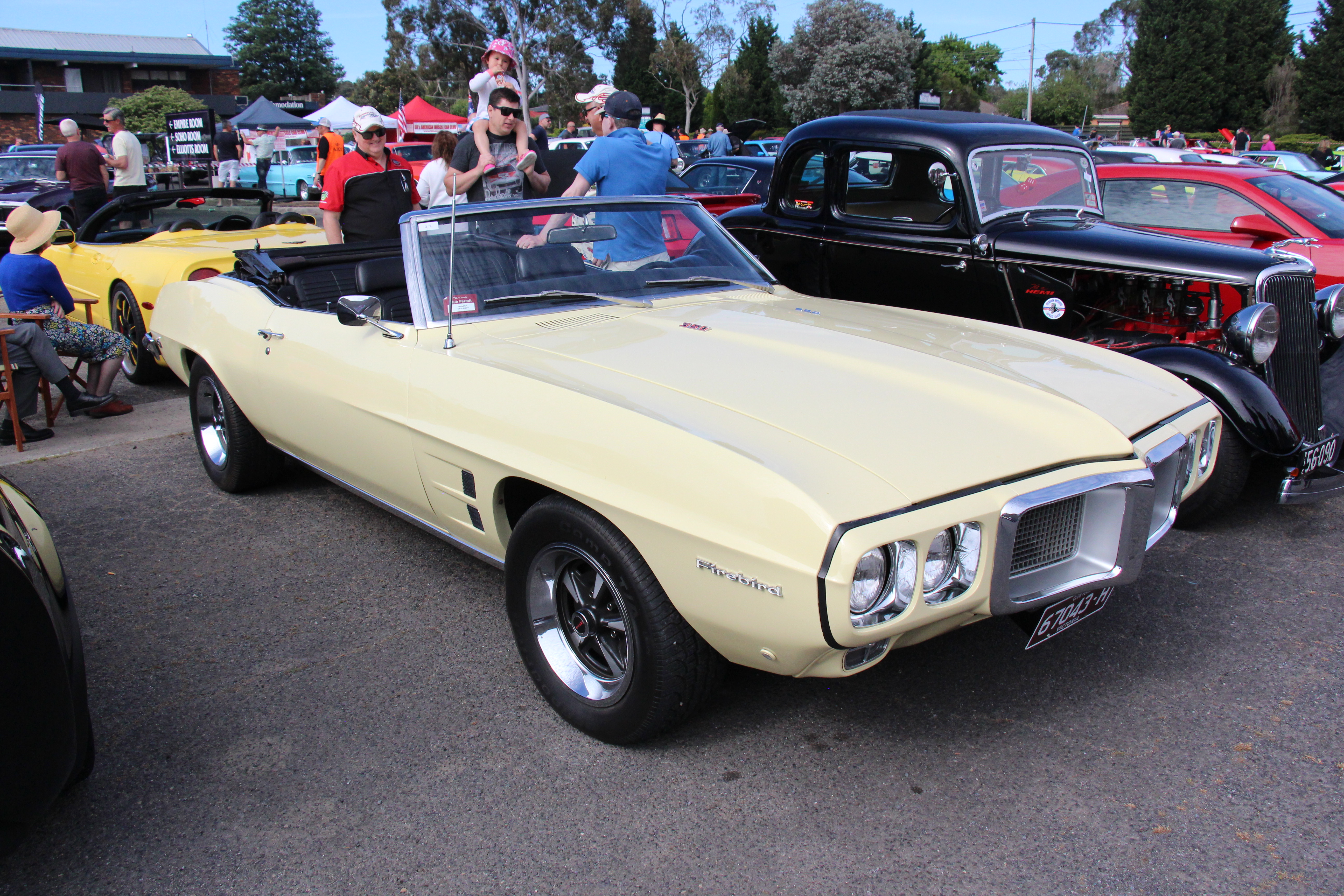
Trans Am
"The vengeance boys told me they got room on the trailer for the Trans Am... Justin's going to learn how to roll race, a thousand horsepower Trans Am"
The Pontiac Trans Am is a famous American muscle car. Here they’re talking about a very heavily modified one that can make around a thousand horsepower.
The Pontiac Trans Am is a classic American muscle-car nameplate known for V8 performance and drag/track culture. In this segment, the hosts specifically talk about a “thousand horsepower Trans Am,” implying a highly modified, big-power build.
two steps
"we're going to do HPX and then we're going to do two steps in the parking lot at Twin Peaks."
“Two steps” is a way to control the engine revs so the car can launch with a sharp, consistent pop. People use it for better launches and for the loud, showy sound.
“Two steps” refers to a launch-control-style engine technique (often using an aftermarket controller) that limits engine RPM at idle and then releases it for a sharp, repeatable rev. It’s commonly used to make consistent launches and to create a dramatic sound during street/drag events.
power tour
"and then leave there and go directly to power tour."
Power Tour is a big car event where people drive their cars to different stops over multiple days. The hosts are saying they’re going there right after HPX.
Power Tour is referenced as a multi-day automotive event where enthusiasts drive performance cars and trucks to a series of stops. In the segment, it’s the next major activity after HPX and the parking-lot antics.
miss a gear
"[3665.6s] Spin, miss a gear, go home. You know, it's going to be great. Break something. Yeah, right? Right, [3672.1s] right. It's just, it's the perfect everything right in a row. Chase, folks are going to hear this,"
“Miss a gear” means you shift into the wrong gear or don’t get the shift fully right. On a race track, that can slow you down and make the car harder to control.
“Miss a gear” means you shift to the wrong gear (or fail to fully engage the intended one), which can upset acceleration and sometimes cause driveline stress. On a track, it’s especially costly because it interrupts momentum and can lead to mistakes like over-revving or losing traction.

Buick Grand National
"... So, I can't wait to meet them. You're bringing a Grand National. Are you? Yeah, because I've heard. There's one c..."
The Buick Grand National is a classic American performance car made by Buick. It’s known for being turbocharged, which helps it make strong power. That’s why it’s a notable car to bring to an event or meet-up with other enthusiasts.
The Buick Grand National is a performance-focused muscle car known for its turbocharged power and strong reputation among enthusiasts. It’s often discussed as a classic “fast Buick” because it delivered impressive performance for its era and became a symbol of turbo muscle. In the podcast context, it’s mentioned as a car someone is bringing, which signals its importance to the group’s lineup.
Performance Expo
"[3736.2s] I'm a car guy. Car guys are the worst. We Jamie, on the next podcast, [3743.7s] Jamie bought a Grand National at Performance Expo. I love it. I've done that before. [3750.2s] There we go. All right, that's the pot. We're done with this. Thank you."
Performance Expo is referenced as an event where someone bought a Grand National. In this context it’s functioning as the organizer/venue brand for a car-related show.
Request an Explanation
Heard something you'd like explained? We'll add it to this episode.
Sign in to request explanations for terms you heard.
Want to learn more?
Browse our glossary for plain-English explanations of automotive terms, jargon, and concepts.
Help improve this episode
See something that's not quite right? Our annotations are AI-generated and can sometimes miss the mark. Click the flag icon on any annotation to suggest a correction.