What a 1928 Model A Ford and McPherson College's Restoration Program Taught Students About Classic Car Culture
To All The Cars I've Loved Before: Classic Car Restoration, JDM, and Automotive History
What a 1928 Model A Ford and McPherson College's Restoration Program Taught Students About Classic Car CultureTo All The Cars I've Loved Before: Classic Car Restoration, JDM, and Automotive History · Nov 25, 2025
K-Class cars, also known as Kei cars, are tiny cars from Japan that have specific rules about how big they can be and how powerful their engines can be. They are great for city driving because they are small and easy to park.
The Mazda Miata is a small sports car that is really fun to drive. It’s known for being light and easy to handle, which makes it great for people who love driving.
The Honda Beat is a small, lightweight car made by Honda. It's designed to be fun to drive and is part of a category of cars in Japan called kei cars, which are compact and economical.
The Honda Prologue is a new electric SUV that Honda is planning to release. It will be a roomy car that runs on electricity instead of gas, making it better for the environment.
McPherson College is a school that teaches students how to fix and restore old cars. They have been doing this for a long time and are well-known for their program.
Automotive restoration is when people fix up old cars to make them look and work like they did when they were new. It can include fixing the engine, body, and interior of the car.
Drive train restoration means fixing the parts that help the car move, like the transmission and driveshaft. It's important for making sure the car runs properly.
A 'barn find' is an old car that someone finds after it has been hidden away for a long time, usually in a barn. People often get excited about these finds because they can be worth a lot and can be fixed up to look nice again.
Pebble Beach is a famous car show in California where people display and compete with classic and luxury cars. Winning at this event is a big deal in the car world.
The Mercedes 300S Cabriolet is a fancy old car from 1953 that you can take the roof off. It's known for being stylish and powerful, making it a classic among car lovers.
The Mercedes-Benz 300 S Cabriolet is a fancy old convertible car that looks very elegant. It’s known for being well-made and is a favorite among collectors of classic cars.
The Hyundai Elantra is a small car that is popular for being dependable and good on gas. The 2011 version is known for being a solid choice for new drivers.
The MGB is a small sports car made by MG, popular in the 1970s. It's known for being fun to drive, even though it wasn't very fast compared to modern cars.
The Ford Model T is one of the first cars that many people could afford. It was made by Ford and is very important in car history because it changed how cars were built and sold.
Orphaned cars are cars made by companies that have gone out of business. This means it's harder to find parts for them, but they can be interesting to collect because of their history.
Car
Franklin
Franklin is a brand of car that was made a long time ago but is no longer in business. They are known for unique features like air-cooled engines.
The Ford Mustang is a popular American car known for its speed and sporty look. It’s been around for a long time and is loved by many people for its powerful engines and fun driving experience.
The Saab 900 is a unique car that was made for many years and is known for its turbo engine, which gives it extra power. It has a different look compared to other cars, which makes it special to its fans.
The Tesla Model Y is a modern electric SUV that runs on batteries instead of gas. It’s known for being very efficient and has lots of cool tech features, making it a great choice for people who want an eco-friendly car.
LIVE
Welcome back to all the cars I've loved for your authoritative podcast on automotive nostalgia,
where our guests are unique.
Each auto has an era, and every car tells a story.
So you know it's time to plug in a little grease under the nails, slip on the favorite
car team, car-themed t-shirt, hat, or jacket.
Speaking of, let's bring in my co-host with almost all the options, he fires on most cylinders
some of the time, which I think can be true of many of us, our man with the half-baked
planned dug.
How are you, buddy?
Welcome.
Doing great, doing great.
What's the weather up there?
How you doing?
Doing well.
Weather's over the weekend, it got to the 80s, but 80s, 80s heat wave, today like
high 60s.
So let me ask, over the weekend, was the weather good weather for test driving an old car?
Not an old old car, that's for our guest today, but an older car.
It was reasonable, I would say, walking up to that area in D.C. to visit it reminded
me of our walks in San Francisco, where my God, it was just up crazy hills, but it's
the Trinidad neighborhood in D.C., which I have never been to, near Gallaudet University.
Lovely, lovely place Gallaudet.
Indeed, indeed.
So since you brought it up, I did test drive the second one I've driven, but this one was
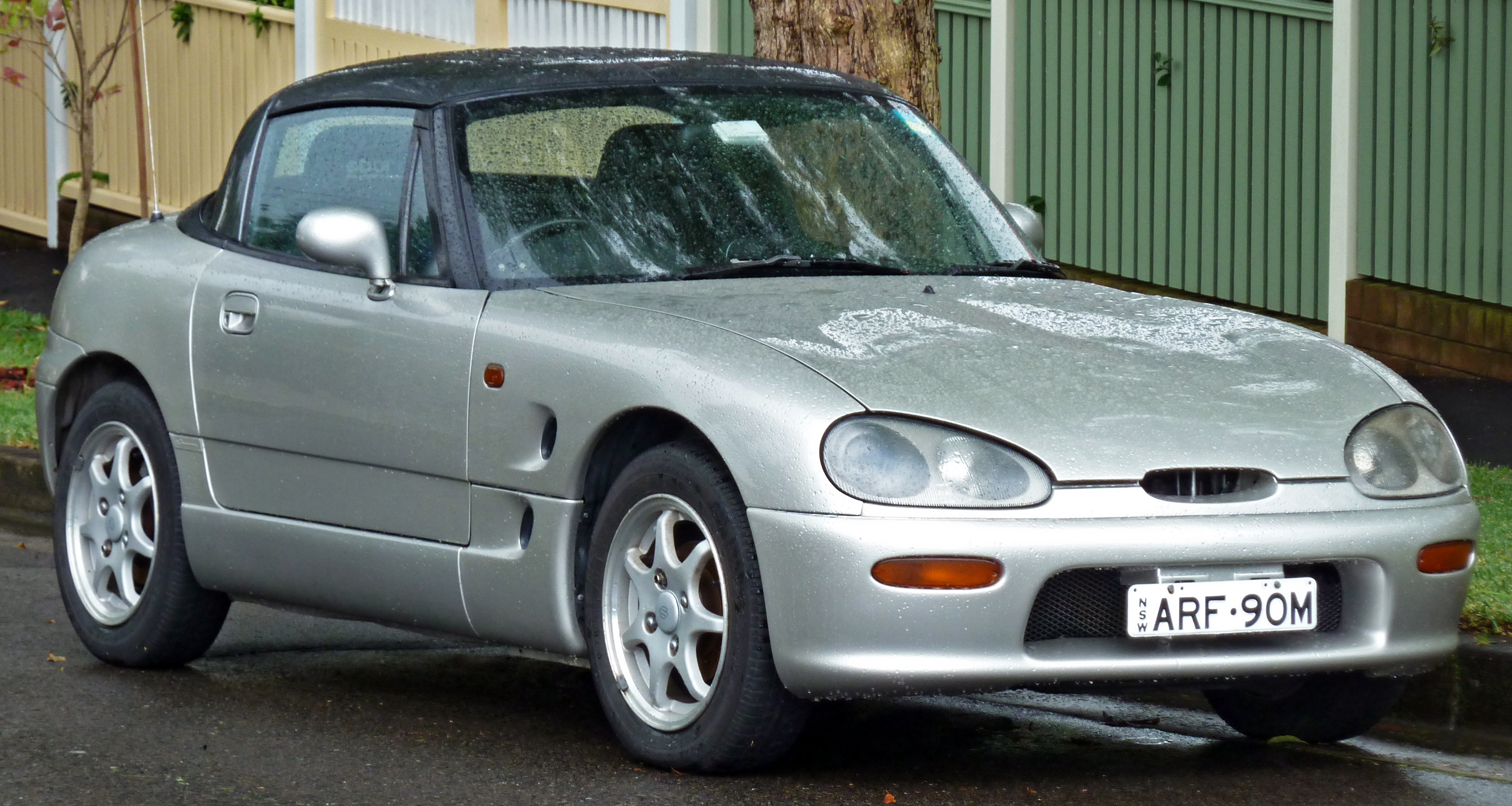
a 1992 Suzuki Cappuccino, and it wasn't as nice as in the pictures, unfortunately.
Well, just like online dating, finding cars, the pictures are seldom representational, yes.
So you've driven how many of these?
Two.
Okay, okay.
And I don't think I'll be driving anymore for a while.
I think I'm going to change my focus back to my 9300ZX and get that painted.
Hopefully our friend Matt is going to paint it.
And how many cars have you bought this week?
Zero.
Still at zero?
Okay, is it going to be a struggle to keep it there, you think?
Nah.
Yeah.
Okay, so on the Cappuccinos, the first one was nice, second not so nice.
They were priced about the same, and tell the audience just a minute or two about these
JDM.
Yeah, so it falls into what the Japanese call a K-Class, K-E-I, which was a car limited in
size, weight, horsepower, limited to about 63 horsepower, 64, and engine displacement
about 660 cc, so under one liter, smaller than, and I think they're all three cylinders,
smaller than your Geometro that you had, which was a whole one liter, but this Suzuki had
a turbo.
Comparatively the muscle car, yes.
Yeah, Suzuki had a turbo, they all do, Suzuki Cappuccinos.
This one had an aftermarket turbo, it was noticeably more powerful than the other
one.
Oh, yeah, you drove a non-turbo, and no, they're all turbos, but just stock versus
aftermarket turbo, and the car weighs nothing, and just to add, it's a coupe, it's a convertible,
it's a T-top, it's a target top, it does all those different things, so it's a really
neat car, it's like a mini Miata.
But we're just going to go with, we're going to let those pass to the next person
out there, so if you're interested.
They are, I'm sure they are available.
There's a huge thing with the Japanese K-car culture in this country, or any JDM cars,
they say Japanese domestic market cars, so.
This is the Kikara, the AutoZom, all of these with the very, very sharp looking little
cars.
Honda Beat.
Oh yeah, that was another one, that was another one.
There's one for sale at the interesting lot down the road for me, they cannot get
rid of it, so I don't think he's asking a little much, but yeah, fun cars, small cars.
Well thank you for the update, and before we go ahead, did you want to say something
else?
Yeah, I was going to say welcome.
Before, thank you, before we pivot to our guests today, a little bit of a call to
action here, carslove.com, please visit, we've always done, or we just did some
work to the website.
Let us know, visit reviews, pictures, you can stream shows there, I believe.
And that's actually, I was surprised that we're heard around the world, so I think
a lot of people, that's how they listen to us, okay?
Just go to the website, check it out, all the episodes are archived there.
You want to give them the link tree real quick?
Sure.
L-I-N-K-T-R-D-E-E slash carsloved.
Absolutely.
So if you're like what you hear, tell a family member, a co-worker, a friend,
because you know what we do, we bring people together all over the world, cities
here in the United States, countries all over the globe, we know because we have
the data.
All right, and so as we march on here, closer and closer to our guests who
are going to tell us about some old, old automobiles, today's theme by way
of a prologue is what is the future of history?
What is the future, is there a future in history?
As our guests will show today, there absolutely is.
So I'm going to toss it over to Doug, and how did today's guests find their
way into your virtual garage?
Yeah.
So, you know, I've been, I watch a lot of YouTube and we have talked
to some other colleges.
We've had a couple instructor-student duos before, and McPherson College in
McPherson, Kansas had been on my list.
I was able, luckily, able to reach out to Tina, and she connected me
with these two gentlemen.
But more background, they have an automotive restoration program.
I saw a great piece on CBS Sunday morning, and I think you
watched the same piece, and it was incredible.
Fantastic viewing, yeah, for our, if you found the podcast, the show notes
will have links to both their, the information on the McPherson
website, as well as probably a link straight to the CBS Sunday morning
piece, and it is lovely, it is so well done.
So we would like to welcome in Chris and Cash.
Chris is a teacher at McPherson, and Cash is a student.
Good afternoon, how are you gentlemen doing?
Good, good, very good, glad to be here.
We're thrilled to have you, thank you for making the time today.
So can you tell us a little bit, let's ask Chris first, tell us a
little bit about the program, how you found your way to it, and then
we'll bring Cash into the discussion and say what attracted him
to what y'all are doing there.
Sure, so the McPherson College Automotive Restoration Program,
this is our 49th year, we're getting ready to celebrate our
50th anniversary next year.
We started in the mid 70s by a local entrepreneur who collected
cars, and surprisingly, maybe a little ahead of his time, he was
complaining he couldn't find anybody to help him with his
old cars that was, that was not already old.
He said, we gotta get younger people, you know, and that's
something we hear now, but he saw it 50 years ago.
So he got together with McPherson College, which was
started in 1887, and said, if I give you cars and some money,
what would you do with it?
And here we are 49 years later.
It's a full four year bachelor degree program.
So students come for four years and join the rest of campus.
We're just one program on the campus.
We've got other majors, so we're kind of fully integrated.
And students go through, take a little bit of everything, as
far as car projects.
We only work on vintage cars, beginning of time, so to
speak.
Really, the mid 1970s is about as new as we'll work on.
Yeah, that's so interesting that you mentioned that.
Now, if you really want to put a smile on your face,
okay, I'm saying McPherson is the preferred
pronunciation McPherson.
It is McPherson.
Perfect, thank you.
Now I know, hey, if you go to the website, if you go to
catalog.mcpherson.edu, you can see all the courses that
they offer here.
And under the, this is the automotive restoration.
Is it okay to call it a major?
Yeah, yeah.
Okay, lovely.
And it's so fascinating because there are core courses
just like any college.
And then there are emphases that you can step into.
So some of the core courses, I'm not going to read them all
sheet metal restoration, fundamentals of woodworking.
That is curious.
So why would I need to know about woodworking when
restoring a vintage car?
Why would that be important?
Believe it or not, most cars built before the mid-1930s
were what we call composite construction in the bodies,
kind of a wood framework or wood skeleton with either
sheet metal, steel or aluminum on the outside.
Some were vinyl, some were leather, but many before
the mid-1930s were wood in the bodies, if not
constructed completely of wood.
That is so amazing to think about.
So let's pivot to Cash.
Cash, how did you first learn about this program
and what attracted you to it?
Okay, so similar to Doug, I went down to YouTube
Ravill and found it that way.
It happens, yeah.
Same thing, yeah.
So I remember the night it happened.
So I grew up on a ranch in Northeast Colorado,
farming family, ranching family, you know,
cattle, alfalfa, all of it.
And so I was in the dinner one night going down
to YouTube and I found Tom Cotter's
Barn Find Hunter video where he donated a car
to the college and I remember looking at my mom
and I was like, well, scratch that.
I think I'm gonna go to college to restore cars.
And she looked at me and goes, you're crazy.
We're not doing that.
So I convinced her, my senior year of high school,
to come down here with me.
We toured the college, absolutely fell in love
when I met everyone here, saw the place.
I knew that there was no other place for me.
And like I said, I grew up fixing old vehicles
on the farm like we had a 53 Ford, that was our water truck.
So that's how I kind of knew about this old stuff.
And like I said, mom and I toured it, loved it.
I was only seven hours away from home
and then I, here I am today, junior in the program.
Junior.
Fantastic.
And before we toss it over to Doug here
so that he can step us back into the past
and walk through them, I was gonna ask,
where do you find these cars?
And before you answer, this is why we say the theme
of this show is what is the future of history?
Because as we move forward in time,
first off, more and more cars are going to become older.
We do a better job at taking care of things
but you're going to take this just really unique knowledge
and be able to go out
and do this kind of unique niche thing in the field.
But where do these cars come from originally?
Where do you find these?
And I'll just offer this to either of our guests.
So at the college here, all of the projects we work on
have been donated to us.
I see.
We're in a really fortunate position
that the college owns the vehicles.
So if it doesn't get done this semester, that's okay.
We'll finish next semester.
There's no customer waiting for their car back.
And as the program's gotten to be better known,
we've been really fortunate to get some great donations
to have students work on.
And having said that, it also sort of limits us.
I mean, we have certain cars that we'll be out looking for
but we've gotten some great projects
and great cars donated to us that we work on.
So they just come in from here and there.
Yeah, it could take years to finish a car, right?
So once it comes to you, if it's been weathered
or rodents have been in it
and you really have to pull it apart,
I would think that that happens with a lot of these.
You're talking upholstery.
It has to be pulled apart.
Any springs in the upholstery, the chassis, the wood,
all that kind of stuff.
So you really have to start from there.
Oh, you mentioned donations.
So could I ask, are there any celebrities, let's say?
Any former talk show celebrities
that have had anything to do with your story?
Yeah, certainly Jay Leno.
Probably the most notable.
He's been a supporter for a long, long time
and we're certainly grateful for his support over the years.
Lovely, lovely.
And as was mentioned in the CBS Sunday morning piece,
as I kind of ramp down here,
let's talk about a 1953 Mercedes
and how that really helped the program
just over the past two years
gain national visibility and prominence.
Yeah, I can speak to that a little bit.
So it was 12 years ago now
that we set out on a new strategic plan.
That was to compete to win at Pebble Beach,
which some people scoffed at.
How are you gonna,
how is this little school in Kansas
gonna do that with a bunch of kids?
And we went out and we found this 1953 Mercedes,
300S Cabriolet, which looked like a pretty good,
solid old car and we took it down
and had students restore every single piece of it
with the goal in mind,
which I think is just a huge part of,
where I have trouble with their project.
They don't know what they want it to be.
We knew from the beginning
we wanted to make it as perfect to lose
as we possibly could.
And so just spent seven years doing a total,
having working with students,
but having them do the total restoration.
And so you have that,
that car is still on campus again.
It's still owned by the university.
It was shown at Pebble Beach
and it's been shown at several other events since then
and it is owned by the college.
And I presume or hope will be continued to be owned
by the college for years
so we can continue to display
what some students have done.
Got it, got it, lovely.
Now is there, I didn't see this on the website,
but is there a kind of a museum on the school grounds
where you can see these
or, I don't know, do you want to?
There's not a museum associated with the school.
We do have a town museum
that they do, one of our teachers here, Luke Chenel,
he's on the board
and he'll be rotating some of the displays
and like my freshman year,
I worked at the museum here in town
so I helped set up some of those automotive displays
and the one currently going is German automobiles.
But most of the cars that are college owned
are stored in a storage facility
where all the same students store their cars too.
So, but new showrooms in the Templeton that we display them
and all in tasteful look really good
impress everyone, nice, nice way of doing it.
Fantastic, and do you have cars,
I don't know how to say it,
but cars from all over the world you have,
is it all domestic, do you take in imports too?
Will you take anything you can get your hands on?
So, we do not take anything we can get our hands on.
We say no to quite a few projects, whether they are...
Oh, wow.
And that sounds almost counterintuitive.
Somebody wants to give you something,
but we've got quite a few cars.
We're certainly glad to talk to anyone
that has something in mind
that they'd like to potentially donate to us.
We do try to have a little bit of everything.
We've got mostly U.S. and European,
actually entirely U.S. and European cars,
but quite a spread from Europe, Mercedes.
Got it.
I don't know, Triumph, yeah, Austin Healey's.
So we've got, and then of course,
a lot of U.S. stuff also.
Lovely, got it, thank you.
All right, well, here's the time.
Here's the time of the program
where I sort of toss it over to Doug,
who likes to go 88 miles an hour
and inflame back to the future, so to speak.
So let's go back in time, Doug.
Yeah.
And let's chat with these gentlemen
about what they haven't,
what got them started, so to speak.
Yeah, so it's interesting to hear Cash talk about
working on, growing up on a farm.
We've had several people grow on a farm
and people I've known personally
and they, you have to fix everything, right?
And their first cars were tractors.
Yeah.
That was one of our guests, yeah.
So it just comes natural, right?
And it's a necessity, right?
There's nobody else to go fix it,
you gotta go do it.
So Cash, your first car was a...
1970 Volkswagen Beetle, bright yellow.
Bright yellow, bright yellow.
They're always yellow, why are they yellow?
Everyone knows where we go.
I think it was a thing so that way,
if I got in trouble, they could spot me
in the small town that I grew up in,
like that dang kid.
We're giving Cash a car,
but it's gonna be the loudest car in the village.
Yeah, cool man and brightest.
It was the loudest and the brightest.
Yeah.
It's the lowest, but...
Good to know.
How'd you get that car, Cash?
So this one is kind of an interesting story.
My mom, when I was about ready to turn 16,
like I said, grew up on a farm,
so we had a bunch of farm vehicles,
but my mom had a 2011 Hyundai Elantra,
just one of her random cars and she goes,
Cash, here's something reliable
you can have for high school.
I'll sign it over to you,
that way you never break down.
And I said, thank you,
but I'm gonna trade that instantly.
And so as soon as I got it in my name,
I went and traded it for that Volkswagen Beetle
and she liked it.
She drove a manual, my grandfather,
one of his first cars was a Volkswagen.
So it was a good adoption to the family.
And then about two months after I got it,
I decided to be pretty cool
and drive it on the hottest day of the year
and blew the engine out of it.
So real quickly, learned how to rebuild one.
And then after that, my car snowballed and changed
and now I'm in a pre-war and all that.
Nice.
Yeah, and I could tell when you were,
for those who are watching when they get to see it,
I could tell you started smiling, thinking about it
and what a, you know, you went from,
here's a reliable 2000 series car
to hey, let's get this 1970 Beetle.
Oh, I never hear the end of it from my mom.
If she was here today,
you guys would hear it all too, so.
Well, and you might not be with us
if you hadn't made that bold choice, right?
Exactly, yeah.
Like I said, it put me on a completely different track
and one that I'm happy for.
Yeah, especially driving on the hottest day of the year, right?
Exactly.
And I've had my fair share of tractors too,
so luckily now I've got the cars that go a little faster.
Yeah, yeah.
And everybody seems to have a Volkswagen story.
I can't even think of how many people we've had on
talking about Volkswagen,
it never ends with good reason.
Yeah, great cars.
I mean, love and death.
Yep.
Iconic.
So we're gonna ask Chris about his first car,
which is a little bit older than yours.
Well, so that's kind of a,
I guess a tricky question.
My first daily driver was a 1976 MGB,
blue, so it wasn't the bright yellow of a Volkswagen,
but it was still slow.
And when people saw me around town,
you couldn't get away with anything.
It was the only thing in town.
But the same time I got that to be my
practical daily driver,
I started restoring a 1914 Model T.
Both about 15 years old,
the Model T took me a couple of years to restore
and a lot of fun and still have it, still drive it.
I'm glad the car,
I'm glad cars can't talk
because the story that poor old car would have
would fill a segment, but yeah.
Well, and that's part of our podcast.
We think every car tells a story.
So even just what you can tell us.
So that Model T,
that's I guess sort of a,
not sort of, it is an unusual choice for a first car.
Yeah.
I didn't grow up on a farm.
I was really lucky to grow up around
early collector cars.
On the third generation of my family
to be interested in pre-1916 or brass era cars
was always a hobby for us.
My father got his first Model T
when he was 12 or 13 years old.
And so our growing up even,
I think starting at five years old,
our family vacation was a horse's carriage
or a brass era car tour somewhere
with a group of friends that we only got to see once a year
because they lived in other parts of the country
or even Canada.
And we got together once a year
and toured for a week in some area.
And so actually the,
I was, I can remember, I was told, been told
that the first tour we went on,
I was five years old.
I've got a younger brother.
He's three and a half years younger.
We couldn't go the year before
because he was still in diapers.
And my parents decided they did not want to be changing diapers
while driving around in a Model T.
So we waited until he was two and I was five
and then off we went.
So when I got to be 15,
I had been driving my father's cars
and my parents' cars,
Model T's and other early stuff for years.
And so I liked to get one of my own
and having no money that had made it easy.
My father said, we have some pieces
and more active in the local car clubs.
I bet other people,
when they hear a 15 year old wants to put a Model T together,
they'll give some pieces.
And so that's absolutely.
Here we are.
And that's forward many years later.
Well, yeah, it's been many years.
A few decades.
And yeah.
And so how far did your family travel
in the Model T to go to these,
on these vacations?
Just curious.
I was, yeah, I was so curious about that.
So usually we would trailer them.
We'd use a fucking trailer.
Okay.
I grew up in New Jersey,
just outside of New York City.
But we had a group that toured in Ontario, Canada.
And every two or three years we'd go up there.
Now being in Kansas sort of makes it easier to travel
to, well easier, but more difficult
to travel to both coasts.
So we've toured all different areas.
But when I was 17 or 18,
had the Model T finished in that year,
our group was going to tour Rhode Island.
New York to Rhode Island is only three or four hours by car,
but by Model T it's a lot longer.
Being 17, I didn't have a pickup truck or a trailer.
My parents were using there.
So a couple of us got together and said,
well, let's just drive.
So we jumped in the Model T's
and left a day earlier than everyone else,
but drove up there, did a five day tour
in and around Rhode Island,
and then drove home and spent nine days driving the Model T.
Dumb question.
How fast would you go in it?
I'm not asking top speed,
but what's a reasonable speed if you're gonna go,
for a few hours in one of those cars?
Usually in a Model T,
I usually say it's 35 or 40 miles an hour.
Wow, okay.
If you're driving a stock Model T,
I mean, there's all sorts of
period performance modifications,
but if you're driving a stock one
and you drive 35 or 40 miles an hour,
you're not hurting it, it will just go forever.
Interesting.
Would you do anything to the suspension
to handle potholes of the modern era
because you can be going very flat road
and out of nowhere, especially up there
where you would get the free stall cycle
would just tear up the roads
and you get a pothole out of nowhere.
Would you modify the suspension?
No, you just kind of deal with it
and pay extra attention to the road.
Some people do modify them.
I feel like driving a car like that
and I think cash will agree, makes you a better driver.
You just learn to anticipate everything
and watch for potholes.
And really, if you think about how bad
the roads were 100 years ago or 110 years ago.
If there were roads, if there were roads at all.
If there were roads, so even the occasional pothole today
is better than anything they had.
Good point.
I think they had 100 or 110 years ago.
Good point.
They were made for it.
Fantastic.
Okay, Doug, I'm done interrupting.
You guys are just too interesting.
I'll be quiet.
Well, here's a little fact and it's...
I've seen it a few times.
It's in the Smithsonian American History Museum in DC.
Not far from me.
So the first car to travel,
you got me thinking, Chris,
the first car to travel across the US
was a 1903 Winton Vermont.
And it was driven by a doctor.
And I had never heard of a Winton
and he brought his dog with him.
And it was the first car in 1903.
So not only was it a 1903,
but in 1903 he made it happen.
Yeah, it's a fascinating story.
It is 1903.
So Wintons, not to...
No, no, no, I'm bigger than you might have one.
Lying around somewhere in the shop or in the sheds.
No, but Wintons, they were built in Cleveland, Ohio
from the late 1800s into the 1920s.
So in business, about 25 years.
And in 1903, really a pretty high-end US-built car.
And I believe it was a bar bet of all things
in San Francisco and the doctor, Horatio Jackson,
he said, yeah, I'll take that bet and drive
from San Francisco to the East Coast
and eventually to his home in Vermont.
And the trip cost him, I believe, thousands of dollars,
but he won that $50 bet.
Yeah, he did.
And the process gets credit
for first transcontinental drive.
So there were dozens of car companies,
a hundred, 10, 15, 20 years ago.
There were.
Now we've got, what, half a dozen,
depending upon how you count.
So did the depression really do them in?
Was there, I know that they were just kind of bought up
by rival companies.
Is that largely what...
Because I know you can get a small plug here.
You can get one of the lines of emphasis
in this major is auto restoration history,
where you can learn about all the stuff,
teach it, talk about it, write about it.
Yeah.
So that's, I feel like I can come in
because that is my emphasis.
Oh, I was gonna ask you perfect.
Perfect.
Earlier you talked about history as a future.
Well, back in high school,
I was gonna either become Ag Sales
or a history teacher.
So when I found out about McPherson and their emphasis,
well, they had a history one.
So I was like, all right, perfect.
So I came here for our history department.
It's so interesting now
that I'm actually minoring in it too,
but we have classes such as history of the automobile,
history of automotive design, things like that.
So you learn all of it.
And like I said, when I came to college,
I was mainly interested in 50s cars, something like that.
But then I had a couple of pre-war automobiles.
But now, in talking to how you said
about the Great Depression,
my whole life emphasis
and what I'm going, my career is going to be into
is orphaned cars, cars that are no longer in business,
they're companies.
So now I own two of them,
Marvin and a Franklin, who are lost to the Depression.
And so you learn all of it.
And that's being at this program
really shifted me something into liking history.
Like I said, enough to make it a minor
and like these old cars.
And I mean, I spend my weekends,
there's some college kids who spend their spring breaks,
going to the beaches and partying.
I spend mine in the library and watching documentaries
on my couch about Horatio's Drive,
the Lincoln Highway, stuff like that.
So.
Love it.
Love it.
Great answer.
And so, yes.
So to be clear here, as we were talking about before,
sorry, I said I wouldn't interrupt,
but I can't help it.
You're fine.
These guys.
Great questions.
Great questions.
Great answers.
Now, Cash, you still have to take the core courses,
40 to 41 hours, introduction to restoration,
engine rebuilding, all this good stuff.
I mean, you've got to jumpstart, as we said,
fundamentals of woodworking,
automotive, electrical systems.
What else?
Chassis restoration.
Right.
Okay, important paint.
Yeah, exactly.
Full screen.
Mm-hmm.
And the core, the history core courses are
introductory methods for historical analysis,
social history, the automobile technology
society, colloquium of historiography,
and then your thesis.
But then the electives are all sorts
of interesting things here, too.
American history since 1877.
Automobile had a ton to do with how that changed.
Modern Europe, social history, political history.
So have you taken any of those courses yet?
You mentioned you're a junior.
I've taken every single one you've mentioned.
So the one thing.
My drop.
Yeah.
The one thing I love about McPherson College,
I'll give a little shout out there is,
so I come from a small school.
My graduating class was 18.
So when I came to McPherson,
which people say is also small,
I fell in love with it
because not only is the AR program amazing,
the general education program is amazing.
So I've taken, I was a fortunate freshman.
I probably took three or four automotive classes
in my freshman year.
Engines, paint, like chassis.
I took a lot of them.
Intro to restoration that Chris teaches.
And then after going into that,
like I said, I want to do the history emphasis.
So I took all the history courses
our college has to offer.
And now I've done advanced paint
because we have several advanced courses as well too.
So as a junior,
I've luckily been able to take a lot more
than the core and just dive into anything.
So.
That is fantastic.
All right, Doug, I'm done interrupting.
I promise over to you until we end the show,
I'm going to keep it.
No, no, no, you're fine.
So what's great about your guys,
well, I shall ask you about your,
what happened to your first cars?
I think you both, well, at least Chris still owns his,
but I'll let Cash tell us about what happened
to his first car and then we'll get
into the second cars.
My first car is still sitting at home in our shop.
So mom reminds me of it every time she goes out there
because it's collecting dust.
Oh, it's still there.
Drive it.
Yeah, I like that.
All of them running, but now I probably filled that car
with about five more or shop with about five more cars.
And I still get those calls from mom saying,
you got to do something.
So they're there.
Yeah.
And Chris, I think you mentioned me,
still at the Model T.
Yep.
Yeah, I still have, you know,
and at this point I can't get rid of it.
And maybe the good part is it runs great.
Usually, but it's, I've got so many memories
and it's led a pretty hard life.
It's wouldn't, at this point, I guess I'm lucky,
it wouldn't be worth selling.
It's worth more to me than it would be to anybody else.
Oh, I love that.
I love the way you just put that.
I, two daughters, one in high school
and one in college now.
And, you know, I told them,
because I mean they kind of grew up
the same way I did antique car tour
somewhere in the country.
You know, and I think they figured out,
they've ridden in or driven a Model T
or another early car,
I think in about 30 or 32 different states at this point
that they've seen growing up and told them both,
when they can reach the pedals, they can dry.
So we're lucky in Kansas here,
there's lots of dirt roads
and we'll just go out on a dirt road
when they were eight or 10 years old.
And here you go.
They can, you know, so my first car
was also the first Model T they've driven
and my oldest daughter's now in college
but she restored her own Model T
when she was in high school and before.
And so that Model T that I saw,
yeah, my first car,
we're still using it and everybody gets to drive it.
Yeah, no, that's awesome.
So yeah, you guys both still have it.
Oh, the MG.
Because it was my daily driver,
I drove it for a few years high school
and the beginning of college
and then it needed to go.
I needed something a little bit more practical.
Yeah, got it.
Got it, especially in the Northeast rust
and all that stuff.
Yeah, and you both, maybe a coincidence,
but your second cars were both Ford Mustangs.
Purely coincidence, yeah.
Yeah, so Cache, tell us about your Mustang,
what led to it?
Obviously you didn't sell the first car.
No.
So I kind of acquired two cars about the same time,
but the Mustang was about a day before the other ones
I put it.
It was a 95, so an SN95,
it was red five speed with convertible top.
So guess what a high schooler needed
to get in trouble.
And I got that car, it was actually my aunt's
and she had it, she was the second owner,
put it in a storage shed for about 13 years.
She came back home one day and she's like,
have you heard about my Mustang?
And I was like, no, I don't think I have.
And told me about it, of course, as a high school kid,
I was like, okay, well, I think I wanna know what speed is.
So I went, bought that car from her,
we dug it out of the storage shed
and I put a new top on it.
It only had 40 to 50,000 miles on it.
And it performed really well for me.
I had it for several years.
And then actually the way I acquired it is a funny story
and I tell people all the time,
growing up on a ranch,
I grew up doing team roping,
showing horses at the county fair.
And so to buy that car, I actually sold a horse.
So I tell people, I sold a Mustang to buy a Mustang.
Nice.
I love that.
That's my catchphrase.
That is a first.
And Christian, that needs,
that will be the title of his autobiography.
It must be, yes.
Christian, your middle son has a 94 Mustang.
That's his first car, convertible.
Correct?
Oh four.
No, oh four.
40th anniversary.
Yeah.
Yeah.
He thinks he is way cooler than I ever was.
Fact.
Yes.
And so Chris, your first car,
or your second car, pardon me,
or third, depending on how you look at it,
was also a Mustang.
Tell us about it.
It was kind of, I guess, non-descript.
It was a 1984 Mustang with the five liter engine.
Lot of fun.
Similar to cash, not, I was in college
when I got it, not what a college student needed.
But I didn't get into any more trouble with it
than I did.
Had it for a couple of years.
It was just my daily driver.
Actually, when I came out here to Kansas as a student,
I needed something a little more practical
and so the Mustang went and that was the end of the Mustang.
Yeah.
Yeah.
And just looping back to cash,
what was the big difference that you remember
besides convertible between the Volkswagen and the Mustang?
Well, comfort was a little bit.
I had some nice leather seats in the Mustang.
And like I said, I could,
the Volkswagen was 1600 dual port,
but I feel like in the Mustang,
I could really hit highway speeds,
getting a little more trouble,
but I was always well with them.
They're both in really good shape.
So, but the Mustang to me was kind of my first
jump towards independence and stuff like that.
And be like, okay, this is my first,
my first car that I've purchased.
Yep.
And you know, typical other things,
like I always had to change the thermostat
on my Mustang and never had to do that
on the Volkswagen.
Oh, yeah, cause I was like, well,
now I've got to deal with this funny little water thing.
Right.
One of the, one of the things for me,
I'm sorry if I can jump in.
No, please, please do.
This is your show.
Because I had such a difference
between my collector car and my daily driver.
I enjoyed working on the Model T or early cars.
I didn't like working on my modern car and still don't.
I mean, I'll do maintenance,
but you know, I guess it sort of gave me that mindset.
If I only have a certain number of hours
to work on something,
I want it to be something old
and maybe something I understand more.
You know, I'll do basic maintenance,
but you know, to me like the, even the MG,
but certainly the Mustang and everything after,
it's been a daily driver, you know?
And so I never beat on them real bad
cause I didn't want to have to fix it.
I didn't want to have to spend the time fixing it.
So I kind of always tried to take care of stuff
and work on old stuff if that's what I got time for.
Yeah, yeah.
Well, you made your hobby, your career, right?
And that's pretty awesome.
So I'm gonna jump around a little bit,
but I, God, I just want to get to
both of your current cars or most recent cars.
Both cars, definitely Cash's car I had not heard about,
but tell us about it, Cash.
My 1917 Franklin, that most recent purchase.
So it all began when I was a freshman here
and there's this club called the Franklin Club.
They're amazing.
If you haven't heard about them, look into them.
They're, like I said, automobiles
from I believe O2 to 1934, air cooled
and they competed higher end with
Upwear by Marlins, maybe Pierces, stuff like that.
And so I went to the, back to freshman year,
I went to this Franklin Trek
because I got a scholarship to go to it.
So week long event in upstate New York
and you just have fun.
It's kind of like daycare for all these scholarship kids.
We just go drive these old cars around
and it's a great club because if there's kids
who really like these cars,
they'll always find the right car for the right kid.
So since kids have gone there for several years,
a lot of them acquired Franklins
and then I being the next victim.
Back in October, I had a couple people reach out to me
saying, hey, I think I know this one Franklin for sale.
And the owners were like, you know, we might sell it
and finally became really good friends.
And I purchased it.
It's at the 1917 Franklin Cloverleaf Coupe.
It's got a really special history behind it.
It was a California car its whole life,
has a California top on it.
They say it's probably one of maybe two left with this top.
Oh wow.
Really good, special features.
Currently not running.
I've had to like, when I got it,
it was probably in about 40 unlabeled boxes.
I got it back to the home.
I've been putting it together.
And like I said, it's aluminum-bodied, air-cooled,
wooden frame.
It's really a buggy.
So I sold my horse and now I'm going
to horseless carriages.
So.
Aluminum in 1970 would have made it a very high-end,
desirable automobile, correct?
We think it is nothing now, but yeah.
Yeah, luxury car of its day.
And it's, every time I look at it and work on it,
I have it sitting next to my Marmin.
But you look at this Franklin from years, 11 years earlier,
and it was a high-end car.
It's comfort.
It's got everything.
I mean, it's got 25 horsepower.
So I'm not bragging about that.
But that's why I'm bragging about all the other features
it's got.
You know, and speed now, speed's not my thing.
So these cars are amazing vehicles to be around.
I'm honored to be its next caretaker.
Yeah.
Do you, I meant to ask this a few minutes ago
about the Model T's and Model A's, but how far back history,
Chris, you kind of brought it up,
but how many owners can you trace back
on some of these cars?
Oh, wow.
Great question.
Have you been able to do that or has it been,
this car has had 12 owners?
Like provenance of the car, like a piece of art almost.
I'd say, yeah, that's my favorite thing about it.
So that's why I chose history.
History, yeah.
And we do classes here that Chris teaches
and he shows us kind of how to research your cars,
you know, going through newspapers, stuff like this.
And my Franklin, it's always had a neat history.
Like I said, the first owner was a rich alfalfa farmer
from California.
He actually ran away during 1917, lied about his age,
bought this car and then went and fought in World War I.
And then after that, he went to a school teacher
in Los Angeles and then another couple in Los Angeles
and then to me.
But like some of my other cars have different stories.
I've got a 26 Model T that was sold brand new
from my family's Ford dealership.
And I actually wrote letters to all the previous owners
and bought that car back.
So it just depends on what the car is and.
Right.
So sometimes it's hard, I will say, it's very hard,
but Chris is kind of a professional now.
So I can hand it to him, he knows.
For me, so that first Model T I have, there is no history.
I started with an engine block that I know
where it came from, but it was just a block.
And, you know, it was just when I gathered pieces
and put it together.
I shouldn't say that, but it's a pickup truck.
And the pickup bed came off of my father's 1910 Model T
touring car, which he still owns.
And we know that his car was sold new in New York State
and my father has all the original paper registrations.
It was a touring car until 1917, when it was a 10-year-old car.
And then on the registrations, they owned a farm,
so then it was converted to a pickup truck.
He got the car about 1980, it was still a pickup truck.
So we took that bed off and he built the touring car.
But anyway, that's kind of where that one came from.
I have another Model T 1910 touring car similar to my father's
that Ford still has the original build sheets
on some early cars.
So I know it was sold new to Maine.
I know what dealership it went through.
And it then appears I've got a photo, actually,
magazine article from 1937 that this 1910 Ford
was being used in an antique car event in 1937.
So it was already a collector antique car in the 1930s.
And I know what's happened since then.
Wow.
And then, yeah, it kind of goes on and on.
Yeah, no, that's amazing.
And you mentioned one of your daughters
has a Model T as well, right?
Mm-hmm, yep.
And similarly to mine, it was just pieces.
Don't know where any of them came from.
And the history, correct me if I'm wrong, about pickup trucks
and why they're called pickups is they didn't come as pickups.
Company sold the bed for it.
And you would go to the train station, I think,
the rail yard and pick up the bed for the vehicle.
And that's where the term pickup truck came from.
Am I right?
Yeah, and the pickup bed that's on my car, it was that.
It was aftermarket.
It's newer.
Sorry.
Yes.
Yep, yep, exactly.
So I bet you didn't know that, Christian.
Did not.
Great question.
Yeah, good stuff.
Yeah, so we want to hear about the Auburn as well, Chris.
So we're competing here.
We've got a 1917 Franklin, and we've got a 1910 Auburn.
I am curious if you guys would race, who would win?
But tell us about it.
Well, he's doesn't run right now, so I'm going to say I would win.
I can't push that beat.
We could push it, and it would win.
Yeah.
I'll say this week, I would win, no doubt.
So the Auburn, it came into our lives,
I'll say otherwise, it's a family car.
We bought it about five or six years ago.
Always had Model T's and Buick's and other early cars,
and then decided we wanted something a little bit bigger,
but also early.
And this was a car we had seen years and years ago.
It was somewhat local, near Wichita about an hour away
from us, and kind of tracked it down,
found out it was still there, and were able to buy it.
It had been, actually, it's another car.
We know the history back to new, got it,
and then I did a quick search on newspapers online
and found an article in 1953 on that car
when it was being restored.
And it mentioned the original owner's name
and who owned it then, and we know the history since then,
but it was restored in the 50s or 60s,
kind of pretty well done, but had been sitting since then.
It hadn't run in 40 years until we got it,
so we decided we were going to re-restore it,
and that's what we did.
Nice, nice, beautiful, beautiful.
So how many, jump it ahead in my mind,
but I just can't stop.
Who has more cars and what's the number for each of you?
Probably cash.
I don't like to count this, because I think currently,
I counted the other day, because I just got one the other day,
I'm at double digits now, so we hit 10.
Oh, boy, congrats.
Thank you, you could imagine how my family feels, so.
Yeah, I was going to say, if you don't want to count,
your mom would probably volunteer for that number.
What's on me about it?
You remind me.
For me, it's a lot less.
I've got two Model Ts, I have a 1913 Buick,
and then the Auburn is a family car.
My father and I are kind of 50-50 partners in that.
We did the restoration together.
So that only counts as half, so that makes me feel better.
And then we've got a couple other cars also,
but nowhere near double digits.
Yeah, that guy, Cash, has a problem.
Cash has a good problem, but.
It's an addiction.
Yeah, and I know Chris, you love all your cars.
You really don't have one that you've hated,
but I find, or dislike, I find the car, Cash mentioned,
which is so out of character for him.
What was the car that you've disliked the most,
that you told us about at least?
The one I dislike the most is one that I own
because I have to work on it, is a 1994 Saab 900.
That's Turbo Cabriolet.
And when you look at my collection,
that's the one my friends make the most fun of
because it doesn't fit in, bright red.
And like I said, I dislike it the most.
It's got a good history of my grandmother's.
I bought it from her, low mileage, great condition,
grandmother car to the max, if you can imagine one.
But working on it, sucks.
It's those funny little foreign cars
and I just, I can't wrap my head around it, so.
Yeah, I remember like that, the Saab convertibles,
I think like in the 90s, 80s, that was like,
if you're a lawyer, that was like the car you had to get,
along with the BMW probably, but more so the Saabs.
They're great cars.
I mean, I've have the window sticker
and all that for mine when it was sold brand new.
It was a 1994, a $42,000 car.
Yeah, wow.
Leather seats, heated seats.
It's got all the bells and whistles
and it's still a great vehicle for me,
but it's just, if I have to work on it,
I'll turn it away for a couple of days
and be like, all right, we're gonna think about this.
Wow, yeah, so there's, of all the cars you've owned,
you've gotten rid of very few of them, it sounds like.
Yes, yes, depends on the car.
Yeah, yeah.
And I wanna ask you both.
I think you guys have some dream cars already,
but what would be your dream car?
For me, I don't know, there probably gonna be some listeners
that are gonna have to go look this one up and.
Including me.
So for me, my dream car would have to be something early,
just because that's what I'm into,
but probably a circa 1910, simplex automobile.
Because I grew up close to New York City,
these were built in New York City,
and just a really, really high-end car in that 1910 era.
I'll say the mid-sized model was a four-cylinder,
roughly 600 cubic inch engine.
Today, top speeds of 60, 70, 80 miles an hour.
For me, that'd be the dream car.
I'll settle with the Auburn for now,
which is no comparison at all,
but we're good with that.
Yeah, and cash?
For mine, I like to shoot really high,
and what takes up the most amount of garage space.
I'm really interested in the early vehicles,
pre-World War II, and higher-end stuff,
orphan cars, of course.
So I would love to just settle
for a Dusenberg Model J, probably a Fiat 10.
I like the Model A's,
because they're really impressive.
They're not cars, they're pieces of engineering.
That's just beautiful.
And the Dusenberg line has always been amazing.
And so that's the one car that,
if I'm out, I've been to a lot of shows,
and I see them there,
if I just see one driving down the street,
or collections I've worked in,
that Dusenberg will always draw my attention to it
and blow me away.
They're striking looking, yeah.
Yeah, they just, and you can't stop looking at them,
all 10 miles of them.
So.
Good deal.
Well, thank you guys for spending some time with us.
I think you have an interested student here,
is would you take Doug?
I know, talking about your summer programs,
he wanted to, can he just kind of sit out of the class
or just sit in on it?
Does he still have to be admitted?
Do you allow that sort of thing?
So to come into the program as a student
throughout the year, you would have to be admitted.
I bet I could pull some strings
and see what I can do for you, Doug.
But yeah, so, and we do have a process
to come as a traditional student.
But then yeah, we do, we offer summer classes in June,
which are one week, several one week sessions.
You pick a subject, you come, hang out with us.
A lot of our past participants call it car camp.
We do evening activities.
It's only these, what we call restoration institute classes.
It's the only thing going on that week.
So we all go to the dining hall together.
A lot of the participants stay in the dorms.
We clean out our newest dorms and put people in there.
And they're just hobbyists from around the country
that come and spend a week or two or three with us.
Doug is just coming out of his skin with happiness.
I can just feel it radiating from you.
I can see more cars in my future if I go to one of these.
Oh boy, yeah, start stacking up the cash.
Well gentlemen, this has really been wonderful.
Thank you for making the time.
I got one last question for you on the way out.
And really it's just more of a statement of mine.
I find the concept of a rumble seat fascinating.
It's a bucket list of mine to sit in a rumble seat
in a car, one that's even redone
would be even more fantastic.
So what is a rumble seat?
Why does it exist?
Was it ever used?
Was it sort of a vanity thing back there?
Do you see them come through on any of your cars?
Have you restored any and do they work?
It's a lot of questions.
You just take one too.
And we're not gonna like cash take that.
Okay, so yeah, I'll jump in
because I have a 1928 Model A sport cube.
And it does feature a rumble seat.
No, well, okay.
It was restored in 1994 through 1997.
I purchased it in about 20,
right after I graduated high school, 2022,
because it was a place I worked in high school.
They had a bunch of cars and bought it from them.
And it is one of the best seats in the house.
I drive that car.
It's pretty much my daily driver is that Model A.
But the rumble seat is the most comfortable place to sit.
There's more legroom back there.
You can actually get fresh air.
Oh, I would have thought the opposite.
I would have thought the opposite.
Oh, no.
You're saying there's more space to sit.
So, oh, maybe up front,
it's a little more crowded with not as much legroom.
Okay, okay.
You actually have to drive your car
if you sit up front.
See, nobody said the rumble seat.
It's a very good point.
Very good point.
And there's one time, my freshman year of college,
where we drove my Model A and Model T
from Colorado to here, 500 miles.
And every hour or so,
we switched out someone in the rumble seat
because everyone argued to sit there.
Absolutely.
It's the, like I said, the best seat in the house.
I love mine.
How was it in the rain?
I've also been in the rain.
It's for a car that's going 40 mile an hour,
you're gonna get a little wet.
So, enjoy the ride.
Leather seat, so you just wipe it off when you're done.
I actually, my dog, I've got a golden retriever.
When we take the Model A out,
he sits in the rumble seat
and everyone loves seeing him back there.
He stays back there and he just, it's amazing.
No, who is cooler than this kid, Cash?
Nobody is cooler than this guy.
I gotta tell you what.
Well, thank you for that explainer.
And I tell you what, pal,
if I ever make my way out to where you are,
I will buy you a tank of gasoline
if you take me around the block in a rumble seat.
Do we have a deal?
You've got to spot my car anytime.
Fantastic, fantastic.
Again, thank you gentlemen both
for making some time in your schedule.
This was an extreme pleasure for us.
Appreciate it.
Thank you guys, it was fun.
Thank you.
All right, well, you have just heard
the high-reving, low mileage, late model,
maybe early model in this case,
heard around the world authoritative podcast
on automotive nostalgia.
He's Doug, reach him at Doug at carslove.com.
I am Christian, reach me at Christian at carslove.com.
They were Cash and Chris.
This was so much fun.
If you like what you've heard,
please follow and tell a friend,
Lieber of you, try out carslove.com
where you can do so
and our link tree, which is at
LINKTR.EE slash carslove.
That's why we keep him around.
He's a very good person on the alphabet.
Yes, go.
If anybody wants to be a guest,
wants to recommend a guest,
wants to send us some automotive trivia,
ask a question,
you can do that all on our website,
send us an email.
We're very approachable
and Doug has had most of his shots.
Yes, I am sure we will see you
at the next local car show, showroom,
racetrack or concor.
We appreciate you listening
and we will see you next time.
About this episode
Exploring the rich world of classic car culture, this episode features guests from McPherson College's renowned Automotive Restoration Program. Chris, an instructor, and Cash, a student, share insights on restoring vintage cars, including a 1928 Model A Ford. They discuss the program's unique approach to teaching students about automotive history and hands-on restoration techniques. Listeners will learn about the significance of classic cars in today's society and hear personal stories about their own automotive journeys, including dream cars and the importance of preserving automotive history.
Ever daily drive a car from 1928? Cash does. And his golden retriever rides in the rumble seat.
Doug and Christian sit down with Cash and Chris from McPherson College's automotive restoration program, and what starts as a conversation about classic car education becomes something much deeper. There's a reason Cash bought his 1928 Model A sport coupe right after high school and made it his everyday driver. There's a reason everyone fights over who gets to sit in the rumble seat on 500-mile road trips. And there's definitely a reason Chris has seen hundreds of incredible cars but still stops dead in his tracks when he sees a Duesenberg.
Want to know what "car camp" really means? Curious why the rumble seat is actually the best seat in a Model A? Wondering what it's like to restore vintage cars while learning the craft at one of America's most prestigious automotive restoration schools?
This episode takes you inside McPherson College's renowned restoration program through the eyes of a student and instructor who live and breathe vintage car culture every single day. Cash and Chris share what makes McPherson's summer restoration institute special, why students travel from across the country to attend, and what it really takes to become a restoration expert.
Visit https://carsloved.com for full episodes. Rate & review to keep automotive storytelling running strong.
*** Your Favorite Automotive Podcast - Now Arriving Weekly!!! ***
Listen on your favorite platform and visit https://carsloved.com for full episodes, our automotive blog, Guest Road Trip Playlist and our new CAR-ousel of Memories photo archive.
Don't Forget to Rate & Review to keep the engines of automotive storytelling—and personal restoration—running strong.