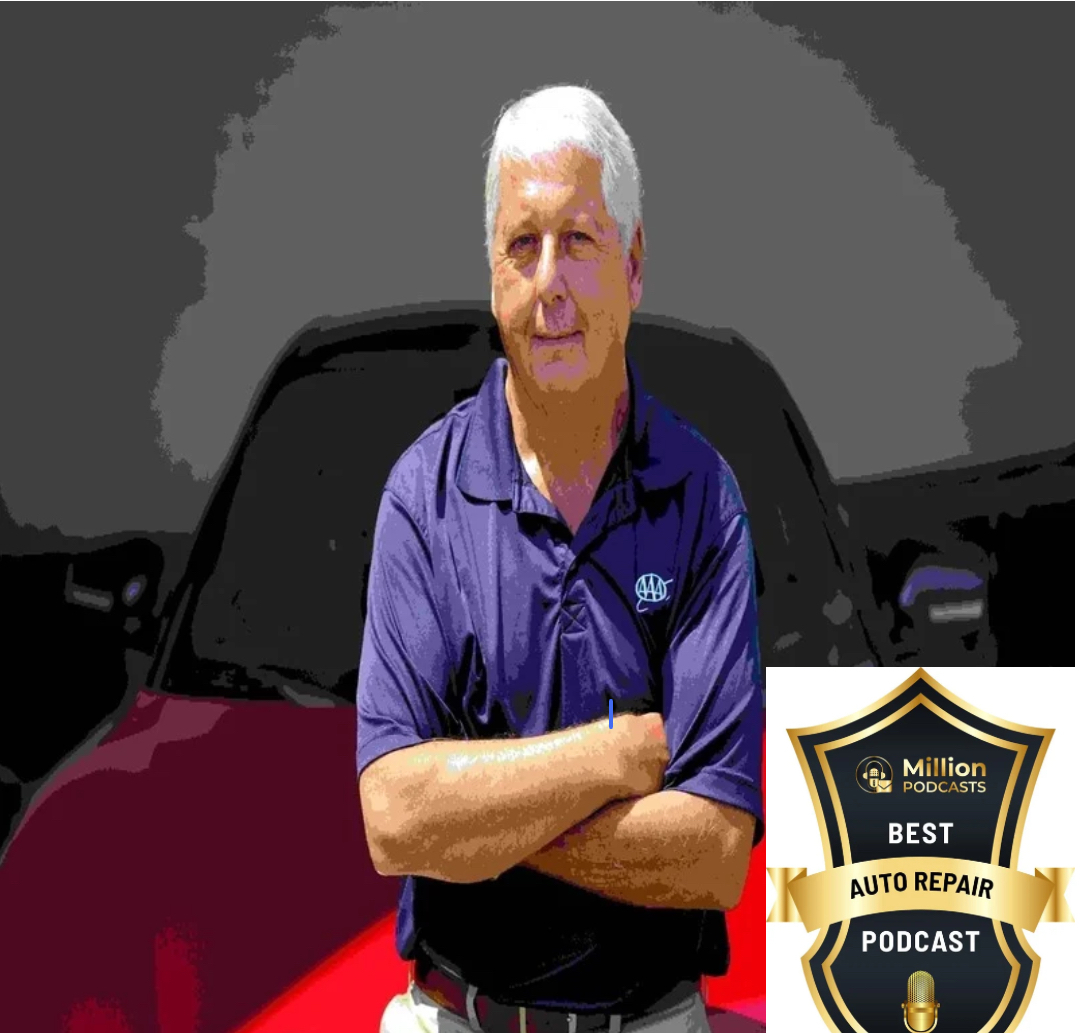
The episode dives into a unique connection between the Coconut Grove fire and automotive history, featuring guest Paul Jovino, who discusses his new book about a survivor of the tragic 1942 fire. The conversation explores the fire's impact on safety regulations, medical advancements, and even touches on the automotive elements tied to the story, including vehicles used during the rescue. Listeners will also hear about the personal ties Jovino has to the event and the broader implications of the tragedy on modern safety standards.
In this episode we talk with Paul Yovino former executive producer of the Jerry Williams show and longtime Car Doctor radio family member who has now written his second book. We also discuss stability control, tire pressure and life in general.
"...what turned out to be the 1940 Buick estate wagon, which is interesting in itself. When it was, when it came off the production line, they delivered the very first 1940 Buick estate wagon to where to the coconut Grove nightclub in Los Angeles."
The 1940 Buick Estate Wagon is a type of car called a station wagon, which is designed to carry more passengers and cargo. It has a unique look and was made by Buick, a well-known American car brand.
The 1940 Buick Estate Wagon is a classic American station wagon known for its spacious interior and distinctive design. It was part of Buick's lineup during a time when wood paneling was popular in automotive styling.
"...we now find ourselves in 1956 and he purchased the brand new Packard Caribbean or Caribbean, I guess, and what you call it. And, um, so the, um, uh, that was an interesting automobile in and of itself."
The Packard Caribbean is a fancy car made by Packard in 1956. It was known for being luxurious and had some unique features that made it stand out.
The Packard Caribbean was a luxury automobile produced by Packard in the mid-1950s, known for its distinctive styling and features. It was part of Packard's lineup during a time when the brand was known for its high-end vehicles.
"...it had reversible front seats, so they would wear evenly. It was, it was a lot of gas for, for, for Packard."
Reversible front seats are seats in a car that can be turned around to face different ways. This helps them wear evenly and can change how people sit in the car.
Reversible front seats are a unique feature that allows the seats to be rotated to face different directions, promoting even wear and providing versatility in seating arrangements. This was an innovative design choice for cars of that era.
"...I think the designer might have been Harley Earl. You were thinking Harley Earl."
Harley Earl was a famous car designer who worked for a big car company. He is known for creating some of the most iconic car designs in history.
Harley Earl was a prominent automotive designer known for his innovative designs and contributions to the American automotive industry, particularly at General Motors.
"Now, I have a 2001 BMW Z3 Roadster and it has 45,000 miles."
The BMW Z3 is a small, two-seater sports car made by BMW. It's known for being fun to drive and has a stylish look.
The BMW Z3 is a compact roadster that was produced from 1995 to 2002, known for its sporty design and engaging driving experience. It features a rear-wheel-drive layout and a variety of engine options, appealing to driving enthusiasts.
"And in June, the DSC code came on with his dynamic stability control something. BMWs have this."
DSC stands for Dynamic Stability Control, which is a system in cars that helps keep the vehicle stable and prevent skidding. It does this by automatically adjusting the brakes when it senses that the car is losing control.
Dynamic Stability Control (DSC) is a safety feature in vehicles that helps prevent skidding and loss of traction by automatically applying brakes to individual wheels when it detects that the vehicle is losing stability. It enhances the driver's control during slippery conditions or aggressive maneuvers.
"...this car uses like many cars today use a computer bus network to hook all these different modules together. And it could be an issue in the bus somewhere that's causing it to act up."
A computer bus network is like a communication highway inside a car that connects different electronic parts. It helps them share information and work together properly.
A computer bus network in a car refers to the system that allows different electronic modules to communicate with each other. This network is crucial for the operation of various functions such as engine management, infotainment, and safety systems.
"...steering angle adjustment, you know, doing that first absolutely made sense. Looking at looking at everything from, like I said, ABS to other components,..."
Steering angle adjustment is changing how much the wheels turn when you turn the steering wheel. It helps the car handle better and respond more quickly when driving.
Steering angle adjustment refers to the modification of the angle at which the wheels are turned in relation to the steering wheel. This adjustment can improve handling and responsiveness of the vehicle.
"...Looking at looking at everything from, like I said, ABS to other components,..."
ABS means Anti-lock Braking System. It's a feature in cars that helps prevent the wheels from stopping completely when you brake hard, which helps you steer better while stopping.
ABS stands for Anti-lock Braking System, a safety feature that prevents the wheels from locking up during braking, allowing the driver to maintain steering control while stopping.
"This is what they use in, you know, Formula One racing or something. Yeah. But but, you know, I'm not driving a Formula One car."
Formula One is a type of car racing where very fast cars compete against each other on special tracks. It's known for having some of the best drivers and the latest technology in cars.
Formula One is the highest class of single-seater auto racing, known for its fast cars, advanced technology, and prestigious races held worldwide. It features teams and drivers competing for the World Championship title each season.
"...I think mine says, I got a Toyota camera. I think it's 35 all the way around. Could very well be."
The Toyota Camry is a well-known car that many people drive. It's known for being dependable and good on gas, which makes it a favorite for families.
The Toyota Camry is a popular midsize sedan known for its reliability and comfort. It's often praised for its fuel efficiency and spacious interior, making it a common choice among families and commuters.
"...temperature affects tire pressure. But that's why..."
Tire pressure is how much air is in your car's tires. If the pressure is too low or too high, it can cause problems like poor handling or faster tire wear.
Tire pressure refers to the amount of air inside a tire, measured in pounds per square inch (PSI). Proper tire pressure is crucial for vehicle safety, fuel efficiency, and tire longevity.
"...they'll put nitrogen in their tires because the molecules of air don't tend to seep..."
Using nitrogen in tires means filling them with nitrogen gas instead of regular air. Some people believe it helps keep the tires inflated longer, but others think it's not worth the extra money.
Nitrogen in tires is often used to maintain tire pressure because nitrogen molecules are larger than those of regular air, which can help reduce pressure loss over time. However, many experts argue that the benefits may not justify the cost.
The Lexus ES 300h is a luxury car that uses both gasoline and electricity to run, making it more fuel-efficient. It's known for being comfortable and having a smooth ride.
The Lexus ES 300h is a hybrid luxury sedan that combines comfort with fuel efficiency. It features a hybrid powertrain that offers a balance between performance and eco-friendliness.
"...2016. Lexus 300h and I think I've heard you over the years..."
The Lexus 300h is a type of car that uses both gas and electricity to run, making it more efficient. It's known for being a luxury car with lots of features.
The Lexus 300h is a hybrid vehicle that combines a gasoline engine with an electric motor to improve fuel efficiency and reduce emissions. It is part of Lexus's luxury lineup, known for its comfort and advanced technology.
"...aftermarket one made by a quality maker was probably half that. Um, you do have to program them..."
Aftermarket parts are made by other companies instead of the car's original maker. They usually cost less and might have different features than the original parts.
Aftermarket refers to parts or accessories that are made by companies other than the original manufacturer of the vehicle. These parts can often be less expensive and may offer different features compared to factory parts.
"...you do have to program them. They do have to be cloned or programmed so they do work."
Programming means setting up a part, like a sensor, so it works with your car. This is often needed for parts that aren't made by the car's original manufacturer.
Programming in this context refers to the process of configuring a component, such as a sensor, to work with a specific vehicle's systems. This is often necessary for aftermarket parts to function correctly.
Select text to request an explanation
WATD presents John Paul, The Car Doctor, All Things Automotive.
Have questions?
Call or text 7-8-1-837-4900.
Now, here's John Paul, The Car Doctor.
And good Sunday morning, everyone, and welcome to another edition of the Car Doctor
program on this Sunday morning.
Hopefully you adjusted your clocks, fell back, or fall back, or whatever the proper expression
is, so you're all set and listening to the program.
Today we have a great program planned for today, and a little bit about my ride here.
I left Massachusetts on Tuesday and drove down to Florida, which is always an adventure.
We'll talk about the adventure a little bit later.
And talk about some of the things I did, you know, prepping the car, prepping the car I
left up there.
We have an old $1,000 Volkswagen that we kind of put away for the wintertime.
We'll talk about how we did that.
And of course, we want to hear from you.
And the phone number to call in is like Rob Hackal had just said, 7-8-1-837-4900.
But right now we have Paul Jovino, also known as Paul from Braintree, on the
phone with us.
Paul has done something that many people have never done, and he has written a second
book, which Paul, that is two more books than I have ever read, I think.
Yeah, it's a task that's enjoyable.
As I always say, writing is easy, publishing is hard.
But it is what it is, and this day, and thank God for Amazon that really helps
us to, if you don't have a literary agent or a publisher yet, it's a way to kind of
bypass the system.
And thanks to people like you, John, who allow me to get on.
You know, it's, well, the book involves some automobiles.
So there is a tie-in to this.
Well, let's first off, let's give people a little background about you.
You were in the radio business for quite a long time, right?
Yeah, I was, in the radio, I was Jerry Williams, executive producer when he came back to
Boston at WRKO.
I guess that's my next book on that and the experience that I had with that.
And for a short time, I had my own talk show and realized that I enjoyed putting
someone else's work together and letting them do it.
I feel like you make it look easy.
It's a difficult job.
Imagine having to talk for four hours without stopping.
I mean, it's, anyway, it's, so I did that.
And when I retired, I always wanted to write and, you know, just some life
got in the way and, and I never did it.
And the first book, my first book was not autobiographical, but it was growing
up in the era, in the era of the death of JFK and the Vietnam War that followed
that and, and how that really changed society.
It's called Portals.
It's also on Amazon.
But the second book is, is also has a personal tie to me.
Um, it's called The Man from Swan Lake, Hero of the Coconut Grove Fire.
And it's about a survivor of the coconut grove named Clifford Johnson.
Um, I should I do it just a quick, quick background on, on a row fire.
Happened, uh, 43 years ago and about two, excuse me, 83 years ago on,
on November 28th, 1942, the most popular nightclub in Boston was
in the Bay Village section of Boston on Piedmont Street.
And it was the night after the BC Holy Cross game, BC lost by great numbers.
So they said there were fewer people from the Boston area and more
from the Worcester area who were there, but a great number of people
from this year were there.
And sadly, 490 people died in that fire.
Uh, the man who owned it eventually went to jail.
Um, there's a great documentary called Six Walked Doors.
And the owner had walked all the doors so you couldn't leave without paying.
It was only one revolving door.
And that's where a lot of people died piled up against that.
And many people died, uh, not of the fire, but of execiation from fumes
over the, the flames and all, but there was one survivor named Clifford Johnson.
It was a 21 year old Coast Guardsman on leave.
He was in the Coast Guard station here in Boston.
He was from some, the Missouri of all places.
And, um, he took his date to the coconut grove, uh, just as the
fire broke out and he did escape.
He went back in several times, thinking she was still there trying to rescue
her and receive burns over 47% of his body ended up at Boston City Hospital,
which had, because Pearl Harbor was less than the year before.
But proceeded our entry into World War two.
So they set up a burn unit expecting that they were going to be treating
soldiers who were burned in the wall.
Little did they know that the first trial for this would be for a fire
in their backyard, basically.
And one of the patients who they treated was this Clifford Clifford Johnson.
And I grew up knowing, knowing the story.
My late dad was a resident of house physician at Boston City Hospital.
When the fire happens happened before I was born.
And Clifford Johnson was one of his patients.
And I grew up knowing the story, uh, because, you know, sitting at the
dining table, I heard my dad tell the story.
And actually when I was about four or five, he brought him to a house
who lived in Quincy at the time.
He brought him to the house and, um, I had a chance to meet him.
Everybody said he sort of looked like, uh, Charles Lucky Lindbergh,
the aviator of the 20s.
Uh, so I guess everybody, you know, every, every nurse wanted to date him.
And every guy who was like the younger brother, a matter of fact,
he ended up marrying this woman, one of his nurses, a young
woman named Marion Dunovan.
And they moved back when he was healed.
They moved back to Sumner, Missouri.
And he became a game warden at the largest, uh, swanning geese preserve
in the country called Audemars Swann Lake.
Oh, okay.
And that's where the rest of his life played out.
And it ended up rather tragically for him, uh, in 1956.
Uh, I won't tell the whole story, but he, uh, attempted to rescue
a swan at, at that time and, uh, and was frozen, the swan was frozen in the lake.
And he, uh, he, uh, was so endeared with swans that one of the nurses
who actually took care of him, when he told the story, she compared him
to Prince Siegfried and the Tchaikovsky, uh, Ballet Swan Lake.
So his, his life plays out if people ever study or see.
Excuse me, Swan Lake, Prince Siegfried, um, fell in love with his Princess Odette.
And because of some evil sorcerer in the, in the ballet, she was turned
into a swan by day and, uh, um, and, and he'd, in his attempt to rescue
this Princess Odette, uh, from Swan Lake, they both died.
And, uh, so, and that frees them from the curse.
But, uh, it's what's kind of interesting going back to, um, what
Boston City Hospital did.
They were experimenting on him and all the other burn patients.
Tennessee had just come in, um, and the war department, which was
actually then called the war department, uh, gave Boston City
Hospital and Mass General as much penicillin as they could use.
And a few other medical, um, breakthroughs had, had occurred.
The ability to break down blood into its different particles and, and, uh, and
plasma, um, something I learned, you would think when you, when you
receive a burn, maybe that would kill all the germs.
It's the exact reverse.
It exposes body to great number of all these elements.
And the skin graft was only, was probably the only way they
could save his life.
But, uh, getting, getting to an automobile part of it, um, we've
all heard of a Jeep, well, back in World War two, Dodge had put
out something called a beep, like sound of a horn.
And, um, apparently that was used.
And my main character rescues, uh, Clifford Johnson in his beep, the
main characters, uh, I mean, Cormac, Firm Oil, and he happens to
be working in civil defense for the war effort.
And he finds himself at the door of the coconut
grow fire on the night that it happened and he rescues them.
He puts them in this, this beep, which I guess, uh, flatbed
truck or Jeep, I've looked it up.
It, um, whether Dodge made it for World War two or not.
Um, I don't know, but, uh, so eventually this main character
becomes, uh, a doctor and he ends up working, documenting,
documenting the, the, uh, treatment that this Clifford
Johnson is getting, um, some of the interesting too, uh,
I didn't know it.
New York never had, uh, a station wagon until about 1940.
It was a producer in California.
His wife knew the general manager of the general motors and, uh,
the car designer at the time, um, famous car designer whose
name escapes me right at the moment, who, um, was with him.
So on the train back to, to Detroit, they designed, designed
what turned out to be the 1940 Buick estate wagon, which is
interesting in itself.
When it was, when it came off the production line, they
delivered the very first 1940 Buick estate wagon to where to
the coconut Grove nightclub in Los Angeles.
There's an odd tie in to that.
And, and I have it that, um, um, the game preserver through the
estate actually buys that wagon and ends up in some of the
Missouri, but, um, the other cars that show up a lot of
Packard's, um, this car, uh, a firm oil character, Cormac
firm oil, the main character in the book, um, when he becomes a
doctor, his, his goal was to buy a Packard.
So we now find ourselves in 1956 and he purchased the brand
new packet Caribbean or Caribbean, I guess, and what
you, what you call it.
And, um, so the, um, uh, that was an interesting
automobile in and of itself.
It had reversible front seats, so they would wear evenly.
It was, it was a lot of gas for, for, for Packard.
Um, and I think I, and I'm, and I'm thinking the designer might
have been Harley Earl.
You were thinking Harley Earl.
Exactly.
That's what we want.
Oh, and, uh, he delivered this, this, this, uh, 1940
Buick to the coconut Grove in Los Angeles and, um, to
the great work of fiction, it is now in Missouri.
Um, and that's part of, part of the story.
Yeah.
And I, and I seem to remember, I remember when I was a kid, my
father talking about the coconut Grove fire and how because
of that fire and the tragedy, it required all buildings,
commercial buildings to have doors that opened outward
rather than inward.
That's right.
And you'll never find a revolving door that doesn't have two
other doors on either side.
Yeah.
That was part of it.
Uh, the exit signs that you see that are always illuminated.
They have this separate, um, um, uh, lateral connection.
Yeah.
That came out of the coconut Grove fire and there was
some thought because World War two had started that it was
an attack by, by Germany.
It, and, uh, it wasn't.
And the other thought was that a bus boy lit a match to, uh,
change a light bulb in the nightclub and that ignited one
of the palm trees.
That's not the true story.
Apparently what happened, I didn't realize they had air
conditioning back in the day, but they did.
And, uh, to save money, the owner of, um, the coconut
Grove here in Boston used a cheaper form of freon, which
was very flammable and he had also cut corners on the
wiring in the building, but leaking freon and, and sparks
from this wiring and the fire started in the ceiling of
what was called the melody lounge.
If you have a look at the schematic drawing of the
coconut Grove, you would probably never go there.
I mean, it was one twist and one turn after the other, this
melody, uh, lounge was at the very basement of, of this
building and there was only one, one stair out and again, all
the windows were blocked.
So you're right.
Your dad was right.
I mean, all the good things that came out of it, safety
precautions and the new medical discoveries, what they do for
burns today came out of that tragic fire.
The, that was the foundation for treating burns.
And, um, it, it saved, I don't know how many thousands of
lives.
Um, again, this, this Kuffa, Johnson, um, was able to
literally walk out of, uh, Boston city hospital after
spending just about a year on his stomach and the first
skin grass they did fail, they had to do it all over
again.
Um, and you probably needed the stamina of a 21 year old to go
through this, um, his, his body weight went from 160 to about
a hundred pounds.
The burns just, just drained all the protein from his body.
It's really tragic, but it's, it's a miracle of what the
doctors did.
And, and that's more of the focus of my book is the, the
great medical miracles that came out of it and saving,
knowing this close with Johnson's life, but everybody
who went and anybody who was a patient at Boston city
survived and I guess to a degree mass general.
And for some reason, maybe even because Boston city was
closer than mass general, the greater number of patients
from that fire went to Boston city and not mass
general, uh, although they did both did great things.
Um, and, um, there's a mental health building in Boston
called the Eric Lindemann center.
He was a psychiatrist at mass general at the time.
And, uh, he made a study of, of, of survivors of the
coconut grove and how those meant the people would
survive, survive mentally, what they went through.
And so a lot of positive things came out of it, just
horrendous tragedy, uh, the coconut grove and they, every
year on honor, about November 28th, they have a
memorial service.
The coconut grove was, was located on Piedmont street,
which is in the Bay Village section of Boston.
They've changed a lot of configurations of the street
and the actual footprint of where the nightclub was, is
now a condominium.
And they, uh, first put a plaque on the sidewalk in
front of the condominium and the people who lived there
were upset because there was attracting too much attention.
So the city had to remove it.
And now there's a little street named coconut grove
lane, I believe, but by this spring, there's going to be a
permanent monument and what they call the Statler triangle,
which is right behind the Park Plaza, which used to be the
Statler Hotel, which will be a permanent memorial to the
coconut grove, um, to the survivors, uh, to the Boston
fire department that just did a marvelous job.
Uh, you know, this is the war and they, they, they
were shorthanded everywhere.
So it's, it's a remarkable story.
Um, you know, and I, I touched on a lot of bases, I think.
Um, no, it does, it sounds, it sounds real interesting and for
people that maybe don't know as much about it or, you know,
maybe kind of go, that was a long time ago.
It's also sort of a little bit reminiscent of the, um, night
club fire that was in Rhode Island back some years ago, where,
yeah, where, um, and, and did you know Don LaTulop?
Sure.
Yeah.
Yeah.
And his, yeah, and his son Dale, uh, unfortunately died in,
in, in that nightclub fire.
And it was sort of the, it was sort of the same thing.
It was, they put up like mattress foam for sound deadening
that caught fire.
And it was, it was just a variety of bad decisions,
including lock doors and things like that.
Because the place was overcrowded.
They sold way too many tickets.
They, they did the same thing here.
Um, they had a limit of maybe 400 or there were probably a
thousand people in the night club that night.
So, I mean, that's, you know, and a lot of politicians were
bought off to be very blunt, you know, and that happened
to Boston too.
I mean, and that was the, they turned the other way and,
um, tragedy sometimes happens.
Yeah.
Yeah.
No.
But yeah.
Yeah.
I'm not done.
Yeah.
Yeah.
No.
If people, if people want to find out more information
about the book, how to find the book, where, where to
learn more about it?
Um, what do they do?
Well, basically right now, if you go to Amazon, uh, the
book is on Amazon, both as a Kindle, which is online.
Yeah.
Or a paperback.
Uh, the good thing about Kindle, I think they let you
read the first four or five chapters for free.
Oh, okay.
Uh, then if you like it, you can buy the book there.
And hopefully in the few weeks, it will also be
available at Barnes & Noble.
Um, that's a longer story from another show, but, uh,
Barnes & Noble hopefully will be carrying it as well.
So, um, you know, I hope people gather some new
information, perhaps about this part of Boston that
took place 83 years ago.
But, uh, what came out of it has, is, is saving lives
today.
And I think that is an important thing to take
away from this.
Yeah.
And, uh, have you ever considered either of your
books becoming audio books?
I haven't done that yet.
There's an awesome possibility to do that.
Um, I said, I'm waiting for Steven Spielberg to
call me to make a movie out of it.
But that didn't happen either.
That would be the ultimate audio book for me.
But, uh, anybody knows Steven Spielberg?
Well, well, I, I, I will let you know.
And I, and I don't know the person particularly
well, but, um, there's somebody I know, he, he
started writing books when he was in college and
he wrote a book about the rise and fall of the
Beanie Baby fortune, which everybody kind of thought
was kind of silly.
But, you know, Beanie Baby sold for a few
dollars and then went for thousands of dollars
and they went back to a few dollars again.
But, uh, Apple reached out to him and said,
we want to make a movie about your book and, uh, things.
So you never know.
You never, you know, you could, you could be
getting, you could be getting a call from Apple
productions that they want to, they want to
write a, uh, write a book, uh, write, uh, do a
movie about your book.
Well, oddly enough, you know, and, um, Paul
Benzeklin, the late Paul Benzeklin wrote the
definitive book, uh, almost like all the
newspaper articles called Holocaust.
Um, and in my research, I even, um, Boston, um,
Medical Center now, Boston, uh, Boston City
Hospital put out, uh, an anniversary book of
100 plus years of, of, uh, Boston City
Hospital and it's, you could hardly find any
mention of all the great work they did
during the coconut grow fire era.
I mean, it, and so it's almost, it's almost
lost and that's hopefully my book can bring that
back just, uh, to remind people of the great
medical discoveries that occurred then.
Um, and so it doesn't get lost yet.
We have to concentrate on the tragedy of the
fire, but on the other side, all the medical
miracles that came out of it, that should be
what people walk away with, I hope.
Well, I, I see Donnie Wahlberg as a star.
So yeah, I could see Donnie Wahlberg.
I mean, he's doing Boston, Boston blue.
Yeah.
He's got some free time.
Exactly.
Exactly.
Exactly.
Exactly.
But, uh, so, well, well, congratulations on the
book.
Yeah.
Congratulations on the book and, uh, and, you
know, um, uh, like just, just before you
came on, uh, previously they did a little
wrap-up show and there was a, uh, a guy working
on his 20th book.
So you never know, Paul.
I could do that.
Yes.
Yeah.
Yeah.
Well, maybe the next one will be about, uh, being
an executive producer of a radio show.
I think, I think there's a, I think there's
a lot to be said there.
Paul, as always, thanks for, uh, calling
in and, uh, being, uh, and being, uh, you
know, uh, part of the Cardocta radio
families.
Well, thank you.
And, uh, people, I should thank you.
You saved my old car.
I don't know how many times.
And, uh, so it's still working.
Actually, I'm sitting in it right now and, uh, at
126,407 miles, it's still traveling along.
And then it's a minus to six.
So I'm happy with it.
All right.
Thanks, Paul.
Thank you.
Talk to you later.
All right.
Take care.
Bye-bye.
So, uh, check out Paul Jovino at, uh, on
Amazon, uh, soon to be Barnes and Noble.
Uh, check out his two books.
This one sounds pretty fascinating.
There's a little bit of car stuff in there, but
you know, he's, he's been a long time listener to
the radio program, uh, former radio guy.
And when I heard he was doing a new book, I said,
you know what, you got to call into the show
because I don't talk to many authors.
Well, I mean, I shouldn't say that.
I guess I've talked to some authors who
write car books, but still the idea of having
one of our local, uh, listeners, part of
their family here joining us on the program
to talk about something they've done.
Writing a book is a big deal and, uh, and
it's a big job to do it.
So congratulations.
Paul, we're doing that.
We need to take a break, pay some bills.
If you would like to join us and talk
about, I don't know, your favorite book.
You can give us a call at 781-837-4900.
Maybe you have a favorite car book.
When we come back, I have a few things
to talk about, um, including the ride
from, uh, Massachusetts to Florida.
A dash cam someone sent me, which looks
really interesting and some of the
experiences on the road that are worth
talking about.
You'll listen to the car doctor program
on 959-WATD.
Again, the phone number 781-837-4900.
Phone lines are open.
If you'd like to join us, talk about
your car, some car problems, car repair
issues, give us a call.
It's 781-837-4900.
We'll be right back.
Even car geeks and do-it-yourselfers
rely on AAA to give them extra
peace of mind on the road.
AAA offers 24-7 roadside assistance
whether you're in your own vehicle,
a friend's car, or even a rental.
Combine that with great rates of
insurance, hotel, gas and buying
savings, and discounts on 80-700
brands, and you're covered on and
off the road.
Get a special membership offer today
at aaa.com slash joy.
That's aaa.com slash joy.
Hi, this is Liz Lones.
Tune in to Twilight Showcase Radio
hosted by Sandy Stride and Keith James.
Visit twilightshowcase.org.
Twilight Showcase tonight
from 8 to 10 on 959-WATD.
Make an appointment Sunday morning
at 11 for John Paul, the car
doctor on 959-WATD.
Now back to the car doctor.
And welcome back to the car doctor
program on 959-WATD.
My name is John Paul, the car doctor
here to help you with your car
problems, car questions, whatever's
on your mind.
If you want to join us, 7-8-1-8-3-7-4-9-
100, let's talk to speaking of
radio family.
Let's talk to Ken from Topsfield.
Good morning, Ken.
Good morning, John Paul.
Before I ask you for some
assistance with my car problem,
I got to tell you that previous
menu interview and head on was
just outstanding.
Well, thank you.
Just great.
It had, I learned a little bit
about cars, but I got a
re-evaluation.
It was a tragic thing.
I was before my time, but I
was aware of it and boy,
almost 500 people died
terrible.
But what advances and it was
a great interview.
So it blended with your program
terrifically.
I appreciate that.
Now, I have a 2001 BMW Z3
Roadster and it has
45,000 miles.
And in June, the DSC code came
on with his dynamic stability
control something.
BMWs have this.
And I took it to my
independent man and he said
because it was 01, he didn't
have the scanning thing.
So he recommended
somebody in Newberry Mass who
was teachers this and was an
old timer that had all the
diagnostics from time and
memorial when codes came out
and you could check things.
Took it up to them in their
first grade outfit, never done
business.
And they had the car for a
few days and they evaluated
it and and it said, you
know, quotes about the codes
that were stored.
Mm hmm.
They finally came after much
diagnostic.
They reset the your rate
acceleration sensor, zero
point calibration that caused
something.
They replaced the your rate
sensor and they also
replaced your part acceleration
sensor.
And and it was fine.
And then I was driving at
home and it came on again.
I took it back and I left it
for another week because they
have a diagnostic guy, a
specialist that comes in on
you know, work certain days.
Yeah. Long story short, it
did it again. It went away
and it was away for six,
eight, ten weeks.
I don't do a lot of driving.
And it came in again
months and a half ago and
we've been away.
So I've got an appointment
next week because they told
me and they were very good.
They said, we stand behind
what we do.
And I appreciate that,
especially when you spend in
over a thousand dollars.
Oh, sure. Yeah.
So it's going back
and it went away.
When I turn the car off,
it will go away, but it
usually comes back on.
Yesterday, I drove the car
for maybe 30 miles.
It has not come on again.
But my confidence level is
gone because it isn't.
I don't think it's something
that when it generally
it shouldn't come on
unless there's a problem
or there's a thing with
just hearing and an
emergency.
Yeah, I mean, I mean,
what for people that don't
know what Dynamic Stability
Control does, it basically
makes you a better driver
because if you're starting
to go into a skid, it will
apply brakes.
It looks at
G forces almost
that your sensor, you know,
people probably wonder, you
know, maybe somebody heard
that, you know, airplanes
have your sensors so you
know which direction they're
going in. Kind of does
the same thing.
So what it does is it
looks at kind of lateral
forces as your car is
turning and then can adjust
things, everything from
timing to break
input to try to keep the car
going straight.
So when the Dynamic Stability
Control is on and you
probably wouldn't drive a Z3
in the winter, but it
becomes a much easier
car to drive because it
doesn't tend to want to
skid. So that, you know,
can you drive the car with
that acting up? Sure you
can, but does it drive
better because of it?
And one of the
one of the issues and I
don't know, maybe issue isn't
the right word, but you
know, this this car uses
like many cars today use
a computer bus network to
hook all these different
modules together. And it
could be an issue in
the bus somewhere that's
causing it to act up.
You know, it's
module, maybe, but
probably not, probably more
of a, you know, it
could be it could be a
ABS break issue, you know,
and it's going to take
unfortunately, these things
take some time to make
sure that, you know,
this, all the different
parts of this, you know,
get checked out to figure
out what it is. So, you
know, can you drive it
with the light on? Sure you
can. Is, you know, is,
you know, how do you fix
it? Well, so it's, it
takes, it takes time to
figure out what worked
and what didn't. And, you
know, is, you know, the
steering angle adjustment,
you know, doing that
first absolutely made
sense. Looking at
looking at everything
from, like I said, ABS
to other components,
including, you know, the
system won't work right
if the engine's not
running well, for
instance. So if the, you
know, if the engine's
running too lean and
there's a, there's a
code in there, it's going
to, it's going to say,
well, that's not going
to work the way we
wanted to. So we're
going to shut that system
down. Will they just
arbitrarily replace
things? I mean, like
you say in ABS, would
you have to replace
some. No, no, they,
they should, even though,
you know, your, your
guy said he didn't have
the scan tool to do a,
you know, 24 year old
car going on 25 years
old, I guess now. It
still is a car that you
can, you know, with
the right scan tool, you
can drive it and monitor
things like, let's make
sure, you know, all
the ABS signals are
working the way they
should. Let's make
sure, you know, various
components are working
the way it should. But
unfortunately, it's
time. And it's one of
these things that you
have to look at all the
various things. And one
of the key things I
have learned over my
lifetime living in New
England is corrosion is
a horrible thing when
it comes to all of these
wiring issues and
electrical issues with
cars. And all it takes
is a little bit of a
corroded wire, poor
ground somewhere that
can cause these things
to trip up and start
to start to act up. So
what I would do, and
I'm sure what this garage
does, and especially
where they have somebody
who comes in to kind of
specialize in this, is
take some really careful
look at all of the
wiring connections and
ground connections and
and really test them to
make sure that you're
not losing something along
the way that's causing
this light to come on.
So, you know, a good
visual inspection, looking
for any signs of, like,
green corrosion is enough
to cause weird stuff to
happen.
Well, I appreciate that.
I guess I'm just gonna,
I feel comfortable with this
outfit.
Good.
Yeah, who's, who's, who's
the, who's the, who's the
shop? Who are they?
Angie. Angie's
automotive service up in
and he's taught this
man that I don't think
it's Angie. I forget
the man who's, yeah,
the old time up.
But yeah, part really
independent. He takes
his diagnostics. He runs
the class after that.
Yep. Yeah. I actually,
I think I actually know
who he is. So I think
you're in good hands.
I do. And like you, I'm
in good hands and thanks
for the great program.
And, okay.
And what's, what's a little
scary is, you know, the
old timer that comes in,
I think him and I are
the same age. So, I don't
know. So, yeah.
All right. All right.
And I thank you.
All right. Okay. Take care.
Ken. Bye bye.
Thanks. Bye bye.
Our phone number 7, 7, 8, 1,
8, 3, 7, 49, 100.
I think we're going to
Tom and Weymouth. Tom?
Tom. Tom. Hey.
Hello? Yep.
Hello. Go ahead.
Okay, John. I'm looking to upgrade.
Oh, where'd Tom go?
Jesse. Lost him. Lost him.
He was looking to upgrade
his phone, maybe.
Let's go to John and Melrose.
John?
Hi, this is John now.
I have a kind of a simple
question, I guess.
I'm looking to buy the best
air pressure from Gage
for car tires.
Yeah. I have a number of them
and none of them seem to
repeat the same.
I'll have one that they're
just throwing out a number of 40
pounds to say I measure with
another one and it's 45
pounds. But I, you know, the
pencil ones, I got digital
ones, the pen ones.
Yeah. I was wondering what type
which one is the best one to
buy? Well, you know, it's
kind of funny. I, you know, I
just got to Florida a couple
days ago when we leave a car
here, a 10 year old car
here. And the first thing I
did before I even started it
up or second thing
maybe was go around and check
the air in the tires because
I put, you know, the maximum
air pressure for those tires is
43 pounds. I put 43 pounds
in it before we left.
So you will put that much in
the maximum?
Maximum amount when the car is
sitting still and not being
used for a while. Yeah.
So, but, but I wanted to
go around because they're
going to, you know, it's been
sitting here for, you know,
five or six months. So I
want to go around and check
the air pressure and see how
it is. And I have a, I
have a gauge
that I have. I probably have
three or four pencil gauges and
one, and one dial gauge and
one little air pump that's
got a built in gauge. And I'm
like, so I went out and I was
the first gauge I went out
there with, you know, read
like 26 pounds. And I'm like,
yeah, so then I hooked up my
little air compressor that's
got a digital gauge in it.
And it said there was 32
pounds. So I'm like, huh,
that's not very good. Then
so I took that gauge and
threw it away and went back
to another one. And and I
don't like the as nice as
the digital gauges are.
Yeah, you know, unless you use
them all the time, you can
remember to put batteries in
them and all that sort of
stuff. And and I kind of
like a good, simple pencil
gauge or a good dial gauge.
And the one I have is made
by an old timey company
called Milton, M-I-L-T-O-N.
And it's just a good little
pencil gauge. It's got easy
to read numbers because, you
know, I'm getting older and
it's harder to read stuff.
And it seems really accurate.
And I compared it to one or
two of the other gauges that
I had. And I'm like, oh, it's
reading, you know, it's
reading 30, 33 pounds, 33
pounds. They're all about
the same. But yeah, some of
these some of these cheaper
gauges. I have I have an
oil filled gauge that, you
know, is fancy. And I'm
not, you know, I look at it
and I'm like, I don't know, is
that 32 pounds? Is it 34
pounds? Because the way they
got the increments marked
off is not that good. I got
a little cheapy dial gauge
that I think I was at a
trade show somewhere. They
were handed them out instead
of business cards. Pretty
accurate little gauge, I've
got to say it, you know,
for what it is, a little
dial dial that spins
around. But the digital
gauges, you know, if
you're only checking your
tire pressure, you know,
periodically, yeah, once it
once the battery start to get
funny on them, they start to
read funny. So and plus, yeah,
one of the ones I had, it was
pretty neat because you could
go around and it would
actually remember all four
tires. So you go around and
then you could kind of click
back through it and go, Oh,
yeah, this one had 32, this
one had 33, this one had
32. And I'm like, I'm like,
but I don't want to gauge
it requires directions on how
to use it. That's, you
know, you know, and it
would also had a little
tread depth gauge and record
the tread depth. And then I
read the I read the
directions for it. And it
said it was accurate within, I
think 4%. Well, the Milton
pencil gauge is accurate to
within like 2%. So the
little regular cheapy
little and not cheap, it
was probably eight bucks or
10 bucks. That little that
little gauge was actually
more accurate than the
fancy digital one. So I'm
sure they're I'm sure
there are $100 digital
gauges that you can look at
and, you know, say, well,
this is the best of the best.
This is what they use in, you
know, Formula One racing or
something. Yeah. But but, you
know, I'm not driving a
Formula One car. Right. Exactly.
Yeah. So I'm not I'm not
worried about that. So so if
I was looking for a gauge,
I if I was looking for a
pencil style gauge, yeah, I
would go with the Milton
gauge. I've had they've
been around they've been
around forever. And they're
right. Yeah. And, you know,
maybe mine's, you know,
maybe mine's a good one
because it's, you know, it's
old. And, you know, it, you
know, came, you know, and I
remember even years ago, I
was friends with the PR guy
for the Rubber Manufacturers
Association. And I was doing
a tire event somewhere. And
he sent me like 50 or 60
gauges. And we gave him
out, we gave him out as
prizes to people. And I'm
like that, you know, it
was probably a four or five
dollar gauge. It was pretty
good. I remember we ordered
some we ordered some gauges
at triple A one time. And it
were these little three or
four dollar plastic gauges. And
I told my boss never never
order these things again.
They're terrible. You know,
so yeah, so, you know, I
think I think if you look
around, you know, spend,
you know, try to, you
know, dill is like dill
pickle. They've been in
the they've been in the
tire business forever.
Milton's been in the gauge
business forever. You know,
something like that. Even
there's a company called
Slime, which makes all kinds
of flat repair products.
Their gauges in bad. I have
had one of theirs for a long
time. I think I, I think I
liked it to a neighbor and
never got it back. But
but but like I said, the
Milton gauge I use was a
pretty good little gauge. So
you know, maybe, you know,
and again, I like the
pencil gauges because the
batteries never go dead.
Because they don't have
any. Exactly. Right. All
right. That one you said the
slim what? Oh, slime.
S L I M E. And you can
find those. You can find
those at Walmart. They make
little air compressors. They
make flat repair kits, stuff
like that. They're okay.
They seem to do the job.
Okay. But like the Milton
gauge and the dill gauge,
the pencil style gauges, you
know, you can drop them
on the ground. You can
throw them at people. You
can do stuff. And they
never seem they never seem to
go bad. I'm sure there's
some adjustment of
something in there. But
you know, as long as
you're, you know, as long
as you're not kind of, you
know, I have to have 32
pounds exactly. And if it's
33 or 31, is it really
going to make a huge
difference? Probably not.
Yeah. Now, would you
normally go along with the
pound of pressure that's
on your door? Yeah. Yeah,
absolutely. Yeah, I mean, on
my drive here to Florida, I
put a little bit of extra
air in the rear tires just
because we had, you know,
stuff in the back of the
car to come down. But, but,
you know, but normally,
normally, if it says, you
know, 32 in the front and
34 in the back or 34 in
the front and 32, I go
with exactly what it says
on the door because when
you start to vary that, you
become a tire engineer. You
know, you're, you know,
you're, you know, they, they
adjust the tire pressure for
a combination of ride and
fuel economy. And, you know,
and when you, yeah, you can
bump up the tire pressure
and you might get better
fuel economy, or you can
lower the tire pressure and
you might get a little bit
better ride. But either
way, you're going to wear
the tires differently. So go
with what, go with what
the manufacturer says.
Yeah. See, the mind says,
I think mine says, I got
a Toyota camera. I think
it's 35 all the way around.
Could very well be.
Yeah. Yeah.
Okay.
It's around for a while, then
you want to maximize it.
Yeah. Yeah. Only because, you
know, tires lose about a
pound of air a month just
sitting still. So if you're
going to let a car sit for
two or three months, you
know, just air them up a
little bit. And then, you
know, before you start,
you know, check the
tire pressure when they're
cool, and then, you know,
let a little bit out before
you start driving it on a
regular basis. So, right?
So does it lose? How much
air would it lose if
they're always driving it?
Does it lose it quicker or
less or what?
Um, you know, the tires
lose tires lose a little
bit of air all the time,
driving, you know, and
temperature affects tire
pressure. But that's why
that's why we always say
check your tires once a
month, because they are
going to lose a little
bit of air and some
tires, you know, some
tires, like Michelin tires
never seem to lose air, you
know, and other tires seem
to lose air a little bit
more because the rubbers,
the rubbers actually somewhat
porous. And that's why some
people will go to nitrogen
in their tires, which is
just an absolute waste of
money. But they'll put
nitrogen in their tires
because the molecules of
air don't tend to seep
out of the tire quite as
much because nitrogen
molecules are a little
fatter. But I wouldn't
spend $100 on nitrogen
when you put regular air
in, which is 70% nitrogen.
So it doesn't make any
sense. Yeah. So when when
the tires part, the pressure
would read higher. Oh, yeah.
Yeah. And here's a here's
a funny part about tire
and temperature and all
that sort of stuff. If you
have, say your tires,
your camera calls for
35 pounds of air, and you
have 28 pounds of air in
your tires, and you decide
you're going to drive to
the white mountains on a
hot summer day. By the time
you get there, you might
have 45 pounds of air in
your tire, because because
the heat causes the tires
to to heat up because it
moves the molecules back
and forth really fast and
it generates heat. If you
put 35 pounds of air in
those tires, where they're
supposed to be, drive that
same drive. By the time
you get there, you might
have 37 pounds of air
because the molecules are
bouncing around as much
generating as much heat. So
you know, so yeah, so
you know, you always check
them cold, fill them up
where they should be, and
you should be good to go.
All right. Okay.
Good information. All right.
Okay, take care. All right,
you too. Jesse, where
we going? Mike and
Bridgewater? Yes. All right.
Michael. Morning, John. Good
morning. John, first
things, have you eaten
all the Halloween candy
that you bought? We
don't we didn't buy any
because there's no because
there's no kids. There's no
kids where I am. I think
there's three kids. There's
three kids. And and I said
to my wife, well, we have
to have a little bit of
candy in case somebody shows
up. And yeah, and, you
know, I did have I did have
a Twix last night, but
you know, well, that was
there you go. It's in the
tradition. Yeah, just by
following up with that
other gentleman that was
on. I have a couple of
those pencil gauges
interesting. Some of them
are lighter weight than
others, but I think a blast
from the past is when you
were giving out Boston
auto show tickets. And I
think I got I have one
here. Pretty hefty here. It's
the rubber manufacturer.
Yep. One of the RMA ones.
Yep. Pretty good. Yeah, it
is. It works out well. And
that's hence the reason
I'm calling. I have a
2016 Lexus ES 300 hybrid and
the tire pressure icon
came on the dash and it
started to flash a little
bit. Then it went out. So my
readout is each individual
tire and the numbers
there are just the dashes.
Well, you know, I kind of
honestly, I was over the
years listening to you and I
kind of figured that was
the issue. It wasn't that
there was a flat on the
tire anyway. So, you know,
you pulled over whatever
started the car up. The
numbers came back. Then now
they're dashes. And now you
get the numbers. Sometimes
you get the dashes
sometimes. I think I
remember you saying that if
you go for a sticker, that's
not going to be a problem
because that's not a
requirement. But any
suggestions, anything you
can say it's coming on and
off. So things I should
do not do. What now what
year is the car again?
2016.
Lexus 300 h and I think
I've heard you over the
years. They average the
batteries about seven years.
Yeah. Yeah. Sorry, John, I
can't remember breakfast, but
I remember what you said. So
anyway, um, so I'm just
wondering, you know, the
cars got more than seven
years. What would you
do? Um, what do you
think it is? When was the
last time you bought tires
for the car? About eight
months ago, seven months
ago. And I asked them about
matter of fact, again,
Sullivan tire, and I
asked to get Michelin. And
I asked them about the
sending units, batteries.
And they said all came
out fine within parameters
and all that. You know, I
probably should have done
something about it when
they would. Yeah. I mean,
other than it would have
saved you a little bit of
money, you know, labor
wise if they put new ones
in. And yeah, the tire
pressure monitor light won't
cause you to fail or it
never did cause you to
fail an inspection in
Massachusetts. So that's
not mandatory. Um, the
idea that you're losing
the readout to me says
that the the transmitters
in the wheels are starting
to go bad. Um, yeah. So
can you just ignore it and
check the tires with a gauge?
Yeah, sure you can. Um, should
you want to fix it at some
point? You know, the the
factory Lexus sensor, you
know, is probably 100 bucks.
And aftermarket one made by
a quality maker was
probably half that. Um, you
do have to program them. They
do have to be cloned or
programmed so they do work.
You know, you could spend
$400 to get the light to go
up. Yeah, the lights out
join. It's not on the dash.
Yeah, but you know, I'm
getting the readout, but
but it'll it'll it'll come
back on when it'll come on
one of these days. Because
what happens is the longer
you drive, it starts to
look at the readings. And
what happens when you're
driving slow when you're
driving five or 10 miles an
hour? It's not really
transmitting because the
idea behind that is if your
car sits all the time, they
don't want to be they don't
want the little batteries to
go dead inside the
transmitters. So it doesn't
start to work till you
start to move. And the
idea that, you know, once
you drive 20 30 miles, the
computer that looks at the
pressure is going to go,
wait a second, I'm not
seeing a reading. And it's
going to look at that for
a while. And then it's going
to maybe turn on the tire
pressure monitor light that
says the and it's not
going to fly. It's just
going to come on, which
just tells you it's not
seeing what it's supposed
to see. So yeah, so
you know, um, Gandtool
worth putting it on just
to verify that. Yeah,
yeah, I mean, yeah, you
could. Yeah. And and even
the tire pressure monitor
tools, they use like when
you go to a cell of a tire
and they rotate your tires,
they have to tell the
computer where the tire
went back to. So, you know,
if it was on the left front
and you took the left front
and put it on the left rear
and that and that you
didn't tell the computer
you moved it, you know,
that's going to come on
and you're going to go,
well, no, the tires
fine. But it thinks it
doesn't know you moved it
to a different spot. So
yeah, um, I ended up
calling up seldom and just
to ask them. So in the
ballpark, it's closer to
500. But um, yeah, so
yeah. Okay, so is this a
flip a coin or
tolerance? Yeah, I mean,
I mean, it's it's a it's
a nice car. And it's nice
to have when when you
have a nice car, it's
nice to have everything
working. And, um, you
know, would I spend the
money to make to get the
light to go out? If I was
planning on keeping the
car a few more years,
yeah, I probably would.
Okay. All right. Because
yeah, the Sullivan was
quoting about $80 for each
sending you. Yeah. Yeah.
That's about right. Yeah.
And he bucks the program.
And I will let you know
the last time the last
time I went to Sullivan
tire, which was years ago,
I went and had a tire
repair. And they charged
me I don't know $35. And
I was like, wow, that's a
lot of money since I
used to fix tires. And I
just recently the old car
that we keep at home. I
had a slow leak in it. And
I got tired of putting
the air in the tire. And
I knew it was leaking
around the rim because I
couldn't find any nails in
it. I brought it to a
little gas station and
said, hey, can you fix
it? Oh, yeah, we can
get it right in. And
guy goes, oh yeah, it's
leaking around the rim. He
just broke it down, wiped
it off a little bit, put
some goop around it, put
it back together. It was
$50. Wow. Oh, my God.
Yeah. And I mean, he got
it in right away. You
know, I was kind of
chit chatting with the guy
who was doing it a
little bit. And I'm like,
yeah, holy $50. You
know, yeah, yeah, it kind
of hurt my feelings a
little bit. Hey, we
got to get going. We have
another break to take
before we get yelled at.
All right, take care. Bye
bye. Jesse, do we need
to take another break? I
think we do. Let's
desperately take that
break. You listen to the
Cardocht program on 95
9 WATD where we'll be
right back and then
probably go away. Even
car geeks and do-it
yourself or rely on AAA
to give them extra peace
of mind on the road.
AAA offers 24 seven
roadside assistance,
whether you're in your
own vehicle, a friend's
car, or even a rental.
Combine that with great
rates of insurance, hotel,
gas and buying savings and
discounts on eighty seven
hundred brands and you're
covered on and off the
road. Get a special
membership offer today at
AAA dot com slash join.
That's AAA dot com slash
join. Hello, Chris
Bethany of Bethany
Builders here. You want
us to build your new
deck project. Sophia
Bethany, let's go from
design to job
completion. Bethany
Builders has got you
covered. The salt shores
number one dad daughter
duo is ready to build
with you. Just give us a
call at seven eight one
eight nine eight eight
zero one eight. You can
find us on the web at
BethanyBuilders dot com
Facebook and check out
our projects on YouTube.
Bethany Builders is
fully licensed, registered
and insured. Call us
today for your free
estimate. Hey there
folks, it's Quinn Kelly
reminding you to tune
in Sunday night at five
for the South Shore's
first voice in sports
talk radio, the sports
exchange, unmatched
coverage of local high
school action as well
as a relatable voice on
all things Boston
pro sports. We've got you
covered live at five
every Sunday night. Have
a question for our host
Miss last week's show or
just want to share a
great sports story. You
can find us on Twitter
at SE on W A T D. But
remember, mark your
calendar folks and we'll
see you Sunday night
at five for the sports
exchange on ninety five
nine W A T D. Make an
appointment Sunday
morning at eleven for
John Paul, the car
doctor on ninety five nine
W A T D. Now back to
the car doctor.
And welcome back to the
car doctor program. We
are just about out of time,
but I want to thank Paul
Yovina for calling in in
two weeks. We're going to
be talking tires, which
we did a lot with today
with West Bowling from
a from the no key entire
company. So that music
means we need to go away.
Al and Tom call in next
week. As far as I know,
I don't have a guest book.
We got plenty of room for
calls for next week.
So Al and Tom call in
next week and until next
week, make sure you're
where you see me.
We'll see you next week.
Until next week, make sure
you wear your seatbelt,
drive safely, be good to
your car. And if you do see
an emergency vehicle by
the side of the road,
slow down or move over
safe lives. Talk to you
all next week. Bye bye.
Request an explanation for:
4 cars
4 cars featured
Request an Explanation
Heard something you'd like explained? We'll add it to this episode.
Sign in to request explanations for terms you heard.
Want to learn more?
Browse our glossary for plain-English explanations of automotive terms, jargon, and concepts.
See something that's not quite right? Our annotations are AI-generated and can sometimes miss the mark.
Click the flag icon on any annotation to suggest a correction.