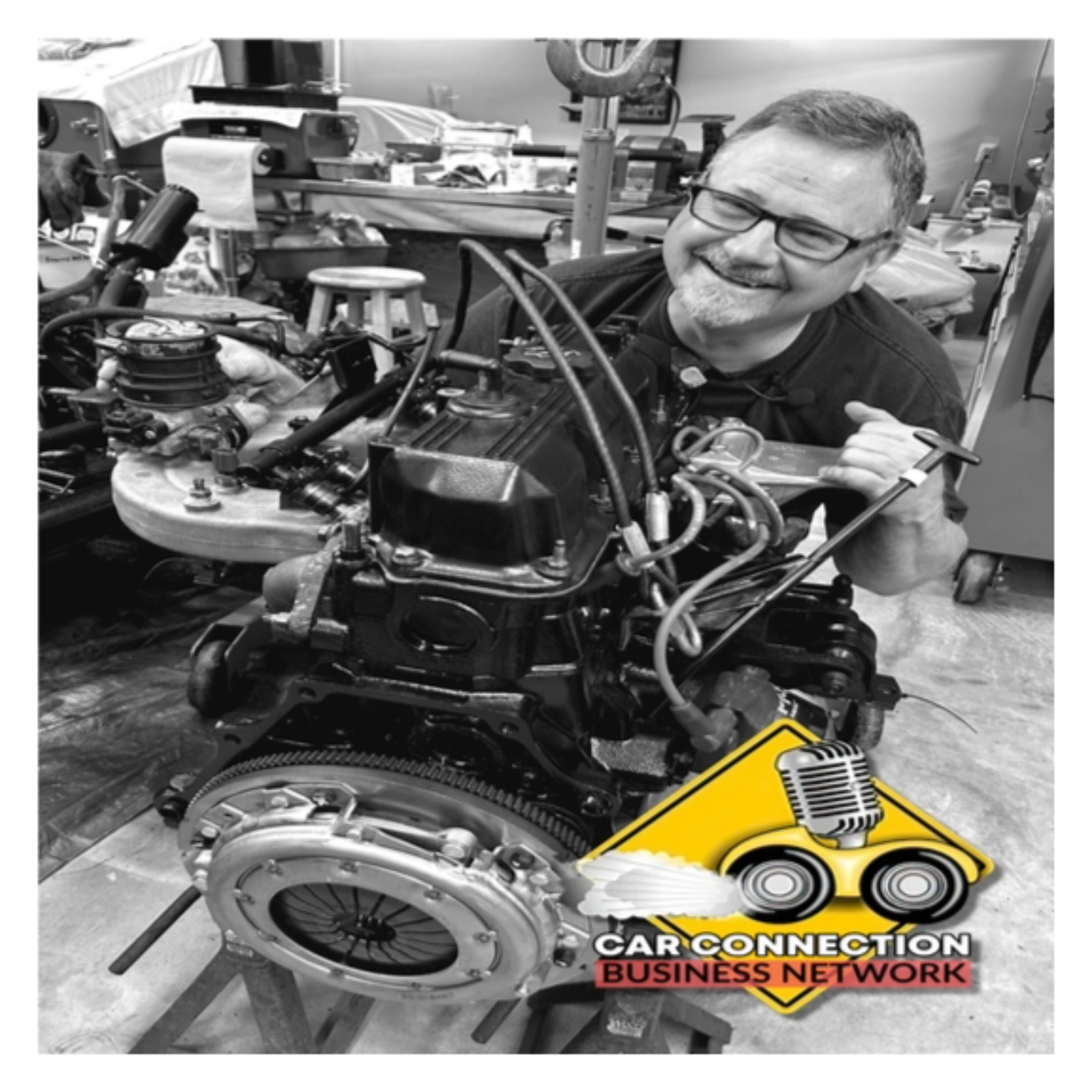
Jeep owners often find themselves at odds with mechanics due to common practices that lead to frustration. From DIY repairs that can be poorly executed to modifications that complicate systems, this episode dives into the top grievances mechanics have with Jeep enthusiasts. The discussion includes insights from technicians across North America, highlighting issues like excessive plastic components, electrical problems, and the infamous 'duck' phenomenon in the Jeep community. With a mix of humor and practical advice, listeners gain valuable knowledge about maintaining their vehicles and avoiding costly repairs.
In this episode, we dig into what Jeep owners do what mechanics hate - and why. After gathering feedback from technicians around the world; we break down common Jeep pattern failures, maintenance habits that cause expensive repairs, and what owners can do to get ahead of problems before they snowball.
We also talk Jeep culture - including " Duck Duck Jeep " movement, why rubber ducks end up on dashboards, and why Jeep ownership is as much about community as it is about the vehicle itself. Love it or hate it, it's a Jeep thing - and if you own one, this episode can save you money. More episodes and ... & links are available at Car Connection Business Network .com (ccbusnet.com) you'll fine everything on our home page if you'd like to follow the build/repair work we do & connect with our program partners just click their logo to connect Thank You!
Grab some Car Connection Motormouth Merch proceeds to Total Freedom Addiction Campuses Canada & USA, Helping those struggling with addiction find their New Life Awaiting them there! addiction Tnx so much friends, Nile Motormouth Jenkins. Tnx for Following, Watching & Listening ,Happy Healthy Motoring, Peace, Patience, Kindness Always, NMJ
"...whether it's a 25 year old Jeep Wrangler getting a second chance at life or a Nissan Rogue getting its brakes back in order..."
The Jeep Wrangler is a tough vehicle made for off-roading. People love it for its ability to drive on rough terrain and its classic look.
The Jeep Wrangler is a compact and mid-size four-wheel drive off-road vehicle known for its ruggedness and versatility. It's popular among off-road enthusiasts and has a strong following due to its classic design and capabilities.
"...or a Nissan Rogue getting its brakes back in order or a mystery leak that's got everyone scratching their heads..."
The Nissan Rogue is a small SUV that is great for families. It has a lot of space and is good on gas, making it a popular choice for everyday driving.
The Nissan Rogue is a compact crossover SUV that offers a balance of comfort, space, and fuel efficiency. It's designed for families and everyday driving, making it a popular choice in its segment.
"...matic certainly helps you. And I like to use the 2008 Nissan Rogue that was donated to us. And you know what,..."
The Nissan 200 SX is a small, sporty car that was made a while ago and is known for being fun to drive. People who like to customize their cars often look for this model because it’s easy to make it faster and better.
The Nissan 200 SX is a compact sports coupe that was popular in the 1990s, known for its lightweight design and agile handling. It is often appreciated by car enthusiasts for its performance potential and tuning capabilities, making it a sought-after model among those who enjoy modifying their vehicles.
"So biggest one, number one, the CVT transmission, the continuous velocity transmission. You need to service that with the dealer oil, nothing outside."
A CVT transmission is a special kind of automatic transmission that can change gears smoothly without any noticeable shifts. This helps the car run more efficiently and provides a smoother ride.
A CVT, or continuously variable transmission, is a type of automatic transmission that can change seamlessly through a continuous range of gear ratios. Unlike traditional automatic transmissions that have a fixed number of gears, a CVT provides a smoother driving experience and can improve fuel efficiency.
"and then do a full rust proofing application when we get over 40 degrees Fahrenheit. So for now, all the work has been done."
Rust proofing is a way to protect cars from rust, which can happen when metal gets wet. It involves spraying a special coating on parts of the car to keep them safe from moisture.
Rust proofing application is a treatment applied to vehicles to prevent rust and corrosion, especially in areas prone to moisture. This process typically involves spraying a protective coating on the undercarriage and other vulnerable parts of the car.
"Front end is all good. Alignment's been done. It's been certified and I didn't want to make it gooey for my friends, Phil and Dennis."
Alignment is about making sure the wheels of a car are straight and working together properly. If they aren't aligned, the car might pull to one side or the tires could wear out faster.
Alignment refers to the adjustment of a vehicle's suspension system so that the wheels are set to the manufacturer's specifications. Proper alignment ensures that the vehicle handles correctly and that tire wear is minimized.
"It's just a parts supplier creator problem. And I saw that when I was at a major European car manufacturer is they would stop the line and actually supersede a part from one vendor that's making it form to another one."
A parts supplier is a business that makes and sells parts for cars. Car companies buy these parts to build their vehicles.
A parts supplier is a company that provides components or parts to manufacturers for vehicle assembly. They play a crucial role in the automotive supply chain.
"...the biggest thing that happened that put it in the junkyard was they blew the motor up because they didn't look after the cooling system. It was a head gas and issue."
A head gasket is a part that seals the engine. If it breaks, it can cause serious problems like leaks or overheating, which can damage the engine.
A head gasket issue occurs when the gasket that seals the engine block and cylinder head fails, leading to coolant leaks, overheating, or loss of engine compression. This can result in severe engine damage if not addressed promptly.
"...it would have had to have been overheating. It would have had to have been blowing out any freeze like crazy because it blew the neck right off the radiator."
Overheating means the engine gets too hot, which can cause serious damage. It's usually because the cooling system isn't working properly.
Overheating occurs when an engine's temperature exceeds its normal operating range, often due to a failure in the cooling system. This can lead to severe engine damage, including blown gaskets or warped components.
"...blew holes the size of golf balls in the pistons and you can see all that on our YouTube channel. What a piston looks like."
A piston is a part inside the engine that helps make the car go. If it breaks, it can cause big problems for the engine.
A piston is a critical component of an engine that moves up and down within the cylinders, helping to convert fuel into mechanical energy. When a piston fails, it can lead to severe engine damage, as described in the podcast segment.
"...what it looks like when it blows up because of neglect in the cooling system. What caused the problem?"
The cooling system helps keep the engine from getting too hot. If it doesn't work well, the engine can break down and cause big repairs.
The cooling system in a vehicle regulates the engine's temperature to prevent overheating. It includes components like the radiator, water pump, and coolant. Neglecting this system can lead to severe engine problems, including piston failure.
Car
Chrysler JK
"...on a 2018 JK, 3.6 Panda Star. And it has problems..."
The Chrysler JK is a type of Jeep Wrangler made between 2007 and 2018. The 2018 version has a strong engine that helps it perform well, especially when driving off-road.
The Chrysler JK refers to the Jeep Wrangler model produced from 2007 to 2018. The 2018 model features a 3.6-liter Pentastar V6 engine, which is known for its performance and versatility in off-road conditions.
"...on a 2018 JK, 3.6 Panda Star. And it has problems..."
The Pentastar V6 engine is a type of engine made by Chrysler that is known for being powerful and fuel-efficient. It's used in many of their cars and trucks.
The Pentastar V6 engine is a 3.6-liter engine developed by Chrysler, known for its balance of power and efficiency. It has been widely used in various Chrysler, Dodge, and Jeep models since its introduction in 2010.
"...the 3.6 Panda Star, the oil cooler is plastic. And the oil filter housing that goes along with that is plastic."
An oil cooler is a part that keeps the engine oil from getting too hot, helping the engine run better. Some cars, like the Jeep Wrangler JK, have oil coolers made of plastic, which might not be as strong as metal ones.
An oil cooler is a component that helps regulate the temperature of the engine oil, preventing overheating and maintaining optimal performance. In some vehicles, including the Jeep Wrangler JK, the oil cooler can be made of plastic, which may raise concerns about durability.
"...the oil cooler is plastic. And the oil filter housing that goes along with that is plastic."
The oil filter housing is where the oil filter sits in the engine. It helps keep the oil clean and flowing. In some cars, like the Jeep Wrangler JK, it's made of plastic, which might not last as long as metal.
The oil filter housing is the component that holds the oil filter in place and allows oil to flow through it for filtration. In some vehicles, like the Jeep Wrangler JK, the housing can be made from plastic, which may affect its longevity and resistance to heat.
"...it sits right down in the middle of the engine underneath the plastic intake manifold."
The intake manifold is a part of the engine that helps mix air and fuel before it goes into the engine's cylinders. Some cars use plastic for the manifold to save weight, but it might not handle heat as well as metal.
The intake manifold is a critical engine component that distributes the air-fuel mixture to the engine's cylinders for combustion. It can be made from various materials, including plastic, which helps reduce weight but may have implications for heat resistance and durability.
"Now it still doesn't mean it's going to be perfect because you've got O-rings, rubberized O-rings in there. But it's a far cry from taking a plastic one out that fails."
O-rings are rubber rings that help keep fluids from leaking in car parts. They fit into grooves and create a seal, making sure everything stays tight and doesn't leak.
O-rings are circular seals used to prevent the leakage of fluids in mechanical systems. They are typically made of rubber or other flexible materials and are crucial for maintaining pressure and sealing joints in various automotive components.
"You got to take half the freaking Jeep apart to get at that valve cover and technicians are going oil leaks, coolant leaks."
The valve cover is a part of the engine that keeps oil inside and protects the moving parts. If it leaks, it can cause problems for the engine.
The valve cover is a component that sits on top of the engine's cylinder head and protects the valvetrain. It also houses the gaskets that prevent oil leaks.
The thermostat helps keep the engine at the right temperature by controlling how hot or cold the coolant is. If it fails, the engine can overheat or run too cool.
The thermostat is a component in the cooling system that regulates the engine's temperature by controlling the flow of coolant. It opens and closes based on the engine's temperature.
"And getting it off, if it's old and it's down low, the bolts get corrosion on them in their teeny weeny."
Corrosion is when metal parts get damaged over time because of moisture and chemicals. This can make it hard to remove parts during repairs.
Corrosion is the gradual destruction of materials, usually metals, due to chemical reactions with their environment. In automotive contexts, it often affects bolts and other components, leading to difficulties in repairs.
"They're very, very small and fine thread. Very easy to snap them off and now you got a mega project."
Fine thread bolts are bolts with very small grooves that help them fit tightly. They can be tricky to work with because they can break easily if you're not careful.
Fine thread bolts have a smaller pitch than standard bolts, meaning the threads are closer together. They are often used in applications requiring precise fastening but can be more susceptible to stripping or breaking if over-tightened.
"But you know what, when you learn the pattern failures, then you can make adjustment, you can fix it. Number two, modifications, doing your own modifications when you really don't know what you're doing."
Modifications are changes you make to your car to improve how it works or looks. This can be things like changing the suspension or adding new lights.
Modifications refer to changes made to a vehicle to enhance its performance, appearance, or functionality. This can include upgrades to the suspension, steering, or adding new electrical components.
"So modifications include suspension and steering, body or chassis lifts and electrical."
The suspension is the part of your car that helps it ride smoothly over bumps and turns. Changing it can make your car feel different when you drive.
The suspension system of a vehicle is designed to support the weight of the vehicle, absorb shocks from the road, and provide stability and handling. Modifications to the suspension can greatly affect ride quality and performance.
"Number three, doing your own accessory add ons, whatever that may be, lights, brackets, external coolant filter, or what we call a remote cooling filter for why I don't know why you would do that."
Accessory add-ons are extra things you can put on your car to make it look better or work better, like new lights or special brackets.
Accessory add-ons are additional features or components that can be installed on a vehicle to enhance its functionality or aesthetics, such as lights, brackets, or other custom parts.
"Using speaker wire for electrical connections without any of it being fused, wrong wiring, terrible routing, no fuses installed."
Fuses are small devices that stop electricity from flowing if there's too much power. They help prevent fires and damage to your car's electrical parts.
Fuses are safety devices in electrical systems that protect against overcurrent. If too much current flows through a circuit, the fuse will blow, breaking the circuit and preventing damage or fire.
"...they took their strong manual transmission and changed it to a complicated German transmission that is junk."
A manual transmission is a way to change gears in a car by using a stick and a pedal. It gives drivers more control over how the car drives, but you have to learn how to use it.
A manual transmission is a type of vehicle transmission that requires the driver to manually shift gears using a clutch pedal and gear stick. It's often favored by driving enthusiasts for the level of control it provides.
"...you lose oil pressure completely and the engine can destroy itself very, very quickly because you have bolts now rolling around in the oil pan."
Oil pressure is how hard the oil is pushing through the engine. It's important because it keeps the engine parts moving smoothly. If the oil pressure is too low, it can cause big problems for the engine.
Oil pressure is the pressure of the engine oil circulating within an engine. It is crucial for lubricating engine components, preventing wear, and ensuring proper operation. Low oil pressure can lead to severe engine damage.
"...for the Jeeps putting a supercharger on a 3.6 liter Pentastar, not a good idea."
A supercharger is a machine that helps an engine get more air, which can make it go faster. But it can also make the engine work harder, which isn't always good.
A supercharger is a device that forces more air into the engine's combustion chamber, allowing for more fuel to be burned and thus increasing power output. However, it can put additional stress on the engine, especially if not designed for it.
"Ticking noise, rocker issues, the bearings and the rockers and I know an upgrade and I got that from Dave's Automotive out in the Colorado area."
Rocker issues are problems with parts in the engine that help open and close the valves. If they break, the engine can make strange noises and not work well.
Rocker issues refer to problems with the rocker arms in an engine, which are critical components that help control the opening and closing of the engine's valves. When these components fail, it can lead to significant engine noise and performance issues.
"The engines kaboom, when they build the engine they do away with that rocker style on the JK."
The Jeep JK is a version of the Jeep Wrangler made from 2007 to 2018. It's popular for off-roading and can be modified in many ways.
The Jeep JK refers to the third generation of the Jeep Wrangler, produced from 2007 to 2018. It is known for its off-road capabilities and has been popular among enthusiasts for customization and performance upgrades.
"...y call that the secondary battery, put a trickle charger on it was the only thing he said you could do and..."
The Dodge Charger is a big car that looks really cool and can go fast. It's been around for a long time and is loved by many people because it’s fun to drive and has a lot of space inside.
The Dodge Charger is a full-size sedan known for its powerful performance and muscular styling. It has a rich history dating back to the 1960s and has evolved into a modern vehicle that combines practicality with a sporty edge, making it a popular choice among car enthusiasts and families alike.
Select text to request an explanation
Good morning friends, you're tuned in to Car Connection where the coffee is strong, the
stories are real and the wrenches never stop turning.
I'm your host Nile Motormouth Jenkins coming to you from the Car Connection workshop where
the smell of fresh oil and little elbow grease is all part of a balanced breakfast and around
here we don't just talk cars, we live them whether it's a 25 year old Jeep Wrangler getting
a second chance at life or a Nissan Rogue getting its brakes back in order or a mystery
leak that's got everyone scratching their heads.
This is where we roll up our sleeves and get it done with a little wit, a little wisdom
and a whole lot of fun.
The Car Connection isn't just about nuts, bolts and diagnostics, it's about connection.
Connection to our vehicles, to the people who drive them and to the community that keeps
Niagara rolling because when you fix a car, you're not just turning a wrench, you're restoring
someone's confidence, freedom and maybe even their sanity.
We're here every week, Monday through Saturday for you with Motormouth 8am drive helping
you keep your ride safe, reliable and ready for whatever road lies ahead.
So whether you're a weekend wrencher, a daily commuter or someone who just wants to understand
what that strange rattle really means, welcome aboard.
Stick around for shop talk, expert advice, a few good laughs and maybe if you're lucky,
a Motormouth story or two and most of the time I'll tell you what, you cannot make that
stuff up that I have experienced in over four decades of being an automotive service tech
and dealing with people and cars and stuff and people are really emotional about their
vehicle and when something suddenly goes wrong, so does the emotions.
Remember this, when emotions are high, knowledge is low.
Yeah, that's how it works.
So it's very difficult to deal with the emotions and have a conversation.
So when emotions are high, as professors use, intelligence drops off.
That's what happens.
Well, thank you to City Auto Sales and Leasing, providing low mileage quality vehicles for
over 20 plus years at fair prices.
Then dubbed the GTA's Greater Toronto Area's premier pre-owned auto store and they have
certainly earned that title.
Earl and Louise Grant, their car guys and gals, their husband and wife and Earl is picky.
They sell no junk there.
They have quite an inventory of vehicles inside their building as well as outside.
But listen, if you don't see the vehicle you're looking for, let Earl and Louise Grant use
the resources that they have to find that specific vehicle that suits your needs.
Let them do the walking and I'll tell you what, if it's junk, Earl won't pick it up.
If it's quality and it's low mileage and it's been well looked after, that's what they put on their lot.
So they also do in-house financing and leasing.
So check in with Earl and Louise Grant at City Auto Sales and Leasing and let them know that car connection sent you.
Well, today's topic, here you go Jeep people, you Jeepsters out there.
What Jeep owners do that mechanics hate?
And I'll tell you, I've done my research because I wanted to hear, not just my opinion, I wanted to hear
mechanics North America wide.
So I have done that.
I have collected the information directly from technicians across North America.
And I've picked out, I think 12 points and then some extra things that you should know if you are a Jeep owner
that you may already know or you may not have experienced yet.
And getting a heads up on stuff like that, pattern failures and things that are problematic certainly helps you.
And I like to use the 2008 Nissan Rogue that was donated to us.
And you know what, we rescued it and we put it back out on the road and pretty much everything's fixed.
We only have to fix the shifters, got a little wiggle to it and it's just a clip and a plastic doohickey.
That's the problem and the driver's side top door hinge has got some wiggle room.
So we have the hinge, but we don't have the pieces for the shifter.
But what I have done is my due diligence in asking online and looking at people who own Rogues, Nissan Rogues,
what are some of the pattern failures that you see happening?
And so I wrote them down and I have them.
So now you know what, in my maintenance program, I will stay ahead of those things that are a problem.
So biggest one, number one, the CVT transmission, the continuous velocity transmission.
You need to service that with the dealer oil, nothing outside.
It's got to be the true fluid from Nissan for that transmission and change it out every 30,000 miles.
So you're safe to say every 50k get that transmission service because they are mucho bucks.
So do that and you're good.
So it has 120k on it, so it should have had by now two and almost on its third service.
So what I will do is I'll do a service now and then in the summer, when the summer gets here,
I'm hoping it's tomorrow, but it probably won't be, but I will do a second service in July, August
to try and just get ahead of it and stop anything from happening.
Do not tow with it.
A CVT transmission, you want to smoke it, tow with it.
What else did I find out?
Some rusty areas, areas where some rust breaks out.
So you know what I did?
After I got my list, I'm going to look and they were spot on right behind the passenger doors
where the door closes up against the wheel arch.
Rust begins because there's a molding there and it's just starting on both sides.
So that means I already sprayed it down with some rust proofing,
but that means we need to get the rockers in the underside of the vehicle sprayed now
and then do a full rust proofing application when we get over 40 degrees Fahrenheit.
So for now, all the work has been done.
Front end is all good.
Alignment's been done.
It's been certified and I didn't want to make it gooey for my friends, Phil and Dennis.
Yeah, a little shout out for CarTech Fort Erie.
I didn't want to spray it and they're working in it underneath and it's going to be messy.
So I didn't do that.
So now the vehicle's certified.
I'll get it sprayed and it has had some kind of application prior to because there's plugs along the rockers.
So we'll get them to blast the rockers on the inside and go up that dog leg at the back on both sides
and soak it down and drench it underneath and then we'll do a full application in the summer months,
early in the summer so it can creep all summer.
So again, if you know what the pattern failures are and you've got them written down on your maintenance schedule,
you can stay ahead of the curve.
What does that mean?
Stay ahead of that pattern failure.
In other words, like a Dennis says, you know that tooth back there, you know what?
I'm not too keen on it, but I'm going to write it down here.
We're going to keep an eye on it, right?
We're going to keep an eye on that.
So next time you're in, we're going to check it and stay ahead of it.
Is it getting worse?
Is it staying the same or it's over?
We got to get in there and rescue that too.
Cars are no different.
What's the pattern failures on the vehicle you're driving?
What are they?
Look them up.
Go into some chat rooms.
Be a filter though because you're going to, you know, some people just, you know, want to get verbal diarrhea.
And I read stuff and I go, that ain't right.
No, you don't need to do that to do that.
No.
So you got to be careful.
There's good stuff on the interwebs and not so good, but at least if you can come away with some solid pattern failures,
then you know what you're dealing with.
That's what's cool.
It's great to know what the winning numbers are before you buy a lotto ticket, right?
The same thing applies to a vehicle that has, you know, from mechanics.
I got to tell you the long and short story of this title today.
What Jeep owners do that mechanics hate?
The list is huge and it's right from their hearts and you can see it in their eyes and you know what they know.
And some Jeep owners, they know because they've had a number of different Jeeps.
They have their issues too.
As do all makes models and manufacturers.
They have vehicles that have pattern failures.
And some companies will get ahead of that curve and make another product from another vendor to the manufacturer specs to get rid of that problem.
It's just a parts supplier creator problem.
And I saw that when I was at a major European car manufacturer is they would stop the line and actually supersede a part from one vendor that's making it form to another one.
And they'd switch them up right on the line before those cars even come off the assembly line.
And I thought that was pretty cool because you still see pattern failures on vehicles today from, I won't say the same manufacturers with the same problems happening decades away from each other.
So two decades go by.
They're still plagued with the same problems.
They don't fix it.
So let's jump into it to this morning.
But first and foremost, let's have our swiggy together.
If you're joining us for the first time, thanks for inviting us into your car or wherever it is you're listening from.
And remember the biggest drawer in our toolbox, our car connection toolbox has everything we talk about living in our homepage of our website.
It is the biggest drawer we've created from and through our webmaster.
Mike is doing a great job at making sure that we have everything quick referenced on our homepage.
So all our program partners and sponsors have their logos on our homepage.
Click and connect.
It's that simple.
And thank you for doing that and giving them your business.
By all means, please let them know that we have sent you.
They won't charge you more.
You know, they're wonderful people.
We're so blessed to have them with us.
Moving from radio broadcasting into full digital platforms has been an amazing transition, but almost mind numbing at some points and having to learn some new techniques.
Also on our homepage, top right hand corner will give you full access.
Click away to our YouTube channel, our Facebook, Instagram, Stevensville on the web.
I'm tied in there with all the businesses in Stevensville.
My parents have lived there for almost 40 years and I've got to know a lot of the people that are there and the businesses.
So Skippy, our videographer started that website.
She lives in Stevensville and she did it to pull businesses together with the community.
I think that's fabulous.
So they built as a profile page.
Just click on the businesses tab.
You'll find us.
You can email me through that profile as well at Stevensvilleontheweb.ca.
And our iHeartRadio link is there as well.
Just click on it and it'll take you right to our library.
We have officially as of today, 74 episodes in series one.
We'll get to 100 and then we make it series two.
So also what's on there is our merch store.
So Car Connection Motor Mouth merch is available.
We have officially after 31 years our very own Car Connection coffee mug.
And if it takes tea and lattes and stuff like that hot chocolate as well, it's not just a coffee mug.
I should say a beverage mug.
That really makes it wide open, right?
So when you purchase some merch, part of the proceeds go to total freedom campuses in Canada and U.S.
to help those struggling with addiction to get there because there's a brand new life waiting for them.
A brand new life.
So people struggling with addictions.
You know, it hurts family.
It hurts relationships.
And you know what?
It's the addiction that's talking most of the time.
Yeah.
And you know, people that they love get hurt the most.
So let's help them get there.
When they make that decision to say, I'm sick and tired, fed up, disgusted and bored with this.
I'm putting up with this addiction.
I'm ready to deal with it.
That's what the total freedom campuses Canada and U.S. are there for.
That's what they deal with.
It's not a program.
It is a complete life change overhaul is what it is.
All right, let's jump in this morning.
Yeah, we should probably.
What do you think?
It's Saturday.
We've made it to the weekend.
So with those of you who are working, I get it.
And those of you who aren't enjoy your weekend.
Let's see if we can pull up.
What we can expect as far as weather goes Saturday today being Saturday is crazy.
Time is flying.
I mean, it's almost Groundhog's Day.
Don't forget International Groundhog's Day coming up.
It's a big deal around the car connection workshop.
We got our Groundhog on the door to the shop.
Yep.
He's been up there for almost all week now.
We had to find him.
He got misplaced.
Saturday is low.
We're at five degrees between 6 a.m. and 7 a.m.
and the high will be 14 between 2 and 3 p.m.
So that's where we're going to 14 degrees.
Break out the shorts and get yourself a glass of root beer.
The temperature range will feel like 2 degrees to 9 degrees.
Wind will make it feel colder than it really actually is.
So dress warm.
Don't leave any skin exposed.
I would suggest cover up.
All right.
Thank you to our certified financial planning professionals.
Tony Miele and Larry Tietro, 50 years experience combined.
I work with both of them.
They're my brothers for other than mothers.
And they're with one of the biggest companies in the world,
IG Wealth Management.
And they can answer your questions for all these items and then some.
If you have an investment portfolio, it's with the bank.
First of all, I can tell you, you need to get it out of there
and get it in the hands of Tony Miele and Larry Tietro
because you're not making any money.
You're making pittance.
And I can say that they can't.
I can't.
And you know what?
They'll get that money working hard for you instead of you hard for that money.
They deal with debt load, estate planning, powers of attorney as well.
That is not something you need to do on your own.
These wills kits, I call them the will recipe kit.
No, don't do it.
And number two, you can arrange a mortgage there.
And I'll tell you, I haven't had a mortgage with a bank for a long time
and been with IG Wealth for quite a few years now.
And their rates are good.
Fantastic people to deal with their mortgage departments out in Winnipeg.
And they call you back at the snap of your fingers.
Life insurance, critical illness insurance, it's all available to you as well.
I have all that set up.
So you don't want to put my head on my pillow at night.
I'm not leaving someone in a great big mess.
Should I go to my great reward, people that are still here on the earth
will not be dealing with an overwhelming mess.
I have a friend right now that's going through that.
And it's going to be two years.
It's going to be two years before anything really gets moving.
So don't let that happen to your family, your friends.
Get that all settled out.
Here's what you get.
An hour and a coffee.
It's a discovery meeting.
We've nicknamed it the hour and a coffee.
No one's going to sell you anything.
There's no pressure sales, no condemnation.
Book that meeting with either Tony or Larry and get it done.
Get your questions answered by those who have the fruit on the tree.
So if somebody's giving advice and they're not standing where you want to be,
smile, be respectful, and book your discovery meeting with either Tony Miele
or Larry Tietro and get your questions answered.
Sit down with those who have the fruit on the tree.
All right, let's jump in today's topic.
It's an interesting one and I had to do some research because I am not a jeepster
although we have rescued the very first year of the Jeep TJ Wrangler.
I didn't know that at the time.
It was given to us from the wrecking yard and we saved it from the crusher.
It was good to save it from the crusher.
So I've learned a lot since then and we're coming along with it really, really good.
So if you want to see how that's working out, all we've been doing to this vehicle is fixing neglect.
That's it.
Fixing neglect.
The biggest thing that happened that put it in the junkyard was they blew the motor up
because they didn't look after the cooling system.
It was a head gas and issue.
They didn't pay attention.
It would have had to have been overheating.
It would have had to have been blowing out any freeze like crazy because it blew the neck right off the radiator
and it liquid locked the cylinders on the engine,
blew holes the size of golf balls in the pistons and you can see all that on our YouTube channel.
What a piston looks like.
What it looks like when it blows up because of neglect in the cooling system.
What caused the problem?
You get to see all of that unfold in front of you.
So here's the deal about our YouTube channel and our podcast.
If you would like to learn how to keep your vehicle and give it long life
and save money on your automotive repairs and stop having humongous repair bills
and keep that vehicle as long as you want and put money back in your wallet,
you have come to the right place and the right person to teach you
because that's what I'm all about.
Teaching you what I know.
Years and years of fleet maintenance.
Let me tell you this.
Those companies know how to get their vehicles to make the company profitable.
They don't need vehicles breaking down.
They don't need vehicles losing a load because it breaks down somewhere.
Back when I was working just strictly on trucks,
a day of downtime was like almost a thousand bucks.
So you can probably triple that today very easily.
So you could easily say it's about $3,000 downtime.
They can't afford that.
So fleet maintenance is utmost important.
So let's jump in and have a look at what cheap owners do that mechanics hate.
So I've kind of put my research in order here,
but I will make sure that I cover all of it and then there's some fun stuff as well
that I've also written down.
The biggest thing was overuse of plastic components.
They're scratching their heads going, why would you do that?
Well, it's cost effective, right?
So what Chrysler has done is turned the whole under the hood engine.
Most of it is all plastic.
And the problem there is constant heating and cooling and one of the major components.
And I've seen this and experienced it on a 2018 JK, 3.6 Panda Star.
And it has problems.
You'll get some.
So I hope you got a crayon, a 16 pack and a leaf bag folded up to make it look like a laptop
and get somebody to take some notes for you.
If you can't, then it's easy.
Go to carconnectionbusinessnetwork.com, top right hand corner, click on the I heart radio icon.
That'll take you to our library and you'll be able to listen and re-listen to any program,
any episode that we put out.
And today's episode is number 74.
So lots of plastic.
One of the a couple of items that come to mind and I've experienced it on a neighbor's 2017 JK.
And on a 2018 JK with the 3.6 Panda Star, the oil cooler is plastic.
Yeah.
And the oil filter housing that goes along with that is plastic.
It sits right down in the middle of the engine underneath the plastic intake manifold.
And it's subject to all the heat generated from the top of the engine and that's where the heat goes.
Heat goes to the top of the engine.
So that plastic constantly heated and cooled, heated and cooled and expanded and contracted with additional heat from the engine itself.
The plastic lets go and there's pressure there about 100 psi.
Yeah.
It usually does one of two things.
It starts peeing out antifreeze all over the top of the motor or the oil lets go.
It's one or the other because it's a filter oil bath and also engine oil cooler all in one.
It's a wonderful treat to get it out to.
It's a really nice treat.
But they do have, I looked it up on the Jungle website, they do have a replacement that's all aluminum.
Now it still doesn't mean it's going to be perfect because you've got O-rings, rubberized O-rings in there.
But it's a far cry from taking a plastic one out that fails.
It's a big, huge paint in the butt pattern failure.
You might as well put an upgrade in there and at the very least maybe an O-ring starts to leak.
But I'm pretty sure you're going to be good for quite some time.
Plastic valve covers.
Which one leaks first?
Well, it's got to be the toughest one to change.
Passenger side.
You got to take half the freaking Jeep apart to get at that valve cover and technicians are going oil leaks, coolant leaks.
Yeah.
They're calling it junk.
So don't be offended, all right?
Junk.
Too much plastic.
All kinds of problems with plastic components on the engine.
Everywhere you look and they're right.
I've seen it myself and dealt with it.
Thermostat.
Thermostat, let's go.
You buy the whole thing.
The thermostat comes in it.
The housing, everything.
Yeah.
And it's plastic.
And getting it off, if it's old and it's down low, the bolts get corrosion on them in their teeny weeny.
They're very, very small and fine thread.
Very easy to snap them off and now you got a mega project.
Okay, so what Jeep owners do that mechanics hate, number one, doing their own repair work.
And it's generally butchered.
All right, that's number one.
So just so you know, I'm not the message, I'm the messenger.
So all you Jeep owners, I'm not picking on you, but I'm just telling you, this is the topic we're covering and having a little bit of fun with it.
But you know what, when you learn the pattern failures, then you can make adjustment, you can fix it.
Number two, modifications, doing your own modifications when you really don't know what you're doing.
So modifications include suspension and steering, body or chassis lifts and electrical.
Yeah, that was the big one.
So I have more to say on that.
Number three, doing your own accessory add ons, whatever that may be, lights, brackets, external coolant filter, or what we call a remote cooling filter for why I don't know why you would do that.
But anyways, doing your own accessory add ons and doing a really bad job of it.
I looked at some really beautiful wiring jobs under the hood, how the Jeeps don't catch fire.
Using speaker wire for electrical connections without any of it being fused, wrong wiring, terrible routing, no fuses installed.
So if a stereo cable gets overheated for what you've wired in, which is an electrical device for the Jeep, not stereo parts, no fuses even.
So it's just going to burn down.
Add ons and add ons and add ons.
So make out the list on that one.
And that's what mechanics hate.
All right, there's more.
Stay with me now.
Stay with me.
Today's title, what Jeep owners do that mechanics hate?
Number four, lots of electrical problems.
And that goes back to the factory, not to the owner, that that's the reason.
Here's the question they were asked.
What vehicle do you think is the worst vehicle on the market and why?
So that's where these answers come from.
Lots of electrical problems.
Number five, steering issues are pattern failures.
Number six, they took their strong manual transmission and changed it to a complicated German transmission that is junk.
So they took a manual transmission that Chrysler was making and it was really, really good and decided to go with a different brand of manual transmission and it's proven itself to be an absolute nightmare.
So why would you take something that was really, really good and put something else in that's super complicated and it has lots of problems?
So that was the other reason that that particular mechanic said, yeah, they took this nice, strong manual transmission, changed it to a complicated German transmission that has nothing but problems.
Number seven, tech said didn't like Jeeps because they break down the most.
Number eight, another tech said the 3.6 liter Panistar oil galley bolts walk out and I've seen that and fixed it.
Yes, they do and that's inside the top of the engine in behind the variable valve timing clutches.
That's where it is on both sides of the on both cams have a VVT variable valve timing device on there to keep it simple and you look down and you see these bolts sticking out.
Yeah, those go right into the oil galley and when those bolts come out actually at that point you're already losing oil pressure and those bolts drop out they go right into the oil pan and it's game over.
Yeah, you lose oil pressure completely and the engine can destroy itself very, very quickly because you have bolts now rolling around in the oil pan.
Beautiful.
So that was one tech saying 3.6 liter Panistar oil galley bolts walk out dropping oil pressure and the bolts fall into the oil pan and it's over.
Manufacturers are quite aware of that being a problem and it comes with a very expensive repair at the dealer level.
And to reiterate number nine, I'm good with this one too as a tech passenger side valve cover gasket leak huge undertaking to get to it.
You got to take battery out the battery tray power steering lines and the list goes on and on and on and the battery tray is like the whole length of the fender on the inside.
So everything attached to that everything attached to valve cover everything attached to the intake manifold.
It's a huge project.
It's huge.
And that is a pattern failure.
So the tech said, this is why I hate jeeps.
All right, number 10.
Yeah, the jeeps duck thing.
Some tech said, what's with the stupid ducks on the dash?
Like they hate that.
They think it looks stupid.
Well, I did a little homework on that because I don't know anything about it.
I gave a couple of ducks to my Jeep neighbor and they were really thrilled about that.
And I really didn't know what I was doing.
I just did it as a gesture.
Well, it turns out that a young lady was in a parking lot and saw a Jeep and she really, really liked it.
And so she went into a store and bought a duck and rode on it.
Nice Jeep.
And as she was placing it on the driver's side door handle, the owner catches her and says, what are you doing?
Oh, I really like your Jeep.
So I'm giving you a duck.
And so he thought she was kind of kooky, but they laughed about it.
And that's how this duck thing started was giving someone that has a Jeep a nice gesture.
And it's probably a good thing because Jeep stands for just empty every pocket.
That's what I've known for decades.
They've always had their problems.
But as I said before, there's all years makes and different models and they all have something that we call patterned failures as a service tech.
So finishing up on the Jeep Jeepers duck things.
They this sparked.
It's like it's a community.
500,000 plus people playing the duck thing in 81 different countries.
And why Jeep's why just Jeep simply put in conclusion.
Here's what I discovered.
It's a culture.
It's the duck thing is a wave and has made its way into 81 different countries and over 500,000 Jeepsters doing this.
It's a communal thing like it or hate it.
It's a Jeep thing.
So give a duck, make a Jeepster smile.
There you go.
And here's some of some more beneficial stuff that you can take in that I I grabbed from.
Again, some service technicians, their opinions on Jeeps and pattern failures, things they're seeing continually on Jeep.
So take it easy.
I'm not.
I'm not slicing the Jeeps apart.
Okay, so don't send me any Jeepster hate mail.
We have rescued a 1997 Jeep TJ Wrangler.
All right, so we're doing our part for the Jeep world because it's the first one ever made the Jeep TJ.
The last model years 2006 and apparently the TJ was one of the best made.
I'm just the messenger.
I don't know.
It's an IDK.
Thank you to Crystal Ridge Dream Center for being our faith based nonprofit organization for the second year running serving men, women, children, single moms, meals, love and hope changing lives one at a time in the Niagara region.
Search your your heart and see how you can get involved in that will be a one time donator $25 or more gets you a tax receipt.
Maybe some gift cards, whatever you think you can do would definitely be appreciated there.
Maybe donate some of your time.
Check them out on our website at carconnectionbusinessnetwork.com just click on their link below their logo in times when community support is crucial.
Crystal Ridge Dream Center shines as a beacon of compassion and transformation and they're located in the heart of Crystal Beach, Ontario, Canada.
All right, some more on this title today.
What Jeep owners do mechanics hate?
We've covered most of that.
So now here's some tidbits for you.
So like I talked about with the 08 Nissan Rogue, looking it up to see are there pattern failures and what do I need to know in order to be able to handle whatever is thrown at me.
Same thing for the Jeeps putting a supercharger on a 3.6 liter Pentastar, not a good idea.
And these suggestions come from a factory trained Jeep guy.
So he's been around them for decades and I thought, wow, what a great way to get some tech tips and some advice from someone who's factory trained and knows these things, these Jeeps inside and out all the way up to present day.
So that's what he's saying.
You're going to gain some horsepower, but it isn't worth it.
It absolutely the gain is not worth it.
The most unreliable 3.6 liter was the first gen of that 3.6 that came out and that engine was from 2011 to 2014 and a half.
So that's the problem.
The big problem engine was first gen.
They're now on third gen of the 3.6 liter, now called Pentastar.
Most reliable Jeep engine he said was the 4.0 or the 3.8 liter.
3.8 liter being a good engine, but lacks power, lack of power.
Four liters, it seems to be the one, the six cylinders in line six.
Oil filter housing.
This is on the JK says mostly on the JK, the Wrangler JK series of Jeep oil filter housing.
We talked about that already.
Oil leak, coolant leaks from the same thing.
It's all made of plastic and I agree, lots too much, way too much cheap under the hood.
Cheap for the Jeep, plastic, plastic and more plastic.
This composite plastic does not like heating and cooling continuously.
It just doesn't work, period.
Ticking noise, rocker issues, the bearings and the rockers and I know an upgrade and I got that from Dave's Automotive out in the Colorado area.
Got a great channel, YouTube channel.
I actually got a chance to see that ticking noise and the fix is when they rebuild the engines because those rockers come apart, the bearings come out of them and it's a huge problem.
The engines kaboom, when they build the engine they do away with that rocker style on the JK.
Other pattern failures on the JK, rear axle seals and the oil cooler.
On the Wrangler JK series, lots of electrical issues.
Right side cylinder head issues have something to do with the quality of the aluminum in the aluminum heads.
That I know.
Differential locker, got to pull the whole differential apart because the electrical sensor inside on the back of the gear, the crown gear goes faulty and shorts out.
So it apparently is a huge pattern failure which means pulling the axles, draining the diff, pulling the cover, pulling the whole pump gun out of there just to change the sensor.
Now that is stupid.
That one, yeah, I would agree with that one 100%.
The sensor itself for locking up the rear diff locker is a pattern failure.
Yeah, not good.
And also, I don't know what that means.
I don't know if that's in English or not, so I won't share that.
Some other things that Tech said, they had deep concerns about with Jeeps, the death wobble.
I experienced that on my FJ and putting on a heavy duty stabilizer, fixed it.
So you want to make sure you do the same thing.
That's pretty much two items that will fix that, which I knew of as well.
And I tell you, I experienced that death wobble on my 07 FJ and I'm thinking, holy smokes, this is horrendous.
The steering wheels knocking back and forth uncontrollably and shaking the whole truck.
It was brutal.
But I got on it.
Heavy duty stabilizer shock on the front and don't put cheap shocks on the front either.
You want heavy duty.
Heavy duty gets rid of the death wobble.
Because if you go to bigger tires, you got a lot more meat, a lot more weight, a lot more stress on the suspension and steering.
You need to take the jumps out of those big wheels.
So that's the only way you're going to be able to do that.
And also, for those who are still under factory warranty, this from a factory trained Jeep tech,
lifting the newer Jeeps voids your warranty.
Unless the lift is done and the parts are provided from Chrysler to do the lift,
you will have a horrible time getting warranty on anything driveline engine period.
Because bigger wheels means the engine's working harder, you've just lost your warranty.
You're overworking the engine.
So lifting the vehicle voids the warranty.
If your vehicle's still under warranty, you need to know that.
JL and JT models, secondary battery.
I haven't heard of this one.
Secondary battery sits under the primary and keeping it charged is a problem.
And the tech says it will fail and there's nothing you can do about it.
If the vehicle sits that little battery underneath the battery, they call that the secondary battery,
put a trickle charger on it was the only thing he said you could do and there's no way to bypass it at this point.
So if the vehicle sits for 30 days, that secondary battery is going to go dead.
Nothing you can do about it.
And I'm thinking, wow, that is not a happy day for somebody.
That would not interest me having a secondary battery under a battery.
Batteries are expensive, period.
So I hope you got something out of this.
We had some fun and now I understand the duck thing.
I think it's kind of cool.
It is a communal thing for the Jeepsters out there.
If you are a Jeep owner, I know that you're very loyal to your brand and your product and your Jeep,
even though they have their problems.
Everything else out there has its problems as well.
Thank you to Niagara Block at 5000 Montrose Road, Niagara Falls, Canada for building Canada since 1931,
supplying building materials, hardscape landscaping materials to help you create that beautiful backyard oasis for summer 2026.
So connect with them.
Sit down and get it all drafted out, ready to go.
They'll also be able to help you find a contractor that can create that backyard space or create whatever building that you need to put together.
Get them involved.
They have the greatest customer service.
You'll love them there.
The Greenwell family, fantastic people to deal with, very compassionate and excited to see what project you have going and how they can come alongside you
and help you to make that happen, making it happener.
So till Monday morning at 8 o'clock, this is MotorMouth signing off.
Have yourself a fabulous weekend.
Make it a wonderful weekend with family, friends, and do stuff.
Get out there and do stuff.
And remember, everything we talk about lives at our website at carconnectionbusinessnetwork.com.
It's the biggest drawer in our car connection toolbox.
Don't forget to sign up for our YouTube channel is where you're going to find all the basic fundamentals for owning and operating an automobile and learning stuff.
What it is, where it is, how it works, how it breaks, and how you could understand your vehicle a whole lot more and save yourself a lot of headaches and put money back in your wallet.
So if that's of interest to you, no matter what age group you are, you will come away from our almost 200 videos now on our YouTube site.
We put three up every week, two on Tuesday, one on Friday.
We do series.
We put series together so you can see everything in stages.
We don't do like one hour videos.
We try and stay around 15, 20 minutes at the most and create a series so that you can follow along and not get bored, but you will learn a lot of things.
So happy, healthy motoring.
Keep it under 100.
Keep your eye on the other guy.
And we'll see you right back here Monday morning at 8am rather for another motor mouth morning drive.
Put the coffee on.
We're going to come to your house.
Request an explanation for:
4 cars
4 cars featured
Request an Explanation
Heard something you'd like explained? We'll add it to this episode.
Sign in to request explanations for terms you heard.
Want to learn more?
Browse our glossary for plain-English explanations of automotive terms, jargon, and concepts.
See something that's not quite right? Our annotations are AI-generated and can sometimes miss the mark.
Click the flag icon on any annotation to suggest a correction.