'Period correct' means that the parts or features of a car match the time it was made. For example, using an original radio from the same era instead of a modern one.
An FM modulator lets you play music from your phone or other devices through your car's radio by sending it on a radio frequency. It's a way to use new technology in older cars.
Pioneer is a brand that makes sound systems for cars. They are known for making good quality radios and speakers that many people like to use in their vehicles.
Android Auto is like Apple CarPlay but for Android phones. It lets you use your phone's apps on the car's screen, making it easier to drive and stay connected.
Apple CarPlay lets you use your iPhone in the car. You can see your apps and use them on the car's screen, making it easier to listen to music or get directions.
The Fox body is a nickname for a certain style of Ford Mustang made between 1979 and 1993. Many people like these cars because they are easy to customize and have a classic look.
An adapter helps connect two different things together. In cars, it might let you plug a new radio into the existing wires without needing to change everything.
Mobility strategy is about planning how people will get around in the future. This includes things like electric cars, self-driving vehicles, and ride-sharing services.
HEV means Hybrid Electric Vehicle. It's a type of car that uses both gasoline and electricity to run, helping it save fuel and be better for the environment.
The Hyundai Elantra is a small car that is popular for being budget-friendly and reliable. There are sportier versions, like the Elantra N, that are designed for better performance.
Kia is another car company from South Korea that makes affordable cars. They have also improved their reputation for making reliable vehicles over the years.
The Hyundai Genesis is a fancy car made by Hyundai that is designed to compete with other luxury cars. It has a stylish look and comes with lots of nice features, making it a comfortable and high-quality choice for those looking for a more upscale vehicle.
BEVs are cars that only use electricity to run, meaning they don't have gas engines and don't pollute the air with exhaust. They rely on batteries for power.
The Ford Flex is a large SUV that looks a bit like a box on wheels. It has a lot of room inside for passengers and luggage, making it a good choice for families or anyone who needs extra space.
Hybrids are cars that use both a gas engine and an electric motor. This helps them save fuel and reduce pollution because they can switch between the two power sources.
NASCAR is a popular car racing series in America. The Cup Series is the main event where the best drivers and teams compete, and it includes famous races like the Daytona 500.
The Daytona 500 is a famous car race in NASCAR that happens every year. It's a big event that many fans look forward to, and it takes place at a special racetrack in Florida.
The NASCAR next-gen car is a type of race car used in NASCAR events. It's designed to be the same for all teams to help save money, but some teams feel it makes racing less exciting because they can't customize their cars as much.
IMSA is a group that organizes car races in North America, focusing on sports cars. They have different types of races, including long ones like the 24 Hours of Daytona.
Road America is a famous racetrack in Wisconsin where many car races take place. It's known for its long and twisty roads, making it a fun challenge for drivers.
Road Atlanta is another well-known racetrack in Georgia where car races happen. It has a lot of ups and downs in the track, making it exciting for drivers.
The 24 Hours of Daytona is a famous car race that lasts for a whole day. Teams race their cars for 24 hours without stopping, and it's a big event in the racing world.
LIVE
Hello, and welcome to the Three Thought Cars podcast. I am Tim Healy, the managing editor.
In this week, we discuss retro radios, NASCAR's legal troubles, and how Hyundai handles product
strategy. T-Tech contributor Matthew Guy and I discuss retro radios for your older ride,
and I dig deep into NASCAR. We also chat with Hyundai's Ole Busy Boyle about how the brand
handles product strategy. But first, buying a car should feel secure. Start to finish.
That's why you should buy your next ride on eBay. See, eBay has got everything,
from classics to trucks and imports. Now with secure purchase, sellers and titles are verified,
and financing, delivery, and insurance options are built right in. Plus, eligible vehicle
purchases are backed by up to $100,000 in protection. So buy your next car on eBay.
eBay. Things people love. Secure purchase is powered by Carmo Dealer Services,
LLC in eBay's subsidiary. If you like what you hear in the Three Thought Cars podcast,
please give us a review. You can also find us online at T-Tech.com, that's T-T-A-C.com.
The Three Thought Cars, all spelled out.com. We're your source for car reviews, car news,
opinions, and so, so much more. Here on the Three Thought Cars podcast, we are always talking about
the stuff that we use in our homes, in our cars, and on our cars, tools, cleaning products, and the
like. And as usual, we have T-Tech contributor Matthew Guy with us. Matthew, how are you doing
today? Hi, not bad. How are you doing today? I'm doing well. Doing well. Just trying to stay warm
as we get into the winter here. So we're talking today about retro radios. Go ahead and explain
to us what that is and what that means. Right. So a lot of times, I like, if I'm looking at an older
car, you know, from the 80s or the 90s stuff that, you know, you and I grew up with, right? Because
we're aware of that age. I always enjoy when I look at the interior and it has the original radio
in it, you know, if, you know, you get into, you had a Foxbody Mustang, right? So if you get into a
Foxbody and it's got a, you know, a brand new aftermarket radio in it, that's okay. That's okay.
But I do like having something that's at least period correct, if you know what I'm saying.
So you can get all kinds of different solutions these days. That stretches back to the 80s and
90s too, where it's like an FM modulator and you broadcast your device to this FM frequency.
And it'll play through your normal radio, right? So that it looks, you got that stock look to it.
But what I found the other day, and I saw someone had it in their Chevy, Chevy truck.
And it was, it was really, really cool. I'm sorry. It was a Ford truck because it was a single
team. I'm thinking about a different one that was a square body one. But this note, this was a
Ford truck from like around 1996. So it has single din stereo in it. And it looked like
a period correct aftermarket setup. So I said to the guy, I'm like, it looks like it's got a tape
player and everything. And he's like, no, no, no. He said, it just looks like that. And when you
lift open the flap where the tape player, what looks like a tape player, it's USB ports and
ox in and all kinds of cool stuff. And he was explaining to me that the unit itself is not
very big at all. Like, I mean, if you've put radios and stuff before, and they're, you know,
pretty deep into the dashboard, because there's all kinds of technology in there is probably
CB player and stuff like that. But where this is just a Bluetooth device, and can probably pick up some
serious satellite or something like that, if you'll stop correctly, it's very, very thin. I mean,
it's not much thicker than a packet card. So it's super cool. I really thought it was awesome.
And found them on over on eBay boulders afterwards, I went over and looked on eBay.
And you can find them there. I mean, it's a Blaupont. It's made by that German company. It's
really cool. And about less than a couple hundred bucks American for it. So it's a lot more expensive
than getting just something off of the rack, you know, from a cheap place. But getting something
special like this off of eBay from, you know, a car audio brand that I know and have had stuff
up in the past. I was just super excited to see it. Yeah. And every listener who's ever seen the
movie Bull Durham just laughed at the quadratic Blaupont reference. I'm not sure if you've understood
the reference there. Have you seen the movie? I didn't even like to make that reference, but
you're so right. Yeah, yeah. You don't need a curveball or you don't need a quadrphonic
blue pun. You need a curveball or Blaupont, excuse me. But yeah,
yeah. And also when I had my Mustang, it actually didn't have the stock radio, but it had a pioneer
head that was probably installed in the late 90s, early 2000s before I bought the car.
I bought the car in the late 90s, so it would have been a little before that. But
now these new heads, they've got Apple CarPlay, Android Auto and all kinds of stuff.
Exactly. And the cool thing with this Blaupont one that I saw, I think I was just looking it up
while we were talking, and the specific thing on eBay is it's called a Madrid 200 BT. That's
like, that's the model name. And this one in particular looks like it has a CT player on top,
right? And so it's just, it's so perfect in terms of having that retro look. So it will be something
that if you went out and got a Fox body, you know, they're, if you went out and got one this weekend
and then installed this, it would look like it was installed in the 90s. So I think it's,
it's super, super cool. I really, really like it. And I find it to be better at broadcasting,
you know, you have a better listing experience than with the FM modulators, because there's no,
you're not going through the FM waves, it's actual Bluetooth, and it's a much better listing
experience for that. Yeah. And these are stories you can put in yourself, or is it better to have
a pro do the work? So I mean, if you've ever installed just, if you've plugged in play just
about anything in your life, you can install this, the hardest part for these types of installs is not
breaking the trim or on your dashboard, right? Yeah, you're trying to pry it off. Yep. So that's
probably the hardest part. I didn't look at the install of this one, but according to what I'm
looking at here on eBay, it's plug and play. You just need to get the appropriate adapter to,
you know, plug into your Ford harness and then plug into this, this radio unit. So I like it. I
think it's super neat. There's all kinds of different ones. I'm scrolling through here,
there's the one, there's the one that looks like a cassette player, but it's not. I think, I think
that's so cool, because it looks like a tape player, but it's got USB-C behind the flap.
That's really cool, really cool. Anything else that has stood out about these radios to you?
Other than just their universal application, I think it's a great way, you know, we always talk
about Radwood over on the site, you know, because a lot of us are from that era of the 80s and 90s
cars and some of the stock radios, man, they're really hard to find, right? So this is a totally
great solution because it's a period correct look and it fits well. It's not, you know, hanging out
at the dash or kept in there with wooden blocks or all the stuff we used to do when we were a teenager.
And it just looks great. And I think it's an actual functional upgrade to some of your retro rides.
That makes a lot of sense. Yeah. So, like you said, the money wasn't, wasn't bad. So anyone
who's got an older 80s or 90s vehicle might really be interested in this.
I really think so. I think it's a really good, and I'd recommend just going over on eBay,
seeing what you can find, seeing what looks good, you know, to your eyes and seeing what
matches up with your 80s and 90s retro ride. There you go. So we've had Matthew Guy,
T-Tek contributor on with us talking about retro looking new radios for retro cars.
There's a lot of retro there, but so if you have an older vehicle and you want to modernize the
radio, especially if you want Apple CarPlay, Android Auto, or Bluetooth, or those sort of
things, this is the way to go. So thank you, Matthew, for your time. That has been the Stuff
We Use segment on this week's Truth About Cars podcast. Thank you, Matthew. Thank you.
For today's episode of the Truth About Cars podcast,
we're talking with Ola B C Boyle from Hyundai. Did I say it correctly? You did?
Excellent. And just remind me your title, remind our audience, please.
I'm the Senior Vice President for Product Planning and Mobility Strategy.
Perfect. And so let's start with the week. We're at the Los Angeles Auto Show, by the way. We
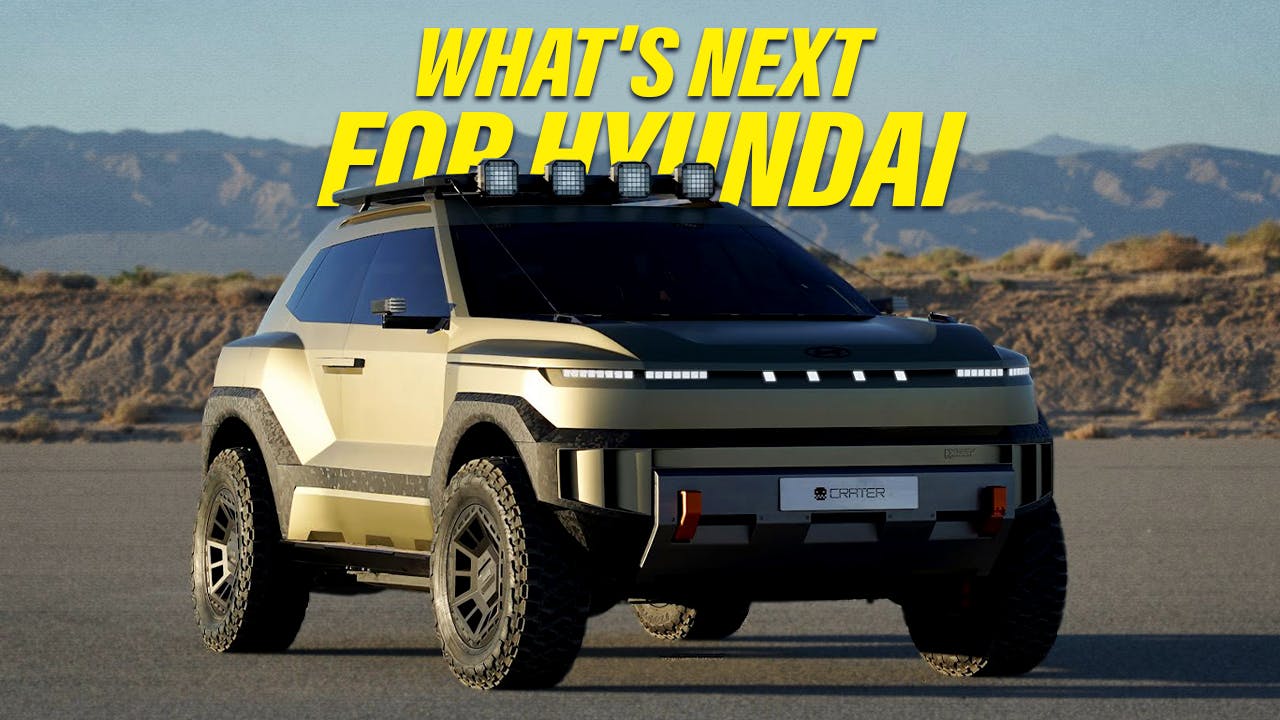
just have a few minutes here and a few questions. So let's start with the creator concept previews
sort of XRT starting. So as a strategy, from a strategy perspective, how is the XRT selling
so far? And is it something Hyundai is going to keep leaning into as it brings new models to
market? It's selling well. They really like the Palisade version. We just came out with a new
Palisade, an ISAN HEV, right? But we are completely leaning into it. And the reason we wanted to
show the creator today is because we wanted to sort of give the design cues, what technology on the
interior could look like that would relate to going off-roading, and what that was going to look
like to inform our future SUVs and our future XRT. So this is not just an XRT question. This is
also a Palisade in general. Right. One thing I've noticed over the past five to ten years,
maybe longer, is a lot of automakers, including Hyundai, are leaning into the outdoorsy set.
Yes. The people who want to go kayaking, hiking, camping. So as you're planning product and as
you're planning marketing strategy, how do you sort of think about that? How do you contrast that
with people who don't do that? People who live in the city, people who live in the suburbs and
just go to work and back? How do you balance the people who really want to do that kind of stuff
and those who don't care as much? Right. So you can have something like a Palisade that has ICE,
HEV, and XRT, right? Limited in calligraphy. And so one of the things we want to do with design
cues, even the people who don't take it outdoor, like the design cues are the ones that go out
door, right? So you have that. And then they might not buy the people that are urban in the cities,
or even its affluent suburbs, might not necessarily want it for XRT, but they will like
limited in calligraphy, right? So it still has the style that they like, but maybe it doesn't
need to have all the off-road capability that's going to be with XRT. The other question that's
something that near and dear to my heart is to dance. So I grew up with to dance, to dance has
kind of fallen off a lot, but Hyundai still has Elantra Elantra N, I-N-E-6, I-N-E-6-N now. So you've
got new EV sedan with performance chops. Sure. So it's how big are sedans still as part of the
product mix going forward? Right. So we're going to continue to lean into sedans. While we know
it's not growing at this that segment, is it growing at the same rate as maybe the some of the SUV
segments? What we do realize is it's enough for us, it's still an addressable market that makes an
opportunity for us. And the more people that drop out, the better for us. Yeah, that's something
something I've always wondered about is why some automakers just have stopped making cars.
You'll have to ask them. Yeah. But what I'd say is there are many people that still love to drive
cars. Right. And that has left us with an opportunity. Yeah. So can you walk me through
it just in more in general, how your process works when it comes to Hyundai product strategy?
And so we lean into what is the customer want in each segment? And what spaces are we not in?
And what are the trends that are going to drive decisions two, three, four and out from now?
So if we looked into what segments we are, you'll see a lot of announcements we make to get into
new segments. When you see, when we still know that people value emotion in cars, that's why you
see the focus on N and XRT. When you see that we want to get into new segments, we made an
announcement on our body on frame truck. When we see how what that people like this more upright
stance and kind of less crossover design queue, you'll see a lot of SUVs are starting to look
like that. Oh, go ahead. And so the only thing that I'd last is that we see sort of an overall
trend is affordability is going to become important to everybody, not just only on EVs,
but on ICE. Yeah, with the average transaction prices at $50,000. How do you account for that
going forward? So not only in the beginning when you decide what features and trends and
unique selling proposition features that are going to go into the vehicles. The other thing you have
to do is extrapolate what people consider affordable maybe four years ago and what they will consider
affordable four years from now. That has to be in the beginning. And then when everyone gets
together with R&D and design and planning and product, everybody together, it's not adding up
what those features cost and saying that's now what its price that it is. The price was decided
here. It's now commonizing and optimizing those so that it fits in the price that people are
going to expect not today, but in four years from now. We have time for I think two more questions.
One conversation I've had a lot over the past three or four years with Hyundai,
Kia and Genesis, especially Hyundai and Kia. Hyundai and Kia came to the country 20 years ago
as the economy brands had problems with performance, reliability, dealer network,
all sorts of things. And obviously, Hyundai and Kia have improved a lot in those areas.
How do you keep doing that? How do you also account to make sure? How do you
keep your dealer network accountable to make sure that they're doing their end of the bargain?
And so I do think you've seen, I agree with you that you've seen significant improvement.
There is constant communication that in the entire HM&A staff led by our CEO, Randy Parker,
and prior to that, Jose Munoz, where we meet monthly with the dealer body. We meet quarterly
with the extended, that's just not the dealer advisory board. And so we show them the new
vehicles. We work on them on facility improvements, both on the Hyundai and the Genesis side.
We let them know where we're going to get them excited about the new products.
One thing that every dealer I've gone to since I've been here for four years, five years,
is that the thing that they don't dispute is how good the product is. It is not the product
up 20 years ago. It's both on Hyundai and Genesis. And Kia as well? Yes. I just don't speak for Kia.
And then two more questions. So the tariff environment obviously is unpredictable.
In one second it's this, one second it's that. Automakers are looking three to five years in
advance. How do you adjust for that when it's changing so much so quickly? So here's a policy,
personal income, and infrastructure all moving at different speeds. So you cannot have your
product strategy depend on policy. If you do have it depend on policy, you have a timer to the
administration changes. So what you have to make your strategy depend on is what the customer
demand is and what the customer wants, but then have diversity of powertrains and diversity in
your manufacturing plants that allow you to flex. So you'll have BEVs where the infrastructure is
strong. So you'll have hybrids where they want affordability and longer range and where you'll
have ICE for the people where emotion is what's really kind of sparks demand. And then you're
not in a position to be whipsawed because policy income infrastructure is changing.
And then last question, I'm going to make it a little bit easier than politics. Celebrity
spokespeople. Jason Bateman's been with Hyundai for quite some time. Parker Posey showed up on a
few commercials earlier this year. How does that work? Like some brands really lean into that and
Jason Bateman's voice is obviously pretty familiar to anyone, especially my age who's seen his movies
the past 15, 20 years. How do you sort of lean into picking a celebrity spokesman or going with
celebrity as opposed to an unknown voice or a different type of market? Like how does that
strategy work? Well, that's more a Sean Gilpin thing who's our CMO. But just in general, it is
looked at by segment and who will resonate with that particular, you know, it'll be a different
person for Palisade and maybe it'll be for Elantra or maybe different for EVs. And so I
they make those individual connections based on what it's going to do for that, bring awareness
and opinion up for that particular model or segment. Excellent. Thank you so much for your
time. We really appreciate it here on Truth About Cars podcast. We've been with, please
thank you again. And we've been here at the Los Angeles Auto Show talking Hyundai
on the Truth About Cars podcast. All right, excellent. Thank you. Thank you.
eBay has reinvented vehicle buying from click to curb. Everything's covered.
It's all thanks to their new secure purchase. Ever try to buy a car and end up in a parking
lot with a stranger and some blind trust? Or spend half the day at a dealership talking to
pushy salespeople and signing paperwork? Or maybe worst of all, wait for hours at the DMV
just to transfer the title. That air is over. For years, eBay has been the go to for gearheads,
collectors and DIYers. Because whatever you're into from classics to SUVs and trucks to imports,
eBay's got it. And now with secure purchase, eBay isn't just where you find your next ride.
It's where you can buy it start to finish. Sellers and titles are verified, paperwork is
handled by experts and payments are traceable and digital. So you know exactly who you're
dealing with and exactly what you're getting. Plus you can finance insure and register your vehicle
all in one place. No more hours at the dealership, no more trips to the DMV, get your vehicle,
plates and paperwork shipped to your door, ready to drive. And it's all part of one seamless
process designed to feel as easy as buying anything else online. And eligible vehicles
purchased on eBay are backed up by up to $100,000 in purchase protection. Thinking about selling
your ride, secure purchase makes that simple too, because you know your buyer and their funds are
verified. If you still own your car, the financing payoff is fully integrated, so you're not chasing
paperwork or waiting in checks to clear. And with secure purchase, you get paid fast. And you're not
going to be stuck chasing no shows or answering the fifth still available message. This is what
modern car buying looks like. Skip the DMV, skip the sketchy meetups, buy it on eBay. eBay. Things
people love. Secure purchase is powered by Carmo dealer services LLC in eBay subsidiary.
Here in the truth about cars podcast, we typically are talking NASCAR with Matthew Guy. Matthew is
unavailable. He is traveling on business. So you just have me, the host, Tim Healy today. And
because you don't need to hear my voice for 45 minutes, we'll keep it nice and short. We're going
to do what I want to kind of dig into the NASCAR scandal or not scandal necessarily, but the lawsuit
that's happening involving 2311 racing in front row motorsports and NASCAR. It's going to be more
of an explainer than an opinion. We will save opinion for when Matthew was back and I have a few
thoughts that I'm starting to formulate as I read over everything. We've been teasing this here on
NASCAR segment of the truth about cars podcast for like six months, pretty much the whole season.
And now we've got some time before the Daytona 500 in February to dig into this. And the trial has
started. So it started out with Denny Hamlin, who drives for Joe Gibbs racing and was a co-owner
of 2311. We'll get into that in just a moment. He was in the witness stand and crying a little
bit because of his own father's failing health and the sacrifices Hamlin claims he had to make
to get into racing, which I certainly do believe it's hard to get into racing, but we'll dig into
that more in a minute. But first of all, what we really want to talk about here is what this
lawsuit is all about. And there's multiple levels to it. So the way it kind of sets up is there's
the lower level, which we'll start with, then there's the kind of meat of the order or meat,
excuse me, the heart of the matter. A meat of the order is more for baseball term. I got my
metaphors mixed up. But anyway, so two racing teams 2311 and front-run motorsports are essentially
suing NASCAR. Basically, it's an antitrust lawsuit. They're claiming NASCAR is an illegal
monopoly that has a little too much control over everything in racing or at least stock car racing.
And 2311 is currently consisting of drivers Bubba Wallace, Tyler Redick, and Riley Herps.
And then it's Cohen by Denny Hamlin, who drives for Joe Gibbs Racing, as I said.
And then so it's a little confusing because Hamlin Cohen's one team and drives for another,
a competing team. And then Michael Jordan, yes, that Michael Jordan, the former Chicago Bulls
and Washington Wizards star, arguably the best player to ever have played basketball.
And then of course, business partner Curtis Polk, who you've probably never heard of,
unless you're a diehard NASCAR fan, is the third owner. So that front-run motorsports is owned by
a fast food owner. ESPN uses the word magnet. I'm not sure if that's the right word, but he
owns a lot of fast food franchises. His name is Bob Jacobs, and he is fielded cars in the NASCAR Cup
series, which is the top level series, of course, for 20 years now since 2005. Kind of in the middle
of the pack, for the most part, he won the Daytona 521 with driver Michael McDowell behind the wheel.
And right now his team has three forwards driven by Noah Gregson, Todd Gilliland and Zane Smith.
So why a front-row racing and excuse me, why a front-row motorsports and 2311 racing going
after NASCAR? Well, essentially they believe the current way that NASCAR is doing business prevents
them from quote unquote full potential. So what they're trying to say, what they're saying is that
NASCAR has done a few things that really are kind of sticking in their craw. One thing is that
NASCAR's current car, the so-called next-gen car, which has been out for three years now,
it was kind of a one-size-fits-all car. NASCAR bought that car out in part to save costs. There's
other reasons as well. But the teams believe that because NASCAR has this kind of one-size-fits-all
vehicle that stifles creativity and performance and because it requires teams to purchase parts
from NASCAR approved suppliers, it kind of eats into their costs a little. Maybe the costs are
being marked up because NASCAR, that's speculation on my part. I don't see that per se, but they're
complaining because they have to buy from NASCAR approved suppliers. So some of these teams have
said that the cars cut their capital costs by much 40%. So NASCAR is saying it costs cut costs.
So yeah, I don't know. I mean, there's definitely some dispute there, but we'll get more into that
when Matthew is back from his business trip. But then we also see that 2311 and front-row are
upset about NASCAR's track ownership. NASCAR owns 17 tracks, 11 of those that were on the 2025
car schedule. And it also has car track agreements, the tracks that it doesn't own. Those agreements
require those facilities to seek NASCAR's approval on coding from ESPN here. Because ESPN, if you
want to read about this, ESPN has a great article on it by Ryan McGee. So if you want to have this
in print and reference it, we don't have something in TTAC like this, I wish we did. But ESPN's
article is great for kind of laying down the specifics. But so anyway, NASCAR has these contract
agreements with facilities that it does not own and require NASCAR's approval before they host
other motorsport series. So the teams are alleging that the limits grow through these
tracks and can't expand it to other racing markets. And of course, these two teams also say
that because NASCAR owns ARCA, which is a lower-level stock car series, and IMSA, which is more of a
road course series, cars that turn left and right, some of the cars are kind of based on
production cars. And then they have like the DPI series, which are more pure racing cars. And
these cars race at tracks like Road America, Road Atlanta, I think Lugunaseka and Watkins
Gennar are on their schedule this year. So NASCAR has an ownership in that as well.
The 24 hours of Daytona is IMSA. So anyway, these teams believe that NASCAR's involvement with
those, with those series is kind of a maximum monopoly. There's no alternatives. The comparison
is with football with the NFL, there are alternative leagues like the XFL has tried to
make itself known twice. And there's been other arena football and other leagues like that. And
even like Major League Baseball are independent leagues that are not affiliated with MLB teams
that are not minor league teams that feed into the Major League teams. So other sports have
alternative leagues. The kind of 2311 in front of motorsports argument is that NASCAR
doesn't really allow, at least in stock cars, obviously you've got IndyCar, which is a whole
different type of racing. It's an open wheel and it's a different type of car. Drivers can go to
F1, but, and there's all sorts of smaller series, you know, I know Matthew races on weekends sometimes
and anyone who lives near a small dirt track can just show up with a race car and if they qualify,
if they make the safety standards, they can run. But NASCAR essentially, at the highest levels,
controls so much of stock car racing that there's not really any competition. So
they're arguing that it'd be hard to start their own rival racing series or to race anywhere else.
NASCAR is monopoly. It's basically 2311 and front motorsports are arguing. And then the final
bit, and this is the most important part, and the part that I've struggled with a little bit,
but I think I've kind of figured it out, is that there's a charter system. And so essentially,
since 2016, NASCAR has given 36 charters that guarantee a starting spot in cup races plus a
share of prize money from every 40 car cup event. A limit of four charters per race team is important.
Teams can sell or lease those charters to other interested parties, which would be, of course,
other racing teams. So if a new team is starting for scratch, they could buy a charter, a team that
already exists, but wants to hire another driver and get one more car, can also buy or lease a
charter from somebody else's front row. Got a charter is one of 19 teams to get a charter in 2016,
and has since then bought three, sold two, and leased three. So NASCAR's argument is that charters
are a great model, that the value of teams has gone up, and they quote,
spire motorsports purchasing a charter in 2018 for 6 million, and buying another one in 2023 for
40 million. So the value went up a lot in five or six years. And NASCAR also defends itself by
saying that teams wanted this, right? That the teams were the ones that first came up with this idea.
The teams that are suing NASCAR 2311 and front row are upset because charters are not permanent,
they're contract to contract. And these two teams want them to be closer to a franchise
agreement, they want them to go seven years, then be renewable at the owners, team owner's
discretion. So that's a big part of this is that these are contract to contract. So
that's a lot of it. And the final issue is that these race teams claim they're not making any
money that NASCAR is not giving up enough percentage of revenue, especially from the
TV deal they signed in 2023, that was seven years and $7.7 billion. And as NASCAR fans know,
NASCAR is kind of spread among NBC Fox and NBC affiliated networks like TNT and USA throughout
the year. So you got, you know, a big TV deal. And NASCAR says it's giving 39% to teams,
51% to racetracks and 10% to pay the company back to itself, essentially.
This is, this is basically the 2016 charter agreement was renegotiated at the end of 2024.
So the extension that began this year and we'll run through 2031. So NASCAR says they've been
generous. And not only that, teams also got a 49% share, which kind of made them actually get more
than the racetracks. So the largest chunk of the TV pie. And then those percentages I quoted,
by the way, were for the TV deal. I missed, I didn't clarify that. And then of course,
NASCAR threw an additional $50 million to the teams. So from NASCAR's perspective,
they're like, Hey, we're giving you plenty of money. But 2311 and Front Row are saying that
they're not making enough money. It's not, it's not fair. Bob Jacobs basically said that he,
he, he lost money, or he failed to turn up, excuse me, he has not turned to profit since 2004,
whereas 2311 has turned to profit in all but one of its seasons in Park is on Michael Jordan.
Right. So, but Jacobs says he's not trying to profit even the year he won the 2020, the 2021
Daytona 500. And one of the attorneys for, for Jenkins and 23, excuse me, for Front Row Motorsports,
he said a NASCAR study showed that 75% of the teams lost money in 2024. And that over a three-year
period, almost $400 million is paid to the Bill France family as long time listeners know Bill
France, founder of NASCAR, his family is still very, very much involved. So NASCAR is worth $5
billion according to Goldman Sachs, according to this attorney from a 23, 2023 evaluation.
Jim France is the, the big, big boss at NASCAR and he's the son of Bill France senior, the founder.
So the argument from Front Row and 2311 is that the family is taking in too much money and not
giving enough back to the teams and the sports. So, or the sport itself, excuse me. So it's a
revenue sharing thing. That's really what it comes down to. 2311 and Front Row are saying it's
unfair to race teams that often operated at loss. And Denny Hamlin, who came very close to
championship this year and is one of the most divisive and also most popular, but also unpopular,
hence the word divisive, drivers in the sport testified that it costs $20 million to just
bring one car to a track over the 38 race season. And that doesn't even include driver's salary
and business operations and overhead. So the teams are saying we're just not getting enough money.
That's what it comes down to. They're arguing that NASCAR is making money and not getting enough
back to its teams. So part of it was charter agreements that were signed for this year.
This actually triggered the lawsuit. Those agreements were supposed to guarantee the
teams $12.5 million in annual revenue per chartered car. NASCAR argues, and this is from the
previous agreement, but Hamlin said that 11 of the 19 teams are no longer business, the original
charter team. So NASCAR is saying, hey, we're giving you enough money and we're giving you
more money than we gave you before. 2311 and Front Row Motorsports are saying it's not enough.
It costs too much to race. We're losing money. We need more money from you. And why is the France
family making so dang much? So I don't know who's right or who's wrong. We'll know more as the
trial goes along. And because this podcast is recorded and not live, I'm trying to work around
the fact that things will change between the time that I record this and the time that you hear this,
and that'll probably happen when Matthew Guy and I talk as well. But so we'll try and keep it a little
bit 30,000 foot view just to not be caught flat-footed by something that changes between
recording and go live. But we'll be watching this lawsuit really closely for the rest of the off
season because quite frankly, depending on who wins and who loses and what happens, and if it's
settled, if there's changes in charter agreement, whatever, it could really change how racing
operates. It can change who wins, who loses, who has the money to compete. It can change whether
drivers, younger drivers can even get into the series or whether new teams can invest. A small
team like the one that Trackhouse Racing that has employed Shane Van Gisburgen, could they run
in the team like that, maybe not have the ability to get into the racing in the future? We all know
too as we watch races that not every team competes every race. There are some teams that only compete
in certain races either because it's a road course and the driver's a road course specialist,
or because they only have so much money or it's a retired guy who's maybe over 45 and wants to run
five races a year, I think Martin Truex Jr. or Jimmy Johnson, something like that. Or maybe
someone wants to run the Daytona 500 and that's it, or they want to run or they're a backup driver,
they're going to sit in for Kyle Larson if he's doing the Daytona, doing the 8500 and the
Charlotte or Coca-Cola 600 double. So there might be that. So that plays into it too. If you're a
part-time driver or a part-time team, if you're someone who only wants to run road courses,
if you only want to run or maybe you want to get your feet wet by doing five races one year and
then you go full the next year, how does that affect things? So the economics racing could,
or at least NASCAR racing could really change and that's why we've been teasing this lawsuit for a
long time and kind of haven't had a chance to really dig into it because there's always been
other news that was more time sensitive and I haven't had a chance personally to really kind
of read up on it. Now I have and I think that Matthew Guy has had a chance as well and as soon
as he's got a chance to really get his feet wet with it, we'll get into this. But so over the
next few weeks as the trial goes along, we'll be talking about it here on the Truth About Cars
podcast and I hope I've laid it out for you the listener fairly clearly. It's a complicated case.
I've skipped over some of the deeper details just because they're confusing and because they might
not be relevant to everything. But you know, I think the gist of it is that they're just fighting
over money and how much money the teams get and how much money NASCAR gets and what's fair and
what's not from the team's perspective and from NASCAR's perspective. So we will see where this
lawsuit goes, where this trial goes. I don't know how long it's going to take, it just started. So
sometimes these trials can take a few weeks, sometimes there's only a few days.
But we'll be monitoring the news here because it could affect, especially if you are a listener
with a child who's got driving talent and maybe has a shot at getting into NASCAR's younger or
lower level circuits and maybe has a chance at making their way up or that could affect you
directly. If you do business with NASCAR, it could affect you directly. And if not, if you're
just a fan, well, it may affect how your favorite driver does or doesn't do. It may affect how many
resources they have to hire people and to spend on car parts and all the other costs associated
with racing. So with that, we will keep an eye on this trial and how it could, how it may or may
not change the economics of NASCAR racing and if it was economic change, how it may or may not
affect the on track action. So thank you for bearing with me through a bit of a boring and
complicated subject, but an important one for NASCAR's future that we'll be keeping an eye on here.
So again, this has been NASCAR Chat with Tim Healy, the host of the Truth About Cars podcast.
Thank you for tuning in and then that'll wrap this segment here on our TTAC podcast for this week.
That's all for this week on the Truth About Cars podcast. I'm Tim Healy, the managing editor,
and you can find us wherever you get your podcasts. You can also find us online at
ttac.com or the Truth About Cars, allspulledout.com. We thank Ola B.C. Boyle and Matthew Guy for
their time and Matt Poskey for editing. Most of all, we thank you for listening. We'll see you next time.
About this episode
Hyundai's future product strategy takes center stage as Ole Busy Boyle discusses the brand's focus on outdoor enthusiasts and the balance between urban buyers and off-road capabilities. The episode also dives into the ongoing NASCAR antitrust lawsuit involving 2311 Racing and Front Row Motorsports against NASCAR, highlighting issues of revenue sharing, charter agreements, and the economic challenges faced by teams. With insights from both the automotive and racing worlds, this episode offers a comprehensive look at current trends and controversies shaping the industry.
Hello and welcome to The Truth About Cars Podcast! I am Tim Healey, the managing editor, and this week we check in with Olabisi Boyle from Hyundai about the brand's future strategy.
TTAC contributor Matthew Guy and I then talk about retro radios, and I work to explain NASCAR's big court case.
We thank Olabisi Boyle and Matthew Guy for their time, and Matt Posky for editing. Most of all, we thank you for listening!
We'll see you next time!