Annotations will appear as you listen
0:00
52:18

Car
Chevrolet Impala


Car
Tesla Model S
Car
Buick Century

Car
Tesla Model 53

Car
Ford Probe

Car
Chevrolet Camaro

Car
Pontiac Firebird

Car
Ford Model T

Car
Deloreans
LIVE
Hi, I'm Dustin, your friend and jeweler at Shane Company.
As director of diamond sourcing, it's my job to make sure every single diamond is worthy
of a Shane Company engagement ring.
Our team travels the world to see diamonds in person and hand-pick each one.
That type of dedication only comes from working for a company that's been a family business
since 1929.
No matter your budget, your diamond is guaranteed to be the most beautiful because a friend
wants you to pick from only the best.
Drop by your store or Shaneco.com and see for yourself.
Shane Company, your friend and jeweler.
Welcome back to the show, everybody.
Today we're doing part one of Oldsmobile, like, two-part series on the somewhat forgotten,
I'll say, American car brand.
But we'll find out they were extremely successful in their early years.
They went through a lot, made some huge innovations.
They were the first car company to ever export an American car.
They were the first company to build, like, a facility for building cars.
They fell flat on their face, and then it rebounded to become one of the biggest companies
in the U.S.
Really interesting story, and we're gonna get right into it right now.
In the vast history of human civilization, only a select few men have been influential
enough to have a mobile named after them, Batman, the Pope, and of course, Ransom Olds.
Olds invented his namesake Oldsmobile, and in doing so became one of the forefathers
of the American auto industry.
This company would go on to build some of the country's most influential cars, introduce
groundbreaking technologies, and help establish General Motors as an industrial giant.
But then, after 107 years of innovation, Oldsmobile simply vanished.
How did Oldsmobile play a part in GM's dominance of the auto industry?
Was Ransom Olds actually more influential than Henry Ford?
And why did America's oldest surviving car company get the axe after more than
100 years of production?
This week on PASSGAS, it's Oldsmobile, part one.
Welcome back to the show, everybody.
My name is Nolan Sykes.
Welcome to PASSGAS.
Across from me is Bart Biddlingmeyer.
Happy to be here.
Thanks for having me.
Love today's topic.
And Joe Weber.
What's up, Winkwink Nation?
That's it.
I'm looking for an answer from the nation.
Yeah, it's about my year.
You have an Oldsmobile.
I was pressured into getting rid of it.
Yeah.
I still regret it.
What's taking its place in the garage?
I'm going to have to bring out Impala from Philly.
That's pretty cool.
That's next on the docket.
What year?
The Impala is a 65.
Oh, man.
Let's get the Oldsmobile, though.
That was an 83.
83 Olds.
What was the model?
It was an 83 Oldsmobile Regency 98.
They loved numbers.
Yeah, 98.
So it was the full-size.
Pretty old model.
Had the 5.7 liter, the 350, which was affectionately named the Boat Anchor, made 180 horsepower.
This thing's big.
It's big.
It was big.
Oh, man.
I had it for 20 years.
Wow.
This thing's pretty cool.
Yeah.
I think about, not a week goes by where I don't think about that.
It was like a gold copper kind of thing.
Yeah, it was like a root beer.
Like if you hold up a root beer candy.
I think I saw once when I went to your house and you look through the root beer candy and
the sparkles.
Is this like a line from Silent to the Lambs?
It's something James and I used to do as a joke back and forth.
Did one of these at the freaking blower sticking out the hood, dude?
Yeah.
I went to a Radwin.
I ran into a couple of people.
What happened was it was the transmission and really all it was, I found out later that
there's a sleeve around the transmission that it's what catches it on the Oldsmobile
and like a lot of drag cars that use an automatic, it's the same thing.
But once, if you change the fluid or something maintenance, you got to crank it down.
There's like a screw that will adjust it.
And what was funny is I would go to like a transmission shop and be like, this is exactly
what happened.
It doesn't make sense.
It's just not shifting out of first.
And they're like, oh, you need a new transmission.
Of course.
Oh, you need a...
I was like, I'm not.
And then anyway, so it sat in the driveway for a while and then Nicky was like,
we got it.
Bart.
Yeah.
Get rid of this.
Get rid of your parents' cars?
Because my grandfathers and then my grandmothers and so I live after college, my grandmother
got sick and she lived in Cincinnati and I was kind of like, well, I'm the only one
in our family, either my uncle or my dad, I'm like, I'm not doing anything yet.
So I lived with my grandmother in Cincinnati for about three or three to six months or
something.
And then she went to assisted living and she was like, Bart, do you want the car?
So me and my buddy drove up from Louisville and that was it.
Got some Skyline chili, got a Oldsmobile 98.
It is huge.
It's a lot bigger than I remember seeing it in your garage there or at your house.
Yeah.
And it glided.
James used to, like, James borrowed it for like a year.
I can't imagine driving this around, trying to find parking in LA.
This thing's like 20 feet long.
I got, look, I got so good at driving and parking because of that car.
Yeah.
And people are like, there's no way.
And it's just.
Watch this.
Yeah.
It's like you're, the styling is your classic like the other thing that is Malaise era kind
of styling, but it's a huge SUV or a stand.
Looking at it, something like if you look at it and revisit those full size, there
are things that we were getting from Germany in the design and it's like, oh, I
can see what they were going for.
From the early 80s?
It's a pretty good looking car.
Yeah.
Like from the front.
You look at it at the angles.
Yeah.
That makes sense.
The other fun thing was that about that was whenever I'd go to like a park or like Griffith
Park or it's always like authorized vehicles only.
And it was an outline of my car.
So.
It looks like one of those game shows where you have to fit through the shape of your
car.
Dang dude.
Yeah.
Yeah.
It's pretty sick.
Look, I learned how to coop work on cars for us as they are coops.
It looks like though.
I learned to work on cars because that was my only car.
And so and it does something happen.
I had, I did the brake lines.
There's a coupe.
Wow.
I did, you know, like it's like all this stuff where it's like, we're not going
to pay somebody to fix a $3,000 car, you know, but anyways, well, that is
the fond memories.
That is the V8 that they had for like 40 years.
Yeah.
Oh yeah.
And it came from the rocket V8 in the early 40s.
So.
Well, we'll find out more.
Yeah.
Let's do it.
Let's do it.
Ransom Eli Olds was born in 1864 in Geneva, Ohio.
I love there's also, Ohio did this thing.
If you drive through, there's all these towns and you kind of, it's like, well,
that didn't work out like you hoped, huh?
Zurich.
Yeah.
Ohio.
Philadelphia.
No.
Didn't.
Yeah.
Is that a real one?
Yeah.
Oh my God.
The Oldsville Delphi is still pretty good.
Yeah.
Yeah.
Okay.
And it's really close too.
Yeah.
It's pretty close.
It's not that far away.
Ransom's parents nicknamed him Ranny.
That sucks.
When Ranny was six, his father, Pliny, the elder, his father, Pliny moved the family to
Cleveland to take a job as the superintendent of an ironworks.
It was in this factory that Ransom was first introduced to mechanical tools and industrial
machinery.
Just Pliny just letting his little child run around that smelting plant.
Yeah.
Yeah.
Play with all the presses, all the different buckets of molten metal.
I had a friend, his dad, would sell scrap metal.
So he worked, you know, anything they didn't sell, he'd take to this Amish guy in Ohio because
he would do all the pressing.
And he said it's like, first he would like pull out all the money from a coffee can.
But also he said there's like eight kids all under eight running around.
It's just corrugated aluminum with those giant metal presses.
They're like in the rafters.
Yeah.
Geez.
It's a lot of fun.
After a series of financial ups and downs, the Olds family relocated yet again when Ranny
was a teenager, settling in Lansing, Michigan.
There Pliny purchased a plot of land where Ransom's older brother Wallace launched a
business repairing farm equipment.
That business called PF Olds and Son grew steadily.
And by the early 1880s, they were advertising steam engines for sale and offering general
machine work.
In 1883, with PF Olds and Son producing about a dozen steam engines a year, Ransom became
the company's first full-time employee.
Two years later, he purchased Wallace's share of the business, making him the new son in
the company's name.
I'm the son now.
Couldn't have added an S, dad.
Do you know how much an S costs?
Thanks in part to a strong national economy, PF Olds and Son expanded in 1887.
I'm going to say thanks largely to constructing a new plant in Lansing with a machine shop,
a foundry, a blacksmith shop, and an office space.
Over the next five years, the company built approximately 2,000 engines.
During that time, Ransom Olds began experimenting with self-propelled vehicles.
His first known horseless carriage was a three-wheeled steam-powered design constructed
sometime around 1886 or 1887.
I just remembered when my grandfather was like in his older age, going into his 90s.
He offered me, he had an Oldsmobile sedan as well.
It wasn't a big, it was like the mid-size sedan.
I think it was in the late 80s.
I think it was an 88, yeah.
Also under, like you see those, I think they're hard to find because they don't hold,
it was that era where they would just fall apart.
I want to say it was like a mid, like 80s model.
It was something like this, like that, yeah.
That was when I was about to graduate college and I was like, eh, I don't think I'll put it.
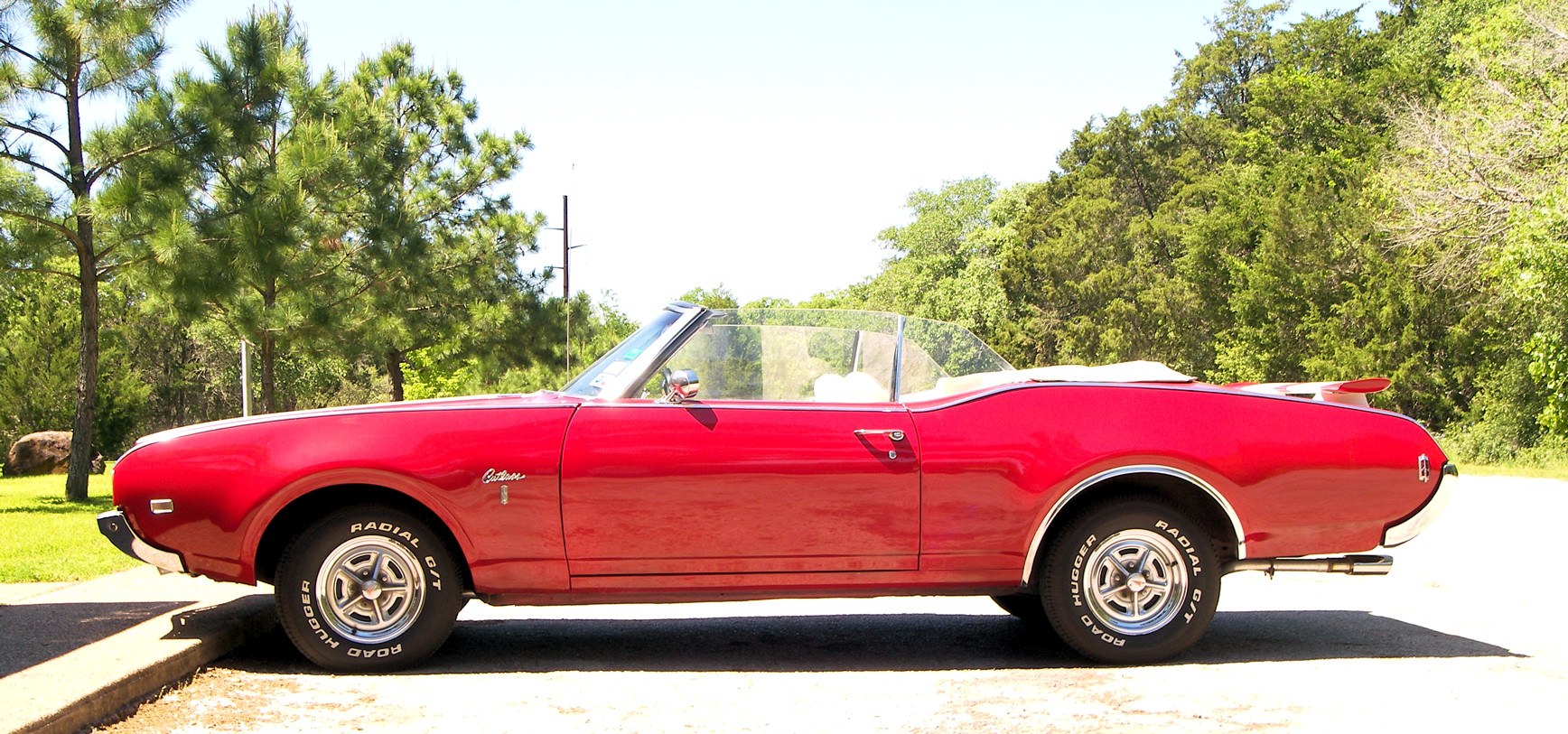
Was the Cutlass the small one?
Smaller.
It was a coupe, right?
My uncle had a Cutlass.
Well, Cutlass was around for a while.
They were, yeah.
It was a smaller for an Oldsmobile car.
My mom had, I don't know, we're getting ahead of ourselves.
My mom had like a late 70s Cutlass that just kind of sat.
I was in Hopkins, it was a small town outside of Boston.
But our plumber, because they were doing some work on the house,
the plumber was like, hey, Mrs. B, what are you doing with that old Cutlass?
Yeah.
And sold it to him for a few hundred bucks.
But then later he came back with like a pink slip because he had done an engine swap
and was drag racing it.
Oh, wow.
That was pretty cool.
So back in the late 1880s, in 1892, Randy built his second vehicle,
which featured a flash boiler and was capable of about four horsepower
and a top speed of 15 miles per hour.
This motor carriage was featured in Scientific American
and subsequently sold to a buyer in India,
making it the first American car ever to be exported.
Wow.
However, the ship carrying the mobile sank on route,
which also made it the first American car ever lost at sea.
Is the first car to be, the American car to be exported,
but not yet to be imported.
By 1894, Randy Olds had turned his attention
to internal combustion engines.
Steam engines remain the bread and butter of the family business,
but gasoline engines, including those recently developed in Germany
by Gottlieb Daimler and Karl Benz, offered more power in a smaller package.
In 1895, Randy received a patent for what he dubbed a vapor engine.
The following summer, he completed his first gas-powered car
and demonstrated it for a Lansing newspaper,
just two months after Henry Ford built his first car in nearby Dearborn.
Olds began advertising the gasoline vehicle for sale at $1,000 each,
which is about $38,000 today with inflation.
He regularly drove it around Lansing,
which peaked local business interests.
Ransom Olds had built one of the first working gas-powered cars in the country,
and unlike many of his contemporaries,
he already had a factory prepared to build it.
Imagine just...
That's a good point that like you...
It's a foreign sound at that time, like an engine puttering along,
but horses, you probably hear horses all the time.
Just clomping around with their big feet.
Yeah?
Now, if you hear a horse, you're like,
where the f*** is that horse?
Yeah, yeah.
How much does a horse cost?
Oh, I'm not sure.
I can get you one for $500.
I'm not talking about a race horse.
Just a horse horse.
A horse horse.
You're talking about like a teaser pony?
Yeah, that's a very special, nice horse.
I have a teaser pony that got kicked pretty hard.
I give you for like $750.
He's a little defective.
Yeah.
In 1897, Olds partnered with several Lansing businessmen
to start the Olds Motor Vehicle Company.
It was the first business in America
founded specifically to produce cars in quantity.
Do you think they have salvage horses?
Salvage horses.
You can't register them.
Yeah, you can't register them because they're salvage.
You can't get insurance.
You can register them, yeah.
As part of a new arrangement, unfortunately,
no, because you shoot them.
Yeah, they turn into glue and dog meat.
Sorry, shouldn't laugh at that.
Dog meat?
I mean, dog food.
The kind that they eat.
I'm kidding.
There used to be, in France, they'd have chevalier,
which is like a butcher, but only for horses.
You know what it was, because it had the horse head on it.
Hemingway wrote about it, kind of just offhand,
but it was cheap meat.
I think I ate horse in Italy,
but we couldn't speak Italian, so we didn't really know.
But I think it was horse tenderloin, like carpaccio style.
I don't know how I feel about that.
I don't know.
It's like, majestic animals.
Go ahead, Noel.
So as the first business in America
founded specifically to produce cars in quantity,
pretty cool.
As part of the new arrangement,
P.F. Oldson's son, the original family firm,
was reorganized and placed back under control
of Ransom's brother Wallace.
Ranny himself controlled half of the shares in-
I did it, you son of a bitch.
It's mine.
Ranny himself controlled half of the shares
in the new motor vehicle company,
but remained in a management role
rather than an executive one.
And that was because a local businessman
named Edward Sparrow invested $10,000
into the new venture and was named company president.
That's like $385,000 a day.
Yeah, Sparrow also brought in a partner named Sam Smith,
who unbeknownst to Olds,
would gradually rest control of the company away from him.
And they opened a body shop.
In its first year,
the Olds Motor Vehicle Company built just four cars.
The new board of directors had given Ransom
a clear initial directive, quote,
build a carriage in as nearly as perfect a manner as possible
and completed at the earliest possible moment.
These first four nearly perfect vehicles
were primarily used as publicity tools at regional fairs
to build enthusiasm for new fangled automobiles.
In 1899, Olds Motor Vehicle
underwent further corporate maneuvering.
Orders for cars were coming steadily,
but the company's growth was hampered
by a limited cash flow.
So Olds Motor Vehicle absorbed the operations
of PF Olds and Son.
As part of the merger,
production was relocated to Detroit or Detroit,
where Smith and many other investors lived.
The deal also reshaped the company's ownership structure.
Ransom Olds became a minority shareholder
with 7,500 shares compared to the 20,000
controlled by the Smith family.
Five days after the incorporation of this new company,
now called-
Wait, go over the shares again.
Sorry.
Ransom has 7,500 shares.
Okay.
And the Smith family now has 20,000 shares.
Yes, sorry.
So I'm having my head, I thought 75,000.
No, that's all right.
It's like succession, hostile takeover.
It is a hostile takeover.
Five days after the incorporation of the new company,
now called Olds Motorworks,
the firm purchased five acres of land in Detroit
for a new factory.
It was the first manufacturing facility in America
built specifically for making cars.
But even then,
much of the factory was still producing industrial engines
because cars weren't yet profitable enough
to support the facility.
That's crazy.
Is that unfamiliar?
That's how all the new startup cars are,
it's like, well, we're not turning our profit yet,
but we're making cars.
Yeah.
We're gonna be profitable at some point.
We just have to.
I think slate,
the first slate just rolled off the line.
Oh, did it really?
Yeah.
Too bad about that EV credit going away.
Yeah, now they gotta get,
so what's gonna happen is they're gonna get
all these purchases before December.
So they're gonna have, yeah.
So it doesn't go into effect.
So if you're thinking about it,
this is really good if you have,
like if you are a company like Slate,
you're gonna be able to sell these things ahead of time.
Oh, like pre-orders.
Yeah.
So they might come into a huge.
Wow.
A windfall of cash.
They also changed the copy on their website
to say mid-20s instead of under 20.
In 1900, the Oldsmobile name
finally appeared for the first time.
According to former company employees,
the name came from an internal contest
put on by Olds himself
who wanted something catchy to call his new vehicle.
They gave the name to the name
that had the most submissions.
Olds himself wrote out 100.
Yeah.
The man responsible was a timekeeper
named James Brady, who submitted Oldsmobile,
securing himself a $5 cash prize
in a place in automotive history.
Does that mean that like instead of a punch card machine,
it's just like a guy like, all right, you're into work.
Is that the timekeeper?
Or is he the guy who goes over to the whistle and goes.
Oh, I bet he does both.
Probably both.
And Oldsmobile was first advertised into some.
I love the idea.
I had never thought about it,
but from the intro of to have a mobile.
Yeah.
Like the back mobile.
It's like thinking him driving.
Oh, there it goes out.
Oldsmobile.
You know, I think it's a personification of the driver.
And Oldsmobile was first advertised
in the December 1900 issue of Playboy.
They showed ankle that year.
It was the automobile review.
The company's official name remained Oldsmotorworks,
but the new moniker caught on quickly with the public.
Thanks in part to a hit song called
In My Merry Oldsmobile
by early recording artist, Billy Murray.
Can we hear it?
I want to find it.
Yes.
Dude.
Billy Murray.
In My Merry Oldsmobile, Billy Murray.
Here we go.
Nice.
Young Johnny Phil has an old mobile.
He loves a beautiful girl.
She is the queen of his family.
She has his heart in a world.
Now when they go for a trip,
they try to love, they also don't.
I think we got it.
Yeah.
The comment on here says,
my 12-year-old son is listening to the song all day.
Oh my God.
What have I done?
12-year-old?
Wow.
That's a little old for In My Merry Oldsmobile.
Wow, it's been 118 years,
and it still sounds better than music in this era.
What the hell?
How'd that guy know enough to get on the internet?
That's so funny.
Okay.
We'll be right back after these messages.
I had that dream again.
My small business needs to hire,
but I don't use LinkedIn and I hire wrong.
So our orders get all backed up.
We're drowning in paperwork.
Then actually, drowning.
Carol is fighting off sharks with a stapler
and pirates are pillaging me off this copier,
and then I wake up.
Don't let hiring nightmares ruin your dreams.
LinkedIn Jobs' new AI assistant goes beyond the resume,
using unique insights to deliver a smarter shortlist.
Post your job for free at linkedin.com slash quality.
Start hiring today with LinkedIn.
Now back to the show.
During the golden era of the judge court shows,
the guy with the bald head,
he was like, really, hey, hey, I'm talking.
Like that, judge?
I don't know if you know him.
Anyways, you know, a Platon defendant
and one of them made rap music.
And he goes, oh, I know, you know,
it's like that choopa choop stuff.
Chupa choop.
He described rap music and I was like,
it's just stuck with me.
Chupa choop stuff.
Chupa choop.
So I got asked to be on this other podcast
where they watch all of the movies
that Siskel and Ebert gave two thumbs down to.
I don't know if you remember Mafia?
Yes.
With Jay Moore.
Yeah, and Christina Applegate.
Yeah.
And she comes out and she says,
and he's like, this is your son.
Yeah.
No, no, I'm Donner.
I'm a mother.
Oh yeah.
What's your name, little kid?
Diane.
That's right.
I named him after his mother.
It was so good.
Yes, that was a very, and it was,
no, it was Jane Austen's Mafia.
Yeah.
It's like really funny, but they make you watch too.
So I watched another spoof movie, Loaded Weapon.
One, National Lampoon's Loaded Weapon
with Emilio Estevez and Samuel L. Jackson.
Those movies are only like five years apart,
but you can see Loaded Weapon is very much
a spoof on 80s cop movies.
And like Mafia feels modern almost.
Yeah, it's crazy.
I have to re-watch it.
They also gave Wet Hot American Summer Two Thumbs Down.
What?
And then later they went back, I know Ebert did,
I think they both did, but they were like,
you know what, we just didn't get it.
It's so funny.
And then they started, yeah,
because it was after they re-visited and they were like,
I get what it is now.
Yeah.
Sorry about that.
I didn't think of that as a spoof movie,
but it is definitely a spoof movie.
Sorry, no.
But I think they did it because it was like a spoof,
but I remember they were complaining like,
I don't understand why they have, you know,
20 and 30 year olds playing teen.
You know, like they were, they just didn't get it.
And then when they were like, yeah, I get it.
Yeah, we're pretty dumb.
In early 19, great Frazier's here.
No, it's Niles.
I know.
Nice.
Who's the one who didn't get it now?
Thumbs Down.
In early 1901, the company started advertising
its newest model, the Oldsmobile Curvedash,
a runabout with no windshield and no doors
that sold for $600.
And it was a smart-looking car compared to what,
you know, it's a pretty looking car.
Yeah.
Unfortunately, Bart, disaster struck.
A fire destroyed the Detroit plant,
causing the modern-day equivalent
of $2 million in damages.
Only one car survived a single Curvedash prototype,
which two employees managed to push out of the building
before it was engulfed in flames.
At the time, the company had orders for 334 vehicles,
and to meet demand, they set up temporary production
in small buildings behind the burned-out factory,
but the makeshift facility couldn't keep up.
Instead, Olds began outsourcing engines
from the Dodge brothers, Horace and John,
as well as transmissions from Henry Leyland
who would go on to found Cadillac.
You know, they think it was the cow
that started the Chicago fire
that also started this Detroit fire.
Well, I was picturing, like, a Henry Ford covered in soot.
I don't know.
Too bad about your factory.
This was the first time a car maker regularly
outsourced component parts for his vehicles,
marking another reason why ransom Olds
is sometimes called the father of the American auto industry.
I think this is the reason that we put this episode
on the list is because we did the Dodge trilogy,
and we're like, what?
After the fire, Olds accepted an offer
from the city of Lansing for a large plot of land
on which to rebuild,
so the Oldsmobile factory moved back home.
The geographic rivalry between Lansing and Detroit
went on to shape Oldsmobile's identity
throughout its history.
While Detroit became the acknowledged center
of the auto industry,
Lansing remained Oldsmobile's primary manufacturing base.
Lansing offered advantages that Detroit couldn't match.
The city provided cheaper land, lower labor costs,
and a frozen yogurt,
and a more cooperative municipal government.
The relationship benefited both parties.
Oldsmobile became Lansing's largest employers
and primary economic engine,
while the city provided a stable, loyal workforce
and strong community support.
By the end of 1901,
the company had produced 425 curved dash runabouts.
That figure jumped dramatically the next year
when an estimated 2,500 cars were built,
making Oldsmobile the most prolific car maker
in the United States.
The company's volume was helped by an early form
of assembly line production.
The curved dash, later renamed the Model R,
was the first car to be built
on a progressive moving assembly line.
Henry Ford, it's woke.
Henry Ford is often credited for the...
It only moves to the left.
Henry Ford is often credited for this innovation,
but ransom Olds did it first with his line
in which the car was pushed manually
from station to station as it was built.
Ford later mechanized the same process,
which greatly sped up the production
and spawned imitation across the industry,
including at Oldsmobile.
By 1903, Oldsmobile had become
the top selling car brand in the United States.
The company produced nearly 4,000 vehicles that year,
which was roughly 37% of the entire U.S. auto market.
Oh, jeez.
So that means that there was like 15,000 cars
in the U.S. at that time?
Even as sales climbed, though,
internal tension was growing.
Behind the scenes, ransom Olds had entered
into a power struggle with Fred Smith,
the son of board member Sam Smith.
The Smiths had consolidated control of company shares
and wanted more influence over a vehicle design and strategy.
Despite the success of the curve dash,
Fred Smith worried about a possible sales downturn.
He ordered Olds to begin work on a new smaller engine,
going so far to say that if Olds wouldn't do it
in Lansing, then the Smiths would do it in Detroit.
Feeling undermined, Olds abruptly resigned
from the board, sold his shares,
and announced his retirement, quote unquote.
In a personal letter written shortly afterwards,
ransom Olds made it clear that he had been pushed out.
Just six days after Randy's departure,
Fred Smith was named the new general manager
of Olds Motorworks.
I don't like these Smith guys, you know?
Mm-hmm.
I never like a hostile takeover.
Yeah.
Ransom Olds didn't really retire though, of course.
He was only 40 years old
and not done building cars just yet.
Just months after stepping down from Olds Motorworks,
he began setting up a new company across town.
He even named it after himself again,
this time using his initials, REO.
Oh.
The Speedwagon.
The company would eventually produce
a Speedwagon series of light trucks
that inspired at least one 70s soft rock band.
That's so funny.
That's like us naming our band Pontiac Bonneville
or something like that.
Yeah.
Meanwhile, back at Olds,
Fred and Sam Smith had solidified control.
With Fred now firmly at the helm,
the company started expanding its production facilities
and developing new vehicles to move beyond the curved dash.
They began by introducing the Light Tonneau,
Oldsmobile's first 10 horsepower car.
The heavy touring followed,
a faster model powered by a new two-cylinder engine
capable of reaching 40 miles per hour.
Then came the Model S,
Oldsmobile's first four-cylinder vehicle,
available in two elegantly named variants,
the Gentleman's Roadster and the Palace Touring.
Palace Touring is pretty sick.
PT.
PT.
Under Smith, Oldsmobile produced
an impressive 10,000 cars in 1905.
Oh, s***.
But the industry had quickly grown around them
and that figure now represented just 10%
of the total U.S. market.
Despite its strong name recognition,
Oldsmobile was losing ground to competition from Detroit
and to ransom Olds himself,
since REO outsold Oldsmobile in both 1905 and 1906.
You know what?
Good for that guy.
Yeah.
Good for Ranny.
Nice.
Declining sales put financial pressure on the Smiths.
They are forced to personally finance the company's losses,
spending up to $100,000 a month
to keep the factory running.
By mid-1908, they were nearly a million dollars in debt
and the company was facing collapse.
Enter one, William Durant.
Durant was a carriage maker from Flint
who understood something most early automakers missed.
The future of the auto industry belonged to whoever
could build the biggest company.
Before entering the automobile business,
Durant had already proven his business acumen
by building the Durant Dort Carriage Company
into one of the largest vehicle manufacturers
in the country.
He built the Durantula,
a 100-foot tall mechanical spider
that cruised the Southwest.
While his chief competitor at Ford
focused on perfecting a single model for mass production,
Durant believed in offering multiple brands
at different price points.
His strategy was acquisition heavy and cash intensive.
After taking control of Buick in 1904,
he used that company's profits
to fund an aggressive expansion campaign.
The formation of General Motors was Durant's master stroke.
Incorporated on September 16, 1908,
GM was designed as a holding company
that could absorb existing automakers
rather than competing with them directly.
Durant's vision was to create an automotive conglomerate
that controlled every aspect of car manufacturing
from basic transportation to luxury vehicles.
That year, he attempted to buy
the Ford Motor Company for $8 million
with Henry Ford.
8 million, million, dude.
Back then.
With Henry Ford actually agreeing to the deal
before Durant's investors backed out.
The Oldsmobile purchase,
completed just two months after GM's incorporation,
demonstrated Durant's opportunistic approach.
He recognized that the Smith's financial distress
made Oldsmobile available
at a fraction of its actual value.
Due to Oldsmobile's disastrous financial situation,
the merger with GM was essentially a stock exchange.
The deal was worth over $3 million on paper,
but Durant paid just $12,279 in actual cash.
That's cool.
Less than the cost of four new Oldsmobiles at the time.
Fred Smith briefly joined the GM board,
but stepped down in 1909.
You know what?
I don't know what I'm doing.
Yeah.
That's interesting, dude.
This episode, a little twist, man.
We went from the story of Oldsmobile
to now like the real story of GM.
GM, yeah.
It's exciting.
GM's first major move with Oldsmobile came in 1910
with the release of the Limited.
The car's name supposedly referred
to its limited production run of just 325 units.
Though another story claims the name was inspired
by a publicity stunt in which it beat
the 20th century limited locomotive in a race.
This train looks really cool, by the way.
Oh, that is a sick ass train, dude.
That's neat.
Close your eyes.
Think of train.
That's it.
That's it.
It's cool.
Choo-choo.
Regardless of the nomenclature,
the car was a statement piece
with a starting price well above most competitors.
The Limited was available in seven seating touring.
It looks like the Polar Express train.
It does, yeah.
With a starting price well above most competitors,
the Limited was available in a seven seat touring
configuration, a two seat roadster,
and a limousine configuration.
It featured luxurious options like goat skin upholstery
and a built-in clock.
I don't think I've ever touched goat leather.
Me neither.
You think it's soft?
Sheep leather is really nice.
Sheepskin.
Yeah, sheepskin.
We'll be right back after these messages.
Every day at Sierra, you'll find top brand apparel,
footwear, and gear for 20% to 60% less
than department and specialty store prices.
And during clearance time at Sierra,
those incredible prices are 40 divided by 2.5
carry the one even lower.
And when you shop clearance at Sierra,
you can save a whole lot more
on everything you need to get active and outside.
That's a lot of saving.
Epic brands, fast selection, teeny tiny prices.
That's Sierra.
Visit your local Sierra store today
or shop online at Sierra.com.
Right now, get up to 20% off select online storage solutions.
Put heavy duty HDX totes to good use
protecting what's important to you.
The solid impact resistant design prevents cracking
and the clear base and sides make items easy to find
even when the totes are stacked.
Find select online shelving and tote storage
up to 20% off at the Home Depot
to organize every room in your home.
From your garage to your attic, visit Home Depot.com.
How do's get more done.
Now back to the show.
Unfortunately though, the limited was not profitable.
Fewer than 150 cars were sold in its second year
before the model was quietly disappeared.
Still, GM's growing infrastructure
helped stabilize Olds and Wheels financial position.
And the company found firmer footing
by focusing on affordability.
In 1913, it launched the six cylinder Model 53,
a simpler, more accessible alternative to the limited.
The turnaround was slow, but steady.
And by 1915, Oldsmobile grew sales from 1,400 cars
to 7,400 cars.
Later that year, the company introduced its first V8,
the Model 44.
When was this?
1914.
That's super early.
That's really early.
Like the 32 flathead was Ford's first V8
and he was like trying to catch up to Oldsmobile.
And that was 15, 16 years later.
That's crazy.
This car was priced aggressively,
only a small amount more than Oldsmobile's
four cylinder model.
The strategy worked like gangbusters.
In 1916, Oldsmobile increased production
to 10,500 vehicles with more than 8,000 of them
powered by this new V8.
Hell yeah.
Hell yeah.
Gangbusters.
Gangbusters.
Charles Kettering was the engineer behind Oldsmobile
and other GM brands at the time.
Known as Boss Kett to his colleagues,
Kettering founded Dayton Engineering Laboratory's
company in 1909, became GM's head of research
when the company was acquired in 1916 by GM.
Kettering's most transformative invention was.
That's interesting too that he's like,
sure I'm gonna buy auto company.
And he's like, let's buy the other guys
making the engineering.
Yeah, it's smart.
Kettering's most transformative invention
was the electric starter, which debuted
on the 1912 Cadillac, but quickly spread
to Oldsmobile and other GM brands.
Oh yeah.
Before electric starters, cars required laborious
and sometimes dangerous hand cranking.
The electric starter made automobiles more accessible,
dramatically expanding the potential market.
I think the story goes that one of Kettering's friends
was trying to start his car
and with the hand crank like whipped up
and smacked him in the head and killed him.
Whoa, really?
So that's why I invented the electric starter.
Damn.
You need a teaser hand cranker.
I think there should be like foot starters on cars.
That'd be sick.
Next to the gas pedal.
No, no, outside of the car.
Oh, you gotta be outside.
Yeah, you gotta be outside of the car and...
Kickstart it?
Yeah, kickstart.
You think we have problems
with people getting here late now?
Oh yeah, I couldn't kickstart my car.
My Ford probe would start.
Kickstarter snapped right off.
What went, what went, dude?
Hit my dog.
Hit my dong.
My dong.
Hit me in the dong.
Dude, talk about gangbusters.
Kettering's systematic approach to automotive research
established the template for modern corporate R&D
departments.
His innovations enabled many of Oldsmobile's
later technical advances from the hydromatic transmission
to the overhead valve engines that defined the brand's
performance reputation.
Oldsmobile's momentum carried through World War I.
In 1917, production doubled to 21,800 units,
making Oldsmobile one of America's top automakers
again for the first time in a decade.
The company entered the 1920s with momentum.
Its merger with GM had saved it from disaster
and sales continued to be strong.
But that momentum didn't last long.
A sharp post-war recession hit the US economy in 1920,
and the automaker went with it.
After moving more than 40,000 vehicles in 1920,
Oldsmobile saw sales cut in half the very next year.
Rumors started swirling that GM was thinking
about killing the brand.
In a bid to project stability, executives at Oldsmobile
even hired photographers to stage scenes of bustling factory
activity, hoping to make the plant look too busy
to shut down.
I love that.
I know.
Well, they're never going to come and look at it.
Yeah.
They saw pictures.
Let's get some people with money in their hands,
clamoring to buy an Oldsmobile.
Well, this gamble worked, or sort of.
Whatever the cause, Olds survived the sales roll
and bounced back with the rest of the economy
during the roaring 20s.
Annual sales now surging past 100,000.
The Lansing plant added 12 new buildings,
and the company's workforce grew to 7,000 employees.
Oldsmobiles, once again, on solid footing.
It just shows you how fickle the automotive industry
has always been.
The swing between failing and winning is.
It's also dependent on so many things
that are out of the industry's own control.
The economy, supply chain, war.
As part of the surge of success,
General Motors launched a companion makes program,
essentially a way to fill the gaps in its brand lineup.
This was when Oakland first introduced
the lower cost Pontiac.
Similarly, Cadillac spun off the short-lived LaSalle.
Oldsmobile released the Viking,
a more upscale car with added horsepower
and premium features.
The Viking actually looks really sick.
The most notable was its 60-degree V8 engine,
which was GM's first monoblocked V8,
a significant engineering innovation at the time.
Unfortunately, the timing couldn't have been any worse.
Only about 5,000 Vikings were built
before the stock market crash of October, 1929.
Amid the onset of the Great Depression,
Viking was dropped after only two model years and 8,000 cars.
By 1932, Oldsmobile's sales had dropped
to just one-fifth of their 1929 total.
By this point, William Durant had left General Motors.
Under the direction of new GM president, Alfred Sloan,
Oldsmobile weathered the Great Depression
as part of a larger corporate ecosystem.
Wait, the Pace King?
Alfred Sloan, urinal entrepreneur?
I don't know.
I know those, is this Alfred P. Sloan?
I think so.
Does that guy's name is on Foundations, you know?
He's one of those guys.
Yeah, that's right.
Alfred P. Sloan Foundation.
Alfred P. Sloan Foundation,
not-for-profit grant-making institution
that supports high-quality impartial scientific research,
according to them.
Alfred P. Sloan's signature idea was the brand ladder,
a strategy that gave each GM mark
a clear identity based on price and prestige.
The brand ladder transformed GM
from a collection of competing divisions
into a coordinated marketing machine.
The concept was elegantly simple.
Arrange GM brands in a hierarchy
based on price and prestige,
then encourage customers to move up the ladder
as their incomes and social status improved.
Sloan positioned Chevrolet as the entry-level brand,
targeting first-time car buyers
and budget-concerned consumers.
Pontiac occupied the next rung,
offering slightly more features and style
for young professionals ready to trade up.
If you were a yuppie in Silver Lake,
Pontiac was the brand for you.
That makes sense in the Camaro episode now.
So if you were a young kid
and you didn't have a lot of money,
you got the Chevy Camaro.
If you had a little bit more money,
you wanted to customize, trick it out a little bit,
you get the Firebird.
Oldsmobile sat in the middle,
marketed to established middle-class buyers
who wanted comfort and reliability
without luxury pricing.
Buick appealed to successful business owners
and professionals seeking prestige
without the expense of a premium brand.
They're like the Volvo, basically.
Those guys live on Park Avenue.
They live in West Side Santa Monica.
Finally, Cadillac represented the pinnacle
of American automotive luxury, the Beverly Hills buyer.
Yeah, so you're saying that Chevy is Silver Lake?
I'm saying Pontiac is Silver Lake.
Oh, that's Chevy.
Chevy? East LA?
Yeah, downtown, mid-city.
Mid-city. Yeah.
I lived in mid-city.
Where's Buick then?
Is that like Century City?
Uh, no, I mean, Century City is super expensive.
Buick's probably Culver City.
Each brand offered a clear upgrade path
with enough differentiation to justify the price increases.
A young person might start with a Chevrolet in their 20s,
move to a Pontiac when they get married,
upgrade to an Oldsmobile as their career advanced,
transition to a Buick as their business prospered
and finally arrive at Cadillac
as a symbol of their success.
Sloan ensured that each brand maintained
distinct identities through careful pricing controls
and featured differentiation.
Chevrolet focused on value and reliability.
Pontiac emphasized performance and youth appeal.
Oldsmobile highlighted innovation
and middle-class respectability,
Buick's stressed quality and conservative luxury,
Cadillac represented ultimate prestige
and cutting-edge technology.
This strategy worked brilliantly for decades.
GM maintained strict price gaps between brands,
typically 25 to 40% increases from one level to the next.
The company also staggered feature introductions,
ensuring that many innovations appeared first
and Cadillac then filtered down through the hierarchy.
Within decades, GM controlled nearly 50% of the US auto market.
Together with Buick and Pontiac,
Olds rebounded to form a core mid-market trio
that dominated the American auto industry for years to come.
What year is this?
Mid-30s, post-depression.
So mid-30s, they've got 50% of the market,
but they're eight companies.
I remember what I was gonna say.
How much is Ford and how much, you know?
I don't have any of that data here right now.
Well, I think Ford is about to start chunking
into that market share because-
The flathead.
The flathead, yeah, that was a huge innovation.
Because at that time they had the Model A
and the Model T, which were ancient by this time.
But I remember what I was gonna say about Pontiac
is it's funny that they were initially young sporty brand,
but then their clientele had kind of aged out
by like the late 50s,
which is why they started doing the GTO
and got back into the young sector.
Because at that time they were looked at
as like an old lady company.
Because people weren't trading up essentially,
that's what you say.
Well yeah, also just because like a company says
that's aiming for this one market
doesn't mean that it's actually true, right?
Yeah, we know that about Scion, yeah.
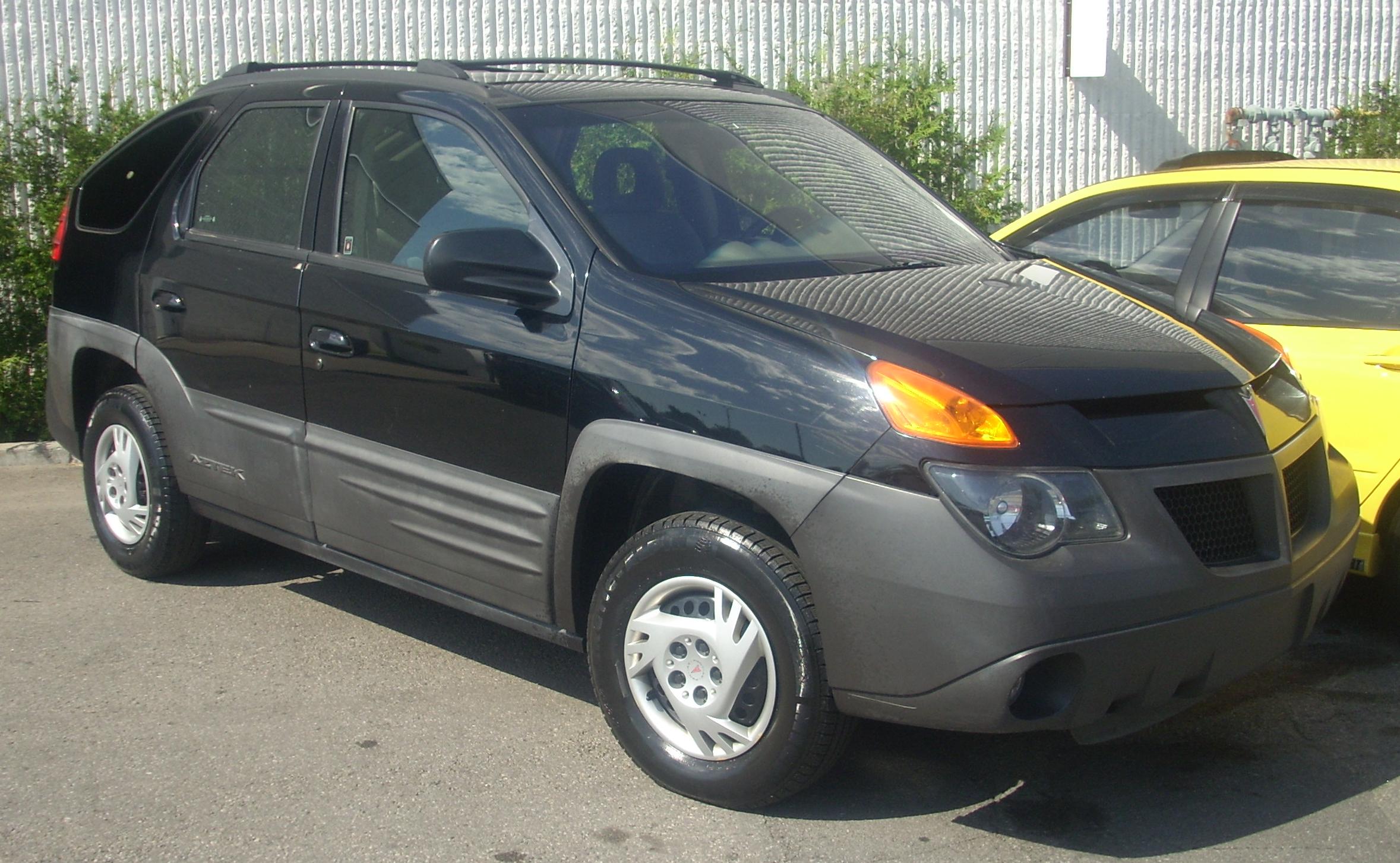
The Pontiac Aztec.
Pontiac Aztec.
I would venture to say Saturn too.
Because they started off in the late 80s as like new tech,
you know, like plastic panels
and a futuristic kind of wedge shaped design.
But I only know old people that drove Saturns,
you know, like there was never,
but I think it was also, there was this thing of like,
I'm tired of buying cars.
They just got all those old people
who were tired of buying cars.
Yeah.
Hey, this is a price.
All right.
I love that it's always like,
ah, we made it too easy to get into.
Now a bunch of oldies are driving it.
Everything should be lifted or slammed.
Have you seen that video of Johnny Cash
getting out of his Ferrari?
No.
Yeah.
He's like, he has to like go around his belly.
Yeah.
It's a very, it's a very.
And then he like flops onto the street.
As the depression waned,
old's production bounced back to the tune of 132,000 cars
built in 1935.
A new company record that included
the one millionth Oldsmobile ever produced.
A new economic boom was dawning.
And thanks in part to the Oldsmobile badge,
General Motors was set up to become
the most unstoppable auto company ever built.
Next time on PASCAS,
we'll dive into the slow motion collapse
of America's oldest car brand.
How did Olds go from pioneering giant to a punchline?
What went wrong inside GM?
And could the death of Oldsmobile have been avoided?
We'll see next time on PASCAS.
That is our show.
Thank you so much for listening.
That was part one of two parts.
Next week will also be Oldsmobile,
the conclusion of that story.
That was super interesting.
A lot of GM stories are really boring
because it is always about the business
at the end of the day.
There's rare instances in their huge,
long history of rogues kind of doing skunk work stuff
and making a cool model,
and then that becomes popular.
You're John DeLoreans.
Yeah, but I have more respect for...
You're Zora, Orkist, and Tobs.
Yeah, I have a lot of respect for Oldsmobile
and we don't really talk about them ever on our channel,
so it's fun to get into the history of that.
Certainly.
It's because it was...
I think Oldsmobile, and we're more aware
of its deterioration than its heyday.
Yeah.
Its heyday.
And they weren't cut like Pontiac and Saturn or whatever,
were cut when they were still kind of popular,
whereas Oldsmobile died a couple years before that
because no one was buying them.
And also Pontiac, they all had this push of like,
what are we gonna do to save our badge?
And they did some pretty cool stuff,
and Oldsmobile is, I think, to the point of,
they didn't have as much of an identity as a badge
by the time that they were out.
Yeah, both visually and...
It's like a car.
Yes, yeah.
I think by the end of their life,
Cadillac knew what they were,
and even Cadillac was failing in the 90s
when Oldsmobile was going under.
But then there was also Buick,
which was also kind of in the luxury old people sector.
And I'm sure we'll get to...
Buick tried to reinvent, I think in 96,
they did a concept car called, it was the La Crosse,
which never was released, but not as the concept.
The concept was like a rear,
or a rear wheel drive V8 with like,
I don't remember, it was a...
I remember it was Goldwing doors.
They were, yeah.
Like, they were still trying to figure out
what the next step for them was,
and I just think Oldsmobile was like,
well, we've already done the best things we're gonna do.
Buick is also a really interesting company,
not that we have to get into it right now,
but like, they've reinvented themselves just recently,
and they're like doing great in China.
Just kind of a weird...
Yeah.
Like, how's Buick still around?
Well, we're gonna find out,
maybe not with Buick, but with Oldsmobile next week.
Follow Bart at BidsBardo,
follow Joe at Jody Webber,
follow me at Nolan J. Sykes,
big thanks to our crew,
Edgar and Audrey behind camera there,
and our rider this week, Greg Nix.
And thank you for listening.
We'll see you next week.
Bye. Bye.
About this episode
Oldsmobile's fascinating journey unfolds, tracing its rise from a pioneering American car brand to its eventual decline. The episode explores Ransom Olds' innovations, including the first American car export and assembly line production, while highlighting the brand's role in establishing General Motors. With engaging anecdotes and debates about Oldsmobile's legacy, the hosts delve into the company's successes and struggles, setting the stage for its eventual disappearance from the automotive landscape after over a century of production.
Original notes
Thanks to Allstate for sponsoring today’s episode! Click here [https://bit.ly/44zbmTz] to check Allstate first and see how much you could save on car insurance.
Get After It! Enter for a Chance to Win a Custom Car Co-Built by Donut and Ricky Stenhouse Jr. All brought to you by NOS Energy. For more details visit: https://bit.ly/4lpX2l3
Thanks to Hankook for sponsoring today's video! Click here [https://bit.ly/4lzuExg] to learn more about Dynapro tires!
This week, the wild story of how Olds beat Ford to the punch, built America’s first mass-produced car, and turned a factory fire, some Dodge brothers, and even a hit song into automotive history. So why did Oldsmobile, once America’s best-selling brand, get erased from the story? And how did GM scoop it up for pennies on the dollar? It’s time to meet the forgotten godfather of the American automobile.
Learn more about your ad choices. Visit podcastchoices.com/adchoices
Past Gas
Donut Media
0:00
52:18