00:30
Hi, I'm Dustin, your friend and jeweler at Shane Company.
00:33
As director of diamond sourcing, it's my job to make sure every single diamond is worthy
00:37
of a Shane Company engagement ring.
00:39
Our team travels the world to see diamonds in person and hand-pick each one.
00:43
That type of dedication only comes from working for a company that's been a family business
00:49
No matter your budget, your diamond is guaranteed to be the most beautiful because a friend
00:52
wants you to pick from only the best.
00:55
Drop by your store or Shaneco.com and see for yourself.
00:58
Shane Company, your friend and jeweler.
01:00
Welcome back to the show, everybody.
01:02
Today we're doing part one of Oldsmobile, like, two-part series on the somewhat forgotten,
01:07
I'll say, American car brand.
01:08
But we'll find out they were extremely successful in their early years.
01:11
They went through a lot, made some huge innovations.
01:15
They were the first car company to ever export an American car.
01:18
They were the first company to build, like, a facility for building cars.
01:22
They fell flat on their face, and then it rebounded to become one of the biggest companies
01:27
Really interesting story, and we're gonna get right into it right now.
01:32
In the vast history of human civilization, only a select few men have been influential
01:37
enough to have a mobile named after them, Batman, the Pope, and of course, Ransom Olds.
01:44
Olds invented his namesake Oldsmobile, and in doing so became one of the forefathers
01:48
of the American auto industry.
01:50
This company would go on to build some of the country's most influential cars, introduce
01:54
groundbreaking technologies, and help establish General Motors as an industrial giant.
02:00
But then, after 107 years of innovation, Oldsmobile simply vanished.
02:06
How did Oldsmobile play a part in GM's dominance of the auto industry?
02:10
Was Ransom Olds actually more influential than Henry Ford?
02:14
And why did America's oldest surviving car company get the axe after more than
02:18
100 years of production?
02:20
This week on PASSGAS, it's Oldsmobile, part one.
02:34
Welcome back to the show, everybody.
02:37
My name is Nolan Sykes.
02:38
Welcome to PASSGAS.
02:39
Across from me is Bart Biddlingmeyer.
02:43
Thanks for having me.
02:44
Love today's topic.
02:47
What's up, Winkwink Nation?
02:50
I'm looking for an answer from the nation.
02:52
Yeah, it's about my year.
02:54
You have an Oldsmobile.
02:55
I was pressured into getting rid of it.
03:01
What's taking its place in the garage?
03:02
I'm going to have to bring out Impala from Philly.
03:06
That's pretty cool.
03:07
That's next on the docket.
03:09
The Impala is a 65.
03:12
Let's get the Oldsmobile, though.
03:16
What was the model?
03:17
It was an 83 Oldsmobile Regency 98.
03:20
They loved numbers.
03:23
So it was the full-size.
03:26
Had the 5.7 liter, the 350, which was affectionately named the Boat Anchor, made 180 horsepower.
03:39
I had it for 20 years.
03:41
This thing's pretty cool.
03:43
I think about, not a week goes by where I don't think about that.
03:46
It was like a gold copper kind of thing.
03:49
Yeah, it was like a root beer.
03:52
Like if you hold up a root beer candy.
03:56
I think I saw once when I went to your house and you look through the root beer candy and
04:02
Is this like a line from Silent to the Lambs?
04:04
It's something James and I used to do as a joke back and forth.
04:08
Did one of these at the freaking blower sticking out the hood, dude?
04:14
I went to a Radwin.
04:16
I ran into a couple of people.
04:18
What happened was it was the transmission and really all it was, I found out later that
04:26
there's a sleeve around the transmission that it's what catches it on the Oldsmobile
04:34
and like a lot of drag cars that use an automatic, it's the same thing.
04:40
But once, if you change the fluid or something maintenance, you got to crank it down.
04:46
There's like a screw that will adjust it.
04:49
And what was funny is I would go to like a transmission shop and be like, this is exactly
04:54
It doesn't make sense.
04:55
It's just not shifting out of first.
04:56
And they're like, oh, you need a new transmission.
05:01
I was like, I'm not.
05:02
And then anyway, so it sat in the driveway for a while and then Nicky was like,
05:10
Get rid of your parents' cars?
05:11
Because my grandfathers and then my grandmothers and so I live after college, my grandmother
05:17
got sick and she lived in Cincinnati and I was kind of like, well, I'm the only one
05:24
in our family, either my uncle or my dad, I'm like, I'm not doing anything yet.
05:29
So I lived with my grandmother in Cincinnati for about three or three to six months or
05:35
And then she went to assisted living and she was like, Bart, do you want the car?
05:39
So me and my buddy drove up from Louisville and that was it.
05:43
Got some Skyline chili, got a Oldsmobile 98.
05:48
It's a lot bigger than I remember seeing it in your garage there or at your house.
05:55
James used to, like, James borrowed it for like a year.
05:58
I can't imagine driving this around, trying to find parking in LA.
06:04
This thing's like 20 feet long.
06:06
I got, look, I got so good at driving and parking because of that car.
06:11
And people are like, there's no way.
06:15
It's like you're, the styling is your classic like the other thing that is Malaise era kind
06:20
of styling, but it's a huge SUV or a stand.
06:23
Looking at it, something like if you look at it and revisit those full size, there
06:29
are things that we were getting from Germany in the design and it's like, oh, I
06:35
can see what they were going for.
06:37
From the early 80s?
06:38
It's a pretty good looking car.
06:40
Like from the front.
06:41
You look at it at the angles.
06:44
The other fun thing was that about that was whenever I'd go to like a park or like Griffith
06:47
Park or it's always like authorized vehicles only.
06:52
And it was an outline of my car.
06:55
It looks like one of those game shows where you have to fit through the shape of your
07:08
Look, I learned how to coop work on cars for us as they are coops.
07:14
It looks like though.
07:15
I learned to work on cars because that was my only car.
07:18
And so and it does something happen.
07:20
I had, I did the brake lines.
07:23
I did, you know, like it's like all this stuff where it's like, we're not going
07:24
to pay somebody to fix a $3,000 car, you know, but anyways, well, that is
07:32
That is the V8 that they had for like 40 years.
07:38
And it came from the rocket V8 in the early 40s.
07:42
Well, we'll find out more.
07:46
Ransom Eli Olds was born in 1864 in Geneva, Ohio.
07:49
I love there's also, Ohio did this thing.
07:52
If you drive through, there's all these towns and you kind of, it's like, well,
07:57
that didn't work out like you hoped, huh?
08:06
Is that a real one?
08:09
The Oldsville Delphi is still pretty good.
08:13
And it's really close too.
08:16
It's not that far away.
08:21
Ransom's parents nicknamed him Ranny.
08:27
When Ranny was six, his father, Pliny, the elder, his father, Pliny moved the family to
08:36
Cleveland to take a job as the superintendent of an ironworks.
08:41
It was in this factory that Ransom was first introduced to mechanical tools and industrial
08:46
Just Pliny just letting his little child run around that smelting plant.
08:52
Play with all the presses, all the different buckets of molten metal.
08:56
I had a friend, his dad, would sell scrap metal.
09:00
So he worked, you know, anything they didn't sell, he'd take to this Amish guy in Ohio because
09:05
he would do all the pressing.
09:07
And he said it's like, first he would like pull out all the money from a coffee can.
09:13
But also he said there's like eight kids all under eight running around.
09:19
It's just corrugated aluminum with those giant metal presses.
09:23
They're like in the rafters.
09:28
After a series of financial ups and downs, the Olds family relocated yet again when Ranny
09:33
was a teenager, settling in Lansing, Michigan.
09:36
There Pliny purchased a plot of land where Ransom's older brother Wallace launched a
09:40
business repairing farm equipment.
09:43
That business called PF Olds and Son grew steadily.
09:47
And by the early 1880s, they were advertising steam engines for sale and offering general
09:54
In 1883, with PF Olds and Son producing about a dozen steam engines a year, Ransom became
10:00
the company's first full-time employee.
10:02
Two years later, he purchased Wallace's share of the business, making him the new son in
10:07
the company's name.
10:10
Couldn't have added an S, dad.
10:13
Do you know how much an S costs?
10:17
Thanks in part to a strong national economy, PF Olds and Son expanded in 1887.
10:22
I'm going to say thanks largely to constructing a new plant in Lansing with a machine shop,
10:29
a foundry, a blacksmith shop, and an office space.
10:32
Over the next five years, the company built approximately 2,000 engines.
10:37
During that time, Ransom Olds began experimenting with self-propelled vehicles.
10:41
His first known horseless carriage was a three-wheeled steam-powered design constructed
10:46
sometime around 1886 or 1887.
10:50
I just remembered when my grandfather was like in his older age, going into his 90s.
10:58
He offered me, he had an Oldsmobile sedan as well.
11:01
It wasn't a big, it was like the mid-size sedan.
11:04
I think it was in the late 80s.
11:05
I think it was an 88, yeah.
11:07
Also under, like you see those, I think they're hard to find because they don't hold,
11:13
it was that era where they would just fall apart.
11:15
I want to say it was like a mid, like 80s model.
11:20
It was something like this, like that, yeah.
11:23
That was when I was about to graduate college and I was like, eh, I don't think I'll put it.
11:27
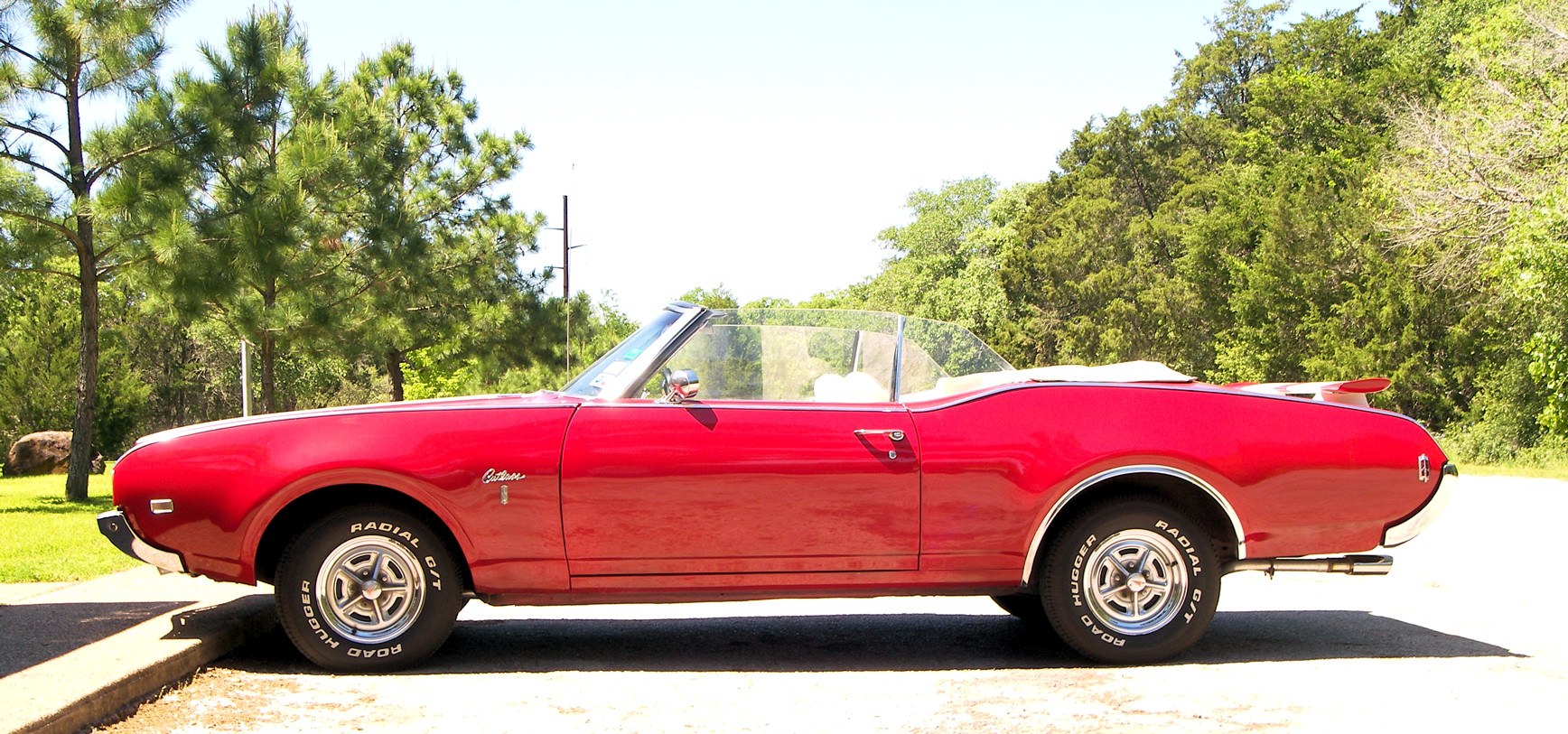
Was the Cutlass the small one?
11:31
It was a coupe, right?
11:33
My uncle had a Cutlass.
11:36
Well, Cutlass was around for a while.
11:39
It was a smaller for an Oldsmobile car.
11:42
My mom had, I don't know, we're getting ahead of ourselves.
11:46
My mom had like a late 70s Cutlass that just kind of sat.
11:52
I was in Hopkins, it was a small town outside of Boston.
11:56
But our plumber, because they were doing some work on the house,
12:01
the plumber was like, hey, Mrs. B, what are you doing with that old Cutlass?
12:05
And sold it to him for a few hundred bucks.
12:07
But then later he came back with like a pink slip because he had done an engine swap
12:12
and was drag racing it.
12:14
That was pretty cool.
12:15
So back in the late 1880s, in 1892, Randy built his second vehicle,
12:20
which featured a flash boiler and was capable of about four horsepower
12:24
and a top speed of 15 miles per hour.
12:26
This motor carriage was featured in Scientific American
12:29
and subsequently sold to a buyer in India,
12:32
making it the first American car ever to be exported.
12:36
However, the ship carrying the mobile sank on route,
12:41
which also made it the first American car ever lost at sea.
12:46
Is the first car to be, the American car to be exported,
12:49
but not yet to be imported.
12:53
By 1894, Randy Olds had turned his attention
12:57
to internal combustion engines.
12:59
Steam engines remain the bread and butter of the family business,
13:02
but gasoline engines, including those recently developed in Germany
13:05
by Gottlieb Daimler and Karl Benz, offered more power in a smaller package.
13:10
In 1895, Randy received a patent for what he dubbed a vapor engine.
13:15
The following summer, he completed his first gas-powered car
13:19
and demonstrated it for a Lansing newspaper,
13:21
just two months after Henry Ford built his first car in nearby Dearborn.
13:26
Olds began advertising the gasoline vehicle for sale at $1,000 each,
13:30
which is about $38,000 today with inflation.
13:34
He regularly drove it around Lansing,
13:36
which peaked local business interests.
13:38
Ransom Olds had built one of the first working gas-powered cars in the country,
13:42
and unlike many of his contemporaries,
13:45
he already had a factory prepared to build it.
13:50
That's a good point that like you...
13:51
It's a foreign sound at that time, like an engine puttering along,
13:58
but horses, you probably hear horses all the time.
14:00
Just clomping around with their big feet.
14:03
Now, if you hear a horse, you're like,
14:05
where the f*** is that horse?
14:08
How much does a horse cost?
14:13
I can get you one for $500.
14:14
I'm not talking about a race horse.
14:16
Just a horse horse.
14:18
You're talking about like a teaser pony?
14:20
Yeah, that's a very special, nice horse.
14:23
I have a teaser pony that got kicked pretty hard.
14:26
I give you for like $750.
14:27
He's a little defective.
14:31
In 1897, Olds partnered with several Lansing businessmen
14:36
to start the Olds Motor Vehicle Company.
14:38
It was the first business in America
14:39
founded specifically to produce cars in quantity.
14:43
Do you think they have salvage horses?
14:46
You can't register them.
14:48
Yeah, you can't register them because they're salvage.
14:51
You can't get insurance.
14:52
You can register them, yeah.
14:54
As part of a new arrangement, unfortunately,
14:56
no, because you shoot them.
14:58
Yeah, they turn into glue and dog meat.
15:02
Sorry, shouldn't laugh at that.
15:05
The kind that they eat.
15:08
There used to be, in France, they'd have chevalier,
15:13
which is like a butcher, but only for horses.
15:16
You know what it was, because it had the horse head on it.
15:19
Hemingway wrote about it, kind of just offhand,
15:22
but it was cheap meat.
15:23
I think I ate horse in Italy,
15:26
but we couldn't speak Italian, so we didn't really know.
15:29
But I think it was horse tenderloin, like carpaccio style.
15:34
I don't know how I feel about that.
15:37
It's like, majestic animals.
15:40
So as the first business in America
15:41
founded specifically to produce cars in quantity,
15:45
As part of the new arrangement,
15:46
P.F. Oldson's son, the original family firm,
15:49
was reorganized and placed back under control
15:51
of Ransom's brother Wallace.
15:53
Ranny himself controlled half of the shares in-
15:56
I did it, you son of a bitch.
15:59
Ranny himself controlled half of the shares
16:01
in the new motor vehicle company,
16:02
but remained in a management role
16:04
rather than an executive one.
16:05
And that was because a local businessman
16:07
named Edward Sparrow invested $10,000
16:11
into the new venture and was named company president.
16:14
That's like $385,000 a day.
16:16
Yeah, Sparrow also brought in a partner named Sam Smith,
16:19
who unbeknownst to Olds,
16:20
would gradually rest control of the company away from him.
16:23
And they opened a body shop.
16:28
the Olds Motor Vehicle Company built just four cars.
16:31
The new board of directors had given Ransom
16:33
a clear initial directive, quote,
16:36
build a carriage in as nearly as perfect a manner as possible
16:40
and completed at the earliest possible moment.
16:43
These first four nearly perfect vehicles
16:45
were primarily used as publicity tools at regional fairs
16:49
to build enthusiasm for new fangled automobiles.
16:52
In 1899, Olds Motor Vehicle
16:54
underwent further corporate maneuvering.
16:56
Orders for cars were coming steadily,
16:59
but the company's growth was hampered
17:01
by a limited cash flow.
17:02
So Olds Motor Vehicle absorbed the operations
17:05
of PF Olds and Son.
17:07
As part of the merger,
17:08
production was relocated to Detroit or Detroit,
17:13
where Smith and many other investors lived.
17:15
The deal also reshaped the company's ownership structure.
17:18
Ransom Olds became a minority shareholder
17:21
with 7,500 shares compared to the 20,000
17:24
controlled by the Smith family.
17:26
Five days after the incorporation of this new company,
17:29
Wait, go over the shares again.
17:31
Ransom has 7,500 shares.
17:35
And the Smith family now has 20,000 shares.
17:38
So I'm having my head, I thought 75,000.
17:40
No, that's all right.
17:42
It's like succession, hostile takeover.
17:45
It is a hostile takeover.
17:46
Five days after the incorporation of the new company,
17:48
now called Olds Motorworks,
17:50
the firm purchased five acres of land in Detroit
17:54
It was the first manufacturing facility in America
17:56
built specifically for making cars.
17:59
much of the factory was still producing industrial engines
18:02
because cars weren't yet profitable enough
18:05
to support the facility.
18:07
Is that unfamiliar?
18:08
That's how all the new startup cars are,
18:09
it's like, well, we're not turning our profit yet,
18:11
but we're making cars.
18:13
We're gonna be profitable at some point.
18:17
the first slate just rolled off the line.
18:21
Too bad about that EV credit going away.
18:23
Yeah, now they gotta get,
18:24
so what's gonna happen is they're gonna get
18:26
all these purchases before December.
18:30
So they're gonna have, yeah.
18:31
So it doesn't go into effect.
18:32
So if you're thinking about it,
18:34
this is really good if you have,
18:36
like if you are a company like Slate,
18:38
you're gonna be able to sell these things ahead of time.
18:40
Oh, like pre-orders.
18:43
So they might come into a huge.
18:46
A windfall of cash.
18:48
They also changed the copy on their website
18:50
to say mid-20s instead of under 20.
18:54
In 1900, the Oldsmobile name
18:56
finally appeared for the first time.
18:58
According to former company employees,
19:00
the name came from an internal contest
19:02
put on by Olds himself
19:03
who wanted something catchy to call his new vehicle.
19:06
They gave the name to the name
19:08
that had the most submissions.
19:10
Olds himself wrote out 100.
19:15
The man responsible was a timekeeper
19:17
named James Brady, who submitted Oldsmobile,
19:20
securing himself a $5 cash prize
19:22
in a place in automotive history.
19:25
Does that mean that like instead of a punch card machine,
19:28
it's just like a guy like, all right, you're into work.
19:31
Is that the timekeeper?
19:32
Or is he the guy who goes over to the whistle and goes.
19:35
Oh, I bet he does both.
19:38
And Oldsmobile was first advertised into some.
19:43
I had never thought about it,
19:44
but from the intro of to have a mobile.
19:48
Like the back mobile.
19:49
It's like thinking him driving.
19:51
Oh, there it goes out.
19:54
You know, I think it's a personification of the driver.
19:57
And Oldsmobile was first advertised
20:00
in the December 1900 issue of Playboy.
20:05
They showed ankle that year.
20:08
It was the automobile review.
20:10
The company's official name remained Oldsmotorworks,
20:13
but the new moniker caught on quickly with the public.
20:16
Thanks in part to a hit song called
20:18
In My Merry Oldsmobile
20:20
by early recording artist, Billy Murray.
20:29
In My Merry Oldsmobile, Billy Murray.
20:33
Young Johnny Phil has an old mobile.
20:36
He loves a beautiful girl.
20:39
She is the queen of his family.
20:42
She has his heart in a world.
20:46
Now when they go for a trip,
20:49
they try to love, they also don't.
20:54
The comment on here says,
20:55
my 12-year-old son is listening to the song all day.
21:07
That's a little old for In My Merry Oldsmobile.
21:09
Wow, it's been 118 years,
21:11
and it still sounds better than music in this era.
21:19
How'd that guy know enough to get on the internet?
21:30
We'll be right back after these messages.
21:35
I had that dream again.
21:37
My small business needs to hire,
21:38
but I don't use LinkedIn and I hire wrong.
21:41
So our orders get all backed up.
21:42
We're drowning in paperwork.
21:44
Then actually, drowning.
21:46
Carol is fighting off sharks with a stapler
21:48
and pirates are pillaging me off this copier,
21:50
and then I wake up.
21:52
Don't let hiring nightmares ruin your dreams.
21:54
LinkedIn Jobs' new AI assistant goes beyond the resume,
21:57
using unique insights to deliver a smarter shortlist.
21:59
Post your job for free at linkedin.com slash quality.
22:02
Start hiring today with LinkedIn.
22:06
Now back to the show.
22:10
During the golden era of the judge court shows,
22:14
the guy with the bald head,
22:16
he was like, really, hey, hey, I'm talking.
22:19
I don't know if you know him.
22:21
Anyways, you know, a Platon defendant
22:23
and one of them made rap music.
22:27
And he goes, oh, I know, you know,
22:29
it's like that choopa choop stuff.
22:35
He described rap music and I was like,
22:37
it's just stuck with me.
22:43
So I got asked to be on this other podcast
22:45
where they watch all of the movies
22:47
that Siskel and Ebert gave two thumbs down to.
22:50
I don't know if you remember Mafia?
22:53
Yeah, and Christina Applegate.
22:56
And she comes out and she says,
22:57
and he's like, this is your son.
23:00
No, no, I'm Donner.
23:03
What's your name, little kid?
23:06
I named him after his mother.
23:09
Yes, that was a very, and it was,
23:11
no, it was Jane Austen's Mafia.
23:15
It's like really funny, but they make you watch too.
23:18
So I watched another spoof movie, Loaded Weapon.
23:22
One, National Lampoon's Loaded Weapon
23:24
with Emilio Estevez and Samuel L. Jackson.
23:27
Those movies are only like five years apart,
23:30
but you can see Loaded Weapon is very much
23:33
a spoof on 80s cop movies.
23:36
And like Mafia feels modern almost.
23:41
I have to re-watch it.
23:43
They also gave Wet Hot American Summer Two Thumbs Down.
23:46
And then later they went back, I know Ebert did,
23:50
I think they both did, but they were like,
23:53
you know what, we just didn't get it.
23:56
And then they started, yeah,
23:57
because it was after they re-visited and they were like,
24:00
I get what it is now.
24:03
I didn't think of that as a spoof movie,
24:05
but it is definitely a spoof movie.
24:09
But I think they did it because it was like a spoof,
24:12
but I remember they were complaining like,
24:13
I don't understand why they have, you know,
24:15
20 and 30 year olds playing teen.
24:17
You know, like they were, they just didn't get it.
24:20
And then when they were like, yeah, I get it.
24:22
Yeah, we're pretty dumb.
24:25
In early 19, great Frazier's here.
24:33
Who's the one who didn't get it now?
24:37
In early 1901, the company started advertising
24:40
its newest model, the Oldsmobile Curvedash,
24:44
a runabout with no windshield and no doors
24:46
that sold for $600.
24:48
And it was a smart-looking car compared to what,
24:52
you know, it's a pretty looking car.
24:54
Unfortunately, Bart, disaster struck.
24:57
A fire destroyed the Detroit plant,
24:59
causing the modern-day equivalent
25:01
of $2 million in damages.
25:02
Only one car survived a single Curvedash prototype,
25:06
which two employees managed to push out of the building
25:08
before it was engulfed in flames.
25:11
At the time, the company had orders for 334 vehicles,
25:14
and to meet demand, they set up temporary production
25:17
in small buildings behind the burned-out factory,
25:19
but the makeshift facility couldn't keep up.
25:22
Instead, Olds began outsourcing engines
25:24
from the Dodge brothers, Horace and John,
25:26
as well as transmissions from Henry Leyland
25:29
who would go on to found Cadillac.
25:31
You know, they think it was the cow
25:32
that started the Chicago fire
25:34
that also started this Detroit fire.
25:36
Well, I was picturing, like, a Henry Ford covered in soot.
25:43
Too bad about your factory.
25:47
This was the first time a car maker regularly
25:49
outsourced component parts for his vehicles,
25:51
marking another reason why ransom Olds
25:53
is sometimes called the father of the American auto industry.
25:56
I think this is the reason that we put this episode
25:59
on the list is because we did the Dodge trilogy,
26:03
and we're like, what?
26:04
After the fire, Olds accepted an offer
26:06
from the city of Lansing for a large plot of land
26:09
on which to rebuild,
26:10
so the Oldsmobile factory moved back home.
26:13
The geographic rivalry between Lansing and Detroit
26:16
went on to shape Oldsmobile's identity
26:18
throughout its history.
26:19
While Detroit became the acknowledged center
26:21
of the auto industry,
26:22
Lansing remained Oldsmobile's primary manufacturing base.
26:26
Lansing offered advantages that Detroit couldn't match.
26:30
The city provided cheaper land, lower labor costs,
26:32
and a frozen yogurt,
26:34
and a more cooperative municipal government.
26:36
The relationship benefited both parties.
26:39
Oldsmobile became Lansing's largest employers
26:41
and primary economic engine,
26:44
while the city provided a stable, loyal workforce
26:46
and strong community support.
26:48
By the end of 1901,
26:49
the company had produced 425 curved dash runabouts.
26:53
That figure jumped dramatically the next year
26:55
when an estimated 2,500 cars were built,
26:58
making Oldsmobile the most prolific car maker
27:00
in the United States.
27:01
The company's volume was helped by an early form
27:03
of assembly line production.
27:05
The curved dash, later renamed the Model R,
27:08
was the first car to be built
27:09
on a progressive moving assembly line.
27:12
Henry Ford, it's woke.
27:15
Henry Ford is often credited for the...
27:17
It only moves to the left.
27:20
Henry Ford is often credited for this innovation,
27:23
but ransom Olds did it first with his line
27:26
in which the car was pushed manually
27:28
from station to station as it was built.
27:30
Ford later mechanized the same process,
27:32
which greatly sped up the production
27:34
and spawned imitation across the industry,
27:36
including at Oldsmobile.
27:38
By 1903, Oldsmobile had become
27:40
the top selling car brand in the United States.
27:42
The company produced nearly 4,000 vehicles that year,
27:45
which was roughly 37% of the entire U.S. auto market.
27:50
So that means that there was like 15,000 cars
27:53
in the U.S. at that time?
27:54
Even as sales climbed, though,
27:56
internal tension was growing.
27:58
Behind the scenes, ransom Olds had entered
28:01
into a power struggle with Fred Smith,
28:02
the son of board member Sam Smith.
28:05
The Smiths had consolidated control of company shares
28:07
and wanted more influence over a vehicle design and strategy.
28:10
Despite the success of the curve dash,
28:12
Fred Smith worried about a possible sales downturn.
28:15
He ordered Olds to begin work on a new smaller engine,
28:18
going so far to say that if Olds wouldn't do it
28:20
in Lansing, then the Smiths would do it in Detroit.
28:24
Feeling undermined, Olds abruptly resigned
28:26
from the board, sold his shares,
28:28
and announced his retirement, quote unquote.
28:31
In a personal letter written shortly afterwards,
28:34
ransom Olds made it clear that he had been pushed out.
28:37
Just six days after Randy's departure,
28:39
Fred Smith was named the new general manager
28:42
of Olds Motorworks.
28:43
I don't like these Smith guys, you know?
28:47
I never like a hostile takeover.
28:49
Ransom Olds didn't really retire though, of course.
28:52
He was only 40 years old
28:54
and not done building cars just yet.
28:56
Just months after stepping down from Olds Motorworks,
28:59
he began setting up a new company across town.
29:01
He even named it after himself again,
29:03
this time using his initials, REO.
29:10
The company would eventually produce
29:11
a Speedwagon series of light trucks
29:14
that inspired at least one 70s soft rock band.
29:19
That's like us naming our band Pontiac Bonneville
29:24
or something like that.
29:26
Meanwhile, back at Olds,
29:27
Fred and Sam Smith had solidified control.
29:30
With Fred now firmly at the helm,
29:32
the company started expanding its production facilities
29:35
and developing new vehicles to move beyond the curved dash.
29:38
They began by introducing the Light Tonneau,
29:40
Oldsmobile's first 10 horsepower car.
29:44
The heavy touring followed,
29:45
a faster model powered by a new two-cylinder engine
29:48
capable of reaching 40 miles per hour.
29:50
Then came the Model S,
29:52
Oldsmobile's first four-cylinder vehicle,
29:55
available in two elegantly named variants,
29:58
the Gentleman's Roadster and the Palace Touring.
30:01
Palace Touring is pretty sick.
30:04
Under Smith, Oldsmobile produced
30:06
an impressive 10,000 cars in 1905.
30:10
But the industry had quickly grown around them
30:12
and that figure now represented just 10%
30:15
of the total U.S. market.
30:16
Despite its strong name recognition,
30:18
Oldsmobile was losing ground to competition from Detroit
30:21
and to ransom Olds himself,
30:24
since REO outsold Oldsmobile in both 1905 and 1906.
30:32
Declining sales put financial pressure on the Smiths.
30:35
They are forced to personally finance the company's losses,
30:38
spending up to $100,000 a month
30:40
to keep the factory running.
30:41
By mid-1908, they were nearly a million dollars in debt
30:45
and the company was facing collapse.
30:47
Enter one, William Durant.
30:50
Durant was a carriage maker from Flint
30:52
who understood something most early automakers missed.
30:55
The future of the auto industry belonged to whoever
30:58
could build the biggest company.
31:00
Before entering the automobile business,
31:02
Durant had already proven his business acumen
31:04
by building the Durant Dort Carriage Company
31:07
into one of the largest vehicle manufacturers
31:10
He built the Durantula,
31:12
a 100-foot tall mechanical spider
31:15
that cruised the Southwest.
31:18
While his chief competitor at Ford
31:21
focused on perfecting a single model for mass production,
31:24
Durant believed in offering multiple brands
31:27
at different price points.
31:28
His strategy was acquisition heavy and cash intensive.
31:32
After taking control of Buick in 1904,
31:34
he used that company's profits
31:36
to fund an aggressive expansion campaign.
31:39
The formation of General Motors was Durant's master stroke.
31:42
Incorporated on September 16, 1908,
31:46
GM was designed as a holding company
31:48
that could absorb existing automakers
31:50
rather than competing with them directly.
31:53
Durant's vision was to create an automotive conglomerate
31:56
that controlled every aspect of car manufacturing
31:58
from basic transportation to luxury vehicles.
32:02
That year, he attempted to buy
32:03
the Ford Motor Company for $8 million
32:07
8 million, million, dude.
32:10
With Henry Ford actually agreeing to the deal
32:13
before Durant's investors backed out.
32:15
The Oldsmobile purchase,
32:17
completed just two months after GM's incorporation,
32:20
demonstrated Durant's opportunistic approach.
32:22
He recognized that the Smith's financial distress
32:25
made Oldsmobile available
32:26
at a fraction of its actual value.
32:28
Due to Oldsmobile's disastrous financial situation,
32:31
the merger with GM was essentially a stock exchange.
32:35
The deal was worth over $3 million on paper,
32:38
but Durant paid just $12,279 in actual cash.
32:43
Less than the cost of four new Oldsmobiles at the time.
32:47
Fred Smith briefly joined the GM board,
32:49
but stepped down in 1909.
32:52
I don't know what I'm doing.
32:54
That's interesting, dude.
32:54
This episode, a little twist, man.
32:56
We went from the story of Oldsmobile
32:58
to now like the real story of GM.
33:03
GM's first major move with Oldsmobile came in 1910
33:06
with the release of the Limited.
33:08
The car's name supposedly referred
33:10
to its limited production run of just 325 units.
33:13
Though another story claims the name was inspired
33:15
by a publicity stunt in which it beat
33:18
the 20th century limited locomotive in a race.
33:21
This train looks really cool, by the way.
33:23
Oh, that is a sick ass train, dude.
33:33
Regardless of the nomenclature,
33:34
the car was a statement piece
33:36
with a starting price well above most competitors.
33:39
The Limited was available in seven seating touring.
33:42
It looks like the Polar Express train.
33:45
With a starting price well above most competitors,
33:47
the Limited was available in a seven seat touring
33:51
configuration, a two seat roadster,
33:53
and a limousine configuration.
33:56
It featured luxurious options like goat skin upholstery
34:00
and a built-in clock.
34:01
I don't think I've ever touched goat leather.
34:05
You think it's soft?
34:07
Sheep leather is really nice.
34:13
We'll be right back after these messages.
34:18
Every day at Sierra, you'll find top brand apparel,
34:21
footwear, and gear for 20% to 60% less
34:23
than department and specialty store prices.
34:25
And during clearance time at Sierra,
34:27
those incredible prices are 40 divided by 2.5
34:31
carry the one even lower.
34:32
And when you shop clearance at Sierra,
34:34
you can save a whole lot more
34:36
on everything you need to get active and outside.
34:38
That's a lot of saving.
34:40
Epic brands, fast selection, teeny tiny prices.
34:44
Visit your local Sierra store today
34:46
or shop online at Sierra.com.
34:48
Right now, get up to 20% off select online storage solutions.
34:53
Put heavy duty HDX totes to good use
34:55
protecting what's important to you.
34:57
The solid impact resistant design prevents cracking
35:01
and the clear base and sides make items easy to find
35:03
even when the totes are stacked.
35:05
Find select online shelving and tote storage
35:08
up to 20% off at the Home Depot
35:10
to organize every room in your home.
35:12
From your garage to your attic, visit Home Depot.com.
35:16
How do's get more done.
35:20
Now back to the show.
35:24
Unfortunately though, the limited was not profitable.
35:26
Fewer than 150 cars were sold in its second year
35:29
before the model was quietly disappeared.
35:31
Still, GM's growing infrastructure
35:33
helped stabilize Olds and Wheels financial position.
35:37
And the company found firmer footing
35:39
by focusing on affordability.
35:41
In 1913, it launched the six cylinder Model 53,
35:45
a simpler, more accessible alternative to the limited.
35:49
The turnaround was slow, but steady.
35:50
And by 1915, Oldsmobile grew sales from 1,400 cars
35:57
Later that year, the company introduced its first V8,
36:04
That's super early.
36:05
That's really early.
36:06
Like the 32 flathead was Ford's first V8
36:11
and he was like trying to catch up to Oldsmobile.
36:13
And that was 15, 16 years later.
36:17
This car was priced aggressively,
36:19
only a small amount more than Oldsmobile's
36:21
four cylinder model.
36:22
The strategy worked like gangbusters.
36:25
In 1916, Oldsmobile increased production
36:28
to 10,500 vehicles with more than 8,000 of them
36:31
powered by this new V8.
36:39
Charles Kettering was the engineer behind Oldsmobile
36:42
and other GM brands at the time.
36:44
Known as Boss Kett to his colleagues,
36:47
Kettering founded Dayton Engineering Laboratory's
36:49
company in 1909, became GM's head of research
36:52
when the company was acquired in 1916 by GM.
36:56
Kettering's most transformative invention was.
36:58
That's interesting too that he's like,
36:59
sure I'm gonna buy auto company.
37:01
And he's like, let's buy the other guys
37:04
making the engineering.
37:08
Kettering's most transformative invention
37:10
was the electric starter, which debuted
37:12
on the 1912 Cadillac, but quickly spread
37:14
to Oldsmobile and other GM brands.
37:18
Before electric starters, cars required laborious
37:20
and sometimes dangerous hand cranking.
37:22
The electric starter made automobiles more accessible,
37:25
dramatically expanding the potential market.
37:27
I think the story goes that one of Kettering's friends
37:30
was trying to start his car
37:32
and with the hand crank like whipped up
37:34
and smacked him in the head and killed him.
37:36
So that's why I invented the electric starter.
37:39
You need a teaser hand cranker.
37:43
I think there should be like foot starters on cars.
37:48
Next to the gas pedal.
37:49
No, no, outside of the car.
37:51
Oh, you gotta be outside.
37:52
Yeah, you gotta be outside of the car and...
37:56
You think we have problems
37:58
with people getting here late now?
37:59
Oh yeah, I couldn't kickstart my car.
38:05
My Ford probe would start.
38:08
Kickstarter snapped right off.
38:10
What went, what went, dude?
38:16
Hit me in the dong.
38:16
Dude, talk about gangbusters.
38:19
Kettering's systematic approach to automotive research
38:22
established the template for modern corporate R&D
38:25
His innovations enabled many of Oldsmobile's
38:27
later technical advances from the hydromatic transmission
38:31
to the overhead valve engines that defined the brand's
38:34
performance reputation.
38:36
Oldsmobile's momentum carried through World War I.
38:39
In 1917, production doubled to 21,800 units,
38:43
making Oldsmobile one of America's top automakers
38:46
again for the first time in a decade.
38:48
The company entered the 1920s with momentum.
38:51
Its merger with GM had saved it from disaster
38:54
and sales continued to be strong.
38:56
But that momentum didn't last long.
38:58
A sharp post-war recession hit the US economy in 1920,
39:01
and the automaker went with it.
39:03
After moving more than 40,000 vehicles in 1920,
39:07
Oldsmobile saw sales cut in half the very next year.
39:10
Rumors started swirling that GM was thinking
39:12
about killing the brand.
39:14
In a bid to project stability, executives at Oldsmobile
39:17
even hired photographers to stage scenes of bustling factory
39:21
activity, hoping to make the plant look too busy
39:27
Well, they're never going to come and look at it.
39:30
Let's get some people with money in their hands,
39:33
clamoring to buy an Oldsmobile.
39:36
Well, this gamble worked, or sort of.
39:41
Whatever the cause, Olds survived the sales roll
39:43
and bounced back with the rest of the economy
39:45
during the roaring 20s.
39:47
Annual sales now surging past 100,000.
39:50
The Lansing plant added 12 new buildings,
39:52
and the company's workforce grew to 7,000 employees.
39:55
Oldsmobiles, once again, on solid footing.
39:58
It just shows you how fickle the automotive industry
40:04
The swing between failing and winning is.
40:09
It's also dependent on so many things
40:12
that are out of the industry's own control.
40:14
The economy, supply chain, war.
40:19
As part of the surge of success,
40:20
General Motors launched a companion makes program,
40:24
essentially a way to fill the gaps in its brand lineup.
40:27
This was when Oakland first introduced
40:29
the lower cost Pontiac.
40:31
Similarly, Cadillac spun off the short-lived LaSalle.
40:35
Oldsmobile released the Viking,
40:37
a more upscale car with added horsepower
40:39
and premium features.
40:40
The Viking actually looks really sick.
40:42
The most notable was its 60-degree V8 engine,
40:46
which was GM's first monoblocked V8,
40:49
a significant engineering innovation at the time.
40:52
Unfortunately, the timing couldn't have been any worse.
40:55
Only about 5,000 Vikings were built
40:57
before the stock market crash of October, 1929.
41:01
Amid the onset of the Great Depression,
41:03
Viking was dropped after only two model years and 8,000 cars.
41:06
By 1932, Oldsmobile's sales had dropped
41:09
to just one-fifth of their 1929 total.
41:12
By this point, William Durant had left General Motors.
41:16
Under the direction of new GM president, Alfred Sloan,
41:19
Oldsmobile weathered the Great Depression
41:21
as part of a larger corporate ecosystem.
41:24
Wait, the Pace King?
41:25
Alfred Sloan, urinal entrepreneur?
41:30
I know those, is this Alfred P. Sloan?
41:33
Does that guy's name is on Foundations, you know?
41:36
He's one of those guys.
41:37
Yeah, that's right.
41:39
Alfred P. Sloan Foundation.
41:40
Alfred P. Sloan Foundation,
41:42
not-for-profit grant-making institution
41:45
that supports high-quality impartial scientific research,
41:50
Alfred P. Sloan's signature idea was the brand ladder,
41:53
a strategy that gave each GM mark
41:55
a clear identity based on price and prestige.
41:58
The brand ladder transformed GM
42:00
from a collection of competing divisions
42:02
into a coordinated marketing machine.
42:04
The concept was elegantly simple.
42:07
Arrange GM brands in a hierarchy
42:09
based on price and prestige,
42:11
then encourage customers to move up the ladder
42:13
as their incomes and social status improved.
42:16
Sloan positioned Chevrolet as the entry-level brand,
42:19
targeting first-time car buyers
42:21
and budget-concerned consumers.
42:23
Pontiac occupied the next rung,
42:25
offering slightly more features and style
42:28
for young professionals ready to trade up.
42:31
If you were a yuppie in Silver Lake,
42:33
Pontiac was the brand for you.
42:36
That makes sense in the Camaro episode now.
42:40
So if you were a young kid
42:42
and you didn't have a lot of money,
42:43
you got the Chevy Camaro.
42:44
If you had a little bit more money,
42:45
you wanted to customize, trick it out a little bit,
42:48
you get the Firebird.
42:49
Oldsmobile sat in the middle,
42:51
marketed to established middle-class buyers
42:53
who wanted comfort and reliability
42:55
without luxury pricing.
42:56
Buick appealed to successful business owners
42:59
and professionals seeking prestige
43:00
without the expense of a premium brand.
43:02
They're like the Volvo, basically.
43:04
Those guys live on Park Avenue.
43:06
They live in West Side Santa Monica.
43:09
Finally, Cadillac represented the pinnacle
43:12
of American automotive luxury, the Beverly Hills buyer.
43:17
Yeah, so you're saying that Chevy is Silver Lake?
43:21
I'm saying Pontiac is Silver Lake.
43:26
Yeah, downtown, mid-city.
43:33
I lived in mid-city.
43:34
Where's Buick then?
43:35
Is that like Century City?
43:38
Uh, no, I mean, Century City is super expensive.
43:40
Buick's probably Culver City.
43:46
Each brand offered a clear upgrade path
43:49
with enough differentiation to justify the price increases.
43:52
A young person might start with a Chevrolet in their 20s,
43:55
move to a Pontiac when they get married,
43:57
upgrade to an Oldsmobile as their career advanced,
43:59
transition to a Buick as their business prospered
44:02
and finally arrive at Cadillac
44:04
as a symbol of their success.
44:06
Sloan ensured that each brand maintained
44:08
distinct identities through careful pricing controls
44:12
and featured differentiation.
44:14
Chevrolet focused on value and reliability.
44:17
Pontiac emphasized performance and youth appeal.
44:20
Oldsmobile highlighted innovation
44:22
and middle-class respectability,
44:24
Buick's stressed quality and conservative luxury,
44:28
Cadillac represented ultimate prestige
44:30
and cutting-edge technology.
44:32
This strategy worked brilliantly for decades.
44:35
GM maintained strict price gaps between brands,
44:38
typically 25 to 40% increases from one level to the next.
44:42
The company also staggered feature introductions,
44:46
ensuring that many innovations appeared first
44:48
and Cadillac then filtered down through the hierarchy.
44:51
Within decades, GM controlled nearly 50% of the US auto market.
44:55
Together with Buick and Pontiac,
44:57
Olds rebounded to form a core mid-market trio
45:00
that dominated the American auto industry for years to come.
45:05
Mid-30s, post-depression.
45:07
So mid-30s, they've got 50% of the market,
45:10
but they're eight companies.
45:11
I remember what I was gonna say.
45:12
How much is Ford and how much, you know?
45:14
I don't have any of that data here right now.
45:16
Well, I think Ford is about to start chunking
45:19
into that market share because-
45:22
The flathead, yeah, that was a huge innovation.
45:25
Because at that time they had the Model A
45:28
and the Model T, which were ancient by this time.
45:32
But I remember what I was gonna say about Pontiac
45:34
is it's funny that they were initially young sporty brand,
45:41
but then their clientele had kind of aged out
45:43
by like the late 50s,
45:45
which is why they started doing the GTO
45:47
and got back into the young sector.
45:52
Because at that time they were looked at
45:53
as like an old lady company.
45:57
Because people weren't trading up essentially,
45:59
that's what you say.
46:01
Well yeah, also just because like a company says
46:03
that's aiming for this one market
46:05
doesn't mean that it's actually true, right?
46:06
Yeah, we know that about Scion, yeah.
46:11
I would venture to say Saturn too.
46:13
Because they started off in the late 80s as like new tech,
46:17
you know, like plastic panels
46:19
and a futuristic kind of wedge shaped design.
46:22
But I only know old people that drove Saturns,
46:25
you know, like there was never,
46:27
but I think it was also, there was this thing of like,
46:29
I'm tired of buying cars.
46:32
They just got all those old people
46:34
who were tired of buying cars.
46:37
Hey, this is a price.
46:39
I love that it's always like,
46:40
ah, we made it too easy to get into.
46:43
Now a bunch of oldies are driving it.
46:46
Everything should be lifted or slammed.
46:50
Have you seen that video of Johnny Cash
46:52
getting out of his Ferrari?
46:56
He's like, he has to like go around his belly.
47:01
It's a very, it's a very.
47:02
And then he like flops onto the street.
47:06
As the depression waned,
47:07
old's production bounced back to the tune of 132,000 cars
47:14
A new company record that included
47:16
the one millionth Oldsmobile ever produced.
47:18
A new economic boom was dawning.
47:20
And thanks in part to the Oldsmobile badge,
47:23
General Motors was set up to become
47:25
the most unstoppable auto company ever built.
47:29
Next time on PASCAS,
47:30
we'll dive into the slow motion collapse
47:32
of America's oldest car brand.
47:35
How did Olds go from pioneering giant to a punchline?
47:38
What went wrong inside GM?
47:40
And could the death of Oldsmobile have been avoided?
47:44
We'll see next time on PASCAS.
47:50
Thank you so much for listening.
47:51
That was part one of two parts.
47:52
Next week will also be Oldsmobile,
47:55
the conclusion of that story.
47:56
That was super interesting.
47:58
A lot of GM stories are really boring
48:01
because it is always about the business
48:03
at the end of the day.
48:04
There's rare instances in their huge,
48:06
long history of rogues kind of doing skunk work stuff
48:11
and making a cool model,
48:13
and then that becomes popular.
48:14
You're John DeLoreans.
48:15
Yeah, but I have more respect for...
48:19
You're Zora, Orkist, and Tobs.
48:20
Yeah, I have a lot of respect for Oldsmobile
48:23
and we don't really talk about them ever on our channel,
48:25
so it's fun to get into the history of that.
48:28
It's because it was...
48:29
I think Oldsmobile, and we're more aware
48:33
of its deterioration than its heyday.
48:38
And they weren't cut like Pontiac and Saturn or whatever,
48:44
were cut when they were still kind of popular,
48:47
whereas Oldsmobile died a couple years before that
48:52
because no one was buying them.
48:54
And also Pontiac, they all had this push of like,
48:59
what are we gonna do to save our badge?
49:02
And they did some pretty cool stuff,
49:04
and Oldsmobile is, I think, to the point of,
49:07
they didn't have as much of an identity as a badge
49:09
by the time that they were out.
49:12
Yeah, both visually and...
49:16
I think by the end of their life,
49:18
Cadillac knew what they were,
49:20
and even Cadillac was failing in the 90s
49:22
when Oldsmobile was going under.
49:25
But then there was also Buick,
49:26
which was also kind of in the luxury old people sector.
49:31
And I'm sure we'll get to...
49:32
Buick tried to reinvent, I think in 96,
49:34
they did a concept car called, it was the La Crosse,
49:37
which never was released, but not as the concept.
49:41
The concept was like a rear,
49:42
or a rear wheel drive V8 with like,
49:46
I don't remember, it was a...
49:48
I remember it was Goldwing doors.
49:51
Like, they were still trying to figure out
49:53
what the next step for them was,
49:55
and I just think Oldsmobile was like,
49:57
well, we've already done the best things we're gonna do.
49:59
Buick is also a really interesting company,
50:01
not that we have to get into it right now,
50:03
but like, they've reinvented themselves just recently,
50:06
and they're like doing great in China.
50:09
Just kind of a weird...
50:11
Like, how's Buick still around?
50:12
Well, we're gonna find out,
50:14
maybe not with Buick, but with Oldsmobile next week.
50:17
Follow Bart at BidsBardo,
50:19
follow Joe at Jody Webber,
50:20
follow me at Nolan J. Sykes,
50:22
big thanks to our crew,
50:23
Edgar and Audrey behind camera there,
50:25
and our rider this week, Greg Nix.
50:28
And thank you for listening.
50:29
We'll see you next week.