00:00
This is the Automotive Repair podcast network.
00:07
Karm Capriotto, remarkable results radio.
00:09
Glad to have you here our 11th year.
00:11
We couldn't do this if it wasn't for you.
00:14
So I thank you from the bottom of my heart.
00:16
Look, we have to thank all those great people that have been
00:19
on over a couple of thousand episodes between
00:21
all the different shows that we've done to share
00:24
their insights to help advance our great industry.
00:28
We're going to talk about an outside influence on
00:32
the sales ability, not only of yourself,
00:35
if you're a service advisor, client advocate,
00:38
but as an owner, what do you got to do to help influence
00:42
the sales ability of your people?
00:44
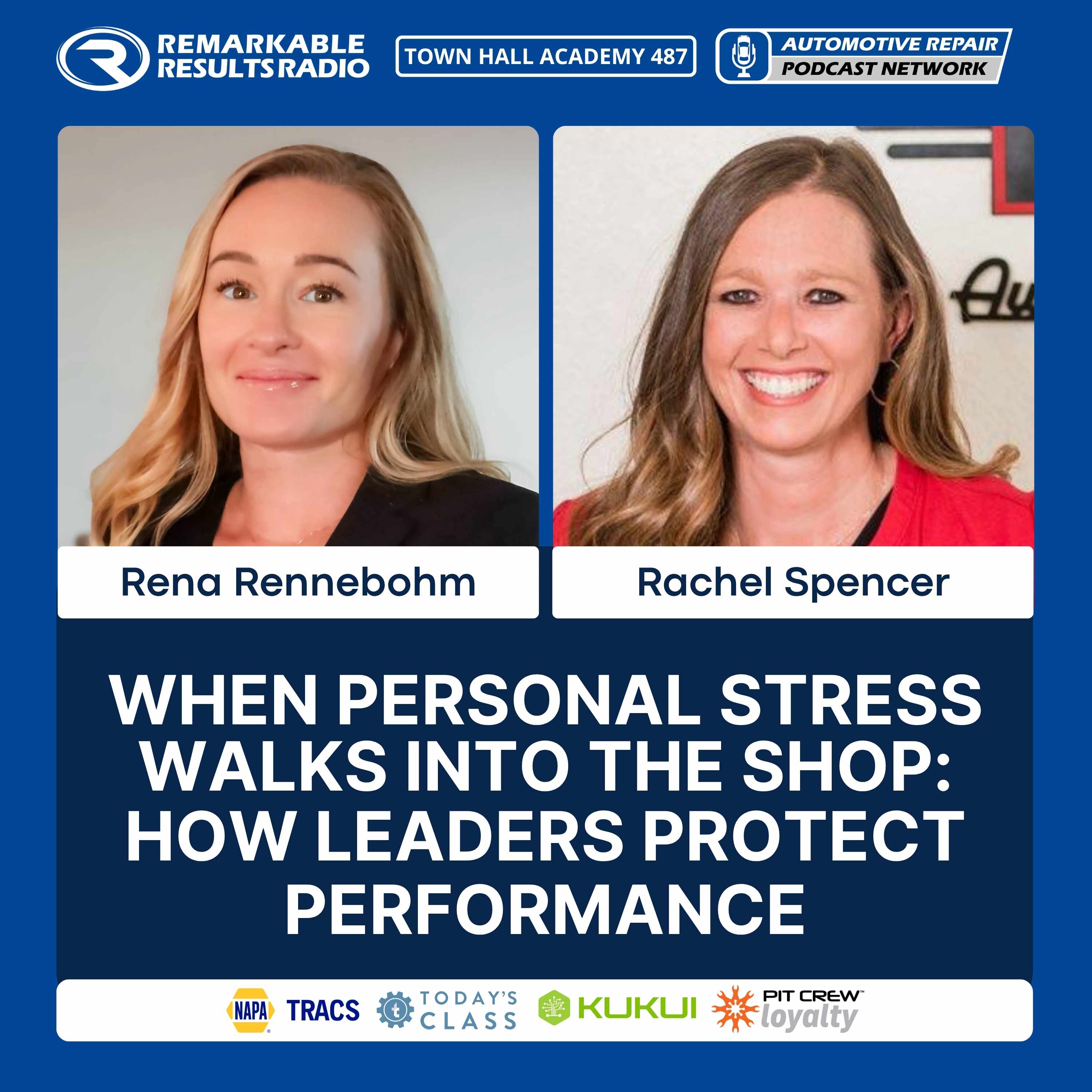
When I come back, it'll be Rina Renabomb, Rachel Spencer,
00:51
Hey, did you know that NapaTrax has on-site training
00:54
plus six days a week support?
00:56
It all starts when a local representative meets with you
00:59
to learn about your business and how you run it.
01:02
After all, it's your shop, so it's your choice.
01:05
Let us prove to you that Trax is the single best
01:07
shop management system in the business.
01:10
Find NapaTrax on the web at napatracs.com.
01:16
Ready to optimize with today's class?
01:19
Boy, listen to an episode we did with David Boyz.
01:22
Great program, roll out a training plan
01:25
for your automotive shop.
01:27
In just five minutes daily, you boost knowledge,
01:29
retention, and improved team performance.
01:31
Start seeing results today.
01:33
Join your peers at todaysclass.com.
01:36
You're probably tired of chasing new customers
01:42
Pit Crew Loyalty ends the one and done cycle,
01:45
turning first visits into lasting reliable revenue.
01:49
On the web at pitcrewloyalty.com.
01:51
Shop owners stop juggling multiple marketing tools,
01:54
Kukui's integrated platform.
01:56
They deliver four times better website conversions,
01:59
automated follow up, and real time ROI tracking.
02:03
Get industry leading customer support with Kukui.
02:12
Look, I want to remind everyone about our app,
02:15
and I think it's critical that we talk about it,
02:18
and we have a really cool, neat new URL,
02:22
arpn.app, from the Automotive Repair Podcast Network.
02:26
All the shows are there.
02:28
You can save them, and it's the ultimate playlist.
02:30
Save your favorites, and share them with people
02:32
you can even watch the video there.
02:34
So I'm thrilled to be able to provide that for you.
02:38
So let's get down to business.
02:40
Rena, Rena Reddabomb, coach consultant,
02:44
empowered advisor, at empoweryouradvisor.com.
02:49
Empoweryouradvisor.com.
02:51
Rena, I went back and I counted
02:53
about maybe 15, 16 episodes that you and I have been on.
02:57
I pick up the phone and says,
02:58
hey, I got this wild idea.
03:01
She goes, let's do it.
03:02
And you've been on a lot of panels town hall,
03:04
so we appreciate your influence.
03:06
And Rachel Spencer from Spencer's Auto Repair in Crumb, Texas.
03:12
And she is now a coach with Rena,
03:16
at empowered advisors.
03:18
One of the things that we did a while back,
03:20
I wanna share with the audience,
03:23
it was aftermarket weekly,
03:24
it was one of the shows that we did,
03:26
I don't know, for maybe a couple hundred shows
03:27
aftermarket weekly.
03:29
It was the racialisms, and I thought that was so cool.
03:32
When we did that, you found an awful lot about Rachel.
03:35
And then we did, which I have to say,
03:38
we should do more of soft skills episodes.
03:42
We did one, it was Town Hall Academy 398, you were on that.
03:46
And I was recently speaking to an educator
03:49
out at the high school level, no, at the college level,
03:52
and we were talking about soft skills.
03:54
And you know what he told me?
03:55
Again, one of these language shifts
03:57
that Karma's working heavily on,
03:59
he says, Karma, they're not soft skills anymore.
04:02
I says, what are they Todd?
04:03
It was Todd Fortier.
04:05
He says, they're necessary skills
04:08
that really hit me hard over the head.
04:10
Just think about it while you're trying to come up with
04:13
all the, we got lists of soft skills.
04:15
But anyway, we had an episode with Rachel,
04:17
which was so cool too, called,
04:19
is your bathroom like the Ritz Carlton?
04:22
You remember that one?
04:23
Yeah, that was a good one.
04:24
That was a good one.
04:25
And every time I talk to people,
04:27
it says, how's your bathroom, Rachel wants to know?
04:31
So look, let's jump in this thing.
04:33
We have so many KPIs on our salespeople.
04:36
We're looking at their phone,
04:37
we're listening to their phone calls.
04:39
We've got AI that's assessing all this stuff, OMG.
04:43
And did you ever stop and think that maybe
04:45
there's something going on that makes that individual
04:47
not up to top performance?
04:49
Who wants to start and give us your insight?
04:52
When my mindset shifted,
04:55
and what I mean is is my mindset has always been
04:59
that you need to leave your problems at the door.
05:04
And I still believe that.
05:06
I still believe that you shouldn't bring your problems
05:08
to work and make them everybody's problem.
05:13
But I also know that we are human
05:17
and it is for a lot of people,
05:19
I'll say close to impossible to completely separate themselves
05:25
from if they're having a problem,
05:28
either with something at work, something at home,
05:31
or just outside of work, we'll say.
05:34
Patrick Lynchione is the one that I heard
05:37
on one of his podcasts and he said,
05:40
for those employers that believe
05:43
that only part of the employee comes to work,
05:47
you're out of your mind.
05:48
The entire person comes to work.
05:51
The person that is having marital problems
05:55
that has a sick family member,
05:59
that entire person comes to work.
06:01
And to me, it was like, wow,
06:05
it shifted my mindset that we need to realize
06:09
that we can leave it at the door,
06:11
a lot of people are good at it,
06:13
but no matter what, that person is still at the shop.
06:17
When I was growing up in life and in business,
06:22
there was this thing separation of church and state,
06:25
you leave your problems at home.
06:27
Listen, we've got enough of them here.
06:29
We just can't deal with your blank,
06:31
we just can't deal with it.
06:33
And it is so different today.
06:35
When you think of the goings on that we see,
06:40
I mean, all you have to do is,
06:41
I don't even wanna say don't even look at social media,
06:43
just look at what TV shows and the movies
06:45
and what's going on in the news.
06:47
There's so much strife and conflict going on
06:50
and a lot of it does come home.
06:52
And we've got kids with issues, kids with fun things going on
06:56
that we need to be there for.
06:57
We have older parents that are ill,
06:59
there's so, so much going on, affordability,
07:03
that the concept of the outside influence
07:07
on the sales ability, and I know this episode's gonna drive
07:10
the point home that says, hey, look,
07:15
you may need to care a whole lot more
07:18
than you currently are.
07:19
And not that you're gonna care and say,
07:22
oh, go home and take three weeks off and fix, no.
07:25
Is there anything we can do to help you get through your day?
07:28
You're maybe having an off day, right?
07:30
And the other thing, Rena,
07:32
that it's not hard to discover it today.
07:36
You have to listen, you have to look, pay,
07:38
I love the word, I always say it all the time,
07:40
you gotta pay attention to what's going on around you.
07:43
And if you are and you're not ignoring it,
07:45
Rachel, I'm sure that at your counter,
07:48
stuff comes in that's not supposed to be there,
07:51
the outside influence.
07:52
I always think I'll be mother goose until we get loose.
08:00
I mean, everything happens on a mental level,
08:02
or it happens on a personal level.
08:04
Coaching is the tool that we give people,
08:07
but empowering them is the outcome.
08:09
So the way that we do that is we pour into people,
08:11
we listen to them, we know that words matter,
08:13
not only what we're telling them, but what they tell us.
08:16
And we have to really pour into them
08:18
by just making sure that we're recognized them as a person
08:21
and not just a service advisor.
08:23
When you sent the email, Karma, about the topic,
08:27
I thought to myself, like,
08:28
both myself and Rachel were service advisors.
08:32
I thought about all the things that impacted me
08:35
when I was an advisor, and sometimes it was,
08:39
well, my technician, like a specific one,
08:41
is giving me really bad inspections,
08:44
and or I have a technician that's having a lot of comebacks.
08:48
Also, it could be something personally
08:51
that is impacting me, right?
08:52
Like, whatever's happening in my personal life.
08:55
But I think about, like, why is that advisor
08:59
hesitating to sell?
09:01
Is it because there's a technician
09:03
that isn't doing what they are best at?
09:07
And so we talk about the front end
09:10
and how what's going on with them,
09:13
but do we ever look at our technicians and go,
09:16
why aren't your inspections looking like they used to?
09:19
Like, what's going on?
09:20
Why are you having comebacks without offending them?
09:24
Just recently, I was talking to a general manager of a shop,
09:30
and she was telling me that one of the technicians,
09:33
just like, things just kept happening.
09:36
Like, not good things, right?
09:37
Inspections weren't good comebacks,
09:39
things were happening, he was slow.
09:41
She had just like a heart to heart with him.
09:45
He found out his dad had cancer.
09:47
And so it was impacting the advisor as well
09:51
because the advisor is like nervous to give him things
09:55
and sees that things aren't working the way that they used to.
09:59
So it was the snowball effect.
10:01
And when we go out and we find out this is what's going on,
10:04
now there's things that we can do to help.
10:08
I call that emotional weight.
10:10
And when you have emotional weight
10:12
and you're asked to carry another 20 pounds into your job
10:17
and you notice it, again, I think it takes a great leader
10:22
not to have the church and state separation,
10:25
but an individual and even an individual at the counter says,
10:29
hey, let's go talk, let's do lunch, talk to me.
10:33
Think about an individual who's carrying the weight
10:36
of his dad has cancer, there may be a divorce,
10:40
children get ill, they just need to talk about it.
10:44
And we all need to know that it's going on.
10:47
And if we know that it's going on,
10:49
we're not gonna give this person any less work,
10:51
but we're gonna realize that there are some boundaries
10:55
that this person can't get over.
10:57
I'm not saying that the work will be sloppy,
10:59
but the work may not be at the 110% level
11:02
that this individual was giving.
11:05
And that person just maybe needs a couple of days to regroup.
11:09
We have to be like that in today's environment.
11:12
Coaching gives us the opportunity to do that.
11:15
We call and we're like, hey, we're listening to your calls
11:18
and we're looking at ROs and we're seeing KPIs
11:21
or whatever it is that are not at their best,
11:27
And we start talking and a lot of people
11:29
in that private one-on-one,
11:32
like we call ourselves like their therapist
11:34
a lot of the time we are there.
11:35
I know, and please keep along the line,
11:38
but you hear the word therapist 40 times a day today.
11:42
10 years ago, you never heard it.
11:45
And so people will tell us,
11:47
because I have this and this going on
11:49
and they haven't told anybody at the shop.
11:51
And maybe it's because they're proud, too proud.
11:54
Maybe it's because they don't,
11:55
look, I don't wanna be a problem.
11:56
I don't want people to think I can't do my job.
11:59
Maybe it's, I don't feel safe telling anybody.
12:03
And so they share it with us.
12:05
And now we get to see what's going on.
12:07
And a lot of the time,
12:08
we'll say to whoever we're working with,
12:11
do you want me to share this with the people
12:15
or do you want me to coach you to tell them what's going on?
12:19
And sometimes that's what they need from us,
12:21
is like, what do I say?
12:24
But we do, we hear that a lot.
12:26
And I have had a shop owner say to me before,
12:29
I feel like you're spending too much time
12:31
fixing their personal problems.
12:33
And here's the truth.
12:35
I can't grow them professionally
12:38
until I grow them personally.
12:40
A lot of us are stunted professionally
12:43
because we can't get past personal things.
12:46
And so we do spend time talking about things
12:49
with people personally and probably,
12:52
just like understanding, well, where does that come from?
12:55
Why are you feeling stressed right now?
12:56
Why do you think you stress out when this happens?
12:58
And sometimes it goes back to, gosh,
13:00
you know, when I was seven,
13:03
you know, this or this happened to me.
13:05
And we uncover why that person is stunted
13:10
and why they're not able to grow professionally.
13:13
Let me stop and challenge this thing
13:17
about the coach can discover it.
13:19
What about the leader of the organization?
13:21
I mean, I want this episode to challenge
13:25
ownership leadership.
13:27
And I know, Rina, thanks for being my coach
13:29
and discovering this for me.
13:31
Thank you for the advice you're giving me,
13:34
Is that how you guys are doing it?
13:36
Giving the responsibility to the ownership?
13:40
I mean, I think Rachel will agree with me.
13:42
It depends on the shop owner.
13:44
Like we know the ones that we can go to and say,
13:47
hey, there's something going on, right?
13:49
And we know the ones that we can't say anything
13:51
because they're not gonna have any empathy
13:53
or sympathy or understanding.
13:55
We generally know what we're capable of doing.
13:58
And what we're capable of sharing.
14:01
Most of the time I feel like it is our responsibility
14:04
to I shouldn't hide things from the business owner.
14:07
I'll let them know, hey, there's something going on
14:09
and I'll let them tell you.
14:10
Or just let them tell you, don't say that I said anything.
14:14
Maybe now is a good time for you to have a conversation
14:17
with them, a private conversation.
14:19
What they do with it is up to them.
14:21
So you're saying it is my responsibility
14:24
and I will share it, but you sometimes don't see resolution.
14:29
I mean, I think as shop owners or business owners,
14:32
we set the stage for our employees.
14:35
Calm is contagious, but so is chaos too.
14:37
So it's our responsibilities to make sure
14:40
that we know what's going on within our business.
14:42
Outside influence doesn't just affect the service advisor.
14:45
It often drives the performance more than skill alone.
14:47
And sales is emotional, but advisors are human first.
14:51
And whatever has happened on the front counter
14:52
is going to affect the back just as much as it does the front.
14:55
So we've got to make sure that the front counter
14:57
is on their A game and be ready for whatever comes their way.
15:01
Emotional state equals sales performance.
15:03
And what's happening outside of work like Rena said,
15:05
whether it's family stress, financial pressure,
15:08
maybe they're not getting enough sleep, getting older
15:10
and we know how valuable that sleep is.
15:13
But that directly impacts their confidence,
15:15
their communication, their decision making.
15:18
And an overwhelmed advisor tends to rush conversations.
15:21
They're not building value in that conversation.
15:23
They don't have the confidence.
15:25
They tend to avoid difficult topics like the price shoppers
15:27
are selling out of their own pocket.
15:29
But a grounded advisor who is, I'll use a racialism here,
15:33
when we have our mind right, we have our grind right.
15:35
A grounded advisor slows down, they build value
15:38
and they can confidently guide the customer
15:40
and our team as well.
15:42
Because what that advisor do, if there's one person
15:45
in the shop that doesn't have their mental state
15:48
where it needs to be, it affects the whole nature
15:51
of the shop and our customers.
15:53
Mm-hmm, yeah, we're only as strong as our weakest link.
15:57
Let's face it, your shop management system
16:00
is the single most important tool in your shop, period.
16:03
NapaTracks was built from the ground up
16:05
to make your business more profitable and efficient.
16:08
We provide an extensive set of tools
16:10
to increase and track profitability in real time.
16:14
NapaTracks offers the industry's best post sale support
16:17
hands down and we train your people on site.
16:20
Yep, on site and we offer remote refresher training
16:23
10 times a week and customer support is open
16:28
Give us a call, visit the website
16:29
or join our Facebook community today to learn more.
16:32
We'll prove to you that Tracks is the single best
16:35
shop management system in the business.
16:38
NapaTracks is always customized and tailored for you
16:41
whether you're a one man shop or a large multibay
16:45
or multi-location company.
16:47
After all, it's your shop, so it's your choice.
16:51
Visit us on the web at NapaTracks, that's N-A-P-A-T-R-A-C-S.com.
16:57
Strengthen your shop's entire team with today's class.
17:00
Everyone from technicians to service advisors
17:02
can access impactful training on their phones
17:04
in just five minutes a day.
17:07
Opt for solo sessions or ignite friendly competition
17:10
challenging team members to climb the leaderboard
17:12
for the highest score.
17:13
Our effective daily training ensures measurable progress
17:17
helping you develop your team.
17:20
Train smarter, not harder with today's class
17:22
and transform your shop and your people.
17:25
Start seeing results today at todaysclass.com.
17:29
You know, most shop owners feel trapped
17:31
spending on ads while half their first time customers
17:35
It's frustrating, it's exhausting and it's not your fault.
17:39
The industry average is 54% and one and done.
17:42
We understand how discouraging that can be.
17:46
Well, pit crew loyalty changes the story.
17:48
Our clients cut that rate by up to 38%
17:51
raising lifetime value by more than 50%.
17:54
Loyalty members visit nearly three times more often
17:57
creating predictable revenue without extra ad spend.
18:01
Pit crew loyalty where customers stay and shops thrive.
18:05
On the web at pitcrewloyalty.com.
18:07
Shop owners, we know you are overwhelmed
18:10
with a flood of missed calls, empty bays
18:12
and disconnected marketing tools.
18:14
Kukui has spent over a decade building
18:17
one integrated platform for auto repair shops.
18:20
One login, one dashboard and mobile first websites
18:23
that convert four times industry average.
18:26
Smart, innovative CRM with automated follow up.
18:29
24 seven online booking and real time ROI tracking.
18:33
With 900 plus years of combined team experience
18:36
we fuel the growth of 2,200 plus shops
18:39
and have influenced $3 billion in revenue.
18:42
Stop working harder, start working smarter.
18:45
Get industry leading customer support
18:47
and book a demo with Kukui.
18:53
I love what you said a little bit ago.
18:56
Common chaos is contagious.
19:00
It's crazy around here, 724.
19:04
Wow, it seems like we're always on the beach
19:06
and there's a beautiful sunset every day.
19:11
And so you have to make that happen.
19:14
You can't wish it, you have to make it happen.
19:17
And if you let the chaos continue, shame on you.
19:21
This is so interesting, Rachel.
19:23
You sent me a great talking point.
19:25
Sales is a skill highly tied to emotion.
19:28
And then you went on to say
19:30
that consistently satisfied and happy with their life.
19:33
Of course, if they're not, then it's not true.
19:36
And these are the power pieces in my mind
19:41
that help people deal with work
19:46
on top of the emotions and the problems
19:49
that they have going on.
19:51
I have to tell you today, with the things that I know
19:54
that are going on in just people around me's,
19:57
you know, life that's going on
19:58
for someone to be at the top of their game some days,
20:02
it isn't gonna work.
20:04
And I could attest to the last year and a half
20:07
has really been a struggle for me.
20:08
And I can tell you, you know, business being up and down
20:11
and all of us as business owners experience this,
20:14
but I know how it can affect me and my team,
20:17
my family, everything.
20:19
And my husband can see a big shift in me
20:20
when we have a good sales day versus a bad sales day.
20:24
You know, language and tone shifts
20:25
sometimes without us even realizing it.
20:27
And that stress shows up in shorter answers,
20:30
us being impatient with ourselves, with our customers.
20:33
But all of that comes out,
20:34
whether it's in the business or at home,
20:37
all of our life affects everything that we do.
20:40
I think that, you know, a lot of shop owners
20:44
are retired technicians or even retired advisors.
20:49
So a lot of shop owners, just business owners in general,
20:53
are not retired therapists.
20:56
And so I just don't think that everybody knows
20:59
what to do when you see somebody
21:03
that is clearly in distress.
21:05
And I also think that shop owners,
21:07
business owners in general are busy.
21:09
And so a lot of the time they're not looking
21:11
for that person that is stressed.
21:14
They don't see it themselves.
21:16
And so like I was talking to a shop today
21:18
and the shop owner is also the lead technician.
21:22
How is a lead technician go and look at everybody's,
21:27
like look at their eyes every day.
21:29
Hey, how are you? Good morning.
21:31
I think that you have to have someone that does that.
21:35
So if this isn't your strength,
21:37
you should find the person in your business
21:39
that it is their strength.
21:41
And sometimes it's like some of the shop owners
21:44
I work with, it's their wives.
21:46
Their wives maybe don't have a big role in the shop.
21:48
Maybe they have a huge role.
21:50
But a lot of the time I find that they're the ones
21:52
that will go kind of do the mom check in, right?
21:55
Hey, how are you? How are things?
21:56
What's been going on? How is your weekend?
21:59
And just see, like we are creatures of habit.
22:03
And so when you see that I'm different, I'm off,
22:06
maybe for a day, it's not that big of a deal,
22:08
but you see it 234 like what is going on?
22:12
And like I said, a lot of people don't want to share
22:15
with you what's going on
22:17
because maybe they don't feel like they can or they should.
22:22
But I know that eventually if you do,
22:25
if you create the culture in your business, in your shop,
22:29
whatever it is to have where you have regular check-ins,
22:33
people are going to expect it.
22:35
So I think it also is the consistency of your check-ins
22:40
that people are expecting them and it doesn't seem weird.
22:43
You're just checking in with me because I'm having a bad day.
22:46
It's like, no, you check in with me all the time.
22:48
So I feel safe talking about what's going on today.
22:52
Yeah, I think we've really created a good culture
22:55
I mean, most of my employees will come in after a long weekend
22:58
or even the next morning after they've had a rough night.
23:01
And it's my therapist chair.
23:02
They'll come in here and they'll pour their heart out to me.
23:05
And I'll ask them, are you coming in here
23:06
because you're looking for solutions?
23:08
Or are you coming in here
23:09
because you just need to talk to me and get it out?
23:10
And sometimes they just need to come in here and talk it out.
23:12
And then they feel better and they can go about their day.
23:15
But just that extra five minutes
23:17
can make a positive impact on the rest of their day.
23:19
You know, that's honesty and trust.
23:24
Hey, Rachel, let me tell you about my weekend,
23:29
You're in the therapist's chair.
23:31
Isn't that what you said?
23:32
The therapist's chair, I love that.
23:33
You could probably see in them, maybe not relief,
23:38
but the confidence that you know what's going on in their head.
23:42
And if they make a left instead of a right
23:46
in something that they're doing,
23:48
you may wanna catch it, mention it,
23:50
but you also know the why behind it.
23:54
If we know that something's going on in their personal life,
23:56
just like our advisors, you know,
23:58
if we're listening to a call and we know that they've listened,
24:00
or we've heard a bad call,
24:01
but then they get on the phone
24:02
and they told us their dog just died
24:04
or they just got into a car accident.
24:07
Well, we're probably not gonna go over that bad call with them.
24:09
We're gonna focus on what's going on in their life
24:11
because we don't wanna add to what distress
24:13
they're experiencing in that moment.
24:15
Okay, therapist's chair, I have a question.
24:18
Are you there to listen or to give advice or both?
24:22
Depending on what they need from us.
24:24
And that is one question that I'll always ask my staff.
24:26
Are you coming here because you need me to help you through this?
24:29
Do you just want me to listen
24:30
or you need me to ask a solution?
24:33
One of my employees had just come to me about his daughter
24:35
and he's like, you know, I said,
24:37
are you coming to me asking me for help on this
24:39
or do you just need to vent to me?
24:41
And he's like, I want your advice on this.
24:43
He's like, I trust you.
24:44
This is big, this is powerful.
24:46
You mentioned something earlier about culture.
24:48
I mean, I think this culture comes in so many forms
24:50
and there's so many moving parts to get culture right,
24:53
but one of them is that your people have to
24:56
wanna come to work every day and feel comfortable at it.
24:59
Okay, you can bring your baggage,
25:01
but let's let it not hurt the business.
25:04
When I was thinking about the topic,
25:05
like what I kept coming back to is like,
25:07
how do we create a culture where it is okay
25:11
to share what's going on,
25:12
but not make it like a toxic thing
25:16
where we don't want it to become the business.
25:20
We don't want it to become so big that it overtakes the day,
25:25
but recognizing that there's a problem,
25:27
discussing it or just listening, whatever it is,
25:30
is I think very important.
25:31
And what I kept coming back to is how important it is
25:36
to have a genuine connection with the people
25:38
that you work with.
25:39
And I think that that's hard to do, but not impossible.
25:42
And I think how you do that is disc assessments,
25:47
communication style assessments,
25:48
whatever it is you like or believe in, team building,
25:52
like, and that could look like
25:54
we're gonna make dream dwarfs together.
25:56
It could mean we're gonna go do go carts together.
25:59
Like, it doesn't have to be the boss that comes to you.
26:04
It could be one of your coworkers
26:06
because you guys are close
26:07
and you recognize that that person isn't themselves.
26:12
And so maybe I don't have that close of a relationship
26:15
with somebody, but I know that someone else does.
26:19
I might just cue them like,
26:20
hey, do you mind going and checking in with so-and-so
26:22
and to see if everything's okay?
26:23
They might do that on their own,
26:25
but I think it definitely comes from the top
26:27
that we create a culture where we have each other's back.
26:33
We know it's okay to talk.
26:35
We could do another episode just about culture.
26:38
We could do 50 episodes about culture, but you're right.
26:43
This is creating a certain culture.
26:45
One of the things that I just heard
26:48
and I wrote down the word confidential.
26:53
And in my mind, trust honesty, confidential,
26:57
I should have said that a few minutes ago
26:59
because there are some people that want to tell you,
27:02
but they just don't want anyone else to know.
27:05
And it's very private, it's very personal
27:07
because to your point about disc
27:09
and the communication styles of people,
27:11
some people don't want to get there.
27:13
They carry the burden inside of them
27:15
and it affects their daily life.
27:17
It affects them at home, socially at work.
27:21
And if they tell you and it ever gets out
27:24
because you breach the confidentiality,
27:27
you lost that person.
27:28
It's absolutely over.
27:30
And you can't be excited to want to tell somebody else
27:32
because you found out what the problem was.
27:36
No, it's totally wrong.
27:38
You have to grow some calluses
27:42
on being able to keep confidentiality inside.
27:45
I think that's, it's huge.
27:48
So you got a lot of Leansioni examples
27:51
that I know you wanted to bring up.
27:54
Somebody once said to me.
27:56
I've read his books, they're great stuff.
27:59
And one person once said to me,
28:01
you know, Rina, you talk about him so much,
28:04
he's your Silver Fox.
28:06
I love what he has to say.
28:08
One of the things specifically when it comes to this topic
28:12
that I felt was really important is that he said,
28:16
you know, we're not supposed to be someone's therapist,
28:20
but we need to recognize that there's a problem
28:23
because when people feel that they aren't important,
28:29
that they aren't seen, heard,
28:32
now they feel unknown and unseen
28:34
and they don't feel like they're part of your team.
28:38
And so I'm gonna give you an example.
28:40
I did an in-shop visit.
28:42
This was several years ago.
28:44
And I was there on a Friday and then I was there on Monday.
28:49
And on Friday, one of the technicians went home early
28:52
because he was gonna go to urgent care
28:55
because he like slammed his hand
28:57
in between like something in a transmission.
29:00
He was replacing a transmission.
29:01
So he left, Monday morning he came in,
29:04
I noticed that he was really quiet,
29:07
maybe even a little grumpy and I asked the advisors,
29:10
I was like, hey, what's going on with George?
29:13
And they were like, I don't know, he's normally fine.
29:16
I mean, I don't know.
29:17
So I went over and I checked on him and I asked him,
29:20
I was like, hey, how are you?
29:22
How's your weekend?
29:23
And he just held up his hand and it was in a bandage.
29:27
And I said, oh yeah, I forgot about your hand, how is it?
29:30
And he goes, everybody forgot about my hand today.
29:34
No one came to ask me how my hand was.
29:39
It bothered him that no one came to check on him.
29:43
You know what I think?
29:44
I think of the word roll call.
29:46
It's conceptually, right?
29:48
On a daily basis, we do not, it's not like in the army,
29:53
you know, Rita Bob here, Rachel, Spencer here, it's not that.
29:57
The roll call could be just an act and an action
30:00
of being there when someone comes in the door
30:03
or if we're starting up and we don't want to have a crazy day
30:08
but let's do the tour, the roll call tour.
30:11
And at that point in time, how's your hand?
30:17
You know, how long were you in the emergency room?
30:19
Et cetera, et cetera, et cetera.
30:21
Those are empathy discussion points with people.
30:24
And if he is an individual who likes to more talk with vehicles
30:29
and not people, then you know he's not going to go out
30:32
and come in here and says, hey guys, I broke three fingers
30:36
but he's just gonna come in and be himself
30:38
and wait on you to make that recognition.
30:41
That's a great point, Rita.
30:46
So let me first say that I feel like a lot of shop owners
30:51
are possibly afraid to venture into the truth.
30:56
How are you doing that question?
30:58
Because they're afraid of what happens when I open the door
31:02
and then it's just an absolute flood.
31:05
So I'm asking you, Rachel, because I don't know the answer.
31:09
How do you keep it so that the problem doesn't become
31:15
like a focal point where it just stays as
31:19
like a healthy conversation and you don't allow it
31:22
to become a toxic part of the shop?
31:25
I think just being there for them, you know,
31:27
leading with stability, being calm and consistent
31:30
and to control what those conversations,
31:33
conversations don't just come from what we know.
31:35
They come from how we show up for our employees
31:37
and how we show up is influenced by everything that we do.
31:41
So just leaving our door open
31:43
and doing those morning check-ins with them,
31:45
asking them how they're doing
31:47
and just being intentional and letting them know
31:51
that we're there to support them.
31:52
You know, if something's going on in your life,
31:54
what can I do to support you
31:55
and just asking that question some of the times?
31:57
And sometimes it's just them talking through it.
31:59
I haven't had any big issues where, you know,
32:02
somebody's had something so major going on in their life
32:05
that it has affected their daily work.
32:07
You know, I've seen it day in and day out
32:08
where something may be going on
32:10
and they put a wrong ticket on a part or something like that.
32:12
I'm like, hey, let's just slow down a little bit.
32:15
I know you've got stuff going on within your life,
32:17
but you know, maybe, you know, you need to go take,
32:20
you know, have a break and go get a drink
32:21
or something and come back and reset.
32:23
And that's one thing that's really important for us
32:24
as a shop is we close down an hour for lunch every day.
32:27
And I think that that is important
32:29
for their emotional health
32:30
because we've got four hours here
32:33
and then we go reset during lunch
32:34
and then we come back.
32:36
And so even if our morning was bad,
32:37
we get an hour break where we can reset our mindset
32:40
and come back with a new perspective.
32:42
What would you do though if you had somebody
32:44
that if you opened the door
32:48
and it just came pouring out
32:50
and it came pouring out every day?
32:52
Because I have that where I have coaching clients
32:56
where like every time I call them, it's like, yeah, you know,
33:01
there's always a problem, there's always something wrong.
33:04
It's very involved.
33:06
Everything is very involved
33:07
with what's going on with their life.
33:09
Like what do you do with that person?
33:12
Van, I just think that you have to concentrate
33:14
on what you can do in your life.
33:16
There's only certain aspects that we can control
33:19
and there's certain things that we can't
33:20
and we've got to focus on that positivity.
33:22
And we help them through that
33:23
by focusing on what's going right and not what's going wrong.
33:27
So we try and shift their mindset by doing that.
33:29
There was a recent study where a scientist did a study,
33:32
white rice and black rice.
33:34
So what he did is he had two jars of rice.
33:37
The white rice, he was pouring positivity to
33:40
and just saying, you know, you're beautiful,
33:42
you're amazing, you work hard.
33:45
The other one, he fed negativity into it
33:47
and he was saying, you're ugly, you do a bad job,
33:49
you're awful, that rice started to turn black.
33:52
So there's scientific studies behind that.
33:53
So a little phrase within my family
33:55
is if something's going wrong or we've got negativity,
33:58
So I think that's really important
34:00
that we pour into our people and just show them
34:02
what they have to be thankful for,
34:05
what they have grateful to be grateful for
34:07
instead of focusing on the negatives.
34:09
I see what you're saying, don't feed into it.
34:11
You have to know where the boundary, where that line is.
34:15
And I think that that can be difficult to know
34:19
I know like as a coach, sometimes I just have to say,
34:22
hey, we're gonna take 10 minutes today
34:25
to just do our weekly check-in
34:27
and then I want to do this and
34:29
and I have to take more control of,
34:32
I'm willing to listen,
34:33
but I'm only gonna let you have this amount of time.
34:36
Then we're gonna move on to the next thing.
34:40
I mean, we've got to be able to control that conversation
34:42
because even though we do want to pour into our people,
34:45
we also have a task to do,
34:47
which is empowering them through the coaching.
34:50
Pour into our people, I love that.
34:53
I was recently talking to a shop owner,
34:56
a multi-shop operation and I says,
34:58
how often do you get out into the field?
35:00
Eight stores, okay?
35:02
He goes, I make it a goal to visit two stores a week.
35:05
So I see all of my people at least monthly
35:08
and I'm the cheerleader for them.
35:10
And of course we have managed store managers
35:12
and general managers.
35:14
And he says, I care about my people
35:16
in the highest, highest degree.
35:19
And when I started to think about that,
35:20
and even if it was a single operation,
35:23
no matter general manager or owner in the facility,
35:27
you know, you can say things like,
35:33
I wrote these down.
35:34
Any plans this weekend?
35:36
You're looking good today.
35:39
You comb your hair?
35:40
Nice organized workspace.
35:43
When you get in your next haircut,
35:46
it goes to my whole grooming thing.
35:50
And hey, I heard about that you did
35:52
a really great inspection the other day.
35:53
You found some real big problems for a vehicle
35:55
that wasn't safe for our client.
35:57
You just don't have to say,
35:58
hey, Charlie, how you doing?
36:00
Did you ever solve your issue?
36:02
You find out that dad has cancer as an example
36:04
and you say, hey, how's your dad doing?
36:07
These are the empathy kind of things
36:09
that people need to know you care about
36:12
and that you're paying attention to them.
36:15
Well, I think so much as owners and coaches
36:19
and everything, we get so stuck on the KPI sometimes
36:22
and we forget about the person.
36:24
We focus on the negative instead of focusing on the positive
36:28
instead of going up front and saying, man,
36:29
that was an amazing sale or that was an amazing call.
36:32
You did a great job that we have to pour more positivity
36:35
into them than we do negativity.
36:37
That positivity is a choice.
36:40
We've got to be able to control that
36:41
with our conversations a lot of the time.
36:43
I just talked to a service advisor yesterday
36:48
and I said, oh, well, how was your guys this month?
36:50
And she said, well, we didn't meet our goal,
36:53
but the shop owner, I thought that he was gonna have
36:58
like something negative to say.
36:59
He came in and he was like, yeah,
37:02
but did you guys see your this and your this?
37:04
And he pointed out the positive things
37:06
and she said she was surprised at that
37:09
because most of the time it's the manager
37:12
that reports on those things and he is very negative.
37:15
He does not look at the wins, he looks at the losses
37:20
and so I think you're right.
37:22
I think like it's like looking for the wins.
37:25
And I also, I made a note that learning how people
37:29
like to communicate, that can be disk, right?
37:33
But one thing that I do when I'm working with technicians
37:36
is I always like to ask them what their preferred method
37:39
of communication is.
37:41
So just like we ask our customers,
37:43
do you ask your technicians?
37:44
Do you prefer for me to text you, email you?
37:47
Do you want me to come out and talk to you?
37:50
And the most interesting thing is,
37:52
is it's always the really quiet technicians
37:55
that stick to themselves that want you to come talk to them.
38:02
You would think that they're the ones
38:04
that want you to communicate virtually,
38:07
but they always want you to come out
38:09
and have a conversation.
38:11
The whole person at work, which is the Lencioni,
38:14
I believe it was his book, the whole person at work.
38:17
I'm really loving this episode.
38:19
I'm so glad you brought this to us.
38:21
And I think this could be a personal life changing episode
38:25
that people can listen to a couple of times
38:26
and share it with people.
38:28
But I started to think about the owner driving to work
38:33
and the thoughts that are going through their mind
38:35
about what's going on at home, blah, blah, blah.
38:39
I've got to solve this, got to make this phone call.
38:41
Yesterday it was like this.
38:42
And then you're driving home saying,
38:44
ugh, trust me, every day there's things,
38:49
positive, negative issues that are going on.
38:52
And as an owner, and I'm speaking to owners right now,
38:54
or leaders, managers, your people
38:57
are doing the same damn thing.
38:59
They're coming to work with either baggage or positivity
39:02
because we all don't live in the world of negativity.
39:05
I don't believe that.
39:07
I mean, maybe there are some people
39:08
that just can't climb out of a hole.
39:11
But for the most part, we do have a,
39:13
let's find that positivity when it comes up
39:17
by going around and seeing our people.
39:20
And maybe my job is to fluffing up
39:22
or kind of creating the sunshine
39:24
that goes on inside the business.
39:27
By having people care minute one of the start of the day.
39:31
You know, 805, rah, rah.
39:34
We did great numbers yesterday, great inspections.
39:37
Customers were thrilled and happy.
39:39
We got a brand new client yesterday.
39:42
Thank you for all the great things that you're doing.
39:45
Now, think about the client advisors
39:47
that are on our counters.
39:48
If there's a leader there,
39:50
that's their responsibility for their team,
39:52
customer service people and the owner.
39:55
I love your whole point.
39:56
This to me was an episode that dove heavily into culture.
40:02
I think that to bounce off your point,
40:06
we end up like just living in our little world here
40:10
that we have a phone call to make,
40:11
oh my gosh, I forgot to pay that bill.
40:13
Oh, I need to call so-and-so.
40:14
And we look past that we have a team of people
40:19
that are looking to us to see what our mood is today.
40:23
And they are going to emulate us.
40:27
Then also, I think to myself, Kerm,
40:29
how easy is it when you're having a good day, good week,
40:32
good month to have those conversations about rah-rah,
40:36
is harder to have those conversations
40:38
when you're not having a good day, good week, good month.
40:41
And it's harder to go find the positivity.
40:44
And a lot of the times we're like,
40:45
well, I need to let everybody know
40:46
that we're not doing well.
40:48
Either you're gonna have a shit day
40:49
because the leader's in a shit mood or has an attitude
40:52
or you're gonna have a wonderful, heavy duty, sunny day.
40:55
But your point is well taken about doom and gloom.
40:59
Oh, maybe we didn't meet our numbers yesterday,
41:01
but there could very well be some positivity in everything.
41:05
Listen, we didn't hit it, but look, guys,
41:07
we have another day to get through it
41:09
and we had one little misstep yesterday.
41:11
I know it won't happen again today.
41:13
There's a lot of ways to get people excited
41:16
about launching the day.
41:18
Yeah, I think words change people.
41:21
Tone changes our trust with them,
41:22
whether they want to come to us or not.
41:25
Energy really changes the outcome.
41:27
So if we're having a slow day,
41:28
I wanna make sure that I'm boosting my team up.
41:30
Like, hey, let's put our slow day action plan in place.
41:33
They're coming, we gotta get ready for it.
41:34
Let's prime this pump.
41:36
But just be ready at all times
41:37
and really the power of positivity is amazing.
41:40
But if we spread that negativity, oh my gosh, we're slow.
41:43
This is happening, you didn't sell this ticket.
41:46
That negativity is contagious to the entire team.
41:49
Well, I'm gonna call that your last word.
41:51
Power of positivity, Rachel.
41:55
The power of positivity.
41:57
Rina, one final word
41:59
and we're gonna thank you both for being here.
42:01
And I'm telling you, we could go on for hours.
42:04
I just love these little tight little 40 minute,
42:07
change people's lives episodes.
42:11
Employees don't leave their personal lives at home.
42:14
And so it is important to recognize that
42:17
and either recognize them
42:20
or to stop it before it becomes something bigger.
42:25
Great story, great stuff here today.
42:27
Rina Renabon, CEO, coaching consultant
42:29
from Empowered Advisor and Rachel Spencer
42:32
from Spencer's Auto Repair in Chrome, Texas
42:35
and a coach with Rina's Empowered Advisor.
42:38
This was a great episode.
42:40
Thank you, Outside Influence on Sales Ability.
42:44
Powerful stuff, thanks guys.
42:46
Thanks for being on board to listen and learn
42:48
from the Premier Automotive Repair Business Podcast,
42:51
Remarkable Results Radio.
42:53
Get your episodic education on the ARPN listening app
42:57
at AutomotiveRepairPodcastNetwork.com.
43:00
Also enjoy the podcast on our Carm Capriato YouTube channel.
43:03
Carm is all for advancing the professional
43:05
automotive service industry, until next time.