The Chevrolet Trax is a small SUV made for regular daily driving. It’s meant to be easy to park and drive while still giving you more space than a typical sedan. People talk about it because it’s a practical option for things like commuting and running errands.
A transmission is the part of the car that helps the engine deliver power to the wheels. If someone says they replaced the transmission, it means that big gear unit wasn’t working right anymore.
“Roll call” is a way of describing a simple daily habit of checking in on people. The point is to make sure coworkers notice when someone is hurting or needs attention.
LIVE
This is the Automotive Repair podcast network.
Hey, everybody,
Karm Capriotto, remarkable results radio.
Glad to have you here our 11th year.
We couldn't do this if it wasn't for you.
So I thank you from the bottom of my heart.
Look, we have to thank all those great people that have been
on over a couple of thousand episodes between
all the different shows that we've done to share
their insights to help advance our great industry.
We're going to talk about an outside influence on
the sales ability, not only of yourself,
if you're a service advisor, client advocate,
but as an owner, what do you got to do to help influence
the sales ability of your people?
When I come back, it'll be Rina Renabomb, Rachel Spencer,
joining me.
Hey, did you know that NapaTrax has on-site training
plus six days a week support?
It all starts when a local representative meets with you
to learn about your business and how you run it.
After all, it's your shop, so it's your choice.
Let us prove to you that Trax is the single best
shop management system in the business.
Find NapaTrax on the web at napatracs.com.
Ready to optimize with today's class?
Boy, listen to an episode we did with David Boyz.
Great program, roll out a training plan
for your automotive shop.
In just five minutes daily, you boost knowledge,
retention, and improved team performance.
Start seeing results today.
Join your peers at todaysclass.com.
You're probably tired of chasing new customers
who never return.
We understand.
Pit Crew Loyalty ends the one and done cycle,
turning first visits into lasting reliable revenue.
They deliver four times better website conversions,
automated follow up, and real time ROI tracking.
Get industry leading customer support with Kukui.
That's kukui.com.
Hey, welcome back.
Look, I want to remind everyone about our app,
and I think it's critical that we talk about it,
and we have a really cool, neat new URL,
arpn.app, from the Automotive Repair Podcast Network.
All the shows are there.
You can save them, and it's the ultimate playlist.
Save your favorites, and share them with people
you can even watch the video there.
So I'm thrilled to be able to provide that for you.
So let's get down to business.
Rena, Rena Reddabomb, coach consultant,
empowered advisor, at empoweryouradvisor.com.
Empoweryouradvisor.com.
Rena, I went back and I counted
about maybe 15, 16 episodes that you and I have been on.
I pick up the phone and says,
hey, I got this wild idea.
What do you think?
She goes, let's do it.
And you've been on a lot of panels town hall,
so we appreciate your influence.
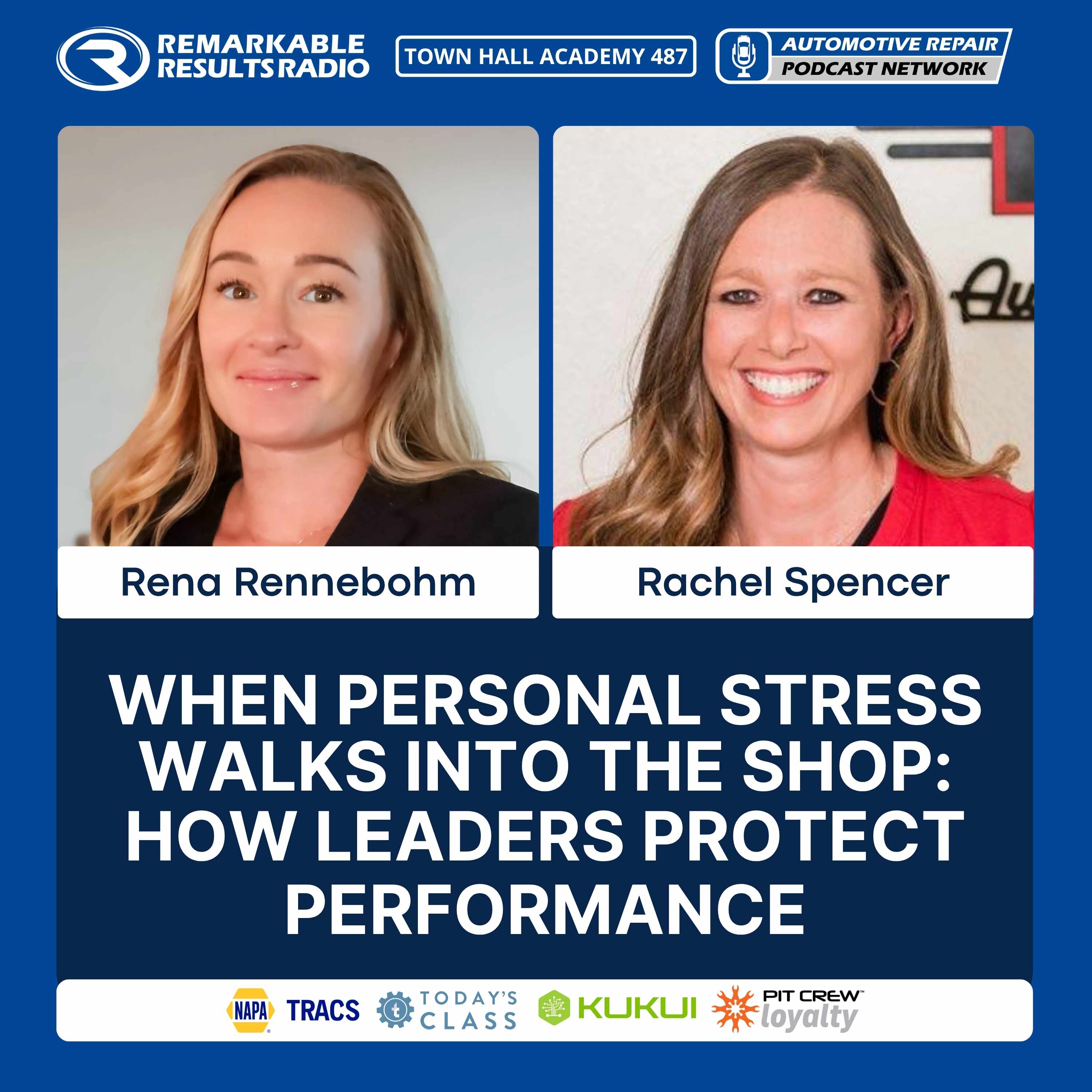
And Rachel Spencer from Spencer's Auto Repair in Crumb, Texas.
And she is now a coach with Rena,
at empowered advisors.
How cool is that?
One of the things that we did a while back,
I wanna share with the audience,
it was aftermarket weekly,
it was one of the shows that we did,
I don't know, for maybe a couple hundred shows
aftermarket weekly.
It was the racialisms, and I thought that was so cool.
When we did that, you found an awful lot about Rachel.
And then we did, which I have to say,
we should do more of soft skills episodes.
We did one, it was Town Hall Academy 398, you were on that.
And I was recently speaking to an educator
out at the high school level, no, at the college level,
and we were talking about soft skills.
And you know what he told me?
Again, one of these language shifts
that Karma's working heavily on,
he says, Karma, they're not soft skills anymore.
I says, what are they Todd?
It was Todd Fortier.
He says, they're necessary skills
that really hit me hard over the head.
Just think about it while you're trying to come up with
all the, we got lists of soft skills.
But anyway, we had an episode with Rachel,
which was so cool too, called,
is your bathroom like the Ritz Carlton?
You remember that one?
Yeah, that was a good one.
That was a good one.
And every time I talk to people,
it says, how's your bathroom, Rachel wants to know?
So look, let's jump in this thing.
We have so many KPIs on our salespeople.
We're looking at their phone,
we're listening to their phone calls.
We've got AI that's assessing all this stuff, OMG.
And did you ever stop and think that maybe
there's something going on that makes that individual
not up to top performance?
Who wants to start and give us your insight?
When my mindset shifted,
and what I mean is is my mindset has always been
that you need to leave your problems at the door.
And I still believe that.
I still believe that you shouldn't bring your problems
to work and make them everybody's problem.
I believe that.
But I also know that we are human
and it is for a lot of people,
I'll say close to impossible to completely separate themselves
from if they're having a problem,
either with something at work, something at home,
or just outside of work, we'll say.
Patrick Lynchione is the one that I heard
on one of his podcasts and he said,
for those employers that believe
that only part of the employee comes to work,
you're out of your mind.
The entire person comes to work.
The person that is having marital problems
that has a sick family member,
that entire person comes to work.
And to me, it was like, wow,
it shifted my mindset that we need to realize
that we can leave it at the door,
a lot of people are good at it,
but no matter what, that person is still at the shop.
When I was growing up in life and in business,
there was this thing separation of church and state,
you leave your problems at home.
Listen, we've got enough of them here.
We just can't deal with your blank,
we just can't deal with it.
And it is so different today.
When you think of the goings on that we see,
I mean, all you have to do is,
I don't even wanna say don't even look at social media,
just look at what TV shows and the movies
and what's going on in the news.
There's so much strife and conflict going on
and a lot of it does come home.
And we've got kids with issues, kids with fun things going on
that we need to be there for.
We have older parents that are ill,
there's so, so much going on, affordability,
that the concept of the outside influence
on the sales ability, and I know this episode's gonna drive
the point home that says, hey, look,
you may need to care a whole lot more
than you currently are.
And not that you're gonna care and say,
oh, go home and take three weeks off and fix, no.
Is there anything we can do to help you get through your day?
You're maybe having an off day, right?
And the other thing, Rena,
that it's not hard to discover it today.
You have to listen, you have to look, pay,
I love the word, I always say it all the time,
you gotta pay attention to what's going on around you.
And if you are and you're not ignoring it,
Rachel, I'm sure that at your counter,
stuff comes in that's not supposed to be there,
the outside influence.
I always think I'll be mother goose until we get loose.
100%.
I mean, everything happens on a mental level,
or it happens on a personal level.
Coaching is the tool that we give people,
but empowering them is the outcome.
So the way that we do that is we pour into people,
we listen to them, we know that words matter,
not only what we're telling them, but what they tell us.
And we have to really pour into them
by just making sure that we're recognized them as a person
and not just a service advisor.
When you sent the email, Karma, about the topic,
I thought to myself, like,
both myself and Rachel were service advisors.
I thought about all the things that impacted me
when I was an advisor, and sometimes it was,
well, my technician, like a specific one,
is giving me really bad inspections,
and or I have a technician that's having a lot of comebacks.
Also, it could be something personally
that is impacting me, right?
Like, whatever's happening in my personal life.
But I think about, like, why is that advisor
hesitating to sell?
Is it because there's a technician
that isn't doing what they are best at?
And so we talk about the front end
and how what's going on with them,
but do we ever look at our technicians and go,
why aren't your inspections looking like they used to?
Like, what's going on?
Why are you having comebacks without offending them?
Just recently, I was talking to a general manager of a shop,
and she was telling me that one of the technicians,
just like, things just kept happening.
Like, not good things, right?
Inspections weren't good comebacks,
things were happening, he was slow.
She had just like a heart to heart with him.
He found out his dad had cancer.
And so it was impacting the advisor as well
because the advisor is like nervous to give him things
and sees that things aren't working the way that they used to.
So it was the snowball effect.
And when we go out and we find out this is what's going on,
now there's things that we can do to help.
I call that emotional weight.
And when you have emotional weight
and you're asked to carry another 20 pounds into your job
and you notice it, again, I think it takes a great leader
not to have the church and state separation,
but an individual and even an individual at the counter says,
hey, let's go talk, let's do lunch, talk to me.
Think about an individual who's carrying the weight
of his dad has cancer, there may be a divorce,
children get ill, they just need to talk about it.
And we all need to know that it's going on.
And if we know that it's going on,
we're not gonna give this person any less work,
but we're gonna realize that there are some boundaries
that this person can't get over.
I'm not saying that the work will be sloppy,
but the work may not be at the 110% level
that this individual was giving.
And that person just maybe needs a couple of days to regroup.
We have to be like that in today's environment.
Coaching gives us the opportunity to do that.
We call and we're like, hey, we're listening to your calls
and we're looking at ROs and we're seeing KPIs
or whatever it is that are not at their best,
not at their best.
And we start talking and a lot of people
in that private one-on-one,
like we call ourselves like their therapist
a lot of the time we are there.
I know, and please keep along the line,
but you hear the word therapist 40 times a day today.
10 years ago, you never heard it.
Yeah.
And so people will tell us,
because I have this and this going on
and they haven't told anybody at the shop.
And maybe it's because they're proud, too proud.
Maybe it's because they don't,
look, I don't wanna be a problem.
I don't want people to think I can't do my job.
Maybe it's, I don't feel safe telling anybody.
And so they share it with us.
And now we get to see what's going on.
And a lot of the time,
we'll say to whoever we're working with,
do you want me to share this with the people
that need to know,
or do you want me to coach you to tell them what's going on?
And sometimes that's what they need from us,
is like, what do I say?
What do I do?
But we do, we hear that a lot.
And I have had a shop owner say to me before,
I feel like you're spending too much time
fixing their personal problems.
And here's the truth.
I can't grow them professionally
until I grow them personally.
A lot of us are stunted professionally
because we can't get past personal things.
And so we do spend time talking about things
with people personally and probably,
just like understanding, well, where does that come from?
Why are you feeling stressed right now?
Why do you think you stress out when this happens?
And sometimes it goes back to, gosh,
you know, when I was seven,
you know, this or this happened to me.
And we uncover why that person is stunted
and why they're not able to grow professionally.
Let me stop and challenge this thing
about the coach can discover it.
What about the leader of the organization?
I mean, I want this episode to challenge
ownership leadership.
And I know, Rina, thanks for being my coach
and discovering this for me.
Thank you for the advice you're giving me,
but I got this.
Is that how you guys are doing it?
Giving the responsibility to the ownership?
It depends.
I mean, I think Rachel will agree with me.
It depends on the shop owner.
Like we know the ones that we can go to and say,
hey, there's something going on, right?
And we know the ones that we can't say anything
because they're not gonna have any empathy
or sympathy or understanding.
We generally know what we're capable of doing.
And what we're capable of sharing.
Most of the time I feel like it is our responsibility
to I shouldn't hide things from the business owner.
I'll let them know, hey, there's something going on
and I'll let them tell you.
Or just let them tell you, don't say that I said anything.
Maybe now is a good time for you to have a conversation
with them, a private conversation.
What they do with it is up to them.
So you're saying it is my responsibility
and I will share it, but you sometimes don't see resolution.
Yeah.
Wow.
I mean, I think as shop owners or business owners,
we set the stage for our employees.
Calm is contagious, but so is chaos too.
So it's our responsibilities to make sure
that we know what's going on within our business.
Outside influence doesn't just affect the service advisor.
It often drives the performance more than skill alone.
And sales is emotional, but advisors are human first.
And whatever has happened on the front counter
is going to affect the back just as much as it does the front.
So we've got to make sure that the front counter
is on their A game and be ready for whatever comes their way.
Emotional state equals sales performance.
And what's happening outside of work like Rena said,
whether it's family stress, financial pressure,
maybe they're not getting enough sleep, getting older
and we know how valuable that sleep is.
But that directly impacts their confidence,
their communication, their decision making.
And an overwhelmed advisor tends to rush conversations.
They're not building value in that conversation.
They don't have the confidence.
They tend to avoid difficult topics like the price shoppers
are selling out of their own pocket.
But a grounded advisor who is, I'll use a racialism here,
when we have our mind right, we have our grind right.
A grounded advisor slows down, they build value
and they can confidently guide the customer
and our team as well.
Because what that advisor do, if there's one person
in the shop that doesn't have their mental state
where it needs to be, it affects the whole nature
of the shop and our customers.
Mm-hmm, yeah, we're only as strong as our weakest link.
Let's face it, your shop management system
is the single most important tool in your shop, period.
NapaTracks was built from the ground up
to make your business more profitable and efficient.
We provide an extensive set of tools
to increase and track profitability in real time.
NapaTracks offers the industry's best post sale support
hands down and we train your people on site.
Yep, on site and we offer remote refresher training
10 times a week and customer support is open
six days a week.
Give us a call, visit the website
or join our Facebook community today to learn more.
We'll prove to you that Tracks is the single best
shop management system in the business.
NapaTracks is always customized and tailored for you
whether you're a one man shop or a large multibay
or multi-location company.
After all, it's your shop, so it's your choice.
Visit us on the web at NapaTracks, that's N-A-P-A-T-R-A-C-S.com.
Strengthen your shop's entire team with today's class.
Everyone from technicians to service advisors
can access impactful training on their phones
in just five minutes a day.
Opt for solo sessions or ignite friendly competition
challenging team members to climb the leaderboard
for the highest score.
Our effective daily training ensures measurable progress
helping you develop your team.
Train smarter, not harder with today's class
and transform your shop and your people.
Start seeing results today at todaysclass.com.
You know, most shop owners feel trapped
spending on ads while half their first time customers
never come back.
It's frustrating, it's exhausting and it's not your fault.
The industry average is 54% and one and done.
We understand how discouraging that can be.
Well, pit crew loyalty changes the story.
Our clients cut that rate by up to 38%
raising lifetime value by more than 50%.
Loyalty members visit nearly three times more often
creating predictable revenue without extra ad spend.
Pit crew loyalty where customers stay and shops thrive.
On the web at pitcrewloyalty.com.
Shop owners, we know you are overwhelmed
with a flood of missed calls, empty bays
and disconnected marketing tools.
Kukui has spent over a decade building
one integrated platform for auto repair shops.
One login, one dashboard and mobile first websites
that convert four times industry average.
Smart, innovative CRM with automated follow up.
24 seven online booking and real time ROI tracking.
With 900 plus years of combined team experience
we fuel the growth of 2,200 plus shops
and have influenced $3 billion in revenue.
Stop working harder, start working smarter.
Get industry leading customer support
and book a demo with Kukui.
That's kukui.com.
I love what you said a little bit ago.
I wanna repeat it.
Common chaos is contagious.
It's crazy around here, 724.
Wow, it seems like we're always on the beach
and there's a beautiful sunset every day.
And so you have to make that happen.
You can't wish it, you have to make it happen.
And if you let the chaos continue, shame on you.
This is so interesting, Rachel.
You sent me a great talking point.
Sales is a skill highly tied to emotion.
And then you went on to say
that consistently satisfied and happy with their life.
Of course, if they're not, then it's not true.
And these are the power pieces in my mind
that help people deal with work
on top of the emotions and the problems
that they have going on.
I have to tell you today, with the things that I know
that are going on in just people around me's,
you know, life that's going on
for someone to be at the top of their game some days,
it isn't gonna work.
It's really hard.
And I could attest to the last year and a half
has really been a struggle for me.
And I can tell you, you know, business being up and down
and all of us as business owners experience this,
but I know how it can affect me and my team,
my family, everything.
And my husband can see a big shift in me
when we have a good sales day versus a bad sales day.
You know, language and tone shifts
sometimes without us even realizing it.
And that stress shows up in shorter answers,
us being impatient with ourselves, with our customers.
But all of that comes out,
whether it's in the business or at home,
all of our life affects everything that we do.
I think that, you know, a lot of shop owners
are retired technicians or even retired advisors.
So a lot of shop owners, just business owners in general,
are not retired therapists.
And so I just don't think that everybody knows
what to do when you see somebody
that is clearly in distress.
And I also think that shop owners,
business owners in general are busy.
And so a lot of the time they're not looking
for that person that is stressed.
They don't see it themselves.
And so like I was talking to a shop today
and the shop owner is also the lead technician.
How is a lead technician go and look at everybody's,
like look at their eyes every day.
Hey, how are you? Good morning.
I think that you have to have someone that does that.
So if this isn't your strength,
you should find the person in your business
that it is their strength.
And sometimes it's like some of the shop owners
I work with, it's their wives.
Their wives maybe don't have a big role in the shop.
Maybe they have a huge role.
But a lot of the time I find that they're the ones
that will go kind of do the mom check in, right?
Hey, how are you? How are things?
What's been going on? How is your weekend?
And just see, like we are creatures of habit.
And so when you see that I'm different, I'm off,
maybe for a day, it's not that big of a deal,
but you see it 234 like what is going on?
And like I said, a lot of people don't want to share
with you what's going on
because maybe they don't feel like they can or they should.
But I know that eventually if you do,
if you create the culture in your business, in your shop,
whatever it is to have where you have regular check-ins,
people are going to expect it.
So I think it also is the consistency of your check-ins
that people are expecting them and it doesn't seem weird.
You're just checking in with me because I'm having a bad day.
It's like, no, you check in with me all the time.
So I feel safe talking about what's going on today.
Yeah, I think we've really created a good culture
here in our shop.
I mean, most of my employees will come in after a long weekend
or even the next morning after they've had a rough night.
And it's my therapist chair.
They'll come in here and they'll pour their heart out to me.
And I'll ask them, are you coming in here
because you're looking for solutions?
Or are you coming in here
because you just need to talk to me and get it out?
And sometimes they just need to come in here and talk it out.
And then they feel better and they can go about their day.
But just that extra five minutes
can make a positive impact on the rest of their day.
You know, that's honesty and trust.
That's powerful.
Hey, Rachel, let me tell you about my weekend,
blah, blah.
You're in the therapist's chair.
Isn't that what you said?
The therapist's chair, I love that.
You could probably see in them, maybe not relief,
but the confidence that you know what's going on in their head.
And if they make a left instead of a right
in something that they're doing,
you may wanna catch it, mention it,
but you also know the why behind it.
Yeah, absolutely.
If we know that something's going on in their personal life,
just like our advisors, you know,
if we're listening to a call and we know that they've listened,
or we've heard a bad call,
but then they get on the phone
and they told us their dog just died
or they just got into a car accident.
Well, we're probably not gonna go over that bad call with them.
We're gonna focus on what's going on in their life
because we don't wanna add to what distress
they're experiencing in that moment.
Okay, therapist's chair, I have a question.
Are you there to listen or to give advice or both?
Depending on what they need from us.
And that is one question that I'll always ask my staff.
Are you coming here because you need me to help you through this?
Do you just want me to listen
or you need me to ask a solution?
One of my employees had just come to me about his daughter
and he's like, you know, I said,
are you coming to me asking me for help on this
or do you just need to vent to me?
And he's like, I want your advice on this.
He's like, I trust you.
This is big, this is powerful.
You mentioned something earlier about culture.
I mean, I think this culture comes in so many forms
and there's so many moving parts to get culture right,
but one of them is that your people have to
wanna come to work every day and feel comfortable at it.
Okay, you can bring your baggage,
but let's let it not hurt the business.
When I was thinking about the topic,
like what I kept coming back to is like,
how do we create a culture where it is okay
to share what's going on,
but not make it like a toxic thing
where we don't want it to become the business.
We don't want it to become so big that it overtakes the day,
but recognizing that there's a problem,
discussing it or just listening, whatever it is,
is I think very important.
And what I kept coming back to is how important it is
to have a genuine connection with the people
that you work with.
And I think that that's hard to do, but not impossible.
And I think how you do that is disc assessments,
communication style assessments,
whatever it is you like or believe in, team building,
like, and that could look like
we're gonna make dream dwarfs together.
It could mean we're gonna go do go carts together.
Like, it doesn't have to be the boss that comes to you.
It could be one of your coworkers
because you guys are close
and you recognize that that person isn't themselves.
And so maybe I don't have that close of a relationship
with somebody, but I know that someone else does.
I might just cue them like,
hey, do you mind going and checking in with so-and-so
and to see if everything's okay?
They might do that on their own,
but I think it definitely comes from the top
that we create a culture where we have each other's back.
We know it's okay to talk.
We could do another episode just about culture.
We could do 50 episodes about culture, but you're right.
This is creating a certain culture.
One of the things that I just heard
and I wrote down the word confidential.
And in my mind, trust honesty, confidential,
I should have said that a few minutes ago
because there are some people that want to tell you,
but they just don't want anyone else to know.
And it's very private, it's very personal
because to your point about disc
and the communication styles of people,
some people don't want to get there.
They carry the burden inside of them
and it affects their daily life.
It affects them at home, socially at work.
And if they tell you and it ever gets out
because you breach the confidentiality,
you lost that person.
It's absolutely over.
And you can't be excited to want to tell somebody else
because you found out what the problem was.
Ooh, I can't wait.
No, it's totally wrong.
You have to grow some calluses
on being able to keep confidentiality inside.
I think that's, it's huge.
So you got a lot of Leansioni examples
that I know you wanted to bring up.
Yes, I do.
Somebody once said to me.
I've read his books, they're great stuff.
He is fantastic.
And one person once said to me,
you know, Rina, you talk about him so much,
he's your Silver Fox.
I love what he has to say.
One of the things specifically when it comes to this topic
that I felt was really important is that he said,
you know, we're not supposed to be someone's therapist,
but we need to recognize that there's a problem
because when people feel that they aren't important,
that they aren't seen, heard,
now they feel unknown and unseen
and they don't feel like they're part of your team.
And so I'm gonna give you an example.
I did an in-shop visit.
This was several years ago.
And I was there on a Friday and then I was there on Monday.
And on Friday, one of the technicians went home early
because he was gonna go to urgent care
because he like slammed his hand
in between like something in a transmission.
He was replacing a transmission.
So he left, Monday morning he came in,
I noticed that he was really quiet,
maybe even a little grumpy and I asked the advisors,
I was like, hey, what's going on with George?
And they were like, I don't know, he's normally fine.
I mean, I don't know.
So I went over and I checked on him and I asked him,
I was like, hey, how are you?
How's your weekend?
How are you?
And he just held up his hand and it was in a bandage.
And I said, oh yeah, I forgot about your hand, how is it?
And he goes, everybody forgot about my hand today.
No one came to ask me how my hand was.
That bothered him.
It bothered him that no one came to check on him.
You know what I think?
I think of the word roll call.
It's conceptually, right?
On a daily basis, we do not, it's not like in the army,
you know, Rita Bob here, Rachel, Spencer here, it's not that.
The roll call could be just an act and an action
of being there when someone comes in the door
or if we're starting up and we don't want to have a crazy day
but let's do the tour, the roll call tour.
And at that point in time, how's your hand?
How's your hand?
What's going on?
You know, how long were you in the emergency room?
Et cetera, et cetera, et cetera.
Those are empathy discussion points with people.
And if he is an individual who likes to more talk with vehicles
and not people, then you know he's not going to go out
and come in here and says, hey guys, I broke three fingers
but he's just gonna come in and be himself
and wait on you to make that recognition.
That's a great point, Rita.
I have a question.
So let me first say that I feel like a lot of shop owners
are possibly afraid to venture into the truth.
How are you doing that question?
Because they're afraid of what happens when I open the door
and then it's just an absolute flood.
So I'm asking you, Rachel, because I don't know the answer.
How do you keep it so that the problem doesn't become
like a focal point where it just stays as
like a healthy conversation and you don't allow it
to become a toxic part of the shop?
I think just being there for them, you know,
leading with stability, being calm and consistent
and to control what those conversations,
conversations don't just come from what we know.
They come from how we show up for our employees
and how we show up is influenced by everything that we do.
So just leaving our door open
and doing those morning check-ins with them,
asking them how they're doing
and just being intentional and letting them know
that we're there to support them.
You know, if something's going on in your life,
what can I do to support you
and just asking that question some of the times?
And sometimes it's just them talking through it.
I haven't had any big issues where, you know,
somebody's had something so major going on in their life
that it has affected their daily work.
You know, I've seen it day in and day out
where something may be going on
and they put a wrong ticket on a part or something like that.
I'm like, hey, let's just slow down a little bit.
I know you've got stuff going on within your life,
but you know, maybe, you know, you need to go take,
you know, have a break and go get a drink
or something and come back and reset.
And that's one thing that's really important for us
as a shop is we close down an hour for lunch every day.
And I think that that is important
for their emotional health
because we've got four hours here
and then we go reset during lunch
and then we come back.
And so even if our morning was bad,
we get an hour break where we can reset our mindset
and come back with a new perspective.
What would you do though if you had somebody
that if you opened the door
and it just came pouring out
and it came pouring out every day?
Because I have that where I have coaching clients
where like every time I call them, it's like, yeah, you know,
there's always a problem, there's always something wrong.
It's very involved.
Everything is very involved
with what's going on with their life.
Like what do you do with that person?
Van, I just think that you have to concentrate
on what you can do in your life.
There's only certain aspects that we can control
and there's certain things that we can't
and we've got to focus on that positivity.
And we help them through that
by focusing on what's going right and not what's going wrong.
So we try and shift their mindset by doing that.
There was a recent study where a scientist did a study,
white rice and black rice.
So what he did is he had two jars of rice.
The white rice, he was pouring positivity to
and just saying, you know, you're beautiful,
you're amazing, you work hard.
The other one, he fed negativity into it
and he was saying, you're ugly, you do a bad job,
you're awful, that rice started to turn black.
So there's scientific studies behind that.
So a little phrase within my family
is if something's going wrong or we've got negativity,
we say white rice.
So I think that's really important
that we pour into our people and just show them
what they have to be thankful for,
what they have grateful to be grateful for
instead of focusing on the negatives.
I see what you're saying, don't feed into it.
You have to know where the boundary, where that line is.
And I think that that can be difficult to know
how far do you go.
I know like as a coach, sometimes I just have to say,
hey, we're gonna take 10 minutes today
to just do our weekly check-in
and then I want to do this and
and I have to take more control of,
I'm willing to listen,
but I'm only gonna let you have this amount of time.
Then we're gonna move on to the next thing.
Yeah, absolutely.
I mean, we've got to be able to control that conversation
because even though we do want to pour into our people,
we also have a task to do,
which is empowering them through the coaching.
Pour into our people, I love that.
I was recently talking to a shop owner,
a multi-shop operation and I says,
how often do you get out into the field?
Eight stores, okay?
He goes, I make it a goal to visit two stores a week.
So I see all of my people at least monthly
and I'm the cheerleader for them.
And of course we have managed store managers
and general managers.
And he says, I care about my people
in the highest, highest degree.
And when I started to think about that,
and even if it was a single operation,
no matter general manager or owner in the facility,
you know, you can say things like,
what's going on?
What's happening?
How's the family?
I wrote these down.
Any plans this weekend?
You're looking good today.
What's going on?
You comb your hair?
Nice organized workspace.
When you get in your next haircut,
it goes to my whole grooming thing.
And hey, I heard about that you did
a really great inspection the other day.
You found some real big problems for a vehicle
that wasn't safe for our client.
You just don't have to say,
hey, Charlie, how you doing?
What's going on?
Did you ever solve your issue?
You find out that dad has cancer as an example
and you say, hey, how's your dad doing?
These are the empathy kind of things
that people need to know you care about
and that you're paying attention to them.
Well, I think so much as owners and coaches
and everything, we get so stuck on the KPI sometimes
and we forget about the person.
We focus on the negative instead of focusing on the positive
instead of going up front and saying, man,
that was an amazing sale or that was an amazing call.
You did a great job that we have to pour more positivity
into them than we do negativity.
That positivity is a choice.
We've got to be able to control that
with our conversations a lot of the time.
I just talked to a service advisor yesterday
and I said, oh, well, how was your guys this month?
How did it?
And she said, well, we didn't meet our goal,
but the shop owner, I thought that he was gonna have
like something negative to say.
He came in and he was like, yeah,
but did you guys see your this and your this?
And he pointed out the positive things
and she said she was surprised at that
because most of the time it's the manager
that reports on those things and he is very negative.
He does not look at the wins, he looks at the losses
and so I think you're right.
I think like it's like looking for the wins.
And I also, I made a note that learning how people
like to communicate, that can be disk, right?
But one thing that I do when I'm working with technicians
is I always like to ask them what their preferred method
of communication is.
So just like we ask our customers,
do you ask your technicians?
Do you prefer for me to text you, email you?
Do you want me to come out and talk to you?
And the most interesting thing is,
is it's always the really quiet technicians
that stick to themselves that want you to come talk to them.
Always.
It is so weird.
You would think that they're the ones
that want you to communicate virtually,
but they always want you to come out
and have a conversation.
The whole person at work, which is the Lencioni,
I believe it was his book, the whole person at work.
I'm really loving this episode.
I'm so glad you brought this to us.
And I think this could be a personal life changing episode
that people can listen to a couple of times
and share it with people.
But I started to think about the owner driving to work
and the thoughts that are going through their mind
about what's going on at home, blah, blah, blah.
I've got to solve this, got to make this phone call.
Yesterday it was like this.
And then you're driving home saying,
ugh, trust me, every day there's things,
positive, negative issues that are going on.
And as an owner, and I'm speaking to owners right now,
or leaders, managers, your people
are doing the same damn thing.
They're coming to work with either baggage or positivity
because we all don't live in the world of negativity.
I don't believe that.
I mean, maybe there are some people
that just can't climb out of a hole.
But for the most part, we do have a,
let's find that positivity when it comes up
by going around and seeing our people.
And maybe my job is to fluffing up
or kind of creating the sunshine
that goes on inside the business.
By having people care minute one of the start of the day.
You know, 805, rah, rah.
We did great numbers yesterday, great inspections.
Customers were thrilled and happy.
We got a brand new client yesterday.
Thank you for all the great things that you're doing.
Now, think about the client advisors
that are on our counters.
If there's a leader there,
that's their responsibility for their team,
customer service people and the owner.
I love your whole point.
This to me was an episode that dove heavily into culture.
I think that to bounce off your point,
we end up like just living in our little world here
that we have a phone call to make,
oh my gosh, I forgot to pay that bill.
Oh, I need to call so-and-so.
And we look past that we have a team of people
that are looking to us to see what our mood is today.
And they are going to emulate us.
Then also, I think to myself, Kerm,
how easy is it when you're having a good day, good week,
good month to have those conversations about rah-rah,
is harder to have those conversations
when you're not having a good day, good week, good month.
And it's harder to go find the positivity.
And a lot of the times we're like,
well, I need to let everybody know
that we're not doing well.
Either you're gonna have a shit day
because the leader's in a shit mood or has an attitude
or you're gonna have a wonderful, heavy duty, sunny day.
But your point is well taken about doom and gloom.
Oh, maybe we didn't meet our numbers yesterday,
but there could very well be some positivity in everything.
Listen, we didn't hit it, but look, guys,
we have another day to get through it
and we had one little misstep yesterday.
I know it won't happen again today.
There's a lot of ways to get people excited
about launching the day.
Yeah, I think words change people.
Tone changes our trust with them,
whether they want to come to us or not.
Energy really changes the outcome.
So if we're having a slow day,
I wanna make sure that I'm boosting my team up.
Like, hey, let's put our slow day action plan in place.
They're coming, we gotta get ready for it.
Let's prime this pump.
But just be ready at all times
and really the power of positivity is amazing.
But if we spread that negativity, oh my gosh, we're slow.
This is happening, you didn't sell this ticket.
That negativity is contagious to the entire team.
Well, I'm gonna call that your last word.
Power of positivity, Rachel.
The power of positivity.
Rina, one final word
and we're gonna thank you both for being here.
And I'm telling you, we could go on for hours.
I just love these little tight little 40 minute,
change people's lives episodes.
Final word, Rina.
Employees don't leave their personal lives at home.
And so it is important to recognize that
and either recognize them
or to stop it before it becomes something bigger.
Great story, great stuff here today.
Rina Renabon, CEO, coaching consultant
from Empowered Advisor and Rachel Spencer
from Spencer's Auto Repair in Chrome, Texas
and a coach with Rina's Empowered Advisor.
This was a great episode.
Thank you, Outside Influence on Sales Ability.
Powerful stuff, thanks guys.
Thanks for being on board to listen and learn
from the Premier Automotive Repair Business Podcast,
Remarkable Results Radio.
Get your episodic education on the ARPN listening app
at AutomotiveRepairPodcastNetwork.com.
Also enjoy the podcast on our Carm Capriato YouTube channel.
Carm is all for advancing the professional
automotive service industry, until next time.
About this episode
Outside stress shows up in the shop and quietly reshapes sales, inspections, and customer conversations. The hosts connect performance to emotion—“Emotional state equals sales performance”—and explain how leaders protect results by coaching, reviewing calls/ROs/KPIs, and setting a calm culture where check-ins and confidentiality matter. They also share practical communication guidance for handling sensitive issues without turning them toxic. Along the way, the show promotes shop-support tools like NapaTrax and loyalty/CRM platforms, plus short daily training and retention metrics.
Thanks to our Partners, NAPA TRACS, Today's Class, KUKUI, and Pit Crew LoyaltyWatch Full Video Episode
Are you tired of telling your staff to “leave their problems at the door”?
The reality is, what happens outside the shop often follows employees into the bays, the service counter, and every customer interaction throughout the day. Financial pressure, family struggles, burnout, stress, and emotional fatigue all impact confidence, communication, productivity, and sales performance, whether leaders recognize it or not.
In this insightful episode, Rena Rennebohm, CEO of Empowered Advisor, and service advisor coach and shop owner Rachel Spencer, challenge the old-school mindset of “leave your problems at the door” and explore what modern leadership really looks like in high-performing repair shops.
The strongest shops aren’t built only on process and productivity; they’re built on leaders who understand people.
What You’ll Learn
How personal stress impacts sales performance and customer communication
Why technician morale directly affects advisor confidence and trust
The connection between emotional stability and shop productivity
How great leaders identify performance struggles before KPIs decline
Why empathy and accountability must work together
The importance of daily check-ins and emotional awareness
How negativity spreads through shop culture and how leaders can stop it
Why “soft skills” have become essential leadership skills in auto repair
When employees feel supported, understood, and valued, communication improves, confidence grows, and performance follows. This episode offers practical insights for shop owners and managers who want to protect team performance, strengthen culture, and lead more effectively in today’s high-pressure auto repair environment.
Rena Rennebohm, CEO and Creator of Empowered Advisor. Rena’s previous episodes HERE.
Rachel Spencer, Spencer’s Auto Repair, Krum, TX. Rachel's previous episodes HEREThanks to our Partner, NAPA TRACS
NAPA TRACS will move your shop into the SMS fast lane with onsite training and six days a week of support and local representation. Find NAPA TRACS on the Web at http://napatracs.com/Thanks to our Partner, Today's Class
Optimize training with Today's Class: In just 5 minutes daily, boost knowledge retention and improve team performance. Find Today's Class on the web at https://www.todaysclass.com/Thanks to our Partner, KUKUI
Stop juggling multiple marketing tools. KUKUI’s integrated platform delivers 4x better website conversions, automated follow-up, and real-time ROI tracking. Get industry-leading customer support with KUKUI at https://www.kukui.com/Thanks to our Partner, Pit Crew...