When Was The Last Time? These 5 Services Could Save You Thousands.
About this episode
The hosts kick off a “when was the last time” checklist aimed at preventing expensive surprises, starting with brake inspection and service. They explain how neglected hardware can seize and turn a job into “no longer book time,” adding hours of labor. They also walk through other overlooked services—brake fluid flush, power steering flush, transmission service, and fuel-related maintenance like fuel injection decarbonization—plus quick tips to protect your vehicle from heat and paint damage. The episode is framed as part of a multi-part series.
Preventative maintenance is always cheaper than major repairs.
Today on the Motormouth Morning Drive, we're back with Part 2 of our "When Was the Last Time?" series. Using a real-world brake job that fought us every step of the way, I explain why putting off maintenance rarely save you money-it usually makes repairs more expensive.
Today'e five maintenance items include:
✅ Brake Fluid Flush
✅ Power Steering fluid service
✅ Automatic or manual transmission service
✅ Fuel filter replacement (where equipped)
✅ Fuel Injection decarbonization service
Keeping up with these services helps restore performance, improve fuel economy, extend component life, and reduce costly breakdowns.
Motormouth Summer Tech Tip #13:
Get those summer bugs off your vehicle before they damage your paint.
Thanks for listening, and remember-maintenance is always cheaper than repairs.
#Car Maintenance #PreventativeMaintenance #AutomotiveTips
Support the Show: If you enjoy what we do, fuel the next episode with a coffee at buymeacoffee.com/motormouthnile any size gift is deeply appreciate friends❤️
Motormouth Merch: Wear the Brand with pride-every purchase from our online store supports Total Freedom Addiction Campuses Canada & USA where live are changed for good! Please stand with our crew to help make a difference in the lives of others, Thank You so Much🙌❤️
Car Connection Maintenance Schedule: 🛑STOP guessing and start preventing breakdowns. Order your CC Maintenance Schedule Today while supplies last friends, visit the profile page review, fill out the order form and wah la we'll send right to you FAST so you can start saving 💰💰💰. Enjoy Subscriber Only savings 💰 (ccbusnet.com)
Email Motormouth: Have a question, a repair story, or a podcast idea? We'd love to hear from you-send us an email anytime : [email protected] or [email protected]
ROAD TO 1,000 SUBSCRIBERS : Like, Subscribe, share, and invite a fellow car enthusiast tojoin the Motormouth Community. Every Subscriber gets us closer to our first 1,000
Grab Some gas , Booster Cables and Help Us Get our Engine Running Wide open friends 👍🚘❤️ THANK YOU!
More episodes and .... Project Details & links are available at Car Connection Business Network .com (ccbusnet.com) you'll find everything. on our home page if you'd like to follow the build & repair work we do& connect with our program partners, click their logo to meet them, Thank You for giving them your business! We need them and YOU TOO👍
We'll see you in the next one,
Happy Healthy Motoring Friends, Peace Patience Kindness Always NMJ

Nissan Rogue
"...gler getting a second chance at life, or a Nissan Rogue getting its brakes back in order. Or it could eve..."
The Nissan Rogue is a crossover SUV that’s built for normal driving, like commuting and errands. The podcast mentions it in connection with fixing something important for safety—its brakes. That’s a common kind of repair that can make a used car feel reliable again.
The Nissan Rogue is a mainstream compact crossover SUV designed for comfortable daily commuting and family-friendly practicality. In the podcast context, it’s mentioned around a “second chance” theme—specifically getting brakes back in order—highlighting how maintenance and repairs can restore everyday drivability. That makes it a relatable example compared with more niche vehicles.

Jeep Wrangler
"...rs, we live them, whether it's a 25-year-old Jeep Wrangler getting a second chance at life, or a Nissan Rogu..."
The Jeep Wrangler is an SUV made for off-road driving. It’s popular with people who like to keep cars a long time, and some older ones get repaired and used again. That’s why it often shows up in stories about bringing an older vehicle back to life.
The Jeep Wrangler is a rugged, off-road-focused SUV known for its removable doors and roof and its ability to handle rough terrain. It often comes up in conversations about long-term ownership because many Wranglers are kept for decades and restored or maintained as enthusiast vehicles. In a podcast context, it’s a natural example when discussing “second chances” for older cars.
bleed the front bit breaks
"And that is calipers, pads, brake pads, and disc brake rotors, clean all the, and service the hardware that's remaining and that we're reusing and hammer it all back together and bleed the front bit breaks."
Bleeding the brakes means getting trapped air out of the brake fluid lines. It helps the brake pedal feel solid and makes sure the brakes work as they should.
Bleeding brakes is the process of removing air from the brake hydraulic system so the pedal feels firm and braking force transfers properly. Air in the lines can cause a spongy pedal and reduced braking effectiveness.
disc brake rotors
"And that is calipers, pads, brake pads, and disc brake rotors, clean all the, and service the hardware that's remaining and that we're reusing and hammer it all back together and bleed the front bit breaks."
Disc brake rotors are the round metal discs that the brake pads press against. If they’re damaged or worn, your brakes can feel rough or not stop as smoothly.
Disc brake rotors are the metal discs the brake pads clamp onto. If rotors get scored, warped, or heavily worn, they can cause vibration or uneven braking, so rotor condition matters during brake service.
brake pads
"And that is calipers, pads, brake pads, and disc brake rotors, clean all the, and service the hardware that's remaining and that we're reusing and hammer it all back together and bleed the front bit breaks."
Brake pads are the parts that squeeze against the spinning brake disc to slow the car down. When they wear thin, braking performance drops and other brake parts can wear faster too.
Brake pads are the friction material that clamps onto the brake rotor to slow the car. When they wear out, they can also contribute to rotor wear, which is why brake service is more than just swapping pads.
caliper
"And that is calipers, pads, brake pads, and disc brake rotors, clean all the, and service the hardware that's remaining and that we're reusing and hammer it all back together and bleed the front bit breaks."
Brake calipers are the parts that squeeze the brake pads onto the disc. If they get stuck or corroded, the brakes won’t work right and the job can take much longer.
Brake calipers are the clamp assemblies that squeeze the brake pads against the rotor. They rely on moving parts and proper lubrication; if they seize, you can end up with uneven braking or extra labor during service.
seized in the saddle
"The driver side gave me grief, but I won the battle in the end, until I got to the caliper pins and I needed to salvage the saddle that holds the caliper and the pins, the original pins were seized in the saddle."
“Seized” means the parts got stuck from rust or corrosion. If the caliper pins can’t move freely, the brake job takes longer and may require extra steps to free them safely.
When brake hardware is described as seized, it means parts have corroded and stuck together, preventing normal movement. In this context, the “saddle” holds the caliper pins, and seized pins can turn a routine job into a much longer repair.
book time
"So when we get into those types of situations, it's no longer book time. I want you to understand that. It's no longer book time, no service repair times for that."
“Book time” is the planned/estimated time a repair should take. If something is stuck or damaged, the job can take longer than that estimate.
“Book time” is the manufacturer’s or shop’s estimated labor time for a repair, used for flat-rate billing. If seized parts or unexpected issues show up, the real work can exceed the book estimate.
straight time
"So when we get into those types of situations, it's no longer book time. I want you to understand that. It's no longer book time, no service repair times for that. We punch off and now it's straight time to deal with those seize bolts until we win and get them out."
“Straight time” means you’re paying for labor at the regular hourly rate. They’re saying the job can take longer than the usual estimate when parts are stuck.
“Straight time” refers to labor billed at the standard hourly rate rather than a reduced, pre-set flat rate. The host contrasts it with “book time,” implying that seized hardware can push the job beyond the normal estimate.
seized bolts
"So you're at 4.75, I'm still working to get the passenger side seized bolts out and then I'm going to clean everything up on that side, ready for the new gear."
Seized bolts are bolts that get stuck because of rust. They can be really hard to remove, so the repair takes longer and costs more.
“Seized bolts” are fasteners that have effectively fused to the surrounding metal due to rust, corrosion, or heat cycles. When bolts seize, mechanics often have to spend extra time breaking them free or removing surrounding parts, which can make a simple job much more expensive.
brake job
"And now you've got another two and a half plus hours of additional pay that should have been just doing the brake job, not removing seized components. ... You just had a brake job, I don't know how many years ago and you had no brake services whatsoever."
A brake job is work done to keep your brakes working well—often replacing worn brake parts. If you wait too long, the parts can rust and get stuck, making the repair harder and more expensive.
A “brake job” is service work on the braking system—commonly replacing brake pads and/or rotors and related hardware. In this segment, the host argues that skipping prior brake maintenance can lead to seized hardware, turning a straightforward brake job into a much bigger teardown.
shop time
"So if we were to tally it up right now as it looks, it would be 4.75 hours at shop time and then another 2.5 hours on top of that at shop time."
Shop time is the number of hours the repair shop charges you for doing the work. If the job turns out harder than expected, shop time (and cost) goes up.
“Shop time” is the labor time a repair shop estimates and bills for a job. It’s usually based on technician hours and the expected difficulty—so if seized components are found, shop time can balloon and drive up the total cost.
rusted red
"Nothing has any any seas on it or never seas or lubrication. Nothing. The bolts are all dry to the bone and rusted red and that's time."
“Rusted red” means the metal is badly corroded with visible rust. That kind of rust can make parts stick together and be hard to take apart.
“Rusted red” describes heavy, advanced corrosion where the metal has oxidized into a reddish-brown rust. In brake and suspension work, that level of rust often correlates with seized fasteners and stuck components.
severe service
"They fall under a category called severe service. And it's absolutely true. We have a couple of beauties that we paid very little money for and put the effort in to clean them up."
“Severe service” means the vehicle or equipment is used in tougher conditions or not used much. That can make parts wear out or rust sooner, so you need maintenance more often.
“Severe service” is a maintenance category for vehicles and equipment that see harsh conditions—like frequent short trips, lots of dust, or long periods of low use. Severe-service schedules typically require more frequent inspections and fluid/part service because wear happens faster or corrosion risk increases.

Toyota FJ Cruiser
"...3, I actually started looking in late 2011 for an FJ Cruiser, and the prices on them were huge. They still are..."
The Toyota FJ Cruiser is an SUV with a boxy, old-school design. It’s meant for people who want something that can handle rough roads, not just city driving. The podcast brings it up because finding one at a reasonable price can be difficult.
The Toyota FJ Cruiser is a rugged, retro-styled off-road SUV that was built to deliver classic looks with real capability. It often comes up in discussions about used pricing and availability because demand can keep resale values high, especially for well-kept examples. In the podcast, it’s referenced as something the host looked at years ago when prices were already significant.
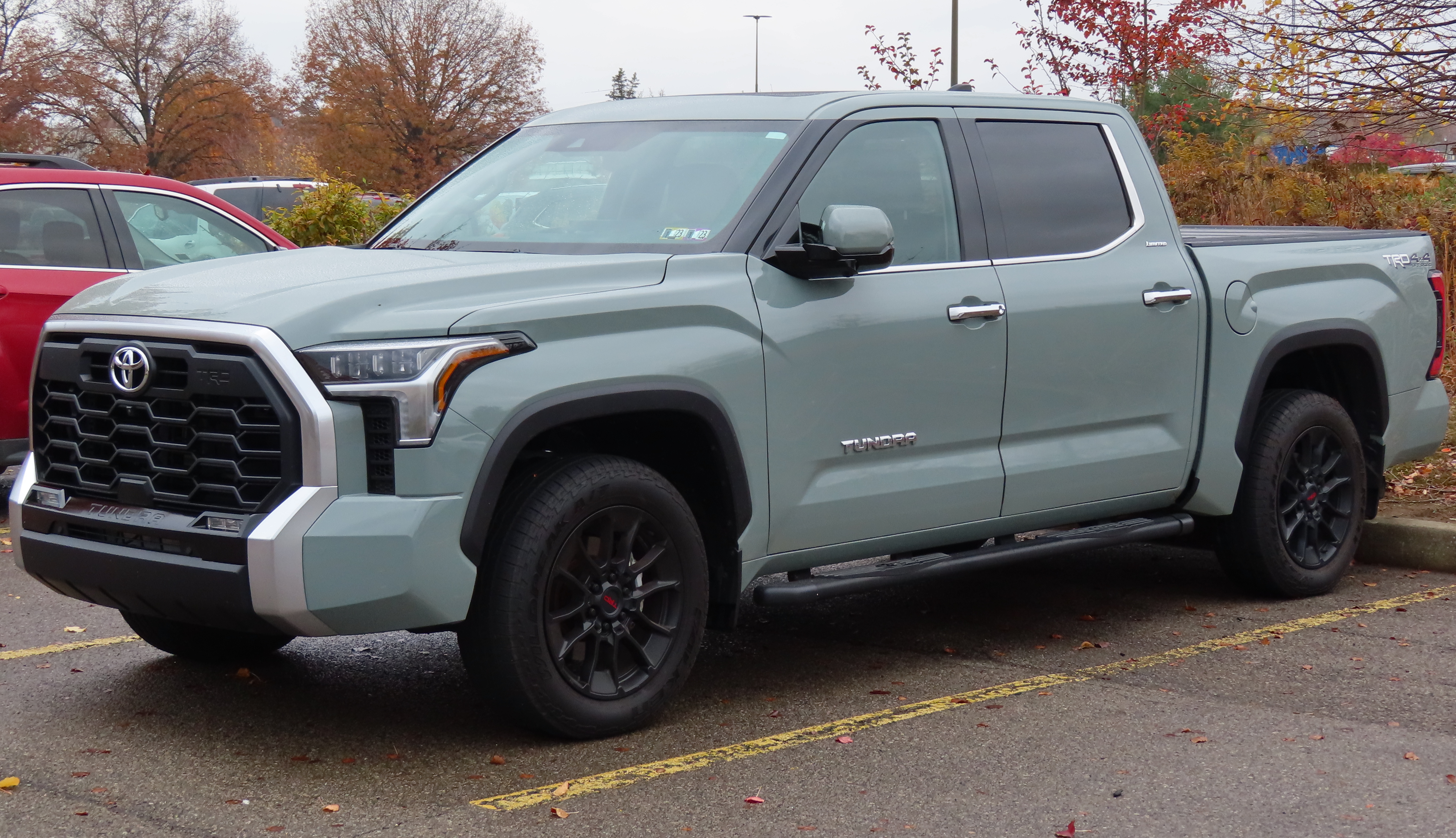
Toyota Tundra
"They still are now, if you can find a good pre-owned one, you're going to pay $24, $25 grand for it, but at that time, they were over $50,000. Now $50,000 for a Toyota Tundra will not get you one."
The Toyota Tundra is a full-size pickup truck. They’re using it as an example of how high used prices can be—so the same budget that might have worked before may not now.
The Toyota Tundra is Toyota’s full-size pickup truck, typically priced and marketed as a work-capable truck with strong demand in the used market. The hosts use it here to contrast how much money it takes to buy a good pre-owned truck.

Toyota 4Runner
"He wants to get a million kilometers on his Toyota 4Runner and he's going to do it. [1614.0s] He's going to do it."
The Toyota 4Runner is a rugged SUV that’s built to last. The host is saying that if you keep up with maintenance, you can rack up a huge amount of miles on one.
The Toyota 4Runner is a body-on-frame SUV known for durability and off-road capability. In this segment, it’s used as an example of a vehicle you can keep running for extremely high mileage if you stay on top of maintenance.
brake fluid flush
"When was the last time your vehicle had a brake fluid flush? Power steering flush."
It’s when you replace the old brake fluid with new fluid. Old brake fluid can pick up water, which can make your brakes feel less strong and less consistent.
A brake fluid flush replaces old brake fluid with fresh fluid. Brake fluid absorbs moisture over time, which can reduce braking performance and contribute to corrosion inside the brake system.
power steering flush
"When was the last time your vehicle had a brake fluid flush? Power steering flush."
This is when the old power steering fluid is replaced with new fluid. It helps the steering system work smoothly instead of feeling heavy or noisy.
A power steering flush replaces the old power steering fluid with new fluid. Fresh fluid helps maintain proper hydraulic pressure and can reduce wear in the steering pump and rack.
manual transmission
"Auto or manual transmission service. Even if it's a shifty, it still needs a service."
A manual transmission is the kind where you shift gears yourself using a clutch. It still needs fluid service so the gears and bearings inside stay lubricated and protected.
A manual transmission is a gearbox that the driver shifts using a clutch pedal and gear lever. It still needs periodic service because the transmission oil can wear out and contamination can accelerate internal wear.
automatic transmission
"So if you have a shifty or an automatic transmission, when, when was the last time they were serviced properly?"
An automatic transmission shifts gears by itself. It still needs periodic fluid service so it can keep shifting smoothly and avoid damage from dirty, worn fluid.
An automatic transmission is a gearbox that changes gears without the driver using a clutch pedal. Like a manual, it relies on transmission fluid, so regular service helps prevent overheating and internal wear from contaminated fluid.
fuel filter replacement
"Number four, when was the last time your vehicle had a fuel filter replacement? If it's an external fuel filter, even the one in the tank plugs up."
The fuel filter keeps dirt from getting into the engine’s fuel system. If it gets clogged, the engine may not get enough fuel and can run poorly.
Fuel filter replacement is the scheduled change of the filter that traps debris before it reaches the fuel system. A clogged filter can restrict fuel flow and cause drivability issues, especially under load.
external oil filter
"If it's an external fuel filter, even the one in the tank plugs up."
An external fuel filter is a fuel filter located outside the gas tank. If it gets clogged, it can limit fuel flow and hurt how the car runs.
An external fuel filter is mounted outside the fuel tank and filters fuel as it flows to the engine. Because it’s in the fuel path, it can clog from debris and restrict fuel delivery.
fuel injection decarbonization
"When was the last time you had a fuel injection decarbonization service performed to your vehicle? That's not just putting a bottle of snake oil in the tank."
This is a cleaning service meant to remove carbon buildup that can form from normal engine use. The idea is to help the fuel system and engine run more smoothly, not just dump random additives in the gas.
A fuel injection decarbonization service is intended to remove carbon deposits from areas related to fuel delivery and combustion. The goal is typically to improve spray/atomization and restore more consistent engine operation, rather than just adding a chemical “bottle” to the tank.
snake oil
"That's not just putting a bottle of snake oil in the tank. That's a maintenance."
“Snake oil” means a fake or overhyped product that’s sold as a cure-all. Here, they’re saying the decarbonization service shouldn’t be confused with a gimmicky additive.
“Snake oil” is a phrase for a product marketed as a miracle fix but with little or no real benefit. In this context, the host is contrasting a proper service with a questionable additive.
decarbonization service
"So a fuel injection decarbonization service will bring the power and performance back to your vehicle and fuel economy all at the same time."
Decarbonization is a cleaning service for your engine. It tries to remove sticky carbon deposits that build up over time. The idea is that a cleaner engine can run better and use less fuel.
A decarbonization service is meant to remove carbon buildup inside an engine. Carbon deposits can reduce airflow and fuel/air mixing, which can hurt power and fuel economy. The host is describing it as a way to restore performance by cleaning combustion-related deposits.

Volkswagen I
"I just can't figure that out. When I was at Volkswagen, I watched people buy the expensive VW Passat and at that time they were big money. They're huge money today."
The Volkswagen ID. Buzz is an electric van-style vehicle. It uses electricity instead of gasoline, and it’s designed to carry people comfortably. The podcast mentions it because it can be expensive to buy compared with what some people expect.
The Volkswagen ID. Buzz is an electric version of the classic “bus” concept, built as a people-moving vehicle with an EV powertrain. It’s discussed in the context of Volkswagen’s pricing and how expensive models can be, which helps explain why buyers might hesitate or question the cost. In a podcast, it’s a good example of how electric vehicles can carry premium pricing.

Volkswagen Passat
"When I was at Volkswagen, I watched people buy the expensive VW Passat and at that time they were big money."
The Volkswagen Passat is a regular family sedan made by Volkswagen. The host is using it as an example of how a car can end up looking really beat up even if it used to cost a lot.
The Volkswagen Passat is a mid-size sedan from Volkswagen. In this segment, the host uses it as an example of a car that can look “expensive” when new but can become heavily damaged and worn over time.
Get the Bugs Off Fast
"Well, your MotorMouth summer tech tip number 13 is entitled, Get the Bugs Off Fast."
This segment is about cleaning bug splatters off your car quickly. The idea is to do it before the bugs dry and start damaging the paint.
This is a “MotorMouth” tip focused on removing bug splatter quickly to prevent paint damage. The host emphasizes acting before bugs bake on and harm the paint’s protective layers.
microfiber towel
"Use a proper bug remover or a microfiber towel and some elbow grease and treat your paint like you treat your grill."
A microfiber towel is a gentle cleaning cloth. It’s used to wipe your car without scratching the paint as easily as rough materials.
A microfiber towel is a soft, tightly woven cloth used for cleaning and drying paint safely. Compared with rough towels, microfiber helps reduce the chance of scratching the clear coat while you remove bug residue.
clear coat
"Don't leave bird droppings or bug goo on your clear coat because it leaves the stain right into the clear coat."
Clear coat is the shiny, protective top layer on your car’s paint. If something acidic (like bird droppings) sits on it, it can burn or stain the surface.
The clear coat is the transparent top layer of a modern car’s paint system. It’s designed to protect the colored base paint from UV rays and minor abrasions, but contaminants like bird droppings can etch into it if left on.
bug goo
"Don't leave bird droppings or bug goo on your clear coat because it leaves the stain right into the clear coat."
Bug goo is the dried mess left by insects. If it stays on the paint too long, it can stain or damage the clear coat.
“Bug goo” is the dried residue from insects that can bond to paint and clear coat. If it’s not removed promptly, it can stain or etch the finish, especially on hot days.
bird droppings
"Don't leave bird droppings or bug goo on your clear coat because it leaves the stain right into the clear coat."
Bird droppings can be acidic. If they sit on your car’s paint, they can damage the clear coat and leave a stain.
Bird droppings are acidic and can chemically etch paint. On cars with a clear coat, they can leave permanent-looking stains if they aren’t removed quickly.
paint finishes
"That's the problem with today's paint finishes."
Paint finishes are the layers that make your car’s paint look glossy and stay protected. Some modern paint setups can get stained if you let bugs or bird droppings sit too long.
“Paint finishes” refers to the way a car’s paint is layered and protected—often including a base color layer plus a protective clear coat. The speaker’s point is that modern finishes can be more vulnerable to staining/etching from contaminants if you don’t clean them promptly.
booster cables
"And if you just grab those booster cables, another can of gas and get that dumped in to our vehicle and give us a boost and get our eight cylinder running on all cylinders, we would really be truly grateful."
Booster cables are thick wires you use to jump-start a car with a dead battery. You connect them to another car so the dead car can start.
Booster cables are heavy-gauge jumper cables used to start a car with a dead or weak battery by connecting it to a running vehicle. They’re a common roadside tool, but they must be used correctly to avoid electrical damage.
eight cylinder
"And if you just grab those booster cables, another can of gas and get that dumped in to our vehicle and give us a boost and get our eight cylinder running on all cylinders, we would really be truly grateful."
An eight-cylinder engine has eight combustion chambers. The host is basically saying they want it to run properly on all its cylinders.
An “eight cylinder” engine has eight cylinders that fire in sequence to produce power. The speaker is using it conversationally to describe getting the engine running smoothly again.
Request an Explanation
Heard something you'd like explained? We'll add it to this episode.
Sign in to request explanations for terms you heard.
Want to learn more?
Browse our glossary for plain-English explanations of automotive terms, jargon, and concepts.
Help improve this episode
See something that's not quite right? Our annotations are AI-generated and can sometimes miss the mark. Click the flag icon on any annotation to suggest a correction.