A fastback roofline means the roof of the car slopes smoothly down to the back, making the car look sporty but sometimes making the back window smaller and harder to see through.
The Volvo C40 Recharge is a small electric SUV that looks stylish and is safe to drive. It can charge quickly and is good for people who want an electric car.
The Chevrolet Corvette is a fast and sporty car made in America. People like it because it looks cool and drives really well, but sometimes it can be hard to see out the back window.
A rearview camera is a small camera on the back of a car that shows you what's behind you on a screen, so you can see better when backing up or parking.
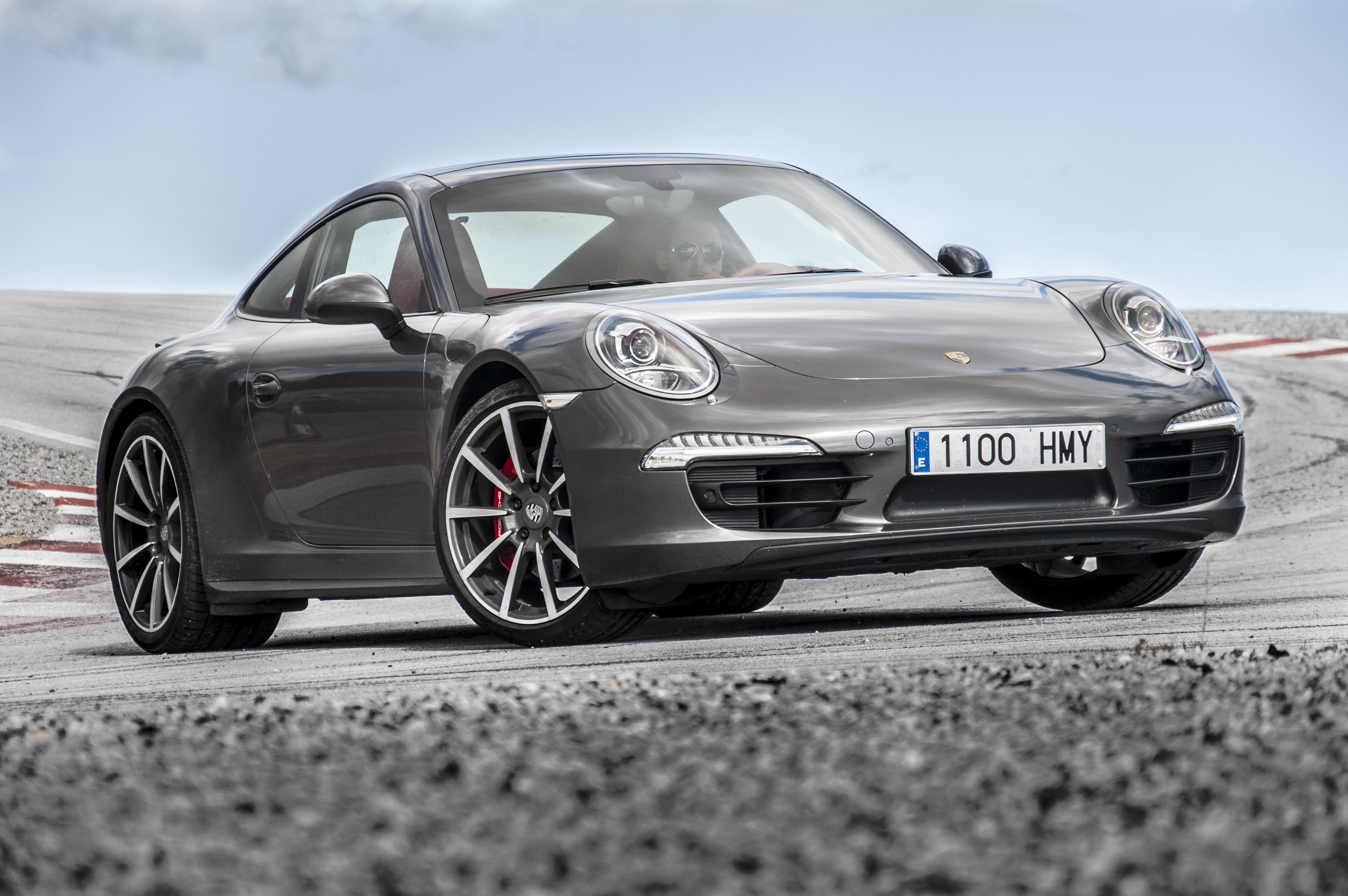
The Porsche 911 is a famous sports car that many people love for how it drives and looks. The 1997 version has some interesting little features, like how the heating and air conditioning work.
The Lincoln Navigator is a big luxury SUV with fancy screens inside. It has a big screen on the dashboard and another touchscreen for things like adjusting the air vents.
The Tesla Model 3 is an electric car that many people buy because it can go far on a single charge and is not too expensive. It helped make electric cars more popular.
Waymo makes cars that can drive themselves without a person controlling them. These cars use computers and sensors to know where to go and avoid accidents.
Instead of using a regular key, you can use your phone to open and start the car. It makes things easier because you don't have to carry a separate key.
Electric cars run on electricity stored in big batteries instead of gas. You charge them by plugging them in, and they don't make smoke or pollution when you drive.
An internal combustion engine is the kind of engine that burns fuel like gas inside the car to make it go. It's what most cars have used for many years.
Home charging means you can plug your electric car in at your house to fill it up with power, just like charging your phone. This makes it easy to keep your car ready to go.
In cities where houses are close together and people park on the street, it can be hard to find places to plug in electric cars. This makes charging more difficult for some people.
Public charging means places where you can plug in your electric car to get more battery power when you're not at home. This helps you drive longer distances.
The Tesla Model S is a fancy electric car that can drive a long way on a single charge and has lots of cool tech inside. It helped make electric cars popular.
The Tesla Model Y is a small electric SUV that can carry more people and stuff than the Model 3. It’s popular because it’s electric and has lots of cool features.
The Nissan Leaf is an electric car that was one of the first you could buy easily. The first models didn’t go very far on a charge and their batteries got weaker after many years.
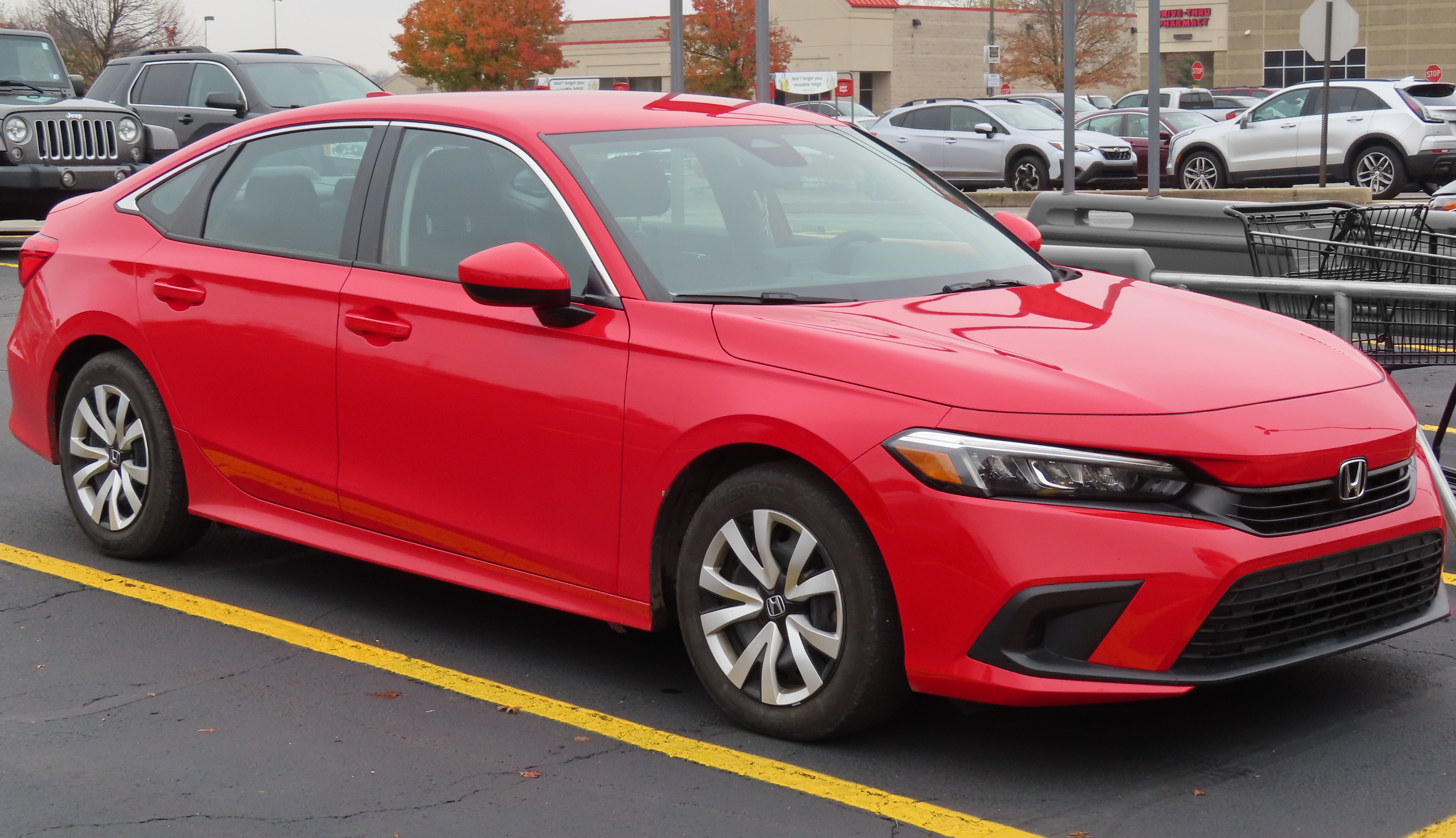
The Honda Civic is a small car that lots of people like because it’s dependable and doesn’t use much gas. It comes in many versions to fit what different drivers want.
The Ford Maverick is a small truck that’s easy to drive and doesn’t use a lot of gas. People like it because it’s good for work and everyday use without being too big.
A plug-in hybrid is a car that uses both gas and electricity, and you can plug it in to charge the battery so it can drive some distance just on electricity.
The Ford Bronco is a tough SUV made for driving on rough roads and trails. It’s a new version of an old favorite that many people enjoy for outdoor adventures.
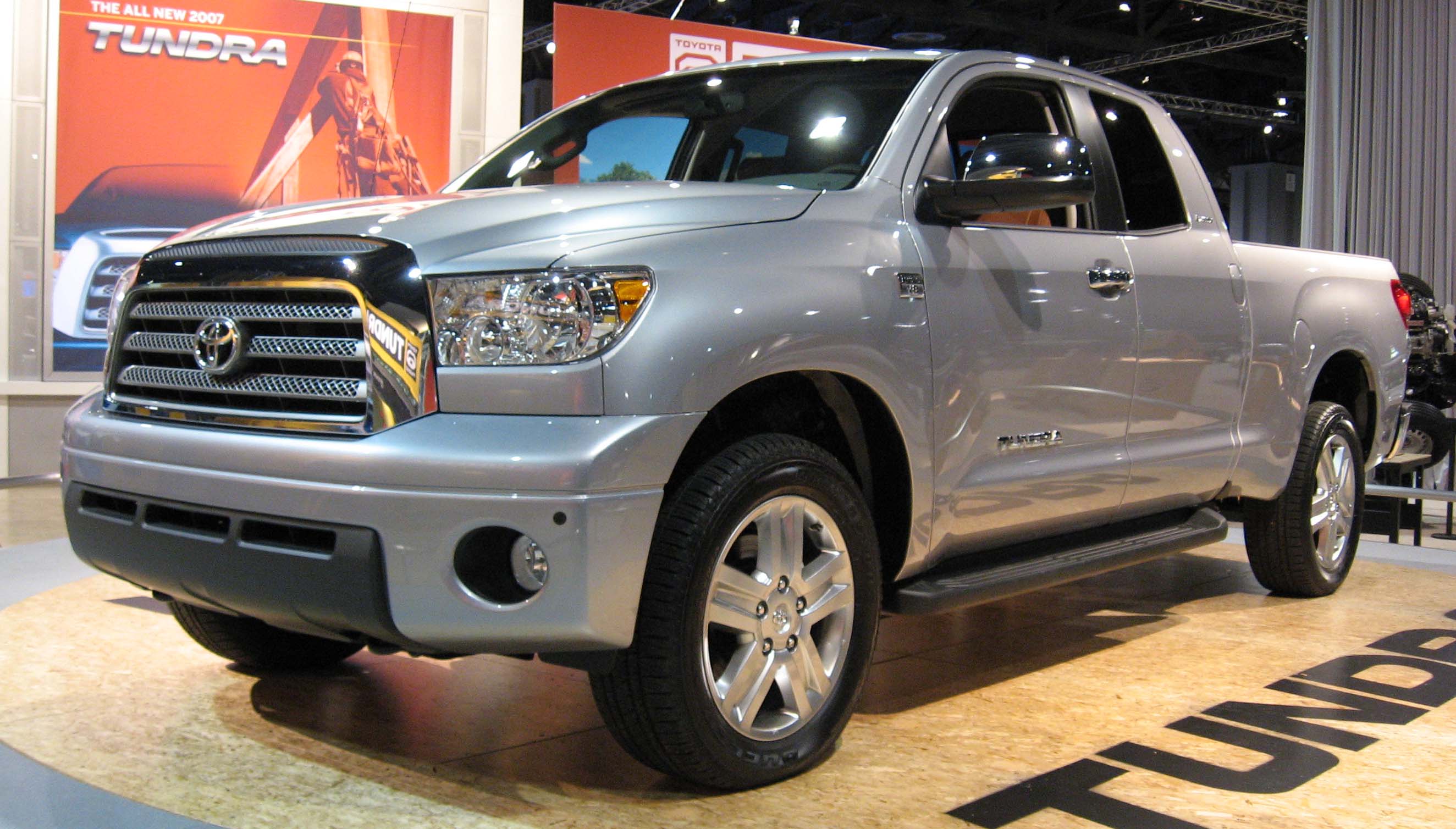
The Toyota Tundra is a big truck that many people trust because it lasts a long time. It hasn’t changed too much over the years but is still very dependable.
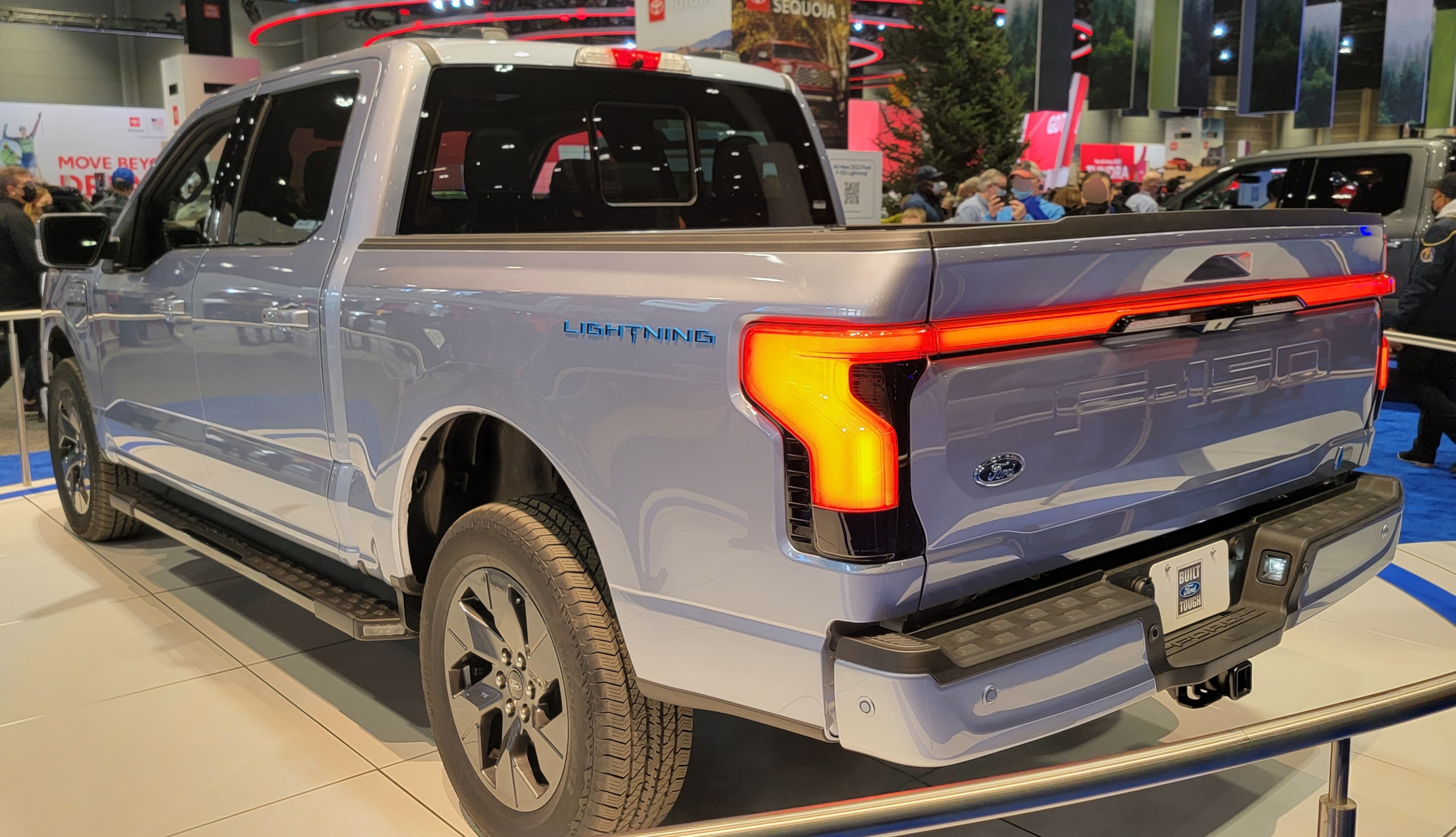
The Ford F-150 is a very popular big truck in the US that can do many jobs. It’s made close to where some people live, which makes it special to them.
LIVE
[SPEAKER_02]: Hey guys, welcome to another fun episode of Tifl Karchet and if you're watching this on YouTube, you'll see that no longer next to me is my son, Sam, my son Tommy, but instead we've got Sam, a boo al-Sam, and did I say that right?
[SPEAKER_01]: Yeah, absolutely good.
[SPEAKER_01]: Bless it, I'm sure I think I'm certainly all enough to be Tommy's father.
[SPEAKER_01]: I'm gonna be with you and I are closer than Tommy and I.
[SPEAKER_02]: So Sam is a long-standing automotive expert.
[SPEAKER_02]: Is that fair?
[SPEAKER_02]: He's a mechanical engineer by training.
[SPEAKER_02]: Sound for client expert.
[SPEAKER_02]: Yeah.
[SPEAKER_02]: And now you work for telemetry.
[SPEAKER_01]: Insights, which is... Yeah, so it's a small firm and based in the Troy area, I'd leave the market research efforts focusing on all kinds of advanced automotive technologies.
[SPEAKER_02]: and he's got a most excellent podcast called Wheelbearing.
[SPEAKER_02]: So I listen to every week.
[SPEAKER_02]: So if you're looking to add to your subscription of great podcast check out Wheelbearing's him Nicole and my friend Robby have a lot of fun reviewing cars talking about news and just kind of sticky children.
[SPEAKER_02]: Yeah, all kinds of stuff.
[SPEAKER_02]: Actually, congrats.
[SPEAKER_02]: Pies, good pies.
[SPEAKER_02]: Good pies.
[SPEAKER_01]: Yeah.
[SPEAKER_01]: What we're eating, you know.
[SPEAKER_02]: Yeah, it's great.
[SPEAKER_02]: But today we're going to be talking about a pretty interesting topic that I think is both near and dear to your heart and my heart.
[SPEAKER_02]: And that is why the hard, hard companies listening to their customers.
[SPEAKER_01]: Um, because they, they, they got into it, the problem is they, they, everybody wanted to be Tesla.
[SPEAKER_02]: Yeah.
[SPEAKER_02]: Let's talk about that.
[SPEAKER_02]: So you just pulled up in the poll star four, which we just had.
[SPEAKER_02]: And I came back from dropping my dial, picking up my dog from the groomer.
[SPEAKER_02]: And I pulled up next to the, uh, [SPEAKER_02]: Polestar for in our long term we just least test them out of why and they're both white which is interesting and it's like it's like everybody is copying Tesla specifically Polestar but they're not copying the right things they're getting the idea but the details are all wrong so let's start with the obvious which is why is there no back window in the Polestar for?
[SPEAKER_01]: The back window are the absence of back windows, absolutely something I'm totally on board with on that card because having driven cars like the Volvo C40 and a lot of other modern cars that have this fast back roof line You can't see anything on the back anyway, like the C40 has the same kind of fast back roof line The window is about, I don't know, six eight inches tall, it's just this tiny little male slot The same thing was the same thing in your cyber truck [SPEAKER_02]: All right, but that sounds like a focus group at Polestar.
[SPEAKER_02]: And I'll give you an example of where I think they got it right.
[SPEAKER_02]: So we have a long term CA Corvette, and you can't see out the back of that either.
[SPEAKER_02]: You cannot see out the back, right?
[SPEAKER_02]: It's got the little because what you're looking at is typical of a mid-engine sports car like this.
[SPEAKER_02]: Yeah, but what you're looking is there's a little slot and then there's the engine and then there is a clear view But it's really tight, but what GM has cleverly done is they have given you the choice of either having a camera or Looking out the back.
[SPEAKER_02]: So I love one color companies give you choice.
[SPEAKER_02]: In other words, you can pick one or the other So if you don't want the camera you can just flick the mirror to regular and you can look out the slit [SPEAKER_02]: And if you do want the camera, then you could, you know, do the camera and I can tell you that the me and Tommy always fight about this because I like the camera, but he hates the camera.
[SPEAKER_02]: So we're always looking back and forth.
[SPEAKER_02]: But I think give people the choice.
[SPEAKER_02]: Don't just stick a blank piece of metal across the back and by the way, I did ask Polestar if you could remove it.
[SPEAKER_02]: because you can see there, there's a bunch of electronics underneath it.
[SPEAKER_01]: There are bunch of electric, yeah, because it does look like there should be a window there.
[SPEAKER_02]: Yeah, and the excuse to give, because I went on the launch of this thing in Spain, is that it gives you more headroom in the back.
[SPEAKER_02]: And actually, it does give you more headroom.
[SPEAKER_02]: Yeah, so I'm not sure, okay, hold on.
[SPEAKER_02]: I'm not sure if that's real or not.
[SPEAKER_02]: So what they may have done is they may have dropped the seat height.
[SPEAKER_02]: Right.
[SPEAKER_01]: I think it's a combination of factors.
[SPEAKER_01]: But yeah, I mean, where the, where the, the crossbar is for the roof at the back is further back than it would normally be true.
[SPEAKER_01]: The, you know, because, you know, they were able to do that because they said, okay, if we're not going to have a window here, we can put this bar, the structural bar back a little bit further and then just put the glass in there.
[SPEAKER_01]: So at your seating position, you know, you are sitting under glass.
[SPEAKER_01]: So it does give you a couple inches of extra clearance there.
[SPEAKER_02]: Yeah, and it does normally the problem with getting rid of the rear windows, it would cut out the light coming into the back of the car, so it would make it in cable like, but with the glass roof, as you can see there, it does give you a, is that the Tesla is the pull star.
[SPEAKER_01]: Yeah, that was very, it is very area in there.
[SPEAKER_01]: It doesn't feel claustrophobic.
[SPEAKER_02]: But it just feels like some designer thought, hey, you know what, this car will be much cooler.
[SPEAKER_02]: This is a sense I get.
[SPEAKER_02]: I kind of feel like what has happened is Tesla has given designers the permission to be their worst.
[SPEAKER_02]: Yeah.
[SPEAKER_02]: Put style ahead of functionality.
[SPEAKER_02]: Absolutely.
[SPEAKER_02]: And we're seeing that in so many different ways.
[SPEAKER_02]: So like the one that obviously you and the Cole and Robby harp on and I've joined you in harping on is the vent controls in the screen.
[SPEAKER_01]: Yeah.
[SPEAKER_01]: To me that is an absolute nonstarter for any car that get into.
[SPEAKER_01]: If I have to go to the touch screen to adjust which direction the air is flowing, and [SPEAKER_01]: It's a fail right there as much as much as I like the design of the pole star four and I like driving it Things like that are just so irritating that I could not bring myself to actually buy it And I think what I figured out is that people fall into two categories those who adjust their events all the time And those who never adjust their events.
[SPEAKER_03]: Yeah [SPEAKER_02]: right, but what ends up happening is once again, if you take away the little manual controls, you're taking away choice, because if you don't adjust your vents all the time, then those vents in the screen are fine.
[SPEAKER_01]: And in fact, you're actually making the system more complicated, because now you've got to have motors and wiring which way they're buried inside the dashboard to control where that airflow is going, rather than just having a little [SPEAKER_01]: Yeah, I mean, there is a cost associated with assembly of manual vets, you know, for all the parts, putting it all together, but those things never fail.
[SPEAKER_01]: I've never had one of those things fail.
[SPEAKER_02]: I have an interesting failure, and it's not the van.
[SPEAKER_02]: So we bought a cheap 9-11, 9-97, and that has this neat trick where when you turn the air conditioner or heat around all of a sudden, a cheap German car is the fact that it's the easiest way to spend a lot of money.
[SPEAKER_02]: Yes, because when I took it and then we just did this video over in classics, when you took it to the local Porsche shop, it does it 18,000 repairs.
[SPEAKER_02]: Yeah, that's not how that the other day.
[SPEAKER_02]: And if it doesn't include this repair, which is it blows like little bits of some kind of degrading, like it's like a maybe sound insulation that comes out of the van.
[SPEAKER_02]: So every time you turn it on, like these little bits of degrading foam can fly at you.
[SPEAKER_02]: What the heck did I just drive through some kind of a dust storm?
[SPEAKER_02]: Yeah.
[SPEAKER_02]: But I was gonna tell you a story.
[SPEAKER_02]: So we went on the launch of the Anonymous, remember?
[SPEAKER_02]: And the thing that I hated about the novelist was the same thing.
[SPEAKER_02]: It had those controls in the screen for the vents.
[SPEAKER_02]: And then we went to a shiki dinner.
[SPEAKER_02]: It was like a steak house.
[SPEAKER_02]: Do you remember this place?
[SPEAKER_02]: Yeah.
[SPEAKER_01]: Yeah.
[SPEAKER_01]: I ripped a small car at a new one for those vents.
[SPEAKER_01]: Yeah.
[SPEAKER_01]: And several other Lincoln people.
[SPEAKER_02]: And so I had dinner with Kamal, who is a designer.
[SPEAKER_02]: And he asked me what I thought of the car.
[SPEAKER_02]: And I said, I like the design.
[SPEAKER_02]: And then I was going to say, but one thing.
[SPEAKER_02]: And then he kind of started talking.
[SPEAKER_02]: And he said, I went to the mat.
[SPEAKER_02]: I'm getting those screen controls.
[SPEAKER_02]: He said, he really had to fight for.
[SPEAKER_02]: And I was like, that's the hell you picked a day out.
[SPEAKER_02]: Really?
[SPEAKER_02]: That's the one.
[SPEAKER_02]: And I felt horrible because I had just been a good friend.
[SPEAKER_02]: And we were really hitting it off.
[SPEAKER_02]: And then I was like, oh, really?
[SPEAKER_02]: Is that the thing you wanted to?
[SPEAKER_01]: Yeah, I've known come all the long time from when I worked for it.
[SPEAKER_01]: Yeah, I like them a lot.
[SPEAKER_01]: He's a great guy, yeah.
[SPEAKER_01]: But yeah, I totally, 110% disagree with them on the events.
[SPEAKER_01]: And especially the way that Lincoln implemented it, because on the not-less and on the new navigator, they have the full-screen pillar of the pillar or display across the top of the dashboard, which is not a touch screen.
[SPEAKER_01]: And it's mounted up the base of the windshield.
[SPEAKER_01]: And then you have a touch screen that is mounted at the bottom of the center stack and it's almost vertical and it's down low and that's the one you use to adjust things like the vents and you know the way where it's mounted and the way it's mounted you actually it's worse.
[SPEAKER_01]: Then if it was up high because you actually have to look down low.
[SPEAKER_01]: Yeah, there it is on the screen.
[SPEAKER_01]: You have to look down away from the road and then you're fiddling around.
[SPEAKER_01]: It's a couple of different swipes and things to adjust those vets.
[SPEAKER_01]: And it's just a dumb design.
[SPEAKER_02]: Yeah, and I'm not I'm not loving that giant screen either.
[SPEAKER_02]: I think this car is built in China and I think that the Chinese love big screens.
[SPEAKER_01]: Yeah, these are very common now in China.
[SPEAKER_01]: These full width displays and [SPEAKER_01]: You know, and also things like the touchscreen control events, apparently in China, they don't adjust their events, I don't know, I guess.
[SPEAKER_01]: But, and also the Electromechanical door latches, but all these things interesting in China, all these stuff's going to be going away starting next year.
[SPEAKER_02]: Yeah, that was also eye-opening when the Chinese government actually stepped in and said to the Ottoman manufacturers no more electrically, you know, controlled door handles.
[SPEAKER_02]: Because the problem with those, of course, is actually, I think a guy died in a Tesla behavior.
[SPEAKER_01]: There have been multiple crashes where there have been fatalities because people could not get the door open after the power was lost.
[SPEAKER_01]: Or either they couldn't get the door open from the inside or people from the outside, if the people inside were [SPEAKER_01]: unconscious or injured people from outside could not get into the car.
[SPEAKER_02]: I think on the model why the the manual open is in front of the button so it's easy to find but in the front door.
[SPEAKER_02]: In the rear doors you have to lift up like a little [SPEAKER_02]: I think it's it's in the buried in the door pocket.
[SPEAKER_02]: Yeah, and you have down low you lift up a panel and then goes on a cable There's a cable that you pull and open them.
[SPEAKER_02]: Yeah, it just seems it just seems like a recipe for Danger yeah, and then of course the other one that I hated which I believe you were talking about this is the yoke [SPEAKER_02]: Yeah, so they're also outlawing the yolk because, and they're doing in a really clever way, right?
[SPEAKER_02]: They're saying that they have to measure the circumference of the strength of the steering wheel.
[SPEAKER_01]: And because at certain positions around the circle, and the yolk steering wheels don't have a top part, those positions don't exist.
[SPEAKER_01]: Since they can't measure the strength of the steering wheel there, then that's by default illegal.
[SPEAKER_02]: Yeah, and so they're going to do away with the yolk.
[SPEAKER_02]: And look, I think a lot of this started with Tesla, and certainly the big central screen started.
[SPEAKER_02]: Not, I mean, many's had central screen, right?
[SPEAKER_02]: But like the way that the industry adopted this was a little bit, I would say, poorly executed.
[SPEAKER_02]: So what I love about Tesla is, let's talk about Tesla for a second.
[SPEAKER_02]: I kind of feel like a lot of automotive journalists are biased against Tesla and I don't want to get into politics because then you're getting into this whole thing with Musk and we don't want to do that But in general, Tesla doesn't give or lend cars to automotive journalists and so I'm always amazed at like how many automotive journalists don't know what Tesla's up to or what good things are doing and then they inherently just go right to the bad stuff And I'm not a Tesla fanboy.
[SPEAKER_02]: There's a lot of bad things the Tesla does [SPEAKER_02]: But there's a lot of good things.
[SPEAKER_02]: Now, give you an example.
[SPEAKER_02]: So we just leased this model y.
[SPEAKER_02]: And this is, I think, six tests of that we've had.
[SPEAKER_02]: Now, we started with the model 3, and then we went to the model x, and then we went to the model.
[SPEAKER_02]: Why and then we went to the cyber truck and probably forgetting some but you have a three performance Yeah, we had a three performance and we had a wide dual motor as well performance But like one of the things that they're doing is full self driving supervised and there's a lot of especially in the automotive community There's a lot of fear and there's a lot of and I heard on your podcast to angst about [SPEAKER_02]: You know, how good is this and how safe is it people are worried about the safety of it and with the cyber truck This is just personal experience It was good until there was these until moments where like I remember I was driving a back from Golden and it almost took out a car It was good, but I haven't had those moments and we've had now four of our staff So time he drove it for a week case drove it for a week and didn't drive it for a week Andre didn't drive for a week and I didn't drive it for a week and then grand had itself drive all the way to Utah
[SPEAKER_02]: And it's gotten really good, and Sam, maybe I'm being naive, but I sincerely believe that computers are better driving than humans, at least I don't think so.
[SPEAKER_01]: I think in, I would say, most situations they are.
[SPEAKER_01]: They don't get tired, they don't get drunk.
[SPEAKER_01]: Yeah, they don't get, yeah, they certainly don't get drowsy, you know, the late night drive.
[SPEAKER_01]: Yeah, and there's a lot of scenarios where they are better, arguably better than human drivers.
[SPEAKER_01]: But, you know, there's the problem with the software is it still, it's still, is not that great at adapting to novel situations.
[SPEAKER_02]: Yeah, there's, he said, must it himself?
[SPEAKER_02]: There's that, like last, maybe it's 0.1% or maybe it's 0.0% but instead last little bit that's the hard part.
[SPEAKER_01]: But the problem is those are the areas where, you know, where anybody will have crashes.
[SPEAKER_01]: Because, you know, when you look at the data, [SPEAKER_01]: You know, the number you tend to hear the most is, you know, human error causes 94 percent of crashes, and that's only partially true.
[SPEAKER_01]: Human error is a factor, usually the last factor in the chain of events in 94 percent of crashes.
[SPEAKER_01]: And actually the reality is the numbers probably a little bit less than that, but and anyway, what that doesn't tell you though is the actual frequency of crashes.
[SPEAKER_01]: The actual frequency of crashes is works out to somewhere about one crash every 300,000 miles or so.
[SPEAKER_01]: Yeah.
[SPEAKER_01]: Reported crashes, police reported crashes, it's about every 500,000 miles, which for an average driver's drives 15,000 miles a year.
[SPEAKER_01]: That's about once every 30 years.
[SPEAKER_01]: Yeah, you crash.
[SPEAKER_01]: So that's an extremely low frequency.
[SPEAKER_01]: Yeah, the humans are really going to drive it.
[SPEAKER_01]: Yeah, we're really going to drive it.
[SPEAKER_01]: Yeah, we don't get enough credit for, you know.
[SPEAKER_01]: for how good we are at this incredibly complex task.
[SPEAKER_02]: I don't know, we're really good at it.
[SPEAKER_02]: But we don't have eyes behind your head.
[SPEAKER_01]: Right.
[SPEAKER_01]: No, and that's absolutely true.
[SPEAKER_02]: We're having that extra situational awareness from the other sensors.
[SPEAKER_02]: So let's talk about an example of that.
[SPEAKER_02]: Because I understand where you're coming from.
[SPEAKER_02]: So I was listening to Spike's car radio just on that podcast.
[SPEAKER_02]: Sometimes.
[SPEAKER_02]: Anyway, they were talking about this incident.
[SPEAKER_02]: This happened like two weeks ago where there was a waymon.
[SPEAKER_02]: It was driving, and there was a double, it was a school zone, and there was a double park car, and this girl came running out.
[SPEAKER_02]: And the waymost slowed down, I think the waymon was doing like 16 miles an hour and slowed down to like six or something.
[SPEAKER_02]: I'm repeating those numbers.
[SPEAKER_02]: and hit the girl the girl thankfully was fine who's okay but everybody's kind of freaking out about the fact that the self-driving and I brought up spikes car radio because they have an attorney person injury attorney on the podcast and he was saying that if that one before jury he could just tear away one new one [SPEAKER_02]: because he was saying a human would know that this was a school zone, and then Wayne will made this case that the car slowed down as quickly as possible in the amount of time.
[SPEAKER_01]: And the car almost certainly responded a lot faster than a human would have when a human saw that, that kid running out.
[SPEAKER_02]: Yeah, and they said the car and the human would see the kid at the same time, basically.
[SPEAKER_02]: Yeah, and then he said things like, well, human would know that there's a school zone, that there are these things, and this is true, that there are kids that may run out, so human might be more attentive or more able to actually perceive what the potential dangers of the situation are.
[SPEAKER_02]: But dude, I used to take my son, Tommy, at the school.
[SPEAKER_02]: And at the same time, a lot of humans were running late to work, a lot of humans were texting, a lot of humans were drinking coffee.
[SPEAKER_02]: So a human may have not been going to speed them.
[SPEAKER_02]: A human may have been distracted, and it goes both ways.
[SPEAKER_02]: Yeah.
[SPEAKER_02]: And that's a part they failed to mention.
[SPEAKER_01]: And, you know, I've been driving around Denver for the last couple of days in the Polestar, and certainly around the central portion of Denver, there's a lot, I mean, there's a lot of streets, a lot of the streets are in a grid pattern, but there's also a lot of streets running at odd angles, and, you know, there's a lot of narrow streets that are two way streets where, you know, it's street parking people don't have driveways, so you've got cars parked all the way down, both sides of the streets, and there's [SPEAKER_01]: barely enough room for two cars to pass each other between those on the two-way street.
[SPEAKER_01]: And I think, you know, I know Waymo has been testing in Denver.
[SPEAKER_01]: I'm not sure where exactly in Denver they've been testing.
[SPEAKER_01]: I haven't seen any.
[SPEAKER_02]: The time we just went to pick up, it's funny.
[SPEAKER_02]: He just went to pick up our fiat that we had at the shop but across the street is a Waymo Depot.
[SPEAKER_02]: Yeah, and they've got the new Chinese cars that they're trespassing.
[SPEAKER_02]: All the zikers, the zikers instead of obviously because zikers don't have that issue where you have to close, have humans close the door.
[SPEAKER_01]: Right.
[SPEAKER_01]: Yeah, I mean, this is something I've talked about for years.
[SPEAKER_01]: They need to scale.
[SPEAKER_01]: They're going to need to move past upfitting conventional cars and actually have some purpose.
[SPEAKER_02]: And the question I have, first of all, let me explain that.
[SPEAKER_02]: So if you want to stop a waymo, and you're using one, just don't close the door, because the thing can't go if the door is open.
[SPEAKER_02]: And then you have to have a human come and actually close the door, but the Zika doesn't have that problem, because it's got self-closing doors.
[SPEAKER_02]: But how come waymo is allowed to import ways, Zika's, which are Chinese build cars, and yet there's 100% tariff on anybody else who's trying to do it.
[SPEAKER_01]: They're paying 100% tariff on those.
[SPEAKER_01]: I've got to lame on it.
[SPEAKER_01]: Oh, really?
[SPEAKER_01]: Yeah, I mean, anybody can import Chinese cars.
[SPEAKER_01]: They just have to pay that 100% sound.
[SPEAKER_01]: But it works out that even with the 100% tariff on that car, because it's designed to be a lower cost vehicle than the Jaguars they've been using.
[SPEAKER_01]: Even with kind of a mini van.
[SPEAKER_01]: Yeah, it's a small minivan.
[SPEAKER_01]: It's similar in size to a four-transit connect.
[SPEAKER_01]: Yeah.
[SPEAKER_01]: And so even with the tariffs on that car, they've reduced the cost of their way-mo driver system.
[SPEAKER_01]: Their sensors and compute so much that it's actually significantly less expensive than the current Jaguar eyepaces that they're using.
[SPEAKER_01]: So they couldn't think of more expensive, but they're, you know, they're also going to be launching Hyundai Ionic Fives into their fleet this year as well, that are built in Georgia.
[SPEAKER_02]: And I also think that this is what's interesting.
[SPEAKER_02]: I also think that a lot of people don't trust full self driving supervised because obviously Tesla has gotten rid of a lot of the redundancy.
[SPEAKER_02]: So they've gone to a purely camera of all redundancy.
[SPEAKER_02]: Yeah, all they were done.
[SPEAKER_02]: I agree, but I was just into an interview with the B.Y.D.
[SPEAKER_02]: Chief technical office or CTO, and initially he said that they wanted redundancy in their system.
[SPEAKER_01]: So they had, I don't know if they had LIDAR, but they had, you know, they had, and they do still have cars that have LIDAR, and they've got ultrasonic and radar.
[SPEAKER_02]: Yeah, but then he came back and he kind of actually did a 180 and he said, a better system is just a camera-based system.
[SPEAKER_02]: So maybe Tesla was ahead of their time.
[SPEAKER_02]: I don't trust Tesla, I'm per se, because I feel like, you know, they're very good at cost cutting.
[SPEAKER_02]: And that's, you, you, so the truth, what's the truth?
[SPEAKER_02]: The truth that a camera-based system actually is better than something with different sorts of sensors and redundancies because of the way the computer can process the information.
[SPEAKER_02]: And we've seen that like with the Volvo with the EX90 right [SPEAKER_02]: And they never got it to work, basically.
[SPEAKER_01]: Well, there was other issues beyond it.
[SPEAKER_01]: There wasn't so much that the LIDAR.
[SPEAKER_02]: I mean, the CPU didn't work with the LIDAR.
[SPEAKER_01]: Well, they're based software platform.
[SPEAKER_01]: They're having a lot of issues.
[SPEAKER_01]: So they were having a lot of problems with their entire software architecture.
[SPEAKER_01]: So it wasn't just the LIDAR software.
[SPEAKER_01]: There was a lot of things that weren't working.
[SPEAKER_01]: And then when they had when there's on the sales of that car were much slower than expected and Luminar R was having all kinds of problems.
[SPEAKER_01]: That was their light arts car, you know, they basically decided to pull the plug on that and decided you know, so we need to focus our efforts out.
[SPEAKER_02]: What's in their binoculars and I think they kept the binoculars a little bit.
[SPEAKER_01]: No, that's going to be, that's going away.
[SPEAKER_01]: So the ones that have been built already, you know, they built, you know, [SPEAKER_01]: some thousands of them with light our sensors on them, but going forward, that'll just go away.
[SPEAKER_01]: Okay, so there won't be like a little bit of a clip here that will have no light or anything.
[SPEAKER_01]: Yeah, there's nothing up on that.
[SPEAKER_02]: It's a little, it's a little pot on top.
[SPEAKER_02]: Yeah.
[SPEAKER_02]: All right, so, let's go back to the topic, we're saying why aren't, I don't make or it's the same thing as their customers.
[SPEAKER_02]: So the thing, I think, the magic in Tesla, and I'm starting to get Tesla fanboy, but there's so much that Tesla does that incorporates so easily into my life.
[SPEAKER_02]: I'll give you a good example of that, and this has been going on since the very first Tesla, phone as a key.
[SPEAKER_02]: Why can't anybody else get phone as a key right?
[SPEAKER_02]: With Tesla, it used to be also sometimes with the early Tesla's that you would walk up to the car and it wouldn't open and then you had to like go your phone, open the app and then it would open.
[SPEAKER_02]: But for the most part, you know, if you're using a Tesla every day, you just walk up to it, it unlocks, it locks, [SPEAKER_02]: So you have to have the actual real key inner pocket.
[SPEAKER_02]: And this is not just BMW.
[SPEAKER_02]: It's all the other manufacturers.
[SPEAKER_02]: Something so like, I'm not saying it's simple, but something that makes your life so much easier.
[SPEAKER_02]: You don't have to walk around with a second set of keys.
[SPEAKER_02]: It's just so nice where you just walk up to the car and you get in and the other thing that Tesla does, right?
[SPEAKER_02]: Is they got rid of the start stop button?
[SPEAKER_02]: Why do you need to start stop button, right?
[SPEAKER_02]: What's the, what's the rate rationale for that?
[SPEAKER_02]: Why don't I just get in the car putting gear and drive away?
[SPEAKER_02]: And then you park it.
[SPEAKER_02]: Close the door, walk away, it locks, done.
[SPEAKER_02]: This is so simple.
[SPEAKER_02]: With all the other cars I have, I have to fuss with the key.
[SPEAKER_02]: I have to pull it out, I have to either use a proximity sensor, I have to use a door handle.
[SPEAKER_02]: This just seems like this is the way it should be.
[SPEAKER_01]: Yeah, and, you know, I have been very critical of a bunch of things that Tesla has done, but I've, you know, I also give them a lot of credit, you know, both for really legitimizing the idea of the EV, you know, saying, hey, this is really something that can be practical for.
[SPEAKER_01]: really for most people, for most drivers.
[SPEAKER_01]: Even if they don't realize it yet, it's you know, for most drivers and EV is a perfectly good solution.
[SPEAKER_01]: And, you know, so they've done that, they've also, you know, they were the first, you know, they pioneered the idea of the software to find vehicle.
[SPEAKER_01]: And because they were starting from scratch, they built, you know, they didn't have an existing legacy platform to build up from.
[SPEAKER_01]: So they were able to build up both the hardware, the electronic architecture, their vehicle, and their software architecture, hand in hand from the beginning.
[SPEAKER_01]: And, you know, they've had some issues, but for the most part, they've done it really well.
[SPEAKER_01]: And, you know, they, [SPEAKER_01]: They brought in, you know, they hired people coming from the tech industry that were familiar with the modern ways of software development, which is something we didn't have any auto industry, I mean the auto industry been doing software since the 1970s.
[SPEAKER_01]: It's not like the, the, the, [SPEAKER_01]: You know, legacy automakers didn't know how to do software, but they were doing different kind of software in a very different way that wasn't designed to be updated, and the pieces of software in the car were not designed to work together on a common platform, and so that's what the rest of the industry has been struggling with is how to do it the way Tesla does.
[SPEAKER_01]: In China, [SPEAKER_01]: You know, what we've seen in China is you've got this, you know, dozens of, actually hundreds of new automotive brands that are sprung up in the last eight nine years that basically did the same thing as Tesla.
[SPEAKER_01]: They started from scratch without a legacy platform.
[SPEAKER_01]: And they built it up the same way.
[SPEAKER_01]: And so this is what the rest of the industry is having to deal with.
[SPEAKER_01]: And so this is why, for example, now you're seeing what the Ford [SPEAKER_01]: They struggle to do that with the Maki and the Lightning and their next generation stuff that they're working on and now canceled and they basically started essentially started into company and hired all new people to do it the way that Tesla and the Chinese and other automakers.
[SPEAKER_01]: You think they'll manage it or you think at some point the old Detroit ways will sneak back in.
[SPEAKER_01]: I think that for now, they'll be okay.
[SPEAKER_01]: The question is, can they execute on it?
[SPEAKER_01]: I think what they're from the conversations I've had with them, the stuff that they're talking about is absolutely on track, they're doing the right things.
[SPEAKER_01]: Can they actually execute on it?
[SPEAKER_01]: we'll see.
[SPEAKER_01]: But the other problem long term that they haven't really given me an answer on is, you know, we've seen automakers in the past try to essentially start up a new company within the company to do things in a different way.
[SPEAKER_01]: And you know, I mean, the classic example that was Saturn.
[SPEAKER_01]: Okay.
[SPEAKER_01]: You know, GM started Saturn in the late 1980s.
[SPEAKER_01]: as essentially a completely new automaker part that's owned by GM but was completely separate.
[SPEAKER_01]: And they got to do everything themselves, they built a new factory, they built a new vehicle platform, and everything else, and set up their own dealerships.
[SPEAKER_01]: And a lot of it worked really well, but what they never figured out was how to then take the lessons from Saturn and incorporate that into the rest of the company.
[SPEAKER_01]: And GM, our Ford kind of did that with the Team Medicine project that eventually spawned the Machi and the Lightning and the E-transit.
[SPEAKER_01]: But again, they couldn't figure out how to transform our transfer that back into the rest of the Ford.
[SPEAKER_01]: And so now they're doing it all over again.
[SPEAKER_01]: And so I don't know, we'll see what happens.
[SPEAKER_02]: I'll give you an example, which I just did in the way here.
[SPEAKER_02]: So we had [SPEAKER_02]: That's the trial for full self driving in the model I and we were basically using it to drive everywhere So we wanted to see if we could drive 2,000 miles without and we managed it was like 99% which is pretty good And then it went away at the end of the month and this is the first time I drove the Tesla since then So I'm driving it and I noticed that you know if I kind of veer off into you know the shoulder It correct so basically lane departure warning, so now all of a sudden I have lane departure warning [SPEAKER_02]: Now, in every car that I get from every other manufacturer, Sam, I'm not joking, especially Toyota.
[SPEAKER_02]: I can spend 15 minutes trying to find how to turn that off.
[SPEAKER_02]: Sometimes there's a button and sometimes, you know, it's buried 14 menus into the software.
[SPEAKER_02]: With the Tesla, I found it in like two seconds.
[SPEAKER_02]: I went to autopilot, full-suff driving toggle off.
[SPEAKER_02]: Yeah.
[SPEAKER_02]: That's simple.
[SPEAKER_02]: And maybe it's one of these cases when we're doing software easily is hard.
[SPEAKER_02]: Oh, it is, it's hard to design a good software interface.
[SPEAKER_02]: Yeah, but I mean, I found it immediately turned it off all was good in the world.
[SPEAKER_02]: And then the other point you made was I think Tesla was one of the only companies that was allowed to go into China.
[SPEAKER_02]: without having a joint venture.
[SPEAKER_02]: And I was doing some research on that, and I was listening to some podcast, and then I kind of stumbled upon the, I think she was a Chinese correspondent for AP.
[SPEAKER_02]: And she said the reason they did that was that the Chinese government has the same where if you throw a catfish into a pond with regular fish, all the other fish start to swim faster.
[SPEAKER_02]: And that was the thinking why they allowed Tesla to go into China because it allowed [SPEAKER_02]: them to create competition in that space and all the other Chinese companies start as from faster and then of course that created competition and better carcass for the Chinese.
[SPEAKER_01]: Well the other thing that that happened in China is I don't know if you've read the book Apple in China.
[SPEAKER_01]: I have no it's it's a really interesting book came out last year but one of the things that they talk about you know when Apple started doing manufacturing in China.
[SPEAKER_01]: They worked, they had a partner in Foxconn that set up factories in China, and they hired a lot of Chinese engineers, a lot of Chinese technicians, and people working in the factories, and they had to train those people, and so what happened was, because it was some oversight from the government, you know, [SPEAKER_01]: From time to time, some of those engineers and designers ever in, they would leave the company and they would go work somewhere else.
[SPEAKER_01]: And what ended up happening after a few years is you had this diaspora of people who worked at Apple or worked at Foxconn with Apple.
[SPEAKER_01]: And they started up companies like Huawei and Xiaomi, and all these other companies.
[SPEAKER_01]: So they were trying for Apple.
[SPEAKER_01]: They learned from Apple.
[SPEAKER_01]: And they took those lessons and did startups.
[SPEAKER_01]: The same thing happened in the auto industry.
[SPEAKER_01]: you had Chinese people that were working at Tesla, working at some of the other foreign companies in China, and then they would after two, three, four years, they would leave and they would go start up and that's where you get all these startups like Neo and Leonardo and Xiaopang and all these others.
[SPEAKER_01]: they learned from Tesla and others, especially particularly from Tesla, but from others as well in the manufacturing side, and they've been able to take that and start sprinting forward.
[SPEAKER_02]: So before, do we have some questions called?
[SPEAKER_02]: Okay, let's answer the questions.
[SPEAKER_02]: Before we get, let's see what we got here.
[SPEAKER_02]: I put my glasses on.
[SPEAKER_02]: So, Ted, peace has never put your life in the hands of something that doesn't have an inherent sense of self-preservation.
[SPEAKER_02]: I say this is someone who has good friends, who work in the self-driving car business.
[SPEAKER_02]: What do you say to that?
[SPEAKER_02]: Yeah, not that kind of thing.
[SPEAKER_02]: I don't don't find airplane because that's a normal pilot half the time.
[SPEAKER_01]: Yeah.
[SPEAKER_01]: Well, you know, the idea of, you know, at the core of, you know, what any of the, any kind of automated system should be, should have, is it should have safety at its core, that, you know, what you don't want to do is crash.
[SPEAKER_01]: That, that's got to be rule number one.
[SPEAKER_01]: You know, no matter how you do everything else, you know, your ultimate goal is to not hit anything.
[SPEAKER_02]: So the second one is from Don and he says I feel the door handle is getting ready to chop your fingers off in that pole star.
[SPEAKER_02]: Can you feel that way?
[SPEAKER_02]: It's like the Tesla doesn't pivot.
[SPEAKER_01]: Yeah, it just pops straight out like the model asks and the model likes dead.
[SPEAKER_01]: I haven't had that experience.
[SPEAKER_01]: I've was watching a video last week.
[SPEAKER_01]: Jason Torgentski.
[SPEAKER_01]: Yep.
[SPEAKER_01]: He was showing it, you know, kind of closing in on his fingers.
[SPEAKER_01]: I've never had that happen to me with a pole star, but that doesn't mean, I mean, it's certainly possible.
[SPEAKER_01]: And you know, it's one of the problems with these types of door handles.
[SPEAKER_02]: And then he says, why can't we have normal door handles and electric cars that only adds complexity?
[SPEAKER_02]: I can't wait for these weird electric cars quirks to go away.
[SPEAKER_02]: And this is this is exactly what we're talking about.
[SPEAKER_02]: We're in a time when the car companies seem to be oblivious to what their customers want or are not listening to their customers.
[SPEAKER_02]: I remember there's that famous saying, right, Steve Jobs said, you don't want, you can't give customers what they want because they don't know what they want.
[SPEAKER_01]: And I remember, well, because customers, [SPEAKER_01]: They're coming from what they know, what they've experienced before, and it's probably a popular but there's the classic story of Henry Ford, why don't you ask customers what they want, if you ask customers what they want, they want to faster horse.
[SPEAKER_02]: Yeah, and so, but they, you know, they went a completely different direction from that and the same thing, you know, what Steve Jobs said is, you know, maybe I, I don't want to like, you know, be too prideful here, but I'll give you three examples of modern technology that I knew that I wanted before I wanted it.
[SPEAKER_02]: So before the iPhone came out I had these crappy flip phones and I thought I just want a phone that has internet connectivity that can text, that I can check stuff on, you know like stocks, that I can potentially do live phone calls on FaceTime.
[SPEAKER_02]: I mean I knew this stuff was possible and yet I was very frustrated for like five years.
[SPEAKER_02]: I went through all these different phones that had none of that right.
[SPEAKER_02]: They had the crappy texting where you had to know like the numbers and then Apple comes out with basically a small computer and I'm like yeah that's exactly what I wanted.
[SPEAKER_02]: Yeah, number two, like the other example, you know, I struggle with this all of the time.
[SPEAKER_02]: I'm like internet, especially like the nice to the whole tell the Cr- I just had this happen to me and man, the nice to the whole tell the worst internet.
[SPEAKER_02]: I'm like, why can't we have satellite based internet?
[SPEAKER_02]: It doesn't seem like that be such a difficult thing in sure enough, you know, Steve Jobs.
[SPEAKER_02]: That's our C++ comes along and creates SpaceX, right?
[SPEAKER_02]: Which does that with Starlink.
[SPEAKER_02]: And then the other thing I thought to myself, why are we dumping rockets into the ocean, can't these things land themselves?
[SPEAKER_02]: I think most people inherently have these ideas, but they're not in the world of the technology world.
[SPEAKER_02]: So I'm sure that they're experts in there, that they're thinking of this, but this is not seem like any kind of black magic where you think to yourself, wouldn't it be great if instead of dumping a rocket into the ocean, it could actually land itself?
[SPEAKER_02]: Yeah.
[SPEAKER_02]: You know, I think I wanted these things.
[SPEAKER_02]: I just didn't know how to go about accomplishing them.
[SPEAKER_01]: And yeah, to be fair, for a long time, the engineers didn't know how to accomplish it either.
[SPEAKER_01]: Right.
[SPEAKER_02]: But the idea is not, it's not brain surgery.
[SPEAKER_01]: Yeah.
[SPEAKER_01]: I mean, the idea of reusable spacecraft, you know, goes back to the 1960s.
[SPEAKER_01]: Yeah, sure.
[SPEAKER_01]: But, you know, they, at the time, they didn't have the technology to do it.
[SPEAKER_01]: They didn't have the computer control systems to do it, the software to do it, or the type of propulsion systems to do it.
[SPEAKER_01]: And then it got like with NASA and particular, you know, traditional aerospace, they, you [SPEAKER_01]: got stuck in a pattern of you know this is what we know works and you know because of the safety issues we you know we want to make sure you know we're very they became very risk averse and so especially after they had some crashes and explosions they became much more risk averse and you know [SPEAKER_01]: both good and bad, you know, SpaceX was much less risk-averse, you know, and that's that's the way.
[SPEAKER_01]: They're willing to, you know, iterate more, go through more changes.
[SPEAKER_01]: They're willing to break a lot of eggs.
[SPEAKER_02]: Blow it up, yeah.
[SPEAKER_02]: Which one can argue is not good.
[SPEAKER_02]: Yeah.
[SPEAKER_02]: Especially those eggs or humans.
[SPEAKER_01]: Exactly, so far they haven't done that egg breaking with humans, which is part of why they NASA just announced change to the Artemis program, they're pushing back, actually landing people on the moon because SpaceX was supposed to provide the moonlander based on the starship and that still hasn't gotten into orbit.
[SPEAKER_02]: Yeah, he's blowing up.
[SPEAKER_02]: And I think we're doing, you know, tremendous environmental damage every time he does.
[SPEAKER_02]: Yeah.
[SPEAKER_02]: So let's go back to cars.
[SPEAKER_02]: I kind of feel like the manufacturers have put themselves really far out on the limb and are in a really dangerous situation.
[SPEAKER_02]: First, let's go back to our topic.
[SPEAKER_02]: They're not listening to customers.
[SPEAKER_02]: I think [SPEAKER_02]: From the comments I read on our videos from, you know, seeing what people are telling me when I meet them in person, everybody hates screens.
[SPEAKER_02]: And yet, you know, with, like the Notalists, they're not just doubling down on screens or tripling down on screens.
[SPEAKER_02]: And BMW just did this crazy ass thing where, you know, they made the entire front windshield of screen, basically.
[SPEAKER_02]: all the base of the ones you're the base of the windshield, but it feels like they're not listening to what their customers want and they're putting themselves in a position where it's not going to be hard for somebody to come along and listen to the customers and kind of undercut them on either on price or on [SPEAKER_02]: uh... on what people want and i think that's that's the first part of this equation so our manufacturer is our listing secondly for some reason our government has doubled down on all technology because that's facet internal combustion is all technology there's this famous like youtube video where the guy says imagine flip things around backwards right imagine if all cars have been electric
[SPEAKER_02]: And in the early 20th century, most majority of cars were.
[SPEAKER_02]: Well, let's say that's what we were living.
[SPEAKER_02]: Let's see that today we're all driving electric cars.
[SPEAKER_02]: And then somebody comes at an advanced internal combustion engine.
[SPEAKER_02]: Yeah, they take your nuts, but yeah, what'd you do this?
[SPEAKER_02]: Yeah, wait, if they say it's noisy, it smells.
[SPEAKER_02]: It could kill me if I leave the garage door closed.
[SPEAKER_02]: carbon dioxide?
[SPEAKER_02]: What are you thinking?
[SPEAKER_02]: Yeah, exactly.
[SPEAKER_02]: And yet our industry and our government has doubled down on this technology and look, I want to give people choice, I want to give people the ability to choose what they want, but at some point I can't help but feel that under most circumstances electricity is a better way to power car for most people.
[SPEAKER_02]: It's just just easier.
[SPEAKER_02]: I mean, just starting with the fact that your house is your gas station.
[SPEAKER_02]: My wife and I know journalists do this where they go to their wives.
[SPEAKER_02]: But assuming you could park off street.
[SPEAKER_01]: Yeah, exactly.
[SPEAKER_01]: Which, as I was talking about.
[SPEAKER_01]: Carbon brothers have issues.
[SPEAKER_01]: Yeah.
[SPEAKER_01]: Well, even homeowners, like I say, in a lot of older cities, like in Denver, you got cars lining to street.
[SPEAKER_01]: But now both sides, because you've got these houses that are right next to each other, there's no driveways.
[SPEAKER_01]: So charging an EV in a place like that would be much more complicated.
[SPEAKER_02]: Yes, granted, but then now we're building out chargers at a pretty stunning rate, and so public charging is becoming much more of a doable thing.
[SPEAKER_02]: Yeah.
[SPEAKER_02]: So there's just a lot of pluses that electric cars have.
[SPEAKER_02]: And finally, we were there like, I think two years ago, where we were trying to, we bought a Tesla Model S and old one.
[SPEAKER_02]: to show how much longevity the batteries have.
[SPEAKER_02]: That's one of the biggest fears of course that people have is that they worry that the batteries like your phone are going to go bad after a year or two.
[SPEAKER_02]: But now basically the statistics are out and you lose like 1%.
[SPEAKER_02]: Yeah, for a year, what should you do about it?
[SPEAKER_01]: Early first generation Nissan Leaf.
[SPEAKER_01]: Your battery is going to last 10, 15 years easily and have most of its capacity after that time.
[SPEAKER_01]: Every new EV has got 100,000 mile warranty on that battery.
[SPEAKER_01]: So, if it does, you know, the classy does drop off, you take it in, they're going to replace it for you in a charge.
[SPEAKER_02]: And it's funny because I listen to another podcast, I was listening to me podcast probably, which is this guy in Texas, there's not such thing as listening to me.
[SPEAKER_02]: But I can't really fair enough.
[SPEAKER_02]: And he's called the car pro, and he, I feel like he hates electric cars, and so he recommends to it as to everybody because for him value and reliability are the keys.
[SPEAKER_02]: But if you want reliability, get yourself an electric car.
[SPEAKER_02]: Seriously, obviously there are issues that you have, and that you wish to talk about your issues.
[SPEAKER_02]: So what happened with your car?
[SPEAKER_02]: Because it broke itself, so let's take a step back.
[SPEAKER_02]: They can break, if they go bad, they go bad in a really bad way.
[SPEAKER_01]: OK, so my wife and I last year, we bought a Kia EV6, used one, low mileage, and Hyundai Motor Group, so that's Hyundai Kia in Genesis.
[SPEAKER_01]: They've had an issue with what's called the integrated charge control unit.
[SPEAKER_01]: on those vehicles, and they would, unfortunately, fail sometimes, and the way it would fail is that it would, a fuse would blow, and it would not be able to charge the 12-volt battery, because all these cars still have a low voltage battery to run all the, you know, the lights and the gauges and the computers and all that.
[SPEAKER_01]: That's a string of the way from there.
[SPEAKER_01]: Yeah, well, I mean, but they still, I mean, they're still doing 48 volt, which is still a low voltage system.
[SPEAKER_01]: So you still have the separate circuit.
[SPEAKER_01]: And basically, you don't have like high voltage headlights.
[SPEAKER_01]: Right.
[SPEAKER_01]: Nobody's got headlights that run at 400 volts or 800 volts.
[SPEAKER_01]: So, you know, but, you know, forward on their new UAVs doing what Tesla did on the Sabritruck going to an all 48 volt system.
[SPEAKER_01]: But anyway, when the ICCU fails, the 12 volt battery won't charge.
[SPEAKER_01]: And then the computers and everything died.
[SPEAKER_01]: And so back in December, before we bought the car, I checked the recall site that it's a recall site.
[SPEAKER_01]: Put in the VIN number and said, hey, does this have any open recalls on it?
[SPEAKER_01]: So no, you know, it's all checked out.
[SPEAKER_01]: As it turned out, you know, for the recall that Hyundai and Kia had on these things, they would first do an inspection, make sure everything was okay.
[SPEAKER_01]: It would be okay.
[SPEAKER_01]: It had been suspected twice and no problems.
[SPEAKER_01]: Until you bought it.
[SPEAKER_01]: Until a month and a half after we bought it, and then my wife was about two blocks from home, the electric system morning like came on, and you know, when in the turtle mode, she got it to the garage, [SPEAKER_01]: You know, when I got home, I figured, okay, I'll try and get it to the dealer, which is about a mile and a half away.
[SPEAKER_01]: I got about two blocks and the 12 volt went completely dead and I ended up getting it towed to the dealer.
[SPEAKER_01]: They replaced the ICCU, don't charge, because it was under warranty, it was a recall.
[SPEAKER_01]: It took two days, but we haven't had a problem since.
[SPEAKER_01]: And, you know, they've got a redesigned version of that ICCU, which [SPEAKER_01]: It looks like there are no longer having problems with the updated version of it, but if you have an older one, and to be fair, H&M out of group is not the only company having problems with 12 volt batteries.
[SPEAKER_01]: Oh, Nicole, I was about to say thank you.
[SPEAKER_01]: The closer the Jeep lagging your ass.
[SPEAKER_02]: Oh my god, if you guys want to listen to an incredible story, go back to wheel bearings and find the episode where Nicole talks about.
[SPEAKER_02]: What happened when our car died at the airport like for the third time I think yeah, I think I was the third time It's totally tribal basically smashed it on the little ballards giving out of the airport Yeah, oh my god, you could write a book on it.
[SPEAKER_02]: That was incredible Nicole no wonder on Zach No, no, no, no because the thing like brick itself multiple times.
[SPEAKER_01]: Yeah [SPEAKER_01]: But to be fair forward, even Tesla and Rivian have had problems with the 12-volt dying.
[SPEAKER_01]: Yes.
[SPEAKER_02]: So, you know, it's... To be fair, Solantus has not had a good record with their EVs.
[SPEAKER_02]: No.
[SPEAKER_02]: Including the the the jeeps.
[SPEAKER_02]: Yeah, the plug and the plug and the hybrids have had a lot of problems.
[SPEAKER_01]: Yeah.
[SPEAKER_02]: A lot of recalls.
[SPEAKER_02]: So I could see why people to be fair would be very gun shy about getting one of the Solantus products.
[SPEAKER_01]: Yeah.
[SPEAKER_01]: But apart from that, they are generally very reliable.
[SPEAKER_01]: You know, there's not a whole lot that can break.
[SPEAKER_01]: And you know, a lot of fuel moving parts.
[SPEAKER_01]: Yeah, you don't have to take it in for oil changes.
[SPEAKER_01]: You know, change a cabin air filter every 12 or 20,000 miles, whatever, you know, the wear items like tires and life or blades and things like that, you have to replace obviously.
[SPEAKER_01]: But the mechanical parts are generally pretty reliable.
[SPEAKER_02]: Yeah, and of course now we're entering an arrow with plug-in hybrids where we're carrying around two power trains.
[SPEAKER_02]: We'll see how that comes out.
[SPEAKER_02]: Yeah.
[SPEAKER_02]: I'm curious to see if so far the only one.
[SPEAKER_02]: Well, the vault was kind of the first right.
[SPEAKER_02]: It was a pioneer and then BMW i3 came along.
[SPEAKER_01]: Yeah, so E-Rabs.
[SPEAKER_01]: Yeah, extended range E-V. Yeah, but those are actually simpler than a plug-in hybrid.
[SPEAKER_01]: Yeah, so plug-in hybrid is basically a hybrid with a bigger battery, more powerful motor.
[SPEAKER_01]: And, you know, everybody knows how to make hybrids make those pretty reliably.
[SPEAKER_02]: Oh, five, like, I was going to jump in here.
[SPEAKER_02]: I figured out something that was in this podcast a lot of older people don't understand that you don't have to [SPEAKER_02]: plug-in and plug-in hybrid and the reason for that I figured out is because there's a plug-in hybrid.
[SPEAKER_02]: The two words in order, people think when you say plug-in hybrid, that they have to plug-in the hybrid.
[SPEAKER_02]: As opposed to, it's the exact opposite, you never have to actually plug it in.
[SPEAKER_01]: But if you don't, then you're carrying around several hundred pounds of dead weight.
[SPEAKER_01]: Yeah, which is what most people do.
[SPEAKER_01]: Yeah, which is unfortunate, you know, if you're not going to plug it in, don't buy a plug at hybrid.
[SPEAKER_01]: Yeah.
[SPEAKER_01]: But, you know, e-refs are mechanically a lot simpler, because the engine's just driving a generator, and, you know, so it's an EV with an on-board generator.
[SPEAKER_01]: And so those are, those should actually do better than the plug-in hybrids.
[SPEAKER_02]: So my my supposition here is I think we're living in a very dangerous time for auto industry because they've doubled down on old technology and right now of course with the trumpet administration that seems to be the way to go, but I worry that [SPEAKER_02]: two, three years from now, the pensions that it comes swimming in back very hard the other way.
[SPEAKER_01]: It might be more like two to three months based on what just happened this weekend.
[SPEAKER_02]: Yeah, yeah, I said.
[SPEAKER_01]: Well, oil prices spiked up this morning.
[SPEAKER_01]: That's a good point.
[SPEAKER_01]: And gas prices could be on the way up in the coming days.
[SPEAKER_01]: These are predicting $100 a barrel, which could be pretty, uh, [SPEAKER_01]: Yeah, so then you're looking back at, you know, four to five dollar thick gallon gas.
[SPEAKER_02]: And then you've got this other dynamic.
[SPEAKER_02]: You're going to see a lot of EVs on the market in the next coming months.
[SPEAKER_02]: We actually have one of those ourselves.
[SPEAKER_02]: We least have a leaf for two years.
[SPEAKER_02]: Which I saw outside.
[SPEAKER_02]: Yeah, yeah.
[SPEAKER_02]: And all those are going to come back now.
[SPEAKER_02]: It's been 300,000 cars apparently are coming back this year from off leases.
[SPEAKER_02]: And so there'll be a lot of, I'm guessing, relatively inexpensive and affordable EVs out there.
[SPEAKER_01]: Yeah, and that's going to be real interesting to watch, because you're going to have this flood of off-lease EVs that are going to be, you know, relatively cheap, certainly a lot cheaper than they were new.
[SPEAKER_01]: Yeah.
[SPEAKER_01]: And that's why they've been expensive.
[SPEAKER_01]: That's why my wife and I bought a UZV6.
[SPEAKER_01]: Yeah.
[SPEAKER_01]: We got an EV6 all-wheel drive wind model with 13.5,000 miles on it for $27,000, which is half the original sticker price.
[SPEAKER_01]: And so you're going to see all these awfully CVs coming showing up on used car lots in the second half of this year.
[SPEAKER_01]: And so I think a lot of people are going to look at those, especially if gas prices are out and say, hey, that's a really interesting idea.
[SPEAKER_01]: I think I'm going to get one of these.
[SPEAKER_01]: And when they experience and they spend time with them, the vast majority of people that buy an EV, some people go back to a gas car.
[SPEAKER_01]: But most people that 80 to 90% of people that buy an EV, [SPEAKER_01]: end up sticking with it.
[SPEAKER_01]: And so then the next time that you're shopping for a car, you know, by the time they're in the market for another replacement, there's going to be more affordable EVs in the market.
[SPEAKER_01]: And so I think longer term, that's actually going to help the EV market.
[SPEAKER_02]: Yeah, I'm with you on that one.
[SPEAKER_02]: I think that, uh, [SPEAKER_02]: What's happened is that we could be seeing like a Henry Ford Model T kind of moment We're finally there'll be a four because people always are we need affordable EVs right then the only one that's been affordable is a bolt sort of kind of and the leaf but that had it's all on the shoes But I'll give you an example.
[SPEAKER_02]: So we have a girl here Mary who worked here for a year She was a videographer.
[SPEAKER_02]: She was also on camera [SPEAKER_02]: And that was her car to drive this company car and she didn't have a charger at home.
[SPEAKER_02]: She lived in like a town hall But she did find just charging an overnight using and of course that's a that EV is a very small battery So it's 150 miles a range But for her driving a four-colon which is a pretty long drive She was able to you to charge it here or it could charge it over at home at night using just a regular plug and make a work I think [SPEAKER_02]: Given enough incentive, I think people will find that an affordable EV is really good as a second kind of just a round-time car.
[SPEAKER_01]: Mm-hmm.
[SPEAKER_01]: Yeah.
[SPEAKER_01]: Yeah.
[SPEAKER_01]: 80% of daily driving in the United States is less than 40 miles a day.
[SPEAKER_01]: Yeah, remember they tried to sell that to us?
[SPEAKER_01]: Yeah, this year they didn't work.
[SPEAKER_01]: But, you know, I think people tend to not believe it until they actually spend time driving an EV and they realize, oh yeah, like my wife, she only plugs in the car once or twice a week.
[SPEAKER_01]: And, you know, that's enough, you know, we never have to go charge it at a DC charger or anything.
[SPEAKER_01]: We've got a charger at home, plugs in once or twice a week, and that's sufficient.
[SPEAKER_01]: And once you get used, once you get used to that and you realize, oh, yeah, I actually can live with this.
[SPEAKER_01]: And that's where I think these cheap used EVs are going to make a difference.
[SPEAKER_02]: Yeah, and I also think that manufacturers are finally getting the message and I think we'll see we're seeing already a return to buttons, we're seeing a return to regular door handles or we will be seeing it.
[SPEAKER_02]: So I think it takes a long time for the auto industry to adopt anything.
[SPEAKER_01]: Well, Hyundai, a couple of years ago when they did the refresh on the current Tucson and the Santa Cruz, you know, when those first came out, the current generation, they had this big, centered screen with all touch controls on there.
[SPEAKER_01]: and everybody hated it.
[SPEAKER_01]: And so, two years later, they completely redesigned the dashboard and went back to a bunch of buttons and switches and knobs.
[SPEAKER_01]: You know, GM to their credit has stuck with that on most of their vehicles.
[SPEAKER_01]: They never did go down that path.
[SPEAKER_01]: Volkswagen on the new ID Polo, you know, that's the first one that's going back to all buttons and switches.
[SPEAKER_02]: Yeah, well they [SPEAKER_02]: I was supposed to post it with the ID4, not E3.
[SPEAKER_02]: Yeah, the infotainment was, I think I think the board member for technology got, yeah, a lot of people lost their jobs.
[SPEAKER_02]: Yeah, yeah, hey, so we've been kind of, I've been kind of, I feel like I've been kind of pitching a morning about, you know, these cars are awful.
[SPEAKER_02]: So what I want to do is I want to end this on, kind of, let's talk about great cars.
[SPEAKER_02]: The best cars, I've got a small list in my head, so I'll give you some cars that I think are just knocking at the ballpark.
[SPEAKER_02]: And then you give me some cars that you think are.
[SPEAKER_02]: So if you're out there and you're looking for a new car and you want something, and we'll do all kinds of cars at all kinds of different prices.
[SPEAKER_02]: So let me start with, I think the best car that we've bought recently, and this is a very expensive car.
[SPEAKER_02]: We bought a C806, that car, I mean, the whole, I think Corvette lineup is just incredible.
[SPEAKER_02]: Ferrari with the flat plane crank and they have done so at a quarter of the cost and now with the new ZR1 and ZR1X I mean, I mean, it's incredible.
[SPEAKER_02]: First of all, the ZR1X even though it's got internal combustion is quicker than like the loosened sapphire Which is all electric which is unbelievable because you have instant torque out of the electric motors, but you don't have it out of the [SPEAKER_02]: out of the Corvette and yet it's quicker in a straight line which is you know unbelievable and the cars are just just really good I mean really good and there's so much choice and people They give the Corvette a hard time because obviously a lot older guys drive them and for a long time it has had this kind of like country club, you know
[SPEAKER_02]: attitude, but man, the new cars are just pure sports cars.
[SPEAKER_01]: Yeah, that's great.
[SPEAKER_01]: You know, the C8 generation Corvette, I mean, for the last several generations, the Corvette has been an amazing value for a high performance car.
[SPEAKER_01]: You know, the level of performance you get compared to, you know, European hypercars and supercars is, you know, it's comparable and yet they, you know, they cost a fraction of the price, you know, even the ZR1X, you know, is what about [SPEAKER_01]: You know, which is half of what you pay for a Ferrari or a McLaren or anything else that gets, you know, less performance in that.
[SPEAKER_02]: This video that Cole is showing is we give it to our race car driver Paul and he set the track record by like a second in the 06.
[SPEAKER_02]: Yeah.
[SPEAKER_01]: Well, and one thing, you know, the ZO6, or the ZO6, that was with the ZO6.
[SPEAKER_01]: The ZR1X is a hybrid.
[SPEAKER_01]: And so, it's actually getting its initial launch pull from the front axle from that electric motor.
[SPEAKER_01]: So it's getting that instant torque as the V8 is starting to build up its torque.
[SPEAKER_01]: And then it takes over and really keeps that thing going.
[SPEAKER_02]: Yeah, so I'm really impressed by what GM has done.
[SPEAKER_02]: And GM has this way of like being ahead of the curve, sometimes with technology, like with the flow.
[SPEAKER_02]: Sometimes too far ahead of the curve.
[SPEAKER_02]: Yeah, yeah.
[SPEAKER_02]: Here's an interesting story.
[SPEAKER_02]: Did you know that Toyota's synergy hybrid system was co-developed with GM?
[SPEAKER_01]: uh... the original concept of that parallel hybrid system the power split hybrid was patented in nineteen sixty nine by trw yeah and then g m and two of them but uh... well i'm not sure g m was involved with the word with development of that
[SPEAKER_01]: that GM was developing their own hybrid stuff.
[SPEAKER_02]: No, they could develop it, and then they sold the rights of two of them to put it around with it.
[SPEAKER_01]: But when TRW originally invented it, got the patents in 1969, and 70.
[SPEAKER_01]: At the time, the technology from an electronics and software standpoint didn't really exist to make it viable, make it commercially viable.
[SPEAKER_01]: It wasn't until the 1990s that really became practical.
[SPEAKER_02]: All right, let me give you two other cars.
[SPEAKER_02]: I think you're knocking out of the ballpark.
[SPEAKER_02]: We just had one here as a long term or the new passport, trail sport.
[SPEAKER_02]: I think, you know, it's a headscratcher.
[SPEAKER_02]: So Toyota kills that off road.
[SPEAKER_02]: And as you know, especially with Farley now, I had this quote where he's like surprised at how popular off roaders are.
[SPEAKER_02]: The world has gone off road.
[SPEAKER_02]: And Toyota has this incredible, [SPEAKER_02]: legacy of building off of motorcycles in their motorsport world, but they never applied to the cars.
[SPEAKER_02]: Honda, sorry, Honda.
[SPEAKER_02]: Yeah.
[SPEAKER_02]: And they never applied to the car.
[SPEAKER_02]: So two of them make great motorcycles.
[SPEAKER_02]: They make great side by side.
[SPEAKER_02]: And finally, they're starting to get serious about like, and the trail sport passport is just a really good car.
[SPEAKER_02]: In terms of styling, it doesn't have a low range, which, you know, for us living in Colorado isn't kind of bad, but if you're in Michigan, you could live without it.
[SPEAKER_01]: Yeah, I mean, even Colorado, you know, if you're driving it on the road, you know, if you're not going on the trails, you don't really need the low range, but yeah, it's it's really really good, you know, and I think the next generation of that will probably, you know, I suspect that they don't take it.
[SPEAKER_02]: Don't love the push button transmission, but [SPEAKER_01]: Yeah, but apart from that, it's a good vehicle.
[SPEAKER_01]: I like this styling.
[SPEAKER_01]: I like the size of it, and it's a lot of fun.
[SPEAKER_02]: And I would say, you know, the computer directly with the 400, 400 kind of own that market for some reason, just as the offered as we're getting hot, Nissan decide to do it with the X-Tara.
[SPEAKER_02]: Of course, they're bringing it back, but it was like, if you wanted it.
[SPEAKER_02]: Your timing was a little off.
[SPEAKER_02]: You could do a whole show about really bad decisions.
[SPEAKER_02]: You know, we, we owned a forerunner the, I would have rather probably had this because the problem with the forerunner is while it's exceptional off road, you know, there's that there's that diagram where the better it is off road, the worst it is on road.
[SPEAKER_02]: Yeah.
[SPEAKER_02]: And the forerunner is kind of suffers from that when you go down right a little too much to off road.
[SPEAKER_02]: Yeah, it's a little rough writing until a choppy.
[SPEAKER_01]: It depends on what you want to do it.
[SPEAKER_02]: Yeah.
[SPEAKER_02]: Yeah.
[SPEAKER_02]: Yeah.
[SPEAKER_02]: So that's one I think for in the Honda world, I think the civic is also just incredible right now all the different flavors of civic.
[SPEAKER_01]: Yeah, the Civic is one of my favorite cars, you know, and it's really fuel efficient.
[SPEAKER_01]: The hybrid system in the Civic, the Honda hybrid system that they have in the Civic, CRV and Accord, is a really good system.
[SPEAKER_01]: It's very efficient, and it's way more fun to drive, way more pleasant to drive than Toyota's hybrid system.
[SPEAKER_02]: Yeah, and the other had scratcher, which is still, I don't know why, but we had the Maverick last year, and just loved it.
[SPEAKER_02]: We had the Awail Drive Hybrid.
[SPEAKER_02]: We had average 40 MPG all the time.
[SPEAKER_02]: Just such a useful truck.
[SPEAKER_02]: Ford managed to do something that Japanese do really well, which is make a bigger on the inside than the outside.
[SPEAKER_02]: So even somebody like me or Andre, who's actually taller than me, we've felt comfortable on the thing.
[SPEAKER_02]: just a really great truck, and the question I have is why isn't Toyota or somebody else?
[SPEAKER_02]: I mean, obviously the Santa Cruz is out there, but that's more of a lifestyle truck.
[SPEAKER_01]: Yeah.
[SPEAKER_01]: Why isn't it?
[SPEAKER_01]: Santa Cruz is based on the Tucson, which is available as a plug-in hybrid, and they never put that system in the Santa Cruz, which I could never really get a good answer from Hyundai on why they didn't offer that.
[SPEAKER_02]: And I've heard, I've heard from the, from my context that the Toyota was going to launch just out.
[SPEAKER_02]: It was going to be electric.
[SPEAKER_02]: We saw a constant.
[SPEAKER_01]: And I think it is coming, but it's, it's been pushed back a couple years.
[SPEAKER_01]: Yeah.
[SPEAKER_01]: Yeah.
[SPEAKER_01]: It's going to be around 2029.
[SPEAKER_02]: Yeah.
[SPEAKER_02]: Now it might be hybrid or there might be a hybrid version of it I've heard.
[SPEAKER_01]: I wouldn't be surprised because they've got a new multi-energy platform that they're launching with the new Lexus CS, which is going to be available as both an EV and a hybrid.
[SPEAKER_01]: So they could use something based on that for the stout to do hybrid and Bev.
[SPEAKER_02]: Another Ford product which is outstanding is the Bronco.
[SPEAKER_02]: I think they benched Mark the Wrangler and then took a step above all the stuff.
[SPEAKER_02]: So unlike the Wrangler and I love the Wrangler, they don't get me wrong.
[SPEAKER_02]: But the Wrangler is very much off-road focused and there's a lot of compromises when you're on-road.
[SPEAKER_01]: That was a four-runner.
[SPEAKER_02]: Yeah, yeah.
[SPEAKER_02]: But with the independent suspension, the Bronco was able to make it livable.
[SPEAKER_01]: Yeah.
[SPEAKER_02]: On-road.
[SPEAKER_02]: And I think that's another one.
[SPEAKER_01]: Anyone, you want to throw in there that you Yeah, you know, I think a car that is very much underrated, you know, especially, you know, we all talked a lot about affordability lately and, you know, so I think there's, there's a few vehicles out there that are, um, underappreciated.
[SPEAKER_01]: Um, one of those is the Nissan Centra.
[SPEAKER_01]: We just had it at the office.
[SPEAKER_01]: Yeah, you know, we had the SR.
[SPEAKER_01]: It's, you know, it's pretty basic, but it's, especially the new one, the latest one, the design of it looks good, the interior is much improved, it drives pretty nice, you know, it's not a sports car, but, you know, it gets decent fuel economy, it's roomy enough inside, and you can get it starting at about $23,000, so, you know, if you're looking for something affordable, [SPEAKER_01]: that's absolutely something to take a look at, you know, the civic big fan of the civic, let's see, well, you know, on the EV side, actually the new Nissan Leaf, I think is really good.
[SPEAKER_01]: Because they just did away with the cheap one though, that yeah, although I wouldn't be surprised if, you know, depending on what happens, you know, with with gas prices, that that change, that could change.
[SPEAKER_01]: they could they could shift and maybe maybe revive that one.
[SPEAKER_01]: I mean, there's still there's still building those overseas.
[SPEAKER_01]: They're just not offering them in the US at the moment.
[SPEAKER_01]: But we'll see what happens there.
[SPEAKER_01]: You know, there's also the bolt is coming back now.
[SPEAKER_02]: Isaac is actually in LA.
[SPEAKER_01]: they're going to do a first look at it all right yeah tomorrow i think yeah um i know there's one in the back of me there's at least one in the in the straight press fleet because when i had a car being delivered earlier this week um at you know the they were they came in a bolt uh to pick up the the car that uh how about any anyway [SPEAKER_02]: Um, I'll ask you a question a second, but I think Nissan is actually turning it around.
[SPEAKER_02]: I think it's not just a central.
[SPEAKER_02]: I think actually the pathfinder is, you know, okay, and they're now going to do an external, which is great.
[SPEAKER_02]: Finally.
[SPEAKER_01]: Yeah, and there's an all new rogue.
[SPEAKER_01]: Yeah, yeah.
[SPEAKER_01]: Yeah, which is going to, you know, seen, we've seen it.
[SPEAKER_01]: It looks like nice, nice design.
[SPEAKER_01]: It's going to have that e power that third generation e power drive train in there.
[SPEAKER_01]: So they'll have something to compete against the hybrids from Toyota and Honda and Hyundai.
[SPEAKER_01]: So I think there's a lot of interesting stuff in the three-row utilities, the new Hyundai Palacade, and next week we're going to be driving the Toyota ride, the Kia Toyota ride.
[SPEAKER_01]: Those have a really interesting new hybrid system on the air so you get better performance, better fuel economy.
[SPEAKER_01]: So I think there's a [SPEAKER_01]: a lot of interesting stuff out there.
[SPEAKER_02]: I'll give you cars that have also surprised me.
[SPEAKER_02]: That wasn't expecting the blazer.
[SPEAKER_02]: I had a really hard birthing.
[SPEAKER_02]: I mean, you know, the E.V.
[SPEAKER_02]: Yeah, yeah.
[SPEAKER_02]: The stop sale did not help, but actually the E.V.
[SPEAKER_02]: blazer.
[SPEAKER_02]: It's also the wrong name.
[SPEAKER_02]: For God's sake, GM, build a V.A.
[SPEAKER_02]: powered blazer, you know?
[SPEAKER_02]: Yeah, just do what Ford did with the Bronco.
[SPEAKER_02]: Why would you slap that name played?
[SPEAKER_02]: But the E.V.
[SPEAKER_02]: is actually really good.
[SPEAKER_02]: Yeah, it's surprising.
[SPEAKER_01]: No, it's good.
[SPEAKER_01]: Well, on the same platform, there's also the Equinox, which has nearly as much room inside.
[SPEAKER_01]: It's a surprisingly roomy vehicle, and you've got 300 miles of range, almost 320 miles of range in the base version, and you can get it starting at like $37,000.
[SPEAKER_02]: And the other one that I think is a smash hit out of the ballpark is probably the land cruiser.
[SPEAKER_02]: I think what Toyota did is, and you never see a car company actually make a car cheaper because the 200 series, I know it's a 250, it's not a 300, I get that, but it doesn't matter, right?
[SPEAKER_02]: Everybody's like, it's a proud row, and then, you know, it's a two.
[SPEAKER_02]: And I'm like, it doesn't matter, it's here in America, they can call it whatever they want.
[SPEAKER_02]: Obviously Chevy called the Blazer, you know, an electric car.
[SPEAKER_02]: So they could do what they want, but the new Land Cruiser is actually really good.
[SPEAKER_02]: And we just were a Toyota in California.
[SPEAKER_02]: We got to drive all of their off-roaders.
[SPEAKER_02]: And I really fell in love with the GX as well.
[SPEAKER_01]: Yeah, well, I was just going to say, I think the GX is actually kind of the sweet spot there, because when I found, when I had the Land Cruiser, the one I had, you know, was the [SPEAKER_01]: the middle, it was a heritage edition, and it was like $72, $73,000, which was bumping up on the price of the GX, and the GX has that 3.4 liter twin turbo V6, and for that $70 plus $1000 price point, interior of the Land Cruiser felt a little cheap,
[SPEAKER_01]: whereas the GX feels a lot more premium for not much more money, and I think if I was spending that kind of money, I would probably go with the GX over the Land Cruiser.
[SPEAKER_02]: And there was a guy in the comments who said, oh, you guys, you know, are paid and bought for a bite to it because you didn't mention the fact that those engines are failing.
[SPEAKER_02]: And like, first of all, we mentioned that, you know, I don't know, I don't know, I don't know, yeah, just not.
[SPEAKER_02]: Yeah, and at some point, this has been going on for two years.
[SPEAKER_02]: I suspect that the hybrids also have that issue, because the same engine.
[SPEAKER_02]: But first, they did 100,000, they did another 100,000.
[SPEAKER_02]: And the Toyota is slowly rolling out those recalls, because it's a lot of engines to recall.
[SPEAKER_02]: And so the hybrid's, but until they do, I can't, I don't know what's going on.
[SPEAKER_01]: And the thing is, Toyota, they're going to take care of the customers.
[SPEAKER_01]: Yeah, most of them are not failing, yes, the significant number are failing, but most are not.
[SPEAKER_01]: And if and when yours does fail, or if the recall gets to you before it fails, Toyota is going to give you a brand new engine.
[SPEAKER_01]: They're going to fix whatever's wrong with it, and they're going to give you a brand new engine.
[SPEAKER_02]: which is a lot of them, it's a beat, billion.
[SPEAKER_02]: Yeah, yeah.
[SPEAKER_02]: Yeah, it's a custom, several billion dollars to replace.
[SPEAKER_02]: So, you know, I can't go all Scotty Kilmer on them.
[SPEAKER_02]: Yeah.
[SPEAKER_02]: Because, you know, here's the thing, guys.
[SPEAKER_02]: And I'm sure you're running this yourself, right?
[SPEAKER_02]: We could do, I could do three videos when I'm doing one of these, right?
[SPEAKER_02]: I could do the video here, the video I was taught to do isn't as an old school journal.
[SPEAKER_02]: Here are the top five things I love and hate about this car.
[SPEAKER_02]: no one's going to watch that because the haters want to hate and the lovers want to love the next one that's going to be the most popular is here the top five things I love about the car that's the preaching of the choir and then the one that's going to get the most used is you know here the top five things I hate about it and that unfortunately is the way of the world right now but as an old school journalist we try to be fair and I can't be like every video like oh by the way did you know that you know today I was recalling 200,000 of these engines yeah or like this in this case [SPEAKER_01]: But, you know, look at every automaker, you know, they're all having a book of four, yeah.
[SPEAKER_01]: GM's were calling the 6.2 liter V8s, Ford's were calling everything for everything.
[SPEAKER_01]: And let's end on that.
[SPEAKER_02]: Why do you think that is?
[SPEAKER_02]: Why do you think it's something we go?
[SPEAKER_02]: I think it's new technology.
[SPEAKER_02]: We're really pushing the bounds of, do they're high bridges?
[SPEAKER_01]: Yeah, but they're, I mean, like with Ford, there's a lot of stuff that they're replacing, you know, they're having to do recalls on, this is not new technology, like cracking fuel injectors.
[SPEAKER_01]: Yeah, that's not new technology.
[SPEAKER_01]: I don't know, I honestly don't know what the root cause is.
[SPEAKER_01]: And Ford is having so many problems across so many areas with their vehicles that, you know, I think that there's something more fundamental going on in their organization there that's your last job out there.
[SPEAKER_02]: Yeah.
[SPEAKER_01]: I mean, look, they used to have a V10 that used to pop out its spark plugs so many, I mean, maybe they made progress since the... Well, I mean, you know, you're, you and I are both old enough to remember what Ford used to stand for.
[SPEAKER_01]: Yeah, it's like a fixed repair daily.
[SPEAKER_02]: Yeah.
[SPEAKER_02]: Yeah.
[SPEAKER_02]: Yeah, so, look, one of the things that BYD does, and we're back to the Chinese, is they're completely integrated, which is incredible, right?
[SPEAKER_02]: Even the boats that they shipped their cars on are owned by BYD.
[SPEAKER_02]: And I think they're on day.
[SPEAKER_02]: Yeah, and Tesla's doing similar things as well.
[SPEAKER_02]: And I think if you have the less suppliers you have, you probably end up with less recalls because you control the process.
[SPEAKER_02]: And the traditional Detroit 3 have a lot of suppliers.
[SPEAKER_02]: And so I think there is some tension there where you're trying to create very reliable cars at the same time trying to make them cheap as possible.
[SPEAKER_01]: Well, and this is one of the things with the, again, going back to the Ford, it's gun works UEV program is, you know, they deliberately tried to go much more vertically integrated with that.
[SPEAKER_01]: So they're building their own batteries, they're building, you know, more and more of the stuff that they're doing their own [SPEAKER_01]: electronic architecture, their own software, and so there's a much higher degree of vertical integration than you find in any other Ford products.
[SPEAKER_01]: So it's going to be interesting to see again if they can how well they can execute on that.
[SPEAKER_02]: So, do you foresee a future of Chinese electric cars running around not just Canada?
[SPEAKER_02]: Absolutely.
[SPEAKER_02]: But America.
[SPEAKER_01]: Yeah, yeah, it's going to happen.
[SPEAKER_01]: I think the first ones we're going to see are going to be from the Geely Group.
[SPEAKER_01]: Yeah.
[SPEAKER_01]: Zeaker is part of Geely, as is Paul Star's level.
[SPEAKER_01]: And Paul Star's are all as cars, basically.
[SPEAKER_01]: Yeah.
[SPEAKER_01]: Well, I mean, they're designing China.
[SPEAKER_01]: Well, a lot of it was designed in China and Sweden, but they're originally built in China.
[SPEAKER_01]: The ones we're getting are coming from South Korea, but when the Volvo has a vastly underutilized factory in Charleston, South Carolina, and so I think that probably in the next 24 months we will see Zekers or other Geely Group vehicles coming out of that factory.
[SPEAKER_02]: yeah for sure uh and then it's like people don't know this but the look you know BMW has I think 11 factories the biggest one is in Spartanburg yeah and it builds basically all of their cross-over實 SUVs it that factory exports more vehicles from the United States then [SPEAKER_01]: basically the rest of the industry combined because they built the X5, the X6, the X7, I think the X4s, they built the X3s, most of them.
[SPEAKER_01]: Yeah.
[SPEAKER_01]: And so they, you know, but most of the X5, X6, X7 are exclusively built there.
[SPEAKER_01]: They're not built anywhere else.
[SPEAKER_01]: And so a lot of those get exported to Europe, to Asia, to South America, Middle East.
[SPEAKER_02]: Yeah, and you know, I could also foresee a future where if you're one of the Chinese companies, [SPEAKER_02]: What, Chrysler has one car?
[SPEAKER_02]: You just saw the new version of the Zippica.
[SPEAKER_02]: These companies are a lot.
[SPEAKER_01]: The problem is we'll have more soon.
[SPEAKER_02]: Yeah.
[SPEAKER_02]: I was listening to a little podcast and they, I think they asked a question, how many brands do still answer so how many brands do you think still answer?
[SPEAKER_01]: Um, can you name it?
[SPEAKER_01]: 14.
[SPEAKER_02]: I think 14 or 15.
[SPEAKER_02]: Yeah.
[SPEAKER_01]: Yeah.
[SPEAKER_02]: They could share a few and then that could be coming.
[SPEAKER_01]: Yeah.
[SPEAKER_01]: So, you know, you got Ram Jeep Chrysler and and, um, [SPEAKER_01]: uh... ram jeep tracer dodge in north america and then you get alpharmale fiat uh... pujou citron ds uh... uh... lansia uh... see uh... opal box hall
[SPEAKER_02]: It's well, you're very good Sam, that's incredible.
[SPEAKER_02]: Let's see, there's a couple more.
[SPEAKER_01]: There's a couple more.
[SPEAKER_02]: It's a bunch of ideas, that's a hard one.
[SPEAKER_02]: Yeah.
[SPEAKER_01]: Did you say like it?
[SPEAKER_02]: I did say like it.
[SPEAKER_02]: Yeah, the people forget that one.
[SPEAKER_02]: Yeah.
[SPEAKER_02]: Well, you said the art, right?
[SPEAKER_01]: I said FIA.
[SPEAKER_01]: That's an alpha.
[SPEAKER_01]: Anyway.
[SPEAKER_01]: Oh, Maserati.
[SPEAKER_01]: Maserati, yeah.
[SPEAKER_02]: By the way, finally got the MC McPura.
[SPEAKER_01]: Yeah, I haven't driven that one yet.
[SPEAKER_01]: I drove the MC20, but a year and a half ago.
[SPEAKER_01]: Yeah, I remember I was jealous.
[SPEAKER_02]: Yeah, you were talking about that car.
[SPEAKER_02]: I would have enjoyed it, except I came and laid the Florida.
[SPEAKER_02]: I picked up in Florida.
[SPEAKER_02]: I parked it next to the basketball court.
[SPEAKER_02]: I'm been owns to me, and some young girl was playing basketball and dropped the basketball right on the driver's side, windscreen, and it completely spidered.
[SPEAKER_02]: not like a rock I mean like you know like I was like looking at the passenger side so I had a horrible week with it and I got I got in a somewhat trouble with my wife because it has no luggage room and I said honey we're gonna get this really cool car I don't think your luggage is gonna fit she had just a roller board yeah and she's like I need to bring you that yeah I remember you taunt down better [SPEAKER_01]: And to hold it in her lap.
[SPEAKER_02]: Oh my god, too so angry at me.
[SPEAKER_02]: Oh, that was such a...
[SPEAKER_01]: Sometimes when I travel my life, and get a fast car, I always try to make sure to get something suitable.
[SPEAKER_01]: You know, post our four.
[SPEAKER_02]: Yeah.
[SPEAKER_02]: All right.
[SPEAKER_02]: Well, guys, thanks for joining us.
[SPEAKER_02]: Go, please, go check out Wheelbarings.
[SPEAKER_02]: It's a really fun podcast.
[SPEAKER_02]: These guys have a great time talking about every car that they've been driving.
[SPEAKER_01]: And the sticky kids, and then... Well, I just dig it out.
[SPEAKER_02]: Oh, look, the one topic that you guys are bringing into the forefront is, of course, how much those delivery charges have changed.
[SPEAKER_01]: Yeah, that's like now suddenly everybody's writing about it.
[SPEAKER_02]: Yeah, you guys were the first Yeah, how they snuck in the tear of cost by especially the big 3GM Yeah, I think slant is like 2,500 now all three of them now on the full size trucks and utilities They're 25 95 so 26 hundred bucks.
[SPEAKER_01]: Yeah, that's not negotiable.
[SPEAKER_02]: Yeah, I like when companies just you know Just increase the price and keep the delivery and it's a Japanese do that right even it comes from Japan [SPEAKER_01]: Yeah, well, I mean, Toyota has actually held the line on the Tundra and Sequoia.
[SPEAKER_01]: There's still only 20, 2,000 in 95 to 2100 bucks.
[SPEAKER_01]: But, you know, what's funny, you know, when you look at horses, when you look at more expensive Mexico, European cars, especially, you know.
[SPEAKER_01]: They don't bother trying to hide it.
[SPEAKER_01]: They just increased the MSRP.
[SPEAKER_01]: So you get BMWs from Germany, you know, 95 for the delivery charge.
[SPEAKER_03]: Yeah.
[SPEAKER_01]: Yeah.
[SPEAKER_01]: A bargain.
[SPEAKER_01]: Yeah.
[SPEAKER_01]: Where there's an F150 that's coming from a plant 20 miles from my house, 2600 bucks.
[SPEAKER_01]: Yeah.
[SPEAKER_01]: I know.
[SPEAKER_01]: You're being sneaky for it, stop it, knock it off.
[SPEAKER_02]: All right, guys.
[SPEAKER_02]: Thanks for watching.
[SPEAKER_02]: Head on over to AltiaFeld.com for a new news use in real world reviews.
[SPEAKER_02]: Sam, thanks, man.
[SPEAKER_02]: Thank you very much.
[SPEAKER_02]: That was a lot of fun.
[SPEAKER_02]: We'll see you guys next time, child.
About this episode
The conversation dives into why automakers often ignore customer feedback, focusing on design choices inspired by Tesla that prioritize style over functionality. The hosts critique features like the Polestar 4's lack of a rear window and touchscreen-only vent controls, arguing these reduce driver choice and practicality. They highlight how some manufacturers, especially in China, favor large screens and complex tech that may not suit all users. The discussion also touches on safety concerns with electromechanical door latches and the importance of balancing innovation with user-friendly design.
( https://www.alltfl.com/ ) Check out our new spot to find ALL our content, from news to videos and our podcasts! In this episode of TFL Car Chat, Roman Mica is joined by a Sam Abuelsamid. Vice President of Market Research at Telemetry and co-host of the Wheel Bearings podcast, Sam brings a wealth of engineering and data-driven insight to a question every car buyer has asked lately: "Why aren't manufacturers listening to us?"
From the death of the affordable small car to the industry’s obsession with "luxury" price tags and haptic touchscreens that nobody asked for, Roman and Sam peel back the curtain on why there’s such a massive disconnect between what consumers want and what’s actually hitting the showroom floor.
( http://www.patreon.com/tflcar ) Visit our Patreon page to support the TFL team!