
Why California Pays A Weather Tax On Gas And Cars
About this episode
Jack Nierad drops in from California politics and car culture to compare the state’s “weather tax” reality—especially the eye-popping gas prices—while chatting about what he’s been driving and why EVs still surprise him. The conversation ranges from Volvo station-wagon love to Toyota’s new electric CHR and Subaru’s small EV “Uncharted,” plus the realities of driving with pro partners. They also debate why automotive TV is disappearing, touch on NASCAR’s ratings struggles, and close with Jeff’s glowing tires history segment and a roundup of upcoming show features.
Gas at $6.50 a gallon changes the mood of any car conversation fast, and it kicks off a wide ranging hang with auto journalist Jack Nerad as we compare California’s pump prices with the rest of the country and unpack the idea of a coastal “weather tax.” We talk about why the Golden State stays irresistible to visit even when the politics, taxes, and cost of living feel like a constant headwind, and what those pressures mean for everyday drivers.
From there, we get into the good stuff: what’s actually fun to drive right now. Jack’s pick, the Volvo V60 Cross Country, is a reminder that a great station wagon still has a place in 2026, especially when it’s practical and genuinely enjoyable on real roads. We also dig into electric vehicles with fresh impressions of the all electric Toyota C-HR and Subaru’s newest small EV, including the punchy acceleration that can surprise you even if you think you’re “over” EV hype. If you care about modern car reviews, EV performance, and how these new platforms change cabin space and driving feel, this conversation is for you.
Then we zoom out to car culture and automotive media. Why did car TV channels vanish while cooking and remodeling shows took over, and what replaces them now? We trade thoughts on low cost, high honesty content like Vice Grip Garage, and we debate NASCAR’s sliding ratings, confusing race formats, and how “stock cars” became hard to tell apart.
Jeff also brings a wild throwback with Goodyear’s glowing illuminated tires, a real experiment that sounded futuristic until road grime and physics showed up.
Subscribe, share this with a car friend, and leave a review if you want more smart, funny, real world car talk. What’s the most overpriced thing about driving where you live right now?
Be sure to subscribe for more In Wheel Time Car Talk!
The Lupe' Tortilla RestaurantsLupe Tortilla in Katy, Texas
Gulf Coast Auto Shield
Paint protection, tint, and more!
Disclaimer: This post contains affiliate links. If you make a purchase, I may receive a commission at no extra cost to you.
---- -----
Want more In Wheel Time car talk any time?
In Wheel Time is now available on Audacy!
Just go to Audacy.com/InWheelTime where ever you are.
----- -----
Be sure to subscribe on your favorite podcast provider for the next episode of In Wheel Time Podcast and check out our live multiplatform broadcast every Saturday, 10a - 12nCT simulcasting on Audacy, YouTube, Facebook, Twitter, Twitch and InWheelTime.com.
In Wheel Time Podcast can be heard on you mobile device from providers such as:
Apple Podcasts, Amazon Music Podcast, Spotify, SiriusXM Podcast, iHeartRadio podcast, TuneIn + Alexa, Podcast Addict, Castro, Castbox, YouTube Podcast and more on your mobile device.
Follow InWheelTime.com for the latest updates!
Twitter: https://twitter.com/InWheelTime
Instagram: https://www.instagram.com/inwheeltime/
https://www.youtube.com/inwheeltime
https://www.Facebook.com/InWheelTime
For more information about In Wheel Time Podcast, email us at
[email protected]
weather tax
"Butyouknow,wepayagiganticweathertaxhere. That'sthewayIlookatit. Uhaweathertax. Yeah."
They’re using “weather tax” as a joke for the extra money weather and climate can force people to spend. For cars, that can mean higher costs to keep the car running well or to deal with rules and conditions that are harder on vehicles.
A “weather tax” is a nickname for the extra costs that come from climate and weather conditions—especially in places like California where heat, drought, and wildfire smoke can affect both daily life and vehicle operation. In an automotive context, it can point to higher fuel usage, more frequent maintenance, and added costs tied to regulations or infrastructure changes driven by environmental conditions.
state taxes on fuel
"Wehavegreatweatheranduhwepayforitwitheverythingelse."
They’re implying California adds extra cost to driving—especially gas—through state rules and taxes. So even if the weather is great, the price you pay to drive is higher.
The episode’s premise is that California effectively adds a “weather tax” on gas and cars, meaning costs are higher due to state policy. In practice, this points to fuel taxes and related charges that increase the total cost of driving.
gasoline prices
"Firstofall,howmuchareyoupayingforaregulartankofgasoutthere? ... It'sabout$650,somethinglikethat."
They’re talking about how much more expensive gas is in California. The idea is that taxes and rules can make the price at the pump much higher than in other states.
The hosts are discussing how expensive gasoline is in California, using the price of a “regular tank” as an example. This is a practical way to talk about how state taxes and regulations can raise pump prices compared with other places.
oil off the coast
"...youknow,andthefunnythingaboutitisisthatyouguys makegasolineoutthere...weandthereissomuchoiloffthecoastyoujustcan'tstandit,butnobodyiswillingtotouchthat."
They’re saying California has oil near the coast, but it doesn’t necessarily mean it’s easy or allowed to use it for making gasoline. There can be rules and practical barriers that keep it from lowering pump prices.
They mention “so much oil off the coast” but say it isn’t being used, which is a reference to how local resources don’t always translate into local fuel production. This can happen due to permitting, environmental restrictions, or economics of refining and distribution.
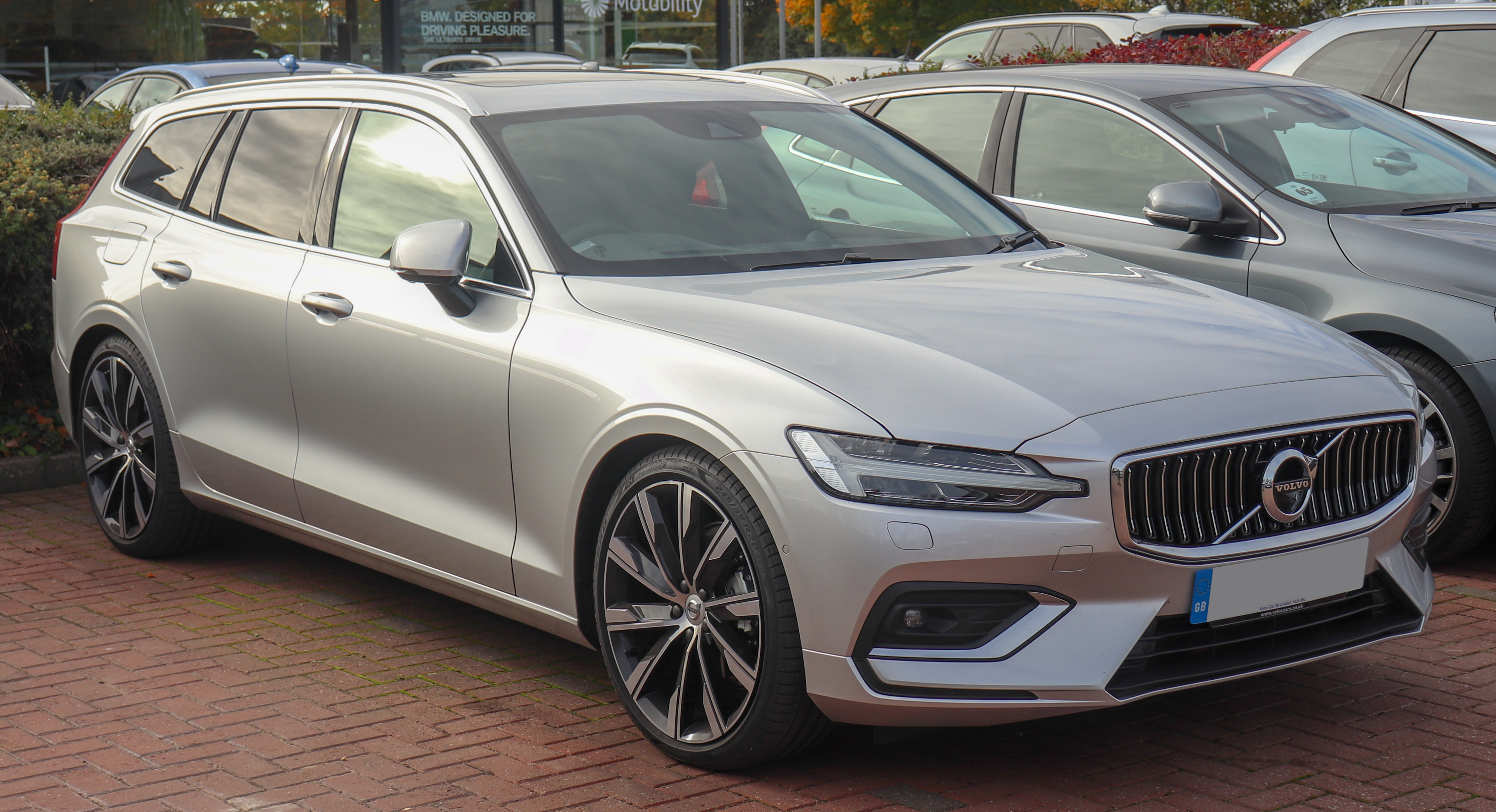
Volvo V60 Cross Country
"I am driving a Volvo V60 crosscountry, which is at terrific vehicle. I mean, it is so fun to drive."
The Volvo V60 Cross Country is a wagon version of the V60. It’s meant to feel a bit tougher and more versatile than a normal wagon, but it still drives like a wagon.
The Volvo V60 Cross Country is a wagon (estate) variant of the V60 with a more rugged, crossover-like setup. It’s designed to be comfortable and versatile for everyday driving while still feeling like a “proper” wagon to drive.
station wagon
"And I don't know, you guys probably havethat journalistic disease of loving station wagons. Oh, yeah."
A station wagon is a car with more room for cargo because it has a longer rear area. People who love them usually like that they’re practical but still drive like a normal car.
A station wagon (estate) is a body style that combines passenger-car comfort with extra cargo space via a longer roofline and rear cargo area. Enthusiasts often like them because they’re practical without feeling like a minivan or SUV.
third row
"Sodidthat third row did it look out the back window? Uh the station wagon I had was uh you guys might remember it, the uh AMC Hornet Sport About Wagon."
A third row means there are extra seats behind the normal back seats. It can help carry more people, but it often affects how much space you have for luggage.
A third row is an additional seat row beyond the usual front and rear seats, enabling more passengers. In wagons and crossovers, third-row packaging is often a tradeoff: it can reduce cargo space and may make access or legroom less ideal than in dedicated 3-row SUVs.

AMC Hornet Sport About Wagon
"Uh the station wagon I had was uh you guys might remember it, the uh AMC Hornet Sport About Wagon."
The AMC Hornet Sport About Wagon is an older American station wagon. The “bubble top” comment suggests it had a unique roof shape that made it stand out.
The AMC Hornet Sport About Wagon is a classic American station wagon from AMC (American Motors). It’s being referenced as the host’s earlier “station wagon” experience, and the mention of “bubble top” points to a distinctive roof design.
electric vehicle (EV)
"...drivingthenewall-electricToyotaCHR. Yes. Anditiscool. Imean,itissocool."
An electric vehicle (EV) runs on electricity stored in a battery, not gasoline. The hosts are discussing an all-electric CHR and whether people actually want EVs that feel “performance” or sporty.
An electric vehicle (EV) uses an electric motor powered by a battery instead of a gasoline engine. In this segment, the hosts are specifically talking about an “all-electric” Toyota CHR and whether performance-oriented EVs are a real market.
hot hatch
"Iwouldcallitmorelikeahothatchkindofvehicle. "
A hot hatch is a small car (usually a hatchback) that’s tuned to be fun and quick, not just practical. Here, the speaker is saying the CHR feels more sporty and car-like than you’d expect from a “small SUV.”
A “hot hatch” is a performance-oriented hatchback—typically a smaller, lighter car tuned for quicker acceleration and more engaging driving dynamics than a normal commuter hatch. The host uses it as a comparison to explain why the Toyota CHR feels more like a sporty compact than a traditional SUV.
electric cars are roomy inside
"Itmightbesubcompact,uh,butuhprettyroomybecauseyouknow,electricsareroomyinside,anduhgenerallyuhfuntodrive,morefuntodrivethanyouwouldguess. Plentyofhorsepower,tonsofhorsepower."
Electric cars can feel bigger inside because they don’t need the same space for an engine. That can make the cabin feel more open and comfortable.
EVs often feel roomier because they don’t need a traditional engine bay layout. With fewer drivetrain components in the front, packaging can free up space for passengers and cargo.
horsepower
"Plentyofhorsepower,tonsofhorsepower. Well,IIrecentlydrovetheuhthebrandnewSubaru."
Horsepower is basically how strong the car’s power is. More horsepower usually means the car can accelerate more easily, which is part of why it can feel fun to drive.
Horsepower is a measure of how much power an engine or motor can produce. In EVs, high horsepower (and especially strong torque) can make the car feel quick and responsive even without a traditional rev range.
transmission tunnel
"That'stheonewewereIIsatinlastwasitlastweekortheweekbeforethetransmissiontunnel,whichisnotransmissiontunnel,butitwasraisedup. ItrekindofwhenIsatinit,itfittedlikeaHummer..."
The transmission tunnel is a hump in the floor caused by parts that run from the front of the car to the drivetrain. If it’s smaller or shaped differently, the cabin can feel more comfortable.
The transmission tunnel is the raised channel in the floor where the drivetrain components (like the transmission and driveshaft) run. EVs can sometimes reduce or reshape this area, which can improve footwell space and overall cabin comfort.
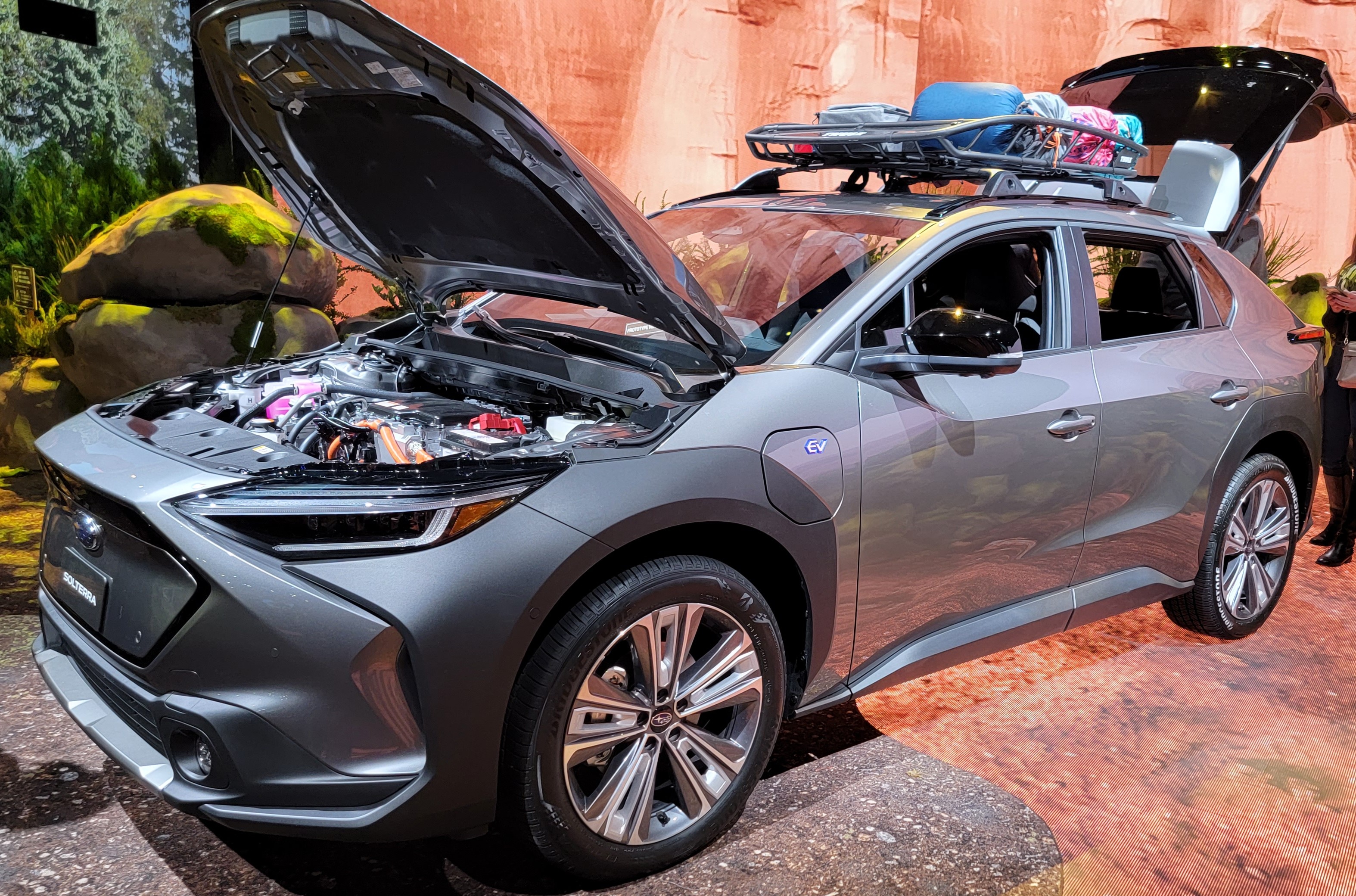
Subaru Solterra
"That's what thatarewetalking about the Soltera? ... Nolooking it. You know, it it's uncharted. ... The uncharted the uncharted Subaru."
The Subaru Solterra is Subaru’s electric SUV/crossover. The hosts are saying it surprised them—in a good way—because it’s fun and feels more spacious than you’d expect.
The Subaru Solterra is Subaru’s all-electric crossover. It’s designed to be roomy and easy to live with, and the discussion highlights how it feels “cool” and fun to drive despite being an EV.

Subaru
"AnduhthisisabrandnewthingfromfromSubaru. It'sverysmall,uh,butumitisfun. Youdon'teventhinkthatyou'redrivinganEV. Andman,I'mtellingyou,youmashthatacceleratorpedal,it'sgonnathrowyoubackintheseatfromaSubaru."
They’re talking about a new Subaru electric car. They say it accelerates so strongly that it feels exciting, not like you’re driving a boring EV. It’s basically about how the car’s power delivery feels to the driver.
The hosts are talking about a new Subaru EV and how it feels surprisingly quick and fun. They describe mashing the accelerator and getting pushed back in the seat, which is a common way people describe strong electric acceleration. The key point is that the experience doesn’t feel like a typical “slow EV.”
accelerator pedal
"Andman,I'mtellingyou,youmashthatacceleratorpedal,it'sgonnathrowyoubackintheseatfromaSubaru. Thereyougo."
They’re talking about pressing the gas pedal hard. With electric cars, the power often comes on very quickly, so it can feel like you get pushed back in your seat right away. That’s what they’re trying to describe.
The hosts describe “mashing that accelerator pedal” to emphasize the immediacy of electric torque. In EVs, pressing the pedal typically results in near-instant response compared with many gas cars. That’s why the seat-back “throw you back” description is a common EV impression.
Hyundai
"Uh,nonMonday,however,I'mflyingacrossthecountrytoSavannahuhtouhspendsometimewithHyundailookingatuhtheirgiantEVfactory,whichwillnowbuildthingsbeyondEVs."
Hyundai is mentioned as the company whose “giant EV factory” the host is visiting. The discussion frames the trip as hands-on observation of how electric vehicles are built and how the factory will expand beyond EVs. This is relevant because manufacturing strategy strongly affects EV availability and cost.
EV factory
"I'mflyingacrossthecountrytoSavannahuhtouhspendsometimewithHyundailookingatuhtheirgiantEVfactory,whichwillnowbuildthingsbeyondEVs."
An “EV factory” refers to a manufacturing facility designed around electric-vehicle production—often including battery-related processes and EV-specific assembly lines. The hosts also note the factory will build things beyond EVs, highlighting how factories can be repurposed or diversified. For listeners, this connects EV ownership to the real-world industrial side of how cars get made.
driving electric vehicles
"I think it's probably doing that before, outsideuhSavannah there,anduh,you know,generally haveagoodtimedrivingelectricvehicles,seeinghowtheywork."
The segment highlights “driving electric vehicles” as a way to understand how they work in real conditions, not just on paper. This is about evaluating throttle response, drivability, and how the car behaves day-to-day. It’s a practical concept for listeners comparing EVs to gas cars.
driving with a driving partner / passenger vs professional driver
"They don't have any kind of etiquette when it comes to a partner in the front car. Let's see how fast we can go around the corner or slam on the brakes or do crazy things..."
Sometimes you ride along with a pro driver who’s in charge of how hard and how fast the car goes. If the passenger tries to “direct” the driving or pushes for reckless moves, it can get dangerous and stressful. Good etiquette means letting the driver do their job and keeping the ride controlled.
The hosts are describing the dynamic of riding with a professional driver (or being the passenger) during spirited driving. In that setup, the passenger is expected to stay calm and not second-guess the driver, because the goal is controlled performance rather than “showing off.” It’s also why they mention etiquette—things like braking late or taking corners aggressively are coordinated, not improvised.
late braking into a corner (implied by "around the corner" + aggressive braking)
"Let's see how fast we can go around the corner or slam on the brakes... You're the professional here. You're the passenger."
Late braking means you wait a bit longer before slowing down for a turn. That can help you carry more speed, but it’s harder to do safely. If someone forces it without knowing what they’re doing, the car can get out of control.
The discussion implies “late braking,” where braking happens closer to the corner entry to maximize speed through the turn. Late braking is a common performance-driving technique, but it requires skill and coordination because braking too hard or too late can cause instability. The hosts contrast this with passengers who push for dramatic moves without understanding the consequences.
slam on the brakes
"Let's see how fast we can go around the corner or slam on the brakes or do crazy things..."
“Slam on the brakes” refers to very aggressive, abrupt braking—typically late braking into a corner. In performance driving, braking is usually planned and modulated to keep the car stable and avoid locking up or upsetting traction. The phrase is used here as an example of bad passenger etiquette during spirited driving.
professional driver / passenger role expectations
"Well, why didn't you turn it? Why did you let you... You're the professional here. You're the passenger."
When a pro is driving, they’re the one making all the decisions and controlling the car. The passenger should not try to change the plan mid-drive, because it can distract the driver or lead to unsafe moves. It’s basically teamwork with clear roles.
The hosts emphasize role separation: the professional driver handles the driving inputs while the passenger’s job is to observe and stay out of the way. This is especially important during high-performance or track-style driving where small mistakes can compound quickly. Their “you’re the passenger” framing highlights how expectations differ from normal street driving.
MotorTrend TV
"IandIwasthefirsthostofMotorTrendTVuhbackintheearly90sorsomethinglikethat. [773.0s] IandIthinkI'vetoldyouguysIwasintheTVbusinessbeforeIwasinthecarbusiness."
MotorTrend TV is a TV channel that shows car-related shows. The hosts are talking about how car shows used to be easier to find on TV.
MotorTrend TV is a television network focused on automotive content. The hosts reference it to explain how car programming used to be more common and how that has changed over time.
car chase
"[784.0s] Imean,uhthetypicalcarshowuhthetypicaldramashowusedtoendwithacarchaseprettymucheveryweekanyway."
A car chase is when characters drive fast and try to escape or catch someone. The host is saying TV likes action scenes like that, so cars used to show up a lot.
A car chase is a common action-movie or TV trope where vehicles are driven aggressively during a high-stakes pursuit. The host uses it as an example of why cars historically fit well with television storytelling.
marketing edit
"[808.1s] They'rethey'reallreruns,butyoumighteverynowandthencatchanepisode,well,youknow,Ididn'tknowthat,orthat'sacoolthingaboutthatcar. [815.4s] UhoccasionallyI'llseeit,butIthinkit'sallhowtheymarketedit."
“How they market it” and “they ruined it” points to the idea that content can be changed for audience targeting—editing, packaging, and promotion can alter what viewers actually get. In automotive media, this can affect how technical or enthusiast-focused a show feels.
production costs pricing out niche programming
"[821.2s] Well,Iyouknow,thebottomlineisthateverythinghasaprice. [825.8s] Anduhthesetelevisionshowsforcars,theypricethemselvesoutofthemarketbyhighproductioncosts. [834.5s] Wellyougottahavethreecamerasandyoudon'thavetohaveallofthat."
The host is saying making car shows costs a lot of money, so fewer places want to air them. When costs go up, the shows can disappear from TV.
The segment argues that automotive TV shows become too expensive to produce, which raises costs and reduces how many channels can afford them. This is a media-economics concept: higher production overhead can shrink distribution and availability.
three cameras
"[834.5s] Wellyougottahavethreecamerasandyoudon'thavetohaveallofthat."
The host is talking about filming with multiple cameras. More cameras usually means more work and expense, which can make shows harder to produce.
Using multiple cameras is a production technique that increases coverage and editing flexibility for automotive shows. The host implies that modern production expectations (like more camera angles) raise costs.
Vice Grip Garage
"I will tell you that uh I am hooked on a thing called ViceGripGarage with Derek Berry. I don't know whether you've seen that. Yeah, you might want to look that up."
Vice Grip Garage is a car channel where the host finds old cars that have been sitting around and works to get them running again. It’s basically a real-world “fix it yourself” style show.
Vice Grip Garage is a popular automotive YouTube/Facebook channel focused on rescuing and reviving old, often neglected vehicles. The host’s emphasis is on diagnosing issues and getting these cars running again, which is why it resonates with DIY and “barn find” audiences.
carbureted cars
"But uh he’s he does very well and uh hold carbureted cars that he pulls out of barns and fields and that sort of stuff. And the whole idea is to get it running. And he does."
A carburetor is a device that helps an engine get the right mix of fuel and air. Older cars that use carburetors can be a little finicky, so getting them running often takes patience and basic tuning.
Carbureted cars use a carburetor to mix fuel and air before it goes into the engine. They’re generally simpler than modern fuel-injection systems, but they can be harder to start and tune—especially after sitting for long periods.
barn finds
"But uh he’s he does very well and uh hold carbureted cars that he pulls out of barns and fields and that's sort of stuff. And the whole idea is to get it running. And he does."
A barn find is an old car that’s been sitting unused for a long time and then gets discovered. Usually you have to do a bunch of basic repairs just to get it running again.
A “barn find” is a vehicle that’s been stored away for a long time—often in a barn, field, or garage—before being discovered and restored. These cars frequently need fuel system, ignition, and basic mechanical recommissioning to get them running safely.
divideraces into little bitty races
"One,uh,Ithinkalotofusdon'tunderstandtheformatorseewhat'sgoingonthere,youknow,whentheydivideracesintolittlebittyraces,andthenthere'sayouknow,allthatseemsodd."
Some racing formats split a long race into smaller sections. That can change how teams drive—because they might try to do well in each section instead of only thinking about the finish line.
“Dividing races into little bitty races” describes how some series break events into stages or segments. That structure changes strategy—teams may push harder in one segment, manage tires/fuel differently, and adjust risk based on stage goals.
stock car racing
"Also,stockcarracingisn'tstockcarracing,right? [938.5s] Imean,it'shardtorecognizeoneofthebrandsfromtheotheroutthere."
Stock car racing sounds like regular cars, but the race versions are usually modified a lot. Even if the cars look similar to what you’d buy, the important parts underneath are often built for racing, so the brands can be hard to tell.
“Stock car racing” is a motorsport category where cars start from production models, but the race cars are heavily modified. That’s why it can be hard to recognize the brands—many teams use similar underlying race hardware and rules-driven parts.
all the cars have the same chassis
"Yeah,soIthinkmostpeoplewithuhtheleastbitofsophisticationknowthattheuhvirtuallyallthecarsarethesame. [949.8s] UhandIIdon'tknowthatthatthat'stheyallyeah,theyallhavethesamechassis."
The chassis is basically the car’s skeleton. If race cars use the same (or nearly the same) chassis, then they’re starting from a more level playing field, so small tuning choices and driving matter more than the brand name.
A “chassis” is the car’s structural foundation that everything else mounts to. In spec-leaning or rules-heavy racing series, teams may use the same or very similar chassis designs, which reduces performance differences and makes outcomes depend more on setup and driver skill.
nose and tail (decals)
"Really,theonlything that'schangedisthenoseandthetailonthecar,right? [959.8s] Yeah,yeah,whichispracticallydecals,right?"
The nose and tail are the front and back of the car. Sometimes in racing, the cars look different mainly because of body shapes or graphics, even if the important parts underneath are the same.
The “nose and tail” refer to the front and rear bodywork shapes, which can be changed for branding and aerodynamics. When the speaker says it’s “practically decals,” they’re pointing out that visual differences may be mostly cosmetic while the underlying race car is similar.
glowing tires
"Glowingtires. Allright,letmefirethisupandthenyou'regonnahavetochangethesebecauseuhuhuhyeah,herewego."
“Glowing tires” means tires that light up. The hosts are saying the early version of this idea didn’t last very long, likely because the lighting didn’t hold up.
“Glowing tires” refers to the visual effect of illuminated tires, typically achieved with embedded lighting elements. The segment notes that the glow concept didn’t last long in practice, implying early versions likely had durability or longevity issues.
Goodyear
"UhsoGoodyeartires,brightidea. Backinthelate50sand60s,Goodyearengineerswerefeelinglightened."
Goodyear is a big company that makes tires. Here they’re talking about a special tire idea where the tire lights up, mainly as a flashy custom-car feature.
Goodyear is a major tire manufacturer known for both mainstream tires and experimental designs. In this segment, the hosts focus on Goodyear’s illuminated/“glowing” tire concept as a custom-car accessory.
illuminated tires
"Morethanfivedecadesago,andwhattheOhiotiremanufacturercalledoneofthemostdramatictiredevelopmentsinthehistoryoftheindustry,Goodyearunveiledacustomcaraccessoryunlikenoother,illuminatedtires."
Illuminated tires are tires with built-in lighting so the tire sidewall or tread area can glow. They were marketed as a custom-car accessory, but the “glow” effect is limited by durability, power supply, and weather exposure.
custom car accessory
"Morethanfivedecadesago,andwhattheOhiotiremanufacturercalledoneofthemostdramatictiredevelopmentsinthehistoryoftheindustry,Goodyearunveiledacustomcaraccessoryunlikenoother,illuminatedtires."
A custom car accessory is something you add to a car to make it look different or more interesting. Illuminated tires are an example of a flashy accessory made for enthusiasts.
A custom car accessory is an aftermarket or specialty add-on designed to change the look or function of a vehicle beyond factory options. Illuminated tires are framed as an example of a niche accessory aimed at car enthusiasts who want standout visual effects.
neothane
"Thetiresweremadeofneothane,asyntheticpolyurethanerubberthatcombinedthehardnessofplasticandtheresilienceuhresilienceofrubber..."
Neothane is a made-up rubber-like material. The idea was to make tires with a tougher, more durable feel than normal rubber, but it didn’t last well in real-world use.
Neothane is described as a synthetic polyurethanerubber compound used to make the experimental tires. The key idea is that it combined the hardness of plastic with the resilience of rubber, but it also had manufacturing and on-road durability drawbacks.
synthetic polyurethanerubber tire compound
"Thetiresweremadeofneothane,asyntheticpolyurethanerubber... baked at 250 degrees... Low melting point... made its susceptible to melting while they were actually on the road..."
Tires aren’t just “rubber”—the exact material recipe matters. A compound can sound great, but if it can melt during making or wear out quickly in use, it won’t be practical.
This segment highlights how tire performance depends heavily on the chemistry of the rubber compound. Even if a material has attractive properties on paper (hardness plus resilience), it can fail if it melts too easily during production or breaks down on the road.
glass tires
"UhthosenewFangDangleGoodyeartireswerereferredtoasglass... Low melting point... susceptible to melting... deteriorate and disintegrate."
They called these tires “glass” because they were more like a special material/finish than normal rubber tires. The story then explains why they didn’t last—heat and road wear caused them to break down.
The segment says Goodyear’s “newfang-dangle” tires were referred to as “glass,” implying a special look/finish and likely a different material behavior than standard rubber tires. The later explanation about melting and deterioration explains why the concept didn’t become mainstream.
solid tires (not fully air-filled)
"Andthetireswerewerenottheirthetiresweresolid... Theyweren'tfilledwithair... Filledwithairalittlebit,buttheyweremainlysolid."
They’re saying these tires weren’t like normal tires that are mostly filled with air. Being mostly solid can affect how the tire feels and how long it lasts.
The hosts clarify that these experimental tires weren’t conventional pneumatic tires filled mostly with air; they were mainly solid with only a little air. That distinction matters because solid or semi-solid designs change ride comfort, heat behavior, and how the tire wears and deteriorates.
material durability vs real-world heat (melting/deterioration)
"Lowmeltingpointforthetiresuhinthemanufacturingprocessuhmadeitsusceptibletomeltingwhiletheywereactuallyontheroad... deteriorate and disintegrate."
Even if a new tire material is workable in a lab or during production, it still has to handle heat while driving. If it melts or breaks down, it won’t be safe or practical.
A major takeaway is that tire materials must survive both manufacturing conditions and real-world operating temperatures. The hosts explain that the low melting point made the tires susceptible to melting on the road, leading to deterioration and disintegration—so the concept couldn’t scale.
lights in the fender wells
"Well,they'vekindofgotthattoday,uh,withlikeyousaid,thelightsinthefenderwells. UhIyouknow,II'mnotofthatagegroupanymore."
Instead of lighting from the bumper or dashboard, the lights are put in the wheel area (the fender well). That way they shine on the tire and lower part of the car.
“Lights in the fender wells” describes mounting illumination inside the wheel arch area. That placement helps light the tire and lower body while reducing how much the light is blocked by the wheel itself.
lettering different
"Youcangettheletteringdifferent,butthat'sadifferentprocess. sofarasthemanufacturingofthecolorinthetire."
They’re talking about changing the color or style of the tire lettering on the sidewall. Some looks are made by the tire manufacturer, while others are added later and can be a different process.
“Lettering different” refers to changing the tire sidewall lettering color/style. The discussion contrasts factory-produced sidewall color/lettering with stick-on or aftermarket approaches, which can differ in durability and appearance.
red stripe era
"Andwehadrememberwewentthroughtheredstripeera. Yep,yep. Thenwewenttotheraisedwhiteletters. Yep,yep,exactly."
The “red stripe era” is a time when tires often had a colored stripe on the sidewall, usually red. It was mostly about the look—people wanted their cars to match that classic style.
The “red stripe era” refers to a period when tire sidewalls commonly featured colored stripes (often red) as a styling trend. It’s a recognizable look in classic American car culture and ties into how tire branding and appearance were marketed.
raised white letters
"Thenwewenttotheraisedwhiteletters. Yep,yep,exactly. Anduhgrowingupbackinthemid-70s,youknow,inhighschool,andeverybody'srunningaroundTelegraphRoadandallthat."
Raised white letters are the white tire text that sticks out a bit from the rubber. It’s mainly for looks, so the sidewall stands out.
“Raised white letters” are white lettering on a tire sidewall that stands proud of the rubber surface. It’s a visual styling feature that became popular in different waves of tire design and is still used on some modern tires.
split bumpers
"Uhparticulargentleman,youngguy,hadawhiteCamaro,Z,uhsplitbumpers,andheputwhitehiscarwaswhite,soheputwhitelightbulbsinhisfendersasheracedandupanddownthestreet."
Split bumpers are bumpers made in two pieces instead of one. On older cars, that shape is part of the car’s look and can help identify the style/year.
“Split bumpers” refers to bumper designs that are divided into separate sections rather than a single continuous piece. On classic muscle cars, split-bumper styling is often associated with certain model years and is a visual cue for enthusiasts.
white lightbulbs in his fenders
"Uhparticulargentleman,youngguy,hadawhiteCamaro,Z,uhsplitbumpers,andheputwhitehiscarwaswhite,soheputwhitelightbulbsinhisfendersasheracedandupanddownthestreet."
They’re describing someone adding small white lights in the fender area. It’s like making the front wheel area glow so the car looks more dramatic at night.
The transcript describes adding white bulbs in the fender area to create a visible effect while driving. This is essentially an early/DIY version of under-wheel or wheel-arch lighting used for visibility and show.
driving destinations
"...we've moved your driving destinationsto another segment... Uhwe'regonnagetto Mars driving destinations..."
They’re talking about “driving destinations,” meaning where they’re going to drive next. It’s usually about planning a fun route and matching the car to the trip.
“Driving destinations” refers to a recurring show segment where they plan or discuss where to drive next. It’s often tied to route planning, scenery, and how a car fits the kind of trip being discussed.
new car
"...um I get to review today uh new car that you maybe interested in. And that is going to be one moment, please."
They’re about to review a brand-new car. That usually means they’ll talk about how it feels to drive and what you get for the price.
The hosts say they’ll “review today a new car,” which implies a segment focused on evaluating a current model. New-car reviews typically cover how the car drives, key features, and whether it’s worth the money.
recalls
"Umwe'vegotcomingupuhrecalls. Uhwe'regonnagettoMarsdrivingdestinations,andweumalsoaregoingtohaveourfunlittlething that we play..."
A recall is when a car maker says, “We found a problem and we’ll fix it.” It’s usually about safety, and you don’t pay for the fix if your car is affected.
The hosts mention upcoming “recalls,” which are manufacturer-initiated (or regulator-mandated) safety fixes for vehicles with defects. Recalls can involve anything from software updates to replacing parts, and they’re important because they’re free to owners.
hemmings.com
"...what's sold on hemmings.com. Sothatthatiscoming up as well."
Hemmings.com is a website where classic car fans look for cars to buy and sell. The show is using it to talk about what cars are moving in the market.
Hemmings.com is a well-known classic car marketplace and media site where enthusiasts buy and sell vehicles and parts. The hosts reference it as the place where they’ll look at what’s been sold and what’s currently listed.
automated car wash scratches
"Get rid of those terrible automated carwash scratches. Gulf Coast Auto Shield is your save the paint company."
Automated car washes can cause fine paint damage, often described as scratches or swirls. These marks can dull the appearance and may require correction (like polishing) and protection to prevent further wear.
Gulf Coast Auto Shield
"Gulf Coast Auto Shield is your save the paint company. John Gray and his team of detailing experts can help your car's finish without a full repaint."
This sounds like a company that helps protect your car’s paint. Instead of repainting the whole car, they claim they can improve the look and protect it using detailing and protection products.
Gulf Coast Auto Shield is presented as a paint-protection and detailing company. The hosts position it as an alternative to full repainting by helping preserve or restore a car’s finish.
paint protection (avoid full repaint)
"John Gray and his team of detailing experts can help your cars finish without a full repaint. Searching for real experts in window tent or windshield protection, Gulf Coast AutoShield."
The segment promotes paint protection as a way to preserve a car’s finish and avoid the cost and effort of a full repaint. In practice, this usually means correcting surface damage (like scratches/swirl marks) and then applying protective coatings to slow future wear.
window tint or windshield protection
"Searching for real experts in window tent or windshield protection, Gulf Coast AutoShield."
These are add-ons for your glass. Tint can cut down sun glare and heat, and windshield protection helps the glass stay cleaner and resist stuff that sticks to it.
Window tint and windshield protection are aftermarket options aimed at improving comfort, visibility, and durability. Tint can reduce heat and glare, while windshield protection typically refers to coatings/films that help resist contaminants and make cleaning easier.
dashcams
"Dashcams, radar detectors, Gulf Coast AutoShield. Got a new car?"
A dashcam records what’s happening on the road in front of you. If something happens, the video can help prove what occurred.
A dashcam is a camera mounted on the dashboard or windshield that records driving footage. It’s commonly used to document incidents, support insurance claims, and provide evidence after crashes.
radar detectors
"Dashcams, radar detectors, Gulf Coast AutoShield. Got a new car?"
A radar detector listens for signals that police use to measure speed. It alerts you so you can adjust your driving.
Radar detectors are devices that alert drivers to radar signals used by law enforcement for speed enforcement. They’re often paired with dashcams or other safety/monitoring accessories.
Request an Explanation
Heard something you'd like explained? We'll add it to this episode.
Sign in to request explanations for terms you heard.
Want to learn more?
Browse our glossary for plain-English explanations of automotive terms, jargon, and concepts.
Help improve this episode
See something that's not quite right? Our annotations are AI-generated and can sometimes miss the mark. Click the flag icon on any annotation to suggest a correction.