
weather tax
They’re using “weather tax” as a joke for the extra money weather and climate can force people to spend. For cars, that can mean higher costs to keep the car running well or to deal with rules and conditions that are harder on vehicles.
state taxes on fuel
They’re implying California adds extra cost to driving—especially gas—through state rules and taxes. So even if the weather is great, the price you pay to drive is higher.
gasoline prices
They’re talking about how much more expensive gas is in California. The idea is that taxes and rules can make the price at the pump much higher than in other states.
oil off the coast
They’re saying California has oil near the coast, but it doesn’t necessarily mean it’s easy or allowed to use it for making gasoline. There can be rules and practical barriers that keep it from lowering pump prices.
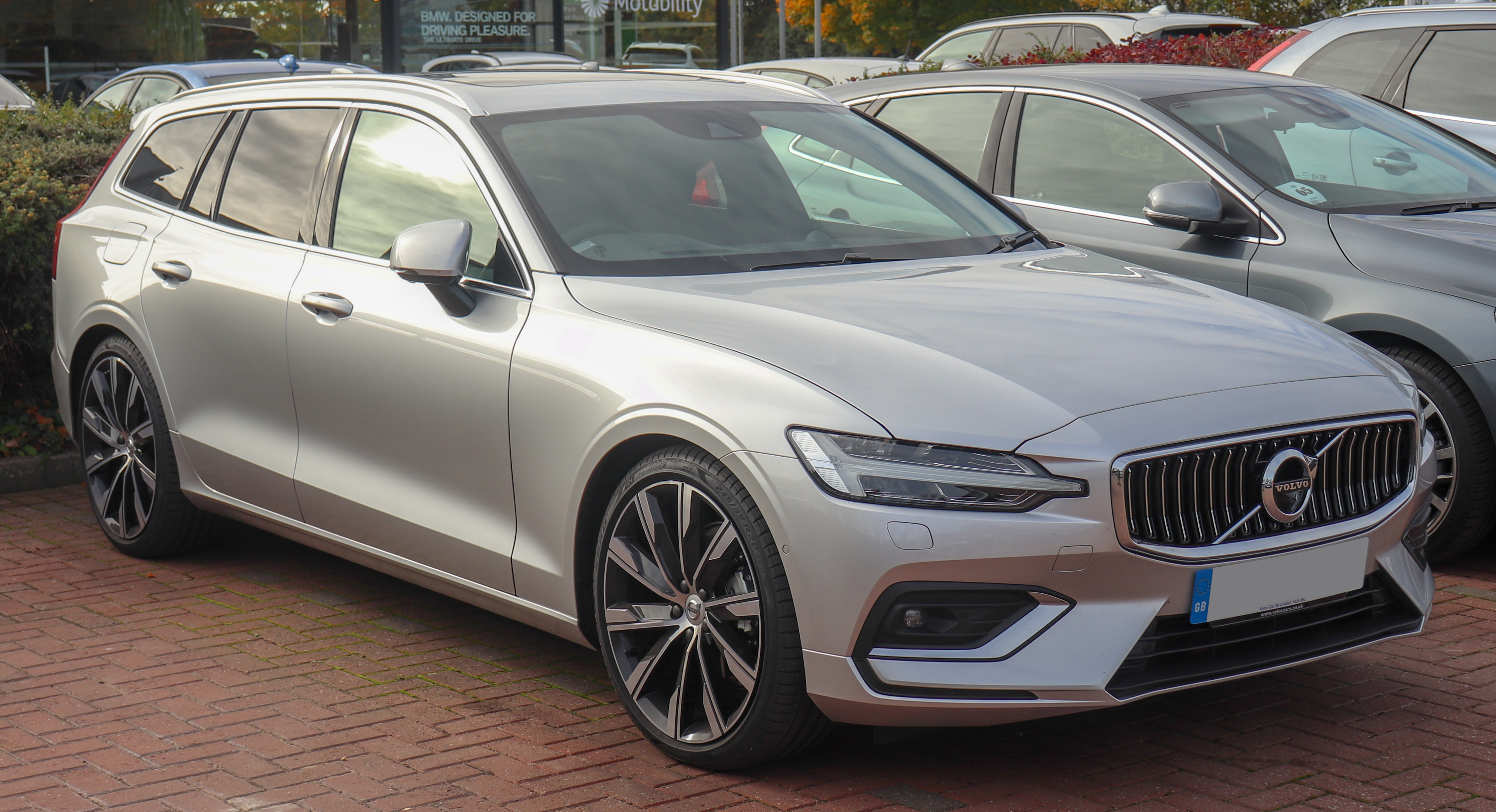
Volvo V60 Cross Country
The Volvo V60 Cross Country is a wagon version of the V60. It’s meant to feel a bit tougher and more versatile than a normal wagon, but it still drives like a wagon.
station wagon
A station wagon is a car with more room for cargo because it has a longer rear area. People who love them usually like that they’re practical but still drive like a normal car.
third row
A third row means there are extra seats behind the normal back seats. It can help carry more people, but it often affects how much space you have for luggage.

AMC Hornet Sport About Wagon
The AMC Hornet Sport About Wagon is an older American station wagon. The “bubble top” comment suggests it had a unique roof shape that made it stand out.
electric vehicle (EV)
An electric vehicle (EV) runs on electricity stored in a battery, not gasoline. The hosts are discussing an all-electric CHR and whether people actually want EVs that feel “performance” or sporty.
hot hatch
A hot hatch is a small car (usually a hatchback) that’s tuned to be fun and quick, not just practical. Here, the speaker is saying the CHR feels more sporty and car-like than you’d expect from a “small SUV.”
electric cars are roomy inside
Electric cars can feel bigger inside because they don’t need the same space for an engine. That can make the cabin feel more open and comfortable.
horsepower
Horsepower is basically how strong the car’s power is. More horsepower usually means the car can accelerate more easily, which is part of why it can feel fun to drive.
transmission tunnel
The transmission tunnel is a hump in the floor caused by parts that run from the front of the car to the drivetrain. If it’s smaller or shaped differently, the cabin can feel more comfortable.
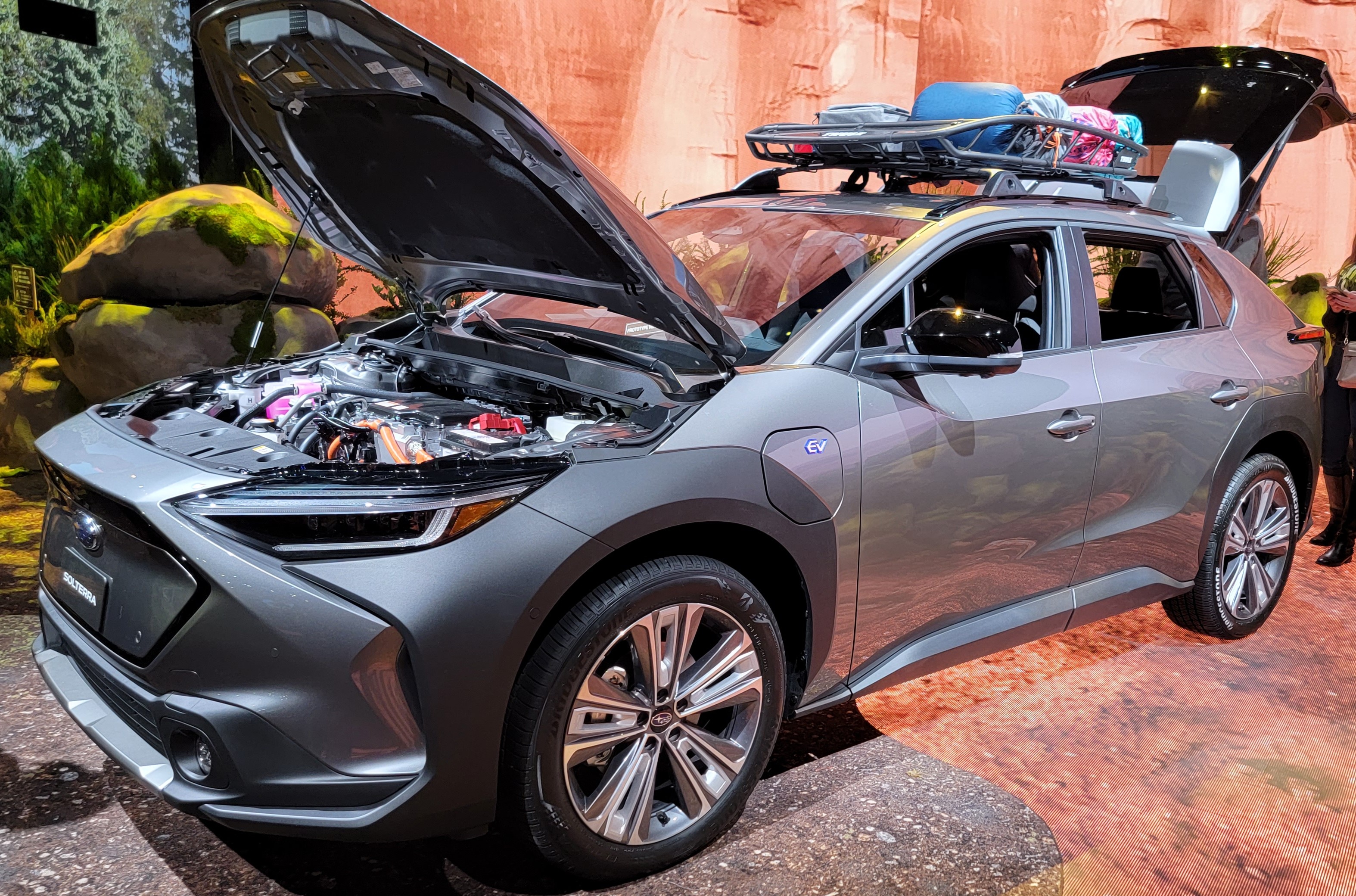
Subaru Solterra
The Subaru Solterra is Subaru’s electric SUV/crossover. The hosts are saying it surprised them—in a good way—because it’s fun and feels more spacious than you’d expect.

Subaru
They’re talking about a new Subaru electric car. They say it accelerates so strongly that it feels exciting, not like you’re driving a boring EV. It’s basically about how the car’s power delivery feels to the driver.
accelerator pedal
They’re talking about pressing the gas pedal hard. With electric cars, the power often comes on very quickly, so it can feel like you get pushed back in your seat right away. That’s what they’re trying to describe.
Hyundai
Hyundai is mentioned as the company whose “giant EV factory” the host is visiting. The discussion frames the trip as hands-on observation of how electric vehicles are built and how the factory will expand beyond EVs. This is relevant because manufacturing strategy strongly affects EV availability and cost.
EV factory
An “EV factory” refers to a manufacturing facility designed around electric-vehicle production—often including battery-related processes and EV-specific assembly lines. The hosts also note the factory will build things beyond EVs, highlighting how factories can be repurposed or diversified. For listeners, this connects EV ownership to the real-world industrial side of how cars get made.
driving electric vehicles
The segment highlights “driving electric vehicles” as a way to understand how they work in real conditions, not just on paper. This is about evaluating throttle response, drivability, and how the car behaves day-to-day. It’s a practical concept for listeners comparing EVs to gas cars.
driving with a driving partner / passenger vs professional driver
Sometimes you ride along with a pro driver who’s in charge of how hard and how fast the car goes. If the passenger tries to “direct” the driving or pushes for reckless moves, it can get dangerous and stressful. Good etiquette means letting the driver do their job and keeping the ride controlled.
late braking into a corner (implied by "around the corner" + aggressive braking)
Late braking means you wait a bit longer before slowing down for a turn. That can help you carry more speed, but it’s harder to do safely. If someone forces it without knowing what they’re doing, the car can get out of control.
slam on the brakes
“Slam on the brakes” refers to very aggressive, abrupt braking—typically late braking into a corner. In performance driving, braking is usually planned and modulated to keep the car stable and avoid locking up or upsetting traction. The phrase is used here as an example of bad passenger etiquette during spirited driving.
professional driver / passenger role expectations
When a pro is driving, they’re the one making all the decisions and controlling the car. The passenger should not try to change the plan mid-drive, because it can distract the driver or lead to unsafe moves. It’s basically teamwork with clear roles.
MotorTrend TV
MotorTrend TV is a TV channel that shows car-related shows. The hosts are talking about how car shows used to be easier to find on TV.
car chase
A car chase is when characters drive fast and try to escape or catch someone. The host is saying TV likes action scenes like that, so cars used to show up a lot.
marketing edit
“How they market it” and “they ruined it” points to the idea that content can be changed for audience targeting—editing, packaging, and promotion can alter what viewers actually get. In automotive media, this can affect how technical or enthusiast-focused a show feels.
production costs pricing out niche programming
The host is saying making car shows costs a lot of money, so fewer places want to air them. When costs go up, the shows can disappear from TV.
three cameras
The host is talking about filming with multiple cameras. More cameras usually means more work and expense, which can make shows harder to produce.
Vice Grip Garage
Vice Grip Garage is a car channel where the host finds old cars that have been sitting around and works to get them running again. It’s basically a real-world “fix it yourself” style show.
carbureted cars
A carburetor is a device that helps an engine get the right mix of fuel and air. Older cars that use carburetors can be a little finicky, so getting them running often takes patience and basic tuning.
barn finds
A barn find is an old car that’s been sitting unused for a long time and then gets discovered. Usually you have to do a bunch of basic repairs just to get it running again.
divideraces into little bitty races
Some racing formats split a long race into smaller sections. That can change how teams drive—because they might try to do well in each section instead of only thinking about the finish line.
stock car racing
Stock car racing sounds like regular cars, but the race versions are usually modified a lot. Even if the cars look similar to what you’d buy, the important parts underneath are often built for racing, so the brands can be hard to tell.
all the cars have the same chassis
The chassis is basically the car’s skeleton. If race cars use the same (or nearly the same) chassis, then they’re starting from a more level playing field, so small tuning choices and driving matter more than the brand name.
nose and tail (decals)
The nose and tail are the front and back of the car. Sometimes in racing, the cars look different mainly because of body shapes or graphics, even if the important parts underneath are the same.
glowing tires
“Glowing tires” means tires that light up. The hosts are saying the early version of this idea didn’t last very long, likely because the lighting didn’t hold up.
Goodyear
Goodyear is a big company that makes tires. Here they’re talking about a special tire idea where the tire lights up, mainly as a flashy custom-car feature.
illuminated tires
Illuminated tires are tires with built-in lighting so the tire sidewall or tread area can glow. They were marketed as a custom-car accessory, but the “glow” effect is limited by durability, power supply, and weather exposure.
custom car accessory
A custom car accessory is something you add to a car to make it look different or more interesting. Illuminated tires are an example of a flashy accessory made for enthusiasts.
neothane
Neothane is a made-up rubber-like material. The idea was to make tires with a tougher, more durable feel than normal rubber, but it didn’t last well in real-world use.
synthetic polyurethanerubber tire compound
Tires aren’t just “rubber”—the exact material recipe matters. A compound can sound great, but if it can melt during making or wear out quickly in use, it won’t be practical.
glass tires
They called these tires “glass” because they were more like a special material/finish than normal rubber tires. The story then explains why they didn’t last—heat and road wear caused them to break down.
solid tires (not fully air-filled)
They’re saying these tires weren’t like normal tires that are mostly filled with air. Being mostly solid can affect how the tire feels and how long it lasts.
material durability vs real-world heat (melting/deterioration)
Even if a new tire material is workable in a lab or during production, it still has to handle heat while driving. If it melts or breaks down, it won’t be safe or practical.
lights in the fender wells
Instead of lighting from the bumper or dashboard, the lights are put in the wheel area (the fender well). That way they shine on the tire and lower part of the car.
lettering different
They’re talking about changing the color or style of the tire lettering on the sidewall. Some looks are made by the tire manufacturer, while others are added later and can be a different process.
red stripe era
The “red stripe era” is a time when tires often had a colored stripe on the sidewall, usually red. It was mostly about the look—people wanted their cars to match that classic style.
raised white letters
Raised white letters are the white tire text that sticks out a bit from the rubber. It’s mainly for looks, so the sidewall stands out.
split bumpers
Split bumpers are bumpers made in two pieces instead of one. On older cars, that shape is part of the car’s look and can help identify the style/year.
white lightbulbs in his fenders
They’re describing someone adding small white lights in the fender area. It’s like making the front wheel area glow so the car looks more dramatic at night.
driving destinations
They’re talking about “driving destinations,” meaning where they’re going to drive next. It’s usually about planning a fun route and matching the car to the trip.
new car
They’re about to review a brand-new car. That usually means they’ll talk about how it feels to drive and what you get for the price.
recalls
A recall is when a car maker says, “We found a problem and we’ll fix it.” It’s usually about safety, and you don’t pay for the fix if your car is affected.
hemmings.com
Hemmings.com is a website where classic car fans look for cars to buy and sell. The show is using it to talk about what cars are moving in the market.
automated car wash scratches
Automated car washes can cause fine paint damage, often described as scratches or swirls. These marks can dull the appearance and may require correction (like polishing) and protection to prevent further wear.
Gulf Coast Auto Shield
This sounds like a company that helps protect your car’s paint. Instead of repainting the whole car, they claim they can improve the look and protect it using detailing and protection products.
paint protection (avoid full repaint)
The segment promotes paint protection as a way to preserve a car’s finish and avoid the cost and effort of a full repaint. In practice, this usually means correcting surface damage (like scratches/swirl marks) and then applying protective coatings to slow future wear.
window tint or windshield protection
These are add-ons for your glass. Tint can cut down sun glare and heat, and windshield protection helps the glass stay cleaner and resist stuff that sticks to it.
dashcams
A dashcam records what’s happening on the road in front of you. If something happens, the video can help prove what occurred.
radar detectors
A radar detector listens for signals that police use to measure speed. It alerts you so you can adjust your driving.
