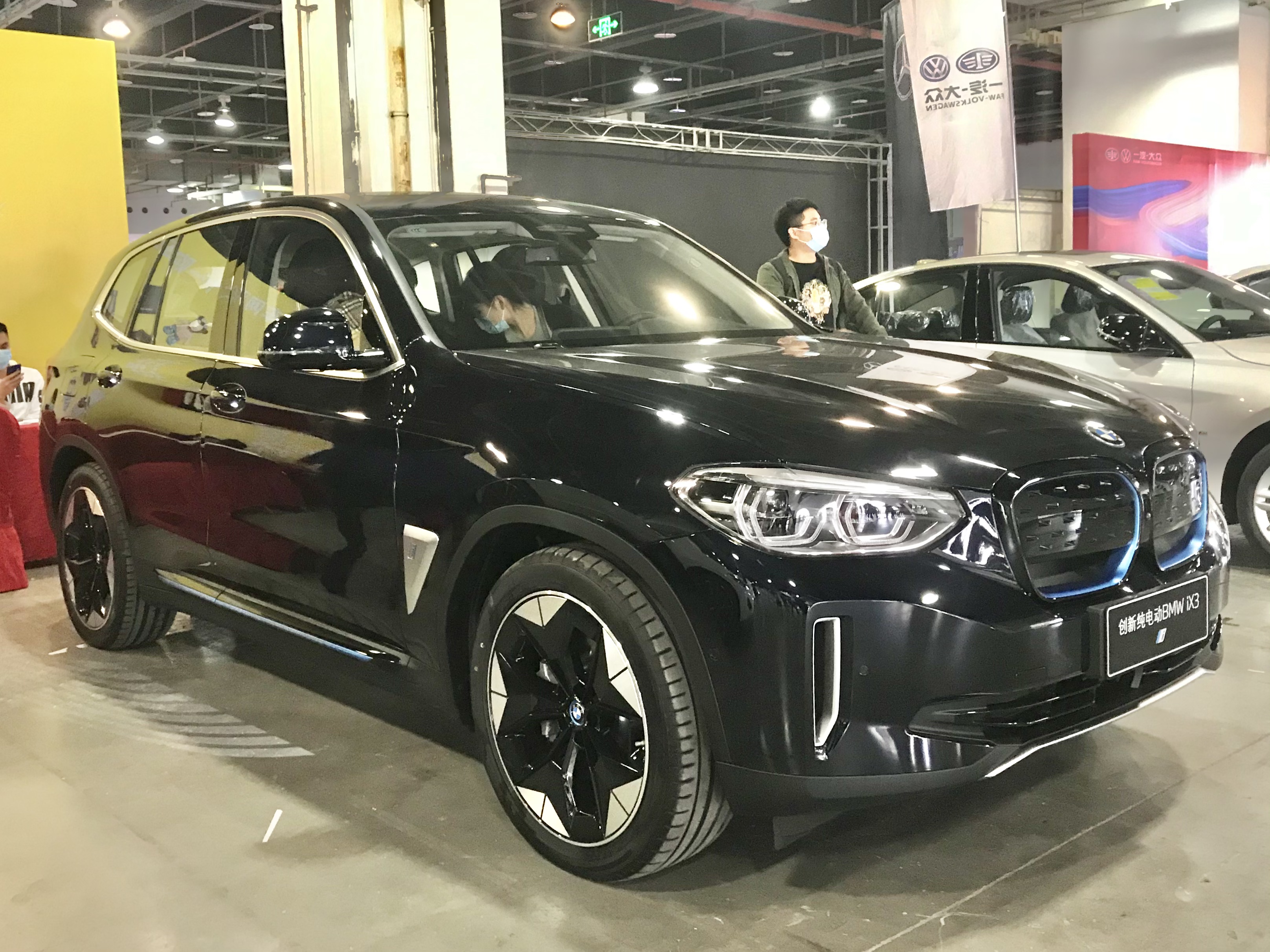
BMW iX3 is BMW’s electric version of a compact SUV. The hosts bring it up to compare how BMW’s EV stacks up against other options like Rivian and Volvo.
The EX60 is an electric Volvo model that’s being talked about as a compact EV with long range. The podcast is comparing it to other upcoming electric vehicles to see which one best fits different needs. The main focus is how far it can go and how efficiently it uses energy.
Car
QX65
Infiniti QX65 is a family-sized Infiniti SUV with three rows. The hosts are saying it looks good, but they’re questioning whether the changes are big enough to convince buyers to switch.
The Nissan GT-R is a sports car built for high performance. The podcast mentions it because of a recognizable look, like a paint style that’s associated with the GT-R. It’s being used as a reference for design and identity.
Lexus RX is a well-known luxury SUV that many shoppers compare against other brands. The hosts are asking whether Infiniti’s changes are enough to convince RX buyers to switch.
The BMW X5 is a large, comfortable SUV made by BMW. People talk about it because it has a powerful engine and is meant for everyday driving plus longer trips. It’s the kind of car that gets mentioned when discussing how engines work and how they affect ownership.
The Jeep Grand Cherokee is another popular SUV. The hosts are basically saying that even though some buyers might cross-shop, the typical Grand Cherokee customer isn’t the same as the Infiniti buyer.
A dyno is a machine that tests a car’s power in a controlled way. The point here is that even if the car feels different, the measurable results might be the same.
Throttle response is how fast the car reacts when you press the gas pedal. A “quicker” throttle response usually makes the car feel more lively and eager.
When they say the shifts are more aggressive, they mean the car changes gears in a more “sporty” way. That can make it feel quicker, but it might be less smooth than a comfort-focused tune.
A V6 is a type of engine with six cylinders. It’s often associated with smoother power delivery, and the hosts are debating whether Infiniti should actually use one instead of simulating the sound.
Term
soundtrack
They’re talking about the car playing an engine “soundtrack” through speakers. The idea is to make the car sound more like a V6 even if the engine isn’t actually a V6.
A four-cylinder engine is a smaller engine layout with four cylinders. The hosts are saying the car sounds like a bigger engine, but it’s actually a smaller one.
A variable compression engine can adjust how “squeezed” the air-fuel mixture is inside the engine. That helps the engine be efficient in everyday driving and stronger when you need more power.
A “two liter turbo” is a relatively small engine that uses a turbo to make more power than you’d expect from its size. In this segment, it’s part of the discussion about Infiniti’s engine choices.
Term
VC turbo
They’re talking about a particular kind of turbo engine setup. The point is that the way the turbo system is designed can affect how smooth the car feels and whether it has long-term reliability issues.
CVT stands for a transmission that can change ratios smoothly, so the engine can stay in its best range. The speaker is saying that combining this with the turbo design didn’t feel fully sorted.
ICE means the car runs on a traditional fuel-burning engine. They’re arguing for using a conventional engine instead of taking on extra risk with newer tech.
This is a traditional automatic transmission that has eight different gear steps. The speaker thinks it’s a more proven combination that reduces uncertainty.
Stellantis is a major car company that makes lots of different brands. The speaker is saying they’re leaning on tried-and-true powertrains because customers like them.
A V6 is a type of gas engine with six cylinders. Some buyers prefer it because it can feel smooth and provides strong power without needing to be fully electric.
The Infiniti QX80 is a big luxury SUV. It’s designed to be comfortable and spacious, but it also has a styling shape that stands out. The podcast is pointing out that its look may appeal to some people more than others.
This is the car’s gear system. “Nine-speed” means it has more gear steps than a typical car, which can help it feel smoother and use fuel better. “Rear wheel drive” means the power goes to the back wheels.
They mean Infiniti, Nissan’s luxury car brand. The point is that Infiniti used to borrow a lot of engineering from other companies, and the speaker thinks it didn’t go as far as before.
The Infiniti QX55 is a small luxury SUV. The podcast is saying it works for Infiniti in the U.S. and discussing how Infiniti could offer a similar smaller SUV again. It’s about matching the right size of vehicle to what buyers want.
The Infiniti G37 is an older Infiniti model that was more about driving than fuel economy. The driver mentions it because it “drinks gas,” so gas prices hit harder.
Genesis is Hyundai’s luxury car brand. The podcast is talking about how many new models these related brands plan to build. That matters because it influences what luxury cars you can buy and when they show up.
Tax credits are financial incentives from the government that can make certain cars cheaper or make it easier for companies to build them. The hosts are saying the factory plan relied on those incentives.
EPA is the U.S. agency that does standardized tests for things like fuel economy. If a car’s mileage claim isn’t based on EPA testing, the real-world or official number could be different.
In serial mode, the engine acts more like a generator than a direct mover. The wheels are driven by the electric system, and the engine helps supply power—especially when you’re stopped or idling.
It’s an automatic gearbox with only three “gear steps.” Fewer gears can mean simpler hardware, and in a hybrid it can still work well by matching the engine and motor to the driving situation.
Low gear helps the car pull harder when you’re going slowly or when you need extra power. It’s how the drivetrain gets more “push” without needing high engine speed.
R&D costs are what companies spend to design and develop new tech and vehicles. If they sell more cars, the company can spread those development costs over more units, which helps keep prices lower.
Labor costs are the money a company spends on workers. The point here is that wages aren’t the main reason some cars are cheap—other factors like automation and how the company organizes production are bigger.
MSRP is the “sticker price” the manufacturer lists for a car. It’s often used as a reference point to talk about how costs are split up inside the price.
Automation means using machines to do parts of the manufacturing process. The idea is that more automation can reduce how many workers are needed and make production more efficient.
Vertical integration means one company does more of the steps involved in making the car. Instead of relying on lots of outside suppliers, it controls key parts of the process, which can lower costs.
Economies of scale means making lots of cars can be cheaper per car. When a company builds more units, the “big upfront costs” get spread out, so each car costs less to produce.
Concept
blunderbust kind of approach
The speaker is describing a strategy of trying lots of ideas quickly instead of taking a long time to perfect one. The goal is to move fast and keep improving as the market changes.
MG is a car brand that sells budget-friendly cars. The hosts are saying some MG models feel cheaper inside and have less polished software compared with higher-priced competitors.
EV subsidies are government incentives that help lower the cost of electric cars. The speaker is saying China used to offer bigger incentives, but they’re now shrinking because the policy goal was to kick-start EV adoption.
VAT is a tax added at each stage of making a product. When a country exports the finished product, some governments refund that tax so the exported goods aren’t taxed twice.
Value added tax (VAT) is a tax that gets added during the process of making and selling products. The hosts are saying that when cars are exported, some of that VAT can be refunded.
A “pricing war” is when car companies keep lowering prices to attract customers. The speaker is saying Chinese brands are competing so hard that it pushes prices down.
They’re talking about the Chevrolet Trax as an example. The point is that if you add lots of small fees, the price can change a lot—and if you remove them, the car could get cheaper.
Selling direct means the company sells the car straight to you instead of using local car dealers. The speaker says that can make the car cheaper because fewer middlemen take a cut.
They’re driving a Hyundai Venue and calling it one of the cheapest new cars you can buy. The point is that it stays under about $25,000 once you include typical taxes and fees.
An interlock system is an anti-theft feature that helps stop someone from stealing or starting the car the wrong way. The hosts are saying some cheap models were sold without enough protection, leading to lawsuits.
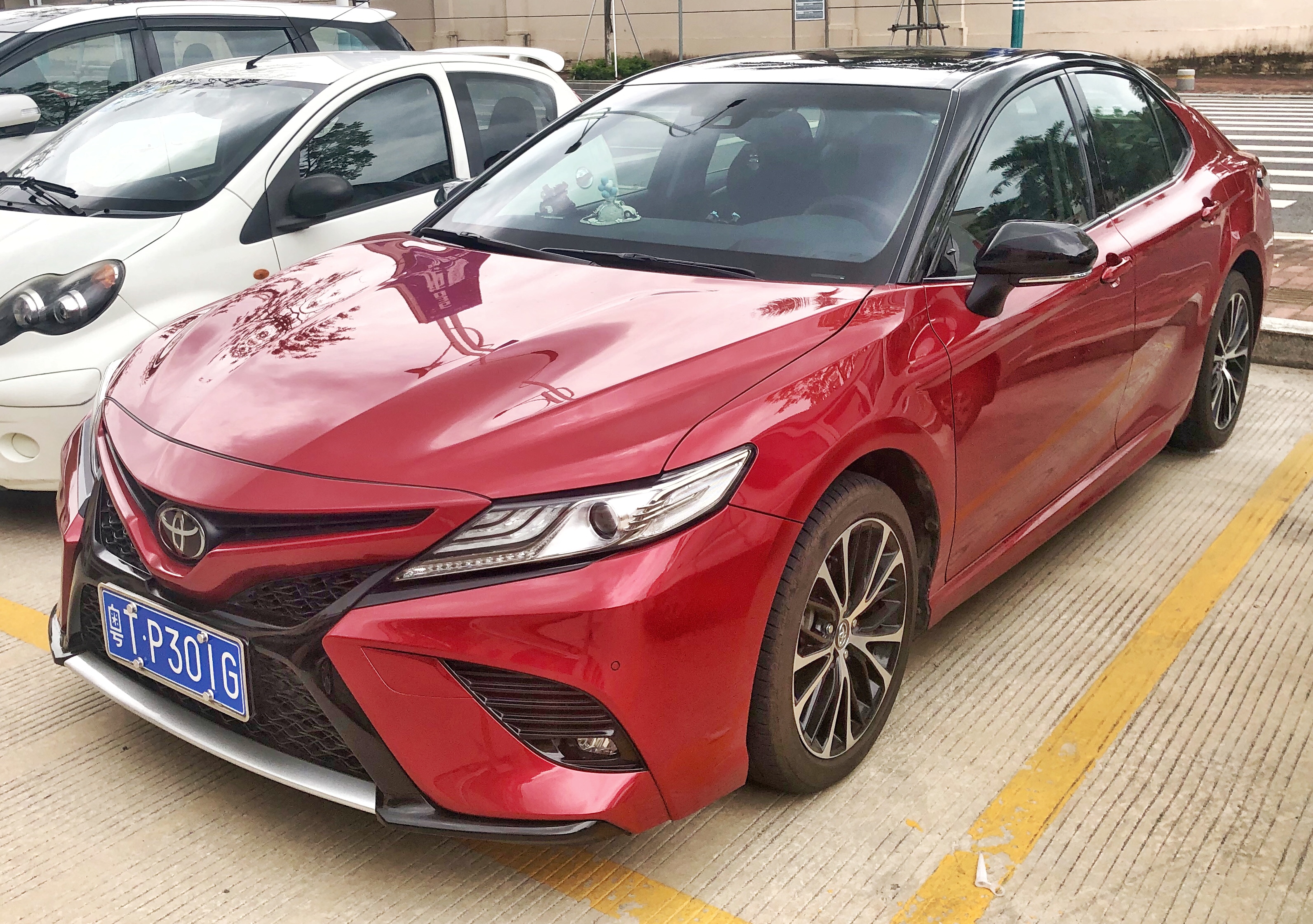
The Toyota Camry is a common, everyday car that many people use for commuting and errands. Because it’s popular, it can also be a target for theft. That’s why it comes up when people talk about car security and prevention.
The Nissan Versa is a budget-friendly car. The hosts’ point is that the base price looks low, but the price goes up fast once you add the features most people want.
Power windows let you open and close the windows with buttons instead of turning a handle. The point is that many buyers want them, so the “base” price doesn’t stay low.
Autonomous emergency braking is a safety feature that can automatically brake if it thinks a crash is about to happen. The hosts are saying newer budget cars may include this kind of protection.
Remote keyless entry means you can use a fob to lock and unlock the car without putting a key in the door. It’s one of the convenience features buyers expect even on lower-priced cars.
Skinny tires are narrower tires than you’d see on many higher-end cars. They can help keep costs down, which is why they show up on some budget models.
Drum brakes are a type of brake system where parts press against the inside of a drum. The hosts are pointing out that some cheaper cars still use them in the rear.
Apple CarPlay lets you connect your iPhone to the car and use certain apps on the car’s touchscreen. It’s meant to make the infotainment easier and more familiar.
Android Auto lets you connect an Android phone to the car so you can use apps on the car’s screen. It’s designed to be safer and easier than juggling your phone while driving.
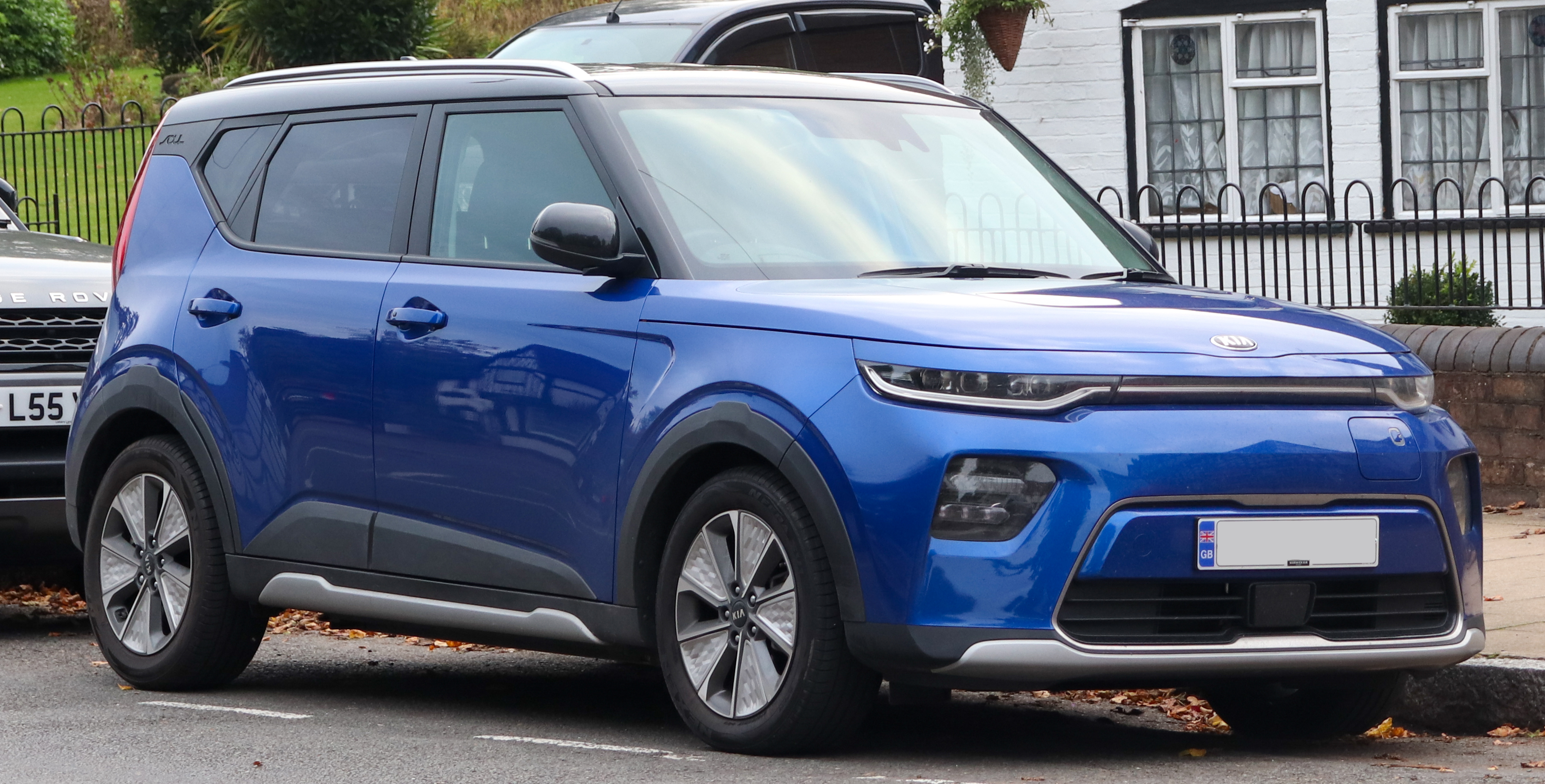
The Kia Soul is a small, practical car that’s popular with people who want something easy to use day to day. The hosts are comparing the current vehicle they’re discussing to the Soul’s “simple but useful” vibe.
The Toyota Corolla is a popular compact car. They’re saying it doesn’t feel as roomy for fitting someone behind you compared with the vehicle they’re discussing.
The Nissan Rogue is a common small SUV. They’re comparing how fast the two vehicles feel and also pointing out that the Rogue costs more in many versions.
The Toyota RAV4 is a very common, practical SUV. The hosts are using it as an example of practicality, saying the Soul was cheaper but still felt useful.
Concept
meta factories
“Meta factories” is a term for Hyundai’s idea of factories that are run more by automation and robots than by people. The point here is that the production process is heavily controlled by machines.
Ford is the company being mentioned here, specifically in relation to a truck factory. The hosts are comparing Ford’s more human-involved plant to Hyundai’s more robot-controlled setup.
Spot is a small four-legged robot. Here it’s mentioned as part of the tech that helps gather information or guide operations before the self-driving cars are put into service.
The IONIQ 5 is a Hyundai electric car. Here, they’re talking about using it as the base vehicle for self-driving programs, where extra sensors and computers get added before it’s used in a robotaxi fleet.
Waymo is a company that runs self-driving cars (robotaxis). They’re describing how cars get modified with extra equipment and then used in Waymo’s service.
Motional is a self-driving tech company connected to Hyundai’s autonomous plans. In this segment, they mention it because the self-driving service is limited to Las Vegas right now.
Fully autonomous vehicles are self-driving cars that handle the driving themselves. The hosts are saying Hyundai is starting to bring that tech to the U.S.
The GMC Sierra EV is an electric version of the Sierra truck. The host drove one for a week and uses it to explain what feels different about EV trucks designed from the start as EVs.
A “clean sheet design” means the car was designed from scratch, not just modified from an older gas model. That can help EVs fit the battery and other EV-specific features more efficiently.
The Ford F-150 is a large pickup truck used for hauling, towing, and everyday driving. Some versions have extra storage areas, including a front trunk. The podcast is pointing out that the electric version changes the interior and storage trade-offs.
A transmission tunnel is a hump or channel in the floor that’s there to make room for drivetrain parts. In some EVs, you may still see a tunnel-like shape even if the layout isn’t the same as a gas car.
LIVE
Welcome to another episode of the auto buyer's guide podcast. Today we take a deep dive into a number of EVs, the Silverado EV, also the R2 versus the BMW IX3 versus the new Volvo EX60, which is the long range compact winner.
And we take a deep, deep dive into the Chinese auto market. Why exactly are Chinese cars so cheap? And then Travis tells us all about the QX65, the odd duck in the Infinity lineup that maybe is the Lexus RX competitor.
So Travis, you've been out of the office a bit lately.
Yeah, last week, luckily, I didn't have to go office and back, but I was out on the East Coast spent some time in Nashville and out in Savannah doing two very different things.
Looking at the Infinity QX65, I think that video just went live as we hit record here today.
And the allergies almost tried to kill me. I don't know if you're a big allergy person. I'm not usually, but our core editor has to slog through a lot of extra noises in those outtakes.
So tell me, are you as disappointed in the QX65, I think as I am, because it seems like it looks good, but not enough changed versus the three row less sexy version.
Yeah, so I think, and I hate to say it, I was pretty pleased with this comparison, you know, they made a big point of, hey, the new red paint here with gold flakes in it is based on the GTR.
And I'm thinking as much as I would love an Infinity GTR to just kickstart the brand.
I feel like they're better off having a GTR based paint. That's a way safer bet. And the 65 is totally the safe bet. It's not some big flashy, you know, free agent signing in the world of sports.
It's saying, hey, let's get a little bit better here and a little bit better here. But I do think it's laying the foundation, because this is not a model that's going to draw anyone else from another Infinity.
It's really meant to draw in new people to the brand. And I think they're building on top of it. Case in point, an engine.
It's not that anybody X5 GLE intending is going to run out and buy that Infinity, but is it enough to convince a Lexus RX shopper to jump ship?
I mean, I was thinking something like, I mean, not quite the same, but, you know, expensive grand Cherokee is you're looking at the same sort of slightly larger two row situation.
I just, I think the grand Cherokee shoppers two different.
Yeah, and I know I know it is.
I'm not sure how many will jump, but I also don't think Infinity is, you know, going to be producing nearly as many of these as they are the QX 60. So again, I think I think that's that's under control.
But they did say this is the sportier version of a QX 60 so much so that not only do we have the same engine, but we tuned it to sound like a different engine.
So yes, throttle response is kicked up a little bit and the shifts are more aggressive and it's meant to feel a little bit happier, even if on the dyno, everything's the same.
The big difference though is all the sound they're piping in and that soundtrack is a V six soundtrack.
And they said it's we got the great harmonics of a V six and I was like, then why do you have a four cylinder under the hood and why are we pretending but there's a big focus on powertrains.
It sounds like and they've talked about a V six for their upcoming sedan manual sedan.
It sounds like a V six is probably on its way to the QX 60 and the 65.
I hope so, because I think that would that would be the thing to get Lexus shoppers out of the RX which no longer has a V six and get them to consider infinity.
And that's the thing I just infinity has had such a problem with that two liter turbo I loved the concept I was real gung ho on the variable compression engine.
When it first launched and I think that at the time, it was okay.
The promise was fuel efficiency with decent performance.
I'm like, you know, we're getting we're getting both of these things.
And I thought that over time infinity and Nissan would work out the bugs.
If you if you made the VC turbo to a regular automatic, it seems better.
But if you made it to the CVT, gosh, there's just there's so much going on there that that it just never felt fully baked.
And it has thinking that enough doing.
Yeah, and they haven't put it back in the oven since I think is the problem.
And now we're starting to see some of these longer term reliability problems and questions with the VC turbo design that makes me wonder, you know, should infinity just cut their losses and stick an old V six in there.
And and also cut their pride, I guess, and just buy an ice and eight speed automatic and stop any of the worries about that that CF nine.
I mean, especially if you're trying to make changes quick, then buying a known product and just going here you go.
Bing, bang, boom.
You know, that's what we see over at Stellantis is they're throwing V eights back and everything.
And even though they're old engines, there's there's something to it that the customer likes.
And if it's just that it's not the two liter turbo people are concerned about that that's also probably its own win.
But I would say I'm not disappointed in it.
I just think I think the next couple of years, there are probably some changes coming to it and and this like baby step into Hey, it's a new model.
This is the new infinity.
Let's see what we're doing.
Makes sense.
But yeah, a little underwhelming, a little underwhelming.
Yeah.
My impression is more of a see.
Here's what we're doing.
You know, it's like what why why this why now it if you're going to develop a whole new 65.
Why this drivetrain?
Why now?
What's it doing if it's trying to bring the fight to Lexus?
Because it's obviously not bringing the fight.
I think to really much else.
And I don't think that's a problem.
Our RX is the best seller.
So yeah, let's target RX.
Totally logical.
But but it's not doing the things that are X does.
It's no hybrid.
There's no plug in hybrid.
There's no v6 for the things that are X is not doing anymore.
Right.
I think it's it's going to be more attractive to certain folks, but even the shape is a little bit strange because they went just super, super sleek and sharp and you know, edgy on the back end, but it's still got that rounded front like you get in a qx 60 or qx 80.
So even there, there's a little bit of a little bit of asymmetry.
It almost becomes like that teardrop shape by default and or by accident, which is not generally considered like the most attractive.
But I do think it's still, you know, it's a good thing that they're bringing something new, but it's not that new.
And why not turn that into a test bed?
Yeah.
But I'm guessing it's just what's ready to go right now.
And not much is ready to go at the moment.
The next thing they said is coming is a higher performance qx 80.
So that's their version of that flagship, you know, look at us, this is going to be interesting.
So I guess we'll just wait and see where that lands.
And then after that, probably sit in.
I think it's just disappointing that the Nissan Mercedes deal didn't go further.
I mean, the remnants are still there.
The nine speed rear wheel drive transmission is a Mercedes transmission being built by Nissan.
And there's a tiny dollop of collaboration here and there elsewhere, but not, not what we used to see with infinity where they basically took a GLA and reskinned it and made that an infinity.
And I thought that was actually a pretty fantastic infinity.
They just didn't go to that next level and swap out more of the bits.
It felt just a tiny bit to Mercedes.
And that's a type that I think works for infinity in the U.S.
If they could hop on that bandwagon and have access again to the CLA's platform and give us a small SUV to replace the qx 55 based on that with Mercedes engines or a Mercedes Nissan engine and a Mercedes transmission.
You know, Mercedes front wheel drive transmissions.
They're not my favorite favorite, but they're they're a whole lot better than what they got now.
Yeah, I will say kind of a funny circumstance.
So I went from Nashville out to Savannah or the Savannah area to go over to Hyundai and we were in the car from airport to hotel.
And I asked the driver we drove past the gas station and said, What do you guys think of gas prices out here?
And he was he was lamenting.
Oh, man, it's getting expensive.
And he goes, I've got I've got a gas guzzling infinity G 37.
And I went, Oh, I was just at infinity.
And boy, are we a long shot from the G 37 days.
But yeah, you want to know what the gas prices were that we drove by that he was he was he was actively concerned about three dollars three twenty nine.
I think.
Oh my goodness.
Yeah.
Wow.
And you and you know what?
When I told him we're a close out of five fifty here right now in Washington.
He almost literally could not believe it.
You you what?
Huh.
Yeah.
Yeah.
So you're three thirty.
I'm sure percentage wise it's gone up.
But I just I just bought 80 gallons of diesel at six dollars and ninety cents.
Oh boy.
Yeah.
Yeah.
Yeah.
I definitely saw it was not a whole week to go like seven fifty for diesel.
And that that was that was tough.
I told myself at the beginning of the the not war that I should just run out and fill our fuel trailer.
But I was lazy and I am paying for that laziness now.
Literally paying for it.
Yeah.
Yeah.
But over in Savannah.
So we got to go look at Hyundai's plant.
Second time we've been out there.
But obviously they've been working on it and they are hiring for second and third at least second ship second and third shifts coming up.
So if this doesn't work out I know where I can go get some employment.
But there's not new Hyundai models coming.
It's over the next let's say six or three or four years from twenty six into twenty thirty.
They're looking to build ten models between Hyundai Kia and Genesis.
So even those are totally not the same companies.
There are going to be a number of models built within the same factory.
And where it was all meant to be EV we are now going to get some hybrids coming out of there as well.
Yeah.
That's logical because they you know they they you know blew it on the factory basically they bet the farm on the factory that.
Yeah.
Was going to give them the tax credits and all of that.
They followed what they were told to do.
And now they've got this factory they got to make work.
And so yeah interesting twist there.
But I think it is logical.
The the one fun thing here that that made me think of this factory to in a roundabout sort of way was this article that I ran across.
And then we posted about this in in a little bit earlier in the month about the the Geely fifty nine mile per gallon car.
Admittedly that's not EPA fifty nine miles per gallon.
But even even if it ends up at fifty miles per gallon if it was a test I think it's that's not the thing.
The thing is it's a high efficiency hybrid sedan three hundred was it three hundred three horse around three hundred eight horsepower.
Sorry for fifteen thousand seven hundred dollars.
Not you.
That is.
Yeah.
Brand new.
I mean it looks like it looks like the most generic thing you've ever thought of.
It's like a mix of different styles with a weird funky grill.
But but the specs are hard to deny.
And the drivetrain has actually been certified by Guinness as being the most efficient passenger car engine ever developed and mass produced.
And Geely's been doing a lot of these three speed hybrid systems around the world.
So is a BYD number of Chinese companies actually have variations on this theme where they're they're pushing ahead with parallel hybrid systems that have a serial mode to allow them to stop and idle things like that.
But they're actually using a three speed automatic transmission so they're not using the Toyota like system that some manufacturers are doing.
But they're getting fuel efficiency numbers that are shaming Honda Toyota Hyundai and the rest of the bunch.
Not just in this in a wide variety of vehicles.
You can get the same hybrid system and a bunch of different SUVs etc.
Yeah.
I don't know how one even begins to compete with this in any way because you know I can't we you know you and I can't speak to fit and finish and how it feels because we're not there.
But it looks like a mid entry interior quality feature set.
The exterior is attractive.
It's not just some slab sided no design for for all the cost savings in the world.
And then of course you can't get horsepower without money and you can't get fuel economy without money and we get both in this one situation was cost more money.
Yeah.
How can how can anyone compete with this.
And that is sort of the interesting question.
We got a lot of comments on this Facebook post about the Chinese market and Geely and all sorts of drama there.
So without trying to dive too much into politics.
Let me just go over some of the basics that I think viewers should know when we're talking about some of these Chinese vehicles in this particular market.
So this particular hybrid system for instance uses a one point five liter four cylinder engine that's used seemingly some variant of this engine platform in a bunch of different vehicles under the Geely envelope and portfolio.
It's made it to a very simple three speed transmission.
There is a low gear for low speed travel and high torque demand situations.
A mid gear and a high gear for better fuel economy out on the highway.
So it is this hybrid system is targeted not just towards low speed travel or mid range speed travel like the Honda system is one complaint about the Honda hybrid is that it really does very well at 55 to 60 miles an hour but starts to fall apart at 75 or 80 miles an hour.
The Chinese systems seem to be better better able to handle those higher high speed situations.
Geely has their fingers in a whole bunch of other stuff there.
100% owner of Geely Galaxy Radar Lincoln Company Zeekr and London taxi the iconic London taxi they own 79% of Volvo 51% of Lexus 50% of proton at least 50% of Polestar ownership there is unclear 50% of smart car.
Yeah, the Mercedes smart car 34.2% of Renault Korea 17% of Aston Martin and 10% of Mercedes Benz with eyes on more of the Mercedes.
Yeah.
But the big thing here is that they are able to spread some of these R&D costs over a broad market here.
And, and they also run differently.
So I should adjust some of the the complaints and questions on the Facebook side of things.
The first one is oh, the Chinese government has undue control over the auto industry and their massive subsidies and cheap labor costs and all these other complaints let's go over these one time and see how you think of this.
So labor is often cited as the big reason that Chinese cars are cheap.
This just doesn't hold water because labor is not a big part of any new cars cost structure.
Labor is around 10% of most new vehicles MSRP with direct labor from the car manufacturer coming in somewhere around 5%.
Yeah, around 1000 to $1500 actual labor costs on most cars.
When we dug into this deeper Oliver Wyman, an industry consultant puts it this way, which is I think worth thinking about the average labor cost on an approximately $40,000 car in the US right now.
You know, US labor, about $1300 Japanese labor $769 Chinese labor $585, but a lot of that has to do more with legacy health care costs, and the fact that we don't have national health care in the US and automation.
So Chinese cars are highly automated in the manufacturer, not just because the employees are being paid less but also because that automation there.
A bigger segment of this though is the vertical integration.
So when you take a look at Korean cars, their labor costs and some of these other costs are lower, because Hyundai has mines and they have a shipping company and they have a heavy industry arm, etc.
So they can vertically integrate a lot of these costs.
China also has really low energy costs, fewer environmental restrictions, although that is slowly changing.
Bigger though, economies of scale, fewer legacy costs, especially retirement costs versus the American car companies for sure, very short development windows because it's a highly competitive market.
So the average Chinese car doesn't spend six to seven years in development, getting clay modeled and getting workshopped and focus grouped half to death.
They tend to take more of a blunderbust kind of approach where they scatter shot out designs, and then they kill them off quick.
They're like, oh, let's let's go straight from digital to production on this thing.
If that doesn't work out, we'll switch it up, we'll change it up, we'll redo this, we'll redo that.
They also make some pretty cheesy software to be perfectly honest.
MG's have some very basic stuff, so some of the component qualities lower.
If you rent cars in Europe, you'll notice that you hop in an MG that's like the equivalent of a RAV4, and at 20,000 miles, the carpet's worn through sticks and floor mats in it, I guess.
The software is kind of iffy, but it is a car for 30 something percent less.
On the government support side of things, we have to pick this apart a little bit.
For BYD, one of the biggest car companies there, four million units in production approximately, the average government subsidy, which does exist, is only about $292 per car.
But that's heavily skewed towards the EV side of things, and it's being wound down.
At one point in time, EV subsidies in China were approximately $10,000.
Most of the subsidies are more of a direct to consumer subsidy rather than a direct BYD subsidy.
But currently, they're around $1,000 per EV, and they're in the process of being phased out because it was designed to spur electrification.
It did that, and now they're winding down.
The majority of government support for exported vehicles, though, that comes in the form of VAT rebates.
So in China, as in a lot of other countries, when you're buying supplies to build the car, you have to pay VAT, the value added tax, and then if you export the car, you can get that VAT refunded.
This is not unlike what we do in the US for manufacturing.
If you're manufacturing something, I don't pay sales tax on the steel or the bolts or the nuts or whatever to bolt the thing together.
You pay sales tax when you sell the thing at the end, and you don't pay sales tax at all if you export it out of the US.
So it's really not that different in other countries do the same thing.
The other thing that I think a lot of people miss here, though, are the two final big components are.
Chinese vehicles tend to have low margins compared to North American cars, especially when you consider the margin on the dealer network model and massive competition.
The Chinese market is rife with just absolute bitter pricing wars.
Every manufacturer out there is trying to punch each other in the nuts all the time with their pricing, faster charging.
And so this this competitive market is not unlike, I would say, what we saw in the US market in 100 years ago when car companies were duking it out, trying to create ever flashier cars, ever cheaper cars, you know, because the competition was so fierce.
And I think honestly, without Chinese cars in our market, especially at the low end of the market, we're getting we're getting a little lazy.
Yeah, I mean, so one of the most, I guess, high profile or public, you know, versions of this has been Jeep and looking at all of their models that are very quickly lowering in price, but the model itself is saying the same.
That's just protecting margins, and it comes down to lack of competition that says they can get away with it.
And what we're talking about in China is, number one, massive volume, right?
So the margins are lower, but the volume is there.
But the volume is also what helps keep all the costs down low because everything is bulk ordered and like I said, automated in a lot of cases.
So even if you nickel and dimed, and this is what would be interesting for me is if, you know, like we love the Chevy Trax, if the Chevy Trax was nickel and dimed, how inexpensive could it actually get?
And I no doubt it could get 5% less expensive.
And maybe it's overall 2% worse.
You know, there's going to be an interesting exchange there.
Yeah.
But it's not like we can all of a sudden cut that in half.
And that's so that's still going to be looking at how does it stay competitive with something like this?
Part of it also ends up being.
And subsidies are always out there, you know, subsidies exist everywhere in a million different forms.
So it's not like China is the only one doing that.
In a case of point, we had EV subsidies, but we also have all of the tax incentives for the manufacturer to build a plant here or to, you know what I mean?
And some of it also comes down to how the car is sold.
So in some markets, the car companies can sell direct and you sell direct.
If GM could sell that Chevy Trax without a Chevy dealer involved, it'd probably be 15, 20% cheaper at least.
So a lot of that factors in there as well.
It occurred to me, I'm driving a Hyundai venue this week, and the venue is now the least expensive new thing in America.
It is not possible to get your venue over $25,000.
And most of the venues on the lot will be under 25,000 out the door, including the average sales tax and licensing structure in most states in the US.
So it's a really cheap vehicle.
But the way Hyundai gets to that price tag, I think is more honest than cheap cars of the past in a way.
And maybe I should step back from that and say, in the before times, you know, 20, 30 years ago, we saw inexpensive vehicles.
And the way that manufacturers got to that low price was by deleting features and very few people bought this low advertised price tag vehicle.
So starting at was just to bring in.
Like you could buy a Kia Rio once upon a time with no radio, no air conditioning, no power, anything's right.
Crank windows, power or manual mirrors.
Heck, I mean, they used to delete tecometers.
They used to delete side view mirrors once upon a time, right?
I mean, you could get your car outside view mirror.
The reality was very few of those actually got sold.
So when you talk to companies that are deeply entrenched in this whole manufacturing and pipeline efficiency.
Hyundai, I think, has been one of the companies most upfront about the sort of efficiency question.
It actually costs more to have a car with a base model that has crank windows and manual mirrors and, you know, no power door locks, etc.
Because you have to have all the inventory for that.
You have to have this loss leader model actually, you know, sitting on dealer lots that's not going to move.
But then there's also the warranty repair inventory.
All of that goes along with it.
And as we saw with Hyundai and Kia, then they get sued because they sold a model without, you know, an interlock system to prevent theft.
And it's like, I'm sorry, guys, you bought a crazy effing cheap car.
What the hell did you expect?
There have to be corners cut.
There have to be things that aren't here.
Yeah.
I hate to say it, but it's my generation that was like, that bought these things cheap, right?
And then was like, yeah, but where's my extra safety feature?
It should be included, not for what you paid.
And they weren't alone.
It's just that at that point in time, every other car company had abandoned that ultra cheap segment of the market.
Where we had the base, the base Rio's and the base Kia souls and those cheap and cheerful vehicles.
And they're all these complaints.
Well, yeah, but they should have made it more difficult to do this or that.
And they, they should have protected this and the steering column better.
So you couldn't just use a screwdriver or of course the USB key that everybody was talking about.
It didn't matter what flat object you jammed in there, but they weren't unique either.
I mean, people used to steal Camry's and Malibu's, etc.
It's just that the Chinese cut or sorry, the Japanese companies and the American companies gave up the cheap part of the market.
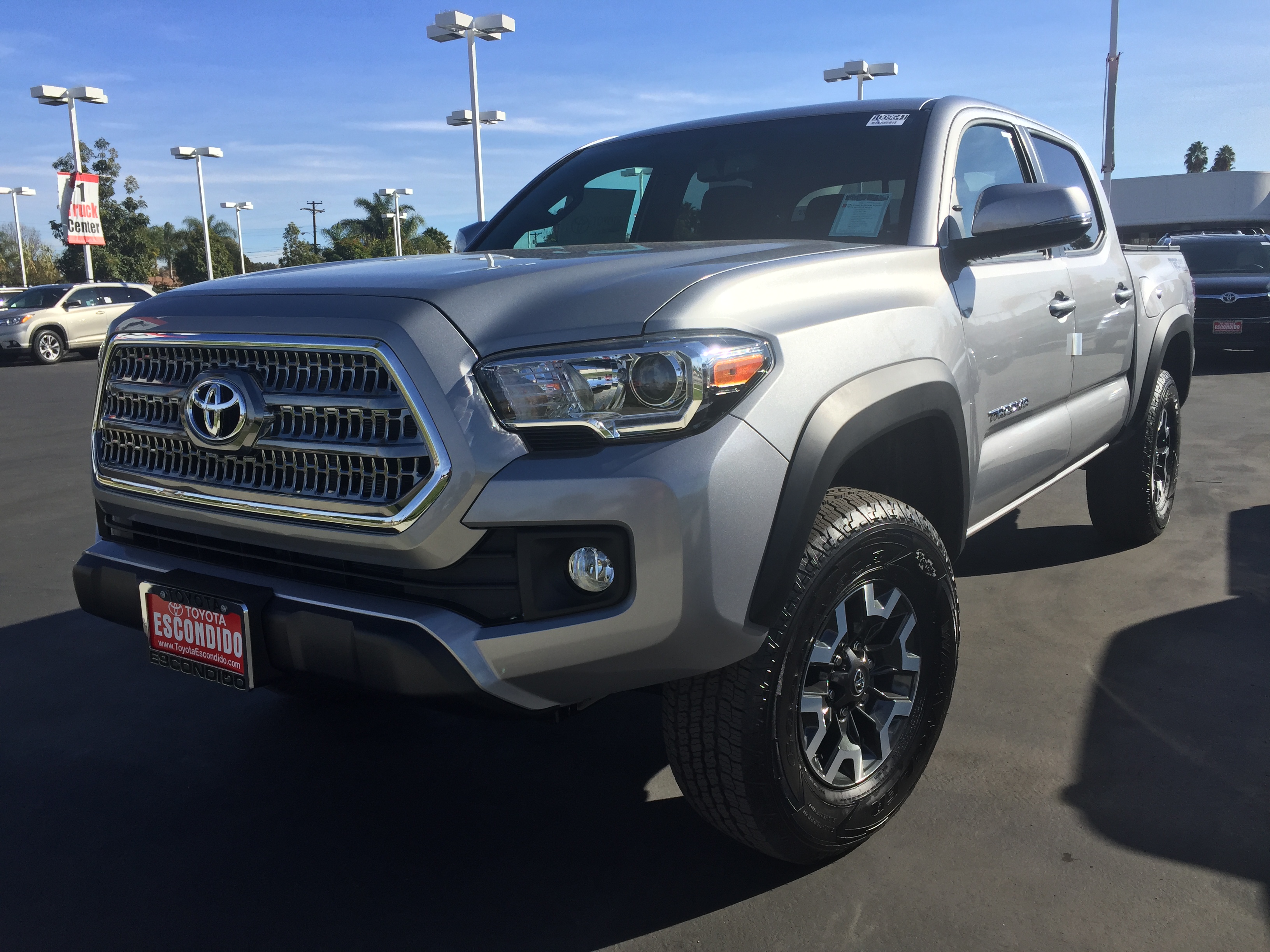
Yeah, I mean, trust me, the thing we hear the biggest complaint is why Toyota Tacomas can't be less expensive, right?
Where is my $10,000 Tacoma that I bought 25 years ago?
Well, that Tacoma has a lot less features and it's a lot less safe.
And if that, and there's also a weird world where if that's not important to you, like that's kind of okay.
Except you have to have insurance and your insurance company isn't going to like that.
So it's not a, you can't have an unsafe vehicle.
It's that it's going to cost you in different ways and that could be your life ultimately.
So yeah, so it's like, and then the, then the affordable market went in a slightly different direction where I think Nissan was probably the best example of this where you had a really low sticker price in Versa,
but it jumped pretty rapidly as a percentage of MSRP if you wanted the automatic transmission and the power windows, which most people wanted at that point in time, right?
They wanted air conditioning, wanted this, wanted that.
So that really pushed everybody up and no one was really buying that cheap model.
I think that the cheap pricing in the venue is a bit more honest in that way because the venue comes with autonomous emergency braking.
It comes with power windows and air conditioning and powered door locks and remote keyless entry and a lot of the things that people want.
It still has skinny tires, but at least it has a spare.
It still has drum brakes in the back, but they're there.
Right.
It stops, right?
And it's actually pretty roomy.
It has a, it has a eight inch LCD, which is bigger than we saw in a decent number of of Hondas, not that long ago, right?
Eight inch LCD with Apple CarPlay and Android Auto, not a lot of other features, but you know, you can connect your phone, you do your thing, and do you get 31 miles per gallon?
If you compare it to like the Gen 1 Kia Soul, it falls into that same sort of category that, you know, the vehicle is here and accessible and can do, you know, anything you need it to, but nothing that you don't need it to.
And there's, there's, there's a, there's a market for that, but it's the first time new car buyer who is not who they used to be, right?
And yes, that's, that's the other part of the problem.
So, and I'm personally disappointed that the two of them couldn't have gotten together and been like, okay, we're going to keep one of these.
Let's keep the soul and not the venue.
The venue is a lovely vehicle.
It's, it's actually more practical than I thought because you can act, even though it's one of the smallest vehicles in the U S because the seating position is so upright.
I actually can put my daughter behind me, which is something I can't do in like a Corolla hatchback, which is bigger or even a regular Corolla or, you know, Honda Civic is not, not exactly roomy.
So it is more practical for a lot of families, I think, than they think.
You can put three, 24 inch roller bags in the trunk.
It's not a slug because Hyundai was like, why design a new engine for this thing?
We'll just take a turbo off a 1.6 liter and jam that under there.
It makes 121 horsepower, eight and a half seconds to a sixties like Nissan Rogue speed.
So, you know, not bad considering Rogue is only a hair quicker than the QX or any hair slower than the QX 65.
Yeah.
And Rogue is twice as expensive in most trims.
I mean, for $40,000 is pretty average in that segment.
So it's like the performance is not bad.
The feature set is not bad.
It's cutesy in its own little way.
But I think that the soul would have been the better one to keep around.
Well, and the soul in its own weird way had built its own little legacy.
Like it earned it.
It deserved it, but yeah.
And I know neither company would have liked this, but I also think they could have gotten away by redesigning the soul and had that be the one product in their lineup that is really is a bad engineering thing.
It's like literally the same box.
Kia logo, Hyundai logo.
Kia soul and the Hyundai spirit.
Right.
Make it as cheap as it possibly could be.
And practical.
Because it could get less expensive for both of them.
Right.
And it could have been that practical thing because it was boxy.
It was that thing that was super duper cheap, but almost had the practicality of a CR-V RAV4 at a price tag half as high.
Yeah.
Yeah.
Well, I can tell you, Hyundai is still working on it.
There was a lot of automation throughout that factory.
And I've been through a couple of factories.
And I think like the biggest juxtaposition is what they're doing at the meta factories, they call it for Hyundai.
And then Ford's truck plant out in Dearborn, I think it was.
And just going, oh boy, there are people in and out of these trucks driving around and doing whatever.
And then Hyundai is like, oh yeah, people don't get in these ever.
It's all robot controlled.
And it does, you know, until it's on its way out the door, it's been guided by Spot, their little robot dog.
So yeah, just interesting.
But you know what else they're doing is they are cranking up the IONIQ 5 production for people other than Hyundai.
So the new Waymos are going to be Hyundai's.
And apparently those are coming out of that same factory.
About 95% of it is built there.
Then it gets shipped out, gets all the other sensors and everything else put on.
And then it goes out into the Waymo fleet.
But Hyundai is doing their own, I want to say it's called Motional.
And if I get that wrong with that, I think it's Motional.
And that is going to be right now exclusively for Las Vegas.
But those IONIQ 5s are not coming from that factory.
They're coming from over in Korea with their own suite of sensors and hardware and computing on board.
What else are coming from Singapore?
They're coming from Korea?
They're coming from overseas.
I'm sure someone will tell us down there.
Yeah, but those are going to be exclusively for Las Vegas right now.
And you'll be able to drive around the Strip and the Boulevard, not too much further outside of that.
But that's Hyundai dipping their toes in here in the US with their fully autonomous vehicles.
But more IONIQ 5s out on the road.
And I got to be honest, if I want to put any EV out on the road right now that I have to see in mass, IONIQ 5 is a great choice.
It's subtle. It's attractive.
Like I love little retro futuristic hatchback situations that have gone there.
It's like a good little boxy thing.
Yeah, I kind of wish it had a bigger battery or was more efficient.
One of those two things, which does bring us along to our viewer question here,
which I think is really good and we should probably take a deep dive into this.
But let's run through his basic question there first, Travis.
Yes. So the question here comes from Joel.
Joel is a subscriber on both our YouTube channels and our Patreon.
So thank you, Joel.
Essentially, current owner of an R1T and for the next vehicle trying to side between the Rivian R2 and the BMW IX3, the upcoming IX3.
Love for Rivian does outdoor adventures, whitewater kayaking, mountain biking.
So not off-roading, but off the beaten path.
And just wondering what's the big difference between them and is it worth the extra cost that you're going to pay in one versus the other?
And ultimately, what's that differentiator going to be?
And we started talking about this just a little bit.
Things get a little bit closer than you might expect.
And there's one that Joel, there's a vehicle Joel didn't mention that I think would also probably fall into this mix.
Yeah. And before we dive into this one, let me just say I spent a week in a GMC Sierra EV last week and I kind of liked it somehow.
It reminded me a little bit of the R1T in that it was a clean sheet design, which we have so far not seen really in the truck space so much.
In a while, yeah.
Yeah. And it allowed, as a clean sheet design, it allowed them to think more outside the box, I think, than most truck manufacturers ever had.
I mean, with Rivian with the gear tunnel and wanting to do power integrated TANU covers and an air suspension and be more of an adventure pickup truck in that segment.
In that same way, GM applied a lot of their truck experience, not to take anything away from Rivian here, but they applied a lot of their truck experience.
And this same sort of out of the box thinking with Sierra and Silverado EV in a way that I found strangely easy and appealing to live with.
With some caveats, I guess the front trunk, kind of small but handy.
The one in the lightning is bigger, but then lightning has so many compromises on the inside, on the EV side of things, because of that desire to make it compatible with the body on frame structure of the regular F-150.
So it doesn't have a transmission, but it has a transmission tunnel.
It doesn't have a four-wheel drive system, but it's got a four-wheel drive bump in the back, you know, and Sierra EV and Silverado EV don't have those problems.
They have that midgate, which is fantastic.
Not their first rodeo with the midgate, of course, they had the avalanche, but I think it's better implemented in there.
And then it did make me wonder, I wonder how much of the fact that lightning's battery is so much smaller really has to do with just the general limitations of the frame and the structure and how it would fit in there and how it could fit in there.
Ram, by all appearances, wanted to have a battery almost as big or as big, depending on who you talk to, as the GM one.
I wonder why Ford never tried that.
I mean, I would guess that it just like you're saying, they're trying to build it into a pre-existing model, essentially.
They're converting rather than building it from scratch.
And as much as I don't love how much battery is on board those big battery GMs,
there's no doubt that they squeeze it in there.
They've got the most driving range.
They've got everything you need or want out of it.
They've created a very heavy vehicle, but yeah, they maximize the space inside, which is what consumers want these days.
They're much less worried about how large the bed is versus how large the cab.
And it seems like a small thing.
But between the Silverado EV and the Sierra EV, there is no question.
I'm going Sierra EV 12 out of 10 times just because the layout of the interior and just how it seems to feel more truck,
where I think the Silverado is going more like sport truck.
The Sierra EV is sticking more towards truck appeal.
And neither one is going to be overly sporty.
Acceleration is great.
We'll put it that way.
With a curb weight of nearly 9,000 pounds, it is the worst handling pickup truck really in America.
It was unfortunately raining half the week that we had it, which meant very slow speeds on the winding roads where I live because it does not do anything quickly.
In the dry, it took 150 feet to stop.
Yeah.
I mean, we all know hippos are super fast.
Yeah.
And that's what that sentence ends.
And aside from that, with that is the efficiency problem.
But aside from that, very practical, our real world range was really more like 380, 390 miles with the Max pack instead of the 4 or 4, whatever that GM claims.
Bearing in mind, it's not EPA tested because it doesn't have to be.
Which is crazy, but yes.
Yeah.
The flat glass side view mirror is wacky.
That's horrible.
If you've never driven a vehicle with flat glass, it's required for vehicles with a GVWR over a particular amount because it's a class three truck.
And that's horrible because the blind spots are enormous in this thing.
And yeah, very wacky.
We averaged about 1.8 to 1.9 miles per kilowatt hour, which means coupled with the battery pack.
Interestingly, we could do a complete week of driving, including towing two trailers, about 60 miles towing.
Not a lot of towing, but to two trailers.
Did you guys pick up gas with the CREV?
It did.
Yep.
Yep.
The irony of this was not lost.
No, I love it.
I love it.
Had to go to Home Depot to pick up a ton of lumber, literally more than a ton of lumber.
And then forgot that I needed something else.
So I went back without the trailer and made use of the midgate because I could put 10 foot lumber inside the thing while my daughter was still in her child seat.
So that was pretty darn handy.
Yeah, maybe a little breezy, but it'll work.
Not that breezy because the eight foot lumber can fit entirely within the watertight envelope of the vehicle.
And 10 foot lumber only sticks out a short amount because of the midgate design.
So the whole ton of cover could still be on.
So it's a little louder, but it's not actually breezy.
I was like, this is perfection.
Aside from the fact that I ran through the numbers in my head, a full week of driving would use most of the battery.
We ended up, I think at 15% by the end of the week, meaning it would then take three work days plugged in at the office to recharge the battery because it's such a big battery.
And we have 208 volt power here and no, no 80 amp circuit for charging.
So to have to charge at, you know, 48 amps, 208.
So yeah, it just takes so long to charge.
It is insane, 100 minutes to charge at a DC fast charge station.
However, you're in and out of the office, you can just leave it overnight and that would certainly help.
Yes.
Logically plugging it in every day would be the way to fix this, but it would, it would take twice as long to charge that daily, that daily drive versus a Blazer EV because it's literally half as efficient.
But I promise Joe coming right back.
One more, one more second, because I am looking at moving here soon.
And it means that my charging situation is going to change.
And I want to drive EV for a million different reasons, especially for daily driving.
But if I don't have easy access to charging, that's going to be a real pain in the butt and probably not one for this like couple year period where I'm wanting to deal with it, right.
And as much as it's great to plug in when you get to an airport, there have to be open stalls at the airport.
So I was actually looking at what is a used GM big battery EV running because it's more about opportunity charging.
If I'm gone for three days, I can plug in at one of those stations.
And even if I make one trip to a fast charger and it takes me longer, which it will, it's kind of going to last me just that much longer on the back end.
So I was actually, as much as I don't love them in their own right, I was looking at them and you know what, you know what, sort of stood out.
Is that Hummer EV? Because those Hummer EV SUVs, the prices are dropping.
That's a big boy. It's too hard to park at the airport.
So wide. So wide. And the only downside for the trucks is that they don't really have a canopy.
There is a canopy for your industrial applications because I've seen a lot more fleet vehicles using Silverado EVs these days.
And they've got, you know, sort of the work canopy, but because it's not body on frame, because there is no divide.
Keeping that thing sealed is going to be a bit more of a pain.
So ironically enough, I was actually looking at them last week, but we'll get back to Joel, R2, BMW iX3.
And the ringer here is the Volvo EX60.
I think so. And this kind of fits with the long range side of things and the Chinese competition, because I will back up for a second and say that I think, A, we've obviously seen some stagnation in the American brand's EV development, all three big three, right?
Even Stellantis, which does have a large amount of R&D spend going on in Europe, none of that applies to their North American side.
But even the European side, I think that all the European car companies and the Japanese and Korean car companies are seeing this pressure from China.
Japan is a little bit better insulated, I think, because the Japanese domestic market is healthy enough for them and their North American market is big for them and protected from the Chinese competition.
So Honda, you know, major, their biggest market is the US, very protected from Chinese competition and their domestic market very protected from Chinese competition.
But when you look at globally, Toyota and Hyundai, they definitely are seeing exposure in this in Europe and other markets, developing markets in Asia, etc.
And I think that's part of why Toyota has been actually pretty aggressive with Subaru at really developing more EV models, refining, constantly honing things down more than I think a lot of people thought they would.
And why some of the European car companies, I think, are really pushing hard here too.
Porsche, you know, some of the Volkswagen group, the, of course, we have Volvo and Mercedes and BMW also, because when you look at R2, which is predominantly going to be in this protected island of North America and this EV market,
the specs on EX60 and EX3 are just better.
Yes, but the vehicles are also going to be better in each individual category and they're going to be more expensive.
Yeah, yeah. So the trade off point here is that the first R2s, like every new brand and new model that we've seen come into the US recently, associate in the EV world, is going to be the highest trim first.
And that's coming in at essentially $60,000. It's just under 58, you know, 57, 990 before destination, which I don't think we have yet. Either way, let's call it 60.
Yeah, that's the trade off plus options, of course.
Right. And that, but that's a trade off point where the EX3 is going to start. So from base to fully loaded, of course, the fully loaded is going to have some feature sets the base doesn't.
But the quality of vehicle is going to be higher in the base vehicle. It's just what's the most important to you. And then of course, there's the actual built to your lifestyle.
So I think I think you and I are great people to have this conversation with because is a Rivian design for an adventurous lifestyle? Absolutely. It's got more ground clearance. It's all about utility space.
But if we're talking about mountain biking and kayaking, that means you either have a bike rack that goes on the roof or a bike rack that goes on the hitch.
And it also means that you have a roof rack for your kayak. You don't need to fit either of those inside the vehicle. So what else do you need? Because each of those should have a hitch option and a roof option.
Beyond that, if unless you really have to get somewhere specific, you don't need 12 inches of ground clearance, right? Obviously, the R1T can can jack you way, way up.
But when have you used it? Maybe you feel better using it because you know, you're less likely to hit anything. But I don't mind pushing something like, I don't know, I guess the EX60 or the IX3 to the same places that an R2 would be expected to go in these sort of applications.
Yeah, I think it's, I think it's going to be a question of all wheel drive capability. I would assume, although we won't be able to test them back to back for a while, but you'll be driving the R2 soon.
Yes.
In air quotes there.
Barely.
EX60 is going to be coming next. So R2 should be on sale first. EX60 shortly thereafter. It's going to be on sale in Europe right about the time everybody's watching this. And then in the US shortly thereafter. And then IX3 in the US is probably going to be late 2026.
My understanding is that we may be driving it in October, but it's a little too early to tell. So that's the general time.
The regional summer of 26 is probably not happening.
Yeah. So the big thing I would say between them is that Rivian's all wheel drive software and programming is probably going to be better for all sorts of off road things.
Also, we find more ground clearance is if my memory is correct on the R2 by a reasonable amount. The interior seems more adventurey, more outdoorsy themed, whereas the Volvo and the BMW are just sort of modern interpretations of those brands aesthetic.
I guess like the R2 is the modern interpretation of Rivian's aesthetic. So there's a difference there. I think the core thing with R2 is that it's not an 800 volt platform.
There were initially some rumors that it would be, but it is not. So it's a 400 volt architecture. So architecturally, how much exactly is shared with R1T and R1S? We don't know.
But it's at the very least informed by R1T and R1S. So in that same sort of design family, as far as control systems and motors and inverters and all of that.
Whereas the EX60 and the EX3, as I said before, I think it's a market pressure thing, perhaps R2's biggest markets going to be North America without a doubt.
And their primary market, EX3 and EX60, they're coming here because they sell cars here. It's not going to be their biggest market. That's going to be Europe for sure.
And Volvo is probably going to be trying to push in China with EX60. And so I think with those vehicles, you can see why those manufacturers did what they did and went with a brand new high efficiency 800 volt architecture.
The range champion is going to be the EX60. The WLTP on that one is 500 something miles. The WLTP on the EX3 is mid 400 something along those lines. Obviously they'll get reduced for the US market, but the EX60 is still going to be the longer range model.
But they're both going to charge very, very quickly, both at least 30% faster than the Rivian R2. So if you don't do any DC charging, I don't think that's going to matter at all.
But if you do DC fast charge, especially on a regular basis, you know, a Volvo charging in 18 minutes versus approximately 30 minutes for the R2, I think it's maybe 28 or 29 minutes technically. But that's a big, big difference, especially when in that window, the Volvo will get you about 100 miles more range.
Yeah, and I'll acknowledge it. I also don't, as an EV shopper, that would not be the thing that pushes me is that faster charging just because how infrequently you're probably going to use it, but you are going to be looking at the new technology versus the old technology.
And that is, that is going to be something that is probably going to push some buyers, especially if, if, if like Joel here, you know, you already have a Rivian R1T, you're already quick to jump on the new thing because of any reason, right?
But you're ready for the next new thing. The R2 is admittedly coming in a little bit behind. And, and while I've seen subcompact vehicles, Kia EV3, for example, was was announced, you know, coming to the US.
That's on a 400 volt architecture. That one I can understand because it is all about cost and keeping those things down. But the EV6, which is not going to be direct competitor to this, but falls in the same general category.
EV6 has 800 volt. So why, why not R2? And even though the R1 doesn't have it, if, why not look for the next development cycle, putting the new product and then bring it to R1? Because there'll be a couple years where we go, Oh, why does the mid, why does the mid tier have better tech than the top tier?
But that just means the top tier is getting in a couple years.
And it's always possible that there might be a longer range, higher efficiency, more powerful R2 with an 800 volt architecture coming at some point in the future. Because when we look at the pricing ladder, we know more about the Rivian's pricing ladder, and it is going to be less expensive,
theoretically than the slightly larger IX3 and the reasonably larger EX60. EX60 is trying to be the XC60 of the electric world, which has always been a bit bigger than some of the European competition. And we see that with EX60 as well.
It's actually decently sized, almost X5, maybe in a weird sort of way. It'll be between IX3 and IX5, most likely size wise, at any rate. So the range and cost structure of that definitely seemed to be at a slightly different semi step above R2.
And if, if IX3 and EX60 never start below $60,000, then I think the decision by Rivian was actually quite a smart one, if that helped reduce the price tag.
Yeah, and, and I will also add that for the EX60, we're also getting the cross country version. So if you're worried about that little extra ground clearance or a little more off road dedicated, you know, attributes, that's the model you're looking for. And we probably won't see something like that on the IX3.
You know, I don't, I don't, I can't think off the top of my head if BMW has a off road performance version. There's no, there's no IX3 tremor coming.
No, not that I recall. That's definitely been a Volvo thing though, their cross country models, which has been popular for them, especially in Europe.
I think for me, the range is maybe a bigger deal than for some, because even if the charging isn't that fast, that kind of helps you on on road trips and and the occasional weekend away where maybe, maybe you're going just a little bit further.
And you don't have to worry about it because you have enough range to make that function.
The other thing I would say, rationally speaking, is it's not just the, the 10% to 80% window that's that's a big deal here, because R2 is is, you know, 300 something miles of range.
If you have a 400 mile range vehicle, you and you're worried about battery longevity because these will all be using, you know, NMC packs, they're not going to be LFPs.
So you want to charge your battery to 80 to 90% most of the time rather than 100%.
So 80% of your range down to 10% of your range.
When you really do that math, that's the road trippy kind of window.
You're, you're really talking about a lot less range in the R2 versus an EX 60.
So the EX 60, you can actually get 300 miles worth of daily driving range out of that battery because you're not going to be charging outside those windows.
Whereas in an R2, you'd need to use the whole battery for that.
Theoretically taxing the battery a little bit more also requires a bit more preparation on the road tripping kind of of angle.
It's also going to take you longer to get there in the Volvo or the BMW with approximately 400 miles of range.
If you only need to kick it in an extra 150 miles, that's going to be real fast because of how quickly the battery charges down there at the 10% mark.
Both of those batteries are going to be very, very rapid charging batteries so that that in and out of the DC charge station, you know, getting that charge is going to be real fast.
The twist though, I would say is you were recently at a Hyundai event where they talked about where people are charging and the Tesla charging infrastructure really factored quite high in that.
And of course, we don't know how fast the Volvo or the BMW will charge at a 400 volt supercharger.
Right. So that and that one was interesting.
I'll tell you the percentages are going to add up to over 100 because I believe you're able to select multiple options.
That's how we would get here.
But 74% of public charging fast charge stops for the Hyundai Aonic 9 happen at a Tesla supercharger.
But but and this is where I keep harping on and I have to try not to harp on it but just, you know, bring it up occasionally.
They said that the average daily miles driven in the Aonic 9 is 35 miles, which is where I get this desire for four and five and six and 700 miles of driving range.
It's comfortable.
It's security.
But it turns out most people are driving 35 miles a day or, you know, they're there about so you could you could even recharge that vehicle on a 110 outlet on a daily basis and be just fine.
Yeah.
Yeah.
I used to be more on that line of thought and we had a solely V which was totally fine with 100 miles range.
Now that I have a kid and the whole screaming child in the backseat going like let's just get this home.
Right.
Now I'm like, hmm, maybe maybe I do need 300 miles of range.
Do I ever want to stop ever again if I don't have to.
Yes, never stop ever again.
That said, though, the faster the charging, you know, the happier I would be with it.
Right.
And that that ability to to have good range bull will keeping your battery happy.
Of course, that could also happen if you just LFP these guys.
Yes.
You know, LFP batteries are are definitely developing at a rapid pace.
But then there's that China problem again, because hey, where all the LFP batteries come from.
There's a reason it's a whole lot of R&D and a whole lot of volume happening in China with LFP batteries.
So, so if you're Joel, and we are looking between a 60 and a $65,000 price tag for what we've been given, which direction are you going?
Are you going fully loaded R2?
Are you going pretty entry level IX three?
Are you going somewhere in that?
You know, we don't have all the pricing, at least I don't have it off top of my head.
Let's say that Volvo falls between the Rivian and the IX three where you're going to get a mid tier EX 60 or an entry tier EX 60 cross country.
Which which which lever do you pull?
I'm going to guess I'm going to go out on a limb and think that the Volvo pricing is going to be a little bit more aggressive.
Some have put it down at a more of a $55,000 starting price because EX 90 is not as high, I think, as some people think.
So, you know, it's it's in the $80,000 range, very, very well equipped, mind you.
So I think that that is going to push EX 60 down a little bit further than IX three.
And in the BMW lineup, the IX is really quite expensive.
So there's a lot more room for it to be higher.
That said, that said, I would think as an existing Rivian customer, if you're happy, especially if you're happy with your Rivian,
they ever car has their own eccentricities and their own ins and outs, right?
So if you're happy with the Rivian that you have now, the safe bet is going to be another Rivian because you know what to expect.
You're in the ecosystem, you've adapted to the software, you've adapted to life without carplay, right?
The safe bet from there, I would say is probably going to be the BMW because they haven't had as many software hitches as Volvo has had.
But I would say that the Volvo experience is likely to be more like the Rivian or the Tesla.
Because part of Volvo's software glitches have been the fact that Volvo I think is arguably the mainline manufacturer that is trying the most to be like Rivian and Tesla.
They have really been strangely aggressive at pushing out software updates, including to a surprising number of old vehicles,
like all the older head units for quite a decent year window are now going to be able to run the new Volvo UX rather than the previous generation of the Android system.
I was really surprised about that.
I assumed that Volvo would just abandon that, stop development at some point or whatever rather than reaching out dragging everybody along to the new software build,
forking for the different hardware and keeping that around.
But also, you know, we've seen meaningful improvements in the EX30 software over the year that we've had it.
And my expectations were kind of low, to be honest.
I didn't know what to expect from a mainline manufacturer, BMW over the same time period in IX and I4, etc.
We've seen regular software updates, but they haven't changed the look and feel and function of the software very much.
Same goes for General Motors.
Regular software updates in Blazer and some of the other products, they're promising Apple Music will come to a lot of these vehicles real slow on the roll out.
The App Store still is a little funky in the integration, etc.
We haven't really seen any meaningful changes in the look and the feel of software and additive features, etc.
Whereas with the EX30, they have added different drive modes, they've changed the layout of the software, they've improved the functionality,
they gave us car play, they gave us phone as key with Apple Watch compatibility and they've expanded that out to different phone models
and made the software better and easier to work with and they've kind of jammed the EX30 finally into the other Volvo app.
And things that I wasn't quite expecting.
Yeah, so I'm going to answer Joel's question in the two part as well.
If this was the list that I was given of these activities and just like this general level of concern with capability and then tech forward and ready to jump on the new thing,
I would say probably lean towards the EX60 cross country because that crosses off the concerns about extra ground clearance, the right tire,
it's gone with more rugged look because how something looks is also how it feels, right?
And so, you know, more the unpainted, the black cladding instead of all body colored.
And you'll still have that vibe, that feel to it.
But honestly, Joel's probably, go ahead.
I'll say I should announce a potential possible bias here because I am contemplating three things for number, number, we're having second babies on the way, born in a few months, right?
So now we're like, holy shit.
Now we have two infant seats behind us.
How's that?
What are these things going to fit in?
And, you know, Chevy Blazer, honestly, that is a big backseat.
Child seats fit in there real super easy.
Do I want another Blazer?
Probably not.
No car play, kind of a deal breaker for me.
So I have been contemplating Polestar three EX 60.
If the backseat is big enough or accurate ZDX used ZDX are real crazy cheap.
Yeah.
Yeah.
Yeah.
It's an interesting lineup.
So, so with that said, I would in that scenario probably go with the Volvo EX 60 cross country, but Joel's probably going to go get an R2 and be totally happy with it.
And if for no other reason, none of those others have the roll down rear window.
And that is a hundred percent of reason why people buy a forerunner is because the rear window rolls down, right?
And there are people who have no business or need to own a forerunner with the capability that it has and what they're going to do with it.
And a last they do.
So Joel, probably get your R2 and enjoy and you can get the fully loaded performance model to be quicker than all the other, you know, the EX 60 or the EX three that you able to buy at that point.
And that's part of the novelty, right?
It's like, I have the car that has everything.
And yes, there's other cars that have more, but you're just going to pay more.
And I don't think it's probably worth it unless you decided you want to do a lot more traveling.
And that's when that charging would start to add up.
So I think that's where we end up on the consumer advice today.
Yep.
And with that out of the way, it's time to end the episode and say, if you have a question, be sure and email it to us.
Voice memos are lovely.
They're our favorite.
You can email the question or your voice memo memo to a h e y at auto buyers guide.com.
Or you can give us a jingle on the old telephone at 6, 6, 9, 8, 4, 2, 1, 9, 4, 7 and leave us a voicemail.
See everybody later.
Adios.
About this episode
The hosts dig into why Chinese cars can be so inexpensive, pointing to thin margins, vertical integration, low energy costs, and short development cycles rather than just subsidies. They also compare the Rivian R2 with the Volvo EX60 and BMW iX3, weighing charging speed, range, and architecture choices. Along the way, they touch on Hyundai’s automated factories, the Venue’s bargain pricing, and a week in the GMC Sierra EV that highlighted both its utility and its heavy, inefficient nature.
In this episode of the Auto Buyer's Guide, the team goes deep on today's most talked-about vehicles and market trends. First up, they put three compact EVs head-to-head — the Rivian R2, BMW iX3, and the new Volvo XC60 long-range — breaking down real-world range, charging strategy, software ecosystems, and which one actually wins for everyday drivers. They also take a close look at the Silverado EV before diving into the Infiniti QX65, Infiniti's would-be Lexus RX fighter, and debating whether its troubled VC turbo engine and missing hybrid option are too little, too late. Then, the conversation shifts to the booming Chinese auto market — from Geely's Guinness-certified hybrid engine to BYD's ultra-efficient systems — exploring why Chinese cars deliver jaw-dropping specs at a fraction of Western prices, and what that means for the global industry.