“Yo-yo racing” means the cars keep speeding up and slowing down in a pattern. In F1, that can happen when drivers have to manage limited energy and can’t always use full power.
A power unit is the car’s engine system in F1, including the hybrid parts. Because of the rules on how energy is stored and used, it can affect how aggressively drivers can drive.
F1 cars use a hybrid system that stores energy and can release it as extra power. The race is about using that extra power at the right moments so you don’t run out later.
Megajoules are a way to measure how much energy you have available. In F1, the rules put a cap on how much energy you can collect and use, so strategy matters a lot.
A harvest limit is the maximum amount of energy the car is allowed to recover (typically via regenerative braking) over a specific run. Once you hit that cap, you can’t keep harvesting more energy, so teams time their braking and deployment carefully.
ICE is the normal engine that burns fuel. The discussion here is about when the car will rely mostly on that engine instead of the hybrid’s extra electric boost.
Tactical lifting is when the driver briefly eases off the gas on purpose. In hybrid F1, it can help manage the stored energy so you can use it more effectively later.
Topic
yoyoing sector one versus sector three
They expect the car’s pace to rise and fall between different parts of the track. Teams may use extra power in one sector, then back off and recover energy for the next.
The bus stop is a well-known chicane at Spa. It’s a spot where drivers have to slow down and turn carefully, so energy strategy can make a big difference to speed and passing.
Blanchemont is a specific part of the Spa track. The hosts mention it because what teams do with energy and power there can affect who can pass and who struggles.
Stavolo is a named area on the Spa track. It’s mentioned because the distance from there to the bus stop determines how long teams have to manage power and energy.
F1 cars use a hybrid system that stores electricity. You can’t use all of that electricity at once, so the team has to choose the best moments to spend it.
A non deployment zone is a part of the track where the team holds back the car’s extra electric boost. They save it for later because the battery energy is limited.
This is basically how full the battery is in the race car. If it’s high, the driver can use more electric boost; if it’s low, they have to save it for later.
A sprint race is a shorter F1 race format held on some weekends, used to set the grid for the main Grand Prix. Because it’s shorter, teams often deploy hybrid energy differently, which can make “charge” and overtaking dynamics more dramatic.
The Jeep Commander is a larger SUV made for carrying people and cargo. It’s designed for everyday driving, like commuting and family trips. An SUV like this typically has more room than a smaller car.
This means how the driver chooses when to use the car’s stored electric energy. It’s a plan for using boost at the right times, and it can be hard to explain in real time.
Drag is the “air resistance” that makes the car slow down. If two cars have different drag, they’ll reach different speeds and feel different at high speed.
FOM is the group that helps run Formula 1 day-to-day and handles a lot of the business and operations. When they’re mentioned, it’s about how the sport is managed under the rules.
Mohammed Ben Sulayem is an important official in Formula 1’s governing structure. In this segment, he’s mentioned as pushing for a different future direction.
Tracks are split into timed sections called sectors. The “middle sector” is just the middle part of the lap where the speaker thinks the car will be slower or more limited.
“Down on power” means the car isn’t giving as much acceleration as it normally would. That can make it harder to exit corners quickly and consistently.
Downforce level is how much the car is “pushing down” onto the track. More downforce usually means better cornering grip, but it can slow the car down on top speed.
Harvesting is when the car recovers energy while slowing down. Instead of wasting that energy, the system stores it so the driver can use it later for extra acceleration.
Energy management is about controlling when the car saves energy and when it uses that saved energy to go faster. In F1, you can’t just use everything all the time—you have to plan it lap by lap.
Battery capacity is how much energy the car’s hybrid battery can hold. Since it’s limited by the rules, teams have to decide when to charge it and when to spend that energy to go faster.
MGUK power is the hybrid part of the F1 power unit that can store energy and then help drive the car. The rules limit how much extra power it can give you, so teams plan around that limit.
Active aero means the car’s wings and aerodynamic parts can adjust during the race. That lets the team tune how much grip and resistance the car has as conditions change.
The energy limit is a rule that restricts how much extra energy the car can use. Lowering it means the car has less boost available when trying to set a quick qualifying time.
The megajoule limit is a rule that caps how much “stored energy” the car can use. If the limit is lower, the car can’t boost as much, which can slow lap times.
Suzuka is a major Formula 1 track in Japan. The layout is very distinctive, so drivers often have a strong personal connection to how certain corners feel.
Kimi Antonelli is an F1 driver. The speaker is saying he’s handling the new rules that change when the car can use extra power, and turning that into an advantage.
A qualifying lap is the fast lap drivers do to decide where they start the race. They usually drive as hard as possible because starting position matters a lot.
A “rain chaos race” is an F1 race where the rain makes everything harder—cars lose traction and drivers make more mistakes. The race can turn into a scramble with lots of strategy changes.
“Power delivery” means how the car’s power comes on—whether it feels smooth or sudden. On a wet track, sudden power can make the tires slip and make the car harder to control.
“Drivability” is how easy the car feels to drive—especially how it responds when you press the throttle. In rain, drivability can get worse if the car is too twitchy or unpredictable.
A “tire test program” is when teams and tire makers try new tire setups to see how well they work. In this case, they’re working on tires for wet weather so cars can grip better in rain.
“Torque delivery” is how strongly and how quickly the car’s twisting force hits the wheels. If it comes on too hard on a wet track, the tires can lose grip and the car can become difficult to control.
The “power curve” describes how the car’s power builds as you rev the engine or ask for throttle. A smoother curve means the car responds more gradually, which helps on slippery roads.
In very heavy rain, “visibility” means how well drivers can see the track. When visibility drops, it’s harder to judge braking points and where the car is going.
Cars can use their shape to push down onto the road. Here they’re talking about the underbody creating a kind of “pull” that increases grip, which matters a lot when the track is wet.
Tire width affects how the tire touches the road and how it handles water. In rain, that can change how much grip the car has and how safely it can stay on the track.
A red flag is when officials stop the race right away because something on track is too dangerous. In bad weather, teams often want to avoid red flags so the race can keep going.
Ferrari is a top Formula 1 team. Here, the host is saying Ferrari’s car may be well-suited to Spa because it’s efficient in the way it uses energy and its aerodynamics.
Mercedes is another leading Formula 1 team. The host says Mercedes usually looks like the favorite because it uses its car’s energy well, but that advantage might not be as big in every situation.
“Track layouts” just means the exact course shape of the circuit. Different layouts change where you brake and accelerate, which affects how the car’s energy strategy works.
“Low drag” means the car is designed to push through the air with less resistance. Less resistance can help it go faster and use energy more efficiently.
“Aero efficient” means the car’s shape gives it grip without slowing it down too much. It’s a balance between sticking to the road and going fast on straights.
Gearing is the way the transmission ratios are set. “Short gearing” helps you accelerate faster, but it can make it harder to reach and hold very high speeds.
Race pace means how quickly the car can go during the actual race, while tires wear and conditions change. It’s different from one-lap speed in qualifying.
The Red Bull Ring is an F1 race track in Austria. It has sections that stress tires and grip, so small changes in conditions can make a big difference to lap times.
A yellow flag means there’s danger on the track ahead. Drivers have to slow down and they can’t race normally through that area, which can change how fast they can go on a lap.
Q3 is the last part of F1 qualifying where the top drivers fight for the best starting spots. “Q3 performances” means how strong they are when it really matters most.
Low grip surfaces are parts of the track where the tires don’t grip as well. When grip is low, it’s easier to lose traction, so the car can feel less predictable.
The front axle is basically the front part of the car that controls how the front wheels behave. If the driver can’t feel what the front tires are doing, it’s harder to place the car accurately in corners.
Tire pressures are how much air is inside the tires. Changing them changes how the tire touches the road and how it grips, so it can change the car’s handling.
Silverstone is a major Formula 1 track in the UK. The hosts are pointing to Antonelli doing well there—fighting hard even for just one point.
Person
Kimi converts
The phrase means people in the team have started to adopt a “Kimi-like” mindset. Here, it’s basically about staying calm and pushing on instead of complaining when the car isn’t perfect.
“George” is George Russell, another Mercedes driver. The hosts are comparing how he’s doing inside the team versus how Antonelli is driving and handling setbacks.
“Toto” is Toto Wolff, the Mercedes team boss. The hosts are saying you can hear him being sharp with Russell during qualifying—telling him to focus and not complain.
“25 points” refers to the driver’s championship lead margin being reduced, which changes how aggressively a driver can approach the remaining races. The hosts say this affects the psychological “cushion” Antonelli has in his mind.
Some race tracks have less traction, meaning the tires can’t “grab” the road as well. When that happens, drivers have to be smoother with braking and throttle, and the car can feel harder to control.
“100%” here means the driver is at their best—fully recovered and fully performing. They’re debating whether Russell’s best will be as fast as Antonelli’s best.
Person
Danny Riccardo
This is referring to Daniel Ricciardo, another F1 driver. The point is a comparison: one driver has to wait and then deal with a younger teammate who suddenly becomes very hard to beat.
A “golden window” in F1 is an informal way to describe a limited period where a driver has the best realistic chance to win the championship—often because of timing, team competitiveness, or rivals’ relative performance. Here, it’s used to frame a one-year opportunity for a driver who may be “exceptionally good” but not the absolute best over the long run.
Verstappen is one of the best-known drivers in Formula 1. They’re talking about how he’s reacting to another driver coming up and pushing him to stay at his best.
Hamilton is a legendary F1 driver. They’re comparing the current situation to the kind of career level that puts someone in the “greatest of all time” conversation.
Lando Norris is an F1 driver. They’re just using him as part of the comparison when talking about who’s being helped or hurt by the narrative around Verstappen and Russell.
The Belgian Grand Prix is the Formula 1 race in Belgium. They’re telling you to stay tuned for what you need to know about that weekend’s race.
LIVE
The Athletic
The race is on and energy concerns are bound as F1 heads to the iconic Spa Circuit, so
should we expect another weekend of yo-yo racing and drivers complaining and can Ferrari again
take the fight to Mercedes after winning two of the last three Grand Prix?
I'm Ed Strowan joining me to look ahead to Belgium, our Nelson Valkenberg and Mark Hughes.
Well, Spa is always a classic Nelson. It's a little bit closer, I guess, for you than it is for us.
I can drive it. it to just my regular car, two hours from home. Of course,
I stay in a hotel, but it does feel like a home race.
Absolute luxury. But, Mark, it is a classic venue, isn't it? Even though it's changed so much over
the years, it's always great to go to one of those iconic circuits that have been around for so
long. Obviously, Spa has been hosting Grand Prix since long before the World Championship, even
again. Yeah, I mean, it feels like a different sort of venue to any other on the calendar. It feels
like, well, it feels like what it is. It is a public road. It used to be a public road,
and it just feels like that. It's a place where you use for going from town to town rather than
going round and round. It feels almost like this must be for a different sport. It doesn't feel
like all the others, and it is magnificent. It's the contours of the place. When you look at how
it was formed, if you enter geology and all that with tectonic uplift and all those things, it's
fascinating. It's obviously one of the most challenging venues that has ever been devised,
and even in its shorter form, it's still one hell of a roller coaster ride.
Yeah, and the great thing is that because it is that shortened form, actually, you end up driving
on the old circuit. You almost end up on it by accident. You don't have to go looking for it.
There'll be a point. I think anyone who's gone to Spa has probably had that moment of,
oh, I'm on the old track. Brilliant. Just absolutely steeped in history, but also, Mark,
one of the great iconic driving challenges. Drivers have already warned that with the
current power units, it could be a little bit neutered. What are you expecting? Should we be
worried? Well, I don't know about worried, but I think we're going in the expectation that this
is going to be a real sort of extreme test of how you manage the electrical energy over the lap.
It's going to be spread very, very thinly around that place just because of the length of the
circuit, apart from anything else. But also, it is quite possible that you could use all your
allocated, I think it's six megajoules, isn't it, that we've got for the race? Or is it seven?
You've got, it's seven megajoule harvest limit for a qualifying lap and 8.5 limit for a race lap.
But of course, that's how much you can harvest. So you get seven megajoules plus you should have
the full battery. So that gives you 11 ideally if you perfect it for a qualifying lap.
Yeah. So you could easily use it all in the first sector and have nothing left for the rest of the
lap. Obviously, that's not going to be the way they're going to do it. But that just gives you
an idea of how thinly spread that extra electrical energy is going to be. And I think although you're
going to be through sector two with not very much power in terms of you're going to be pretty much
on the ICE entirely through the twists and turns of sector two, it's still that challenge is still
going to be there in terms of getting through those corners as fast as possible. But I think in the
race, there's going to be a lot more tactics involved in that section of track because then
it follows with the overtaken section in sector three up to the bus stop. So yeah, you're probably
going to see a little bit of yoyoing sector one versus sector three and with a little bit of tactical
lifting off and trying to regain that little extra bit more energy through sector two.
Yeah, the run from Blanchemont to the bus stop will expose a lot of teams and drivers if they've
got their strategies for harvesting right. And people will blow by other drivers there,
but you could also really hurt your chances if you don't do it well towards the bus stop. So
it could be interesting. Yeah. And it's one of those tracks where because of the configuration,
you have to take a hit somewhere because the source to the end of the camel straight,
you're basically a full throttle for pretty much two kilometers and the run from Stavolo up to the
bus stop is slightly shorter than that, but still very long. It's well over a kilometer and a half
there. So you have to pay the price somewhere. That's just unavoidable because you simply do not
have the, there's not the allowable battery energy to, battery energy to deploy on all the
straights. So sort of the middle sector is pretty much your non deployment zone almost.
You can use a bit in a few places if you want to, but because of this unusual track characteristic,
because you've got the two sector one and three, which are just the flat out sectors and then
middle sectors, the relatively twisty bit. It's again, a bit like Silverstone, it's lopsided,
but lopsided in a different way. But Nelson, the yo-yo racing, is that a positive or a negative?
Because there's obviously different views about it. It gives you plenty to talk about
when you're commentating for via play, I guess. That's very true. But every time I see a yo-yo
overtake, my heart sinks a little bit. I think everybody who ever grew up in motorsport in the
70s, 80s and 90s will feel that. Of course, it just further underlines the fact that what has
been set out for the next few years is necessary. So it won't come as a surprise, but I just,
I find it difficult to see the achievement in yo-yo racing. And I think that's also the biggest
gripe that the drivers have with that. But in the end, for the neutral viewer and someone who
didn't grow up in the way that I grew up with the sport, but is maybe a more recent convert
to motorsport, I think it's less of an issue. And that's something you have to take into account.
There can be very sour on it and be very, well, very negative. I think that was maybe the most
negative after Japan. That was the most difficult one as a commentator to stomach. But as a whole,
for this past season so far, we've had a fun season in the commentary box. And that is still
the most important thing to convey. And there's going to be plenty of good moments and the occasional
yo-yo, you just have to live with it. I think Gabriel Bortoletta said it best earlier this week
that at some point we will have to let go of this for a while, because otherwise life will be very
unhappy. But it's difficult, isn't it? Because we have to be aware of and talk about, because it's
defined the weekend, the whole energy management thing, and you need it to be in mind to understand
the racing we're seeing. But one thing that frustrates me is the absence of the state of
charge graphics in the live coverage. It's just infuriating, isn't it?
I can actually tell a little bit more on that because I have a page and it just changes so
rapidly. It is millisecond work. So what are you actually showing is so difficult to build a story
upon. And I think that if you had that graphic as well, things will be even more diluted for the
viewer. Now we have the opportunity to speak about it when we choose. But if you see a graphic going
from 100 to 30 percent to 3 percent to 7 percent to 80 percent to 90 percent, it's just if it goes
like this within a few seconds and this is what it is, it just doesn't help the storyline either.
Yeah, I can see that. However, what I'd really like to see, Mark, is certainly when you've got
two cars battling, like let's say when Antonelli and Hamilton, Antonelli was chasing down Hamilton
in the sprint race at Silverstone, having those two states of charges, not having everyone all the
time, would have told quite an interesting story because it becomes not just about the fact you're
going past someone, but how much battery, how much charge have you got when you do it because
you need a certain amount left to stay ahead. So that's where, while I take your point now,
so you don't want to flood people with information, I do think selective use of it would
probably enhance the story. Yeah, I think, you know, certainly in that battle that you referenced
and at Silverstone, it would have been nice to say, right, how much has Hamilton just used in
defense down the Wellington Strait? How much has he just used going on the run to cops? Right,
how much has Antonelli used? Okay, so in theory, Antonelli's got this much more as the commander
hangers, let's see if that plays out like that. Yeah, but up to the millisecond you don't need,
but yeah, if it could be sort of smoothed out in specific battles, I think it'd be quite useful.
I think we all lack an understanding sometimes of deployment strategies from one car to another,
especially, for instance, we've been diving into the differences between Mercedes and
McLaren, and it takes time to go through the data. So when you're live, you really
do not have the opportunity to explain this. And that makes it difficult.
Yeah, and there's also the fact that when you start to get into that as an explanation for the,
you know, the general viewer, you then have to get into, well, even though it's the same engine,
they have completely different drag levels, and they've got different gear ratios and final
drive ratios. So obviously, even though the engine's the same, they're not going to be harvesting
and deploying in the same way. So yeah, it's mission impossible. Yeah, exactly. I also see now
that they have chosen to mitigate the impact of the battery for next year and a year after. It's
also a situation where FOM finds it difficult to own this, because they're already sort of waving
the white flag a little bit together with the FAA, and the FAA is trying to push with the
Mohammed Ben Suleyem a whole different direction for the future. So it's difficult to own this now
for them. And Silverstone, Spa, Monza to a certain effect, also, Zandvoort will be the ones where
they will have to swallow that pill a little bit. And then plenty of other tracks, like we had a
couple of races ago, just isn't the topic that it will be at Spa. But it also means that from the
FOM side, they're probably not going to try and highlight any of the comments that the drivers
will make. Yeah, that's kind of inevitably the case. There's implicit in the changes we're seeing
for next year and 28, and then the longer term V8 plan, there's there has been an admission that
they've gone a bit too far with this. So it's all about mitigation. And that thing we talked about
about the, in particular, for me, the worst thing, I know there's a lot of focus on yoyo racing,
etc. Different people have different opinions on that. But for me, the key problem is how much
you might be limiting the drivers. I think it is a shame that a big chunk of that middle sector,
you're going to be way down on power. You don't want to have corners where you're sat within the
grip limit. That doesn't seem like it's going to be a huge problem at Spa, actually, because
everyone's going to be pretty low downforce anyway. That's that's been the trend at Spa to go more
towards the low downforce. You used to see a bit more of a trade off, didn't you, between sectors
one and three and two, but the quickest way just seems to be to maximize sectors one and two or
one and three rather, which makes a lot of sense. So I think you need to have a higher downforce level
or be at the upper range of what's realistic for this for there to be any problem with, say, a corner
like poo on that long left hander, which is kind of the obvious candidate for where you might have
a bit of super clipping or you might want to lift, etc. to to harvest. So yeah, Spa,
probably second only to Monzo in terms of being a problem, although Baku is not ideal as well
because of the long straights there, but Baku, there's no problem in harvesting. Most of the
simulation suggests that you can do the majority of the harvesting you need to do on a qualifying lap
on the brakes, but you're not on the brakes a huge amount. There's two really big brakes at Spa
and then a few other smaller ones. So you need to do a certain degree of lifting and coasting or
or super clipping, but for a qualifying lap only a couple of seconds, then in the race you have
that eight and a half megajoules, so there'll be a little bit more, but it's less of a problem. So
Mark, this is just what we're dealing with now, isn't it? And this is where the key performance
differentiators are. The energy management is going to be critical to performance because there is
just so much lap time in it. Yeah, as you say, it's the key differentiator. Obviously, aerodynamic
performance is still crucial as well, but yeah, this is the difference. And there's a bigger
difference between the power unit manufacturers than there is between the top teams as aerodynamics.
So I think that's just where we're at. I think we've proved in live time or Formula 1 has proved
that when it was configured, they probably expected a greater acceleration of technology
in battery density and it hasn't really happened. It's up against a very hard limit there.
And that's just where we're at. So yeah, we've just got to work around that.
But as you say, it is absolutely essential in understanding what we're looking at,
and that's the game we're in. Yeah, absolutely. And like you say, there's hard limits in the
regulations in terms of battery capacity and MGUK power that you just can't get around no matter
what the technology. So there are just limits that you are never going to be able to beat.
That's worth mentioning. There's five straight line modes where you can deploy the active aero.
There was talk early in the season about there not being much of that as Spa,
particularly that run all the way from Stavolo to the bus stop. There were suggestions that would
all be without active aero, but that's not the case. There's five zones. There's one on the
start finish, the short run to the source, one on the blast from the source to O'Rouge,
then you have the downfalls back on for O'Rouge and Radeon. And then straight line on Kemmel straight,
and then there's two straight line zones on that run from Stavolo up to bus stop. Obviously,
that deactivates when you get through to the sort of two little kinks. So coming through
Blanche Monts. So that's the kind of landscape in terms of the circuit. They're expecting it to be
maybe 34 seconds slower in qualifying, because you do sacrifice lap time when you lower
that energy limit, the megajoule limit harvest on a qualifying lap, which was going to be eight
megajoules, and it's dropped to seven. And that's based on feedback from teams. But overall,
it's still going to be an interesting challenge. It's still going to create passing in the race.
It's still Spa. So it's not a disaster, but I think again, Nelson, it does just show it just
takes the edge off the great circuit, doesn't it? Yeah. And this is why it hurts more at a place like
Suzuka or Spa than it would at a place like Baku, where the drivers have less of an emotional
connection with certain corners. That is just the way it is. But on the other hand, once you're in
this season, once you're in the title fight, it's things that probably won't factor in much if you're
successful. And if you're in a battle. So yeah, and also you can use it to your advantage. Look
at what Kimi Antonelli is doing. He is embracing it and using it to his advantage. And it's probably
the best way to look at it. Also from a commentary standpoint, if we're just sitting there thinking,
ah, give me a V8, it would have been so much better. Your Sunday is going to be miserable.
And so we'll be your viewers Sunday. So we're all trying to play the same game
and understand what we're looking at while trying not to be too sour about it. And equally,
we're still motorsport people. So we all feel the same thing, probably.
Yes, it'll still be great because it's still Formula One. But there's a few positives. And that
whole thing about using the kind of extra power and the deployment, that kind of thing to kind of
push through the following disadvantages. I think a lesson that Formula One should learn.
You don't necessarily want the extreme yo-yo racing, but I keep seeing in terms of in response to
criticisms of the power units. Like it was last year with the RS. It's like, well, no, actually,
that's not what you want to have. You want to have something where passing is possible,
but it's not too extreme. And you want to know that drivers are at the limit
every part of a qualifying lap. But there are lessons to be carried on into the future. And
I hope those are being factored in for the discussions about the new engine wrecks.
I almost forgot to mention the best part, Amy. Free access to the Athletics World Cup coverage
in our app. Download the Athletic app and see you there.
Well, Nelson, we're talking about SPAR and we can't talk about SPAR without talking about
the weather. The Fickleharden weather, as is the cliche certainly in the English language. The
weather forecast doesn't look terrible, but I think we all know at SPAR, we've all been there
multiple times when it's been a gloriously sunny day and you're convinced it could never ever rain
in a million years and then about three seconds later, you're soaked. So there is a chance we'll
get that wet race, fear of chaos, thanks to the characteristics, these power units, concerns
about the grip level of the tires. Are you quite excited about the prospect of a rain chaos race
if there is one? I love it. But on the other hand, how often have we been burned this year? How many
times have we seen rain expected in 15 minutes, rain expected in 20 minutes? I just asked the
strategy department at McLaren what it's like. But what was it at the Red Bull Ring once we were
ready to leave the circuit on Sunday? There was this huge downpour. It's like the weather gods
are playing with this this year. It was similar in Miami, wasn't it? Those riding later on.
I can't believe that it's been like this and we haven't had a real rain race, wet weather race.
And the predictions, as you say, are a little bit difficult because like three days ago,
it said we would have two full days of rain at Spa. Now it has changed completely. But
I can remember when I was about a year, seven or eight years old, and I looked out of my
caravan with the race team and I saw huge chunks of land go past in the paddock because that is
also Spa. If it rains, it really rains and I really want to see it. I want to see what these
power units, what this power delivery, the drivability of these cars, what it's like in the
wet. And some drivers are a little afraid of it and I can understand why. But as a journalist and
a commentator, please bring it on. But Mark, one thing we do see is there's a kind of asymmetry in
terms of the amount of experience in the wet these drivers have. There was a little bit of rain in
Barcelona for that test. So I have seen these cars from a great distance up a mountain in the wet,
Sor Max Verstappen. Well, sort of Sor Max Verstappen going off, having a trip through the gravels.
Still hurts, Ed, doesn't it, Barcelona? Not being allowed in. And there have been some wet
weather tests as well. There's an ongoing tire test program to try and improve the wets for
next year. How concerned do you think we should be? Is it overblown or do you think we're going
to see as soon as it's wet, just cars flying off left right and centre because of the power
delivery? I think we know that's probably not going to be what happens. I think if you're
a driver, you've got to be a bit concerned. I think the torque delivery is going to be pretty
brutal. And it's not like you're going to end up in a gravel trap, but it's by the chances are you
going to hit something solid. So yeah, I think it will be dramatic if we do get there in. And I
think just the waves of probability suggest that we've escaped it so far this season. It's
got to come sometime. And if you had to take a bet on which of the remaining races was going to
fall, it would be this one. It's worth noting there are some mitigations in place in terms of you
won't get the absolute full-fat power delivery and torque delivery that could make life difficult.
So again, they have made changes to limit that. It should be a little bit smoother in terms of
the power curve, etc. But it will be an interesting challenge. And the fact that
there is difference in terms of how much experience the drivers have in these conditions will always
make it difficult. And of course, Nelson, there's the usual problem of if it is wet,
is it going to be wet enough to run but not so wet that the visibility is terrible? Because that's
always the thing. Actually, when it gets really wet, the problem is fundamentally visibility
in terms of what you can see, which is basically nothing.
But should be a little less difficult given the nature of these cars, less floor-dependent. So
the suction underneath the car is different, slightly narrower tires. So I have hopes. But
yeah, okay, that would be karma if I ask for a lot of rain and then we can't race. So
somewhere in the middle.
What do you want, another 2021? Outrageous.
That couldn't possibly happen. How would that happen? It's ridiculous.
Let's bin that thought. But it should be a little bit less problematic. But on the other hand,
especially chemistry straight between the between the tree lines, it just it just stays there forever
to miss. So it is an issue. But let's just hope for the best. And we get a semi wet weather race
where we have chaos, but no red flags that that's just the ideal.
Yeah, that's the hope. I must admit, it would be nice to get on and have some proper wet running
or ideally a wet race because it will stop the hypotheticals, the what-if questions that are
being thrown around. The exact questions we've just been throwing around ourselves.
Yes, exactly.
We're therefore part of the problem. But yeah, you can never rule out that rain when it comes
to spa. And it's not a slow track. So not the easiest circuit for that.
The biggest takeaway here is that media is part of the problem.
The media is the problem, as we always. Yeah, yeah, clearly. Yeah.
But yeah, it is a talking point that has legitimately been a talking point among the
drivers. So I suppose the ideal would be that we see a little bit of wet running on Friday.
One stage the forecast I looked at seems suggest for Friday was the most likely to be wet. And
then there was one suggesting Sunday was most likely to be wet. So it's changing by the minute.
And I wouldn't trust a weather forecast about two hours out when it's bar, let alone days out.
So that's what it's going to be all about. And we are going to be talking about that
during the weekend. For those of you not in the race members club, we do something called
Incar Insights, which is when we do our daily podcasts while driving back from the circuit.
There's loads of other benefits as well in terms of a thriving community and bonus content,
including Nelson did his very popular commentary box tour.
That was bonus content to save. Yeah, with some wonderful camera work, I may add from me. So
yeah, that's all there. If you're interested, hit the link in the episode description. I had to
Patreon search for the race members club to find out more. Mark, let's talk a little bit about
the specifics of the race. Now heading to Silverstone, we didn't expect Ferrari to be a factor and they
were, which tells you the value of predictions, but equally for I didn't expect themselves to be
very competitive there. And I did the other teams. So tells you predictions are a dangerous game.
Do you think it'll be close at the front or should this on paper be one way Mercedes runs away?
I think in terms of the deployment patterns that we're seeing and who has
the best use of the battery and most efficient use of that package,
they each as each race unfolds, we're getting a little bit more of the jigsaw with the different
track layouts. And I think one observation we could make, although the Mercedes still has
better deployment than the Ferrari power unit. One observation we could make is that when it's
spread as thinly as it was at Silverstone spread even more thinly at Spa, the difference between
good deployment and bad deployment is proportionally less. So when you're at a track where it's quite
dense and you can recover a lot, the deployment is a bigger advantage than when it spreads so
thinly. And I think that will probably help Ferrari and also the fact that the Ferrari's got
low drag, it is very aero efficient. It seems to be aero efficient. So I think yeah, I think
we go, I think Ferrari can go into Spa and the expectation of the back of Silverstone
of being in reasonable shape, even though you would naturally expect the Mercedes. Mercedes is
always the favorite. Mercedes this season goes in any race, any circuit layout as the favorite so
far. We may see a different pattern when Ferrari gets further upgrades on its car when it gets its
second PU upgrade, we may see that pattern change. But as things stand at the moment, it's Mercedes
that you would in the expectation of being at the head of the park. But I don't think Ferrari would
be too pessimistic going in. Could be a different story for McLaren though. Absolutely. Not the most
efficient of cars. As Piazzari said, the car without any any upside, it seems like. And
with their strategy, deployment strategy, they just seem to be slipping towards that fourth
in constructors, fourth best team, which is problematic because you'd expect them to be
able to overhaul their season as we go and they haven't been able to do so. Yeah, I think on a
circuit like this, it drag disadvantages is going to be exaggerated. And I think you really don't
want to have short overall gearing, which McLaren has. So yeah, I think those two things in particular
make it probably not a very good McLaren track. But yeah, let's see. And then it's the imponderable
of the red ball, the up and down red ball. So yeah, where does that figure? I don't think they know.
I don't think they fully understand what they have in terms of what are the car's ideal circumstances.
And it could be good, but could also be very problematic. And then you have a start in the
race anyway. So they might drop back anyway at that point. Yeah, not sure I'll be jumping to
bet on red ball for this one ultimately, despite Max Verstappen's virtuosity. How about the
driver's championship battle at the front? Obviously, you've got the kind of lingering
spectre of Lewis Hamilton and maybe even Charlotte Clair who could get involved in that. But it's
currently Antonelli versus Russell. Russell's actually Nelson managed to claw back some points
of late, but not necessarily in the most convincingly convincing way you'd have to say,
because he's had a payback for some of the bad luck he was complaining about earlier in the season.
Yes. And what did we have? We have the DNF in Barcelona for Antonelli when he clearly passed
Russell on pace and race pace for Antonelli is his secret weapon. Then at the Red Bull Ring,
the final part of the race, Antonelli was the clear superior, but that was also tire advantage
induced. So, okay, that was a net gain, I guess for Russell in terms of his standing compared
to Antonelli. But then last weekend, Antonelli was superior there as well. Yes, that was the tire
issue that Russell had, but just a race pace Antonelli seems to be the superior. And he has now,
he's starting to understand that he can trust that and that makes this entire
phase of the season that we just had where Russell, yes, claw back some points compared,
oh no, a lot of points compared to Antonelli, but effectively loses out in the overall scheme of
things to Antonelli. Quite difficult to stomach, I guess, for George Russell. He's clearly not
the clear team leader. And he's finding it very difficult to shake off Antonelli. And even if he
qualifies magically, whatever happened with the yellow flag that lap at the Red Bull Ring from Russell
was magic. It just felt meaningless, come race pace. And that makes it difficult, I guess for Russell.
Yeah, this is the extraordinary thing that Antonelli has only scored 23 points in the last
three races, Mark, but he's still performing very, very well, I would say, if anything, in terms of
the balance of power, the past three race weekends, despite losing that ground in the championship,
he's, if anything, enhancing his credentials. When Russell's battling on and he's, it just
feels like he's hanging in there, doesn't he? And I think he's doing a really good job of hanging in
there. But fundamentally, if you're hanging in there on performance, and sort of having to get
everything out of it and produce these magic Q3 performances, you're just not as comfortable at
that level. And that to me has kind of been the story of this battle. Yeah, and I think the patchiness
of Russell's performance, so he's bang on the pace one race, half a second away, the next race, or
two tenths away, the next race, you can't afford that because Antonelli is always there, he's always
right on the pace. So whenever George has a good weekend, he knows Antonelli is going to be right
with him and he's going to have to fight him. And then there's another weekend where George is
nowhere near him. And so you really are in trouble. So I think there is a sort of formula to be
unlocked. There's something somewhere that is not translating for George on low grip surfaces.
He's just, he's referenced how difficult he finds reading the front axle of the car on these
big tire pressures, these high tire pressures on these smaller front tires. And it's really affecting
and it's not really a pattern we've seen through his career. He's always been very impressive on
high grip surfaces and still is. But he hasn't really struggled on low grip surfaces before.
There's not been something that would mark him out, but it really, really has been very distinct
this season. And when your opponent is their bang on the pace, regardless of layout, track surfaces,
tires, whatever, you can't afford that. So that is something he's got to address. Otherwise this,
no matter what way the cookie crumbles in terms of reliability, he's not going to win a title.
He's going to have to understand what is going wrong and why he's not getting this feeling
from the tires and situations with low grip. Yeah, there's a relentlessness about Antonelli in
race conditions that I've started to really like. It's just, I don't care about deployment,
I don't care about the state of my tires, I am just going for it. And if we would have to pinpoint
a couple of races this year that are the making of him, the Montreal sprint race and the main race,
the fact that he just kept on coming, it was like a frenzy. And the fact that he fought so hard for
a single point at Silverstone, he did himself unbeknownst to him so many favors within the
Mercedes team by being the way he was at that point, not bemoaning the fact that he had issues.
He refused to give up. And I spoke to a few mechanics and people within the team afterwards.
They're all Kimi converts now. And that makes that position that George has within the team a
little bit more difficult. Because you hear on the onboard radio, you hear Toto sniping at George
within qualifying sessions and just drive, don't moan so much. And on the other hand,
you've got this bouncy young kid that refuses to give up even for a single point. This is mentally
a difficult position for Russell to be in if you're not automatically the quicker of the two.
And yeah, just I'm looking forward to that battle for the next few races.
Yeah, there's an interesting test for Antonelli here, given it's very easy for us to sit here
and say, Well, actually, if you look at it, the last three race weekends have been really good
for Antonelli because of his performance level. But there will be that thing in the back of his
mind. He says, Well, my lead's been cut to 25 points. And that does have an effect because
it just cuts into that cushion. I suspect Antonelli will be equal to that. Certainly of the two of
them, Mark, I'd have thought Russell is the one who's doing much more head scratching. And I expect
deep down there's moments where he's thinking, Have I actually got it in me to do this? I don't
think he'll be accepting defeat or anything. But he knows he has got that thing to work through
and and try and get that performance back consistently to where it has been for him
in the past. And that's something he knows he's going to do over the coming races,
or he does risk being left behind. Questions of performance are always going to cut a lot more
deeply than questions of circumstance of reliability, things outside your control,
the things that you are there to deliver, and you're not delivering them, that's going to
really, really cut into anyone's psyche. And that's part of the the mentality of the game.
And A has to find the technical solution to it. And B, he's got a battle against the impact that
has on his psyche. So that is just part of what makes the sports or demanding maybe the most
demanding sport there is in the world. And yeah, he's at the cutting edge of it, and you don't get
a little title just by cruising to it, you know, so yeah, that's that's where he's at. And it looks
like a long shot. And he's fighting someone who's bound to get better. That is also a very
interesting dynamic there. And who has time on this side. And I just think this relationship
that Bono and Antonelli have, Peter Bonnington is engineer, and Antonelli is super healthy
for the challenges that Antonelli will face over the next few months. He if if Antonelli pulls
this one out of the bag, and he actually gets this title, you can also credit it to that relationship.
But there's a lot of racing still to come and it could go south very quickly as well.
The thing with Antonelli that is almost terrifying is there's still a lot of rough edges
there that you see it, you see it with the start the early lap, the first couple of laps in Austria
where he was just a little bit too over eager. There've been some track limits moments, etc.
But little rough edges, but you think what is going to happen when just that experience has caught
up with just how good he is, how how strong is he going to be? And then there's that fundamental
question of, even if he does all those things, you even if George Russell does all those things
you talked about, Mark, in terms of unlocking the car, maximizing what you can do, getting comfortable
with it, tackling the low grip tracks, there's still that question of, even if George Russell
gets back to 100%, is his 100% going to be quite as quick as Antonelli's 100%. And
that's the big risk, isn't it, that actually he could get on top of everything and Antonelli is
still just playing quicker more often. Yeah, I mean, that is that is the the ultimate test,
isn't it? You're always going to find yourself having to go against someone special if you're
running at the front and you want to win titles. It's happened to George. It's happened at the
same time that he's for the first time got a title contending car under him. So it's a bit
unfortunate. He's spent eight years waiting for this moment and ended that very moment that he's
got this young teammate really, really developing at a rapid rate. So again, that's a difficult
thing to get your head around as well. The disappointment of that, right, it's finally
happening. Oh no, what's happening? Why has this gone wrong? It's not the barrier to get past.
This is a mirror image of what happened with Verstappen and Danny Riccardo.
Is this very similar and dynamic with someone paid his dues, waiting for the opportunity,
Red Bull just coming good. And there's this rambunctious, unstoppable driver suddenly or
seemingly unstoppable, that is only going to get better. That must be it. Well,
he's not doing a lot of interviews, but Danny Riccardo is the one to ask how that feels.
Yeah, it's an interesting parallel. And the one thing we just need to happen is let it continue
to play out. With each passing race, it becomes a little bit harder to see Russell being able to
turn the tables fully. But I think what we'll either see is Russell will get everything together,
and then suddenly he's able to beat Antonelli. That's going to be tough because Antonelli's so
quick. Or we could still be in this window where if Russell gets to the maximum of himself,
the rough edges that Antonelli has will allow him to potentially over a season win that
championship. So that's not a great scenario for Russell, but we could be seeing a driver who's
exceptionally good, but not an absolute great, having this golden window, this one year window.
And I think that's what we'll know by the end of the year is this a one year shot for Russell,
or can he raise his game to be a consistent Antonelli beta. But I think that tells you
how phenomenal Antonelli's progression has been. And my word, what's he going to be like in five
years' time? Just absolutely incredible because there's certain things he's doing that eclipse
what Verstappen could do at a similar level of experience. There's other things Verstappen
was stronger at, but that's what we're talking about now, isn't it? A driver who could well be
crystallizing into being an all-time greatest delivery. He's no longer the kind of next guy in
the queue. He's pushed to the front of the queue and saying, you know what, this is my time.
He's done this in six races, basically. It's mind-boggling and for us to put him into that
category of Hamilton and Verstappen also does George and Lando a disservice, but it does feel
like we're looking at something else and that it just pushes, it puts everything into perspective
and makes it so interesting. And I also think Verstappen is really tickled by this by the fact
that this guy is coming up and that he needs to be on his A-game always to beat him. And it's
just phenomenal and I can only speak for myself, but I was not convinced when Toto Wolf put him
in that seat, but clearly he was right. Yeah, it's absolutely paying off in spades and it's
going to make the rest of the season absolutely fascinating because there is a great battle
going on here and no matter what Anthony is doing, Russell's job is to beat him. He's got
everything that he wanted. There's a shot at the championship. You've just got to be the other guy.
So that is Russell's challenge and that's what he will be focusing on, but it just comes down to
who overall is going to be the better one and we're going to see another chapter of that this
weekend at Spa and then straight into Hungary. So this one is hopefully going to run and run
because that's what we all want to see. Well, thanks very much, Nelson and Mark, for your
insight. We're going to head now to Spa, so stay with us for everything you need to know from the
Belgian Grand Prix.
About this episode
F1 heads to Spa with plenty of reasons to expect more “yo-yo” racing: hybrid energy limits, sector-by-sector harvesting, and the way battery deployment can’t be constant. The hosts tie it to Belgium’s track character and unpredictable weather—if it rains, torque delivery and visibility could make things chaotic without necessarily triggering red flags. They also debate how to explain hybrid “charge” on TV, and how different teams/drivers may cope, from low-drag efficiency to low-grip front-end feel.
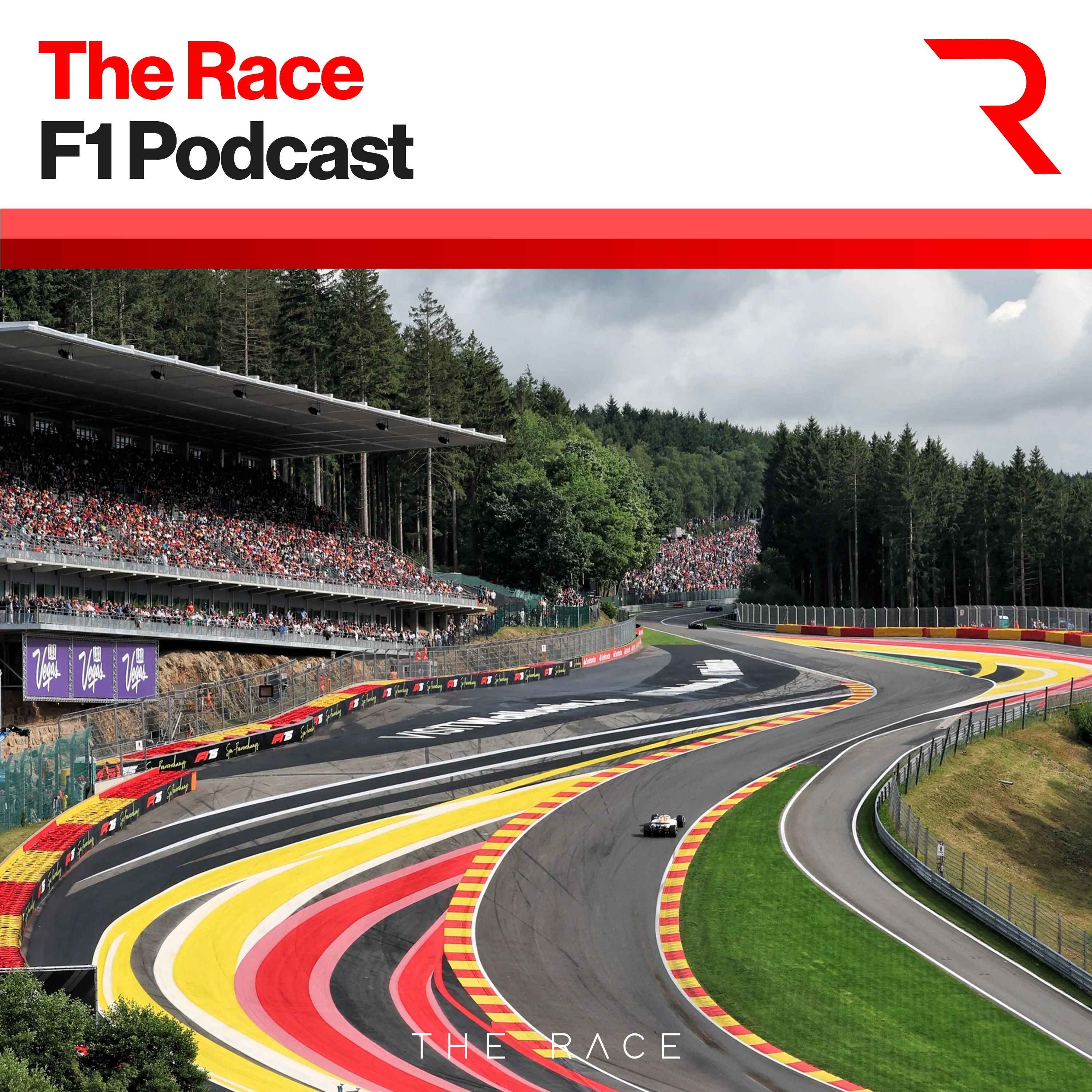
Energy concerns are once again dominating discussion as F1 heads to the power-hungry Spa-Francorchamps circuit for the Belgian Grand Prix, so should we expect another weekend of yo-yo racing and drivers complaining?
On the latest episode of The Race F1 Podcast, Edd Straw is joined by Mark Hughes and Nelson Valkenburg, of Viaplay Netherlands, to explain the set-up and deployment headaches facing the teams this weekend and to debate whether Ferrari will be the team to take the fight to Mercedes once more.
With weather forecasts for Spa looking mixed, the prospect of a first proper wet race under this regulation set is also discussed, plus we examine where the true momentum in the Antonelli versus Russell title race lies, and whether there might be a shift in Belgium.
Get bonus F1 podcasts, extra content and ad-free listening, sign-up to The Race Members' Club on Patreon today.