The hosts reference Miami as the next or relevant Formula 1 race location in the season schedule. It’s used here as a time anchor for what’s coming up.
A Formula One driver is someone who races in the highest level of open-wheel racing. They’re debating whether drivers can still be fast after a certain age.
Reaction delay is the time it takes your brain to go from noticing something to acting on it. The point here is that good driving isn’t just about fast conscious reactions—it’s about sensing and responding in a more automatic way.
Yaw and rotation describe how the car turns or twists in the air—especially how the front of the car swings left or right. Drivers learn to “feel” these changes so they can react quickly and drive the car smoothly.
G-forces are how hard the car is pushing you during driving—like how heavy you feel in a fast corner. In F1, those forces can be extremely high, so drivers train to handle them without getting too tired.
In this context, “barometer” means a measuring stick. The idea is that a very fast teammate helps show whether you’re keeping up with the pace needed to win.
A “competitive car” is a car that’s fast enough to fight near the front. In racing, you can be skilled, but you still need a car that can actually win races.
Concept
mindset
“Mindset” here means how the driver thinks and decides when racing. The hosts are wondering if becoming a parent changes how he handles risk and competition.
It means he can quickly figure out what the car is doing and adjust his driving to match. Even if the car feels weird or changes a lot, he can still make it work.
A “front-running car” is a race car that’s usually fast enough to be near the front of the pack. The hosts are asking whether Alonso could keep up with other top drivers if he had a car like that.
The “world championship” is the main championship F1 crowns at the end of the season. They’re saying Alonso could realistically contend for the top prize if his car is good enough.
Aston Martin is the Formula 1 team/brand being talked about in connection with Alonso. They’re discussing whether the team’s new car and upgrades will make it fast enough to challenge for wins and championships.
In F1, the “power unit” is the whole high-tech engine package that makes the car go, including the turbo engine and the hybrid energy parts. They’re saying the car looked promising, but the engine/hybrid system wasn’t delivering as expected.
Bahrain is where F1 teams often test cars to see how new updates perform. The hosts are using that test to explain why Aston Martin looked promising at first but didn’t deliver as expected.
An “engine partner” is the company that provides the engine system for the F1 team. The idea is that if the partnership is strong, the team can develop the car’s power and reliability better over time.
Adrian Newey is a top F1 car designer. The hosts are saying that having him on the team is a major reason they believe the car can improve and become competitive.
Here “technical thing” means a specific engineering change to the car. The speaker is saying it’s not just one easy fix—there are bigger differences in how the car works.
It’s basically a “how fast things get better” timeline. The speaker is saying the car/team might improve later in the season, and that timing affects decisions.
A driver contract is the official agreement between a driver and a team. If it’s close to ending, the team may have to decide whether to renew or let the driver move, which can change who gets a seat.
GT World Challenge Europe is a racing series for sports cars (not Formula 1). They’re mentioning it to point out that Lance Stroll has been competing in other races too.
The pit lane is where the teams work on the car during a race. It’s a busy, high-pressure area, so the comment is about how the driver seems to act there.
“Nuclear fallout” is a dramatic way to say “big consequences.” They mean that if a top driver retires, it could cause a lot of other teams to reshuffle their plans.
A major upgrade in F1 is a substantial development package that can change how the car behaves, even if it doesn’t look dramatically different from the outside. Teams often describe it in terms like “most surfaces are different,” reflecting aerodynamic and mechanical changes within the rules.
Airflow is how air flows around the car. If teams change body shapes and parts, the air can move differently, and the car can feel like it’s working in a totally different way.
A simulator is a computer-based system used to model the car and help drivers and engineers develop setup and strategy. In F1, teams use it to understand how the power unit and car systems behave without waiting for track testing.
In F1, an “upgrade” is a change to the car—like new parts or software—to make it faster. Teams bring upgrades during the season to try to gain time versus other teams.
A “power plan” is how the team decides to use the car’s power during a lap. It’s basically the strategy for when the car should push harder versus save energy.
A “lap time deficit” is the time difference between cars—typically between teams or drivers—over a lap. In F1 analysis, even small deficits (like a couple of tenths of a second) can determine who qualifies higher and who finishes ahead.
A “sprint weekend” is an F1 race format where a shorter qualifying-style race (the Sprint) determines the grid for the main Grand Prix. It changes how teams plan practice, setup, and tire/energy usage across the weekend.
FP1 is “Free Practice 1,” the first on-track practice session of an F1 race weekend. Teams use FP1 to test setups, gather data, and evaluate how the car behaves before qualifying and any Sprint or race.
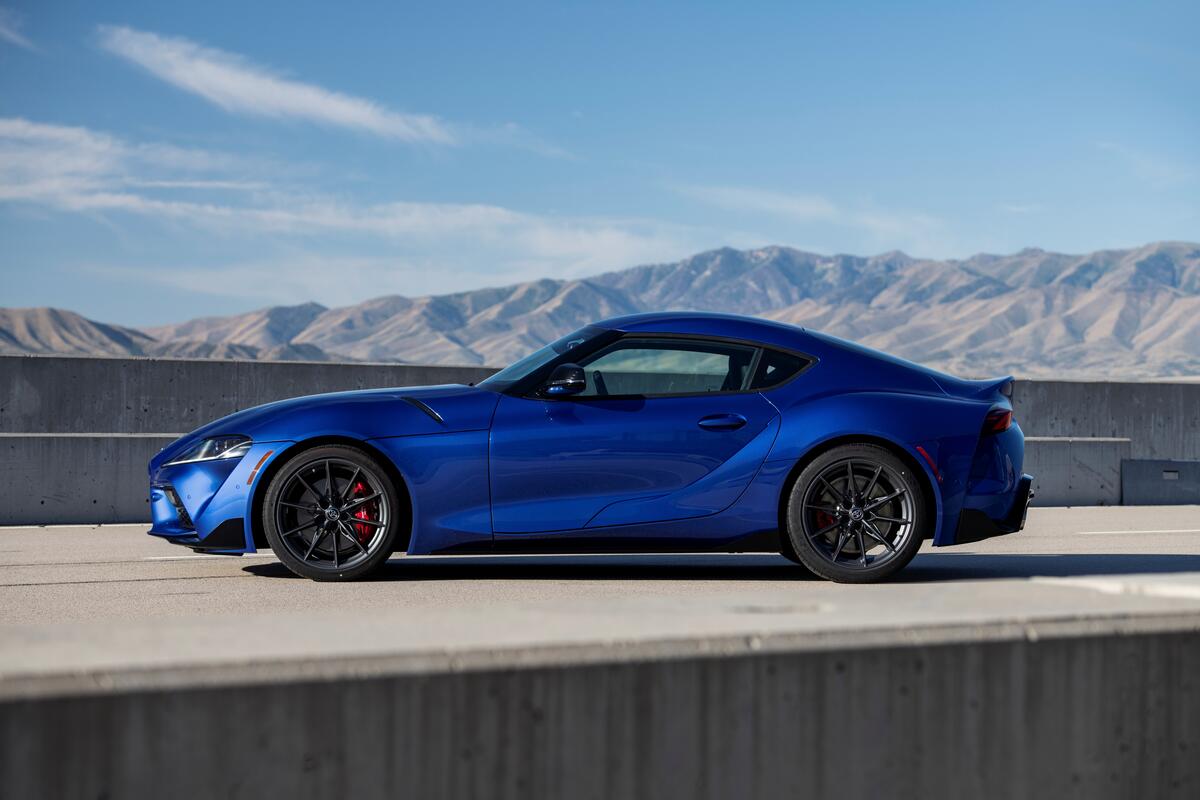
The Toyota Supra is a sports car made for fast driving. People often modify it to make it quicker and improve how it handles. In the podcast, it’s mentioned because upgrades might help it gain small amounts of speed or lap time.
Alpine is the Formula 1 team brand. In this part, they’re talking about Alpine’s situation and how Renault’s decisions could affect the team’s direction.
Renault is a major motorsport brand involved in Formula 1. Here, they’re talking about Renault’s internal decisions and how that could influence what happens with team leadership.
“Mid-corner snap” refers to an abrupt change in the car’s behavior while the car is still turning—often a sudden loss or gain of grip that can rotate the car unexpectedly. Drivers and engineers try to prevent it because it can ruin the lap and make the car harder to drive consistently.
That means the driver backed off the gas a little while turning. In F1, even small throttle changes can help the car stay stable and not upset its handling.
It’s how fast the car can go when you’re not cornering. If something upsets the car’s balance or aerodynamics, it can make the car slower on the straights.
Modern F1 cars use computer control to decide how to deliver engine power. The goal is to make the car faster around the lap, not just let the driver do everything manually.
“Regulation changes” refers to rule updates that alter how cars are built and operated. Even small changes can force teams to redesign parts, update software, and revise setup targets—especially when combined with a tight sprint-weekend schedule.
Here “reset” means things are starting over in a way that could change who’s fastest. With new updates and a tight schedule, the usual pecking order might not hold.
Istanbul Park is the circuit in Turkey that hosts the Turkish Grand Prix. The hosts describe it as a track that quickly became a fan favorite and a place drivers enjoy racing.
COVID is mentioned as the reason the race schedule got disrupted for a while. They’re saying the Turkish Grand Prix wasn’t always on the calendar during that period.
This means qualifying where the drivers are going all-out and it’s a close fight for the best lap times. The goal is that they can really attack the track’s corners instead of being held back.
Overtaking points are places on the track where it’s easier for one car to pass another. They’re saying Miami has good areas for passing.
LIVE
Fresh air, longer days, a chance to reset.
This season, let therapy be part of your spring cleaning.
Clearing mental clutter, shaking off stuckness, and building something better.
Grow therapy helps you get there.
Whether it's your first time in therapy or your 50th,
Grow makes it easier to find a therapist who fits you, not the other way around.
You can search by what matters, like insurance, specialty, identity, or availability,
and get started in as little as two days.
And if something comes up, you can cancel up to 24 hours in advance at no cost.
Grow helps you find therapy on your time.
Whatever challenges you're facing, Grow therapy is here to help.
Grow accepts over 100 insurance plans.
Sessions average about $21 with insurance, and some pay as little as $0, depending on their plan.
Visit growtherapy.com slash start now today to get started.
That's growtherapy.com slash start now.
Growtherapy.com slash start now.
Availability and coverage vary by state and insurance plan.
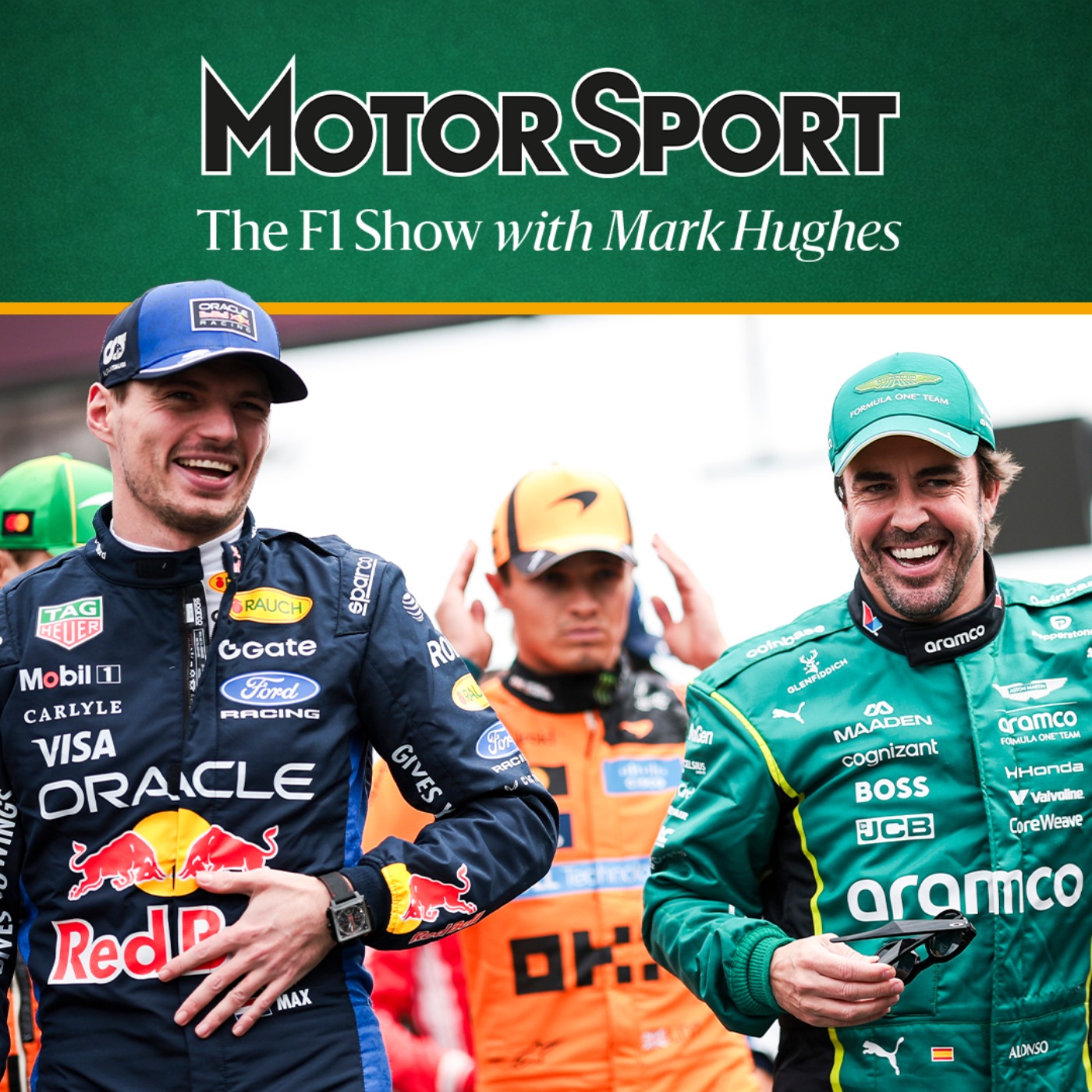
How old is too old for an F1 driver?
Fernando Alonso says he's ready to race on until his late 40s,
and we reckon he still has what it takes to fight for a world championship.
F1 is back on track this weekend.
Will we see a new front runner after a month of frantic factory work,
and we try to get through a whole episode without mentioning rules?
Don't.
All that and a whole lot more as usual on the Motorsport F1 show with Mark here.
Well, Mark, we are on the build up finally to a Grand Prix.
It feels like a very long time since we've said that.
A very long time indeed, and we've filled in that time talking about regulations and more regulations,
so I thought we'd have a holiday from that this time.
Any time anybody mentions the R word, there'll be a pound going in the swear jar.
We're going to set that at the very beginning.
This episode will feature none of the R word, and if it does, charity will benefit.
So, Mark, what I want to talk about really is nothing to do with that R word.
Nothing really to do with Miami to start with, actually.
Some news that came out just very recently at Monaco, the historic racer in Monaco,
Fernando Alonso has hinted, suggested even that he wants to continue into the next season, 2027,
and you've written a piece about this, the MPH column,
but you've also written about drivers and age a fair bit over your journalistic career.
Yeah, it's a fascinating subject, because I think there's a general perception
that you can't really be a quick Formula One driver once you've passed your mid-30s sort of thing,
and when somebody occasionally proves otherwise, it's just sort of written off as a freak of nature,
and I disagree with that.
I think, actually, there's a lot of evidence to suggest that those drivers that have chosen to go on
and been very competitive have shown that it is perfectly feasible to remain very close to your peak
until a long time in your 40s, maybe even nudge in 50s,
and I think the reason why careers tend to come to an end before then, as well as two things,
is probably the fashionability of young drivers and the perception that youth should be a trumping experience,
and I think it's also the fact that once a driver has achieved a certain level of success and wealth,
it demands too much of them, because you have to be in such a highly intensive state to remain at that very, very high level.
It drains, it's mentally very, very draining, and I think drivers in the main just lose a little bit of that desire
as they edge into their 10th, 11th, 12th year of Formula One,
and that's what usually defines when a driver's thinking about packing it in rather than Formula One packing him in
when they do retire, I think usually because of that.
And there's been some interesting studies as to what makes a driver, one driver faster than another one,
physically, physiologically, and it's not about reactions, I think that's another misconception,
we've talked about this quite a lot in print form anyway.
Reactions aren't really part of what...
If you rely on your reaction to control the car, it's way too late, you're in the middle of an accident,
it's about feel, and it's physiologically seems to be tied up to senses that we have at the base of our spine,
connected to our inner ear, and without the normal reaction delay because it's subconscious,
and so that feel and that sense of yaw and rotation is what defines how quick one guy is,
and how naturally quick one guy is compared to another guy.
Just how well that is all wired up physiologically, and then there's all the other factors,
the psychological factors and how much you want it and how much desire I have and all those things,
but in basic terms y is one guy quicker than another guy physiologically, it's that,
and it's not something that declines very sharply at that level anyway,
it probably does subsequently in the 50s etc, but up to that level there's very little difference I think,
so if you still have the desire I think you can still be quick.
So presuming you've got the physical attribute still, you're staying trim, you're working out in a gym,
you're keeping your neck strong, those sorts of things, and physically you're able to deal with the G-forces
that an F1 car is throwing at you and those sorts of factors,
and considering if you've still got the hunger, the drive to continue to race and the desire to carry on and want to win,
or whatever your goal happens to be, and I wonder whether someone like Fernando Alonso,
those things are talking about him with your column, I wonder whether Fernando Alonso has the desire to win,
I'm sure he wants to win, but also has the realism that he's not going to be winning, but he's going to be competing,
I wonder if there's a difference in his barometer now to what he sees as his target, what he'd be happy with.
I think Fernando's so extraordinarily intense in his competitive desire, even by the standards of a F1 driver,
that he will not be satisfied with anything other than winning races and showing proving to not do himself,
because there won't be any doubt in his mind, but proving to the rest of the world that he's everybody as good as he ever was,
and that he doesn't care what people's perceptions are of what's possible, he knows the reality.
So no, I don't think he would be satisfied with just being doing a good job, that's what he's doing at the moment in a rubbish car,
and that's what he's been doing for the last few seasons, but just doing that, just doing a good job doesn't change the perception
if you're not winning races, the only thing that changes perceptions is if you're winning races,
and of course you need the competitive car to do that, and you ideally need a super quick barometer of a current driver alongside you in the same car.
So when we look back over the history of the drivers, the oldest drivers to still be competing in Formula One,
the ones that made it into the 50s were racing in the 50s.
If you look back at Michael Schumacher, he was 43, nearly 44 at the point of his last Grand Prix that he raced in Formula One.
Look at Lewis Hamilton, you always think Lewis Hamilton's been around for a really long time, he's 41, he's only just turned 41.
Fernando Alonso, was he 45 or were we 45 in July?
So relatively, I'm 46 now and I've not achieved quite as much as Fernando Alonso in my illustrious career.
There's always time, but I look at it now, I think, I'm not sure I ever have the edge, I'm not sure I would have the desire to keep fighting.
That's one thing that probably would eliminate a number of people that would have the ability but just not the desire as you're saying.
Exactly that, and I think that's where he's so extraordinary and he always has been extraordinary, that desire.
He's 40s away to where he is, you know, from nowhere, from, you know, the back and beyond and into a little region of Spain without any wealth behind him.
And that he's been doing that since he was a kid, like a really young kid, and he's been fighting for everything and it's just who he is, that's just how he's wired up.
And I think for that reason, he will run out of physical prowess before he runs out of desire, but I don't think he's run out of that physical prowess yet.
Will his mindset change, birth of his child? Is that going to change his mindset, the risk, rewards, fights?
Yeah, I mean, we never know, we can never see into somebody's, inside someone's head, but I'd be surprised.
I think this is just who he is, and yeah, as he gets another dimension to his life and, you know, he's a new person to take care of and to appreciate.
Yeah, maybe, but that will probably be, as that increases, as the significance of that increases in his life, that would probably be where he'd be tailing off anyway in the next few years, you know, next three or four years.
You'd typically expect to see some signs then of the physical deterioration in performance, and he will know when that's there, he will know before.
It's evident to the outside world, and he clearly doesn't feel it's there yet.
And he kind of said that, didn't he? He'll know when the time is right to give up and he doesn't feel like the time is right to give up.
So, I mean, that's interesting. What about his driving attributes?
And we're thinking about an Olympic athlete, a footballer, or whatever sport happens to be.
Some people have, if you're an Olympic sprinter, for example, your career is going to be short because that's just the life of a sprinter.
But if you're a controlled footballer, so a midfielder that's not all about pace, all about passing the ball long distance and really accurately, then you can presumably go on longer because you're not relying on your pace.
What does Fernando Alonso have in his locker that would give him a kind of an ability to really not drop off?
There wouldn't be a cliff edge for him to drop off because he's, how do you describe him as a driver and how do you describe that longevity of his career by the way he drives and his style?
I think the natural traits that he's always had are actually very well suited to a long career because his one lap qualifying pace, although extremely good, is not the most outstanding thing about his whole game.
I mean, he stacks up extremely well in the comparison to some very good teammates over a very long career, but that's not the most amazing part of his armory.
It's his ability to get a car by the scruff of the neck and just sort of get any sort of tune from it, regardless of how ill-balanced it is or how awkward it is and how much it's changing.
He can just adapt himself almost instantly and it's incredible skill.
It's better than anyone I've ever seen it adapting to a change in a car, even quite a serious when a car is damaged or something is malfunctioning.
He can somehow within a very short space of time just understand what it's demanding of him now and adapt and he has, he's had several labels of driving style placed upon him, but they're all just temporary.
There's not an intrinsic style that he has. He's able to just do whatever is required, whatever the car is demanding of him and I think that's extremely useful.
And the other thing that he's better than anyone I've ever seen is his sense of where he is in traffic in a wheel-to-wheel situation.
If you remember his first lap in China two races ago where he went from 19th to 10th on the first lap.
It's just extraordinary how he's always able to understand where to place himself to either throw the guy behind that's trying to pass him or put himself in a better position.
Two quarters from now to get the guy ahead.
Those sort of things he just knows exactly how to place the car like a sixth sense.
He's brilliant at that. He's brilliant at understanding strategy as a race is evolving and as the track is evolving and he understands the implications straight away and he asks the right questions to the pit wall.
He's just all-round brilliant at the whole scope of his ability.
It's all encompassing in it. It's that I think which makes him extremely well suited to not having much of a drop-off in performance as he gets older.
We've already said about him wanting or you've already said about him wanting to be the sharpener going for victories and things like that.
If you compare him to the drivers that he's raced alongside teammates, that's the only way of being able to compare someone, isn't it?
Really like for like. You've got Ocon, you've got Stroll.
They're the two main ones over the last number of years I suppose.
If you were in a front-running car, would he be able to, do you think, run and beat the likes of Vax and Lando and Oscar and George Russell and Antonelli, all those sort of front-running drivers?
Or would he be slightly off the back? What do you think? What's your impulse say?
My good feeling is that he would compete with any of those, wouldn't necessarily prove himself to be quicker, although he would be on occasion, over a lap I mean.
But I think in terms of his overall game, I think he could go, I think he could just go on equal terms with any of those guys that you mentioned in a competitive car.
And fight for a world championship if he was ever in a title of the car.
I don't think that is, it would suddenly be revealed as how he's not that good anymore.
I think everybody would realise he's just as good as he ever was.
But it would be lovely if we get the opportunity to see which of those two theories is correct and it's by numbing certain that we will.
But it would be fascinating if he ever did get into that situation.
Whether the sands of time run out on his career before Aston Martin or another team get their act together on that note.
Has he seen something at Aston Martin?
I remember at the build up to this season, the launch with all the cars were testing out in Bahrain and that Aston Martin appeared and everyone was like,
wow, this car is staggering and then it kind of disappointed with what was going on with the power unit.
But do you think that Philando has maybe seen something in that chassis, in that design, in that power unit development that makes him think,
OK, by the end of this season, this car is going to be competitive.
So I'm going to hang around for that at the very least and then hopefully lead on to the following season.
Is there something going on, there's always something going on we don't know about,
but is there something going on that he knows more about that's keeping him enticed?
I think it's more an article of faith.
It's faith that this team has all the budget it needs.
It has everything required in terms of has an engine partner it can work hand in hand with.
It has Adrian Newey, which is probably the biggest thing that gives him that faith.
I don't think he's necessary looking at it and saying I can spot a technical thing here that's going to give us a big advantage,
although that car is extraordinarily different from most of the others around it.
But now I don't think he's seeing one thing and saying it's OK, I know what's coming.
I think he's thinking I hope I know what's coming.
I hope that it's going to become good.
It should be coming good.
There's no logical reason why it won't be coming good in time.
And I want to be around for a while.
I don't want to stop at the end of this year and it comes good next year.
So I think the longer it takes this season for that improvement curve to become apparent.
I think the greater the chances are of Fernando staying on because he wants that.
He knows he can still do it.
So he wants to absolutely the worst thing he could do would be to stop when the car comes good.
So I think we will see him probably doing another two-year extension or something like that.
Certainly he's indicating that's the direction he wants to go, yeah.
And stay at Aston Martin or maybe look elsewhere?
No, I think it would have to be staying at Aston Martin.
I don't think he's going to get a sudden opportunity to join Mercedes or Ferraris or McLaren.
I don't think that those teams would be looking to disrupt what they've got just to accommodate him.
But I think the Aston team has got all the ingredients to become one of those teams.
So yeah, I think he will absolutely be nailing his colours to that most.
Texans enjoy more ways to save at Kroger like low prices in every aisle.
And when you download the Kroger app, you can clip and save more with digital coupons every week.
Plus, you can earn fuel points to save up to $1 per gallon at the pump.
At Kroger, you can enjoy Texas-sized savings and more rewards every time you shop.
So it's always easy to save big every day with savings and rewards.
Kroger, Texas proud since 1955, savings may vary by state.
Fuel restrictions apply, seasight for details.
Fresh air, longer days, a chance to reset.
This season, let therapy be part of your spring cleaning.
Clearing a mental clutter, shaking off stuckness and building something better.
Grow therapy helps you get there.
Whether it's your first time in therapy or your 50th, grow makes it easier to find a therapist who fits you, not the other way around.
You can search by what matters, like insurance, specialty, identity or availability and get started in as little as two days.
And if something comes up, you can cancel up to 24 hours in advance at no cost.
Grow helps you find therapy on your time.
Whatever challenges you're facing, grow therapy is here to help.
Grow accepts over 100 insurance plans.
Sessions average about $21 with insurance and some pay as little as $0, depending on their plan.
Visit growtherapy.com slash start now today to get started.
That's growtherapy.com slash start now.
Growtherapy.com slash start now.
Availability and coverage vary by state and insurance plan.
I want to ask you one more question about Nando Alonso.
But before I do, quick reminder, you can read Mark's latest column, the MPH column by going to motorsportmagazine.com.
It's on the app as well. Have a read. It's a really nice article.
It seems to always say it's a really nice article, Mark, but it really is a really nice article about Fernando Alonso.
And it goes into his record as well, how he's been out on track, his attributes that make him such a tremendous driver and somebody who has managed to stand the test of time
and what a career he's had so far and hopefully it will continue for a fair bit of time.
So check out that article at motorsportmagazine.com.
Just staying with Fernando, though, is he the cork in the bottle when it comes down to contracts and where drivers will end up for 2027?
Because there are quite a lot of contracts up or nearing the end or open contracts that could be released at the end of the season, things like that.
But I'm pretty sure we'll come back to this in a few weeks, months, time or something.
But is he that cork if Fernando stays at Aston Martin? Will that mean whatever on stay where they are?
I think if he were to retire, I'm not sure that they would be able to recruit from one of the existing three teams.
I think there's enough doubt around their future performance that, you know, Charles Leclerc or Max Verstappen would think, I'm not sure.
So I don't think it would fundamentally shake it up if he retired.
I think they would recruit from, you know, from other midfield teams from, you know, you'd be looking at probably Pierre Gasly or you'd be looking at one of the young new talents.
Cast me a net there, I think. I don't see it as that fundamental.
I think if Lewis Hamilton were to retire, that would have much bigger implications because, yes, suddenly there's a spot open up for Ariel.
If Max Verstappen would, you know, decide he wants to go GT racing or something else entirely, then yes, I think that would be more, would shake the earth a bit more.
What about Fernando's teammate, Lance Stroll, because we spoke about desire a fair bit and there's a question mark over Lance Stroll's levels of desire.
He always seems to be a bit grumpy around the F1 pit lane, although I have to say he was in GT World Challenge Europe just a couple of weeks ago at Paul Ricard and he raced in that race.
He didn't have to race in a race. He didn't have to put his neck on the line and throw himself back into the pits to show, you know, how good a driver or how not good a driver is, whatever your opinion happens to be.
But what about his level of desire?
Would there come a time maybe when, if Aston Martin were to get a grip and turn everything round and sort this car out, that Lawrence Stroll would say, OK, you need to favour my son over Fernando, or is that, you know, is that completely, you know, pie in the sky?
Yeah, I think a good luck with trying to compose that.
It would be a nuclear fallout.
But also, I don't think Lawrence would do that.
I think Lawrence won success for the team as well.
And I think he would love it if Lance developed into the sort of driver that could bring that success.
But as you say, the question mark about Lance has not really been his level of ability.
It's been that desire and that, you know, the diving deep to really get the best from yourself and really develop yourself.
There hasn't been too much evidence of that.
I think he enjoys racing.
I think he enjoys being in a car, but I don't think I can get the impression he enjoys F1 that much of being an F1 driver out of the car.
He just seems to drain him of energy.
So, no, his level of desire is not even in the same galaxy as Alonso's.
So I think if you were looking at the two extremes of competitive desire on the F1 grid,
they'd be the two drivers you choose to reflect the full range of it.
Yeah, I suspected that was going to be the answer.
I was just formulating the question, but I thought I'd go with it anyway.
Now, also another reminder to you, if you go to motobotmagazine.com, you can subscribe to the F1 newsletter.
When you do that, you then get the newsletter sent to your email inbox and it keeps you up to date with all the stories going around in Formula One.
And one of the big stories or one of the stories going around in Formula One is that we've had a roughly a month off from race to race because of this enforced hiatus.
And that's enabled a number of the teams to bring significant upgrades to Miami.
Andrea Stella, McLaren team principal, said that they brought so many upgrades, it's basically going to appear to be like an all new car.
Will this all new car look like an all new car or will it be all these things under the surface to make it an all new car?
It's usually quite subtle visually when they do a major upgrade.
And they'll say things like 90% of the surfaces of this car are different to how they were prior to the upgrade and you look at it and you think,
where? And you have to look very carefully and say, oh yeah, that radius there is different.
And that cuts off slightly earlier and that flip flick up there has gone and there's a couple of extra holes there.
So yeah, but that can work the air in a fundamentally different way and it can give a completely different regime to the airflow and what they're trying to do with it yet.
So I would suspect it won't look radically different.
It's not going to look like something from the future, but you never know.
But it's a very tightly controlled set of regulations that they're working within.
So one look radically different and I'm sure as we all drill down into it and we all get a bit more of a close up look at it.
Yeah, the changes will become apparent where we can start to make sense of what it is they're trying to achieve.
I imagine they've had a fair bit of time in the simulator working out the way the power unit operates.
I didn't say the R word, the power unit operates.
I also suspect as well, Mark, that if McLaren are saying that they've got some significant upgrades that the majority, if not all of the other teams will have a similar level of upgrades coming of new packages along the way.
Are we likely, do you think, to see at Miami a complete new running order, a new grid emerging or is it going to be, do you suspect, much of what we've seen so far?
I don't know. It's quite possible that, you know, where there are just very small performance gaps between teams before that just like one upgrade working slightly better than another one might make the difference and put that team ahead.
I think the Mercedes advantage over Ferrari is you would probably, you'd say that would probably be too much to expect one round of upgrades to change the order, it might change the gap between them.
McLaren were already getting closer to Mercedes over the first three races as they better understood the power plan and they were saying that, you know, by the time of Japan, Andrea Stiller was saying,
yeah, we think we've eradicated almost all of the power unit understanding deficit. So that lap time deficit you've seen now is a couple of tenths. That's where we are with the car.
So if they had an upgrade that was worth two tenths and Mercedes upgrade didn't bring anything, then yeah, you could be looking at, you know, a competitive, a fully competitive Mercedes and McLaren going up against a Mercedes.
It's possible, but it would be a very good upgrade to get two tenths from, you know, in one, but it's not unheard of. So yeah, I wouldn't rule it out. I'd be surprised if it was suddenly the car and left everything else for dead, but let's see.
Do you think they would have preferred to have had a non sprint weekend on this return? I know they got a longer FP1, they got a 90 minute FP1, but do you think the teams would have preferred to have a standard regular inverted commas for a pre weekend?
Oh, absolutely they would, yeah. All the engineers would anyway. I think some of the drivers quite like the idea of just getting straight in, even though they might pitch about it. I think especially if they fall on the right side of the favourable side of that, you know, throwing everything up in the air.
But yes, absolutely the engineers would much prefer a standard weekend and a sprint weekend, yeah.
Texans enjoy more ways to save at Kroger, like low prices in every aisle. And when you download the Kroger app, you can clip and save more with digital coupons every week. Plus, you can earn fuel points to save up to $1 per gallon at the pump.
At Kroger, you can enjoy Texas size savings and more rewards every time you shop. So it's always easy to save big every day with savings and rewards.
Kroger, Texas proud since 1955. Savings may vary by state. Fuel restrictions apply. See site for details.
Whether it's your first time in therapy or your 50th, Kroger makes it easier to find a therapist who fits you, not the other way around.
You can search by what matters, like insurance, specialty, identity or availability and get started in as little as two days. And if something comes up, you can cancel up to 24 hours in advance at no cost.
Grow helps you find therapy on your time. Whatever challenges you're facing, Grow Therapy is here to help.
Grow accepts over 100 insurance plans. Sessions average about $21 with insurance and some pay as little as $0, depending on their plan.
Moving away from Miami to, well, the past, but a recent past, Christian Horner. Now, Christian Horner is pretty much free to work anywhere now.
And he was last seen, it's a bit of a curveball last weekend's MotoGP round in Spain. Are we any closer to knowing what he might do, where he might go?
No, I don't think we are. I think the decision of the Renault board over what it wants to do with the Alpine team and the various possibilities and offers it has in front of it and how they're going to move forward from that is sort of taking the ball out of Christian's court really.
So I guess he's looking around for possible, you know, contingency plans that I would think that's very much plan A still for Christian's point of view.
But how it is from Renault's point of view is so difficult to call and it doesn't seem to be alignment within the board of Renault on what the direction is.
Yeah, watch this space. I think we should, I could put watch this space at the end of a lot of these questions because they're so open, aren't they? There's so much, there's so, so many areas that they could release, you know, somebody leaves a team, a team principal,
somebody, an owner gives up, ensweeps Horner with a consortium, which we'll wait and see. Now it's time to move on then, Mark, to the audience questions and I've selected three.
As always, thanks very much to every single member who's or viewer, reader, whoever it is who's written a question and we really do thank you for some fantastic questions have come in.
So, Mark, oh, throw these at you. Joe Martin, J-O, so Joe Martin has asked the question, when will the driver be completely in control of engine power?
Oh, we have to use the R word to answer this one.
But that's right because it's you has to put the money in this warehouse. I'll let you have it. I'll let you have it. All right, because I've thrown you this one.
Okay. Well, a little bit more in control from this weekend in Miami than we have been now being to the first three races.
I think they have banished that feature that Charles Leclerc in qualifying, spring qualifying in China, whereby he lifted the throttle to 98% to correct the mid-corner snap and that completely confused the,
well, not confused, but it led to a sequence of events that hurt his straight line speed and ruined his lap.
They've got rid of that, that little nuance in the way that the software is configured.
He is still going to have the algorithm deciding what's the most efficient use of the power in terms of lap time, so not fully in control and fully in the driver's control.
It's going to be better than it was, but they're not going to be fully in control of it until we get a much more internal combustion engine heavy split in the energy.
That's a good question and you managed to get around it without saying the R word too many times, so well done there.
Alex Dion has asked a question, Mark, similar to what I asked earlier, but it is enough of a difference for me to put it to you.
This goes back to the sprint weekend in Miami.
He says, or she says the question is, will teams have enough time to set their cars up for the sprint weekend in Miami when they have a month of upgrades, regulation changes to cope with and just one practice session?
I just said the R word there, but will they have enough time?
That's a slightly different question to would they prefer to? Will they have enough time to set their cars up given the upgrade packages they've got?
No, but if they're normally achieving 98% of the car's potential, there might be down to 95% or something like that, and somebody might sneak a 96 in and somebody else might fold a 94 and it might change the order a little bit because they're not equally prepared.
But yeah, everybody in theory is taking that same hits, but no, as a group, no, they will not be as well prepared as they would like to be.
Because yes, as you say, the cars are to a different set of regulations than have been for the first three races and it's sprint weekend and they've got aerodynamic upgrades on them as well.
So there's three things that are different. So yeah, it does create some headaches for them.
But we've seen in the past that quite often when it makes things up, when circumstances mix things up like that, it makes for a very interesting weekend.
Do you think it's going to be more like the opening round of the season again?
And we've had a month off, so it's part of the time arriving in Miami, but there's so many great unknowns, aren't there?
Yeah, there are. Yeah, and you're right. It's a little bit of a reset, a very early reset, just four races into the season, but yeah, it is.
It's potentially very much a reset. So yeah, it's going to be intriguing.
Another reset. This is from Sam. It says, Mark, did you welcome the news that the Turkish Grand Prix will join the calendar?
Do you think it can produce more great races? I mean, I happen to love Istanbul Park.
It's a great place to go to, but what are your thoughts?
Yeah, I love the place. I love the circuit. It's one of the great tracks.
It became an instant classic as soon as it went on the calendar. We went there and we had to look around the place and just, wow, what a circuit.
And yeah, really, the drivers love it too. And yeah, it's great news that it's back.
It's sort of hovered around on the margins for a while, hasn't it? And it's sort of filled in now and again as required during moments of crisis and COVID and things like that.
But yeah, it's great that it's got its proper slot back. It's such great news.
Sporadic moments, wasn't it? Now, as you know, Mark, I'm heading off to Miami very soon. I just have to drop that one in there just to show off, really.
So hopefully next time we record, I'll be a very different shade than I am right now.
But I'm off to Miami at the point of recording. Obviously, this has been recorded prior to the release on Thursday.
So I'll be heading off very soon to Miami. I'm really excited by it. I kind of feel genuinely excited about a race.
And I can't say I felt that this season yet. So what do you think about this race coming up? What are your hopes that we're going to get from Miami?
What I hope is that we see a good flat out qualifying battle for the first time this season, where the drivers can properly attack all the corners.
I think the circuit layout is friendly enough to make that feasible combination with the latest tweaks that there have been.
So, yeah, that track, that's what I would be hoping for more than anything else.
I think there's a good chance Miami could deliver. There's some very good, strong overtaking points out there in Miami.
There's a good mix out there, and it's always weird to see a ship or a yacht or something parked up on a bit of sand that's been put there that's nowhere near the beach, which I think is also a bit weird.
It's a bit Miami.
Yeah, I mean, it's got its own distinct style, but yeah, it's a fun place to be.
Unapologetically, American or United States, I should say. Mark, as always, thank you very much indeed. Hopefully Miami will deliver.
Yeah, let's hope so. And safe travels. And thank you. And thank you for the great questions again.
We'll see you in the next one.
About this episode
Mark Hughes makes the case that Fernando Alonso’s age is far less important than his feel, adaptability, and relentless desire to win. He argues that elite F1 drivers can stay near their peak well into their 40s, and that Alonso’s ability to read awkward cars, manage traffic, and adjust instantly to changing conditions still sets him apart. The conversation also touches on Aston Martin’s future, with Adrian Newey and the engine partnership seen as reasons Alonso may stay committed.
How old is too old for an F1 driver? Fernando Alonso says he’s ready to race on into his late forties and Mark Hughes says he still has the talent, the adaptability and the burning desire to fight for a world championship — in fact, in some areas, he's better than any other driver.
Plus: F1 is back on track this weekend - will we see a new frontrunner after a month of frantic factory work?
More from Mark Hughes and Bryn Lucas on the stories that really matter, in the latest episode of the Motor Sport F1 Show.
Subscribe now for every weekly episode and tell us what you want to know from Mark. Send us a message on social media or find this podcast at https://go.motorsportmagazine.com/48zc2cS and drop your questions in the comments. He'll answer a selection of the best every week.
Read Mark's column every Wednesday at https://go.motorsportmagazine.com/48zc2cS