
Why Jay Leno Will NEVER Stop Buying Cars
About this episode
From Newport Concours vibes to presidential burnouts, the conversation keeps circling back to Jay Leno’s lifelong compulsion to keep buying cars. They revisit a 1967 Corvette run with Secret Service logistics, then zoom out to how modern hype is driven by real performance—Nürburgring records, fast launches, and even tech like GPS lift systems. Leno also compares expensive wheel pricing, praises car tech like instant phone sync, and ties it all to why he’s still shopping.
Audrain Concor
"Good to be here. Johnny Lieberman. Thanks for showing up. This is like the Audrain Concor again... It seems it's like what I think Pebble was probably like."
The Audrain Concours is a big classic-car show in Newport. The conversation is basically about the event’s reputation and how it compares to other famous car shows.
The Audrain Concours is a major classic and collector-car event held in Newport, typically featuring rare vehicles, displays, and related automotive programming. The hosts discuss renaming it and compare it to Pebble Beach in terms of scale and vibe.

Chevrolet Corvette
"Yeah. I'll be on a couple of weeks. You know, he has a 67 Corvette and his dad gave him. And this was not political."
That “67 Corvette” is a 1967 Chevrolet Corvette. It’s a classic American sports car that a lot of car collectors love because it looks great and represents the Corvette’s golden era.
The “67 Corvette” refers to the Chevrolet Corvette from 1967, a classic American sports car known for its iconic C2-era styling. It’s especially notable in enthusiast circles because it’s a popular platform for restorations and collecting, and it represents the Corvette’s late-1960s performance identity.
burnout
"And then he did a burnout on my one X. Secret service just goes crazy when he does that."
A burnout is when someone revs and spins the tires so they heat up and may smoke. People do it for fun or to show off, not for normal driving.
A burnout is when a driver applies enough power to spin the driven wheels while the car is stationary or moving very slowly, heating up the tires and sometimes producing smoke. It’s often done for show, but it can also be used to warm tires for grip.
proving grounds
"No, I guess five years ago, six years ago, we went through the car and we went down to the proving grounds where the Secret Service trains."
A proving ground is a special driving area built for testing cars. Instead of normal roads, it’s set up so they can safely test how a car behaves.
Proving grounds are controlled test facilities where vehicles are driven under repeatable conditions. They’re used to evaluate handling, durability, and safety systems before cars are released or for specialized events.
Secret Service protection in a presidential car
"we hit a hundred, you know, in the 67 Corvette 350. What happens with the Secret Service when you're in the car with a president? Are they behind you or is there a guy hiding in the back seat?"
They talk about how the Secret Service keeps a president safe while traveling. It’s about the team’s setup in and around the car if something goes wrong.
The hosts discuss how the Secret Service handles vehicle security when a president is riding in the same car. It’s a look at the practical logistics of protective detail—who’s where and how they respond if there’s a threat.

Ford Mustang GTD
"...id buy the W1. I bought a Zinger. Wow. I bought a Mustang GTD. Whoa. And I bought the Corvette ZR1. Wow. And th..."
The Ford Mustang GTD is a high-performance version of the Mustang. It’s built to be especially fast and focused on performance. The podcast mentions it because it’s considered one of the more extreme options.
The Ford Mustang GTD is an extreme, track-oriented Mustang variant designed to deliver higher performance than typical Mustang trims. The episode mentions it alongside other high-end performance cars, suggesting it’s part of a “top tier” shortlist. That’s why it comes up: it’s a standout model people discuss when talking about serious performance builds.
Corvette ZR1
"I bought a Mustang GTD. Whoa. And I bought the Corvette ZR1. Wow. And that's the car you brought here? Yeah. ... And then Chevrolet came with the ZR1 and broke that record."
The Corvette ZR1 is the high-performance version of the Chevrolet Corvette. In this conversation, it’s mentioned as a car that makes news because of its speed and capability, not because of traditional advertising.
The Chevrolet Corvette ZR1 is a top-tier performance trim of the Corvette, known for being one of the brand’s most track-capable and headline-grabbing models. Here, it’s brought up as the next step after the Mustang GTD—another American performance car that earns attention through what it can do.
PR
"You know, the days of, hey, kids, racing strikes. I mean, most of the turned down the PR and the marketing and they let the vehicle speak."
“PR” here means public relations—how a company tries to get attention in the news and online. They’re saying that instead of relying on PR, these cars get attention because people drive them and show what they can do.
In car marketing, “PR” means public relations—efforts to shape how a product is covered by the media and perceived by the public. The hosts are contrasting PR/marketing with letting performance speak for itself through drivers, reviews, and track footage.
the vehicle speak
"turned down the PR and the marketing and they let the vehicle speak. Well, here's what the Mustang GTD Nuremberg ring."
“Let the vehicle speak” is the idea that the car’s real performance and real-world results do the marketing. Instead of relying on polished ads, brands benefit when credible drivers, reviewers, and track footage show what the car can do.
Nuremberg ring
"Well, here's what the Mustang GTD Nuremberg ring. Whoa, look at that. That's pretty. Yeah, fastest American car. And then Chevrolet came with the ZR1 and broke that record."
They’re talking about the Nürburgring, a famous race track in Germany. When people mention it, they mean the car is being tested on a track that’s known for separating truly fast cars from the rest.
“Nuremberg ring” is almost certainly a reference to the Nürburgring, Germany’s famous motorsport circuit. Automakers and performance-car fans use it as a benchmark track, so mentioning it signals the cars are being evaluated for real-world speed and handling.
Johnny Lieberman
"Well, they have people like Johnny, who will just drive their cars, talk about their cars, and they do it for free. So if you're an advertising guy at a car company, you're like, yeah, but you know, why am I making an ad when I can just give it to Johnny Lieberman, Matt Farah,"
Johnny Lieberman is a car enthusiast/media personality mentioned as someone who talks about cars publicly. The hosts are using him as an example of how car companies can get attention through people who review and drive cars.
Johnny Lieberman is referenced as an enthusiast/media figure who drives and talks about cars, effectively acting as a “word-of-mouth” channel for brands. The point in this segment is that modern car companies can reach buyers through influential drivers and creators rather than traditional ads.
Matt Farah
"So if you're an advertising guy at a car company, you're like, yeah, but you know, why am I making an ad when I can just give it to Johnny Lieberman, Matt Farah, you know, these guys in the old days, you'd be afraid to give it to Johnny Lieberman because"
Matt Farah is a car enthusiast/media personality mentioned as someone who reviews and talks about cars. The hosts are saying that car brands can get attention by letting creators drive the cars and share their impressions.
Matt Farah is mentioned alongside other car creators as someone who drives cars and talks about them publicly. In this segment, he represents the modern shift where performance cars gain marketing value through enthusiast media coverage rather than classic advertising campaigns.

Shelby GT500
"I said, what's that? I thought it was a wheel and stripe pack. Yeah, same. I thought it was a GT 500 with 50 horsepower, you know, with with anniversary stripes or something. And then you saw that chassis and I went, oh, my God, this is this is"
The Shelby GT500 is a very powerful Mustang. It’s a performance trim that’s meant to be faster and more aggressive than a standard model. In the podcast, they talk about it because someone initially misunderstood what they were looking at.
The Shelby GT500 is a high-performance version of the Ford Mustang, known for strong power and performance-focused styling. In the episode, it’s brought up through a mistaken identity moment—someone thought it was a wheel/stripe package or a lower-power version—before realizing what the GT500 actually is. That makes it relevant as a recognizable performance badge people associate with the Mustang lineup.
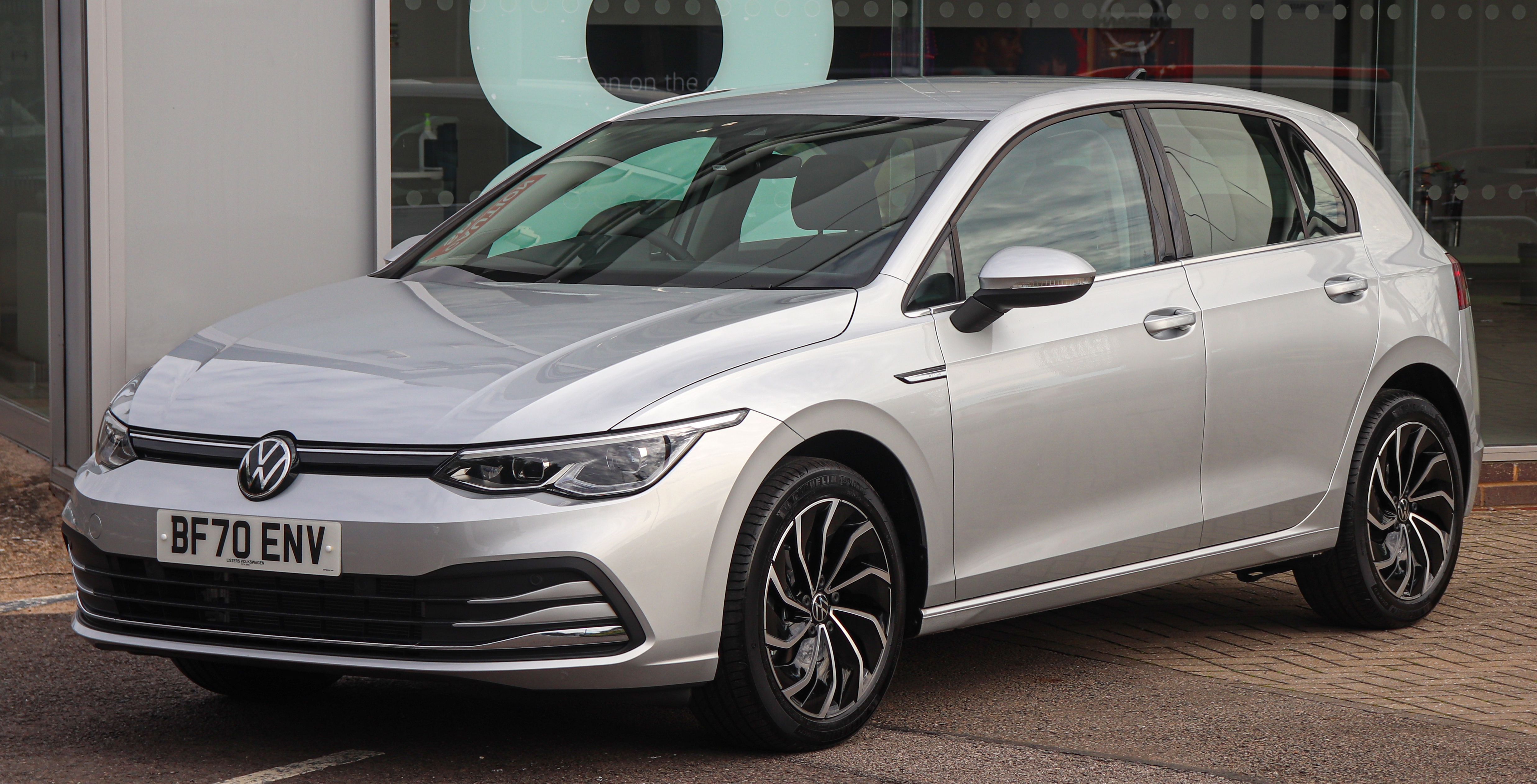
Golf Gtd
"...t, oh, my God, this is this is the real deal. The GTD is the greatest, by the way. It is. It is just th..."
The Golf is a compact car model. In the podcast, they’re talking about a performance version called the GTD. They mention it because they think it’s especially good.
In this episode, “Golf” refers to the Volkswagen Golf, specifically discussed in the context of the GTD being “the greatest.” The Golf line is known for being a practical compact car that can also be configured for performance. The mention highlights how a particular Golf variant stands out to the speaker in the conversation.
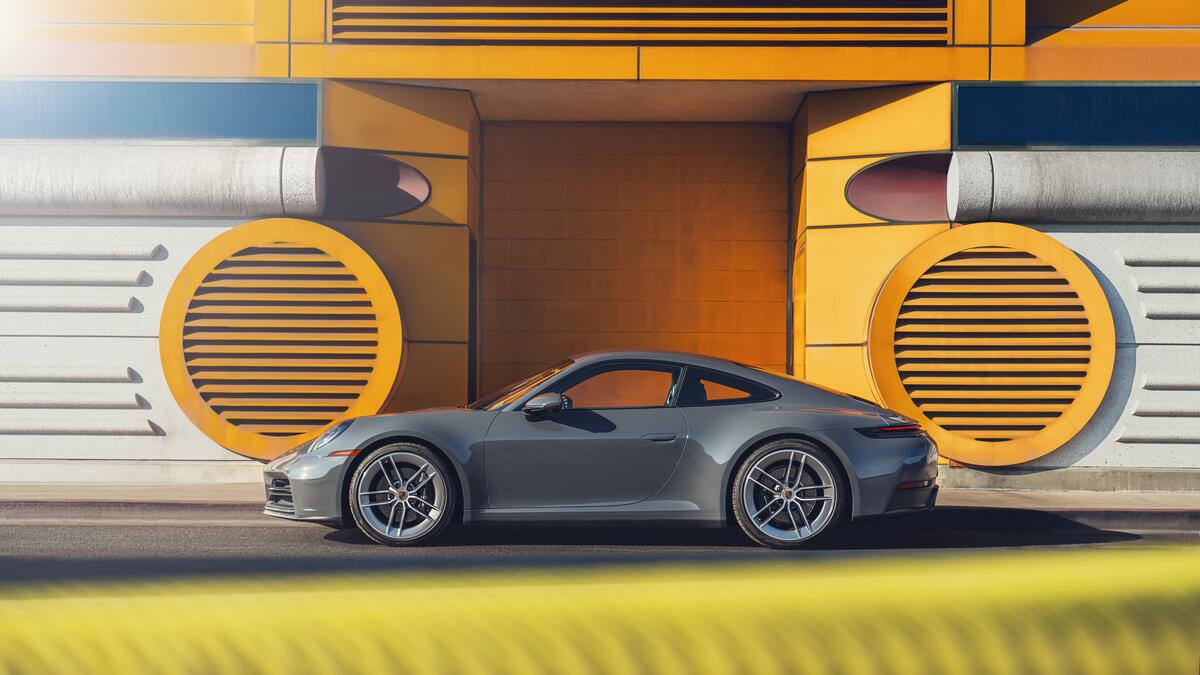
GT3 RS
"Like the last time I felt that way was a GT3 RS. And I hate saying it, but I mean,"
The Porsche 911 GT3 RS is a very serious track car. It’s the kind of car enthusiasts get excited about, and the speaker is saying this other car made him feel as excited as he did about that Porsche.
The Porsche 911 GT3 RS is a track-focused version of the 911, known for its naturally aspirated flat-six and extreme aerodynamic setup. In this segment, the host uses it as a benchmark for how strongly he reacted to a different car—“the last time I felt that way was a GT3 RS.”
word of mouth
"it's a Mustang that's never had an ad produced for it because everybody knows about it because selling word of mouth is still the best advertising in the world, you know."
“Word of mouth” means people telling other people about a car based on their own experience. The point here is that the Mustang is so well-known that it doesn’t rely on commercials.
“Word of mouth” is the idea that people spread information about a product through personal recommendations rather than traditional advertising. The speaker argues that for the Mustang, reputation and chatter are so strong that it doesn’t need ads to build demand.
Nürburgring
"Well, here's how I justify it. Yeah. If you said to somebody, you give a ratio, here's my Mustang, make this break the record at Nürburgring."
The Nürburgring is a very famous race track in Germany. Car people use it to compare how fast and capable different cars are.
The Nürburgring is a famous German racing venue used as a benchmark for performance cars. In this segment, the speaker talks about breaking a record there and compares the cost of doing it the hard way versus buying a car that can accomplish the goal.

Buick Century
"...things that go into a Vredestein tire more than a century of experience. A European brand that is just now ..."
The Buick Century is a car model line from Buick. It’s been produced for a long time, so it represents a long-running nameplate. The podcast mentions it as part of a story about experience and history related to automotive products.
The Buick Century is a midsize car nameplate from Buick that has been around for many decades. In this episode, it’s mentioned in a context that connects it to experience and history—specifically around tire development and brand longevity. That’s why it appears: it’s a reference point for “more than a century of experience” in the discussion.
Vredestein
"sponsor of spikes car radio. Go to Vredestein.com, check out where you can get Vredestein tires, [880.9s] demand a better tire, demand Vredestein."
Vredestein makes tires. The host is basically telling you the sponsor sells tires there.
Vredestein is a tire brand known for performance and high-quality street tires. In this segment, it’s mentioned as the sponsor and as the place to buy tires.
e-ray
"The front wheel drive hybrid system out of the e-ray. You know, it's really amazing. It's an [901.7s] amazing car"
The E-Ray is a hybrid Corvette that uses an electric motor to help drive the front wheels. Here, the host is saying the ZR1X borrows that hybrid setup.
The Chevrolet Corvette E-Ray is a Corvette hybrid that adds an electric motor to drive the front wheels. In this segment, the host says the ZR1X uses the same kind of front-wheel-drive hybrid system from the E-Ray.
flat plane crank
"Well, you have, it's not a Chevy Crate motor. It's a motor designed specifically through this application. It's a flat plane crank, four valve, four cam, low on the blow."
A flat-plane crank is a specific way the engine’s rotating shaft is shaped. It’s used in some performance engines because it can help the engine rev and feel more “sporty.”
A flat-plane crank is an engine crankshaft design where the crank pins are arranged in two banks, like many high-revving sports engines. This layout can help the engine rev freely and produce a more aggressive character compared with a cross-plane crank.
four valve, four cam
"It's a flat plane crank, four valve, four cam, low on the blow. It's not, you know, cam and block V8."
This is describing how the engine’s top end is built: how many valves it has and how many camshafts control them. More valve/cam control usually helps the engine breathe better at higher speeds.
“Four valve, four cam” describes a cylinder-head design with four valves per cylinder and dual overhead camshafts per bank (four cams total). More valves and cam control can improve airflow and allow better high-RPM breathing.
twin turbos
"It is a V8, twin turbos. The turbos are right up against the exhaust port."
Twin turbos mean the engine has two turbochargers. They cram more air into the engine so it can make more power.
Twin turbos use two turbochargers to force more air into the engine, increasing power. Using two turbos can help reduce turbo lag and improve boost response compared with a single larger turbo.
exhaust port
"The turbos are right up against the exhaust port. So, and it's, I think it's the biggest turbos on a production car."
The exhaust port is the opening where burned gases leave the engine. The host is saying the turbos are positioned very close to that exit to help them spool up faster.
An exhaust port is the passage in the cylinder head where exhaust gases exit the combustion chamber. Placing the turbos close to the exhaust port can improve how quickly exhaust energy reaches the turbo, improving responsiveness.
zero to 60
"And you have zero to 60 and 1.6. [1001.5s] 1.6? On a prep surface. surface with stock tires."
Zero to 60 is how fast the car accelerates from a standstill to 60 mph. It’s a simple way to compare how quick different cars feel.
Zero to 60 mph (0–60) is a common acceleration benchmark measuring how quickly a car reaches 60 miles per hour from a stop. It’s often used to compare performance across cars, though results depend on tires, launch technique, and testing surface.
prep surface
"1.6? On a prep surface. surface with stock tires. [1008.4s] Wow. And it does a quarter mile and 86"
A prep surface is a track that’s been cleaned and treated to give the tires more grip. That helps the car launch faster than it would on regular roads.
A “prep surface” refers to a drag-racing track surface that’s been prepared for maximum traction. That typically means better grip than normal pavement, which can dramatically improve launch and acceleration times.
quarter mile
"And it does a quarter mile and 86 [1011.7s] Wow. 9.1 on the street."
The quarter mile is a short drag-race distance. It’s used to see how quickly a car can accelerate over that length.
The quarter mile is a drag-racing distance (one-quarter mile) used to measure both acceleration and top speed over a short run. It’s commonly reported alongside elapsed time and trap speed.
carbon fiber wheels
"Like those carbon fiber wheels. I think I may have told this story before ... carbon revolution ... developing tires for the, some wheels ..."
Carbon fiber wheels are made from a lightweight material. Lighter wheels can help the car feel quicker to steer and respond better.
Carbon fiber wheels are wheel rims made from carbon-fiber composite, prized for being very light and stiff. In performance cars, reducing wheel weight can improve acceleration response and steering feel because less mass needs to be accelerated and controlled.
carbon revolution
"carbon revolution, Australian company came to me and they said, Hey, we're developing tires for the, some wheels ..."
Carbon Revolution is a company that makes carbon-fiber car parts, like lightweight wheels. Jay Leno is describing how they offered very expensive wheels for European cars.
Carbon Revolution is an Australian company known for manufacturing carbon-fiber automotive components, including wheels. Leno uses the brand as the source of the carbon fiber wheel development story and the pricing contrast versus mass-produced American parts.
Porsche 911
"I would say 10 years ago, maybe 15 years ago, carbon revolution, Australian company came to me and they said, Hey, we're developing tires for the, some wheels for the 9.11 and, and the Ferrari's and everything. And how much are they? 20,000 a wheel. That's crazy. Well, you want to try them"
The Porsche 911 is a sports car made by Porsche. It’s known for being fast and for having a unique design that helps it handle well. People often talk about it because companies build performance parts for it, like tires and wheels.
The Porsche 911 is a long-running sports car known for its distinctive rear-engine layout and performance-focused design. It’s frequently referenced in automotive tech discussions because it’s a high-profile platform that attracts development work for parts like tires and wheels. In this episode, it comes up in the context of companies developing components for the 911 (and other performance cars).
heating, air conditioning, ventilation
"When you get in, that's the great thing about American stuff like this, heating, air conditioning, ventilation, electronic..."
Heating, air conditioning, and ventilation are the core functions of a car’s climate-control system. Leno is using them to emphasize that American cars often include strong, easy-to-use climate and comfort tech as standard equipment.
phone syncs
"even the 4GT, I get in, the phone syncs. It syncs the second you get in there."
This means the car connects to your phone so you can use features like music or calls. Leno likes that it happens automatically as soon as you get in.
“Phone syncs” refers to a car’s infotainment system pairing with a smartphone so calls, music, and apps can connect automatically. Leno contrasts this with European cars where the connection experience may be less seamless.
GPS lift system
"Like for example, you have the GPS lift system. You get in the car, let's say there's a pothole in your street. You approach the pothole, you press the button, the GPS, so the front end knows to lift anytime you come near that."
It’s a feature that uses GPS to “know” where bumps and potholes are. When you’re about to hit one, the car raises itself to help protect the front from scraping.
A GPS lift system uses the car’s navigation data to automatically raise the vehicle’s front (or suspension) when it predicts a road hazard. In this example, the car detects an upcoming pothole and lifts so the front end is less likely to scrape.
Geofencing
"Every time you come back, right. Geofencing, right? Yeah."
Geofencing means the car uses GPS “zones.” When you drive into a zone it recognizes, it can automatically do something—like raising the car before a pothole.
Geofencing is a location-based control method where the car triggers actions when it enters a defined geographic area. Here, it’s used so the lift system activates automatically near known pothole locations.
Tesla
"Yeah. It's really, it's Tesla actually developed that. Yeah. It's really good. It's very convenient in LA."
Tesla is the automaker behind the car tech being discussed. In this case, they’re associated with the GPS-based system that helps the car react to road hazards.
Tesla is credited here with developing the geofencing-style lift functionality. The point is that this kind of automated, GPS-triggered chassis behavior is associated with Tesla’s software-first approach.
high downforce
"I just drove, I drove, so this, with this giant wing, the high downforce car, the ZTK package, and I drove the non-giant wing version."
Downforce is the “suction” effect from the car’s shape and wings. More downforce means the tires press harder into the road, which helps the car handle better.
High downforce refers to aerodynamic design that pushes the car’s tires harder onto the road. A larger wing typically increases downforce, improving grip and stability—especially at higher speeds.
1,250 horsepower
"And I think the shocking thing is that it's a legit 1,250 horsepower vehicle, which by the way, do you ever think you'd be driving a 1,250 horsepower streetcar?"
Horsepower is basically how strong the car’s engine is. A number like 1,250 means the car has an enormous amount of power for a regular street vehicle.
Horsepower is a measure of engine power output, indicating how much work the powertrain can do. When someone says a street car has 1,250 horsepower, they’re highlighting how much acceleration and speed potential the car has compared to typical vehicles.

Mercedes-Benz E55 AMG
"no, you're not. Okay. Jay, welcome to the apocalypse. If there was an apocalypse, what car would you take to escape in? Hey, you need something nondescript. Probably like my E 55. Oh, because that look, oh, you could be. Yeah. Yeah. It could be, you know,"
The Mercedes-Benz E55 AMG is a faster, sportier version of the Mercedes E-Class. It’s made by AMG, the performance division. In the podcast, they mention it because it can seem normal, but it’s still a strong performer.
The Mercedes-Benz E55 AMG is a performance-focused version of the E-Class, built by AMG to deliver stronger acceleration and a sportier driving character than a standard E-Class. In the episode, it’s mentioned as a “nondescript” choice for escaping in an apocalypse scenario, implying it can look normal while still being capable. That makes it relevant as an example of a sleeper-style performance car.
V12
"But a lot of people now even Bugatti will use a Mercedes V12 or whatever."
A V12 is an engine with 12 cylinders arranged in two rows that form a V shape. More cylinders like this can help an engine run smoothly, and it’s commonly used in luxury/performance cars.
A V12 is an engine with 12 cylinders arranged in a “V” shape (two banks of six cylinders). It’s often associated with smoothness and high-end performance, which is why the host compares Zinger’s approach to other brands that use a Mercedes V12.
2.88 liter V8
"The fact that Zinger built their own engine developed in-house 2.88 liter V8, a 4 valve, revs to 11,000 RPM."
This means the engine is a V8 (eight cylinders in a V layout) with a total size of about 2.88 liters. The host is saying it’s built to rev very high, which is typical of performance engines.
A 2.88-liter V8 refers to an engine displacement of 2.88 liters total, using eight cylinders arranged in a V configuration. The host pairs this with “4 valve” and an 11,000 RPM target, implying a high-revving, performance-oriented valvetrain design.
4 valve
"The fact that Zinger built their own engine developed in-house 2.88 liter V8, a 4 valve, revs to 11,000 RPM."
“Four valve” means each cylinder has more than the usual number of valves—commonly two intake and two exhaust. That can help the engine breathe better, especially when it’s spinning fast.
“4 valve” here means a four-valve-per-cylinder setup, typically two intake and two exhaust valves. More valves can improve airflow into and out of the engine, which helps high-RPM performance.
11,000 RPM
"The fact that Zinger built their own engine developed in-house 2.88 liter V8, a 4 valve, revs to 11,000 RPM."
RPM tells you how fast the engine is spinning. 11,000 RPM is extremely high, and it usually means the engine is built for performance and can safely rev very fast.
RPM (revolutions per minute) is how fast the engine’s crankshaft spins. An 11,000 RPM figure indicates a very high-revving engine, which usually requires strong internal components and a valvetrain designed to avoid valve float at speed.
California emissions
"And the most amazing thing and the reason I bought it, it meets California emissions. Everybody from the F1 to all these cars that come to California, oh, we're getting a certification."
California emissions are the rules that limit how much pollution a car can produce. If a car doesn’t pass those tests, it can’t be legally used in California until it’s certified.
California emissions refers to the state’s strict vehicle pollution rules, which manufacturers must meet before selling or registering cars there. The host’s point is that many supercars can’t get certified quickly enough, so they can’t legally be driven in California until the certification process is completed.
certification
"Everybody from the F1 to all these cars that come to California, oh, we're getting a certification... Zinger develops a motor... and it passes on the first get-go."
Here, certification means the car has been officially checked and approved to meet emissions rules. If it doesn’t get certified, it can’t be legally driven where the rules apply.
In this context, certification means official approval that a vehicle meets emissions requirements and can be legally sold/registered for use. The host contrasts cars that “never passes” with Zinger’s engine that “passes on the first get-go.”
hydrocarbons
"you're spewing out hydrocarbons, and that's the emission. Okay. What the Zinger has is"
Hydrocarbons are basically leftover fuel that didn’t fully burn. If they come out in the exhaust, they can help create smog.
Hydrocarbons are unburned fuel molecules in the exhaust. They’re a key pollutant because they can contribute to smog when they escape before the engine and exhaust system reach the right operating temperature.
catalytic converter
"like a glow plug, you turn the key, the catalytic converter gets red hot instantly, and you burn off."
A catalytic converter is part of the exhaust that cleans up pollution. It helps turn nasty gases into less harmful ones, and in this case it gets hot very quickly after starting.
A catalytic converter is an exhaust component that uses heat and catalysts to convert harmful gases into less harmful ones. The host is describing a fast-light-off approach where the converter is heated to operating temperature almost instantly.
glow plug
"What the Zinger has is like a glow plug, you turn the key, the catalytic converter gets red hot instantly,"
A glow plug is a small heater that warms things up so the engine can start cleanly. In this story, they’re comparing that idea to a system that heats the exhaust cleaner right away.
A glow plug is a heating element used to raise temperature quickly so combustion can start more easily. Here it’s used as an analogy for a system that rapidly heats the catalytic converter to reduce emissions during the first moments after starting.
start button
"and you burn off. Oh, wow. Oh, is that why when you hit the start button, it goes initializing for like 10 seconds?"
A start button is the push-to-start system. Some cars take a few seconds to get everything ready, and here they’re saying that delay is related to warming up the emissions equipment.
“Start button” refers to keyless push-button ignition, which often triggers pre-start checks and system initialization. The host connects the 10-second initialization delay to the emissions system heating up.

Gordon T50
"I live there. You know, you make criminals out of people. And the fact that they actually take the, because think about it, think of the T-50, and Gordon Murray's my hero, I don't mean nothing, but that could, that can't pass California emissions. It can't. You know, even a lot of the"
The Gordon Murray Automotive T.50 is a very high-performance supercar. It’s made by a company associated with Gordon Murray, who is known for designing cars with a strong engineering focus. The podcast mentions it because they’re talking about the car and the person behind it.
The Gordon Murray Automotive T.50 is a high-performance supercar designed by Gordon Murray Automotive, known for its engineering focus and driver-oriented approach. The episode references the T.50 directly while praising Gordon Murray, tying the car to the creator’s reputation. It’s discussed because it represents a distinctive, enthusiast-focused supercar concept rather than a mainstream design.
Torrance, California
"It's American. I mean, my dream, they build them in Torrance, California in a shop, well, bigger than your place here, but not huge."
Torrance, California is where the host says a lot of car-building activity is happening. They’re comparing it to Maranello because it’s becoming a center for performance-car companies and their suppliers.
Torrance, California is being framed as a modern automotive hub, likened to Maranello. The host’s point is that multiple performance and specialty brands cluster there, supporting a local ecosystem of suppliers and builders.
3D print the chassis
"They 3D print the chassis. I mean, to me, and right next door is Singer."
“3D print the chassis” means making the car’s main structure using a 3D printer. It can help designers build unusual shapes, but the materials and strength testing have to be right.
“3D print the chassis” refers to using additive manufacturing to build structural components rather than fabricating them from traditional stamped or cast methods. In performance cars, this can enable complex shapes and rapid iteration, but it also depends heavily on material choice and structural testing.
Singer
"They 3D print the chassis. I mean, to me, and right next door is Singer. And nothing would make me happier than having a little automotive community where suppliers live near the Singer"
Singer is a company that builds very high-end Porsche-based cars. The host is saying it’s nearby, helping create a local community of specialty car makers.
Singer is a specialty automotive brand known for high-end Porsche restorations and restomods. The host mentions it as part of a nearby cluster of suppliers and builders in the Torrance area.
Maranello
"You know, and it's like I'm saying, Torrance is a new Maranello. I mean, I say it as a joke, but it's sort of true."
Maranello is a famous Italian town tied to Ferrari. The host is using it as a comparison to say Torrance could become a similar kind of car-industry hub.
Maranello is strongly associated with Ferrari and is often used as shorthand for an Italian performance-car manufacturing center. The host uses it as a comparison to describe Torrance becoming a similar “home base” for specialty automotive work.
Toyota
"We've driven Tesla out of California. We've driven Toyota out of California,"
Toyota is a big car company that makes lots of different models. In this part of the conversation, it’s just being used as another example of a mainstream brand.
Toyota is a major global automaker that sells everything from everyday commuters to performance models. In this discussion, it’s grouped with Tesla as another modern brand being discussed in the context of California’s car market and classic-car displacement.
Bugatti
"When you go to Singer, these are all McLaren Bugatti guys at work."
Bugatti is a brand known for some of the most extreme supercars in the world. Here it’s mentioned to show that Singer is staffed by people from the top of the performance-car industry.
Bugatti is a luxury performance brand best known for extreme-horsepower hypercars and high-speed engineering. The hosts mention Bugatti alongside McLaren to emphasize the caliber of engineers and designers involved with Singer.
McLaren
"When you go to Singer, these are all McLaren Bugatti guys at work."
McLaren is a famous company that makes fast, high-end sports cars. In this conversation, it’s used to describe the kind of talent people move around in the supercar world.
McLaren is a British supercar and racing brand known for lightweight construction and high-performance engineering. Here it’s mentioned as part of the kind of “guys at work” Singer attracts—people with backgrounds from top-tier performance brands.
Air Force runway
"Where was this that you could go that fast? Air Force runway. Yeah. So sectioned off in a straight line."
They’re describing a long, controlled runway area used for aircraft, not a normal public road. It’s safer and more predictable for testing very high speeds.
An “Air Force runway” is a long, flat, controlled stretch of pavement used for aircraft operations, repurposed here for a straight-line high-speed run. Using a runway helps reduce variables like traffic and tight turns when measuring top speed and stability.
V max
"the top speed of the one, I was driving the no wing one, the V max, probably 250 miles an hour."
“V max” means the car’s top speed. They’re saying the specific Singer they drove could reach about 250 mph.
“V max” is shorthand for a vehicle’s maximum speed, the top speed it can reach under specified conditions. The speaker says the “no wing” Singer had a V max around 250 mph, tying it to the car’s aero and stability at extreme velocity.
no wing
"I was driving the no wing one, the V max, probably 250 miles an hour."
“No wing” means the car doesn’t have a rear spoiler. That affects how the car grips the road and how much it slows down due to air resistance.
“No wing” refers to a car configuration without a rear spoiler/wing, which changes aerodynamic balance. Wings often increase downforce (more grip) but can also increase drag; removing it can reduce drag while relying on other aero elements for stability.
aerodynamics
"At what point did it start to feel a little, you know, the air's hitting it? It never did... It's amazing how far aerodynamics"
Aerodynamics is how the shape of the car interacts with the air. At high speeds, good aerodynamics helps the car stay stable and not feel like it’s fighting the air too much.
Aerodynamics is how air flows around a car, affecting drag and stability at high speed. The speaker describes how, at very high speed in a Singer, the car never felt like it was slowing down—implying the aero setup stayed effective and stable even as speed increased.
took my foot off the gas
"Okay. I just took my foot off the gas. The rear end came around, spun eight times down the center. I didn't hit anything. But yeah."
When you lift off the gas, the car’s behavior can change quickly. Sometimes that makes the back tires lose grip and the car starts to spin.
Lifting off the throttle can trigger oversteer because the engine’s braking effect (engine braking) changes the load on the tires. On high-speed tracks, that sudden change in traction can cause the rear to rotate.
rear end came around
"Okay. I just took my foot off the gas. The rear end came around, spun eight times down the center. I didn't hit anything. But yeah."
That phrase means the back of the car started to swing out and rotate. If it gets bad enough, the car can spin even if you didn’t hit anything.
“Rear end came around” describes oversteer behavior where the back of the car rotates toward the outside of the turn. When it’s severe enough, the car can spin multiple times, which is what the speaker describes next.
Indianapolis 500
"You slow down to 60. You think you can get out. It feels like you're going 15 miles because that is happening at the early Indianapolis 500. The guys that circle at 100, 110 pull into the pits at 40 miles an hour..."
This is the Indy 500, a major race on an oval track. The host is using it to explain how fast things happen there and how that affects what drivers and crews do.
The Indianapolis 500 is a famous oval race where cars run at very high speeds and pit stops are tightly managed. The speaker uses it as a reference point for how speed and safety expectations have changed over time.
Lotus Amira Turbo SE
"All right, Johnny, you brought a lotus of some kind here. Let's have a look at it. This is, first of all, it's kind of brown, which I like. This is the Lotus Amira Turbo SE."
This is a Lotus performance car called the Amira Turbo SE. “Turbo” means the engine uses a turbocharger to make more power, and “SE” is a special trim level with different features than other versions.
The Lotus Amira Turbo SE is a Lotus-branded performance car that uses a turbocharged engine to deliver strong acceleration and a more urgent driving feel than a naturally aspirated setup. The “Turbo SE” indicates a specific turbocharged special edition/trim, which matters because it can change power output and equipment compared with other Amira variants.

Lotus Amira
"...'s kind of brown, which I like. This is the Lotus Amira Turbo SE. 2026 Amira Turbo SE and that's importan..."
The Lotus Emira is a sports car made by Lotus. It’s meant to be fun and responsive when you drive it. In the episode, they mention a specific Emira Turbo SE version and talk about details like its color.
The Lotus Emira is a modern sports car from Lotus, aimed at delivering a lightweight, engaging driving feel. It’s brought up in the episode specifically as the “Emira Turbo SE” and tied to the idea of a particular color and model details. That makes it a relevant topic because it’s a current-generation Lotus that people discuss in terms of how it’s built and configured.
AMG motor
"2026 Amira Turbo SE and that's important because this is the AMG motor. So it's a turbo four cylinder"
AMG is Mercedes-Benz’s performance brand. If an engine is called an “AMG motor,” it usually means it was made or tuned for stronger performance than a regular version.
“AMG” refers to Mercedes-AMG, the performance division of Mercedes-Benz. When a host says “AMG motor,” they mean the engine is built or tuned by AMG, which often implies a more performance-oriented design and calibration than a standard base engine.
turbo four cylinder
"So it's a turbo four cylinder [2152.9s] which has a eight speed dual clutch instead of the normal Camry V6 with the old Lexus diesel"
This means a small four-cylinder engine with a turbocharger. The turbo helps the engine make more power, especially when you’re not revving super high.
A “turbo four cylinder” is a four-cylinder engine that uses a turbocharger to force more air into the cylinders. That typically improves torque and acceleration compared with a non-turbo four-cylinder of similar size, especially at lower-to-mid engine speeds.
eight speed dual clutch
"which has a eight speed dual clutch instead of the normal Camry V6 with the old Lexus diesel [2158.9s] manual."
This is an automatic gearbox that uses two clutches to change gears quickly. The car can “get ready” for the next gear, so shifts can feel quicker—though software problems can make it act weird.
An eight-speed dual-clutch transmission (DCT) uses two separate clutches—one for odd gears and one for even gears—so it can pre-select the next gear. That usually enables faster, smoother shifts than a traditional automatic, but early software calibration can still make it feel jerky or slow.
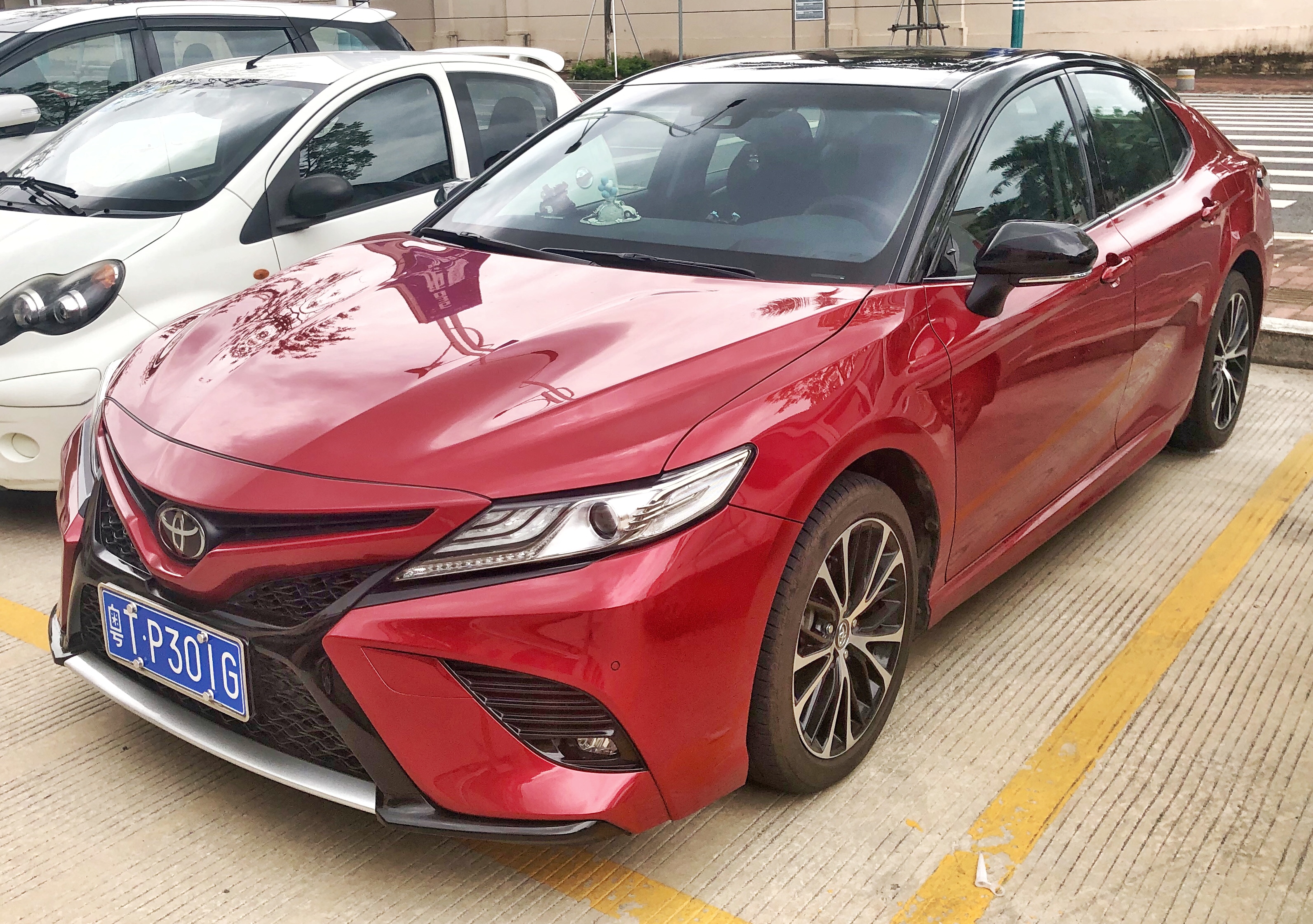
Toyota Camry V6
"which has a eight speed dual clutch instead of the normal Camry V6 with the old Lexus diesel [2158.9s] manual."
They’re comparing this car to the usual Camry setup with a V6 engine. A V6 and a turbo four can feel very different in power delivery and driving character.
The Toyota Camry V6 is referenced as the “normal” alternative drivetrain in the comparison. The point is that the discussed car uses a turbo four-cylinder instead, which can change how it delivers power and how it feels compared with a larger naturally aspirated V6.
transmission was programmed very, very poorly
"But when they released this car in 25, the transmission was programmed very, [2165.2s] very poorly. And all the reviews, especially our friend Ferris, were just scathing."
They’re talking about the car’s computer controlling the gearbox. If the programming is bad, the shifts can feel wrong—jerky, delayed, or just not smooth.
This refers to transmission control software calibration—how the car’s computer decides clutch timing, shift points, and torque management. When it’s “programmed poorly,” the DCT can shift awkwardly or feel slow and unresponsive, even if the hardware is capable.

Toyota GR Corolla
"It just didn't feel exciting. It felt like a Toyota. What's the car you have? [2184.8s] The Toyota? The GR Corolla? Yeah. It felt like that. Wishes it felt like that."
The GR Corolla is a sporty Toyota hatchback. They’re using it as an example of what they wish the other car felt like—more fun and exciting.
The Toyota GR Corolla is a performance-focused compact hatchback known for rally-inspired character. In the segment, it’s used as a benchmark for what the host wanted the discussed car to feel like—more engaging than a typical commuter vibe.
Amelia Island
"But they redid the transmission and I drove it briefly at Amelia Island. Yeah. Yeah. This is [2196.2s] stunning."
Amelia Island is a well-known car event in Florida where people get to see and drive new cars. It’s the kind of place where you might test a car after changes were made.
Amelia Island refers to the annual car event in Florida (often associated with the Amelia Island Concours d’Elegance). Hosts and journalists commonly drive new cars there, so it’s a typical venue for first impressions after updates.

Mazda MX-5 / Miata
"...I mean, it's what Lotus, Lotus, they invented the Miata and they, they, they could have had the world's m..."
The Mazda MX-5 (Miata) is a small two-seat convertible sports car. It’s made to be light and enjoyable to drive, especially on twisty roads. The episode brings it up because it’s an important example of this kind of simple, fun sports car.
The Mazda MX-5, also called the Miata, is a lightweight, driver-focused roadster designed to be fun and easy to drive. It’s significant because it helped popularize the modern “small, simple sports car” formula. The podcast mentions it in the context of Lotus and the idea of what made the Miata such a standout concept.
speed limit
"so two things, one of them, and I don't understand this, but the European Union has a rule now. If you break the speed limit, the car beeps at you."
Some cars will warn you with a beep if you go faster than the speed limit. The host is saying the warning behavior can be different depending on where the car is sold.
The segment is talking about a legal/driver-assist rule where the car warns you if you exceed the speed limit. In this case, the warning is an audible beep, and the host compares how it can be turned off in different regions.
throttle cable
"Like they're manuals. So it's, I know it's electric. There's no, you know, throttle cable or anything or, you know, transmission cable, but like it's just so hard to get it into reverse..."
A throttle cable is the physical cable that connects your gas pedal to the engine. The host is saying this is an electric car, so it doesn’t use that kind of cable-based control.
A throttle cable is a mechanical linkage that connects the accelerator pedal to the engine’s throttle body. The host says the car is electric, so it doesn’t use a throttle cable or transmission cable in the same way a traditional gas car does.
torque
"Well, it's 400 horsepower and it's 374 pound feet of torque. Let's see here. Okay. That's pretty. 354 pound feet of torque."
Torque is the “pulling power” the motor makes to get the car moving. The host is using torque numbers to show the car is strong, even if the gearbox behavior is annoying.
Torque is the twisting force an engine or motor produces, and it strongly affects how quickly a car accelerates, especially at lower speeds. The host quotes torque figures (in lb-ft) alongside horsepower to explain the car’s strength even though the shifting into reverse/drive feels slow.

Porsche Boxster
"But again, like, if you think about a Porsche Boxster, right, the Boxster and the Boxster S are both four cylinders. And that's kind of what this car is competing with."
The Porsche Boxster is a mid-engine Porsche roadster. The host is comparing the Lotus to the Boxster lineup because they’re talking about similar engine choices and competition in the same buyer space.
The Porsche Boxster is a mid-engine roadster known for its handling balance and flat-six (in most modern versions) or four-cylinder variants depending on generation. The speaker uses it as a competitor because the Boxster and Boxster S are described as four-cylinder cars, similar to what they claim the Lotus is competing with.

SLR Mercedes McLaren
"You know, it's kind of like when the SLR Mercedes McLaren came out. It took so long to develop."
The Mercedes-Benz SLR McLaren is a famous high-end supercar. The host mentions it to make a point about how long these cars take to develop and that dual-clutch gearboxes weren’t common yet when it was being made.
The Mercedes-Benz SLR McLaren is a halo supercar that helped popularize the idea of a highly developed, high-tech grand-touring car from the early 2000s era. The speaker brings it up to illustrate how long development can take and how dual-clutch transmissions weren’t widely used at the time it was developed.
Bluetooth
"When it was developed, the dual clutch transmission had not been widely used yet. You had to buy the phone that plugs in. You didn't have Bluetooth."
Bluetooth is wireless technology that lets your phone connect to the car, like for music or calls. The host is basically saying this was before that kind of feature was standard.
Bluetooth is a short-range wireless technology used to connect devices like phones to a car’s audio or infotainment system. The speaker uses it as a time marker to contrast older tech expectations with modern connectivity.
interior and right ergonomics
"and this feels like it's a generation or two behind every other car out there in terms of interior and right ergonomics and that kind of stuff."
“Ergonomics” in cars means how naturally the controls, seating position, and visibility work with your body. The host is arguing that this 2005-era car feels a generation or two behind competitors in how the cabin is laid out and how easy it is to use while driving.
Boxster S
"Right. I mean, yeah, but like if you were to, to take this in a Boxster S, which is actually this would have a little bit more power than a Boxster S."
The Porsche Boxster S is a sporty Porsche roadster. Here, it’s being used as a reference point for which car feels easier to live with and drive day to day.
The Porsche Boxster S is a mid-engine Porsche roadster with a performance-focused tune compared to the base Boxster. In this segment, it’s used as a benchmark for how usable and “driveable” a car feels in everyday terms, not just raw power.

Toyota Prius
"...leave. He just got in a car with cases of soda, a Prius, and then drove off. I wanted to know what was ha..."
The Toyota Prius is a car that uses a gas engine and an electric motor together. That helps it use less fuel than many regular cars. In the podcast, it’s mentioned because someone drove away in one.
The Toyota Prius is a hybrid car best known for improving fuel economy by using both a gasoline engine and an electric motor. It’s often used as a recognizable, practical vehicle in everyday situations. In the episode, it’s mentioned as the car someone got into and drove off with, making it part of a real-world anecdote.
Grand Prix
"He was a real car guy. He was a real racer. He did his own driving in Grand Prix. He was my mom's favorite. Austin Mini Cooper."
“Grand Prix” is a type of high-level race. It usually means serious, professional racing where drivers actually compete on track.
“Grand Prix” refers to top-level open-wheel racing events, typically run under Formula rules. When someone says a driver did their own driving in Grand Prix, it means they competed at a high motorsport level rather than just appearing in a car for publicity.
canyon
"Are you aware of any of this controversy with crossing the mustard in the canyons? ... there's a lot of death up in the canyons. And there are a lot of people dying."
They’re talking about driving on winding mountain roads (“canyons”). Those roads can be dangerous, and the conversation is about how people should behave there.
The hosts are discussing canyon driving—winding mountain roads where speed, traction, and driver judgment matter a lot. They connect it to risk and fatal outcomes, and to the idea of community “policing” behavior.
crossing the mustard
"Are you aware of any of this controversy with crossing the mustard in the canyons?"
It’s a colorful way of saying “you went too far.” Here, they’re talking about driving behavior in canyon roads that’s riskier than it should be.
“Crossing the mustard” is a slang way to say someone is going too far—typically beyond safe or socially acceptable behavior. In this context, it’s being used to describe risky driving actions in canyon roads that go past normal limits.
full face helmet
"I think the Canyon Carver thing would be great if he came on, you know, he had a, what they call a full face helmet."
A full face helmet is a helmet that covers your whole face. They mention it as a safety/identity idea—like protecting who the person is.
A “full face helmet” is protective headgear that covers the entire face, typically used in motorsports and other high-risk riding/driving contexts. The speaker brings it up as a way to keep someone’s identity safe while still appearing “legit” or safety-minded.
pixelated identity
"No, no. Pixelated. Yeah. Pixelated identity. Yeah. A ski mask. mask kind of deal."
Pixelated identity means blurring or pixelating someone’s face so you can’t recognize them. They’re suggesting that for this controversial canyon-driving figure.
A “pixelated identity” refers to intentionally obscuring a person’s face in video—often by applying a pixelation effect. In this segment, it’s suggested as a way to avoid identifying someone while still discussing their canyon-driving content.
Request an Explanation
Heard something you'd like explained? We'll add it to this episode.
Sign in to request explanations for terms you heard.
Want to learn more?
Browse our glossary for plain-English explanations of automotive terms, jargon, and concepts.
Help improve this episode
See something that's not quite right? Our annotations are AI-generated and can sometimes miss the mark. Click the flag icon on any annotation to suggest a correction.