The Jeep Wrangler is a tough vehicle designed for off-road driving. It's known for its ability to go over rocks and through mud, making it a favorite for adventure lovers.
The Nissan 200 SX is a small, sporty car that many people liked in the 1990s. It's known for being fun to drive and can be a good choice for someone looking for an affordable used car.
The Toyota FJ Cruiser is a tough SUV that looks like older models but has modern features. It's great for off-road driving and is loved by people who enjoy outdoor adventures.
High engine RPMs mean the engine is spinning fast. Engines that can handle this well are often found in sports cars and motorcycles, allowing them to go faster and perform better.
Crotch rockets are fast motorcycles that are built for speed. They look sporty and are designed to be quick and agile on the road, unlike heavier bikes like Harleys.
The Lucid Air is a new electric car that is designed to be very fancy and high-tech. It can go a long distance on a single charge and has a lot of room inside, making it a comfortable choice for drivers who want something special.
The Porsche 911 is a famous sports car known for being fast and fun to drive. It's been around for a long time and is loved by car enthusiasts for its unique shape and powerful engine.
High RPM means the engine is spinning quickly, which can make it more powerful. Some engines are built to handle this better than others, and if they're not, they can break down.
Muscle cars are powerful cars, usually from America, that are built for speed. They became really popular in the 60s and 70s and are known for their strong engines.
An oiling system is what keeps the engine parts moving smoothly by spreading oil around. This helps prevent wear and tear and keeps the engine from overheating.
Fuel economy is how far a car can go on a certain amount of gas. Better fuel economy means you spend less money on gas and can drive further without filling up.
0W-20 is a kind of motor oil that works well in cold weather and helps engines run smoothly. The numbers tell you how thick the oil is at different temperatures.
Synthetic oil is a man-made motor oil that helps engines run better and last longer. It's often more expensive but provides better protection than regular oil.
NASCAR engines are powerful engines used in stock car racing. They are made to last through long races, but they get worn out after each race because they run so hard.
Formula One engines are special engines used in the fastest racing cars. They are built to go really fast and can run at very high speeds for a long time during races.
When an engine is fully rebuilt, it means it has been taken apart and fixed up with new parts so it can work like it did when it was new. This is done to make sure the engine runs well again.
Tighter tolerances mean that engine parts are made to fit very closely together. This helps the engine run better and last longer because there is less space for things to go wrong.
Higher pressures in an engine mean that the oil is pushed through the engine more forcefully. This helps keep everything lubricated and cool, but it can also cause problems if it gets too high.
Maintenance is the work done to keep a vehicle in good condition. It involves checking and fixing parts of the car regularly so it runs well and lasts longer.
Fleet companies are businesses that own and manage many vehicles, like delivery trucks or rental cars. They take care of these vehicles to keep them running well and making money.
High revving engines can spin faster than regular engines, making them more powerful and responsive. They are built to handle the extra stress that comes with running at high speeds.
LIVE
Good morning folks, you're tuned into Car Connection
where the coffee's strong, the stories are real,
and the wrenches never stop turning.
I'm your host, Nile Motormouth Jenkins,
coming to you from the Car Connection Workshop
where the smell of fresh oil and a little elbow grease
is all part of a balanced breakfast.
Around here, we don't just talk cars, we live them.
Whether it's a 25 year old Jeep Wrangler
getting a second chance at life,
or a Nissan Rogue getting its brakes back in order,
or a mystery leak that's got everyone
scratching their heads,
this is where we roll up our sleeves and get it done
with a little wit, a little wisdom, and a whole lot of fun.
The Car Connection isn't just about nuts,
bolts, and diagnostics, it's about connection.
Connection to our vehicles, to the people who drive them,
and to the community that keeps Niagara rolling.
Because when you fix a car, you're not just turning a wrench,
you're restoring someone's confidence, freedom,
and maybe even their sanity.
We're here every week for you Monday through Saturday
for our Motormouth 8 AM morning drive,
helping you keep your ride safe, reliable,
and ready for whatever road lines ahead.
So whether you're a weekend wrencher, a daily commuter,
or someone who just wants to understand
what that strange rattle really means, welcome aboard.
Stick around for shop talk, expert advice,
a few good laughs, and maybe a story or two
that comes to mind as we're spending our morning together
here on the morning drive.
Well, if you're just sliding through the drive through,
double check your order, lock it down in your cup holder,
pass the pack of 16 Crayola crayons,
and the folded leaf bag that resembles a laptop
so they can take notes down for you.
And if you can't take notes,
all our programs are available to you on our iHeart channel.
You can also go to the link on the homepage for a website,
which by the way, everything we talk about,
whether it's on YouTube, Facebook, Instagram,
StevensvilleontheWeb.ca, iHeartRadio,
and all the major podcast platforms, Apple, Amazon,
we're there.
Just type car connection in the search box
whatever platform you're pulling your podcast from,
we're there, you can find us.
So everything we talk about lives at our website
because we turned that into the biggest drawer
that we could possibly have
and stuff as many tools in there as possible
so that you're able to follow and connect with us.
So top right hand corner of our homepage
at carconnectionbusinessnetwork.com
is where all the links are provided for you.
I make reference to that in all the descriptions
of all our YouTube videos as well as our podcast right here.
So we make it simple and you can connect
with our program partners, our sponsors,
also on our homepage, their logos are there
for their companies, click and visit them.
And they're there to help you answer questions.
They're not there to work for free,
but if they wanna give you a discount,
they'll just do it because you know why?
They're great people and they're like family to us.
They've been a part of our radio broadcasts
for many, many years and 31 years, we wrapped it up.
Now we're gone totally digital
and we should have done that many years ago,
but you know what?
Shoulda woulda coulda right, but we're here.
And that's the reason why the rear view mirror
is smaller than the windshield on your car
because it's better to know where you're going
than focus on where you've been.
Well, a little tip this morning
before we have our morning coffee together,
keep an eye on the road and we'll have a swiggy
in just about 30 seconds.
Did you know this?
Are you ready?
Most people don't realize skipping maintenance
can cut the life of a vehicle by 40%.
Did you just hear that?
40% by skipping maintenance.
That is absolutely food for thought
because that's why car connection
and our car connection workshop are on a mission to educate.
And thanks to our partners for Rainbow Motors and Garage,
Reed and Ramiz, Shoulda, the brothers,
providing sales and service
to all makes and models that you can trust.
So you can purchase a vehicle there,
they don't sell any junk.
They have extended warranties
that you can take a look at to purchase,
but you can buy a vehicle there
and have it service there.
How cool is that?
They service all years, makes and models up to it,
including light commercial vehicles.
Rainbow Motors and Garage, sales and service
in Scarborough, Ontario, Canada that you can trust.
Yeah, that blew me away.
I'm reading the article
and I must have read that piece about a hundred times.
Okay, 99.
Most people don't realize skipping maintenance
can cut the life of your vehicle by 40%.
Let's think about that for a second
before we unpack this morning's program,
why modern engines don't last like they used to.
And there's a big science behind that.
And it's got some people bent out of shape,
but I'm gonna unpack it the best way I know how
as a licensed automotive service technician.
Yeah, they just, you know, the Ministry of Skills
and Development just sent me the invoice
to renew my 310T and my 310S licenses.
Yeah, we gotta pay for them.
It's called, I call it the SOP,
the Standing Operating Procedure.
Yeah, we have to pay, even though we paid
to put ourselves through school, trade school,
paid to take evening classes to get sharper
at diagnosing and understanding the automobiles
that are built today, all that and a diet soda
and you get a bill to buy your licenses again
and keep them valid.
You know, there's just no getting away
from the hand going in your pocket, is there?
Well, there's hope, babies, there's hope
because we're gonna hopefully help you
to reduce that 40%, that still blows me away.
I cannot, I did not think that number was that high.
Skipping vehicle maintenance cuts the life
of a vehicle by 40%.
So let's say today you go out there
and you purchase a brand new vehicle.
There's some people, that's your stick.
I'm not working with financial planners for over 20 years.
I finally got it, you know, it's like, I got it, I got it.
I really, really got it.
Is being in a partnership with the bank
or a finance company on an automobile
is not a really, really good idea
if you want to create a financial future
for yourself and your family and have options.
Yeah, options like you can retire out at 50 or 45
or 55 and say, yep, that's enough.
I don't need to hang out here, trading time for money.
But not all of us are thinking that way.
Buying a new vehicle every five years,
you realize what I just said is
because you feel like you don't need to maintain it,
you shorten the life of that automobile by 40%.
So if you have a 72 month loan,
by the time you finish paying that off,
the half of the vehicle that's left
isn't worth anything because you haven't maintained it.
Somebody's got to pay on that at some point.
That's just the way it is.
That's why we have pre-owned automobiles
and the ones that make it to a lot
of the really good car lots, which brings me to say,
thank you to Earl and Louise Grant
for doing what they do and that is,
they know how to pick pre-owned automobiles,
quality pre-owned automobiles with low mileage,
city auto sales and leasing.
They hold the moniker Greater Toronto
Areas' premier pre-owned auto store.
They sell no junk either.
They have over 20 plus years in the business
and resources to find those low mileage,
top quality vehicles for you.
They do the legwork.
So if they don't have what you're looking for,
they have the resources to find it.
Low mileage, quality vehicles at fair prices.
That's city auto sales and leasing.
They also have in-house financing as well.
And you know what, Earl and Louise are car guys
and they're also family people.
You know, if they think that you're getting in
way over your head and gonna be car broke,
they're gonna say something very, very gently
and in love and say, you know what,
maybe start off with something a little
on the lighter side, payment wise and work your way up
so that you're not trading your time for money
and your car broke.
That is not a good place to be.
City Auto Sales and Leasing,
GTA's premier and pre-owned auto store.
Check them out on our website.
So let's jump into our topic this morning
and have a swiggy first,
because it's staring at me and it's saying,
it's time motor mouth.
Yeah, how do we do that?
Raise your favorite morning beverage
and we count it down three, two, one
and we have a swiggy together.
This morning we're gonna be talking about
why modern engines don't last like they used to.
And then you take that what I just told you
that not maintaining a vehicle cuts the lifespan
of a vehicle by 40% by half.
Wow.
So do the math, 72 months, making all those payments,
trading your time for money and there's nothing left
if you're not gonna maintain it.
40% of that vehicle is toast.
It's done.
And on trade in, I just use this as an example.
It's 2008 Nissan Rogue, just got,
it made it through its safety inspection.
I got a call today and get some insurance arranged on there.
And that's gonna be a really nice little hopper around town
and pick up some deliveries and stuff like that always.
There's always something going on
and I don't need to take the FJ Cruiser
with little old me behind the wheel to do that.
It's like seeing somebody in a great big behemoth
of a pickup truck and there's a little tiny person
behind the steering wheel.
That's a lot of ride for one person.
And I never used to think that way, but I do now.
It's like, do you really need to get out a cannon
to kill a butterfly?
Really?
Really?
You just need a second vehicle for running around.
Doing the, I call it the shuffle.
Running here, you gotta get errands done.
You gotta get this taken care of, that taken care of.
It's life.
You gotta get life's stuff done.
So let's begin with a swiggy this morning.
I don't know what your favorite morning beverage is.
Ours is high octane, nothing less than 99.5% octane boost.
But here we go.
Let's count it down.
Three, two, one.
It's a little cold, but we'll take it.
It's wet.
It will put the coffee pot on after the program.
Maybe we'll come to your house one of these times,
or maybe we'll invite you all to come
to the Car Connects workshop and we'll have morning coffee
together and shoot a video.
That would be so cool.
That's something we definitely have to arrange
for the summer.
Mm.
Yeah, we got snow here along south shores of Lake Erie.
Snowed pretty much on and off all night
and scheduled for some more of the winter event mechanisms
are going to be with us today.
What they are, we don't know.
We have no idea.
It's an IDK.
I don't know.
Another tip for you this morning.
I will always give you tips that put money back
in your pocket, in your wallet,
whether I'm shooting a video
and we do three new videos every single week.
We're posted now all the way to February 6th.
We're finishing off a series of our 1997 Jeep TJ Wrangler
Rescue came in a year ago this last June,
rescued it from the crusher.
And it's just about ready to hit the road,
which is really cool.
We're doing some upgrades now.
I've changed out the dash from a 1997,
upgraded it to a new color
and the whole interior is gonna be changed over
to slate black and that's all done.
It's all in, couple of things weren't working.
You're gonna have to check the video series out on that.
And it's all walking you through the basics.
So as I'm doing the work,
you get a better understanding of how things work
on your vehicle and what kind of maintenance they require.
And all the way along this rescue
on this little 97 Jeep Wrangler TJ
is just taking care of business.
Maintenance that was not taken care of.
And then another problem not taken care of.
And then another problem not taken care of.
I'm fully understanding that 40%
that the lack of maintenance on your vehicle
reduces its longevity by 40%.
That's crazy.
Well, here's another statistic.
So now do you realize there's lots of room for you here
with that 40% to put money back in your wallet?
I hope that that's the way your mind is thinking.
Cause that's what I was thinking right away is,
you know what, if you took the mindset
of actually looking at your vehicle as a piece of equipment,
it isn't an asset or a liability to you.
And I totally disagree with those who think,
don't put money into an older car.
No, no, no.
What, you know what that tells me?
You don't work with a financial planner,
a certified financial planner,
because you're not thinking right.
You're thinking world, sales, maintenance free.
Well, you know, if that's your avenue to go down,
hey, I let you walk it all on your own
because you know what, even when I had apprentices,
sometimes I just have to let them fall down and go boom.
Then we talk about it.
Then we go, now do you understand why
when I instruct you how to do something,
I'm not instructing it to make you feel small
or belittled or useless or sarcastic.
I'm telling you how to do it
if you want the best results.
That's how we would talk about that.
And that's why I hope that I'm talking to a lot of you
that understand your vehicle can be a liability or an asset.
It's a liability when you buy into the lie
that you can't own and operate an older vehicle
and have success with it, because that's not true.
And I'm living proof of that.
You go, well, you're a mechanic.
You know, if I had a nickel for every time
somebody used that as an excuse,
I'd be a good gillionaire.
It's an excuse.
I'm a mechanic, you're not.
No, you're a car owner.
When you have those keys,
there's something called,
we always talked about at dealership level.
I only ever worked at a dealership once in my life.
And I tell you, I learned a ton because I was the guy.
Yeah, sent in to rescue a dying lead dealership.
It worked.
I just applied my business smarts
that I learned from my business mentors and guess what?
With the right people, right mindset, we fixed it
and went number one in Ontario and Canada
for parts and service.
How cool is that?
Going from the bottom to the top of the district
in 18 months as a team.
That's how you have to look at your car.
You're the coach, you're the team.
But if you have an automotive shop you can rely on
to keep you on track with vehicle maintenance
and you're ready to listen and do,
remember the do does and the did is done.
But to lose 40% of the life in your vehicle because why?
Why?
Here's my point before we jump into our topic today.
Here's my point.
I was just in a dealership yesterday.
I'm not gonna mention any words, but I'll tell you what.
If they sent me in there to fix that place,
I could fix that in a year
and I would make some changes ASAP on the ATRAP.
Oh yes, absolutely.
I'm looking at a vehicle in the showroom,
might as well call it $59,000.
And my head kind of rotated like Linda Blair
in the exorcist.
No, there wasn't any green vomit or anything like that.
So sorry if you're eating a morning snack,
sorry about that, the green vomit thing.
I go $59,000.
How much time for money do I have to trade
to pay that thing off?
And will there be anything left of it
if I treat it like a bad, bad donkey
like I just treated my trade in
that was worth a handful of cash?
Which brings me back to full circle on the 2008
Nissan Rogue that was donated to us.
And thank you very much for that.
That was from one of our listeners.
Thank you very, very much.
It's gonna be a great asset.
And yeah, it has a list of problematic failures.
So guess what, when you know what they are,
then you know how to apply the maintenance.
If you're working with a service tech
that's looking out for you,
they'll say we need to do this on there
and we need to take care of this,
we need to stay ahead of the curve.
Here's some of the curve balls that vehicle could throw you,
but if we're ahead of those curve balls,
we're in good shape.
You can make it and you absolutely can't.
I'm looking up to see, well,
what's this thing worth?
Cause it needs a value put on it
so I can get the ownership changed over
and it's blank on the green sheets,
which means it's what you paid for it.
So I'm thinking, well,
I gotta do something that's reasonable.
And so I thought, well,
what would it be worth on a trade in?
That would give us a decent number to think about.
So 08 East End Rogue with 120,000 K on.
And the bodies, I give it about an eight and a half.
Yeah, there's no rot on the upside,
but there are some areas that are showing,
hey, Houston, we got some problems coming here.
So rust proofing already,
I've already started applying it to those areas
to shut the rusties down, slow it down at least.
On a trade, it's worth $993.
That's it.
I don't want to say it's aged, it's an 08.
But that would be the second newest in the fleet.
Yeah, so 1999 to 2007 to 2009,
it would slot right in there, right?
So on a trade, you would get $993 for that, that's it.
It's pretty sad, but it's got some years on it.
You can figure out what that is.
But now it's brought back to life.
Everything that was in need of repairs and maintenance is done.
It passed a safety second time round with flying colors,
just a couple of incidentals,
couple of tires had to come off,
they just didn't measure out right.
And I got a little bit educated this week as well,
as safety inspections, there's no paperwork
for them to hand you anymore.
And see, I got out of the business before that happened.
It was on the cusp of happening.
So they have to take pictures of everything,
and it all gets uploaded to the Ministry of Transport.
So when I go to the License Bureau to tag and bag this thing,
the safety inspection, all the pictures,
all the details, everything is already in the system.
I'm like, wow, super high tech.
He goes, yeah, we can't skip anything.
Not a stinkin' thing, it has to be.
So, and the guys said,
if we were doing a paper safety check,
the tires would, they'd be adequate,
but they said, if we take pictures of that
and put it through, it's gonna flag us as a shop
and I go, no, don't do that.
So, yeah.
So we worked it out, got a couple of new tires
and got those thrown on there
and that got it through the safety.
But I was really thrown back that it was only,
the value was $993.
Crazy.
I see more value.
You know why?
Because I see it as an asset, not a liability.
So just keep that in mind.
You don't wanna maintain it.
Hey, that's your business, that's fine.
That you're trading a lot of time for money
and you're on that hamster wheel
and you run, run, run, run, run, get off,
lick the little ball, get a pellet, jump back on.
You're doing that every single day
and throwing money out of the window of the car
as you're driving.
Because you're gonna have 40% of life gone
out of that vehicle you're driving for what?
Trading time for money.
What's your time worth?
What is your time worth?
Is the question you have to ask yourself.
How many times do you wanna, you know,
by the time you pay it off, you got nothing left,
you gotta go get another one.
I call that the never, never plan.
You're forever going to be trading time for money
to pay for an automobile and you know what that is?
Your car broke between your mortgage,
live in the dream, you gotta have your dream home,
you can't wait and work your way up,
you gotta have your dream home
so you're in over your head there
and then you gotta add car payments.
And maybe two car payments, his and hers.
Do you understand where I'm coming from?
And when I hear someone say,
I just can't see putting parts on an old car.
Well, that tells me right away,
you don't see the value in the automobile
so you don't see any value in maintaining
your current ride that you're making payments on
so you're on the never, never plan.
So you're always going to be car broke
or one payment from losing the car.
Not a good idea.
Another tip this morning to put money in your pocket,
tire pressures, I'm gonna give you the reality.
How important it is to maintain your tire pressures
and even more so in the cold weather.
I know it's uncomfortable out there
but get your service tech to do it
and take them a nice hot cup of gel.
They'll do your tire pressures for you.
Fresh donuts, that'll buy you some really good
extra special treatment.
Yeah, coffee and fresh donuts, you bet.
For every one PSI, one, one PSI, under inflated,
you're losing 2% fuel economy.
So again, I'm not talking to the person
that doesn't see their vehicle as an asset.
I am not talking or wasting any breath
with that person that says,
I just can't see spending any money on an older vehicle.
It just doesn't make sense to me.
I'm not talking to that person
because the mindset is already there.
Here's what my professor taught me,
is smile and nod and just know that they're out there
in the rhubarb patch, they're not listening
because when the student is ready, the teacher will appear.
And secondly, a man convinced against his will
is of his own opinion still.
And my natural path works exactly like that.
People might try and tell me,
oh, that's just a load of bologna, that's snake oil.
The guy's ripping you off, really?
Really?
I would have probably had about six surgeries by now.
Yep.
And the last one would have really messed me up
if I let them do it for the rest of my life.
So you tell me, you try and convince me
that working with a homeopath, a natural path
that is really, really passionate about what they do,
understanding the human body and how it works
and meridians, the whole package,
the circuits running through our bodies.
We're electrical, period.
Yeah, our bodies are just wired that way.
So positive and negative.
Earth is ground, it's magnetic.
Do some research, it's really phenomenal.
It's really, really phenomenal.
So I say that to say, you know what?
I'm willing to follow my Tom for the last 30 years.
He's saved me from a lot of surgeries
and not just patched the problem, fixed.
And then how do you prevent it?
Apply the maintenance.
That's it.
That's an automobile, exactly the same thing.
What's going wrong?
How do we fix it?
Apply the maintenance.
And that's why it brings us to
why are modern engines not lasting like they used to?
It's supply and demand.
It's what the consumer wants.
You know, the consumer wants high-revving engines
so that you can drive like a bat out of hell
on the highway.
You know who you are.
I see you.
I did 650 kilometers the other day, round trip.
Exactly, it was brutal.
Watching most of you out there and going,
man, that car, if it lasts one more year
or the next six months, I'd eat my worst pair of shorts.
I don't think I have a worst pair anymore.
I think that got all cleaned out anyhow.
Yeah.
So those aren't the people I'm talking to.
I'm talking to you that is in your car right now
or wherever you are, you got a day off, you're at home,
trading time for money.
You really need to think about that.
Trading time for money.
Away from your family, on the road, at work,
all day, every day, and then tomorrow morning,
you had a lousy day to yesterday
and you got to go and do it again tomorrow.
Or many of you are in jobs that really suck.
And I've been there.
Yes, that you just read, forget Monday morning.
Monday mornings happen every day.
Then you got to change it.
If you don't like it, change it.
The do does and the did is done.
So what we push the car manufacturers
and the engineers that design and build the engines
in these vehicles is to handle high engine RPMs
for extended periods of time.
What would we compare our automobiles to today out there?
High revving motorcycles, crotch rockets.
Yeah, exactly.
Not Harleys, crotch rockets.
You know, wee!
Those things are screaming around here.
Let me tell you, along the lakefront, all summer long,
the young fellas are on there.
They have no idea what happens when you have a wreck.
I think they should watch a video
just so they get an idea that, you know,
you got a lot of power in your hands,
but you don't have a lot of protection.
Yeah, like that melon holder,
the helmet is not gonna save you when you are,
you are a human cannonball.
And I watched this happen.
I had a broken arm.
Yeah, it brings me to a little story.
Give you a little break here.
Yeah, this is back in 2005.
2005?
No, 2006, 2007.
Was playing Sunday Night Hockey, got busted up,
playing with some guys from the U.S.
that thought we were, you know, in the NHL.
And it was Stanley Cup time.
And it was like, guys, most of us are self-employed.
We need to go to work.
And bam, I busted my hand right off my wrist.
It's called a Smith's Fractor.
So my hand is underneath my arm,
and one of the fellas gets me off the ice
and gets my glove off and he goes,
Nile, this is not looking good for you.
Let me get you undressed and we'll get you to the hospital.
So I ended up, anyways, long story short, five casts later,
then I ended up having surgery in Toronto at St. Michael's.
Great job.
They did a great job fixing it up.
The guy prior to that, no,
messed it up for quite some time and then it was fixed.
It got fixed.
But anyways, where was I going with this?
Yes, projectile.
So here I am, I got a cast way out to here.
Like I'm waving to everybody all the time.
And it was an early spring time
and I could hear a motorcycle coming
from like Peace Bridge area along the lakefront.
And then I see a pickup truck pass my driveway.
And I'm watching, I'm going, what's really going on here?
Something, I felt, you know, you ever get that feeling?
I felt something and I did.
I felt something like something is,
I think about to happen.
And lived right on a corner,
was renting a house at that time.
It only moved down to Fort Erie in 05.
And I hear the motorcycle coming.
Wee!
And this little red Chevy pickup,
extra cab is sitting there at the middle of the intersection
and turning left is a dead end,
turning right would take the person towards the lake.
And it was a young girl sitting there
and it was a red Chevy pickup truck,
extra cab, like an S10, S15 thing at the time.
I hear the motorcycle still coming, like in it,
it's revving high, so you know, he's moving, he's moving.
Wee!
And it was just about dusk, not quite.
I could still see everything going on.
I'm standing there.
And it was a beautiful day that day.
It got up to like 22 early spring.
It was wonderful.
And then I turn and I could not believe my eyes.
She turned left towards the dead end street
right in front of the motorcycle dude.
He's trying to dump it and it's too late.
It ain't gonna happen.
He hits the pickup and bazinga.
He went up in the air and I didn't even know where he went.
Honest to goodness, I thought he was in a tree somewhere.
I didn't know.
And how fast that happened.
And I think the kids today,
and I'm talking about that because high revving engines,
you can get those things singing.
And that's what the engineers have designed
in your automobile.
You can get that motor really, really singing
for hours on end, but it's gonna cost you.
And that's where we're gonna sew that up
so that you get a better understanding.
That 40% loss in longevity on your vehicle is true.
It's absolutely true.
So anyways, I see this guy hit up in the air.
I couldn't see him by this time.
It was just like a shade of gray outside.
It was evening, early evening.
And I had no idea where he went, none.
And here I am in a cast.
And there's motorcycle parts everywhere.
Right past my driveway, there's bits and pieces
traveling down the road and settling out.
And I run in the house and yell, call 911.
Right away, there's been a bike accident
and a pickup right out front.
And I don't know if the guy's okay or not.
So I went and talked to the young lady.
She was just absolutely frantic and kind of in shock.
And I just said, stay here, helps on the way.
Just shut it off.
She couldn't even shut it off.
Reach in, shut it off.
So I said, just sit tight.
We'll get somebody to sit with you.
And I'm running around.
I got this cast on.
My neighbor told me the next day he goes,
Nile, I couldn't come out.
I can't see blood.
I'm like, great, got a wimpy neighbor.
Anyhow, I stopped the traffic,
get a couple of guys going, block the traffic both ways.
I said, there's a rider.
He didn't get stuffed inside the truck,
but he's here somewhere.
I can't see him.
I said, he went up and over the truck.
And I don't know how far away he landed.
We're looking for the guy.
And he was almost stuffed in a culvert
at the end of my driveway.
I didn't even see him.
But anyways, it was gruesome.
So if you've got kids that are riding those motorcycles
and winding them up like that,
they really need to understand,
that fella's life changed in an instant.
And the fire chief that came, Glenn,
I know him from, he used to work at a part store,
Napa part store.
And he said, Nile, he goes like,
the guy's, he's gonna be all right.
He says his leg is broken in several places.
His leg was actually, his ankle and his foot
were laying on the back of his helmet.
I'll just leave it at that.
Yeah.
So it was a, it was a tough go.
I'm in his cast and I, and talking to him,
I said, can I call somebody for you?
And it's an amazing story because that person
was somebody I was playing hockey with,
that I broke my arm and also a person
that was very instrumental in helping to build our connection.
And so I say that to all of you,
if you've got kids and they got crotch rockets,
you really need to tell them to slow down
because they don't, they don't understand just how quick
that happens.
And that happened very, very quickly.
And Glenn said to me, the fire chief, he goes,
he is two and a half inches from not being alive today,
undead.
And same with the driver of the truck, the pickup truck.
Cause it was an, he says it was an extra cab.
His front wheel of his bike hit two inches behind
the rear window for the extra cab.
And he says, what happens Nile is they hit that area
where the window is, they feed the machine and themselves
right into the vehicle and kill all the occupants,
including themselves.
He said, two inches, two inches from that happening.
That's why he went up and over the cab.
So anyways, high RPMs.
That's what those crotch rockets are designed to handle.
They can take that brutal driving at high RPM
for extended periods of time.
So here's what has happened over the years.
The older engines that are having some muscle cars,
they're not designed to handle high RPM
for extended periods of time.
They come apart.
Something's gonna break because the oiling system
inside that engine is designed completely different.
That's why.
So on today's engines, the engineers know that you're
winding them up like those crotch rockets
for extended periods of time at high RPMs,
giving away all your fuel economy and reducing the longevity
of the vehicle by 40%.
So why are we seeing really good vehicles not rusted out
in the you pick it wrecking yards
because you're blowing them up.
That's why.
And then when you find out it's like $16,000 put a motor
in it or some of them weigh over 20 grand
to put a new motor in it.
You say, Asta la Vista baby, right?
And you go back on the never, never plan.
You hear, can you sense being a hamster,
getting on that wheel, the same pattern all over again.
Run, run, run, run, run, run, run, get off,
lick the little ball, take a pellet, jump back on,
lick the little ball, get another pellet, jump back on.
Can you visualize that?
Cause that's exactly what's going on.
These engines will take it and then they won't.
And so in order to create an engineer engines
that in our automobiles that can handle high RPMs
for extended periods of time, they've had to tighten up
the tolerances inside the engine.
And that's why we're seeing motor oils with numbers on
that we've never seen before, 0, 20.
I never saw that growing up as an apprentice.
All through my years, I'm licensed since 1988.
We never saw that was 10 W 30, 15 W 40, 20 W 50.
Once in a while, something really odd, 5 W 30.
It was like, whoa, 5 with W 30.
No, that was like off the wall.
Now we got zero W 20 and it's expensive and it's synthetic
because they need to put synthetic oils in there
because the synthetic oil disperses heat better
than conventional oil, but they got to get a lot
of motor oil in and around those moving components
inside the engine to keep the lube there
because at high RPM, the lube wants to run away.
See ya, this is too hot, too heavy, too much pressure
for me and the oil wants to run away.
So they got to have thin oil that gets into very thin
spaces and stays there for long periods of time.
But I won't get into all the technical stuff.
So for all you armchair warriors, you do your homework
because I do mine.
This is why a good comparison is Formula One engines,
NASCAR engines, they finish a race that engine's done.
It's done.
They're turning high RPM for extended periods of time.
Amen?
Yeah, for what, 250, 300 laps depends on
if it's a super speedway.
When that vehicle crosses the finish line,
that motor is done.
It's got to be fully taken apart and fully rebuilt
and a fresh one put back in worth,
I think they're like $150,000 now.
I'm not sure, I'll have to check that,
but the price on them is phenomenal.
So that's why the price of the vehicles is going up
because of this engineering that needs to be under the hood
for you to wind that vehicle up for extended periods of time
driving 30, 40K over the speed limit,
up and down the highways, trading time for money
every single day, five, six days a week.
They know that.
So the trade off is tighter tolerances,
thinner motor oil, higher pressures,
get as much oil as possible underneath the skirts
of the pistons inside the engines
and the engines use motor oil.
That's why.
You go, well, I never had to top up,
you know, my 19, blah, blah, blah, blah, blah.
Yeah, because that was a different animal.
These newer animals burn out, you burn them out.
So when you're scooting up and down the highway,
30 to 40K over the limit, and you know,
a good whopping ticket will slow you down
for about six months, points, insurance policy goes up.
Now you're on the roadmap and on the radar.
They're keeping an eye on you.
And you know, you got like a $360 ticket
and or your vehicle's getting towed and impounded
and you're losing your license for six months.
See, it all escalates when you get caught doing 30, 40 over
and you get an officer that had a bad coffee
out of the Timmy's window or something that morning.
It's you, today's your day, right?
So it's just a, it's not a matter of if,
it's just a matter of when and everything changes.
And the motor blows up and you're still making payments on it.
And it's not covered by warranty.
So that's how today's engines don't last.
They're like a NASCAR engine.
They can only do a couple of hundred laps and it's over.
That motor is finished.
It's booked it out.
It's punched out.
Yeah.
And they got to completely restore that motor for another time.
And that's money.
So that's how these vehicles are ending up in a,
in a you pull at Wreck and yard
where the bodies aren't rusted out.
They haven't been in a collision
and all smashed up and twisted and mutilated.
They look good.
I'll be honest.
If you watch that video on our YouTube channel,
skipping my videographers going,
why are these vehicles in here?
Look at them.
They're decent.
Like they're really, really good.
I got rust on mine.
There's no rust on these ones.
Yeah. Cause the motor or transmission is blown up.
It's over.
She's singing.
And you don't want to put the money into it
cause that's when you usually get the aha moment.
You know, that deer in the headlights look, uh-huh.
Oh my, you got to be kidding me that much, huh?
And you go, I don't, I don't have that kind of money.
Just you're going to have to put it outside.
And that's what happens.
Then it gets, you know, guys call and say,
you got to get this thing out of here.
What are you doing with it?
You going to, are you going to put a motor in it?
Or what are you thinking?
And it goes to Wreck and yard.
That's where it goes.
It was a recycling yard.
So that's why these engines aren't lasting like they used to.
It would, if you drove it like a normal person should drive it
and pay attention to, you know, the posted speed limit signs,
change your schedule, go to bed earlier
so you can get up earlier and you're not rushing
to get to work and ain't a race.
It isn't a race folks.
You know, like where are you going?
In such a hurry.
Trade time for money.
So again, the point I leave with you today
and the question that you have to answer is,
do you view your vehicle as a liability?
It's costing you money or is it an asset?
And how do you change that?
How do you change it from being a liability to an asset?
That's what I can do for you.
That's what car connection can do for you.
Follow my lead.
I spent decades helping and working on fleet vehicles,
fleet trucks that can't have downtime.
At that time it was about 900 bucks a day.
If a truck was down in a fleet, they're losing 900 bucks a day.
It's a lot more today.
Would you believe me if I told you that?
So I spent a lot of time working on fleet vehicles
because breaking down was not an option.
That cost company money and if you wanted the tender
next time to service and take care of the vehicles
and keep them on track with maintenance
because they don't wanna replace these things,
these rigs until they have to.
They wanna keep them going long term.
It's nothing to see a million miles on a highway truck.
How do they do it?
I'm gonna spell it out for you.
M-A-I-T-E-N-A-N-C-E, maintenance times 10.
Because those rigs have to be assets, not liabilities.
So that's where my mindset shows me
and has proven beyond the shadow of a doubt
that you can own a vehicle for a million miles
and still be driving it.
How do I know that?
Because I service fleet vehicles when I went into the,
when I got my 310T, my trucking ticket
to fix big rigs, diesel coaches, all the big stuff.
When they buy machinery, companies buy machinery
that are diesel powered,
they want to get every drip out of that piece of equipment
before having to let it go and replace it.
Maintenance, then it becomes an asset, not a liability.
So that mindset, I just don't see it being worthwhile
throwing parts on an older vehicle.
Well, fleet companies do that.
They want every drip that that vehicle can do for them
making profitability, turning a profit
and it's not breaking down.
That's the purpose of fleet maintenance.
And that's where many years ago,
I designed the car connection maintenance schedule kit
based on my fleet maintenance record
to be able to track any one vehicle with that chart
that I created that's so simple.
Yeah, you don't even have to think about it
because it does it for you
and you can treat your vehicle like a fleet vehicle
and guess what?
Get every single drip out of that vehicle
and put money in your pocket at the same time
because it's profitable.
You're not paying interest, you're not making payments,
you own it and you understand that it's an asset.
Who cares what its value is?
The 08 Road, $933 on a trade, that's what it'd be worth.
What's it worth to me right now?
I'm gonna post some pictures.
I'll post some pictures and maybe we'll do a,
I'll get Skippy to do a walk around on it
now that it's back and it's certified and it's ready to go.
What does that mean?
It's certified.
It means that it is now an asset.
It has become, yesterday was its birthday,
that 08 Nissan Rogue just had a rebirth
and it is now officially an asset, not a liability
because everything is up to par
and now it's my job as the fleet manager
to keep that fleet vehicle going
and get every drip out of it I possibly can.
That doesn't mean I'm driving it into the ground,
I don't talk to those people.
You can't help them, period.
You can't, till the mindset changes
that you're out there every day, up and down the highways,
you know, long days, short nights, long days, short nights,
I know a wall, what that's all about, it's hard.
Why would you not wanna put money back in your wallet?
Wherever you possibly could, wherever you possibly could,
why would you not wanna do that?
It's an IDK, I don't know.
So now that 08 Nissan Rogue is now an asset
and I am the maintenance manager
to make sure that we get every drip
out of that vehicle possible
and at the end of the day,
it's not that there's just the keys left to it.
Oh, here you go, you wanna recycle those?
No, there'll be lots left
because if I treat it like a fleet vehicle, guess what?
I can get every drip out of it possible.
That's an asset.
So that is the trade off with modern day engines,
why they're not lasting like they used to,
because you're driving them into the ground
and then you gotta go get another one
and then you drive that into the ground
over the next four or five years,
then you gotta go get another one
and then you're constantly trading time for money
to be able to do that.
Do you see that hamster on the wheel running, running,
where's he going?
He has no idea, but he's just wired
that that's what he's gotta do.
He's gotta, I gotta get on that wheel
soon as I get out of my toilet paper house here
and get on that wheel and run, run, run, run,
run, run, run, run, get off, lick the little ball,
get a pallet, jump back on.
Do you see yourself doing that?
So you're making payments on a nice shiny new
or a new to you vehicle, treating it
after the first six months, then it goes back
to treating it like a bad, bad donkey
and you're gonna trade time for money
over the next four to five years to pay that thing off
to throw it away and go get another one
and then keep trading time for money.
You're on the hamster wheel, get off,
get a little lick of the ball, get a pallet, jump back on
and now you gotta buy another car.
And then you're gonna do that
for the next four to five years again.
And then you're gonna do it
for the next four to five years again.
That's exhausting to me.
Why?
Why would you wanna do that?
So that's why the engineers have given you what you wanted,
high revving engines that can run at high RPMs
with tight tolerances, thinner oil, synthetic oil,
so that they can try and help it to last
as long as possible till it can't.
So what kills it?
You, that's the answer.
What kills it?
You, the engineers have given you everything you want
to be able to drive 30 to 40 kilometers an hour
over the speed limits, in and out of traffic,
like you're running some kind of formula one race
and you win nothing.
Cause at the end of the day, you're getting off the wheel,
licking the ball, eating a pallet, jumping back on,
trading time for money.
That's how that works.
It's all based on fleet maintenance.
That's how I see it.
I go, this is like fleet maintenance.
Those things have to go up and down the highway,
hauling loads to make money for the company
and to pay for the driver so the driver
can feed their family and live a life.
And then the truck goes in for maintenance on time.
It gets a good look over, gets a good fix up
and boom, back out on the road.
Hull in the loads that can't afford to have it go down.
That's fleet maintenance.
So when you adapt to the fleet maintenance,
you can keep that vehicle as long as you want,
as long as you want.
And it is money in the pocket.
Yeah, you're gonna have to put some parts on it,
but what doesn't need parts in this world?
Your house never needs anything.
Your plumbing, your electrics,
never needs any service work, nothing ever goes wrong.
There's maintenance everywhere, fleet maintenance on the home,
fleet maintenance on your person.
There's always going to be fleet maintenance.
So I leave you with that.
Tomorrow's discussion, we're gonna talk about
the other half of technology, turbo engines.
Yeah, you can wind them up even higher
for longer periods of time, but there'll be a price to pay
when Mr. Turbo says today's the day, get your wallet out.
So we're gonna talk about that tomorrow morning
at 8 a.m. for another motormouth morning drive.
I hope I didn't beat you up too much,
but I hope I helped you to turn that light switch on
and go, he's right.
We're on that hamster wheel.
We gotta fix that.
Is my car an asset or a liability to my lifestyle?
To my family, to my children, to my future, to my health.
Turbo engines, power now, problems later.
That's what we're gonna talk about.
Make it a great day, happy healthy motoring friends.
Thanks for having us along.
Don't forget to like, share, follow,
and on our website, carconnectionbusinessnetwork.com.
Everything you need to connect with us is there.
Thank you to Niagara Block at 5,000 Montrose Road
and Niagara Falls for making car connection workshop
and car connection, our YouTube channel,
all of it happening.
Building Canada since 1931.
Building supplies, hardscape, landscaping materials
to help you design your special backyard,
your OASIS for summer 2026.
Thank you to our nonprofit faith-based organizations
that are out there making it happen,
serving the community, men, women, children, meals,
love and hope, changing lives one at a time
in the Niagara region.
That's what Crystal Ridge Dream Center does
every single day of the week.
And to Total Freedom Darien Center in New York,
Addiction Campus opened to Canadian and US residents.
That's for men and women there.
Total Freedom Sydney, Manitoba, Canada is with Rick and Robin.
They know and fully understand addictions
because they've been there.
That's a men-only campus and you know what's waiting
for you there.
If you or somebody you know, someone you love
is stuck in an addiction, there's a new life
waiting for you there.
And we're gonna help you get there.
You purchase some merchandise,
some motor mouth merchandise, proceeds go to
the Total Freedom campuses to help those
who can't help themselves.
Let's do it.
Let's do this life thing together.
We'll see you tomorrow morning for more
of the Car Connection Workshop at 8 a.m.
Peace, love and kindness.
We'll see you in the next one.
Bye for now.
About this episode
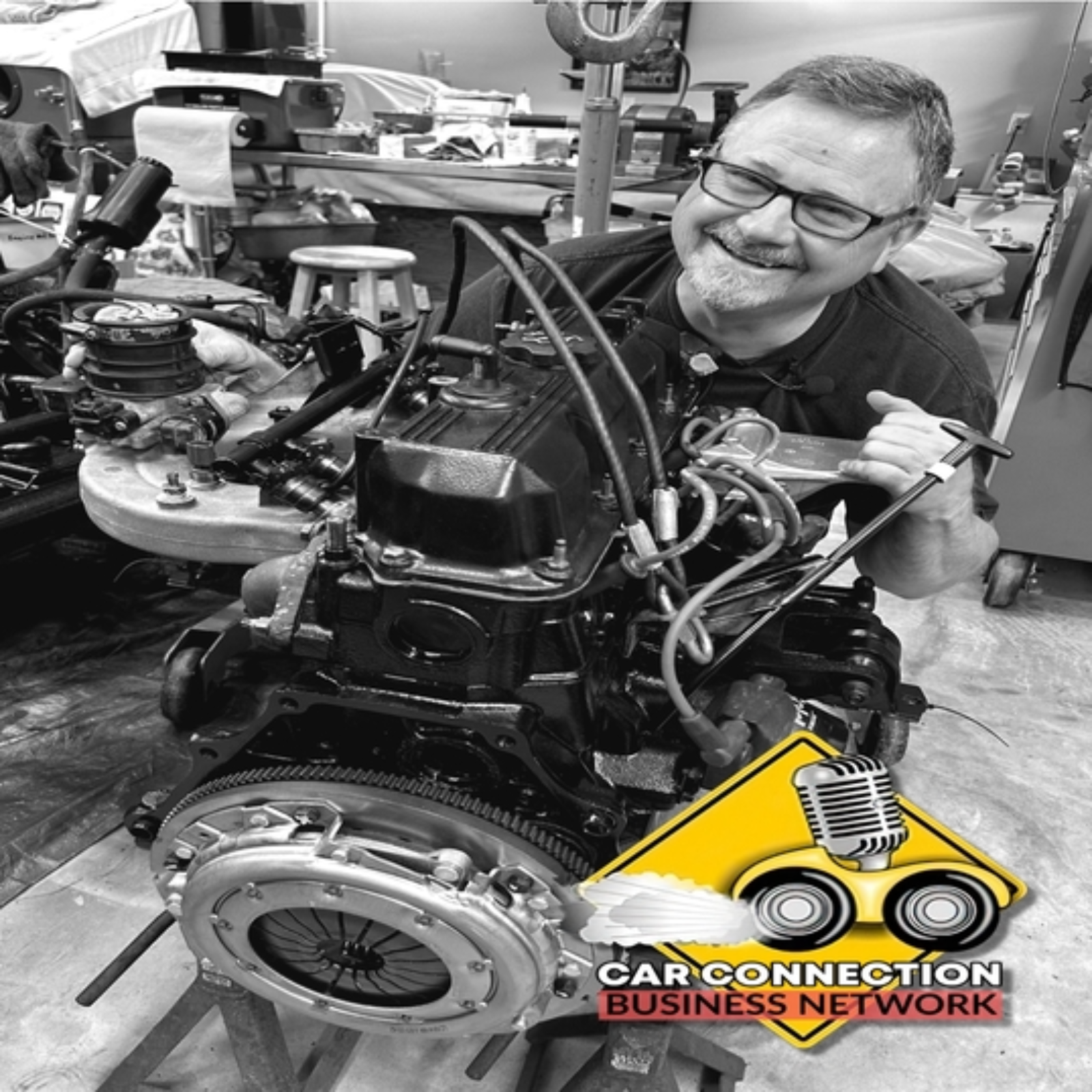
Exploring why modern engines don't last as long as their predecessors, this episode dives into the impact of maintenance on vehicle longevity, revealing that neglect can reduce a car's lifespan by 40%. Host Nile Motormouth Jenkins discusses the engineering behind high-revving engines and the trade-offs consumers face with tighter tolerances and synthetic oils. He emphasizes the importance of viewing vehicles as assets rather than liabilities, encouraging listeners to adopt a maintenance mindset to maximize their car's lifespan and value.
Modern engines aren't built the way they used to be-and it's not an accident.
Today's vehicles deliver more power, higher RPM's better fuel economy, and lower emissions than ever before. But there's a trade-off most drivers never hear about: engine lifespan.
In this episode, we break down why:
1) Internal tolerances are tighter than ever
2) engine oil is thinner than it's ever been
3) High-revving engines are designed for performance, not longevity
4) And why modern engines expire much like a race engine when the job is done
We also ask the most important question most drivers never consider:
Is your vehicle an asset - or a liability?
Fleet vehicles routinely last hundreds of thousands of miles because they're maintained to extract every dollar of value. Private owners? Many lose 30-40% of engine life and stay trapped in payments and interest cycles.
This episode explains how the choices you make today decide whether your vehicle works for you - or against you.
More. episodes and ...project details & links are available at Car Connection Business Network.com (ccbusnet.com) you'll find everything on our home page if you'd like to follow the build/ repair work we do & connect with our program partners click their logo to connect, Thank You! Help us Help those struggling with addiction get to a Total Freedom Campus by simply grabbing some Motormouth Merch. Happy Healthy Motoring Friends, Nile Motormouth Jenkins. Tnx for watching & listening. NMJ