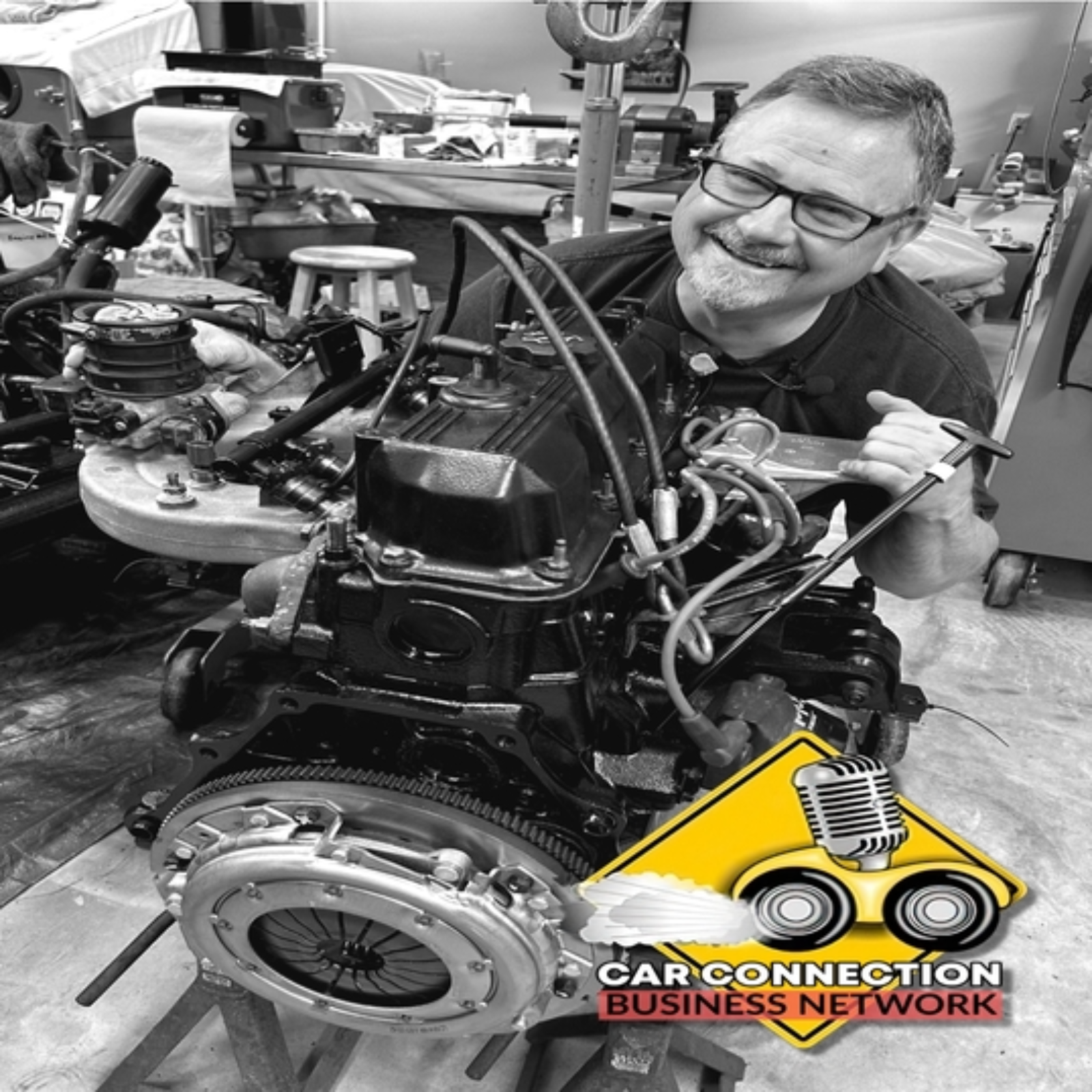
Why Modern Engines Don't Last Like They Used To ( Asset vs Liability )
About this episode
Exploring why modern engines don't last as long as their predecessors, this episode dives into the impact of maintenance on vehicle longevity, revealing that neglect can reduce a car's lifespan by 40%. Host Nile Motormouth Jenkins discusses the engineering behind high-revving engines and the trade-offs consumers face with tighter tolerances and synthetic oils. He emphasizes the importance of viewing vehicles as assets rather than liabilities, encouraging listeners to adopt a maintenance mindset to maximize their car's lifespan and value.
Modern engines aren't built the way they used to be-and it's not an accident.
Today's vehicles deliver more power, higher RPM's better fuel economy, and lower emissions than ever before. But there's a trade-off most drivers never hear about: engine lifespan.
In this episode, we break down why:
1) Internal tolerances are tighter than ever
2) engine oil is thinner than it's ever been
3) High-revving engines are designed for performance, not longevity
4) And why modern engines expire much like a race engine when the job is done
We also ask the most important question most drivers never consider:
Is your vehicle an asset - or a liability?
Fleet vehicles routinely last hundreds of thousands of miles because they're maintained to extract every dollar of value. Private owners? Many lose 30-40% of engine life and stay trapped in payments and interest cycles.
This episode explains how the choices you make today decide whether your vehicle works for you - or against you.
More. episodes and ...project details & links are available at Car Connection Business Network.com (ccbusnet.com) you'll find everything on our home page if you'd like to follow the build/ repair work we do & connect with our program partners click their logo to connect, Thank You! Help us Help those struggling with addiction get to a Total Freedom Campus by simply grabbing some Motormouth Merch. Happy Healthy Motoring Friends, Nile Motormouth Jenkins. Tnx for watching & listening. NMJ

Jeep Wrangler
"Whether it's a 25 year old Jeep Wrangler getting a second chance at life,"
The Jeep Wrangler is a tough vehicle designed for off-road driving. It's known for its ability to go over rocks and through mud, making it a favorite for adventure lovers.
The Jeep Wrangler is a compact and mid-size four-wheel drive off-road vehicle known for its rugged design and off-road capabilities. It's popular among enthusiasts for its versatility and ability to handle rough terrain.

Nissan Rogue
"...or a Nissan Rogue getting its brakes back in order,..."
The Nissan Rogue is a popular SUV that is good for families and has a lot of space inside. It's known for being comfortable and easy to drive.
The Nissan Rogue is a compact crossover SUV known for its practicality and comfort. It offers a spacious interior and a range of features suitable for families and daily commuting.

Nissan 2008 Nissan
"...on trade in, I just use this as an example. It's 2008 Nissan Rogue, just got, it made it through its safety i..."
The Nissan 200 SX is a small, sporty car that many people liked in the 1990s. It's known for being fun to drive and can be a good choice for someone looking for an affordable used car.
The Nissan 200 SX is a compact sports coupe that was popular in the 1990s, known for its lightweight design and agile handling. It is often discussed among car enthusiasts for its tuning potential and affordability as a used car.

Toyota FJ Cruiser
"...I don't need to take the FJ Cruiser with little old me behind the wheel to do that."
The Toyota FJ Cruiser is a tough SUV that looks like older models but has modern features. It's great for off-road driving and is loved by people who enjoy outdoor adventures.
The Toyota FJ Cruiser is a retro-styled SUV known for its off-road capabilities and distinctive design, reminiscent of the classic FJ40 Land Cruiser. It combines ruggedness with modern features, making it popular among adventure enthusiasts.
tire pressures
"...to put money in your pocket, tire pressures, I'm gonna give you the reality. How important it is to maintain your tire pressures..."
Tire pressures refer to how much air is in your tires. Keeping them at the right level helps your car drive safely and saves you money on gas.
Maintaining proper tire pressures is crucial for vehicle safety and efficiency. Under-inflated tires can lead to poor handling, increased tire wear, and lower fuel economy, while over-inflated tires can cause a harsh ride and increased risk of blowouts.
PSI
"For every one PSI, one, one PSI, under inflated, you're losing 2% fuel economy."
PSI means pounds per square inch, which measures how much air is in your tires. Keeping the right PSI helps your car run better and saves fuel.
PSI stands for pounds per square inch, a unit of measurement used to quantify pressure. In the context of tires, maintaining the correct PSI is crucial for optimal performance and fuel efficiency.
high engine RPMs
"...the engineers that design and build the engines in these vehicles is to handle high engine RPMs for extended periods of time. What would we compare our automobiles to today out there?"
High engine RPMs mean the engine is spinning fast. Engines that can handle this well are often found in sports cars and motorcycles, allowing them to go faster and perform better.
High engine RPMs refer to the revolutions per minute at which an engine operates. Engines designed to handle high RPMs can produce more power and respond more quickly, making them suitable for performance vehicles.
crotch rockets
"...What would we compare our automobiles to today out there? High revving motorcycles, crotch rockets. Yeah, exactly. Not Harleys, crotch rockets."
Crotch rockets are fast motorcycles that are built for speed. They look sporty and are designed to be quick and agile on the road, unlike heavier bikes like Harleys.
Crotch rockets is a slang term for high-performance sport motorcycles that are designed for speed and agility. They typically have a more aggressive riding position and are capable of high speeds due to their lightweight design and powerful engines.

Lucid Air
"...e hits the pickup and bazinga. He went up in the air and I didn't even know where he went. Honest to ..."
The Lucid Air is a new electric car that is designed to be very fancy and high-tech. It can go a long distance on a single charge and has a lot of room inside, making it a comfortable choice for drivers who want something special.
The Lucid Air is a luxury electric sedan that aims to compete with high-end electric vehicles like the Tesla Model S. It boasts impressive range, advanced technology, and a spacious interior, making it a significant player in the growing electric vehicle market.

Porsche 911
"...tling out. And I run in the house and yell, call 911. Right away, there's been a bike accident"
The Porsche 911 is a famous sports car known for being fast and fun to drive. It's been around for a long time and is loved by car enthusiasts for its unique shape and powerful engine.
The Porsche 911 is a high-performance sports car that has been in production since the early 1960s. Renowned for its distinctive design and rear-engine layout, the 911 is celebrated for its exceptional handling and driving experience, making it a significant model in automotive history.
high RPM
"So anyways, high RPMs. That's what those crotch rockets are designed to handle. They can take that brutal driving at high RPM for extended periods of time."
High RPM means the engine is spinning quickly, which can make it more powerful. Some engines are built to handle this better than others, and if they're not, they can break down.
High RPM refers to the engine operating at a high revolutions per minute, which can lead to increased power output but also greater stress on engine components. Engines designed for high RPMs can sustain this operation without failure.
muscle cars
"The older engines that are having some muscle cars, they're not designed to handle high RPM for extended periods of time."
Muscle cars are powerful cars, usually from America, that are built for speed. They became really popular in the 60s and 70s and are known for their strong engines.
Muscle cars are high-performance vehicles, typically American, known for their powerful engines and aggressive styling. They were particularly popular in the 1960s and 1970s and are often associated with speed and performance.
oiling system
"Something's gonna break because the oiling system inside that engine is designed completely different. That's why."
An oiling system is what keeps the engine parts moving smoothly by spreading oil around. This helps prevent wear and tear and keeps the engine from overheating.
The oiling system in an engine is responsible for circulating oil to lubricate moving parts, reduce friction, and help maintain optimal operating temperatures. A well-designed oiling system is crucial for engine longevity and performance.
fuel economy
"...giving away all your fuel economy and reducing the longevity of the vehicle by 40%."
Fuel economy is how far a car can go on a certain amount of gas. Better fuel economy means you spend less money on gas and can drive further without filling up.
Fuel economy refers to how efficiently a vehicle uses fuel, typically measured in miles per gallon (MPG). A vehicle with good fuel economy consumes less fuel for the same distance traveled, which is beneficial for both cost savings and environmental impact.
0W-20
"And that's why we're seeing motor oils with numbers on that we've never seen before, 0, 20."
0W-20 is a kind of motor oil that works well in cold weather and helps engines run smoothly. The numbers tell you how thick the oil is at different temperatures.
0W-20 is a type of motor oil that has a low viscosity rating, meaning it flows easily at low temperatures. The '0W' indicates its winter rating, while '20' indicates its viscosity at operating temperature, making it suitable for modern engines that require low-viscosity oils.
viscosity
"We never saw that was 10 W 30, 15 W 40, 20 W 50."
Viscosity is how thick or thin a liquid is. In motor oil, it affects how well the oil can protect the engine at different temperatures.
Viscosity refers to the thickness or resistance to flow of a fluid, such as motor oil. Higher viscosity oils are thicker and provide better protection at high temperatures, while lower viscosity oils flow more easily at low temperatures.
synthetic oil
"Now we got zero W 20 and it's expensive and it's synthetic because they need to put synthetic oils in there"
Synthetic oil is a man-made motor oil that helps engines run better and last longer. It's often more expensive but provides better protection than regular oil.
Synthetic oil is a type of motor oil that is artificially made using chemical compounds. It offers better performance and protection for engines compared to conventional oils, especially in extreme temperatures.
motor oil
"than conventional oil, but they got to get a lot of motor oil in and around those moving components inside the engine to keep the lube there"
Motor oil is a liquid that helps keep the engine running smoothly by reducing friction between its moving parts and keeping it cool.
Motor oil is a lubricant used in internal combustion engines to reduce friction and wear on moving parts. It also helps to cool the engine and keep it clean.
lubrication
"to keep the lube there because at high RPM, the lube wants to run away."
Lubrication is when you put oil on moving parts to help them slide smoothly without getting too hot or damaged.
Lubrication is the process of applying a substance (like oil) to reduce friction between surfaces in mutual contact, which ultimately reduces the heat generated when the surfaces move.
thin oil
"So they got to have thin oil that gets into very thin spaces and stays there for long periods of time."
Thin oil is a lighter type of oil that can flow easily in the engine, helping it reach all the small parts that need lubrication.
Thin oil refers to motor oil with a lower viscosity, allowing it to flow easily and reach tight spaces within the engine more effectively, especially at lower temperatures.
NASCAR engines
"This is why a good comparison is Formula One engines, NASCAR engines, they finish a race that engine's done."
NASCAR engines are powerful engines used in stock car racing. They are made to last through long races, but they get worn out after each race because they run so hard.
NASCAR engines are specifically designed for stock car racing, focusing on durability and power. These engines are built to withstand the rigors of racing, often running at high RPMs for extended periods, which can lead to significant wear and tear after a race.
Formula One engines
"This is why a good comparison is Formula One engines, NASCAR engines, they finish a race that engine's done."
Formula One engines are special engines used in the fastest racing cars. They are built to go really fast and can run at very high speeds for a long time during races.
Formula One engines are high-performance engines designed for racing, capable of producing extreme power and operating at high RPMs. They are engineered for speed and efficiency, often using advanced materials and technologies to maximize performance.
fully rebuilt
"It's got to be fully taken apart and fully rebuilt and a fresh one put back in worth, I think they're like $150,000 now."
When an engine is fully rebuilt, it means it has been taken apart and fixed up with new parts so it can work like it did when it was new. This is done to make sure the engine runs well again.
A fully rebuilt engine means that the engine has been completely disassembled, inspected, and reassembled with new or refurbished parts to restore it to like-new condition. This process often involves replacing worn components and ensuring everything functions properly.
tighter tolerances
"So the trade off is tighter tolerances, thinner motor oil, higher pressures,"
Tighter tolerances mean that engine parts are made to fit very closely together. This helps the engine run better and last longer because there is less space for things to go wrong.
Tighter tolerances refer to the precision with which engine components are manufactured and assembled. This can lead to better performance and efficiency, as parts fit together more closely, reducing the likelihood of wear and tear.
higher pressures
"higher pressures, get as much oil as possible underneath the skirts of the pistons inside the engines"
Higher pressures in an engine mean that the oil is pushed through the engine more forcefully. This helps keep everything lubricated and cool, but it can also cause problems if it gets too high.
Higher pressures in an engine typically refer to the increased pressure of the oil circulating through the engine. This can enhance lubrication and cooling but may also lead to increased wear if not managed properly.
pistons
"underneath the skirts of the pistons inside the engines and the engines use motor oil."
Pistons are parts inside an engine that move up and down. They help turn fuel into power to make the car go.
Pistons are cylindrical components inside an engine that move up and down within the cylinders. They play a crucial role in converting fuel into mechanical energy, driving the vehicle's powertrain.
restore
"And they got to completely restore that motor for another time. And that's money."
Restoring an engine means taking it apart, fixing it, and putting it back together so it works again. It can take a lot of time and money.
Restoring an engine involves disassembling it, cleaning, replacing worn parts, and reassembling it to bring it back to a functional state. This process can be costly and time-consuming.
maintenance
"I'm gonna spell it out for you. M-A-I-T-E-N-A-N-C-E, maintenance times 10."
Maintenance is the work done to keep a vehicle in good condition. It involves checking and fixing parts of the car regularly so it runs well and lasts longer.
Maintenance refers to the routine care and servicing of vehicles to ensure they operate efficiently and reliably over time. This includes regular checks, oil changes, and repairs to prevent breakdowns and extend the vehicle's lifespan.
fleet companies
"Well, fleet companies do that. They want every drip that that vehicle can do for them making profitability, turning a profit and it's not breaking down."
Fleet companies are businesses that own and manage many vehicles, like delivery trucks or rental cars. They take care of these vehicles to keep them running well and making money.
Fleet companies manage a group of vehicles for businesses, often focusing on maximizing efficiency and profitability. They typically maintain their vehicles to ensure minimal downtime and optimal performance.
high revving engines
"...high revving engines that can run at high RPMs with tight tolerances, thinner oil, synthetic oil..."
High revving engines can spin faster than regular engines, making them more powerful and responsive. They are built to handle the extra stress that comes with running at high speeds.
High revving engines are designed to operate at higher RPMs (revolutions per minute), which can enhance performance and responsiveness. These engines typically have features like lightweight components and advanced engineering to handle the stress of high speeds.
Request an Explanation
Heard something you'd like explained? We'll add it to this episode.
Sign in to request explanations for terms you heard.
Want to learn more?
Browse our glossary for plain-English explanations of automotive terms, jargon, and concepts.
Help improve this episode
See something that's not quite right? Our annotations are AI-generated and can sometimes miss the mark. Click the flag icon on any annotation to suggest a correction.