
Why Moms Are the Most Powerful Car Buyers in America | The Car Mom
About this episode
Kelly Stumpe traces how she turned dealership experience and motherhood into The Car Mom, building family-first car content around safety, car seats, and honest advice. She argues that niche content wins, that families should buy for everyday life rather than rare scenarios, and that leasing or shorter ownership cycles often make more sense. The conversation also digs into minivans, Mercedes’ upcoming van plans, and why practical family usability matters more than luxury gimmicks.
Let Us Know Who You'd Like To See On The Podcast!
@Benzsandbowties talks with Kelly Stumpe, AKA @the_car_mom about the mom audience on social media that turns to her for car buying advice for families. Kelly occupies a niche nobody else has ventured into, proving that Moms are "car people" and are some of the most important decision makers when it comes to buying a car.
Hosted by Doug Horner, General Sales Manager at Mercedes-Benz of North Olmsted and a rising voice in automotive social media, this new podcast brings a transparent, high-energy perspective to dealership operations, leadership, and digital engagement.
Known online as @BenzsandBowTies he has amassed 500K+ followers and 25MM+ viewers monthly across his channels where he often blends humor into content resonating with agents, operators, and customers alike with authenticity and real-world dealership insights.
"We all are consuming social media all day long every day,” Horner shared in a recent Car Dealership Guy interview. “If everyone is doing this all day long, then that's where we need to be.”
The Doug Horner Show dives into what drives dealership success today through candid conversations with respected industry leaders, performance coaches and digital creators shaping modern automotive culture.
About Doug Horner
Doug Horner is General Sales Manager at luxury dealership, Mercedes-Benz North Olmsted, and the creator of @BenzsandBowties, a brand centered on real dealership culture and leadership perspective, and the joy of the work, as an auto industry influencer.
About CallRevu
CallRevu is the leading communication intelligence platform built for automotive retail—empowering dealerships to take control of every conversation, from the first ring to the final result. Our holistic solution combines an automotive-specific hosted phone system, call monitoring, performance training, and reputation management–fueled by AI-powered analytics that turn every customer interaction into actional intelligence. Founded in a dealership in 2008, CallRevu was created by the industry, for the industry to drive revenue, improve performance, and deliver exceptional customer experiences.
Learn more at www.CallRevu.com
#cars #dealership #carsales #carshopping #cardealership #sales
dealer family
"Um,peopledon'talwaysknowthisaboutme,butIactuallycomefromadealerfamily. [225.0s] SomyfamilyownssixcardealershipsinSt. [227.3s] Louis."
She says she comes from a family that owns car dealerships. That background means she learned the car-selling business from the inside.
A “dealer family” means the speaker’s relatives own and operate car dealerships. Dealership ownership matters because it shapes how someone learns sales tactics, inventory, and customer handling in the automotive retail world.
six car dealerships
"[225.0s] SomyfamilyownssixcardealershipsinSt. [227.3s] Louis. [227.7s] Isoldcarsrightoutofcollege."
She says her family owns six dealerships. That usually means they run a bigger car-selling business, not just one location.
Owning multiple car dealerships indicates a larger automotive retail operation rather than a single store. It typically means more sales volume, more brands/inventory, and more exposure to different customer types.
BMW
"[227.7s] Isoldcarsrightoutofcollege. [229.5s] IactuallysoldBMWs,sowedefinitelyhavesomefriction becauseIwasgiven,Iwastrainedbymymanagersallthelinestosayagainstpeoplewhowerecross-shoppingagainstMercedes."
She says she used to sell BMW cars. BMW is a luxury car brand, and people often compare it to other high-end brands when shopping.
BMW is a German luxury automaker, and the speaker says she sold BMWs early in her career. That’s relevant because BMW is often cross-shopped against other premium brands, which ties into the sales training she mentions next.
cross-shopping
"[229.5s] IactuallysoldBMWs,sowedefinitelyhavesomefriction becauseIwasgiven,Iwastrainedbymymanagersallthelinestosayagainstpeoplewhowerecross-shoppingagainstMercedes. [239.9s] Sothat'skindoffunforus."
Cross-shopping means shoppers are looking at more than one brand or model before they buy. Salespeople try to persuade you by addressing the other options you’re considering.
Cross-shopping is when a buyer compares multiple brands or models before deciding. In luxury car sales, it often drives how salespeople frame features, pricing, and trade-offs versus a specific competitor.
Mercedes
"[229.5s] IactuallysoldBMWs,sowedefinitelyhavesomefriction becauseIwasgiven,Iwastrainedbymymanagersallthelinestosayagainstpeoplewhowerecross-shoppingagainstMercedes. [239.9s] Sothat'skindoffunforus."
She mentions Mercedes as the other luxury brand people were comparing against. In car sales, customers often shop multiple premium brands at the same time.
Mercedes (Mercedes-Benz) is another major German luxury automaker. The speaker describes being trained to counter customers who were cross-shopping Mercedes, which highlights how premium-brand sales often target specific competitor comparisons.
short-form car tours
"There people weren't really doing shortform cartours. And so I didn't really think that it would work, but I thought the idea of starting a YouTube channel and filming longform and editing it was like way more than I could bite off at the time."
Short-form videos are the quick ones—like a few clips or a short walkthrough. Instead of a deep review, they show the most interesting parts fast.
“Short-form” refers to quick, bite-sized video content rather than longer, in-depth reviews. In car media, short-form tours usually show key visuals and highlights without the full explanation you’d get from a long-form review.
longform car reviews
"And so I didn't really think that it would work, but I thought the idea of starting a YouTube channel and filming longform and editing it was like way more than I could bite off at the time. Yeah."
Long-form videos are the longer, more detailed ones. For cars, that usually means more explanation and not just quick shots.
“Longform” content is longer, more detailed video where the creator can explain the car thoroughly. For car reviews, that often means more time spent on features, driving impressions, and context rather than just quick highlights.
used cars
"So I just started posting on Instagram, just truthfully, like the used cars and then new cars that we had on our dealers' lots, and I just shared why I think they could be or not be good mom cars."
Used cars are cars that someone owned before and are being sold again. Here, it means she was talking about the cars parents might actually be shopping for.
“Used cars” are previously owned vehicles sold by dealers or private sellers. In the context of the host’s Instagram content, it signals she was discussing both pre-owned inventory and how different vehicles can work (or not) for child-seat needs.
CPST certification
"So once I realized that I actually probably wasn't um an expert in the carseat space, I did everything I could to be come an expert as quickly as possible. So then I went out and I got my CPST certification."
CPST is a training/certification for people who help parents install child car seats correctly. It’s about making sure the seat is set up safely for a child.
CPST stands for Child Passenger Safety Technician. It’s a credential focused on correctly installing and using child car seats and boosters, including understanding fitment rules for different vehicles and seating positions.
car seat install
"And like, so why didn't this car seat install properly in that third row? I wanted to learn all of it."
A car seat install is how you put the car seat into the car. It has to be tight and positioned correctly so it can protect your child in a crash.
A “car seat install” is the process of mounting a child seat in a vehicle correctly—using the right belt path or connectors, achieving the proper tightness, and positioning it at the correct angle. Proper installation is critical because small setup errors can reduce crash protection.
CRM company
"So,inbetweenthethelongerversionofthestory,isinbetweenallofthis,Itriedtogoworkfora CRM company,orIdidworkfora CRM companyforabout18months,drivecentric."
A CRM company makes software that helps businesses keep track of customers. It’s often used to manage leads and follow-ups, like who you contacted and when.
A CRM company builds customer relationship management (CRM) software and services. In car sales, CRM tools help track leads, follow-ups, and customer interactions so nothing falls through the cracks.
DriveCentric
"So,inbetweenthethelongerversionofthestory,isinbetweenallofthis,Itriedtogoworkfora CRM company,orIdidworkfora CRM companyforabout18months,drivecentric."
DriveCentric is the name of the company the speaker worked for. Here, it’s mentioned as a CRM/tech workplace, not as a car brand.
DriveCentric is referenced as the CRM company the speaker worked for. In this context, it’s tied to customer/lead management work rather than car-specific engineering or parts.
BDC
"Andthenaftermyfirstchildwasborn,IwentbacktothedealershipandIstarteddoingdirect mailandworkingintheBDC."
BDC means a dealership’s lead-and-scheduling team. They handle calls and set up appointments, so salespeople can focus on customers who are ready to buy.
BDC stands for Business Development Center, a dealership department focused on lead handling and appointment setting. People in the BDC typically manage inbound calls, schedule service or sales appointments, and coordinate follow-ups rather than directly selling cars on the floor.
dealership experience
"...which is people vocalizethat they hate buyingacarorthatthey,but really what they're saying is that most of they've had so many bad experiences with dealershipsthat like the process of it is what they hate."
They’re talking about how some people don’t like the car-buying process at dealerships. It’s less about the car itself and more about how it feels to be sold to.
The segment contrasts people who say they hate buying a car with the idea that they actually hate the dealership process. This is a common theme in car retail: the “sales experience” can feel pushy or stressful even if the buyer likes the vehicle.

Mercedes-Benz GLS
"Andyouknow,IthinkIwilllikeMercedes. [1139.9s] IactuallydoliketheGLS,andIknowbecauseIlistenedtoyoursoloepisodethatthewhatisitcalled,theVLEiscoming. [1146.1s] IthathasCarmomwrittenalloverit."
The Mercedes-Benz GLS is a big luxury SUV, usually with three rows of seats. The speaker is saying they like this model and that it’s relevant to the kind of car content they make.
Mercedes-Benz GLS is a full-size luxury SUV known for its three-row practicality and upscale comfort. In this segment, the host specifically mentions liking the GLS, tying it to car-mom focused content and upcoming tech news.
sliding doors
"...the most functional partsofaminivanarenotalwaystheslidingdoors. The sliding doors are great, they serveapurpose..."
Sliding doors are the doors that slide sideways instead of opening outward. Minivans use them because they’re easier to use when you’re parked close to other cars.
Sliding doors are the side doors that move horizontally along the vehicle instead of swinging open on hinges. On minivans, they’re a major usability feature because they make it easier to get passengers in and out in tight parking spaces.
VLE
"...IwouldjustlovethemtotaketheGLSbenchandputitinthisandtheVLE."
VLE sounds like an internal Mercedes-Benz code name for the minivan’s platform or design. The speaker is saying they could use the same seating approach on that underlying setup.
VLE is referenced as a vehicle platform or internal program name in the context of fitting seating into a Mercedes-Benz minivan. Without more context in the transcript, it’s unclear exactly what VLE stands for, but it’s treated as the underlying minivan architecture.
second row
"...Ijustneedthemnottodotoomuchinthesecondrow."
The second row is the back seat area behind the driver and front passenger. In a family car, it’s where kids usually sit, so it needs to be easy and comfortable.
The second row is the seating area behind the front seats, typically where passengers like kids or other family members sit in a minivan. The speaker specifically worries about how Mercedes-Benz will package features and access so it doesn’t become annoying for family use.
VIP lounge seats
"And they have like these VIPlounge seats. And like all these other car reviewers are like, look at how comfortable your kid's gonna be on a roadtrip."
They mean the minivan seats that are meant to feel like a comfortable lounge, with lots of recline. The concern is that if you recline too much, the seatbelt may not protect you the way it’s supposed to.
“VIP lounge seats” refers to minivan seats designed to recline and feel like a premium lounge. The speaker’s key point is that reclining them too far can create an unsafe seating position and affect how well the seatbelt restrains you.
unsafe seating position
"So I got to the owner's manual and I pull out the owner's manual and I say, do not drive with this VIP VIP lounge seats recline because it putsyou in an unsafe seating position."
An unsafe seating position is when you sit in a way that makes the seatbelt less effective. The speaker is saying reclining too far can make it easier to slide out of the seatbelt’s protection.
An “unsafe seating position” is a posture that reduces how effectively vehicle restraints (especially seatbelts) protect occupants. The speaker claims that reclining VIP lounge seats can put someone in a position where the seatbelt won’t restrain them properly.
seatbelt
"Like you are gonna torpedo out of theseatbelt if you're reclined like that."
A seatbelt is what holds you in place during a crash. The speaker’s saying that reclining too much can make the seatbelt less able to keep you safely restrained.
A seatbelt is the primary restraint system that keeps occupants in place during a crash. The speaker argues that if you recline too far, you may end up “torpedoing” out of the seatbelt’s protection, which is why they cite the owner’s manual.
reclined
"YouputtheseVIPloungeseatsin,yourowner'smanualsaysyoucan'tdoitwhileyou'rereclined. Soyou'rehavingparentsspendanextra$5,000sotheycanreclinewhenthey'reparked."
“Reclined” means the seat is leaned back more than upright. They’re talking about whether reclining the seats is allowed and safe for passengers.
“Reclined” describes adjusting a seatback to a more laid-back angle. Here, the hosts reference the owner’s manual warning about reclining the rear seats, implying that the seat position may not be appropriate for passenger safety.
owner's manual
"YouputtheseVIPloungeseatsin,yourowner'smanualsaysyoucan'tdoitwhileyou'rereclined. Soyou'rehavingparentsspendanextra$5,000sotheycanreclinewhenthey'reparked."
The owner’s manual is the carmaker’s instructions for using the car correctly. Here, they cite it to say the reclining setup isn’t meant to be used that way.
The owner’s manual is the manufacturer’s official guidance for how to operate and use the vehicle and its features. In this segment, it’s used as the authority for whether reclining the VIP lounge seats is permitted.
unsafe use case
"Yeah,it'sunsafe,it'sirresponsible. They'redoingitforclicks,andIdon'tlikeit. ...showingyouthingsthatare probablynotaveryrealisticusecaseforthecar. Andanunsafeusecaseforthecar."
An “unsafe use case” means using a car feature in a way that could put people at risk. They’re saying some social-media videos show ways to use features that might not be safe.
An “unsafe use case” is a scenario where a vehicle feature is used in a way that increases risk to occupants. The hosts connect this to social-media content that may show unrealistic or dangerous ways of using car features that aren’t meant for that situation.
Volkswagen
"Like,there'salotofmanufacturerswhojustwon'tinviteme. AndI'msoluckythatlikeIactuallydon'tgivearip... LikeVolkswagendoesn'tknowIexist,ortheyknowIexist,butVolkswagendoesn'thavemetoevents."
Volkswagen is a car brand. The host is saying Volkswagen hasn’t invited him to events, even though they know who he is.
Volkswagen is a major global automotive brand. In this segment, it’s mentioned in the context of the host’s relationship with manufacturers and whether they invite him to events.
Honda
"I'veneverbeeninvitedtoaHondaevent. Like,there'salotofmanufacturerswhojustwon'tinviteme."
Honda is a car brand. The host is saying he’s never been invited to a Honda event.
Honda is a major automotive brand. The host mentions Honda as another manufacturer that hasn’t invited him to events, as part of a discussion about influencer access.
Kia
"AndtheyunderstandthatlikeImightcallacarout,butI'mnotsayingdon'tbuythecarnival. I'mcI'mcallingKiaoutformakingthatirresponsible. Don'tdothat."
Kia is the company that makes the car being discussed. The host is criticizing Kia for how they’re presenting the feature.
Kia is the automaker behind the Kia Carnival discussed earlier. Here, the host specifically calls out Kia for making the recline feature a selling point in a way they view as irresponsible.
press cars
"And I think what puts me in a very unique position from other car reviewers is because I have really good dealer support, I just don't need the manufacturer’s to send me press cars. Allows me to make my reviews so much more unbiased and honest because I just don't need the manufacturer’s to send me press cars."
A “press car” is a car a company gives to someone to review. The speaker is saying they don’t rely on those cars, which they believe helps keep their reviews more honest.
“Press cars” are vehicles provided to reviewers or media for evaluation, usually by manufacturers or sometimes via dealer networks. The key point in this discussion is that receiving press cars can create potential bias, so the speaker emphasizes they don’t need manufacturer-provided vehicles.
manufacturer support
"And I think what puts me in a very unique position from other car reviewers is because I have really good dealer support, I just don't need the manufacturer’s to send me press cars. Allows me to make my reviews so much more unbiased and honest because I just don't need the manufacturer’s to send me press cars."
“Manufacturer support” means help from the car company, like providing cars for reviews. The speaker is saying they don’t need that, so their opinions are less influenced.
“Manufacturer support” here refers to assistance provided by the automaker—most notably supplying vehicles for review. The speaker contrasts this with dealer support to argue that not depending on manufacturer-provided resources can improve perceived independence.
dealer-affiliated
"So I uh my thought was I wonder if your dealership affiliation was part of the reason why some manufacturers might not. You know what I mean? Because it's I don't yeah. Yeah, I've just I've just noticed that dealer-affiliated people tend not to really get direct support from the manufacturers."
“Dealer-affiliated” means someone is tied to a car dealership. The speaker is suggesting that people in that position may not get as much direct help from the car brand.
“Dealer-affiliated” describes reviewers who are connected to a dealership rather than directly to the automaker’s press program. The speaker claims this kind of affiliation can affect how much direct support reviewers get from manufacturers.
influencer marketing
"[1621.3s] AndthenIstrugglealittlebitbecauseit'slike,okay,nowthisbrandisflyingoutthisinfluencer,andthisinfluencerislike,youknow,whatandthisisnoshadeinfluencerbecauseIworkwithatonofpaidcompaniestoo. [1632.4s] Butthenthey'relike,thisissuchagoodfamilycar."
Influencer marketing is when companies work with social-media personalities to promote products. The speaker is saying some of those posts can be more about sponsorship than real, hands-on knowledge of the car.
Influencer marketing is when brands pay or partner with social-media creators to promote products. In the segment, the speaker critiques how some creators may push “family car” claims without real ownership experience, because the incentive is tied to promotion rather than honest evaluation.
paid partnership / sponsorship
"[1659.9s] LikeIjusttakethelevel,Itakethethelevelthat I'minfluencingandhowexpensivetheproduct I'minfluencingissoseriously. [1666.7s] It'swhyI'venevertakenmoneyfromacarmanufacturertopromoteacar. [1669.5s] Iwillneverdothat."
A paid partnership (often called sponsorship) is compensation from a brand in exchange for promotion. The speaker emphasizes they’ve never taken money from a car manufacturer to promote a car, framing it as a conflict-of-interest risk for honest recommendations.

Ford Expedition
"[1670.6s] Yeah,evenmyfavoritecarintheworld. [1672.1s] FordExpedition,myfavoritecar. [1673.3s] Ijustorderedabrandnewone."
The Ford Expedition is a big Ford SUV that’s often chosen by families. Here, the host mentions it to explain they wouldn’t accept car-company promotion money, even for a car they personally like.
The Ford Expedition is a full-size SUV from Ford, known for carrying families and kids comfortably while still being practical for road trips. In this segment, it’s used as an example of a personal favorite that the speaker still wouldn’t buy themselves if it meant taking manufacturer money or promotions.
car seat brands
"ButIhavereallyenjoyedthethemorethatI'mabletolikecometothetables,andlikeI'vebeenabletotalktolikesomerealdecisionmakersofboththecarbrandsandthecarseatbrands,andIreallyvaluethoserelationships. Andtheysendmetheseatsbecausetheywantmyhonestopiniononthem."
“Car seat brands” means the companies that make child safety seats for cars. They sometimes send seats to people who will try them and give honest feedback.
The term “car seat brands” refers to the companies that make child safety seats used in vehicles. These brands often provide seats to reviewers or influencers so they can share real-world impressions and safety/fit feedback.
donate it to a foster care organization
"Ifonedoesnotservemeforwhateverpurposes,ifIthinkit'snotjustlikeacarsayI'mgonnareachfor,Idonateittoumafostercareorganization. Andthen Ihavesomanythough,becausewehaveabigautoshowcomingup,actuallyJune13thinSt."
She’s saying she gives unused car seats to foster care groups instead of keeping them. That can help families, but the seats still need to be safe and appropriate.
This describes a “parts/seat lifecycle” approach: instead of discarding or storing unused child seats, the speaker donates them to foster care organizations. For listeners, the key takeaway is that car seats can be re-homed through charities, but eligibility and safety checks matter.
St. Louis autoshow for families
"Andthen Ihavesomanythough,becausewehaveabigautoshowcomingup,actuallyJune13thinSt. Louis. IfIcandoashamelessplug. Sure. Andit'saone,it'stheonlyeventlikethisinthecountry. It'saautoshowforfamilies."
She’s talking about a family-friendly car show in St. Louis. It’s set up so kids and parents can spend the day together and see cars.
The speaker is describing a family-focused auto show in St. Louis, including activities and multiple family cars displayed together. This is more about event format than vehicle technology, but it’s a useful context marker for what the episode segment is covering.
Caram Auto Show
"This is like the Caram Auto Show brought to you by Capital One Auto Navigator. And it's seriously are really incredible event... Like there's and you've never seen so many pregnant people in a room."
They’re talking about a car show called the Caram Auto Show. The point is that families (including pregnant people) actually show up to check out cars—especially the space in the back seats.
The Caram Auto Show is discussed as a special event where attendees—specifically expecting and pregnant families—come to see vehicles and get access to seating areas like the third row. It’s being used as context for how real-world family needs drive car shopping behavior.
third row
"...there will be a line out, there will be a line in front of a car waiting to get into the third row. Like these people... need to get into the third row of that Chevy Traverse..."
The “third row” is the back-most seats in a car with three rows. Families care about it because it affects how many people (and car seats) the vehicle can handle.
“Third row” refers to the rear-most set of seats in a three-row vehicle, typically found in larger SUVs and minivans. In family car shopping, third-row usability (legroom, ease of entry, and whether it fits car seats) often drives which vehicles get chosen.
car purchase
"What is one of the biggest mistakes that you see families make when buying car? ...I think families rush the car purchase... families don't always forecast their family's growth."
They’re talking about how families decide to buy a car. The advice is to not rush—because your family’s needs may change as you grow.
The segment discusses “car purchase” decision-making, specifically the idea that families often rush the buying process. The host argues that planning around real family growth needs can prevent unnecessary early upgrades.

Ford Expedition Max
"And I have a Ford Expedition Max. Like, you think I would have bought a Ford Expedition Max and I was pregnant with my first?"
The Ford Expedition Max is a big Ford SUV with three rows of seats. It’s built to fit growing families, especially when you need room for car seats and easier access to the back.
The Ford Expedition Max is a full-size, three-row SUV variant from Ford designed to handle growing families. The “Max” version is longer than the standard Expedition, which typically means more second- and third-row space for things like car seats and access to a third row.
leasing
"Like, I'm a really big fan of leasing for families because I'm like, let's just like see where we're at in three years."
Leasing is like renting a car for a few years with set payments. It can be helpful for families because you can change cars sooner if your needs change.
Leasing is a way to drive a car by paying for its use over a set term, rather than buying it outright. For families, leasing can make it easier to switch vehicles as needs change (like adding kids or needing a third row).
pre-owned cars
"So I like leasing, or I like buying pre-owned cars with the intention to only keep them for three or four years."
Buying a pre-owned (used) car means purchasing one that’s already been titled and driven before. The speaker is framing it as a strategy to match family timing—buying something you’ll keep only for a few years.
trunk space
"You'vegottothinkaboutaccessibilityandtrunkspaceandeverythingelse. [2178.4s] Yeah,andyou'dbesurprised."
Trunk space is how much stuff you can fit in the back of the car. They’re saying baby gear can take up much more room than most people realize.
Trunk space is the usable cargo volume in the rear storage area of a vehicle. The speakers emphasize that child gear like strollers and bags can take up far more room than people expect, affecting whether a car truly fits their family.
short wheelbase
"So that's the well, I actually I actually just ordered a short wheelbase. [2236.6s] Really? [2237.1s] Interesting."
Wheelbase is the distance between the front and back wheels. A shorter wheelbase usually makes the vehicle easier to drive and park, while a longer one can mean more interior room.
“Short wheelbase” describes the distance between the front and rear axles on a vehicle. A shorter wheelbase often improves maneuverability and parking, while a longer wheelbase usually provides more interior space.

Ford F-250
"...we are kind of out of the double stroller phase, and my husband drives a big F-250 truck, and we're kind of just at two-car family a lot of the times."
The Ford F-250 is a big, heavy-duty pickup. People usually pick it when they need it for hauling or towing, not just commuting.
The Ford F-250 is a heavy-duty pickup truck known for strong towing and payload capability. Here it’s mentioned as the husband’s truck, highlighting the “two-car family” setup and the different roles each vehicle plays.

Honda Passport
"Um, Honda Passport, the redesign, I'm sorry, it's excellent. [2292.6s] It's such a fun car."
The Honda Passport is a family-sized SUV. The speaker is saying the newer redesign is really good and enjoyable to drive.
The Honda Passport is a midsize SUV positioned for families who want SUV practicality without going full-size. In this segment, the guest praises the Passport’s redesign as “excellent” and calls it a “fun car,” making it a key recommendation.

Lexus TX
"Um, I think the Lexus TX was a homerun from for Lexus."
The Lexus TX is a luxury SUV with three rows for families. The speaker thinks it’s a great new model.
The Lexus TX is Lexus’s larger, three-row SUV meant to compete with other family-focused luxury crossovers. The guest calls it a “home run,” indicating it stood out positively in their evaluation.
three-row SUV
"It's huge. It's one of the largest of them mid-size SUVs. So, like the Traverse, the Enclave, the and the Acadia, they're all the same car, obviously. And they're like the last step before you reach the full size market."
A three-row SUV has three rows of seats, so it can carry a bigger group of people. The host is talking about these as family vehicles that fit more passengers than smaller SUVs.
A three-row SUV is designed with seating for three rows (typically up to seven or eight passengers). The host’s discussion of the Enclave, Traverse, and Acadia centers on family practicality—how these vehicles fit people before you move up to full-size SUVs.
LATCH system
"“...using seatbelts or the little kind of anchors systems, the latches?” ... “...when it comes to lower anchors or a seatbelt installation...”"
The LATCH system is a common way to attach a car seat using built-in hooks in the car. Even with LATCH, you still have to follow the weight and installation instructions for that specific seat.
The LATCH system (“Lower Anchors and Tethers for CHildren”) is a standardized way to install child seats using the vehicle’s lower anchor points and, when required, a top tether. It’s designed to make installation more consistent, but each seat and vehicle still has specific limits.
lower anchors
"“...when it comes to lower anchors or a seatbelt installation, there's two things you need to know. One, lower anchors, lower anchors have weight limits.”"
Lower anchors are built-in points in your car that let you fasten a child car seat. They can only be used up to a certain child weight, so you have to check the instructions.
“Lower anchors” refers to the rigid attachment points in a vehicle used to secure a child seat. They’re part of the LATCH system and have specific weight limits, so you must follow the car seat and vehicle manuals.
weight limits
"“...lower anchors have weight limits. So you need to check your car seat and your car's manualsto determine what those weight limits are.”"
Weight limits are the maximum weight a car seat allows for a certain way of installing it. If the child is over that limit, you have to use the other approved installation method.
Weight limits are the maximum child weight for which a specific installation method (like lower anchors) is approved. Exceeding the limit means you must switch to the other approved method (often seatbelt installation) to maintain proper fit and safety.
BryTax
"“Carseat brands are always going to have a recommended installation that they do. So, like BryTax, for example, they always recommend their seatbelt installation.”"
BryTax is a car seat brand mentioned in the discussion. The takeaway is that the brand’s instructions tell you the safest way to install that specific seat.
BryTax is mentioned as a car seat brand that provides a recommended installation method. The key point is that car seat brands specify how their seats should be installed (seatbelt vs lower anchors) for safety.
car seat tilt
"“...I do a latch installation if I'm utilizing a car that has the car seat tilt and I want to be able to utilize that because with a car seat tilt, you have to use the lower anchors...”"
Car seat tilt is the angle setting on a child seat. It matters because the seat has to be reclined correctly, and sometimes that only works with certain installation methods.
Car seat tilt refers to the recline/angle adjustment built into many child seats to keep the child in the correct position. Some installations require using the lower anchors to achieve the proper tilt, but only if the child is within the seat’s specified weight range.

Toyota Sienna
"LikeIwasinaToyotaSiennafreakingminivanlastweek,andIdid40installationsinthisoneminivan becauseIwaslike,Igottacrackthisthing. AndtheSiennaseatinthethirdrowisatanangleititlikeanglesoff."
The Toyota Sienna is a minivan built for families. Here, the host is talking about putting a child car seat in the back (third row) and how the way the seat sits can make installation harder or easier.
The Toyota Sienna is a minivan known for its family-focused layout, including a third-row seat that can be adjusted or removed to make room for passengers and child seats. In this segment, the host discusses installing a child car seat in the Sienna’s third row and how the seat geometry affects safe installation.
overhanging by about 20%
"Sothenthecarseatwasoverhangingbyabout20%. [2611.0s] Okay. [2611.5s] AndIwaslike,hmm,well,thiscarseatdoesn'tallowthatkindofoverhang."
“Overhanging” means the child car seat sticks out past the edge of the car’s seat. That can be a problem because the car seat might not sit at the right angle or be supported the way it needs to be to protect a child.
When a child car seat “overhangs,” part of the seat extends beyond the edge of the vehicle’s seating surface. That can be unsafe because it may prevent the car seat from being installed at the proper angle and can reduce how well the seat is supported during a crash.
choosing your car and then matching a car seat
"SoIthinkIthinkit'schoosingyourcarandthenbeingopentogettingthecarseatsthatfitthatcarthebest,althoughannoyingiskindofthebestwaytodoit. Okay. No,that'ssmartadvice,though,becausebuyingacartofitaroundacarseatisnotagoodidea."
They’re saying it’s usually smarter to pick the car first, then buy a car seat that fits that car well. Buying a seat first can lead to problems with fit or usability.
The segment emphasizes that car-seat compatibility depends heavily on the specific vehicle. Instead of buying a car seat first, the advice is to choose the car you’ll use and then get the car seat that fits that car best.
car-seat compatibility
"Imean,there'slikesolittleincommonfromonecarseattothenext. ItoftenyouhaveNunas. Aren'tyouaNunaguy?"
They’re pointing out that different car seats can work very differently, even if they’re all meant for the same purpose. So you may need a seat that’s a good match for your specific car.
The hosts note that there can be very little in common between car seats from one brand/model to another, which affects how well they work in different cars. This is essentially about compatibility—how a seat fits, installs, and functions in a particular vehicle.
Nuna
"ItoftenyouhaveNunas. Aren'tyouaNunaguy? Sothatwasthe,yeah,wegottheNunabecauseyouknow,wegottoputthatontheuhtheregistry,right?"
Nuna is a brand that makes baby car seats. The conversation is about picking the right seat for the car you have.
Nuna is a consumer brand that makes baby car seats and related child-safety products. In this segment, the host mentions Nuna as one of the car-seat brands a parent might choose for a specific vehicle.
Rolls-Rice
"Sowewerelike,hey,let's let'sgofortheRolls-Riceofcarseats. Um,butthemostrecentonethatIboughtwasactuallyfromavideoofyours,uhaBritAxthatyourecommendedhighly."
“Rolls-Rice” sounds like a joke nickname for a fancy, premium car-seat choice. It’s not a real car-seat brand name being used in the usual way.
“Rolls-Rice” appears to be a playful, humorous nickname in the transcript for a premium car-seat choice, contrasting with the more typical brand discussion. It’s not a standard automotive brand name, but it signals the speaker’s intent to describe a high-end car-seat category.
Britax
"Um,butthemostrecentonethatIboughtwasactuallyfromavideoofyours,uhaBritAxthatyourecommendedhighly. Yeah. LovethePoplar."
Britax is a company that makes baby car seats. In the episode, they’re saying they bought a Britax seat because it was recommended.
Britax is a well-known brand of child car seats and safety systems. Here, the speaker references a Britax seat they bought after seeing a recommendation in a video, implying it was chosen for its fit and suitability.
car seats
"Like, I know I never ask them, hey, don't install the car seats, I'm gonna do that."
Car seats are special seats for kids that keep them safe in the car. They have to be installed correctly so they don’t move around in an accident.
Car seats are child restraint systems installed in a vehicle to protect infants and kids. They must be installed with the correct method (often using the vehicle’s seatbelt or LATCH-style anchors) so the restraint stays positioned during sudden braking or a crash.
latches (child seat / car-seat attachment)
"[2801.3s] Andthentheyalwaysdothelatches,butthosearen'ttighteneddown. [2803.9s] I'mlike,Idon'tknow,Idon'tknowwhatthiswas,buttheyliketheydon'tknowwhattherightwayis."
For a car seat, latches are the parts that lock the seat to the vehicle. If they’re not tightened properly, the seat may not stay put during an accident.
In child-seat installation, latches are the connectors used to secure the car seat to the vehicle. If they aren’t tightened down correctly, the seat can move more than intended in a crash.

Chevrolet Tahoe
"Andlike IliketheFordExpedition,butthere'salotofmomsouttherewholiketheirTahoebetter."
The Chevrolet Tahoe is a large SUV that many families use for trips and everyday driving. In the conversation, it’s mentioned as another popular option moms like.
The Chevrolet Tahoe is a full-size SUV that’s commonly chosen for family hauling and long-distance comfort. The host brings it up as an alternative to the Ford Expedition, showing how mom buyers often have strong preferences within the same SUV class.

Honda Pilot
"Andthenfamilieswillbeabletogotolike,youknow,myHondaPilotpageandthey'llbeabletoreadmyreview."
The Honda Pilot is a family SUV with room for kids and passengers. The host uses it as an example of how her site will collect and organize reviews from other parents.
The Honda Pilot is a three-row midsize SUV aimed at families who need space for kids and gear. In this segment, the host specifically references a “Honda Pilot page” and filtering reviews by family size and experience, making it central to how her platform will help shoppers compare real-world ownership.

Honda Odyssey
"Iwaslike,IneedapilotandanOdysseyonJune13th."
The Honda Odyssey is a family minivan. It’s brought up because the host is comparing practical family vehicles like the Pilot and Odyssey.
The Honda Odyssey is a minivan designed for family use, with sliding doors and flexible seating that make it easier to get kids in and out. Here it’s mentioned alongside a request for a Pilot, highlighting how mom buyers often consider both SUVs and minivans for practicality.

Nissan Armada
"And my dad owns a Nissan store, and he's like, Gally, like you're some an about the Armada. And I'm like, Dad, I'm not saying the Armada is a bad car."
The Nissan Armada is a big family SUV. The point here is that, even if it’s a decent vehicle, it may be harder to fit kids’ car seats the way you want.
The Nissan Armada is a full-size SUV from Nissan, typically chosen by families because it has room for passengers and cargo. In this segment, the host frames it as a poor fit for families with kids in car seats, which is about real-world interior packaging and how easily car seats can be installed.

Toyota
"I actually find Toyota people, Toyota owners to be the most insufferable, if I'm being honest. And I do like Toyota. Like, I'm gonna say this again. I like Toyota."
Toyota is the car brand the host is discussing. They’re saying Toyota fans can get defensive if you criticize a Toyota, even when you’re talking about practical issues.
Toyota is a major automaker with a wide lineup, and the host is talking about how Toyota owners tend to react defensively to criticism. This is less about a specific model and more about brand loyalty and how it affects what people consider “objective” when comparing vehicles for family needs.
Achilles heel
"I can say honest things about I think every car has their Achilles heel and every car has good things about them."
“Achilles heel” means a weak point. The host is saying every car has something it doesn’t do as well as it could.
“Achilles heel” means a car’s weak spot—the one area where it’s not as strong as competitors or where it can be frustrating in day-to-day use. The host uses it to argue that every vehicle has trade-offs, even if it also has strengths.
MSRP
"...that when I see people paying MSRP for a three-year-old Toyota with 50,000 miles on it, I'm like, what onearth are you doing? Just get anew one."
MSRP is the price the manufacturer says the car should cost when it’s new. The host is pointing out that some people are paying that new-car price for a used Toyota.
MSRP (Manufacturer’s Suggested Retail Price) is the sticker price a carmaker recommends dealers sell a vehicle for. Paying MSRP for a used car is unusual because used cars typically trade below the new-car price, so the host uses MSRP as a benchmark for “overpaying.”
trade-in every three years
"And also, you've traded in your last three cars at 36 months... Every lender I talk to... most Americans... are getting a new car or a car that is new to them every three years."
They’re talking about a habit where people replace their cars about every three years. The host contrasts that with people who keep cars much longer.
The host is describing a common ownership pattern: trading in or replacing a car on a roughly three-year cycle. This contrasts with keeping a car longer, and it drives the “controversy” around how people talk about car longevity online.
36 months
"And also, you've traded in your last three cars at 36 months. So, like, calmdown."
“36 months” just means three years. In car shopping, it’s a common lease/trade-in timeline.
“36 months” is a common auto-finance/lease timeframe. It’s often used as the length of a lease or the period after which many shoppers trade in and move to a new car.
300,000 miles
"...a Mercedes-Benz or a BMW could reliably drive to 300,000 miles, which they can..."
“300,000 miles” is a very high mileage number people use to judge how long a car can last. The host is saying some luxury cars can realistically reach it.
“300,000 miles” is a durability benchmark used to judge whether a vehicle can stay reliable for a very long time. In the segment, it’s used to argue that many cars can meet that threshold if maintained.
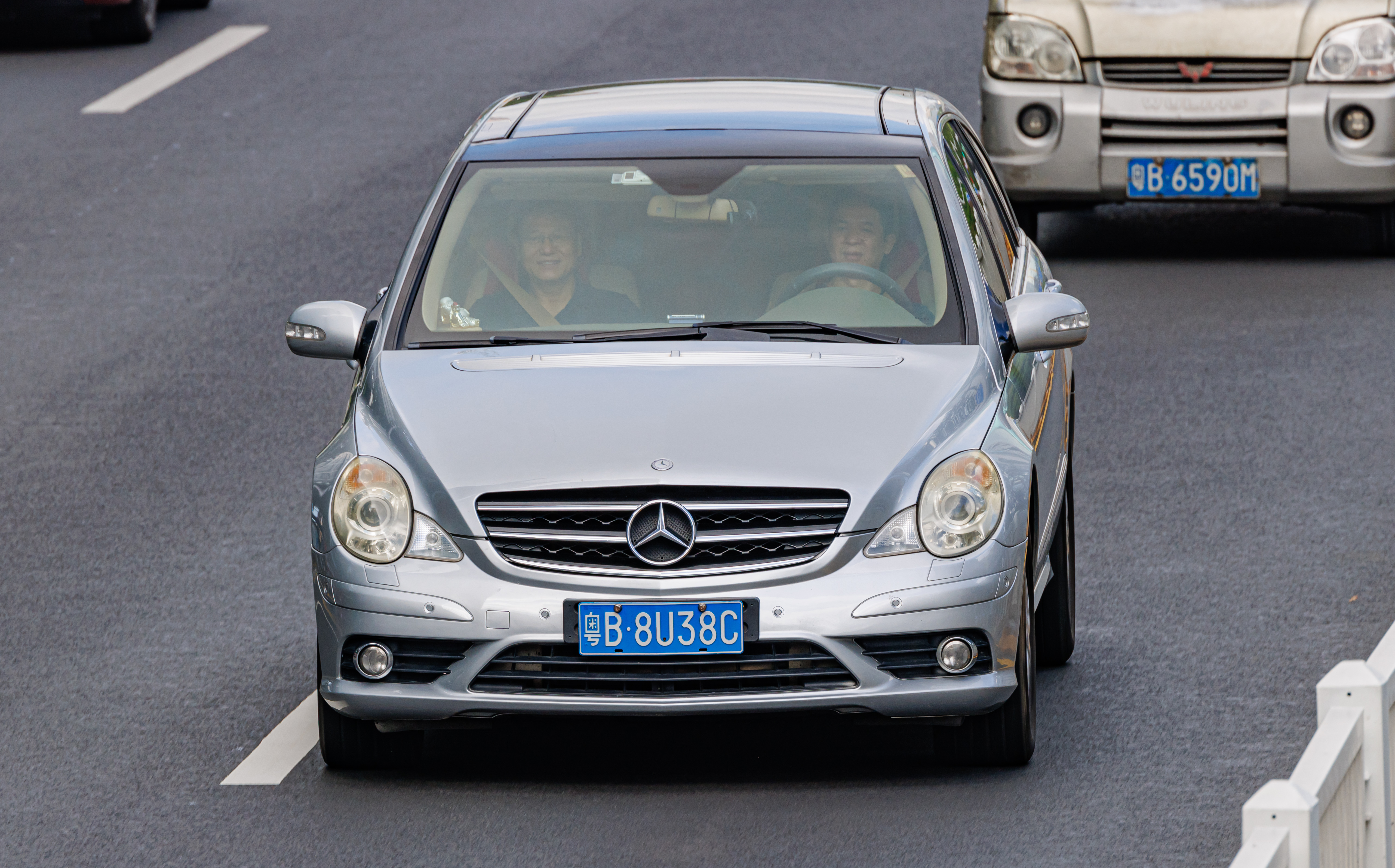
Mercedes-Benz R-Class
"And we used to have the R class. People are like, oh, Mercedes tried that, it didn't work. I'm like, first of all, the R class looked like the mini am inivan, but it was not a minivan. It didn't have sliding doors, it didn't have really any of the functionality that most minivans have."
The Mercedes-Benz R-Class was Mercedes-Benz’s attempt at a minivan-like family vehicle. The point here is that it didn’t have the classic minivan features like sliding doors, so it wasn’t as useful as a real minivan.
The Mercedes-Benz R-Class was a crossover-style “people mover” that people sometimes compared to a minivan. The speaker highlights key minivan traits it lacked—especially sliding doors and the usual minivan practicality—so it didn’t fully satisfy minivan shoppers.
Request an Explanation
Heard something you'd like explained? We'll add it to this episode.
Sign in to request explanations for terms you heard.
Want to learn more?
Browse our glossary for plain-English explanations of automotive terms, jargon, and concepts.
Help improve this episode
See something that's not quite right? Our annotations are AI-generated and can sometimes miss the mark. Click the flag icon on any annotation to suggest a correction.