The Hyundai MetaPlant is a big factory campus where Hyundai makes cars. The host is describing it as a huge, modern place with different production buildings.
This is a partnership between LG and Hyundai to build batteries. The host is saying the battery factory on the site is huge and important to the whole operation.
A stamping press is a big machine that shapes metal sheets into car parts. It uses special tools (dies) to cut and form the metal into the right shape.
Place
Ford Hamtrak Plant
The host mentions a Ford factory they visited before to describe how loud the metal-forming machines are. It’s mainly a comparison to help you picture the noise and scale.
The Ford F-150 is a popular pickup truck. The host brings it up because they were stamping out its body panels in a factory, and that stamping process is extremely loud.
The Hyundai Ioniq 5 is an all-electric car. Here, it’s brought up because the factory is making and checking that model as it comes off the line.
Brand
Ioniq 9
The Ioniq 9 is another electric car model mentioned in the factory context. The host is using it to talk about what vehicles are being built and how many per year.
The Hyundai Ioniq 5 is an all-electric SUV/crossover. It’s made to be practical for daily driving and charging. People bring it up because it’s one of Hyundai’s main EV models right now.
The Hyundai Ioniq 9 is an electric car planned or discussed as part of Hyundai’s Ioniq EV lineup. It’s expected to be a larger EV than the Ioniq 5. People mention it when talking about Hyundai’s future EV plans and how many cars they expect to build.
“Body on frame” means the car’s body sits on a separate metal frame underneath. It’s often used in trucks and off-road SUVs because it’s strong and can handle rough roads and heavy use.
The Tesla Model S is Tesla’s well-known electric sedan. Here, the host is talking about visiting Tesla’s factory for the Model S as part of a special delivery event.
Tesla’s Fremont factory is Tesla’s big car-making plant in the U.S. The host is describing a tour there and an event related to the Model S and Model X production.
A “Final Delivery Event” is basically a send-off moment when the last vehicles from a particular production phase are delivered. It’s like a milestone event before the factory changes to something else.
Optimus is Tesla’s humanoid robot project. The host is saying the factory space they toured is being torn down and repurposed so Tesla can build these robots there.
Polestar is a company that makes electric cars. Here, they’re talking about how Polestar tries to make its EVs feel good to drive.
Person
Joachim Rydholm
Joachim Rydholm works for Polestar and leads the team that focuses on how the car drives. In this conversation, he’s there to explain what makes an EV feel right or wrong.
Driving dynamics is how a car behaves when you steer and drive—how it feels stable, turns predictably, and grips the road. It’s basically the “handling feel” side of engineering.
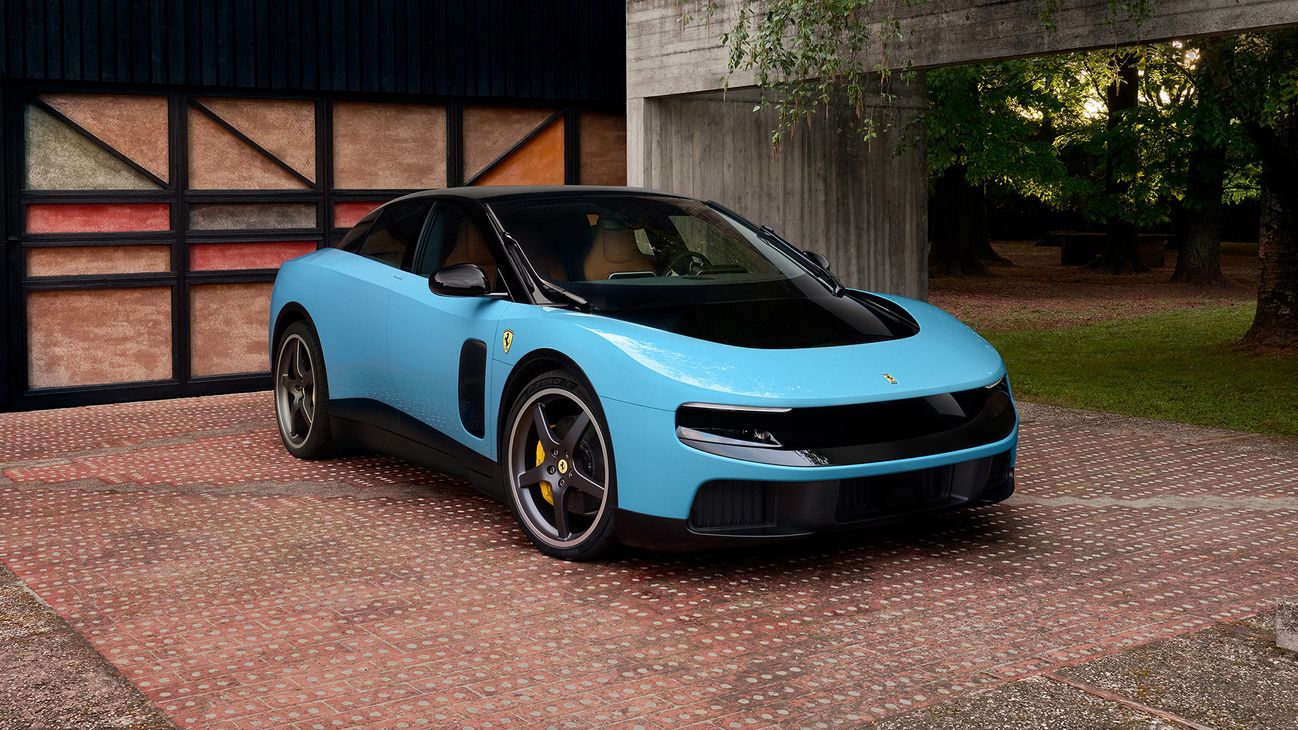
The Ferrari Luce is a car name that comes up in discussions about future Ferrari models. It’s not typically described like a current, widely known production car. In the podcast context, it sounds like they were talking about how options and pricing can work.
A “halo vehicle” is a special, attention-grabbing car that’s supposed to make people excited about the brand. Even if it’s expensive and high-profile, it can still disappoint if it doesn’t meet driving expectations.
A “daily car” is the one you use most days for normal driving. The host is saying EVs can make more sense for that everyday role than for how some people expect cars to feel.
“Heritage” here means the background and reputation a car brand has built over time. The host is saying younger people may not have the same emotional attachment to old-school brands, so EVs can feel less “wrong.”
Car
Ferrari
Ferrari is a famous car brand known for high-end sports cars. The host is using it as an example of a brand with a strong history that shapes what people expect a car should feel like.
The Tesla Cybertruck is an electric pickup with a very unusual, boxy look. The point here is that some car people hate it, but others—especially younger people—like it because it’s different and sparks debate.
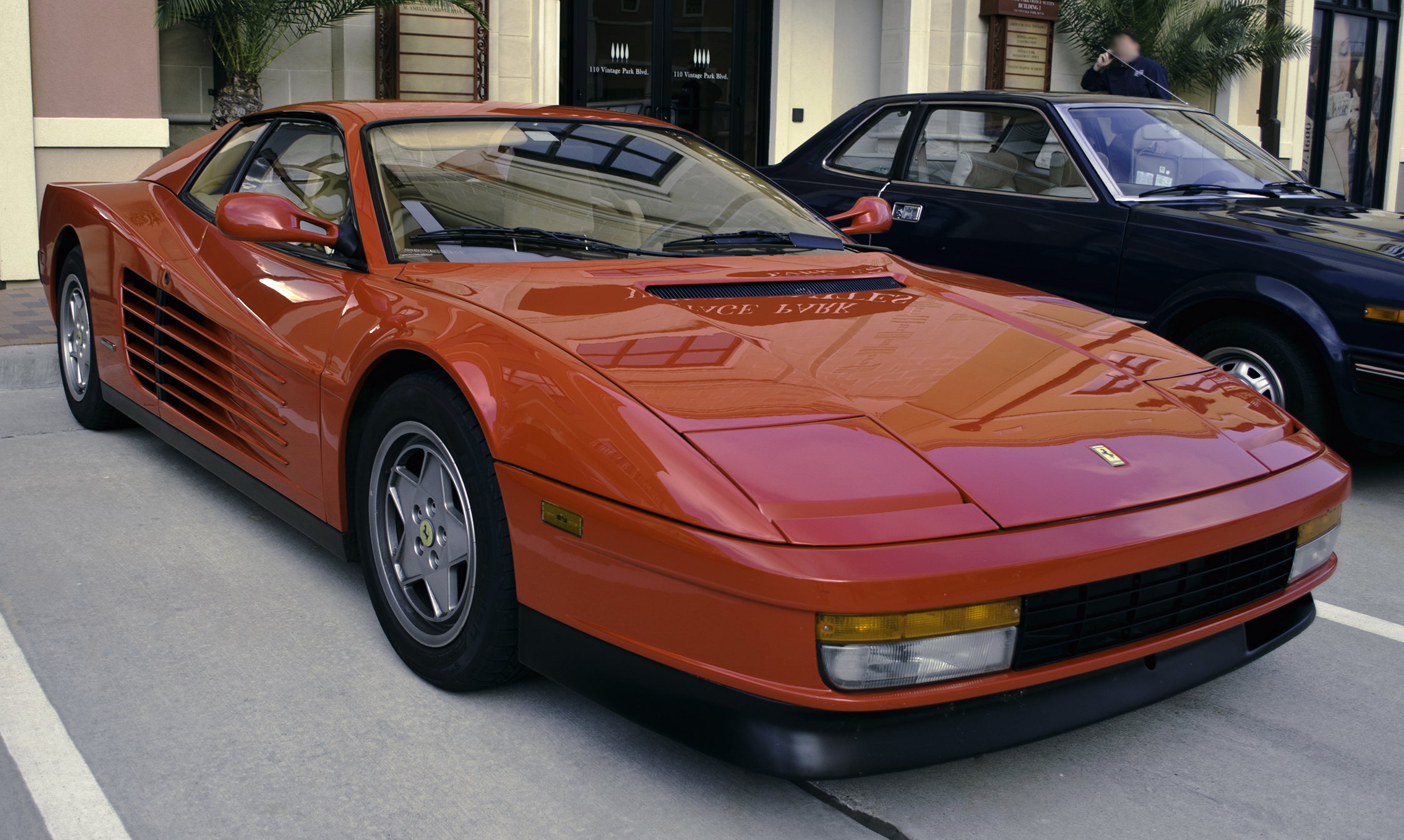
The Ferrari Testarossa is a classic Ferrari from the 1980s that many people instantly picture when they hear “Ferrari.” In this conversation, it’s being used to explain how people’s expectations about what a Ferrari “should” look like can be very specific.
An “EV brand” means a car company that focuses on electric cars. The idea here is that even if it’s electric, the design still has to look good to people.
This refers to a common EV styling stereotype: futuristic, highly aerodynamic shapes that can make the car feel alien or less approachable. The host argues that Polestar avoids that extreme look so the car feels more normal and more inviting to drive.
Polestar 5 is an electric grand touring car from Polestar. The host is saying it’s meant to feel like the earlier Polestar concept/car, but as a newer EV.
The Ferrari F40 is a famous old-school supercar from Ferrari, built to feel raw and fast. They bring it up as a reference point for how strong the performance is.
The Saab 900 is an older Saab model that many people recognize. It’s a compact car that Saab made for a long time. It comes up in stories because it’s a common starting point for people who worked on Saabs.
The Saab 9-2X is a Saab-branded car that shares a lot of its basic design and mechanical parts with another manufacturer. It’s often discussed because it’s not a completely unique Saab from the ground up. People ask whether Saab changed much of it or mostly added Saab styling and branding.
“Turnkey” means it’s basically done for you—ready to use with the main work already handled. Here, they’re implying Saab didn’t reinvent everything for the 92X.
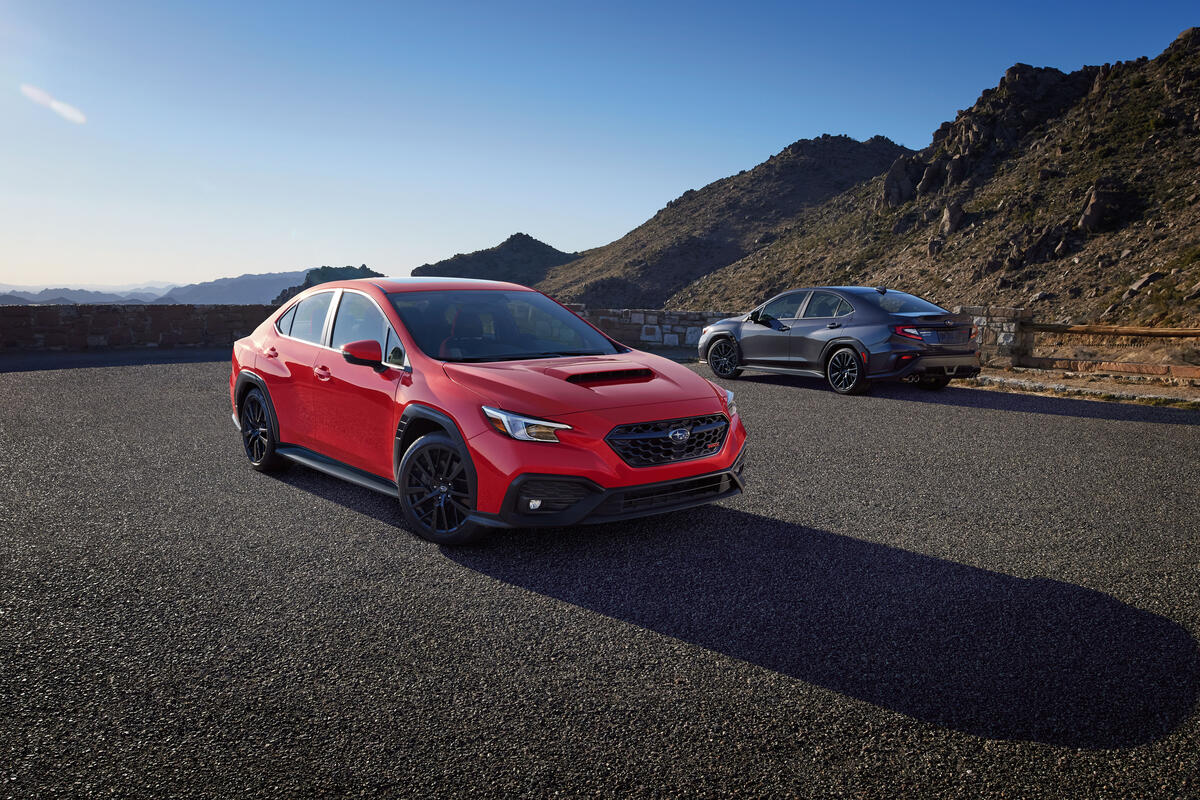
The Saab 92X is a sporty Saab that was closely related to the Subaru WRX. The host brings it up because they already knew the WRX, making it easier to review the 92X.
The Subaru WRX is a popular sporty Subaru with a turbo engine and all-wheel drive. The speaker mentions it because they already had one, so they could quickly understand how the Saab 92X would drive.
The Volvo C30 drive-E is a version of the C30 that uses Volvo’s more efficient engine lineup. The host mentions it as the kind of Volvo they started working with after switching from Saab.
The Volvo S40 is a smaller Volvo sedan. In this part of the conversation, it’s just named as another car the host considered great while working with Volvo.
Rolling resistance is the “drag” that makes tires use energy as they roll. For an EV, less rolling resistance usually means you can drive farther on the same battery. But you still need the tires to grip the road so braking on wet pavement stays good.
NVH is how loud, bumpy, or rough a car feels and sounds while driving. Engineers try to keep it low so the ride feels smooth and quiet. But making tires more efficient can sometimes make noise or vibration worse, so it’s a trade-off.
The Volvo V40 is a small Volvo hatchback. The speaker connects it to improving how the car drives, saying this is where they began focusing on driving performance.
It’s how the car decides how much “push” goes to the front wheels versus the rear wheels. Changing that balance can make the car feel more stable or more eager to turn.
The Volvo V60 is a wagon, meaning it has extra space behind the seats for cargo. It’s made for everyday practicality but still aims to drive comfortably. It’s the kind of car people mention when they’re talking about test drives or favorite models.
A six-cylinder engine is an engine with six cylinders. Here they’re comparing it to a four-cylinder and explaining how the car can still feel better if it’s lighter and the power is managed well.
A four-cylinder engine has four cylinders. In this discussion, they’re saying that even with a smaller engine, the car can feel more agile if it’s lighter and tuned well.
Term
lift the car one level
They mean the car feels like it “moves up” to a better driving level. In their case, it’s because the car got lighter and the steering felt sharper.
“Went sideways” means the car starts sliding and turning more than you expect. They’re talking about how different engine setups can change how easily the car rotates in a corner.
Software tuning is when someone changes the car’s computer settings to make it run differently. In this case, it’s presented as a way to get more performance out of a Volvo without changing the whole car mechanically.
A tuning chip is an add-on that changes the car’s computer behavior. It’s used to try to make the engine respond more aggressively than stock settings.
AMG is Mercedes-Benz’s performance brand. The host is basically saying Polestar became Volvo’s “go-to” performance partner, similar to how AMG is for Mercedes.
Polestar 1 is Polestar’s early big performance car. The host is highlighting that it feels much more powerful—especially because it makes a lot of torque right away.
0-60 mph measures how fast a car can accelerate from a stop to 60 mph. It’s a simple “straight-line” test, but it doesn’t capture whether the car feels fun and controlled when you start turning.
The “first corner” is the first time you have to turn after you’ve started moving. The host is saying a car should feel confident and fun right when you begin turning, not just when it’s accelerating in a straight line.
This is a Mitsubishi Lancer Evolution, a turbocharged car built to do well in rally-style driving. The “Rally Art Spec” is a rally-themed version/option package that makes it feel more like a competition car.
Term
flathead VA
A “flathead” is an older style of engine where the cylinders sit in a flat arrangement. People love flathead V8s in hot rods because there are lots of parts and it’s a classic hot-rod engine.
Term
CV's hot rod
A “hot rod” is a modified car—usually an older model—built for a more aggressive look and driving feel. The “CV’s” phrasing suggests the host’s personal or group nickname for the car, but the important concept is the hot-rod culture of customizing classic platforms.
“Matching numbers” means the important parts on the car are the original ones that were recorded for that specific vehicle. Collectors like it because it usually means the car is more authentic.
The Nürburgring is a very famous race track in Germany. People use it to judge how good a car is at handling and speed because it’s long and challenging.
“Muscle cars” are American performance cars that are known for big engines and quick acceleration. They’re also part of a certain car culture and style.
Term
V4
A V4 is an engine configuration with four cylinders arranged in a “V” shape. The speaker contrasts this with the V8 idea, implying that Volvo historically used smaller, different-cylinder-count engines rather than big V8s.
The Audi Quattro is associated with Audi’s all-wheel-drive technology. It means the car can send power to more than just the front or rear wheels, which helps traction. People mention it because it became famous through racing and performance.
Steering wheel feedback is how the steering wheel “talks back” to you. It’s the feel that tells you what the tires are doing and how much grip you have. The point here is that you should be able to sense changes like ice vs. wet pavement just by feel.
They’re talking about how two things should match up: how the car turns and how the power comes on. If the steering feels like one thing while the power feels like another, the driver won’t feel confident. The goal is a smooth, predictable connection between turning and acceleration.
A roll bar helps stop the car from leaning too much when you turn. If you change how it’s adjusted, the car can feel different through the steering because the suspension behaves differently.
Bushings are the soft mounts in the suspension that let parts move a little. If they’re too soft or too stiff, the car can feel less precise—especially through the steering.
“Steering feel” is how the steering wheel talks to you. It’s about whether the car feels precise and smooth, or vague and twitchy, especially when you hit bumps or change direction.
Pitch is when the car’s nose goes up or down. Good tuning keeps that motion controlled so the car doesn’t feel like it’s bouncing or pitching over every bump.
A “mule phase” is an early testing stage where engineers drive a prototype to check how it behaves. They use it to dial in basic driving feel before adding the full set of electronics.
The Polestar 2 is an electric car made by Polestar. It’s designed to drive well, not just to be efficient. People talk about it when discussing how the suspension and ride feel are tuned.
Electronic stability systems are safety features that help the car stay in control when traction is low. They can automatically brake individual wheels or adjust power to reduce skids.
Dampers are the shock absorbers that help the wheels stay in contact with the road. If they’re tuned well, the car feels steady and doesn’t bounce around.
“Tuning software” means the car’s computer settings. Those settings decide how the car responds when you steer, brake, or accelerate.
Car
Polestar 5
The Polestar 5 is an electric car. The point here is that it’s not just about having power—how it steers and brakes matters a lot for whether it feels easy and confident to drive.
Brake by wire means the brake pedal signal is handled electronically rather than through a purely mechanical connection. The car then controls the braking pressure to make braking feel consistent.
Electric power steering uses a motor to help you turn the wheel. Since it’s controlled by software, the car can be made to feel heavier or lighter depending on how it’s set up.
This is about what actually makes the car feel the way it does: the physical parts (hardware) or the computer settings (software). With EVs and modern stability systems, software can change how the car reacts a lot—if the car’s basic setup is already good.
The elk test is a standardized driving test where you suddenly swerve to avoid something and then steer back. It’s used to see how well a car handles quick lane changes without getting unstable.
ESC is a safety system that helps the car stay pointed the way you’re steering. If the car starts to slide or spin, it can brake individual wheels and reduce power to help you recover.
A “double lane change” is when you swerve to one side and then quickly swerve back, like avoiding something and then returning to your lane. It tests whether the car stays controllable during quick steering changes.
The “Moose test” is a safety test that checks how well a car can dodge something quickly and then get back under control. It’s meant to mimic a sudden obstacle, like a moose running into the road.
“Roll over” means the car tips over during a hard maneuver. In extreme steering tests, some cars can become unstable and risk flipping if they can’t handle the sideways forces.
LIVE
Welcome to The Inevitable, a podcast by Motor Trend.
Hi there, and welcome to The Inevitable.
This is Motor Trends Podcast.
It's our podcast about the future of cars, mobility.
Where are we going?
How are we going to get there?
And are we going to get there in a Chinese-owned Swedish high-performance luxury car?
Good question.
Before we talk about that, The Inevitable podcast is currently sponsored by nobody.
We would love one, so please hit me up, Edward at www.loh.herst.com, or slide into our DMs.
Our guest today, Joachim Rythom, head of driving dynamics for Polestar.
Nice guy.
Long term, long time Volvo and Polestar employee been there since the early days, when Polestar
was just a badge on the back of a Volvo, and now it's their own brand.
I wonder if he remembers me.
I bet you he remembers me.
I think we have a funny anecdote to start the show off with.
But before we get there, we're going to just chit chat a little bit, because it's been
a while since we caught up.
You recently went to Hyundai's MetaPlant.
MetaPlant, yeah.
In Georgia.
Dude, they are not messing around.
Is that the one that got rated by...
Yes.
Yes, okay.
They didn't want to talk about that, because that was a...
They didn't.
That was immigration.
It was actually...
So the MetaPlant is on this...
It's hard to explain, but it has several names, but it's this massive facility that's
six times bigger than Disneyland.
I don't know what that means, but that's what they told us.
The Hyundai MetaPlant is where they actually build Hyundai's.
However, on the campus of this facility they have, there is the LG Joint Venture with Hyundai
Battery Plant, which is insanely humongous, and that's what got rated.
There was a bunch of Koreans who came over to get the plant going, and I scooped up 300
of them and put them in lockdown.
But it's so modern and so...
They have a stamping press.
I don't know if you've ever been to...
I went to the years ago into the Ford Hamtrak Plant where they stamp out F-150 panels, and
it's deafening.
It's like the...
It's this monsters three-story machine pounding out F-150 doors.
I just found one that was seven stories.
Maybe it was seven stories, whatever it was, but it's deafening.
This one, they designed it so it's in its own little sealed room, so you can stand in
front of it and have a conversation.
It's all modern, and then robots run everything.
They even have...
So the Boston Dynamics little dogs?
Yeah, they have two of the dogs, Phytos, or whatever they call them, and they actually
inspect the cars as they come off the line.
It's really weird to see these two yellow dogs, robot dogs, perched there.
They have a head.
They've got a camera and all kinds of sensors in the snout, and literally people open the
doors for them, and the dogs poke their heads into the floorboards and stuff and check stuff
out.
People open the doors for the robot.
Yes, people open the doors.
I believe so, yeah.
You didn't see Atlas at Boston Dynamics?
They didn't have any Atlas in there.
You worried about?
They will, but what kind of sucked was, because I said, hey, they put us in golf carts and
they quickly drove us through the factory.
Don't look at that, don't look at that.
Don't take a picture of that.
It was just they had a lot planned, but I was like, could I get a folding chair and
a sit here for a day, because I could watch machines build cars all day long.
But a couple takeaways, one is that right now, they do the Ioniq 5 and the Ioniq 9, and they're
a little under 100,000 units a year.
They just did a $2 billion expansion on top of the other $12 billion they've spent for
the facility, so they could very quickly get up to 500,000 units, and it's speculated that
the body on frame, Hyundai and Kia's that are coming, are going to be built there.
Pick up truck and off-roade SUVs.
Yeah, and the last thing is that, and again, I can't wait until a week from now, June 1st
when we get the Q2 results, but they were saying that between February and March, because
of the Iran War, EV sales for Hyundai went up 39.8% month on month, which is insane.
Speaking of EVs, I think the week after you were there, I went to Tesla Fremont factory
for the Model S and the Model X.
It's called the Sunset Event, Final Delivery Event.
It was funny, it was supposed to be two weeks prior to that, and then on super short notice,
we got, hey, this event's been postponed, what's going on?
They didn't tell us why, and then I started to look at the news, and I'm like, oh, Trump
went to China, Elon went with him.
On Air Force One.
On Air Force One, Elon was supposed to speak at this event, and he barely was having dinner
with Xi Jinping the night of this event, so they did it about a week and a half later.
It was last week, sorry, when we record this, May 20th, I think.
Crazy, I saw a show, I saw we got a tour of the Model S factory, which was shut down.
It was already done, they're starting to tear it apart, they're going to build
Optimus humanoid robots there.
Met a bunch of employees, had a fun thing.
Elon, Franz, Lars, Moravi, and then Rishi, the head of the plant came out, they did a
big little speechy thing.
Motor Trend was mentioned numerous times, we were the only media invited, there were a
bunch of influencers there, but we were the only media outlet as far as I could tell.
And Elon says on camera, there's a live stream on YouTube, he says, winning Motor Trend's
car of the year was like winning an Oscar, it's like an automotive Oscar, which it was
for them, so that was pretty cool.
Yeah.
All right, well, all this is a setup for another EV manufacturer that we're going to talk to,
Polestar.
So let's bring them on.
Yeah, EVs in China and Sweden and everything.
And we're going to ask him a couple of very interesting questions leading off with some
recently released EVs that I think are quite controversial.
But let's bring them on.
Joachim, ride home, head of driving dynamics from Polestar.
Joachim, welcome.
Thank you.
My first question is, do you remember me?
Yes.
Oh, okay.
I was raised in Zell MC and we introduced Arctic Circle cars.
Right.
I remember your smile when we were driving.
Yes, we had a good time.
But do you remember, I almost immediately drove the car off the road into a ditch.
No.
That's not right.
No, no, that's not true.
You drove actually a pretty long way on the normal road.
But then it started to be a little bit hill climbing and things like that.
And then it went off.
Yeah, we were sort of on a very small, turned out private road.
We shouldn't have been on it because remember that really horrible Austrian woman.
Yes.
On youngness.
What are you doing here?
Why are you here?
Come on, we're in a ditch now.
Right, so we're sitting in a ditch and had no cell phone reception.
It was great.
Yeah.
No, but actually I remember that because we had a good conversation during the drive.
And you told me that, yeah, you should come to us and see how all cars work here and what's
important for American people.
Right.
I remember that.
So when I saw your face here, here I am.
Yeah, so who was it?
I remember this guy because we had a good time.
Yes, it was a fun day.
It was also interesting to listen to what you had to say about the US and how you drive
because you're driving a different way compared to what we do in Europe.
You have highway five lanes, but it's a mess anyway.
Yeah.
Also, some places mess you and others.
Yes.
Miami, cough, cough.
Yeah.
So I remember that.
That's your first question.
Just making sure.
My first question because we never met before.
And before we talk about Polestar and what you're doing, you arrive to us at a very interesting
time in electric vehicles.
Last week, a German brand announced a vehicle called the AMG GT and many said it was quite
ugly.
And then yesterday, an Italian brand announced another high performance EV with an eye watering
price of $640,000.
To start.
To start.
To start.
This is Ferrari.
You get all the money in the options.
The Luce.
Yeah.
Yeah.
Yeah.
Yeah.
I invite you to, you can either give us your most honest, scathing opinion.
You can also say no comment, but give us thoughts about these vehicles arriving and really
just getting, I mean, I would, is it fair to say the response has been very negative?
Very negative.
Also these are four digit horsepower, halo vehicle, big money and just rejected.
Just the car community seems to not be happy.
Of course I have comments on that.
If you have a brand which had been well known for 100 years, many years for a performance
car, they have a heritage they need to be careful with.
PodStar.
Start seven years ago with a blank piece of paper and we create our heritage, our DNA
right now.
So it's a huge difference how you treat your heritage.
And for a Ferrari, most of the customer think it should be red and it should sound, it should
smell, it should be incredible fast.
And if they create the EV, that's the next generation.
The younger people will love it, but the customer I have right now, maybe it takes a while for
them to accept this.
But I mean, we have to go on.
It's 2026 now.
We cannot have the same engine as we had in the past.
We need to move.
And electric cars, that's the future.
That's what I believe in.
Back in the days, I've been a petrolhead.
I've been driving rally cars, old timers and still do.
But as a daily car, what you use every day, electric cars, it's much better.
So hey, we asked that question five years from now.
And maybe the answer will be the same from my side, but the customer who have react now
maybe have learned something.
I think what you said, very interesting, that it's the younger person that might have
a more favorable response to this.
True.
I think so because they don't have the heritage for me, a Ferrari.
It's something historic, iconic car.
I've never been driving a Ferrari, but still I have a clear picture of how it is and how
it should behave.
But they need to take next step as well.
Well, I'll just say just one thing because this is very fresh for me.
This morning I did career day at my son's school.
He's five years old.
So I brought all these cars.
I bought a picture of Motor Trend Magazine.
I was showing them the cars and we did a little pretend photo shoot.
And I said, hey, you can pick any of these cars.
There are probably 12 different little Hot Wheels cars.
And I brought one Cybertruck that was like a model just to stick out there for people
to look at.
All the kids love the Cybertruck.
They're like, that's so cool.
That's the cool one.
I was just like, all the adults I know in the auto industry, they hate the Cybertruck.
But it's true.
There's no preconceived ideas.
They see that thing and it looks different weird.
The kids like it maybe because they like it because it's controversial.
I'm going to remember this conversation about this Ferrari EV when we talk about it in five
years time.
Maybe it is.
But it's also funny what you said that you've never driven a Ferrari.
And I've driven, like I couldn't even count how many Ferraris.
Many, many, many, many Ferraris.
So have you.
No.
With you.
I've driven a lot in this guy.
But it's funny when you said Ferrari has heritage.
When I hear the word Ferrari, I instantly think of a Ferrari Testerosa.
In 1987, when I was 12 years old, that's all I could think about.
And that doesn't matter that Ferrari had a history before then.
It doesn't matter that Ferrari had a history.
My mind's eye sees a Testerosa.
I think what you're saying is very valid is that whatever you might say about the luce's
design, it looks nothing like what your mind thinks a Ferrari should look like.
Like nothing.
And it doesn't even look like a normal car.
So it's kind of going out of the way to do that.
So.
But that is also quite important because because you're an EV brand, still you have to design
the car so it looks beautiful.
It should not look like a spaceship or something.
Sure.
A lot of EV brands come with cars that looks like, I don't want to drive that car.
It looks ugly.
And here is this pool star brand.
One of our brand pillars is design.
Then Scandinavian minimalistic design.
And when I'm driving around here in LA, people just turn around and give thumbs up.
What are you driving?
I'll draw pool star one.
Oh, pool star one.
Yeah.
Those are high water water.
But yesterday I drove around here to just look and they just stopped at the parking place
and said, what a beautiful car.
And then I have to explain what pool star stands for.
And that's important.
And it's also you have to be careful with the brand and how you design cars.
And that's the room.
Yeah.
People react pretty strong.
I would decide.
Right.
I mean, I should know this.
I'm sorry.
Is Thomas still the CEO?
No.
Okay.
So your first CEO was a former head of design of Volvo.
And I was mispronounced his last name.
Thomas.
Inglat.
Inglat.
And I mean, you know, the pool star one, that was a particularly excellent time.
Not only the Volvo cars that came out, like the S80, one of those beautiful cars of all
time.
The concepts that they were showing before the pool star one came out when when Max
Mussoni was there with Thomas, the shooting break, the brown shooting break that showed
to Geneva.
I mean, these were showstoppers.
So yeah, when I saw the pool star one, I was like, that's a show car.
I know what that is.
Yeah.
But now we are following up the pool star one with pool star five.
It's the same kind of car.
It's a GT car, a fully electric and has almost 900 horsepower.
Yeah.
Zero to 60 is around three seconds, 3.1 second.
We talk about Ferrari F40.
I mean, it's the same performance here.
Yeah.
Oh, I went to the launch of the F40.
I went to that launch.
I went to the launch, the unveiling of the pool star five.
You did it around IEEE, right?
Yeah.
IEE.
Yes.
All right.
But let's talk about you for a second.
Yeah.
You can talk about me.
You've been, because you mentioned you've been, pool stars started in 2017, but you've
been with the parent company with Volvo for a much longer time.
How long?
Oh, I started Volvo 2008.
Okay.
Okay.
So that's 18 years.
Yes.
And before that, I worked at Saab back in the days.
So actually I've been working a little bit more than 30 years with cars and tuning chassis
driving performance.
What was the first Saab you worked on?
Saab 900.
Oh, okay.
Yeah, but not the old one you think about.
Maybe call it the new 900.
Was that GM era?
Yes.
Yeah.
And then it switched to 98.
It switched to 93.
Right, right, right.
And then I did the new 93.
Oh, I gotta ask you.
I gotta ask you.
There we are.
Okay.
Just because you said 93.
Did you guys being Saab actually do any work on the 92X on the Subaru or was it just a
body kit?
I think the statute of limitations is up.
Yeah.
It was a turnkey project.
And we had one-week of dynamic engineer work with the project.
So creating a little bit of a feeling of a Saab.
Okay.
Fun fact is for me, the first car I ever reviewed and got paid for writing a car review was
the 92X.
Aha.
It was 21 years ago.
Oh, yeah.
That's a long time ago.
Almost a day.
It was a 92X, yeah.
Because I had a WRX and they wanted me to review.
My buddy had a 92X, so I knew it would be easy because I knew the WRX.
Oh, but it was a good car.
Oh, great car.
Yeah.
I was always curious.
Like, it's like, what did Saab actually do?
Okay, a week and get you to get something done.
But then I changed to Volvo because it's just in Sweden, you work at Volvo or Saab or you
can jump between.
So I jumped to Volvo and start working with C30 drive-E cars.
Great car.
Yeah, S40.
Yeah.
The Volvo version was terrific.
Yes.
So it was driving cars with covered rims and we focused on range and fuel consumption at
that time.
Okay.
So we did a lot of interesting things and also start pushing our tire suppliers to focus
on rolling resistance.
Before that time, no one talked about rolling resistance.
And after that time, everyone checked tire resistance and rolling resistance and we put
also label ABC.
Can you define rolling resistance for the audience?
Just as an engineer, what are you talking about?
The energy you need to let the wheel rolling at the surface.
So for example, if you have a train, you have steel wheel, very, very low rolling resistance.
Great.
A Formula One car have a lot of grip, high rolling resistance.
And the trick here is to have low rolling resistance but still have the friction.
So when you drive on wet surface, you should have good stopping distance.
You should have good comfort and NVH should be good as well because you want to create
the steel wheel for rolling resistance.
Train to very high NVH at the wheel.
Yes.
So that's compromise and challenge.
It's a huge challenge.
It's huge, yes.
Huge challenge.
Yes.
The joke is, if you don't know cars, you think brakes stop the car.
No, no, no, tires.
That's the contact.
Tires stop the car.
But if you want maximum efficiency, you want low rolling resistance but then your braking
performance will go down.
So how do you dial in ride comfort, NVH's noise vibration, harshness?
How do you get that sweet spot where you deliver great fuel efficiency, great efficiency overall
but without sacrificing the comfort or the safety or the handling, especially for a
Polestar because there are some questions.
If you're just going to build an economy car, it doesn't need to turn a corner very
well.
You want to stop and go and go for a long time.
But the added component is like cornering, like lateral, like all the stuff.
But also a comfortable ride, a economy car, you don't care how it rides.
Right.
Really.
You don't.
C30 though, that was one of my first pressures.
It was one of my first pressures for Motor Trend.
I remember the C30 guys were so annoyed at the American market because just like typical,
this car is fantastically designed, right?
Beautiful.
P1800 sort of inspired.
Yes.
Very cool.
But beautiful.
Had the cool rear hatch with a big glass.
Yes.
You can see it.
Beautiful interior.
Beautiful interior, very stylish.
And every journalist I remember was asking your marketing guy like, you know, it's like
$10,000 too expensive because it was a little bit more than a golf, like a GTI.
Yeah.
And finally the guy lost it.
He's like, you are American.
Your market is getting this car the lowest of the entire world and you're still saying
it is too much money.
Yeah.
I'm sorry.
Yeah, yeah.
It's kind of the way it goes.
Yes.
So I did the C30, S40, V15 and then it turns to V40.
Right.
And there I start creating the driving performance in that one.
At the same time, I were part of the team who created the pool star engineered car.
Yes.
So I'm tuned the tires, shock absorber, torque distribution between front and rear, steering,
shifting points.
So I started with the pool star engineered cars and 2017 pool star become a standard
loan company owned by Volvo and Gilly.
But we should create our own DNA, our own car.
So back in the day, I took them, DNA I created in the pool star engineered cars and put it
into pool star one.
And there we had, I would say I had almost free hands to create steering, handling.
And a remarkable car.
But I remember before pool star one, I think the last thing I drove that was a pool star,
I want to say was the V60.
Yes.
Pool star, I drove it at Richard Meal, the French track.
Yes.
And it was great.
It went from the six to the four cylinder, but it still made more power and it was lighter
in the front and it was a really fantastic car.
At that time I had some concern because we went from a six cylinder engine to a four.
We need to have the torque, we need to have the performance.
But we improved the performance and it was lighter, so we had more agility in the steering.
So actually, when we went to four cylinder engine, we lift the car one level.
Well, it also wasn't, if memory serves, wasn't the six cylinder point in the wrong direction?
It was like an in 16 that went sideways.
Wrong direction, we can discuss that, but compared to US cars, it's wrong direction.
Yeah, it was just a very, made the car like too wider.
It was weird.
You popped the hoods like, what am I looking at?
Yes.
Very strange.
So, look, can we for the audience just give a quick overview of what pool star was before
it was acquired?
Because it was a high performance brand on its own, not operated independently of Volvo,
but then gradually, right?
You mean before 2017?
Yes.
Back in the days, it was a racing team, pure racing team competing in the BTCC or...
British touring car.
Yes, Swedish touring cars.
Yes, 2010, they become to be a tuning department of Volvo.
Right.
So, they did software tuning.
You can buy a chip and a blue batch.
You put in a radiator or in the front of the car.
And it turned out a huge success.
Right.
A lot of people want this performance chip.
So, it becomes to be more like a M-Sport AMG for Volvo.
So between 2010 to 2017, it was step by step being the AMG for Volvo.
Right.
Right.
So, it started with tuning chips, performance of the engine.
And 2015, it was shock absorbers, brakes, tires, pool star engineered.
Right.
Yeah.
And they were really good to drive.
The first V60 and S60 pool star, I drove the second gen and they were just getting better
and better.
And it was, hey, these Volvo's are great.
And then, Polestar 1 came out and I was like, oh, this is what it's like with actual horsepower.
Because that was, you know, I think it was like 600 horsepower, which at the time was
a lot.
Yes, 1,000 newton meter.
Yes.
Yeah.
I don't know what that is, but yeah, it's like, it's a lot of torque.
It's a lot of torque.
850, I want to say.
It's pretty funny.
If you, because I'm on the Polestar Wikipedia page, they list motor trend.
When we tested the Volvo S60 Polestar concept, it did the lap around Laguna Seca as fast
as an Audi R8.
Right.
So, and this was in 2013.
I found that they found the internet way back machine has Ron Kino's article.
That's funny.
Hi, Ron.
Yeah.
So, okay.
So, at the time of...
But...
Oh, go ahead.
Sorry to interrupt you.
But from the beginning, it's so important to create a car which is accessible.
Because if you look to numbers, power, torque, acceleration, that's numbers.
But the thing is to create true performance, that everyone can reach these numbers and
do it with a smile.
If you drive some super performance cars and you do acceleration 0-60 miles per hour
in three seconds, you don't have any smile.
But if you drive a Polestar, that's a huge difference.
And with the EV cars, you have a lot of performance.
Yeah.
So, the acceleration is kind of a given.
Yes.
They do that.
But the difference is when you come to the first corner, then you're still to keep your
smile.
Mm-hmm.
And that's my job to make sure that you have that smile and feel confidence when you go
into the corner.
Okay.
Well, before we talk about what you're doing now, I have a very selfish question for you
about the old...
About these pre-EV Polsters.
So the Volvo's tuned by Polestar, that whole, what's the hot one to try to buy in the used
market?
Like, what do you guys do back in Sweden when you're on your coffee break and you're looking
at used cars to buy?
Which is the sweet Volvo or the sweet Polestar vehicle, would you say?
Because I bet they're all in America.
I bet there's a few in America that are like $5,000 on Craigslist or CarMax or something.
Is there one where all the guys, if Polestar or Volvo are like, man, if I could just...
Is it an S16?
Yeah, I got your understanding of the question that what we are looking for in the Volvo.
It's a Sub-Major and Viggin.
Just admit it.
Yeah.
That's a cool one.
Yeah, that's a cool one.
I was part of that as well.
I bet you were.
Yeah, yeah, yeah.
That's a great one.
That's 60 T8?
That's a cool car.
Okay.
And that's a collector cars now, especially the Yellow one.
Okay.
But also P1800 is a car which a lot of people are looking for right now.
Sure.
But in our group, we are looking for some different kind of cars.
Some looking for rally cars, some looking for old timer and some people are just having
enough woodwork.
So they are looking where to park.
Yeah, a bicycle.
A place to retire.
But you owned a bunch of cars.
It was a shuttle list and I didn't memorize it.
But there was like Mitsubishi Evo 10 Rally Art Spec, Golf 2 Rally Spec, 32 Ford Harawah
with a flathead VA.
Oh yeah, so I always noticed Swedes always seem to have an American VA.
You got Harawah in the back.
How did you get that?
The hot rod.
Yeah.
But you know, I've been working pretty hard for many years.
And for me, I've been a dream car.
Yeah.
A CV's hot rod with 32 Ford.
Yes.
The dream.
Yeah, it's a dream car.
And I just one day I will have a car.
And when I was sitting in a large room reading, I said, that's my car.
It was a black Ford from 1942 with open wheels, no roof.
Basic, basic.
Perfect for Sweden.
Go ahead.
Perfect for Sweden in the summer.
So I just give a call and say, that car, is it still for sale?
Yes.
I come tonight and have a look.
Was it in Sweden?
Yes.
Wow.
Yeah.
And it's matching numbers and all that stuff.
Oh wow.
I just look at it, fire up the engine.
Okay, I take it.
And then me and my wife, we are going out on Sunday morning, when the sun is shining,
cruising in the town via ice cream and drive back home.
It's a dream car, but at the same time, a lot of things have improved.
How you change gear when you do steering.
But it's really nice and it gives for me when I go out in that car, it's like relaxing.
I don't have to think about suspension because it's so terrible.
It doesn't happen.
Right.
It gives something.
But I've got to ask, what is it about Swedes and American cars?
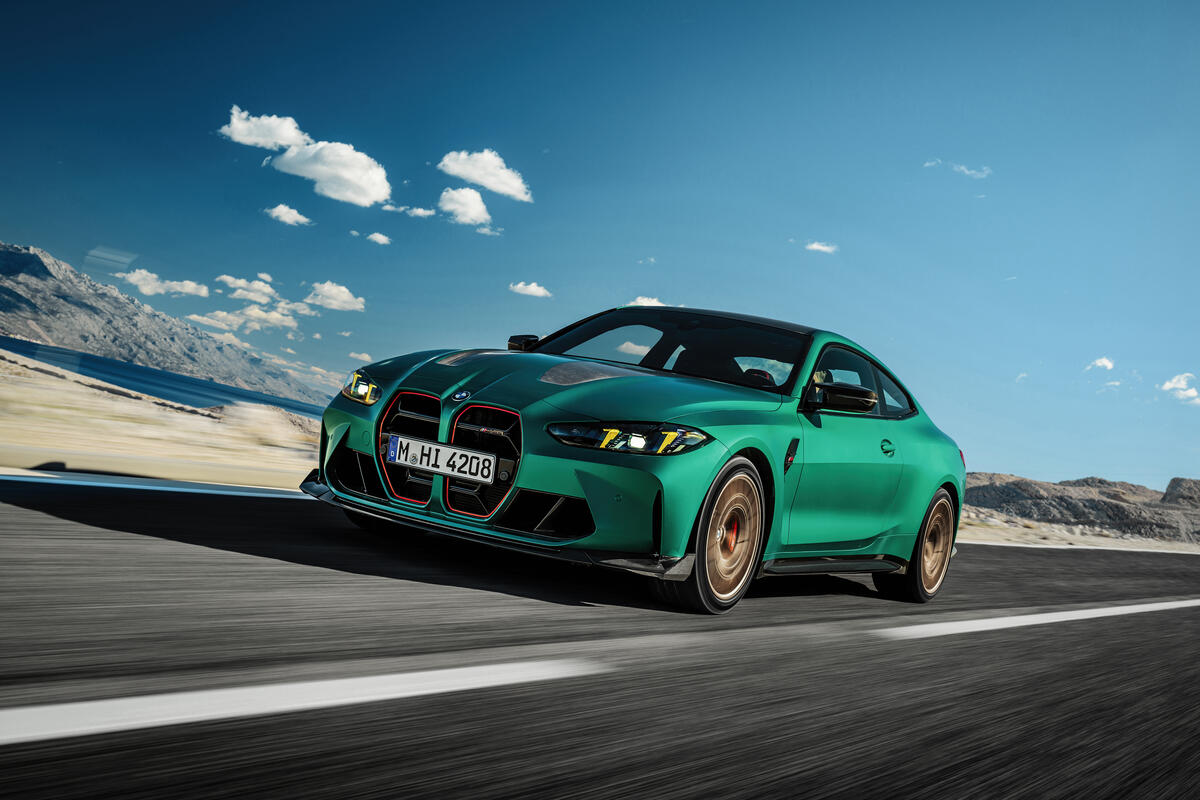
Because every time I go to the Nürburgring, you look at the parking lot, GT3, M4, GT3,
M4, M2, GT3, GT3, Corvette.
And the Corvette, it's a guy from Sweden, has come down on the Corvette.
What is it?
I don't know, but it's huge.
And we have power meat.
In Sweden, there are thousands of American cars.
And I noticed that in the North, you have the big trucks, like big, full-size American
trucks make a lot of sense in the snow.
No, no, but I don't know.
But in Sweden, it's very popular with American cars, muscle cars.
Muscle cars, yeah.
It is.
And we like it.
Is it just maybe because you saw and Volvo never did big V8s.
There's always smaller V4s and whatever Volvo, straight V4s Volvo's doing back in the day.
No, I don't think so.
It's just for Swedish people, it's special with US and the way you live here.
You eat your hamburger, you have your V8 or pickies.
It's just a different style.
We throw in the football, we don't kick it.
Yeah.
Sure.
I get it.
No, no, we kick it too.
No, no, but I don't know why, but it's very popular.
Yeah, I've always wanted to.
I'm more into motorsport.
So the Mitsubishi is the one I'm competing in rally with.
And also the Golf I do rally with.
You still race, you still do competitive rallies and such?
Yes, I do.
But not at the level I had, we're competing back in the days.
2017, something happens in my life.
So I didn't have enough time to compete on the Swedish championship level.
I have to focus on pool star.
Because it's once in a lifetime you can be as an engineer involved in creating a new
brand and allowed to create a DNA.
And I had a chance.
So I put my rally on hold.
I used to rally in the weekends when I have time.
So this year I have done free rallies.
And that's it.
But it gives a lot of fun to do rally or motorsport.
So I cannot stop.
But at the same time, I often can sit in a studio in LA and talk about cars.
I have to grab a bit of a chance when I have it.
Well, rally is more interesting than time.
I mean, yeah.
I'm sure rally, I definitely think of all of the different motorsports you could be doing.
The type of rally you're talking about is production car based.
It arguably has the most transfer to production cars.
It's not a formula car.
It's not some weird spec chassis or two frame.
Like you're literally driving a car that's based on a production vehicle, usually with
an engine that is derived and some other components.
So awesome.
Let's talk about what you do at pool star before that.
Just a very simple question that I'm sure will be not controversial at all.
Who is the greatest rally driver of all time?
Are you in your opinion?
You can only pick one.
For a Swede.
No, no, no.
I'm from Sweden.
Sure.
Great experience.
Stig Longfist.
Oh, yeah.
His world champion.
He was the one who drove out the Quattro.
Yes.
He took it to the level.
And we are good friends as well.
That's good.
Yeah.
No, but there are many great rally drivers.
Back in the days.
Now I say something really little bit.
Back in the days, they were more outspoken.
They have comments, which were maybe not political correct.
Yeah.
Especially the fins.
Yes.
Exactly.
Maybe talk about tires they have on the car.
Yeah.
Nowadays, there are media trained, professional.
Sure.
You need to create this, what you call it?
Charisma.
Charisma.
Charisma and try to be a little bit outside of a perfect box.
Right.
A professional box.
Sure.
It's a personality.
Yes.
I guess you.
And back in the days, they did that.
Yeah.
So therefore my answer is Stig Longfist.
Smaller number of cameras pointed at him.
Yes.
Well, I probably learned from the Americans about how to talk up your sponsor and not
say anything, unfortunately.
Yeah, maybe.
So, okay.
Yeah.
So you are head of driving dynamics at Polestar.
Okay.
We've talked a little bit about the one, talked a little bit about the five.
What is the through line?
What is- Yeah, what connects the one to the two to the five?
What connects all the vehicles?
What do you want?
Let's say you could put a blindfold on and drive all the cars out of order, any order,
whatever.
And then we throw in some other cars.
How would we know?
Oh, this is a Polestar.
This I know, this feeling.
What is that?
What are you trying to put into the car for the driver?
That's a very good question.
And that's exactly what I'm working with.
And through the whole period from we start brand, I have been crystal clear what I want
to create and how the Polestar DNA looks like.
And it starts with steering.
Steering is the most important, in my opinion, no.
It's the most important thing to have in good shape, I would say, because if you have a steering
wheel, it's unprecise.
You have no torque.
You're just floating around.
Or you have a steering like a TV game without any feedback.
It's boring.
You have to have a steering wheel feedback so you can close your eyes, feel, I'm driving
on ice now.
Or I'm driving on hot asphalt.
You should feel the difference in the steering wheel or gravel road or it's wet.
And you should have balance, harmony in the steering between torque build up and response.
So you cannot have a response with it going in that direction and torque in that direction.
When it feels you don't get the confidence in the car.
So when you close your eyes and drive a Polestar, you feel, all right, I'm driving the car
and I feel that I turn in the car, how it build up the torque.
That's the first thing.
And it starts from there.
Steering is a result of all the tuning we have done.
If you change the pushing at the roll bar in the rear, you can feel it in the steering.
So you need to make sure that you have the correct stiffness at the bushings.
Everything results in steering feel.
So and the second thing is balance.
You need to have balance in the car.
It's not allowed to pitch.
When you hit the bump, the car should smoothen out the bump and then stop.
Then it's a Polestar.
If you have a car which is bouncing up and down and waving, feels like a boat.
It's not a Polestar.
It's a different cup of tea.
And that's so important to make sure that you have the balancing car.
So when we start a mule phase, when we start with early prototypes, we drive without any
kind of electronic systems.
Working with springs to make sure that we have them in balance.
You can do a lot of simulation calculations and it takes you to 80%.
And then you have to drive the car from the morning to the night, week, month to make
sure that you have the balance.
When we did Polestar 2, I tested around 500 kilos of different springs before we find
the correct spring balance.
And then you start tuning dampers, bushings, and when you loop this, put in tires, and
when you have this in place, you start working with electronic stability systems, active
So when you drive the Polestar, you will feel that it has balance.
That's the second thing.
The third thing here is brake.
You need to have a brake pedal.
This is predictable and will not fade when you are pushing the car a little.
So you always know where the brake starts working.
It should have a feeling of confidence.
It should be predictable and quite short travel.
And then it should start smooth braking the car.
And then, so these three things, when they come together, you have a Polestar and a Polestar
DNA.
A steering, balance, and brake.
Let me throw a wrench in this because Polestar is EV, new architecture, right?
When you mentioned the bushing in the back end specifically.
Let me be really offensive and say, come on.
Your car uses electric power steering and brake by wire.
Isn't it just all software?
Do you really have to tune the hardware parts or can't you just?
Because you're telling me about the steering.
The force goes up this way and then the gain goes up this way.
You can do all that.
You can dial in some really terrible steering feel with electric power steering systems.
You can make things feel awful.
But I think the hard part is getting it right.
But do you really need to do the, how much of it is hardware versus software these days?
Yeah.
And it's a once again a good question because you can hide a lot of things with software
tuning.
Right.
When you start from a chassis or tuning place where you have done the hard work and get
everything in place, it's much easier to tune the software and you don't need to hide it.
You can use it to even make it better.
So it's two different ways.
And that's something you can feel with ESC system.
Some cars when you do an elk test, I would say it starts before you enter the elk test
because you have to hide the base chassis.
So let's look for a listener.
Can you explain?
Okay.
So ESC, electronic stability control and then explain what the elk test is.
All right.
Okay.
That may be for you.
It's a kill.
We have the Moose test.
Yeah.
Moose test.
But it's the same.
It's the same.
Yeah.
Okay.
Big thing.
Yeah.
And in Swedish, elk test.
Quite tasty.
Yeah.
It's very tasty.
Yes.
But in Sweden, we have this.
You have them here as well.
Big animal and they are running and crossing the street.
And if you hit that, it's very bad.
So therefore, the test, you drive 10 meter and then you do a very quick maneuver and
you have 10 meters to move the car to the next line.
And then you drive 10 meters again and then you turn it back to the same lane as you start
from.
So the test is just 35 meters, something like that.
And how fast?
That's the trick.
So faster you go, better the car is.
And we drive around 79 kilometer per hour, which is really good.
79 kilometers an hour.
Yes.
So 80 kilometers an hour.
No, it's like 55.
It's about 55 miles an hour.
Yeah, something like that.
It's called a double lane.
You might know this as a double lane change.
Yeah.
But if you watch the...
It's a double lane change.
But if you watch the Moose test though, because they do hold it for that 10 meters, like a
double lane, you can quickly swerve and quickly serve back.
But this is like get the car out of control for 30 feet and then pull it back.
It's a very severe test.
Yes, it's a very severe test.
But it's...
We don't do.
Yeah, you don't do it.
And we have noticed that because some cars, when you do this, roll over.
Every five years, it's like the so-and-so failed the Swedish Moose test.
Yes.
And we say, who cares?
But it isn't...
Yeah.
And we say the same thing.
We don't use the test for tuning cars, but it's a result of what we have done.
And if it works in...
Alt test, Moose test, it has pretty good driving performance.
Sure.
Let me ask about steering.
Yes.
So, like, my understanding, and I could be totally wrong, but like, you know, for steering
to feel good, you want to leave some kickback.
In other words...
Yes.
The road will move the wheel in your hands.
But that's bad for a lot of drivers.
That's not safe for a lot of people because they barely have one hand on the wheel and
they're looking at their phone, suddenly the steering wheel moves.
I have used Coca-Cola.
Yeah.
Yeah.
And, you know, real kickback will change the direction of the car.
So isn't it just a constant fight about like, leaving a little bit of kickback in?
Is it...
Am I crazy?
No, no, no.
That's exactly what I do.
Oh, okay.
You have to take small decision.
Right.
Is it too much feedback or is it good feedback?
And is it safe?
Is it not safe?
Will a customer like it or do they feel it disturbing?
Mm-hmm.
So it's a compromise here and that's the challenge to create that.
And that takes years to create it in a car project.
Some corner factories put in the steering gear, in software.
Yes.
Tune it and that's it.
I've driven a lot of those.
But then it feels like driving a TV game or something.
It's dead.
It doesn't give anything.
Yeah.
The new Corvette's, which are tremendous cars in every single aspect, they have very
dead steering feeling.
There's almost no kickback.
You'll hit curbs at 100 miles an hour on a racetrack and nothing happened.
It's a very disconnected, odd feeling.
It's easy to create.
That's very easy to create.
But you need to let in some feedback and it should be a good feedback.
Was there, because your career spans this changeover point from hydraulic power steering
to electric power steering.
Yes.
Notably 2012, Porsche did the 911 first with EPS and it was widely savaged as not having
...
Wow.
Good.
We picked up the yellow one.
We had a test car and we also had a 997 GTS, which had basically perfect steering and
back to back it was shocking how much worse than new one was.
Is that true?
Is that true?
Like there's an era of cars where the changeover point, the first generation EPS systems were
pretty terrible.
Yes.
Okay.
And now much better.
Much better.
Right.
Almost the best thing.
Better than hydraulic?
Yes.
Okay.
If you do it well and you just do your homework well, it's better.
So you just said it takes years to learn this skill.
Oh yeah.
It took years for the industry to learn EPS.
Yes.
Okay.
It took a long time.
And V40 was probably the first car I did with EPS.
And I can tell you, it took more than one year to make it feels in the way you want.
Hard work together with the supplier.
But when we were done, I felt, wow, we don't have any pump catch.
We are saving fuel.
It's a better system.
And once again, you need to accept that things going forward.
I mean, my hot rod, steering that one is very bad.
But it's mechanical.
Yeah, very.
You feel everything.
Yeah.
But we need to take step and you should not be afraid of doing that.
Because every once in a while, a car sneaks onto the American market, which doesn't have
power steering.
The last time I remember the Alfa Romeo 4C had no power steering.
And we did one of our big tests.
It was a best driver's car.
And everybody loved the steering, except for one guy, Mortar.
He's got our old test guy.
He was like, if you hit a bump, it rips the steering wheel out of your hands.
And I'm like, right, that's what it's supposed to do.
It's like unacceptable.
Dangerous.
Yes.
And I was like, this is beautiful.
You feel everything.
And yeah, so it is this weird.
There is a compromise.
I don't know what it is.
Yes.
I mean, back in the day, when we tuned a hydraulic system, you drove the car and then you feel,
okay, I want to improve on center.
All right.
Then I have to change the thickness of the pipe from the pump to the steering gear.
I want to change it a little.
And then you order that, takes 58 weeks, and then you get the new pipe.
Put it in a car and draw it.
You draw it for a half hour, maybe a little too much.
Make a phone call, order a new pipe.
And you tune the car for two hours and wait five weeks.
Tune the car for two hours, and that's the way you work.
Now it's the opposite.
You drive a whole day, you can change whatever you want.
Sure.
Sure.
All the software.
So the only thing which is the limitation is time, because at some point you need to
put it in production.
Otherwise, you kind of drive around and you tune it.
It's not just time.
It's your experience.
The experience from your backside, from your brain, from your hands, right?
Because this is the question I want to ask you.
This might be a little spicy.
Volvo, Polestar, G1 by Geely, you have a lot of, you now have some friends in China who,
they don't have their generation, what, one, maybe two generations of drivers.
Probably not a lot of people who race in their spare time within the company, who have a
deep understanding of hydraulic power assisted steering systems.
Fantastic battery, fantastic chassis, they can build anything, they can get it really
quickly to you.
But I'm sure you've done a lot of benchmarking of vehicles around the world.
You can probably drive them and tell who has somebody with your type of experience tuning
the car and who knows how to just put a steering wheel, a battery and some motors in a car.
Like, how do you, like, is your experience, is it valued, like, within the, do you feel
like you're building products that people will appreciate or, you know, all these cars
are just, they're just battery, motor, steering wheel, and lots of horsepower, lots of power
and torque.
Nobody cares.
Yeah.
There's a question in there.
Yeah, the question is really big.
That's what I said, a little bit spicy.
Yes.
Yes.
Gilly appreciates my knowledge and the team in Pusta because it's not one person.
Right.
We are a team, 56 person with a lot of experience because yeah, during the day,
when we start to our more or less alone, but I put some really skills engineers and
Gilly appreciate what we do and say, go on with your thing.
Driving performance is a brand pillar for pool star.
Right.
Keep that track because that is a strong selling thing.
So yes, they really appreciate what we've done.
At the same time, some people are just, hmm, how do you do that?
And how do you think?
And so at the same time, feel that it's going in the right direction.
People are understand the difference between a car, which we have just created on paper
and put it together and try to sell it and a car which have been tuned for 34
years in mule phase and all that.
A lot of people understand.
Also normal customers.
I have one month ago when I were at the supermarket together with my wife, we were shopping there
come a woman knocking on my shoulders and said, are you working?
Yes.
You work at pool star.
Yes.
I drive a pool star too.
I understand what you mean with driving performance.
It's so nice.
And she had had different kind of cars for 25 years and this car is now I understand how
it feels to drive a car and I just love it.
Right.
How do you do that?
I imagine you have to train some new engineers.
You have to sort of show tell them.
Can you give us an example?
What's the first thing you want to show your newest handling engineer?
Or what's your benchmark car like?
To get them to understand what is a good steering or good balance.
This is good steering.
This is what a brake pedal feels like.
What do you do?
Do you have a mule car and you take the sway bar off or something?
It's not working in that way.
What we do, we have right now two younger engineers today.
We work together.
Every day we start doing tire test or spring test.
I drive.
Say this is what I feel and we swap and you drive and we agree or I feel like this and
we have a discussion what's happened when you change springs, dampers, tires and let
them be part of the tuning journey.
So this is something which takes maybe 510 years until you understand how you should
tweak things, how to in change effect.
When you're benchmarking a lot of cars during those five and ten years, you're driving
companions cars.
Of course.
So they're driving everything and you say this is good, this is bad.
We don't like this.
We don't like this.
Yes, or this is the way that brand do.
For them it's important with high speed stability.
Every car has their strong points and weak points.
It's different from different brands.
Yeah, okay.
That makes sense.
So when I drive cars, I always try to find what is a strong point with the brands.
Maybe Charlize thinks in a different way they want to highlight, oh, how have they thought
here but no, what is good with this brand and how have they created this.
That's what I try to analyze.
I commend you.
It's like the hardest thing.
You, like the handling guys and also your colleagues at the tire manufacturers.
The tires, I don't get it all.
For you to describe this process of the olden days where you want to adjust something, it
takes five months to get the part back and then you test it again.
The amount of testing and the note taking and the fatigue, okay, you just adjusted the tire
pressures by two pounds in the front, two pounds in the rear.
First of all, I can't tell the difference.
No can.
If I could, I couldn't do that over eight hours a day and then do that for five days
a week and then go back and look at my notes and realize, okay, this was plus four, plus
four, minus eight, minus eight.
You're going through seven different compounds of the same tire.
I think in my theory is because in the winter, there's not a lot to do in Sweden.
Lots of snow everywhere.
This is what you do.
And this is like, we get really good at it.
Right.
Is that true?
Maybe, maybe.
No, but you need to have passion for what you do.
Right.
And you at the same time need to be nerd.
Yes.
To dig into this.
Right.
Because it's hard work to create.
It's not difficult, but you need to spend time behind the steering wheel.
Right.
And you cannot start 10 o'clock and leave the car two o'clock in the afternoon.
You have to start seven o'clock and you work to seven o'clock in the evening.
That's the trick.
And if you do that for thousands of hours, you will learn the difference between zero
point one bar pressure and how it reacts.
Yeah.
And I can.
Tell you when we talk about tires.
I mean, tires responsible for.
Maybe 30, 40 percent of the driving performance.
Right.
So we need to tune that component together with the suppliers.
And we.
Pulse to do that.
At least three test loops before we find the correct compound steel belt apex sidewall.
And we drive a lot of different tires, which they made special for his car.
And on top of that, we have staggered tires.
So that gives a lot of combination.
Ah, the rear was good.
It fits well to the second set at the front.
But if I take the third set in rear, I should have set number.
It's complex and it takes weeks to test this.
And then, and then when you have finished the week, you give feedback to the supplier.
A long test report with handling steering, comfort, breaking, we're aqua planning.
And the age.
Long report.
And then they go back, analyze this.
And 10 to 15 weeks later, they come with a new trailer with tires.
And you start to get tires like tire designs you go through when you're developing a new model.
Oh, Nanny.
Like, like, like, like 10, 50, 100 on average.
First of all, for example, Polestar.
Free has 19, 20, 21, 22 inch tire.
Well, okay, so you have developed each tire.
Yes, you have four or say three dimension.
And then in US, they need, you need all season tires.
Wow.
You're being very kind.
Yeah.
That's another discussion.
That's another discussion.
That maybe that's a spicy one.
I would say.
But anyway, you want to have all season tires.
And of course, we need to create all season tire if you need that.
So that's 52 more dimension.
And then you should look with five dimension, three times.
And keep them in mind.
That's a lot.
So you have winter tires on top of that.
If you're listening at home now, the next time you talked to an automotive
engineer and you told them, like, yeah, man, I just bought this new car.
And I immediately took the stock wheels off and I put the most expensive rims
I could find in the cheapest tire.
Just watch their face.
Just be like, you have no idea how much research and development you've just
thrown out the window.
Yeah.
Badness.
It's OK.
Yeah. And then I get some.
Phone call. Hey, I have changed this and my car doesn't perform as it should.
I have a problem with the ride.
We fight.
We fight.
OK. What have you done?
I just changed to a different offset.
All right.
It took so while until we get the correct offset and we have two
on the car around that and you just change.
I put 22 inch chrome wheels on my car.
And because a lot of money.
Yes.
But OK.
No. All right.
So the time we have is not a little bit of time.
I have the whole afternoon.
No, we don't.
We we I went to see the Polestar five.
Yes, it looks amazing.
Grand Touring looks like a look at a fighter jet.
I know other people have driven it.
We have not driven it yet.
What what should we expect?
What did you I think I recall some of the benchmarks, but I'd like to hear from you.
Did you have a specific handling target in mind, a specific vehicle you wanted
it to outperform in on the marketplace?
Like what what should because it looks it looks great.
And I'm very hopeful that the driving dynamics.
Matches looks and it does.
OK. It's I mean, it.
Performs.
So well, but keep in mind, this is a GT car, a car you can drive on public roads.
And you should you can drive from Las Vegas to LA.
Just relaxing.
And when you reach your destination, you feel this was a nice drive.
So.
It performs.
It has a lot of comfort, but still when you push the car.
It's incredible fast.
And well balanced steering is there.
And.
At the performance Polestar five system, we call Magna Ride damper system.
So we can adjust.
We can adjust the we stiffness of the damper
more than 500 times per second.
Right.
And that's allowed us to create a car which is.
I gel, but at the same time has a lot of comfort.
And with the cars you were benchmarking when you're making
the Polestar five, we benchmark a lot of cars here.
Give us three Honda NSX.
Honda NSX.
OK.
Porsche 911, I assume, or a Panware.
Tycon.
All.
OK.
OK.
And yeah, but I benchmark a lot of cars.
I mean, it's just right.
I was curious.
Here's also another thing.
You need to create your own car because if you should create a copy of.
Some car while you don't buy that one.
No, but like I like, for instance, I remember I was with BMW when they launched
the Z four and I was talking to the Z four product line manager.
And I said, you know, I was asked what's your benchmark?
And they said, you know, with this, this, we beat this.
We get them.
We get to the Porsche Boxster and we can beat it everywhere except for like
handling.
You know, we knew we couldn't get there, but we, you know, we're going to be
we're going to beat it on, you know, luggage capacity.
We're going to be on ride comfort.
We're going to be on efficiency, whatever.
And I was just wondering if you had like something that was you were chasing.
No, no.
We just want to create a GT car.
And the interesting thing with the Polestar five is it's our own platform
bounded aluminum, so we don't have any excuses here.
Right, right.
We create.
The Polestar with the Polestar DNA.
And.
I'm really looking forward to hear what you say when you're driving the car.
We're going to get to drive it.
Come to Sweden.
I can drive it tomorrow.
Sure.
Yeah, yeah, yeah.
It's it's I have a few test cars.
So no, when was the launching server?
Who knows?
It's already we start in Gothenburg and in Morocco.
Okay.
Sahara.
So it's ongoing.
Oh, so it's still testing.
Yeah, it's I think it's last week now.
OK.
So when is it?
What?
When does it go on sale?
It's.
You can order it now.
Right.
So you can buy it now and it will be delivered in the third.
What did you say?
Third quarter.
Third quarter.
Yes, of 26 this year.
You have this year.
But not still to be to be determined for the US market.
Yeah, you have some special things going on here with tariffs.
So yeah, we're always last year.
Everything.
So for us, it's a bit difficult to calculate the price here.
Right.
Right.
Right.
Right.
Yeah, I got you.
Yeah.
Yeah.
All right.
Yeah.
Well, sorry for that.
But no, it's them to the facts, as they say.
Yeah.
Well, cool.
Yeah.
Well, we look forward to driving it.
Yes.
And I can tell you when I did them testing here with them, it
starts four years ago.
And some days is hard work and you have you need to tune something.
But when you enter the test track and move the acceleration
against the floor and you feel acceleration, right?
Zero to 60 in three point one seconds.
Boom, you have a smile.
Oh, yeah, yeah, yeah.
And it's so rewarding to drive these cars.
Yeah, or bad.
Yes.
So you will love it.
Post-R5.
Does it does it do a good flick in the snow too?
Oh, yeah.
Oh, yeah, you can go sideways in 250 without with the smile.
OK.
Yeah, great.
That's for sure.
Well, hopefully we'll get a chance to do that perhaps with you.
Yeah.
And show us how to work it around a Swedish rally course.
Oh, yeah.
It will be a lovely.
Let's look it up.
Cool.
All right.
Well, yeah, thanks for coming.
You're welcome.
Hey guys.
My dynamics.
Yes.
Thanks for thanks for coming on to our show.
Thank you to the invited to the show.
It's a pleasure.
About this episode
A factory-and-steering deep dive that connects why EVs can feel “wrong” to drive with how Polestar engineers tune the details. The hosts compare Hyundai’s MetaPlant scale and Tesla’s Fremont shutdown-to-Optimus pivot, then shift to Polestar 5: GT comfort, quick pace, and the engineering behind confidence. The guest argues steering precision, feedback, and harmony between torque and response matter more than raw specs—plus tires, suspension, and long mule-phase development.
What makes a car truly fun to drive? In this episode of The Inevitable, Ed Loh and Jonny Lieberman sit down with Joakim Rydholm, Polestar's Head of Driving Dynamics, to explore the art and science of steering feel, chassis tuning, suspension development, and why software alone can't create a great driver's car. Rydholm also shares stories from his decades at Saab, Volvo, and Polestar, his experience as a rally driver, and how Polestar developed its unique driving DNA.
The conversation also dives into the future of EV performance, reactions to Ferrari's first electric car, the philosophy behind the upcoming 900-horsepower Polestar 5, benchmarking against Porsche and Honda, tire development, and why the smallest suspension changes can completely transform a car's personality. It's a fascinating look inside the mind of one of the industry's most respected chassis engineers.