"Why Not? The Simple Decision That Saves You Thousands on Your Car"
About this episode
Niall Motormouth Jenkins rants (with humor) about wrong drive-thru orders, then pivots to the “why not” mindset: stop living in car ownership uncertainty and start spending strategically to keep older vehicles running. He shares hard-earned lessons from decades as a service tech, argues that paid-for cars can be “money in the bank,” and highlights a key tech tip—Nissan CVT owners should change transmission oil every 50,000 km. The show also pushes financial planning (Tony Miele, Larry Tito) and community support while previewing weather and upcoming Q&A.
" Most people don't have a car problem-they have a decision problem...and it starts with two words: Why not?
Spring is the perfect time to take a hard look at your vehicle - and your habits.
In this episode of the Motormouth Podcast, we go beyond oil changes and tire pressure and dig into the real reason some people save thousands on their vehicles...while other stay stuck in the cycle of constant repairs and car payments.
It all starts with a simple question:
Why not take care of your vehicle properly?
We break down:
1) The Mindset behind long-term vehicle ownership
2) Why preventative maintenance is a financial strategy-not an expense
3) How small decisions today protect you from big repair bills tomorrow
4) What"all in" actually looks like when it comes to maintaining your car
If you're serious about saving money, reducing stress, and keeping your vehicle on the road longer, this episode is your starting point.
Because at the end of the day...you're either all in-or you're not.
# CarMaintenance #SaveMoney #AutoRepair #Motormouth #VehicleOwnership
Merchandise available in our online store @ ccbusnet.com grab some Motormouth gear join our crew in the fight against addiction to help those who are ready to deal with it now, by getting them into a Total Freedom Addiction Campus Canada & USA where a New life awaits them there. tnx so much Friends, Skippy & Motormouth.
More Episodes and....project Details & Links are available at Car Connection Business Network .com (ccbusnet.com) you'll find everything on our homepage if you'd like to follow the build & Repair work we do & connect with our program partners click their logo to meet them. Thank You for giving them your business! NMJ
Like, Share, Follow, Subscribe, Comment on our videos , Ring the bell be notified of new vids & miss nothing, Watch, Listen, Join our online community. These little things help all our platforms to grow, so we are able to do more to help others just like us all. Tnx Nile & Skippy
Happy Healthy Motoring Friends, Peace Patience Kindness Always. NMJ
horsepower
"[8.7s] I'm your host, Niall Motormouth Jenkins, coming to you straight from the Car Connection workshop, where we mix a little humor, a little know-how, and a whole lot of horsepower."
Horsepower is a way of describing how much power the engine can make. More horsepower usually means more performance, but it’s not the only thing that matters.
Horsepower is a measure of engine power output and is commonly used to describe performance potential. It’s often mentioned in marketing and enthusiast discussions, but real-world drivability depends on more than just peak horsepower.
service tech
"[78.2s] I've been around 44 years as a service tech, got licensed in 1988, started in the industry at 13 years of age."
A service tech is the person who works on cars at a shop. They figure out what’s wrong and fix it, ideally before small issues turn into big, expensive ones.
A service technician is a trained automotive professional who diagnoses problems and performs repairs and maintenance. Their perspective often emphasizes preventative maintenance and diagnosing root causes rather than just replacing parts.
drive-through
"It got to the point. I got so fed up of getting the wrong order at the same takeout window from the same people that see you every day... [290.5s] I went through the same drive through same time in the morning, three days in a row, and I got three orders incorrect and that's when I go. That's it. I'm done."
A drive-through is when you order food and pick it up without getting out of your car. They’re talking about getting the wrong order repeatedly at the same place.
A drive-through is a service lane where you place an order and receive it without leaving your car. In this segment it’s used as a real-life example of repeated mistakes at the same location, not a car-tech topic.
mileage (kilometers)
"If you're wanting to know about your automobile some of the basic fundamentals that will move you down the road for 300,000 400,000 5600,000 kilometers without an issue. [513.5s] Well I shouldn't say that. There are going to be issues..."
They’re talking about how many kilometers a car can go. The idea is that with good care, a car can last a really long time.
The host references long-distance durability using mileage in kilometers. For listeners, this frames how maintenance and driving habits affect longevity, especially for older cars.
older vehicle
"Well I shouldn't say that. There are going to be issues but if you follow my lead I can tell you right now the stress of owning an older vehicle and someone telling you well you know it's not worth more than 500 bucks I wouldn't bother putting any more money into it. [530.2s] Really that's you. That's not my household."
They’re talking about owning an older car and whether it’s worth spending money on it. The point is that sometimes maintaining an older car is still the smart move.
The host contrasts “older vehicle” ownership with the idea that it’s not worth investing in. This is a common ownership concept: whether to keep maintaining a car versus replacing it, based on condition and cost.
principal and interest
"We wouldn't be getting in over our head getting a car on charge and paying principal and interest and then doing it again in six years."
When you make a car loan payment, part goes to paying back the original amount (principal) and part goes to the bank’s fee for lending you the money (interest).
“Principal and interest” describes how loan payments are split: principal is the amount you borrowed, and interest is the cost of borrowing. For car loans, understanding this split helps you see how much of your payment is actually reducing the loan versus paying the lender.
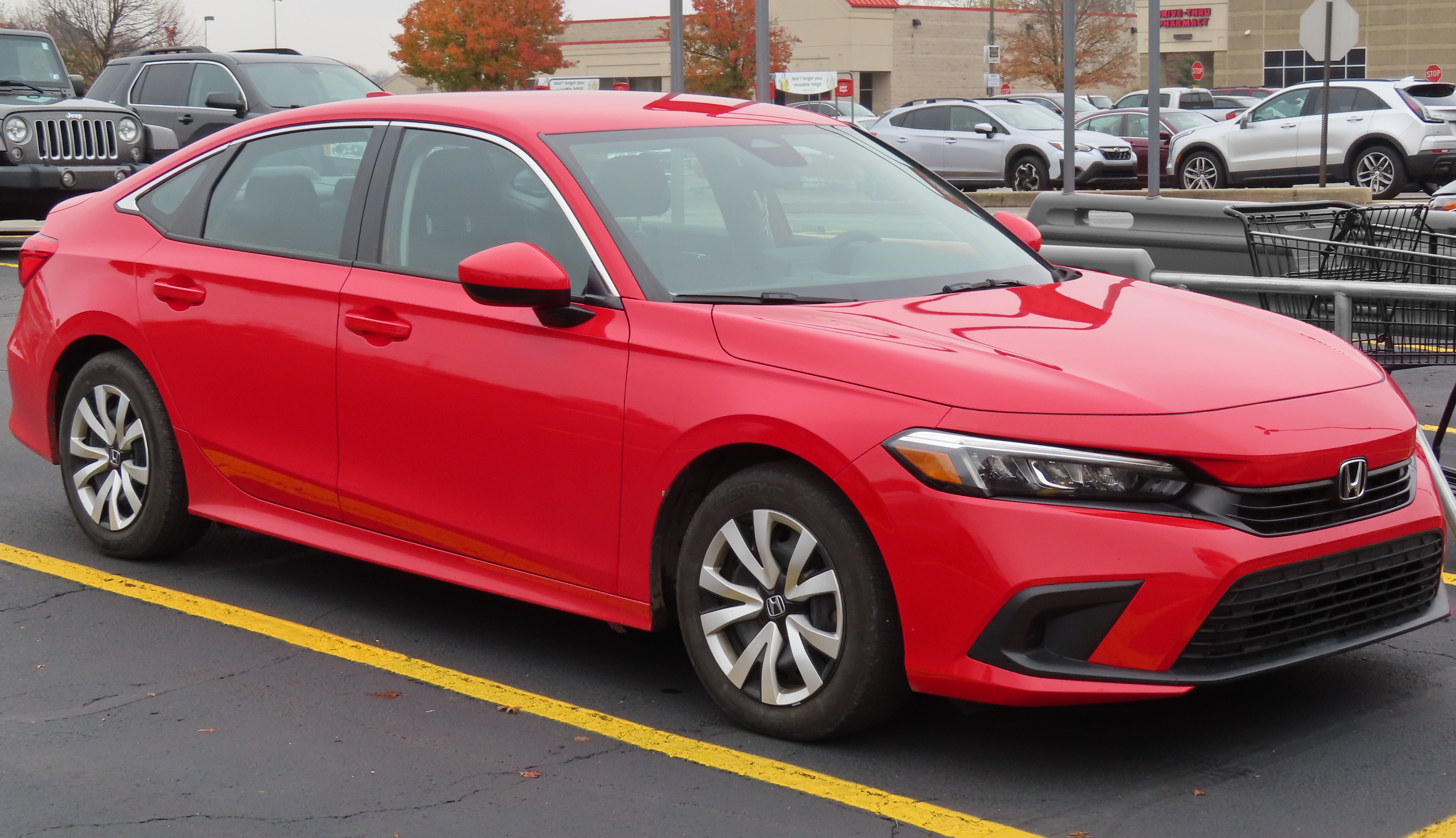
1999 Honda Civic DX
"Yeah, I'll be firing up the 1999 Honda Civic DX. I've let it sleep this winter. And it does need one. I noticed there's some bubbles. It's going to need a little bit of cosmetic surgery and I'm not going to let it get away."
This is a Honda Civic from 1999, in the DX trim. The point is that it’s better to fix small problems now instead of waiting until they get expensive.
The Honda Civic DX is a late-1990s Civic trim level known for being simple, affordable, and easy to keep running. In the episode, it’s used as an example of handling small issues early so they don’t turn into bigger, more expensive repairs.
fix it before it does extensive damage
"See, folks, that's the way you have to look at it. You go. Yeah, it's got a problem. Let's get that taken care of before it does extensive damage and it's gone."
The big message is: don’t wait. If you deal with a small problem early, it usually costs less than letting it grow into something serious.
This is the core “simple decision” idea: addressing problems early prevents escalation into more expensive repairs. In automotive terms, early intervention reduces the chance that a minor rust/paint issue becomes a structural or safety problem.
dry rusted spots underneath
"And this van is a 2010. And structural wise, it's flaky. It's got some dry rusted spots underneath, but no perforations."
This sounds like rust that hasn’t fully eaten through the metal yet. If it’s still “dry” and not perforated, it’s usually easier and cheaper to fix.
“Dry rusted spots” suggests surface rust or early-stage corrosion rather than fully perforated metal. The distinction matters because perforations often indicate the rust has progressed enough to require more extensive (and expensive) repairs.
perforations
"And this van is a 2010. And structural wise, it's flaky. It's got some dry rusted spots underneath, but no perforations."
Perforations are when rust has gone all the way through the metal. That’s when repairs usually get much more involved.
Perforations mean the metal has rusted through, creating holes or loss of structural integrity. Once rust reaches perforation stage, repairs typically involve cutting out and replacing larger sections of body structure.

Dodge Caravan
"...you could go into you pull it St. Catherine's I could take you there and pull two fenders off a dodge caravan in there that are factory metal. The fenders that are on there, they were replaced with cheap offshore Chinese made sheet metal and that stuff doesn't last."
They mention a Dodge Caravan because it’s a common donor vehicle for parts. The takeaway is that using better-quality factory-style parts can prevent the same rust problems from returning.
The Dodge Caravan is a common minivan, and the speaker references pulling factory metal fenders from a Caravan at a salvage yard. The point is that OEM-style parts tend to fit and last better than low-quality replacement panels.
you pull it yard
"...you could go into you pull it St. Catherine's I could take you there and pull two fenders off a dodge caravan in there that are factory metal."
A “you pull it” yard is where you go to a junkyard and take the parts off cars yourself. It can save money compared to buying new parts.
A “you pull it” yard is a self-service salvage yard where you remove parts yourself from donor vehicles. It can be a cost-saving strategy for body panels and other wear items, especially when you’re trying to avoid expensive new aftermarket parts.
factory metal fenders
"...pull two fenders off a dodge caravan in there that are factory metal. The fenders that are on there, they were replaced with cheap offshore Chinese made sheet metal and that stuff doesn't last."
They’re talking about original-style metal fenders from the factory. The idea is that better-quality panels last longer and fit better.
“Factory metal” implies original equipment manufacturer (OEM) body panels, which are typically stamped to tighter tolerances and often have better corrosion resistance than bargain replacement panels. In the episode, this is contrasted with cheaper offshore sheet metal that doesn’t last.
rattle can
"...seal it off some fiberglass and spritz it down using using you know rattle can who cares. And you got yourself a van still 2010."
“Rattle can” is spray paint from a can. They’re describing a cheaper DIY way to cover and protect a repaired area.
“Rattle can” refers to aerosol spray paint used for quick, budget-friendly refinishing. In the episode, it’s part of a DIY-minded approach to making a rust repair look acceptable and protected without paying for a full professional paint job.
rust proofing
"And you got yourself a van still 2010. It's got a hundred and some 1000 K on it. Is it a piece of junk? No, throw some rust proofing on there down the road you go. Five more years. Done. But it's a mindset."
Rust proofing is a protective coating that helps stop rust from coming back or spreading. It’s meant to keep the vehicle from deteriorating so fast.
Rust proofing is a preventative treatment applied to vulnerable areas to slow corrosion and protect against moisture and road salt. The episode frames it as a relatively low-cost step that can extend vehicle life by several years.
planned obsolescence
"If you make it five years, it's called planned obsolescence folks. This is the car game, and I am the car guy, and I am a really good player."
Planned obsolescence means the product is basically set up to not last as long as it could. The goal is to make you replace it sooner.
Planned obsolescence is when products are designed to wear out or become outdated sooner than they should, pushing you toward buying replacements. In the episode, it’s used to argue that newer cars are engineered to fail or lose value quickly.
CVT transmission
"And there are some things. If you're Nissan Rogue owners, you had better love that CVT transmission and set up a chair in the living room to watch movies and eat popcorn and cold snacks."
A CVT is a type of automatic transmission that doesn’t use fixed gears like a normal automatic. It uses a belt system, so it needs the right maintenance to keep it healthy.
CVT stands for continuously variable transmission, which uses a belt-and-pulley system to keep the engine in an efficient RPM range. The speaker emphasizes that this specific type of transmission needs careful maintenance to avoid expensive failures.
throwing parts at them
"I'll tell you what, these vehicles, two to five years old right now. Good luck. You're going to be throwing parts at them with the parts can and then seriously if you can make it the structural integrity."
This means replacing parts one by one hoping it fixes the problem. It can get expensive because you might not actually be fixing the real cause.
“Throwing parts at them” describes a trial-and-error repair approach where parts are replaced without confirming the root cause. It often wastes money and can miss underlying issues, especially on newer vehicles with complex systems.
Reynolds aluminum wrap
"Like I said before, if they make a body metal any thinner, you'll be driving with Reynolds aluminum wrap on your vehicle to fix it. It's so thin, it only has one side."
They’re joking that the metal is so thin it’s like you’d need foil to fix it. The real message is that thin metal can make repairs harder and less durable.
“Reynolds aluminum wrap” is a humorous comparison implying extremely thin body metal that would require something like foil to patch. The underlying point is that thin sheet metal can be hard to repair and may not hold up well.
odometer
"Take a look at the odometer. Wow, we almost have 200,000 on it. That's a pretty good shake. The alternator lasted 200,000 so you got to put another one on."
The odometer is the mileage counter on the dashboard. Higher mileage often means parts have been used longer, so it helps you estimate wear.
The odometer measures how many miles (or kilometers) a vehicle has been driven. In the segment, it’s used to judge component life—if an alternator lasted to near 200,000 miles, that’s a clue about durability.
alternator
"Take a look at the odometer. Wow, we almost have 200,000 on it. That's a pretty good shake. The alternator lasted 200,000 so you got to put another one on."
The alternator keeps the battery charged and powers the car’s electrical system while you drive. If it fails, the car may stall or won’t start.
An alternator is the charging system component that generates electricity to run the car and recharge the battery while the engine is running. The host is using alternator longevity as an example of how to evaluate maintenance expectations and part quality.
shifter
"Almost put the TJ through 16 foot bay door. I didn't expect that to happen and then I had to grab the shifter and pull in neutral, jam my foot on the brakes."
The shifter is what you move to choose gears. If the car isn’t behaving right, putting it in neutral can help you regain control and avoid damage.
The shifter is the mechanism used to select gears in a manual transmission. The host mentions grabbing the shifter and pulling into neutral, which is a safety/containment step when something goes wrong during a drive test.
neutral
"Almost put the TJ through 16 foot bay door. I didn't expect that to happen and then I had to grab the shifter and pull in neutral, jam my foot on the brakes."
Neutral is when the car isn’t connected to the wheels through the transmission. It can help you stop safely if something goes wrong.
Neutral is the gear selection where the engine is not driving the wheels. The host uses it as an immediate response after a clutch-related failure to reduce unintended movement while braking.
jalopy
"...do something about the jalopy and get it fixed up for and keep it and it's paid for."
“Jalopy” just means an old, kind of rough car. They’re saying even if your car isn’t perfect, you should still take care of it instead of ignoring problems.
“Jalopy” is a slang term for an older, beat-up, or unreliable car. In the context of the episode, it’s used to encourage owners not to neglect a worn-out vehicle, but to address issues and keep it running.
budgeting and setting money aside
"That money gets set aside. Whatever right now you can save on that money gets set aside. It doesn't. You don't go buy stuff."
They’re saying don’t spend that money on random stuff—save it instead. Having savings set aside helps you handle car repairs without panicking.
The speaker describes a “money in the bank” approach: saving the amount you would otherwise spend on a new purchase. For car owners, this concept maps to building a maintenance/repair fund so you’re prepared for wear items and unexpected issues.
rust protection
"Yesterday we talked about rust protection. If you didn't catch that podcast, I would recommend you share that with your family and friends because those fellas and fellas that don't think rust rust protection is a worthwhile effort."
Rust protection is how you stop your car from getting rusty. It helps keep the body from corroding so you don’t end up paying for major repairs later.
Rust protection refers to steps and products used to prevent corrosion on a vehicle’s body and underbody. The goal is to keep sheet metal and structural areas from deteriorating, which can otherwise lead to expensive repairs.
fleet maintenance system
"So with all that said, that's why I've rebuilt and laminated a reusable car connection fleet maintenance system that makes it so simple. It's pathetic."
A fleet maintenance system is a checklist-style way to keep vehicles serviced on time. Even if you’re not running a business fleet, the idea is the same: don’t guess—track and schedule.
A fleet maintenance system is an organized process for tracking service needs and scheduling maintenance across multiple vehicles. In the segment, it’s presented as a structured way to simplify decisions and ensure nothing gets missed.
prevention vs repair cost
"Because here's what I've learned in 44 years. A $200 part and $200 complete would have fixed and prevented a $5,000 repair."
The point is that small repairs done early are cheaper than waiting until something breaks badly. Fixing the problem before it gets worse saves money.
The speaker emphasizes a cost relationship: a relatively small part and job can prevent a much larger repair later. This is a common service strategy—fix early, before damage spreads or components fail.
pre-owned vehicle
"So if you or someone you know needs to find that pre-owned vehicle, that's where I would definitely tell you you need to shop. Forget this new stuff, you need to find something 8, 10 years old with low mileage and top quality."
They’re saying you’ll often save a lot by buying a used car instead of a brand-new one. If you pick the right used car (not beat up, low miles), it can still last a long time.
The speaker is advising listeners to shop for a used car rather than buying new. The idea is that a properly chosen used vehicle—especially one that’s 8–10 years old with low mileage—can deliver most of the reliability for far less money.
City Auto Sales and Leasing
"You'll find those vehicles at City Auto Sales and Leasing because my good friends, Earl Louis Grant, they are car guys and they've been in the biz going on 25 years..."
This is the dealership the host recommends. They’re saying City Auto Sales and Leasing helps people find good used cars and can help with financing.
City Auto Sales and Leasing is presented as a used-car dealership in the Greater Toronto Area. The speaker claims they focus on low-mileage, quality pre-owned vehicles and offer financing/leasing options.
engine's good, the transmission's good
"So now you have something that's solid to work with, but if what you presently have is solid and the engine's good, the transmission's good, then you're there."
They’re saying if the engine and the transmission are working well, the car is probably a good one to keep. Those parts are expensive to fix, so it matters a lot.
The speaker is using a practical checklist: if the engine and transmission are healthy, the car may be worth keeping. These are two of the most expensive driveline components to repair, so their condition strongly affects total ownership cost.
in-house financing
"So check out City Auto Sales and Leasing, greater Toronto area's premier pre-owned auto store, they're there for you, they won't let you go out the door, car broke and they have in-house financing and leasing."
In-house financing is when the dealership helps you get the loan. It can be easier, but you should still check the interest rate and total price so you don’t overpay.
In-house financing means the dealership arranges the loan directly (or through its own financing arm) rather than only sending you to outside banks. It can be convenient, but terms and total cost should be compared carefully.
fixer-uppers
"They don't sell any junk, any fixer-uppers, Earl and Louise, they know what they're interested in providing and that is quality vehicles."
A fixer-upper is a car that needs work. The speaker is saying they don’t want to sell cars like that—because it can cost you more later.
“Fixer-uppers” are vehicles that need repairs or have known issues, often priced lower because the buyer must invest time and money. The speaker is positioning their preferred inventory as higher-quality, less problem-prone cars.
Request an Explanation
Heard something you'd like explained? We'll add it to this episode.
Sign in to request explanations for terms you heard.
Want to learn more?
Browse our glossary for plain-English explanations of automotive terms, jargon, and concepts.
Help improve this episode
See something that's not quite right? Our annotations are AI-generated and can sometimes miss the mark. Click the flag icon on any annotation to suggest a correction.