The Subaru 360 is a very small older car made by Subaru, designed to be simple and efficient. Because it’s an older, basic-style vehicle, it can be a good example for learning how service work is done and how problems are found. That’s likely why it’s mentioned alongside ideas about learning through real processes.
A technician interview is how a shop checks whether someone can actually do the job of fixing cars. It usually includes questions that test how they think and how they handle real situations.
Term
QA
QA means quality checks. In this case, they review interview calls to see whether the questions or process are causing confusion, or if the candidate just isn’t following along.
A service advisor is the person who talks to customers about car problems and helps set up the repair. They work with the technician and decide what gets done first and what can wait.
They keep candidate profiles in a system and label what kind of work the person is suited for. Later, when a role opens that fits better, they reach out again.
A tie rod is part of the steering system that helps control where the front wheels point. If it’s loose or worn, steering can feel wrong and it can be dangerous.
A bushing is a small part that helps suspension/steering move smoothly and reduces shaking. If it wears out, things can get loose and you may need to address it sooner.
Term
DBI
DBI sounds like a shop’s internal way of labeling how urgent something is. The speaker is saying that when it’s “yellow,” people may interpret it differently—some think it’s urgent, others think it can wait.
They’re saying the repair business may be getting so expensive that regular people can’t afford to fix their cars anymore. It’s not about buying the car—it’s about paying for repairs when something breaks.
TPMS is the system that checks your tire pressure. If a tire is low, it can trigger a warning light so you know something’s wrong before it becomes a bigger problem.
The Nissan Rogue is a common SUV. Here it’s used as an example of a normal, everyday car where even a tire problem can become expensive for someone who’s already tight on money.
A tire changing unit is an automated shop machine used to remove and install tires with less manual labor than traditional equipment. In this segment, the hosts discuss “robotics” for tire changing and how expensive and backordered these systems can be for independent shops.
The Alpine A110 is a small sports car built for quick handling and responsive driving. It’s the kind of car where details matter a lot, so if something goes wrong during building or repair, it can be noticeable. That’s why it might be mentioned in a story about a problem or a process that didn’t go as planned.
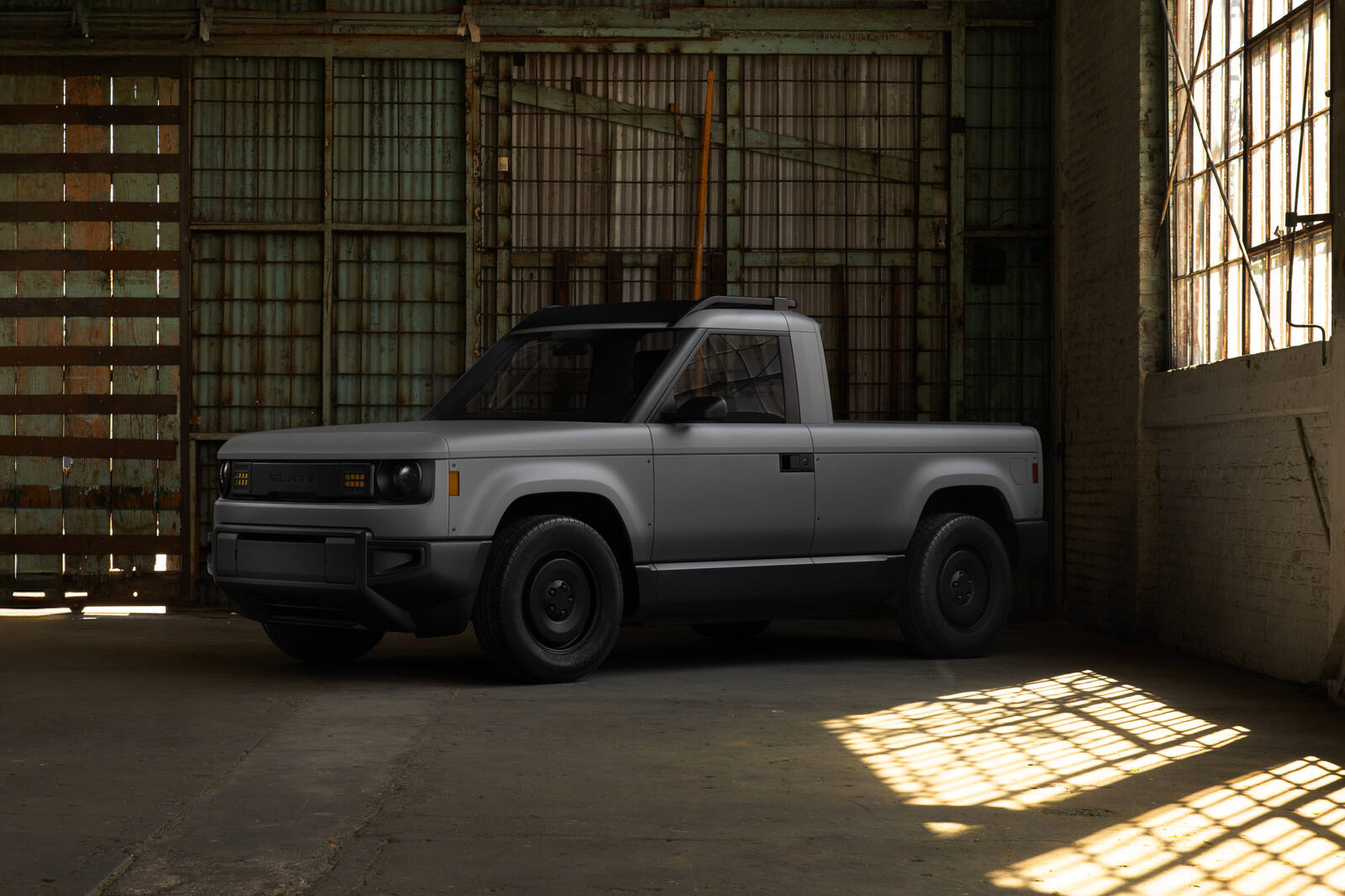
The hosts bring up Slate, a new electric truck company backed by Jeff Bezos. It's a small, cheap pickup that plugs into a normal wall outlet, originally meant to cost about $20,000 but now closer to $30,000.
The Ford Ranger is another pickup truck model. They’re basically asking whether the Maverick and Ranger are the same kind of truck or if they’re different.
“Plan B” is the person you hire only if your first choice doesn’t work out. The point is that it can feel bad for the technician and stressful for the shop because it’s not the best-starting situation for trust.
A “shallow talent pool” means there aren’t many skilled people available for the job. When that happens, shops have to move faster and sometimes settle for a backup candidate.
Here, “equity” means the employees can own part of the company. It’s meant to make them feel invested in the shop’s success, not just paid for hours worked.
“Diag” means diagnosing the problem—figuring out what’s actually wrong with the car. A tech who’s good at diag can save time and avoid fixing the wrong thing.
LIVE
Welcome back, ladies and gentlemen, to another exciting episode of the Jaded Mechanic Podcast. I am sitting here with my Promotive family, and we were just discussing... I mean, we're gonna discuss a lot of stuff, but we just kinda discussed, uh, we started off discussing fishing of all things, 'cause everybody knows if you want Jeff to get really excited and, you know, um, just talk fishing with him.
So, uh, I'm sitting here with Lisa Coyle and Kat Ayers. I hope that I said that right. Is that Ayers or Ayers?
Either way. Ayers is- Okay ... how I pronounce
it. Ayers. Um, and we were discussing fly fishing, and I was like, "Yeah, I've seen them do that. That's kinda..." And we got talking about, like, I would do, like, I'd go to the Keys, try to stay out of trouble in Keys, and then fish for, like, tarpon on a fly rod if I wanna do fly rod.
Otherwise, like up here where I am, I just see it as like you're catching pretty much smaller fish with lightweight rods, and that's kind of the whole mystique. But, you know, um, and then Lisa's shared with us how she wants to catch the fish, but she doesn't wanna actually touch the fish, 'cause when the eyeballs are bulging out and they're, you know, trying to breathe, it, it kind of w- weirds her out a little bit, which I can relate to.
Totally.
Well, it's, like, crunchy and everything too, and you just feel bad for 'em. Like, give it some water, and you throw water on them and... 'Cause you want them to live. You have to... A, a lot of it, what we do is catch and release, right? And I just, yeah, I don't like touching them when, uh- And sometimes
we release 'em right into the grease
Oh. Those are- These poor fish ... some are delicious.
Yeah, some are
delicious-
Yeah ... you know?
These poor fish. But yeah, as long as, as long as we're eating them, you know, we're not just killing to kill, then I'm- Yeah ... all for it. I just don't eat fish, but I do like to catch them and hold a beer or a- Yeah
Heineken or something and, and I like the experience. I just don't want to touch them, so.
So no sushi at all then? Even, Lisa, you don't eat that?
Nope. No sushi. Nothing that- Yeah ... can breathe underwater is what I say. No shrimp. I wish I liked it, but that ship has sailed. Okay. I'm 41, I don't think my taste buds are going to change that much, but, um, it's just not my thing.
Yeah. I- I wish I did like seafood, though
I love seafood. It doesn't really matter what.
I, like- Yeah,
it's
really good for
you ... I tried oysters for the first time, like, four years ago, and I was like, "Why have I not had this my whole life?" But, like, I was just like, "Oh." And then I had them- Yeah ... and like, it was probably the Tabasco and the salt that was mostly what was making it, but I was like, "These are pretty good."
Um- That would probably be last on my list of seafood to try.
Yeah.
Um, but if I was going to, if I had to eat something, I'd probably choose, like, coconut shrimp, um- Yeah ... with a lot of good sauce, 'cause that breading, right, like, give that fried-
Yeah ...
uh, batter in there. But yeah, not my thing.
Kat, what about you?
Will you just, will you go right to town on, on a lobster or-
Oh, yes. Yeah. I like it all. I like it raw fish, I like cooked fish. I, um, I live about, uh, three minutes from the beach.
Okay.
Um, so there's a lot of, uh, of fresh fish and shrimp and oysters and all of the good stuff. So I like it all.
And are you in South Carolina, Kat?
I am, yeah. Yeah. I'm in Charleston, South Carolina.
Right on.
Yeah.
Right on.
Lots of good- Very cool ... fishing here.
Yeah. There is. I, I've never... I haven't thrown a line in yet, but, um, there's been a lot of really... 'Cause I follow bass, bass fishing, right? So the professional bass fishing, which, uh, just to let everybody know, right now, um, the Canadian from two hours away from me, Chris Johnson, he's in, in the lead right now um, in the tournament, which is always cool because we have- We have, ah, six Canadians that fish out of, like, 100 in that league.
And of that league, um, the Canadian, one of them is back-to-back Angler of the Year. So, um, yeah, I mean, not only... And he's also, he's a great hockey player, too. Um, but he's a phenomenal fisherman, so yeah. I mean, go Canada.
Yeah. I don't know. I mean, I know this will be controversial with you, but I just feel like a lot of it's luck, um- Oh
with, with catching fish, and just, like- Oh, dear ... you know, especially if you have, like, four rods out and one person gets it over the other, like, I don't know, I feel like there's some luck in that.
Uh, I mean, there's lu- But- There's luck in all kinds of life, but I mean, it's- Oh, yeah ... like, you gotta find the fish before you can catch the fish.
And, uh, what makes it the most established, creditable guys repetable, repeatable, excuse me, is the ones that consistently find them. Um, and then the k- it's one thing to find fish, but you gotta find the winning fish, which is, like, your average has to be the best. It's, you know, you're, you're all catching, you're trying to catch five, but if I catch five and my average weight's five pounds and yours is four pounds, I'm gonna beat you, and that's 'cause we're, we're weighing total weight, right?
So, um, that's where it dials into just slight tweaks and elimination of details is what makes you really, um, dial it in. But yeah. Um, you guys are hockey fans, or yes or no? I mean, Lisa- Yeah ... you probably are. Yeah.
Yeah?
Yeah. Are you watching the Sabres in, uh, in Montreal? I
was almost said, "Let's go Buffalo."
I'm a football fan- Yeah ... but I'm a Buffalo Bills football fan, and so yes, I've been keeping up with the Sabres. Great. Lisa is a Rangers fan.
Mm-hmm.
Yeah. I, I love ice hockey. The Rangers are my team. They sucked this year. Yes. Um, but I'm rooting for Buffalo, just like with the Super Bowl, you know, they've never won a Stanley Cup.
So, um- Mm-hmm ... I don't have high hopes for them against, um, the- Montreal ... winner of the Avalanche and Golden Knights, right? Mm-hmm. Um, but hey, I, I'm rooting for Buffalo right now. Sorry, Montreal. And, uh, yeah.
I'm not even rooting for Montreal either, just because, um, I never have rooted for Montreal. And it's, it's, you come to Canada and everybody's like, "Oh, you gotta root for the Canadian team."
And then you get into that real divide where it's like- It's a, an English versus French thing up here, and there's like, I know people that will cheer for Boston before they would cheer for, for the Habs, like Montreal. Um, so it's, you know, there's no shame if you say, "I don't ch-," if you're Canadian and you don't cheer if you're cheering for Buffalo.
So I'm cheering for Buffalo. Um-
Yeah. Yeah. Well, we'll, uh, by the time this comes out, I'm sure there'll be a winner.
Yeah. And then I don't know after that. My brother is a Leafs fan, so, uh, they... I mean, which you never see the Leafs in the playoffs hardly ever, so I mean, that's good.
Um, they get to... They're the best golfers in the league for sure. Uh, they get it there first. Yeah. So ladies, what's new at Promotive?
Oh, we have a lot new. Um, you know, I think the last time we talked, we talked about the virtual recruiting platform- Mm-hmm. Yep ... that we came out with, and, uh, our girl Paige- Yes
has been crushing it, and we have a lot more clients on board with that virtual recruiting platform only. Yeah. And on top of that, last year we acquired software and, um, you know, as Kat always says, it kind of just gave us a head start by one or two years to build our own portal and platform. Mm-hmm. So we have a lot coming out with our portal/platform in the upcoming months, that's for sure.
Very cool. Very cool. So you guys are still continually growing, right? Like, that's the- Oh, yeah ... that's the awesome thing. Yep. Like, you and I have talked about how this landscape is so challenging right now on this side of the industry, right? And I kinda like, e- everybody I, you know, I talk to all these technicians all the time, right?
And then, you know, it's, it's one thing is, like, the industry's tough, but then I talk to some of them and it's like you hear about the way they, they approach finding a job and I'm like, "What are you doing? Like, you can't- ... you can't do it like that." You know? You can't- If you, if you make it a, if you give your word you're gonna show up for an interview, and then your boss that is with you says, "Uh, okay, I'll pay you more," go on the damn interview anyway.
Mm-hmm. Don't be, you know, a jerk and not go on the interview.
Yeah. No, I mean- Sure ... it's nice to have options no matter what, right?
Yeah. M- everybody you meet, right, has something to offer, something to teach you. Um, you know, the AI thing is, is, like we were talking before we hit record, I'm just, like, a pretty basic, you know, not a high-tech redneck by any stretch, and the AI thing is pretty neat when I'm seeing how shops are using it in their, in their day-to-day building jobs, doing estimates and stuff.
But how, what's the advantages other than freeing up, you know, um, people? What's the advantages right away, Lisa, for, and Kat, for this system for you guys? You wanna
go, Kat? Go ahead.
Yeah. Um, I mean, the number one thing that we see is consistency- Mm-hmm ... I'd say. Our virtual recruiter is just more consistent.
Um, she, you know, can adapt to what's going on in the situation, but she can get through more conversations. And then the second is her ability to process volume. Okay. Um, a- and that's, um, you know, process kind of in real time volume, I, I guess I should say, right? So, um, when, you know, someone applies at 2:00 o'clock in the morning and they get the invitation- Mm-hmm
to do a virtual screening, they can do that virtual screening. We had an example, um, recently where, um, a technician had come off of a overnight UPS shift. He was working- Okay ... for the fleet, and he did his interview at, like, 2:34 in the morning, and by the time it was completed within, like, you know, a minute or two, the shop owner had it in their inbox.
And, um, when they woke up in the morning, they had the opportunity to review that certainly long before anybody else- Yeah ... was replying to that candidate. So, so those two things, I think, are the two real advantages for us, um, when it comes to AI.
Very cool
Yeah, for the shop, I'd say just to add to it, um, you know, on the consistency point that Kat referenced, um, you know, we judge books by the cover too frequently- Mm
in life, especially when it comes to hiring. And on the surface level, the resumes don't do the technicians in, in particular justice often. They're not professional resume writers. And unfortunately, there's also still discrimination in our world. Um, and by having the virtual recruiter option, the first step of the process on every applicant is to, uh, do the first round interview through calling the virtual recruiter, Paige is her name, um, through Promotive.
And then on top of that, the shop's advantage that they have is speed to lead, which we preach constantly, and shop owners know that they, the faster that they can get someone calling in asking about a check engine light or some funny noise on their car, the faster they get that car into their shop, the higher chance they have of getting the job.
Yeah. Um, same thing when it comes to candidates. The faster you can get them to do something with your shop, do that first interview, the higher chance you have of getting them to the next interview. So, you know, speed to lead is a, a real thing. And then once they do one round of an interview, they're already invested in that shop, like they've already done one step in their mind.
Right. So it gives the, the shop that advantage too.
Now you touched on something when you said, unfortunately, there's still discrimination. Is that like people read the name on the applicant and make the assumption that maybe they're Spanish, you know, speaking and, and not gonna be a certain, like they're not gonna be a good fit?
Is that kinda what happens?
Yeah. It's that, age. So when you see- Okay ... how, how long somebody's been in the industry. Um, so it's the, you know, the, the name, the age, the shops that they worked at. Right. Um, right? Oh, they worked at this shop. That shop doesn't have a great reputation. They shortcut things, whatever the case is.
Yeah. Um, so this, you know, it's not just discrimination on the surface level, it's behind the scenes, um, with the names of the shops that they're working at.
Hmm. I see. I don't, never thought of that really, because it's like, I, I mean I talk all the time of like- There's such a shortage now that I, I see up in my area at least, people are...
They're looking at it and going, "Oh, they might work at so-and-so's shop." And yeah, they don't have a great reputation, but they're gonna try them out anyway because there's such a shortage, right? They're, yeah. But I guess when you get into certain markets where there's still a shortage, but they've got more to pick from, you could be missing out on a really good candidate because you just assumed- Oh, yeah
where they worked- Yeah ... that they must be a certain way. You, you need to look at it like probably they're looking because they don't fit with that place that has a poor reputation, right? Yeah. Whether it's car count isn't there for them to make money, or shop culture doesn't fit, shop methods of how they fix the car maybe doesn't jive with a lot of technicians.
You know, Kat, you're kinda nodding like you probably talk to guys like that, and girls.
Yeah. Yeah, I think, I think one of the big things is, um, you can't articulate that on a resume, even if you're like an incredible resume writer. Yeah. Like that's very hard to articulate in a resume and to actually, you know, tell someone your true value on one page of paper.
And again, for a group of people that we just don't expect to be really great resume writers, that's not- Yeah ... what we, what they're good at. So, um, th- doing the first round interview through Um, through Paige actually gives a candidate the chance to have that really great first impression and to, and to talk really at length about their capabilities and their skills and the things that they wanna highlight.
So we think it's a real opportunity, um, for candidates. Sorry. That's okay. I almost... My dog is squeaking in his sleep. Um- Yeah. So yeah, we, I, I, what I don't want people to do is think it's like a, a, like a pass off. Okay. Like, like the humans don't wanna do it and so therefore, like we just passed it off. It's not, it's, it's so f- so opposite of that.
Right. It's actually we find that we can get way better information, we can get a deeper understanding of the candidate's true capability and skill. They can talk more at length about that, and we can just get a better evaluation.
Mm-hmm.
We can ask deeper questions. We, meaning Paige-
Yeah ...
can ask deeper questions about what are your career goals, things like that, that, um, you know, are just, they, they level the playing field in a really just different way.
And so I want... I, I don't want people to think of it as, "Well, you know, I, I'm not getting a human conversation." We want you to have this conversation because it's gonna be the best thing to get you set up for the next best conversation for you. So, so I think- Yeah ... those are some big advantages we're seeing.
Yeah. And the feedback that we get is pretty good in that way, um, as well from both candidates and shops.
Yeah. Yeah. Arguably she's better, um, having AI 'cause of the consistency. Yeah. And I'm the first one to admit that I interview people completely differently depending on, you know, did I know them? Were they referred by Jeff from- Yeah
Data Mechanic versus I had their resume on Indeed. Um, you know, you keep the, the interview questions consistent. And the other part of the discrimination that I wanted to talk about too is, it's discrimination for good things, um, as well. So a lot of shops won't interview people that work at their buddy's shop.
Right. Right? And, or they won't interview people that worked at a dealership, or a dealership won't interview someone that worked independent, and there's a lot of that happening too. That's not just like, "Oh, they worked at this shop and that's a bad shop," or, "Oh, this person's old, I don't wanna work with them."
Yeah.
Um, there's, there's discrimination happening in, you know, all, all variables here.
I, and I see, and maybe it's because like, I talk to so many different technicians from everything, from agricultural guys that like, to field service, road service, fleet guys, to dealership guys and gals, to... It doesn't matter.
And I can tell you that the idea that somebody would say I'm not gonna hire, you know, this technician 'cause they worked at a dealership, or a dealership, you know, in- interviewing somebody going, "There's no way that person coming from the aftermarket side of things is gonna be able to get them up to speed."
That's the most ridiculous, like-
Well,
yeah ... I have seen absolute superstars on so many facets of this industry now, that if you're, if you're saying, "I'm not gonna hire a dealer tech," you're missing out on some really, really good talent. Now, does that talent come with obstacles? Sure it does. We're hiring- That's right
humans, after all. That's right. But the reality is, is like, I'll, I'll say this, dealership guys and gals, what they're good at is repetition, right? And it's good, they're good at, like, they'll get consistently faster on a job. Um, and, you know, they're not all, like, pattern failure, shotgun parts cannon guys, and bad attitudes.
They're not all that. They're not. Uh, I was that, and I hadn't been in a dealer in a long, long time when I was that, uh, because of... It's, it's an attitude. It's not where you, it's not what the shirt on, you know, label on your shirt says defines who you are or how you are as a technician. It's the culture that you've been living in defines what you are as a technician.
So people that are out there and are like, "I'm not gonna hire that person because..." You're, you're missing out. You, you probably deserve to suffer through the shortage then if you're so close-minded about who you wanna hire. I j- sorry, I didn't soapbox, but it- Yeah ... it really bugs-
No, it's- You know ... there's, a lot of times it's easier to hire somebody that fits the mold that you're already in, right?
It's more plug and play, if you will. But the amount I've learned as a business owner from hiring people outside of the industry- Absolutely ... so outside of payments, outside of automotive, whatever it is, um, it's just val- like, super valuable. It's a different lens, a different perspective, um, and you learn from people that have different types of experience.
So, um, yeah, I, I can't speak as a shop owner that- Mm-hmm ... I can say, oh yeah, the dealership guys are better or worse for independent shops or vice versa. But I know that, um, people, no matter what their background is or was, have something to offer. And I guarantee that you'll learn something from, from all different types of people- Yeah
regardless of their background.
Yeah. I, it, it makes me y- because there's such, like- And again, you know, y- I don't wanna go into that conversation of do we need a basic set of certification in this industry because that's, that's going in a completely different direction. But I mean, if you can hire somebody that consistently can, like, get the bolts tight, as Zeb Beard talks about all the time, it doesn't really matter where they came from.
That's, that's an asset and a skill that you need starting. Yeah. And then if you have any kind of processes in, in your business, you should be able to, if you're a leader and have good culture, be able to pass on to them what it is you expect, the expectations and the end result and the plan and all these good things.
If you can't, I don't think it matters if you hire a recruitment, you know, the best one in the, in the industry for whatever or sit there and stare at 1,000, uh, you know, resumes on Indeed. You're not going to fit your empty spot because you, you're, you're not offering anything, you know? Yeah. Um, people wanna grow.
People wanna improve. People wanna do a good job, and there's a lot of people now that are just like, "I need a, I need a person. I need somebody that can fog a mirror," as Samantha said. And the reality is, is like if you think that that's all you need You've missed the boat
Oh, 100%. I mean, the cost of a bad hire is- Oh
very expensive if you're just fogging mirrors here and getting somebody in. Um, and it's not fair to the candidate either.
No.
Um, you know, if, if you don't think they're a fit, it doesn't help them to come on board and have a three or six-month stint on their resume that then gets discriminated against, right?
Um, because they're a job hopper. Yeah. So, you know, we shouldn't be hiring people that we're very unsure of and then not giving them the chance to succeed.
Yeah. Now Kat, can we- In any
business. Yeah. In
any
business, automotive.
Yeah. Kat, can we talk about some of the holes that you see in the resumes? What, what are guys and gals leaving out or, or the way it's written that's kind of becoming an obstacle for them in getting noticed or looked at?
Uh, I mean, the challenge of a resume is remembering what it is that you did or you were, you were really good at, or the specific accomplishments. So unless you're a really great kind of bookkeeper for yourself, and where you write down, you know, um, in January I did these three, you know, big complex jobs, or I learned this skill or capability.
By the time you're ready to leave the job that you're in, you've forgotten everything that you've done. Yeah. Right? And so you're, you're not thinking, "What is the specific thing that I did over the last three, six, nine months that helped me grow my career?" So you're putting where else you worked, and you might put your title and a few basic things, but it's very difficult to see real career progression straight from a resume.
Mm-hmm. Um, you know, there are lots of tools out there that can help. We have a little resume builder on our website. There are o- all sorts of other tools that can help out there as well. But, um, again, I think the, the challenge is, you know, being thoughtful enough about what you wanna do in your career to wanna keep up with those things and wanna track those things and, and do a little bi- bit of a self check-in.
When it comes to, you know, um, uh, shops onboarding candidates, like, I think shops, you know, could teach candidates how to do those things. And- Yeah ... the more that they reflect and see how much they've grown in the job that they're at- the easier it is to retain them, right? 'Cause they think, "Well, I've only been, you know, a GST or only been a CTech for two years."
But if you look at where you came in and what your skill set was- Yeah ... when you came in, and you really evaluate where you are two years later, it's probably grown significantly. And so, you know, how are you representing that? Um, again, whether it's on a resume or through an interview, I think it's always good practice to, like, give yourself a little gut check every year as to- Mm-hmm
what's been going on. So, so those are things that we see from a straight resume perspective. Um, and that's why we created, you know, Page w- was that our recruiters are looking at resumes and they're looking at job history, and it's like, you know, trying to wade through those bits to really understand who, you know, who am I talking to?
What is the, the value that they're gonna bring to this shop? And so Page was able to really, like, again, standardize and relieve a lot of that volume, um, for our team. And now we are spending more t- time, you know, kind of chasing the people that aren't calling Page. Yeah. Um, and trying to figure out, you know, can we get ahold of them and understand who they are?
And, and, and, you know, how can we serve them if they're not calling Page? Why don't, you know, why are they not calling Page? We get candidates from kind of all sorts of different sources and, and we wanna learn about all of them, um-
Yeah. And I think the- So we think we can
learn from all of them. Yeah.
I think, too, like, what the beauty of Page is that you can't quantify is it's the first instruction that a shop is giving the candidate, and the shop could, could be doing it themselves from Promotive.
So, you know, "Thanks for applying to Dynamic Automotive for the technician position. The first step of our process is to call Page, powered by Promotive. It's a virtual interview. It takes 10 to 15 minutes." Obviously, Promotive's doing it for our direct candidates, too, but shop owners are now having the mindset if they can't follow the first step of the instruction- Right
we don't want to interview them.
Right.
Right? So I think that's something that's important, too. If there's anybody, technician, service advisor, uh, listening to this right now, if- A shop gives you specific instructions- Mm-hmm ... um, follow them. Yeah. They look at that stuff. They don't want you to just show up at their shop, uh, with your resume when they told you to do a call first, and that happens a lot, too, um, is that they're like, "This person just showed up," and they, they, they...
Some people love that, and they think like, "Hey, that's, you know, showing that they really want the position." Yeah. Um, and other people are turned off by it. You know, if somebody just showed up at my office right now after they applied to a job and my schedule is back to back- Right ... I would be very upset.
Like, great, now I have to go talk to this person and drop everything else I'm doing. Susie's not gonna go get her car on time, and I have to talk to this candidate- Mm-hmm ... uh, that just walked in because I'm short staff. I have to do that right now. Um- Yeah ... so there's that side as well, um, that they find the value in.
It's the first step of the process. Can I- See if they follow instructions ...
can I ask something? 'Cause we kinda touched on how you see, you know, it looks like they're calling them shop hoppers. Now, as somebody that both talks to a lot of, uh, you know, technicians, when you see that and you ask them, "Are you a sh- a shop hopper?"
And they say, "Yes," what's their reasons for why they keep moving?
We, yeah, we have, we- Well- Yeah, there are lots of reasons for why people leave. Um, some of them are, um, self-inflicted and some are not, right? So we talked a little bit about people applying to and being hired for the wrong role.
Right.
So if you know that somebody has a skill set that's aligned with a C technician, whatever you call that, and you hire them for a, you know, B+, A- and then they can't do the job-
Mm-hmm
they're go- you're gonna let... You know, they're not gonna do a good job, they're gonna be miserable, you're gonna be miserable, they're gonna get laid off. Uh, whose fault is that, right? Yeah. Maybe there was a little overselling by the cust- the candidate, maybe it was the shop. You know, there are certainly the, the job hoppers that, that, you know, hop every three or four months 'cause they're running away from something or, or whatever.
But-
Yeah ...
what, what we try to ask them is the why. Like, you know, why? Are we hearing the same problem over and over that they couldn't get along with the manager? Well, that's a red flag and, and- Mm-hmm ... you know, we should be digging into that. But is it, you know, "Well, I applied for the job, and then I got there, and it really wasn't what I expected, and then they didn't do any onboarding, and the, the, you know, shop owner left for three weeks to go on vacation, and, you know, I was, like, sweeping, and I didn't get any ti-" Like, I mean, I'd leave, too, right
Yeah.
So, so just we ask a lot of those questions. And again, um, with Paige, Paige asks, like, "Why did you leave your last position?" And then, you know, that's hard to put on a resume. You don't wanna always wanna write down- Mm-hmm ... like, "I left Bob's because, you know, Bob was a jackass," right? Like, you can you can, you know, talk to Paige and say, you know, "Bob, Bob was really nasty to his employees."
And, and Paige isn't gonna go chase Bob down, but we get a little- Right ... bit more color, um, on- Yeah ... on why you left your last job. So those are things that we can do if we actually get to talk to the person or if they, you know, again, um, call Paige and, and just give a little bit more information about who they are.
Just really helps us, um, to align them with the right shop.
Um- That happens a lot 'cause I think we, you know, we talk, we have a technician storage, but then people say, "No, you have a skill shortage, and you have a lot of applicants out there that necessarily don't have the skills." I, I was that tech where I got hired where somebody thought they needed, like, a, a high-rung diagnostic tech And they did, but they didn't have enough work coming in to keep me busy doing on that, on that, excuse me.
And then when I would do the other work that was coming in, they're like, "Oh, you're not as fast as I'd hoped you'd be on that." No, I'm 50 years old, and I'm, you know, got one arm. And, uh, yeah, so it's, it's harder for me. Like, they'd be like, "Well, like you, you know, your, your diag skills are awesome," but I don't have enough work coming in.
Well, when you hired me, I told you all of this, and you said you needed a diag guy. What they really had to do was pivot, and they go back out in the shop and do a little bit more of the diag and find a younger, uh, less costly technician to just get the grunt work done, you know? Yeah. And I
think that's important- No, I think it's important.
It's important for the shop to know what they need, not just today, but where their future is going to be, and think about seasonality and, you know, different types of jobs that come in over the summer versus the winter. Um, and we're humans, and we're very good at having recency bias and knowing like, oh, I need this today, doesn't mean you're going to need that forever once you solve, you know, today's issue.
Um, but I think on job hopping too, if I was writing a resume and I had a lot of job hopping on mine, I would make sure I told some sort of story. And sometimes- Okay ... it looks like you're job hopping, but you're changing positions within the same organization. Yeah. Especially if it's a large one that has 100 or 200 locations and they're not all named the exact same thing.
Um, or if your company got acquired and you, you know- Yeah ... let's pick on 360 and Velo. If I put Velo on my resume and 360 on there from different time periods, it looks like I hopped jobs, but I didn't. My- Oh ... company was just acquired. Um, so making sure that you have that in there as well, or just stick to the one, you know, head company and make it look like you've been there the whole time, and tell the story in the bullets instead of, you know, the, the year at Velo and the three years at 360 and then, you know, two years at AutoServe One or something.
It's all under the same company, right? Yeah. So you're not actually job hopping there.
Yeah. Dealer techs, I think that would really help is if you, you know, you worked at this Chrysler store, and then you worked at this Ford store. If you key in, 'cause everybody doesn't necessarily know, maybe they're all owned by the same dealer group.
Yep.
Well, if you say that I'm just, I'm pursuing better opportunities within the dealer group or they're moving me within the dealer group-
Mm-hmm ...
because of shortcomings and openings that they need Then that's not the same as like I jumped jobs. I dropped- Correct ... this for, for a different, you know, opportunity.
Right.
An opportunity's come up and you took it, but you stayed within the parent company. I think that's important. Um, when we see, you kind of touched on something that was really cool. Lisa, when you were talking about people that would just show up and, and, and, and leave a resume. Like, I did that forever.
Like, that was just how I did it. They weren't even running an ad. Or it's like if I saw the ad, I would, like, we didn't make it, it wasn't in our head space back then to make an appointment to drop the resume off. We would just show up and say like, "Hey, hand this to the person at the counter and say I saw the ad," and walk out, right?
Oftentimes what they do is before you got back to your car, they're running out going, "Hey, can you, do you have a second?" Like, you know, blah, blah, blah, blah, blah, when can you start? It's that when can you start thing. I think we're missing the steps there of like, okay, I need somebody really bad, but I should still vet this person before I just put that fog and- Yeah
mirror in, in the bay, right? So.
Yeah. No, and a te- a technician, a candidate, you know, service advisor, whoever, learns a lot about the entity that they want to go work for, they think they do, um, by seeing what their process is like and what that professionalism is like. And, you know, are they constantly moving the interview?
Are they showing up for the interview? Did they forget? Are they flustered and not even prepared for the interview? Um, and when you just walk in, of course you, again, as a salesperson, I used to have, uh, at 360's office when we had a- an office, um, I had on the sign, on the, the signage on the front door said, "Solicitors welcome.
We're hiring." Um- Right ... I would love that right at that time. But now fast-forward 10 years later, it would drive me nuts if somebody just showed up, um, for me, let alone my team. Especially depending on the day of the week. You know, Monday mornings the shops are typically- Yeah ... super, super busy, right?
Friday afternoons, they're super busy. Uh, that timing makes a big difference. And usually when I think that you're dropping resumes off, um, it's on your way to work or your way home from work, which is a lot of times when they're super busy. So you wanna get that right, you know, first foot forward, um, on both sides.
So, but, uh, yeah. No it's, it's, uh, it's a hit or miss. Like, I can understand the pros and cons of, of, uh, someone walking in. But it, it does happen. Um, and a lot of times it's after they apply to a job and they wanna set themselves apart from somewhere, some from all the other people, um, and they're impatient.
And a lot of times also the ones that are doing that are the ones that are not employed and they need money, right? Yeah. So they're trying to get a job as fast as possible.
Mm-hmm. Yeah. I- I mean, I, I've had lots of jobs that I, like, went and found while I still had another job. But I've also been very lucky in the sense that, like, you know, I just roll over to Indeed and activate my resume again, and we could talk about resumes.
Like, I, you know... Is it well-written? Well, I mean, when I first drafted it back in, you know, 10 years ago it was. Yeah. So I click a few dates and update it. I'm not really updating it, I'm just kind of updating it. Mm-hmm. Yeah. And, um, us technicians, I think we're bad for that, right? We don't sit down and go, "Okay, how do I make this look more modern?"
We just, like, change some dates around and update the, you know-
Yeah ...
and, and, and hit submit. And that's,
that's the beauty of Paige, right? Yeah. That's the beauty of Paige, is like, if you-- whatever your resume looks like and whatever buttons you clicked, whether you have, you know... There are some basic entry, have you been in for, you know, depending on the role, five years- Mm-hmm
seven years, et cetera. But beyond that, you know, you don't have to get fancy. You can call Paige, and Paige will get all your information, and then, you know, she, um, does a really nice job of summarizing it and passing it along. So that's, um, that is helpful. But yeah, it is, uh, Indeed is, you know, obviously it's the, um, the elephant in the room for us.
Yeah. We spend a lot of time in Indeed and wrangling candidates and finding candidates. We f- we like to find people like you in Indeed, on Indeed. As soon as you light up your resume, we like to go try to find you. Yeah. Um, but yeah, that's, uh... But that's a lot of, of what Paige helps us to sort through, is, is that mess, right?
Again, you're not- That's just not what you're gonna spend your time on.
What kind of stuff on a resume, um, I'll direct this question to either one of you, really trips up Paige or trips up you guys when you're looking at a resume? Like, is it, is it people that don't put enough down? Or like, what's relevant-
No
you know? Paige isn't looking at resumes.
No,
but- Paige is just messaging them as soon as they apply, saying, "First step of our process is to call our- Right ... virtual recruiter. It takes 10 to 15 minutes. Here's the phone number. Call at your convenience." So she's not looking at the resume. But where does Paige get tripped up?
Um, I'd say if a technician calls in, and th- she asks, "What roles do you wanna explore?" Mm-hmm. And they apply for a technician role, but then they're like, "Well, I'd love to know what a service advisor role looks like." So then they go down a service advisor interview path- Wow ... um, instead of doing the technician one, right, that they applied for.
So I think there's some work we could do there. Um, but that's just an example. If you throw her for a loop, um, some... I listened to one, and the guy's like, "Well, how much does, does the technician role pay for?" Or, "What, what, what's the technician role pay? What does a parts manager pay? What does a foreman pay?"
And he just started drilling her, and she doesn't know- Yeah ... what those roles all pay. She just knows that, you know, you're calling in for an interview. And she handles it, don't get me wrong. Um, but it's that kind of stuff, um, that
trips her up. But how qual- how qualified are they for all three different jobs?
How qualified are they for all three different positions?
They... Yeah, they're... Yeah, they're not. It's just, um, again, I mean, the goal of Paige is to, like, not introduce any sort of bias and not- Oh, sure ... introduce any of the other information, but rather let the candidate really tell their story and tell, you know, "I'm a technician.
I'm gonna do a technician interview, which means I'll get asked many standard questions and some additional things." But, um- But yeah, that, people are funny. People, it's like sometimes people, like, just really wanna mess, mess with us. Yeah. And sometimes I'm like, "Was it not clear?" So we do a lot of QA to figure out, like Lisa said, she, we listen to a lot of calls to make sure, like, okay, well, did that person get tripped up because of something like we could manage versus did they just get tripped up because, like, they really were not connecting how the dots- Yeah
were going, so.
Yeah. No, but it does go to the point that I know we wanna talk about too is how we have candidate information. And, you know, when a technician does receive a random phone call from a recruiter, um, how did they get my number and all of that. But let's just say that we have a service advisor role and that technician's applied to the service advisor role, and they take the screen as a service advisor.
We still have their resume. Right. And we are able to tag that candidate also as a technician in our database. So they might apply for a service advisor role, but we reach out to them a year or two later about a technician role- Right ... uh, that we have that we think they could be a fit for. So we're continually updating our database.
We do look at the resumes, and we tag, uh, people for their past experience and their present experience. Um, but we are collecting that as, as we go along there, so.
Yeah, 'cause that's the human factor that maybe can't be programmed, right? Is the ability for somebody to look at a resume and go, "I know that, you know, you applied for this, but in this long-tenured shop that you were at where you were loving this role, well, something similar popped up.
Would you wanna try it out?" You know? I would love nothing more than if somebody's got my back, is going, "Okay, so I know you're applying for a technician role, but you know how you mentioned, uh, you know, that you'd done a little stint as a service writer and you really liked it, but the shop closed down and you went back to being a tech?
Well, there's a service writer role. What do you think about that?" Yeah. And, you know, it's- it's 10 miles down the road versus maybe you're looking at a, at a 40-mile commute, right?
Yep.
Things like that are, are- It's tools, it's power because I talk to a lot of technicians and they're like, you know, they're thinking about their succession out and their, and their way out.
I talked to a guy yesterday, he's 50 and he thinks he's got 10 more years. And, um, well, he's actually 49, he'll be 50 soon, and I'll be 51 soon. So it's like he's thinking he's got 10 more years, and I'm like, "Mm, I don't know, man. I, I can count on one hand how many 60-year-old mechanics I ever worked with."
You know? Lots of them 55, but not 60. It seems to be like- Yeah ... at 55 you just, uh, like you slow down. Now the guy I work with now, he's 59, but that's still not 60 yet, right? So it's like... And he's got enough health issues that he's down to four days a week, you know? So it's, it's a tough thing I think for the technicians to think about, like how do I, how do I move away from where I am?
Um- Yeah ... and I think again, you've, you all heard me say it now, I think the service writer role is a role that a lot of technicians can fill that we're not getting the chance to, to fill if they would just like give us a little bit of training and, and have the right culture when we come in. Because I think some of them that they're-- they'd be awesome advocates for the customer, and they'd be awesome advocates for the vehicle because they, they've got th- 30 years of, of fixing it.
They know when they look at the vehicle how to prioritize this is safety, this is convenience, right? This is- Yeah ... you know, I- they can walk out and look at that tie rod and go, "You know, yeah, it's really dangerous," or, "Yeah, it's got enough play in that bushing that, you know, you need-- you've got three months and then you should think about doing it again," you know?
Um, whereas somebody that's just in the advisor role, they're trusting the technician. And sometimes motivation and different experience and different opinions can really sway what, uh, you know, we say needs to get done right now and what can wait. It's that whole people have heard me talk about, like I hate-- Like traffic lights, yellow just means green to me, right?
Yellow means speed up. Uh, I drive like a French person. So, um, and it's the same on a DBI, I hated the yellow. Like it's either good or we have to do it, we should do it today. There was just that. Yeah. Now the yellow is because it's up to interpretation of the other person. Um, you know, it's just like a stoplight.
Should I slam on my brakes because it's yellow or should I speed up and do it now? Um, and, and I think that's where the beauty of the technician is we have a very unders- good understanding when we look at it like that's dire or, eh, it's not that big a deal right now, you know?
Yeah. Well, it's probably an interesting podcast for you to do with shop owners- Mm-hmm
um, on, you know, pros and cons of putting a technician in a service advisor role. Again, I've not ever- Yeah ... owned a shop or worked in a shop. I know enough to be dangerous. And I could- Right ... speak on the recruiting side, um, and a lot of the shop software side and everything. But, um, you know, I, I know there's lots of shops that believe that technicians are not made to be- Mm-hmm
you know, they, they wouldn't choose a technician to be a service advisor. Yeah. Um, and I'm sure there's ones that would say the opposite. So you have a good, uh, debate, get a little debate team going on that.
I
have, I have- Let's change the subject from flat rate, you know, go to, into- Sure ... should technicians be service advisors in their career path?
Well, flat rate is still one, I don't think it's ever gonna go away. Um, and I think it's like, I think it's the big thing. Like, I talked to, just my interview that I did yesterday, he'd been a Chrysler dealer tech his whole career, essentially, 30 years. Now I got an echo for some reason. And all of a sudden now he decided he's going into the aftermarket side of things because he got, he, the, the labor times kept getting cut and cut and cut till his pay goes like this.
And he's like, "You know, I'm getting smarter by the year," we all do, "and yet my pay keeps going down. It doesn't make any sense." And, you know, he left. So the flat rate thing is like, it's always gonna be here, but I mean, we, we talk all the time. I talk to so many techs and they're like, it's, pay is one thing, but they're like, "Man, I'm getting paid well, but I'm bored."
You know? Like, I mean- Yeah ... I'm not getting challenged. I'm stagnant. Like I, I talked, he, he even said the same thing, you know, where he is hired now is like- He's hired at a really good shop, but in order for him to go to Vision this year, it was somebody that he helps on the side at their shop doing some of the diag that paid for him to go to Vision.
So there's still that culture thing of when we go to these shops, there's a lot of technicians out there that are like, they're just bored. That's why they're moving. It's not always about pay, you know?
Yeah.
Taking jobs-
No, I've, I've heard that too.
Yeah.
I've seen jobs- Uh, change of scenery.
More
challenge.
Change of- Yeah. Change of culture, right? Mm-hmm. Like the different people that they're working with, different types of cars. Yeah. Um, all of that. So yeah. But speaking of Vision, um, you know, any tech that does go to Vision on their own, like kudos to them. Yeah. Um, and obviously kudos to the shop owners that, that bring their team there too, because that's a big undertaking and it's a step backwards to take, you know, leaps forward in my opinion.
Um, and when we go to these shows, um, and most of the shows we go to are more shop facing, right? It's not as many as the Visions or ASTA or ASTE, whatever their acronym is these days. I always mess it up. Um, but when we talk to technicians there, um, or service advisors, the last thing on our mind is to talk to them about career moves- Yeah
uh, because we know that they're there with the right shops. Um, and we wanna pick their brains on, you know, what their past is like and how do we get more of them into- Yeah ... our funnel. Because if we can talk to different technicians that have never been to Vision and we get them paired with one of our shops who goes to Vision and takes their team, that's a massive win.
So we rely on the technicians and candidates there to talk to us, to give us referrals, to have them, um, enter our database for us to just let people know that we exist out there. And I don't think that there's, um, many recruiting companies that outbound and make as many calls as our team does. We do over 2,000 calls a week.
Um, and it's just calling candidates. Um, yes, there's applicants in there, but it's a lot of like, "Hey Jeff, you know, we talked, you know, a year ago when you applied to this one role and you ended up staying at your current shop or dealer. You know, we have another one that's available now and we think we're gonna have a service advisor role, whatever it is, in the upcoming, you know, three to six months.
Do you wanna learn some more about it? If not, cool. Good luck fishing. I hope you, uh, you, you catch a big one. Uh, let's stay in touch. You know, if you know anybody else Let us know 'cause we wanna keep people in this industry. There's not kids coming in at the, at the rate we would like them to, of course, but there's leakage going out that isn't just because people are turning 60, right?
There's a lot of leakage because they're frustrated, and you read all the comments on your, your posts and stuff, right? Um, and if we can get them into a home that's a better fit for 'em, that's always our goal. So when we go to these shows, we don't have a list of technicians. We don't have a list of service advisors.
In fact, we don't have a list of the shops. I wish we did. Um, but we're not there targeting, um, technicians in this case.
Um- Do you, Kat, when you talk to some people, like they're looking, what's the general attitude of the people that are about the industry when they're looking? Like, do you talk to a lot of people that are kinda like jaded like me?
Or are they still somewhat optimistic?
Recruiters probably are talking to more optimistic folks. Don't forget, when, you know, they're talking to the recruiters, it's like y- you're kind of as... You're at your best when, when you're interviewing or on your- Yeah. Yeah ... maybe on your first day. But so, so I would say for the most part, they're very positive.
Of course, we hear the stories of, um, you know, challenges, uh, in the industry. Uh, you know, whether it's the age, the, you know, it's super hard on your body. You know, we have all sorts of stories. We have a bloopers channel that maybe someday should be turned into a, um, a paid subscription. That'd be awesome.
Subscribe to our bloopers. But we have all sorts of fun bloopers of, you know, crazy shop owner stories as well as crazy candidate stories. So it's kind of all over the map. But largely, the people that we are working with are really positive and, and that includes- Yeah ... you know, the folks that, um, that Lisa was talking about, those at trade shows.
Like, we really just like to work with, um, that sho- shops that see the vision and the value in investing in their employees and investing in, I'm gonna say HR, but recruiting specifically as a value add to their organization, not a cost to their organization. That's what our goal is, to be a value add to, um, to teams.
Um, and, and yeah, that is like doing the hard work. That is calling the guy from three years ago that was a C tech that we had to reject 'cause he applied to an A tech job. But that guy- Yeah ... who was a C tech might now be an A tech, right? Or maybe- Mm-hmm ... a high B. It's been a couple of years, right? He's gone and got a couple of certs.
So that is how we've, we find people and, um, and we spend a lot of time and energy keeping our information up to, up to date and getting more information and asking candidates to give us feedback and, and all of that so that we can then serve our shop customers. Um-
Yeah.
Yeah ... and so we can find those matches, right?
There also might be somebody who, you know, we talked to them three years ago and they weren't ready to relocate, and now they need- they're ready to relocate, or their- Yeah ... significant other has a job opportunity. And like, how are they gonna go find a job if they live in, um, you know, they live in Arizona and they're going to Utah?
Like- Yeah ... they should call us. Yeah. We got lots of jobs across the country. We have some that are offering relocation. So there are things like that that we just think we can offer that are different than, than others. But again, um, keeping up with our candidates and, um, over time is one of those things that we really invest a lot of time and energy, and to make sure that we're, we're growing, um, that kind of core database- Yeah.
Yeah ... of people that we talk to.
The ones that aren't optimistic, as, as Kat is saying, 'cause she's referencing a lot of the ones that are applying to our jobs. So of course, if they're applying, uh, we have to assume that they want to stay in the industry. They just don't want to be where they're at right now.
Mm-hmm. Um, but the ones that we get from lists, and when I say lists, I mean there are companies out there, um, like Signal Hire as an example of one, where you can type in automotive technician and put Walnut Creek, California, and you will get a ton of data, um, of- people with their contact information, their names, their emails.
Sometimes the emails are still @ford.com or whatever, right? Yeah. Like, it's not, you're not going to email that, that, uh, email if it's a company domain. Um, and they have 17 phone numbers that have ever been associated to them because all these companies are scraping, um, how to get that contact data. And when we call them, their resumes or their profiles are not remotely up to date.
It'll say, "I've been at Ford..." This person's been at Ford since 2003, and then you call them and now they're, you know, a manager at Chick-fil-A. Um, something completely different, right? Or they work for the state or they're working at the local gas and electric company or they're elevator repairs. Um, but we will call them, and those ones aren't as optimistic, uh- Yeah
when they're talking about, "I wanna leave the industry," or, "I've left the industry." Um, but there are still plenty of them that, um, they're like, "Yeah, you know, I'm still at Ford." And I'm like, "Wow, you are super loyal. That's hard to come by these days anywhere, especially in the automotive industry. Um, do you wanna hear what we have to offer, other types of roles, um, or do you wanna just, you know, stay put where you're at Ford?"
And they'll say things like, "Well, I'm making 65 an hour now, and I have four weeks of PTO 'cause I've been here for 22 years." Um, right? And that's hard to compete with, right? At, like, that's a big deal. Um, but we'll get that information, and we'll still relay that to our shops and say, "Hey, you were looking for somebody with a Ford specialty.
We found this guy, but he's at 65, you're only paying 45, and he has four weeks PTO. Like, do you want us to keep chasing him? Because he told us if, if we have something that can, you know, compete with where he's at, he's open." Yes. But they're not going to just make a lateral move when they already know what they're, you know, getting at the shop that they're with or the dealer they're with.
So those ones are the more disgruntled on the industry when you're just cold calling, and we do that a lot, right? We cold call lists, we cold call resumes out of Indeed. Um, someone like you that maybe logged in for the first time in two or three years, you flag as now being active in Indeed. Yeah. Right?
So we are on top of that big time and, um, that's really how we're getting data. And I tell everybody, if you've ever been like me, I'm in Walnut Creek, the East Bay area, it's, you know, 90 degrees today, a lot of wind, um, but 90 degrees. If I went to a San Francisco Giants game today, 30, 40 minutes from me, I would be freezing if I went in the outfit that I'm wearing right now.
Yeah. Right? I would be... This is a thin hoodie and I'm wearing shorts. Like, I would be freezing. Well, when they offer free hoodies if you sign up for the newspaper on a 12-month subscription, and you only have to pay 99 cents for the first 12 months, and then it goes to $15.99 after that, my information is in the database.
It is out there on the internet right now. And companies like Promotive will do anything we can to get data on candidates, right? And now think about the time that you sign up
for-
The
right things ... Oh, the right things. That's right. The right things. Yeah. They, they, yeah. There are some shady things, but yes, it's our job to go and find candidates for our shops.
It is our job to go do that, and it is our job to go find them anywhere that we can find them, whether that is on Craigslist or Indeed or ZipRecruiter or the random, you know, auto shop jobs tw- you know, 2001 website- Mm-hmm ... that was out there that like, that might be where we find candidate information- Yeah
and then we go try to reach them. Like that's our job.
Yeah. It always-
Go
ahead.
It, it, it blows my mind with like, with my feedback to my content, how much many people it's like, and the algorithm must work weird or they must still look at a lot of automotive stuff because like I have so many people that tell me, "Best thing I ever did was get out 20 years ago."
Well, how do you even know about me or what's going on if it's been 20 years since you put a wrench on a car as a professional, like a paid job? So and it's almost like sometimes I'm just like, "Yeah, it's really sucks that, that you left 20 years ago or, or 10 years ago," or whatever the number may be, because we don't want them bleeding out, right?
We don't want them leaving the industry. But I wish I could crack that algorithm that figured out how they found us, but to come on just, just say, "Don't do it." You know, Paul Danner, Scanner Danner does the same thing. Like he posted up talking about his son is working at, I'll call it the family shop, his brother's shop, and he's killing it.
He's doing phenomenal. Well, the content, the comment thread blows up with, "Tell him to get out now." And I'm sitting here going like, "My God, man," like the... You've got one of the most established positive, good examples in the industry talking about he's so excited that his son has this knack for it and is loving it and will probably follow in the family footsteps, and he's got all these people saying, "Get, get him out."
I just am like Man, do you n- like read the room, people, you know?
Yeah. No, it- that's, it's... I've read a lot of the comments on things and, you know, it's unfortunate. First off, I am a big believer if you don't have anything nice to say, don't say anything at all. I love it. Um, so it's not like Paul's son was asking like- No
"I'm thinking about getting out of the industry. What are your thoughts?" I'm assuming, right? In your example here. So why you have to go out of nowhere and just start telling people to get out of the industry is, you know, I, I mean, like I don't understand how people do that. But the other side of it too is our world, our society needs automotive technicians.
Yeah. Period. The end. Like, so if we keep telling everybody to get out of this industry, who's going to fix cars to get doctors to hospitals, pilots to airports, teachers to schools? Like it is not, AI is not changing- No ... our industry in that regard anytime soon. It is the most essential of essential workers, in my opinion, because we keep all the other essential workers, uh, on the road, right?
Es- And to get to their jobs.
There's a thread going around today that somebody showed a, a robot in a, in a shop that can do basic tire things, and I think it can take the tires off the car and put them back near the car. Yeah. But it can't actually put it on the car. Like, and everybody's like, "Oh my God, that's what I need."
Like, I could... Somebody made a, I think in joking, "Well, it would never show up, you know, never show up late. It doesn't get sick, you know, it doesn't hurt its pinky finger and all, you know, it doesn't..." And I'm like, my God, if you're thinking that that's all you see of your young people is that negative, my God, like why, why are we not cultivating, you know, the kind of things that make them be so valuable?
Yeah. Like I, I, I challenge when I see shop owners and they say, "My young people can't do this and my young people can't do that," and I'm like, "Okay, what kind of training did you provide them? What's the incentive?" And it, and it sucks that maybe- Uh, there's a generational thing where it's like I don't want to work to live, right?
I live to work, you know? And that, how that's been flipped, and maybe that's frustrating to some of the people, and I don't wanna use the term boomers and all that kind of stuff, but, you know, it's frustrating to them. But here's the reality, right? If you're looking at your young people now and they're going, "They can't do this for me, and they can't do that for me," and you lead them, you hired them, they represent you.
If they're having all these shortcomings, whining about it in a, in a group isn't fixing anything. Go out and fix the problem. Yeah. Tell them what you need them to do better. Provide them with the tools to do it better, you know?
Yeah. And also, and also exhibit it, right? So if you, uh, you know, if you... By the way, funny video.
If you go and Google, like, watching the, um, the robot try to load a dishwasher, it, like, breaks every dish. Like- ... it is a very long way from a robot loading a dishwasher and truly wrenching on a car. Yeah. It will be able to do the same thing 3,000 times, right? But, but truly, truly, the... It's so far away. And so, but going back to the how as a leader are those shop owners or whoever is kind of whining about it, like, well, how are you exhibiting that curiosity?
Yeah. Are you learning the new thing? Are you learning about the AI tool? Are you learning about the system or the process, or are you asking for feedback? So, um, there is that, like, if you have nothing good to say, don't say it, but also if you have nothing good to say, maybe you should look at yourself and figure out why.
Mm-hmm.
Yeah. Why don't you have anything good to say about that thing? Is it because you can't- Yeah ... they're, like, rather than, you know, just put the negative thing out there, 'cause I agree with you wholeheartedly. Like, I am, um, I am so invested in not only this company, but this industry and others because I'm scared for what happens when we don't have electricians and plumbers and people who can fix vehicles and motorcycles and motorbikes and e-bikes and- Yeah
all the other things are, like, very similarly related. So we just have to be real careful- Yeah ... in my opinion, about, you know, what we say about these industry and trade related jobs because they are... I'm the person who's out there, you know, the, the envelope is out there for the trash people and the mail people and the, like, all of that because if we don't have trash collection, if we don't have cars getting fixed, if we don't have electricians, we got- Yeah
big, big, big problems as a society. Huge problems.
Yeah.
We gotta sh- Yeah ... we gotta flip that mentality. For sure.
And I think we're right on the tipping point in the industry, and I don't think a lot of people realize it. We're on the tipping point right now where we're almost gonna price ourselves into the realm of where most people can't afford auto repair.
They can afford auto payment, but they can't afford, like... I, I, I liken it to like this. I have a customer that we sold them a Nissan Rogue, and she had a, right before Christmas, had a blowout. Uh, her winter tire, again, it was a TPMS conversation that- Got a lot of people upset. But the reality was is she was so maxed financially that, like, she couldn't even buy one replacement tire.
So she ended up having to go to a shop and finance her tires that she finally was able to afford over three years. And they, like, we're not talking premium mint tires for, like, a high-end car. We're talking, like, a ni- a '17 Nissan Rogue. We're talking tires that will cost less than $1,000, which she's having to finance it over three years.
I hate to be that person, but it's very unlikely in three more years that she'll still be driving that car. That's just- Yeah ... the, the lifespan of the, of a 2017 Nissan Rogue. So we're getting to a point now where this is becoming so expensive that everybody that's traditionally been able to drive a car may not be able to.
And that really hurts my heart because I know how important a vehicle is to everybody's freedom and identity and mobility and being able to get around. I don't like the idea of five-minute cities and everybody able to take en masse public transit and go wherever they want being controlled. I don't like that.
But we also made the argument, like, people are saying, "I can't afford this and I can't afford that," and they have $300 sneakers on, holding a $1,000 cellphone in their hand, drinking a $9 coffee from Starbucks. It's about your priorities, people. It's about I cannot continue as an industry To subsidize your repair costs because you make poor choices, you know?
Yeah. Oh, for sure. And by the way, that, that robotics on tires- Yeah ... um, my, one of my best friends, like he's here this week and he was here last week 'cause he acquires companies and stuff. Mm-hmm. He was the original founder of a company called Robo Tire, so if you go check it out, they did go bankrupt. Um, so he filed bankruptcy a few years ago, and I used to say this- Right
'cause I've seen these robots. They've been at SEMA, I've been in his offices. Yeah. And I'm like, "Is this like Theranos? Is like this, this thing gonna really work here?" And it is... It works, right? But when you have all the different combos of the makes, models, different tire types, all of that, it's not perfect by any means.
So with any AI, like I love ChatGPT. I call her my girlfriend, sometimes my boyfriend, right? I'm really into Claude these days. Um, but it's not perfect, right? No. And you still have to spot check, and it's a great foundation sometimes where I'll say, "Give me some team name ideas for a sales and marketing corporate group for us to name on our Slack channel."
And it gives you the ideas, but then you still have to go run with that.
Yeah.
Right? I'm not a big believer of like, oh yeah, let me have AI draft my emails, even if it sounds like me. If you don't have, um, you know, a random I not capitalized or dot dot dots or something grammatically not right, like it's not from me.
Um- Yeah ... I'm not perfect in it. So you still have to, you know, make it your own, and it's far from perfect. Don't get me started on ChatGPT with math. Like- She's not good at it, right? Right. It's not like they're, there are errors, and just when you think you get things right, something all of a sudden goes backwards.
And that's how I think a lot of this, like, robotic stuff, um, it's gonna take a lot of time. And it's, by the way, not cheap. So you think about shop owners, um, who complain about a placement fee with us, let's say it's $10,000 on a placement fee, not our virtual recruiting platform, different story. Um, these robotics to put in your shop to have a tire changing unit, uh, they're $300,000 to $500,000.
Yeah.
Um, and they're back ordered, uh, because they take a ton of time to get a functioning unit. And then, by the way, there's subscription costs on them too. Of course. So, and once you get in on these subscriptions, just like ChatGPT and Claude, they get you hooked, and then they wanna raise the fees because after time...
And of course, they, they should raise their fees. I'm not saying that a company shouldn't, because the cost of doing business goes up, right? There's inflation, everything. But they can really charge whatever they want, 'cause you just bought this $300,000 or $500,000 robot to change tires. You have to... They could go from 1,000 a month or whatever it is, to 1,500 like that.
Yeah. And you'd still pay it 'cause you already spent the 3 or 500,000 and you already have your team used to it and, you know. Yeah, it's, it's a... It'll be interesting. I did look up that dishwasher and, um, laundry robot the other day, and it's like, it is kind of creepy though. So.
It's, it's like that famous piece of art, I don't know if you guys have seen it.
I only s- I didn't see it firsthand. I saw it in the, on the internet somewhere. And it was a robot that was painting, and then all of a sudden it, it became like I don't know, had a failure or it hit something, and all of a sudden the paint was just like this all over everything, this abstract-looking... And it looked very, in a way, almost violent the way it, it failed 'cause the robot failed and then the paint got all, you know, cattywampus.
There's a redneck word. And, um, and it was very telling how that was very much, I think, what's gonna be happening in technology. And we've got-- We see car companies like, there's a company somebody talked about today called Slate, which they're trying to bring EVs that are gonna be able to plug into a 110 outlet.
And initially, Jeffrey Bezos is the head investor in it. It was gonna be a $20,000 little truck. Now it's gonna be a f- probably closer to 30, which is still very cheap for a truck. I use air quotes because you can only buy it in two-wheel drive, and it's about the size of, say, like a little Ford Maverick, right?
Or, uh, one of those little things. And then in Canada, we're-
Is a Ford Maverick the same as a Ford Ranger? Are they like- So- ... the same?
Sort of, yes. It replaced- I don't know what a
Maverick is, but I know what a Ranger is.
Yeah. I don't wanna say Ranger 'cause it's, they brought Ranger back, but the Ranger was gone for like 10 years.
But yes. Um, so it's kind of that size. And then we have, in Canada, we might be the first to get what they call the BYD EVs, which are already in Vietnam and, and other foreign places. We might get them first in Canada, and here's the thing. Everybody's like, "Oh, I can't wait 'cause it's gonna be a $30,000 EV, and it's gonna have warranty and all this kind of stuff."
If the infrastructure's not there to serve the people, then it doesn't really matter how cheap it is because when you need something, you're still not gonna be able to get it done. Mm-hmm. So all these, you know, the idea that a, a, a robot or going to a new-fangled way of doing something isn't gonna matter a whole lot if it's cheaper, if nobody can service it after the fact, you know?
Yeah. And that's what scares me about, uh, any of these new ideas and these new things coming in, is somebody's like, "The robot, that's great," until what happens when the robot needs service? Who comes in? What's that cost to service the robot? So people, I think it's... You could save a lot of money by just fixing the culture in your business instead of always trying to look for the magic pill that's gonna find the magic person, you know?
Um, the secret sauce is, is culture. The secret sauce is how you treat people. The secret sauce is leadership. It's not pay. It's not You know, what else is it? It's not paid time off, it's not pay, it's, it's how you treat your people. You know that. Like, you're, you're awesome at that. Yeah. Your people love you, you know?
Um, and I, I tell shop owners all the si- same, but they just seem to be so caught up in just trying to survival mode right now. And I think it's like that's where we've failed for so long in getting actual leadership and culture conversations happening. They're so stuck in survival mode, it's, it's funny.
Yeah. Well, one interview question that I think is really interesting for candidates to ask a shop owner or whoever they're going to be working for, that threw me for a loop when I was interviewing, I think a sale- as a salesperson. They said, "How would your team describe you- Hmm ... as a person or as a leader?"
Right? So if you're just constantly, you know, running around like a chicken with your head cut off and you seem spazzy, you're probably going to have a spazzy team. Um- Yes ... but how would they describe you? And I thought that was really interesting to reflect on. And, um, shop owners should think about that.
Are they being described as the, the old guy or gal that refuses to make change? Are they being described as someone that has a lot of favoritism on their team? 'Cause that's a big thing in culture. Yeah. Are they being described as being progressive? Um, are they described as being generous? You know, what would they, what would your team say about you if a candidate, um, asked them to describe you?
So, and it's interesting to flip it around on, like, your friends and family too. Like, how would your friends or, and family describe you as a person too?
It's funny you say family, because I was just gonna ask you, sometimes I think about is, um, does the, the topic of nepotism come up as a reason for sometimes why people say the culture is not good where they're leaving?
It co- yes, and it's happened with us too. Okay. Where our candidates who are placed reach back out to us and they ask if we have other opportunities, and we of course ask why are they asking that question, because we want them to stay at the shop that we placed them with. Mm-hmm. Um, and they will say that, you know, the owner's son, um, is the one who's actually running the, the day-to-day and, um, you know, he's not good, he's mean or whatever.
You know, fav- he favors this one tech over a different one. Um, and that they hi- they were interviewed with the owner, not the owner's son, and they got, you know, placed at a shop that, um, has nepotism issues there. But we definitely hear it. It's not super frequent though, I would say. Mm-hmm. Like you hear a lot of other stuff, um, besides that one, but it does happen.
Kat, do you have anything... You kinda seem like you had something to add to that.
No, I, I would say, uh, uh, Lisa's assessment is right. It's we hear it because, uh, you know, this is a family business, a lot of times it gets, you know, whether the family is involved, somebody else is in accounting or payroll or they're actually in the shop.
But I wouldn't say that that would be like a top five cause for people leaving- Okay ... the shop. It's not the one that they say, you know, um, you know, Billy the foreman or whatever is just, he's r- not like his dad that I interviewed with, right? Mm-hmm. Um, so they, we don't hear that as much. Um, y- yeah, I would, I would say- The, a harder thing that I would, that I hear or see is we place somebody and then a new manager comes in or a new supervisor comes in and, and either things worked one way before and now they work differently, or clear expectations about whose job is what now didn't-
Yeah
you know, weren't set. Those are things that cause turnover, where things seemed fine or everybody was, you know, running along, you add a new person and it changes the dynamic. And what has either the shop owner or the new person done to kind of make adjustments to understand where do they fit in the new puzzle?
I'd say that's more of a reason that we would hear, um, somebody having challenges.
So when your, when your people are doing interviews to hire technicians, do you, do you think that multiple people from the company should interview them?
Oh, I personally do.
Um, yeah, I, I would agree. Multiple people should interview because, like, you'll also pick up just differences in, in story.
Like, "Oh, I didn't hear that. I heard this other thing," right? It's not about a gotcha, but rather a like, "Oh, I translated it this way."
Right.
Versus I, you know, I took this that way. Um, but the other thing is from a candidate perspective also, you're gonna be meeting, you're gonna be working with all of these people.
You should want to talk to more than just one person. You should want to talk to who is the person that I'm going to work the closest with? Is it the service advisor? Is it the manager? Is it the parts, you know, person? Is it the, um, is it the owner themselves? Like, who am I gonna work with most closely?
And they should talk to that person. And then who is the actual, like, decision maker about my job and my, um, my performance and things like that, and they should be talking to those people. 'Cause they also, just like, um, the, the shop should be comparing, "Well, I heard this from the candidate and I heard this from the candidate," the candidate should put in their mind, "Well, I heard this from the shop owner, but I heard this from the..."
You know-
Manager.
Yeah ... yeah, the, or the, whoever the person is that, you know, that they would be working the most with. So I think it's, it's just good for everybody to get- Yeah ... those ex- the extra triangulation, um, to make sure you really understand what you're getting into. And again, it's not, it's a, it's an interview on both sides.
Mm-hmm. So from a respect standpoint, re- standpoint, right? Shop owner, yes, respect that the c- you are interviewing the candidate, e- et cetera, but the candidate is also interviewing you. So to Lisa's point earlier about if you're, you know, I'll use scattywampus or scatterbrained or all over the the map, right?
You're, you're, you know, you're being interviewed for that as well, and so if you can't get somebody through an interview process, they sh- as a candidate, you should be questioning how are they gonna get you through an onboarding process.
Yep.
How are they gonna make sure that you're payroll's getting paid on, whatever those things are.
Um, it, it's, it's two-sided, it's not singular. So make sure that- Yeah ... that's part of the story.
And- And 'cause it- ... and the candidates are judging the shop owners very quickly, uh- Yes ... before they even step foot in the facility and get that interview. If we can't get ahold of a shop owner and we're telling them like, "Sorry, we don't have an update, we're waiting for, you know, a response from the shop owner if they wanna interview or not," they are thinking, "If they can't get back to me and it's already been three or four or five days, like, what is it like with their customers that they might not- Right
be getting back to? And, you know, I guess they don't want me, um- Yeah ... if they're not getting back." Like, so they're already making those judgments right away, too. So I think professionalism goes, it, it in my opinion, starts at the shop level- Yeah ... because they will, the candidates should follow suit. Um, and I think we have to be better about getting back to candidates.
Even if somebody applies a GST to an Atech job, don't ignore them. Mm-hmm. Reply back saying, "Got your resume. Thanks for applying. We don't have a role right now that fits based on, you know, what I see your experience is, but I definitely will keep it on file for when we have another role open up." Like that simple message gives that candidate an impression that you had the human decency to get back to them when they applied.
And sure, if I'm a shop owner, I'm like, "Ah, they don't remember," like, they're applying to 15 places at once. Like, they will remember those positive responses.
Yes.
Um, so you want them to apply again, um, at the least, right? 'Cause that, we talk with candidates and we post on our full service side, we post as Promotive, and when we tell them, you know, at the end of the interview, "Oh, it's actually for Bob's Auto Repair," they're like, "Oh, I don't wanna work there.
I applied there, you know, two years ago, and they never got back to me, and I don't ever wanna be someone's plan B." You know, I don't wanna... Like, so they're making those judgments of somebody not getting back to them two years ago.
And, and,
and that's- And it happens,
it happens ... that's a fair- That's a fair response from a technician.
A couple things, uh, I wanted to interject with. I talked to a friend, um, and she shared with me how when she and her husband ran a shop, they would both interview the technician, and the husband, who was the main head tech, loved this technician that they interviewed. She didn't have a very good feel or vibe about him.
Well, of course they hired him. He ended up being toxic and everything else, and that changed the whole dynamic of now it-- both people had to agree before they got a successful hire. That was just the new rule. Because it wasn't her saying, "I told you so." It was just a situation of he had to learn that she sees a different side of him than I do, uh, or the hire, and we have to respect that.
The other thing was like, yeah, I had ... It's so funny. I worked at an employer, and then again when my resume was activated, I had left that employer years later, and they're-- they see my resume on Indeed and reach out to me. And I'm like, "You must be new here. Like, you do not realize that I worked for you guys, like, five years ago, and it didn't go well five years ago, so I understand that there's a real big shortage now, but like..."
And you ask them and you're like, "How long have you been here?" And then they say, "Oh, I'm not even actually, um, with the, uh, company. I'm, you know, with a, a recruitment company, not you guys." Yeah. But it's like a situation of it's like, oh, okay. So that's something maybe, um, people, if you're thinking about reaching out to people, just every ad you see, maybe look deeper in the file than just in the last year, because I know that, like most jobs that I've ever worked at, I would never go back, ever.
Yeah. So don't think that, you know... Now, and I was gonna ask you then, have you had- successful people that have left and come back in your placements to a company?
I don't think we, I can think of any that got rehired at the same company, but we've definitely had ones that declined an offer or the shop didn't decide to give the offer, and then three or six months later, one of them changed their mind.
That happens frequently.
Okay.
Yeah. Um, right. And I think by having us in the, you know, call it in the middle of it, we're able to keep that positive relationship there and still give the edification and everything that the shop loved you, it's just not the right fit right now. They moved forward with somebody else, um, but they wanna keep you on their bench.
Like, that kind of stuff definitely, um, has happened. But I'm trying to think of, like, any that got rehired, um, and I don't, I can't name any of those, um, that they got rehired. Now, we will ask shops, "Are there any candidates that you have that you would hire back?- Okay ... and would you like us to call them and talk about this job that we have?"
And so we, so we've done that, too. Um, I don't know off the top of my head if any of them have, um- Right ... accepted the offers, but we definitely offer that to the shops. If you have terminated employees that you would hire back in a heartbeat, like, do, let us go reach out to them. And a lot of times, you know, going to the topic we've, you know, you and I have gone, gone back and forth on before, maybe they went to one of their neighbor shops now, and there's that like, "Oh, I don't wanna poach from my neighbor, you know, we have this agreement with each other."
Um, when we do it, it's a lot different, right- Yeah ... than if the shop does it. But that's a, a topic in and of itself that, you know, you know, having those agreements with your, uh, one business with another that you're not going to poach employees from each other. I understand. I mean, Steve Jobs, you know, did it.
I think it was, like, Apple and Google had a agreement or something, and they weren't going to directly go after each other's employees. Um, it only hurts the employee, in my opinion- Yeah ... 'cause the employee signed on with you as a employee. They didn't sign on with you and knowing that, uh, they're not allowed to get, um- Yeah
you know, poached by these other companies. Or, like, what if they wanted to apply? What if you had a rock star applying to, um, a, maybe it's a foreman job, and you don't have a foreman at your job, at your, your, your establishment, but the neighbor next door does or down the street you're buddies with? That shop will not interview that person and just let the resume, you know, go into the abyss, I guess.
Un-
unfair-
And I think that's what- Yeah, it's not fair to the- It's so stupid. It's not a- So stupid ... it's, it's not a smart move, and it's not fair to the candidate. The candidate is gonna eventually leave the whole shop ecosystem versus the- Yeah ... uh, you know, assuming this is a, which I know it's a close to heart example, but like it would be better for those two shop owners to actually have a conversation with the employee together than one to try to block.
Um, the other thing- Yeah ... is the word poaching is so interesting because, like, th- this is not an ownership model. These employees get to make their own decision about who they work for- That's right. Yeah ... who they work with, and by the way, same thing with shops. Just like you get to hire and fire at will, they get to hire and fire you at will.
And so what the best- Yes ... advice I would say is create an environment that people don't want to leave. And if you create an environment that people don't want to leave, the only reason they will leave is when there is a reason, like a really good reason for them to leave. There's just not the right career opportunity, you know?
You only have so many foreman opportunities.
Mm-hmm.
If they wanna be a foreman, help them find the right foreman job, because then when they wanna be a shop owner and you're ready to retire, they might come back and wanna buy your shop from you, right? Like, it just... it's all that good, you know, circle of life karma.
So I will say, if anybody ever comes to me and says, like, "I resign," blah, blah, blah. If it is good for you, it is great. I am so excited for you. Where are you going? That's great. Whatever that is, if it's good for you and it's good for the industry, then that is great, and we support you 100%. But rather, I'd like to hear, what, what could I do to keep you, right?
What, what was- Yes ... what pushed you to leave? And if it's- Mm-hmm ... hey, the, you know, I'm just at an income level and I'm ready for the next career opportunity, that's one thing. If it's this was bad and this was toxic and this wasn't working, those are the things that I can fix as an employer. So that's where I would say instead of having You know, handshake, bro agreements, whatever we wanna call those things.
Like, create an environment- Mm-hmm ... that people don't wanna leave, and or when they need to leave, they actually have a conversation with you and want you to help them, versus have it be some weird behind the scenes awkward thing. Mm-hmm. Um, and I just think that's-
You can't, you can't poach the willing, you know?
Uh- That's a good thing to say
too. Yeah. That 100%. And I think the other side of it, Jeff, is do you know how awkward shop owners, or any employer in general, make it on the employee when they find out that that employee applied to other jobs? Putting them in the middle and being, "Oh, you're, you're looking to leave?"
Like, you know, "You don't wanna go there." Or, like, what... Like, "I've done this much for you, and I've done this, this, and that." Like, and it's like I know our egos get in the way. I'm, I've been guilty of it too, where you help somebody go from being a waitress making $10 an hour plus tips, and then they're making 150,000 10 years later, and then they leave and to go get a $250,000 job and you're like, "Oh man, I invested so much.
And if it wasn't for me, they would've never even gotten that opportunity." That's so shortsighted, and w- through maturity, I can recognize now in those positions I was in, you know, 10 years ago, that like, oh my gosh, like I like got upset and made it uncomfortable they were even entertaining offers from potentially their dream jobs.
Um, but making them... We've had situations where, um, shops have gone to their... They hear Promotive reached out to one of their employees, and then they fi- "How, how'd Promotive get your number?" You know? Like- Yeah ... "Did you have your resume out there?" And they, g- they find out, oh, n- they're like, "No, no, no. I didn't put my resume out there."
Well, first off, the information is out there. Yeah. Um, right? It's not hard to find somebody's information these days. Um, and then what they then go do is ask all the em- other employees, right? "Well, did you hear, did Promotive reach out to you? Did they reach out to you?" "Oh yeah, they've, uh, they reached out to me too."
It just makes it uncomfortable. Um, and even if they are telling the truth, it doesn't make them want to share those situations that do come up later. Right. And you wanna be approachable as a boss.
And, and as a reminder, if we're calling them and they did not have a resume out there or whatever, it is not their fault.
It is so, it's like, it's so accusatory as if somebody, as if the candidate had done or the employee had done something wrong. And let's be really clear, there's nothing wrong with looking for a new job- Yeah ... for any reason whatsoever. Whether that is I'm looking for a new job because I wanna compare my value in the market.
Yeah. I'm looking for a new job because my significant other has another opportunity. I'm looking for a new job because I'm bored, I hate my boss. Uh, whatever the reason is, like-
Shorter commute,
um- There's nothing wrong with any reason. And so- Four-day work week
versus five-day.
No
weekends. Yeah. There's a
million
reasons.
Let's, let's level the playing field here. A shop owner should have a contingency plan if- Yes ... any one of their people left, right? Why should a candidate, an employee in any business not have a contingency plan if they, out of the blue, get fired or laid off, or a new manager comes in that they don't get along with?
Whatever the case is, why, why are we not being okay with them having a plan B? I mean, that, that's only fair.
Well, I wanted to touch on, 'cause you said, Lisa, kind of, you talked about how you took somebody from a, a $10 waitress to $150 position within a company, and then they, they wind up going for, you know, the 250.
You can get really, uh... And go, "Oh my God, I'm so jilted by that." Think about what you built for the industry and turned out into the industry. These shop owners that are like, you took a kid from being, you know, a high school graduate, no experience at all, and now five, six, 10 years later, they're superstars.
We always go, if they go out and start their own thing, we go, "Good for them," right? But if they go work for- The absolute echelon employer in the industry, right? They go for the best shop they could have. They move across country. We go, "Man, I got all that money and time into them, and look it, they're leaving me."
What a stupid, stupid attitude to have. You built something that this industry needed, which was a s- like an above average ability, a skill set, whatever you wanna call it, and yet you're, you're, you're mad at them because they didn't stay? They topped out where they were at your place, whether it was either on pay or, or opportunity, training, you know, they just wanted to get more exposure to more things, and you resent them because they're...
Like, what a, what an asinine idea. It's so-
Yeah ... you know, like what- No, I wasn't mad at that employee. I was mad at Apple because they were purposely- Yeah ... coming after my employees, which was the best backhanded compliment I could get. That's right. Right? Yeah. That Apple is going after, at the time, 360 Payments employees to get them on the Apple Pay team, um, I mean, that's right there, like, "Hey, we did something right that, that Apple's coming after our employees."
Um, but yeah, I was definitely not remotely mad at her. Um, but you can't have those short si- I get it. Like, it's you- Yeah ... we do invest a lot in people, but as leaders, your goal should be to leave a legacy, not just for your business, but for your people. And if I, if you talk to 100 of my employees, past, present, I guarantee you 50% of them would put me on the top three people that influenced their careers.
Yeah. And they're grateful. Do I get thank you texts every day? No. But do I get them once a month? Absolutely. Yeah. You know, when they're going up for promotions at new... They're interviewing at new roles, they want me as a reference, whatever the case is. Like, that's what you should have as a business owner, um, your goal.
And as a, as a technician too, same thing. Like, you're influencing the other people at your shop. Um, you know, you should want to be one of those people who influence for positive change other people that you work with. Yeah. So what were you gonna say, Kat? Sorry.
Well, I wa- uh, going back to the, um, we started on, um, fishing and hockey, so you can bring a couple of, um, analogies in here, but like, you know, a rising tide lifts all ships.
Mm-hmm. So, like, that positivity is just only good for the whole industry. But also, uh, so I'm a football fan. I live in South Carolina, and I went to Clemson, and we are rivals with South Carolina. But when South Carolina's playing anybody but Clemson, I cheer for South Carolina because what's good for South Carolina is good for Clemson.
Mm-hmm.
What's good for the automotive industry is good for the whole industry. What's good for that candidate is good for the whole industry. So, like, it's good for the whole team. And so if, if you just think about whether that technician is leaving to go chase a career opportunity, or they're leaving to go buy 50 acres of land in North Dakota and run a small shop- Yeah
and serve a small community and, you know, be a sponsor of a T-ball team, it doesn't matter. We are here to help people reach those dreams, whether that's a dream job, or it's a dream life, or it's, um, amount of money, like, whatever that is. So as, if we think about it in that way, then we should be happy for them.
And again, if they're staying in the industry, we should be happy for all of us. So w- if we just shift that, um, I think it can create much more positivity certainly, and much more respect across the aisle of the kinda shop owner to candidate. Like- Oh, I- ... good for you. What can I do to help you? Yeah. Versus, you know, poo on you, and I worked all this, and it's only about, like, my pain, rather, you know, this is great for you.
So I think there's just a lot of opportunity to sha- shift that, like, um, conversation.
I'll say something about this when we talked about the plan B, and no technician wants to be the plan B. It happens very much often in this industry now that a lot of us, because, like, the talent pool's getting pretty shallow, so we're all starting to know necessarily who's trying, always trying to hire.
And I've been that tech where it's like they call me up, and it's like I did an interview with them and, and, you know, they didn't take me, and then six months later they're calling me up and they're like, "Hey, we got an opening again." I'm that, I'm that shallow bitch that I'm gonna be like, "Hey, how come that didn't work out with, you know, your, your, your, your number one pick?"
I'm, I'm that way. I'm petty like that.
Yeah.
And so here's the thing. If you're, if you're passing over somebody Make sure that you're actually hiring the, the one that is really... And I know we can never really 100% know, because when you reach out to B, man, they're gonna ask questions, and they're gonna maybe expect a little bit more than what that initial offer was, because now who's got the power here, right?
Yeah. Is, is it really you, you needed me six months ago, and now you really need me now. Like, whatever that-- And I'm not saying you necessarily hold them over a barrel and make them grab their feet, but let's be real, have the real conversation, and have answers ready for what they say. They're gonna ask you, "Why did it not work out?"
Yeah. And I'm asking not to rub it in your face as to why it didn't work out, because I gotta know if I'm gonna be a good fit here now too, right? Like, did they quit or did you fire them? If you fired them, what did you fire them for? If they quit, what was what they said to you? And it's all, it's just a conversation.
We're not trying to-- I'm not trying to get up on you, right? Or we in the industry are not, but we have to ask these conversations because we're not gonna know if we're a good fit or not. So being plan B sucks, man. It really does. It, it's puts you in a tough spot, and I've had that where people are like, "Uh, I heard you went on a job interview."
"Yeah, I did. F-ing right, I did." You know? "Oh, I thought you were happy here." Come on, man. Like, and there's a lot of techs that are, that are that way. We're, we're going in and doing our jobs and getting it done, and maybe you look at our production and think we're happy Don't come on me and be like, "Oh, gee, all caught out of the blue.
Like, I can't believe that you'd be looking." All of us are always got our ears to the ground. Like, whether you like it or not, the, the tool people talk, you know, the waitress at the bar where we all go on Friday night because I'm still talking to this guy that I used to work with, we all know who's hiring, right?
So when you hear about that, it doesn't necessarily mean that, like, if I went on the interview and you didn't get a notice, you got really nothing to worry about, you know?
Yeah.
No. But if, if... I- it doesn't mean that you can't do more work to get yourself to the point of where I'm not even looking anymore.
Does that make sense?
Yeah. I mean, it's... We live in a world, in my opinion, it's a what are you doing for me today world. Yeah. Um, on both sides. And we, when we bring people onto Promotive, uh, we do offer equity, uh, in the company. We want other people to, uh, be successful, not just from their own salary and bonuses of their performance, but we want them to be operate like partners here.
They don't get equity until after at least a year here, because I always say I believe in rookie contracts, when we talk about the NFL and NHL and all that. Um, but- You gotta get work ... I know that I have to deliver day in, day out. It's not just what I did for them three years ago when I, you know, got that waitress, um, you know, into something that she never would've gotten, uh, without someone like me, right?
And doesn't have a college degree or anything like that. Um, same thing on the employee side. It's what are you doing for the shop today? I don't care how good you were three years ago. What are you doing for me today? Not just productivity, to be clear. Yeah. It is the cultural side, too. Are you a pain in the ass?
Like, are you showing up late every day, but because it's Jeff and he's the only guy that knows how to diag, right, like, then, like, I gotta tolerate it. Um- Yeah ... right? It's, it goes both ways, because the second that somebody reaches out and they are great at diag and they want to... They're team players and they wanna be, like, you know, the next team lead and all that, like, you can't ignore that as a business owner too, right?
Like, so it's... We live in a world of it's what are you doing for me today? Same with your marriage, right? Oh, yeah. Like same with relationships. Yeah. You should be delivering, like you should give them your best foot ev- best foot forward every day as if you were going on a date for the first time, right?
And I get it, we're comfortable in our marriages and relationships. I'm not saying that, you know, the guys or girls can't fart or whatever the case is, right? But like we still should be giving our all every day. Yeah. Like whatever we were doing 20 years ago, we should still be trying today.
Yeah. Yeah.
So- Make- Yeah.
No, it's, it's an interesting world that we live in.
Well, um, going forward, guys, 'cause I won't keep you all day even though I would love to, what's exciting for you guys coming up in the next six months, in the next year? Like when I... I'll probably see you again at ASTA. That's probably gonna be the next...
Like Sam was asking me when's the next event that I'm, and it likely will be ASTA. Um, what... When we sit down at ASTA, 'cause we're gonna sit down at ASTA, um, what are you gonna be able to tell me about? What you're gonna be excited? What are you gonna be able to share?
I'll let te- I'll let Kat talk about technology stuff.
Okay.
Go ahead.
Yeah. Uh, so we are really excited that we're bringing some new technology to our existing customers as well as new customers coming in. Um, in the third quarter we are looking to release more capability in our platform, um, organizing candidates, more visibility into candidates, more automation, um, around, um, candidate kinda summaries and overviews.
Um, we're looking to expand into other capabilities like scheduling and things like that. So, um, yeah, a lot of technology capabilities coming in the back half of the year. Um, as well as hopefully some more, you know, self sign-up opportunities and things like that. So we're hoping to kind of be able to expand further into the market and have more offerings for people, um, some of which will be paid, some of which might be free.
So you might be able to get a little- Ooh ... taste of Promotive for free also, um, towards the end of the third quarter. So yeah, more to come.
Yeah, and then just from a, you know, overall what's exciting in the next six months or so, we are going to a bunch of events. Um, I personally have tried to scale myself back, um, 'cause my kids are seven and nine- Yeah
and, uh, when you're gone two to three months out of the year, it, it adds up, and I think they're at the, the best years ever. Um, but we are expanding our sales team because the demand is there on the sh- side. It always has been, but delivering to our existing customers is super important. I don't want to just board, you know, 100 deals tomorrow and then not be able to support 95 of them.
Mm-hmm. Um, so we're scaling appropriately as our models are shifting. Um, so we have different opportunities for the digital account manager world. Uh, we still are doing the full service side of things, but we're assigning a lot more who are very interested in just using the virtual platform. Um, so it's moving people around and hiring more people.
Um, we've never done a Facebook ad, for example, until last week. Yeah. Um, and those are coming. We got eight leads over the weekend. Uh, so I think there's gonna be more from a marketing and sales side, uh, of our team and then, um, a lot, a lot more. I think our customer count will probably triple by the end of the year when you think about 6 to 12 months, but that doesn't mean tripling the full service side.
Right. Um, we're doing a lot on the virtual part that Kat and our CTO have been going... Uh, you know, putting a lot of hours into.
Uh, and I'm gonna challenge you th- with this. What can I help you guys do to get you into the Canadian market?
Well, I- You said, "Did you
plant..." Lisa, did you plant this? Because I- No,
I did not.
So I sent a contract last week very, very low because it would be beta to a good friend of yours and mine. Mm-hmm. Um, and they will be our first Canadian one to try. Lovely. And it's not that we can't handle it from, like, a billing perspective- Right ... but you guys have, like, 310 something out in Canada, all right?
310. And we don't, we wanna be talking to the candidates, um, you know, with the right level of professionalism. Yeah. Um, so we wanna make sure we get it right on the full service side and the virtual recruiting platform. So Paige, you know, she might g- get that Canadian accent in there, I don't know. Um, and have her asking different questions that pertain- Oh
to Canada that don't in the United States. So, um, we are hoping in the next, you know, two to three months, I'd say. 'Cause we have- Awesome ... a lot of, um, our Canadian friends that would like to come on board.
Yeah. Uh, and you say the Canadian accent, but I mean Oh, it's, it's just like saying an American accent.
Like, you know, we had my friends on from Newfoundland, and that's a completely different accent than the one- Yeah ... I use. Or if you go into the f- you know, Quebec, uh, it's a completely different thing again there. D- I mean, we can, I can help you get Paige to be more Canadian. I'm just not sure.
She does speak other languages.
We just haven't ruled that out and tested enough. Okay. Um, but I think Spanish is probably the first on our list of getting her to be able to speak, because w- there's a lot of, um, Spanish-speaking- Yeah ... candidates that we are not able to, uh, converse with at the, at, at Promotive on the full service side.
Yeah. Um, but I know that there's a lot of shop owners that are bilingual and, um, that's probably the first and then the French Canadian ones, um, will be up there too, so.
Um- I can, I can help. I'll teach Paige how to swear in Quebecois.
Okay. Perfect.
Not perfect. My n- my neighbors are French Canadian. I'm gonna find them- Oh, how's that?
I'm gonna find them quite trustworthy in, um, doing appropriate translation for us.
How, how do, how do they drive in the neighborhood? I'm just gonna ask and throw right out there.
Uh, they seem to drive fine. They drive a lot of boats. Uh, they spend a lot of time on the water.
Yeah. That's, that's Canadians, period.
Um, but yeah, the F- the French Canadians, I, I give them a lot of trouble, but I mean, I love them and, and Lisa, if, if you're a hockey fan, then obviously you kind of have, you know, you know the lineage of, of how important hockey is in Canada and how it all starts pretty much-
Yeah ...
in Quebec. Like it's, it's where it came from in the, in the real sense of the domination.
Like we're talking about Montreal tonight, and I mean, if you wanna look at professional hockey and the history of it, it doesn't really get any more distinguished than Montreal. Like they are-
Yeah. Well- ... the original ... well, Montreal was one of the first six teams, I think, right? And then, um, but then what happened to Quebec Nordiques?
Like who... They left and now I know-
They became, they became, was it the Minnesota Wild? They, they left
since-
They did ... yeah, this, the team- Yeah ... essentially sold, right? Um, i- you go back to the beginning, you know, of, of hockey and the first superstars, like, and we all know, you, you know, we go back to, like, you asked me why I didn't go see Wayne Gretzky at, you know, Sema when he was there the first year I was there, and it's like, well, because, you know, he's pretty common in up here, but it's like people talk about Maurice Richard and all these other, you know, Jean Beliveau, and all these people that played for Montreal back in the day.
Like, that's, you know, it's either like you cheered for Wayne Gretzky or Bobby Orr, right? Like, that's who your people were. Yeah. You know, and it
was- Yeah. Well, I did research that Montreal did not win a cup since 1993. Yeah. Uh, I was in third grade at that time, and then my Rangers won the next year. So, you know, if Buffalo doesn't win, then I guess I'll root for Montreal because I want the...
You know, when you haven't won in a while, you know, I-
Well, this is the, this is the problem with
the
Toronto Maple Leafs, right? They haven't won since, what is it, '64 or something, I think? Or like it's, it's- Wow. Yeah. And, and that's the running joke in, in hockey in Canada, is like people still cheer for the Leafs, and it's like, you realize that most of you weren't even alive when they, the last time they won the cup.
But it, it's not about that, you know? Yeah. I, I can remember, I'm old enough, I can remember Montreal winning the cup in '90, you know.
Nine. Yep.
Like it was a big deal. But, you know, everybody wants to say, "Oh, well, you haven't won since," but-
Yeah. Well, the Rangers before 1994 didn't win since 1940. So, um, there was a- Yeah
a long, long wait there. The waiting's over. I get the goosebumps. I could still, like, like, just hearing it, I can hear it so vividly in my, my head, the announcer, so. Well, John Davidson and yeah, but- Yeah ... um-
Uh, I'm looking forward. Will I see you both at ASTA? Uh, you might
not be- Uh, most likely no. Um, it would be Sam and Ethan, and we have, uh, one of our recruiters is moving into a sales role, Caitlyn.
Okay. Yeah. Um, so if she's there, definitely, um, you know, give her a little automotive friendly- Yeah. Yep ... um, hazing, not, not just being nice. No, I'm just joking. Uh, it's my, my cousin technically, so we have nepotism here, I guess. All right. Um, all right. But, uh, she's going into a sales role. She's very bubbly and she'll be, uh, she'll fit right in- Yeah
especially with, uh, her and Sam, they're working together. I was just gonna say,
Sam will teach her. Sha- Sam will show
her the
ropes. Yeah. Yeah. Um-
But,
um- What's the next
show? ... we'll have, I'll be at SEMA though for sure. Okay. Uh, I'll be going to that again.
Uh, most likely. I think that's kind of how it's always gonna line up now, is it seems to be like ASTA or, you know, Apex wants me there, ASTA wants me there, so it's kind of like- Yeah
you know, going forward that's, and tools, like going forward, that's the three shows, you know. Would I love to be at every show? Yeah, for sure.
It's a lot. No,
it is a lot. And it's, and it's a lot to be able to say like, "Hire me, I'm a brilliant mechanic, but I'm gonna be gone a lot doing this podcast thing."
And they're like, "Really?" And I'm like, "Yeah." So, you know. Now it's becoming a, it's becoming a trip because it's like they're starting to know, okay, they're asking me, "This show's coming up. Are you, like, are you gonna be asking for time off?" I'm like, "No, I'm not going to that show."
But- Yeah, it's a lot
Yeah.
It's a lot for the vendors too. So any shop owners listening to this, I can't emphasize enough to be kind to the vendors. Go see them. Yes. Even if you think that, "Oh yeah, I already used them," or, "I looked at them last year," things change. Yep. There's lots of different new, um, developments, products that you might not have seen last year.
And, um, the vendors, they're-- we're, we are road warriors. Yeah. Um, and it's a lot to go there. It's not just the, the hard costs of the shows, which aren't cheap, but the soft costs of being away from our desks and being away- Yeah ... from our families and, you know, we all get sick after these shows and run down from, you know, the late nights, early mornings, being on your feet all day and drinking from a fire hose all the knowledge out there.
But, um, yeah, you have to be selective with your time, that's for sure these days, so.
Well, I don't wanna take up any more of your time. That's, uh, you know... Like I said, we could, we could chat here all day, but, you know, we're gonna probably go watch a hockey game pretty soon here. Um, but I wanna thank you guys so much for helping me do what I do.
Like, it's... And I don't say it enough and, you know, sometimes I get a little scatterbrained and, and I forget to do things, but I mean, you guys mean the world to me. You guys are so cool. Oh, we
love you too.
To be able to represent me the way you guys do, and I be able to try and represent you is just, it's such a, it's such a good collaboration because I don't, I don't wanna be involved with, with people that don't resonate with the techs.
And you guys, you guys get me, and you get my, my core audience. You understand us, and I... and that's so valuable to me, like, that I, I just can't say it enough. You, you, you're such champions for what the technicians are trying to do in this industry, and you, you keep us always in a positive. You depict us awesome.
I know we sometimes stress you out with we don't show up for interviews and stuff like that, but I mean, we are human, and we're trying, you know? And I think it's like the, the owners and the employers that are listening, don't, don't think that I'm out to be trying to divide. I'm trying to bring everybody together.
It's just a situation of just like I'll hold a technician accountable and say, "You have to do that second 40 hours this week of, of pouring back into yourself." When I know why a technician won't work at a shop, I can see it 'cause of 30 years of experience. I'm just gonna tell you why, and you might have already heard it And hearing it one more time maybe won't fix the problem, but at some point, the right person is gonna tell you their opinion, and it may just click.
And don't take it as malice, and don't take it as disrespect, just take it as perspective, 'cause that's all it is. We're just sharing here. So, um, you know, I wanna thank everybody again for listening. Um, just try to be 1% better tomorrow than you were today, and, uh, my friends at Launch Tech and my friends at TechMetric, thank you as well for being here with Promotive and, and doing everything you guys do.
We can't, we can't do it without you, so. Um, ladies, I love yous both. Thank you for being here.
Thank you. Yeah. Thanks for having us.
I can't wait to see yous and talk to yous again. So we'll do this again. Thank you for coming to Canada, by the way. That's pretty great.
We're, we're working on it.
Yeah. All right, everybody, we'll talk to you soon.
Bye.
Thanks. Bye.
About this episode
Technicians don’t just disappear—shops lose them through slow, biased, or mismatched hiring, plus culture and leadership problems that make people feel stuck. Promotive’s Lisa Coyle and Kat Ayers explain how a virtual recruiter can speed screening (even late-night) and improve consistency, while also reducing discrimination tied to names, age, or prior shops. They argue talent isn’t one “mold,” and that retention depends on accountability, communication, and creating an environment people don’t want to leave.
Launch your tool game to the next level with Launch Tech USA! HERE
In this episode, Jeff Compton talks with Promotive’s Lisa Coyle and Kat Ayers about what’s changing in technician hiring, including their AI virtual recruiter and how it helps shops with consistency, speed-to-lead, and 24/7 candidate screening. They discuss common hiring bias, why resumes often don’t reflect real skill, how to interpret job hopping, and why following application instructions matters. The episode also covers shop culture and leadership as key retention drivers, how slow follow-up hurts candidate experience, and what Promotive is building next—expanded platform features, more automation, and plans to move into the Canadian market.
Timestamps: 0:00 Podcast Kickoff
00:28 Fishing and Seafood Talk
03:10 Bass Tournaments and Hockey
06:30 What’s New at Promotive
08:06 AI Recruiting Benefits
11:13 Bias and Hiring Fairness
20:03 Resume Gaps and Progress
22:58 Following Instructions Matters
24:43 Job Hopping Explained
29:56 Walk-In Resumes vs Process
34:35 Call Screen Limits
36:23 Tagging Resumes For Future
37:59 Techs Becoming Advisors
42:56 Trade Shows And Outreach
48:26 Cold Calls And Data
52:42 Industry Negativity And AI
01:00:20 Robots Costs And Culture
01:06:41 Leadership Questions And Nepotism
01:10:20 Multi Interview Triangulation
01:12:13 Candidate Experience Matters
01:16:11 Rehiring and Keeping Benches
01:21:27 Job Searching Is Normal
01:24:41 Legacy Over Resentment
01:29:13 Plan B and Hard Questions
01:32:02 What Have You Done Today
01:34:14 Promotive Roadmap and Events
01:37:18 Canada Expansion and Languages
01:39:44 Hockey Talk and Show Circuit
01:44:35 Final Thanks and Wrap Up
Follow/Subscribe to the show on social media! TikTok - https://www.tiktok.com/@jeffcompton7 YouTube - https://www.youtube.com/@TheJadedMechanic Facebook - https://www.facebook.com/profile.php?id=100091347564232