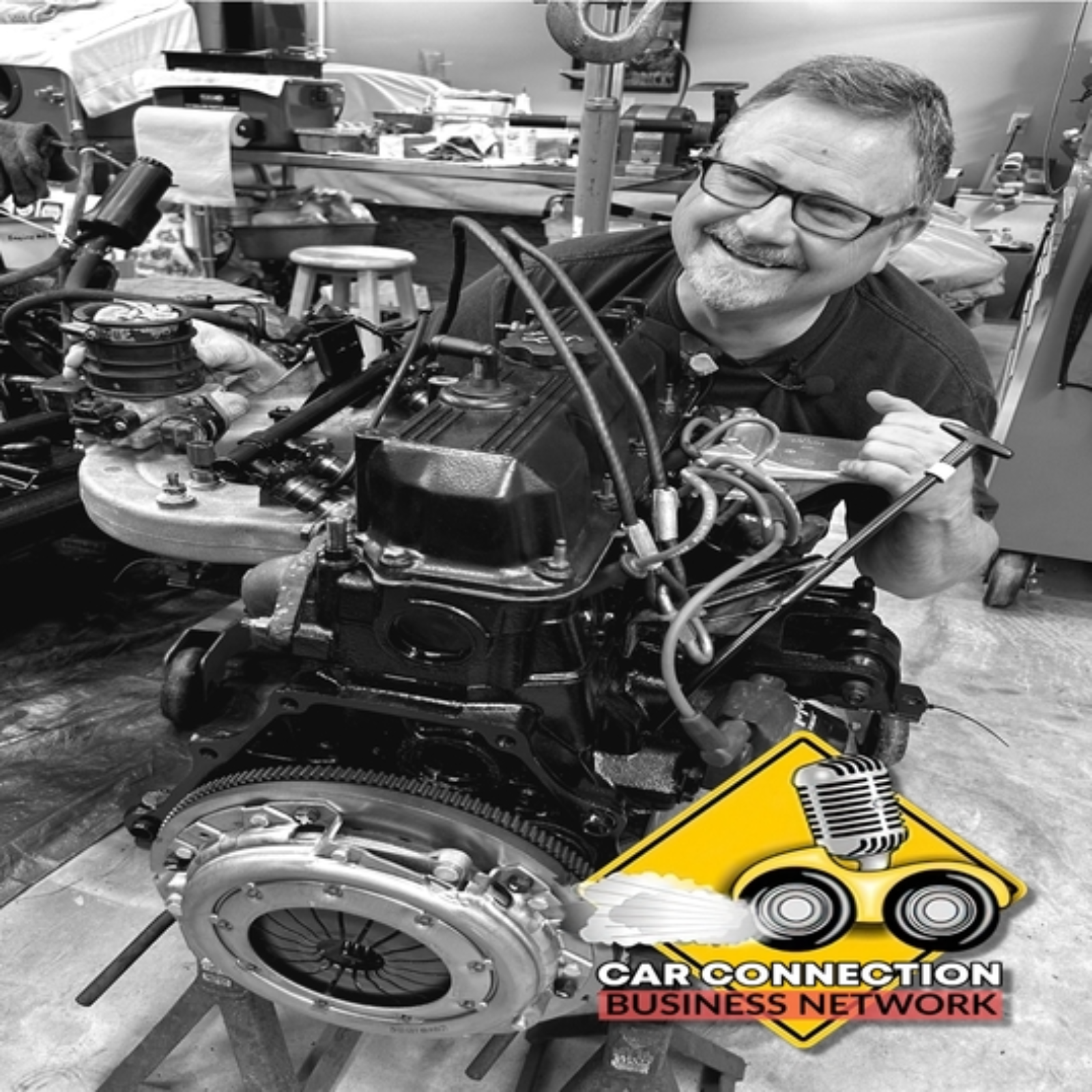
" Why Smart Drivers Are Refusing to Buy New Cars right Now"
About this episode
The conversation centers on a blunt case for keeping older vehicles instead of chasing new-car payments. The host argues that manufacturers and dealers benefit when owners trade in paid-off rides, then describes repair delays, warranty pressure, and design choices like plastic-heavy engine bays as reasons to stay put. He also folds in right-to-repair concerns, advice to avoid GM trucks for now, and a charity-minded push to help others while learning how cars really work.
It's Fun Friday and we're talking strategy-because the car game has changed.
After digging deeper this week, one thing is becoming clear on both sides of the boarder : keeping your older vehicle is no longer a fallback plan...it's a winning move.
In today's world of rising vehicle costs, complex technology, and expensive repairs, understanding how manufacturers design, build, and warranty vehicles gives you an edge. It's not about fear-it's about playing the game smarter.
Today we break down:
1) Why older vehicles are back in demand
2) How modern design priorities impact long-term ownership
3) What "winning" looks like when it comes to reliability and cost
4) Why proper maintenance still beats monthly payments
Do your homework, stay informed, and make your vehicle work for you-not the other way around.
👍 Got a vehicle you're holding onto? Drop it in the comments-let's talk about it.
#CarTips #AutoRepair. #SaveMoney
Motormouth Merch available in our online store visit ccbusnet.com grab some gear, all proceeds go to Total Freedom Addiction Campuses Canada & USA helping those ready to say good bye to the addiction for good! Thank You So Much Friends, You Rock❤️ Skippy & Motormouth.
Like, Subscribe, Share, Follow, Comment, ring the bell so you don't miss the next rescue project, maintenance tips, and real -world car ownership advice. 👍
More Episodes and ...Details are available at Car Connection Business Network.com (ccbusnet.com) you'll find everything on our home page if you'd like to follow the build & Repair work & connect with our program partners, click their logo to meet them. Thank You for you support Friends, Nile Motormouth Jenkins.
Happy Healthy Motoring Friends, Peace, Patience, Kindness Always, NMJ
E-Mail Anytime: [email protected] or motormouth.jenkins@gmail .com
we'll see you in the next one❤️ Skippy & Motormouth
prosumer
"...the consumer needs to become a prosumer, not a consumer, so let's jump into the daily weather,..."
A “prosumer” is a person who doesn’t just buy things—they also learn about them and get involved. In this case, it means car shoppers should do their homework instead of relying on marketing.
A prosumer is someone who both consumes and actively participates—here, the host is saying drivers should do more than just buy cars. They should research, ask questions, and understand the product and market so they can make smarter decisions.
Q&A Saturday
"...remember by noon today you got to have your questions in for Q&A Saturday which is coming up tomorrow so I've got to set everything in motion..."
They’re telling listeners to send in questions for a future Q&A episode. It’s basically a “send your questions now” reminder.
This is a recurring listener question-and-answer segment. It’s not a technical automotive term, but it’s a structural part of the show where the host collects questions before responding.
warranty line
"yeah it's starting to sound like a car manufacturer, customer service, your 0.001 kilometer over the warranty line, I'm sorry, I'd really like to help you but I can't, thank you and have a nice day,"
A warranty is a promise about repairs. The “warranty line” is the exact rule in the warranty that decides whether the repair is covered or not.
A warranty line is the specific wording in a vehicle’s warranty that defines what the manufacturer will cover and under what conditions. When someone says they’re “over the warranty line,” they mean the issue is outside the coverage rules, even if it seems minor.
0.001 kilometer
"yeah it's starting to sound like a car manufacturer, customer service, your 0.001 kilometer over the warranty line, I'm sorry, I'd really like to help you but I can't, thank you and have a nice day,"
Some warranties have strict mileage limits. In this story, being just a tiny bit over that limit can mean the repair won’t be paid for.
This is an example of how some warranty coverage can be tied to very specific mileage thresholds. Even a tiny amount over the limit can move a claim from “covered” to “not covered,” depending on the warranty terms.
owner's manual
"yeah, you can do that reading war and peace or better yet your owner's manual, big bowl popcorn, make sure you got your blanket and your blibble and get ready,"
The owner’s manual is the car’s instruction book. It tells you how to use the car and what maintenance to do so you don’t miss important steps.
An owner’s manual is the manufacturer’s guide for operating and maintaining a specific vehicle. It typically includes schedules for maintenance, warning light meanings, and instructions that affect warranty coverage.
City Auto Sales and Leasing
"not a penny less, that would be husband and wife team, Earl and Louise Grant at City Auto Sales and Leasing, Greater Toronto Area's premier pre-owned auto store,"
This is the name of the dealership the hosts are recommending. They’re saying the owners are straightforward and sell used cars they trust.
City Auto Sales and Leasing is presented as the husband-and-wife team’s dealership in the Greater Toronto Area. The hosts mention it as a source for pre-owned vehicles with a focus on honesty and integrity.
Greater Toronto Area
"Grant at City Auto Sales and Leasing, Greater Toronto Area's premier pre-owned auto store, [1014.7s] low mileage quality vehicles at fair prices, they sell no junk my friends, that's how they made it"
This just means the Toronto region. The dealership is described as serving customers in that area.
The Greater Toronto Area (GTA) is the regional metro area around Toronto, used here to describe where the dealership operates and serves customers. It’s a geographic qualifier for the dealership’s market.
pre-owned auto store
"Grant at City Auto Sales and Leasing, Greater Toronto Area's premier pre-owned auto store, low mileage quality vehicles at fair prices, they sell no junk my friends, that's how they made it"
They’re talking about buying used cars. The point is that the dealership claims to stock good, lower-mileage vehicles.
This is a discussion about buying used cars from a dealership rather than purchasing new. The hosts emphasize “quality” and “low mileage” as part of the pitch.
low mileage
"[1014.7s] low mileage quality vehicles at fair prices, they sell no junk my friends, that's how they made it to car connection and Louise reached out to me a number of years ago,"
Low mileage means the car hasn’t been driven as much. It can suggest less wear, but you still want to check the car’s condition and service history.
“Low mileage” refers to a vehicle having fewer miles or kilometers than typical for its age. Buyers often use it as a proxy for reduced wear, though condition and maintenance history matter too.
inventory under roof
"so you know they have a lot of inventory under roof, their cars look like brand new, Earl's a car guy, they have all the resources to find that specific vehicle"
It means the dealership keeps the cars inside. That can help reduce weather damage compared to leaving them outside.
“Inventory under roof” means the dealership stores vehicles indoors rather than outdoors. Indoor storage can help protect cars from weather exposure like rain, snow, and UV fading.
push, pull or drag
"so if they don't have it and it's out there and it's any good to bring back, push, pull or drag, they don't do that, if they got to push, pull or drag something in, that goes into"
They’re basically saying they won’t bring in cars that need to be moved in a sketchy or difficult way. The idea is they only want vehicles that are in good enough shape to be brought in properly.
“Push, pull or drag” is used as a metaphor for different ways a vehicle might be transported or moved (e.g., towing). In this context, the speaker is saying the dealership won’t bring in problematic vehicles that require rough handling to get them there.
used car corral
"the used car corral as is, whereas take your chances and you know what, sometimes if that's where you got to go and shop for something, you have a budget like a couple of grand, sometimes you might have to do that is go and see what's in the, what's buried in the back in the used car corral"
A “used car corral” is just a dealer’s area where they keep their used cars. The idea here is that you might find a cheaper car that’s not perfect, but could work as a temporary option.
“Used car corral” is a dealer-style term for a lot/section where used vehicles are gathered and sorted for shoppers. In this context, it’s where you might find older or overlooked cars that can be bought cheaply and used as a temporary step toward a better vehicle.
not a forever car
"to slingshot you into your next vehicle, but use it as a not a forever car, but to get you their car, you probably have to sock some money into it"
They mean buying a car you don’t plan to keep forever—more like a stepping stone. You use it for a while, then upgrade when you can.
The speaker is describing a “temporary” purchase strategy: buying a used vehicle as a short-term bridge rather than planning to keep it for many years. This approach can reduce risk and cost if you later trade up once you’re in a better financial position.
engine transmission
"as long as it's solid, everything else is fixable, as long as the engine transmission are good, the structure is good, you may be able to find something for a couple of grand that you can fix"
They’re talking about the two main moving parts of a car: the engine (which makes power) and the transmission (which sends that power to the wheels). If those are healthy, the car is more likely to be worth fixing.
“Engine” and “transmission” are the two biggest mechanical systems that determine whether a used car is fundamentally sound. The speaker’s point is that if both are in good shape (and the car’s structure is solid), other issues are often repairable.
structure
"everything else is fixable, as long as the engine transmission are good, the structure is good, you may be able to find something for a couple of grand"
“Structure” means the car’s main body and frame—whether it’s been bent, badly damaged, or rusted. If that part is solid, the car is less likely to be a money pit.
In used-car talk, “structure” usually refers to the vehicle’s body/frame integrity—whether it has serious damage or rust that affects safety and repairability. The speaker implies that if the structure is solid, the car is a better candidate for a low-budget purchase.
take some trades
"but they do take some trades in, we haven't really talked about that, but they do take in some trades, but they get put in the back and then they get picked up and hauled off"
A “trade” is when you bring your current car to the dealer and use it toward the price of the next one. They may not show it right away, since it gets handled first.
“Trades” here means trade-ins: a dealer accepts your current vehicle as part of the deal when you buy another car. The speaker notes that these trade-ins may be processed and moved to the back before being sold.
hauls off
"but they do take in some trades, but they get put in the back and then they get picked up and hauled off, so if that's your case let them know"
They’re saying some cars don’t stay on the lot—they get moved somewhere else. If you tell them what you want and your budget, they may be more likely to keep the right cars for you.
“Hauls off” suggests the dealer removes certain trade-ins from the lot—often meaning they’re sent to auction, recycling, or another channel rather than being offered for sale locally. In this context, it’s used to explain why telling the dealer your budget and needs matters.
vehicle that you're specifically looking for
"so check in with them because you're in a good place there, let them know with a vehicle that you're specifically looking for and let them resource it, if there's a good one out there Earl will find it"
They’re saying you should tell the dealer exactly what you want. That way, they can look for it for you, instead of you just browsing whatever happens to be on the lot.
This describes a “wish list” approach: you communicate the exact type of vehicle you want so the dealer can source it. The speaker implies that dealers can sometimes locate a suitable car within your budget, but they won’t bother if nothing worthwhile comes in.
nightmare of owning and operating an automobile
"...try and cover all the things that will help you to get some of that nightmare of owning and operating an automobile off your back..."
This phrase points to the real-world hassle and cost of running a car—repairs, maintenance, downtime, and surprise expenses. While not a technical term, it frames the episode’s theme around reducing the pain of vehicle ownership.
keep holding your older vehicle
"...it's becoming a serious buzzword out there is keep, keep holding your older vehicle, you're in much better shape than the stuff that's out there right now..."
They’re basically saying: don’t rush to replace your current car. If you already have an older one, it can make more sense to keep it running instead of buying something new right now.
The speaker is describing a strategy of keeping an existing car instead of replacing it. In car-shopping terms, it’s a “hold onto what you have” approach—often because new-car pricing, incentives, or reliability/repair costs make switching feel risky.
vehicle ownership fundamentals when it comes to repairs
"...teach you the five things, what it is, where it is, how it works, how it breaks, and how you could have learned just some basic vehicle ownership fundamentals when it comes to repairs"
They’re emphasizing learning the basics of how to care for a car and what to expect when something needs fixing. That kind of knowledge can help you avoid getting surprised by repair bills.
“Vehicle ownership fundamentals” refers to the practical knowledge needed to maintain and repair a car—like understanding common failure points, basic maintenance schedules, and how repairs are typically handled. The speaker is positioning this as education to avoid costly mistakes.
GM
"[1723.3s] don't touch my stuff, I had a board operator one time [1729.6s] and he was a retired GM radiator worker and he was so paranoid of computers, yeah you remember"
“GM” means General Motors, one of the big car companies. The host is saying the person they worked with used to work for GM.
In this segment, “GM” refers to General Motors, a major automaker. The speaker mentions a retired GM radiator worker, using the company name to describe the person’s background.
radiator worker
"[1729.6s] and he was a retired GM radiator worker and he was so paranoid of computers, yeah you remember [1740.1s] the green screen computers and that great big monstrous behemoth of monitors, those behemoth"
A radiator helps keep a car’s engine from overheating. So a “radiator worker” is someone who used to work on parts that manage engine heat.
A “radiator worker” is someone who works on the radiator system—components that help remove heat from the engine. Radiators are part of the engine cooling system, so this phrase points to hands-on work with cooling hardware.
radiators
"the radiators in, all the hoses I've been taken care of, there was some other stuff going on with the power steering,"
A radiator is what helps keep the engine from getting too hot. It cools the liquid (coolant) that carries heat away from the engine.
A radiator is the part that removes heat from the engine’s coolant. Coolant flows through the radiator and releases heat to the air, helping prevent overheating.
power steering
"there was some other stuff going on with the power steering, took the reservoir out, it was so dark that I couldn't even read it anymore"
Power steering makes it easier to steer, especially at low speeds. It helps you turn the wheel without as much strength.
Power steering is the system that helps you turn the steering wheel with less effort. It typically uses hydraulic pressure (and fluid) or an electric assist, depending on the vehicle.
thermal breakdown
"so what happened to my power steering fluid guy, it's called thermal breakdown folks, that's why I keep saying, anyone who's squawking maintenance free at you"
Thermal breakdown means the heat is cooking the fluid and making it go bad. When that happens, the fluid can lose its protective qualities.
Thermal breakdown is when heat causes fluids to chemically degrade over time. In power steering systems, this can darken the fluid and reduce its ability to protect components.
maintenance-free
"that's why I keep saying, anyone who's squawking maintenance free at you, they have a different agenda for you and let's get into that, so I came up with a couple of ideas"
“Maintenance-free” is a promise that you won’t need to do much servicing. But in real life, things still wear out or fluids still get worse, especially with heat.
“Maintenance-free” is a marketing claim that suggests little or no scheduled service is needed. In practice, many fluids and components still degrade with heat, time, and use, so “maintenance-free” can be misleading.
EVs
"...if you missed it yesterday you want to know what's going on with these EVs that are turning into marshmallow roasting automobiles..."
EVs are electric cars. They run on electricity stored in a battery rather than gasoline.
EVs are electric vehicles—cars powered primarily by an electric motor and a battery instead of a gasoline engine. In the context of this episode, the hosts are discussing EV-related news and safety issues.
NHTSA
"...so that car game continues, go to the NHTSA to have a look at anything that may be of interest to you..."
NHTSA is a U.S. government agency that tracks vehicle safety problems. If a car has a recall or safety investigation, you can usually find it through NHTSA.
NHTSA is the U.S. National Highway Traffic Safety Administration. It collects and publishes safety information like recalls, investigations, and crash data, which the hosts suggest using to check issues affecting specific vehicles.
5.3 and 6.2 liter engines
"...if you own one of the GM products right now with the 5.3 and 6.2 liter engines, stay away..."
Those numbers describe the engine size. Bigger-liter engines usually have different parts and maintenance considerations than smaller ones.
“5.3” and “6.2 liter” refer to engine displacement, measured in liters, which is related to how much air/fuel the engine can move. Larger displacement engines often have different maintenance needs and parts availability than smaller ones, which is part of the hosts’ warning.
do-it-yourselfer
"...the car manufacturers are making it more and more difficult for A for the do-it-yourselfer work on the car..."
A DIYer is a person who works on their own car instead of paying a mechanic. The hosts say automakers are trying to make that harder.
A “do-it-yourselfer” (DIYer) is someone who repairs or maintains their own vehicle rather than using a professional shop. The hosts argue that automakers are making it harder for DIYers by limiting access to parts and information.
walk you over, come with me, you're going car shopping
"...they don't really want to provide the parts to fix for you to fix your car, they much rather walk you over, come with me, you're going car shopping..."
They’re describing a sales tactic where instead of helping you fix your current car, the process pushes you toward buying a different one. The point is that it keeps you from repairing it yourself.
This is a description of a sales funnel dynamic: instead of selling parts directly to customers for self-repair, the dealer experience steers owners toward buying a replacement vehicle. The hosts frame it as a strategy that benefits dealerships and manufacturers.
right to repair act
"the dealership, yeah, it's called the right to repair act, you can check that out, it's real ... the dealerships and the car manufacturers were trying to squeeze us little guys out so that you had to go back to the dealer for repair work, period"
The “right to repair” is a rule that makes it easier to fix your car without being forced to use the dealership. It aims to let independent mechanics get the same repair info and parts they need.
The “right to repair” is a policy idea that pushes automakers to allow independent shops and owners to access the information, tools, and parts needed to repair vehicles. In practice, it’s about reducing the need to go back to the dealership for repairs.
pre-owned models
"they're selling pre-owned models, yeah used, I find that interesting, I think they really want to push new, new junk that's coming out"
Pre-owned means used cars—cars that someone owned before you. The speaker is saying the industry may be pushing used cars while also making it harder to repair cars outside the dealership.
“Pre-owned” (used) vehicles are cars sold after a previous owner. In the context of the episode, the speaker suggests manufacturers are pushing used inventory as a strategy while still trying to steer customers away from independent repairs.
aftermarket parts
"more reliable, parts are available aftermarket, you don't got to go to the dealer, stuff that's how they make their, their living aftermarket parts jobbers, they're providing the parts so you can keep your older vehicle going"
Aftermarket parts are replacement parts made by other companies, not the car brand itself. People use them because they can be cheaper and easier to find than dealer parts.
Aftermarket parts are components made by companies other than the vehicle’s original manufacturer. They’re often used to repair or upgrade older cars, and they can be cheaper or easier to source than dealer-only parts.
Chevrolet
"stay away from the newer stuff, it's got problems so now let's move into the learn how to play the game because here's the thing, okay Chevrolet right now is really making, leaving a bad taste in the"
Chevrolet is a car brand. In this segment, the host is about to talk about what Chevrolet is doing that’s affecting how people feel about buying new cars.
Chevrolet is a major automotive brand under General Motors. The speaker is about to discuss Chevrolet’s current actions or products, framing it as part of why some drivers are avoiding new cars.
5, 5.3 liter engine
"so to speak of the 5, 5.3 liter engine in the 6.2, they've known that engine's been a problem since 2000, late 2020, 2021, hello we're in 2026, when are you going to fix the damn problem?"
“Liters” is a way of describing how big an engine is. Bigger numbers usually mean the engine can move more air/fuel, but it doesn’t automatically mean it’s trouble-free—some big engines have known problem areas.
The speaker is referring to engine displacement measured in liters (e.g., 5.0–5.3L). Larger displacement engines often have more torque potential, but they can also be more prone to certain design or cooling issues depending on the specific engine family.
reprogram computers
"they were making it difficult for us to get information to be able to reprogram computers if we had to change them on your automobile, they would sell us the computer but it had no software in it,"
Cars have computers that control how everything runs. If a part is replaced, those computers may need new software so the car can work correctly again.
Modern cars use electronic control units (ECUs) that run software to manage engine, transmission, and other systems. “Reprogramming” means updating or loading the correct software so the car operates properly after a repair or component replacement.

Nissan 2008 Nissan
"...tle kit, two components to fix the shifter on our 2008 Nissan Road, the handle is as loose as it spins around ..."
The Nissan 200 SX is a sporty Nissan coupe, usually driven with a manual gearbox. If the shifter feels loose, it can make the car harder to shift smoothly. The podcast is describing a repair where parts were replaced to tighten up the shifter.
The Nissan 200 SX is a compact sports coupe that’s commonly discussed in enthusiast circles, especially around the car’s manual-transmission feel and shifter setup. In the podcast context, it sounds like the shifter had looseness and needed parts to fix it, which is the kind of ownership detail that matters for day-to-day drivability. That’s why it may be mentioned alongside specific repair components.
shifter
"I've been waiting almost eight weeks for a little kit, two components to fix the shifter on our 2008 Nissan Road, the handle is as loose as it spins around so when you go to try and put it into gear you got to kind of hang on to it because it spins around, I've been waiting eight weeks for the components,"
The shifter is what you move to choose the car’s gear. If it’s loose or could come off, you might not be able to select the right gear reliably.
The shifter is the mechanism used to select gears (like Park, Reverse, Drive). If the shifter handle is loose or can detach, it can prevent proper gear selection and create a safety risk while driving or parking.
stuck in gear
"[3029.6s] and you know if you're an elderly person that would probably freak you out a little bit, [3033.5s] I broke it, it's stuck in gear, yeah because you got to now know how to put the handle back on so [3040.5s] you know what I'm saying, it's it may be something that seems simple but it really isn't, it could"
It means the car won’t come out of the gear it’s in. So even if you try to drive normally, the car can act wrong and feel unsafe.
“Stuck in gear” means the transmission/shift mechanism won’t move out of the selected gear position. That can make the car behave unexpectedly—especially if the driver tries to change gears or release the brake.
Toyota
"[3112.6s] we were talking about it back then around the workbench with a pot of coffee and a fresh box of [3118.7s] donuts, we were watching the sharp guys, we were watching how the game was coming on between the [3128.1s] manufacturer and the dealer, I mean Toyota's not out of this either they got an engine,"
They bring up Toyota to say even big, well-known brands can have serious engine problems. The complaint is that the company may not have good replacement solutions when things go wrong.
Toyota is mentioned as a manufacturer that’s also dealing with engine problems, specifically engines that contain machining debris. The speaker contrasts Toyota’s issues with the lack of replacement engines that are “okay.”
dealer
"[3128.1s] manufacturer and the dealer, I mean Toyota's not out of this either they got an engine, [3133.6s] they've got engines that are full of machining debris that are blowing up but they don't have [3140.8s] engines to replace them that are okay so that's another problem, you know and I like them at"
A dealer is the car store where you buy the vehicle and usually get service. The speaker is saying the system can push people to buy a new car instead of getting the current one properly fixed.
A dealer is the retail sales and service outlet that sells new cars and handles many customer interactions. The speaker claims the manufacturer-dealer relationship can pressure customers into replacing vehicles rather than fixing underlying issues.
machining debris
"[3128.1s] manufacturer and the dealer, I mean Toyota's not out of this either they got an engine, [3133.6s] they've got engines that are full of machining debris that are blowing up but they don't have [3140.8s] engines to replace them that are okay so that's another problem, you know and I like them at"
This means tiny bits of metal left over from making the engine. If those bits get into the engine, they can cause damage and break things.
Machining debris is leftover metal shavings or particles from the manufacturing process. If it ends up inside an engine, it can damage internal components and lead to failures.
price of these vehicles have gone through the roof
"[3164.7s] some information on that, get your butt over to the dealership and get you one of these, [3169.5s] that's what they want, if you all really knew all the backside of manufacturing and how the price [3179.9s] of these vehicles have gone through the roof there would be a revolution in this country"
They’re saying car prices have increased a lot. Their point is that when prices rise sharply, it changes how people feel about buying or fixing cars.
“Gone through the roof” is a colloquial way to describe a very large increase in vehicle prices over time. The speaker ties rising prices to frustration with the current buying/repair cycle.
fleet maintenance service
"and I'm your coach and our car connection fleet maintenance service is just about ready, we are on the cusp, I did not get time to check it yesterday because I was up to my ears and alligators all day, that's how I ended up working in the shop last night to catch up on the mechanicals"
Instead of one person fixing one car, a fleet maintenance service manages upkeep for many vehicles. Think “company cars” being serviced on a schedule so they don’t break down.
A fleet maintenance service is an operation that keeps multiple vehicles running for a business or group, rather than maintaining just one personal car. It usually involves scheduled inspections, repairs, and tracking issues across the whole group of cars.
mechanicals
"because I was up to my ears and alligators all day, that's how I ended up working in the shop last night to catch up on the mechanicals so we can shoot you more good stuff next week"
In a car shop, “mechanicals” usually means the important working parts of the car—what makes it drive and stop. It’s basically the repair/maintenance work on the car’s systems.
“Mechanicals” is shop shorthand for the car’s mechanical systems—things like drivetrain, suspension, brakes, and other non-body components. It’s often used when catching up on repairs or maintenance work.
FJ series
"we got a new vid coming out today, there's some FJ series starting, I believe that started already, yeah, there's just so much going on and we got a new series coming up once the FJ's gone outside, coming out of the other side of the campus here, it's in the staging lanes, we got all the parts"
The “FJ series” appears to be a recurring content series the hosts are producing, likely tied to a specific vehicle lineup or theme. Listeners should treat it as a show segment label rather than a technical automotive term.
staging lanes
"once the FJ's gone outside, coming out of the other side of the campus here, it's in the staging lanes, we got all the parts, I've been collecting them for years, yeah, the car that's coming in was going to be a gift for someone"
Staging lanes are an organized area where vehicles are held and prepared before work begins or before they’re moved to the next step in a process. In a shop or production setting, it helps control workflow and timing.
schemes and tactics
"so they don't want you keeping your car any longer than a couple of years and they're continuing to come up with schemes and tactics to get you out of that automobile and get you frustrated, cheesed off, peed the whole package so that you go nuts to this, I'm just going to go get a new one"
They’re saying car companies use strategies to pressure people into replacing their cars sooner. The idea is that the tactics are designed to make you annoyed enough that you’ll want a new vehicle.
This phrase describes marketing or business strategies aimed at pushing customers to replace vehicles sooner. The speaker’s argument is that manufacturers use tactics to create frustration so owners feel compelled to buy a new car.
engine bay
"and these things are coming on glued, plastics galore, plastics and heat in the engine bay do not work, if you go downstairs right now and you look at any automobile that I'm working on"
The engine bay is the space under the hood where the engine lives. They’re saying heat there can be tough on plastic parts.
The engine bay is the compartment under the hood where the engine and many related components sit. The speaker links “plastics and heat in the engine bay” to durability concerns.
plastics galore
"and these things are coming on glued, plastics galore, plastics and heat in the engine bay do not work, if you go downstairs right now and you look at any automobile that I'm working on"
They’re complaining that newer cars use a lot of plastic parts. Their claim is that heat can make those plastic parts wear out faster than metal.
“Plastics galore” is a criticism that modern vehicles use lots of plastic components or plastic-based construction. The speaker implies these plastics are more vulnerable to heat and age than traditional metal parts.
thermostat housing
"is the thermostat housing is plastic, yeah but it's safe, it's not going into meltdown, we've had plastic thermostat housings for quite a while and I haven't seen any melt"
A thermostat housing is a cover that holds the thermostat, which helps control engine temperature. If it’s plastic, it can get damaged by heat over time and may start leaking.
The thermostat housing is the part that holds the engine thermostat and routes coolant through the cooling system. If it’s made from plastic, heat and age can make it more prone to cracking or leaking than metal housings.
valve covers
"intake manifolds, plastic, lots of heat there, valve covers, lots of heat there, that's where the oil leaks are going to happen and that's where the fire starts"
Valve covers are covers on top of the engine that keep oil from leaking. If they or their seals fail, oil can spill onto hot parts and cause smoke or worse.
Valve covers seal the top of the engine where the valve train components live. When valve covers leak—often from gaskets or cover warping—oil can drip onto hot engine surfaces, increasing the chance of smoke or even engine-bay fires.
intake manifolds
"yet but it's all the engine parts, intake manifolds, plastic, lots of heat there, valve covers, lots of heat there, that's where the oil leaks are going to happen"
The intake manifold is the part that routes air to each cylinder. If it’s made from plastic, heat can cause it to wear out or leak over time.
An intake manifold is the ducting that distributes air (and often fuel on some designs) from the throttle body to the engine’s cylinders. On many modern engines, intake manifolds are made with plastics or composites, which can be sensitive to heat and long-term wear.
insurance is writing it off
"vehicles in flames and gulfed in literally minutes, it no longer takes 20 minutes to burn a car down, three minutes, it's done, the insurance is writing it off, you ain't getting it back"
If insurance “writes off” a car, they decide it’s not worth repairing. The car is usually treated as a total loss and you typically don’t keep it.
When an insurer “writes off” a vehicle, it declares the car a total loss—meaning the cost to repair it is too high compared with its value. In that case, the owner typically doesn’t get the car back after the claim is settled.
Request an Explanation
Heard something you'd like explained? We'll add it to this episode.
Sign in to request explanations for terms you heard.
Want to learn more?
Browse our glossary for plain-English explanations of automotive terms, jargon, and concepts.
Help improve this episode
See something that's not quite right? Our annotations are AI-generated and can sometimes miss the mark. Click the flag icon on any annotation to suggest a correction.