The Renault Twingo is a very small hatchback car made by the French company Renault. It is famous in Europe for its cute design and for being surprisingly spacious inside despite its tiny size.
The Toyota Crown is an upscale, premium car made by Toyota. It is designed to offer a quiet, comfortable ride with advanced technology and a slightly raised seating position.
The idea that once a car already has a decent amount of miles on it, driving it more won't make its price drop much lower, letting you enjoy driving it without losing money.
A famous, very fast version of the classic Porsche 911 from the 1970s and 80s that used a turbocharger to get massive power, making it thrilling but dangerous to drive fast.
The idea that it is more fun to drive a slower car as fast as it can go than to drive a super-fast car slowly because you can't use its full power on normal roads.
A modern steering system that uses electricity instead of fluid to help you turn the wheel, which can sometimes make the steering feel less connected to the road.
A traditional engine that breathes normal air without using a turbocharger to force extra air in, known for sounding great and responding instantly when you step on the gas.
A fancy option on high-end cars where the sewing thread on the leather seats is a different color than the leather, making the interior look custom-made.
LIVE
Hey everyone, I'm Derek. This is 11 After 9 and today we're talking about the car that you
just can't bring yourself to buy. This is the almost purchase that I think everyone in this
audience has probably lived at one point or another. This question comes in from a user
Twingo Ease and it was a question that really hit me and I wanted to kind of talk about it
because I think we've all been there when we were looking at some of these older porches and
whether to add them to our garage. So Twingo says, how do you justify buying a 10 or a
15 year old Porsche when for the same money you can buy a much newer or completely new sports car?
Every time I get close to buying a Porsche, I stop myself saying I could buy a much more reliable
newer vehicle that I don't have to worry about. So before we get into that, I just want to mention
to you in the audience at Porsche Parade, someone came up to me and said, hey, listen, I love your
podcast. It's fantastic. And then they asked me a question that I actually addressed in one of the
videos I did almost a year ago on my main channel, 11 After 9. And when I mentioned that to the
person, they were like, wait, you have another YouTube channel? And so I'm really sorry out there
that I have been terrible about admitting that we do have two YouTube channels, 11 After 9 podcast,
which you're listening to right now. And 11 After 9, the main channel, which has been running for
almost two years now. And we have a lot of great videos that I worked really hard to put up there
for you. And I'd love for you to go check that out. So if you don't mind, go over to 11 After 9
on YouTube and give me some feedback, respond to the comments. I'd love to engage with you guys.
So getting back to Twingo's question, and I think it's a question that a lot of newer or
not yet Porsche buyers ask themselves, you know, for those of us that have owned quite a few of
these cars, we tend to convince ourselves that buying a Porsche, an older Porsche is well worth
it for the experience side of things. And we don't really think about, well, should I just buy a
newer car for X and Y reasons? But for those people coming to the brand, this is actually a very
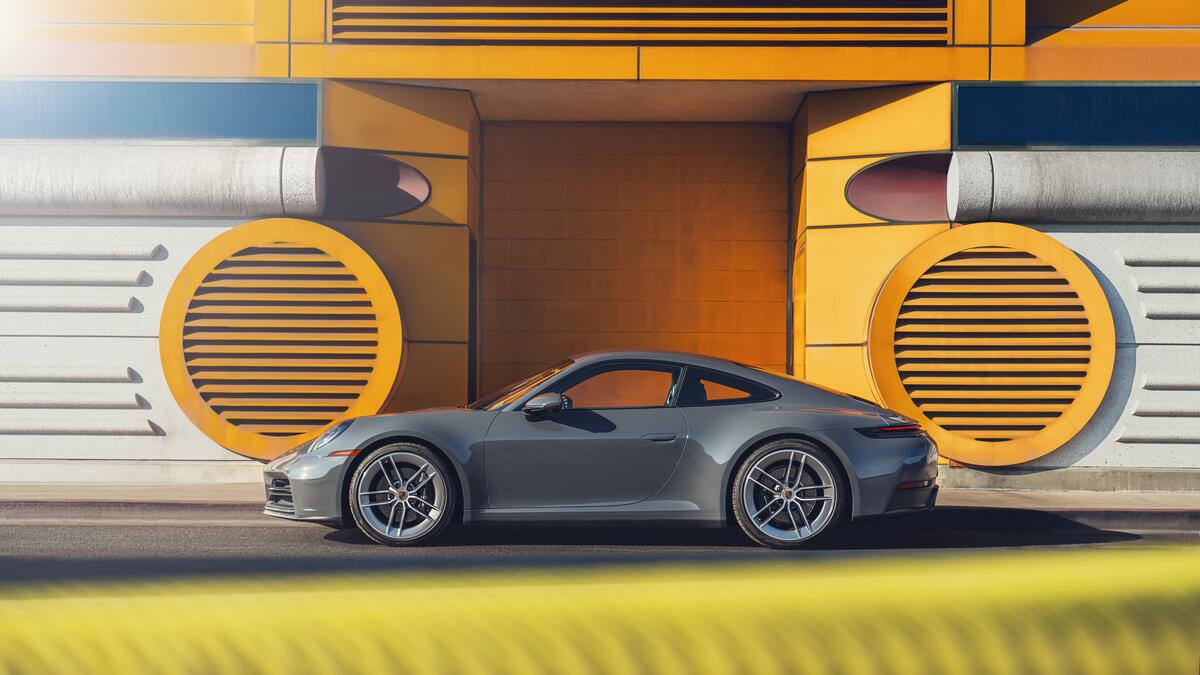
rational question to ask yourself, why am I going to be spending $40,000, $50,000, $60,000, $70,000
on a car that's 10, 15, 20 years old? I mean, that sounds kind of insane when you can head down
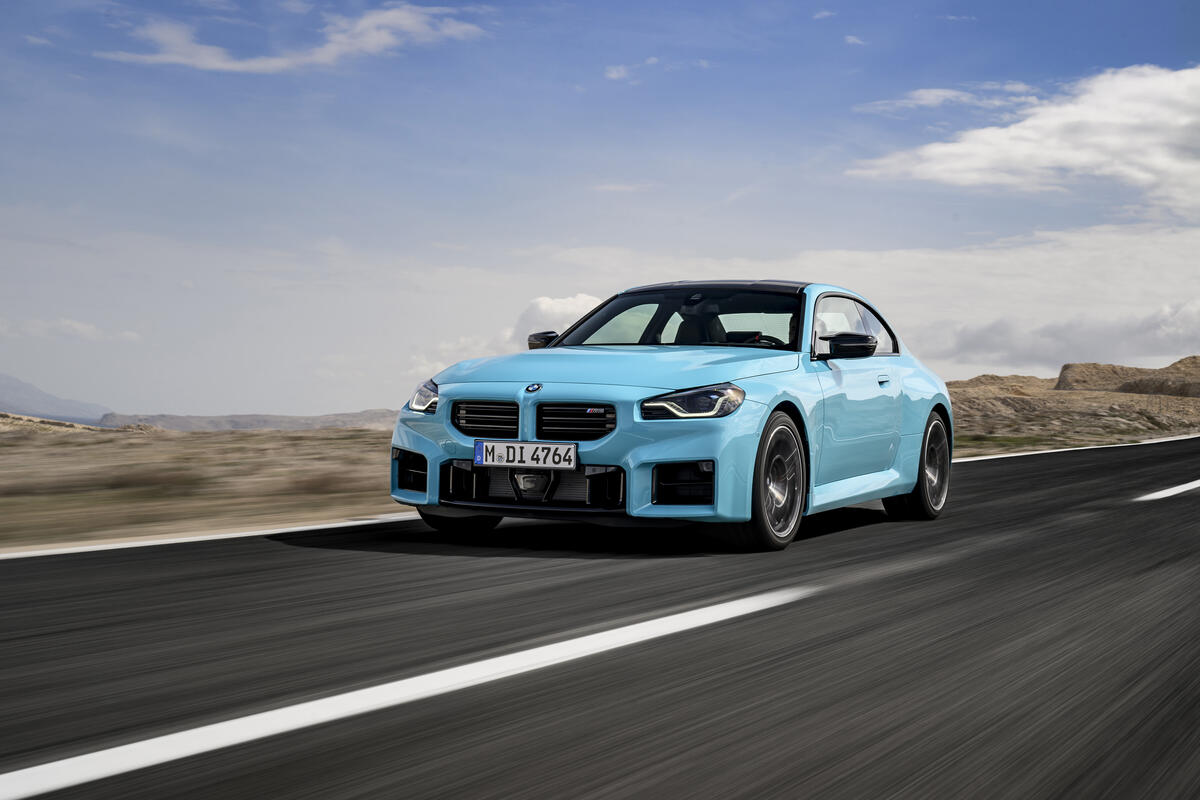
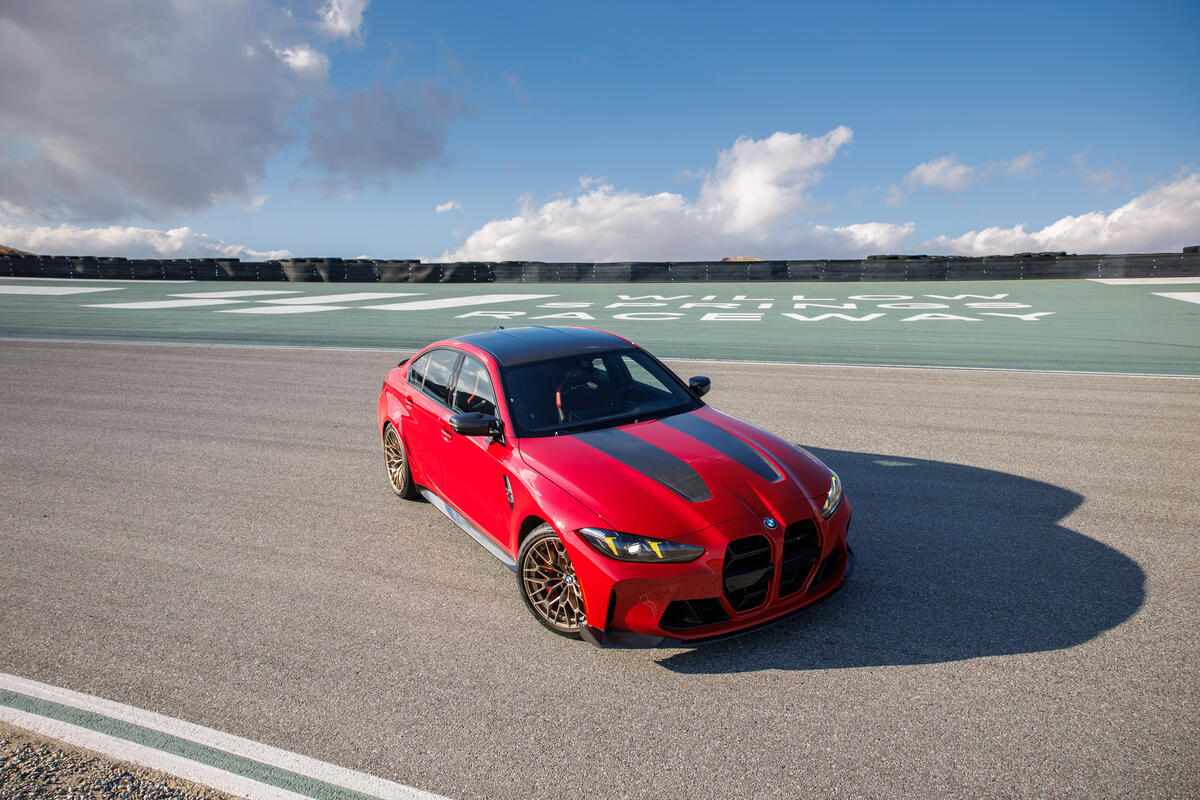
to your BMW dealership or your Toyota dealership and get yourself a brand new M2 for like $70,000
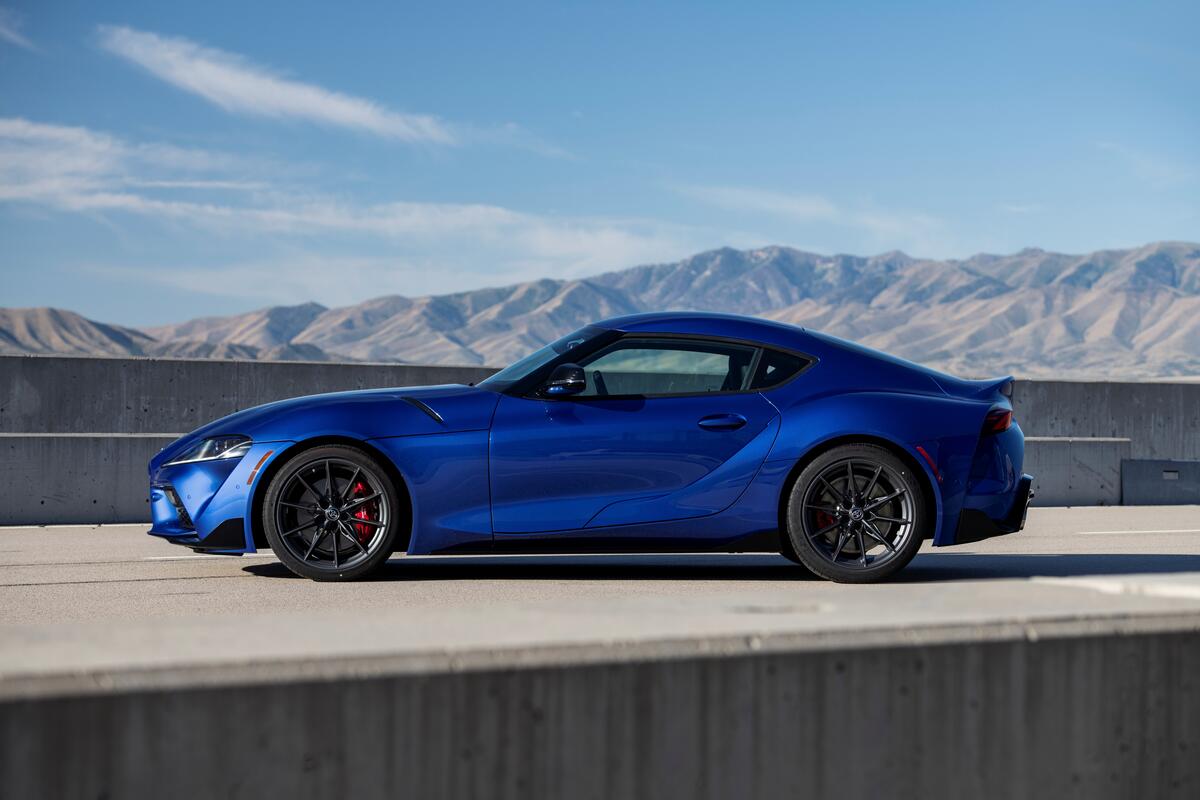
and M3 for $80,000, or even a Supra. And they're all fantastic cars. And why wouldn't you go that
way? So this is kind of something I just wanted to bet around. I was driving the other day thinking
about this question, and I wanted to give you my perspective on it. And I would really love for
all of you watching this or listening this to really contribute in the comments, because I'd
love to know if you agree with me and or do you have any points that you'd like to add to this.
But to buy something new with warranty is absolutely a pull. And what I did is I actually did some
research and pulled some numbers. So we could talk about from a value standpoint, and then a few
other different points of view when we talk about this topic. All right, so as always,
I need to be honest and upfront with you and give you the points against me first, because I think
that's really fair. If I sit here and just about all the reasons why Porsche is amazing,
you'd always buy a Porsche. You should never consider any other brand. I'd be disingenuous
to everyone. And in my research, I found that BMW M2s or Toyota Supras, they actually hold their
values wonderfully. So the statement of me saying that all new cars crater with depreciation just
simply isn't true. For example, the M2 is BMW's greatest retainer of value. I think around five
years it loses somewhere between 33 and 40% of its value, which out of its whole line is its
absolute best. But I have to hand the Toyota Supra the crown. It only loses about 36% over five years
and the manual versions of the Supra, they actually trade over MSRP quite often. And so,
I mean, goes to show that it's not just Porsches that are appreciating if they're good solid
driver's cars, especially with a stick. Do you hear that Porsche? Come on, bring back a stick
in more versions. However, it's not all rosy for BMWs. And I don't mean to beat up on BMWs per se,
but I think we have to admit that the other half of the audience that is cross shopping Porsche
automatically go to BMW. You can look at some Italian brands potentially. You can look at
some American muscle brands. But I think if you're going to stay German with the ethos of the two
companies and from the sports enthusiast background, I really think it's a natural discussion to talk
about buying BMW vs Porsche. And should I go buy a new BMW vs to use Porsche? So the M3 sheds about
54% of its value over the course of five years. Unfortunately, the M5 loses about 60% of its
value over the course of five years, which can be seen in some of the most recent online auctions
where you can get what amounts to a very newish BMW M5 for like 20 something thousand dollars.
I believe that's like the all wheel drive M5s. So I had to admit the hard part. I had to admit
that there are cars out there that don't appreciate as rapidly as all sports cars do,
certainly not as all brands do. But I think what I will say is let's talk in absolute dollars, okay?
Because depreciation still affects new cars. And again, we're talking dollars and cents here.
If you're looking at say a 997, a 981, a 991, that depreciation has already taken its toll.
Someone's already eaten that they've gone off the depreciation cliff and that car has stabilized
in almost every conceivable option that I can think about has really come up in value or is slowly
gaining traction in terms of going up in value. And so when you compare that to a new car, even
though it does have a warranty, you still have to assume that that car will be depreciating over
the course of a few years. And so you will be going backwards. So when Twingo talks about
buying a brand new car for the same price as a 10 or 15 year old Porsche, he's right. But that car
will be worth 75% or even 60% of its value in just a few short years. And so when it is a used car,
it certainly doesn't stack up nose to nose to a Porsche. And that's often how I look at cars that
I'm looking to buy to experience them is I look at the scarcity of the cars. But I also look at
are they enthusiast driving cars? Do they come in manual? Are they engaging? And that usually leads
me to cars that while they might be slightly more expensive to buy used upfront, they generally hold
their value better over time. I'm not saying you're going to get all your money back at the end when
you decide to sell it, but certainly the hit will be a lot less than buying a brand new car. And also,
don't forget, we talk about an 11 after nine, the idea of free miles. So in my mind, any car that has
say under 40,000 miles, you know, those cars, you don't want to drive because you will be
devaluing them, especially if you buy them used, you're paying a premium for a low miles car.
But if a car has say 40,000, 45,000 miles on it, those are free miles. Those are miles that you
can take on that car up to 70, 80,000 miles. And it really does very little in terms of value in
the car. I think Porsche owners in general feel very comfortable buying a car with 45,000 miles,
same as buying a car with 65,000 miles. As long as it's maintenance, that car in my mind, and I
think in many owners minds is worth about the same give or take. Whereas if you bought a brand new car,
of course, the minute you drive it off the law, blah, blah, blah. But once you hit 10,000 miles or
20,000 miles, you're only hastening the depreciation of that car. And if you're really a driver over
the course of the three or four years and pile on 40 or 50,000 miles, you have eaten the biggest
depreciation part of the curve. And that is money out of your pocket. So when you buy a used Porsche,
you get to jump right into the free miles portion of enjoying your car, which in my mind is a huge
benefit. But Derek, I get a warranty with a new car. And to me, that's worth its weight in gold.
And you know, I hear you, there are certain owners that want to own a car and they want to have zero
issues. And if an issue does come up, they want to know that they can drop it off of their dealer
and that the car is going to be completely taken care of. And it is absolutely not a worry for them
ever. And there really is a segment where buying a new car, you know, maybe that does make sense for
people. Of course, I'd probably put up against that the CPO program from a Porsche dealer where
they might be selling a car that's five or six or seven years old, but it does have an extended
warranty. So you get the best of both worlds. You've hopefully missed some of that depreciation,
but you also get a warranty at a Porsche dealer that they stand behind. And that car has been
maintenance because Porsche has a pretty rigorous maintenance schedule that they put their CPO cars
through. So you can feel pretty comfortable that the tires are in good shape, the brakes are in
good shape, all the fluids have been changed. All of the Porsche prescribed maintenance have been
done to that car. And so you get that car and all you can, all you have to really do is drive it.
And so for a used car, you get that new car experience. I think that that's pretty valid.
But you've also heard me talk about quite a bit the idea of buying a higher mileage car that's
well-maintenanced versus the idea of buying a lower mileage car that doesn't have maintenance
or hasn't had to have maintenance because it's so low miles. The same kind of theory in my mind
applies to this. So you're buying a brand new car and if it's a first year, you're buying a car where
you don't know what kind of manufacturer engineering design defects might be in that car.
You know, some years it's the motor, some years it's the suspension. And again, I'm thinking about
you BMW. Now listen, admittedly in a glass house here, right? Because Porsche, same thing. You know,
back in the day, you would always have one or two things with each generation that those cars are
known for as watch outs. However, in this case, you're buying a brand new say BMW or Supra and
you don't know what those are. And if you're going to drive that car and own it for the course of a
few years, well then you're going to experience those issues. You're going to have to take it the
dealer. You're going to have to be without a car for a certain amount of time while hopefully it's
being fixed. Or if you're like me with a GMC pickup truck with a motor that's going to fall at the
back end of it or say a Toyota Tundra, you know, these are things you just have to live with. And
unfortunately, that devalues the car because they're known as problem cars. Conversely,
you look at a used Porsche, even those, you know, I'm going to use my quote fingers here,
problem generations, you know, with the M96, M97 motors, your 996s, your 997s, etc.
But if you get a car that has say 45, 50, 70,000 miles, or in my case with my 2005 997.1, 103,000
miles, I feel like you can be fairly comfortable that if a lot of those major issues that were
designed defects were going to happen, they would have happened and or previous owners
have taken steps to mitigate those issues. The IMS bearing taken care of by Ellen engineering,
bore scoring checked, oil changes, marked down and on a maintenance schedule. The right kind of
oil being used, air oil separators done, all these little things add up. And if you have
a good maintenance record with a car, you can feel really comfortable that all of those issues that
you would have had as a newer car owner have been mitigated, they've been taken care of.
And then you could just drive your car really and enjoy it. Now, on the other side of that,
if you pick up a used Porsche and it hasn't been maintenance that has big question marks,
that's come from a shady secondhand dealer, or it came out of Florida or Rhode Island,
no offense folks, then it's kind of on you. And so really my argument here,
new versus used holds up with a Porsche that has a good maintenance history that's well established.
Okay, so now let's move away from the money talk. I hope I've made a couple salient points about why
buying a used car, whether it's CPO or not, as long as it has a good maintenance history,
might actually be a better move than buying a brand new car from a value standpoint,
both initially and over time. And hopefully I've addressed the question of, well, if I buy new,
it's more reliable, because I don't know if that's always true to be quite honest with you.
Now we're going to move into the experiential portion of ownership. And this is something
that really can't be captured on an Excel spreadsheet, where you've run all of your numbers
talking about monetarily where the value of a car lies. Are new cars faster? Yes,
new cars are faster. Are new cars more capable? Yes, by and large new cars are more capable than
older cars in terms of going fast on the same roads that you drive every day.
Do new cars have more soul than older cars? No, I don't think so. I think that if I were to ask
my friends that own cars, both new and old, they enjoy them for different reasons, no doubt,
but I don't know if anyone can argue the fact that the older you go in the Porsche brand,
the more engaging, the more of that vaunted analog that everyone is chasing,
you find that the further you go back in the Porsche brand and the newer cars are just more
digital. They're more faster. They are faster. They're more capable.
And I mean, quite frankly, they're just rocket ships. I mean, they're technological masterpieces.
And this goes for Porsche. It goes for BMW. Lotus. all the cars
that are within the last five years or so post COVID. But what are they missing?
They're missing NVH. They're missing the feel of the road through the steering wheel,
their feel of the road through the seat of your pants. They might be missing shifting at all
unless it's paddles on the steering wheel. You know what's funny? If I'm going to be honest with
you, you know, my Porsche journey has taken me from mid 80s, 911s in transaxle cars like 944s
and 924s to the early 2000s with a number of 987 Boxsters and Boxster Ss back to the late 70s
with 930 turbos and into the 90s with 993s and even to the 2000 teens with 991s and currently
my 981 Boxster. And I can honestly say, and it's funny at Porsche Parade, I mentioned this a few
times when people were asking me, what's your favorite Porsche that you've ever driven or owned?
And I can say that my favorite absolute car I have ever owned is my 1972 911,
Bertie. It is a car that is so engaging that every mile that you drive, it just makes you smile.
It's loud. It's oily. When you turn on the heater by pulling up the vent controls down by your right
knee, the warm air that floods the cabin, you know, it's warmed by the exhaust gases of the motor.
And it just has this tinge of oil smell to it, which is so reminiscent of my childhood.
And on a fall, chilly day, that warm kind of oily smell really permeates your memories. And
an old car when it's kept up is just the most wonderful experience. It's as fast as I ever
want to go. They're not changing the speed limits here in New Hampshire, whether I'm in a 1972 911
or I'm in a 2024 911 GTS. But I can tell you doing 45, doing 50, doing 55 miles an hour in my old
car definitely brings me more joy than driving those same speeds in a newer car where the car
feels asleep because it's not exercise. It's not living its best life on those roads. Yeah, yeah,
yeah, Derek, slow car fast, all that stuff. Okay, I'm going to leave that where it is.
But give me a sleeping dog car any day that I can enjoy and it doesn't have to be super flashy,
it doesn't have to be super fast. But if I can derive more pleasure and fun from it,
then I'm all about that life, whether it's from the hydraulic steering or even the early E-pass
stuff from Porsche, which I think is completely fine, or a normally aspirated motor versus some
of the newer turbocharged motors, which are fantastic in their own right. But most importantly,
when I look around at the newer cars, I do see less and less engagement that is all given up to
the altar of speed and lap times in zero to sixties. And I guess I really am just a avowed
manual guy. But when I look around, I mean, that's one of the reasons why I brought up the idea of
an M2 or a Supra because they actually do offer a stick. So not everything is automatic. And what
I don't like that Porsche is doing is they're walling off the idea of having a manual 911
behind this special get this model only if you want to stick type of mentality,
you know, buy a GT3 or get a Carrera T, which is $150, $160,000. And, you know, many other
brands are just doing away entirely with it. I'm pretty sure that you can't get a BMW unless it's
an M car with a stick. I think they did away with that as well. And I could be wrong about that,
but I don't think I am. And so they're making the companies are cashing in on the fact that they
are special having a stick and they're making the more expensive and the price of entries
that much more expensive to experience that. Just getting back to steering for a minute,
something I forgot to mention is I had the pleasure of borrowing my brother's brand new
2026 M3 for a few days and drove it. And I'm not going to outright crap on it. I'm not going to do
that. But what I will say is that I felt like it was completely disconnected when it came to
driving on the back roads on the tight back roads that I really enjoy. The steering did not feel
in any way connected to the front wheels. The car was ridiculously fast, ridiculously capable.
I could go around corners far faster than I had any right to. But if you had told me that I was
sitting in my driving simulator downstairs driving a video game, I would believe you because zero
dead dumb steering out of the new M3. Something that really bothered me because I've driven
E46 M3s, E36 M3s. I mean, that steering was brilliant. And so I'm a BMW fan boy. I've owned
probably more BMWs than Porsches. But at the same time, I'm joining the ranks of people that are
really sad about where the M cars have gone and why the M2 seems to be one of the last standouts
in terms of kind of that older school feel of the M brand. But anyways, we're talking about why
it's important to look at buying an older car versus a brand new car for the same money.
And everything I just said goes back to if you buy an older car, you can get all those experiences
baked in. You can have the stick. You can have the old school feel of the steering. You can have
your normally aspirated motor. You can rev it up to 7,075 and listen to it sing. All of that is in
hands in a well-maintenance package that is a beautiful driver's car. But ultimately, I think
what I might say to twingo ease is just get off the bench and buy something. I mean, even if you
do go and buy the brand new car, just understand that you're going to take a financial hit if you
don't love it. But go and buy it and drive it and have that experience. Put that in your rolodex
of ownership experiences and then move on. Either keep the car and enjoy it or sell the car and
say, well, now I know. And then you can go out and get yourself an older car, whether it's an
older BMW or an older Porsche. But I think it's important because I talked to so many people
that have paralysis by analysis and they go back and forth and they just vacillate and they kill
themselves because they're just so afraid of making a bad decision. And I think we all know
certainly it's what I tell my kids that when you make mistakes, that is how you learn. And
certainly I've made all the mistakes when it comes to owning Porsches. And I can tell you that I've
learned from all of them. And it's informed all the opinions I share with you on this show,
all the discussions I have with my friends and fellow Porsche fans. And I think that's not
a bad thing. And so the main thing I do and why I end every main channel episode with
stop waiting for life to begin and get out and drive is because I just don't want to see my
friends, my prospective consulting clients or even you just listening, just killing
yourselves in an agony and never being able to pull the trigger. I'd rather pull the trigger
three times and be wrong too than never pull the trigger at all. And so the final thing I might say
is, listen, in the Porsche world, admittedly, there's a lot of hype. There's a lot of
posers. There's a lot of people that are look at me and somehow valuing myself based on the
things I have and look at my Porsche with my deviated stitching. And there's a lot of D bags.
And that's really with any brand. But I'm just, we're talking about Porsche here,
but I can say this and this just comes from me and it's my honest opinion. And I hope you take it
is that they really are special cars. There really is something about the brand. There really is
something about the engineering. There really is something about owning and loving and driving
these cars. And if you are on the fence and you're looking at what is a new car, maybe more clinical,
certainly faster, a lot more electronics and screens, or you're looking at an older car and
you're worried about buying the older car for all the reasons we talked about on this podcast.
I do think that if you're going to put your finger on the scale on the side of Porsche,
you have to admit that there's a reason why people love these cars. There's a reason why
they're so special and it's true and it's real. And take my word for it or not, but I think that
once you get behind the wheel of a well sorted car and you drive it as intended, you'll see.
You'll see and you'll be really glad that you made that decision. So anyways, another podcast
where I blather on a bit. Coming out of Porsche Parade, I had so many wonderful conversations
and we have some crazy guests coming on 11 after 9 in the upcoming weeks. And I'm so excited to
share them to you because they're going to be coming on in an aspect of answering a lot of the
worried questions I get from my audience every week. And these are things that are on your mind
too. And I'm going to the horse's mouth as it were to get the answers on a whole range of topics.
And so I want to thank you all as always for listening to 11 after 9. I want to thank you
for continuing to comment and supporting the channel. It means the world. And I'm going to
look forward to seeing you next Tuesday. So until then, have a great week.
About this episode
Deciding between a brand-new sports car with a warranty and a 10-to-15-year-old Porsche is a classic enthusiast dilemma. Host Derek tackles this head-on, responding to a listener's struggle to pull the trigger on an older Porsche. By comparing depreciation curves of rivals like the BMW M2 and Toyota Supra against classic Porsche models, the discussion breaks down the financial reality of "free miles" on depreciated vehicles. Derek also weighs the peace of mind of a new car warranty against the predictability of well-documented, previously resolved Porsche engine issues.
Buying a Porsche is the ultimate enthusiast dream, but let’s be honest: when it comes down to actually signing the paperwork on a 10, 15, or 20-year-old German sports car, absolute panic sets in.
In this episode, we address a brilliant question from viewer Twingo Ease that hits right at the heart of the enthusiast struggle: How do you justify spending $50k to $80k on an older Porsche when that exact same money can buy you a brand-new, highly reliable sports car with a factory warranty?
Before you run down to the dealership to buy a new BMW M2 or Toyota Supra, we need to talk about the brutal financial reality of absolute dollars, depreciation curves, and what happens after a car drops off the depreciation cliff. We’re breaking down the data, looking at the hard numbers, and giving you the honest truth about what you're actually paying for.
Stop waiting for life to begin. Get out and drive.
TIMESTAMPS
CHAPTERS
0:00 The question I could not stop thinking about
1:30 By the way, I have two YouTube channels
3:00 Why this is a completely rational question to ask
5:00 The honest part, the M2 and Supra hold their value
7:00 Where BMW really bleeds, the M3 and the M5
9:00 Why absolute dollars still favor a used Porsche
11:00 Free miles and why I stopped fearing the odometer
13:00 But Derek, a new car comes with a warranty
14:30 CPO, the best of both worlds
16:00 Reliability is really a maintenance history question
18:00 The part a spreadsheet cannot measure
20:00 Bertie, my 1972 911, and why she is still my favorite
22:00 The manual problem nobody wants to talk about
Are you sitting on the fence trying to decide between a brand-new driver's car and an older Porsche? Do you agree with the data on the absolute dollar depreciation, or does the safety net of a warranty still win you over? Drop a comment below—I read and try to respond to every single one!