They’re talking about a Ford Mustang project where the engine has been changed. Because the new engine doesn’t fit the same way as the original, they have to use special parts and adapters to make everything work.
A “coyote swap” is when someone puts a Ford Coyote V8 into a car that didn’t originally have it. Even if there are kits, you still often run into fitment problems with things like brackets, hoses, and clearance.
Concept
limitations of this motor
They’re saying the engine itself makes the project harder because of where its parts are located. When you swap engines, those locations can interfere with the car’s frame or other components.
Art Morrison makes custom car chassis. In this project, the chassis shape affects how much space there is for the engine and A/C parts, which is why they’re struggling with clearances.
The A/C compressor is the part that makes your air conditioning work. They’re having trouble because the compressor sits too close to the frame, so the usual adapter pieces don’t have enough room.
Term
vintage AC adapters
These are special adapter brackets meant to connect an older A/C setup to a compressor. In their case, the adapters don’t line up because there isn’t enough physical space.
Remote mounting means putting a part somewhere else instead of where it normally goes. They’re doing it to get the A/C connections to fit when there’s not enough room in the original spot.
An oil cooler is an extra radiator-like part that helps keep engine oil from getting too hot. They’re saying they didn’t think they’d need one, but the project led them to consider it anyway.
“Pro-charge” means they’re adding a forced-induction setup—basically a supercharger—to make the engine breathe harder. More boost usually means you need extra cooling so things don’t overheat.
A remote oil filter relocates the oil filter away from the engine to improve packaging and sometimes cooling/flow. It requires additional lines and fittings, which can complicate routing—especially when adding other components like coolers.
An immobilizer is the car’s anti-theft “permission slip.” If it doesn’t recognize the key, the car may crank but won’t start because it blocks fuel and/or spark.
These are reference documents that show which wire goes to which plug pin. If even one connection is wrong, the car can fail to start.
Term
e25 pin
They’re talking about a specific electrical connector pin. If that pin doesn’t get the right power, the car’s systems may not work even if everything else is connected.
Term
NEP
NEP is a label for a specific wire/pin used in diagnostics. In this conversation, it seems connected to signals the engine uses to start and run, but the exact meaning isn’t fully spelled out.
Injectors are the fuel-spraying valves controlled by the ECU. For an engine to start, injectors must not only have fuel pressure available, but also receive electrical pulses to open and spray fuel into the cylinders.
A tachometer shows how fast the engine is spinning. If a diagnostic pin is tied to tach signals, it can help confirm whether the engine is actually producing ignition activity.
The fuel pump relay is like a remote-controlled switch for the fuel pump. When the engine computer tells it to turn on, the fuel pump gets power and starts pumping gas.
Instead of one coil for all cylinders, coil-on-plugs puts a small coil right on each spark plug. If one coil fails, that cylinder can misfire or not spark at all.
Fuel pressure is how strongly fuel is pushed to the engine. But if the injectors aren’t commanded to spray, the engine still won’t start even with good pressure.
A mechanics shortage means there aren’t enough car repair workers. The hosts suggest robots might help with some tasks, but trucks still need proper maintenance.
Changing oil is regular maintenance where you drain old engine oil and put in fresh oil. It helps the engine run smoothly, and the hosts are joking that robots could do this kind of basic service.
“Disposable cars” means cars that people are more likely to replace than fix when they have problems. If that becomes common, there’s less need for mechanics doing repairs.
Tesla is working on an electric big rig (semi truck). Even if the truck is good, it only works if there are enough charging stations and the logistics make sense for real deliveries.
Charging infrastructure means having enough charging stations where trucks need them. If charging takes too long or stations aren’t available, the truck sits idle and stops making money.
The Pontiac Fiero is a sports car where the engine sits closer to the middle of the car, not up front. The podcast mentions a 1996 concept version, which is a design study rather than a regular production car. It’s brought up because the Fiero name is remembered for its unusual layout.
“Mid-engine” means the engine is placed closer to the center of the car instead of at the front. That can help the car feel more balanced and easier to handle, especially when driving hard.
Stainless steel is a corrosion-resistant metal often used for trim, panels, or special finishes. In this segment, the hosts mention “sausage fingerprints on the stainless,” implying that the Cybertruck’s stainless-like surfaces show smudges and fingerprints easily.
Brake dust is the fine particulate created when brake pads and rotors wear during braking. It often transfers to wheels and can be noticeable on hands or surfaces when someone removes wheel hardware, which is why the hosts reference a video where brake dust gets on fingers.
Hubcaps are wheel covers that protect the wheel and can improve appearance. In the segment, removing hubcaps is used as the setup for discovering brake dust on fingers, highlighting how wheel grime accumulates.
Instead of stopping by squeezing brake pads against a disc, an electromagnetic system uses magnets to slow the car down. That could mean less brake wear and less dust. It’s not as common yet, but it’s something automakers are exploring.
They’re talking about how many cities end up with huge areas devoted to parking cars. In a city simulation, it can look strange because so much space is just for parking. The point is that cars strongly influence how cities are designed.
Hyundai (transcribed here as “hundays”) is another automaker pushing a more futuristic design direction across its lineup. The hosts connect this look to the broader industry shift toward electric-vehicle branding. The mention is about styling cues, not a specific model’s engineering.
Kia is a car brand. The hosts are talking about how Kia’s newer designs try to look futuristic, especially as more electric cars become common. It’s mostly about appearance and branding.
Term
Tron stuff
“Tron stuff” is a reference to a futuristic, neon look from the TRON movies. The hosts mean some new car designs use bright, angular lighting and styling to look high-tech. It’s describing the vibe, not a specific car part.
Term
lantern lights
“Lantern lights” appears to describe a specific lighting signature—corner or accent lamps that resemble lanterns. Lighting design language is increasingly used to identify brands and make cars look more distinctive. Without the exact model, it’s best understood as a visual description of the headlight/DRL shape.
A projector light is a type of car headlight that uses a lens to aim the light more precisely. That usually helps the beam look cleaner and shine where it’s supposed to.
A turn signal is the blinking light that tells other drivers you’re turning. They’re joking that some modern light designs make it feel like the wrong light is doing the signaling.
Running lights are lights that turn on while you drive, usually in daytime. The hosts are saying some cars make these lights stand out so much that they look bigger than the headlights.
The discussion critiques modern exterior styling trends: sharper, jagged body lines and more visually “busy” surfaces. The hosts argue that these shapes can be harder to execute cleanly and may rely on thinner or less rigid panels, leading to a less durable or less satisfying look.
The hosts repeatedly point to Ford trucks as an example of modern paint/finish quality concerns, including thin clear coats and visible surface texture. This is a brand-level reference used to frame their real-world observations.
Clear coat is the shiny protective layer on top of the paint. If it’s too thin, the car won’t look as glossy for long and small imperfections can show up more easily.
Wet sanding is when you sand the paint with water to smooth it out. If you sand the shiny top layer too much, you can end up showing bumps and flaws instead of fixing them.
A door skin is the outer metal panel of a door, often replaced separately from the full door structure. When aluminum doors are involved, fitting and bending the flange for a skin replacement can be tricky because aluminum can crack if it’s not handled correctly.
Work hardening means when you bend or shape metal, it can get harder afterward. That’s why aluminum can behave differently depending on how it was formed.
Extrusion and stamping are ways factories shape metal. The process can change the metal’s properties, so the same aluminum sheet or tube can behave differently depending on how it was made.
Aluminum tubing is aluminum pipe used for parts or systems. The speaker is basically saying the correct word matters because tubing and pipe can refer to different kinds of material.
Extrusion is how manufacturers make long metal shapes by pushing heated metal through a mold. The way it’s made can affect how the metal behaves later.
A pinch weld is a seam where two metal parts are joined by folding/crimping them together, often used in body construction. The segment suggests that fresh material folds more easily, while older aluminum may not form the seam as cleanly.
A U-bend is just bending metal into a U shape. They’re using it as an example of how fresh metal bends cleanly, but older metal can start to collapse or lose the nice curve.
If the metal isn’t as flexible anymore, bending can make it buckle. Instead of staying round, it can flatten or turn oval.
Concept
build process (big stuff vs little stuff)
The speaker contrasts early “big wins” in a build (engine, transmission, driveshaft, exhaust) with later “little stuff” that becomes frustrating. This is a common hot-rod/custom build reality: wiring, brackets, clearances, heat shielding, and fitment issues often take longer than the headline components.
An “H-pipe” is an exhaust crossover component that connects the exhaust paths from different cylinder banks (commonly on V8s). The goal is to help balance exhaust flow and sound, and it can also affect how exhaust temperatures and emissions-related sensors behave.
HVAC is the system that controls heat and A/C inside the car. When you’re installing parts in the engine bay, HVAC stuff can take up space and affect where other components can go.
A manifold is a part that collects gases from multiple cylinders and routes them into the exhaust system. In this context, the speaker is describing how an H-pipe sits between the manifold area and other components, which matters for heat management and sensor behavior.
A controller is a small computer/module that helps run the system. They’re saying there wasn’t enough space to mount it where they first planned, so they moved it to a better spot.
The apron is a part of the car’s body near the front/engine area. It’s where you might route hoses or mount parts, and it can be tight to work around.
Term
cooler lines
Cooler lines are the hoses/tubes that carry the cooled fluid or refrigerant. They’re talking about routing them through a specific body area so everything fits.
The dryer is a filter-like part in the A/C system that helps keep moisture out of the refrigerant. It’s important for reliability, and it also takes up space when you’re fitting everything into tight areas.
The inner fender is the inner panel behind the wheel. They’re saying they’ll tuck the parts up under it so the install looks cleaner and is less exposed.
Even when you buy a kit, it might not fit your exact car or layout. Then you have to figure out which parts/fittings actually work and make adjustments instead of just bolting everything on.
A headlight trim ring is the ring around the headlight that makes it fit and look right. If you change the headlight or bulb, you may need the right ring so it mounts properly.
A retrofit kit is an aftermarket set of parts designed to adapt an existing car to accept a different component than what it originally used. In this case, the kit is meant to convert the headlight setup to work with a specific bulb type.
A seven-inch sealed beam bulb refers to a standardized older-style headlight unit where the bulb and reflector are sealed together in a specific diameter. Many classic-car headlight conversions revolve around matching the correct sealed-beam size so the housing and trim ring fit properly.
Body filler is a putty used to fill small gaps and smooth uneven surfaces before painting. It’s common in custom or repair work, but it has to be applied and sanded carefully so it doesn’t crack later.
In car restoration and customization, “originality” refers to keeping parts, locations, and appearance as they were from the factory. The discussion suggests a tension between making the car look right for use/fitment versus preserving factory-correct details.
That’s the little door on the outside of the car that hides where you put the gas. If you move it, you usually have to cut and patch the body so it lines up and seals correctly.
Term
collector plates
This sounds like they’re talking about license plate/registration rules—basically whether the car’s setup will be allowed. The exact term is unclear in the audio, but the point is compliance.
Car
small block Chevy
A “small block Chevy” is a popular Chevrolet V8 engine that a lot of people swap into other cars. The host is basically saying the engine swap doesn’t automatically mean the car’s fuel filler/body details will be accepted.
DMV refers to the Department of Motor Vehicles, which handles registration and inspection rules. The discussion implies that non-stock modifications (like moving the fuel filler) may not be something the DMV checks closely, but rules vary by location.
Some states let you register certain cars as “hobby” vehicles. That can mean less hassle (and sometimes lower cost) than normal registration, especially for cars you don’t drive every day.
Brand
Rhoda America
They mention a specific program or plate option name that lets you get a black plate in Wisconsin. The exact details aren’t explained here, but it’s part of the conversation about plate styles.
They mention a Wisconsin plate option called “yellow retro,” which is designed to look like older plates from the 1970s. They’re basically talking about how different plate colors look and why people have opinions about them.
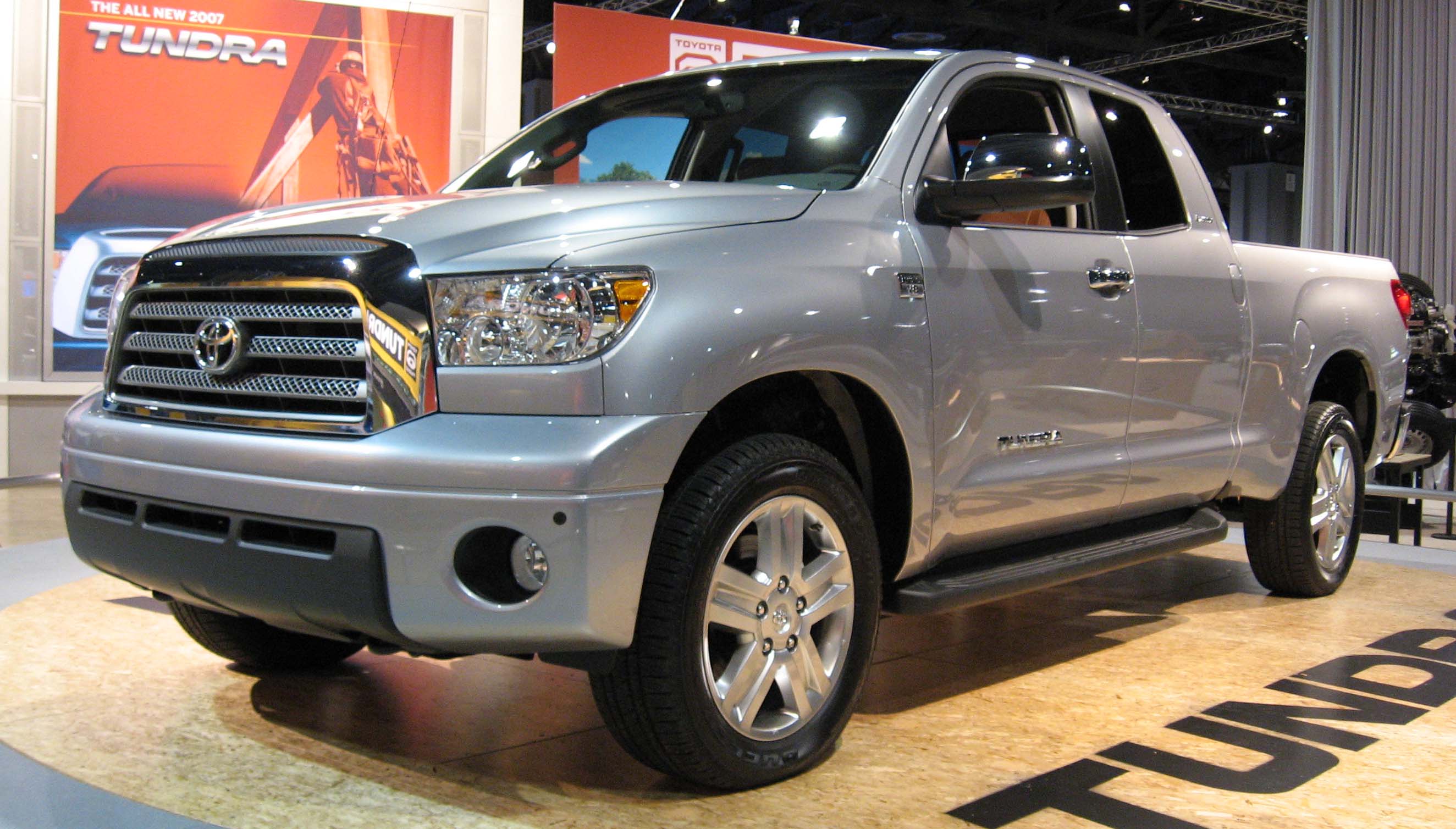
A Toyota Tundra is a big pickup truck. They’re talking about paperwork/registration for their Tundra and how much it’s worth now compared to when it was in rough shape.
Re-registering means updating the vehicle’s registration with the state—often after ownership changes, moving between states, or correcting registration details. It can affect fees and how the vehicle is categorized/valued.
“Road America plates” refers to specialty license plates tied to Road America, a well-known motorsports venue in Wisconsin. The segment treats it as an optional add-on when registering a vehicle.
The vehicle title is the official paper that shows who owns the car. If it’s lost or needs to be transferred, you have to file paperwork so the state can issue the correct title.
“Pick up the new title” means the DMV/state issued an updated or replacement ownership paper. You can often have someone else do it, but you need the right paperwork so they’re allowed to.
Concept
working on paint
They’re talking about doing custom paint work on a car. Custom paint isn’t just color—it usually involves careful prep and applying layers so it looks right.
Chameleon paint is paint that looks like it changes color when you move around or when the light hits it differently. It’s usually pricier and takes more skill to apply cleanly than normal paint.
Concept
mini truck scene
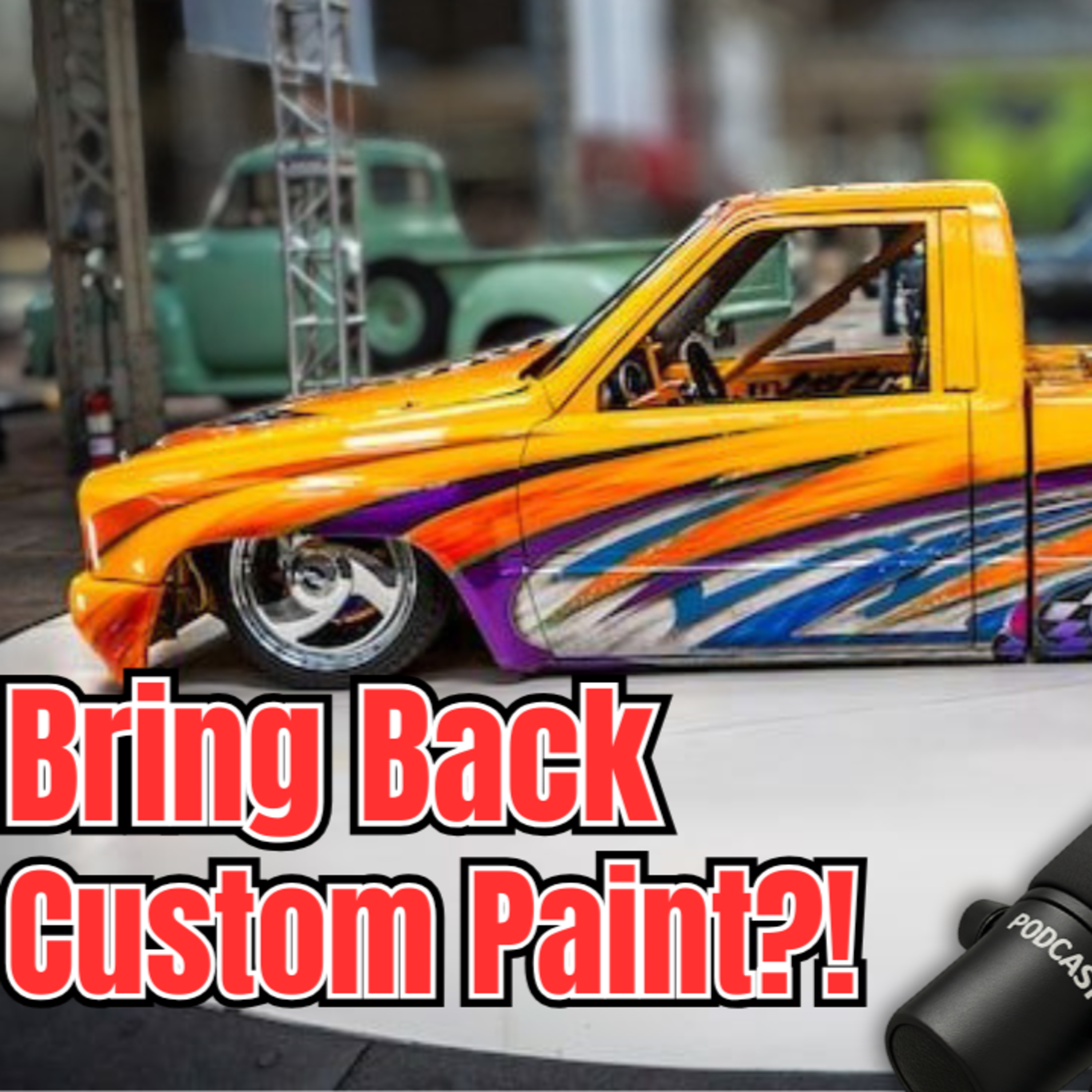
The “mini truck scene” refers to a style subculture focused on compact trucks and a show-focused look—often including custom paint, graphics, and airbrushed details. In paint discussions, it usually signals a more graphic-heavy, visual-impact aesthetic rather than a subtle OEM-style finish.
Airbrushing is a way to paint detailed designs using a tool that sprays paint very finely. It’s commonly used for custom graphics and smooth color fades on show cars.
Tribal pinstriping is decorative artwork—usually sharp, flowing shapes—added along the side of a car. It can be painted by hand or sprayed in layers so it looks like part of the paint job.
Flat sanding is when you sand the surface until it’s smooth and level. Paint layers can leave edges or bumps, and sanding helps them disappear before the final clear and polish.
A dropped shadow is like the shadow you see behind a sticker or lettering, but painted. It makes the graphic look like it sits on top of the paint instead of being flat.
They’re designing custom paint graphics to be the main feature of the car. Instead of relying on big body changes, they want the paint to stand out and make the whole build look intentional.
The valve cover is a cover on top of the engine that protects important parts inside. The speaker is planning graphics so the paint flows visually onto that area.
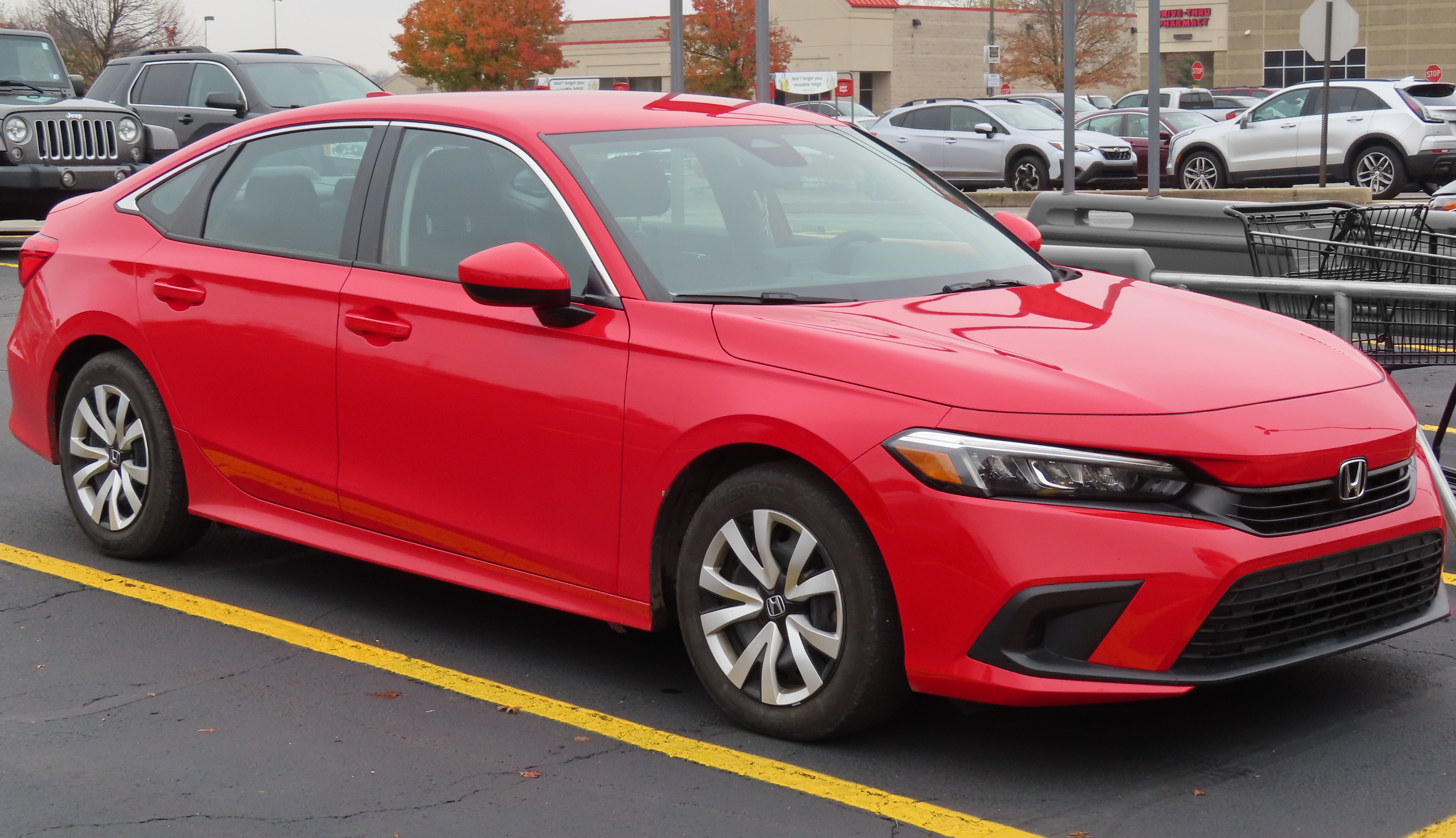
They’re customizing a Honda Civic. Instead of changing the whole body with a big kit, they want to keep the factory look and use paint/graphics plus a few small add-ons to stand out.
A front lip is a small add-on on the front bumper that sticks out a bit lower. It’s mostly for style, and it can also help the car’s airflow look cleaner.
LIVE
Don't know fucking cars all day every day, you know, I'm saying
Lately I've been just scratching my brain plumbing this coyote in this Mustang. It's
Pretty overwhelming
Oh, yeah, I mean every kit you buy that's for a coyote swap is like
Yeah, it works with a coyote in a pickup truck with a lot of room, you know
It's just the limitations of this motor. I mean, it's it's not like a
You know
Because it's close to the art Morrison chassis. It's an art Morrison problem or it's a coyote problem
It's just like all the problems that were I was married to when the project came, you know
I'm just all these limitations are starting to like
funnel down to right now like like the ac compressor
It's so close
to the frame that
the
vintage ac
Adapters they don't that screw onto the compressor. There's not enough room for them
So you got to get this other manifold adapter that goes to the bottom moves the moves the connectors to the bottom of the
compressor
Can't get the fittings on there either. So now I have to remote mount the
Uh, basically the charging system the charging ports for the
for the ac which is not how the kit like goes together, but
Just like what's next, you know
And then the oil cooler and all that shit was like I didn't realize that we needed needed an oil cooler because it
The aftermarket says you don't nearly need one. But then
after deciding that was
I decided we didn't need one
But then we decided to pro-charge it and now it's like, okay, we should probably be putting a cooler on it too. So
Luckily, I didn't have any the remote oil filter already mounted or anything like that because it would have been in the way of
Lines to the cooler and then I had to make them out for the cooler too, which is not exactly
An easy shape to mount underneath the car or in front of the car. It's just because there's so many coolers already. So
It's a lot
How's it going for you?
So yesterday I got the casewap in the Honda to turn over
Nice
But I have no fuel and I have no ignition from my knowledge. So
I don't know if it's a wiring issue or if it's the immobilizer for the key
I took the immobilizer and the key out of the
donor car
And I believe I have them wired incorrectly
How do you how do you how do you even
Start there bud. I don't know. I was
Looking over wiring diagrams and pin charts and stuff all last night trying to figure it out
My wife kept trying to have conversations with me and I'm like
No, no, I'm zoomed in too far
I'm on the e27 is this what I think it is
And then you ask chat gpt and it doesn't know well enough
Because I was like having it it searched the internet for things. Well, then it'll
It just wants to tell you things whether you asked or not
And it's like, oh, what you need to do is you need to make sure you have a hot power going into this
e25 pin and I'm like
Okay, that's designated as NEP. What does NEP stand for? It's like, oh, that's a constant positive
I'm like, okay. I just cross-checked you to google and on all sorts of websites says that that's the injector for the ignition pulse
Pin which is for like a tachometer
Sure
I'm like, why are you trying to tell me for power there and it like argued with me
And then I said, okay cite your resources and then it was like, hey, you were right to point that out
Repeating ai dude, and then it was it says to me
We it says I don't think it's your mobilizer because because I I uh
The ecu just grounds the fuel pump relay to turn the fuel pump on and so I grounded that pin and the fuel pump kicks on
I'm like, okay
Good at least everything from the pin that it's supposed to be at back to the fuel pump is supposed to
So I primed the fuel pump
and then
I went to turn it over to see if I had um ignition
And it turned over and you know, it didn't even pop or fire or anything. So I'm like, okay
Tell chat gbt that so I'm like, hey, I think it's a mobilizer
Because I'm bouncing ideas off of it seeing if it can scound up some sort of you know thing out of a forum for me
And it goes. Oh, no, it shouldn't be your mobilizer because if you tricked it and it didn't fire
then it
It's it's another problem. It's ignition problem
And I'm like, wait a minute
But it said because you would have had fuel and I said no no no just because I have fuel pressure
Doesn't mean the injectors are pulsing and opening up into the chain
If it was a mobilizer, it wouldn't turn it wouldn't even turn over
Yeah, and the Honda's it'll crank but not start
It cuts fuel
Injector pulse you do that. Come on. I have no idea
It cuts fuel injector pulse and in ignition. So you have no spark and no fuel injectors pulsing
So that is so that's exactly what you're running into. That's what it seems like I'm running into
I haven't actually pulled a plug yet and checked spark because I just hate but trying to check spark on
coil-on plugs
because you're like
I don't know
Have a kid hold it
There yeah, I mean I definitely got shocked a lot as a young man
I buy spark plugs
But it just it just is a pain. You know what I mean? Like it's not like a small black shabby
Where you just lay that sucker up on the intake manifold and watch it while you turn the cow
Yeah, so it's only bills when you're like here hold this
I think I think the trick is you just spray a little starter fluid in the intake and see if it fires, you know what I mean
sure
but
So I had to teach chat gbt that
Just because I have fuel pressure doesn't mean I have injectors pulsing fuel into the cylinders
So it could still be a mobilizer and it's like oh, you know what you're doing. You're right
You're you're helping chat gbt become a better technician than anybody
like eventually you're just going to go to like you're gonna like
Talk like tell your phone the like what's wrong with your car and it's going to give you an exact diagnosis
Like they're going to replace mechanics
for sure
I gotta tell you there's the shortage of mechanics, so it'd probably be okay
Yeah, I mean for real
I
There's going to be a time where people like well, they're not coming from my job. I'm like, I don't know man
You ever see a little you see a robot spin on a couple nuts. Like it's pretty impressive
Like they can change oil. They'll be able to do that easy
right
Yeah, I don't know. I think that the cars will be so disposable that they're not going to care about mechanics, but
Yeah, but even then you're still going to have
Cars in the in the operating, you know, like semi trucks that's not going to change
You know, there's going to have to be like legit service
And if those people are missing, I mean fucking robots are coming, man
Whatever happened to the tesla
Semi truck the hang that they were going to be doing tesla
Semis I mean, I think it's just like anything else you need the infrastructure for it
Whoa
Well, I mean realistically, it's got to stay on the road. So the longer it's off the road
Charging you're not making money. I mean, I don't think the
Logistics are there yet. I mean I could see it being a thing, but I don't think it's going to be there
I don't know. I'm still the more test the more test as I see I'm just like
They just the styling doesn't do anything for me. They just look different on the road
It's just I mean the trucks are hideous, but the cars are just having don't look like toyotas
I mean, no offense. No offense to toyota guy
Sorry said the wrong thing in front of the wrong guy
That's funny
I
Founded
The tesla the cyber truck looks like PlayStation 2 graphics to me
Yeah
Like like golden eyes should be in the background
Back to the future when they're in like 1998 or whatever or whatever when they go to the future
Yeah, there's
Do you know that the fiero
1996 fiero concept car was in the future of back to the future
No, I did not it was parked in front of the movie theater when they're in the future
There's like this crazy looking Pontiac. It looks kind of like a futuristic trans am concept car
Yeah, it's it's the fiero concept car. They had like a v8 mid-engine. It was actually pretty sweet, but
Yeah, they thought that was the future
Pontiac is not part of the future
The secret's out
Oh, that's too bad too because man when we were kids Pontiacs were like the fucking thing, man
Yeah, they were cool. I uh anytime I see a cyber truck coming. I'm like waiting for the graphics to buffer
You know what I mean?
It's like the video game's not loading fast enough. It's coming at you
There's one around here. That's like
like
Matt green like an army green is like come on guys. I don't know
I like I always like to see the the uh the sausage fingerprints on the stainless
That's always like come on guys like you can't even keep your own shit clean
Have you seen that video of the guy taking the hubcaps off and he gets brake dust on his fingers and he's like this is
absolutely not okay like
He's like this is supposed to be an electric and clean vehicle. What is this? It's like that's
You want to stop, right?
Yeah, especially those big heavy things. That's way more brake dust than anything else is gonna fucking put off
What if they come up with some sort of like electric
Electromagnetic braking system later. So there's zero contact
Guarantee there's something better than brake pads out there. It's just a matter of
They want us. I mean, yeah, exactly spending. That's all it is
I mean, I think with some of the technology that's out there all these cars would be obsolete but
What if there's economies that are around all of it? So what are you gonna do?
Everywhere you go, there's parking lots in front of everything. What are in parking lots cars?
It's like cars
It is really
I mean, there was one thing what I think it was like a sim like the sims or whatever like that simulator thing where
Like whatever like the early versions like when they were actually plotting them out and like trying to replicate cities
They thought it looked so ridiculous because it was just parking lots
It's just mainly parking lots with some buildings like yeah
So they they cut all the parking lots out so it made it look like it's you know
A nice tight little city and you're just walking around like well majority of it half of it's just parking lots
It's true
Have you seen the new design language that they're putting on like these kias and hundays trying to make them look like the future
It's like some weird tron stuff. I'm starting to see them pop up
Oh like uh
There's like a hundae I think with it looks like lantern lights in the corner almost like they're big
Legit remind me of a lantern
But then right next to it is like this tiny little projector light. I'm like
Why are you making the turn signal?
or the
Why are there running lights that are bigger than the headlights? I'm like, I'm just not I'm not with it
Not with it. I'm telling you it in korea. It's gotta look like tron with like with all these things running around
I don't know
It's it's it's an interesting direction
I think a lot about like when we were kids and you know, like all the cars are the 80s and 90s kind of like
I don't even know how to describe it just overly simplified car shapes
You know what I mean? Like you think about a cavalier or a torus they have like for a grandam like they're all like the simplest
Shape like just we need an engine here a trunk here and and you know the cabin here
So it just was almost the same formula
You know, it just really just yeah, I I agree. There was like no frills to it then and now we're like moving into this
I want to call it
What would be a good word for that like it's kind of uh, it's like to really shallow everything looks like it's it's fancy
but like it's just
so
Shitty beyond I think a lot of some of the styling in the new cars
You see these like on the sides of the like
Let's say it's an suv and in within the two doors. There's like these really harsh jagged
Body lines that go inside, you know
And it's like why do they do that? Well, I can tell you why it's not like a 90s
You 98 cavalier door where it's one big swoop
You would have to have
A good you have to have a nice rigid panel to be able to do one big flat thing. They're using such chintzy shit
They're stamping all these rigid body lines in them to hold rigidity and make them sound expensive
And then when you look down the side of them, it's just a wrinkly. It's just fucking terrible
I mean we'll go around a Ford parking lot or a Ford dealership and look at all the black trucks
They're fucking terrible
Like oh
And the clear coats getting so thin now that they barely have a gloss on them
Yeah
Well, I think they intentionally they're intentionally starting to leave a lot more peel and stuff. I mean
I think we see in that 15 years ago where the paint can be like the paint finish was getting worse and worse and worse
Not me
If you wet sanded and uh like like what sanded the clear down on a new vehicle it would look
So bad because it would show all the imperfections. It would look terrible like terrible terrible
I think it's every I think it's the fords is the big one that and once you get near the door handle
They go park don't every single one of them
Yeah, because while they do those aluminum doors and they think that they're like the cats ass
I mean you can't put a door skin on them. I mean some people put door skins on them
But I don't know how how they do it without cracking them and all the experience I have with those door skins is that
you
Bend that flange all around care how soft you are with it. It'll crack like so you just put a whole new door on it
I'm so soft
Yeah, I don't get it whatever I think um because aluminum work hardens
So I think when they first make it and it and aluminum
It actually gets harder the time from extrusion or stamping or whatever that they make the aluminum to the time
That it's it's formed it changes drastically. So like in my work. We do things with aluminum
I hate that they call it pipe. It's aluminum tubing whatever
So if you get it, we'll get it straight from the mill
When we first get it from the mill it bends really nice soft buttery bends
If by the time we're done with our, you know, we'll get
250 300 pipes
By the time we get through that and let's say a few months
It's quite a bit stiffer so because it it not only work hardens it
Aluminum actually ages and like the older it gets from the time it was extruded
It gets stiffer. So when they make it a new aluminum panel at the Ford factory, you know
They're stamping out the shape and they're probably going right to the next line where they crimp they fold the
Pinch weld over not pinch weld
But when they where they fold it over the other panel and it's going to go a lot easier because that's that for one
That's the first time it's being bent and two. It's very I don't know what the word is young. It's it's it's pretty fresh
Wow
Never would have known look at you teaching me things. Yeah, like when we bend
um
Like a u bend in an aluminum
And this stuff's about eighth inch wall a little over eighth inch wall when we bend that
On a new one, it'll bend a really nice round bend
But after a few months of sitting on the shelf when they go to bend they'll want to they want a sandwich
I think the aluminum doesn't want to just take the shape so nice anymore. It starts to collapse not it doesn't get like kinky like
Exhaust but it starts to fold and get like oval shaped
for
weird
weird
Science that's what that is. We're teaching you stuff people. We're teaching you stuff every day
You think you know it all I don't I think you're wrong
right
I think I think it's silo green says it seems like everywhere I go
The more I see the less I know
Yeah, that's pretty heavy
Pretty heavy
Marinate on that for a little bit
Okay, all right, okay, we got that out of the way
Um
Yeah, oh yeah
So plumbing the coyotes coming along
You're just
Is the worst part of any build I think like it's always fun when you're putting the big stuff together
You're getting the sheet metal on you're getting the motor in you're getting the tranny in you get a driveshaft in you're like man
Things are coming together you do exhaust get all the big stuff and then all the little stuff just slowly makes everything more terrible
Yep, I mean just running the
Uh
So the little h-pipe deal that you have that that goes in between the
manifold and the
H the HVAC system or whatever
They have an h-pipe so the one head doesn't get hotter than the other and throw a code or whatever
So I'm trying to figure out where to place it
So I put it on like on the outside of the
Interfender to the fight through the firewall
And as soon as I got it in there and put the fitting on the inside the fitting is like
I don't know it ends up being like three inches long
It's like an elbow and it's three about three inches long once it gets adapted down
And it's like this it's like another three inches away from where the actual
HVAC system pipe comes out and sits
and I need to put a
Controller in between there
So I didn't have enough room
So I kind of had a bail on that idea
And move it up to in front of the apron where it goes
Through the where the cooler lines actually go through the apron
So I think it'll work better. I have more room for the controller actually have room for the
Compressor the dryer for the compressor in that corner over there
And I'll be kind of hidden underneath the inner apron or inner fender or whatever about it's just
It's like you you get the kit you think you need
you get it here
Realize that
A third of the fittings won't work
So now you have to figure out what those fittings are on each end
Because they're not just like something you can go out and just like oh, this is the part number
Not usually anyway, some of these do have part numbers on it, but
Yeah, it's just uh and that's like in every
In in every plumbing situation there has not been one where it's like this kit worked for everything look
That's the frustrating part
Hold in cars. What are you gonna do? Yeah, that's really it is that's one company. That's how it always seems to fit
Yeah, I can see you know a bigger bigger companies
I'm sure you know like roaster shop where they got like
You know $10,000 in am fittings. It's just like you go to the cabinet and grab a different one, you know, but
It's a little more of a learning curve for me. I guess maybe next time you just buy a bunch of fittings and
You know some of it's just sitting on fucking a couple hundred dollars in fittings who wants to really do that or thousands of dollars in fittings
Who wants to do that?
And then you got to make sure you remember that they're there and they're actually applicable to another vehicle
Except if they're not then you why would he why do you even you know keep them in stock? So I don't know
But we got headlight trim rings for that
Nash that 38 Nash there's only one company that makes a retro fit
from
the size of
Basically, you just have to measure the the width of the headlight you have and see if this kit will retrofit it to a seven inch
sealed beam bulb, you know
There's only one company that makes them so and it's
When I ordered it, they're like
This is for this kits for it's got a bunch of different cars 37
It goes to 36 37 Nash and then it jumps to like
Plymouth and all kinds of different things that this trim ring headlight kit will work with right?
So I call and I'm like, so I don't there's not much difference between the 37 and 38 for headlight wise
I'm like, don't you think it'll work for 38? He's like, well said you who said would it work for 37? I'm like, well
Your website he's like, oh, no. No, you can't trust that. I'm like, it's your site
And that's the one place that sells them. So yeah, it was pretty frustrating
but
It took me like a half hour to get across to him what I was looking for and I was still better
I'm just ordering it on the website and whatever and it took
Three weeks for them to ship it to which was I don't know if it's made to order
I don't really know. So I got to tackle that. So the headlights are like rotten and bent up
So I'm glad I we bought the kit because I think the kit hides the flange
Up front that holds the stock headlight trim ring, which I thought that which totally needs to be rebuilt
and I'm like
If we're just going to be covered up and we're just not going to rebuild it
We're just going to make it, you know fit these headlight trim rings and
You know, it's custom and it might just it came cost them. It's going to leave cost them, you know
It's not a stock car by any means. So
I just got to tackle that it's going to be they're made like they're kind of chintzy too
So I don't know I'll have to make it so they're not so chintzy and like how they mount
And the kit they're like if the if the headlight is just a little bit larger than the trim ring
Then you put the trim ring on and you just body filler around it to meet and meet out. I'm like, yeah, that's what they tell you
Yeah, yeah, so I'm like, well, let's just get the kit here and then I'll make the headlight trim
Headlights fit the trim rings. It seems a little better, right?
Just if I have to rebuild
If I have to rebuild it might as well rebuild it to what we're going to be using, right?
Right.
There's kind of worry about originality
like the whole time he's like
He's thought that even if we move the gas door because a gas gas cap came through the quarter panel is really gaudy
All's there to do is like turn it and then it's in the trunk. So I'm like, well, let's just turn it
Well, can I put collector plates on it if I have if the gas cap's not in the stock? Yeah, dude. Yeah
I don't know you got a small block Chevy in it. What do you think?
I don't think the dmv knows where your gas filler is supposed to be
No
No
Kind of 38 Nash. It's only 88 year old car
Yeah
With nothing stock about it anyways except for kind of how it appears
Yeah, but he doesn't want to pay registration every year. Do you understand?
Yeah, neither do I who does right?
Oh, yeah, he could just get a hobbyist plate
And it does the same thing a lot of people don't like them because they're green. Oh, you don't want the green plate
They're they are really ugly. Yeah, I know like really really ugly
Yeah, I don't know why they don't like let you pick a color
They're starting to get better that now like Wisconsin has like a
Like if you wanted a black plate in Wisconsin, you got a rhoda america plate
But now they actually have like
Uh, they call it yellow retro. It's kind of like the 70s yellow and then they have a black one too
It's just black and white. It's just pretty cool
Did you so like as a high schooler?
I always was like, I'm gonna get a custom plate for this car and building, you know what I mean?
And it was just things that you're you're always spent so much on the project when it came time getting the license plate
You like couldn't spare the hundred bucks or whatever it was
I know because there was a pain in the ass too and you had to wait like months and months and yeah
Fill out forms of multiple different variations that you accept and the border you prefer them in
It's a whole yep. Well, it's still like that, but yeah
Yeah, did have you ever gotten a custom plate?
Yeah, yeah, we have I got some order for this. We have uh
Our but so it's like our business cars have uh hhk on them. So it's hhk hhk one hhk hhk two
nice
Yeah, I um
Want to re-register the tundra
Now that it's
Not just the $2,000 beat up Toyota. No, it's sure now it looks like more than that
But now it's a $4,000. I mean, it's like at least a $4,500. Yeah, at least beat up Toyota
Uh
Yeah, and now I went and I got in florida they have like
50 different plates
Oh, sure. They do in wisconsin too. There's a lot. So I ended up getting the black and yellow and white plate. So
It's cool and it's got like a shorter number on it. I didn't deal with like custom lettering. I didn't really care
I what I didn't know what I'd put on it. Yeah, sometimes it's like, yeah, what would you put on it?
So I didn't care so much about that
But I was tired of the white plate with the orange in the middle of it for yeah on a black truck. So
Yep, black license plate here though. Um, I think
That plate's $25 a year or more
It's like yeah, it's very minimal
ours is our just I just uh, so when I got the Audi I it comes like
The way I bought it they they comes it comes registered and all that shit. Um
So they already sent plates for it, but it's it was like 15 bucks to get
Road America plates
Nice that's the custom plate. So yeah, it's um pretty sweet
Affordable
Yeah, I mean it seems like that stuff's getting less crazy
And up until like two years ago, you still had to do my mail
Which is fucking crazy to me, but you can do it on you can do it online though
Mail it mail it in
Yeah, print the port go online print this form out and then mail it to us
Doe
Wisconsin has so many different little things
I used to have them all memorized because I'd done it so many times because I probably registered 20 something vehicles there
But like people all the time would be like, oh, I can't make up the dmv and blah blah blah
I'm like, oh, well you can do this form here and it'll allow somebody else to pick up a title for you
You just have to say like oh, yeah
I started getting yeah, there's all kinds of quirky little forms that you can fill out that
Seemingly I I know people fudge with you know. Oh, I'm sure I've had it like where I
You know, I don't remember if I lost the title on a car I'd bought or
They had a title that they gone through it that they signed or whatever and so what I would do that's terrible
I would fill out the form so they could have me go pick up the new title for them because you know
As soon as you need somebody to go to dmv that deals start getting really sour
So then I'd be like, all right, you give me, you know
I'll go pick up the title the new title and then what I'll bring it to you
You sign it over and I've had some luck with that but all that stuff gets so hairy so fast
Yeah
Yeah, anytime. Yeah, you're not wrong
Boo
Man, I gotta get this high going so I can get working on paint
Yeah, dude
I'm working with a paint company now. So like my vision of what
Because I'm trying to do this whole thing, you know, it's for the youtube. It's not really like benefiting me any
Yeah, the car's gonna be worth more painted. But the way I'm painting it
It's gonna narrow the market very small, you know, yeah
So I was being I don't think it's as small as you think though. No, no, no, I don't think it's like
Yeah, I think it'll still sell so I think that market's actually getting bigger right now
Yeah, I'm working on trying to get everybody to remember how awesome it was
What I mean a car like that if it's like everything's pretty much been gone through
And it's under 20 grand like somebody's gonna jump on it doesn't matter what it is
Like if it's a fun car and it looks like it brings you back like dude
I'm getting fucking teen teen teenager feelings. Just keeping this already washed and shit
Makes me feel young again
Yeah
Anyway, yeah
So I was buying I was designing my paints around like because I wanted to do a chameleon because it'd just be silly
I was designing my paint around like how much I was spending on materials
So I was gonna have the predominant part of the graphic be white just because it'd be cheaper
And like so I was kind of spreading
Or you know, I mean calculating how much of each color and how much it's gonna be and I'm like well if I do this
It's gonna be but now that I got a paint company that's on board for the
For the youtube build
Yeah, they're like they're sending me enough chameleon to do the whole car
Sure, and then they're sending me, you know the white and the silver to do graphics
And so I've completely changed I'm gonna go more, you know leaning towards mini truck scene
There's oh, yeah, there was a few
Very few civics back in the day that had like a full show car airbrush that were like really cool
So I'm gonna do I'm gonna go with that like it's gonna have a big graphic that kind of comes up the side
nice
Are you gonna do like the pinstriping or like the like the tribal-ish pinstriping where like
You ever see that instead of running a straight line down your down your like flame
They're like whip it out and like make it look like really crazy and shit
I don't know that i'm gonna hand stripe the edges
Um, that's stuff's easy though because you don't got to be like yeah, it's just like a bunch of whips, you know
Yeah, the only problem with hand striping is then you have a lot of you got a wet sand all that layers out of your clear
Like you know what I mean it build you see yeah, I do clear do you see it through the clear?
So then you end up flat sanding it
It really depends on the look yeah, I mean if you want it flat in the end
Some people just do it on top one after they clear it
That's not terrible idea
Then I'd have a lot of time to do it
That way you could actually you get a little um like if you get a little blowout from your from uh, like color to color
Yeah, you can I mean you can fucking sling up, you know pins just add a little lick in that certain area and cover it up
You know, I might keep that in mind. I'm thinking
um
Because it's gonna kind of like the chameleons gonna be the main color and then it's gonna kind of have like this big white
I hate to call it a tear, but you know what I mean have like yeah, you know
A big white kind of tear graphic up the side and then there's gonna be like a silver tribal in it
I'm gonna try to airbrush some layers into the silver tribal
It's gonna come through it and then
I'm gonna have white for the rest of it and it's gonna be
It's gonna be dropped shadowed down under the chameleon. So you have like a some depth there
and then
uh
I think there's gonna be a couple different graphics in the white
And then you know, I'll have like a asymmetrical one that comes up because the engine's gonna come through the hood
so I'm gonna have and
The the white graphic kind of like come up on the one side of the hood and kind of capture the valve cover
Are you gonna try and run the color for the valve cover like into the like the same color kind of make that
flow through
Yeah, I want the white graphic to flow through the white valve cover
so
Is honda are you doing to do like, uh
Body kit or anything like that?
I don't think so. I'm just gonna do a front lip and then a little duck tail spoiler. I don't want it to be
I just I just I don't know the stock body on the civic
Has a look and I just don't really think I could find a body kit that would
Please me more so I think
I think
Just lower it which I'm putting coil. I got the front coil overs in my wife and kids started pulling the back suspension yesterday to do
The rear coil overs and control arms anodized red aluminum control arms
fancy
The finest chinese parts, but I'm gonna slam it stock body
Like I said, it's got a front lip on it. I don't know if I'm gonna keep the one it's got or do
A different one and then I'm gonna do a little duck carbon fiber duck tail spoiler
And we're gonna let the paint do the talking not the body kit, you know what I'm saying
I'm wrong with that
I can dig it
Yeah
I it'll be fun. It'll it'll make a lot of people giggle. I think but uh
I didn't consider pinstriping it over the paint because I'm gonna airbrush it and I guess I'll see what it what it turns out
Like after airbrushing it
Maybe need something
I don't know that was a part of the paint scheme that I was gonna do on my s10
It was like I had the tears going like two tears going one way
Uh a third one going across to the like that way and then like a couple different color stripes behind it and through it
and then all the tears were gonna have like the
the whip and striping but it was like
Everybody was painting their shit in tech class and
It's like well, do you want this paint job to be an entire week?
Or do you want to just get it done today? It's like, you know stock color would be cool, too
Yeah, I uh it was all repainted stock. So I mean when I don't know you didn't have really have to worry about picking a variant of
Stock colors. You could almost pick the cooler variant, you know, right?
There are some variants on darker flop
Yeah, I mean there was some that were like a little a lot more vivid, you know, so
Yeah, I I I want to be able to do it in two days, which is gonna be
A stretch too. That's too much. Or are you gonna use um like that tack paper stuff or are you gonna paint like
What are you gonna do?
So the company that's doing the sending me the paint they're actually sending me a bunch of fine line and stuff too because they make their own
Fine line. I think that's actually how their company started. They were making fine line tape and then um
They transitioned into because the guy that owns it's a custom painter. He's got a ton of stuff out there on youtube and instagram pretty cool. Um
But I think I'm gonna be able to I don't know
I was looking at that tack paper the transfer paper whatever you want to call it
But I don't know if I'm gonna need it. I think I'll be able to pull it off with just doing um
You know, just masking it
fine line
really
The thing that mask that masking tape
helps with is
like
You're going from door like across door across panels
It can seal your door edge
Like if you're cutting out from here, you know cutting out here if you go across your panel panel meeting
That's just gonna blow into your panel edges
So it kind of helps seal that so shit's not actually traveling and landing too
Is that I'm taping those jams suck balls when you're doing stripes
You got to worry more about that, you know
Yeah, it's gonna be that's the worst part of doing multicolor
Airbrush stuff and striping stuff is just blowing through in the jam getting the jam edge clean and
Oh, the airbag for your painting is the easy part. It's fucking masking is terrible
Yeah
You gotta have the patience for that
Wacky airbrush stencils not like not to stencil like skulls on it, but like just different
textures and stuff like that
I haven't found anything groundbreaking. I did find one that I thought could be kind of quirky and cool
I found it. It's like circuit board stencils
Oh
Sure
Like a goofy
Retro futuristic. It could just be like behind like the first thing down kind of a thing. Yeah
I thought it would do like something like that and like one other thing that would be like not quirky, but almost tied together
I was thinking about doing that and then I found these kind of like it's like hexagons, but it's kind of warped hexagons
So doing like the microchip or the the circuit board layer
Masking some of that off and then doing like a tear where there's like this hexagon
Layer over tear like over it. So it's like the circuit boards under that and then have my
You know tribal 2000s nonsense over it
I know
I'm fighting the urge to paint like a giant dragon in the tip a dragon's eye or something in the
The mayflower on a on a big wave coming down to Plymouth rock or something. You know what I mean? Oh wait, it's not a full-size band
in Christopher Columbus on the
Christopher Columbus like holding somebody's head because we found out he's a terrible fight in Abraham Lincoln. They're just like fighting each other
He's a wrestler. They're a wrestler. Yeah, like Abe Lincoln vampire hunter though
Yep a pterodactyl flying above them. Yeah, maybe I should do a full-size van
Yeah, dude, like a like a lady standing on a cliff with like a giant fucking laser gun
You know sort of just like protecting
Oh, there you go
Oh my god, you ever seen the movie foobar
Yes, the king like the early 2000s. Oh my god, it's so good
I don't I barely remember it, but yeah
To Canadian guys. It's like a mockumentary about two Canadian guys. It's so fucking funny
Not it's not a fuse with foobar the new tv show with Arnold Schwarzenegger. It is not the same when I saw that I'm like this
Not even close to the same
Uh, yeah, I saw a new thing uh Porsche is supposed to be bringing back the 944
Yeah, I don't know. We'll see I guess everybody's got look
I don't know. There's always what I can't remember what company it was. They just teased it wasn't Toyota just teased the MR2
Oh, I think that was happening
You think it is happening because they they made it sound like they released some info on it and then the next day
They were like ha joke
I didn't think so
You know, you see it on the internet, you don't know if it's fucking true or not
So, I mean just scrolling through it past instagram isn't like definitive fucking proof that it's happening or not happening
So for me, it's like, yeah, I saw some stuff. So I don't know if it's true or not, but
Maybe close to the MR2 actually gas motor
Yeah, that's the plan. Um
According to google
Which has never spread misinformation or been wrong
It's AI says because we just talked about how trustworthy the AI is
They're bringing it back mid-engine
2.4 liter 3 to 400 horsepower
It's supposed to be
What I was reading is it's supposed to be like the next tunable motor like the you know what I mean, um
Like they didn't do a very good job with like those brz
Toyota 86 things
Why don't they why don't they put something fucking in it though? Like I mean I get it
Like what? I don't
Uh, they have they have vast exposure to anything they want like
It's something fucking bigger than a four-cylinder normal fence
I don't know the MR2 is a tiny car
It is a tiny car. So it was a fucking mclaren
Well, that's what they made the gr for
I guess but what the twin turbo v8
Yeah, I mean those cars they're they're cool. They're kind of cool looking but they're not really my cup of tea
Yeah, they definitely
They definitely have um
Lexus design language, you know, I mean like that
Um
But it's like too it's a little too understated for what it is. Yeah, that's I mean look at like the lexus lfa
That was a very understated car. I had a v12 or v10 in it
They'll like yes in person. They they're pretty wild
But like when you look at them, they are kind of way more simple than they need to be but I think that's like uh
Lexus likes to do the
They like to do the humble brag stuff kind of like your Audi like it's not really
Sports car and like if you look at it in pictures like sometimes some angles
It's like looks like traffic and then sometimes you look at and you're like, hey, wait a minute
Dude even just walking around this thing. You're like, oh, that's just some like just it literally looks like traffic
And then you catch one angling like fuck
Muscle car
Yeah, you know for real it almost feels like it looks like a from the side it looks like if you were just glancing it looks like a
Holden
Yeah, I could see that
P8 Holden kind of ish a little bit
I always thought those cars were pretty cool
I think they're just cool because we don't have them
That's why
I mean to but for I mean they're a better handling better car
That's why gm partnered with them to make
I mean, I think wasn't that when they brought the Camaro back pretty sure that's a that was Holden based
I don't know if the Camaro was I know like the the Pontiac g8 was just a straight Holden Commodore and to be honest
And the Caprice
The Caprice is kind of cool
But that that that's that's what that's a Holden
Yeah, I know they're cooler than the american cars for sure
Like Pontiac didn't have anything better than the g8 at the time
But right I worked at a Pontiac dealership when the g8 gxp was out on its rampage and I gotta tell you like
Still felt very Pontiac
Oh, yeah
I don't know yep
Yeah, I mean that's what I mean. I thought they would should have did I think they would have did really well
If they would have did that the Holden the pickup truck Holden
Oh, yeah, that would have sold I think that would have been a pretty good
Pretty good idea. It would have been they would have sold more of them than the SSR
SSR down the road for me every time I see it. I'm like, I don't know about that
Dude, I had really think I I'm I'm one of the very few that think that
If you cut it up enough and change enough things about it, it would be pretty rad
I think it has potential, but I think there's like um
I've I've spent a lot of time trying to figure out what that it like when you look at in the hhr and ssr
And I'm not saying the same thing, but they have like similar. We're trying to look like 40s design
You could say it was the same design team. You can definitely say that right. They're supposed to be retro
They're supposed to be pt crew. Yeah, you know
But you can just see the way that things are stamped like the certain radiuses and the way the edges are done that it's just
Cheaper and I just feel like like you can see that thin edge somehow
You know when I the few I've worked on though
The fenders feel like fenders. I mean
it feels
I just think it's
I don't know. It just has like that modern
economy
It's like look to it in a way, but yeah, I think if you you think if you you'd have to ditch the mirrors
The headlights and the taillights and the grill
The problem with the car that I see I think because like I almost bought I almost bought one
But it was a six liter a six liter six speed car
And that like you pro charge them and they're like 650 horse or something fucking thing. So that would be like a monster, you know
And it's just a guy up the road
Uh, uh, a buddy of mine that lives in town here. Anyway, um
But when you look at the suspension and how it's built
Uh, and how the frame is built when you look like just generally just glancing under the car
Let's say like I'm gonna I'm gonna buy this car and I'm gonna slam it
like
The frame sticks down so far all the suspension components are mounted really down far in I think because they're making room for all that
The roof components and all that shit like it's not like
A very easily customizable car
their truck whatever you know
I worked I worked at a dealership when that came out like there was a brand new one
It's like it just came out and the dealership pulled one like we just got one in and we're just we're fucking with it
The battery dot you put the roof up and down three times and the battery would die
It was like right off the bat is like oh, these are kind of well, yeah
Yeah, we're nailing it
Uh, yeah, what do you think about the prowler?
I really didn't know I mean, I thought they were really cool off the bat at their fault
I they would have sold like 10x of them if they had a v8 in it
It wouldn't even have to be it wouldn't have even had to been a
High horsepower v8 it just get the sound coming out of that car and it would have been a banger, you know
um, it's cool now to see people putting like
I don't know people putting v8s and shit and stuff in them together, you know, yeah modified. They're becoming pretty sweet
Oh, yeah, I could total it see if you could get one if you could get one a reasonable and you know
Probably have the ability to to put a different motor in it and fuck it up a little bit
That'd be pretty sweet. The first thing I would do is ditch those fucking headlights. Oh my god. Are they terrible?
That's the one thing I don't like the car. I think the front fenders were a little bit funky
Pull the fenders off and then yeah, I'd pull the fenders off the front and and do some different headlights
yeah
It'd be cool to do like
Like in you know, enj headlights are like old-school hot rod enj's they're like, uh, it's like a long oval headlight from the side
um
And in the front there's only the ring is only maybe five inches on the outside
And I don't know if the actual lens is maybe two and a half three inches. Maybe they're very small and tight
I don't remember what enj even stands for but they were like a cast aluminum headlight
That came on. I don't know what they came on. I can't remember I used to remember the history of them
But they're like really fucking unique and awesome looking but they're ultra expensive
Like you find a used set and it's you can find a used junk set for like 25 on the box, you know
Yeah, they're pretty expensive. Yeah, but if you're uh building a prowler who cares, you know
Yeah, yeah, yeah, I mean even these hot rod guys some of you guys are like, oh that that costs how much like
You spent how much mom how much on the motor like does it need to do a burnout all day long or just for a little bit like
You know, it's all about what you want to spend your money on
Yeah
I don't know. It'll be interesting to see what cars are still around in
another 20 years
You know, I think even 15 years ago it was like there's never going to be
cars that people hold on to anymore
I think that there's always going to be it's just a matter of
What actually sticks? Yeah, like I said, which ones?
Yeah, yeah for sure
But I think a lot of this I think a lot of people right now are going like even
Even these supercar companies, they're all going like as analog as possible, which is really cool
There's like a pushback against the hypercar stuff, you know, which I think
They're building enthusiast cars, but they're not building them for enthusiasts. I think was the problem
So now it's starting to
catch up, you know, I mean
They're starting to realize hey, maybe our business model needs a little shifting
Yeah
Yeah, I mean, well, it's gotta be hard to compete with
Oh, well, I can't remember. I think you talked about the last time there's like a yanko
Hover of ed or something like that. That's like 1500 horse with like a three-year warranty or some shit
It's like, I don't know. I don't know if it's yanko or some it was some aftermarket
That was that was doing it. It was a it was still a pushrod motor twinter will pushrod motor
But yeah, 1500 horse like three-year warranty, like how do you even compete with that as far as like
I mean, it's still a Chevy Corvette. It's still gonna be like shut the door and
Doesn't necessarily it'll shut different and sound different, but it's not like a supercar
Like where it's, you know, fucking $300,000 custom made body and shit
So general motors products, you know, I mean, we've all worked on older Corvettes and you know what they're not that nice
Yeah, I
Have been watching like a lot of supercar stuff
just background youtube videos and
A lot of the guys like the youtubers that work on them
They laugh because they're like this is pretty much just a kit car from a manufacturer like
I mean, that's why those some of those like the zinger. They're making their own motor and stuff
Like they're they're almost they're puffing their shoulders up a little higher because they make their own motor
Right, this is crazy. When does it end though, you know
You're gonna have like a I want
15 cylinders and not 14. No, like like when does the customizing end, you know
It's just like as far as they want to push it, but it's still like it's really just as much as somebody will pay for it
You know what I mean? Yeah, right?
Yeah, that's nuts
Yeah, I would I would like the more I've driven this
Uh, I never I always thought our eights were cool until you know driving this
The od I got now I can definitely see where I would definitely
Potentially buy an r8. It'd have to be a v10
but
They're I mean, they're a lamborghini hurricane in german clothing. Yeah. Yeah
Yeah, you get a uh, uh six speed v10 man. Oh my god
Give me so much fun
It sounds like the most fun. We watch them do wheelies at the drag strip power wheel. I know that's crazy
Yeah, yeah, it seems like I just saw one there was one for sale in texas
it was like a one of like 60 of them that had the certain like green color and it was
uh, the first version of the r8s were the only ones that came with a six speed from what I
What google saw?
but uh
So it was the first but it was like 85 grand which is like a v10 six speed car for 85 grand like it's a lamborghini dude
I don't know you put the red
I don't know what the hurricane or the r8. I've been around both of them quite a bit
Just because it's florida and um, I don't know there's really cool things about both
Yeah, I mean
I always thought the start like if you could get a the older r8 and then put some of the newer r8
Like headlights and stuff in it that'd be pretty red
But you know, it's a comfort r8. I do
I love cutting stuff up
But you can get a v8 r8 pretty reasonable, but I mean, I think the car I have is
Probably just as quick, you know
It's the same same engine, you know, yeah, I think for the money spent you're not getting that much more car
Right. Yeah, that's that's definitely what uh, my outie buddy told me too. He's like don't get talked into it for two r8s
Okay, that's fair
I mean, it's still cool, but
Oh, yeah
I mean, I'm sure it's a lot different feeling but also it's gotta
If it's all all we'll drive is all we'll drive, you know
Motor in the back is gonna help you with handling
But if you're just driving it on the road, are you really gonna notice that much difference? I'm not really sure
I've ever ridden in one. I don't know. I'm sure they feel like a very different car, but I'm sure
I'm sure just how you sit in the fucker
anyway
Anyway
So maybe someday
There's a lot more of those things down by you man. Holy cow. There's none. There's none of those. There's no r8s up here
They're hardly any
Sounds like you don't live near any fun people
Fucking I totally agree
Oh my god, so like the last month it's
Snow it was like 65 degrees one week the next week it snowed 30 inches
the next week it was
70 degrees this last week it was
Ice storm where it shut down the town again
It's terrible
And in the meantime there were like clean semi clean roads, so it's like even more like
The roads were clean and then they're spraying brine down and shit you
You
Right now at 11 30 in the morning on Easter
It's 80 degrees with a real feel at 91
Uh it's uh
46
Well before you get any more bitter about the weather won't you tell everybody where to find you online?
You can find me on the socials on the instagram facebook and youtube where can they find you?
You can find me everywhere at tear shark tv youtube instagram facebook tiktok and now
at tearshark.com
uh
I think I gotta get some some uh
Some fucking cars podcast shirts made and put on there, so people yeah, I gotta get a website together. That's one of my goals this year
We'll get that figured out. So a few people want some merch
Check it out
Everybody would help. Yeah, girl
I I just gotta say I keep getting clark grizzled vibes from you right now where the cat pulls up
Pull over and he's like it's a cardigan. Thanks. Thanks for asking
About this episode
A deep dive into the messy reality of modern swaps and custom builds: one host wrestles with a Coyote Mustang project where every “kit” assumption breaks down—tight AC compressor clearance, remote-mounting parts, adding an oil cooler for a ProCharger, and endless fitting/line headaches. The other tackles a Honda case swap that cranks but won’t fire, debating immobilizer vs ignition/fuel pulse while using wiring diagrams and even ChatGPT as a sounding board. The conversation then drifts into paint dreams (chameleon + tribal/airbrush graphics), DMV/custom plate hassles, and broader takes on EV braking, future car design, and whether iconic models (like the MR2) are coming back.
Welcome back to the F_cking Cars Podcast, where Ethan and Quintin dive deep into the builds, breakdowns, and bullshit that shape real shop life. Every week we tackle the projects on our lifts, the chaos happening in the automotive world, and the stories that only come from long nights in the garage. From custom fabrication to wild engine swaps, questionable Craigslist finds, and the philosophy behind why we keep doing this to ourselves—nothing is off-limits.
If you love cars, craftsmanship, and unfiltered shop talk, you’re in the right place. Grab a drink, settle in, and let’s get into it.