A “kill switch” is something that can shut a car down so it won’t run. In this episode, the hosts say the internet is using that scary term for something that’s actually different.
BAC means how much alcohol is in your blood. The idea described here is that the car would watch for that level and stop you from driving if it’s too high.
The “Halt Drunk Driving Act” is the law the hosts say is causing the rumor. They explain it’s about preventing drunk driving, not turning cars off for other reasons.
“Passively monitors” means the car would check you without you doing a separate test. The host’s point is that it’s meant to detect drunk driving automatically.
The “legal limit” is the BAC level where driving becomes illegal. If the car detects you’re at or above that level, it would restrict the car from operating normally.
Concept
prevent or limit the operation of the vehicle
This is what the car would do if it thinks you’re too intoxicated to drive. It could slow you down, stop you from going fast, or even prevent the car from starting.
A breath test measures alcohol in a person’s breath to estimate BAC. The transcript describes a “passively detect” approach where the system can use a breath sample without requiring the driver to blow into a tube.
Direct driver monitoring systems are cameras or sensors that watch the driver. They can warn you or limit certain driver-assist features if you’re not looking at the road.
L2 automation means the car can help with steering and speed, but you still have to watch the road and be ready to take over. It’s not fully self-driving.
NHTSA is a U.S. government agency responsible for vehicle safety rules. In this discussion, it’s the agency asked to create standards for new safety technology.
A safety standard is a set of rules that says what a safety feature has to accomplish and how it should be tested. If the testing rules aren’t ready, the feature may not be required yet.
OE support means help from the carmaker—like the right tools and instructions to fix the car. The host is wondering whether mechanics would have enough official support to diagnose and repair the system.
Being “out of warranty” means the car is no longer covered by the manufacturer’s warranty terms, so repairs may cost the owner fully. The host connects this to the concern that a failed safety/disable system could be expensive to fix on a used car.
An evaluation protocol is basically the official test plan for checking if a new safety system actually works. Without it, it’s difficult to prove the system is effective.
Term
warrant on star
This sounds like OnStar, a service that can connect your car to help. The host is saying it can already help disable a stolen car, even before any new kill-switch rules.
Infrared eye tracking uses special light to monitor where your eyes are looking. The car uses that information to tell whether you’re paying attention or distracted.
Alcohol impairment means your ability to drive is worse because you’ve been drinking. The idea here is that the car may be able to detect signs of impairment by how your eyes move.
Emergency services are the help you call when there’s an urgent situation. The point here is that some cars can automatically stop and contact responders if the driver can’t.
They talk about when a rule is supposed to start. The message is that it’s not happening in 2027, so people shouldn’t panic-buy based on internet rumors.
A T-bone crash is when one car hits the side of another car. It can be very serious because the side of the car often has less protection than the front.
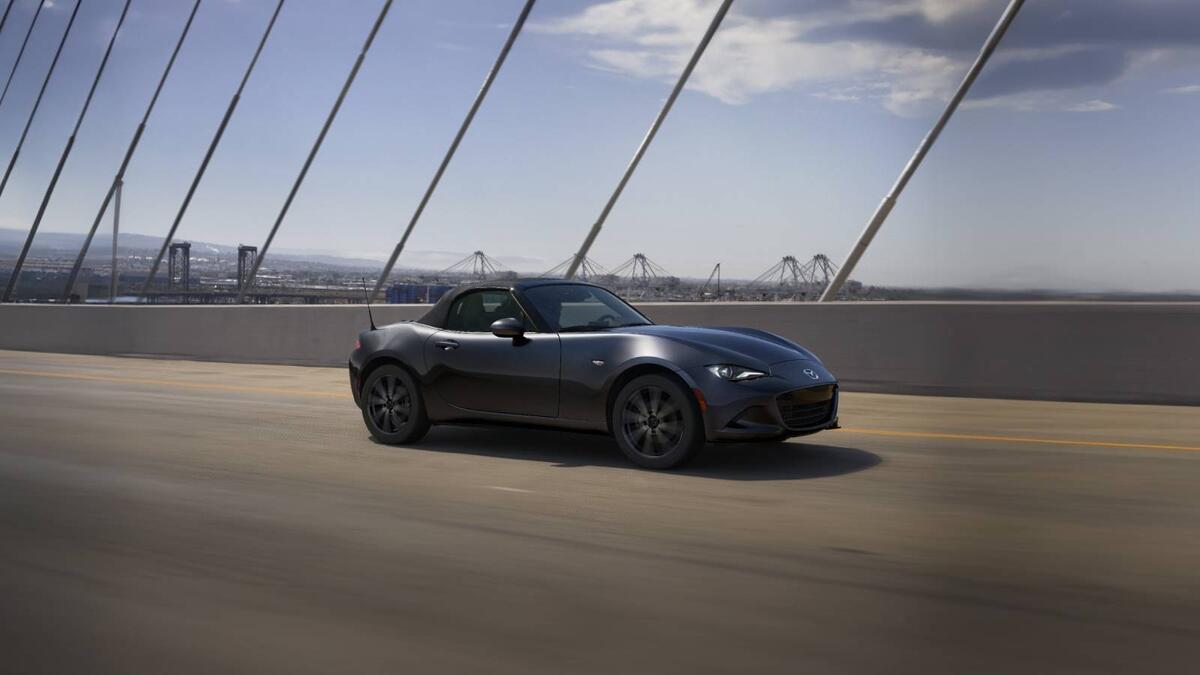
The Miata is a small two-seat car made for driving on roads, with a focus on feeling connected to the car. Newer versions can include safety features that help the driver, like systems that assist with things such as staying in the lane or avoiding collisions. That’s likely what the podcast is referring to when it mentions ADAS.
ADAS means “driver assist” tech. It helps the car notice things like lanes and traffic and can warn you or assist with steering and speed so driving is safer.
Using your phone while driving is dangerous because it pulls your attention away from the road. Even quick glances can slow your reaction and make it harder to notice hazards.
Lane keeping assist helps stop you from drifting out of your lane. It watches the lane lines and can nudge the steering or warn you if you start to wander.
This is a newer Chevrolet Blazer SUV. The point of mentioning it is that newer Blazers are designed to keep people safer in crashes, especially when compared to much older models.
An “overlap” crash is when the front of the car hits something but only part of the front end makes contact. That can be harder to protect against, so it’s a useful way to test real-world crash safety.
This is a safety organization that tests cars and studies how well safety features work. Here, they’re used as the source for data on how much newer safety tech helps prevent crashes.
Automatic emergency braking is a system that can brake for you if it thinks a crash is about to happen. It’s meant to help when you don’t notice in time.
Lane departure warning (LDW) alerts the driver when the vehicle detects it’s drifting out of its lane. It’s typically a warning-only system (beeps/visual alerts) rather than actively steering the car back.
Blind spot warning helps you notice cars you can’t easily see in your mirrors. If another vehicle is in your blind spot, the car alerts you—especially when you’re changing lanes.
AEB means the car can brake by itself in an emergency. If it thinks a crash is about to happen, it tries to stop or slow down to reduce damage and injuries.
“Fail safes” are safety features meant to help if things don’t go as planned. The takeaway is that you shouldn’t assume the car will always save you—you still have to drive carefully.
Adaptive cruise control is like cruise control that can react to the car in front of you. It helps keep a safe distance by slowing down and speeding up automatically.
They’re talking about the difference between helpful driving tech and real self-driving. The claim here is that you can’t just buy a fully self-driving system that lets you stop paying attention.
Waymo is a company that works on self-driving cars. The host is using it as an example of self-driving tech that you can’t just buy like a normal car option.
Consumer Reports is a group that tests products and publishes results. In this segment, they’re saying they studied how much extra driver-assistance tech adds to car prices.
The National Consumers League is a consumer advocacy group. They’re mentioned because they published a report about how much more expensive newer cars are becoming.
Trimflation is when car prices go up because more people are being pushed into pricier versions of the same model. Instead of adding value, the average buyer ends up paying more for higher trims.
Societal benefit is the idea that safety technology creates value beyond individual drivers—like fewer injuries, lower medical costs, and reduced emergency response strain. The discussion frames safety spending as producing large downstream benefits for the broader economy and public health.
The Congressional Budget Office is a U.S. government group that estimates what government policies will cost and what effects they’ll have. Here, they’re used to estimate the benefits of safety regulations in economic terms.
Stability control is a safety feature that helps the car stay pointed the way you’re steering. If the car starts to slide, it can brake specific wheels and reduce power to help you recover.
Traction control helps prevent the wheels from spinning when you accelerate. If a wheel starts to slip, the car cuts power and may brake that wheel to regain grip.
Crumple zones are parts of the car that are designed to crumple in a crash. That controlled crumpling helps protect passengers by absorbing crash energy.
Aftermarket replacement brakes are brake parts you buy from companies other than the car’s original manufacturer. Not all of them stop the same way, so it’s worth choosing reputable parts.
Shocks and struts help smooth out bumps and keep the tires planted. If they’re worn out, the ride gets bouncy and the car can handle worse, especially in emergency maneuvers.
Child seats are car seats made to protect kids during crashes. They’re designed to hold the child safely and are meant to be installed the right way, not just placed loosely.
A rear-facing child seat is the common setup for babies and small kids where they face the back of the car. It’s designed to better protect their head and neck in a crash.
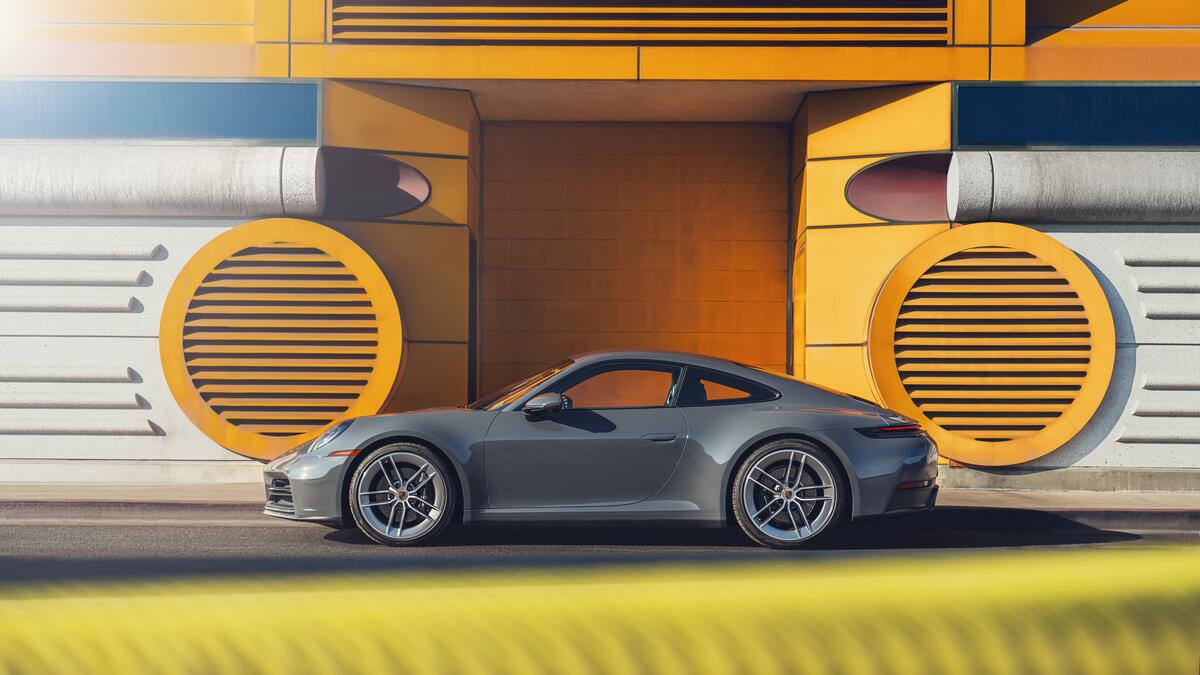
The Porsche 911 is a high-performance sports car built for fast, exciting driving. Some versions include an emergency feature that can place a call for help if something serious happens. The podcast is likely highlighting that safety/assistance capability.
A head-on collision is when two cars hit each other front-to-front. It’s one of the most serious crash types, so how the car is built can make a big difference.
Crash ratings are scores from safety tests that show how well a car protects people in crashes. They’re a quick way to compare different vehicles’ safety performance.
Crash avoidance technology is a set of safety features that try to help you avoid a crash. They can warn you and sometimes even slow the car automatically if they detect danger.
Crash avoidance maneuvers are test situations that mimic emergency driving. The goal is to see if the car can react safely when something unexpected happens.
It means the most grip your tires can get from the road. If you brake harder than that, the tires can lose grip and stopping becomes less effective—so the car’s systems try to stay right at that edge.
LIVE
Hey, welcome back. I'm Keith Barry, and it's a little bit of a different episode of Talking
Cars because we had so much fun last time. We had so much to talk about that we decided
to break it up into two separate episodes. Last week, we got some questions about something
I'm sure you've seen on social media. People have been talking about this supposed kill
switch that's coming to cars or a new surveillance law. A lot of that ties into concerns about
privacy, but a lot of it is also misinformation and straight up false. We spoke with our experts
and dug into what's actually happening so you can know before you purchase a vehicle.
So we're just going to dive right in, and I hope you enjoy it because we had a lot of fun.
A couple of media outlets occasionally, they'll call James McQueen over there and say,
hey, do you have an expert who can talk about something? If they can't find one, they ask me.
No, I'm kidding. There have been a couple of questions, and it's something that I've seen
on social media too across and also in legitimate news outlets saying, you have to buy a new car
before 2026 because by 2027, the government has ruled that there's going to be a kill switch in
your car, and it's going to be able to turn it off. Occasionally, this has an email forward from
the early 2000s kind of language. If you don't send this to 10 friends, your curse forever.
Exactly, exactly. Your cat's fur will shed more or something. I remembered us talking about this.
I remembered a demonstration we had here at the tracker. I remembered that there was a law that
was passed that had a 2027 date. I want to debunk some stuff here because the thing that people
are upset about sounds quite alarming, but it's not true. This has to do with a law passed in
2021. It has to do with drunk driving, right? Yes. The act that was passed is the Halt Drunk
Driving Act. What this is is by a certain year, eventually, vehicles will need to be
fitted with a device that passively monitors the essential BAC level of a driver. If that
level is determined to be at or above the legal limit, then the system will need to
prevent or limit the operation of the vehicle. It could be slowing it down. It could be keeping
you from going 100 miles an hour. It could be keeping you from starting the car.
It has not been realized yet, so it could be any of those things that you mentioned.
But the idea is to prevent drivers who have had too much alcohol to even begin driving their vehicle
or to limit the operation. Because in 2024, the number of people who were killed in drunk
driving accidents was almost 12,000 people. Every single day, 32 people die from a drunk
driving crash. It's one of the leading causes of road fatalities. Not wearing a seatbelt,
driving drunk, it's these things that feel preventable. It's a third of fatalities.
This is an effort to prevent all of those. In this bill, as we were saying, the requirements
are that it has to passively detect that. That means that it can be a path of breath test.
So instead of having to breathe into a breathalyzer tube, it's just you sitting in the car and
just breathing normally. So it's not like you have to blow into a breathalyzer or anything?
No. The other option is going to be touch-based. A lot of vehicles these days, if not all of them
at this point, you press a button to turn the vehicle on and off. The idea would be that there
would be a sensor in that and it could detect your BAC and then it would potentially limit
the operation of the vehicle. There's also work with direct driver monitoring systems,
which might be where some people are getting that misconstrued. Direct driver monitoring is
typically associated with the use of L2 automation. So lane-centering assistance combined with adaptive
cruise control, just ensuring that the driver's eyes are looking at the road in order to be able
to use that. And again, that's not a kill switch either. That's just saying, in order to use these
systems, you have to be looking at the road. If not, we're going to give you alerts and then not
allow you to use those systems simultaneously, but you can still drive. So there are a bunch of
companies that are working in this in the background and the technology is being developed.
So as part of NHTSA being told that they had to come up with standards for this and figure it out,
so Congress told NHTSA they had to figure this out. And NHTSA then goes to Congress every
so many months or years or whatever and says, hey, here's where we're at. And the most recent one,
they said, not happening anytime soon. Yes. So every single year at this point,
they have to go to Congress and tell them exactly what you're saying of, this is not going to be
part of the safety standard because it's not ready yet. And so they did that this year and
they said that the technology is not there yet and they're not going to implement it until
it's good to go. They haven't even come up with a standard to test it to find out if it's effective.
So there's like a little chicken and egg thing there, but as far as, I mean, it's not, the
2027 cars are already being built. Yeah, we have one out in the garage. It doesn't have it on it.
I just want to say like the technology, they've been working on this for decades.
So it is close. It is going to become a reality, most likely.
Not this year. And we can understand the concerns that people have about it. Anything
about that keeps you from starting your car. There's a lot of things that can, these are,
we know cars break. I mean, I'm a mechanic and cars break. That's what they maybe do best.
And certain systems, and this strikes me as a system that would be difficult to diagnose.
And what level of OE support is there? How do you diagnose it? How do you repair it?
And what is the cost to repair it eventually? If this system fails, does your car not work?
And you have a used car that's out of warranty. I have to spend, I don't know, thousands of dollars
for the system to work. That becomes a big burden on people who maybe can't afford to do that.
And these are those things that are going to go into, when they come up with the evaluation
protocol, there's always a dollar amount. And it's always puts a dollar amount on everything.
But right now, we can just sort of unequivocally say, this is what you are hearing about. If you're
reading something online that says, by 2027, cars are going to come with mandatory kill switches.
First of all, with a warrant on star can already shut off a car if it's stolen. So that's been
happening for decades now. But something like this, you know, the systems, they're not designed,
they're not, they're designed to process on the vehicle. They're not designed to call the police
or pull you over. And that's really important. It is not intended to do anything past the point
of just detecting that a driver, their BAC is higher than or at the legal limit. And that's,
that's it and prevent or limit the operation. And you're not calling the police, not telling
your insurance company, it's just designed to prevent a driver who is drunk from driving.
And more importantly, for now, it's not happening yet. So don't go out there and rush to buy a 2026
car on the lot. This is sort of, you know, this is some misinformation. And I don't know how it
happens, but it's the internet. So one thing that folks might be confusing it with is what you
mentioned was the driver monitoring system. So a lot of, I mean, I just drove here in the Toyota
BZ and, you know, I'm driving by and I see a cool old car on the side of the road and like so many
people here, I'll look at and say, gee, what's that? And my head's like this and the car says,
put your eyes back on the road. And that's because there's an infrared eye tracking built in.
That's what's that's direct driver monitoring system. Yes. And that is also something that
they're considering doing for alcohol impairment because there are certain eye movement patterns
that can be associated with alcohol impairment or another substance impairment. That's the
research that we're also working on. Or a medical event, in drowsiness as well.
Drowsiness, absolutely. So this, this technology is hopefully going to be able to be used across
multiple different types of driver impairment, not just drunk, but drowsy, like you said,
um, distracted. But the car didn't turn off. No, it's, it's warning you. And had you not, had
you been incapacitated, there are vehicles that can bring the vehicle to a stop and can call emergency
services. And there's a decent amount of medical, I mean, you occasionally, you read about these.
Someone had a medical event while driving and they, you know, something, something bad happens
as a result and that can happen. So that's why they're working on these, you know, automakers
are working on this, but it's not, it's not as scary as some folks are making it sound.
It's not an invasion of privacy, the way that folks are necessarily making it sound. And more
importantly, it's, it's not a law that's going into effect in 2027. So we can get past that.
And I'm really not an expert in any of this, but I think I will point out that rules and laws exist
because things happen in abundance, right? It keeps happening, keeps happening. So in school,
there's reasons why there's rules. I used to be a high school public, public high school teacher,
and there's rules because kids did dumb stuff. So if people are really concerned about this in
the future, I mean, don't drive drunk. That is the one. I mean, or if you see someone who's going
to get in the car, you know, don't let your friend drive drunk, all your family member drive drunk.
I think someone said that. And I mean, if those numbers could be drastically reduced, we wouldn't
have to even be looking at technology like this as well. So I think just in terms of
operating a vehicle, we all just need to be responsible and do the right thing. And also
for the people around you as well, do the right thing. Because it's not only just them,
but, you know, you can be a good driver, but you can get T-boned going through an intersection.
There's really nothing you can do about that. And often it is the people in the car that get hit
that are never sober and just doing the right thing. So don't drink and drive.
Yeah, absolutely. We have a question we got through talkingcarsaticloud.com from Kazuki,
who asks, in your podcast, I remember someone said, you should be driving a newer car because
it's safer. And I couldn't fully agree to it. And not just because I drive a 30-year-old Miata.
Good for you, Kazuki. ADAS, the Advanced Driver Assistance System, has been developed
rapidly thanks to automakers and regulations over the past decades. But statistically,
the number of accidents, and we like to say crashes now because there are no accidents,
and death are not so reduced. One of the main reasons is cell phone usage while driving. And I
think ADAS functions such as adaptive cruise control and lane keeping assistance systems are
giving drivers more opportunities to use their cell phones while driving. Should we really be
driving newer and safer cars? What do you think? I'll go to our ADAS expert. Yes.
This is a great question. There are so many things that go into this question. So this,
I want to make sure we get to it all. But should we really be driving newer and safer cars?
Yes, absolutely. Over the course of many decades, there have been improvements
in several different areas of the vehicle. So there's the improved ability to actually
avoid a crash through systems and also the mechanics of the vehicle and being able to
identify and avoid vulnerable road users like cyclists and pedestrians. There's also been
improvements in the actual crash safety of the vehicle. So the materials used and airbags
and other technology that can actually preserve the space around the occupants and the rest of
the metal can crush around it so that that occupant space is not intruded upon.
There's that great video that the insurance institute for highway safety just put out.
Yes, it was a 2026 Chevy Blazer against a 1996 Blazer.
And you can see that when they have a, what is it?
It's the overlap. Yeah, it's the overlap. So like if someone goes over the center line,
again, something that might not even be your fault. Someone's looking at their phone,
they drift over the center line and bam, and you hit off center. Yeah.
Yeah. So they used test dummies, of course. And the dummy in the 1996 one was projected
to likely have fatal injuries, whereas the driver of the 2026 Blazer would walk away with
bumps and bruises. So there's a huge improvement of this crash technology.
Yeah. I want to talk about the systems though that he was referring to, Kazuki was referring to
of adaptive cruise control and lane keeping assistance. So the IIHS, the Insurance Institute
for Highway Safety, they did a study on crash reduction benefits of current safety features
on data from 2009 to 2015. So six years of data. And they found...
And these are some of the early iterations of these systems.
Yes. So hopefully, hopefully they've been...
We're getting better, yes.
Yes. So A, B, front to rear crashes, reduced crash rates by 50% and reduced injury rates by 56%.
That's a huge number.
That's the automatic emergency braking that you should never encounter unless you're a serial
Something happens. And then when you add in the pedestrian detection,
that's the 27% reduction in crashes. So that's if a pedestrian walks in front of you,
the system is going to recognize it and hit the brakes. For lane departure warning,
so this is specifically single vehicle crashes, side swipes, and head-on crashes due to the
vehicle departing the lane, 11% reduction in crash rates and a 21% reduction in injury.
So those are just warnings. Now we have lane keeping to actually provide some sort of
assistance in returning the vehicle to the lane and avoiding departing whatsoever.
And actually the lane departure warning, they found that the fatal crash rate reduced by 86%.
So this is definitely effective. It's astonishing. And blind spot warning,
14% reduction in crashes, rear AEB for backing up crashes, 78%. I could go on and on.
They are definitely beneficial. I do want to say though that they are not 100% reliable.
And I highly, highly recommend getting a new vehicle with as many safety features as you
can get or you can't afford to get because there is a return on an investment and this type of
things. So I want to talk a little bit about the impact and the cost of these because there's
always the question of, well, I'm not asking for these systems. They're being put on my cars
and they're costing money. And the sort of person who chooses a 30-year-old Miata wants
nothing between them and the road. And honestly, I think, Kazuki, you're a different type of
driver than most people. If you're driving a 30-year-old Miata, you are locked in.
You are aware of everything that's going on. You're not on your phone. If you're driving,
a lot of other cars out there, if you're commuting to work, you've got kids, whatever,
you've got all kinds of things going on, these systems are things that you're talking about
that should be fail safes. You should not be relying on these systems. Oh, it doesn't matter.
I'll just put on the, and some of those are the non-safety systems, the things that are the...
The adaptive cruise control and lane-centering. Yes. I'm so glad you brought that up because
our consumer reports, and we do not see those as safety systems. Those are convenience features.
Yes. So we are advocates for putting safety features that have proven benefits and not
those that are convenience. And ones that might entice you to look away at your phone.
Yes. As if your phone wasn't enticing enough. The whole world is on there.
Yes. And that's absolutely a valid concern. Yeah. So we partner with MIT. They have an
advanced vehicle technologies consortium. And so they do a lot of research, real-world
research naturalistic studies about different vehicles of using their level two system. So the
adaptive cruise control and lane-centering versus manual driving. And sure enough,
drivers do engage more in other tasks than driving when they are using adaptive cruise
control and lane-centering. They tend to look at in-vehicle displays more and interact with
personal devices more. That's absolutely certain. Yeah. And so that's why we also think that is
so important to have that driver monitoring system on the vehicle because they can at least ensure
that the driver is looking at the road. Yeah. Yeah. And there's no commercial available self-driving
feature today. I mean, there were Waymo and those things. You can't go buy one of those.
No. And so you are in charge of the vehicle. So it doesn't mean I put this on and I can check
out and look at my phone. It also doesn't mean you can drive with your knee and kind of be looking
at your phone and texting while driving. Yeah. So there's a lot packed into this question.
I think at the end of the day, the more safety features you can get, like I said,
the better. I do recognize that there is cost. We did an analysis, Consumer Reports did of
vehicles, model year vehicles, 2003 through 2021 on our own fleet of vehicles that we purchased,
which as a reminder, we purchased the vehicles with the highest volume. So we purchased what
everyone, most people are going to buy out in the real world. And we found that there was,
after adjusting for inflation, there's no, it was not statistically significant that a vehicle
price increase was due, attributable to technology improvements. Yeah. So cost increase was not
due to the addition of all these technologies. It's due to those nice leather seats and big screens.
No, honestly. So there's another report by, I was so interested about this, but the National
Consumers League, they did a more recent report and they found that the increased cost per new
passenger vehicle is about $630. And the majority of others comes from the cost of the manufacturing,
trimflation, which is selling more premium. Trimflation, I love that. And then also the
selling of more SUVs and larger vehicles than smaller ones, which can cause greater harm to
people in smaller cars like your Miata and vulnerable road users. Yeah. So there's a lot
of other factors. So when I, I do want to say though, point out that the $630, those are things
like airbags and anything that's safety related, but it's backup cameras. Yeah. The National Car
Assessment Program doesn't require like lane departure warning, all of those things yet.
Then those aren't included in there. So that number hasn't been factored in yet. But
on average, every dollar invested in safety technology has a more than $24 in societal benefit
generated from that. Every single time you see like a regulation from NHTSA, there's a congressional
budget office looks at, and it can be a little grim, but it can be, well, it saves this many
lives, which will contribute this much to the U.S. economy. Yeah, they do talk about it. It's
weird to talk about it in economical terms, but that's kind of an easier way to think about all
the impact of it. But it's including stuff like prevention of lost wages, medical costs, emergency
services costs, all of these things that factor into more than just there was a crash and, you know,
a personal loss. A personal loss. Yes. So there's a huge investment. There's a lot of research that
goes into this to making sure that anything that is required by NHTSA is going to have a backing
of research of why it's been added. A net positive. Something that I'm sure you see. So I know we
hear a lot about, oh, geez, I had to spend all this money to get my windshield fixed because
everything had to be recalibrated because there are all these new sensors. Yeah. But these sensors
are also preventing crashes. So we've got this interesting and there's some give and take there.
And if you never crashed your car, you might not think you realized the benefit, but you actually
did because you didn't crash your car. Yeah. It's, you know, if you crashed your car, you're
actually not seeing the benefit. No one has ever like, man, I'm glad I had those airbags go off.
Yeah. Yeah. And when you're in a emergency situation, like in the middle of it, you want
all the help you can get, no matter what that's from, whether it's avoiding the accident. So
your newer cars have better stability control, traction control. They can help you recover
a slide or something a whole lot easier. So I mean, that's an aspect that these 30-year-old
cars don't have. Not to mention, you know, Matt, you talked about crumple zones and more airbags
and stuff like that. And Dave can roll the footage again of the two blazers smashing
because I know people love that. Yeah. But the other thing I think too, being a mechanic,
you're under these cars a lot or we see, you know, as a mechanic, we're under cars.
A 30-year-old car, especially if you live in the Northeast, Midwest, it's going to be rusty to some
degree unless it's like a garage car that only goes out when it's nice. It doesn't have even the same
structure that it had when that car was new. And there's a lot of scary cars on the road.
Not to mention, I mean, shocks and struts are worn out and, you know, you have aftermarket
replacement brakes that might not offer the same stopping power as original tires. There's a lot
of things that happen over the car's 30-year lifespan. Everyone's like, oh, that car's fine.
It only has 75,000 miles on it. Yeah, but your bushings are 30 years old and they are shot.
So, you know, you don't have the same stability out of the car and things like that. So it's not
always just the on-the-level service stuff that we think about. It's some of that behind-the-scenes
things. And don't get me wrong. I love old cars. I own old cars and I will usually defend old cars.
But there's a lot of value in these new systems, especially if it is just your daily driver.
Yeah. You know, because you could be distracted thinking about, you know, the meeting you have,
like in the morning at work or whatever, right? You're maybe giving that a little more mental
attention than you should on your way in. But also, you know, cars that you put your family in,
like we test child seats here. You want to put your child in a really good child seat.
Yeah. You don't just throw them in the back seat like they used to.
Or looking at really old child seats are kind of scary. They had like a cage one. He's putting
a kid in like a dog cage and putting them back seat. Yeah. So you want all the help you can get
when something goes bad and the new cars are really the help in those situations, both before,
during, and then after. Having a car that can call 911. You know, the person comes over, you know,
if you can't get out of a car. That's a big one. The automatic
I've been in the head on collision. It was basically like the moderate overlap front.
And I was in like a 71 Chevrolet C10. It was rough. Luckily, it was slow speed.
We were not the ones who crossed the center line. But I hit the metal dashboard for sure. I did
have a seatbelt on. But to get out of that car, I actually had to like push the door off its hinges.
I was stuck in the car and fire and stuff. They arrived pretty soon, but like you want to get
out. Yeah. So it was just physically just shoving this door open. And luckily it was an older
vehicle and actually one of the hinges broke. So I wasn't like, like, you know,
Superman fighting past the door latch and a hinge. Some of the things on the body had broken. So I
literally had one latch and just the fact that it was all jammed up. So I was able to like kick
this door open and get out of the car. But it was rough. And I don't ever want to be in the
head on collision in any vehicle. Yeah. But if I had the choice, I would want something as new as
possible. And I do want to say that bigger car does not mean safer car. No, no, because
the crumple zones really matter. So I would absolutely go onto IHS's website and check out
the crash ratings for a vehicle that you're interested in, because you'd be surprised.
I mean, if I can give a plug for our own, and this is a lot of this is Emily Thomas' work,
who's frequently on here, is for our safety verdict to consume reports. We take into account
the crash avoidance technology that the sort of ADAS things we're talking about. We take,
you know, crumple zones and all those things, the crash protection. But we also take into
account Kazuki's 30 year old Miata. We take how nimble a car is and how it can avoid,
you know, the stopping distances in some cars are 20 feet longer than other ones. If you're
driving a big heavy car, we do out there on the track, these crash avoidance maneuvers,
something falls off the truck in front of you and you have to swerve like that or go around,
you know, a moose or something like, you know, you break for moose. So these tests are to see
how nimble a car is to empower the driver to avoid a crash. And that's aside from some of the
technologies aside from stability control. We factor then into that safety. What's nice is
the technology also takes out some of the driver's decision making and reaction time.
Yeah. So when you're traveling at highway speeds, you're covering a lot of ground quickly.
And something happens in front of you like, do I need to break? Should I break? I think I should
break. How hard do I break? You've wasted all kinds of break time. Getting your foot from one pedal
to the other. So the car makes a decision. Yeah, it happens very quickly. But I would also as a
driver get on the brakes early, get on the brakes hard, let the ABS do its thing. Try out your ABS
before you actually use it. Yeah, in a safe place. That kind of thing. See what happens. You're
actually gonna be shocked. Most people would be shocked at how quickly a car will stop with the
physical forces feel like and a full ABS stop from 60 miles an hour. Now, we got to be clear. Do
not try out your AEB. Try out your ABS. Do not try out your AEB. But what it's going to do,
it's going to be the same effect. AEB will break at the full traction limit. ABS will come in.
And it's kind of a violent thing. And most people never experience that. Or when they do,
honestly, it happens so fast, you don't really have time to process it. We're doing a safe place.
And when we test it, it's time after time after time. So, Joe and myself would do that.
We're observing things in the car and time slows down for us because we're very experienced in that.
But know your car, know how it behaves, and let those systems work for you. And I mean,
again, you can't be mad that you avoided a crash. It would ever happen. Like, all right,
now I'm delayed getting to work or whatever. But like, or like my coffee spilled. But that's
better than crashing. So, yeah, I would say, yeah, I mean, it would be great if we were all
locked in, driving fun to drive cars, paying attention to every task we're doing.
Unfortunately, that's not the world we're in. And we have to build cars for the world we're in.
And unfortunately, that does mean, you know, sometimes a robot's going to be faster than
even your reflexes behind your sports car. It's going to apply more breaking power than
you think you need to. It's going to help you out. Yeah, absolutely. Exactly. So, great questions.
We love questions about stuff like this. And, you know, if you want to send them to TalkingCars
at iCloud.com, you can send a video question too. If you want to show off your classic car to us and
tell us why we're wrong and why you're a safer driver than everyone else. One of my favorite
stories. The first time I ever took a statistic class in college, the professor said,
everyone here who's an above average driver, raise your hand. And like the entire class
raised their hand. And that was to teach us about, you know, selection bias. Actually,
I don't even remember that. I guess that's why I write about cars and I don't do statistics. But
anyhow, our statisticians over there could explain it. TalkingCars at iCloud.com. I actually have
a funny story though, really quickly. But it's going along with what you're saying. People think
that they're better at things than they actually are. People who say that they are better at multitasking,
so like driving and texting or something like that are actually much worse than people who
say that they're not that great. Wow. So, if you have the confidence that you're like, oh yeah,
I have no problem changing the song and while I'm driving, like most likely,
you're going to struggle more than the average person. It's just an extra level of narcissism.
Although, although I will say there is one thing you can multitask. And that is if you're
watching us on YouTube, there is a way that you can donate to us. So you'll notice that we haven't
talked about like mattresses or like different like supplements or anything like that. Exactly.
I don't have like a can here of something that I'm trying to tell you that you should buy and we
buy it too. In fact, if you pick up the print magazine, you won't see any ads for cars or
anything. If you go to cr.org, you also won't see ads. You'll see ads for us because we like us and
we like talking about us. But that's because we're a non-profit and we don't have that influence
from advertisers. We take donations and you can help keep us talking cars with just a couple
of dollars a day, can keep Mike out under the hoods of the cars in our garage and feeding them
with the oil and electricity and gas that they need. So we thank you to everyone who's already
donated and just, you know, that's who we are. It's a special place. Thanks for talking cars with us.
We'll talk again soon.
Original notes
In this episode, we separate fact from fiction about viral claims that a government-mandated "kill switch" for cars is coming in 2027. Our experts explain what the law actually says, how alcohol-impairment detection technology is being developed, and what that means for you when you make your next car purchase. We also answer an audience question about whether newer cars are really safer than older models and how advanced safety systems differ from driver convenience features.
SHOW NOTES:
0:00 - Intro
1:10 - The 2027 Car 'Kill Switch' myth
2:05 - What is the HALT Drunk Driving Act?
7:51 - Direct Driver Monitoring Systems (DDMS)
10:30 - Audience Question: Are newer cars really safer?
13:03 - How Advanced Driver Safety Systems help prevent crashes
15:54 - Convenience Features vs. Real Safety Technology