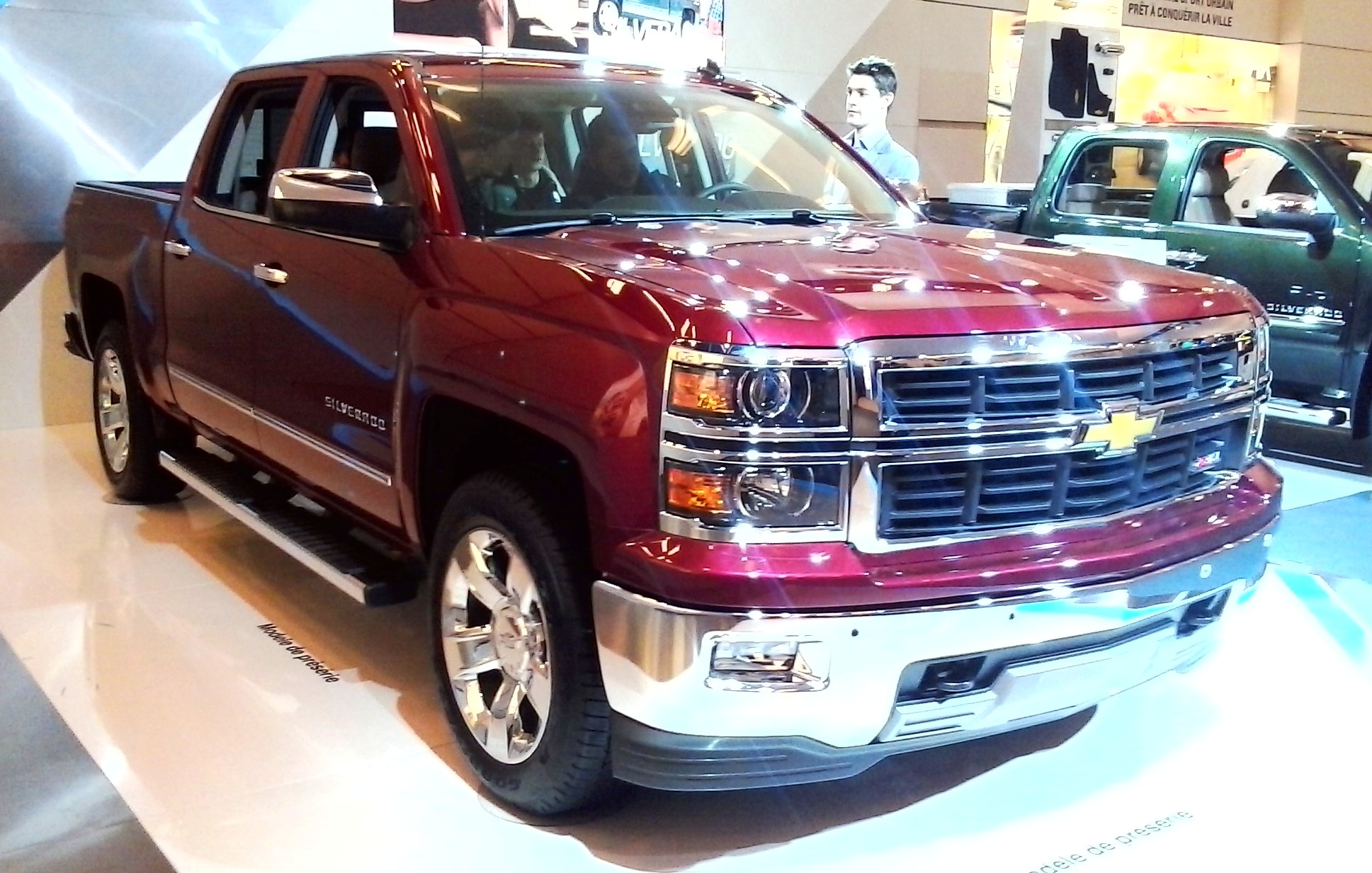
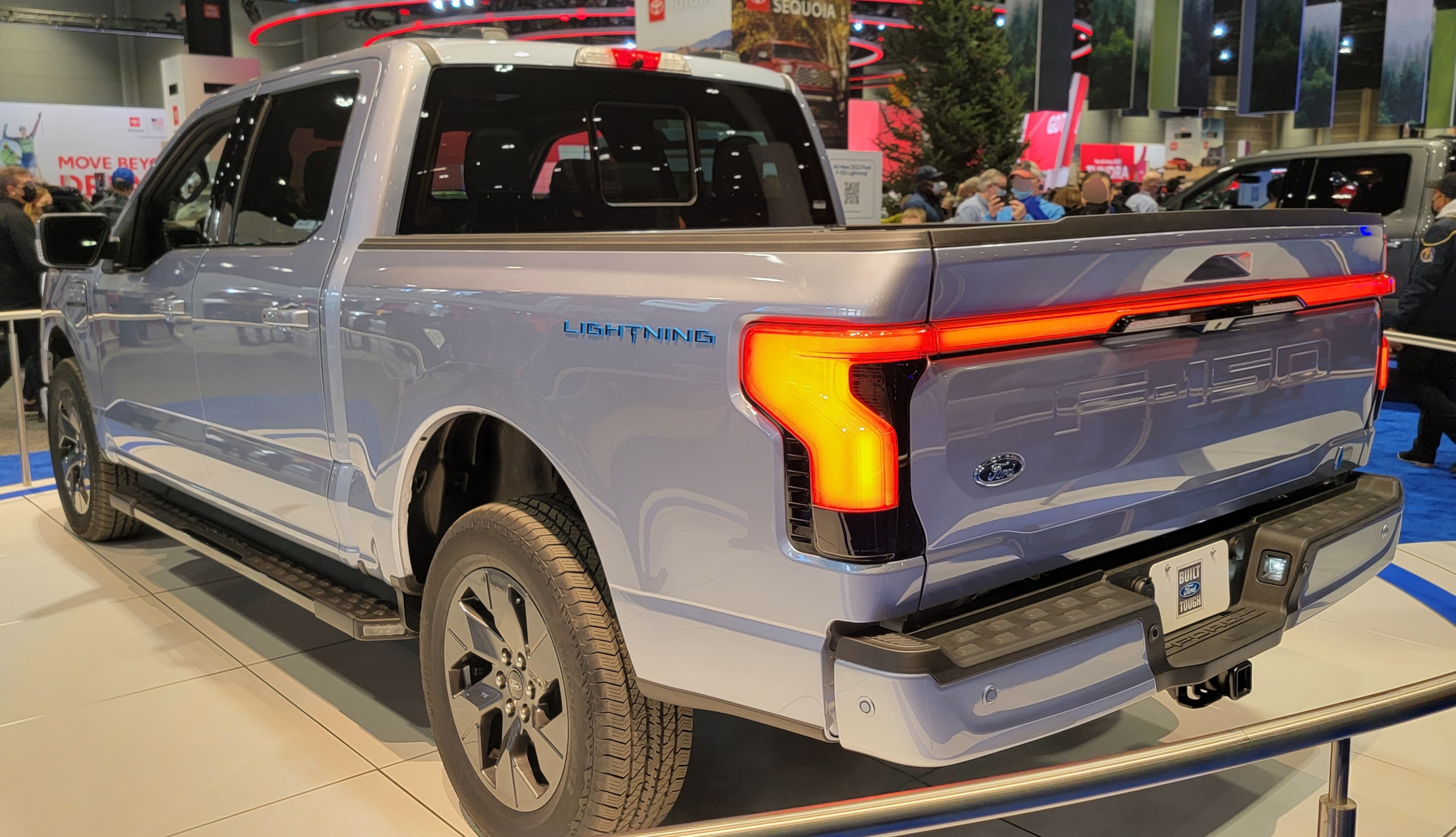
A Chevy pickup truck is a type of vehicle made by Chevrolet that is designed to carry heavy loads. The two-wheel drive version is less effective in snowy or icy weather than a four-wheel drive version.
Two-wheel drive means that only two wheels of the car get power from the engine. This can make it harder for the car to grip the road, especially when it's slippery.
Rear-wheel drive means that the back wheels of the car get the power from the engine. This can sometimes make it harder to drive in slippery conditions like snow.
Anti-lock brakes are a system that helps prevent your car's wheels from stopping completely when you brake hard. This means you can still steer your car instead of sliding out of control.
Apple CarPlay is a way to connect your iPhone to your car, so you can use apps and listen to music right from the car's screen. It's designed to make it easier to use your phone while driving.
Car
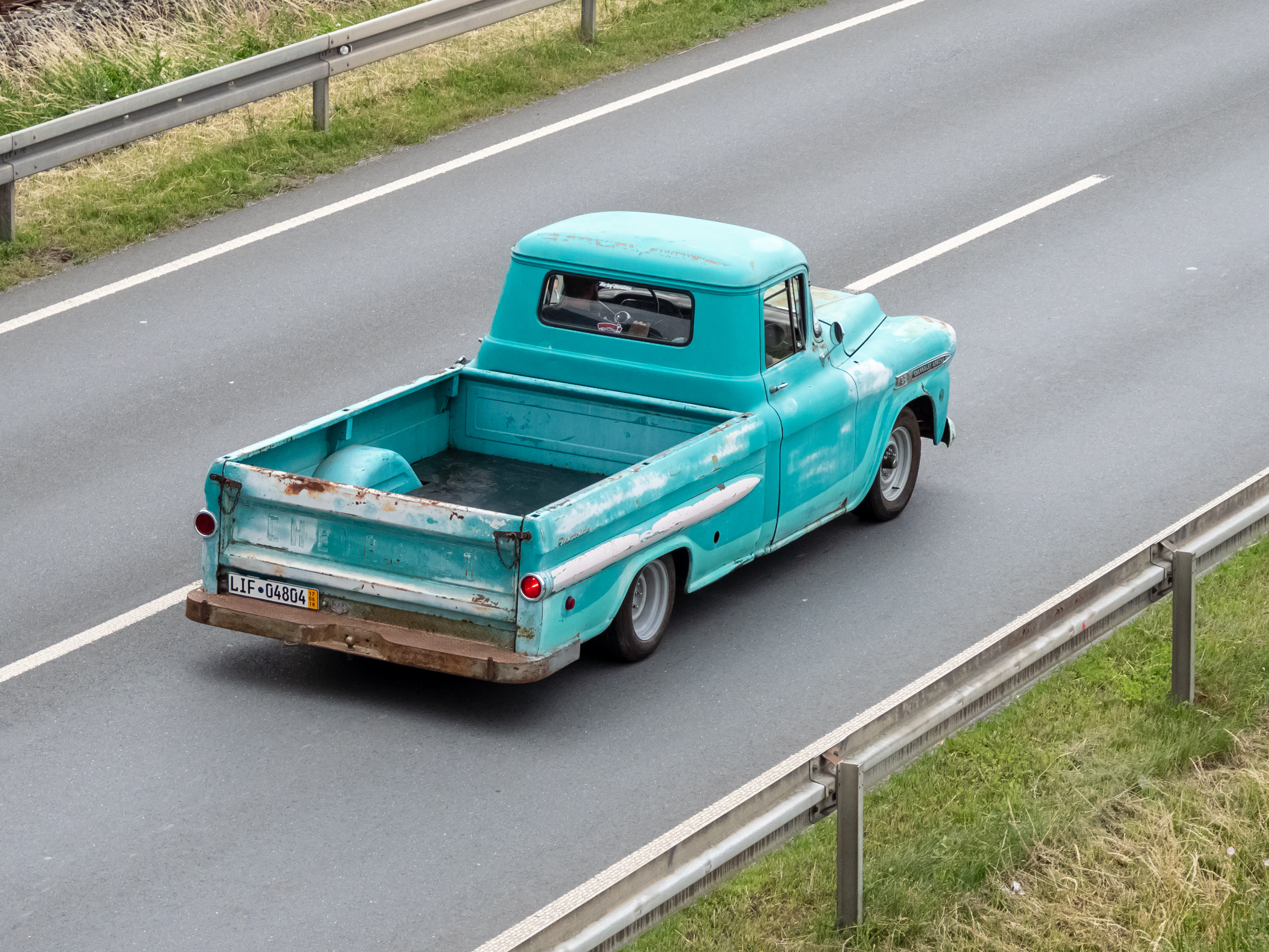
Chevrolet 1957
The 1957 Chevrolet is an old car that many people admire for its classic look and history. It's a popular choice among car enthusiasts.
The master cylinder is a part of the brake system that helps push brake fluid to the wheels when you press the brake pedal. It's important for making the brakes work.
A proportioning valve is a part of the brake system that controls how much pressure goes to the front and back brakes. It helps the front brakes work better since they do most of the stopping, which keeps the car from skidding.
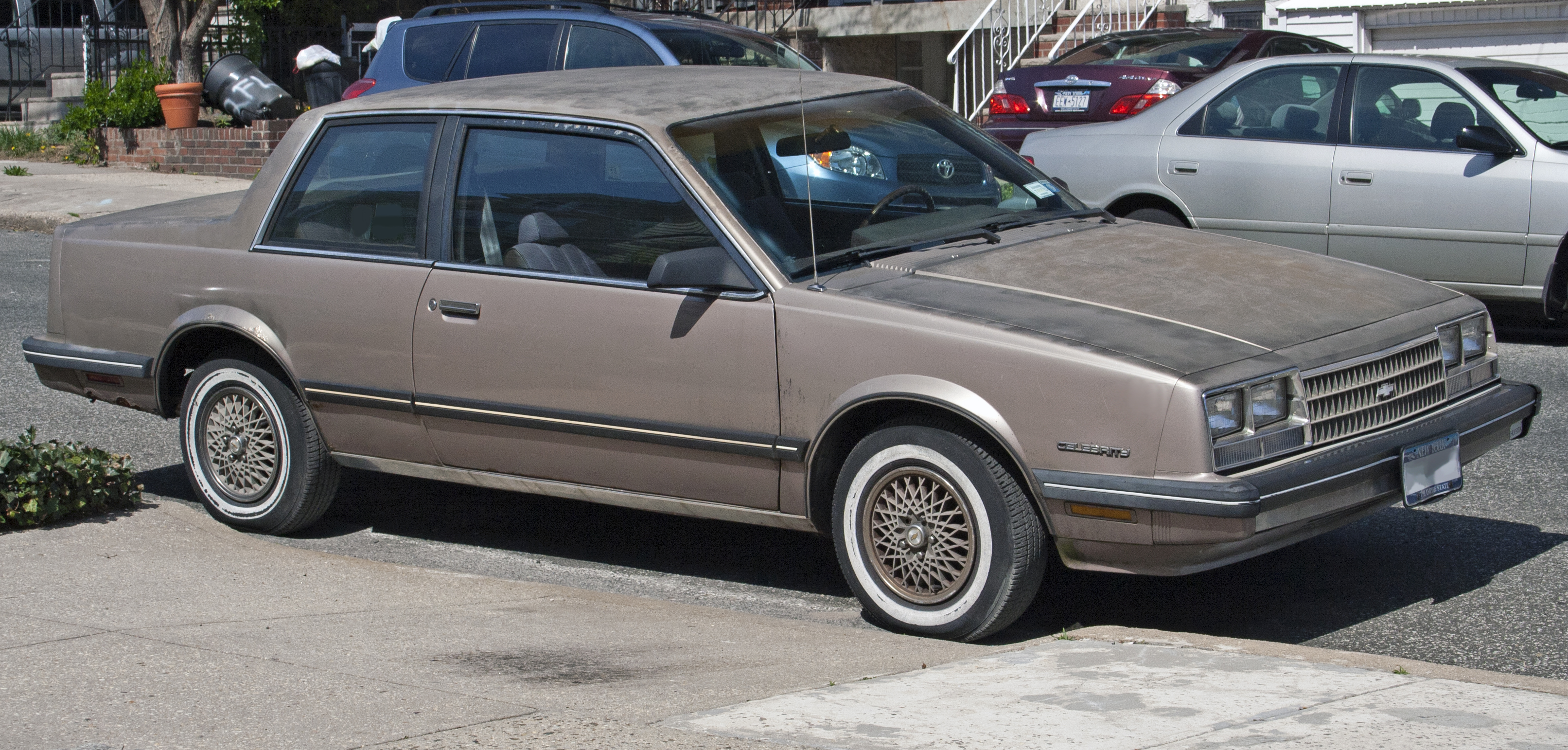
The Chevrolet Celebrity Eurosport is a type of car that was made in the 1980s. It's a mid-size vehicle that had a sportier look and feel than the regular version.
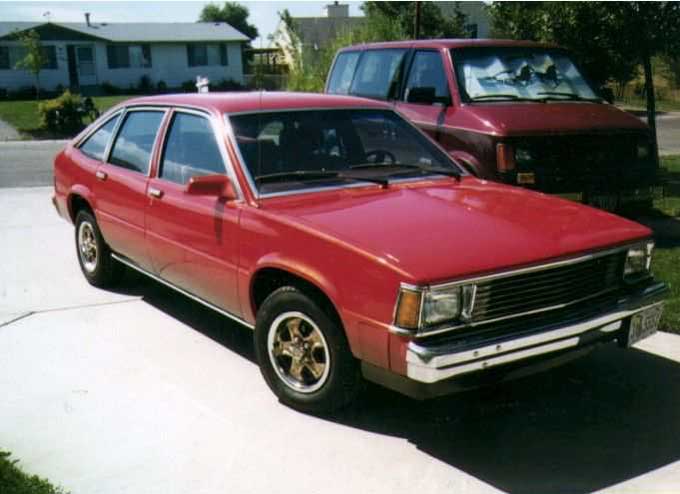
The Chevrolet Citation was a small car made by Chevrolet that was popular in the late 1970s and early 1980s. It was known for being front-wheel drive, which was a newer technology at the time.
Traction control is a system that helps your car keep its grip on the road. If the wheels start to spin too much, it can slow them down to help you drive safely.
The Chevrolet Corvette is a fast and stylish car that many people love because it looks cool and drives really well. It's been around for a long time and is often seen as a symbol of American cars, making it a popular choice for those who want a fun driving experience.
Car
Chevrolet Euro Sport wagon
The Chevrolet Euro Sport wagon is a type of car that combines the features of a station wagon with a sportier look. It was made in the early 1980s and is designed to carry more passengers and cargo.
The rear hatch is the back door of a car that opens up to let you put things in the trunk. It's a common feature in certain types of cars like hatchbacks and wagons.
The bumper is the part of the car that helps protect it during minor accidents. It's located at the front and back of the car and can get damaged easily.
The laws of physics are the rules that explain how things move and interact. When driving, these rules affect how your car behaves when you speed up, slow down, or turn.
The 'rear end' is the back part of a car. When it loses grip on the road, it can slide out, which can make the car hard to control, especially during turns.
Tread depth is how deep the grooves are on your tires. If the grooves are too shallow, your tires won't grip the road well, which can be dangerous, especially in bad weather.
Front wheel drive means that the power from the engine goes to the front wheels of the car. This can help with traction, especially in bad weather, but it also means you need to take care of your tires to avoid uneven wear.
Aftermarket filters are parts made by other companies to replace the original filters in your car. Sometimes they work just as well, but other times they might not be as good as the ones made by the car's manufacturer.
The contact patch is the part of the tire that touches the ground. A bigger patch can help your car grip the road better, which is important in snow or ice.
The Chevy Cavalier is a small car made by Chevrolet. The 2024 version is designed to be affordable and practical for everyday use.
LIVE
Hey folks, me again, Lenny Lawson, the car guru, today I'm going to talk about driving
just a little bit for you people who are afraid of driving when it snows or it's icy.
Is that irrational fear or irrational?
I think for a lot of people it's rational because they've never practiced driving on
slick roads.
You know, I can jump in my vehicle, whether it's two-wheel drive or four-wheel drive,
and I have no fear of what's going to happen on the road because I have experience and
I've practiced and I've played with it.
Plus, I know what the car is designed to do for me.
My grandson called me the other day.
He lives just south of Cincinnati and he was out driving in his two-wheel drive Chevy
pickup truck, a terrible snow or ice vehicle, and he said, well, pop, pop, I know what I'm
doing.
I said, Canon, you're 17.
You've been driving for a year.
You probably don't know what you're doing, but you know, you tell a teenager that they
don't know what they're doing and all of a sudden they'll plug their ears up and never
listen to you again, but it's true.
Now, certain vehicles are definitely worse on slick roads than others.
A two-wheel drive pickup truck is one of the worst because all the weight's over the front
wheels, your engine, your cab, and then back in the back you just have a bed and it's very
light back there and it's two-wheel drive and it's rear-wheel drive and it's just not
going to go anywhere.
Unless you have snow tires on it, that's a little bit better, and if you have chains
on it, it's a lot better.
But there's two other things you have to be able to do, right?
You have to be able to steer and you have to be able to stop.
And so we're having this, or I'm having this discussion with Canon and he said, pop, pop,
I know what to do, how to stop.
I just got to pump my brakes.
And I said, see, that's just more evidence that you really don't know what you're doing.
See, I was thinking this.
I don't know if I said that or not because I wanted him to keep listening to me.
I said, Canon, that vehicle is equipped with a technology that's been around for a long
time and it's called anti-lock brakes.
What's that?
Well, that pumps the brakes for you way faster than you could.
And it's designed to keep the wheels from locking up and you not being able to steer
the vehicle.
So what am I supposed to do?
Well, you're supposed to just mash on the brake.
Won't they lock up?
No, that's why they call it anti-lock brakes.
So what will happen when you mash your foot on the brake?
You're going to feel some feedback or pushback on the brake pedal.
It does feel strange, but that's what it's supposed to do.
That's the anti-lock brakes working.
And so you apply your foot to the brake as hard as you can, keep it down, and then you
can still steer the vehicle.
Now, if you're on a sheet of black ice, you're probably just going to keep going straight
ahead unless you're on a slope that maybe goes to the side and then you're going to
go with that.
You'll probably end up hitting the curb.
There are situations that will happen where even anti-lock brakes won't get you stopped.
But that's what they're designed to do, folks.
I mean, if you try just pumping your brakes, you are offsetting what the vehicle is trying
to do.
You're actually going to stop it in a much longer distance than it would have taken if
you had just done what I'm saying, keep your foot firmly applied on the brake.
Then you still have some directional control over the vehicle.
You know, that's true on dry pavement as well.
That's what anti-lock brakes are supposed to do.
If you just slam on your brakes, even if it's just been raining a little bit, you slam
on your brakes and you're skidding, if you just keep your foot on the brake with a vehicle
with anti-lock brakes, what vehicles have that?
All vehicles have it now.
They didn't 30 years ago, but they do now.
It's mandated.
So if you're driving a vehicle that's less than 30 years old, it's got ABS, anti-lock
braking system.
So this is important to know.
A lot of people don't.
You may not have.
I mean, they don't talk about it anymore.
You know, what are they promoting now on vehicles?
Infotainment systems, Apple CarPlay.
Sometimes they'll talk about blind spot monitoring and cross traffic alert, you know, those types
of technologies.
You know how most of those work and how they pick up their information so that they can
function the way they're supposed to because of the ABS brakes, because the analog brake
system has these sensors on every wheel that monitor wheel speed.
If there's, if it senses an unusual wheel speed difference between your left front
wheel and your right front wheel, the ABS brakes will activate as long as you put your foot
on the brake.
You know, if your left wheel is on ice, your right wheel is not.
It's going to send power and stopping power to the wheel that has traction, not to the
one that's spinning.
Yeah, it's pretty smart.
That's why they call it four channel ABS.
Now I've got a 1957 Chevrolet.
I can't remember whether it has that or not.
Probably need to talk about a little bit older vehicle on that because there was just one
brake line coming out of the master cylinder where all the brake fluid is.
When you put your foot on the brake, the master cylinder pushes a valve which forces brake
fluid to all four wheels at the same time.
So you got one source of brake pressure that's pushing brake fluid to all four wheels.
Okay, so there's not a whole lot of control there.
They put something on there called a proportioning valve that will send more pressure to the front
brake calipers than to the rear because the front brakes do most of the stopping.
Well then they came out and they said, well, that's not enough.
We need to separate the front from the rear and not just use a proportioning valve.
So that's what they did.
That's probably what's on my 57 Chevy.
Well see now with these modern ABS systems, there are different brake lines going to each
of the four wheels.
Or if your vehicle had six wheels, it would have six of them.
But most people don't have six wheels.
So four wheels are going to be stopping independently of one another because of this really intelligent
system called four channel ABS.
When you bought your vehicle, you paid for that.
It's on your vehicle.
Learn how to use it.
Go out in a parking lot as soon as it snows or gets slick, everybody needs to do this.
This isn't just for the ladies or the young drivers or the old men.
Everybody, if you've never slammed on the brakes on your vehicle, then you need to go.
Now please watch out for these big light posts and stop signs and shopping carts.
Get away from them and look for cops too because they'll think you're messing around.
But go out there, get up to about 20 miles an hour, slam on your brakes.
You'll start sliding a little bit, but you'll fill this feedback through the pedal and you'll
want to lift your foot off the brake because you think something's wrong.
There's nothing wrong.
It's doing what it's supposed to do.
You need to know what that feels like because at some point in your not too distant future,
you're going to have to slam on your brakes.
Like I almost did the other night, I was going out my driveway and I have a long driveway
and a deer ran in front of me.
And I always know where there's one, there's probably more.
So I hit my brakes pretty hard and just bam, here comes this other deer.
And I would have hit that deer if I'd had just kept going.
It's important to know how the components, the systems on our vehicles work and the brakes
are very critical right now.
I'll be back in just a minute.
Okay, I am back in my more adventuresome days.
I was driving my wife's, let's see, what was it, a Chevrolet celebrity.
What was it called?
Eurosport.
So it was a Chevy celebrity Eurosport station wagon.
I'd love to have that thing right now.
But, you know, it was not the best vehicle in the world, but it was all we had.
It's better than a Chevy citation, which was its predecessor.
But anyway, it was winter.
I live on it.
Well, in order to get to my house, I had to go up this very steep road.
It was probably 200 yards long.
The name of the road is Hope Road.
And I needed a lot of hope to get up it because it was covered with ice.
I was driving this celebrity Eurosport.
It's a brand new vehicle, new tires, you know, it still had the nubs on the tires stating I'm new.
And so I started up that hill.
And as the hill went up, it got steeper and steeper near the top.
I almost made it.
When I got to the top, I didn't have analog brakes on the vehicles back then.
Didn't have traction control.
So there was nothing going in my favor as far as technology on the vehicle.
So I got almost to the top, had my foot on the brake, hoping that I could hold there.
Nope.
Started drifting backwards.
Then I became an unguided missile.
I looked over my shoulder, put my hand over the seat and I was trying to steer going backwards and rapidly gaining speed.
And then all of a sudden I realized I'm going to take out some mailboxes.
And so what would I rather take out the mailboxes with the side of my vehicle or the rear of it?
I decided on the rear because I had that much control.
But imagine you're in a, I don't remember what year it was.
I'd say 1982, 83, Chevrolet Euro Sport wagon going backwards down a hill and it's sheer ice.
And so I was aiming for the mailboxes.
I hit them, took them out.
It took me spinning around a little bit in this nice folks yard, tearing up all the grass and everything in order to finally come to a stop.
So I went and knocked on the door and this lady comes to the door and she said, can I help you?
And I said, well, no, I think I've taken out your mailboxes and destroyed your yard.
And you know, she was really nice.
She said, well, are you okay?
Isn't that wonderful?
If more people could be like that.
I said, yeah, I'm okay.
And I promise I'll pay for your mailbox and all these other mailboxes.
I've just got to somehow get down this hill and out of your yard.
And she said, well, just do what you have to do.
So I did.
I put it in drive.
I was able to, because I was on grass and snow, I was able to get a little bit of traction.
And I headed back down the hill, drove to the dealership and told my story and got a bunch of laughs.
I don't think they really believed it, but it was true that I had minimal damage.
The rear glass did not break out.
I couldn't believe that, but I did have some dents on the hatch for the tailgate.
No, it was a hatch for the Euro sport wagon.
Dented my bumper pretty badly.
Had to replace the bumper, the rear hatch, and we were able to preserve the rear glass.
And that's all there was to it.
Now, would that have happened with modern technology today?
Yes, it still would have happened because it was sheer ice.
So part of driving safely is knowing what hills and what areas to avoid.
I mean, I see these folks on YouTube videos and stuff, all these crashes that you can watch.
And it looks pretty funny, you know, from a bystander standpoint, but I'm sure if you're in the vehicle, it's quite alarming and scary.
But there are certain things that people do that are just not common sensical.
You know, they attack hills that don't need to be attacked.
If there's another way to go that's not as steep, then that's what you do.
And then you have these guys in these Ram trucks and Silverados and even Ford F-150s that think they're invincible.
They drive way faster than they should be under the conditions.
You know, they might be able to go better with four-wheel drive, but they can't stop any better.
They've basically got the same technology anybody else does, ABS brakes with four channels.
And so if they lose control of the vehicle, they're more likely to do more damage,
but just simply because of the weight of their vehicle and where they're going to strike a passenger car.
If they happen to hit one broadside, I mean, they can do a whole lot more damage.
But people feel invincible for some reason or another when they get into a large truck, four-wheel drive or large SUV.
You're not invincible.
You are subject to the same laws of physics that everybody else is.
So avoid the hills.
Avoid the places that you have the potential to get in trouble.
Now I mentioned going to a large parking lot someplace.
If you go to Walmart, you know, they've got the cameras out there and they're probably called the cops on you.
So maybe you go to some factory parking lot or something like that that's covered.
And again, this is illegal probably, but it's better to do it at some place like that in wide open spaces
than it is to attempt to do this on a city street, you know, where there's parked cars and potential dogs and children running out in front of you.
Better not to do that. Slay riders even.
So get into some big parking lot and while you're testing your ABS brakes, put your car into a spin and figure out how to get out of a spin.
That creates more problems for people even when conditions are dry.
You know, if you go off the side of the road a little bit and let's say there's quite a berm, quite a drop off and you jerk the wheel to get back on the road.
You're going to spin out depending on the speed that you're going.
That's not how you do it.
You slow down, you put your foot on the brake and you get the speed down and then you get back on the road.
Well, if you're on the road and you're going around a slight curve and your rear end starts to slide out, which is typically what happens.
The rear end brakes traction and starts to slide.
Let's say you're going around a left hand turn.
The rear end is wanting to go right.
So if you want to get out of that spin, it's not really logical what to do for a lot of people.
It is for me because I've driven race cars and I've spun out a bunch of times.
I have avoided spin outs a bunch of times and I just know that taking my hands off the steering wheel and screaming is not the right thing to do.
That's what probably my wife might do.
I hope not though, but what you do is you turn into the spin.
So if your rear end is going to the right, you turn to the right.
What that does is counteracts the spin and will get you straightened back out.
Now you can't keep it turned to the right or you'll start spinning to the left.
You have to correct as the rear end comes back into line, you straighten the steering wheel back out.
It's not something that you can practice on a dry pavement or even wet pavement when you're going down a road.
You either have to go to a driving school where they teach these concepts or you have to get to that big parking lot and play around.
It's very helpful.
I learned how to do this in a bowling alley parking lot when I was about 17 years old.
Oh yeah, I had my fraternity to brothers in the back and we were just spinning around having the best time,
just doing doughnuts and just horsing around.
And then it was time to go back to the fraternity house.
I started up to driveway of the bowling alley, looked out there and there were three cop cars lined up
and they were just having the best time watching me, just waiting for me to come out.
And believe it or not, they didn't arrest me.
I had a long conversation about personal responsibility.
And then they said, drive straight back to the fraternity house and never come back.
I did not obey their advice.
So what's another thing I wanted to talk about?
Well, the condition of your tires is pretty much, well, it's not everything, but it's a lot to do with your ability to control your car in a spin
or to get up a hill that's icy.
I mean, if your tires are four or five years old and more than half of the tread is gone, then I guess you're in danger.
And more danger than somebody that has really good tread depth on their tires.
You know, are you rotating your tires regularly?
If you're driving a front wheel drive vehicle, not an all wheel drive, but a front wheel drive vehicle,
you need to rotate your tires like no longer than every 5,000 miles.
Get your oil changed at the same time and it's really easy to remember.
You know, you can't do that at the five minute oil change place.
You know, can you really do your vehicle justice at a place that will change your oil, service your vehicle in five minutes?
No.
I mean, they're not doing any kind of inspection on your vehicle, which should be done every time you get your vehicle serviced.
I'd rather some experts spend 30 minutes checking my car out than some high school dropout spending five minutes
and using aftermarket filters and who knows what kind of oil.
They just opened up a place here in town that says they'll, I think it's a five minute deal.
I wouldn't, I wouldn't darken their door with my lawn mower, but that's just me.
So just check your tires.
Make sure the air pressures are good.
A lot of people think that you should let some air pressure out of your tires before, before you go out on snow and ice.
I'll tell you why that's probably not a good idea.
Okay, I am back. Let's finish this up.
Is there any advantage to, to traction when you let air out of your tires, you know, reduce it some so that you get better traction in the snow and ice?
Well, I guess you're going to have a slightly bigger contact patch because the less air in the tire is going to make the tire squash down.
Softer tires may conform a little bit better to snow and sometimes icy services.
But especially noticeable at low speeds on packed snow, you'll get a little bit extra grip.
But here's why it's not worth it.
Cold already lowers pressure in your tires.
For every 10 degrees drop in temperature, the tire pressure falls about one PSI.
Handling actually gets worse.
Underinflated tires feel sloppy.
They increase the stopping distance.
They reduce the steering precision and low pressure causes excess sidewall flex, faster wear, possible damage.
So really, rather than let air out of your tires, just get true winter tires installed on your vehicle and then change them out.
When it's spring and summer, I mean, all weather tires are a good compromise in East Tennessee and where you may live.
Because, you know, in East Tennessee, I mean, it can snow for two weeks and then we won't see any more snow.
But if you live up in the great Northwest or someplace when you're going to see a lot more consistent snow,
then you need properly to have two different sets of tires and just change them out when the weather gets bad.
You know, from a practical standpoint, if you drop the pressure on your vehicle, one to two pounds, it won't hurt anything.
It may help just on snow, but it won't help you on ice.
Any more than that, it's not smart.
Plus, you're going to activate your low pressure warning light on your dash.
I mean, what I would think about doing, especially if I have a rear wheel drive vehicle that I'm driving like a truck, big SUV,
you know, you can put sandbags in the back of it, add extra weight to the back.
A lot of people do that.
Or if you're driving a passenger car, you can put them in the trunk.
This will help you get more traction.
If it's a front wheel drive vehicle, you're hurting yourself because you want the front wheels,
you want most of that weight over those front wheels because that's what's giving you more traction.
It doesn't do any good to put any additional weight in the back on a front wheel drive vehicle.
Does that make sense?
Do you know if your vehicle is front wheel drive or rear wheel drive?
Maybe you don't.
You know, if you don't know anything about cars, you just bought a car.
Nobody ever told you it was front wheel drive because most vehicles are.
But maybe you have all wheel drive.
Do you know it?
I know this may be hard for you to believe that there are people out there who buy a car and they have no clue what they bought.
Whether it's front wheel drive or all wheel drive, they don't know.
They don't even know what those letters mean on the back.
It says A-W-D.
And they've seen it, but they don't know what it means.
So I'm going to challenge you.
Find out what you're driving.
Know what it has.
Know what the capabilities are.
Google it.
If you don't know, just say, what are the features?
The safety features, the snow features, winter driving features that will protect me in my
2024 Chevy Cavalier.
Well, they didn't make Cavaliers back then.
But anyway, put in what you've got and it will come up and it'll tell you what you have and what you don't have.
I think it's crazy for you not to know.
Check the condition of your tires.
Make sure that you have good tread depth if you don't get new tires.
If your tires are more than seven years old, you need new tires anyway, regardless of the tread depth.
So these are just things that you need to know that you will only learn by listening to this program.
So if you have any questions about this kind of stuff, you really don't understand, you need a personal counseling session.
Call me.
423-552-2020 or you can send me a text if you don't want to talk.
Or send an email to Lenny Lawson, 2020, at gmail.com.
And I appreciate your time and I hope you learned something.
Go out there and play.
Figure out what you got.
Everything will be good.
I'll see you next time.
About this episode
Driving in winter conditions can be daunting, especially for those lacking experience. Lenny Lawson shares essential tips for both fearful and fearless drivers, emphasizing the importance of understanding vehicle technology like anti-lock brakes (ABS) and the need for proper tire maintenance. Through personal anecdotes and practical advice, he encourages listeners to practice emergency maneuvers in safe environments and to know their vehicle's capabilities. The episode highlights the significance of preparation and awareness to navigate icy roads safely.