Nadia Adan shares how she went from fleeing Somalia and spending time in refugee camps to building a high-end supercar dealership in Ireland. She explains the risky Lamborghini Huracán trade that helped put her on the map, then details how Irish import taxes (VRT, VAT, duties) can nearly double prices. The conversation also covers selling strategy—holding firm on pricing, using social media during lockdown, and creating “Ashford approved” to funnel trade-ins—plus the financing and dealer dynamics that shape deals.
From fleeing war-torn Somalia and spending time in refugee camps, to becoming Ireland’s number one supercar dealer, Nadia Adan’s story is unlike anything we’ve heard before.
In this episode of Road To Success, Nadia opens up about losing everything during the Somali civil war, arriving in Ireland with nothing, working her way through finance, and eventually walking away from a high-paying career to start a dealership from a small yard just before the world shut down.
We dive into the reality of selling supercars in Ireland, the viral social media strategy that changed everything, the backlash she faced as a woman in the motor trade, dealers trying to stop her deals, and the Lamborghini that nearly made—or broke—her business.
This is a story about resilience, risk, entrepreneurship, and proving people wrong.
Don’t forget to subscribe to our channel for more exciting content about your favourite shows and celebrities. Hit the bell icon to stay updated on all our latest episodes
👍 Like, Comment, and Share this episode. Join our discussion in the comments section
"saved up enough money to have a couple of cars and I rented a yard and I built it up from there. A Lamborghini Huracan came up in the trade. I knew it was a huge risk."
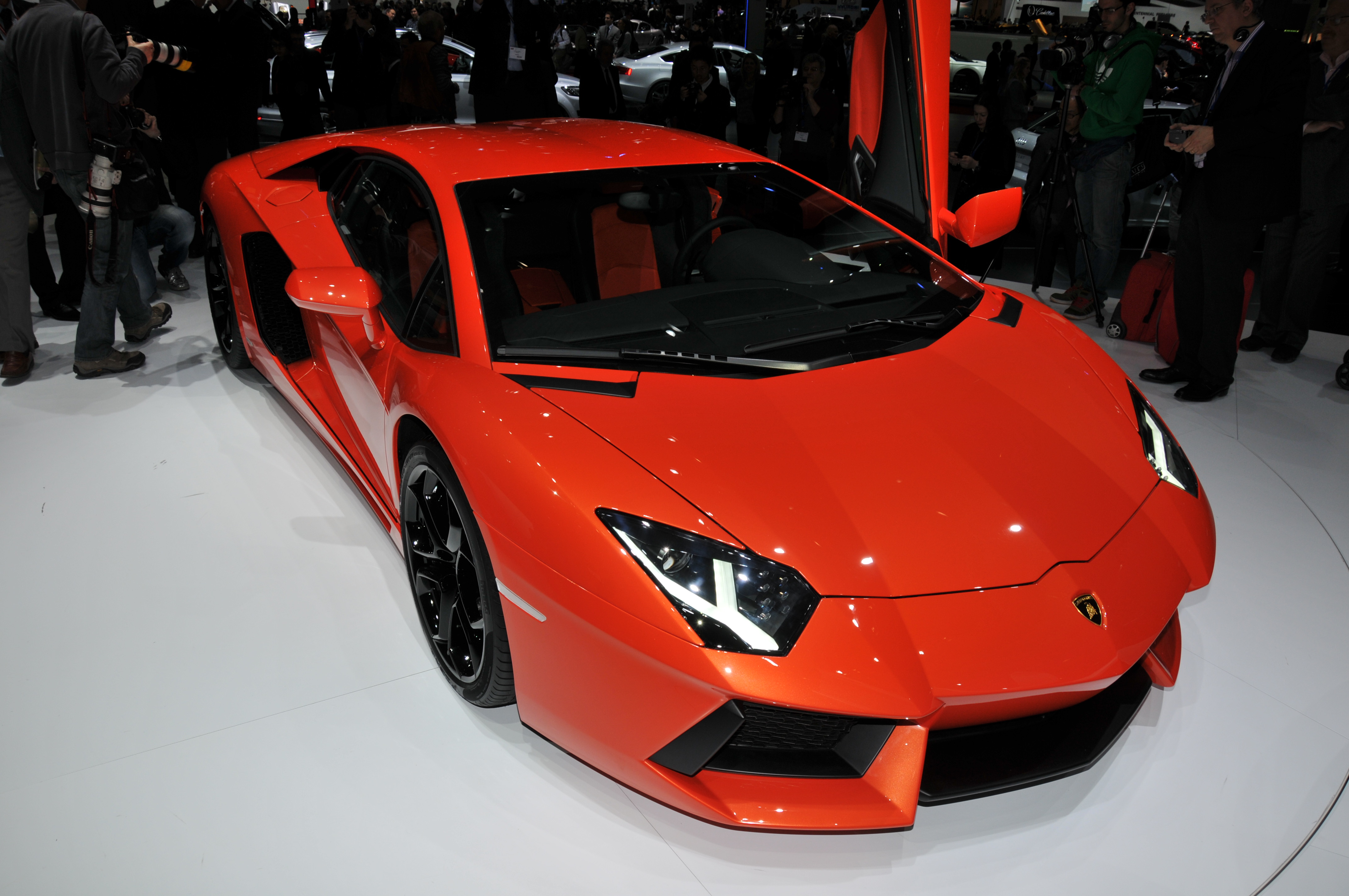
The Lamborghini Huracán is a very expensive, high-performance sports car made by Lamborghini. Here, it’s the specific car Nadia got as part of her business, and it became a big attention-grabber.
The Lamborghini Huracán is a mid-engine supercar from Lamborghini, known for its aggressive styling and high-performance V10 character. In this story, it’s used as a high-risk inventory trade that helped Nadia’s dealership visibility.
"So it's called, you know, VRT, vehicle registration tax. So when you buy a car from the UK and you put it onto Irish plates, you have to pay the VRT, you have to pay VAT, you have to pay import duties."
VRT is a tax Ireland charges when you register a car there. If you bring a car in from the UK and want Irish plates, you usually have to pay VRT (along with other import costs), which makes the car much more expensive.
VRT (vehicle registration tax) is an Irish tax you pay when registering a car in Ireland. If you import a car from the UK and put it onto Irish plates, VRT is one of the charges that can significantly increase the total cost.
"So when you buy a car from the UK and you put it onto Irish plates, you have to pay the VRT, you have to pay VAT, you have to pay import duties."
VAT is a sales tax that gets added to the price of goods and services. Here, it’s part of the extra costs when bringing a car from the UK into Ireland for registration.
VAT (value-added tax) is a consumption tax added at each stage of the supply chain and ultimately paid by the end buyer. In this context, the speaker is saying that importing a car from the UK to Ireland adds VAT on top of other import-related taxes.
"So when you buy a car from the UK and you put it onto Irish plates, you have to pay the VRT, you have to pay VAT, you have to pay import duties."
Import duties are extra taxes a country charges when you bring something in from abroad. For cars, that means the total cost goes up before you even get Irish plates.
Import duties are taxes charged by a country on goods brought in from another country. For car imports, they add to the total landed cost before the car is registered, which is why the speaker says the price can effectively double.
"They're maybe into their M3s or into their M2s. [226.5s] They're gone up a price bracket."
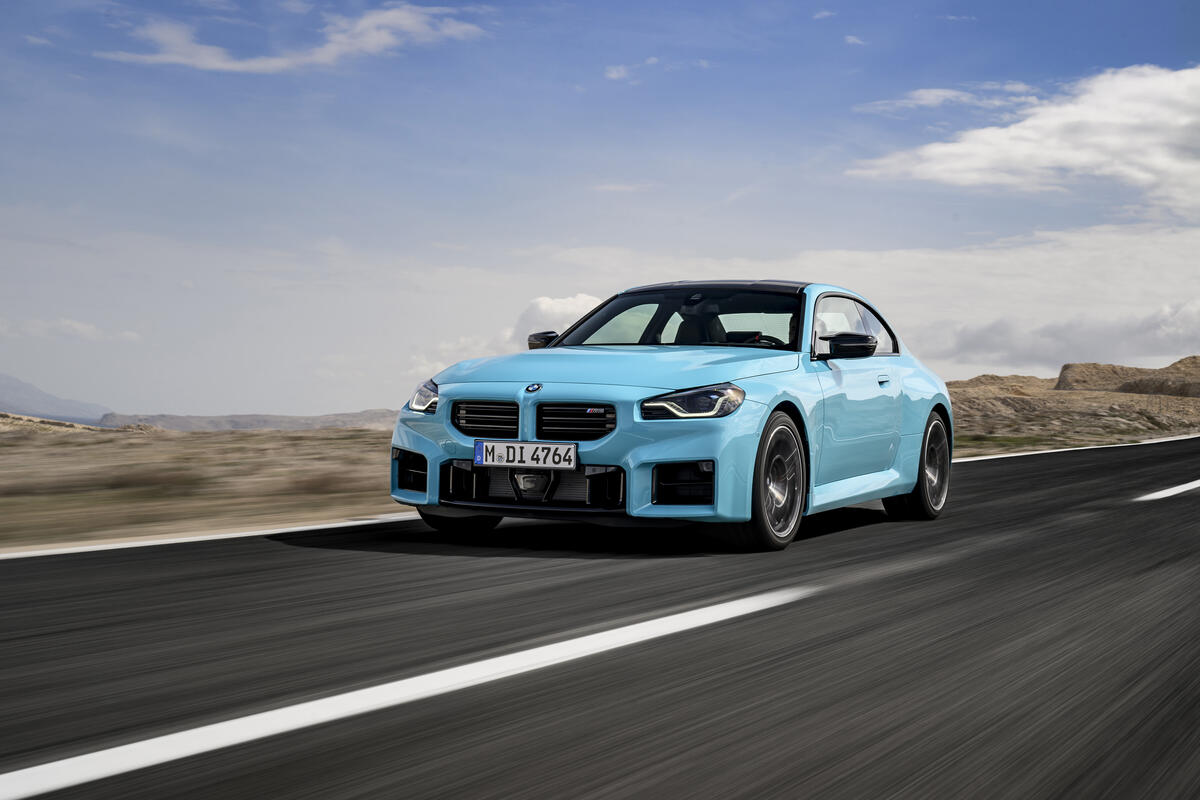
An “M2” is BMW’s compact performance car. Here it’s mentioned as another example of the kind of car higher-earning buyers move on to instead of paying for a rare imported variant.
The BMW M2 is a smaller, sportier BMW “M” model (based on the 2 Series) aimed at drivers who want performance in a more compact package. The host mentions it alongside the M3 to illustrate how buyers at higher incomes shift to mainstream enthusiast performance cars.
"Because somebody who's earning 50 grand, they've moved on a Gulf War. [223.5s] They're maybe into their M3s or into their M2s."
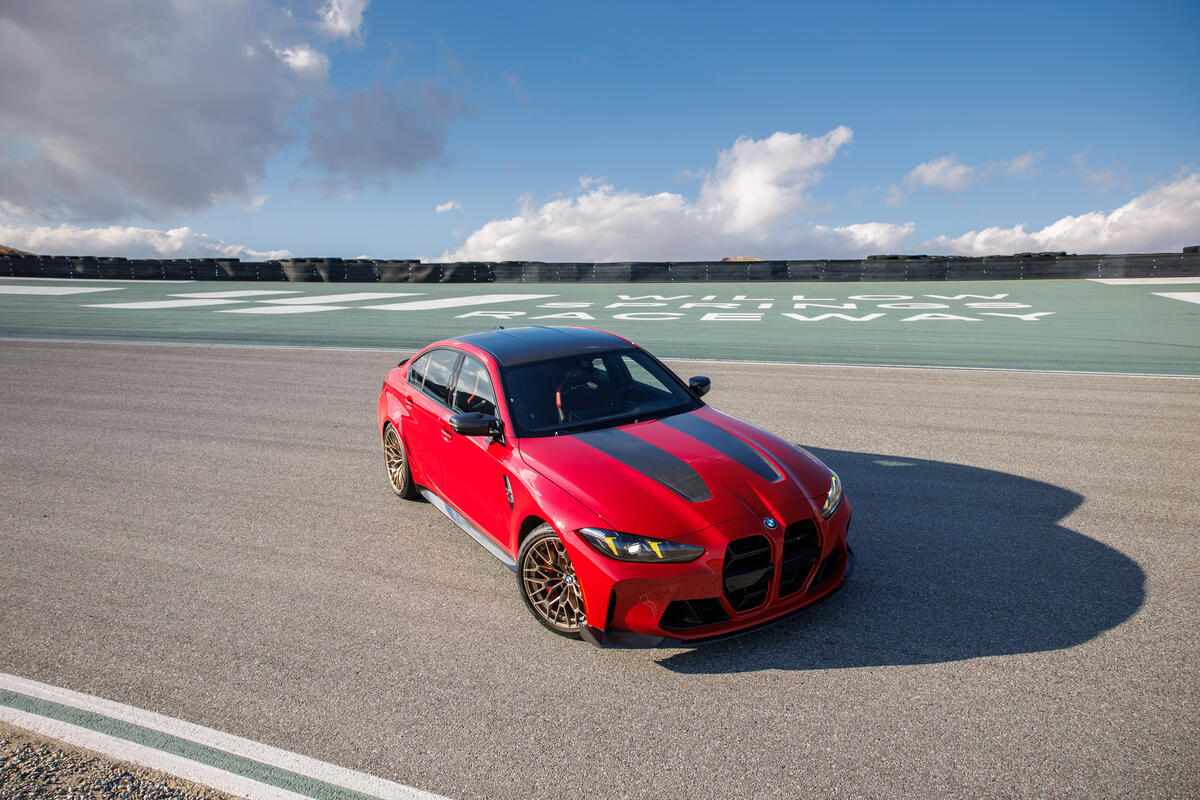
An “M3” is BMW’s performance model based on the 3 Series. The point here is that once someone can afford that level, they’re less likely to buy a rarer, more expensive import like the one being discussed.
The BMW M3 is a high-performance version of the 3 Series, built for track-capable driving and enthusiast demand. In this segment, the host uses “M3” as shorthand for moving up to a higher price bracket than a “Gulf War” car.
"And it just makes the market really hard to sell a car. [232.8s] So you have to really hold on to your prices and hold on to cars. [235.8s] Sometimes I sat on cars for eight months for a year..."
They’re saying that for rare, expensive cars, you can’t always sell fast. The strategy is to keep the price firm and wait for the right buyer instead of lowering it right away.
This is describing a dealer strategy for low-volume, high-price inventory: you don’t discount quickly because the buyer pool is small. By waiting, the dealer can sell at a higher margin and avoid training customers to expect price cuts.
"So you just have to go through it. [251.6s] So I always make sure I have flash stuff on the forecourt, [254.6s] whether it's my own personal collection..."
The “forecourt” is the area outside a car dealership where cars are displayed. They’re saying they keep impressive cars out front to make the dealership look more premium and attract the right customers.
“Forecourt” is the dealer’s front display area, and “flash stuff” means eye-catching, high-status cars meant to attract attention and signal quality. The host ties it to brand elevation—using visible inventory to shape how customers perceive the dealership.
"I opened up a second garage a couple of months ago and actually happened by accident. [263.2s] I didn't mean for it to happen. [264.8s] I kind of the trade ins I was getting that wasn't really like, you know,"
“Trade-ins” are vehicles customers give to the dealer as part of the purchase price for a new or different car. The host is contrasting the trade-ins he was receiving with what he actually wanted to source or stock.
"and going through the stress that I was like, you throw up a Toyota up there. You've already diluted your brand."
Toyota is a well-known car company that sells lots of different models worldwide. Here, it’s mentioned because the dealer uses Toyota cars in their lineup while trying to stand out from other dealers.
Toyota is a major global car brand known for high-volume, mainstream models. In this segment, the host mentions Toyota inventory as part of how the dealer differentiates their brand and manages customer expectations.
"You know, people are like, well, I'm not going to buy an Aston offer. She has a couple of Toyota's up as well."
This is referring to a luxury car brand (Aston Martin). The dealer is saying that if you mix different brands on the lot, it can make it harder to attract customers who specifically want that luxury brand.
“Aston” is shorthand here for Aston Martin, a luxury sports-car brand. The point is brand alignment: the host argues that mixing in non-matching brands can confuse customers who want a specific luxury marque.
"So to try and differentiate that, I opened up Ashford approved and it kind of funnels the trade ins as well."
“Ashford approved” is likely a dealer’s way of saying certain used cars are checked and meet their standards. It also helps bring in trade-in cars, which helps the business keep money coming in.
“Ashford approved” sounds like a dealer program that certifies or curates used cars for sale under a specific standard. The host says it helps differentiate their dealership and also “funnels” trade-ins, which affects inventory and cash flow.
Brand
golfers
"So we actually do very well with golfers. We put up a golf or it's gone like that from Instagram, which is amazing."
Here, “golfers” just means people who play golf and are a key group of customers for the dealership. The host is saying their marketing reaches that audience and helps sales.
In this context, “golfers” refers to a customer demographic the dealer targets or serves well. The host links it to how their inventory and marketing (via Instagram posts) attract that specific audience.
"Oh, yeah, I don't think there's buying Lambos in Somalia. And that's really relevant because you are yet that's where your story began."
“Lambos” means Lamborghini supercars. The host is using it as an example of very expensive cars that likely wouldn’t be in demand or easy to sell in Somalia.
“Lambos” is slang for Lamborghini, a high-end supercar brand. The host uses it to make a point about market differences—suggesting that selling luxury supercars would be unrealistic in Somalia compared with Ireland.
Term
port turbos
"They all have M5s, port turbos, Range Rover sports. [876.2s] Like they're on, you know, they love their cars,
[881.4s] even though they're driving their car for five minutes every day."
This sounds like a modified turbo setup. Instead of the car having a completely stock turbo arrangement, the turbo system is changed so it can make different power.
“Port turbos” likely refers to turbochargers that are mounted/arranged with specific intake/exhaust porting or turbo setup. It’s a shorthand for a modified turbo configuration rather than a stock factory arrangement.
"They all have M5s, port turbos, Range Rover sports. [876.2s] Like they're on, you know, they love their cars,
[881.4s] even though they're driving their car for five minutes every day."
Range Rover is a luxury SUV brand. The speaker is basically saying they drive high-end versions of it, not basic models.
Range Rover is Land Rover’s luxury SUV line, and “sports” here likely means sportier, higher-trim versions. The speaker uses it to emphasize the traders’ taste for expensive, performance-leaning luxury vehicles.
"... bought my first car at the time, and it was a 08 320 M Sport BMW White Coupe, the E92 shape. You, I kn..."
The BMW 3 Series is a popular BMW model that’s meant to be comfortable for daily driving but still fun to drive. The podcast mentions an E92 320 M Sport coupe from 2008 as the speaker’s first car. That’s why it comes up—it was an early ownership experience.
The BMW 3 Series is BMW’s compact executive car line, known for balancing everyday usability with sporty handling. The podcast references an E92-generation 3 Series (a 2008 320 M Sport coupe) as the speaker’s first car, which makes it a personal milestone. It’s discussed because it set the foundation for their later interest in BMW performance models.
"So, yeah, so basically got my first loan, bought my first car at the time, [913.6s] and it was a 08 320 M Sport BMW White Coupe, the E92 shape.
[920.2s] You, I know, you know what, don't you?"
That’s a BMW 3 Series coupe from the E92 generation. “M Sport” is a more performance-styled trim, and “320” is the model number for that version.
This is a BMW 3 Series coupe from the E92 generation, specifically an “M Sport” trim. The “320” indicates a 3 Series model with a 2.0-liter-class engine in this era, and the coupe body style is the two-door variant of the E92.
"What other than the R8, obviously, which came very quickly? What other significant deal was a big milestone for you in the beginning?"
The Audi R8 is a high-end sports car made by Audi. It’s the kind of car that stands out, so selling one can bring a lot of attention and money.
The Audi R8 is a mid-engine supercar from Audi, known for its performance and exotic look. In the segment, it’s mentioned as a major early “significant deal,” implying it was a high-value, attention-grabbing car for a dealer.
"So I say, I think in the first year or two, I was just doing like normal cars. So like 2012 Passat, 2013 Golf VW Golf 1.6 TDI, Suzuki Jimneys were like my little,"
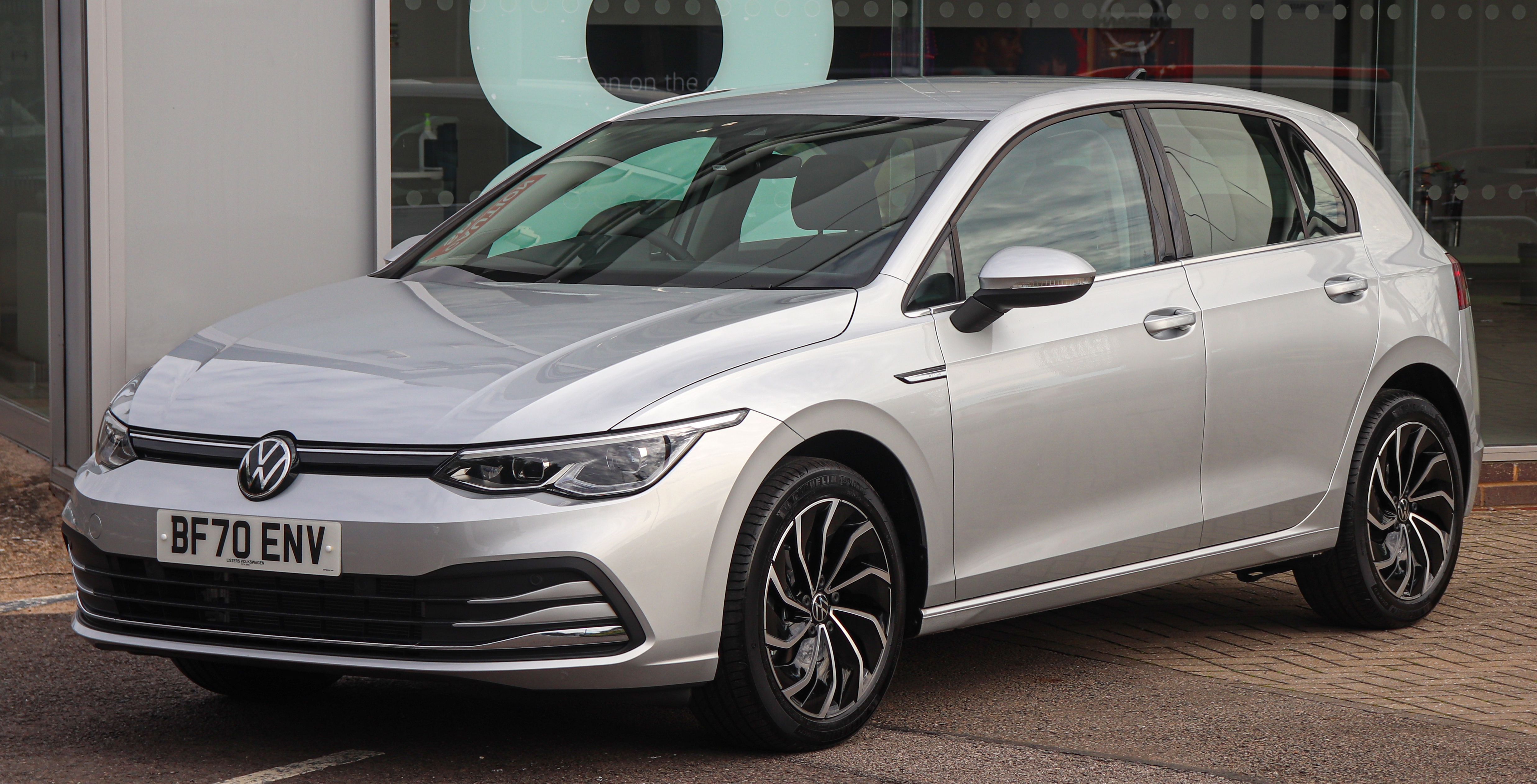
This is a Volkswagen Golf with a diesel engine (the “TDI” part). The host is saying they bought these kinds of cars cheaply and sold them for more.
The Volkswagen Golf 1.6 TDI refers to a Golf equipped with a 1.6-liter turbo-diesel (TDI) engine. In the segment, it’s described as a low-cost buy/sell used-car strategy, highlighting how diesel compacts can be “deal” inventory.
"So I say, I think in the first year or two, I was just doing like normal cars. So like 2012 Passat, 2013 Golf VW Golf 1.6 TDI, Suzuki Jimneys were like my little,"
The Volkswagen Passat is a common, practical car you’d see on regular roads. The host mentions it as an early, easier-to-move type of vehicle.
The Volkswagen Passat is a mainstream family sedan/wagon platform used for everyday transportation. Here it’s part of the dealer’s early “normal cars” inventory, contrasting with later supercar-level deals.
"So like 2012 Passat, 2013 Golf VW Golf 1.6 TDI, Suzuki Jimneys were like my little, like you buy them for two grand, sell them for four."
The Suzuki Jimny is a small off-road-looking car that’s popular for rough roads. The host is saying it was one of the inexpensive cars they would buy and resell.
The Suzuki Jimny is a small, body-on-frame off-road-capable SUV. The host treats it as a cheap used-car “flip” item, describing a buy-low/sell-higher approach.
"That's a Safari car. car, exactly. Well, if you want to go proper Safari, I take a Defender, Defender 90 to the Safari."
The Land Rover Defender 90 is a tough, off-road SUV. The host is using it as an example of the kind of vehicle people want for “Safari” trips or adventure use.
The Land Rover Defender 90 is a short-wheelbase version of the Defender, built for rugged off-road use. The host mentions it as the “proper Safari” choice, implying it’s a desirable, adventure-themed vehicle for buyers.
"I pretty much had all my money in this one Lamborghini or I was about to. I did the deal and I said, yeah, I'll take it. And did a TikTok video with it that got 30 million views."
A TikTok video is a short-form social media post used here as a marketing tool to generate attention and demand for a car. The host ties the video directly to results (30 million views), illustrating how social reach can accelerate high-end used-car sales.
"[2300.6s] actually had it sold, believe it or not. And it's really hard, especially when you don't have that [2304.7s] like reputation behind you have like years of trading and the brand behind you, you know,"
They mean that if people already trust you because you’ve sold cars successfully before, buyers are more willing to commit. Without that trust, big purchases take longer.
In dealer terms, “reputation behind you” means buyer trust built from prior sales and consistent service. The host argues that without that track record, selling a Lamborghini is harder and takes longer.
"[2329.8s] do the deal. I just want to like wrap to different color. It's a great no problem. I'll wrap it for [2334.4s] you."
A wrap is a sticker-like film that covers the car’s paint to change its color or look. It’s often used instead of repainting.
A “wrap” is a vinyl film applied to a car’s exterior to change its appearance without repainting. The host’s story suggests the buyer wanted a color change via wrapping, which can be a practical way to customize a high-end car.
"[2340.7s] And it's your cash flow like title for so long. Now I was kind of driving it myself as well, even though I hate driving it because I was you're just afraid something's going to happen to it."
Cash flow just means how money moves through a business. The host is saying the Lamborghini costs so much that it ties up money for a long time.
Cash flow is the movement of money in and out of a business over time. Here, the host implies that keeping a Lamborghini tied up for weeks can lock up capital, making it harder to keep the dealer’s money working.
"I actually ended up trading it back to the trader. I got it off for like three or four cars,"
She’s describing a car swap with another dealer. Instead of selling the car to a customer, she traded it for other cars to keep her inventory moving.
This describes a dealer-to-dealer exchange where one car is swapped for other inventory rather than sold directly to an end customer. In practice, it’s a way to rotate stock and build a lineup of cars that match buyer demand.
"This pin, I've had Mustangs, Dodges, the Ventador was an amazing one."
“Mustangs” are Ford sports cars. They’re a well-known model line, so dealers often mention them because they’re popular with buyers.
“Mustangs” refers to Ford Mustang models, a long-running American sports car line. In dealer talk, it’s often used as shorthand for a popular, recognizable platform that’s easier to move than more niche exotics.
"and then there's been some older ones, like older porches, 911s, Aston Martin stuff like that."
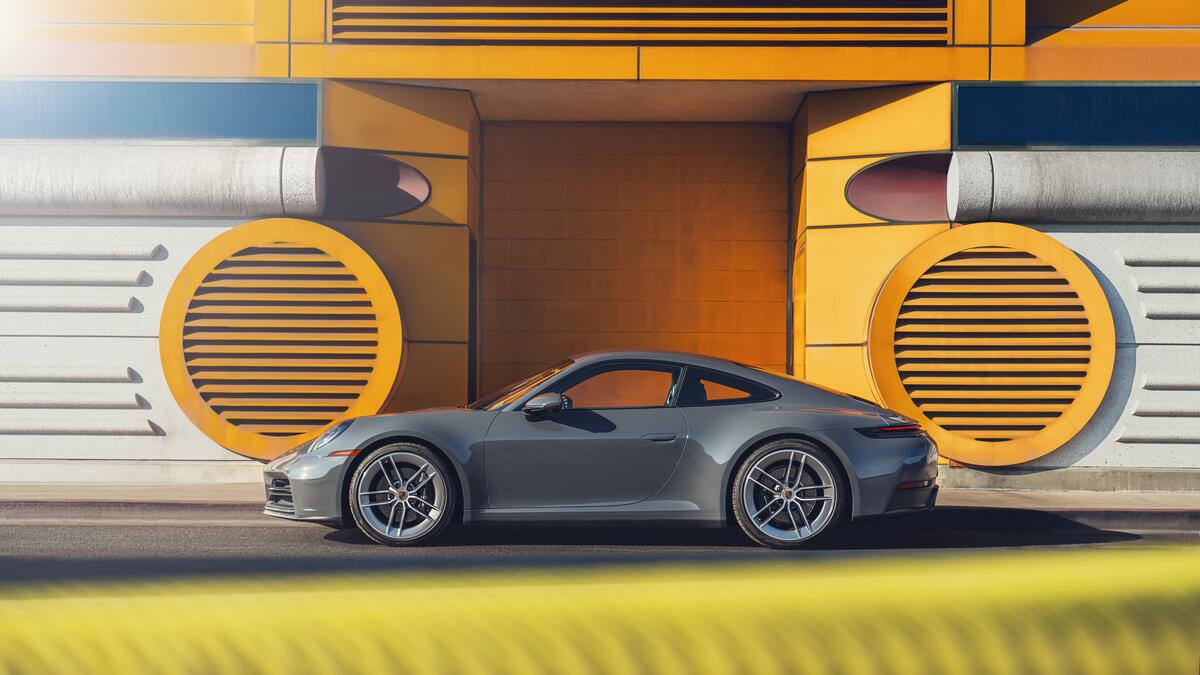
“911s” are Porsche 911s, one of the most famous sports cars ever made. People who love cars often specifically want a 911, which helps dealers move them.
“911s” refers to the Porsche 911, Porsche’s iconic rear-engine sports car. It’s a benchmark model for enthusiasts, so mentioning “911s” signals she’s sold cars with strong brand demand and collector interest.
"for me? And he goes, the only thing is I need to sell the A8 and I need to hit this target on the money... So took the A8 and sold it."
The Audi A8 is a very expensive, top-tier luxury car from Audi. Here, the host is saying they had to sell one to meet a sales goal, and that sale helped them get the next car for a customer.
The Audi A8 is Audi’s flagship luxury sedan, known for its high-end comfort and advanced tech. In this story, the host is describing a dealer deal where they had to sell an Audi A8 to hit a sales target, which then enabled sourcing another high-profile car.
"And then you'll be able to source him the Aventador... sold the A8... was able to go source the Aventador for Finbar, put on an Irish plates. He let me have it for like a month before he even took it..."
The Lamborghini Aventador is a supercar—one of the most extreme, expensive kinds of cars Lamborghini makes. The host is saying the deal work they did let them obtain an Aventador for a buyer and even use it for promotional videos.
The Lamborghini Aventador is a high-performance supercar famous for its dramatic styling and powerful V12 engine. In the segment, the host connects the sale of an Audi A8 to being able to source an Aventador for a customer, including getting it on Irish plates and using it for marketing videos.
"was able to go source the Aventador for Finbar, put on an Irish plates. He let me have it for like a month before he even took it... This car now is like worth over three, way over 300 grand, because it's on Irish plates"
“Irish plates” just means the car has license plates registered for Ireland. That can make the car easier to use legally there, and it can also make it more valuable to buyers in that country.
“Irish plates” means the car is registered with license plates issued for Ireland. In practice, getting a car onto Irish plates can affect paperwork, insurance, and sometimes perceived value because it’s legally road-registered in that market.
"It's all about the customer experience. And just you get a good deal. That's fine. You get looked after under warranty, but it's the little things like you get elderflower, sparking water, we do special elderflower,"
A warranty is a promise that if something goes wrong for a certain period, the cost of repairs may be covered. Here, they’re saying they take care of customers not just with warranty coverage, but with extras too.
In a dealership context, “warranty” refers to the manufacturer or dealer-backed coverage that helps pay for certain repairs if something fails within a set time/mileage. The speaker contrasts warranty coverage with the “little things” that improve the customer experience.
"...y or plumber and he's working hard. He got a nice RS3 for himself. Maybe I'm going to do the same. So i..."
An Audi RS 3 is a high-performance version of an Audi A3. It’s designed to be quick and fun to drive, but still relatively compact. The podcast mentions it because the speaker is considering getting one too.
The Audi RS 3 is a performance-focused compact sedan/hatchback (depending on market) built to deliver strong acceleration and sharp handling. It’s often discussed because it offers “serious performance” in a smaller, more practical package than many larger sports cars. In the podcast, it’s mentioned as a car the speaker might get for themselves after seeing someone else’s RS3.
"I just had other things going on and I have a 488 there, GTB. So I was going to trade it in"
The Ferrari 488 GTB is a high-end supercar made by Ferrari. It’s known for being fast and having a powerful engine layout in the middle of the car. Here, the dealer is talking about having one available and possibly trading it.
The Ferrari 488 GTB is a mid-engine supercar known for its turbocharged V8 and sharp, track-focused handling. In this segment, the host mentions having one on hand and considering trading it in, which highlights how dealers manage inventory and customer demand for high-end cars.
"... cars, but in the older, older ones. So I have an E39 M5 manual and that one I'll never sell ever becau..."
The BMW 5 Series is a larger, more comfortable BMW sedan than the 3 Series. The podcast is talking about the E39 M5, which is the high-performance version, and especially a manual one. The speaker says they’ll never sell it because it’s special to them.
The BMW 5 Series is BMW’s mid-size luxury sedan line, and the podcast specifically ties it to the E39 M5, a performance version of the 5 Series. The E39 M5 manual is highlighted as something the owner considers irreplaceable, which points to its rarity and enthusiast appeal. It’s mentioned as part of the speaker’s long-term attachment to specific BMW performance cars.
"And not in the fresher sports cars, but in the older, older ones. So I have an E39 M5 manual and that one I'll never sell ever because I was so broke by in it."
The BMW E39 M5 is a special BMW performance version of the 5 Series from the E39 era. It’s known for being fun to drive, and this one is a manual, meaning you shift gears yourself. The host says they kept it because it was hard to get and they were broke at the time.
The BMW E39 M5 is a performance sedan from the E39 generation, famous for its high-revving V8 and driver-focused feel. The host specifically calls out a manual transmission, which is a key enthusiast detail because it changes how the car delivers power and engagement.
Part
Acroprovic exhaust
"It's black with red interior. It's absolutely gorgeous. It's got a Acroprovic exhaust on it as well. It sends the V8."
This is an aftermarket exhaust system. It’s mainly chosen to make the car sound louder and more exciting, and sometimes to improve performance a bit. The host is saying it makes the V8 sound extremely intense.
An exhaust system like the “Acroprovic” (likely Akrapovič) is an aftermarket performance exhaust known for improving sound and sometimes reducing weight. The host links it to the car’s V8’s impact and the dramatic noise level, which is a common reason enthusiasts choose brands like this.
Car
Dodge Hellcat SRT manual
"Then my third one is I have a 2019 Dodge Hellcat SRT manual. So rare. It's left hand drive, but I'm thinking about bringing it over to the UK to getting a conversion to right hand drive"
The Dodge Hellcat SRT is a very powerful muscle car famous for its supercharged engine. This one is a manual, and the host is considering converting it from left-hand drive to right-hand drive so it can be used in the UK. They’re also saying it’s rare and hard to sell locally.
The Dodge Hellcat SRT is known for its extremely powerful supercharged V8 and straight-line performance reputation. The host specifically mentions a manual transmission and left-hand drive, then talks about converting it to right-hand drive for the UK—an ownership detail that matters because it affects legality, cost, and drivability.
"...d to go. Then my third one is I have a 2019 Dodge Hellcat SRT manual. So rare. It's left hand drive, but I'..."
The Dodge Challenger is a muscle car, meaning it’s built for strong acceleration and a bold driving feel. The podcast mentions a 2019 Hellcat SRT with a manual gearbox, which is uncommon. The speaker includes it because it’s rare and part of their personal collection.
The Dodge Challenger is a muscle car known for its powerful engines and straight-line performance. In the podcast, the speaker mentions a 2019 Challenger SRT Hellcat with a manual transmission, which is a rare and highly sought-after combination. It’s brought up as part of the speaker’s car progression and the uniqueness of that specific spec.
"…I want to keep it because I just think when do you ever see a Hellcat? Like it's just insane. And it's got the two keys, the red key, the 717 brake key…"
A Dodge Hellcat is a very powerful American performance car. It’s famous for being quick and for getting a lot of attention, which is why the speaker says you don’t see one every day.
The Dodge Hellcat is a high-performance muscle car known for its supercharged V8 and very aggressive acceleration. In this segment, the host highlights it as a rare, attention-grabbing choice compared with more common exotic brands.
"…it's got the two keys, the red key, the 717 brake key. It's just amazing."
A “red key” is a special key fob that can unlock a higher-power driving mode. It’s used so the car can be set to different performance levels depending on who has the key.
A “red key” is a manufacturer-specific key fob used to enable a higher-performance mode on some performance cars. It’s essentially a security-and-mode selector so the car can be limited or unlocked depending on which key you use.
Term
717 brake key
"…it's got the two keys, the red key, the 717 brake key. It's just amazing."
The “717” part refers to a top power setting for the car. This special key helps the car switch into that maximum-performance mode.
“717 brake key” refers to a key fob associated with a specific power output rating (717 brake horsepower) on the Hellcat lineup. The key is used to select the car’s maximum-performance setting tied to that rating.
"…And you're not bothered by the Ferraris. You've got a Ferrari 488. Yeah, I've got a Ferrari in the showroom…"
The Ferrari 488 is a high-end supercar from Ferrari. It’s known for being fast and exciting, and the speaker mentions it to explain their taste in cars.
The Ferrari 488 is a mid-engine Ferrari supercar known for its turbocharged V8 and sharp, high-speed road manners. Here it’s used as a comparison point for how the speaker views different exotic brands and what they personally enjoy driving.
"…I've always had Aston's. I love Aston Martin's though. I just got an Aston last week. Oh, did you, what did you get? A Vantage? Yeah, yeah. New shape."
The Aston Martin Vantage is Aston Martin’s sportier model. The speaker is talking about getting one and describing the color and year.
The Aston Martin Vantage is Aston Martin’s performance-focused sports car, typically with a V8 and a reputation for a more driver-oriented feel than many grand tourers. The speaker specifically discusses buying a new-shape Vantage and the paint color details, making it a key ownership/buying reference in the segment.
"...ke even farmers, but they more so like, you know, Land Cruisers, Defenders, BMWs. And then, yeah, the Porsche cli..."
A Toyota Land Cruiser is a large SUV made for rough roads and long trips. People like it because it’s built to last and handle difficult conditions. The podcast mentions it as a car that certain buyers—like farmers—tend to prefer.
The Toyota Land Cruiser is a rugged, body-on-frame SUV designed for long-distance driving and tough conditions. It’s often brought up because it’s built to be durable and capable, which is why it appeals to people who need a dependable vehicle. In the podcast, it’s mentioned alongside other tough, enthusiast-friendly vehicles as a type of car certain buyers gravitate toward.
"and also it brought in a thing called consignments so do you guys do consignments in the UK?
It's a big enough thing isn't it? So in Ireland people do consignments but they don't talk about"
Consignment is like “selling for someone else.” The car owner brings the car to the dealer, and the dealer tries to sell it. The dealer usually only makes money if it sells, so it can reduce risk and help the dealer stock more cars without paying for them immediately.
In car sales, a consignment is when the owner places their car with a dealer/marketplace to sell, but the dealer isn’t necessarily buying the car into inventory up front. The dealer earns money when the car sells (often via a fee or split), which changes the dealer’s cash-flow and risk compared with buying cars outright.
Term
seller return
"they can't buy but these buy their own stock. Seller return it's called
Seller return yeah so these some of these cars are the price of houses right"
“Seller return” means the owner can get their car back if it doesn’t sell. It’s part of how consignment works so the dealer isn’t permanently stuck with the car.
“Seller return” here refers to a consignment-style arrangement where the seller (the car owner) can get the car back if it doesn’t sell under the agreed terms. It’s essentially the return/exit mechanism that makes consignment different from a dealer buying the car outright.
"because I'm not actually buying it into stock two it's no risk for me but I always
try and sell the car I don't just say give me the car and we'll hope for the best"
Inventory is just the cars a dealer has on hand to sell. If the dealer doesn’t buy the car into inventory first, they don’t have the same upfront money risk.
In dealer terms, inventory means the cars the dealer has purchased and holds for sale. The speaker contrasts consignment (not buying into stock) with buying cars into inventory, which affects how much cash is tied up and how much risk the dealer carries.
See something that's not quite right? Our annotations are AI-generated and can sometimes miss the mark.
Click the flag icon on any annotation to suggest a correction.