
Yippitydo - 27 April 2026
About this episode
The show covers a mix of policy, industry, and new vehicle news. There’s discussion of appeals over motor finance compensation and EV charging VAT, plus a government move to allow cross-pavement charging without planning permission. On the car side, the team looks at a Mercedes C-Class EV, Smart’s revived two-seater concept, and a more affordable electric van. They also touch on speeding fines, Porsche selling its Bugatti Rimac stake, and a lightweight hydrogen project involving River Simple.
Consumer Voice, a consumer group, is to appeal against the FCA car finance miss-selling redress scheme. Their argument is that the way the compensation has been calculated does not reflect the real world and those affected will not be paid what they are actually owed. To find out more on this matter, click this Motor Trader article link here.
FOLLOW UP: APPEAL AGAINST VAT RULING FOR PUBLIC CHARGERSHMRC has decided it will appeal against the tribunal ruling that found that VAT on public chargers should have a VAT rate the same as those who can charge their EVs at home. Apparently the specific definition of “a month” and “premises” is the focal point of their case. Once again the Government manages to miss an open goal by announcing that they are dropping the VAT rate. For more on this, click the EV Powered link here.
CROSS-PAVEMENT CHARGING MADE EASIERThe Government has announced that they will be brining in rules that will make the installation cross-pavement charging gullies permitted development, meaning residents no longer have to seek planning permission for them. This will speed up and cut costs for households. Click this EV Powered article link here to read more.
Additionally, following a Freedom of Information request from Vauxhall, which councils already allow cross-pavement charging gullies to be fitted and how they go about that has been established. Only four out of ten do permit, with some giving financial aid and others have a fee of £1000 for the work to be completed. Click this Motoring Research article link for more.
AT LEAST ONE EUROPEAN OEM PREDICTED TO DISAPPEARA survey of used car dealers has found that six out of ten believe a European car brand will cease to exist within ten years. On top of that, nearly fifty percent believe that Japanese and Korean car makers are under the same pressure from Chinese companies. The transition to electrification and cheaper products from China are cited as the major reasons. If you want to read more on this, click here for a Motor Trader article link.
PORSCHE SELLS OFF BUGATTI RIMAC SHARESPorsche is selling their 21 percent stake in the Rimac Group, enabling them to focus on their “core business”. Rumours have been swirling about tensions between the two companies for over a year now. The venture capital group, HOF Capital, are buying the shares. Click this electrive article link here, to read more.
FOUR YEAR HIGH FOR SPEEDING FINES22 out of 24 police authorities have responded to a Freedom of Information request, confirming that they have had an increase in the number of speeding penalties from 2024 to 2025. London was, by far, the area with the most and double that of West Yorkshire in second. If you want to find out more, click this Motoring Research article link here.
RIVERSIMPLE DROPS OWN DESIGNED CARRiversimple has, with a group of other companies, been awarded £1.7 million to develop a vehicle for the Zero Emission Lightweight Long Range (ZELLOR) project. The aim of this is to produce a vehicle that has zero emissions, is light weight and a com,es with a 400-mile range. They will be converting two Audi A2s to demonstrate the technology that is being developed. You can read more by clicking this FuelCellWorks article link here.
If you like what we do, on this show, and think it is worth a £1.00, please consider supporting us via Patreon. Here is the link to that CLICK HERE TO SUPPORT THE PODCASTNEW NEW CAR NEWS -Mercedes-Benz C-ClassMercedes has revealed the looks and specifications for the new electric C-Class. Coming with 800v hardware, enabling quicker charging where conditions allow, a 94.5kWh battery pack and at launch the dual motor 400 4Matic powertrain. Combined this will produce 483bhp and 590lb ft of the torques, which enables a 0-62mph time of 4.1 seconds. Range is significantly down on the recently revealed BMW i3, with a 472 miles maximum. Prices are indicated to start below £60,000. The interior can come with the very silly full width screen, lots of mood lighting which also includes being in the panoramic roof. Click this Autocar article to learn more.
Smart FourtwoSmart are brining back the Fourtwo, although it will be known as the #2. Full details will not be known until October, during the Paris Motor Show, but what has been revealed is a maximum range up to 186 miles and a 10-80% charging potential of 20 minutes. The brand is aiming for a more premium product. Click this Autocar article to learn more.
Farizon V7EFarizon has launched a new compact electric van, called the V7E. This will be priced from £28,000 on the road (that is without VAT and any Government grant). There will be two battery options, 50.23kWh and 67.67kWh, which have a claimed maximum range of 149 miles and 204 miles, repectivley. The company is pushing the value for moeny aspects of this vehicle. Click this Proffessional Van article link to learn more.
LUNCHTIME READ: THE BMW 02 SERIESParanjay Dutt, via Hagerty, brings you our recommendation to read over your sandwiches. He is discussing the BMW 02 Series, the one that lead to the 3-Series. We have linked to both articles Paranjay has written as they are both excellent and linked. Click here for Part One. To read Part Two, click here.
LIST OF THE WEEK: WINGSAutocar are back providing the slideshow for you to check out, this time all about rear spoilers. They have selected some of the most memorable for you to choose from. Click this link to see what your options are.
AND FINALLY: MODEL PARKINGDo you have a lot of Hot Wheels sized model cars taking up space in your house? Are you at a loss to know how to store and display them? Fear not, Fun-Tech Labs has a solution, the Parksible, the world’s first smart die-cast model car park. This is a model sized version of the automated parking lots that move the car to the correct space without human intevention. Yes, really! This is currently a Kickstarter campaign. Click this Design News article link here to read more and see a video.
Motor Finance Compensation Scheme
"...we start with the first of two, two cases in court or going to appeal anyway. And the first is to do with the FCA, the Financial Conduct Authority's Motor Finance Compensation Scheme..."
This is a UK program that tries to make things right for people who may have been treated unfairly when buying a car using finance. The debate here is about how the compensation is calculated and whether the numbers are accurate.
The Motor Finance Compensation Scheme is a UK process set up to compensate people who were potentially mis-sold or otherwise disadvantaged in motor finance agreements. In this segment, the hosts discuss an appeal over how the FCA calculates compensation amounts and whether those calculations match what people are actually owed.
FCA calculations
"...What they are saying is that the FCA's calculations to come up with a figure to give people is not reflective of the real world... many people will be... hundreds of pounds short of what they are actually owed."
The FCA has a method for working out how much money people should get back. Here, critics say the method underpays some people compared with what they believe they’re owed.
The FCA (Financial Conduct Authority) uses a methodology to estimate how much compensation each affected customer should receive. The hosts say Consumer Voice argues those calculations don’t reflect real-world outcomes, leaving some people short by “hundreds of pounds.”
EV charging VAT to 5%
"...HMRC is going to appeal the Tribunal ruling that would cut public EV charging VAT to 5% says the headline..."
This is about taxes on charging electric cars. The idea was to lower VAT on public charging, but HMRC is appealing the decision.
This refers to a UK policy dispute about reducing VAT on public EV charging to 5%. The hosts explain that the original ruling aimed to treat public charging differently from typical consumer electricity use, based on how much energy an individual would consume.
1000 kilowatt hour per month threshold
"...public charge points should not be subject to a 20% VAT rate because an individual single customer would not be consuming more than 1000 kilowatt hour per month on one premises."
They’re talking about a specific energy limit per month. If charging is under that limit, the policy was meant to apply a lower VAT rate, but HMRC wants the wording interpreted differently.
The segment discusses a threshold of 1000 kilowatt-hours per month on a single premises as part of the argument for applying a lower VAT rate to public EV charging. The hosts highlight that HMRC is appealing based on how terms like “month” and “premises” should be defined.

Tesla Model
"...an individual single customer would not be consuming more than 1000 kilowatt hour per month on one premises. To put it in context... that would recharge a Tesla Model Y 16 times."
They use the Tesla Model Y as a real-world example to explain what the rule would mean in practice. The point is to show how many times you could recharge before you’d hit the monthly energy limit.
The Tesla Model Y is used as an example to translate the legal/technical threshold (1000 kilowatt-hour per month) into real-world charging usage. The hosts claim that threshold would equate to recharging a Model Y about 16 times, helping listeners understand why the VAT treatment was argued to be appropriate.
VAT differential
"It goes in this article, it talks about there's a lot of money here but in the grand scheme of things and considering how much is problem and how much large corporations are not taxed etc. They make 85 million currently with the VAT differential and it is estimated that will go up to 315 million by 2030."
VAT is a tax added to many purchases. A “VAT differential” just means the tax rules aren’t the same for everything, so the cost can go up or down depending on what’s being taxed.
A VAT differential means different VAT rates or VAT treatment depending on the category or source of the goods/services. In practice, it can change how expensive electricity (or electricity-related costs) is for consumers and how much revenue the government collects.
home VAT rate for electricity
"Obviously the other route to take is which what I think we are all expecting is for them to change home VAT rate for electricity. That's what I fully expect them to do at some point."
Electricity often has taxes added to it. If the government changes the VAT rate on electricity, it can make charging at home cost less (or more), which affects how expensive it is to drive an EV.
Changing the home VAT rate for electricity is a policy lever that can directly affect charging costs for EV owners. If VAT on electricity is reduced, the effective cost per kWh drops, making home charging cheaper and potentially improving EV adoption.
permitted development rights for cross pavement charging solutions
"And the energy secretary Ed Miliband announced last week that the government will introduce later in the year permitted development rights for cross pavement charging solutions and associated charges. That they're talking about the things like the gullies cut into pavements that have a cover over the top so they don't create a trip hazard."
Normally, putting something in or across a public pavement can require planning permission. “Permitted development rights” means some of these installations can happen with less red tape, so EV chargers can be added faster.
“Permitted development rights” are planning rules that allow certain works to be done without a full planning permission process. For EV charging, this can speed up installing cross-pavement charging infrastructure (like cable routes and connection points) because local approvals can be simpler—though it still typically requires compliance with technical standards.
gullies cut into pavements
"That they're talking about the things like the gullies cut into pavements that have a cover over the top so they don't create a trip hazard. By doing it is permitted development that means you don't need to get planning permission."
They’re describing cutting small channels in the pavement for cables, then covering them. The cover is meant to stop people from tripping while still allowing the cable to run safely.
The transcript describes cutting “gullies” into pavements to route cables, then covering them to prevent hazards. For listeners, this is a practical detail about how public EV charging infrastructure can be installed while trying to maintain pedestrian safety.
planning permission
"By doing it is permitted development that means you don't need to get planning permission. That seems interesting considering it is a public space."
Planning permission is official approval from the local authorities before you change something in a public area. The discussion suggests some EV charging work may be allowed without that full approval process.
Planning permission is the formal approval process required for many types of construction or changes in public areas. The key point here is that permitted development rights can bypass that process for certain EV charging-related works, but the works still must meet safety and construction standards.
off street parking
"How is that going to be taken into account? Obviously for people who don't have off street parking this is a great thing if they have on the street outside their house. But I can also see"
Off-street parking means you park somewhere like a driveway, not on the street. If you don’t have that, getting a charger can be harder—so public charging options matter more.
Off-street parking refers to having a driveway/parking space not on the public road. The transcript contrasts this with on-street parking, highlighting why public pavement charging solutions are important for EV owners who can’t install chargers at home.
charging network
"But it is a good step. It is another way because I think this has to be a multi-prong attack on in terms of what our charging network needs to look like across the country."
A charging network is basically the map of EV charging stations. If there are enough chargers in the right places, it’s easier to own and use an electric car without worrying about running out.
A charging network is the coordinated set of charging points (often across many locations) that together determine how easy it is to charge an EV. When hosts talk about what the charging network needs to look like “across the country,” they’re discussing coverage, availability, and how drivers plan trips around chargers.
seven kilowatt charges
"Obviously these are cheaper rates and that's even better because it will be the seven kilowatt charges that do that. So that's the overnight stuff and potentially allows people..."
Seven kilowatts is the charger’s power. Higher power usually charges faster, but 7 kW is commonly meant for overnight charging at home or in nearby parking spots.
“Seven kilowatt” refers to the power level of an EV charger, which directly affects charging speed. A 7 kW AC charger is typically used for overnight or longer dwell-time charging rather than fast, on-the-go top-ups.
tariff scheme
"...you need to really crunch the numbers. If such a low tariff scheme works for you and your family you have to be very sure because some of them can actually end up costing you a lot more if you haven't done the maths properly."
A tariff scheme is the pricing plan for charging. Even if it sounds cheap, the total cost can be higher if the plan has fees or doesn’t match how much you actually charge.
A tariff scheme is the pricing structure for charging—how much you pay and under what conditions (e.g., low rate but with limits or fees). The hosts emphasize that you need to “crunch the numbers” because some low-tariff options can end up costing more depending on your usage pattern.
Vauxhall
"This also ties into some research that Vauxhall did where they bought out a freedom of information request."
Vauxhall is a car company that did research used in this discussion. Their study is being cited to show what councils are planning for EV charging.
Vauxhall is a major UK car brand (part of Stellantis) that commissioned research referenced in the segment. The hosts use Vauxhall’s findings to discuss how local councils are planning EV charging rollouts.
MotorTrader.com
"MotorTrader.com. Dealers predict downfall of at least one European car maker in the next 10 years and there was a survey by Startline Used Car Tracker and they questioned a massive 61 dealer."
They’re citing an automotive website (MotorTrader.com) that tracks what dealers think about the future. The point is to show how the industry is feeling about European brands.
MotorTrader.com is referenced as the source for dealer predictions about European automakers. In listener terms, it’s an industry outlet that reports on market sentiment and dealer outlooks.
Startline Used Car Tracker
"and there was a survey by Startline Used Car Tracker and they questioned a massive 61 dealer. The sample size is not huge however I'm hoping that when it comes to sample size they went"
This is the group behind a used-car survey of dealers. The hosts are basically asking whether the survey results are trustworthy because of how many dealers they asked.
Startline Used Car Tracker is mentioned as the organization that ran a dealer survey. The hosts discuss sample size and whether the results represent the UK market broadly.
electrification
"What they do is they're put out of business and the Chinese cars are a primary focus on why that will happen because the causes that were listed include cost of investing in electrification and then they can't compete against low cost vehicles from China."
Electrification is the shift from making mostly gas/diesel cars to making electric cars. It costs a lot of money to develop and build the new technology.
Electrification refers to automakers investing in electric vehicle (EV) technology—powertrains, batteries, and supporting infrastructure. The transcript frames it as a major cost pressure on European brands.
self-driving
"Also there was talk about technology such as self-driving and automated stuff and also as what EVs have done is made people less brand conscious"
Self-driving means cars that can drive with little or no human input. It’s a big tech project, and it can be expensive for automakers to develop.
Self-driving (autonomous driving) is discussed as a technology that dealers believe will affect competitive pressure. It typically involves sensors, software, and regulatory approvals, which can add significant development cost.
brand conscious and brand loyal
"and also as what EVs have done is made people less brand conscious and also brand loyal and I think that's something that's come out."
They’re saying EV buyers may care less about which badge is on the car and more about the deal and the product. That can make it harder for traditional brands to keep customers.
The hosts claim EV adoption has reduced how strongly people stick to a specific brand (“brand conscious” and “brand loyal”). This matters because it changes how automakers compete—more customers may switch based on price, range, or features rather than loyalty.
Porsche
"Talking of financial restrictions and Porsche has sold its stake in a Bugatti Rimac and the Rimac Group. They had a 21% stake but their partnership has now come to an end."
Porsche is mentioned as selling part of its investment in the Rimac/Bugatti-related business. The idea is that Porsche wants to concentrate on its main business instead of tying up money in that partnership.
Porsche is discussed as having sold its stake in Bugatti Rimac and the Rimac Group, ending a partnership. The transcript links the move to Porsche’s need to focus on its “core business,” implying financial and strategic pressure.
Bugatti Rimac
"Talking of financial restrictions and Porsche has sold its stake in a Bugatti Rimac and the Rimac Group. They had a 21% stake but their partnership has now come to an end."
Bugatti Rimac is referenced as the entity Porsche held a stake in, alongside the Rimac Group. The segment describes Porsche selling its stake, which signals a change in ownership and partnership structure.
Rimac Group
"Porsche has sold its stake in a Bugatti Rimac and the Rimac Group. They had a 21% stake but their partnership has now come to an end."
The Rimac Group is discussed in the context of Porsche selling its stake and rumors of a long-running disagreement. Rimac is known for high-performance EV technology, so these ownership shifts can affect investment and direction.
HOF Capital
"They have sold it on to a venture capital firm called HOF Capital which is backed by the Egyptian billionaire family the Solaris."
HOF Capital is the investor that bought Porsche’s share. That matters because it can influence how the company gets funded and what it prioritizes next.
HOF Capital is named as the venture capital firm that bought Porsche’s stake. This is relevant because it indicates who is funding or steering the next phase of the Rimac/Bugatti-related business.
Solaris
"HOF Capital which is backed by the Egyptian billionaire family the Solaris. Rumours were that Rimac and Porsche were at odds"
They’re saying the Solaris family is the financial backer behind HOF Capital. It’s basically who’s behind the money in this investment.
The transcript says HOF Capital is backed by the Egyptian billionaire family the Solaris. This is a notable ownership/backing detail that helps explain who has financial influence in the deal.
core business
"Now with the sale of our stake we demonstrate that we will focus Porsche on the core business and yeah they really really need to."
“Core business” means the main part of the company that makes the most sense to focus on. Here, Porsche is saying it wants to concentrate on what it does best.
“Core business” is used to describe focusing resources on the company’s main, most central operations rather than peripheral investments. In automotive terms, it often means prioritizing profitable product lines and brand strategy over risky or capital-intensive bets.
speeding fines
"Okay I'm going to bring us back to Blighty and speeding fines are in a four-year high for the UK. Again another"
They’re talking about how speeding tickets in the UK have increased. That can affect how people drive and how strict enforcement feels.
Speeding fines are mentioned as being at a four-year high in the UK. While not a technical automotive term, it’s a regulatory topic that can influence driving behavior and enforcement trends.
freedom of information request
"freedom of information request. There's lots of this going on and by the way the government is looking to limit freedom of information requests."
A freedom of information request is a way to ask the government for official records. Here, it’s being used to get data about speeding fines and enforcement.
A freedom of information request is a legal process that compels public bodies to disclose certain records. In automotive news, it’s often used to obtain enforcement statistics (like speeding fines) that can be hard to find otherwise.
Oono
"But this came from the road safety technology firm Oono. Oono. It's O-O-O-N-O is how it's spelled and they asked for the quantity of speeding fines recorded from 2024 to 2025."
Oono is a road-safety tech company mentioned as the group that requested official speeding-fine data. They’re basically using paperwork and public records to study what’s happening.
Oono (spelled O-O-O-N-O) is referenced as a road safety technology firm that filed a freedom of information request. In this context, they’re using public-records data to analyze speeding fine trends.
20 mile an hour zones
"What it is being claimed is that the increase in 20 mile an hour zones in London has really rocketed those. It's as simple as ever, don't speed and you don't get ticketed."
A 20 mph zone is a neighborhood where the speed limit is set to 20 miles per hour. Lower speeds are meant to make roads safer, and if cameras or enforcement are used, more tickets can be issued.
A “20 mph zone” is a street area where the posted speed limit is reduced to 20 miles per hour. The idea is that lower speeds reduce crash severity and can also increase the number of speeding fines if enforcement is active.
River Simple
"I'm now going to round out the first part of the show with news about River Simple. We haven't talked about them for years. They were designing their own vehicle to run on hydrogen..."
River Simple is a company working on hydrogen-powered cars. They’ve been testing vehicles in real life and are now part of a bigger project to build a practical zero-emissions, long-range lightweight car.
River Simple is a UK company known for developing a hydrogen-powered vehicle concept. In this segment, they’re described as having run hydrogen vehicle testbeds and now leading a consortium aiming to bring a zero-emission lightweight long-range car to market.
ZELOR project
"they're heading up the group of companies working together on a zero emission lightweight long range project or ZELOR which has been awarded 1.7 million pounds... Now the ZELOR project is trying to bring a vehicle to the roads... with zero emissions, lightweight and a 400 mile range"
ZELOR is a project focused on building a cleaner, lighter car that can go a long way on a single “energy cycle.” The target mentioned here is about 400 miles of range with zero emissions.
ZELOR is a UK zero-emission lightweight long-range project, described here as a consortium effort. The goal is to develop a vehicle that’s zero-emissions, lightweight, and capable of around a 400-mile range.

Mercedes-Benz Aclass
"the vehicle they're using is they're using the original A2 which is an interesting vehicle to use. I suppose you could use a Mercedes A-Class but that would be heavier because I don't think that was certainly not made out of aluminium like the A2 was which helps with the lightness."
The Mercedes-Benz A-Class is a compact car meant for everyday driving. The podcast mentions it because they’re talking about using a different car for a test, and the A-Class would be heavier. Weight can affect how a car behaves, so it matters for comparisons.
The Mercedes-Benz A-Class is a compact car, typically used as a practical daily driver. In the podcast context, it’s mentioned as a possible alternative to a different test vehicle, with the point that an A-Class would be heavier than the “original A2” being used. That makes it relevant to discussions about vehicle choice and how weight can affect performance or testing results.
Mercedes A-Class
"I suppose you could use a Mercedes A-Class but that would be heavier because I don't think that was certainly not made out of aluminium like the A2 was which helps with the lightness."
The Mercedes A-Class is mentioned as a comparison point for weight. The host argues that while you could use a Mercedes A-Class, it would be heavier than the aluminum-based A2, which would work against the lightweight goal.
Green Flux Motors
"They're going to be working with a company called Green Flux Motors from Colchester for the Efficient Electric Motors."
Green Flux Motors is a company they’re working with to supply efficient electric motors. In a hydrogen car, better motor efficiency helps the car use its power more effectively.
Green Flux Motors is named as a partner company from Colchester for “Efficient Electric Motors.” In a hydrogen fuel-cell vehicle, efficient electric motors are crucial because they directly affect how much of the generated electricity becomes usable traction power.
TTPI
"The converters are from TTPI from Nottingham and River Simples own hydrogen fuel cell powertrain..."
TTPI is mentioned as providing the “converters,” which are electrical parts that help manage power in the vehicle. They’re important because the car needs the right kind of electricity for each component to work properly.
TTPI is mentioned as the supplier of “converters.” In electric/hydrogen systems, converters are power electronics that manage and transform electrical power between components (for example, between the fuel cell system and the drive system).
hydrogen fuel cell powertrain
"River Simples own hydrogen fuel cell powertrain and will use a vehicle development tool based on machine learning"
A hydrogen fuel cell turns hydrogen into electricity. That electricity is then used to power the car, so the car can be “zero emissions” at the tailpipe.
A hydrogen fuel cell powertrain uses hydrogen to generate electricity in a fuel cell, which then powers electric drive components. River Simple is described as having its own hydrogen fuel cell powertrain, implying they’re handling the core energy-conversion system rather than just the body or packaging.
vehicle development tool based on machine learning
"River Simples own hydrogen fuel cell powertrain and will use a vehicle development tool based on machine learning"
The segment says the project will use a vehicle development tool based on machine learning. This implies they’ll use data-driven modeling to speed up design decisions and optimize performance targets like range, efficiency, and weight.
Pi Engineering Consultancy
"called Pi Hive which is from Pi Engineering Consultancy. The vehicles will be developed at a workshop in River Simples power base and this sounds really interesting."
They’re talking about a company called Pi Engineering Consultancy. They’re connected to a project the hosts think could be interesting, and they’re developing vehicles as part of it.
The hosts mention Pi Engineering Consultancy as the group behind the “Pi Hive” project. It’s a company involved in developing the vehicles at a workshop location they describe.
solid state batteries
"Again you bring out solid state batteries and a lot of the problems and reluctance can disappear. Cost wise won't for a while but you know in terms of the technology."
Solid state batteries replace the liquid electrolyte in conventional lithium-ion packs with a solid material. The idea is that they can improve safety and potentially reduce some performance and reliability issues, though cost and scale are still challenges.

Mercedes Benz C-Class EV
"That can only mean one thing and it is new new car news and I am going to start with the Mercedes Benz C-Class EV. It is recognisable enough as a Mercedes C-Class although the front has changed a bit it's a bit more blunt."
They’re talking about an electric Mercedes-Benz C-Class. The car will still look like a C-Class, but with a new front design, and the episode focuses on how far it can go and how fast it can charge.
The hosts discuss a Mercedes-Benz C-Class EV, noting it will look like a C-Class but with a revised front end and a different grille shape. They also highlight key EV details like battery size, claimed range, and charging capability.

Bmw 3
"...ore blunt. It's grille now similar in size to the BMW 3 Series that we all jumped up and down about a fe..."
The BMW 3 Series is a mid-size car made for everyday driving, with a focus on handling and comfort. The podcast mentions it because it’s a well-known reference for how big the front grille looks on a typical BMW. It helps listeners picture the styling change being discussed.
The BMW 3 Series is a compact executive sedan (and wagon in some markets) known for balancing everyday comfort with sporty handling. In the podcast context, it’s referenced as a familiar benchmark for grille size and front-end styling. That makes it a useful comparison point when discussing how other cars’ faces are changing.

BMW i3
"...f it. It is it has to be said not as good as the i3 in terms of range. It's looking at when it's goin..."
The BMW i3 is a small electric car designed mainly for city driving. The podcast mentions it because it’s known for having good driving range compared with some other EVs. Range is how far you can drive before needing to recharge.
The BMW i3 is a small electric city car that’s known for its lightweight design and efficient packaging. The podcast compares it to another EV by noting it’s “not as good as the i3 in terms of range,” which highlights the i3’s reputation for usable distance. That makes it a relevant reference when discussing real-world EV capability.
94.5 kilowatt hour battery
"It's looking at when it's going to be launched 472 miles thanks to a 94.5 kilowatt hour battery which is good for the 472 claimed miles."
That “94.5 kilowatt hour” number is how much energy the EV battery can store. More stored energy usually means you can drive farther before needing to recharge.
A 94.5 kWh battery refers to the battery pack’s usable energy capacity. In EVs, a larger kWh pack generally supports longer range, assuming efficiency and vehicle weight are similar.
472 miles
"It's looking at when it's going to be launched 472 miles thanks to a 94.5 kilowatt hour battery which is good for the 472 claimed miles."
They’re quoting a claimed driving range of 472 miles. Real-world range usually won’t match the test number exactly, but it gives a baseline for expectations.
The episode cites 472 miles as the claimed range for the Mercedes-Benz C-Class EV. Claimed range is typically based on standardized testing, and real-world range can differ due to speed, weather, and driving style.
800 volt architecture
"It has 800 volt architecture which means that it has the potential to charge up to 330 kilowatts"
“800 volt” is the EV’s electrical system voltage. Higher voltage can help the car charge faster when you use the right fast chargers.
800-volt architecture is an EV electrical system design that uses a higher voltage than the more common 400-volt setups. Higher voltage can reduce current for the same power, which helps enable faster charging with compatible chargers and hardware.
330 kilowatts
"It has 800 volt architecture which means that it has the potential to charge up to 330 kilowatts"
“330 kilowatts” is how fast the EV could charge at its best. In practice, the actual speed can vary depending on the charger and battery conditions.
The hosts say the car has the potential to charge up to 330 kW, which is the maximum charging power. Charging power depends on the charger and the car’s battery/thermal limits, so real-world results can be lower.
199 miles in 10 minutes
"which is talking about 199 miles in 10 minutes according to Mercedes. It's going to use the dual motor 400 four-matic powertrain"
This is a marketing-style way of saying how much driving range you can add in about 10 minutes of charging. Real results can vary a lot based on the charger and battery conditions.
“199 miles in 10 minutes” is a charging-rate claim that translates a short charging session into an estimated driving range. It depends heavily on battery state of charge, charger power, temperature, and the specific test protocol used by the manufacturer.
dual motor 400 four-matic powertrain
"It's going to use the dual motor 400 four-matic powertrain that will make 483 brake horsepower 590 pounds foot of the torque"
It’s an electric setup with two electric motors and all-wheel drive. That usually helps the car launch hard and keep grip.
This describes a Mercedes all-wheel-drive EV layout with two electric motors (“dual motor”) and a powertrain branded “400” with “4MATIC” indicating traction to all wheels. In practice, dual motors can improve acceleration and traction by distributing torque front-to-rear.
0-62 time
"590 pounds foot of the torque and give a 0-62 time of 4.1 seconds which is apparently just for context as quick as the old V8 powered AMG C63."
“0-62” is how fast the car can go from standing still to 62 (about 100 km/h). Lower numbers usually mean the car feels quicker when you accelerate.
“0-62 time” is the elapsed time to accelerate from 0 mph (or 0 km/h, depending on market) to 62 mph (100 km/h). It’s a common benchmark for how quickly a car feels off the line, especially for performance-oriented models.
mood lighting
"they've dialed down the in-cabin mood lighting significantly whereas there's not any pictures taken in the dark… But when it comes to the mood lighting as well they've decided"
Mood lighting is the colored light inside the car that sets the vibe. It’s usually adjustable and meant to make the cabin feel more premium.
Mood lighting refers to ambient interior LED lighting used to change the cabin atmosphere. In modern cars it’s often customizable and can be distributed across door panels, footwells, and other surfaces.
mohusse screen
"There is of course the opportunity to buy the mohusse screen across there which is ridiculous from a safety point of view apparently you can switch off elements of it to avoid distraction"
They’re talking about a big screen in the car’s dash. The concern is that it could distract the driver, so the car may let you turn parts of it off.
The transcript appears to refer to a “Mohusse screen,” likely a built-in infotainment/driver display. The hosts criticize it from a distraction-safety perspective, saying elements can be switched off to reduce distraction.
panoramic roof sunroof
"They've now got something like 163 LEDs in the panoramic roof sunroof or not sunroof but glass roof and that will glow as well."
They’re talking about the big glass roof above you. The car also uses lights in/around that roof area to create the ambient lighting effect.
A panoramic roof is a large glass roof section, and a “sunroof” is the opening portion (or the glass panel that can tilt/slide depending on design). Here, the hosts say the car uses many LEDs in that glass roof area for ambient lighting.
Chinese Motor Show
"They revealed a concept at the Chinese Motor Show and they are aiming for this to be a more premium product this time."
They say the car was shown as a concept at the Chinese Motor Show. That’s where manufacturers often preview new models before they’re fully detailed.
The host mentions that smart revealed a concept at the Chinese Motor Show. This is a context marker for where the concept was debuted, which can matter because many production-intent EVs are previewed at major auto shows before final specs are announced.
range of nearly 186 miles
"They're claiming it will have a range of nearly 186 miles whatever that means nearly. Charging the battery from 10 to 80% in less than 20 minutes okay that's good."
The host quotes a claimed EV range of nearly 186 miles, which is the distance the car can travel on a full charge under a specified test cycle. For small EVs, that kind of range is often realistic for city driving, but real-world results depend heavily on speed, temperature, and driving style.
Charging the battery from 10 to 80% in less than 20 minutes
"Charging the battery from 10 to 80% in less than 20 minutes okay that's good."
They’re quoting a fast-charge time: from 10% to 80% battery in under 20 minutes. Charging from 80% to 100% usually takes longer, so this metric is meant to show the most useful part of a quick top-up.
This is a fast-charging claim expressed as a “10% to 80%” time, which is a common way to compare chargers because charging is usually fastest in the middle of the battery’s state of charge. The last 20% often takes longer as the battery management system slows charging to protect the cells.
vehicle to load
"They're also talking about vehicle to load so that's where your vehicle can put energy back into your house or battery packs or something like that which apparently is quite rare in smaller EVs"
Vehicle to load means your electric car can power things outside the car, like a small device or even parts of your home, using the car’s battery. It’s like having a backup power bank on wheels.
“Vehicle to load” (V2L) means the EV can supply power to external devices—like household appliances or battery packs—through an outlet or adapter. It’s essentially the car acting like a portable power source, which can be handy during outages or for off-grid use.
WLTP combined range
"going to have two battery packs of 50.23 kWh and a 67.67 kWh and the WLTP combined range will be 149 miles for the former and 204 miles for the second battery pack."
WLTP (Worldwide Harmonised Light Vehicle Test Procedure) is a standardized testing method used to estimate a vehicle’s range and fuel/energy consumption. “Combined range” means the estimate blends multiple driving cycles rather than representing only city or only highway driving. Listeners should treat WLTP as a lab-based estimate that can differ from real-world conditions.
DC charging
"They are both going to be capable of DC charging at up to 100 kW, which apparently claims it'll be enough for 20 to 80% in 36 minutes."
DC charging is the fast-charging method for electric vehicles. Instead of charging slowly through the onboard system, the charger delivers power more directly. It’s designed to get you back on the road quickly.
DC charging refers to fast charging where the charger supplies direct current to the vehicle’s battery system, allowing much higher power than standard AC charging. The transcript mentions DC charging up to 100 kW, which is intended to reduce downtime for commercial use. Actual charging speed can taper as the battery fills up.
20 to 80% in 36 minutes
"They are both going to be capable of DC charging at up to 100 kW, which apparently claims it'll be enough for 20 to 80% in 36 minutes."
This is a typical way EV makers describe how quickly you can charge. Charging from 20% to 80% usually takes less time than going all the way to 100%. The exact time can vary with the charger and conditions.
The “20 to 80% in 36 minutes” claim describes a common EV charging benchmark: charging from a low state of charge to a mid-high level. Many batteries charge fastest in the lower-to-mid range, then slow down as they approach higher percentages to protect battery health. It’s a useful planning metric, but it depends on charger power and battery temperature.
Payload
"Payloads though aren't too dreadful either considering this isn't a huge vehicle. For the smaller battery you're going to have a payload of 1338 kg and the larger one will be 1208 kg."
Payload is how much stuff the van can carry. If the battery is heavier, there’s usually less room (weight allowance) left for cargo. That’s why they compare payload for the two battery sizes.
Payload is the maximum weight a vehicle can carry in addition to its own weight, typically including cargo and passengers. For vans, payload matters because it determines whether the vehicle can handle deliveries without exceeding legal weight limits. The transcript compares payload figures between the two battery options, showing how heavier batteries can reduce payload.
Euro pallets
"also you should be able to fit in three Euro pallets in the back of this, which again makes its capabilities much more useful for a vehicle that needs to do a lot of different jobs."
Euro pallets are standard shipping pallets used for deliveries in Europe. If a van can fit multiple Euro pallets, it means it’s set up for real delivery jobs, not just small packages. It’s a straightforward measure of how usable the cargo space is.
Euro pallets are standardized shipping pallets used across Europe, typically measuring 1200 mm by 800 mm. Mentioning that the van can fit three Euro pallets signals how well it matches common logistics workflows. It’s a practical way to communicate cargo capacity beyond just volume.
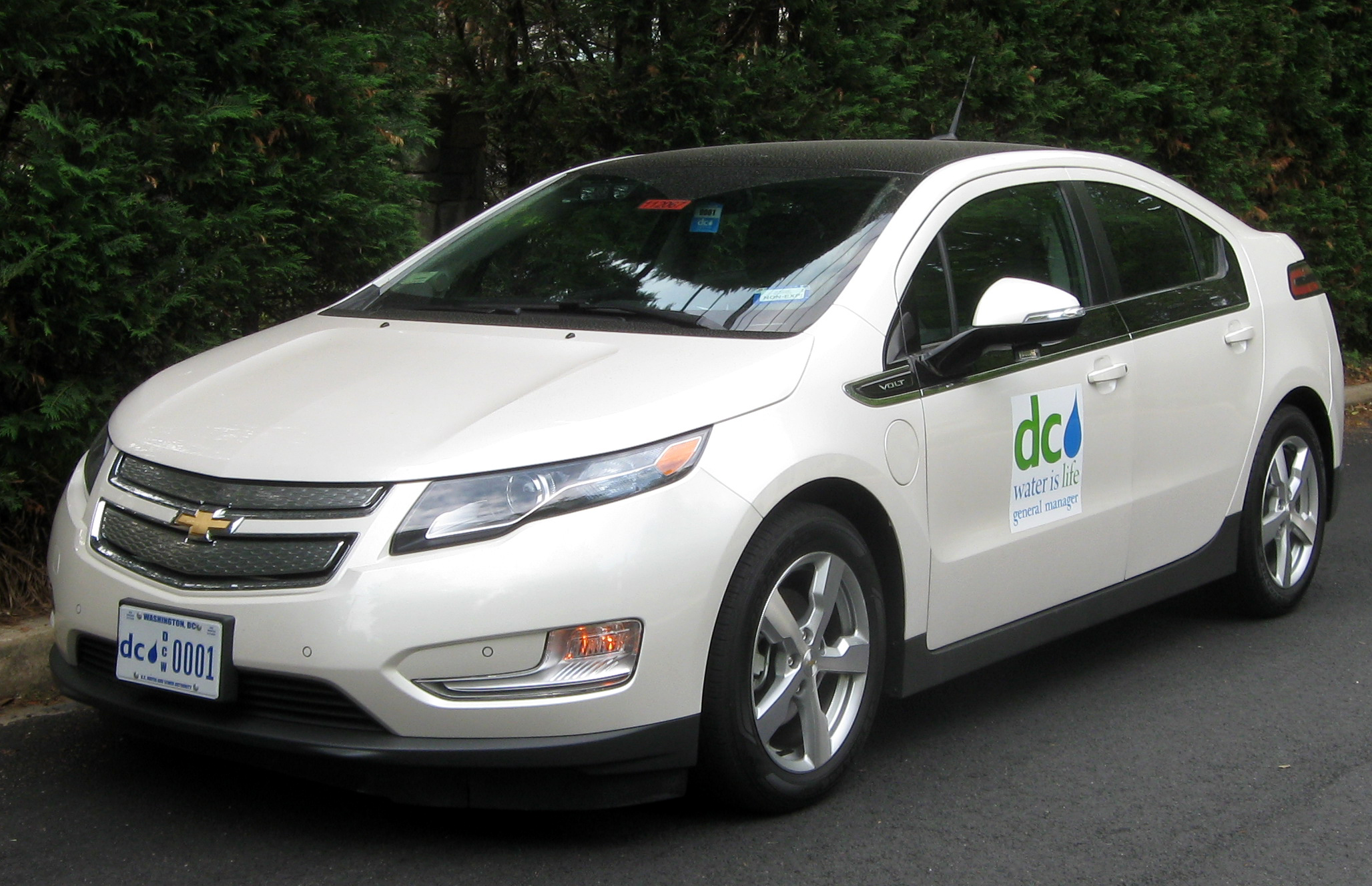
Chevrolet Volt
"...be a vehicle to load in there as well with a 220 volt 3-pin socket and therefore if you've got tools th..."
The Chevrolet Volt is a car that uses both electricity and gasoline. It can plug in to charge, and it can also use gas when the battery runs low. The podcast is talking about a built-in power outlet that can run tools or other devices.
The Chevrolet Volt is a plug-in hybrid that can run on electricity for shorter trips and then switch to a gasoline engine to extend range. The podcast mentions a 220-volt 3-pin socket, pointing to its ability to power tools or equipment when needed. That’s a distinctive feature that makes the Volt stand out for practical, off-the-grid use cases.
220 volt 3-pin socket
"There'll also be a vehicle to load in there as well with a 220 volt 3-pin socket and therefore if you've got tools that sort of thing helpful."
This is basically a normal-style power outlet inside the van. It lets you plug in tools or equipment without needing a separate generator. That can be really handy for work crews.
A 220-volt 3-pin socket is a standard mains-style outlet (common in many countries) that allows powering tools or equipment directly from the vehicle. For a commercial van, this can reduce the need for separate generators on-site. The transcript frames it as helpful for jobs that involve tools.
electric van market struggling
"It's going to be interesting to see if this starts to make more of a dent into the electric van market because electric van market is really, really struggling and is nowhere near the requirements for the mandate which is causing"
They’re saying electric vans aren’t selling or performing well enough to meet government rules. The idea is that the real-world technology and costs may not match what the rules assume. So companies are worried about penalties.
The hosts describe the electric van market as struggling to meet regulatory requirements for a mandate. This implies that real-world constraints—like charging infrastructure, vehicle capability, and cost—are making compliance difficult. It also sets up why manufacturers are pressuring governments about penalties.
mandate fines
"the requirements for the mandate which is causing the industry to really start hopping up and down and shouting at the government to consider because the fines are just going to be outrageous."
They’re talking about government rules that come with big money penalties if companies don’t hit targets. That pressure can change what manufacturers build and how fast they roll it out. The hosts feel the targets may be unrealistic.
The transcript mentions a mandate with fines that could be “outrageous,” suggesting manufacturers face financial penalties for not meeting targets. This is an important policy concept because it can influence product planning, pricing, and investment in charging and fleet infrastructure. The hosts also criticize how the figures were set without accounting for real technology capability.
Hagerty
"I am not recommending one but two articles to you and both are from Paranjay Dutt and he is written in Hagerty and they're all about the O2 series from BMW."
Hagerty is an automotive website/magazine that focuses on car enthusiasts, including classic cars. Here, the hosts are pointing you to Hagerty articles they think are worth reading. It helps explain where the information is coming from.
Hagerty is a well-known automotive media company focused on classic cars, enthusiast culture, and car ownership. In this segment, the hosts reference Hagerty articles as the basis for their “points of interest” reading. It’s relevant because it signals the editorial lens—enthusiast and historical—behind the discussion.
car spoilers
"this is titled Wings, history's greatest car spoilers ... the way the spoiler acts and when ... that suddenly deployed."
A spoiler is a shape on the car that helps the air flow better. On many cars it also helps press the car down onto the road so it feels more stable at speed.
Car spoilers are aerodynamic surfaces designed to manage airflow over the vehicle. Depending on the design, they can create downforce (helping grip) and reduce lift, especially at higher speeds; some are fixed while others deploy actively.

Ford GT from 2017
"if you could get yourself to slide number 22 and the Ford GT from 2017 ... the way the spoiler acts and when ... Clarkson's Racing Hammond and May ... when that suddenly deployed."
The Ford GT is a modern supercar, and it has an aerodynamic spoiler that can move. When it deploys, it helps keep the car planted at speed, which is why it’s such a memorable moment.
The Ford GT (2017 model year) is a modern supercar known for its aerodynamic design and active aero features. The spoiler deployment described is an example of how aero surfaces can change position to generate downforce when you need it, like during high-speed driving.
active aerodynamic spoiler deployment
"the way the spoiler acts and when, the first time I saw it was on the Grand Tour ... when that suddenly deployed, oh yes, that's wonderful."
Some cars have spoilers that don’t just sit there—they can move automatically. They deploy when the car needs more grip or stability, usually at higher speeds.
Active aerodynamic systems move aero parts (like a spoiler) based on speed, throttle, or other conditions. The goal is to provide downforce when it’s most useful while keeping drag lower when you don’t need maximum aero effect.
Funtac Labs
"Well, fear not, Funtac Labs believe they may have a solution and the solution is the parkable smart garage."
Funtac Labs is the company behind a smart display/garage idea. It’s meant to automatically store and show your model cars without you having to place everything by hand.
Funtac Labs is mentioned as the company behind a “parkable smart garage” concept for displaying die-cast models. It’s positioned as an automated storage/display solution rather than an automotive product itself.
parkable smart garage
"the solution is the parkable smart garage. If you think about how those automated garages work, where the vehicle is put on a platform ... put it in bays all by itself."
The “parkable smart garage” is basically an automated storage unit. You put your models on a platform, and the system moves them into display spots by itself.
The “parkable smart garage” is described as an automated display/storage system where a platform moves the item into bays while people step out. In this episode it’s specifically framed as a solution for die-cast model storage, using a similar idea to automated vehicle garages.
Kickstarter campaign
"There is a video in here that sort of has something to do with this. [1766.5s] Some of the messaging seems a bit odd to me when it comes to it, but it's great fun to watch."
Kickstarter is a website where people can chip in money to help a project get made. If enough people support it, the creators can build the product and ship it later.
Kickstarter is a crowdfunding platform where creators raise money from the public to build products before they’re fully developed. In automotive contexts, it’s often used for niche gadgets or concept projects that don’t have mainstream funding yet.
wind tunnel on your desktop
"And yes, what a fabulous idea. These are the lot that did the wind tunnel on your desktop. [1779.5s] We talked about that a year, two years ago, something like that, but this is the same company from there."
A wind tunnel is where you test how air flows around something. “On your desktop” usually means you can model that airflow on a computer instead of building a real wind tunnel.
A “desktop wind tunnel” refers to using software or a small-scale setup to simulate airflow and aerodynamic behavior without a full physical test facility. It’s a way for enthusiasts and designers to explore aero concepts quickly and cheaply before committing to real-world testing.
Auto parking lift
"Some of the key features that are listed in this article. Auto parking lift, motorized carriage for seamless model loading and retrieval. [1797.4s] It's app controlled, so you can assign parking spots, switch display modes and manage your collection remotely via the Parkzible app."
An auto parking lift is a motorized mechanism that raises and lowers a vehicle or display item for storage and retrieval. In enthusiast setups, it’s designed to make access seamless while keeping the collection organized and protected.
motorized carriage
"Some of the key features that are listed in this article. Auto parking lift, motorized carriage for seamless model loading and retrieval. [1797.4s] It's app controlled, so you can assign parking spots..."
A motorized carriage is a guided, powered moving platform used to transport an item along a track or within a mechanism. In this context, it’s part of an automated display/storage system for models, enabling consistent loading and retrieval.
Parkzible app
"It's app controlled, so you can assign parking spots, switch display modes and manage your collection remotely via the Parkzible app. [1803.7s] Multiple display modes, choose from the standard random and snake mode..."
The Parkzible app is a phone app that controls the system. Instead of pressing buttons on the device, you can manage it remotely from your phone.
The Parkzible app is the remote-control interface for an automated parking/display system. It lets users manage storage locations and display behavior without interacting directly with the hardware.
ambient lighting
"Multiple display modes, choose from the standard random and snake mode to showcase your collection your way. [1810.4s] Smart ambient, lighting, blah, blah, blah. I just, I love this."
Ambient lighting is the soft background light that makes a setup look nicer. It’s usually meant to create a mood and make the display easier to enjoy.
Ambient lighting refers to indirect, mood-setting illumination used to enhance the visual presentation of a space or object. In display systems, it’s typically used to make the collection look more premium and to highlight different display modes.
Request an Explanation
Heard something you'd like explained? We'll add it to this episode.
Sign in to request explanations for terms you heard.
Want to learn more?
Browse our glossary for plain-English explanations of automotive terms, jargon, and concepts.
Help improve this episode
See something that's not quite right? Our annotations are AI-generated and can sometimes miss the mark. Click the flag icon on any annotation to suggest a correction.