
Motor Finance Compensation Scheme
This is a UK program that tries to make things right for people who may have been treated unfairly when buying a car using finance. The debate here is about how the compensation is calculated and whether the numbers are accurate.
FCA calculations
The FCA has a method for working out how much money people should get back. Here, critics say the method underpays some people compared with what they believe they’re owed.
EV charging VAT to 5%
This is about taxes on charging electric cars. The idea was to lower VAT on public charging, but HMRC is appealing the decision.
1000 kilowatt hour per month threshold
They’re talking about a specific energy limit per month. If charging is under that limit, the policy was meant to apply a lower VAT rate, but HMRC wants the wording interpreted differently.

Tesla Model
They use the Tesla Model Y as a real-world example to explain what the rule would mean in practice. The point is to show how many times you could recharge before you’d hit the monthly energy limit.
VAT differential
VAT is a tax added to many purchases. A “VAT differential” just means the tax rules aren’t the same for everything, so the cost can go up or down depending on what’s being taxed.
home VAT rate for electricity
Electricity often has taxes added to it. If the government changes the VAT rate on electricity, it can make charging at home cost less (or more), which affects how expensive it is to drive an EV.
permitted development rights for cross pavement charging solutions
Normally, putting something in or across a public pavement can require planning permission. “Permitted development rights” means some of these installations can happen with less red tape, so EV chargers can be added faster.
gullies cut into pavements
They’re describing cutting small channels in the pavement for cables, then covering them. The cover is meant to stop people from tripping while still allowing the cable to run safely.
planning permission
Planning permission is official approval from the local authorities before you change something in a public area. The discussion suggests some EV charging work may be allowed without that full approval process.
off street parking
Off-street parking means you park somewhere like a driveway, not on the street. If you don’t have that, getting a charger can be harder—so public charging options matter more.
charging network
A charging network is basically the map of EV charging stations. If there are enough chargers in the right places, it’s easier to own and use an electric car without worrying about running out.
seven kilowatt charges
Seven kilowatts is the charger’s power. Higher power usually charges faster, but 7 kW is commonly meant for overnight charging at home or in nearby parking spots.
tariff scheme
A tariff scheme is the pricing plan for charging. Even if it sounds cheap, the total cost can be higher if the plan has fees or doesn’t match how much you actually charge.
Vauxhall
Vauxhall is a car company that did research used in this discussion. Their study is being cited to show what councils are planning for EV charging.
MotorTrader.com
They’re citing an automotive website (MotorTrader.com) that tracks what dealers think about the future. The point is to show how the industry is feeling about European brands.
Startline Used Car Tracker
This is the group behind a used-car survey of dealers. The hosts are basically asking whether the survey results are trustworthy because of how many dealers they asked.
electrification
Electrification is the shift from making mostly gas/diesel cars to making electric cars. It costs a lot of money to develop and build the new technology.
self-driving
Self-driving means cars that can drive with little or no human input. It’s a big tech project, and it can be expensive for automakers to develop.
brand conscious and brand loyal
They’re saying EV buyers may care less about which badge is on the car and more about the deal and the product. That can make it harder for traditional brands to keep customers.
Porsche
Porsche is mentioned as selling part of its investment in the Rimac/Bugatti-related business. The idea is that Porsche wants to concentrate on its main business instead of tying up money in that partnership.
Bugatti Rimac
Bugatti Rimac is referenced as the entity Porsche held a stake in, alongside the Rimac Group. The segment describes Porsche selling its stake, which signals a change in ownership and partnership structure.
Rimac Group
The Rimac Group is discussed in the context of Porsche selling its stake and rumors of a long-running disagreement. Rimac is known for high-performance EV technology, so these ownership shifts can affect investment and direction.
HOF Capital
HOF Capital is the investor that bought Porsche’s share. That matters because it can influence how the company gets funded and what it prioritizes next.
Solaris
They’re saying the Solaris family is the financial backer behind HOF Capital. It’s basically who’s behind the money in this investment.
core business
“Core business” means the main part of the company that makes the most sense to focus on. Here, Porsche is saying it wants to concentrate on what it does best.
speeding fines
They’re talking about how speeding tickets in the UK have increased. That can affect how people drive and how strict enforcement feels.
freedom of information request
A freedom of information request is a way to ask the government for official records. Here, it’s being used to get data about speeding fines and enforcement.
Oono
Oono is a road-safety tech company mentioned as the group that requested official speeding-fine data. They’re basically using paperwork and public records to study what’s happening.
20 mile an hour zones
A 20 mph zone is a neighborhood where the speed limit is set to 20 miles per hour. Lower speeds are meant to make roads safer, and if cameras or enforcement are used, more tickets can be issued.
River Simple
River Simple is a company working on hydrogen-powered cars. They’ve been testing vehicles in real life and are now part of a bigger project to build a practical zero-emissions, long-range lightweight car.
ZELOR project
ZELOR is a project focused on building a cleaner, lighter car that can go a long way on a single “energy cycle.” The target mentioned here is about 400 miles of range with zero emissions.

Mercedes-Benz Aclass
The Mercedes-Benz A-Class is a compact car meant for everyday driving. The podcast mentions it because they’re talking about using a different car for a test, and the A-Class would be heavier. Weight can affect how a car behaves, so it matters for comparisons.
Mercedes A-Class
The Mercedes A-Class is mentioned as a comparison point for weight. The host argues that while you could use a Mercedes A-Class, it would be heavier than the aluminum-based A2, which would work against the lightweight goal.
Green Flux Motors
Green Flux Motors is a company they’re working with to supply efficient electric motors. In a hydrogen car, better motor efficiency helps the car use its power more effectively.
TTPI
TTPI is mentioned as providing the “converters,” which are electrical parts that help manage power in the vehicle. They’re important because the car needs the right kind of electricity for each component to work properly.
hydrogen fuel cell powertrain
A hydrogen fuel cell turns hydrogen into electricity. That electricity is then used to power the car, so the car can be “zero emissions” at the tailpipe.
vehicle development tool based on machine learning
The segment says the project will use a vehicle development tool based on machine learning. This implies they’ll use data-driven modeling to speed up design decisions and optimize performance targets like range, efficiency, and weight.
Pi Engineering Consultancy
They’re talking about a company called Pi Engineering Consultancy. They’re connected to a project the hosts think could be interesting, and they’re developing vehicles as part of it.
solid state batteries
Solid state batteries replace the liquid electrolyte in conventional lithium-ion packs with a solid material. The idea is that they can improve safety and potentially reduce some performance and reliability issues, though cost and scale are still challenges.

Mercedes Benz C-Class EV
They’re talking about an electric Mercedes-Benz C-Class. The car will still look like a C-Class, but with a new front design, and the episode focuses on how far it can go and how fast it can charge.

Bmw 3
The BMW 3 Series is a mid-size car made for everyday driving, with a focus on handling and comfort. The podcast mentions it because it’s a well-known reference for how big the front grille looks on a typical BMW. It helps listeners picture the styling change being discussed.

BMW i3
The BMW i3 is a small electric car designed mainly for city driving. The podcast mentions it because it’s known for having good driving range compared with some other EVs. Range is how far you can drive before needing to recharge.
94.5 kilowatt hour battery
That “94.5 kilowatt hour” number is how much energy the EV battery can store. More stored energy usually means you can drive farther before needing to recharge.
472 miles
They’re quoting a claimed driving range of 472 miles. Real-world range usually won’t match the test number exactly, but it gives a baseline for expectations.
800 volt architecture
“800 volt” is the EV’s electrical system voltage. Higher voltage can help the car charge faster when you use the right fast chargers.
330 kilowatts
“330 kilowatts” is how fast the EV could charge at its best. In practice, the actual speed can vary depending on the charger and battery conditions.
199 miles in 10 minutes
This is a marketing-style way of saying how much driving range you can add in about 10 minutes of charging. Real results can vary a lot based on the charger and battery conditions.
dual motor 400 four-matic powertrain
It’s an electric setup with two electric motors and all-wheel drive. That usually helps the car launch hard and keep grip.
0-62 time
“0-62” is how fast the car can go from standing still to 62 (about 100 km/h). Lower numbers usually mean the car feels quicker when you accelerate.
mood lighting
Mood lighting is the colored light inside the car that sets the vibe. It’s usually adjustable and meant to make the cabin feel more premium.
mohusse screen
They’re talking about a big screen in the car’s dash. The concern is that it could distract the driver, so the car may let you turn parts of it off.
panoramic roof sunroof
They’re talking about the big glass roof above you. The car also uses lights in/around that roof area to create the ambient lighting effect.
Chinese Motor Show
They say the car was shown as a concept at the Chinese Motor Show. That’s where manufacturers often preview new models before they’re fully detailed.
range of nearly 186 miles
The host quotes a claimed EV range of nearly 186 miles, which is the distance the car can travel on a full charge under a specified test cycle. For small EVs, that kind of range is often realistic for city driving, but real-world results depend heavily on speed, temperature, and driving style.
Charging the battery from 10 to 80% in less than 20 minutes
They’re quoting a fast-charge time: from 10% to 80% battery in under 20 minutes. Charging from 80% to 100% usually takes longer, so this metric is meant to show the most useful part of a quick top-up.
vehicle to load
Vehicle to load means your electric car can power things outside the car, like a small device or even parts of your home, using the car’s battery. It’s like having a backup power bank on wheels.
WLTP combined range
WLTP (Worldwide Harmonised Light Vehicle Test Procedure) is a standardized testing method used to estimate a vehicle’s range and fuel/energy consumption. “Combined range” means the estimate blends multiple driving cycles rather than representing only city or only highway driving. Listeners should treat WLTP as a lab-based estimate that can differ from real-world conditions.
DC charging
DC charging is the fast-charging method for electric vehicles. Instead of charging slowly through the onboard system, the charger delivers power more directly. It’s designed to get you back on the road quickly.
20 to 80% in 36 minutes
This is a typical way EV makers describe how quickly you can charge. Charging from 20% to 80% usually takes less time than going all the way to 100%. The exact time can vary with the charger and conditions.
Payload
Payload is how much stuff the van can carry. If the battery is heavier, there’s usually less room (weight allowance) left for cargo. That’s why they compare payload for the two battery sizes.
Euro pallets
Euro pallets are standard shipping pallets used for deliveries in Europe. If a van can fit multiple Euro pallets, it means it’s set up for real delivery jobs, not just small packages. It’s a straightforward measure of how usable the cargo space is.
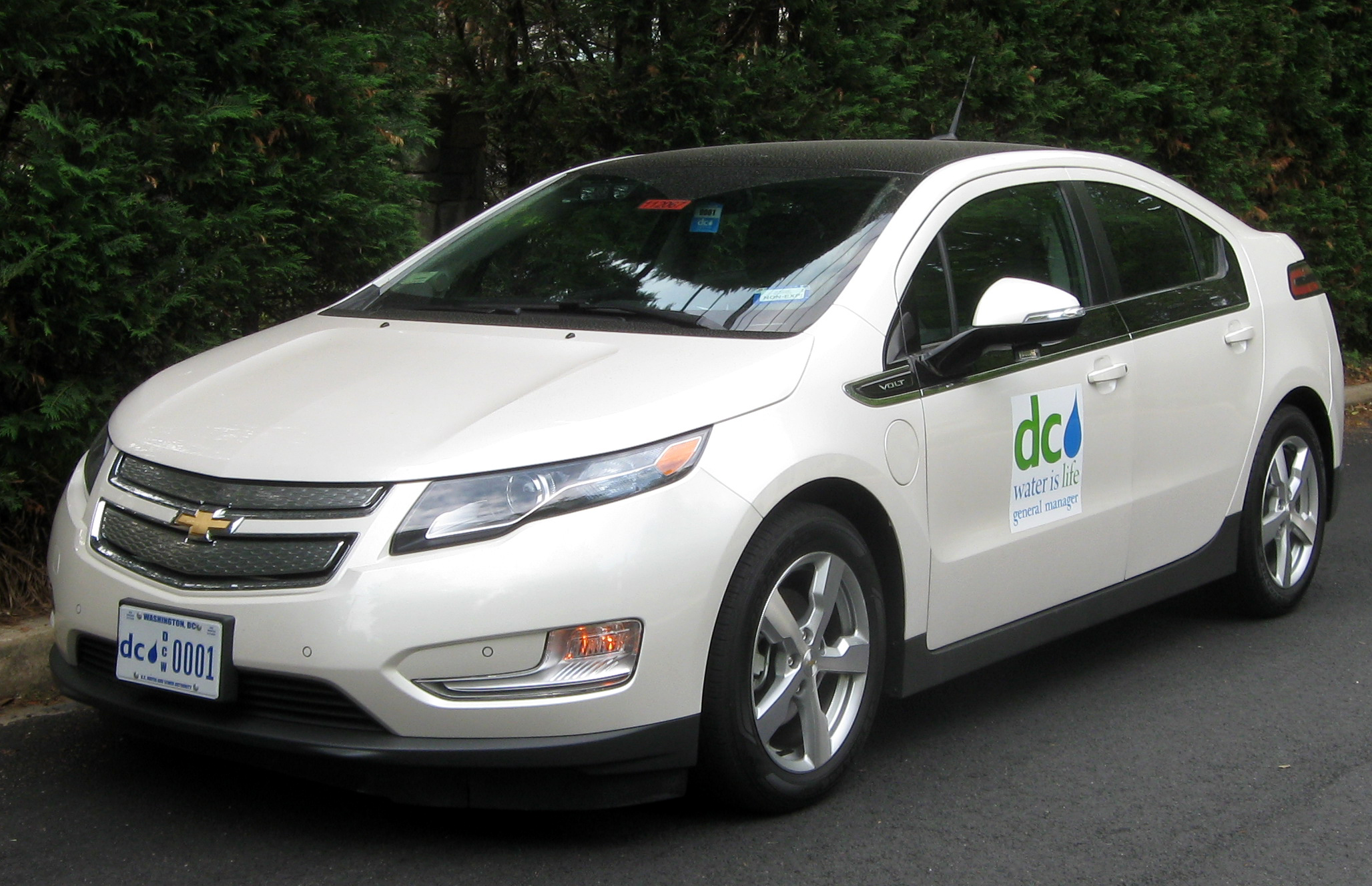
Chevrolet Volt
The Chevrolet Volt is a car that uses both electricity and gasoline. It can plug in to charge, and it can also use gas when the battery runs low. The podcast is talking about a built-in power outlet that can run tools or other devices.
220 volt 3-pin socket
This is basically a normal-style power outlet inside the van. It lets you plug in tools or equipment without needing a separate generator. That can be really handy for work crews.
electric van market struggling
They’re saying electric vans aren’t selling or performing well enough to meet government rules. The idea is that the real-world technology and costs may not match what the rules assume. So companies are worried about penalties.
mandate fines
They’re talking about government rules that come with big money penalties if companies don’t hit targets. That pressure can change what manufacturers build and how fast they roll it out. The hosts feel the targets may be unrealistic.
Hagerty
Hagerty is an automotive website/magazine that focuses on car enthusiasts, including classic cars. Here, the hosts are pointing you to Hagerty articles they think are worth reading. It helps explain where the information is coming from.
car spoilers
A spoiler is a shape on the car that helps the air flow better. On many cars it also helps press the car down onto the road so it feels more stable at speed.

Ford GT from 2017
The Ford GT is a modern supercar, and it has an aerodynamic spoiler that can move. When it deploys, it helps keep the car planted at speed, which is why it’s such a memorable moment.
active aerodynamic spoiler deployment
Some cars have spoilers that don’t just sit there—they can move automatically. They deploy when the car needs more grip or stability, usually at higher speeds.
Funtac Labs
Funtac Labs is the company behind a smart display/garage idea. It’s meant to automatically store and show your model cars without you having to place everything by hand.
parkable smart garage
The “parkable smart garage” is basically an automated storage unit. You put your models on a platform, and the system moves them into display spots by itself.
Kickstarter campaign
Kickstarter is a website where people can chip in money to help a project get made. If enough people support it, the creators can build the product and ship it later.
wind tunnel on your desktop
A wind tunnel is where you test how air flows around something. “On your desktop” usually means you can model that airflow on a computer instead of building a real wind tunnel.
Auto parking lift
An auto parking lift is a motorized mechanism that raises and lowers a vehicle or display item for storage and retrieval. In enthusiast setups, it’s designed to make access seamless while keeping the collection organized and protected.
motorized carriage
A motorized carriage is a guided, powered moving platform used to transport an item along a track or within a mechanism. In this context, it’s part of an automated display/storage system for models, enabling consistent loading and retrieval.
Parkzible app
The Parkzible app is a phone app that controls the system. Instead of pressing buttons on the device, you can manage it remotely from your phone.
ambient lighting
Ambient lighting is the soft background light that makes a setup look nicer. It’s usually meant to create a mood and make the display easier to enjoy.