CSI is Customer Satisfaction Index, a metric dealerships track based on customer surveys after service. The episode argues that poor transportation (late shuttles, unavailable loaners) directly harms CSI scores.
A loaner fleet is the group of backup cars a dealership gives customers while their car is being repaired. If those cars aren’t available or the service is slow, customers get frustrated.
Depreciation is the loss of a vehicle’s value over time, and it accelerates when a car is used as a loaner. The episode’s point is that loaner cars lose value immediately once they’re put into service, adding a hidden cost to the program.
Uber for Business is a way for companies to arrange rides for customers or employees. The hosts are using it as an alternative to running a dealership shuttle fleet.
“All-in” means the total cost of everything combined. They’re adding up all the expenses to see what the transportation program really costs each month.
Warranty repairs are fixes the manufacturer agrees to pay for. The dealer gets reimbursed, so transportation costs are less risky than when the dealer has to cover everything.
Utilization is how much the shuttle is actually being used versus sitting idle. If the shuttle can’t match where people need to go, it wastes time and money.
Concept
appointment link
An appointment link is a website/app link that helps schedule your service visit. In this conversation, it also helps coordinate when and how you get picked up.
A service shuttle is a car/van the dealership uses to pick you up and drop you off while your car is in for service. It helps you keep your day going instead of sitting at the dealership.
Service writers are the people at the dealership who take your car’s service order and talk to you about what needs to be done. They help manage the process while your car is being worked on.
This means whether people were willing and able to start using the new system. They’re asking if the change was hard for employees or customers to get used to.
The service drive is the part of a car dealership where you pull in for service—like dropping off your car or getting it back. The episode is talking about how transportation solutions fit into that flow.
DMS is the dealership’s main computer system for managing things like service appointments and repair paperwork. The episode is saying the ride solution can connect to that system.
A service advisor is the person at the dealership who helps you with service—like explaining what needs to be done and coordinating the work. They’re saying the ride tool should be easy for that person to use.
A repair order is the paperwork for the work being done on your car. The repair order number is like an ID that ties the ride and billing to that specific service visit.
Warranty reimbursement is when the car maker pays the dealership back for warranty-covered repairs. They’re saying the ride data can be uploaded so the dealership can get reimbursed correctly.
Term
TSD integration
TSD integration is a computer connection between systems so ride/transportation info can be tracked alongside service work. The goal is better visibility and accounting for the dealership.
Loaners are replacement cars the dealership gives you when your car is in the shop. They’re talking about comparing options like loaners versus other transportation in real time.
Concept
radius of miles
They’re describing a distance limit—like “we’ll arrange rides within this area.” If someone’s outside the usual area, they may make exceptions.
This describes a standardized pickup location used to streamline the ride process. By having customers walk out to a known spot, the dealership reduces confusion and makes the Uber workflow more repeatable for staff and customers.
They’re talking about the dealership’s monthly cost for moving people around—like rides for customers. The point is to compare what they used to spend versus what they spend now using Uber.
Service vans are vehicles the dealership uses to move stuff around—like parts or equipment. Here, they’re saying they don’t have extra vans for that, because they’ve changed how they get parts.
Term
CP labor
“CP labor” is shorthand for customer-pay labor—labor charges billed to the customer for service work. The speaker connects Uber to freeing up advisor time and improving labor efficiency, implying it can affect how many billable hours the shop can generate.
Concept
low mileage cars
Low mileage just means the car has been driven less than average. The speaker is saying it helps the used-car department sell cars faster.
Concept
courtesy rise pick up and drop off
It’s basically “we’ll get your car or you to the dealership and then bring you back” as part of service. The platform helps coordinate that so the dealer doesn’t need as many drivers.
Instead of waiting for parts to arrive, the dealer arranges for parts to be delivered quickly so repairs can keep moving. The discussion is about using a platform to send parts to the right place fast.
It means the dealership arranges to get your car to the shop and bring it back. The goal is to make it easier for customers and reduce how many people the dealership needs to run around.
Concept
white glove version
“White glove” means a higher level of service—more help and less hassle for the customer. In this case, it’s about making pickup/drop-off smoother.
The Chevrolet Suburban is a large SUV made to carry a lot of people and gear. It’s designed for everyday driving and road trips, so it works well when you need more space than a smaller car. It may be mentioned when people talk about vehicles that fit both city and suburban life.
It means how many drivers are available nearby to take trips. If there aren’t many, customers wait longer.
Concept
urban and suburban play
They’re asking whether this service works best in cities or in suburbs too. The answer is that it can vary depending on how many drivers are available in each area.
It’s like telling drivers where the most ride requests are coming in. The goal is to reduce wait times by sending drivers to the busiest areas.
Concept
branded loners
They’re talking about loaner cars with the dealership’s name on them, like a rolling billboard. The debate is whether that marketing is worth keeping compared to posting online.
It means people want to book and get help right away using their phone. Instead of waiting around in a dealership lobby, they expect a faster, app-based process.
Topic
Uber vs traditional loaner fleet economics
They’re talking about whether it’s cheaper to run your own loaner cars or to use rides from a service like Uber. The big idea is that cutting the old expense can improve the dealership’s bottom line.
It means the dealership is making less profit per sale because costs or competition are squeezing the numbers. That’s why they’re trying to cut expenses.
Dealerships have two big money areas: selling cars, and running the service/parts side. “Fixed ops” refers to that service/parts side that keeps the lights on.
Instead of paying to keep a bunch of cars ready all the time, you pay for each individual ride when it’s needed. That can be cheaper and easier to manage.
“Bottom line” just means the final money result—what’s left after expenses. They’re saying owners care most about improving that number for the service side.
A dashboard is the screen/software panel where employees manage the program. They’re saying to set the rules first so staff don’t accidentally allow overspending.
It’s a rule that limits rides to a certain distance area around the dealership. That keeps costs predictable and matches local travel needs.
Term
vehicle privileges
“Vehicle privileges” means employees get permission to use a company vehicle. It’s usually a perk with rules about who qualifies and under what conditions.
LIVE
Hey everybody, welcome to the Cardiola Ship Guy industry spotlight. I'm your host Sam Dark and coming up today, every dealership in this industry has a transportation P&L leak they've stopped looking at.
Loaner fleets that depreciate the second the key lands in a customer's hand shuttles that sit idle for 40 minutes then run late and tank CSI coordinators chasing keys instead of selling service.
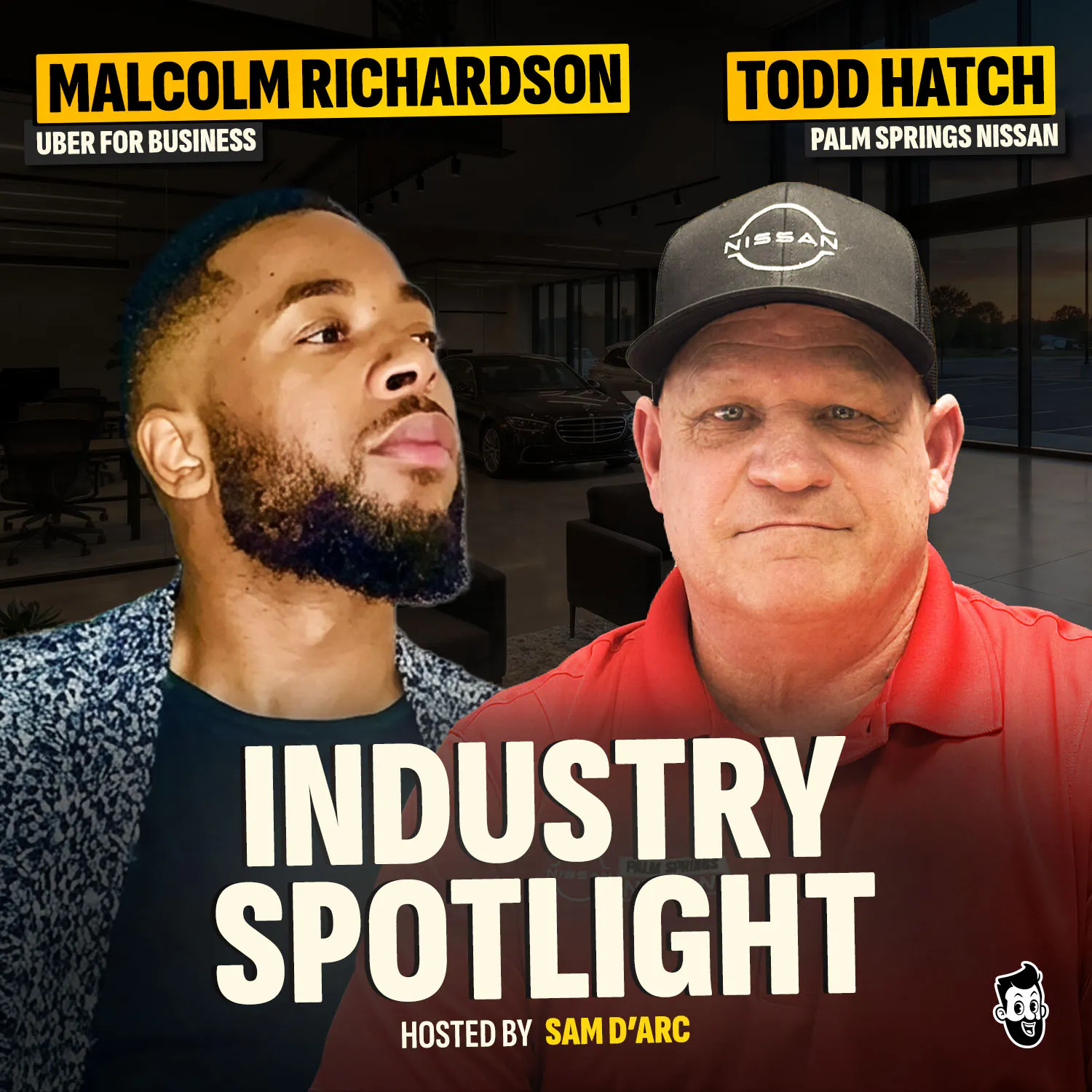
Today's guest stopped accepting that as the cost of doing business and his store looks different because of it. Todd Hatch runs service at Palm Springs, Nissan Malcolm Richardson leads dealer accounts at Uber for Business.
We're going to unpack on today's show what broke, what got fixed and what it looks like for the dealer listening right now who knows their fleet is bleeding but hasn't done anything about it yet.
Props to Uber for Business for supporting today's content. Now let's get into it. So Todd before you changed anything paint the picture how many loaner units were you carrying what did the shuttle program look like and what was your all in monthly spend on customer transportation.
So we had three shuttles three different drivers. I would say and if I'm looking at you know the maintenance on the the vans themselves tires gasoline. We were probably spending about $12,000 a month and still we didn't seem like we were we were getting the the the boost that we were looking for from our customer related to surveys and satisfaction.
Even though we ran these shuttles and we ran them every 20 minutes. We just never seem to please them.
So speaking of that a busy day in automotive and service and sales is Saturday morning right walk me through a Saturday morning in service before the switch where did that transportation break first was it unit availability was at the shuttle.
Okay you didn't so there was none existing.
Shuttles on Saturdays because a lot of our business was during the work week so we kept them there trying to keep down personnel expense right we felt like Saturdays people had to day off maybe their wife was off her husband they could facilitate it that was not the smartest choice for us because it became a lot more phone calls on my messages when I came in on Monday
morning from people you know what the heck right yes yeah where's my show alright so this industry treats a loaner fleet like water right it's like it's something that is a cost of doing business that almost nobody in automotive questions what did you see that most service directors aren't looking at when you looked at the
Before I switched we had some 50 loaner cars in service so trying to keep with four different advisors trying to keep track of them.
Yeah and then you know that when you tell people don't eat don't do this in the cars they ultimately do so there was a cost factor on trying to keep the cars clean and then the inevitable fender bender whether it was a small one or a big one you had to deal with the customers insurance it just really became a problem for us so we cut that fleet down to 12.
Okay use them only for warranty repairs through our manufacturer that pays us back for him so I'm not that's funded by the OEM yeah and so if I'm a writer what my writers would do if they had a customer part was delayed or whatever the issue was they just put them in one of these cars and then forget about.
Then a week later I'm like where's this car who's paying for oh well so it became it was hemorrhaging cash dollars for us the maintenance alone was terrible.
And then you know you go back to the shuttle what did your shuttle utilization look like when you look at actual ride count per hour was it effective when you have the shuttle.
No it wasn't because ultimately we had people going this way and people going that way and we could never match it up and if we wanted to send this one here somebody was in a hurry needed to get to an appointment.
I will tell you I faded a lot of I don't want to say complaints but but customers that were dissatisfied with our transportation.
So that that was going to be my next question from a CSI standpoint how often did transportation show up in service very large you'd find it interesting you would think like a major repair a big engine repair transmission would be the ones it was actually the smaller ones right.
The smaller repairs the ones that should be in and out cleanliness of car but transportation was always an issue because we're in a fast moving society today right people are now now now they have their days booked.
I like I've got other things going I look at my schedule today right this is just a society you're in and if you can't deliver and it backs them up the rest of their day is backed up and they will not forget that when it comes to the survey.
So Todd at your store was the moment when you decided hey that old model it's got to go was it was a number was it a customer a conversation with the dealer.
Like I said I've only been in this store for months and so that was one of the first things I realized is we had a shuttle shuttle driver who was either just standing around waiting for a shuttle.
That was almost one of the very first things that I switched to because I knew from my previous jobs everybody Ubers right I can't nobody I know my wife and I Uber everywhere we go in this valley.
So it's just very convenient when you tell people hey we're using Uber first question is do I have to pay for it.
And then when you tell no it's a courtesy from the dealership I'll tell you what it diffuses a lot of things.
And then being able to set them up where whatever your appointment is you get a 1230 appointment you send in the link they're done at 115 they go get them they bring them in.
It's just a smooth transition happy people and better for business right because now they know use that and so it's convenience for them.
So you mentioned yet options you started at the service shuttle first you probably looked at different options before you made the full pivot.
Instead of just adding another vehicle or different driver or changing the fleet you decided just got it and make it a complete move.
We just looked at cost savings just from from from the guys I worked with right other management employees that use Uber all the time we started looking at it you know I Uber all the time but it's a $20 fee it's a 27 convenience right.
I'm not driving my car I'm not burning my gas.
And they come when I want they take me where I want it's just super simple and I think today's society people want that now and know they're they know when they're done at 330 they're going to hit that link.
Uber is going to come and get them where they call in maybe my advisor tells the shuttle driver maybe drops the ball a lot of people would call in and say I never got picked up.
You know and I'd ask the writers in the shuttle I had a person that coordinated shows oh my gosh I forgot those people well those things in business now.
You just you have to not have them.
Yeah so thinking back when you first made that change and then I'd love to talk to Malcolm a little bit about what he sees in the dealer space when you made that change initially at your other store.
Was there anything that was a challenge from an adoption standpoint where your service writers or the customer or someone wasn't completely comfortable with the process.
And I can think of I mean every some newer people when I first rolled this out.
Some people haven't used Uber they were a little bit hesitant right.
Some people don't know phones necessary.
But overall I think for my staff alone if I'm going to if I'm going to covet my people the relief for them was amazing.
And I think it put them in a position to do better business when they could tell somebody hey your car needs this this and this and this.
And we could Uber you to your home we could Uber you to your job we can pick you up.
It makes the decision for the customer I think a little easier when they don't have to think about transportation and can our wife give me a ride or my husband pick me up right.
It takes that out of the equation.
It was a no brainer for us.
Everybody likes it.
So Malcolm welcome to the show.
Tell us a little bit about yourself.
What do you do at Uber.
And then from it from your side what is the dealer typically get wrong about Uber as a solution in the service drive.
Absolutely thanks for having me Sam as I am a senior account lead on an automotive partnerships team here at Uber.
And most of my time has spent in the field with service directors like Todd here helping them kind of reimagine how we move customers vehicles and parts to their operation.
And a lot of that is figuring out like where that friction is and how can Uber can help solve that problem.
What do you typically see as the biggest misconception about using Uber in an operation of the car dealership.
Yeah I think the biggest misconception is that you know that one it might be difficult to implement right and then to you know a lot of times we there's a there's this myth out there and I'm glad Todd dispersed it but that you know shuttles are free for example.
And we all know based off what we just said they're not free.
You guys think about the unrealized costs like you know what happens maintenance fuel repair right with God forbid a driver calls out right what happens when those situations happen and also to as he mentioned on the weekend how do you get people home.
Right. And so you know all those things culminate to a to a terrible customer experience and ultimately impacts the business and CSI scores.
Yeah so so let's talk integration when you say rides tie back to our own numbers inside the DMS so you have an integrated integration within the DMS.
What does that actually look like for the advisor at the right up desk walk us through that process what what what what does the advisor do to actually place that call.
Yeah absolutely so so this is a big one so the last thing a service advisor needs is another tap open right.
So we integrate directly into their platforms that they already run on.
So think Solaris suite CDK TSD is a big one in connection and the list is continuously growing.
But what that unlocks I think it is simple but important.
I think the service advisor can request a ride directly from that screen while managing the art that they're managing RO from right and so that ride ties directly to that repair order number.
So at the end of the month as you mentioned a warranty reimbursement from the OEM your controller can wreck can reconcile that download the report and upload it right into their OEM system.
And as I mentioned before every riot maps to a customer and RO and then every dollar is accounted for the TSD integration is a great example would give service managers kind of a unified view of loners and right share so they can choose the right option.
You know for each customer in real time.
Hey so Todd you made this change about four months ago at Palm Springs Nissan.
That was the first change I believe I made when I got here.
Who did you have to sell it to.
And then how did this service advisors do with the process.
Did they lean in were they asking for a loan or key still were they saying customers wouldn't adopt it.
Well I think honestly it was a relief because they were getting a lot of people said hey you told me the shuttle is going to pick me but one it's 120 they weren't getting any of those calls.
My controller I had to to to explain the cost savings versus just paying an outside service right now it's up to us to watch where I can't send somebody from here to Vegas right.
But we try and keep it in a in a radius of miles now if it's a if it's a special circumstance will accommodate people but no my writers if I brought them in here they'll tell you the best thing I probably did for them.
Other than giving them a better pay plan was bringing an Uber and like it says it's right at the desk.
They're writing their customer up they tell them they need a ride they is it the current address no it's here they type it in and while the customer standing at the desk their text message there it is.
So they already know this customer this guy's coming he's driving this car boom we have a designated spot in front of the dealership where they walk out to it is a beautiful thing.
The roller was a little hesitant thinking that maybe the writers would get out of control with it and they're using it for everybody that's up to me to manage that and them as well.
But we've been doing it now for a few months she's in love with it it's easy I explain it to the owner right I mean he was looking at what we've been spending over the course of the year on bands.
Yeah you will and then we did our first month we did it and when they when the bill came through I mean we have a company card on these like where's the rest of they go that's what we spent really yeah yeah.
So speaking of the comp let's do that monthly transportation spend before so loaners and service personnel personnel all that stuff what's the delta between what you were spending before and today with Uber.
Well I'll tell you I mean this month looks like because my normal expense if I factored in you factor in benefits I mean as a business you factor in the people's benefits all of these kind of things wages and those kind of things.
We were hugging 10 to 12 right now I'm saving approximately five to six thousand dollars a month I'm quicker I'm more efficient and I think that it is driven some purchases from consumers when they realize I can get a ride home today.
They'll pick me up in two days I don't have to worry about it I think that makes a decision easier for them.
Yeah how many owners do you still carry.
I carry 12.
Okay so you still got the 12 and then do you have service vans do you have delivery vans completely.
Nope and I'm delivering parts so not that I'm boasting about it but I was able to cut we had two parts drivers.
We were able to cut one and one of the trucks because we use Uber to pick up parts and so it's ideal for this business I'm sure it's ideal for several but the auto industry I think anybody that's not using it I don't know that anybody anybody in this auto park I believe everybody's using.
So it's interesting you can make an argument that your service advisors got time back because they're not trying to coordinate a bunch of stuff which is what my commodity in service is right we sell time here.
So has that shown up as a benefit and labor in hours per hour or CP labor.
I think that's part of it I mean we've changed some processes since I've been here I brought in a couple of new writers that I knew right there's a there's a lot changing but I think that the Uber fits in that pie chart.
Probably a good percentage of my business increase we've increased substantially year over year since I've been here now that could just be new guy here right but I've been here a while now.
But I think that feeds into my business model it cuts my expense.
Yeah it's so much more convenient for our consumers like I said there's been a few people that have never used it right I'm in I'm in Palm Springs area right so we have some older clientele but they're easily adapted to it when we show here it is on your phone and they go that's it that's it right yeah it's saving money and I think it's boosting my sales.
So Malcolm take us to kind of the industry view and all the hundreds of stores that you deal with what what separates the stores that are getting real lift from the ones that roll this out in plateau and in a couple months like Todd's all in.
I mean he's eliminated you know there's the old saying burn the ships take the island right and right he's he's gotten rid of all of his shuttle vans you know he's down to the OEM required rental fleet base.
I have so many yeah yeah you've got you're required to do that and everything else that looks like he's putting on remember I was I was carrying about 50 all right.
And then they roll into use car department and then they can't sell the cars so now we're turning these cars this 12 like every six months it's working much better for my use car department even yeah because now they know I'm they're getting these low mileage cars and I'm not buried in a bunch of them.
So what is Todd doing right what are others missing that they might learn from Todd on implementing this is the best practice.
Todd story like is the story and that's what we're seeing the situation is always almost the same what happens is a service director looks at their shuttle or the loaner fleet and realize that they're they're basically running a small transportation company on the side of the dealership.
And so you know and for anyone who's not listening who's not familiar with Uber for with Uber for business it's Uber Uber's enterprise arm and we work with dealers auto groups and OEMs and they use us for courtesy rise pick up and drop off parts delivery as well as corporate business travel.
But right now you know Uber is we've seen such the growth and that feedback and we hear customer stories like Todd and you know we're and we're double down we've double down on this business on this team and we've dedicated a whole entire vertical and automotive team that's directly dedicated to you know helping customers like like Todd here to kind of recreate some of these stories.
And also we're involving the product each and every day when we you know we hear we have those feedback loops we have cuss conversations with our customers with the end user as well what are we doing well what aren't we doing and right and making sure we implement that and to our product and releasing it awesome parts delivery.
Most dealers still have a driver or two running parts around town at 20 bucks an hour plus right plus the vehicle and all that what are your sharpest dealers doing on parts delivery that's not something you see a lot of her here a lot of dealers doing that might be an under that might be a program that not a lot are comfortable with is that true.
I would say so I would say even beyond just parts I mean I would like to say that courtesy rise are usually that entry point but once the dealer gets comfortable they start using the platform across you know all different operations but you know as you mentioned first our parts delivery so example if a tech is you know we know
another sister location other rooftop warehouse or supplier right dealers can call an order and dispatch through that same platform so that putting somebody off the floor and send it somebody to get it and then second as he mentioned to as well is a vehicle pick up and drop off as well as kind of like the white glove version so if a customer doesn't want to come in right they may be too busy the dealership can drop off the customer vehicle and then the the porter can uber back to the dealership so no chase cars no extra drivers
these are some of the other ways that you know teams are using us as well as our sales team not our sales team as well the dealership sales teams you know when you get when we get when you get prospects you know to the dealership you know to buy a car you know or to even think about or the test drive it you know sales is also using us as well.
So Todd mentioned the warranty and manufacturer loaner requirements that you know that exist so you know for smaller size stores you know he had 50 plus cars in his rental fleet for a period of time he's now down to 12.
For smaller stores how are the best dealers handling that objection of hey the OEM requires me to have vehicles in the fleet without abandoning the model like they've got to they've got to still play by some of those rules.
We do but there's a minimum requirement with most manufacturers these guys ramped up these loaner fleet because they felt that the need was there right people were always asking for cars and I have to have a car and I can't do it because I don't have transportation so cutting that fleet down right it was huge for us and it gave me about 38 spots to park customer cars rather than having them on my back lot.
Yeah so rule dealers Malcolm thinking about rule dealers thinner rideshare pool longer pickup times does this product work there is it an urban and suburban play I'm in Kalamazoo Michigan it's tough to find an Uber in Kalamazoo Michigan are there some areas where it just doesn't work as well.
Well you know obviously there can always be certain areas where we are not you know as robust as we are in other metro areas but you know there we attack rural areas just how we attack in metro markets and again you know speaking of Kalamazoo I'm also from Michigan so I know you know Kalamazoo very very well to that same point when we hear this from our customers.
We you know we hear that we take that to our maps team and we say like hey how can we get more and more supply more drivers more couriers out to this way right and try to even sometime we can even make things a hotspot say hey these dealerships are sending out or turning all these different clients right here is a different hotspot for drivers to kind of go make some extra money and give you that supply to meet that demand.
Yeah that's awesome and I would imagine to if you start to get a bunch of ride hails as a result of a dealership I mean you're you're going to fill that demand quickly because you want that right and that only strengthens that brand so what about the dealer.
Todd that says hey my branded loners they're rolling billboards I'm not really I'm not ready to give up that brand exposure what's your counter to that Todd social media platforms can kill that exposure in a day.
Oh really Todd tell me about that well we use we have Instagram we have Facebook right I mean I agree and I've been doing this a long time you used you put your name all over like the shuttle van and all these things but there's a cost to that as well right.
Wrapping cars so I think any dealer that's not into ours our social media now is missing the boat.
Yeah I agree with that you've got to be on social media.
We do Instagram we do Facebook we do Tik Tok videos sometimes the salesmen right that kind of stuff because where is our society focused 24 7 really forms right so you get your name out there I can't tell you how many people I put specials out there right.
Yeah I'm trying to embrace everything that we have going in the marketplace right now and it's huge so I understand we used to put our names all over everything though the plate we love that not a motive.
Really you can't beat like an Instagram page on your own dealership right so Malcolm counter the counter the loyalty angle the theory is that a customer in a branded loaner is a customer driving your next sale what is your data say about that if anything.
A couple things are happening at once first customer expectations for on demand service that are all time high like people are using their phone to book everything on their book flights groceries doctor visits right.
You know I'm sitting groceries to my house each and every day like I might not ever go to the grocery store again.
So sitting in a lobby for hours waiting on a shuttle or I may not even qualify for an actual loaner vehicle right it just doesn't cut it anymore.
And so you know as we as we know and talk and probably speak to this too as well dealerships under real margin pressure and the fixed ops are really carrying the store right now so when you weigh in that traditional loaner fleet.
As he mentioned insurance appreciation salaries of the person that's managing it against a per ride model like Uber.
You aren't just saving money and you're eliminating those headaches will one click up a button and at that point the math becomes pretty clear so I think the real question is the dealership probably asked herself these days is kind of afford not to do the shift.
So give the service managers service directors listening some takeaways that maybe they can learn from so you made the bold move you you decreased your loaner fleet to 12 you got rid of the vans.
You implemented this as a solution it's worked well the economics you've established what are one or two lessons you learn during the quote unquote roll out that you would have done differently.
Well watch your personnel right OK see what see what they're doing don't just give them the keys to the castle and then they're ubering everybody and they're picking up their friends and they're taking you got to put guidelines.
It's like anything you put in in service right everything is a process yeah you have to monitor it right.
A little control but to give the riders the power just to send somebody's good but it has to be monitored for me it just is such a smooth transition and I think people were really willing to embrace it and I'll tell you we have other stores and other states.
Yeah are not using it and now they're looking at this store going man he cut the expense and so think about expense cut where does that money go to directly to the bottom line.
Right there's nothing eating into it that's just pure right that you were spending every month twelve thousand whatever it was on vans that money's gone.
Your best KP your best KPI is the bottom line it's the net for the service department where everybody's looking for and fix what he's correct right we're we're carrying the load in most stores right now.
And so any costs savings and come under the bottom line I can tell you my owner noticed it like the first month in right because it was big chunk of expense that was gone.
So Malcolm what's what's the biggest mistake a dealer can make in the first year that's fixable in year two but cost them until they catch it as Todd mentioned is not making sure some guard rails and controls are in place right because as he as he mentioned you know you can always have a couple bad actors at every location right.
People may be ordering Uber Blacks right for the best friends or whatever that might be and so making sure that during that setup.
You know that kickoff call we like to have what our service advisors and managers are making sure we set it before any service advisor gets even touches the dashboard or orders are right.
We set up all the guard rails the right limitations right the mileage limits and all the controls that they want in place and then we roll it out so that way everything is all set up and then we don't have to kind of go backwards to try to you know fix that.
So you're able to put guard rails in place there there are guard rails that are there in in the system you can put maximum ride amounts or distance or frequency is right.
Everything you can put vouchers in where the dealer is going to only pay 25 of the voucher if it's a $30 ride the customers pays that so there's a lot of options that Uber's built in.
I use a mile radius because I'm in a small valley you could do it on a dollar a month we could set we only want to spend this much per month right and when you hit that you get a warning so.
Uber works well with us as our partners now I've had I have I have an advisor her car is currently at another dealership shame on her for buying the competitor.
They did not offer her a vehicle so I have been allowing her to because I wanted to come to work she's one of my good employees she's been using it for the last three days to come to work and get home.
That's a great perk and actually that's a great thing you know we'll hear sometimes about employees that don't even qualify for vehicle privileges can't drive a vehicle for whatever reason.
Hate to think there's anybody in 2026 that are run a foul of law where their driver's license is taken away but I would imagine maybe a technician or an employee you can make a decision that hey we're going to provide this is an accommodation whether they pay for it or you do and that could actually go to employee retention in the service drive.
Todd hatch service director palms brings niece on a Malcolm rich senior automotive account manager Uber for business thank you both for being on the show and sharing this perspective Todd that you've implemented in your operation to reduce expense increase satisfaction.
And deliver better service to your customers utilizing rideshare Uber.
Absolutely.
About this episode
A dealership service team reworked its transportation program after realizing shuttles and loaners were draining cash without improving satisfaction. By shifting to Uber-based rides, integrating requests into the RO workflow, and adding guardrails, the store cut costs, simplified reimbursement, and even freed up parking space. The discussion also shows how the same setup can support parts delivery and employee transportation, while keeping tighter control over usage.
In this episode of the Industry Spotlight, joining host Sam D’Arc are Todd Hatch, Service Director at Palm Springs Nissan, and Malcolm Richardson, Senior Automotive Account Manager at Uber for Business to discuss how dealerships can eliminate the massive P&L leak caused by traditional shuttle and loaner fleets.
Todd shares how he slashed his monthly transportation spend by $6,000 and reduced his loaner fleet from 50 cars to 12 by pivoting to an on-demand model.
They unpack how direct DMS integrations allow service advisors to book rides in seconds, improving CSI by removing the friction of idle shuttles and late pickups.
Ultimately, the conversation provides a blueprint for dealers to reclaim wasted overhead and send thousands of dollars directly back to the bottom line.
This episode of the Car Dealership Guy Podcast is brought to you by Uber for Business.
Uber - Learn how Uber for Business is transforming the service lane by replacing outdated shuttle programs with on-demand mobility that elevates the customer experience. Discover how top dealerships are using centralized transportation dashboards and partner integrations to lower operational costs, improve CSI scores, and keep service bays moving. Learn more at https://businesses.uber.com/CDG
Check out Car Dealership Guy’s stuff:
For dealers:
CDG Circles ➤ https://cdgcircles.com/
Industry job board ➤ http://jobs.dealershipguy.com
Dealership recruiting ➤ http://www.cdgrecruiting.com
Fix your dealership’s social media ➤ http://www.trynomad.co
Request to be a podcast guest ➤ http://www.cdgguest.com
For industry vendors:
Advertise with Car Dealership Guy ➤ http://www.cdgpartner.com
Industry job board ➤ http://jobs.dealershipguy.com
Request to be a podcast guest ➤ http://www.cdgguest.com
Topics:
01:20 The $12,000 Monthly Black Hole.
02:10 Why Saturday Shuttles Were A Disaster.
03:15 The 50 Loaner Cars Hemorrhaging Cash.
04:15 Why Small Repairs Tanked CSI More.
05:20 One Question That Diffused Every Complaint.
07:25 The Relief From Firing The Shuttle.
08:45 The Biggest Myth About "Free" Shuttles.
09:30 One Click From The DMS Killed The Job.
12:25 The Controller's Shock At The First Bill.
13:30 How Uber Replaced Parts Drivers Too.
18:40 The 38 Parking Spots Hidden In Waste.
23:10 The One Mistake Todd Would Fix.
Car Dealership Guy Socials:
X ➤ x.com/GuyDealership
Instagram ➤ instagram.com/cardealershipguy/
TikTok ➤ tiktok.com/@guydealership
LinkedIn ➤ linkedin.com/company/cardealershipguy
Threads ➤ threads.net/@cardealershipguy
Facebook ➤ facebook.com/profile.php?id=100077402857683
Everything else ➤ dealershipguy.com