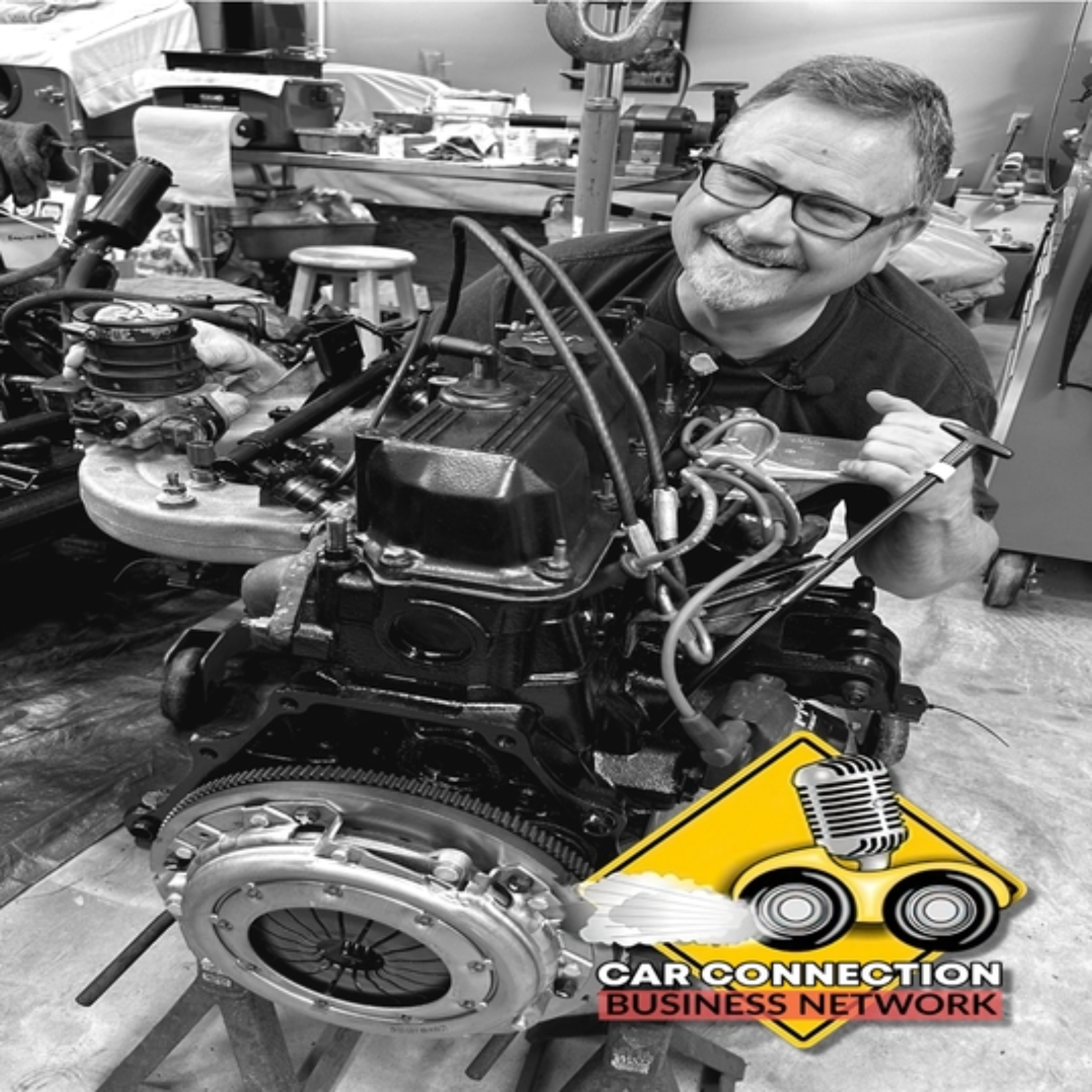
Exploring the idea that your car isn't an investment, Niall Motormouth Jenkins shares practical advice on how to maximize your vehicle's longevity and save money on repairs. With over 44 years of experience, he emphasizes a mindset shift for car owners, encouraging them to take control of their vehicle maintenance. Listeners will appreciate his humorous anecdotes and relatable stories, as well as insights into fleet maintenance practices that can benefit everyday drivers. The episode also touches on community events and local partnerships, making it a lively and informative listen.
"Own Your Car, Don't Let It Own You" but a paid - off car can be one of the smartest financial moves you'll moves you'll ever make! NMJ
Your Car is not an investment - but you can still win financially with it. In this episode, we break down the difference between endless car payments versus owning a paid - off vehicle, who really owns your car during financing, and why a paid - off vehicle becomes profitable when properly maintained. Think of you car like a pet: feed it, maintain. it, care for it, and it will stay healthy and serve you for years.This episode is about mindset , ownership, and long - term vehicle economics.
More episodes and ...project Details & links are available at Car Connection Business Network.com (ccbusnet.com) you'll find everything on our homepage if you's like to follow the build.repair work we do, & connect with our program partners click their logo to connect with them & Thank You !
Grab some Car Connection Motormouth Gear to join our crew in helping those struggling with addictions get to a Total Freedom Addictions Campus Canada & USA where a New Life awaits them there! Tnx a bunch friends, Nile Motormouth Jenkins. Tnx for watching & Listening it helps to keep the ignition turned on! Happy Healthy Motoring, NMJ
"I use my car connection fleet maintenance program on all my own vehicles,"
A fleet maintenance program is like a regular check-up for a group of cars owned by a company. It helps keep all the cars running well and can save money because they buy parts and services in bulk.
A fleet maintenance program is a service that provides regular maintenance and repairs for a group of vehicles owned by a business or organization. This program helps ensure that all vehicles are kept in good working condition, often at a lower cost due to bulk purchasing and service agreements.
"when you saw Chevelles running around and said 28s and Transams and Corvettes, Mustangs, Fastbacks..."
The Chevrolet Chevelle is a classic car that many people love. It was made by Chevrolet and is known for being stylish and fast.
The Chevrolet Chevelle is a mid-sized car that was produced by Chevrolet from 1964 to 1977. It is known for its performance and classic styling, making it a popular choice among car enthusiasts and collectors.
"and said 28s and Transams and Corvettes, Mustangs, Fastbacks..."
The Pontiac Trans Am is a sporty car that was made by Pontiac. It's known for being fast and has a cool design that many people admire.
The Pontiac Trans Am is a performance version of the Pontiac Firebird, produced from 1969 to 2002. It is known for its powerful engines and sporty design, becoming an iconic muscle car.
"and said 28s and Transams and Corvettes, Mustangs, Fastbacks..."
The Chevrolet Corvette is a fast sports car made by Chevrolet. It's famous for its stylish look and high speed.
The Chevrolet Corvette is a high-performance sports car that has been produced since 1953. It is renowned for its speed, sleek design, and status as an American icon in the automotive world.
"Fastbacks, yeah, the Ford 500, they were everywhere because those were everyday drivers."
The Ford 500 is a car made by Ford that is larger and designed for comfort. It was made for a few years but didn't become as popular as some other cars.
The Ford 500 is a full-size sedan that was produced by Ford from 2005 to 2007. It was designed to offer a spacious interior and comfortable ride, but it didn't achieve the same level of popularity as other Ford models.
"and said 28s and Transams and Corvettes, Mustangs, Fastbacks..."
The Ford Mustang is a popular car made by Ford. It's known for being powerful and has a sporty look that many people love.
The Ford Mustang is a classic American muscle car that has been in production since 1964. It is known for its powerful engines and sporty design, making it a symbol of freedom and performance.
"...that's Moe. He's a 1984 short box Toyota four wheel drive pickup. And I think I was like 22 years old when I bought that."
The Toyota Pickup is a small truck made by Toyota, known for being tough and reliable. The 1984 model is especially valued for its simplicity and ability to handle rough terrain.
The Toyota Pickup, particularly from the 1980s, is known for its durability and off-road capabilities, making it a popular choice for outdoor enthusiasts and tradespeople alike.
"...when I bought that, I financed it and financing was 17.93%. Yes, you heard that correctly..."
Financing is when you borrow money to buy a car and pay it back over time, usually with extra money added for interest. This means you end up paying more than the car's price.
Financing refers to the process of borrowing money to purchase a vehicle, where the buyer pays back the loan amount plus interest over time. The interest rate can significantly affect the total cost of the vehicle.
"...financing was 17.93%. Yes, you heard that correctly. 17.93% was the interest..."
The interest rate is how much extra money you pay when you borrow money to buy something, like a car. A higher rate means you pay more each month.
The interest rate is the percentage charged on a loan for borrowing money. In the context of financing a vehicle, a higher interest rate means higher monthly payments and more money paid over the life of the loan.
"...And I look at vehicles today, the price tag. And I remember when I was at Volkswagen..."
A 'price tag' is simply the amount of money you need to pay to buy a car. It shows how much the car costs.
The term 'price tag' refers to the cost associated with a vehicle, which can vary widely based on the make, model, and features. Understanding the price tag helps consumers make informed purchasing decisions.
"...they bought this. It was a Passat for the girl in the family. They had one of each, a G and a B."
The Volkswagen Passat is a family car that offers a lot of space and comfort. It's a good choice for people who need a reliable vehicle for everyday use.
The Volkswagen Passat is a mid-size car known for its spacious interior and comfortable ride. It has been popular among families and is often praised for its practicality and reliability.
Term
$62,000
"...they bought this car, it was $62,000 at that time."
$62,000 is a lot of money for a car, showing that some vehicles can be very expensive, especially if they have many features or are from a luxury brand.
This figure represents a significant price point for a vehicle, indicating a higher-end model or luxury features. It reflects the increasing costs of new cars in the market.
"So if you're driving an older car, I'm going to use a, let's just use an alternator as an example."
An alternator is a part of the car that helps keep the battery charged and powers the electrical systems when the engine is on. If it fails, you might have trouble starting your car or using things like the radio or lights.
An alternator is a crucial component in a vehicle's electrical system that generates electricity to power the car's electrical systems and recharge the battery while the engine is running.
"But when I was at Volkswagen, you know what? That wouldn't happen. It would be covered under what we called W5, warranty, goodwill warranty. That's how that would happen."
A goodwill warranty is when a car company helps pay for repairs even if your warranty has expired. They do this to keep customers happy and show they care about their service.
A goodwill warranty is a type of warranty coverage provided by manufacturers or dealerships that goes beyond the standard warranty terms. It often covers repairs or issues that arise after the warranty period, typically as a gesture of goodwill to maintain customer satisfaction.
"...used pre-owned cars are selling like hotcakes and the inventory and resources for that is drying up..."
Pre-owned cars are cars that someone else has owned before you. They can be cheaper than new cars and are often in high demand, especially when there aren't many available.
Pre-owned cars, also known as used cars, refer to vehicles that have had previous owners. The market for these cars can fluctuate based on demand, economic conditions, and inventory levels.
"...the inventory and resources for that is drying up because the Americans have been buying our pre-owned vehicles..."
Inventory means the number of cars available to buy at a dealership or in the market. When there are fewer cars available, it can make buying one more expensive.
In the automotive context, inventory refers to the stock of vehicles available for sale at dealerships or in the market. A low inventory can lead to increased prices and competition among buyers.
"...turning in your three-year-old or four or five-year-old car and getting you back on the never, never plan..."
The 'never, never plan' is a way to buy a car by paying for it over a long time, which can make it easier to afford but might lead to owing money for many years.
The 'never, never plan' refers to financing options that allow buyers to pay for a vehicle over an extended period, often with low or no down payments. This can lead to long-term debt for the buyer.
"Because you're ahead by doing preventative maintenance. Not taking it in when the thing's making noises and grinding and hoagies and grinders."
Preventative maintenance is when you check and fix things on your car before they break. It's like getting regular check-ups to stay healthy.
Preventative maintenance involves regular inspections and services performed on a vehicle to prevent potential issues before they occur. This can include oil changes, tire rotations, and brake inspections.
"That's what they don't do with fleet service. They need every ounce of their equipment to be able to get down the road and get back and not break down."
Fleet service is about taking care of a group of vehicles that a company uses for work. It's important to keep these vehicles running well so the business can operate smoothly.
Fleet service refers to the maintenance and management of a group of vehicles owned or leased by a business or organization. These vehicles are often used for commercial purposes, and keeping them in optimal condition is crucial for operational efficiency and profitability.
"That mindset makes you win with an older car, a vehicle that's bought and paid for, a vehicle that's outside of warranty."
Deferred maintenance is when you put off fixing things on your car because you don't have the money or time. If you wait too long, it can lead to bigger problems later.
Deferred maintenance refers to the practice of postponing maintenance tasks on a vehicle or equipment, often due to budget constraints or prioritizing other expenses. This can lead to more significant issues and costs down the line if not addressed.
"Depreciation alone on a new vehicle is insane. How much money is lost in three years by the time you pay it off?"
Depreciation is how much a car's value goes down after you buy it. For example, a new car can be worth a lot less just a few years later.
Depreciation refers to the reduction in value of a vehicle over time, particularly after purchase. New cars can lose a significant percentage of their value within the first few years due to factors like market demand and wear and tear.
"Or now loans are seven years. That's insanity, absolutely is."
A car loan is money you borrow to buy a car, which you pay back over time. These loans can last several years, sometimes even seven years.
A car loan is a type of financing that allows individuals to borrow money to purchase a vehicle, which they then pay back over time, typically with interest. The duration of these loans can vary, with many extending up to seven years or more.
Select text to request an explanation
Good morning, Niagara.
You're tuned in to Car Connection,
where the coffee's hot, the tools are ready,
and the talk is always tuned up.
I'm your host, Niall Motormouth Jenkins,
coming to you straight from the Car Connection Workshop,
where we mix a little humor, a little know-how,
and a whole lot of horsepower.
Here it's not just about fixing cars,
it's about keeping you rolling, saving you money,
and giving you the confidence to understand
what's under that hood.
From the classics, to the commuters,
to weird noises, to the what the heck moments,
we've got you covered.
So grab your coffee, your morning beverage, sit back,
join the crew, because this is Car Connection,
your Monday through Saturday,
MotorMouth 8 a.m. drive time.
It's your morning pit stop for stories,
smarts, and a few good laughs.
I'm Niall Motormouth Jenkins,
and we're shifting into drive right here.
So good morning, friends.
Thanks for letting me into your world.
As I let you into mine,
if you're a first-time listener to this podcast,
where have you been?
We saved you a seat.
Sorry about the donut box.
Looks a little lonely in there.
What you see is what you get.
Well, welcome aboard.
We love, love, love our new podcast listeners.
Be sure to share us with your friends,
and be part of our Car Connection crew and community.
Well, we got a ton of things to get along with today.
It's a long weekend.
I don't even know what that is.
But anyways, it's a long weekend in Ontario,
as Ontarians celebrate family days.
So that means buckle up, bundle up,
and get out there with the grandkids,
the kids, the nieces, the nephews, and have some fun.
Get out there and have some fun.
You know, put some shellac on the bottom of your crazy carpet
and buff it up and get going downhill.
So it's one of those weekends
that it's time to get off the couch,
out of the armchair, and make something happener.
Get out there and have some fun.
Lots of stuff going on.
You can Google it and find out what's going on in your area.
Lots of different events.
I could spend a whole program talking about it,
but I can't because I have a topic to cover this morning.
But first and foremost, our topic today,
we've made it to the weekend.
Can you believe it?
For all those who know what a weekend is,
and for those like me worked on the airwaves on radio
for 31 years every Saturday.
So weekends were, I don't know, nonexistent.
But you know what, I'm not complaining whatsoever.
A whole idea of us being here with car connection
and your friend, MotorMouth,
is to teach you what I have 44 years plus experience
to show you how your vehicle can make you money.
That's right, how it can actually make you money
by simply stop listening to the talking heads
and the white noise, and I'm the signal
telling you how to do it.
And it's not guesswork for me
because what I'm sharing with you,
I know beyond the shadow of doubt it works
because it has worked for all the fleet companies
that I service vehicles for under someone else's guidance,
let's say, my former bosses.
I had some tough ones.
And you know what, they would not get away with today
the way they treated us back then,
but you know what, we really did deserve
getting our butts whooped into shape.
We really did because today I wouldn't be sitting
with the knowledge that I've gained
and the gifts that I have if it wasn't for those instructors
and shop owners that saw something in me
I didn't see in myself.
Isn't that true?
You know, if you knew what you knew now,
you knew then, you'd probably do things
a whole lot different, differently, yes?
Well, that's why I'm here.
So if you're interested in knowing more
about how you can keep your vehicle longer
and give it super longevity and put money back in your wallet
and have the repair bills well under control,
you're in the right place.
But if you've got a big bucket and heavy duty bank account
and you don't care and you change it out
every couple of years, then this program
is probably not for you.
But for the most part, this program,
listen to what I'm telling you and implement it,
we'll put money back in your pocket.
How do I know that?
Well, I have vehicles here.
You're welcome to look at them any time.
And they're not new.
Yeah, shocking, isn't it?
Yeah, they're not new.
They're tens, almost 20 years old.
And I can hop in and I could go all the way to Florida
without the only thing, check the oil,
fill it with gas and go, load your stuff and go.
How can I do that?
How is that possible?
Well, the only excuse I've always heard is,
well, you're a mechanic, you can take care of it.
No, you're a car owner, you can take care of it.
Sorry, but I just flipped it around on you.
Yeah, I can do the labor, but I still have to buy my parts.
Well, you probably get a discount.
Yeah, you may get a discount
when you take your vehicle as well.
You know, simple as that.
It's not an excuse anymore, it's a mindset.
I use my car connection fleet maintenance program
on all my own vehicles,
the vehicles that make car connection work.
And I have for decades,
so I don't just talk the talk, I walk the walk
and you can inspect any one of my vehicles,
any single time of the night or day
and you will see it's taken care of.
It is taken care of.
Well, you don't have kids.
Yeah, so, it still has to be fixed.
You know, do you not fix your house cause you have kids?
Oh, a roof's caving in, honey.
Oh, put some, you know, gorilla tape on that,
she'll be all right.
No, you gotta do what you gotta do,
keep the main thing, the main thing.
So we're gonna be talking about your car
is not an investment, but you can still win.
And tomorrow morning, Saturday morning,
I've got why loving your vehicle makes you a better owner.
So stick around for that.
Saturday mornings, I usually do an hour program
so there's lots of information out there
and we can natter and chatter and have a good time.
So first and foremost, let's get the weather report out here
to let you know what's going on.
If you're driving in the drive through this morning,
double check your order, lock it down in your cup holder,
make sure it's in there and safe.
And hand over the 16 pack of crayola crayons
and the folded up leaf bag, the high tech laptop
so that your co-partner, your co-pilot
can take some notes this morning.
If you miss a program, we've made it super simple for you.
We'll talk about that in just a second.
Let's get the weather report out there
because you're on the road, I'm not yet.
I do have to go out this morning for a meeting
and get back here and get stuff done ready
for next week and videos coming up.
So right now we're experiencing 10 degrees
and they're saying it's mostly cloudy, it is.
I don't see any stars anywhere this morning.
Wind is making it feel colder, about six degrees.
Partly cloudy conditions expected around six a.m.
Today's temperature range will be from,
it's not was from, we're not there yet,
we're not on the wass, it's gonna be 10 degrees
to 30 degrees and it'll make it feel,
the wind will make it feel more like six degrees
to 20 degrees and that is, yes, Fahrenheit.
What did we have yesterday?
We had an overnight low of 21 and a high of 27.
Today, overnight low will be 10 degrees
and a high of 30 and yes, we have snows.
E-gads, man.
Undown one snowblower right now
so that's a project for late this afternoon
is to put a carb kit in it and get the baby up
and running again.
I think it's sucked in a watermelon
or something with a carb rainer.
Starts, runs and dies, typical, very typical.
Something stuck in there, could be a sock.
I don't know, we'll have to see.
So snows on the way it's saying,
just checking here, one to two inches, one to two inches.
Well, for us along the South Shore Lake Erie
and it is frozen, I have taken some pictures,
I'm gonna see if I can get Skippy,
our videographer to post those up somewhere,
either on Facebook or Instagram, make a reel out of it
but I'll tell you, the lake is pretty creepy looking.
It's unique looking but it's creepy looking.
It's all kind of mangled because the ice shifts
and it piles up and there's ice caves
down towards Crystal Beach.
But they're saying, you know, you can get trapped in there.
Something shifts and that ice falls on you, man.
You're a hamburger, just like that.
They'll see, yeah, we'll see in July when it melts.
Yeah, we'll pluck you out.
Well, weather report this morning
brought to us by Niagara Block
at 5,000 Montrose Road, Niagara Falls,
one of our program partners for many years.
Not really, they're our newest program partner.
We're grateful, very grateful for the Greenville family
coming on board, building Canada since 1931,
supplying building products
and hardscape landscaping materials.
So if you're looking to create something unique
in your backyard or anywhere on your property
and you need help to get that done,
they can do that at Niagara Block,
5,000 Montrose Road, Niagara Falls.
They'll help you pick out products
that will beautify that space for you
and they can also make a recommendation referral
to a contractor that can estimate the job,
get the job started and get it finished.
That's the big thing.
So I've already mentioned that earlier this week
that I got onto a YouTube channel
that was local to our area for a landscaping company.
They do snow removal in the winter
and he said, we're filling up now.
So if you're looking to build your backyard space
or do some landscaping, get on our calendar
as soon as possible if you wanna have it done this year.
And I know we waited two years to get everything
all landscaped around the new build in 2012.
When we put the studio here,
we waited two years for the landscaper to come
and get what I called our backyard nightmare.
It was a nightmare.
All the digging and dirt and piles and stuff.
It was, you didn't cut that grass, let me tell you.
So we waited two years.
So I just share that with you.
Thank you to Crystal Ridge Dream Center
for being our nonprofit faith-based organization
that's out there serving men, women, children, meals,
love and hope, changing lives one at a time
and especially in the times we're in
where community sport is crucial.
Crystal Ridge Dream Center shines
as a beacon of compassion and transformation.
They do meals out the door on Tuesdays and Fridays.
So if you're in the area and you need a hot meal,
they're serving well over 200 people now.
So if you can throw $5 at them,
you get 1,000 people putting in $5.
And it makes a huge, huge difference.
They have programs for the kids after school
and they feed them, love on them.
They mentor them, they help them with their homework.
They have games and stuff.
Chocolate pingo is one of my favorite,
but I can't get in.
I've tried, doesn't work.
And they also have music lessons, free music lessons.
So all that is at no charge.
So they have to raise their own funds.
So they're not government funded whatsoever.
So whatever you can do, donate your time,
become a giver, a monthly giver, weekly giver,
or a one-time giver, it would be received very, very well.
Thank you to Rainbow Motors and Garage and Scarborough
being a part of Car Connection for a number of years.
Sales and service you can trust.
Rita and Ramiz, Shenouda will take
very, very good care of you up there.
They have a little car lot.
They do carry some inventory,
but if you're looking for a vehicle specific
and you're up in the Scarborough area,
Connect with Rainbow Motors and Garage.
Sales and service you can trust always.
They fix all years, make some models of vehicles
up to and including light commercial vehicles.
And yeah, let's move on this morning.
I think I stalled out.
Can somebody press the start button?
Okay, away we go.
Let's letter-riptator chip.
Home page of our website is the biggest tool box drawer
that we could have created for you.
My webmaster and he's fantastic.
Everything we talk about lives on our website
at carconnectionbusinessnetwork.com.
CCbusnet.com for short.
And I put all that information.
All the information that I talk about
is in the description box on our YouTube videos
as well as on our podcast.
So on the homepage of our website,
you will find all the logos for all the businesses
and nonprofit organizations that are a part of what we do.
Crystal Ridge Dream Center, City Auto Sales and Leasing,
Rainbow Motors and Garage,
our certified financial planning professionals
with I-G Wealth Management.
Tony Miele and Larry Tietro,
my brothers from Other Mothers,
Niagara Block, Niagara Falls, Ontario
and Total Freedom, Canada and US.
They're all on the homepage of our website.
Click on their logo.
It opens and gives you a beautiful profile page
and every page for all our program partners
that make this program possible
as well as our YouTube channel,
Facebook, Instagram, I Heart Radio
and Stevensvilleontheweb.ca
and our car connection motor mouth crew, Merch Store,
is all on the top right hand corner of our homepage.
Just click and it'll take you right there.
All our podcasts are on all major platforms,
Apple, Spotify, Amazon and wherever you are listening
to podcasts, just type in car connection workshop
and you will find us.
Purchase something in our Merch Store,
proceeds go to help those struggling with addiction,
get to an addiction campus,
a total freedom addiction campus in Canada or US
because there's a new life waiting for them there
and again, they don't receive any government grants
or whatnot, they raise their own funds
to make sure that they can take in anyone
who's made that decision that's suffering through
an addiction to get it taken care of
and get a new life and move on.
So this morning, the challenge that we have
to undertake is your car is not an investment
and that's what you would hear
from Tony Miele and Larry Teacher,
our certified financial planning professionals
which are my personal financial planners for decades.
That's why they're with us to help you
to put together a budget,
get everything organized in your household.
Finances play a big role in your home, yes?
I'm sure they do, they do for me as well.
Your car is not an investment
but you can still win with it.
So that's what I'm gonna teach you this morning,
is here's the thing.
You have a brand new vehicle with three years,
60,000 kilometers, I'm painting an example for you, okay?
You have an older vehicle in your driveway
that you've had maybe eight years and it's paid for
and that's what we're gonna talk about.
So get ready, let's have a swiggy together this morning
and thank you to our certified financial planning professionals
for providing it, Tony Miele and Larry Teacher,
50 years experience with IG Wealth Management.
They can review a portfolio to let you know
what's going on with it.
If you've got investments at a bank,
you gotta get them out of there
because you're not making a dime.
You're getting a Ziploc bag for your efforts
and the bank has taken the rest
and I have the right to say that because it's true.
I've helped friends and led them to Tony and Larry
and guess what, their investments are now making the money.
The money's working hard for them
instead of the other way around.
So debt retirement, estate planning, powers of attorney,
the whole schmiel, arranging a mortgage, life insurance,
critical illness insurance and a whole lot more
and you get an hour and a coffee.
That's what we call, that is an introductory session,
a discovery meeting.
Find out what your needs are, formulate a game plan
and help you to get there.
But don't waste their time, if you're not interested,
that's okay, they don't need clients.
They're busy, these guys have been at it for a while
but they're willing to help you because they know me.
And so they bring to us this morning our morning coffee
so raise your favorite beverage and on three, two, one,
let's get started.
Three, two, one.
Ah, that is so good this morning.
Yeah, I wanna twinkle my toes in there.
Well, maybe not.
That'd be kind of sick, wouldn't it?
So two types of vehicles here.
That's what we're gonna talk about.
No, it's not an investment.
I mean, if you're buying classic cars,
there's guys, that's what they do.
And that's part of their hobby,
that's part of them creating finances,
I call that blue chip savings.
And when you like to have known that back in the days
in high school when you saw Chevelles running around
and said 28s and Transams and Corvettes,
Mustangs, Fastbacks, yeah, the Ford 500,
they were everywhere because those were everyday drivers.
Imagine if what you know now about what they're worth,
if you snatched them all up then for like next to nothing,
$500, $800, you could grab them, grab them up
and tuck them away in a building somewhere,
what they'd all be worth today.
Crazy money, crazy money.
Well, most of us are probably not in that,
we're not in that realm.
So let's get back to reality.
So I drive older vehicles
and I'm gonna use myself as an example.
I bought one pre-owned vehicle that was almost new
and I still have it, that's Moe.
He's a 1984 short box Toyota four wheel drive pickup.
And I think I was like 22 years old when I bought that.
I think I have socks older than that now.
Anyways, I still have Moe.
Moe and I went on a lot of fishing trips.
I loved fishing and I worked a lot of shift work
when I was working for a car shop at the time,
downtown Hamilton, and then I wanted to get my diesel license.
So they told me I had to do 1670 mad hours straight
working on big trucks and equipment, diesel equipment
to get my 310T and my diesel endorsement.
So I had to leave the automotive world
and go and do 1670 hours, shop hours
to get that opportunity to write that ticket.
And so that's what I did.
So Moe was a part of my life at that point.
And we did a lot of driving, a lot of weekend fishing
and he's still with me, 169,000 kilometers original.
So how did I end up being able to keep that?
Did it just happen by itself?
Nope, it was called caregiving.
Understanding how much that vehicle cost me at the time
because I was back in the 80s.
Yeah, you know, big hair bands, leather pants,
zipper ties, that kind of stuff.
Yeah, good thing there were no phones with cameras then.
Absolutely not.
Yeah, because I did wear leather pants
and I had hair three quarters of the way down my back.
Played in a 80s rocker chick
heavy duty metal band.
Yeah, so it's a good thing
there were no cameras around then whatsoever.
But anyhow, before I digress,
I bought that vehicle for $11,200.
And it was 1984.
It had just come out and it was a limited edition
and it was only 500 of the four wheel drive short box
Toyota pickups that were created
and they called it the Mojave.
So mine has got a plaque that says number 222 out of 500
in the entire world.
So when I bought that, I financed it
and financing was 17.93%.
Yes, you heard that correctly.
17.93% was the interest.
The interest ate up most of the payment every month.
It was disgusting.
But anyhow, I worked hard.
I was still an apprentice and paid it off.
And at the end of the day, that cost me double.
If I had have been able to buy it outright,
it would have been $11,200.
But by the time I paid it off,
I paid $22,000 for that truck.
So I put a lot of effort into taking care of it.
Why?
Because I put a lot of money in there.
That was a lot of money back then.
And I look at vehicles today, the price tag.
And I remember when I was at Volkswagen, this family,
they must have had money to burn, honest to goodness.
They must have had bathtubs and swimming pools stacked
full of cash because they bought this.
It was a Passat for the girl in the family.
They had one of each, a G and a B.
And they bought this car, it was $62,000 at that time.
That was in the early 2000s.
And I'm like, my goodness, that's a lot of moe.
That is a lot of moe.
So I hadn't seen that vehicle for about six months.
And then it was coming in.
So they must have been taking it to other VW stores
to get the service done.
Otherwise, your warranty gets voided.
So anyways, quick story, this thing comes in
and I've got to go take a look at it
because apparently there's something warranty related.
And so it needed to be verified.
So that was part of my duty was warranty.
I did warranty clerking.
So I'm very good at knowing how that system works.
And I'll tell you, the politics are crazy.
But anyways, I go out to the car,
it was black on black leather interior.
I open the car door and I just, first of all, the smell,
the dog smell, yeah.
Second of all, there's holes punctured through
the bottoms of the rear leather seat.
And the car is literally redone with dog hair and mud.
It's a disaster inside.
And I look at it and I go, this car was 60,
I remember when it sold, it was $62,000.
And it's scratch and scuffed and scarred on the outside.
And I'm thinking, here's what I'm gonna share with you.
If you paid $62,000 for a car
and you had $62,000 bills,
would you put them on the kitchen table and leave the room?
Probably not, probably not.
But that vehicle was $62,000 and honest to goodness,
it looked like it was already 10 years old.
And I said, how does it get like this?
Oh, you know, I take the two dogs down to the lake
and this and that and I just open the door,
they just climb right in.
And I didn't say a word after that.
I'm just going, yeah, I can see that.
And everything they bring with them,
their wet, their smell, their mud and everything else
is all on the inside of the car.
Well, I'll tell you what, when that car came in off lease,
it was quite a discussion.
Let me tell you, because with a lot of damage,
that vehicle was destroyed in just a couple of years,
destroyed, there wasn't a part inside or outside
that didn't need help.
So anyways, let's get into older vehicles
versus something that's newer.
Either way, there's going to be components
on that newer vehicle that are what?
Not covered by warranty, not.
So who's paying?
That's my question is, who's paying for that repair then?
You are.
So if you're driving an older car, I'm going to use a,
let's just use an alternator as an example.
You got a three year old car, you're just outside warranty,
the alternator goes kefufnik,
means it's not working, it's technical term.
You take it in, yeah, it's, you know,
we've had to boost it, it's just not running.
So they check it, they go, yeah, the alternator's stopped.
You need an alternator.
Oh, is it covered under warranty?
Well, you're just outside warranty.
No, it's not covered.
So who's paying?
Now it becomes your car.
That's called vehicle ownership.
At that point, you know, it's your car,
but here's what you got to remember.
From the day you got the keys, it was your car.
Just certain components still belong to the factory.
And if they go south, if everything works out right,
and the warranty's okay, and everything you've done,
your maintenance, and everything else,
and all the numbers, and all the paperwork's all done,
yes, we'll cover that under warranty.
But if you're 100 kilometers or 50 kilometers over
with the domestics, they're not covering it.
Because if you call customer service, this one you hear,
you give them the big spiel,
oh, you know, I've done all my service and this, that,
and the other thing, and you know,
the needs a $600 alternator, and they're not covering it.
Well, let me check.
They come back, and here's what you would always hear.
And me and my guys in the shop, we also say,
that's called the domestic car warranty kiss off.
Thank you for buying our product,
but now we ain't helping you.
So what you'd hear is this.
Well, you know, Mr. Smith, we'd really like to help you,
but we can't.
Oh, I'm sorry.
Yeah, that was a common thing.
How do I know that?
Because I heard that from a lot of domestic vehicle owners.
I'm 10 kilometers out of my warranty,
and they're not covering it.
Oh, well, that's the way it goes.
But when I was at Volkswagen, you know what?
That wouldn't happen.
It would be covered under what we called W5, warranty,
goodwill warranty.
That's how that would happen.
It would get taken care of.
And I saw a lot of that, and I couldn't believe it.
I absolutely couldn't believe how much warranty I put through
that was W5.
That means it was goodwill.
You're outside the warranty, the company covered it.
It was stunning.
I couldn't believe it.
Stuff that I'd call my rep and I'd say,
here's what's going on.
And he would say, Nile, what do you think?
And I said, yeah, it's legit.
It really, really is.
They've done all their services.
The folder has all their maintenance here.
Well, then W5 it, fix it, get them a loaner car
and take care of them.
That wouldn't happen with the domestics.
You're on your own.
So one kilometer over the 60, you're done.
It's your car, but it was your car from the beginning.
That's the point I'm trying to make.
You invested in buying a new vehicle.
What's your game plan?
Like as your game plan, once the warranty's out,
take it back and start the never, never plan again.
What's your game plan at that point?
When you buy that car, is it to keep it long term
or is it to just let it depreciate
and throw that money out the window as you're driving
and send it back in and you trade it in,
you get peanuts for it, but they really, really want it,
especially right now in today's economy,
used pre-owned cars are selling like hotcakes
and the inventory and resources for that is drying up
because the Americans have been buying our pre-owned vehicles
for quite a while and tapping into that market too.
So pre-owned is hot.
If they can talk you into turning in your three-year-old
or four or five-year-old car
and getting you back on the never, never plan,
they win because they know your car is sold
the moment they get the keys.
So the whole automotive business as well as other businesses
is learning how to play the game.
When you learn what the rules are
and you implement the plan to offset the rules, you win
and that's what this morning's discussion is about.
Your car is not an investment, but yet it is,
but you can still win with a vehicle that's bought
and paid for, that's my point.
If you change your mindset that the day you buy it,
you're keeping this thing as long as you possibly can
and you will love on it and care give to it
and take care of it and maintain it
and what does that sound like?
A pet, a pet.
The day you get that pet, it relies on you to love on it,
exercise it, clean it, feed it, walk it, water it
and take care of it.
If it has health breakdowns, you gotta get it
to the vet shop and get it tuned up.
Your car is your pet, you gotta make it your pet,
you have to care give to it just like you would an animal
and that mindset allows you to win.
Keeping that vehicle long term, that's what I do.
I use my own fleet maintenance package
to keep my vehicles up to date ahead of the maintenance curve
and don't let it slip slide backwards.
That's how you win, that's how your pre-owned,
paid for automobile will put cash back in your wallet,
is doing exactly what I do.
So we're about to unleash a video, YouTube video,
it's a teaching video, I've never done this style of video
yet but it's gonna be interesting.
I've actually written out the program
so that I know exactly what I wanna say to you
and how to break it down for you to help you to understand
that taking the ideas that fleet companies
have been using for years to keep their fleet vehicles going
as long as they possibly can, making profits for them.
Moving products to and fro, out they go, in they go.
That's how they do it.
It's not by happenstance that they got a fleet of 375
or 374 components to their fleet
and everything needs to be maintained
because when they fire it up, it needs to be profitable.
It can't be broken, it can't be non-reliable,
it has to be ready to rock and roll.
If you implement that same mindset,
you become profitable every time you turn the key.
So this morning when I run out to meet with my bookkeeper
because it's end of the year, month end, year end taxes,
all that stuff, it's gotta be,
I like to just get it off my plate and out the door
and then she takes care of it.
I don't have to think about that.
I can think on other things.
When I turn that key, I'm in no partnership with the bank.
I'm not making monthly payments.
I don't have to scramble to make the next payment
and pay interest, but yeah, I have to fix it.
But here's the thing.
Here's where I'm gonna create the division.
You've got a three-year-old vehicle
that's out of warranty.
Altenator goes down, they're not paying.
Who's paying?
You're paying.
I got a 12-year-old vehicle, the alternator goes down.
It's out of way out of warranty.
Who's paying?
Do you just say, that's it, I'm fed up
and throw your coffee on the ground?
No, don't do that.
I wouldn't do that if I were you.
You're both in a position where you gotta pay to fix it
or you go, that's it, I'm not paying for another alternator.
It only needs an alternator now.
That's it, I'm trading in it.
Is that what you do?
That costs you money.
Cause now you're going back into the never-never plan.
You're working, you're traveling every single day,
home to work, home to work, home to work,
home to work, home to work.
You don't check, on the wheel.
Like a hamster, on the wheel.
Run, run, run, run, run, run, run.
Get off like the ball, get a pellet, jump back on.
You know the story.
And do that over and over and over again
to make a car payment.
To make a stupid car payment and pay interest.
So anything that's not covered.
So you're doing that, you're run, run, run, run, run,
lick the ball, get a pellet, jump back on,
and get the cash to make a payment
so you keep the car another month.
Something goes wrong with it.
Oh, that's not covered by warranty.
Oh, you're way out of warranty now.
So now you're paying for all of it.
So what do you do?
You got a 12 year old vehicle.
You're not making payments.
Every time you run it, it's making you money.
Because you're not having to make a car payment.
You can just do the basics.
Gas, oil, insurance, and keep the maintenance up.
Keep the maintenance up.
So when you got a three year old car out of warranty,
now what?
You're doing the basics.
Gas, oil, and maintenance.
Keep the maintenance up.
Don't let it slide backwards.
So if say in a year, you have a 12 year old car,
it has a horrible health season, just like a pet.
Sometimes you get a pet and the thing never has
an ounce of issues with it.
And then all of a sudden, you know,
it comes back to grab a bunch of cash out of your pocket.
I know I've been a pet parent and it happens just like that.
It's good until it's not.
The car can be the same way.
It's good until it's not.
But if you follow fleet maintenance, that doesn't happen.
Because you're ahead by doing preventative maintenance.
Not taking it in when the thing's making noises
and grinding and hoagies and grinders.
Where did I hear that before?
Hoagies and grinders.
Anyways, it's gonna need a bunch of work now.
Because you've driven it for how long?
A year, 15 months and spent nothing on it.
It's a machine.
It's a machine.
When I go out to our wood lot,
we have about 350 push cords of hardwood waiting for me
when the spring gets here.
And I take my chainsaws and all I do is cut.
All day and I never maintain the saw.
Guess what happens?
It becomes a piece of junk in a very short period of time.
If it survives three days of that, you're lucky.
You're very lucky.
And saws aren't cheap either.
They're expensive, 1,000 bucks.
Some of them, $3,000 for something that can cut fast.
And so that you're not trying to cut it with a hacksaw
you gotta get through it and get it done.
And you can't be at it all day.
So you need something really, really good.
So when I come out of the field
and I'm using this as an example,
I have eight saws, they all do different work.
Whatever I'm working on, I take the number of saws
and they're all serviced and they're ready to go
to the field.
What does that mean?
They're all serviced to the nines.
Chains are checked, they're sharp, they're cleaned,
See something that's not quite right? Our annotations are AI-generated and can sometimes miss the mark.
Click the flag icon on any annotation to suggest a correction.