
YOUR Car Questions Answered | Q&A With a Former Car Dealer | Episode 1106
About this episode
Ray and Zach run a Q&A focused on real buyer questions, including a wild case of a 2024 Ram 2500 Tradesman allegedly sitting on a dealer lot for 845 days. They call the dealership to confirm it’s still available and learn it’s a commercial “leftover” with low miles (under/around 200). They then estimate a realistic discount, arguing it likely needs 35–40% off MSRP due to age/depreciation. Using CarEdge search data, they compare against used listings and find some pricing that seems inconsistent, sparking debate about whether the market is being under- or over-priced.
stock number
"Hey, Christian. My name is Zach. I'm just doing some research really quickly. I saw a vehicle for sale on your website. Can I give you the stock number? Can you confirm if it's still available for me?"
A stock number is like the dealer’s ID tag for a specific vehicle. It helps confirm you’re talking about the exact truck that’s listed on their website.
A stock number is an internal identifier dealers use to track a specific vehicle in their inventory system. When you ask for the stock number, you’re making sure the dealer is referring to the exact car/truck listing you saw online.
leftover units
"We've got space in the chat here saying I would go for a 2026 instead, not all leftover units are good deals. There was a reason why it's been sitting."
Leftover units are cars or trucks that didn’t sell when they first arrived. Sometimes they’re discounted, but sometimes there’s a reason they’ve been sitting, so the deal isn’t always great.
Leftover units are vehicles that remain unsold from a previous model year or production run. The host notes that not all leftover units are automatically good deals, because the reason they’re still sitting can affect pricing.
MSRP
"It has a $60,000 selling price on the MSRP. They literally say on the website, call for pricing."
MSRP is the “sticker price” the manufacturer lists for the vehicle. The hosts compare discounts against MSRP to estimate what you should pay.
MSRP (Manufacturer’s Suggested Retail Price) is the sticker price the automaker sets as a baseline. In the segment, they use the MSRP to estimate what a realistic discount would be for a truck that’s been sitting on the market.

Dodge Ram
"... a realistic discount? I get that. So it's a 2024 Ram 2500 tradesman. Okay. What I would do if it were ..."
A Ram 2500 Tradesman is a heavy-duty pickup truck meant for tough jobs like towing and hauling. The “Tradesman” part is a basic work-focused trim level, and “2024” is the model year. People bring up trucks like this when they’re talking about whether the price they’re seeing is a good deal.
The Dodge Ram name is commonly used to refer to Ram trucks, and a 2024 Ram 2500 Tradesman is a heavy-duty pickup built for work. It’s the kind of truck people discuss when talking about pricing and discounts because it’s often bought for towing, hauling, and fleet or job-site use. In that context, the episode is likely focusing on whether a realistic deal makes sense for a specific trim and model year.
depreciation
"And, and even though it's brand new, there is depreciation associated with a three year old truck."
Depreciation means the truck’s value goes down as it gets older. Even with low miles, a 3-year-old truck usually costs less than a brand-new one.
Depreciation is the reduction in a vehicle’s value over time, even if it has low miles. Here, the host argues that a truck that’s already a few model years old will still be discounted versus a truly new truck because buyers expect the value drop.
VIN
"Sandy emailed in, what's a realistic discount for a Ram truck that's been sitting on the market for this long shared the VIN."
A VIN is like a vehicle’s unique ID number. Sharing the VIN helps confirm you’re talking about the exact same truck and not a similar one.
A VIN (Vehicle Identification Number) is a unique 17-character code that identifies a specific vehicle’s exact configuration. The host asks for VINs so they can verify the exact truck and check pricing/availability accurately.

2024 Ram 2500 Tradesman
"to 2024 Ram 2500 tradesmen. So let me go back to the car search this time... I hope someday that I have the same amount of confidence as the sales manager at Claremont Chrysler Dodge Jeep Ram to sell a 2024 Ram 2500 pickup tradesman with 89,000 miles on it for $42,000."
This is a work-focused Ram 2500 pickup. In this part of the show, they’re looking at how much a 2024 model costs when it’s used and has a lot of miles.
The Ram 2500 Tradesman is a heavy-duty pickup built for work use, and in this segment it’s specifically a 2024 model being evaluated as a used purchase. The hosts focus on its pricing versus mileage, and they later connect its resale strength to the diesel powertrain.
tradesmen
"We said Ram. Ram. Ram. We said 2,500. 2,500 tradesmen. 2,500. All right. Let me grab this. And then we said tradesmen."
“Tradesman” is a specific version (trim) of the Ram 2500 meant for work and fleet use. It generally comes with fewer extras than higher-end trims, so it can be cheaper.
“Tradesman” is a trim level on the Ram 2500, typically aimed at fleet and work buyers. It usually means a more basic equipment package compared with higher trims, which can affect pricing and what features you should expect.
Windows sticker
"They're going to have the Windows sticker on the Carfax. Let's see. Wait for it. Yeah, Windows sticker. Nice. Okay. So originally $71,115."
A window sticker is the original price/option sheet that came with the car when it was new. They’re trying to find it so they can see what the truck cost originally.
A “window sticker” is the Monroney label that shows a vehicle’s original pricing details, options, and fees when it was sold new. The host is using it (via Carfax) to confirm the truck’s original price before comparing it to today’s listing.
Carfax
"They're going to have the Windows sticker on the Carfax. Let's see. Wait for it. Yeah, Windows sticker. Nice."
Carfax is a service that provides a vehicle history report. In this case, they’re using it to find the original window sticker information for the truck.
Carfax is a vehicle history report service that compiles records like title events, accident history, and sometimes original listing documentation. Here, the host says the window sticker can be found on Carfax to verify the truck’s original price.
Cummins diesel engine
"Now, these diesel engines are bulletproof. So that's, yeah, I see some people in the chat actually saying that, yeah, the diesel engines, the Cummins diesel engine, that is why it's going to hold its value better."
Cummins is a famous maker of heavy-duty diesel engines. The host is saying that this diesel setup tends to last a long time and keeps its value better than some other engines.
Cummins diesel engine refers to the well-known Cummins brand of heavy-duty diesel powerplants used in some Ram 2500 configurations. In enthusiast circles, Cummins diesels are often associated with durability and strong resale value, which is why the host ties it to holding value better.
diesel engines
"Now, these diesel engines are bulletproof. So that's, yeah, I see some people in the chat actually saying that, yeah, the diesel engines, the Cummins diesel engine, that is why it's going to hold its value better."
Diesel engines work differently than gas engines and are often known for strong pulling power. The host is saying that diesel engines tend to be tough and keep their value better.
“Diesel engines” are compression-ignition engines that typically use higher torque and different fuel/combustion characteristics than gasoline engines. The host is using the general reputation of diesel durability to explain why this truck’s value is expected to hold up.
realistic discount
"The question we were answering is, what's a realistic discount for a Ram pickup truck that's been sitting for almost, no, that's more than two years."
A realistic discount is how much money you can actually expect the dealer to take off the price. If a truck has been sitting for a long time, the dealer usually has more reason to lower the price.
A realistic discount is the amount you can reasonably expect a dealer to take off the selling price based on market conditions and inventory pressure. Here, the hosts connect it to a Ram pickup truck sitting on the lot for more than two years, implying the discount needs to be large enough to move aging inventory.

Ram pickup truck
"The question we were answering is, what's a realistic discount for a Ram pickup truck that's been sitting for almost, no, that's more than two years."
Ram makes pickup trucks. When a truck sits on a dealer lot for a long time, the dealer may need to lower the price to sell it.
A Ram pickup truck is a full-size pickup line from Ram (the truck brand of Stellantis). In a deal discussion like this, the key issue is how long it’s been sitting on the lot and what discount is realistic for a slow-moving inventory vehicle.
fine wine
"And it'll be on their lot for $1,200 some days because, you know, they subscribe to the, it's like a fine wine. It gets better with age."
They’re using a “fine wine” joke to say the longer a car sits, the more likely the dealer will have to deal on price to sell it.
The “fine wine” analogy is a way to describe how some inventory can become more desirable—or at least more discounted—over time as it ages on the lot. In practice, the longer a vehicle sits, the more likely the dealer is to adjust pricing to clear it.
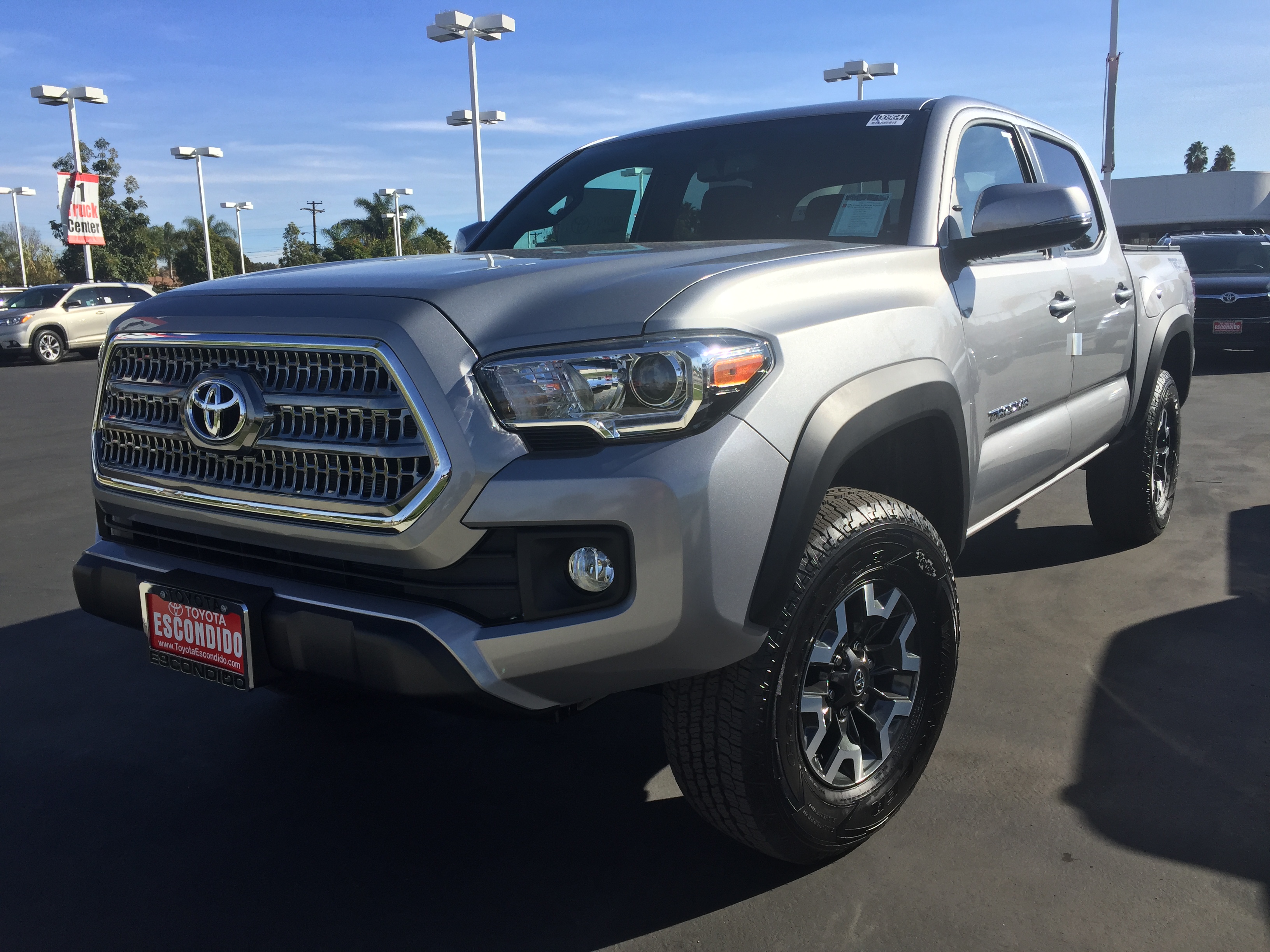
2026 Toyota Tacoma
"2026 Toyota Tacoma. Yes. Now, first things first, for a lease deal, am I getting the amount of information?"
The Toyota Tacoma is a popular pickup truck. For leases, the “residual” number matters a lot because it affects your monthly payment and how good the deal really is.
The Toyota Tacoma is Toyota’s midsize pickup known for off-road capability and strong resale. In this segment, it’s specifically brought up as a 2026 lease deal, and the hosts focus on lease math—especially the residual percentage—to judge whether the offer is actually good.
residual percentage
"Well, there's a lot of things missing. How about the residual percentage? What is the residual percentage?"
In a lease, the residual percentage is the estimated value of the car at the end of the lease. If the car is expected to be worth more, your monthly payment is usually lower.
Residual percentage is the lease’s predicted value of the vehicle at the end of the term, expressed as a percentage of the car’s MSRP. It’s crucial because it directly affects the portion of the vehicle’s cost you pay during the lease—higher residuals generally mean lower monthly payments.
money factor
"What's the money factor that they're charging? So we need to know. ... Incentives from discount is that manufacturing day? And what's the money factor?"
The money factor is basically the “interest rate” part of a lease payment. If it’s high, your monthly payment goes up. Even with a good discount on the car price, a bad (high) money factor can make the lease not worth it.
In a car lease, the money factor is the interest rate component used to calculate your monthly payment. It’s often expressed as a small decimal, but it corresponds to a typical APR when converted. A higher money factor means the lease is more expensive even if the selling price looks similar.
dock fee
"Yeah, there's $900 profit in the dock fee."
A dock fee is a charge dealers add for getting the car from where it arrives (like a port) to the dealership. It can be inflated, and in this case the host suggests the dealer is making extra profit on it.
A dock fee is a dealer charge tied to moving the vehicle from the port (“dock”) to the dealership. It’s typically a line-item on the deal worksheet and can vary by dealer. In the segment, the speaker calls out that there’s $900 profit in the dock fee, implying it’s being marked up.
36-month lease
"The residual is $40,477 on a 36-month lease. The selling price is $50,300."
This just means the lease lasts three years. The lease length matters because the payment math is based on what the car is expected to be worth at the end of that exact time period.
A 36-month lease is a common lease term length, and it determines how depreciation and interest are spread across payments. The residual value is quoted specifically for that 36-month horizon, which is why the math in the discussion depends on the term length. Changing the term changes the residual schedule and the monthly payment calculation.
incentives
"Incentives from discount is that manufacturing day? And what's the money factor?"
Incentives are manufacturer promotions that can lower the cost of leasing. They might be a discount or a better lease rate. If you don’t know the incentives, you can’t tell whether the dealer’s numbers are actually helping you.
Lease incentives are manufacturer-backed programs (like special lease offers) that can reduce the effective cost of the deal. They can show up as discounting, subsidized rates, or other worksheet adjustments. In this segment, the host notes that incentives from discounting and the money factor are key missing pieces.
base rate
"Who cares about the money factor as long as you get the base rate without markups?"
The base rate is the “starting” lease interest rate before the dealer adds extra profit. If you get the base rate, your payment should be lower than if they mark it up.
The base rate is the underlying, non-marked-up lease rate used for the financing calculation. Dealers may add markup to the money factor above the base rate, increasing the customer’s monthly payment. The speaker’s point is that you should aim to get the base rate without markups.
acquisition fee
"We've got an acquisition fee, which makes me immediately think that this is a lease."
An “acquisition fee” is a charge to set up the lease. It’s often part of lease paperwork, so if you see it, you should assume you’re looking at a lease deal.
An “acquisition fee” is a charge a leasing company (or dealer acting for it) collects to set up the lease. It’s commonly associated with leases and can vary by program, so it’s one of the line items shoppers should scrutinize.
documentation fee
"Documentation fee of $85. That's California. California has a cap at $85."
A “documentation fee” is what the dealer charges for handling the paperwork. Some states limit how much they can charge, so it can be different depending on location.
A “documentation fee” is a dealer charge for processing paperwork for the sale or lease. In some states it’s capped or regulated, so the amount can differ depending on where the deal is done.
electronic vehicle registration
"Electronic vehicle registration, real or not real? I'm assuming that's real."
“Electronic vehicle registration” is a registration-related fee the state charges to process your vehicle registration electronically. The exact cost depends on the state.
“Electronic vehicle registration” is a state fee related to registering the vehicle through the state’s electronic systems. It’s typically a legitimate government/administrative charge, and the amount varies by state.
disposition fee
"So the disposition fee at the end of the lease, if you just turn it in and walk away, is $400."
A “disposition fee” is what you may pay when you turn the car back in at the end of a lease. It’s usually a set fee, so it can affect the true cost of the lease.
A “disposition fee” is charged at the end of a lease when the vehicle is returned. It covers the leasing company’s administrative costs and is often a fixed amount, so it matters when you’re comparing lease offers.

2026 Kia EV9 GT line all-wheel drive
"Yes. 2026 Kia EV9 GT line all-wheel drive. We've got an 811. This is the lease."
This is a Kia EV9 electric SUV, and “GT line” is a higher-trim version with more features. “All-wheel drive” means power goes to more than one axle, which can help traction in different conditions.
The Kia EV9 is Kia’s three-row electric SUV, and the “GT line” trim is the sportier, more equipment-focused version. In this quote, the “all-wheel drive” setup matters because it affects traction and how Kia prices/markets the EV9’s performance and efficiency.
15,000 miles per year
"Yep, a loose quote. Yep, $811 monthly payment for three years, 15,000 miles per year. And zero due at lease signing."
Leases usually come with a mileage limit. If you drive more than the allowed miles, you may owe extra charges when you return the car.
In a lease, the mileage allowance (here, 15,000 miles per year) is a key assumption used to estimate end-of-lease value. Exceeding the limit often triggers per-mile charges, while coming in under can help you avoid penalties.
zero due at lease signing
"Yep, $811 monthly payment for three years, 15,000 miles per year. And zero due at lease signing."
This means you don’t have to pay anything up front when the lease starts. Instead, the cost shows up in the monthly payment.
“Zero due at lease signing” means the customer doesn’t pay an upfront amount at the start of the lease (beyond any refundable items, depending on the contract). It shifts more of the deal cost into the monthly payment and makes the monthly number especially important.
residual value
"Let's see. I don't see the support. There's only a $4,000 discount. Let's break it down. No, I think where the support's going to show up is in the residual value or the money factor because yeah, this is what's interesting."
Residual value is what the car is expected to be worth when the lease ends. If that expected value is higher, your lease payment is often lower.
Residual value is the estimated worth of the car at the end of the lease term. It strongly affects the lease payment: a higher residual usually lowers the monthly payment because the lessee is paying for less depreciation.
rebate
"That's a rebate from Kia to compensate for the fact that it's an EV."
A rebate is money the manufacturer gives you to lower the deal price. In this lease example, the rebate helps reduce the starting price number the lease is based on.
A rebate is a manufacturer incentive that reduces the effective price of the vehicle. Here, the speaker specifically calls out a rebate from Kia intended to offset the fact that it’s an EV, and that rebate is used to reduce the lease’s capitalized cost.
EV
"That's a rebate from Kia to compensate for the fact that it's an EV."
EV means electric vehicle. It’s a car that runs on electricity from a battery, and the speaker is saying there are incentives to help offset the cost.
EV stands for electric vehicle—cars powered primarily by electricity stored in a battery rather than gasoline. The speaker notes that Kia’s rebate is meant to compensate for the fact that the vehicle is an EV, implying incentives are used to improve lease affordability.
capitalized cost reduction
"So $73,085 less 13.4 and $11,470, so that is going to be a capitalized cost reduction to ultimately lower the selling price to the lease company to $61,000."
When you lease a car, the leasing company starts with a “price” for the car. A capitalized cost reduction is any discount that lowers that starting price, which can make the lease cheaper.
In a lease, the capitalized cost is the vehicle’s starting price used by the leasing company. A capitalized cost reduction is any upfront discount (like rebates) that lowers that starting number, which can reduce the monthly payment and the total lease cost.
cap cost
"That's how much depreciation you're going to have to be paying for is the delta between the cap cost, which is $61,000 and the residual."
“Cap cost” is the lease’s starting price for the car—the number the leasing math uses. If you lower that number, the lease usually gets cheaper.
“Cap cost” is short for capitalized cost—the starting vehicle price number used in lease calculations. Lowering the cap cost (often via rebates or discounts) can reduce the amount you pay over the lease term.
lease cash promotion
"We had the QEV9 on here with a $12,000 lease cash promotion right now, but obviously this particular deal was even more than that."
A lease cash promotion is manufacturer money offered to make leasing cheaper. It’s usually applied like a discount that lowers the lease cost.
A lease cash promotion is an incentive offered specifically for leasing, often structured as cash off the deal or as a rebate that reduces the lease’s effective cost. The speaker references a $12,000 lease cash promotion as part of the overall pricing comparison.
California
"And a 5% discount in California, I guess that is reasonable. So I appreciate your perspective. So in other words, in California, you can get $16,400 in rebates..."
California is the state being discussed where you can get extra money off (rebates) and an additional discount. Deals can differ depending on where you live.
California is referenced as the state where additional rebates and a further percentage discount can apply. This matters because incentives and dealer discounting can vary by state and local regulations.
Conway, South Carolina
"Oh, this is Conway, South Carolina, ladies and gentlemen."
Conway, South Carolina is the city being mentioned where the dealership contact is located. It’s just location context for the pricing discussion.
Conway, South Carolina is the location the speaker is calling from or referencing while discussing the dealership deal. It’s relevant mainly as context for where the sales interaction is happening.
Washington, DC
"Yeah, I'm up here in Washington, DC. I was telling your sales associate, I don't want to waste your guys' time."
Washington, DC is where the caller says they are. It’s part of the conversation context, not a technical car topic.
Washington, DC is mentioned as the caller’s location while they research pricing. The speaker later references California rebates/discounts, but DC is part of the personal context for the Q&A.
Ram trucks
"Now, I know on Ram trucks, now I know they're going to say, well, on new 2026s."
Ram is a truck brand. The speaker is talking about how Ram’s deals and discounts can change depending on the year of the truck.
Ram is the truck brand within Stellantis, known for models like the Ram 1500 and heavier-duty pickups. The host is referencing Ram’s typical incentive language and how it may differ between model years.
dealer has to discount the car from their own pocket
"dealer has to discount the car from their own pocket. That's why it sits."
Sometimes the dealer can’t rely on manufacturer discounts, so they lower the price using their own profit. That’s why a “discount” might not show up the way you expect.
This describes how dealers sometimes reduce the selling price using their own margin rather than relying on manufacturer incentives. If the dealer can’t get enough support from the automaker, they may need to “eat” part of the discount to move inventory.
depreciating in value
"It's not appreciating in value. It's depreciating in value. Take whatever the hell you can get for it and move on in life."
Depreciation means the truck is worth less as time passes. If it sits unsold, it usually loses value even faster.
Depreciation is the loss of a vehicle’s value over time, often faster once it’s been on the road or sits unsold. The host is arguing that a truck sitting on a dealer lot will typically be worth less later, not more.
Request an Explanation
Heard something you'd like explained? We'll add it to this episode.
Sign in to request explanations for terms you heard.
Want to learn more?
Browse our glossary for plain-English explanations of automotive terms, jargon, and concepts.
Help improve this episode
See something that's not quite right? Our annotations are AI-generated and can sometimes miss the mark. Click the flag icon on any annotation to suggest a correction.