EVA England is a group that represents people or businesses involved with electric vehicles. In this story, they’re trying to influence government decisions by contacting the transport minister.
Leasing means you pay monthly to drive an EV for a few years, usually without owning it. The host is saying the government plan could make those monthly payments much lower for people who need help.
Social leasing is when the government or a program helps people with lower incomes lease an electric car for less money. The idea is to make EVs affordable to more households.
CCS is a charging system used by many EVs for faster charging. Knowing whether your car supports CCS helps you pick chargers that will actually work for you.
Type 2 is the plug shape used by many European EV chargers. If your car uses the wrong plug, you might not be able to charge—so it’s important to know which one you need.
Term
Chatham-O
This sounds like a charging-plug name the host is going to explain, but the transcript spelling is unclear. It’s grouped with other connector standards, so it’s probably another plug type you need to recognize before charging.
It’s a rule aimed at car companies, not drivers. It says they have to sell a certain share of zero-emission cars each year, and if they don’t, they can be fined.
Heidi Alexander is the UK government minister responsible for transport. In this story, EV driver advocates wrote to her to argue against changing EV rules.
EVED is a proposed system that would charge EV owners based on how many miles they drive. It’s meant to replace fuel taxes that gas/diesel drivers already pay, but the concern is that EV drivers might have to pay upfront based on an estimate.
Here, a secured deal means a long-term lease with terms locked in for years. The idea is to bundle costs like insurance and charging help so the monthly price stays manageable.
A charging credit is money or value provided to help pay for electricity used at charging points. Bundling it with an EV lease is meant to reduce the “running cost” barrier that can otherwise make EVs unaffordable for lower-income households.
Universal Credit is a UK government benefit that helps people on lower incomes. The proposal would use it to decide who qualifies for cheaper EV lease deals.
The electric car grant budget refers to government funding set aside to support EV purchases or leasing. The speaker says the plan would redirect part of that existing budget toward subsidising social EV leases rather than creating entirely new spending.
It’s a work perk where you trade some of your pay for an EV lease. Because it’s tied to employment/payroll, it can be harder for people who don’t fit that setup to use the same deals.
Home charging is usually cheaper and easier because you can plug in where you live. Public charging can cost more and be harder to rely on, so people without home charging get left behind.
The Renault 4 is used as an example of an EV lease that can be relatively cheap. The episode says the price is helped by being eligible for an electric car grant.
EV chargers can deliver electricity in two different forms: AC or DC. AC usually charges more slowly because the car has to convert it, while DC fast charging is quicker because it sends power in the right form for the battery.
Type 1 is an older EV charging plug. Some early EVs used it, so if you have one of those cars you may need an adapter/cable to connect to the newer Type 2 public chargers.
The Dodge Charger is a car built for performance, with a focus on quick acceleration and sporty driving. If it’s mentioned in a charging discussion, it’s about how the car gets electricity—some methods can change or bypass the car’s built-in charging system. That can affect how much usable range you gain during charging.
They’re talking about how powerful the fast charger can be—up to 350 kW. More power usually means faster charging, as long as your EV can accept that speed.
This means rules require new public fast chargers to use CCS. The goal is to make charging more consistent so EV drivers don’t get stuck with incompatible plugs.
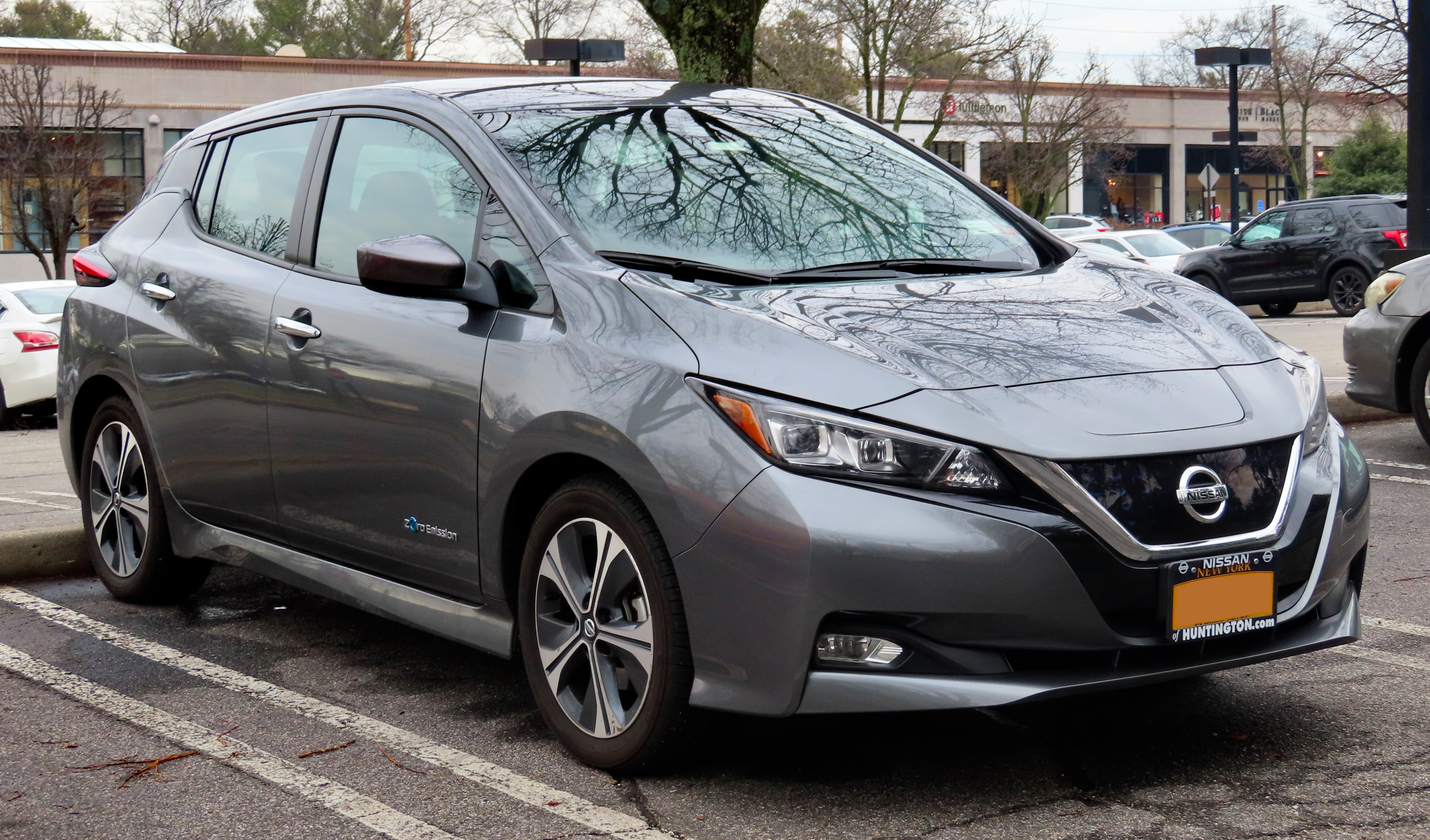
The Nissan Leaf is a popular EV that used an older fast-charging plug (CHAdeMO). Newer Leafs use CCS instead, so the charging setup changes depending on the model year.
The Mitsubishi Outlander PHEV is a plug-in hybrid that, in early versions, used an older fast-charging plug standard. If you’re shopping used, the charging port type can affect which stations you can use.
It’s the worry that you might show up at a charger and realize your car can’t use that plug. The host’s point is that newer cars usually use the same mainstream plug types, so it’s less of a problem now.
The host calls it an “EV charging bootcamp,” which is basically a crash course on how to charge an EV. The goal is to help people understand what chargers they can use and what the different plug types mean. It’s about making public charging less confusing.
Type 1 is a specific kind of charging plug for EVs (mostly for AC charging). Whether you can use a charger depends on whether the charger has the same plug type as your car. The host is pointing out that people get confused because there are multiple plug standards.
Level 1 is a slower way to charge an EV compared with faster public options. It’s basically a “charging speed level.” The host is saying people aren’t being clearly taught what these levels mean.
Level 2 is a faster charging option than Level 1. It’s another way to describe charging speed. The host is pointing out that people often don’t get clear explanations of what Level 1 vs Level 2 means.
Uptime means how often chargers are working when you go to use them. If uptime is low, you might arrive and find chargers out of service. The host is using uptime to argue that some networks are better operators than their marketing suggests.
Gridserve is a company that runs public charging stations for electric cars in the UK. In this part, they’re saying Gridserve’s charging business is starting to make money based on the company’s own financial results.
EBITDA is a way to measure how much money a business is making from its operations. It’s meant to be a clearer “are they profitable?” signal by ignoring some accounting and financing effects.
Network availability is basically how often the chargers are actually working when people try to use them. Higher availability means fewer broken or offline chargers.
Trustpilot is a website where customers leave reviews and ratings for companies. A 4.2 score suggests most people who reviewed the service were fairly happy.
An electric forecourt is a charging area set up specifically for EVs, usually with multiple chargers in one place. It’s meant to feel more like a convenient stop than a single charger on the side of a road.
The M1 is a major UK motorway, so placing a new charging forecourt on it targets long-distance travel corridors. In this segment, the host uses the M1 location to show how public charging is being rolled out where EV demand is likely to be high.
Electric HGVs are electric trucks. They’re harder to decarbonize than cars because they need lots of energy and they often have to keep running on tight schedules.
The electric freightway program is UK government support to help build charging infrastructure for electric trucks. It’s meant to make it easier for freight operators to switch to electric.
Unit economics means whether the business makes money per individual transaction or service. Here, the point is that charging can be profitable per charging use, not just overall on paper.
A social lease is a cheaper way to lease an electric vehicle, usually for people who qualify for the scheme. The host is asking whether the advertised £77-a-month deal is real or just wishful marketing.
This is a way of charging where you pay using an estimated mileage up front. The proposal here is to change it so the charge matches your real miles driven.
Tesla is mentioned because it’s a big EV company, and the host says Tesla’s UK charging network moved to CCS. The takeaway is that CCS is becoming the default charging plug there.
The host is saying that how a charging company looks online doesn’t directly change how reliable the chargers are or what they cost. It mainly changes what people think.
LIVE
Hello, guys. I'm doing a prerecord this week because I am at CanLions for work. And work
is, well, I run a production company, so I do a lot around advertising, I do a lot around
online, and I do a lot around commercials and stuff like that. So I'm here in that capacity,
but I'm always looking out for EV charging stories and interesting stuff going on in
the EV charging space. So CanLions is a huge advertising event. CanLions 2026 is even bigger
than ever. There are literally hundreds of the platforms here, all along the Quazette,
showing their wares, trying to get people to spend more money on their platform and use
their advertising tools, many of which are now AI and so on. So it's an interesting
time to be here watching what happens. And there are literally thousands of marketers
all over the place, and they all come together for one week in June when it's phenomenal.
It's relevant to one of today's stories because I'm going to talk a little bit about what's going on
with advertising around the EV charging space because I think a lot of the charging companies
are really missing the trick on that. So we've got four stories, an EV charging boot camp episode
for you today. First up is the government is quietly preparing to soften the ZED EV mandate,
and this has been quite a big story this week, and EVA England isn't happy about it.
They've written directly to the transport secretary, and there's a new fully-costed plan
that could bring EV leasing down to £77 a month for households who need it most.
That's relevant because in France, where I am at the moment, social leasing is a really big deal,
and they have a very successful opportunity for people who on lower incomes to lease EVs here,
and we're trying to mirror it in the UK, I hope. We're also on episode two of the EV charging
boot camp series. Today, it's Connectors, type two, CCS and Chatham-O, fully explained properly,
so you never stand at a charge confused again. And I want to talk to you about why
UK EV charging companies are some of the worst marketers in the country. Yes, even with me sat
here in Cannes running by the best in the business, doing exactly the opposite. We'll close out with
some genuinely good news on the money side of public charging, proof that this industry can
actually turn a profit. Let's get into it. Okay, so is the government quietly giving up on the ZED
EV mandate? Yes, and EVA England is furious about it. Reports suggest that ministers are preparing
to soften the ZED EV mandate targets after pressure from manufacturers, and in an open letter
said this week, EVA England's chief executive has told the transport secretary that backing
off now will hurt by confidence at exactly the wrong moment. This landed in my inbox literally
yesterday. I'll just put a graphic up quickly so you can see that as well. It's about as fresh
as this show gets. EVA England, that's the official body representing UK EV drivers, wrote directly
to Heidi Alexander, the transport secretary, warning that if the government waters down the ZED
EV mandate again, it sends exactly the wrong signal to drivers, manufacturers and investors.
Quick reminder on what the ZED EV mandate actually does, because it's easy to lose track on the
detail. It's a manufacturer obligation, not a driver obligation. It requires every carmaker
selling in the UK to ensure a set percentage of that annual new car sales are zero emission.
For 2026, that target sits at 28%, miss it, and manufacturers face financial penalties.
That mechanism is what's been pushing supply onto UK forecourts, whether or not underlying
demand has fully caught up yet. There's a second arguably bigger ask buried in that same letter.
Scrap the EVED pay-per-mile road charge entirely, or at least the very least delay it to 2030.
Quick reminder on what EVED actually is too, because I get asked this constantly.
It's a proposed per mile charge on electric vehicles from 2028, designed to replace the fuel
duty that EV drivers currently don't pay. In principle, fine, petrol and diesel drivers have
always paid per mile, though fuel duty baked into the pump price. So there's a genuine fairness
about argument for EVs eventually contributing something too. Nobody serious is arguing EVs
should pay nothing for ever. But the way it's currently designed asks drivers to estimate and
prepay their mileage up front rather than billing on what you've actually driven. EVA England's
own survey found 76% of drivers earning under £26,000 are worried about that upfront cost,
compared with 56% of the highest earners. That's not a minor design quibble buried in a consultation
document. That's the policy landing hardest on exactly the household EV transition most needs
to bring along if it's going to reach beyond earlier doctors. And we're at crunch stage now,
as they shift out of the early adopters and into mainstream buyers. Here's the number from
that survey that should worry everyone in this industry, me included. The proportion of drivers
who recommend an EV to someone else has dropped from 82% to 56% in the space of roughly a year.
That's not a rounding error. That's a serious confidence wobble. And it's happening at the
exact moment ministers are reportedly thinking about easing off the mandate that's supposed to
be driving supply into four courts in the first place. EVA England's Chief Executive Vicky Edmonds
put it bluntly in the front of Transport Select Committee earlier this year. Right now we're
creating a two tier transition. Roughly a quarter of new car sales are electric,
but only 5.5% of the entire car park on UK roads. The people getting into EVs love them,
but they're disproportionately higher income and are far more likely to have a driveway
than the average household. There's a wider point here too, beyond just this one letter.
The ZEV mandate has effectively been the single biggest driver of EVs supplying to UK
four courts over the past few years, regardless of how consumer demand is tracked alongside it.
Soften that obligation and you don't just remove a regulatory stick,
you remove the main reason manufacturers have been prioritising UK electric vehicle stock
over other markets in the first place. There's a supply side risk hiding behind what sounds
like a fairly dry policy tweak. My verdict on this is you don't fix the confidence problem by
adding more uncertainty at the top of it. If the government genuinely wants to keep people choosing
electric, the single worst possible move right now is a double whammy of a softer mandate
signalling less commitment paired with a confusing new tax that lands hardest on the people
least able to absorb it. Pick a lane and stick to it. This is critical in the EV transition,
I think, and it really needs some thought because at the moment drivers drive will worry
dropping a percentage like that and the amount that will recommend a car is very serious.
Anyway, on to the next story, which is could you really lease an EV for 77 pounds a month?
So this is an incredible rate and this is what's been going on in France,
so I thought it was interesting to just talk about it. Possibly under a new proposal but
not yet and not from a showroom, not for 77 pounds a month. Transport and Environment and EVA
England want government to fund a subsidised social leasing scheme bringing EV leases down
from today's cheapest at 141 pounds a month to as little as 77 pounds a month for lower income
households paid for by a new levy on large SUVs.
This sits right alongside the EV, alongside the story we've just covered,
so stay with me. The same report that's worried about EVD fairness also sets out how to fix the
other side of the affordability problem actually getting lower income households into an EV in
the first place. The maths is straightforward. Today the cheapest EV lease in the UK sits at
around 141 pounds a month. The proposal is to bring that down to 77 pounds a month for households
who qualify, think universal credit recipients, key workers or anyone below a set income threshold
on an eight-year secured deal that bundles an insurance and charging credit. Where does the
money come from? A large vehicle levy on a bigger, heavier petrol and diesel SUVs, plus a slice of
the existing electric car grant budget. So this isn't new government spending out of thin air,
it's redirecting money that's currently skewed towards people who can already afford to switch.
And that's the actual problem this is trying to solve. Right now 75 to 80% of all UK drivers
buy used, but fewer than 25% of EV drivers do the same. Most EV incentives that grant salary
sacrifice are built for people buying new with a driveway on a decent salary. That leaves out the
40% of UK households without off-street parking entirely. This is exactly the same structural
unfairness I bang on about with home versus public charging. Same pattern here. The people who benefit
most from going electric are the ones currently locked out of the deals that make it affordable.
Salary sacrifice schemes, for instance, currently average around 42,691 pounds in salary
for the typical participant. They simply don't work for hourly paid staff, the self-employed
or anyone on zero hours contracts, which rules out a huge chunk of the workforce by design
and not by accident. There's a bundling element worth flagging too. The proposal doesn't just
talk about the lease payment in isolation. It floats an all-in-one package combining the vehicle
insurance and charging credit into a single predictable monthly cost. For someone who's
never budgeted for an EV before, that single number simplicity matters almost as much as
the headline price. Nobody wants three separate bills and a spreadsheet just to know who's driving,
to know what driving electric actually costs them each month. There's also a scrapper
jungle in the wider report. Trading in an older petrol or diesel car for a discount
applied straight onto a new EV lease, and specifically it drives currently an older,
more polluting vehicles who would otherwise have no realistic reason to electric at all.
Worth setting this against today's actual market too, while we're on it. Even outside
any social leasing schemes, EV lease prices have moved meaningfully this year. Deals like the Renault
4 from around £166 a month or the BYD Dolphin Surf and Vauxhall Courser Electric, both coming in at
under £300 a month thanks to the electric car grant eligibility. The market's already moving in the
right direction. This proposal is about reaching the households that today's market still leaves
behind entirely. I think it's a sensible, fully-costed proposal, not wishful thinking.
Whether ministers act on it is another matter, but if you want to know what fixing the EV
transition for everyone, not just driver owners, actually looks like on paper, this is it.
Okay, we're on to EV charging bootcamp, guys.
So I'm going to just do a little bit on the difference between Type 2, CCS and Chathamow.
Type 2 is what you'll use for slower AC charging at home and at most public AC points. CCS is the
combined connector for rapid DC charging. It's a Type 2 socket with two extra DC pins built in
underneath. You see them in there at the bottom and they make those big charging plugs and it's
now the standard on almost every new EV sold in the UK. Chathamow is an older Japanese DC standard,
mainly found on useness and leafs and it's gradually being phased out.
Welcome to week two of EV charging bootcamp. Last week, we covered AC versus DC charging.
This week, we're covering the actual plugs because half the confusion people have at
a charge point isn't about electricity. It's about which hole the cable goes in. Excuse me.
Let's start with Type 2, sometimes called the Menekis plug. This is the standard AC connector
across the UK and Europe. Seven pins. It's what's on your home wall box. It's on most
workplace charges, charging overnight. Sorry. It's on most workplace charges and it's on the
majority of public AC charging points too. If you're charging overnight on your driveway,
this is what you're using and it supports both single phase charging around 7.4 kilowatts and
three phase up to 22 kilowatts where that's available. Worth a quick mention of Type 1 here too,
even though you'll rarely meet it now. It's an older five pin AC connector, mostly found on
the handful of early Nissan Leaf imports and similar older models. If you've got one of those,
you need a Type 1 to Type 2 cable to access the modern public AC network. But for the vast majority
of you watching this simply won't apply. Now CCS stands for combined charging system. The clever
bit is right there in the name. Take a look at a CCS plug and you'll see it is basically a Type
2 connector with two big extra pins bolted on underneath. Those two extra pins carry DC power
direct current straight into the battery, bypassing your car's onboard charger entirely.
That's what lets you add real range in minutes rather than hours. The single inlet design is
genuinely neat engineering. Your car only needs one socket to handle both slow AC charging and at
a Type 2 cable into the top section for home charging. The DC pins just sit there unused,
pull up to a rapid charger and the full CCS connector engages both sections at once.
CCS now supports up to 350 kilowatts commercially with even faster speeds demonstrated in the lab
and it's been the legally mandated standard for new public DC charges across Europe since 2017,
but the following the UK following the same direction. One thing worth knowing if you're
used, Tesla used to run its own proprietary plug in some markets, not anymore. Every Tesla
supercharger in the UK now uses standard CCS and current Tesla models sold here use CCS too.
No adapters needed and the supercharger network is now open to any car with a CCS inlet,
not just Teslas. Last one, Chathamau. This is an older DC rapid charging standard mainly found on
the older Nissan Leaf and some early Mitsubishi models like the original Outlander PHEV.
Unlike CCS, it doesn't combine AC and DC into one inlet, so a Chathamau car actually has two
separate sockets entirely, a Type 2 for home AC charging and a separate round Chathamau plug
for rapid charging. It's a declining standard, it now represents under 30% of connectors across
European networks and under 15% of newly installed fast chargers. Even Nissan's own newer models,
including the upcoming third generation Leaf, have moved to CCS. If you're buying a used Chathamau
car today, it'll still work fine on the network, but it's worth knowing the charger options around
you will keep shrinking over time, so plan longer journeys with that in mind. You often find that
there are only a few Chathamau connectors when you turn up a charging hub, so do bear it in mind
because they are being phased out. Quick word on cables too, since this trips people up. If your
home wallbox is untethered, that means no cable is permanently attached, you'll need to buy your
Type 2 to Type 2 cable. That's the single most commonly bought EV charging cable in the UK.
Public rapid and ultra rapid CCS and Chathamau chargers on the other hand come with the cable
already tethered to the unit, so you never need to carry your own for those. So the practical takeaway,
if your car was registered after about 2018, you've almost certainly got Type 2 for home charging and
CCS for rapid public charging. That single combination covers nearly the entire UK public
network end to end. Older leaf owners on Chathamau still perfectly fine today, just worth planning
ahead a little more on longer trips as that network gradually shrinks. Connection confusion is one of
the easiest EVs anxieties to solve and most modern buyers never need to think about it again after
today. Next week, episode three, we're moving from plugs to kilowatts versus kilowatts hours,
and why mixing those two up is the single most common mistake new EV owners make.
The charging plug infrastructure vibe has been chaos. It's been so confusing. I had an
Nissan Leaf. It was using Chathamau for direct fast charging. Type 1 to Type 2, Chathamau made no
sense to me when I came back into looking at EVs. I sold that car in 2016 when I came back looking
at it for the EV charging bootcamp two years ago. I started wondering what the heck was going on,
which is why I've started doing stuff around EV charging bootcamp, because I think that there's
lots and lots of confusion out there for the public. No one is telling you what to do about
charging plugs, which charging plugs you need, what's tethered, what's at level one, what's level
two, what's type one, what's type two. The Tesla charges have been all over the place, so it's
great that they're, you know, at least they're standardizing CCS now. Okay, I'm going to talk
a little bit about EV charging companies and their marketing tactics, because I'm really shocked
at how badly EV charging companies are managing their customer base, really, so I'm just going to
talk a little bit about them. Why are EV charging companies so bad at marketing? Because most of
them are still thinking like billboard advertisers in a world that's moved to social. I'm filing this
from Cannes Lions, the biggest advertising festival on the planet, and EV charging brands are barely
in the conversation here. While the audience they actually need to reach is forming opinions about
public charging on TikTok and Instagram, not on a roadside, roadside sign. This week I'm
mechanizing thousands of marketers, the best creative work in the world being awarded prizes
on stage every single evening. It's been a genuinely useful week to think about how badly
UK EV charging networks are doing this by comparison. Here's the number that sums it up. One major UK
charging network, proper infrastructure, 1300 plus locations, thousands of charge points across
supermarkets, councils, TFL roads, a single contract alone, covering 4000 plus charge points for one
council, has 84 followers on Instagram. 84. For a network at that scale of infrastructure, that's
not a quiet social account. That's basically nobody, and it's not for lack of budget. This is a certified
B Corp company with 65 million pounds plus raised in funding behind it, and it's not isolated.
Look at how these companies actually spend their marketing budget. Instable, genuinely good operator,
99.8% uptime, best customer service rating outside of Tesla, last year submitted a planning
application for a non-functional advertising turbine at one of their super hubs, purely to draw
attention to pure poor roadside signage. It got rejected by the local council. That's the industry's
idea of a marketing campaign in 2026. A static structure asking the government to put up better
signs, rather than a single piece of content explaining to a nervous first-time buyer what
charging actually feels like. Meanwhile, the audience, these companies most need, drivers without
driveways, 40% of UK households who do most or all of their charging in public, are forming their
entire opinion of public charging reliability from short form video, not from a billboard,
not from a static charger graphic with a QR code nobody scans in a car park in a supermarket.
This isn't a dig for the sake of it. It's the single biggest commercial gap I see in this
entire industry. These companies have built genuinely excellent hardware. The reliability
numbers are real. The investment is real. The B Corp credentials are real. What's missing is
anyone showing up where the actual fud, fear, uncertainty, doubt about public charging gets
formed and spread amongst people who haven't switched yet. That's not a canline stage. That's
a vertical video at eye level filmed on a phone posted by someone the audience actually trusts.
And it's worth saying, this is exactly the gap independent media like us exists to fill. We're
not paid by any charging networks to say any of this, which is precisely why you could trust
why we do it when we do. The EV charging industry has spent five years
winning the infrastructure argument and almost entirely ignoring the trust argument and trust
gets built where people actually scroll, not where they drive past at 60 miles per hour.
Keep an eye on what your audience are engaging with. Start talking to them. Understand that
the conversation happening online is huge. There is mass engagement around the EVs,
especially through short form video and start engaging with it. Don't just push out static
media ads using a paid campaign that no one wants to look at. All right, enough of a rant,
sorry about that. Okay, I'm going to do a quick closer on this as well.
Is EV charging actually a profitable business yet? Let me just go back to full screen on this so I
can see you guys or you can see me. Probably don't want to, but there we go.
Is EV charging a profitable, actually a profitable business yet? For at least one major UK network,
yes, grid serve. Actually, I have got the numbers here and let me just share them. Sorry about that.
I'm just going to switch up. I will get better over time. Bear with me. I will get better at this.
There we go. For at least one major UK network, yes, grid serve has just reported its first ever
positive group EBITDA with charging network revenue up 45% year on year to 64 million pounds
in 2025 and 99% network availability across 200 plus sites. Proof that large-scale public
charging can now be commercially viable, not just subsidized infrastructure. Nice bit of
symmetry to close on, actually given what we just covered. Grid serve reported this week that its
charging network revenue hit 64 million pounds in 2025, up 45% year on year and delivered 26 million
in network EBITDA of 40% margin. At group level, the business turned EBITDA positive for the first
time ever under new Chief Executive Daniel Kunkel, who joined from Shell and Ubertricity back in March
2025. Over 3 million charging sessions completed in the year, 99% network availability across
more than 200 sites and a 4.2 trust pilot, 4.2 trust pilot score ahead of every major
capacitor. Revenue has grown at a compound annual rate of 55% since 2023. They're adding 500 plus
ultra rapid charges this year and opening in a new electric forecourt of Mark and Bale on the M1
this summer, their fifth forecourt site. They're not stopping at passenger cars either. Grid
serve opened the UK's first public charging hubs for electric HGVs earlier this year,
backed by department for transport funding through the electric freightway program,
a genuinely difficult segment to decarbonize in one of the most networks and one most networks
aren't even attempting yet. So the commercial case for public charging infrastructure is no longer
theoretical, it's printing real numbers now, which makes most the marketing point from our last
story even sharper. Hardware works, the unit economics work, the reliability is generally
there. The only thing that's missing is anyone outside actually knowing that it exists.
There's word of mouth going on, but you've got to get your messaging out guys.
Okay, Q&A. Will the £77 social lease actually happen or is it just a wish list?
I, it's a fully costed proposal from Transport and Environment and EVA England and
the fund, a large, it's fully not public government policy yet. The funding mechanism,
a large vehicle levy on SUVs has been tested with EVA England members and modelled by Cambridge
Economics. Whether ministers adopt it depends on the upcoming public charging and tax review
expected later this year. Worth saying, proposals like this don't always go anywhere,
but this one's got more behind it than most. It's been independently modelled, tested with
real EV owners and time to land right alongside the government's own review into charging costs.
That's a far stronger starting point than most policy wish lists ever get.
Should I worry about the EVED if I'm leasing rather than buying? Leasing doesn't exempt you.
EVED would apply to any electric vehicle on the road from 2028 regardless of how you acquired it.
The current concern is the upfront mileage payment model, which EVA England wants redesigned to
charge, charge based on actual mileage instead. If you're on a typical three or four year lease
right now, you'd be inside that EVED window before your contract ends. So it's worth keeping
half an eye on this rather than assuming it's someone else's problem to worry about.
Question three, is CCS definitely going to be the standard long term or could something else
replace it? And I think this is key because you've been through loads and loads of different
charging options and it'd be good to know that CCS will become a standard so that you can future
prove at least what you're buying. CCS is now the established standard across the UK and Europe
and shows no signs of being replaced. It already supports up to 350 kilowatt commercially with
higher speeds demonstrated in testing. There's plenty of headroom for faster charging without
needing a new connector type. Even Tesla switching its UK superchargers over to CCS tells you
everything about which way this has settled. When one major holdout standardizes, that's
about as done a deal as this industry gets. Question four, if charging networks are bad at
social media, does that affect reliability or pricing? No direct link. A network's marketing
presence doesn't affect how its hardware performs but it does affect what you believe about reliability
before you've used it. Real world reliability tends to be better than the public perception
precisely because that perception is shaped by old complaints recirculating
rather than current performance. The gap between perception and reality is exactly why we built
the council charge in checker and the club in the first place. Independent up-to-date
information fills the space these companies are currently leaving empty. Question five,
does grid serves profitability mean charging prices are about to drop? Not necessarily in the
short term. Profitability at scale tends to fund expansion and reliability investment first,
not immediate price cuts. Longer term, more competition between profitable networks
is the most realistic path to lower public charging prices. Keep an eye on what the smaller,
less profitable networks do in response over the next year or two. That's usually where genuine
price competition actually shows up first, not from the market leader. Okay, that's the show.
Quick reminder, while I'm out here in Cannes, today's EV charging marketing rant struck a
nerve. The Primetime EV club is the bit we actually built to fix the bottom of that funnel.
Feel free to join primetimeev.com slash club, cheapest public charging rates every month,
the best lease deals we can find, and a weekly digest with no algorithms standing between us and
you. If you've got a charge and connect a horror story of your own off today's bootcamp episode,
drop it over to me. They shape what we cover next, so let us know at primetimeev.com or leave
comments for us and keep an eye out for our shorts as we continue to try and uncover what's
going on in the charging world. Next week, EV charging bootcamp episode three, kilowatts versus
kilowatt hours sorted out properly. Full show on YouTube, podcast, Spotify, Apple and Amazon now.
I'm Danny. This has been Primetime EV Live. See you next week. Have a good weekend, guys. Hope you
About this episode
A policy and charging-standards double bill: hosts unpack the “ZED EV mandate” and why softening it could shake consumer confidence, then debate EVED’s proposed pay-per-mile charge from 2028. The affordability thread lands on a social EV leasing idea that could cut eligible leases to £77/month, bundled with insurance and a charging credit. The “EV charging bootcamp” then clarifies Type 2 vs CCS vs Chatham-O, plus tethered vs untethered home wallboxes—so you’re not left guessing at the pump.
00:00:00 EV news this week: four stories, one Bootcamp episode
00:01:30 Is the government quietly giving up on the ZEV mandate?
00:07:30 Could you really lease an EV for £77 a month?
00:12:00 What's the difference between Type 2, CCS and CHAdeMO?
00:18:30 Why are EV charging companies so bad at marketing?
00:22:30 Is EV charging actually a profitable business yet?
00:24:30 Your EV charging questions answered
00:30:00 Subscribe & Join the Club
Spotify Show NotesZEV mandate UK 2026. eVED pay-per-mile tax. EV charging connectors UK. This week on Primetime EV Live — four stories and an EV Charging Bootcamp episode in 30 minutes, filed remotely from Cannes Lions.ZEV MANDATE U-TURN. EVA England has written directly to the Transport Secretary warning that softening the ZEV mandate now — alongside pressing ahead with the eVED pay-per-mile tax — risks the EV transition. Driver willingness to recommend an EV has dropped from 82% to 56% in a year.£77 SOCIAL LEASING PLAN. A new fully costed Transport & Environment / EVA England proposal could undercut today's cheapest EV lease (£141/month) by funding £77/month leases for lower-income households via a new Large Vehicle Levy on SUVs.EV CHARGING BOOTCAMP — EPISODE 2: CONNECTORS. Type 2, CCS and CHAdeMO explained properly — what's on your car, what's on the charger, and why it barely matters if your EV was registered after 2018. Next week: kW vs kWh.CANNES LIONS: EV CHARGING'S MARKETING PROBLEM. Filed live from the world's biggest ad festival — one major UK charging network has just 84 Instagram followers despite 1,300+ locations. Why the industry is losing the trust battle on social media.GRIDSERVE TURNS A PROFIT. First-ever positive group EBITDA, charging network revenue up 45% to £64m in 2025 — proof public EV charging infrastructure can be commercially viable at scale.⚡ Join the Primetime EV Club — free · primetimeev.com/clubApple Show Notes — keywords in first 200 wordsZEV mandate UK 2026. eVED pay-per-mile tax 2028. EV charging connectors UK. Type 2 CCS CHAdeMO explained. EV lease deals UK 2026. This week on Primetime EV Live — four stories and an EV Charging Bootcamp episode in 30 minutes, filed remotely from Cannes Lions 2026.EVA England has written to the Transport Secretary warning against softening the ZEV mandate and pressing ahead with eVED. Driver confidence in recommending an EV has dropped from 82% to 56% in a year.A new proposal could bring EV leases down to £77 a month for lower-income households, funded by a levy on large SUVs.EV Charging Bootcamp Episode 2 — Type 2, CCS and CHAdeMO connectors explained properly.Filed from Cannes Lions: why UK EV charging networks are losing the trust battle on social media - one major network has just 84 Instagram followers.GRIDSERVE posts its first-ever positive group EBITDA as charging revenue jumps 45% to £64m.⚡ Join the Primetime EV Club — free · primetimeev.com/club