Forward-facing child seats are the kind of car seats used for kids who are no longer rear-facing. They can take up a lot of room behind the front seats. That can make some cars feel tight for adults, so it affects what car you should buy.
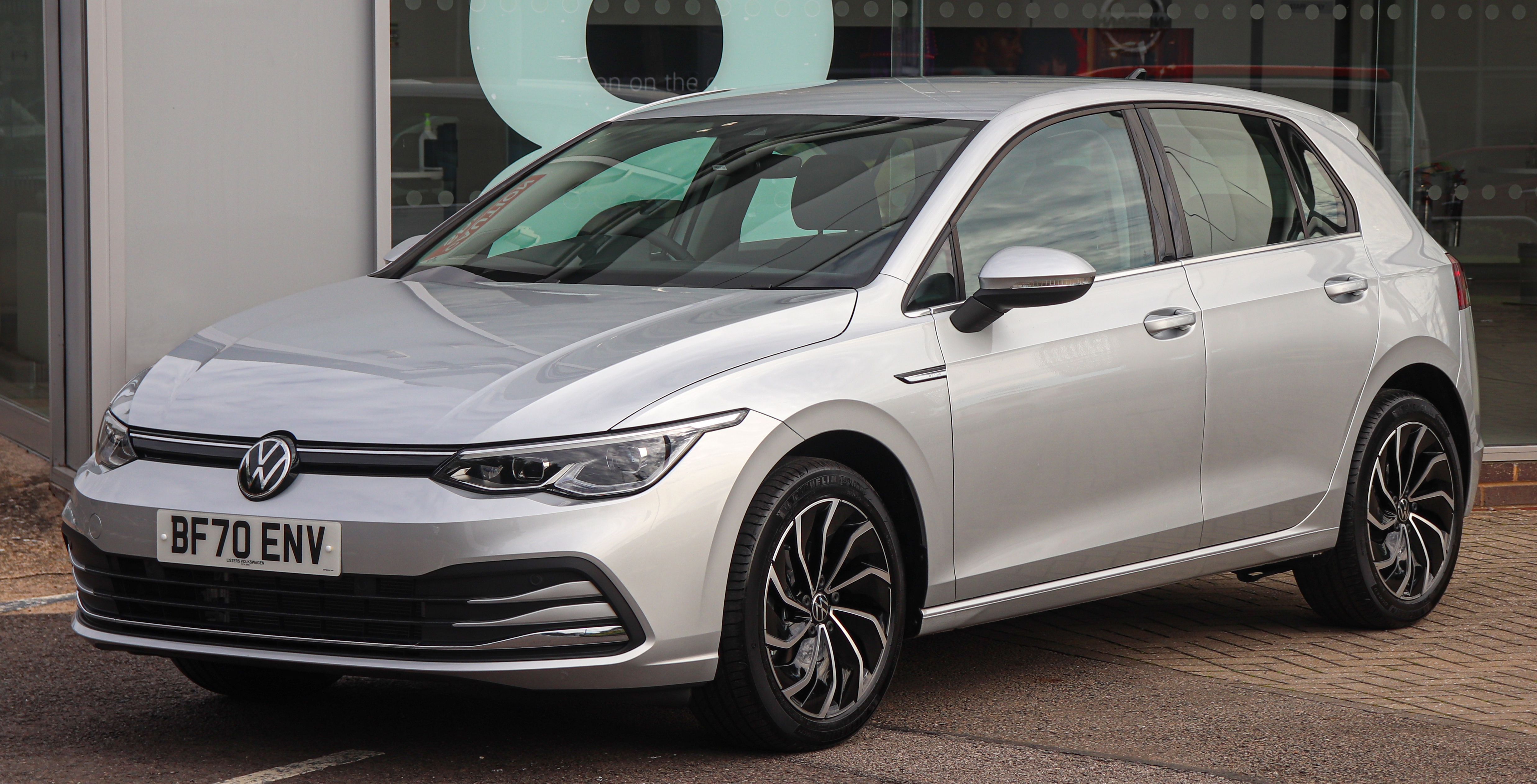
The Volkswagen Golf is a compact hatchback, meaning it’s a smaller car with a rear door that opens upward. The podcast mentions the Mark 7 GTI, which is a sportier version of the Golf. It’s brought up because people often choose it when they want a practical car with more performance.
Car
Mark 7 GTI
A “Mark 7 GTI” is a Volkswagen Golf GTI from the Mk7 generation. It’s a small sporty car that’s still pretty practical for daily life. People like it because it drives well and there are lots of parts and upgrades available.
Concept
car fit for families (big cars vs little cars)
They’re talking about how family needs change what kind of car makes sense. Bigger cars usually give you more room for car seats and passengers. Smaller cars can be easier to live with day-to-day, but they may feel cramped with kids in the back.
BYD is a big car company from China that makes electric cars. They’re known for batteries, and the idea is that more BYD EVs will show up soon, giving buyers more options.
Car
BMW wagon
They’re talking about BMW wagons—cars that look like a sedan but have extra room for cargo. It’s a practical choice if you want more space without giving up the “BMW feel.”
Car
Volvo wagon
They’re talking about Volvo wagons, which are roomy and practical family cars. The host is saying you can often buy them for a good price compared to other cars.
BMW’s M Sport package is an upgrade that makes the car look and drive more “sporty.” It often includes nicer styling and sometimes a firmer suspension, so it feels more fun than the base trim.
Kia is a car brand from South Korea. The hosts are basically saying that if you’re shopping on a budget, Kia might be worth checking out because you can sometimes find good deals.
The Hyundai Veloster N is a sporty version of the Veloster hatchback. It’s the kind of car enthusiasts talk about because it’s tuned to drive more aggressively than a normal commuter hatch.
They’re making a joke about buying a car from a brand that’s gone. Sometimes people do it for the cool/rare factor, but it can be harder to get parts later.
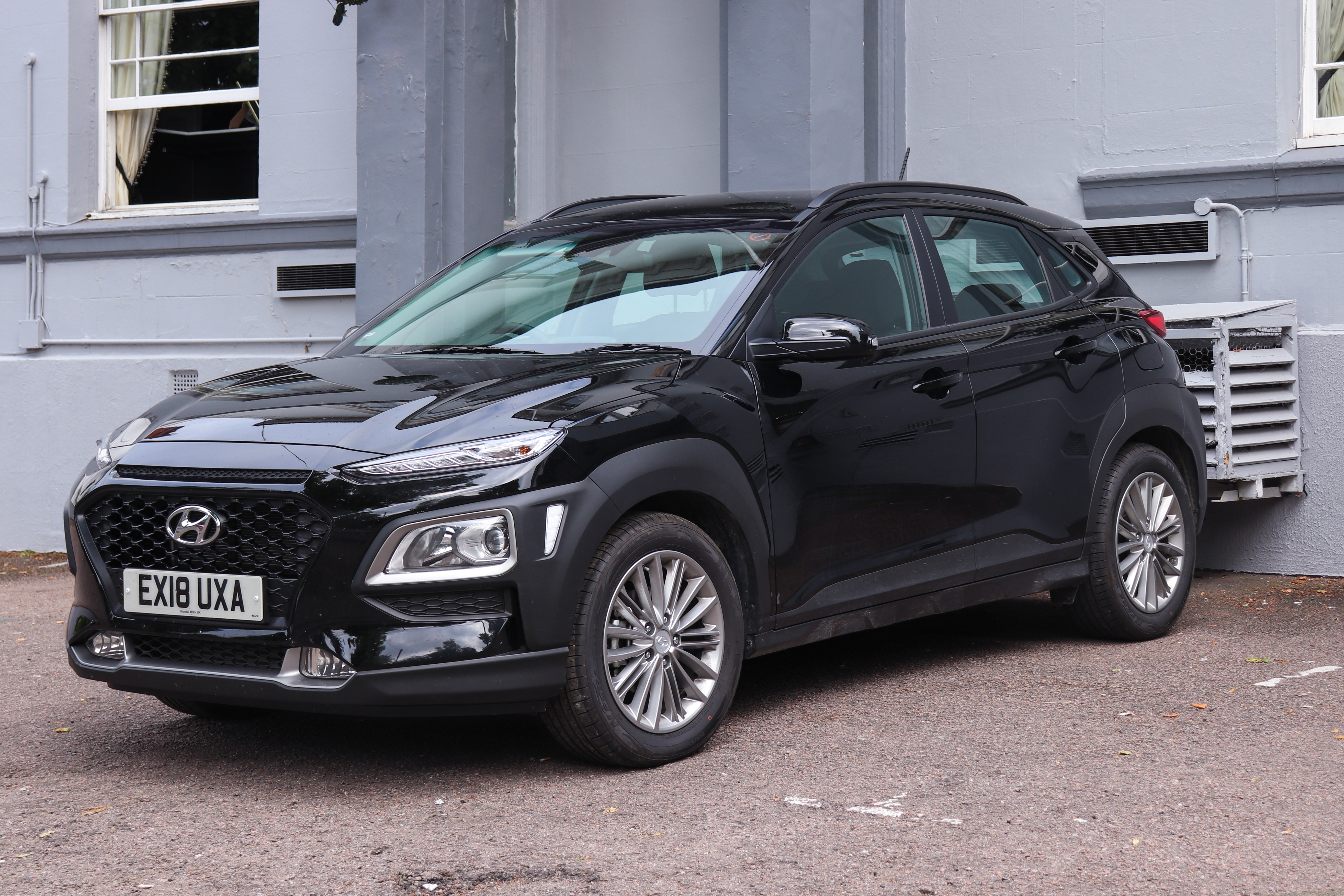
They’re talking about the Hyundai Kona, which is a small crossover. They’re basically saying it’s not the same kind of car as the more enthusiast-style options.
They’re using the Audi A8 as an example of a luxury car that can get pricey when repairs are needed. Because it’s a top-tier model, parts and labor usually cost more.
They’re saying you should plan ahead for repairs by saving a chunk of the money you spend on the car. For some cars, especially older ones, it’s smart to expect you’ll need to fix things and budget for it.
When people say the market is “cooling off,” they mean prices and demand aren’t rising as fast as they used to. It can mean used cars get a little cheaper or at least stop getting more expensive quickly.
They’re saying used cars are costing about as much as they did at their most expensive point in 2023. That usually happens when there aren’t enough cars for sale compared to shoppers.
Concept
EVs are leading the climb
They’re saying electric cars are helping push used-car prices higher. If more people want EVs than there are used EVs available, those prices can rise first.
Leases end on a schedule. If fewer people return their leased cars, there are fewer used cars available for sale, so prices can stay high.
Concept
how do I buy a 2008?
They’re pointing out that “used car” can mean anything from a newer car to something much older. Buying a 2008 is a totally different situation than buying a newer used car.
Concept
how do I buy a 2003?
They’re talking about buying a very old car, like a 2003. At that age, what matters most is the car’s condition and maintenance history, because repairs can be more unpredictable.
“Under five years old” means relatively new used cars. People often pay more for these because they’re newer and usually have fewer miles than older used cars.
“Mannheim numbers” are market data that show how used car prices are changing. Dealers and analysts use it to understand whether wholesale prices are rising or falling.
The wholesale buy point is basically what dealers pay when they buy cars in bulk. If that price is high, it often means used cars won’t get much cheaper at the dealership.
Term
half price
“Half price” means used cars can cost dramatically less than new ones. That price difference is a big reason people choose used instead of buying new.
Concept
used car pricing vs new car pricing (50% reduction example)
They’re talking about how used-car prices can be much lower than new-car prices, but people often focus on the most popular models. That can make it seem like there are no bargains, even if the average used price is dropping.
They’re using the Toyota Camry as an example of a car people want a lot. If lots of buyers are looking for it, the dealer doesn’t have to cut the price as much.
“Days on lot” is basically how many days a car has been sitting for sale without being bought. If that number is low, the cars are selling faster; if it’s high, they’re not moving as quickly.
“Buy here, pay here” means the dealer is also the lender. It’s often used for cheaper cars and for buyers who can’t easily get approved through a regular bank.
Concept
franchise dealerships vs non-franchise lots
They’re saying the used-car market has shifted toward more traditional, brand-affiliated dealerships. That can change what kinds of cars are available and how pricing works.
An “off-lease” car is one that was leased for a few years and then turned back in. After that, it gets sold used, which can make prices look cheaper for a while.
They’re saying EVs are getting more expensive faster than regular gas cars. That can happen for a bunch of reasons, like demand, incentives, and how many used EVs are showing up.
The Corolla is a popular Toyota compact car. When gas prices rise, it’s often chosen because it’s usually cheaper and more fuel-efficient than bigger vehicles.
“Used EVs” refers to electric vehicles that have already been purchased and are being resold in the pre-owned market. The host frames EVs as an alternative to paying high gasoline costs, which can shift demand away from gas vehicles.
“Panic sell” means someone sells quickly because they’re worried about costs. When a lot of people do that at once, prices can drop and buyers can find deals.
The Suburban is a big Chevrolet SUV with lots of room. When gas prices rise, people tend to back away from big SUVs like this—until fuel costs drop again.
The “toilet paper theory” is a shorthand for panic buying and supply-demand distortions—when people expect shortages, they buy more than they need, which can temporarily worsen the shortage. In car-market terms, it’s often used to explain why demand spikes or inventory issues can appear even when the underlying long-term demand isn’t changing much.
A “trade-in” is when a dealer credits your current vehicle toward the purchase of another one. The phrase “gas guzzler” highlights the motivation behind switching—drivers may trade in a high-fuel-consumption car to move into a more efficient vehicle (here, likely an EV or hybrid), which can boost used-vehicle demand.
“Gas prices” refers to the cost per gallon of gasoline, which directly affects how expensive it is to drive daily. When someone mentions multiple vehicles and a high per-gallon rate, they’re highlighting how fuel costs can quickly become a major budget item.
Virtue signaling is when someone does something partly to look good to other people, not because it’s the best choice for them. In this case, it’s about whether buying a certain type of car is about real need versus image.
Depreciation just means the car gets worth less over time. New cars usually lose value fastest right after you buy them, so someone who buys immediately after the car is driven off the lot is taking that early hit.
They’re talking about how much used electric cars are selling for and how strong the demand is. Their point is that if gas got a lot cheaper, fewer people would feel the need to switch to EVs, which could affect used EV prices.
A scrapyard is where old cars are taken apart so parts can be reused. The hosts are saying this shop is like that, meaning they can find parts by pulling them from other cars.
Baby seats are child safety seats you install in a car. They can limit which cars work well, because you need enough space and the right way to secure them.
“Trading in the gas guzzlers” refers to replacing older, less fuel-efficient vehicles with newer ones—often through a dealer trade-in. It’s commonly part of a broader shift in consumer behavior toward better fuel economy and lower operating costs.
Car flipping is when you buy a car and then sell it later for more money. People usually do it by finding a good deal and then figuring out what needs fixing or how to market it.
Car “flipping” is when someone buys a car and sells it again soon, usually to make money. The hosts are talking about how some people try to do that without going through the legal setup a dealership needs.
A dealer’s license is the legal authorization required to buy and sell vehicles as a business in many jurisdictions. The discussion implies that frequent reselling can trigger dealer regulations, so they’re describing a workaround to stay under thresholds.
A check engine light indicates the car’s onboard diagnostics have detected a fault, ranging from minor issues to serious drivability or emissions problems. For buyers in the “boutique” market, unexpected lights can signal hidden maintenance needs that hurt resale value.
An appraisal is basically the dealer’s estimate of what your car is worth. They look at things like condition and market prices to decide what they’ll offer you.
A trade-in is when you turn in your current car to a dealer as part of the purchase price of another vehicle. The dealer’s offer is effectively a negotiated valuation, and it can be influenced by market demand, condition, and how the deal is structured (including add-ons and pricing).
“SF 90” is shorthand for the Ferrari SF90 Stradale. It’s a very expensive supercar that uses both a gas engine and electric power, and the hosts are warning that the money game around it can be tricky.
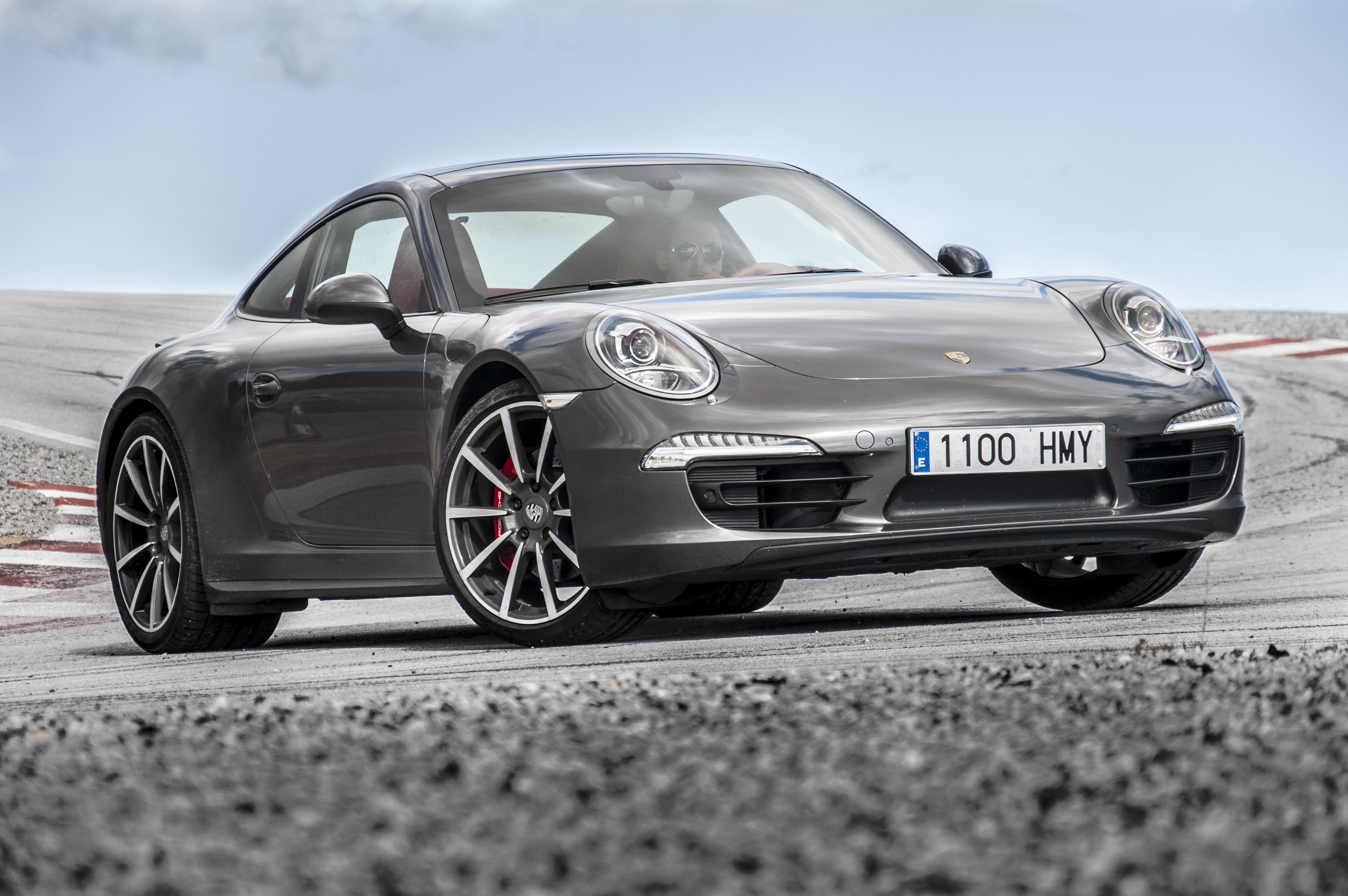
The Porsche 911 GT3 RS is a high-performance 911 made for track driving. The hosts are saying you shouldn’t jump from this kind of car into an even more expensive, different supercar market.
This is a strategy where a car company builds a version of a car to stay under a specific price limit. That way, buyers don’t get hit with a bigger tax, so more people can afford it.
“Car tax” means the government charges you extra money when you buy or register a car. If the tax changes at a certain price point, it can push buyers toward cheaper versions of the same model.
Lowering the suspension means making the car sit closer to the ground. That can help the car feel more stable when driving, but it may ride a bit firmer.
A “bucket” seat is a more supportive seat that holds you in place better than a normal chair. It’s common in performance cars because it helps you stay planted during hard cornering.
Momo is a brand that makes steering wheels and other driving-focused parts. The hosts are saying they added a Momo wheel to make the car feel more like a sporty, race-inspired Porsche.
Decals are the stickers or graphics on the outside of a car. The point here is that buyers wanted the right racing-style graphics, so the team had to send them out to customers.
A motor show is a big car event where companies show off cars and accessories. They’re saying the style people saw at the show (like decals) became what customers wanted afterward.
“Car of the Year” is an award that recognizes the best car in a category/timeframe. They’re emphasizing that even though the car was old (25 years), it still won because it was the right kind of car for the moment.
Some countries charge extra taxes on cars. Those taxes can make the same car cost more, so companies sometimes change the car or its features to keep the final price below a certain level.
This is about keeping the car’s final price under a certain number. If you cross that line, taxes or buyer behavior can change, so the company tries to stay just below it.
This describes a pricing/packaging strategy: maximize revenue by loading a vehicle with features (“tech”) and capturing higher willingness-to-pay. It’s contrasted with a cost-reduction approach to meet a price threshold.
“Low margin” means the profit is smaller on each sale. The point here is that even if the profit per car is lower, selling entry-level cars can still help the brand by getting new buyers interested.
They’re talking about the Porsche 911, which is a very famous sports car. The point is that once someone really wants that model, they’ll often pay whatever it takes.
The Camaro is a famous Chevrolet sports car. The hosts are basically saying that if you treat the Camaro name carelessly, people might stop caring about it.
“Brand name damage” refers to how repeated controversies, poor product decisions, or inconsistent messaging can erode consumer trust. In automotive, that can affect demand, resale value, and how enthusiast communities perceive a model line.
The hosts are talking about Nissan’s strategy. Instead of guessing what will sell, they’re trying to build plans around what customers actually want, then decide which cars to focus on.
This phrase means they’re trying to start with what buyers want first. Then they decide which cars to make and where to sell them, instead of starting with the company’s internal ideas.
They’re talking about companies reorganizing their car lineup so each model has a clear purpose. If a car doesn’t sell enough or doesn’t make money, they may drop it in certain markets.
This is a discussion of unit-volume economics: automakers estimate how many cars a model line can sell in a region and whether that volume justifies the costs. If projected sales are too low (the hosts use “20,000 units” as an example), the model may be canceled or limited to other markets.
They’re talking about vans and whether they sell well in different places. Some countries just buy more vans than others, so automakers adjust what they offer.
Instead of making everything in one place for the whole world, companies try building closer to where the cars will be sold. That can make it easier to match what customers in each region want.
3D printing is a way to make parts by building them up layer by layer. In car manufacturing, it can help companies make certain parts or test designs more quickly.
They bring up Ford as another example of a company that could build cars closer to the U.S. market. The goal is to make the cars better suited to what buyers want there.
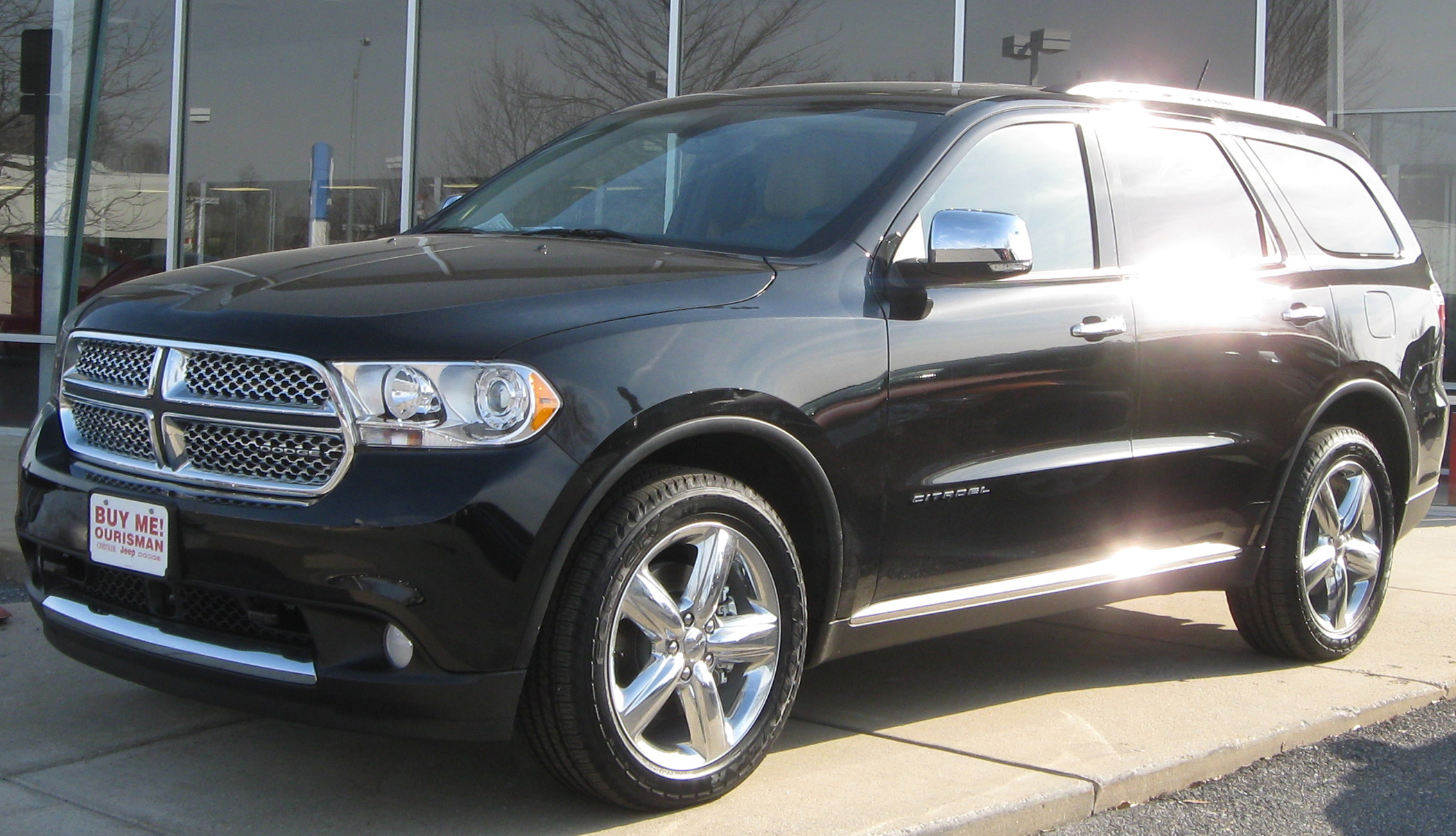
The Dodge Durango is a big family SUV with three rows of seats. The hosts are talking about how long the current version has been around and why that matters for sales and when a newer generation is expected.
They’re talking about how long the current version of the Durango has been sold without a full redesign. When a car stays in the same “generation” for a long time, it can either keep selling well because it’s proven—or start to lose appeal because competitors move on.
They’re saying the next major redesign of the Durango (the fourth generation) isn’t expected until 2029. That’s a long wait, and it can affect how people feel about buying now versus waiting.
They’re using the saying “if it ain’t broke, don’t fix it” to describe a strategy of keeping a successful design mostly the same. They’re comparing that idea to Lexus, then saying the Durango situation might not actually be “not broken.”
They’re saying the older version of the Durango sold unusually well in 2025. That suggests something changed in the market—like pricing, competition, or demand—even if the vehicle itself hasn’t been redesigned in a long time.
The Dodge Neon is a small car. The podcast is specifically talking about the Neon SRT4, which is the faster, performance version. They’re emphasizing that it’s not just a regular Neon.
“V8 buyers” just means people who want an engine with eight cylinders. The hosts are saying that around Q3, there were more options for people who wanted that kind of power.
Term
Q3
Q3 is just shorthand for the third quarter of the year—about mid-year. When people use it in car discussions, they usually mean timing like when certain versions or deals showed up.
A V6 is a type of engine. The hosts are saying the manufacturer stopped offering the V6 as an option, which can push more buyers toward the other engine choice.
Electrical issues mean the car’s electronics start acting up—like sensors, computers, or other systems not working correctly. The hosts are saying a friend’s Jeep story points to problems that can be frustrating to deal with.
The Chrysler Aspen was a big Chrysler SUV that didn’t last long in the lineup. In the podcast, they’re saying it was closely related to the Dodge Durango—so it looked similar and shared underlying engineering.
Platform sharing is when two different cars are built on the same basic “skeleton.” That can make them cheaper to build and sometimes they drive or feel similar even if the outside looks different.
Concept
first generation vs second gen
They’re comparing two versions of the same SUV across redesigns. The idea is that the newer version looked different, and that can affect how people feel about the car and whether it sells well.
Changing the engine oil regularly keeps the engine lubricated and helps it last longer. If someone drives a car to huge mileage, they usually keep up with oil changes.
The front grille is the part at the front of the car that you can see right away. It also helps with cooling, and in this case they’re judging how it looks.
LIVE
Well, you know, we don't want to bore people with boring stuff.
We want to start off on a strong note.
And that strong note is it's Friday.
It's the best part of the week for us, meaning it's Monday for you guys
that are listening to this.
Let's start off with a listener topic from the discord.
How about that?
I'm in.
All right.
So Brian says, I'm moving positions at work.
I'm losing my company car.
That sucks.
But he's getting paid 10k once he turns it in.
He basically needs he wants to know what kind of enthusiast vehicles
he should be looking for.
Only thing is, you have two kids with a childhood senior sitting
in the back and they are forward facing, though.
So there's that.
He did later come back and say if he if he budgets right,
he can maybe get it up to 15.
He's looking at maybe a Mark 7 GTI, which I gave him a long winded
gentleman's response about, yes, go for it.
But what do you think?
As you got kids, you got the seats, you've had to deal with it.
And big cars, little cars.
15k is all you have or you got 15k to put down.
That's a good question.
I'm going to go ahead and say, if it works, look, think of it this way.
If work was taken away, your company car and they're like, here's 10 grand.
And in your mind, you're like, I haven't had to pay.
I'm about to take away a lot of people's company cars because we're
paying six, 10 a gallon.
So trust me, as a guy that that has seven company car company V8 trucks
and SUVs, he's responsible for putting gas in.
Trust me, we're we're talking to people about what's up with the company vehicles.
BYD's got some EVs coming.
Don't worry.
15k, man.
Because think of it like this.
Imagine not having had a car, though, or have to deal with cars.
I think I think people.
I would be in BMW wagon.
BMW wagon's always good.
Volvo wagon.
Oh, yeah, you can get those pretty inexpensive right now.
Yeah, Volvo wagon.
I would I would be heavily in the wagon world.
I would be heavy in the wagon world because like you can get a three series wagon.
You can do some.
I mean, maybe you get lucky and somebody's got the M sport package on it.
You can do some cool, cool stuff.
Like there's a if I remember, I'll put this in a discord, but there's some guys
out of Canada, they have an automotive channel.
It's sort of more of a traditional old school kind of automotive channel.
You know, I'm talking about like those Saturday morning shows.
Those guys are like really good on their way to polish.
So you're like, they've done they've done this for a long time, but they're
actually pretty interesting.
And he did a lot of stuff to his three series wagon.
And I think he's done several of them, but I would be in stuff like that.
Those are slept on.
I think Vin, we've mentioned Vin a lot in the past.
I think he did something with one a while back, right?
That blue one.
I think it was the blue one.
Oh, maybe they are the blue one.
Yeah, I mean, especially if you can get that like that blue color.
There's a lot of cool stuff like that.
I'd say get try to find.
And I mean, look, I'm always going to be a fan of if you really want to go.
It's not a it's not an enthusiast, you know, sporty car, you know, go find
a high mileage, 100 series, 80 series, that kind of stuff.
I mean, you're $15,000.
You're you're you're really limited, not not too limited.
You know, I mean, you can find stuff, but with two kids, you're kind of in
certain certain ranges of the kind of cars you can buy.
Yeah, I would also throw in there just as an honorable mention to maybe go check
out if they're inexpensive in your area is the the Kia.
And what's the Kia?
It's one of the end models.
It's the little SUV hot hatchy kind of looking thing, but it's more of a crossover.
I can't remember what it is, but they're worth looking at.
I will I will not put my name on that.
That is not me saying that.
Listen, we're talking about 10 to 15 grand here.
OK, I'm not buying a Kia.
You're buying an old BMW for 10 grand instead of a newer Kia.
You said enthusiast.
That's an end. It's an end model.
It's the enthusiast brand.
Cool, dude. Yeah.
Because because when you when you talk to your friends, they're talking all
about the end model. OK, I have two for it.
Well, they're isn't it isn't it isn't the end, the Hyundai?
It is. Well, you're right.
It's it's Kia Hyundai. Same thing. Am I not right?
I know, but you've been making that mistake and I've let it slip a couple of
times and I think people are tired of it. What a mistake.
I made that one about the Veloster N.
Well, there's the Veloster N, but there's the one right above that.
It's a little bigger.
Holy crap. Well, I'm forgetting it.
I was I was even it's because it's forgettable.
No, you're absolutely right.
I don't even know if they still make it anymore.
Well, I'm sure they're on to 50 other different things.
They're they're ripping off concepts from other people.
They got a lot going on over there at the corporate office.
I mean, every corporate office is like going on.
Hey, I wonder if you could get an equest for 15 grand.
Oh, that's not a bad idea.
I wonder if I mean, if you're good, if you're already given bad advice on
Hyundai products, you might as well just get the equest.
Yeah, if you're going to go all in, I mean, you know, you might as well get
the big body equest. What are we saying? Get the Aztec.
Just buy yourself.
You have money left over, brother.
Yeah. And there's nothing more enthusiast
than buying from a brand that no longer exists.
Exactly. Kona Kona and dog.
Yeah. Yeah. I'm not I'm not cosigning that.
That's ridiculous. Three series wagon versus Kona and
there's no versus.
These are all suggestions. No, no, there's no versus here.
That's that's Bush League.
Right. Right. You've said Bush League too many times this week.
All right. And I don't appreciate it, especially when we're talking about baseball.
So, you know, the other thing we could do.
You could get into some sedans.
Yeah, it seems like you could get you could get into some sedans.
You could you could find some now you got to remember
when we're talking enthusiast.
Got to be OK with some repair bills.
OK, I even threw it in there with the with the Volkswagen.
I've only had one. It was four grand, which is a pretty big repair bill.
But I've had one in five years.
Well, let's ask this Audi A8.
Exactly. That's why I said Audi, too.
Like now that you say like that, plenty.
You can get a supercharged a something.
Yes. Or you could you could really go deep down this rabbit hole.
But if I was in this like 15 grant, and this is kind of like the most fun to me,
my amount of tabs that would be open for a very long time,
I would be down a I mean, you could talk first generation Cayenne.
Oh, man, we again be in first gen Cayenne territory.
How much of a and you've said this before,
is it 10 percent of the purchase price that you would set aside for repairs?
Yeah, but in all seriousness today, you might want to bump that up.
You know, with the global events, you might want to be about 15 to 20 percent.
This kind of actually kind of moves me into the to the next topic here.
So we've talked about the cooling off of the market a few times,
and I've gotten some of these articles and I've read a few of them myself.
So I've just picked one randomly.
But this is from car scoops.
Used car prices are back to 2023 highs and EVs are leading the climb.
So I think the used car market, we said this last week.
Is really being affected with no lease turn ins.
I think I think we're seeing that come home to roost now.
The other thing for people that kind of like listen to us,
I don't know that we're looking all looking at the same used cars.
I mean, we're sitting here talking about used, how do I buy a 2008?
How do I buy a 2003?
So I think some of this data for some of you,
I get some of you are probably actually looking for a more modern used vehicle.
I we've kind of, I mean, remember,
Ben's and Bowtie's got ripped to shreds on the Internet.
Oh, when he was telling people about the used Toyota.
Yeah. And people just didn't know how to take it, which is
when you're talking about a used Toyota, whatever, that's, you know,
less than five years old, the market really doesn't make a whole lot of sense.
And that's been five and a half years.
So I just think everybody needs to understand when we're having the conversation,
we're largely talking about something like, Hey, do you want to get a 1999?
You know, do you want to get a 2004?
Yeah, we do.
I think those things, you know, in those niches, you can still find deals.
Like we were just talking about three series wagons and things like that.
Like you can still find deals there.
But under five years old, you know, six years old.
Yeah, man. The used car market really hasn't
of popular things, right?
Like a Tahoe or something like that, you know, a Tacoma.
That stuff has not cooled down, but largely hasn't cooled down for a lot of reasons.
Number one, there's just not a lot of supply in that market.
Right. You know, and the other thing is, if you guys, and this is kind of,
you know, you can follow some Mannheim stuff, one of the ones that I had up.
Yeah. As a matter of fact, it's 6.2 up year over year,
which is unusual for most typical flat marches.
Yeah. So what what you're having happen when you guys look at the Mannheim
numbers is it's telling you the competitiveness at the wholesale buy point.
And, you know, some dealers that I do know and don't talk to very often,
but could send a text message or they're in a group, you know, chat or whatever.
Those guys have been talking about the competitiveness at the wholesale level
for the better part of four years.
Do these numbers sound right to you?
So the average car, used car right now, and it didn't give the age exactly,
but like you said, probably under five years is around 25 to,
whereas the new ones are about 49 crossing right under 50,
pushing people into the used market, which that makes sense, right?
Yeah. And look, you're talking about half price.
I mean, so we all need to be be very real about what we mean by there's not
deals on used cars. I mean, you're still at half price
of the average transaction price.
You know, if we're at 50 and we're at 25,
you know, it's not that there's not a deal on used cars.
What I think gets skewed is everybody searching for the popular stuff
and going to popular stuff. Well, that's the same at the dealer lot.
You know, you're not going to get a deal if they move every Camry off the lot.
You're not getting a deal on Camry, dude. Like it's not going to happen.
That was another thing, man, I didn't put it on the note.
But like the the what is it when they stand on the lot, the
what the days on? Yeah, days on.
So the days on lot or days on it's it's tremendously down.
Like it's under twenty three.
I think it's something like that.
So they're moving for everybody for across used vehicles.
Yeah. Well, used vehicles,
if you're looking at a 50 percent price reduction,
meaning like new as 50 average use, they sell as 25.
They're going to move pretty quick.
The thing that people that misconstrues this market throughout history,
there were a lot more dealerships that were sub ten thousand other cars.
That's just like buy here, pay here, guys that just did sub ten thousand.
The fact that most of those have kind of disappeared
and the used market has kind of gone, what you would call more franchise,
you know, franchise stores or, you know, a guy opens up a use lot,
but he's not doing sub ten thousand other cars.
That really wasn't all the always the case.
Like there were a lot of used car dealerships in my early in my career
on every corner were sub five, sub seventy five hundred.
They were just refurbishing cars and selling them for a low price.
I think that market has been on the outs for the better part of 10, 12 years.
And so I think that kind of skews everybody's if you are around during the time
you remember what a used car lot used to be that just hasn't been the reality
for the last decade or more.
And I know we were talking about leases last week.
So one of the points here that they noted out was
EV prices are climbing faster than the gas cars up 7.9 percent year over year
despite a flood of off lease models.
I don't think we specified last time about gas versus EV leases and what's in the market.
Yes. So let's let's this is always happens.
OK, and let me tell you what it used to be prior to EV being mainstream.
So here's what would happen.
Gas prices shoot through the roof.
What happened?
People traded in their suburban's, their navigators, whatever.
They got a Prius.
They got a Corolla.
They got a Accord.
They got a whatever that was better on gas.
Now that EVs are in the market, people see the gas price shoot up.
It's really unstable right now to the very high side on gas.
And so if there's used the EVs in the market, they're going to go,
I don't want to pay a gas bill at all.
This has always been the case, though.
It's just now EVs are a choice.
So for anybody that says there's used the demand,
that'd be like saying there was used Corolla demand,
you know, 15 years ago, when you know what I mean?
That's a great reaction to gas prices.
And I remember when I was flipping a lot of cars,
I loved high gas prices because
I could get people to panic sell their large truck, their large SUV.
A lot of you cons back in the day, you know,
people would have them gas prices would shoot up.
Maybe you'd have a two year where gas prices were elevated.
Everybody would dump their large SUV downsize.
And so then you could get large SUVs at a deal.
Yeah. If you could.
Hold it for three months because I wasn't a dealer.
So I drive it around for three months.
Gas prices would come down.
All of a sudden people would flood back in the market wanting a Yukon,
wanting a Tahoe, want a suburban, wanted a navigator.
This is like the world.
Americans, man. It's always been this way.
Right. I mean, it's the toilet paper theory. Yep.
That's that's what it is.
I mean, you guys were all there during COVID.
Everybody listened to us, you know, went through COVID.
You weren't there a couple of weeks ago in that facility burned down
because I sure did. I ran over to Casco to buy extra.
So here's the crazy thing is that
it's always existed in the car market.
So when you look at this data,
maybe there is more demand for used EVs.
Let's just say we believe that it's not 7% growth.
It may be a half a percent or 1% under normal circumstances,
but they're getting a 5, 6, 7% bump
because somebody's trading in a gas guzzler
and convincing themselves like I'll tell people a crazy story.
I love it.
One of the biggest executives in this city,
like one of the most well known executives in this city,
who's a friend of mine, who made tons of money
in shares, being a part of a huge, huge casino.
Had all the money in the world was the worst buyer of cars you'd ever seen.
He'd get a car, keep it three months, sell it.
I'll never forget he pulled up somewhere and he was in a Prius.
Now, this guy has got to be worth nine figures.
And he goes, you know, a gas
and everybody, every one of us looked over at him and go,
what?
But it's the human nature of some people
and it's a larger percentage than many of us want to say.
And you probably have friends and you probably have family members
that whatever it is that happens in the world,
they panic in whatever way that doesn't make sense.
Look, man, I got seven vehicles at $6.10 a gallon on the road.
Imagine my weekly gas bill right now.
It's not great.
It's not great.
Well, it's not. It's not great.
I want to get back to your fleet and the gas prices,
but you just made a gesture or like a reaction that I don't think enough people
are making these days and that is you going, what?
Huh? Like there's not enough people doing, huh?
When I see something ridiculous being said or something ridiculously being done,
they're just kind of letting things go.
I know this is kind of off subject, but there's a lot of things in the world
right now where if somebody who did put up like your friend, I'm sure,
by the way, he could obviously not drive the Prius and be fine,
but he decides to go that route.
Is it virtue signaling, whatever it is, not enough people around him when he said,
hey, I think I'm going to go buy that Prius and go, what?
Well, no, no. So here's the here's the end of that story, though.
Because we're the type of friends to go.
That's the stupidest thing we've ever seen.
That thing didn't last 30 days.
But imagine how much time he wasted even looking for the color, buying the car.
And by the way, great guy to buy cars off of.
Oh, seems like.
I mean, especially he would just take all the depreciation in a month.
You know, like he would be the guy to buy the McLaren from
because he drove it off the lot to be 50 percent of the price.
And you could get it 30 days later with like 12 miles on it.
You know what I mean?
He was just the perfect guy.
But there is a real thing that we have to say with these EV numbers,
used EV numbers is that, remember,
if gas prices were 50 percent of what they are today,
you wouldn't see this most likely.
Have you seen this is just kind of segwaying a bit,
but have you seen specialized German on Instagram?
No, it's got it. Please tell me.
So it just it just randomly popped up on my feet.
And it's a it's a it's a dad who's been running the shop 30 years.
It's in California, I believe it's basically like a big scrapyard.
You get, you know, go source parts or whatever.
I love it. And randomly, one day you see
his daughters in one of the video just doing like a funny quick sketch.
Brother, they got 50,000 followers now.
I think when I started following them,
might have had not even half that, let's say 10,000.
And their daughters are one of them specifically is just funny.
And they're making all these jokes where like you wish
other people would make these kind of jokes.
So I'm going to try to find one and queue it up for you a little bit later.
But I think the world is healing because like you just did,
more people need to look at their friends or somebody
might maybe they don't even know that well to be like, what, you sure about that?
Yeah, yeah, no, we got to return back to common sense.
Yeah, common sense. That's a that's a very big.
A lot of us have turned our common sense receptors off.
We just got to turn them back on and the world be fine.
Or they've been doled somehow, I guess, I don't know.
I mean, it's like when somebody asks for a car, you don't say Hyundai.
You know what I'm saying? Like you did.
Listen, he told us $10,000.
I'm looking out for our boys pocket a little bit.
OK, I didn't say I didn't say equest.
I mean, that's something to look into.
Nick heard a job second away in my car.
I get in 10 grand.
I have two kids in baby seats and he went BMW and Porsche.
He's not looking out for your pocket.
I'm looking out for your pocket.
I'm looking out for you.
I'm looking out for the little guy.
Also, what do you take away from from Nick's Tahoe story
and people trading in the gas guzzlers?
Nick stands on business, straight business man.
He's like, hey, bring him here, brother, bring him here.
Oh, it was awesome.
It was a great time.
What years were that, by the way?
Like 2010 to.
Twenty eighteen.
Some of some of the best some of the best big bodies right there.
Most of my cars, I mean, I but I would do a lot of two thousand
and eights, a lot of two thousand and sevens.
But I when people ask me about flipping cars, the one thing is
I just let people know like, hey, if you're trying to get rid of something,
give me a shout.
I didn't really do the whole scouring for it
because I'm around cars every day and I haven't I had enough touch points.
And especially at that time I was out, you know, in the field a lot more.
Anybody got in a bad situation like I was just like, yeah, I'll buy it.
I'll figure it out like that.
And by the way, depending on.
You can very easily flip six in your own name
and not have to have a dealer's license.
So if I got too many cars, I'd like put them in other people's names.
You know what I mean?
Like friends and family and whatever.
And so it was just kind of a way around it.
Did you did you do that long or was it kind of something to do periodically?
Eight years. I mean, I did it.
I had eight years where I didn't flip under 12 cars.
Wow. Sometimes I'd flip 20.
Sometimes I'd flip 15.
But yeah, I mean, 12 cars a year was was very easy for me to do.
OK, standing up. OK, so the course for flipping cars will come out later this summer.
Do you want to flip cars?
Are you see those YouTube videos like flip cars in a weekend?
You're like, boy, you're in for a bunch of headaches.
Oh, buddy, wait till you see those check engine lights come on.
I saw this video of a guy that had just picked up like a GT3 RS.
I don't remember what year he was coming out of a club.
It's one of these videos from that world of boutique buyers and sellers of cars.
And he goes and he's like, hey, man, it's a real nice car.
Would you sell it? He's like, I just got it like a month ago.
He could tell it wasn't scripted.
And he was like, what if I give you the right price?
He's like, I just got it.
He's like, let me just appraise it.
See what I give you scans of it.
And he's like, oh, they're going for this like 250 or something like that.
The guy had paid 280 brand new.
He's like, I'll give you 230.
He goes, I just bought it.
He goes, great. You paid retail.
You're going to keep it for a while.
Come back to me if you know if you want to get rid of it.
He's like, well, what would you trade it in for?
You know, I'll give you a deal if you buy something from us.
And he's like, I don't know, SF 90.
And in my mind, I'm like, you're going to go from a GT3 RS to an SF 90.
Oh, someone's going to make a lot of money on this transaction.
That's the wrong mindset right out of the gate, right out of the gate.
Your eyes lit up immediately.
I was like, SF 90. What? No, no, no, no, you don't want to be in that market.
Not from a GT3 RS. No, because you're going to get your money out of it.
Speaking of Porsche, there's this video going viral this week from I think he's.
So the title said Porsche CEO or former CEO.
He was the former CEO of British Porsche, I believe it was British cars.
Porsche, have you seen this video by chance going around?
Because it's everywhere. OK, I'm going to play it for you.
It's kind of a pallet cleanser here, but since we're on the subject
and Nick might have a whole lot to say about it or not, most especially.
Oh, Jesus.
Car tax in the UK at twenty nine thousand.
And I said to the factory, I need a car under twenty nine thousand.
And I said, Kevin, we can't do it. We can't do it.
I said, no, no, you're not listening to me.
If I don't have a car under twenty nine thousand, I'm losing half the market.
So I need a car on twenty nine thousand.
So the wonderful German engineers, they took the 96A and started trying to re-engineer it.
I said, no, I don't do that. Don't do that.
And we're a little team and we said, just take everything out of it.
And so what do you mean, everything?
I said, everything. Take everything out of the car.
Leave four wheels and an engine and then let's put a few bits back in.
Drop suspension, paint the wheels, color code, do this, do that, do the other.
And we created the same club sport nine six eight.
We put a deck up the side of it that was four feet long and a foot high.
And we showed it at the motor show.
Crowd went wild. Portion nine six eight club sport.
Fantastic car, best driving car in the market.
Twenty eight nine nine five, no special car tax.
Things sold like hot cakes.
And the funny thing was we delivered them to customers
and you could have any color you wanted as long as it was yellow, red,
black, white or blue, I think it was.
Flat colors, steel wheels, simple bucket, plastic seat, racing seats,
which are all the cost out of it.
The only thing we put in was and don't ever tell them this,
Italian steering wheel and Momo steering wheel.
Because what's the first thing you touch when you get in a car?
Steering wheel. Oh, this is lovely.
I couldn't get it from the factory.
So we got the steering wheel.
Yeah, that's a little beat cut for you.
Nice. I think it's almost from Momo and stamped Porsche onto.
And you know that at the time, 90 percent of our buyers were men
and they go to the golf club with a new car.
They don't say I've got the cheap Porsche.
Nobody wants to say that.
They say I've got the racing Porsche.
We didn't put any decals on the sale car.
You know, the decals at the motor show.
People are going up, so where's the decal?
Where's what you really want?
Club sport written up the side of your car. Absolutely.
So we had to put a guy in a van and send him around the country
to bring decals on customer cars.
And that was the turn point.
And that car won car of the year.
Can you believe it? It was a 25 year old car.
But it was it was about out thinking.
It was about being passionate.
And it's the same in any business here.
You could be passionate about what you do.
If you're not passionate, don't do it.
If you're not committed to it, don't do it.
That's if I mean, that is one of the best business stories I've ever heard.
Pretty cool, right?
That's really cool.
That's really cool.
And it kind of shows.
When you are.
The right person in the right job, you can have.
Good ideas, execute them, and it works in the marketplace, right?
And I think this is kind of what we see out of the modern CEO.
And this could be in anything, not just picking on the automotive business.
You know, you're seeing McDonald's and Wendy's and car companies.
They're all having these problems because.
Everybody's looking at it from the corporate angle.
How do we get?
I just, I just saw somebody say.
I think there's some type of value meal at one of these places.
And it's like, you know, $10 and 69 cents or something like that.
And he goes, this guy makes us, he goes, you realize if you put it at 999,
everybody would feel like they got a deal is that 68, 69, 70 cents really worth
looking like you're not giving somebody a value.
And the answer is they don't look at it from that angle in today's CEO.
You're, you're, you're listening to somebody talk that's going, we got
this thing in the UK, we got this special tax in the UK.
We got to get under that.
He's pushing the company.
He's doing this because he's saying, I'm looking at it from.
How do we get under this price?
Just take the shit out of it.
Yeah.
Okay.
Stop trying to.
Make it something it's not.
We need to get under this price, get under the price and let's see what happens.
I don't think most CEOs think that way now.
I really don't.
I think it's, how do we put all the tech in it, get all of our money?
And let's not do it.
I mean, this is kind of what we've said about, you have this great thing where
everybody knows that if you go to the cheaper side of cars, you would bring in buyers.
All they go is, well, that's a low margin business.
Not thinking, well, this could get somebody into my brand, which is how this guy was thinking.
How do I get somebody who's not going to buy this because of this tax?
How do I get them?
And by the way, they still made money on the car.
Especially if you're sending people out to put decals, which was the best comment.
Like, I've been saying decal wrong my whole life.
Imagine how much money they were making sending somebody out there to put the decals on the car.
Or, you know, or they're just like, Hey, we're going to pick up the cost, our fault.
We didn't put it on there.
Then when they keep selling the car, they just put it on, you know, right, right then and there.
And because they bought that car, imagine how many more they bought from them in the next few decades.
And when those people started to make more money in their life, they came and bought the more expensive.
They didn't care about the tax at that point.
No, they were like, well, I want, I want the 9 11, you know, I want what I want.
But you got them into the brand somewhere.
And I want to be clear that I don't think being a CEO of any large business is easy.
I think that's like the ego thing that people say online.
Like, why don't they do this?
And why don't we saw this reaction to Camaro?
You're going to damage the Camaro name buddy.
Let it die with dignity.
That was my favorite.
Let me say this.
Once you've been canceled multiple times, there is no dignity.
There is nothing to save.
They didn't like that comment, by the way.
There is nothing to save.
So you might as well go outside the box, put a two door, put a four door, put a wagon,
whatever you do, put a truck bed on it, whatever you do, that name doesn't mean anything.
I get it.
If you are a Camaro guy or a Mustang guy or this person, you have these ideas of what those things
are, but the market goes, the Camaro has been canceled like two, three times.
There is no, that name doesn't mean what you think it does, right?
So the thinking outside the box that this guy's talking about, I think is largely gone from
the CEO, C-suite type of people.
And I think Nissan, by all accounts, if they can pull it off, has an executive team now that's
we're going to do this and we're going to do it from an enthusiast, a consumer,
we're going to do all of these things from that point of the market backwards.
Now, whether they pull it off price wise and execution,
but they're saying all the right things to turn that company around.
If it happens, we don't know, but they are seemingly looking from the consumer point of view.
They are.
And I don't have any Nissan stuff up because we talked about it so much last week, but there
is a lot of reference a couple of times, but all those models that they're cutting in other parts
of the world, the Americas are actually keeping the same if not getting more cars and they're
restructuring to make sure like, where does this car fit?
What does it make sense?
Where does this line make sense?
Am I selling 20,000 units of this particular line of cars?
Scrap it, it's not worth it.
You're not making money off 20,000 units.
Do vans sell in Europe?
No, let's get rid of those vans there.
And they're focusing on how do we sell a lot of cars in North America or in the Americas,
because that's what they want to focus on.
And they're kind of making these decisions, which now as we're talking about it,
why couldn't you have done that five, 10 years ago?
Well, you got to remember with manufacturing technology, and we stated this,
I mean, probably well over a year ago, these car companies are going to go through the same thing
many manufacturers are going through is that as it becomes more economical to make things
closer to where you sell them with manufacturing technology, you can separate out much easier
the world.
You can say, hey, Asia buys this, this continent buys that, and in a lot of ways,
I think that manufacturing, and this isn't my wisdom, it's going with people that have been
manufacturing stuff for 20, 30, 40 years, they are talking about a more localized
manufacturing model is going to be possible with things like 3D printing and the way you
can design things and the way you can make things in in-house quicker and all those kinds
of things.
We're at the very infancy of all that stuff, not just 3D printing.
I don't want people to think, I think they're going to be 3D printing cars.
That's not what I mean.
But if Nissan or Ford make something in the U.S., it can be very specific to the U.S.
And as long as they can put their supply chain where that can be supported,
just for this market, they can make it better for them as a company.
And not have to have this global, everything has to happen in work on a global scale.
We can more individualize.
And I think we're in the very infancy of that.
Dude, very well said.
Pay yourself on the back.
You got the manufacturing experience.
There we go.
It wasn't just things that were said to Nick.
Nick knows what's up.
I got a random vehicle to bring up because we have a family haulers room in the Discord,
and it comes up all the time.
This might even relate to maybe what Brian was talking about in the Discord about his
potential new job car.
What are your thoughts on the Dodge Durango?
Just that vehicle alone.
It should be a huge seller, and it's a really unfortunate thing,
what they've done with Durango, in my opinion.
I was unaware that it's only on its third generation.
The generation that's out now has been out since 2011.
That's part of their issue.
Part of the issue, right?
The fourth gen isn't due till 2029, but here's something really interesting.
That's quick, 18 years.
Dude, how crazy is that?
I mean, they're following Lexus' roots.
They're like, hey, if it ain't broke, don't fix it.
But it is broke.
Well, well, well, you would think that.
And that's what I thought, too, is I started reading more about it.
It sold more cars in 2025 of the third gen Durango than it has since 2011.
So I was like, why is that?
So what's that, like 12?
No, dude, it's like.
Rude, rude.
Hold on, hang on, let me get it.
I finally got it.
I finally got it.
I finally got it.
I finally went and said, oh, you know what?
I got to put this.
I got to put this in my.
Let's go.
Yeah, that's right.
And it's upside down.
And it's upside down because I'm trying to do it in a Jiffy.
Here we go.
There we go.
Yeah.
Your boy represents, OK?
Yeah, you represent.
You owned one neon 15 years ago.
It was an SRT4, all right?
It wasn't just a neon.
Let's get it straight.
But here's what they were calling Dodge and the Durango last year, late last year.
Actually, mid-year around Q3 was a refuge for V8 buyers.
So what they did at the middle of the year is they, no more V6 options.
You could only get a Durango with V8.
And sales went through the roof.
Smart.
Crazy, right?
Yeah, smart.
You'd listen to the customers and you'd just sell more vehicles.
Yeah.
I mean, Durango's always been that thing to me.
I thought a lot of people didn't like the first gen.
I loved it.
I thought it looked cool in the time.
Loved it.
My dad said it looked like a shoe.
And I'm like, that's the whole thing.
It looks cool.
Yeah, I thought it was cool enough.
They needed that vehicle to be something.
And for a long time in this current generation, it just wasn't that.
You know, and like you said, they transitioned to say, this is a big SUV.
It's got a big engine in it.
It's an engine we seemingly do pretty well.
The only thing that sucks with Dodge as a guy that's owned one for a very long time is the electrical.
And I got a Jeep wagon-ear story from a friend.
They're having all kinds of electrical issues.
He looked at me, I go, yep, what are you going to do?
That's what you signed up for.
You knew what you bought.
I mean, it's like buying from a British automaker.
I mean, I don't know what you're doing.
They just can't do electrical.
But I've always thought it should be a big seller.
I've always liked it.
I mean, didn't they do the Chrysler Aspen based off the Durango?
Yeah, it was another van, right?
No, no, it was an SUV, but it looked like the Durango.
I believe it was on the same platform.
If I'm wrong, I'm wrong.
But Chrysler Aspen, I believe, is what it was called.
I just always thought it should be a huge seller.
And when I started to see that thing really dip,
I just didn't understand what Dodge was doing.
I mean, it was kind of one of those vehicles I go, it should just sell.
Get it in the right price point.
Get it with the right features.
It should sell.
But that Aspen.
They just kind of, is it the Aspen?
It is, it is.
It's a, I think there was only a 2009 model year for it,
but it was based off the Gen 2 Durango.
Remember now, because that Gen 2 Durango was not,
I mean, to go from that first generation,
which killed it to that second gen.
Oh my God, it was terrible.
Yeah, that gen didn't look as good.
No, it didn't look as good.
The plastics were, I mean, it was mid-2000s plastic.
What do you expect, right?
I knew somebody that put like 320,000 miles on a Durango.
Nice.
And I bet he changes oil.
It had to be like the highest mileage one to ever exist.
To this day, it's still, to this day.
To this day, yeah.
So I would really say, I kind of looked at Durango differently
than the market, is I always didn't understand
what the hell Dodge was doing to kill this thing.
Like, why were you, what were you doing?
Like, it always seemed like something that should work to me.
Great call, by the way.
I mean, this is, what a deep cut as Nick likes to say.
I totally forgot about this thing.
I told you.
Totally forgot about this thing.
Look at that front grill.
I was just going to say that.
It kind of gives like a, was it HHR vibes?
Yeah, kind of a little bit.
Chevy HHR, yeah.
Yeah, dude, that is heinous.
That interior though.
The wood grain with the silver bezels.
Hey, there was nothing like that.
One little spot of wood grain.
Oh, do they have wood grain on the steering wheel there?
Oh, yeah.
That's what you're talking about.
Hey, you won't have to rewrap that.
The plastic might fall off, but, you know, you'll be good.
All I'm hearing is-
Where are you gonna charge the plastic on your hand?
All I'm hearing is, for whatever reason,
it's big pimping by Jay-Z.
And like,
I don't know why.
I think you'd have to go real deep on, you know,
fixing that front grill if you were going to buy one of these
and try to make it look good.
I'm not sure you could pull it off.
Yeah, no, don't.
Just again, go to the Aztec might as well.
You'll get more positive looks with the Aztec.
Get a Honda element.
But yeah, so shout out to the Durango.
Everything from the jail brakes and SRTs down to the base stuff,
which let me top this off, actually.
I did put this bullet point here.
Funny enough, it seems like they reintroduced the V6 at the end of 2025.
So starting 26, you could buy the V6 again.
So now they're kind of testing, okay,
is it that we brought the V8 back only,
or are we going to see even more sales if we offer-
They may be onto something.
If gas prices are up, you're going to have people
that are a little bit more leery of V8.
I honestly think you should have the option.
I mean, this is what a lot of people have been saying
about Toyota and the Tundra issues is,
you know, could you offer a top trim package with a V8 in the Tundra?
Now, there's a lot of regulatory realities
that that may not be possible.
But I think the argument, if I look at the trim argument,
the argument that makes sense to me is, I have a Durango, here's a V6.
You get certain trims.
If you want the big boy trims, you got to step into the V8.
The problem is, you get into some manufacturing realities
where they don't want to put so many different drivetrains
and so many different options.
And that's understandable.
But I think that is more where I would head with something like Durango.
Like, hey, if you want a V6, if you want a base,
better on gas mileage, more modern quote unquote style of engine,
here's the three trims we have in the V6,
and then here's the two V8 trims.
So we got five total trims, but you're really getting higher trims in the V8.
I'd be interested to see how that worked.
Yeah. I mean, more power to them because we want to see them actually do well.
So if that works, if they can make it work with just the Durango model,
hopefully it trickles into the other models that will, you know,
hopefully stick around.
Well, I think we've said this on a podcast before.
I just want to know what the hell they're going to do with Cherokee.
I mean, you want to talk about something that needs to be rethought from the ground up.
I mean, just plain and simple.
Just, yeah, I was going to say, just make it look like it once did,
but like you got to also obviously update everything else with it,
but they're not good at it right now.
Like you can't expect them to bring it into 2027.
And you've got to reduce the freaking price.
Yeah.
You, I mean, dude, walking on a lot and somebody tell me they paid 70 grand for a Cherokee.
Go ahead and reduce the size while you're at it too.
We really don't need that big of a Cherokee.
I mean, all those brands are under one roof, right?
And you have Wagoneer or you have whatever there.
Why is the Cherokee so goddamn big?
Doesn't make any sense.
Doesn't make any sense.
I mean, it's like, it's, it's the whole land cruiser and forerunner thing.
You know, now in Toyota's brand, you're like, what the, what are we doing here?
Yeah.
And somebody made a good point too.
I think it was on, uh, I mean, some of these videos that we post still get comments every day.
They could be six months a year old and they've got millions of views
and they still get comments just about every day.
Someone was saying, why don't they have the engine issues in the, the newer
I saw that comment.
They did have some GX and some Coyas, I think that were in that initial recall.
Don't quote me, but the GX for sure.
I, you know, there's a lot of things in these manufacturers that, that make you believe
it's one issue.
I think what we're seeing is they had an isolated situation and a certain production run.
And most of that production run went into the tundra, I believe.
Makes sense.
You know, that, that would be my read of the situation,
but they did have some GX issues as well.
Are they still as hot as they've ever been in your area?
Do you know the GX 550 and the Lexus dealers here, man, they just do not have
much inventory that sits around.
They just, they just flat out sell the shit out of cars like Toyota and Lexus.
I mean, they just sell everything and it's, it's, you got to give them credit.
Shout out to those people at the fine Lexus of Vegas.
Is that just what it's called?
Lexus of Las Vegas.
Lexus, Lexus of Las Vegas.
I got an, I got a story here that I thought was interesting that might not be your favorite
topic because you're not a huge JDM guy, but 2026 is the year that they're calling like the most
pivotal and important year if you're trying to import a car because of the cars that are
coming around to the 25 year mark.
Yeah.
Do you want to, you want to go through them and maybe give some, some, some opinions on
something?
Yeah, I won't, I won't be much help on this, but yeah.
You could just be like, cool.
And we'll just move on.
But let's see Lancer Evolution.
So yeah, you don't like Evo's?
No.
All right.
That was the seven Evo seven.
Integra type R.
Yeah.
The Sylvia S15 spec R.
That's cool.
Yep.
The Impreza, the WRX STI, Toyota Verosa.
I'm not even familiar with personally.
Honda Civic type R.
Okay.
Gate.
All right.
And another reason why I brought this up was because, and I'm not familiar with 33 gears,
but they seem to do a lot of cool auction importing articles and write ups.
Did you have people that would come to you for this type of vehicle ever?
Never.
This was not, this was not my world.
No.
No, no, no, no.
Because I just wanted to ask when people are curious.
The weird thing about JDM, and this is just my experience, not everyone's experience,
is sort of when you get beyond being able to own those cars and you get into higher,
it's really hard to take a step back.
Sure.
Those, those vehicles, they're not that nice.
Like, you know, so if somebody can own a higher level of car, even if they were truly into that
as a collector, it's really hard to find people.
And if they have a collection, I have been brought in on some JDM collections.
Boy, do they not get driven.
They do not get driven.
They're really nice, just like garage pieces, you know, centerpieces for a lot of people.
That's, that's kind of, that's kind of what, you know, hey, I wanted to own them.
I have the money, but this guy's got a Lambo.
He's got a Porsche.
He's got a Range Rover as a daily.
I mean, it's hard to get back in those cars.
Like it's, that's just, that's just the way it goes.
Understood, understood.
Before I get to the next story, I'm going to play the most viewed video on the specialized
German Instagram channel.
Again, Instagram took away the feature where I can't control the volume.
So I'm going to turn it down real quick as I play this video and let's see what it says.
Boom, boom, boom.
Too much.
We just need people to know we have parts for everyone.
Parts for everyone.
We have parts for car guys.
Let's go.
Yeah.
For women, gay people, poor people, kidnappers, blind people, white people, old white people.
We got parts for Mexicans.
Muslims.
Black.
Did I miss someone?
Abby, these Instagram videos are too much.
Oh, dude.
It's so funny.
Well, let me see if I can find another one real quick.
She said blind people.
That was funny.
Oh, dude.
She said, but didn't even get the blackout.
Hey, dad, this guy needs a part.
Do we do overnight shipping?
No, Abby.
Most of the time the ship become a mess.
Okay.
Hey, where are the engines?
Yeah, we get them in the waterhouse.
Man, I wish I spoke Spanish.
Where are they?
I don't know.
Hey, Jerome, can you ship it out?
Yeah, sure.
What's this boat for?
For good luck.
Hey, dad, this guy needs a part.
Do we do overnight shipping?
Congratulations.
What a, that is a funny Instagram account.
Dude, it's so good.
There's a ton of them now over the last,
probably like month or so.
They're great.
They know what they're doing.
Good for them.
I love seeing stuff like that.
Shout out Specialized German.
They're doing marketing right for further people.
Ah, senses of humor.
We need them to come back.
It's good stuff.
Well, that leads me into Porsche cell stakes
and Bugatti remake.
And remake group to American group.
Nick wasn't familiar with it,
which I had just read about it this morning.
I didn't even know this was something that was on the table.
But I'm sure you've got some kind of insight into, you know,
hey, this is the, what do we call it?
The post Volkswagen Bugatti air, I guess.
Yeah, I think here's, it's kind of what we said about Stalantis.
You know, car companies change hands.
It is what it is.
I would like to dig into this more and see how much of the
this purchase was for cash infusion into other businesses.
You know, if you just, when did it break?
When did they write this article?
I mean, today, this morning.
Yeah.
Okay.
So moral come out, you know, people will start talking,
insiders will start leaking stuff out of what happened here.
But you've got to imagine
the reason, so Porsche sold 20% stake, is that right?
Porsche currently owns 45% stake in Bugatti.
The joint investor, yeah, it seems like Porsche holds 20.6
stake in Rimmick and 45% of Bugatti Rimmick.
So I think it's one of these things.
And also they got Abu Dhabi and a US based firm.
That tells you that Abu Dhabi, they're going heavy Middle East,
which they already have that leaning in this brand.
So, you know, a lot of things, first of all,
you won't see many changes over the next 24 months.
You know, it's really what you'll see five years from now
and what they've invested in and what direction they've gone.
I'm kind of surprised because, you know, Bugatti and Rimmick are kind of
probably just things you can get development out of.
You know, if you're, for as a bigger corporation,
you can just kind of use them and I don't want to say spy on them
because they're yours, but, you know, kind of say,
hey, what are they doing engineering-wise?
Can we take that into other parts of our world and that kind of thing?
This just seems like maybe they were just done dealing with it
and they needed a little bit of a cash infusion.
That would be my guess.
But a lot of these things aren't really that deep.
Maybe they were just done with it.
They're just like, hey, we don't want to deal with it anymore.
And what's interesting about that, and again, it's spelled R-I-M-A-C,
but it's spelled like, or it's pronounced R-M-A-T,
or R-M-A-T, like with M-H-M-A-T.
They make a lot of batteries.
Like they make the stuff in the Valkyrie.
They make it like a big technology company, too.
So interesting that, you know, they kind of sold that off
and whoever bought that, like I wonder what kind of,
because they also make, I think it's like EV supercars,
a lot of concepts and stuff that don't ever hit the market.
Yeah. And that's the whole base of that company.
So, and that's why I said, I mean, usually you own these types of companies
as a Porsche, you know, wood is for the development stuff.
You know, for stuff that you're not going to develop
in your mainstay brands.
And so you have this brand off to the side
that kind of does all this research
and does all this new technology.
And then you kind of cherry pick things, you know,
into your development at Porsche
and into your development at Volkswagen Auto Group
and those kinds of things.
So from that angle, I would say it does seem weird,
but with Porsche's financial struggles,
probably trying to streamline and concentrate on things
that they control all of and are more worried about.
This could be a cash infusion,
as well as we were just done dealing with it.
I'm going to play this video.
I want to shift lanes here as we start landing the show.
You sent me a video last night,
and I just put in my notes as, oh, Jim, all I can say was, oh, Jim.
So we'll play for the listeners here.
And then you can give me kind of your take
of when you first saw it.
And, you know, as we call them, the gift that keeps on giving.
Please keep doing this, Mr. Farley.
An American and you want us to beat the Chinese
in the car business,
you're all going to want to pay attention,
not necessarily to Tesla.
The best in business for us,
cost-wise and competition-wise,
supply chain, manufacturing expertise,
the IP in the vehicle was really BYD.
Nothing against Tesla.
They've been doing great,
but, you know, they really don't have an updated vehicle.
The Chinese car industry,
the new vehicle sold there every year,
is about 29 million.
But they have 50 million units of capacity to build cars.
It's not excess capacity,
because they built that for a reason.
They're now the largest exporter in the world.
And in fact, the production capacity in China is so large,
it could basically take care of the entire North America market.
You were personally driving a Chinese EV for a while.
I think it's Xiaomi, right?
Which someone could see as like,
oh, that's kind of a diss to Ford branded vehicles.
It seems like maybe that was the point
to sort of motivate everybody to say,
like, you got to get in this game.
Not that motivation.
Exactly.
That is the gift that China gave us,
to be fearful and respectful enough of their progress,
that we could not phone it in.
We needed to do what Americans do great sometimes,
which is use innovation to compete against the best in the world.
That is the gift that BYD gave us.
Huh.
What innovation exactly did that spawn, bud?
Him doing a podcast, maybe.
There's a couple things on pack here.
The manufacturing capacity part of it is very interesting,
because he's 100% right while he shipped things over the border
for seemingly very minute reasons.
You know, China has manufacturing capacity globally,
that I think is bigger than North America,
all of Europe and a bunch of other.
If you add them all together,
China has manufacturing capacity that can beat all of them combined.
We've been beating this drum for as long as I've been a part of hyper clean,
as we need to really take America manufacturing seriously,
because we're going to lose globally big time if things.
That's why the subsidy wasn't enough.
The other thing is Jim Farley, to not probably anger the Chinese government,
doesn't want to actually tell you why all of this stuff is online,
and what is actually happening there.
He doesn't want to burn a bridge.
He's in a CEO position.
You don't want to burn a country and really tell the story.
If you guys can't figure it out, then I don't know what to tell you.
But to say that I drove this car and I did it to spark innovation,
and your innovation was putting out Ford Lightning,
which is very poorly done from a technological standpoint,
from an execution standpoint,
in the market that you should be able to execute the best.
This is where, and no offense to the guy that's doing this puff piece,
but hey, man, if you know all of this,
why don't you tell us what you're doing?
In clear terms.
All we seem to get is when you guys jump into the EV market,
everything's $80,000, and the story of BYD is not only manufacturing capacity,
it is the cost that they're able to sell it at.
Now, if you don't want to dive into that
because you don't want to piss off the Chinese market,
you don't want to tell the truth, I understand that,
but the facts are, you guys haven't driven down cost,
and you guys haven't largely invested in massive manufacturing capacity,
all things you brought up about BYD, not me,
you had a chance to build Maverick,
and you go, oh, let's ship it over the border.
There was a...
Okay, I mean, why, why, why, why, why?
That's a good question because we never get the actual answers,
and there was a couple of articles.
I don't have those particularly pulled up about tariffs.
I hadn't heard anything written up about tariffs, about cars here as of late,
and then all of a sudden it was like, okay, well, Ford and GM are padding their destination
charges in other ways to get more money from the consumer because of tariffs,
and I was like, okay, I need to do a deep dive,
and I know the aluminum subject was a big thing that people were initially talking about
that would make the cars cost more, and I don't know what else, and to what degree,
but there's not a lot of clarity, I guess, is the way...
Well, that's the shame of these types of interviews.
I'll say it till it changes, if it ever does.
Man, you're going to sit down and do an interview, explain to everybody what's going on.
I mean, we're not asking you to give trade secrets away.
You know, like, hey, how do you build this harness?
We're not...
But you got to give people an understanding.
BYD's doing this.
They got the capacity to build 50 million vehicles.
Cool, so what are you doing about the capacity issue?
That seems like a logical question.
What are you doing about the capacity issue?
What are you doing about driving the cost down,
which is what is causing BYD to take market share?
If you have to say, hey, the government in the U.S.
needs to go into a joint venture if we're going to compete globally
with companies like ours, which is what I've said from the beginning,
any type of thing where people are...
And you could see it in automotive circles where they're like, you know,
Trump, you know, they were anti-Trump or pro-Trump.
They would say these subsidies going away is...
7,500 bucks wasn't doing anything.
That the market already spoke on that.
BYD is able to do what they're doing,
i.e. because of government intervention.
So if you want to say we cannot compete globally without government intervention,
there's a conversation to have.
Explain to people.
But he danced around that.
Well, BYD's got all this capacity...
What do you think they got all the capacity from?
They're just like, hey, you know what?
We're just going to throw up all this capacity and forget about everything else.
Forget about cost, forget about this.
How are they able to do it?
How are they able to drive the price down?
If you don't want to talk about those things,
you can't get the American buy-in, right?
And that's what these CEOs...
Go back to the CEO earlier that we listened to his ideas
about how to get a cheaper Porsche out into his market.
And you sit there and you listen and you go, this guy gets it.
Jim Farley, Mary Barra...
We've had some instance where Caniscus does the right thing
and then says another thing and all this other kind of stuff.
And you go, guys, you need to really get your thoughts together
to start asking or telling people what has to go on to go compete globally.
Not just, look at what BYD's doing, okay?
What's the answer, bud?
And even if there wasn't an answer,
which there should be and you're right, there should be some clarity.
It's almost like Nick and I were talking about this about separate things.
There's a narrative that you need to paint as a company, right?
There does need to be a narrative, a message,
but there needs to be some cohesion in it.
Every time you talk about it, it should be pretty much like,
okay, you're telling people and having them have an understanding
of what you're doing, why you're doing it.
So that they buy in, like you said, not just to your brand,
but buy into the idea that they could be your next customer.
You could be selling the next thing that they're going to buy.
But if you don't, I mean,
You're taking the time to talk anyway.
Why not do something valuable?
Yeah, exactly.
You're a busy person, okay?
But you chose to sit down for an interview.
So have a freaking interview.
Every other day.
Yeah, I mean, you're always talking.
So you can't tell me you're too busy to talk because you're always talking.
The problem is when you talk, you go, well, GTD is the rival to Corvette.
It's like GTD is $400 plus thousand dollars, bud.
Nick's never letting that go.
And you shouldn't.
And by the way, it's a stupid comment.
And everybody just sat there and goes, oh, yeah, I see what you're saying.
No, I don't see what you're saying.
Nick went to sleep that day and he was like,
fucking, that was a stupid thing.
GTD is awesome.
Yeah.
Where's the $80,000 one?
Well, we have Mustang.
Yeah, bud.
That's not rivaling Corvette.
We have a lightning bro that does 1100 horsepower.
Yeah.
And the battery lasts 12 minutes, right?
So I like that he talks.
I got to say this.
I just wish you say these things about BYD.
If you're not going to go all the way, why say anything at all?
Since we're talking about what needs to be done.
We always just seem to use talking points, but never actually say what needs to be done.
Because if he said what needed to be done,
his shareholders would be pissed off because they're building a whole bunch of more factories
and taking a whole bunch more money and putting it into production.
And they don't want to hear that.
And so I don't want guys like Jim Farley or Mary Barra to be called out.
I would just like somebody that asked them a serious question.
I mean, I think that's, I don't think that's that much to ask.
No, that's a fair, that's a fair question to ask.
And also on the China side, it'll be interesting to see how their capacity
sustains with the needs of the energy that they may or may not have access to in the next,
you know, however long they're doing it now, but how long can they do it?
And for however long they do it, will it impact the globe or even the United States?
Well, look, I mean, they're heavily invested in nuclear.
So I mean, if they get a ton of nuclear on, they're not going to have an energy problem.
I mean, not to run manufacturing facilities, right?
They could have an internal energy problem if all those nuclear are being put to run factory.
But if, by all accounts, they have invested heavily in coal, they're investing in some nuclear,
I don't think they're going to run into problems.
And remember, they have all of these borders and all of these close-knit relationships
with people that pump energy. I mean, it's nothing for them to get energy out of Russia.
You want to see, you want to see the BYD debut of this Fang Chang Bao.
It sounds like I made that up, guys. I did not make that up.
That sounds like a bow bun.
Dude, that's the first thing I thought too.
Bows are so underrated, I haven't had one in years, but now I want a bow.
My shop is one street over from Chinatown here, so we got endless.
That's awesome. Check this out, though. This is the Fang Chang Bao
debuts first sedan Formula X supercar at the 226 Beijing auto show.
This was literally today.
Why didn't we get invited to the Beijing auto show?
Yeah, I mean, like Nick said last week, we're for sale.
I think I'll check you in a right.
It looks pretty cool, right? It looks like a much modern Viper, much more modern Viper.
And, you know, I like that they kind of did this color.
Yep.
I mean, that's that's a cool color.
Stick it to you, America. Viper green.
That looks great.
Yeah.
Super snake green.
Super snake green.
Look at that under the lights, like a real picture of it.
That looks great.
Looks great.
Yeah, there's a conversation here, man.
I mean, this is why all of the anti-EV
bros on the internet don't really get the global implication here.
We can't do it with a subsidy,
but we need to do it with government backing because if BYD keeps gaining ground,
you're going to see it affect you as a consumer.
And one way you're going to see it is they're going to try to get more money out of your
pocket for selling less cars.
Very true.
I got one more story before we officially land the plan,
since we've talked a bit about EVs and Porsches and the whole the whole gamut in between there.
This debuts or this goes on sale at the end of the summer.
The Porsche Cayenne Coupe Electric,
Sleeker still makes up to 1139 horsepower.
No, no, no.
I refuse.
Look at those wheels.
Those are heinous.
Yeah, those are bad.
Better off just leaving the silver steel look behind it.
Yeah, heinous.
Nope.
It's a Hyundai, by the way, dash right there.
Just to bring a full circle.
Yeah, no, it's it's so uninteresting.
The price point is going to be even less interesting.
The more streamlined counterpart to the regular Cayenne.
Okay, so that means what?
I'm going to pay half price.
Hell no, dogs 120 or 116.
Yeah, I don't know, man.
I mean, it is that is cheaper.
I think, I mean, the Cayennes that you want now,
I mean, you could get up in the twos pretty quickly.
Well, this starts at 116.
So let's imagine we're at,
let's imagine other 40 grand options.
Does it say 160?
It's not in here.
It does weigh 700, 7,700 pounds.
Oh, no, I was like, I can tow that at my bed.
I was like, damn.
God, dog.
That's straight up yacht on the streets.
Yeah, no, I don't think many of you are interested in it.
I'm certainly not interested in it.
It needs to exist.
One seven five trim requires what 130 to 170
is basically what they're going to go out the door.
Imagine buying $170,000.
I mean, they're just not going to sell many of them.
They're already seeing falling sales,
I believe globally through the Porsche brand,
as we referenced last week.
They're going to have some interesting questions
because the thing that kind of made Porsche special,
obviously was drivetrain engine, those types of things.
I think they're just going to continue to struggle.
I can't say it enough.
I don't think buyers believe in $100,000 plus EVs,
and I think the market has spoken.
I don't know what else soundbite to put here.
Yeah, that's such a sensible thing to say, too,
which is like, how viral can that possibly go?
But you'd be surprised.
People will completely disagree with that.
If the market had really accepted these,
and it was something you could see people going to,
people I know that want a Cayenne are bitching
that it's approaching $200,000 for what they want.
If not over $200,000, I mean, you can get up in the $220,000.
They're already complaining.
I go past a Porsche dealership, I mean, weekly.
The amount of the EVs that sit there that never move,
that are collecting the same dust,
you know, I don't think this is the route.
I get why the brands are doing it.
There's regulation globally that they're trying to thread the needle of.
But to try to get people in a North American, Canadian,
those types of markets, I just see no excitement for these vehicles.
You're absolutely right.
And actually, you have time for one more?
Yeah.
All right, so I forgot.
I'm glad I remembered to show this up.
So Nissan, we'll give one more story,
and we'll give it to Nissan for the day.
Nissan debuts a Toronto plug-in hybrid concept
to spawn production model in a year.
It looks good.
Right.
That looks like a GX.
GX550, yes.
Yeah, these guys must be all going to the same cocktail parties.
Same cocktail parties, the same other things that they're consuming.
You know what I'm saying?
It's all AI design.
They're all plugging the same thing into Claude.
They're like, hey, we really like the GX550.
Can you give us a design?
And they're like, sure.
And it just spits out a GX550 with your logo on it.
The first thing that comes to like, just run with that.
No, no, we can re-render it.
I'll say this.
I think that front end looks great.
Yeah, I think it looks really good.
Yeah, I want to see Nissan's execution,
because I think some of the stuff they're putting out there,
we all should be excited about it.
We got to see the execution now.
And you have to give them credit on one thing.
They're getting people excited.
Yep, we're talking about them two weeks on their own.
Yeah, they're getting people excited.
So I want to cheer Nissan on for that.
And I know we got some people that listen every week
that are in the Nissan factory, so to speak.
So we always appreciate that support.
I like what they're doing or saying.
I need to see what they actually bring to market,
what it looks like when they bring to market,
what the price points are.
Because we've heard some rumblings that the frontier
Roush that was supposed to be in the 46 range
is now crested 50 when it got into production.
So they say and have been saying a lot of the right things.
And they have been showing a lot of the right things.
Yeah.
Question is, what's this all look like when it comes off the line?
I mean, I just imagine a really good video done by maybe Nick
and I or whoever else in the car world of a Toronto
and a GX 550 just doing their thing like it's compared to like.
We just take the badges off both.
Can you guess which is which?
One's a T move version, one is not.
Just kidding.
They're both great.
This was a really fun show.
Flew by the hour flew by.
Everybody guest shows periodically on Fridays.
You should go check those out.
Leave us a five star rating and review if you have it on Apple
or even on Spotify if you listen there.
And if you got to the end and I had to cut out that bit of Jim Farley
because it was music, blame it on YouTube, not on me.
We'll see you guys next week.
See you guys.
About this episode
A listener asks for enthusiast-car advice on a tight $10k–$15k budget with two kids in forward-facing seats, and the hosts debate practical picks like wagons and older enthusiast platforms versus “too risky” choices. They then pivot to used-car market data showing prices back near 2023 highs, with EVs climbing faster than gas. The discussion expands into Porsche selling stakes in Bugatti/Rimac, Durango sales surging after dropping V6 options, and a heated segment on BYD’s global manufacturing/cost advantage and what US automakers aren’t explaining clearly enough. They close with JDM import timing and Nissan’s upcoming plug-in concept.
If you're a parts manufacturer or supplier that want's to be apart of either the 2003 LX470 or 2014 Gen 1 SVT Raptor, get in touch with us via email at [email protected]
Follow the show on social @ClutchCulturePod on Instagram & TikTok