
#076 - Porsche Sells Stakes in Bugatti, Cars You Can Import In 2026, Dominant Durango Sales, & More
About this episode
A listener asks for enthusiast-car advice on a tight $10k–$15k budget with two kids in forward-facing seats, and the hosts debate practical picks like wagons and older enthusiast platforms versus “too risky” choices. They then pivot to used-car market data showing prices back near 2023 highs, with EVs climbing faster than gas. The discussion expands into Porsche selling stakes in Bugatti/Rimac, Durango sales surging after dropping V6 options, and a heated segment on BYD’s global manufacturing/cost advantage and what US automakers aren’t explaining clearly enough. They close with JDM import timing and Nissan’s upcoming plug-in concept.
Support Clutch Culture Content by ordering The Complete Detail Kit from hyperCLEAN: Support those that support the show!
We're building the biggest online car club in the world. Join the community! clutch.club
Clutch Culture Hoodies BACK IN STOCK: https://hypercleanstore.com/collections/gear-up/products/clutch-culture-hoodie
Enjoying the show? Drop us a 5 Star rating AND review. Thanks in advance!
Sharing the show is the best way to help it grow!
Email your questions, topics, stories: [email protected]
If you're a parts manufacturer or supplier that want's to be apart of either the 2003 LX470 or 2014 Gen 1 SVT Raptor, get in touch with us via email at [email protected]
Follow the show on social @ClutchCulturePod on Instagram & TikTok
forward-facing child seats
"Only thing is, you have two kids with a childhood senior sitting in the back and they are forward facing, though. So there's that. He did later come back and say if he if he budgets right, he can maybe get it up to 15."
Forward-facing child seats are the kind of car seats used for kids who are no longer rear-facing. They can take up a lot of room behind the front seats. That can make some cars feel tight for adults, so it affects what car you should buy.
Forward-facing child seats are car seats used once a child is past the rear-facing stage. They take up space behind the front seats and can affect how far front occupants can slide their seats. That’s why car choice matters when you have kids in forward-facing seats.
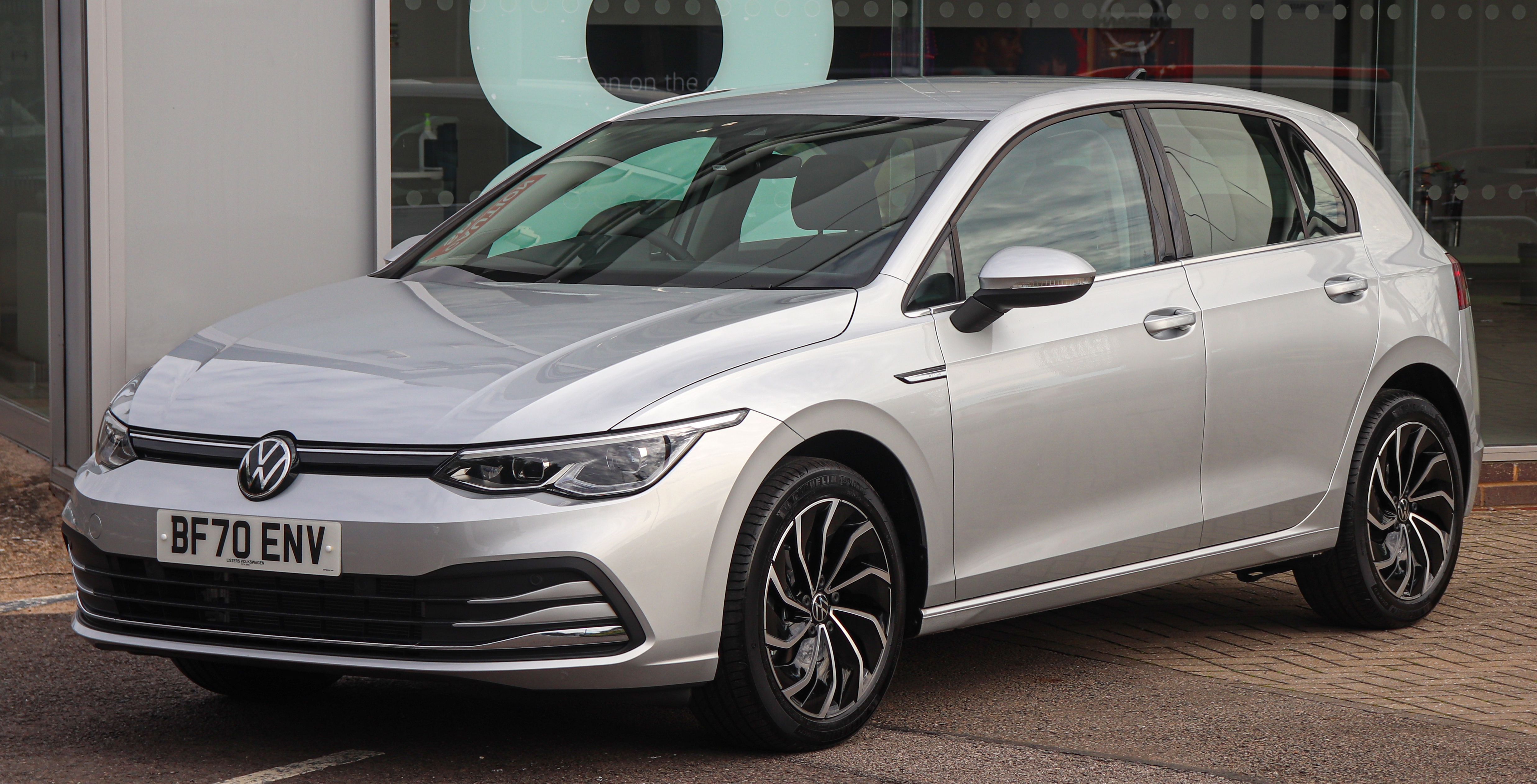
Volkswagen Gti
"... get it up to 15. He's looking at maybe a Mark 7 GTI, which I gave him a long winded gentleman's resp..."
The Volkswagen Golf is a compact hatchback, meaning it’s a smaller car with a rear door that opens upward. The podcast mentions the Mark 7 GTI, which is a sportier version of the Golf. It’s brought up because people often choose it when they want a practical car with more performance.
The Volkswagen Golf is a compact hatchback platform that’s known for being versatile and widely offered in performance and everyday trims. In the podcast context, it’s being discussed alongside the idea of a “Mark 7 GTI,” which is a performance-focused Golf variant. It comes up because the Golf/GTI family is a common enthusiast benchmark for balanced driving.

Mark 7 GTI
"He's looking at maybe a Mark 7 GTI, which I gave him a long winded gentleman's response about, yes, go for it. But what do you think? As you got kids, you got the seats, you've had to deal with it."
A “Mark 7 GTI” is a Volkswagen Golf GTI from the Mk7 generation. It’s a small sporty car that’s still pretty practical for daily life. People like it because it drives well and there are lots of parts and upgrades available.
The “Mark 7 GTI” refers to the Volkswagen Golf GTI in the Mk7 generation. It’s a compact hot hatch known for a sporty driving feel, practical size, and strong aftermarket support. For an enthusiast with kids, it’s often considered a good balance of fun and everyday usability.
car fit for families (big cars vs little cars)
"But what do you think? As you got kids, you got the seats, you've had to deal with it. And big cars, little cars."
They’re talking about how family needs change what kind of car makes sense. Bigger cars usually give you more room for car seats and passengers. Smaller cars can be easier to live with day-to-day, but they may feel cramped with kids in the back.
The hosts are discussing how vehicle size changes usability when you have kids—especially with car seats and the need for rear-seat access. “Big cars, little cars” is essentially about choosing between more space (usually easier for families) versus smaller cars (often easier to park and more fun to drive).
BYD
"[75.4s] Trust me, we're we're talking to people about what's up with the company vehicles. [80.8s] BYD's got some EVs coming. [81.9s] Don't worry."
BYD is a big car company from China that makes electric cars. They’re known for batteries, and the idea is that more BYD EVs will show up soon, giving buyers more options.
BYD is a major Chinese automaker known for battery technology and electric vehicles. When the hosts mention BYD’s EVs coming, they’re pointing to more competition in the EV market, especially from brands outside the traditional U.S./European lineup.
BMW wagon
"[92.9s] I think I think people. [95.9s] I would be in BMW wagon. [102.2s] BMW wagon's always good."
They’re talking about BMW wagons—cars that look like a sedan but have extra room for cargo. It’s a practical choice if you want more space without giving up the “BMW feel.”
The hosts are talking about BMW’s wagon offerings, which are typically estate-style cars with more cargo space than a sedan. In the BMW lineup, wagons are often associated with practicality while still keeping BMW’s driving feel.

Volvo wagon
"[102.2s] BMW wagon's always good. [104.5s] Volvo wagon. [106.5s] Oh, yeah, you can get those pretty inexpensive right now."
They’re talking about Volvo wagons, which are roomy and practical family cars. The host is saying you can often buy them for a good price compared to other cars.
Volvo wagons are known for being practical, comfortable, and often relatively affordable compared with some European rivals. The hosts’ point is that you can find them for less money right now, making wagons an attractive value.

three series wagon
"[111.1s] I would I would be heavily in the wagon world. [113.7s] I would be heavy in the wagon world because like you can get a three series wagon. [119.1s] You can do some."
They mean a BMW 3 Series wagon. It’s basically a 3 Series car but with a longer body for more storage, like for trips or hauling stuff.
“Three series wagon” refers to a BMW 3 Series wagon/estate variant, which combines the 3 Series platform with added cargo space. The mention matters because wagon versions are less common than sedans, so availability and pricing can be different.
M sport package
"[119.1s] You can do some. [120.2s] I mean, maybe you get lucky and somebody's got the M sport package on it."
BMW’s M Sport package is an upgrade that makes the car look and drive more “sporty.” It often includes nicer styling and sometimes a firmer suspension, so it feels more fun than the base trim.
The M Sport package is a BMW option group that typically adds sportier styling and suspension/tuning elements, depending on the model year. When someone says “M Sport package,” they usually mean the car will feel a bit more aggressive and may have better-equipped interior/exterior details.
Kia
"OK, I'm not buying a Kia. You're buying an old BMW for 10 grand instead of a newer Kia."
Kia is a car brand from South Korea. The hosts are basically saying that if you’re shopping on a budget, Kia might be worth checking out because you can sometimes find good deals.
Kia is a South Korean automaker known for offering lots of features at lower prices than many competitors. In this segment, the hosts mention Kia as a budget-friendly option to consider in certain markets.

Hyundai Veloster
"Well, there's the Veloster N, but there's the one right above that."
The Hyundai Veloster N is a sporty version of the Veloster hatchback. It’s the kind of car enthusiasts talk about because it’s tuned to drive more aggressively than a normal commuter hatch.
The Hyundai Veloster N is a performance-focused hatchback from Hyundai’s N division. It’s known for a sporty driving feel and track-oriented tuning, which is why it comes up in a discussion about “enthusiast” cars.
buying from a brand that no longer exists
"Yeah. And there's nothing more enthusiast [302.3s] than buying from a brand that no longer exists. [304.9s] Exactly."
They’re making a joke about buying a car from a brand that’s gone. Sometimes people do it for the cool/rare factor, but it can be harder to get parts later.
The hosts are joking about the appeal of buying a car from a brand that has shut down or been discontinued. In enthusiast circles, this can be about nostalgia, rarity, and collecting—though it can also mean harder parts availability and less dealer support.
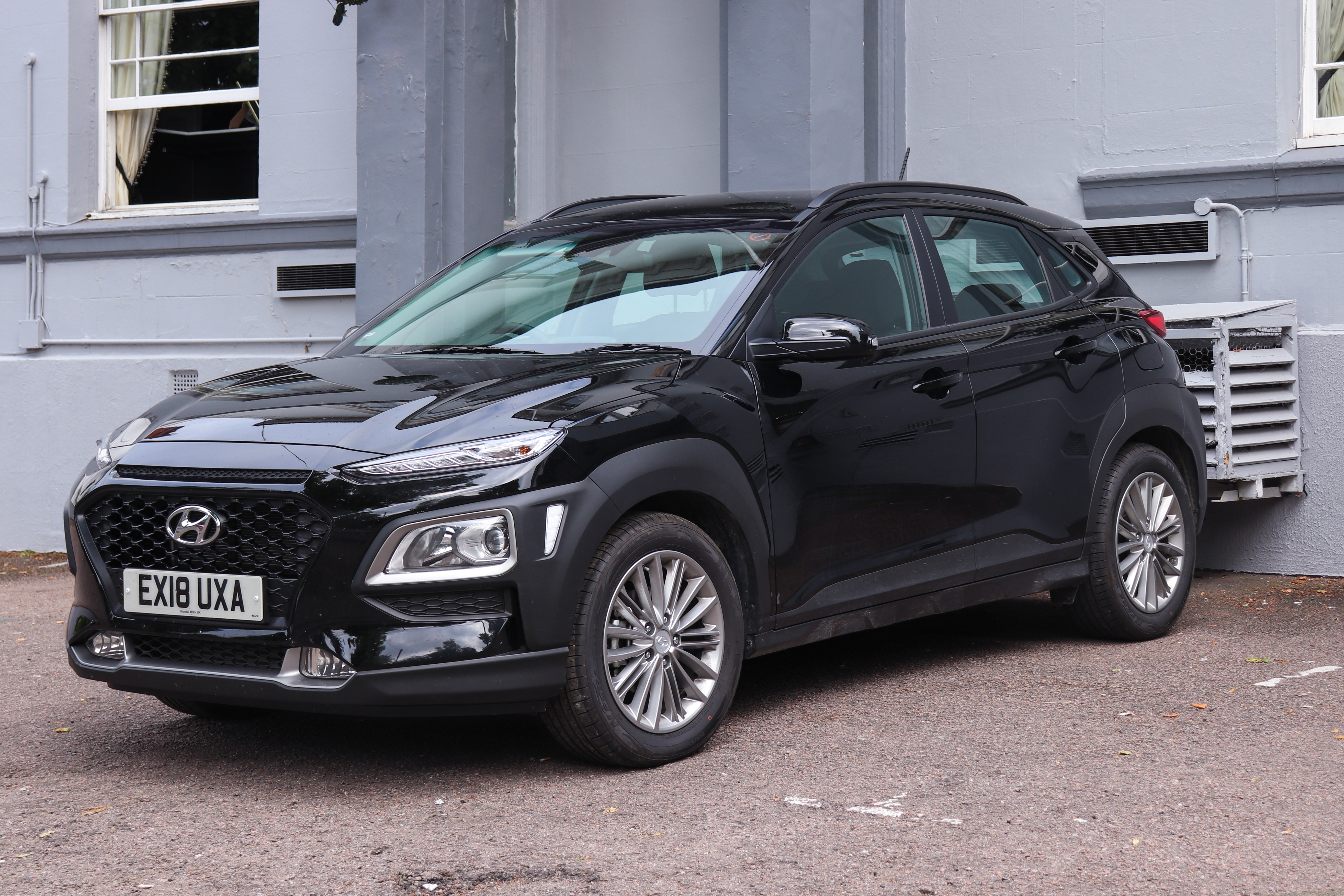
Hyundai Kona
"Exactly. Kona Kona and dog. [307.7s] Yeah. Yeah. I'm not I'm not cosigning that."
They’re talking about the Hyundai Kona, which is a small crossover. They’re basically saying it’s not the same kind of car as the more enthusiast-style options.
“Kona” is the Hyundai Kona, a compact crossover that’s typically positioned as a practical, mainstream alternative. The hosts contrast it with older, more enthusiast-leaning choices, implying the Kona isn’t the same kind of “enthusiast” purchase.

Audi A8
"[351.4s] But I've had one in five years. [353.3s] Well, let's ask this Audi A8. [356.9s] Exactly. That's why I said Audi, too."
They’re using the Audi A8 as an example of a luxury car that can get pricey when repairs are needed. Because it’s a top-tier model, parts and labor usually cost more.
The Audi A8 is Audi’s full-size luxury sedan, and the hosts bring it up as another example of a car where repair bills can be significant. Luxury flagships often have more complex systems and higher parts/labor costs than mainstream cars.
supercharged
"[360.7s] You can get a supercharged a something. [362.9s] Yes. Or you could you could really go deep down this rabbit hole."
A supercharger is a device that forces extra air into the engine. More air usually means more power, so the car can feel stronger.
“Supercharged” refers to forced induction using a compressor driven by the engine (typically via a belt or gears). It increases air mass entering the engine, which can improve power and torque compared with a naturally aspirated setup.
repair budget as a percentage of purchase price
"[388.3s] How much of a and you've said this before, [390.1s] is it 10 percent of the purchase price that you would set aside for repairs? [392.6s] Yeah, but in all seriousness today, you might want to bump that up."
They’re saying you should plan ahead for repairs by saving a chunk of the money you spend on the car. For some cars, especially older ones, it’s smart to expect you’ll need to fix things and budget for it.
They discuss setting aside a percentage of the purchase price for repairs—first around 10%, then suggesting 15–20% given current conditions. This is a practical way to estimate total cost of ownership for older or higher-end enthusiast cars where deferred maintenance and parts/labor costs can be unpredictable.
cooling off of the market
"So we've talked about the cooling off of the market a few times, [409.4s] and I've gotten some of these articles and I've read a few of them myself."
When people say the market is “cooling off,” they mean prices and demand aren’t rising as fast as they used to. It can mean used cars get a little cheaper or at least stop getting more expensive quickly.
“Cooling off of the market” refers to a slowdown in pricing and demand after a period of rapid increases. In used cars, it often shows up as fewer price spikes and more normal supply/demand behavior.
used car prices are back to 2023 highs
"Used car prices are back to 2023 highs and EVs are leading the climb. [423.7s] So I think the used car market, we said this last week."
They’re saying used cars are costing about as much as they did at their most expensive point in 2023. That usually happens when there aren’t enough cars for sale compared to shoppers.
Saying used car prices are “back to 2023 highs” points to a renewed spike in the pre-owned market. That typically reflects supply constraints, changing demand, and sometimes specific segments (like EVs) pulling the market upward.
EVs are leading the climb
"Used car prices are back to 2023 highs and EVs are leading the climb. [423.7s] So I think the used car market, we said this last week."
They’re saying electric cars are helping push used-car prices higher. If more people want EVs than there are used EVs available, those prices can rise first.
“EVs are leading the climb” suggests electric vehicles are driving a larger share of the price increases in the used market. This can happen when EV demand rises faster than supply, or when incentives and new-car availability shift.
no lease turn ins
"So I think the used car market, we said this last week. [427.3s] Is really being affected with no lease turn ins. [430.6s] I think I think we're seeing that come home to roost now."
Leases end on a schedule. If fewer people return their leased cars, there are fewer used cars available for sale, so prices can stay high.
“No lease turn ins” means fewer leased vehicles are being returned to dealers at the end of their lease terms. That reduces used-car supply, which can push used prices higher even if overall demand softens.
how do I buy a 2008?
"[435.5s] The other thing for people that kind of like listen to us, [439.6s] I don't know that we're looking all looking at the same used cars. [443.5s] I mean, we're sitting here talking about used, how do I buy a 2008?"
They’re pointing out that “used car” can mean anything from a newer car to something much older. Buying a 2008 is a totally different situation than buying a newer used car.
The hosts are highlighting that “used car” discussions can mean very different things depending on the model year. A 2008 is an older, higher-mileage purchase with different risk factors and pricing dynamics than a newer used vehicle.
how do I buy a 2003?
"[443.5s] I mean, we're sitting here talking about used, how do I buy a 2008? [448.3s] How do I buy a 2003? [451.2s] So I think some of this data for some of you,"
They’re talking about buying a very old car, like a 2003. At that age, what matters most is the car’s condition and maintenance history, because repairs can be more unpredictable.
Discussing “how do I buy a 2003?” emphasizes the challenges of buying very old used cars, where maintenance history and deferred maintenance become major factors. Older cars also tend to have more variability in condition and repair costs.
under five years old
"But under five years old, you know, six years old. Yeah, man. The used car market really hasn't"
“Under five years old” means relatively new used cars. People often pay more for these because they’re newer and usually have fewer miles than older used cars.
“Under five years old” describes the newer end of the used-car spectrum, where vehicles are often only a few model years removed from new. These cars can be priced close to new because they’re newer, have lower mileage, and still have strong demand.
used car market
"The used car market really hasn't of popular things, right? Like a Tahoe or something like that, you know, a Tacoma."
The used car market is just the world of pre-owned cars. Prices depend on how many cars are available and how many people want to buy them.
The used car market is driven by supply (how many cars are available) and demand (how many buyers want them). In this segment, the hosts argue that limited supply and pricing dynamics are keeping used prices from dropping.
Mannheim numbers
"you can follow some Mannheim stuff, one of the ones that I had up. Yeah. As a matter of fact, it's 6.2 up year over year, which is unusual for most typical flat marches."
“Mannheim numbers” are market data that show how used car prices are changing. Dealers and analysts use it to understand whether wholesale prices are rising or falling.
“Mannheim numbers” refers to data from the Mannheim Used Vehicle Value Index (often associated with Manheim, a major vehicle auction operator). It’s used to track how used-vehicle prices move over time, including wholesale trends.
wholesale buy point
"what what you're having happen when you guys look at the Mannheim numbers is it's telling you the competitiveness at the wholesale buy point."
The wholesale buy point is basically what dealers pay when they buy cars in bulk. If that price is high, it often means used cars won’t get much cheaper at the dealership.
The wholesale buy point is the price level where dealers acquire vehicles from auctions or other sellers before retailing them. If wholesale is competitive, it usually means dealers are paying more, which can keep used retail prices elevated.
half price
"Yeah. And look, you're talking about half price."
“Half price” means used cars can cost dramatically less than new ones. That price difference is a big reason people choose used instead of buying new.
“Half price” is a shorthand for the typical depreciation gap between new and used vehicles. When new pricing is around “about double” used pricing, it can push buyers toward the used market, tightening demand for 1–5-year-old cars.
used car pricing vs new car pricing (50% reduction example)
"I mean, you're still at half price of the average transaction price. You know, if we're at 50 and we're at 25, ... used vehicles, if you're looking at a 50 percent price reduction, meaning like new as 50 average use, they sell as 25."
They’re talking about how used-car prices can be much lower than new-car prices, but people often focus on the most popular models. That can make it seem like there are no bargains, even if the average used price is dropping.
The hosts are describing how “average transaction price” for used cars can be meaningfully lower than new, and how that affects what counts as a “deal.” They’re also pointing out that search behavior can make it feel like deals don’t exist even when overall pricing is down.

Toyota Camry
"You know, you're not going to get a deal if they move every Camry off the lot. You're not getting a deal on Camry, dude. Like it's not going to happen."
They’re using the Toyota Camry as an example of a car people want a lot. If lots of buyers are looking for it, the dealer doesn’t have to cut the price as much.
The Toyota Camry is used here as an example of a high-demand, high-volume model that dealers can sell quickly. When a car moves fast, there’s less incentive to discount it heavily, so “deals” are harder to find.
days on lot
"But like the the what is it when they stand on the lot, the what the days on? Yeah, days on. So the days on lot or days on it's it's tremendously down."
“Days on lot” is basically how many days a car has been sitting for sale without being bought. If that number is low, the cars are selling faster; if it’s high, they’re not moving as quickly.
“Days on lot” (or “days on market”) is how long a vehicle sits unsold at a dealer or in listings. When it drops, it usually means inventory is moving faster and pricing pressure is different than when cars linger for weeks.
buy here, pay here (BHPH) dealers
"there were a lot more dealerships that were sub ten thousand other cars. That's just like buy here, pay here, guys that just did sub ten thousand."
“Buy here, pay here” means the dealer is also the lender. It’s often used for cheaper cars and for buyers who can’t easily get approved through a regular bank.
“Buy here, pay here” (BHPH) is a financing model where the dealer both sells the car and provides in-house financing, often to customers who may not qualify for traditional bank loans. Historically, BHPH lots had many low-priced vehicles under $10,000, which affects how people remember the used-car market.
franchise dealerships vs non-franchise lots
"The fact that most of those have kind of disappeared and the used market has kind of gone, what you would call more franchise,"
They’re saying the used-car market has shifted toward more traditional, brand-affiliated dealerships. That can change what kinds of cars are available and how pricing works.
The hosts contrast older BHPH-style inventory with today’s “more franchise” used market. Franchise dealers are tied to specific manufacturers, and their used inventory and pricing behavior can differ from independent lots, influencing how deals appear to shoppers.
off lease models
"EV prices are climbing faster than the gas cars up 7.9 percent year over year despite a flood of off lease models."
An “off-lease” car is one that was leased for a few years and then turned back in. After that, it gets sold used, which can make prices look cheaper for a while.
“Off-lease” models are cars that have finished their lease term and are returned to the leasing company, then sold to dealers or auctions. Because they’re often priced aggressively, they can temporarily increase supply in the used market and affect pricing for both gas and EVs.
EV prices are climbing faster than the gas cars
"So one of the points here that they noted out was EV prices are climbing faster than the gas cars up 7.9 percent year over year despite a flood of off lease models."
They’re saying EVs are getting more expensive faster than regular gas cars. That can happen for a bunch of reasons, like demand, incentives, and how many used EVs are showing up.
This is a market-rate comparison between electric vehicle (EV) pricing and gasoline (gas) vehicle pricing. When EVs rise faster, it can signal changing incentives, demand, supply, battery-cost trends, or residual values—especially as more lease returns hit the market.

Toyota Prius
"People traded in their suburban's, their navigators, whatever. They got a Prius."
The Prius is Toyota’s hybrid. When gas gets expensive, people often buy it because it usually uses less fuel than typical gas-only cars.
The Toyota Prius is a hybrid that became a go-to choice when fuel prices spike because it typically delivers strong fuel economy versus many conventional cars. In used-car market discussions, it’s often used as shorthand for “efficient commuter.”

Toyota Corolla
"They got a Prius. They got a Corolla."
The Corolla is a popular Toyota compact car. When gas prices rise, it’s often chosen because it’s usually cheaper and more fuel-efficient than bigger vehicles.
The Toyota Corolla is a mainstream compact sedan known for being affordable to buy and relatively inexpensive to run. It’s frequently mentioned in “gas prices went up, people bought efficient cars” stories because it’s a common, fuel-efficient alternative.

Accord
"They got a Corolla. They got a Accord."
The Accord is Honda’s family sedan. It’s usually considered a practical, efficient option compared with big SUVs when gas prices are high.
The Honda Accord is a mid-size sedan that’s often selected as a practical, efficient step up from smaller cars without going to a large SUV. In this context, it represents the “better on gas” trade-in behavior during periods of high fuel prices.
used EVs
"And so if there's used the EVs in the market, they're going to go, [770.7s] I don't want to pay a gas bill at all. [772.4s] This has always been the case, though."
“Used EVs” refers to electric vehicles that have already been purchased and are being resold in the pre-owned market. The host frames EVs as an alternative to paying high gasoline costs, which can shift demand away from gas vehicles.
panic sell
"I loved high gas prices because [799.8s] I could get people to panic sell their large truck, their large SUV. [805.0s] A lot of you cons back in the day..."
“Panic sell” means someone sells quickly because they’re worried about costs. When a lot of people do that at once, prices can drop and buyers can find deals.
“Panic sell” describes a rapid, emotionally driven decision to sell a vehicle—often triggered by sudden cost pressure like fuel prices. In used-car markets, that can temporarily increase supply and lower prices for certain segments (like large trucks/SUVs).

Suburban
"Everybody would dump their large SUV downsize. [814.2s] And so then you could get large SUVs at a deal."
The Suburban is a big Chevrolet SUV with lots of room. When gas prices rise, people tend to back away from big SUVs like this—until fuel costs drop again.
The Chevrolet Suburban is a full-size SUV (with a long history) that’s often chosen for space and practicality. The host uses it to show how spikes in fuel prices can temporarily reduce demand for big SUVs, then reverse when prices normalize.

Tahoe
"All of a sudden people would flood back in the market wanting a Yukon, [834.9s] wanting a Tahoe..."
The Chevrolet Tahoe is a large SUV. The point is that when gas gets cheaper, people are more willing to buy big, less fuel-efficient SUVs again.
The Chevrolet Tahoe is a full-size SUV that’s popular for family use and capability, but it’s generally not fuel-efficient. In the segment, it’s used as an example of the kind of vehicle people rush back to when gas prices fall.

Yukon
"All of a sudden people would flood back in the market wanting a Yukon, [834.9s] wanting a Tahoe..."
The GMC Yukon is a big SUV. The host is saying that when gas prices drop, people start wanting big SUVs like this again.
The GMC Yukon is a full-size SUV known for seating capacity and towing capability, but it typically has higher fuel consumption than smaller vehicles. The host mentions it to illustrate how buyers can “flood back” to large SUVs when fuel prices ease.

Navigator
"...people would flood back in the market wanting a Yukon, [834.9s] wanting a Tahoe, want a suburban, wanted a navigator."
The Lincoln Navigator is a large, luxury SUV. The host is saying that when gas prices change, people’s interest in big SUVs like this changes too.
The Lincoln Navigator is a full-size luxury SUV that typically has higher fuel consumption due to its size and power. The host lists it alongside other large SUVs to emphasize how consumer demand can swing with gas prices.
toilet paper theory
"Right. I mean, it's the toilet paper theory. Yep. That's that's what it is."
The “toilet paper theory” is a shorthand for panic buying and supply-demand distortions—when people expect shortages, they buy more than they need, which can temporarily worsen the shortage. In car-market terms, it’s often used to explain why demand spikes or inventory issues can appear even when the underlying long-term demand isn’t changing much.
trading in a gas guzzler
"but they're getting a 5, 6, 7% bump because somebody's trading in a gas guzzler and convincing themselves like I'll tell people a crazy story."
A “trade-in” is when a dealer credits your current vehicle toward the purchase of another one. The phrase “gas guzzler” highlights the motivation behind switching—drivers may trade in a high-fuel-consumption car to move into a more efficient vehicle (here, likely an EV or hybrid), which can boost used-vehicle demand.
gas prices
"Look, man, I got seven vehicles at $6.10 a gallon on the road. Imagine my weekly gas bill right now..."
“Gas prices” refers to the cost per gallon of gasoline, which directly affects how expensive it is to drive daily. When someone mentions multiple vehicles and a high per-gallon rate, they’re highlighting how fuel costs can quickly become a major budget item.
virtue signaling
"...he decides to go that route. Is it virtue signaling, whatever it is, not enough people around him when he said, hey, I think I'm going to go buy that Prius..."
Virtue signaling is when someone does something partly to look good to other people, not because it’s the best choice for them. In this case, it’s about whether buying a certain type of car is about real need versus image.
“Virtue signaling” is when someone publicly adopts a behavior or opinion mainly to show others they’re morally right or socially responsible. In car talk, it often comes up when a person chooses a “green” vehicle (like a hybrid) more for optics than for practical reasons.
depreciation
"Oh, seems like. I mean, especially he would just take all the depreciation in a month. You know, like he would be the guy to buy the McLaren from because he drove it off the lot to be 50 percent of the price."
Depreciation just means the car gets worth less over time. New cars usually lose value fastest right after you buy them, so someone who buys immediately after the car is driven off the lot is taking that early hit.
Depreciation is how much a car’s value drops over time, especially in the first months after purchase. The hosts are describing a buyer who effectively “eats” that early depreciation by buying a car right after it’s driven off the lot, then selling later (or keeping it) while the value has already fallen.
used EV numbers
"But there is a real thing that we have to say with these EV numbers, used EV numbers is that, remember, if gas prices were 50 percent of what they are today, you wouldn't see this most likely."
They’re talking about how much used electric cars are selling for and how strong the demand is. Their point is that if gas got a lot cheaper, fewer people would feel the need to switch to EVs, which could affect used EV prices.
“Used EV numbers” refers to how electric-vehicle resale prices and market demand are performing in the pre-owned market. The hosts connect EV pricing behavior to fuel prices, arguing that if gasoline were cheaper, some buyers would be less motivated to pay premiums for EVs.
scrapyard
"So it just it just randomly popped up on my feet. And it's a it's a dad who's been running the shop 30 years. It's in California, I believe it's basically like a big scrapyard. You get, you know, go source parts or whatever."
A scrapyard is where old cars are taken apart so parts can be reused. The hosts are saying this shop is like that, meaning they can find parts by pulling them from other cars.
A scrapyard is a facility where vehicles are dismantled for parts, and the remaining metal is recycled. The hosts describe a specialized German shop in California as “basically like a big scrapyard,” implying they source parts from donor cars to support repairs or builds.
baby seats
"[1119.7s] I get in 10 grand. [1120.5s] I have two kids in baby seats and he went BMW and Porsche."
Baby seats are child safety seats you install in a car. They can limit which cars work well, because you need enough space and the right way to secure them.
“Baby seats” refers to child safety seats used to protect infants and toddlers in a vehicle. The mention is relevant because it affects what cars are practical—seat space, anchor points (like LATCH/ISOFIX), and rear-seat usability matter.
trading in the gas guzzlers
"Also, what do you take away from from Nick's Tahoe story [1131.7s] and people trading in the gas guzzlers? [1133.5s] Nick stands on business, straight business man."
“Trading in the gas guzzlers” refers to replacing older, less fuel-efficient vehicles with newer ones—often through a dealer trade-in. It’s commonly part of a broader shift in consumer behavior toward better fuel economy and lower operating costs.
flipping cars
"But I when people ask me about flipping cars, the one thing is [1167.0s] I just let people know like, hey, if you're trying to get rid of something, [1170.0s] give me a shout."
Car flipping is when you buy a car and then sell it later for more money. People usually do it by finding a good deal and then figuring out what needs fixing or how to market it.
“Flipping cars” means buying a vehicle with the goal of reselling it later for a profit, often after fixing issues or finding the right buyer. The speaker emphasizes not “scouring” listings and instead leveraging their network and frequent exposure to cars to find opportunities.
flip cars
"You can very easily flip six in your own name and not have to have a dealer's license. So if I got too many cars, I'd like put them in other people's names... Like friends and family and whatever."
Car “flipping” is when someone buys a car and sells it again soon, usually to make money. The hosts are talking about how some people try to do that without going through the legal setup a dealership needs.
“Flipping” cars means buying a vehicle and reselling it relatively quickly for a profit, often before major depreciation hits. In the transcript, they’re also discussing doing it via personal ownership (friends/family) to avoid dealer licensing requirements.
dealer's license
"You can very easily flip six in your own name and not have to have a dealer's license. So if I got too many cars, I'd like put them in other people's names."
A dealer’s license is the legal authorization required to buy and sell vehicles as a business in many jurisdictions. The discussion implies that frequent reselling can trigger dealer regulations, so they’re describing a workaround to stay under thresholds.
check engine lights
"You're like, boy, you're in for a bunch of headaches. Oh, buddy, wait till you see those check engine lights come on."
A check engine light indicates the car’s onboard diagnostics have detected a fault, ranging from minor issues to serious drivability or emissions problems. For buyers in the “boutique” market, unexpected lights can signal hidden maintenance needs that hurt resale value.
appraise it
"He's like, let me just appraise it. See what I give you scans of it. And he's like, oh, they're going for this like 250 or something like that."
An appraisal is basically the dealer’s estimate of what your car is worth. They look at things like condition and market prices to decide what they’ll offer you.
To appraise a car is to estimate its value based on condition, mileage, options, and current market pricing. In this segment, the appraisal is tied to what the buyer thinks the car is “going for” and what offer they’re willing to make.
trade it in
"He's like, well, what would you trade it in for? You know, I'll give you a deal if you buy something from us."
A trade-in is when you turn in your current car to a dealer as part of the purchase price of another vehicle. The dealer’s offer is effectively a negotiated valuation, and it can be influenced by market demand, condition, and how the deal is structured (including add-ons and pricing).

SF 90
"And he's like, I don't know, SF 90. And in my mind, I'm like, you're going to go from a GT3 RS to an SF 90."
“SF 90” is shorthand for the Ferrari SF90 Stradale. It’s a very expensive supercar that uses both a gas engine and electric power, and the hosts are warning that the money game around it can be tricky.
“SF 90” refers to the Ferrari SF90 Stradale, a plug-in hybrid supercar that combines a twin-turbo V8 with electric motors for very high output and rapid acceleration. The hosts are discussing the financial/market implications of moving from a GT3 RS into the SF90 ecosystem.
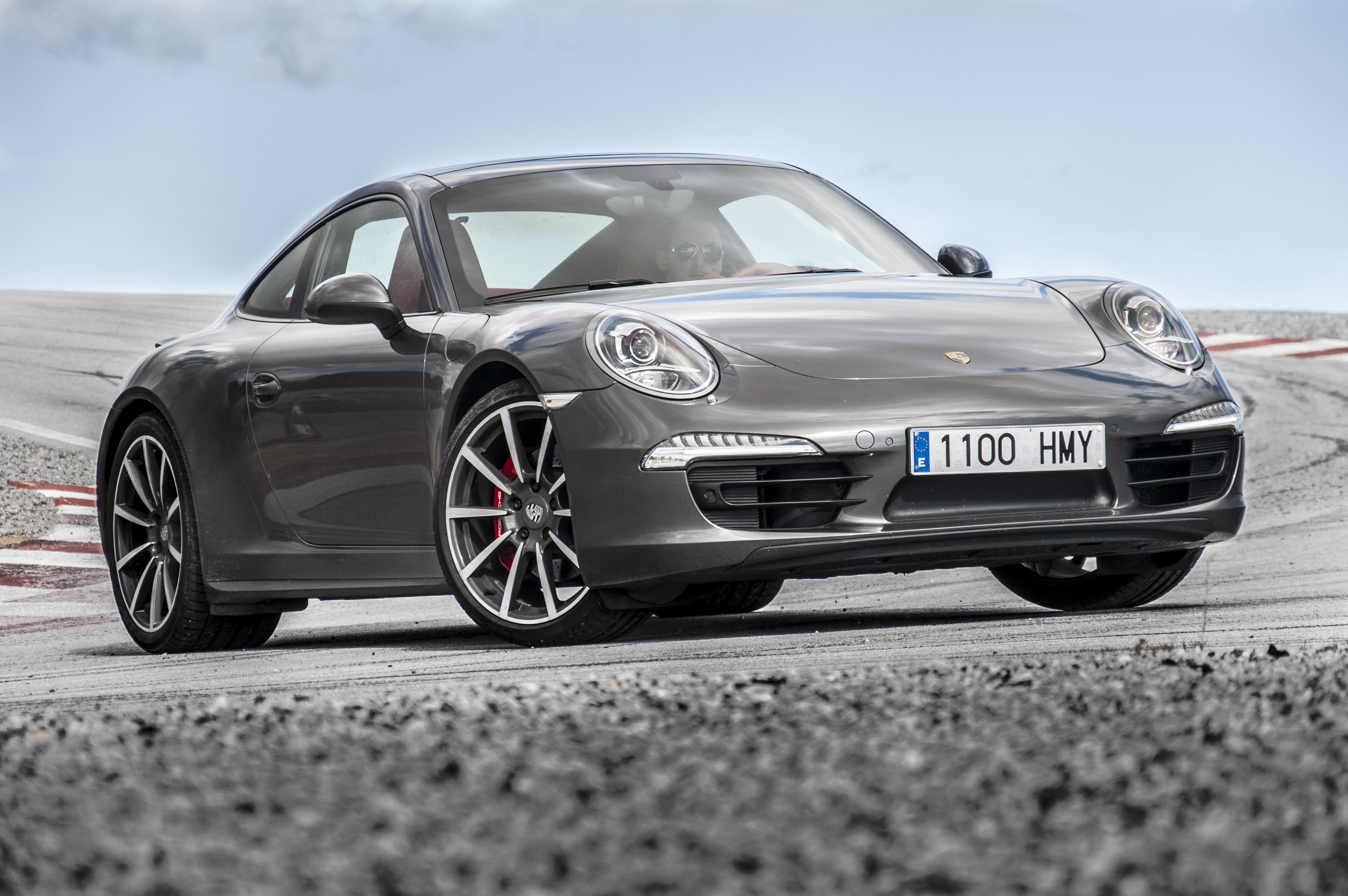
Porsche 911 GT3 RS
"And he's like, I don't know, SF 90. And in my mind, I'm like, you're going to go from a GT3 RS to an SF 90."
The Porsche 911 GT3 RS is a high-performance 911 made for track driving. The hosts are saying you shouldn’t jump from this kind of car into an even more expensive, different supercar market.
Porsche 911 GT3 RS is a track-focused, naturally aspirated 911 variant known for its lightweight build and motorsport-derived aero. In the segment, it’s used as the starting point for a buyer moving into a much more expensive supercar market.
price-threshold product strategy
"And I said to the factory, I need a car under twenty nine thousand... So I need a car on twenty nine thousand... just take everything out of it. Leave four wheels and an engine and then let's put a few bits back in."
This is a strategy where a car company builds a version of a car to stay under a specific price limit. That way, buyers don’t get hit with a bigger tax, so more people can afford it.
The segment describes a classic automotive business tactic: engineering and spec’ing a car to land under a tax or pricing threshold. By removing cost/weight and simplifying options, the manufacturer can keep the car eligible for a more favorable tax bracket and protect sales volume.
car tax
"Car tax in the UK at twenty nine thousand... If I don't have a car under twenty nine thousand, I'm losing half the market."
“Car tax” means the government charges you extra money when you buy or register a car. If the tax changes at a certain price point, it can push buyers toward cheaper versions of the same model.
“Car tax” here refers to taxes that depend on the vehicle’s price or classification in the UK. These taxes can strongly influence what models and trims manufacturers choose to offer, because staying under certain thresholds can make the car dramatically cheaper for buyers.
Drop suspension
"Leave four wheels and an engine and then let's put a few bits back in... Drop suspension, paint the wheels, color code, do this, do that, do the other."
Lowering the suspension means making the car sit closer to the ground. That can help the car feel more stable when driving, but it may ride a bit firmer.
“Drop suspension” means lowering the car’s ride height, usually to improve handling response and reduce body roll. It can also change how the car looks and how it rides over bumps, depending on how much it’s lowered and what springs/shocks are used.
bucket
"and you could have any color you wanted as long as it was yellow, red, black, white or blue... Flat colors, steel wheels, simple bucket, plastic seat, racing seats,"
A “bucket” seat is a more supportive seat that holds you in place better than a normal chair. It’s common in performance cars because it helps you stay planted during hard cornering.
The speaker mentions “simple bucket” seats, which are typically fixed or semi-fixed supportive seats used to keep occupants positioned during spirited driving. Compared with standard seats, bucket seats usually offer stronger lateral support and a more race-like feel.
steel wheels
"Flat colors, steel wheels, simple bucket, plastic seat, racing seats,"
Steel wheels are the basic, sturdy wheel type made from steel. They’re often heavier than fancy alloy wheels, but they can be tough and inexpensive.
“Steel wheels” are typically heavier than alloy wheels but can be cheaper and more durable in everyday use. In a stripped-down “Club Sport” style build, steel wheels can be a cost/weight decision while still supporting the car’s basic performance needs.
racing seats
"Flat colors, steel wheels, simple bucket, plastic seat, racing seats,"
Racing seats are designed to hold you in place better when you’re driving hard. They usually have more side support than normal seats.
“Racing seats” are performance seats designed for strong support and reduced movement during aggressive driving. They often use lighter materials and more aggressive bolstering than standard seats, which can improve driver control and comfort over long sessions.
Momo
"Italian steering wheel and Momo steering wheel. Because what's the first thing you touch when you get in a car? Steering wheel. Oh, this is lovely. ... I think it's almost from Momo and stamped Porsche onto."
Momo is a brand that makes steering wheels and other driving-focused parts. The hosts are saying they added a Momo wheel to make the car feel more like a sporty, race-inspired Porsche.
Momo is an Italian motorsport and steering-wheel brand known for aftermarket and OEM-style performance parts. In this segment, they’re talking about fitting a Momo steering wheel (with Porsche branding) to make the car feel more “racing” and premium.
decals
"We didn't put any decals on the sale car. You know, the decals at the motor show. People are going up, so where's the decal? Where's what you really want? Club sport written up the side of your car. Absolutely. So we had to put a guy in a van and send him around the country to bring decals on customer cars."
Decals are the stickers or graphics on the outside of a car. The point here is that buyers wanted the right racing-style graphics, so the team had to send them out to customers.
Decals are stickers/graphics applied to a car’s exterior to signal trim level, motorsport heritage, or special editions. Here, the hosts describe how customers wanted visible decals (like “club sport”) and how the company had to distribute them to customers nationwide.
motor show
"We didn't put any decals on the sale car. You know, the decals at the motor show. People are going up, so where's the decal? Where's what you really want?"
A motor show is a big car event where companies show off cars and accessories. They’re saying the style people saw at the show (like decals) became what customers wanted afterward.
A motor show is an auto industry event where manufacturers display vehicles and accessories to generate buzz and gauge customer interest. In this segment, the hosts reference the decals shown at the motor show as the “look” customers later demanded on their own cars.
car of the year
"And that was the turn point. And that car won car of the year. Can you believe it? It was a 25 year old car. But it was it was about out thinking."
“Car of the Year” is an award that recognizes the best car in a category/timeframe. They’re emphasizing that even though the car was old (25 years), it still won because it was the right kind of car for the moment.
“Car of the Year” is an award given to a vehicle judged to be the best overall in a given period, often based on criteria like design, performance, innovation, and impact. The hosts highlight that their car won despite being 25 years old, framing it as a result of smart positioning and customer-driven details.
special tax in the UK
"You're, you're, you're listening to somebody talk that's going, we got this thing in the UK, we got this special tax in the UK. We got to get under that."
Some countries charge extra taxes on cars. Those taxes can make the same car cost more, so companies sometimes change the car or its features to keep the final price below a certain level.
The UK can apply special taxes to vehicles (often tied to emissions, value, or import rules). When a company is trying to “get under” a price threshold, those taxes can strongly affect the final out-the-door cost and pricing strategy.
get under the price
"How do we get under this price? Just take the shit out of it... We need to get under this price, get under the price and let's see what happens."
This is about keeping the car’s final price under a certain number. If you cross that line, taxes or buyer behavior can change, so the company tries to stay just below it.
“Getting under the price” refers to designing and pricing a product so it lands below a specific cost threshold. In automotive, that can be driven by tax brackets, financing tiers, or consumer psychology around price points.
put all the tech in it, get all of our money
"I think it's, how do we put all the tech in it, get all of our money? And let's not do it."
This describes a pricing/packaging strategy: maximize revenue by loading a vehicle with features (“tech”) and capturing higher willingness-to-pay. It’s contrasted with a cost-reduction approach to meet a price threshold.
low margin business
"everybody knows that if you go to the cheaper side of cars, you would bring in buyers... All they go is, well, that's a low margin business. Not thinking, well, this could get somebody into my brand"
“Low margin” means the profit is smaller on each sale. The point here is that even if the profit per car is lower, selling entry-level cars can still help the brand by getting new buyers interested.
A “low margin business” means the company makes less profit per car sold. The discussion contrasts that with a brand strategy where selling a cheaper model can still be valuable because it brings new customers into the brand ecosystem.
9 11
"[1652.4s] They didn't care about the tax at that point. [1653.5s] No, they were like, well, I want, I want the 9 11, you know, I want what I want. [1658.1s] But you got them into the brand somewhere."
They’re talking about the Porsche 911, which is a very famous sports car. The point is that once someone really wants that model, they’ll often pay whatever it takes.
“9 11” is almost certainly referring to the Porsche 911, one of the most iconic sports cars in the world. The hosts are using it as an example of a buyer who wants a specific model and may not care about certain costs or taxes once they’re committed to the brand.

Chevrolet Camaro
"[1672.8s] And why don't we saw this reaction to Camaro? [1676.6s] You're going to damage the Camaro name buddy. [1678.9s] Let it die with dignity."
The Camaro is a famous Chevrolet sports car. The hosts are basically saying that if you treat the Camaro name carelessly, people might stop caring about it.
The Chevrolet Camaro is a long-running American muscle car/pony car. In the segment, it’s used as an example of a brand name that could be harmed by certain business or product decisions.
brand name damage
"[1676.6s] You're going to damage the Camaro name buddy. [1678.9s] Let it die with dignity. [1680.2s] That was my favorite."
“Brand name damage” refers to how repeated controversies, poor product decisions, or inconsistent messaging can erode consumer trust. In automotive, that can affect demand, resale value, and how enthusiast communities perceive a model line.
Nissan
"And I think Nissan, by all accounts, if they can pull it off, has an executive team now that's we're going to do this and we're going to do it from an enthusiast, a consumer, ... from that point of the market backwards."
The hosts are talking about Nissan’s strategy. Instead of guessing what will sell, they’re trying to build plans around what customers actually want, then decide which cars to focus on.
Nissan is discussed as a company trying to turn itself around by aligning product decisions with what consumers want. The hosts describe an approach where leadership plans from the market backwards—starting with customer demand, then deciding which models and regions to support.
from the market backwards
"...we're going to do this and we're going to do it from an enthusiast, a consumer, ... we're going to do all of these things from that point of the market backwards."
This phrase means they’re trying to start with what buyers want first. Then they decide which cars to make and where to sell them, instead of starting with the company’s internal ideas.
“From the market backwards” describes a product-planning philosophy where you start with customer demand and sales realities, then work backward to decide what vehicles to build, where to sell them, and how to position them. It’s essentially a demand-led strategy rather than a technology-led or brand-led one.
restructuring to make sure like, where does this car fit?
"...the Americas are actually keeping the same if not getting more cars and they're restructuring to make sure like, where does this car fit? What does it make sense? Where does this line make sense?"
They’re talking about companies reorganizing their car lineup so each model has a clear purpose. If a car doesn’t sell enough or doesn’t make money, they may drop it in certain markets.
The hosts are describing how automakers restructure model lineups to clarify each vehicle’s “role” in the lineup—what it’s for, who it’s for, and how it competes. This often leads to cutting models that don’t fit a region’s demand or don’t generate enough profit at realistic sales volumes.
Am I selling 20,000 units of this particular line of cars? Scrap it
"Am I selling 20,000 units of this particular line of cars? Scrap it, it's not worth it. You're not making money off 20,000 units."
This is a discussion of unit-volume economics: automakers estimate how many cars a model line can sell in a region and whether that volume justifies the costs. If projected sales are too low (the hosts use “20,000 units” as an example), the model may be canceled or limited to other markets.
vans
"Do vans sell in Europe? No, let's get rid of those vans there. And they're focusing on how do we sell a lot of cars in North America or in the Americas,"
They’re talking about vans and whether they sell well in different places. Some countries just buy more vans than others, so automakers adjust what they offer.
“Vans” here refers to light commercial or passenger van models, and the hosts are using them to illustrate regional demand differences. The idea is that some vehicle types sell better in certain markets than others, so companies may keep or drop them by region.
localized manufacturing model
"...they are talking about a more localized manufacturing model is going to be possible with things like 3D printing... If Nissan or Ford make something in the U.S., it can be very specific to the U.S...."
Instead of making everything in one place for the whole world, companies try building closer to where the cars will be sold. That can make it easier to match what customers in each region want.
A localized manufacturing model means building vehicles and components closer to the markets where they’re sold. The goal is to reduce shipping complexity and lead times while tailoring specs to regional demand.
3D printing
"...they are talking about a more localized manufacturing model is going to be possible with things like 3D printing and the way you can design things... We're at the very infancy of all that stuff, not just 3D printing..."
3D printing is a way to make parts by building them up layer by layer. In car manufacturing, it can help companies make certain parts or test designs more quickly.
3D printing (additive manufacturing) can produce parts and tooling faster than traditional methods, especially for prototypes or low-volume runs. In automotive, it’s often used for fixtures, brackets, and some component production where design changes are frequent.
Ford
"...if Nissan or Ford make something in the U.S., it can be very specific to the U.S...."
They bring up Ford as another example of a company that could build cars closer to the U.S. market. The goal is to make the cars better suited to what buyers want there.
Ford is mentioned as another example of a global automaker that could localize production for the U.S. The discussion ties this to supply-chain placement and market-specific requirements.
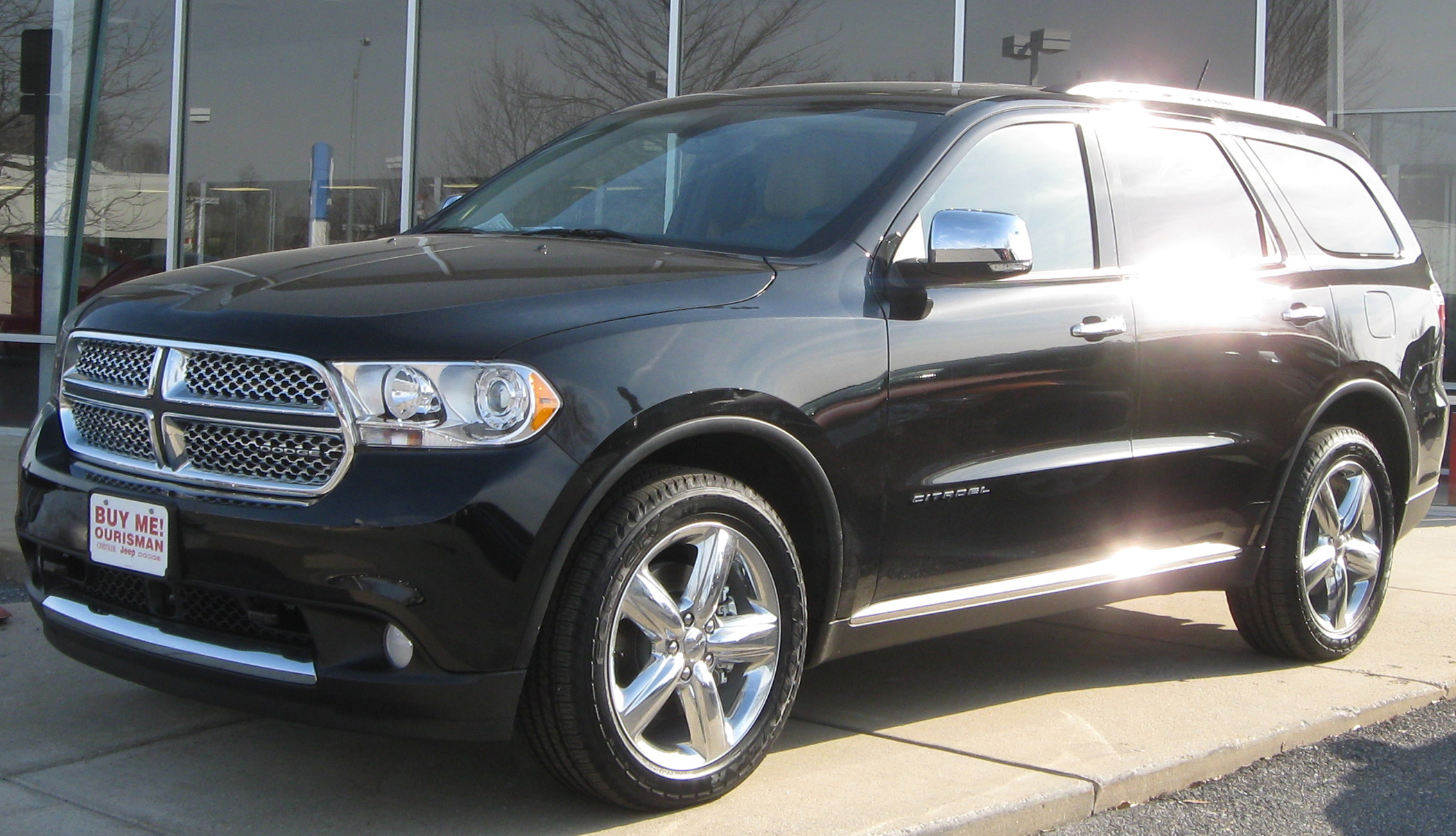
Dodge Durango
"“What are your thoughts on the Dodge Durango?” “Just that vehicle alone. It should be a huge seller… I was unaware that it's only on its third generation. The generation that's out now has been out since 2011.”"
The Dodge Durango is a big family SUV with three rows of seats. The hosts are talking about how long the current version has been around and why that matters for sales and when a newer generation is expected.
The Dodge Durango is a three-row SUV from Dodge. In this segment, the hosts discuss how the current (third-generation) Durango has been on sale since 2011, and how that long run affects sales and expectations for a future redesign.
third generation Durango (out since 2011)
"“I was unaware that it's only on its third generation. The generation that's out now has been out since 2011.”"
They’re talking about how long the current version of the Durango has been sold without a full redesign. When a car stays in the same “generation” for a long time, it can either keep selling well because it’s proven—or start to lose appeal because competitors move on.
This refers to how long a model generation stays in production before a redesign. A long generation can mean the platform is well-understood and reliable, but it can also make the vehicle feel dated versus newer competitors, impacting demand.
fourth gen isn't due till 2029
"“The fourth gen isn't due till 2029, but here's something really interesting.” “That's quick, 18 years.”"
They’re saying the next major redesign of the Durango (the fourth generation) isn’t expected until 2029. That’s a long wait, and it can affect how people feel about buying now versus waiting.
This highlights the redesign timeline for the Durango, with the next generation expected in 2029. Long gaps between generations can be a strategy to stretch development costs, but they also create a “waiting period” where sales may fluctuate as shoppers compare older designs to newer rivals.
"if it ain't broke, don't fix it" (Lexus roots comparison)
"“They're following Lexus' roots. They're like, hey, if it ain't broke, don't fix it. But it is broke.”"
They’re using the saying “if it ain’t broke, don’t fix it” to describe a strategy of keeping a successful design mostly the same. They’re comparing that idea to Lexus, then saying the Durango situation might not actually be “not broken.”
This is a reference to the idea of minimizing changes when a product is already successful. The hosts connect it to Lexus’ reputation for long-running, refinement-focused approaches, contrasting that philosophy with the Durango’s perceived issues and sales dynamics.
sold more cars in 2025 of the third gen Durango than it has since 2011
"“It sold more cars in 2025 of the third gen Durango than it has since 2011. So I was like, why is that?”"
They’re saying the older version of the Durango sold unusually well in 2025. That suggests something changed in the market—like pricing, competition, or demand—even if the vehicle itself hasn’t been redesigned in a long time.
This is a sales-cycle observation: even though the third-generation Durango is an older generation, it reportedly sold more in 2025 than it had in years since its launch. That kind of pattern can happen due to pricing, incentives, competitor issues, or consumer demand shifts, and it can influence how quickly manufacturers feel pressure to redesign.

Dodge Neon
"It was an SRT4, all right? It wasn't just a neon. Let's get it straight."
The Dodge Neon is a small car. The podcast is specifically talking about the Neon SRT4, which is the faster, performance version. They’re emphasizing that it’s not just a regular Neon.
The Dodge Neon is a compact car, and the podcast clarifies that the specific interest is the SRT4 version rather than a standard Neon. The SRT4 is the performance-oriented variant, which is why it gets attention from enthusiasts. It’s discussed because the “Neon” name is sometimes misunderstood unless you specify the SRT4.
V8 buyers
"But here's what they were calling Dodge and the Durango last year, late last year. Actually, mid-year around Q3 was a refuge for V8 buyers."
“V8 buyers” just means people who want an engine with eight cylinders. The hosts are saying that around Q3, there were more options for people who wanted that kind of power.
“V8 buyers” refers to shoppers specifically looking for vehicles equipped with a V8 engine. In the U.S. market, V8 availability has often changed due to emissions rules, shifting consumer demand, and product planning.
Q3
"Actually, mid-year around Q3 was a refuge for V8 buyers."
Q3 is just shorthand for the third quarter of the year—about mid-year. When people use it in car discussions, they usually mean timing like when certain versions or deals showed up.
Q3 means the third quarter of the year (roughly July through September). In automotive talk, “around Q3” often signals when manufacturers update allocations, incentives, or model-year availability.
V6 options
"So what they did at the middle of the year is they, no more V6 options. You could only get a Durango with V8."
A V6 is a type of engine. The hosts are saying the manufacturer stopped offering the V6 as an option, which can push more buyers toward the other engine choice.
“V6 options” refers to offering a V6 engine as one of the available powertrains. Removing V6 choices and forcing buyers into a different engine lineup can change demand because some customers prefer (or avoid) certain engine types.
electrical issues
"The only thing that sucks with Dodge as a guy that's owned one for a very long time is the electrical. And I got a Jeep wagon-ear story from a friend. They're having all kinds of electrical issues."
Electrical issues mean the car’s electronics start acting up—like sensors, computers, or other systems not working correctly. The hosts are saying a friend’s Jeep story points to problems that can be frustrating to deal with.
“Electrical issues” refers to problems in the vehicle’s electronics—often involving sensors, modules, wiring, or infotainment/charging-related systems. The hosts specifically attribute ongoing concerns to Dodge/Jeep ownership experiences, implying these can be a recurring pain point.

Chrysler Aspen
"But I've always thought it should be a big seller. [2072.7s] I mean, didn't they do the Chrysler Aspen based off the Durango? [2077.0s] Yeah, it was another van, right? [2078.8s] No, no, it was an SUV, but it looked like the Durango."
The Chrysler Aspen was a big Chrysler SUV that didn’t last long in the lineup. In the podcast, they’re saying it was closely related to the Dodge Durango—so it looked similar and shared underlying engineering.
The Chrysler Aspen was a full-size SUV sold by Chrysler for a short run, with the most commonly cited model year being 2009. It was built on a shared platform with other Chrysler/Dodge products, which is why it can be described as looking like the Dodge Durango and being related to it mechanically.
platform sharing
"[2078.8s] No, no, it was an SUV, but it looked like the Durango. [2082.9s] I believe it was on the same platform. [2084.4s] If I'm wrong, I'm wrong. [2085.5s] But Chrysler Aspen, I believe, is what it was called."
Platform sharing is when two different cars are built on the same basic “skeleton.” That can make them cheaper to build and sometimes they drive or feel similar even if the outside looks different.
Platform sharing means multiple vehicles are built using the same underlying architecture—like the chassis and major hard points—while still having different body styles and trim. It’s often done to reduce development costs and speed up production, which can also make vehicles feel mechanically similar.
first generation vs second gen
"I mean, to go from that first generation, which killed it to that second gen. Oh my God, it was terrible. Yeah, that gen didn't look as good."
They’re comparing two versions of the same SUV across redesigns. The idea is that the newer version looked different, and that can affect how people feel about the car and whether it sells well.
Comparing “first generation” versus “second gen” is a way to evaluate how redesigns affect consumer perception, styling, and long-term success. Even when the underlying vehicle is similar, changes in exterior design and materials can influence whether buyers stick with it.
changes oil
"And I bet he changes oil. It had to be like the highest mileage one to ever exist."
Changing the engine oil regularly keeps the engine lubricated and helps it last longer. If someone drives a car to huge mileage, they usually keep up with oil changes.
Regular oil changes are one of the biggest factors in keeping an engine healthy over very high mileage. Fresh oil helps maintain lubrication and reduces wear, which is why the host connects mileage longevity to maintenance.
front grill
"[2165.82s] Look at that front grill. [2167.1s] I was just going to say that. [2168.9s] It kind of gives like a, was it HHR vibes?"
The front grille is the part at the front of the car that you can see right away. It also helps with cooling, and in this case they’re judging how it looks.
The front grille is the opening and trim at the front of a car, usually covering airflow to the radiator and cooling system. Styling-wise, it’s a major visual cue, so when the hosts react to the “front grill,” they’re talking about both looks and how hard it might be to change or repair.
Request an Explanation
Heard something you'd like explained? We'll add it to this episode.
Sign in to request explanations for terms you heard.
Want to learn more?
Browse our glossary for plain-English explanations of automotive terms, jargon, and concepts.
Help improve this episode
See something that's not quite right? Our annotations are AI-generated and can sometimes miss the mark. Click the flag icon on any annotation to suggest a correction.