
128 - We drive the BYD Atto 1, and callers all get new cars!
About this episode
Dash cams and rear visibility kick things off, then the conversation turns to why EV charging is rising—especially as plug-in hybrid owners start using their electric mode. Callers weigh in on EV misconceptions and debate objections. The hosts then shift to BYD Atto 1 ownership and delivery: why they chose BYD, how fast allocations sold, and what it’s like day-to-day (city practicality, rear-seat comfort, and ADAS quirks). Home charging plans with solar and time-of-use rates round out the discussion.
NRMA
"I was at the Today Show on Monday and Peter Coorey from NRMA, yep, Motoring and Services, was there back to talk about petrol prices..."
NRMA is a big Australian motoring group. Here, they’re mentioned as running an EV charging network, so they’re involved in how people actually use chargers.
NRMA is an Australian motoring organization that provides services to drivers, including information and support related to vehicles. In this segment, NRMA is also described as operating a charging network, which makes it directly relevant to EV charging access and usage.
petrol prices
"Peter Coorey from NRMA... was there back to talk about petrol prices when they were going up back in the start of July."
Petrol prices are how much gasoline costs. When petrol gets more expensive, people pay more attention to alternatives like charging an EV or using the electric mode in a hybrid.
Petrol prices are the retail cost of gasoline, which can strongly influence driving behavior—especially for hybrids and EVs. In this segment, rising petrol prices are discussed as part of the motivation for people to consider electric driving options.
charging network
"because NRMA Motoring and Services runs the charging network, he said to me, we also noticed a huge increase in the usage of the charges."
A charging network is the set of EV chargers in an area (or across a country) that work together. It usually includes how you pay and how you access the chargers.
A charging network is a connected system of EV charging stations operated by a company or consortium, often with shared payment and access rules. When the hosts say NRMA runs the charging network, they’re referring to the infrastructure and services that let drivers find and use chargers.
plug-in hybrid
"he put a lot of that down to plug-in hybrids. So a lot of people who own plug-in hybrids suddenly going, actually, I should probably, yes, and take advantage."
A plug-in hybrid is a car that uses both electricity and petrol. If you don’t plug it in regularly, it mostly behaves like a petrol car instead of using its battery.
A plug-in hybrid (PHEV) is a hybrid car that has both an electric motor and a gasoline engine, and it can be charged from an external power source. The key point is that many owners don’t plug in enough, so the car ends up running mostly on petrol instead of using its electric-only capability.

Sealion Cline 7
"A couple of weeks ago, we pulled the trigger and bought a, I'll put the money down on a BYD C-Line 7, which I'm super excited about. Nice."
The Sealion 7 is an electric car made by BYD. The podcast mentions it because the hosts are talking about buying one and what made them choose it. It’s an example of the kind of EV people consider when deciding on a new car.
The Sealion 7 is a BYD electric vehicle that the hosts discuss as a purchase decision, with excitement around putting money down. It’s relevant to the episode because it ties into the broader EV ownership topics they’re covering—like choosing the right model and understanding what you’re getting before committing. The mention also signals it’s part of their real-world testing and decision-making process.
less expensive Chinese brands
"Yeah, we got really interested by the, obviously, the less expensive Chinese brands that were coming into the market."
They’re basically saying they looked at cheaper EVs from Chinese brands. The idea is getting lots of features without paying as much as more established brands.
This refers to the shopping strategy of targeting lower-priced EVs from Chinese automakers. The caller frames it as the main reason they went looking beyond their earlier vehicles—seeking “bells and whistles” for less money.
brand certainty
"we had that brand certainty that they weren't necessarily just going to pull up stumps after a few years of poor sales or something like that,"
“Brand certainty” means feeling confident the car company will stick around and keep supporting the cars. The hosts are basically saying they paid extra to avoid the risk of a brand vanishing after poor sales.
“Brand certainty” here means the confidence that an EV manufacturer will remain in business and continue supporting vehicles after launch. The hosts connect it to dealer networks and the risk of a company disappearing after weak sales.
dealer network
"as well as a dealer network in market and all those sort of things, you know, just a little bit more confidence."
A “dealer network” is where you can go to buy the car and get it serviced. The hosts are saying that having dealers around makes it less risky to buy from a brand.
A “dealer network” is the set of authorized sales and service locations that sell and maintain a brand’s cars. The hosts treat it as part of the practical support system that increases confidence in buying from a newer EV maker.
Hyundai
"Because, you know, that's not a lot of time. No, but, you know, you think when Hyundai came in and then later on Kia came in,"
Hyundai is a big car company. The hosts are using it as an example of how a newer EV brand can become trusted after it’s been around long enough.
Hyundai is a major global automaker that entered the EV market and, in the hosts’ view, became a “legacy established brand.” They use Hyundai as an example of how an EV maker can earn consumer confidence over time.
Kia
"you think when Hyundai came in and then later on Kia came in, and now we look at those as sort of legacy established brands"
Kia is a well-known car brand. They’re mentioning it to say that after a while, people start trusting EV makers more once they’ve proven themselves.
Kia is another large global automaker that the hosts mention alongside Hyundai as an EV brand that became established. In this segment, it’s part of their argument that confidence in an EV maker can build after a few years.
dealer experience
"in the last few months, actually, of dealer experiences, especially with BYD. Can you give us an insight into how you,"
They’re talking about what the buying process feels like at a dealership—like waiting for someone to help you and getting a test drive. It matters because that’s a big part of buying an EV.
The hosts discuss what it’s like dealing with EV dealers in practice, focusing on appointment timing, waiting around, and how quickly staff respond. This is relevant because EV shopping often depends on getting access to test drives and sales support.
BYD Paramata
"So we got there at quarter past 9 of BYD Paramata, and we waited 15 minutes, then we waited another 15 minutes,"
BYD Paramata is the name of the BYD dealership the speaker visited. They bring it up because it’s where the delays happened before they got a test drive.
BYD Paramata refers to a BYD dealership location where the speaker’s test-drive appointment took place. It’s mentioned to explain the real-world wait time and how the dealership handled their visit.

Byd Sharks
"...eness. It's a weird thing, but even the number of sharks around with the big BYD logo on the back,"
The BYD Shark 6 is an electric car from BYD. The podcast is mentioning it because of how it looks, including the branding on the back. It’s more about the car’s appearance than how it drives.
The BYD Shark 6 is an electric vehicle model discussed in a more casual, descriptive way—specifically around its branding and how it looks on the road. The “big BYD logo on the back” and the “number of sharks” reference suggest the hosts are talking about the car’s visual identity and marketing cues. That kind of mention often comes up when comparing how different EVs present themselves rather than focusing purely on specs.

Rolls-Royce Phantom
"or to talk about other connective issues or Phantom Autonomous Braking or this, that or the other"
The Rolls-Royce Phantom is a very high-end luxury car. The podcast mentions it because it has advanced safety features and connected technology, and those can sometimes have issues. “Autonomous braking” is a system that helps slow the car if it detects a potential problem.
The Rolls-Royce Phantom is the brand’s flagship luxury car, known for high-end comfort and advanced technology. It’s being referenced in the podcast around “connective issues” and “Phantom Autonomous Braking,” which points to how modern driver-assistance and infotainment systems can affect day-to-day ownership. That makes it a relevant topic even for a very expensive, feature-rich vehicle.
ADAS things
"remember that safety systems, safety alerts all these ADAS things"
ADAS are safety features in newer cars that help you avoid crashes. They can include alerts and automatic interventions, and they’re becoming standard across many brands.
ADAS (Advanced Driver-Assistance Systems) are electronic safety and convenience functions that help the driver—like warnings and semi-automated braking/steering. The hosts mention “ADAS things” to stress that these features are common on most new cars, regardless of brand.
phantom braking
"you may get some of those things Phantom braking, mate"
Phantom braking is when your car brakes by itself even though there’s nothing in front of it that should require braking. It usually happens because the sensors get confused.
Phantom braking is when a car’s automated braking system slows down unexpectedly because it misreads a situation—often due to sensors seeing something that isn’t actually a threat. The host says they get it in many cars, which is a common complaint with driver-assistance systems.
side street
"it was trying to suggest that a car was going to pull out of a side street"
A side-street situation is when another car could enter your lane from a road next to you. Driver-assistance systems sometimes warn you in these situations—even if the threat isn’t real—because they’re trying to prevent a collision.
In the context of driver-assistance, a “side street” scenario is a common trigger for alerts when the system thinks another vehicle might pull out into your path. The host describes the car suggesting a car was going to pull out from a side street, which is the kind of false or premature warning that can happen with ADAS.
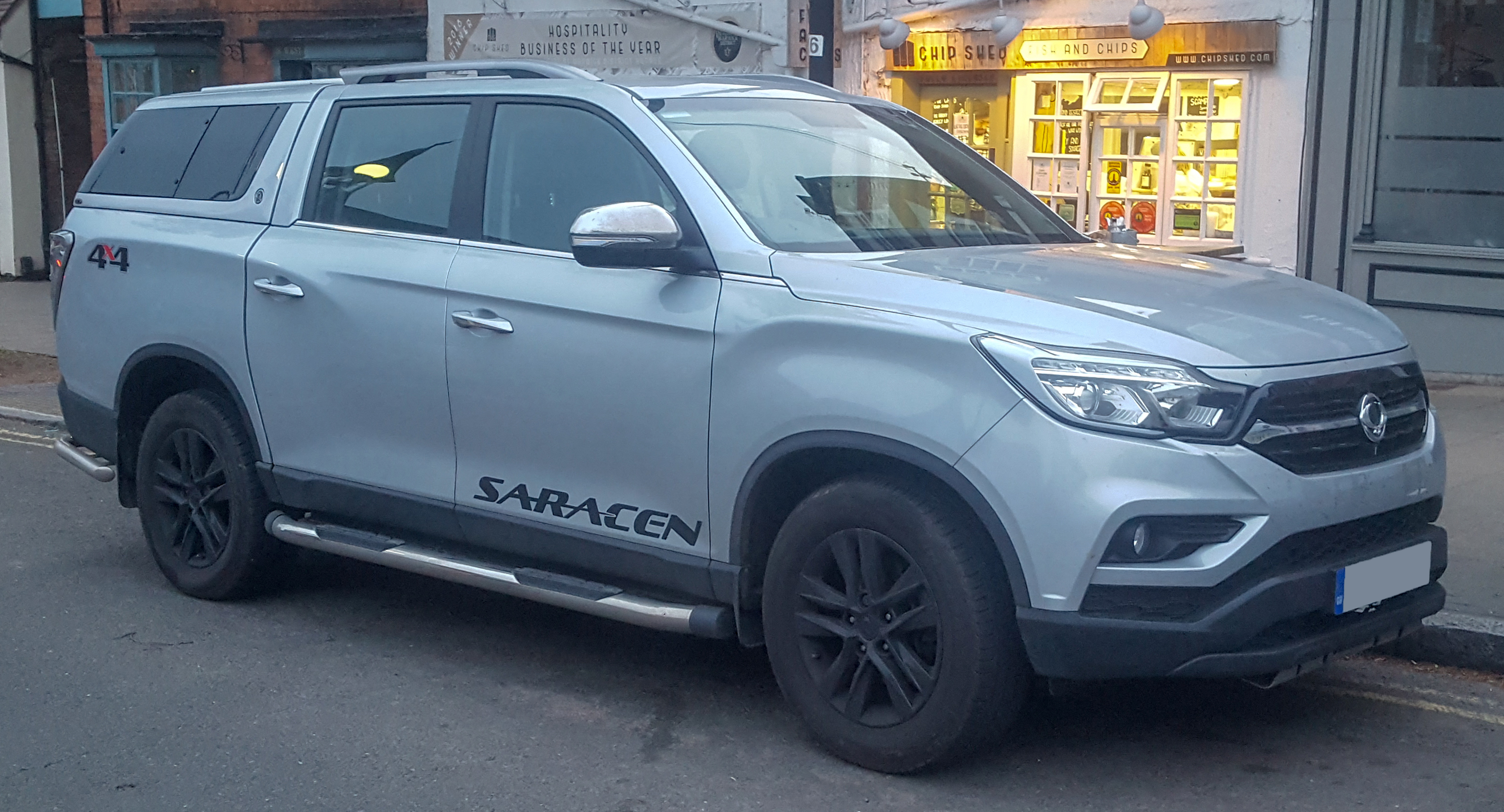
Ssangyong Musso
"we're getting there because we've got that KGM Musso we spoke to a caller about a few weeks ago"
The Ssangyong Musso is a pickup-type vehicle. The podcast mentions it because they previously talked about it with a caller. It’s included to help explain what people are looking for in a vehicle, even when the main focus is electric cars.
The Ssangyong Musso (also referred to as the KGM Musso in the podcast context) is a pickup-style vehicle that the hosts have discussed previously with a caller. It’s brought up here as part of the conversation’s progression, likely to connect real owner experiences to the broader topic of choosing vehicles. In an EV podcast, mentioning a non-EV like this can help frame what people want from a vehicle in general—space, capability, or everyday usability.

KGM Musso
"we're getting there because we've got that KGM Musso we spoke to a caller about a few weeks ago that's a full electric dual-cab youth"
The KGM Musso is a pickup truck. In this segment they’re talking about an electric version with two rows of seats (a dual-cab), which means the battery has to fit without ruining the space for passengers and cargo.
KGM Musso is a pickup truck platform that the hosts describe as being offered as a full electric dual-cab. A dual-cab pickup is typically a 4-door layout aimed at carrying people in addition to cargo, so the battery packaging has to fit around the cabin and chassis.
dual cab
"that's a full electric dual-cab youth Toyota do have a Hilux all-electric dual-cab youth"
“Dual-cab” means the pickup has two rows of seats, so it can carry more people. For an electric pickup, that also affects where the battery can fit.
A dual-cab is a pickup truck body style with two rows of seats (typically four doors), allowing passengers to ride in the cab as well as the driver. For EV pickups, this matters because the battery pack must be packaged around the cab and chassis without compromising usable space.

Toyota Hilux all-electric dual-cab
"Toyota do have a Hilux all-electric dual-cab youth it'll be small quantities"
Toyota’s Hilux is a popular pickup, and they’re discussing an all-electric dual-cab version. A dual-cab means it has two rows of seats, so the battery has to be fitted in a way that still keeps the truck usable.
The Toyota Hilux all-electric dual-cab is the electric version of Toyota’s Hilux pickup, discussed here as a limited-quantity plan. The key idea is that a Hilux-style dual-cab body still needs to carry a battery pack, which can affect range and packaging compared with smaller EVs.
range
"I don't think it'll be well received because I think it probably won't have range and it's probably not got electric credentials"
Range is how far an electric car can go before it needs charging. They’re suggesting the electric pickup might not go far enough for buyers.
Range is the distance an EV can drive on a full charge under specified conditions. The hosts argue the proposed electric Hilux/Musso approach may not be well received because they expect limited range for the size and use case of a dual-cab pickup.
leaf springs
"it's just leaf springs, the wheels and the shazzy that's where the battery needs to be"
Leaf springs are a traditional suspension setup used on many trucks. In this discussion, they’re saying the space under the truck is taken up by the suspension, so that affects where the battery can be mounted.
Leaf springs are a type of suspension that uses stacked metal strips to support the vehicle and absorb bumps. The hosts point out that under the “shazzy” (chassis) there are leaf springs and wheels, implying the battery pack needs to be placed elsewhere—because leaf-spring layouts can limit where a large battery can sit.
big battery
"and still fitting in a big battery to allow you then to go cab-shazzy style"
In an electric car, the battery stores the energy. A bigger battery usually means you can drive farther, but it can be harder to fit neatly into the car.
A “big battery” refers to a higher-capacity EV battery pack, which generally increases driving range. The speaker is connecting battery size to packaging and design constraints—how to fit the battery while keeping the vehicle usable.

Tesla
"how did you John arrive at the Tesla was that always something you had in mind something you admired from a distance or was it the result of test driving other vehicles"
They’re talking about choosing a Tesla as their electric car. The question is whether it was something they always wanted or something they decided after trying other cars.
Tesla is the EV brand the caller is considering, and the discussion is about choosing it as the right model after comparing other cars. In this context, “Tesla” represents a specific electric-car direction rather than a generic idea of electrification.

Kia EV5
"other cars we test drove an EV5 I think"
The Kia EV5 is an electric SUV. The podcast brings it up because they tested it by driving it themselves. That helps them talk about how it feels and works in everyday use.
The Kia EV5 is an electric SUV that the hosts mention because they’ve test driven it. It’s significant in the episode because test drives are how people evaluate real-world usability—things like comfort, driving feel, and everyday practicality—before buying. Mentioning the EV5 also helps listeners compare it to other EVs discussed in the show.
trickle charge
"you've got solar and batteries so you can trickle charge as you need on your own power choice which is awesome"
Trickle charging means charging your EV slowly using a low power level. It’s useful when you’re parked for a long time and just want to add a bit of charge gradually.
A trickle charge is a low-power way to charge an EV slowly over time. It’s typically used when you have plenty of time and want to top up without stressing the system.
public charger
"and if you do decide to take longer trips or whatever and you get home and it's it's a much deeper charge you could obviously go to a public charger"
A public charger is a charging station you can use outside your home. People use them when they need more charge than they can get from home charging.
A public charger is an EV charging station available to anyone, usually located in places like shopping centers, workplaces, or along highways. It’s the fallback when you can’t fully recharge at home before a longer trip.
Oren Park
"I'm at Oren Park and all the new shopping area down up there"
Oren Park is the area the speaker is in. They’re mentioning it to show there’s a Supercharger close to where they live.
Oren Park is a local area mentioned as the speaker’s reference point for nearby charging access. The key takeaway is that there’s a Supercharger at a nearby shopping center.
EV
"but being with the golf [1339.2s] war and all that with the oil prices [1341.6s] everybody's being buying [1344.4s] electric vehicles [1345.4s] what color did you go for"
Electric vehicles are cars that run on electricity from a battery. Instead of using petrol or diesel, they use an electric motor to move the car.
“Electric vehicles” are cars (and light trucks) powered primarily by electricity stored in a battery, rather than by burning gasoline or diesel. They typically use an electric motor (or motors) to drive the wheels.
Ute
"[1354.0s] and so I'm assuming then if there was an electric [1356.4s] ute that might be the thing that replaces [1358.6s] the other car in the driveway John [1361.2s] yeah I would really [1362.7s] want a single cab but that's probably going to come"
A “ute” is a pickup-style vehicle with a cargo bed. People use it for work and for everyday stuff, and some are now available as electric versions.
In Australia and nearby markets, a “ute” is a pickup-style vehicle with an open cargo bed. It’s commonly used for both work and everyday driving, and many brands offer ute variants in electric form.
single cab
"[1361.2s] yeah I would really [1362.7s] want a single cab but that's probably going to come [1364.8s] eventually [1365.2s] and with the aluminum tri on it [1368.3s] I mean [1370.3s] if I could say [1372.0s] usually the single cab utes"
A “single cab” is a truck/ute with just the front seats. There aren’t rear passenger doors, so it’s generally more about carrying stuff than passengers.
A “single cab” is a ute/truck body style with only two front seats and no rear passenger doors. It’s usually shorter and more focused on cargo than a dual-cab layout.

Kia EV3
"what'd you get Kia EV3 nice great little car"
The Kia EV3 is an electric car. In the podcast, someone says they got one and describes it as a small, good car. The point is to share what it’s like to live with an EV in normal day-to-day driving.
The Kia EV3 is an electric car that comes up in the podcast as a “great little car,” based on someone’s purchase or ownership experience. It’s discussed because the hosts are collecting real impressions from drivers, which is useful for understanding how an EV fits into daily life. The EV3’s mention also supports the episode’s theme of comparing different EV options.
50-100km in the tank
"50-100km in the tank to get back to work sort of thing it's a company car"
That’s the distance the EV can drive on its battery. They’re basically saying you need enough range to do the commute and still have a buffer.
This refers to the EV’s usable driving range—how many kilometers you can cover before the battery is depleted. In a work-commute scenario, they’re saying the car needs enough range to get to and from work without running out.
solar
"if you're getting solar and the battery you could maybe look at having"
Here, “solar” means panels on the house that make electricity from sunlight. The idea is to use that home-made power for charging when possible.
In this context, “solar” means rooftop solar panels generating electricity at home. They’re discussing using that solar energy to power charging (or charging-related electricity use) rather than relying entirely on grid power.
Granny charger
"if you're even using the granny charger at least during the day you may be getting the free energy from your solar"
A “granny charger” is a slow, everyday way to charge an EV using a regular home power outlet. It usually takes longer than a dedicated home charger.
“Granny charger” is a slang term for a basic, slower EV charging setup—typically a portable charger that plugs into a standard household outlet. It’s slower than dedicated home wallboxes and can be a limiting factor for how quickly you can refill the battery.
overnight cheaper
"and then if you're on a plan you might get the overnight cheaper cheaper cost of as well"
Electricity can be cheaper at certain times of day. They’re saying you might save money by charging during the cheaper overnight hours.
This refers to time-of-use electricity pricing, where electricity costs less during certain hours—often overnight. EV owners can schedule charging to those cheaper windows to reduce charging costs.
company charger
"a company charger when you say company your company's charger yep yeah yeah"
A “company charger” is a charging point you can use at work. If your workplace has one, you can charge your EV during the day instead of relying only on public chargers.
A “company charger” is workplace charging provided by an employer, typically at an office, depot, or retail branch. It’s relevant for EV planning because it can reduce the need to charge at public stations.
publicly
"so if you were to charge publicly and then you've got a receipt"
“Charging publicly” means using a public charging station that anyone can access. These chargers are usually in public places and can cost more or have different rules than charging at home or work.
“Charging publicly” means using EV chargers that are available to the general public, usually in places like shopping centers, streets, or dedicated charging networks. Public charging often has different pricing and access rules than home or workplace charging.
overnight charging
"so I'd assume you'll be home in the afternoon evening and then charging overnight ... you'll get that back overnight not a problem granny charger"
“Overnight charging” means plugging in your EV at night so it’s ready for the next day. It matters because slow chargers may not add enough range in the time you have.
“Overnight charging” is the strategy of charging the EV while parked at home during off-peak hours, typically to replenish daily driving needs by morning. It’s especially relevant when comparing slow home charging versus faster wall charging, since the available time window is limited.
wall charger
"you'll get that back with a wall charger if you've got a 7 kilowatt charger you'll get that back overnight ... the expense of putting in a wall charger"
A “wall charger” is a dedicated charger mounted at your house. It usually charges faster than the basic slow charger, so you can put more driving range back overnight.
A “wall charger” is a dedicated EV charging unit installed at home, typically providing higher power than a basic portable/plug-in setup. Higher charging power means you can add more range in the same overnight window, which reduces the risk of not “getting back” the miles you used during the day.
7 kilowatt charger
"with a wall charger if you've got a 7 kilowatt charger you'll get that back overnight"
A “7 kilowatt charger” is a charger rated to deliver 7 kW of power. More power generally means faster charging, so you can add more range overnight.
A “7 kilowatt charger” refers to the charger’s power output. In practical terms, higher kilowatt (kW) chargers can replenish more battery energy per hour, which is why the hosts connect it to being able to recover more driving range overnight.
charging rate
"charging rate so that you can get a really cheap rate"
Charging rate is how fast your EV charges. Think of it like the “speed” of the electricity going into the battery.
Charging rate is how quickly an EV can take electricity from the charger. It’s usually discussed in kilowatts (kW), and higher charging rates generally mean faster top-ups (as long as the car can accept that power).
kilowatts
"you like 8 cents a kilowatt it'll be pretty cheap like it'll be cost you like 5 bucks"
A kilowatt is a measure of how much power the charger can send to the car. Higher kW usually means faster charging (if the car supports it).
A kilowatt (kW) is a unit of power that describes how much electricity the charger is delivering at a moment in time. EV charging costs are often quoted using kWh (kilowatt-hours), but the charger’s capability is commonly discussed in kW.
OCCP
"they wanted that special charger that they can control OCCP yeah and"
OCCP sounds like a specific “charging control” system or standard that lets the charger and the app/utility coordinate. It’s basically how the charger is told what to do.
OCCP appears to be a specific EV charging control/communication protocol used by the speaker’s context (they mention a “special charger that they can control” and then “protocol”). Without the full expansion in the transcript, it’s best treated as a named charging-control standard tied to that charger ecosystem.
protocol
"OCCP yeah and protocol yeah"
A protocol is the “language” chargers use to talk to other systems. It helps decide how charging is controlled and scheduled.
In EV charging, a protocol is the set of rules for how devices communicate—such as how the charger is controlled, scheduled, or authorized. Different protocols can affect compatibility between a charger, an app, and the charging network or utility features.
Bunnings
"I've been looking around Bunnings have got one of their home brand Dita I think there's about 300-400 dollars"
Bunnings is a big store in Australia where people buy home and hardware items. Here, it’s mentioned as a place to get a home EV charger.
Bunnings is a major Australian home-improvement retailer. In this segment, it’s mentioned as a place to buy a home EV charging unit (the speaker references a home brand charger).
Dita
"Bunnings have got one of their home brand Dita I think there's about 300-400 dollars"
Dita is the name of the charger brand the speaker says Bunnings sells. It’s an example of a home EV charger you can buy locally.
Dita is referenced as Bunnings’ home-brand EV charger. The key point for listeners is that some retailers sell branded home charging hardware, which may include different control features and pricing tiers.
installation
"[1840.5s] installation [1841.1s] in addition but the"
Installation is the upfront cost and work needed to get an EV charger set up properly. It can include electrical work, not just buying the charger.
Installation refers to the upfront work required to set up EV charging at a home or workplace, such as electrical upgrades, mounting hardware, and permitting. In EV ownership math, installation cost can be a major part of the total cost of charging.
offset of speed versus efficiency
"the offset of speed versus efficiency is why a wall charger is a better option mate I'll be honest"
They’re talking about a trade-off: charging faster doesn’t always mean you use electricity in the most efficient way. The best choice depends on the total cost, not just how quickly the car fills up.
This phrase is describing the trade-off between how quickly you can charge (speed) and how efficiently the charging system converts electricity into battery energy (efficiency). Even if a charger is faster, the overall energy cost can be higher depending on the setup and charging conditions.
calculations about what it truly costs
"what you probably need to do is do some calculations about what it truly costs because it's not petrol right filling up"
They’re saying you should do the numbers to figure out the real cost of charging. Don’t just assume it’s cheaper—compare home charging versus other options.
They’re emphasizing total cost of ownership for charging, meaning you should compare real charging expenses across options (home electricity vs paid charging) rather than assuming EVs are always cheaper. This is essentially a cost-per-charge and payback-style calculation.
charging at home
"[2187.5s] that's what a lot of people say because they're trying to do the whole charging at home situation [2190.7s] whereas he's like [2191.6s] we've got solar and battery coming on but I don't want to charge here"
“Charging at home” means plugging your EV in at your house to recharge it. It’s usually easier and can be cheaper than using public charging stations.
“Charging at home” refers to using a home electricity setup (typically a wallbox/EV charger) to recharge an EV when it’s parked. It matters because it can reduce charging costs and make daily driving more convenient compared with relying on public charging.
company car
"[2194.1s] but I want the company to pay [2195.8s] well look if it's a company car it's a fair call mate [2198.0s] 100% if it's in your deal"
A “company car” is a car you get through your employer. Here, the point is that the employer may cover the cost of charging, so the driver doesn’t have to pay for it personally at home.
A “company car” is an EV (or any vehicle) provided by an employer, with costs and charging arrangements often handled through the job. In this segment, it’s used to explain why someone might prefer their employer to pay for charging rather than charging at home.

BYD ATTO 1
"now speaking of cars [2202.8s] we've had the pleasure of driving [2204.1s] the BYD ATTO 1 [2206.6s] for a little while [2217.8s] this was going to be Australia's cheapest electric car"
The BYD ATTO 1 is a small electric car made by BYD. The hosts are talking about it mainly because it’s priced as one of the cheapest EVs in Australia, and they compare the cheaper “essential” version to the more expensive “premium” one.
The BYD ATTO 1 is a compact electric car from BYD, notable here because the hosts frame it as Australia’s cheapest EV. In this segment they also discuss its pricing tiers (essential vs premium) and that it’s a small car, which shapes how it’s positioned for everyday use.
Drive Away
"[2228.5s] it's a $23,000 car for the essential [2231.9s] about $27,000 drive away [2233.7s] $27,000 for the premium"
“Drive away” is the price you pay so you can drive the car off the lot. It usually includes the extra government and registration costs, not just the sticker price.
“Drive away” is a pricing phrase meaning the total cost you pay to take the car home, typically including on-road costs like registration and stamp duty (varies by country/state). The hosts use it to compare the “essential” and “premium” BYD ATTO 1 prices in a way that’s easier to compare than base MSRP.

Kia Picanto
"and a Kia Picanto is very [2289.5s] fuel efficient, right? It's not like it's burning through [2291.5s] a V8 engine, right?"
The Kia Picanto is a small car designed for city driving. Here, they’re comparing it to an electric car by talking about how efficient it is for everyday, short-distance use.
The Kia Picanto is a small city car (a compact hatchback) aimed at easy parking and low running costs. In this segment, it’s used as a benchmark for fuel efficiency versus an electric car, especially for short trips and first-car buyers.
V8 engine
"fuel efficient, right? It's not like it's burning through [2291.5s] a V8 engine, right?"
A V8 engine is a type of gasoline engine with eight cylinders. It usually drinks more fuel than smaller engines, so it’s brought up here to highlight the efficiency difference versus EVs.
A V8 engine is an internal-combustion engine with eight cylinders arranged in a “V” shape. Because it typically uses more fuel than smaller engines, it’s often used as a contrast when discussing efficiency and why EVs can make more sense for many drivers.
k-roll
"it's like an older [2319.1s] this one's got like a 280 odd k-roll [2321.0s] it says 310 on the website but let's call it [2323.5s] 280, for someone"
They’re talking about the car’s range—how far it can go before you need to charge it again. That matters most for people who only drive short distances around town.
“k-roll” appears to be a mishearing of “km range,” meaning the estimated distance the car can travel on a single charge. Range is a key EV buying factor because it determines whether an EV fits a driver’s typical daily trips.
5-star Ancap Safety 2
"it's a 5-star Ancap Safety 2 [2410.9s] so that's tick that box as well"
ANCAP is an organization that tests cars for crash safety. A “5-star” rating means the car scored very highly in those safety tests. The host is saying their car achieved that top rating.
“ANCAP” refers to Australia’s vehicle safety testing program, and a “5-star” result indicates a top safety rating. “Safety 2” appears to be a specific ANCAP test/assessment version or category referenced by the host, used to claim the car meets strong safety criteria.
driver attention camera
"it does have a driver attention camera [2414.4s] it does, yeah, in fact, I [2416.1s] copped me a couple of times"
A driver attention camera is a camera inside the car that watches the driver’s eyes and face. If it thinks you’re getting sleepy or distracted, it can warn you. In this case, it even noticed when the host was yawning.
A driver attention camera is an in-cabin camera system that monitors the driver’s face and eye/attention behavior. If it detects signs of drowsiness or distraction, it can trigger alerts—like the host’s yawn-related warning—to encourage the driver to refocus or take a break.
yawn warning
"I yawned probably twice [2425.3s] and a picture of a coffee cup came up [2427.7s] so no, you know what I noticed about that? [2429.9s] it's not a loud warning though [2431.7s] you notice the cup but it's not [2433.6s] an over-annoyingly aggressive [2435.7s] because I get the yawn warning when I'm singing"
A yawn warning is a car alert that triggers when the system thinks you’re getting sleepy. In this segment, the host says the warning shows up when they yawn, but it’s not overly harsh. They also mention it can happen in other situations too.
A yawn warning is an alert generated when the driver attention system detects yawning as a sign of drowsiness. The host describes it as less aggressive than other warnings, and notes it can trigger even when they’re singing.
Android Auto
"it didn't automatically connect to Android Auto ... and Android Auto didn't automatically start up despite the settings on the phone"
Android Auto is a way to use your Android phone in your car. It shows navigation and some apps on the car’s screen, and it can connect through a cable or wirelessly depending on the setup.
Android Auto is a smartphone-to-car infotainment system that mirrors compatible apps and navigation onto the car’s screen. It typically connects via USB or wirelessly (depending on the car and phone), and can start automatically when pairing is set up correctly.
Bluetooth
"it was paired via Bluetooth ... and Android Auto didn't automatically start up despite the settings"
Bluetooth is the wireless connection your phone uses to pair with the car. It’s commonly used for hands-free calling and audio, and here it’s part of the setup that didn’t lead to Android Auto starting automatically.
Bluetooth is a short-range wireless connection used in cars for pairing phones and enabling hands-free calling and audio streaming. In this segment, it’s mentioned as the method used to pair the phone before Android Auto would behave correctly.
Apple CarPlay
"Apple CarPlay didn't have an issue at all ... wirelessly"
Apple CarPlay lets you connect an iPhone to your car so you can use maps and other supported apps on the car’s display. In this segment, they’re saying CarPlay worked smoothly where Android Auto didn’t.
Apple CarPlay is Apple’s smartphone-to-car infotainment system that displays supported iPhone apps and navigation on the vehicle’s screen. The hosts contrast it with Android Auto here, saying CarPlay worked without the same startup/recognition problems.
wirelessly
"Apple CarPlay didn't have an issue at all ... wirelessly"
Here, “wirelessly” means the phone connected to the car without plugging in a cable. That can make setup easier, but it still depends on whether the car and phone are configured to start the system automatically.
In this context, “wirelessly” means the phone connected to the car without using a cable, enabling features like CarPlay over Wi‑Fi/Bluetooth. Wireless phone projection can be convenient, but it also depends on the car’s software and the phone’s settings to start reliably.
wireless charger
"there was a wireless charger ... right there in the centre"
A wireless charger is a pad in the car where you place your phone to charge it without plugging in a cable. In this clip, it’s mentioned as being in the center area where the phone would sit.
A wireless charger is a charging pad in the car that powers a compatible phone using inductive charging. The segment suggests the car had a center console wireless charging spot, which can be related to how the phone is positioned and connected during CarPlay/Android Auto use.
start button
"[2574.4s] and it starts up [2575.2s] it's got a start button [2576.6s] and so even when you jump out"
A start button is a button you press to turn the car on, instead of using a key in an ignition. It’s common in modern cars, including EVs, and makes starting feel quick and simple.
A start button is an electronic control that powers up the vehicle without using a traditional key in the ignition. In EVs like the BYD Atto 1, it’s often paired with a “stop” button so you can quickly start and shut down while staying in the cabin.
stop button
"[2576.6s] and so even when you jump out [2578.7s] it stops but it's got a stop button [2580.0s] so make your mind up, you've got both choices"
A stop button is how you turn the car off. In this case, the car has both a start button and a stop button, so you have to decide which one you want to use.
A stop button is the companion control to the start button, used to shut the vehicle down electronically. The hosts point out that having both start and stop buttons can be confusing if you’re used to only one method of powering the car on/off.
boot floor
"the boot size is small but under the boot floor there is storage for cables and things"
The “boot floor” is the panel inside the trunk under the main storage area. On this EV, there’s extra space underneath it for things like charging cables.
The “boot floor” is the removable or raised panel area inside the trunk (boot) beneath the main cargo opening. Many EVs use the space under the boot floor for storage and packaging, such as a dedicated compartment for charging cables.
drop the seats
"you can drop the seats by day so if I wanted to put the golf clubs in it I'd have to drop the back seats down"
“Drop the seats” means folding the back seats down to make more room for luggage. They’re saying you can fit bigger items, but the space is still limited in a small car.
“Drop the seats” refers to folding the rear seatbacks forward to expand cargo volume. The host uses it to explain how the car can carry larger items (like golf clubs) but that it may still be tight in a small EV hatch.
dealership appeal
"in a dealership this car draws you in ... and then you go, ah"
“Dealership appeal” here refers to how a car’s in-person presentation and value story can pull shoppers in before they fully evaluate specs. The hosts connect it to the EV’s practical pitch and the buyer’s quick reaction once they realize what the range/price means.

Dolphin
"and then you go, ah ... so $280 range but for a bit of extra money ... that's why I think the Dolphin is still selling well"
The BYD Dolphin is another small electric car from BYD. In this discussion, it’s brought up as a popular option because some shoppers want something that feels like better value than the Atto 1.
The BYD Dolphin is another compact electric model in BYD’s lineup, positioned as a value-focused alternative within the same brand ecosystem. Here, it’s mentioned as still selling well because buyers may choose it for a bit more range or overall value versus the Atto 1.
Request an Explanation
Heard something you'd like explained? We'll add it to this episode.
Sign in to request explanations for terms you heard.
Want to learn more?
Browse our glossary for plain-English explanations of automotive terms, jargon, and concepts.
Help improve this episode
See something that's not quite right? Our annotations are AI-generated and can sometimes miss the mark. Click the flag icon on any annotation to suggest a correction.
2 community members have helped improve this episode.