The Mitsubishi Eclipse mentioned in the podcast is the Eclipse Sportback that was revealed as a new kind of vehicle. The podcast is treating it as part of a shift toward electric technology. It’s being discussed as a new model direction rather than a traditional gas-only car.
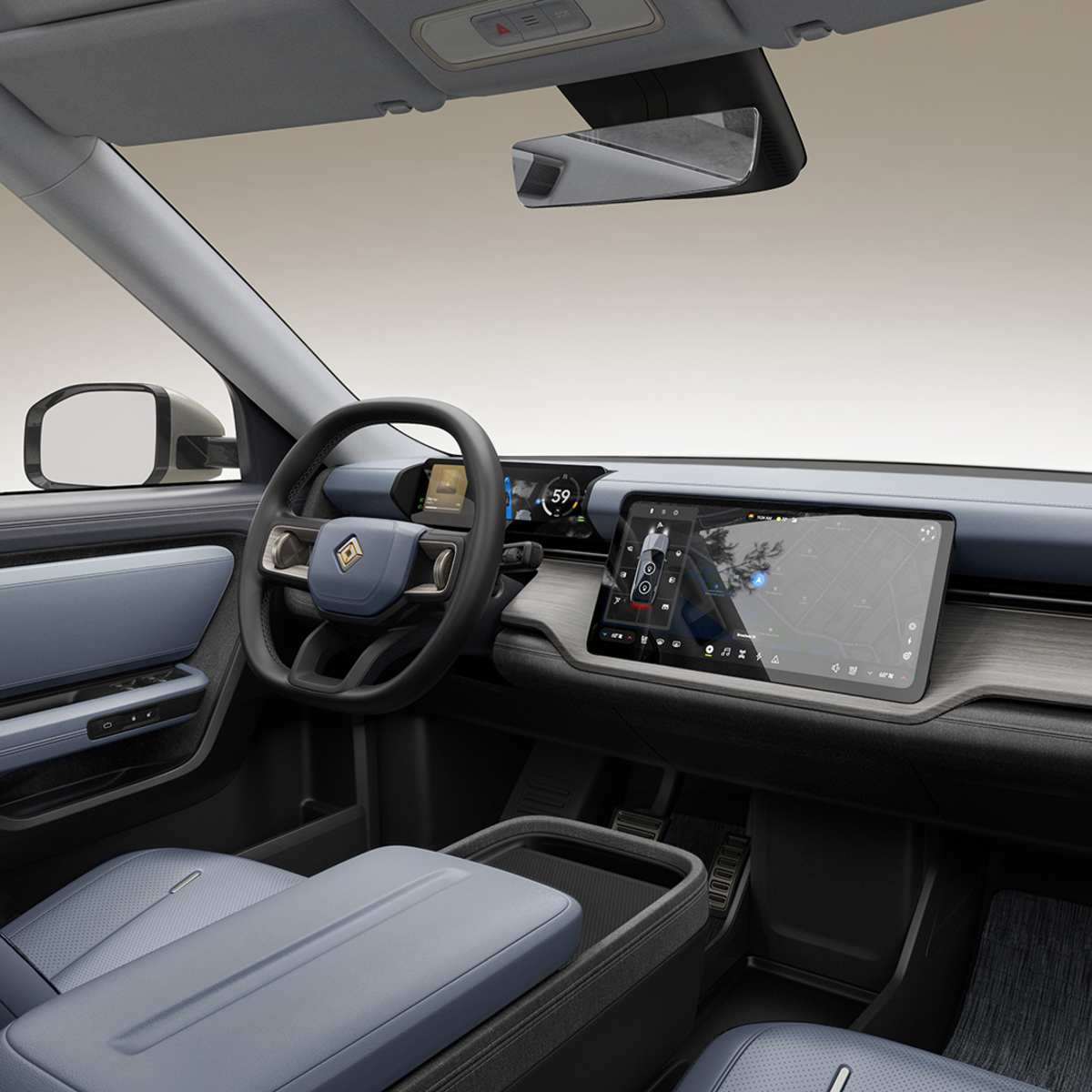
The Rivian R2 is an electric SUV/crossover that Rivian wants to sell to a lot of people. The discussion here is about how it feels to drive, how quiet it is, and how software features can improve after you buy it.
An over-the-air update is like updating your phone, but for the car. It lets the manufacturer improve or add features wirelessly after you’ve already bought the vehicle.
The Tesla Model Y is an electric SUV. It runs on a battery instead of gasoline, and many people notice it’s very quiet while driving. That’s why it’s often talked about when comparing electric cars.
Regen is the EV’s way of slowing down while also charging the battery. Instead of wasting speed as heat, the car uses the electric motor to help slow you down and recover energy.
Lift-off oversteer is when you take your foot off the gas in a turn and the car’s rear starts to swing outward. It’s a handling behavior that can feel sporty, but it depends on how the car manages power and braking.
Torque vectoring is how the car can send more twisting force to one side than the other. That helps the car turn more accurately and feel more stable in corners.
The Hyundai Ioniq 5 is another well-liked electric crossover. The point here is that even if it drives and charges well, the host thinks the overall ownership experience can be worse due to service and software frustrations.
ICCU is a charging-related computer/module in an EV. The host is saying some cars have had problems with that part, which can make ownership more frustrating.
The Tesla Model S is an electric car in the sedan category. It’s known for being a premium EV option. The podcast is using it to talk about how ownership and day-to-day experience can compare between EV brands.
This is about how automated the car’s driving help is. “Level two” means the car can do some driving tasks, but you still have to watch and be ready. “Point-to-point” means it’s trying to drive you along a whole route, not just a small part.
The EPA cycle is a standardized testing method used in the U.S. to estimate how efficient a vehicle is. The host is saying you should compare cars with real tests, not only rely on the official test numbers.
Driver assistance is the set of features that help the car drive—like keeping you in the lane or controlling speed. The discussion here is whether Rivian’s version is good enough to be convincing.
Premapped roads means the car’s driving-assist system works best on roads it already knows from detailed maps. The host is saying that relying on that can limit how well the system performs in the real world.
FSD is Tesla’s name for its advanced driving-assist software. It’s meant to do more than basic cruise control, and the host is comparing how far Tesla has gotten versus competitors.
Take rate is how many people actually choose an optional feature when it’s offered. The host is saying we may not know the exact current take rate because the pricing model changed.
Term
universal hands free
“Hands free” means the car tries to drive while you don’t have to keep your hands on the wheel. Even then, the system usually still expects you to pay attention and take over if it can’t handle something.
A heat pump is how the car warms the cabin (and sometimes other parts) more efficiently. In cold weather, it can help the EV use less energy so you lose less range.
“Software over time” means the car can receive updates after you buy it. Those updates might add features or improve how the car behaves, as long as the car’s hardware can support it.
A press loaner is a car a company gives to a reviewer to use for a while. It helps the reviewer test the car more thoroughly than a short event would allow.
ADAS is the set of driver-assist features in a car—things like keeping you in your lane or helping you avoid crashes. The host wants to test how well those systems work.
The host is saying the car’s software isn’t fully finished when it ships. Instead, the company plans to improve it later with updates, which is becoming normal for modern vehicles.
Autonomy Plus is a software package that’s meant to make the car’s driving-assist features more capable. The host is saying Rivian plans to roll it out with some pieces missing at first, then improve it later.
LiDAR is a sensor that uses lasers to measure distances and build a detailed 3D picture of what’s around the car. In this discussion, it’s treated as a key ingredient for making future driving-assist features more capable.
“Eyes-off” refers to a driver-assistance mode where the system can handle driving without the driver needing to keep their eyes on the road continuously. The segment contrasts this with earlier limitations, implying LiDAR-equipped vehicles can support a future step toward reduced driver monitoring.
“Hands-off” means you don’t have to keep your hands on the steering wheel. The host is implying it may still require you to pay attention, even if the car is doing the driving.
Point-to-point navigation means you pick where you want to go, and the car guides you the whole way. Here they’re saying some versions may do that without you touching the wheel, but not necessarily without you watching the road.
Driver monitoring means the car checks whether you’re paying attention, usually with sensors or cameras. In this discussion, it’s part of how the car decides whether it can safely do more of the driving.
Here, “upgrade” means the car can get better over time through software updates. Instead of needing new parts, the car’s features can improve after you buy it.
An infotainment system is the car’s combined media and information interface—typically the touchscreen, navigation, audio controls, and vehicle settings. When the hosts say the new infotainment system is “fast,” they’re talking about responsiveness and how quickly the UI and functions react.
This is basically a “make it cheaper” approach—remove features or use simpler materials to reduce cost. The host is saying Rivian didn’t just strip everything away; they tried to keep important parts of the experience.
R1 is Rivian’s earlier, bigger EV lineup. In this discussion, they’re using it as the benchmark for what features you get, and saying the newer R2 doesn’t include everything the R1 does.
A launch performance trim is the first early version of a model that’s aimed at driving feel and performance. It can include different hardware or settings than other versions.
Pet mode is a setting that helps keep the car’s inside temperature controlled while the car is parked. It’s meant to keep pets comfortable without you having to leave the car running manually.
Cooled seats are seats with built-in cooling, usually with fans. They help keep you comfortable in hot weather, but they use electricity like other accessories.
Rear drop glass is a rear window panel that can lower independently of the rest of the tailgate or hatch. It’s a convenience feature that can improve ventilation, but it changes how the rear wiper and sealing surfaces are packaged.
LFP is a type of EV battery. It usually lasts a long time and is considered safer, but it can be a bit different in how much energy it stores compared with other battery types.
An EV’s battery pack is the whole battery system inside the car. It’s made of many smaller battery cells, and its size helps determine how far you can drive.
Charging is plugging the EV in to add electricity back into the battery. A smaller battery setup can sometimes mean you don’t get the same charging speed or total energy as quickly.
A front trunk (frunk) is the storage compartment in the front of an EV. If it’s “waterproof,” it’s designed to keep water out when it rains so you can store things more safely.
“Fleet use” means a company or organization uses a bunch of vehicles for work. Here, they’re saying the smaller battery/range version makes the most sense for fleets, because those buyers can plan charging and don’t necessarily need the longest range.
“0 to 60” means how fast the car goes from standing still to 60 mph. It’s a common way to compare acceleration between two cars, like a drag-race-style metric.
The “quarter mile” is a drag-race distance—one quarter of a mile. People use it to compare how quickly cars accelerate in a short straight-line sprint.
In an EV, the battery sends power as DC, but the motor needs AC. An inverter is the electronics that does that conversion, and “silicon carbide” is a material that can make the inverter work more efficiently and handle heat better.
IGBT is an electronic switch used in EVs to control power. It helps turn battery power into the right kind of electricity for the electric motors. In this case, the car uses it in a way meant to keep costs down.
An inverter is the EV’s power converter. It changes battery power into the electricity the front motor needs to move the car. Different inverter setups can change how efficiently the car drives.
A clutch disconnect is a way to temporarily “turn off” part of the drivetrain. If the car doesn’t need the front wheels to be powered, it can disengage them to save energy. That helps the EV stay efficient.
Off-road performance is how well a vehicle can handle dirt, rocks, and uneven trails. It’s not just about power—traction and how the drivetrain responds matter a lot. The hosts are judging it based on the routes they were given.
“Price point” means the budget level the car is aimed at. The hosts are saying you should judge the vehicle’s off-road ability based on what it costs, not against the most expensive off-road setups.
Car
Jeep
They’re talking about Jeep as a brand that’s common for serious off-roading. The idea is that with a similar budget, you can buy a used Jeep and add trail-focused upgrades like lockers.
“Lockers” are traction devices that help both wheels on an axle spin together. That prevents one wheel from just spinning uselessly when it loses grip. It’s a common upgrade for serious off-roading.
Ground clearance is how much space there is between the bottom of the vehicle and the ground. More of it helps you drive over bumps and rocks without getting stuck or scraping the underside.
These are measurements that describe how well a vehicle can handle hills and bumps. Bigger angles generally mean less chance of the front, rear, or middle of the car hitting the ground on a trail.
Aftermarket modifications are upgrades you add after buying the vehicle using third-party parts. They’re talking about how the R2 is set up so owners can add off-road upgrades later.
Sway bar disconnects are a way to loosen the suspension’s “link” between the left and right wheels. Off-road, that lets each wheel move more on bumps so you can keep better tire contact and grip.
Articulation is how well the suspension can move each wheel to match the ground. Better articulation helps keep tires gripping when the trail twists or has bumps.
CV joints are parts that let the wheels keep turning smoothly even when the suspension moves or the steering turns. If there’s more space around them, the suspension can move more without binding.
Factory clearance is how much “extra space” the car has so parts don’t hit each other when you steer or the suspension moves. More clearance usually means you can run bigger tires or more suspension movement.
Bolt pattern is the arrangement of wheel mounting holes on a hub, typically described by the number of bolts and the diameter of the circle they form. If the bolt pattern matches, wheels can physically mount; if it doesn’t, you need adapters or different wheels.
Wheel offset is the distance between the wheel’s mounting surface and its centerline. Offset affects clearance to suspension components and the vehicle’s track width, so matching offset helps avoid rubbing and fitment issues.
Sway bars (anti-roll bars) reduce body roll by linking the left and right suspension. Disconnecting them can increase wheel articulation (“droop”), which can improve traction on uneven off-road terrain.
Locking differentials help both wheels on the same axle turn together. That’s useful off-road when one wheel is on slippery ground—without it, the slipping wheel can spin and the car loses traction.
The Volvo EX90 is Volvo’s electric SUV. The host says the earlier (pre-refresh) version had a drivetrain system that could help manage traction by controlling how drive force is applied.
Cross-car loading is a test setup where the car is arranged so some wheels are more “stuck” than others. It helps check whether the drivetrain can still move the car when grip is uneven left-to-right.
“Shuffle torque” means the car moves power around to the wheels that have grip. If one wheel starts spinning, the car tries to send more drive force to the wheels that can actually pull.
Wide open throttle means you’re flooring the accelerator. The car is asking for maximum power, which is useful for testing whether the traction system can still manage wheelspin and get you moving.
Term
brake-based cross-car torque loading
This phrase describes a driving-control trick where the car uses braking to help manage how power and grip are shared across the wheels. The goal is to make the car handle better when things get tricky.
The host talks about how Rivian keeps its marketing message consistent and makes sure the car’s look matches the intended vibe. They mention things like the paint and overall presentation feeling “aligned.”
In an EV, the drive unit is the main power system that turns the wheels. A “drive unit failure” means that part broke or malfunctioned and caused the car to act up.
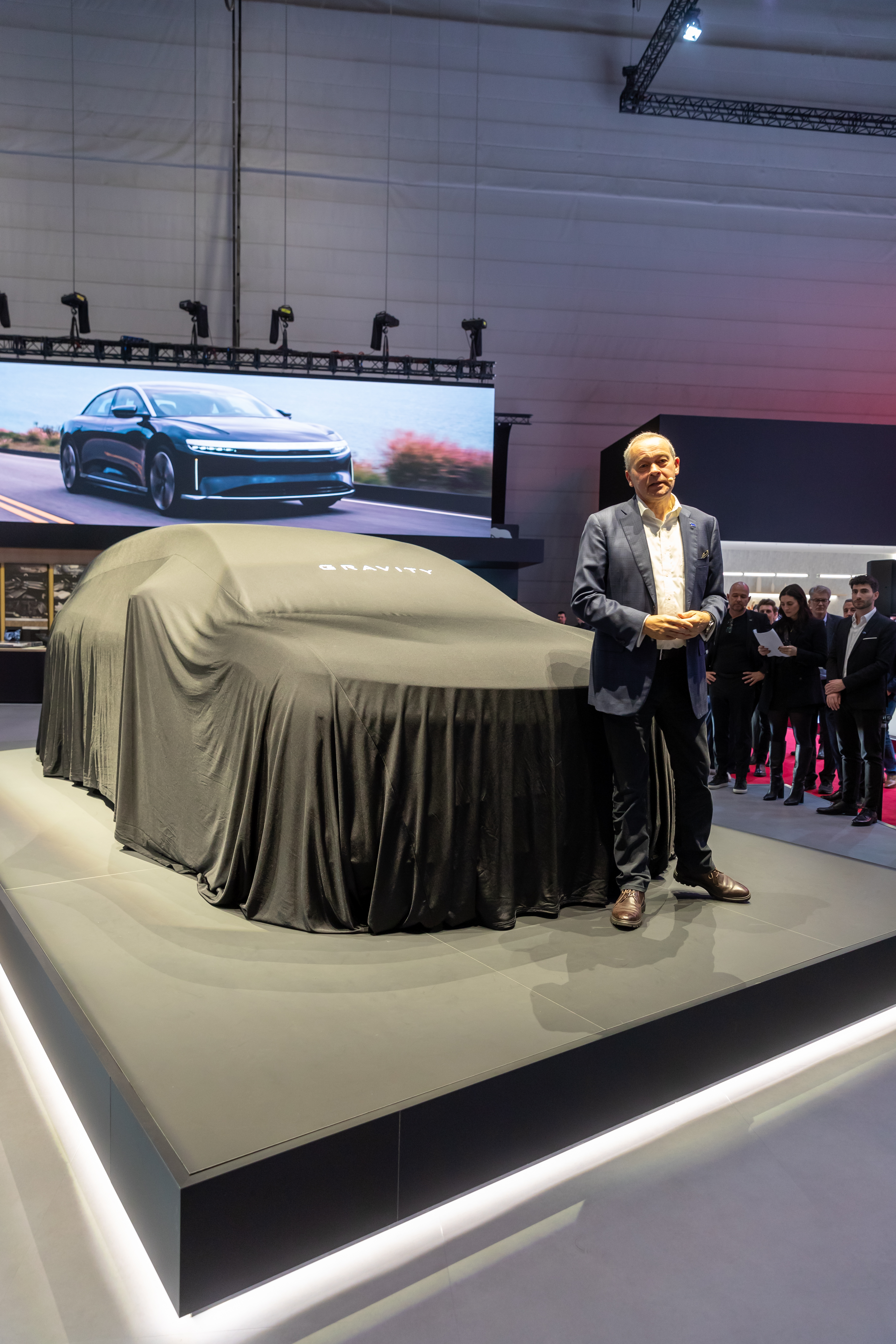
Lucid Gravity is Lucid’s electric SUV. The host says a recent software update fixed a lot of problems, and owners feel the car is finally working the way it should.
Owner’s forums are websites where car owners talk about what’s going wrong (or right) with their cars. The host is using that chatter to judge whether the car is improving.
General Motors is a big car company. They’re just using it as an example to say most people don’t know the top engineers or executives behind the cars.
Term
software working on it
They’re talking about software problems on the car. In an EV, software isn’t just for the screen—it can affect how the car behaves and how features work.
Corey Steuben is a leader at Lucid. The title “Director of Cross-Engineering” suggests he helps coordinate different engineering teams so the car’s systems work together properly.
A transitional period means a company is in the middle of big changes—like launching something new. The host is saying that can lead to problems, so it may be smarter to wait.
The Porsche Cayenne is a luxury SUV. It’s designed to feel sporty to drive, not just comfortable. People bring it up when they’re deciding between different types of vehicles and want a well-established option.
Jason Fenske is a car YouTuber. In this segment, they’re pointing to his videos as a big reason people learn about Lucid issues when they search online.
“Buying the car back” means the company takes the car back from the owner. Here, the host is using it as an example of Lucid trying to fix problems, even though people still talk mostly about the bad experiences.
Bobby Sherlock is described as a former Red Bull marketer who joined Lucid Motors as head of integrated marketing and left after less than a year. The hosts use his departure as part of their argument that Lucid has had trouble communicating its story effectively.
Red Bull is a well-known brand that markets itself through energetic events and sports. The point here is that someone who worked on Red Bull’s marketing later joined Lucid.
Integrated marketing means using one consistent message across different ways of advertising and promoting a product. The hosts are basically saying Lucid’s marketing role sounded more specific than just “marketing.”
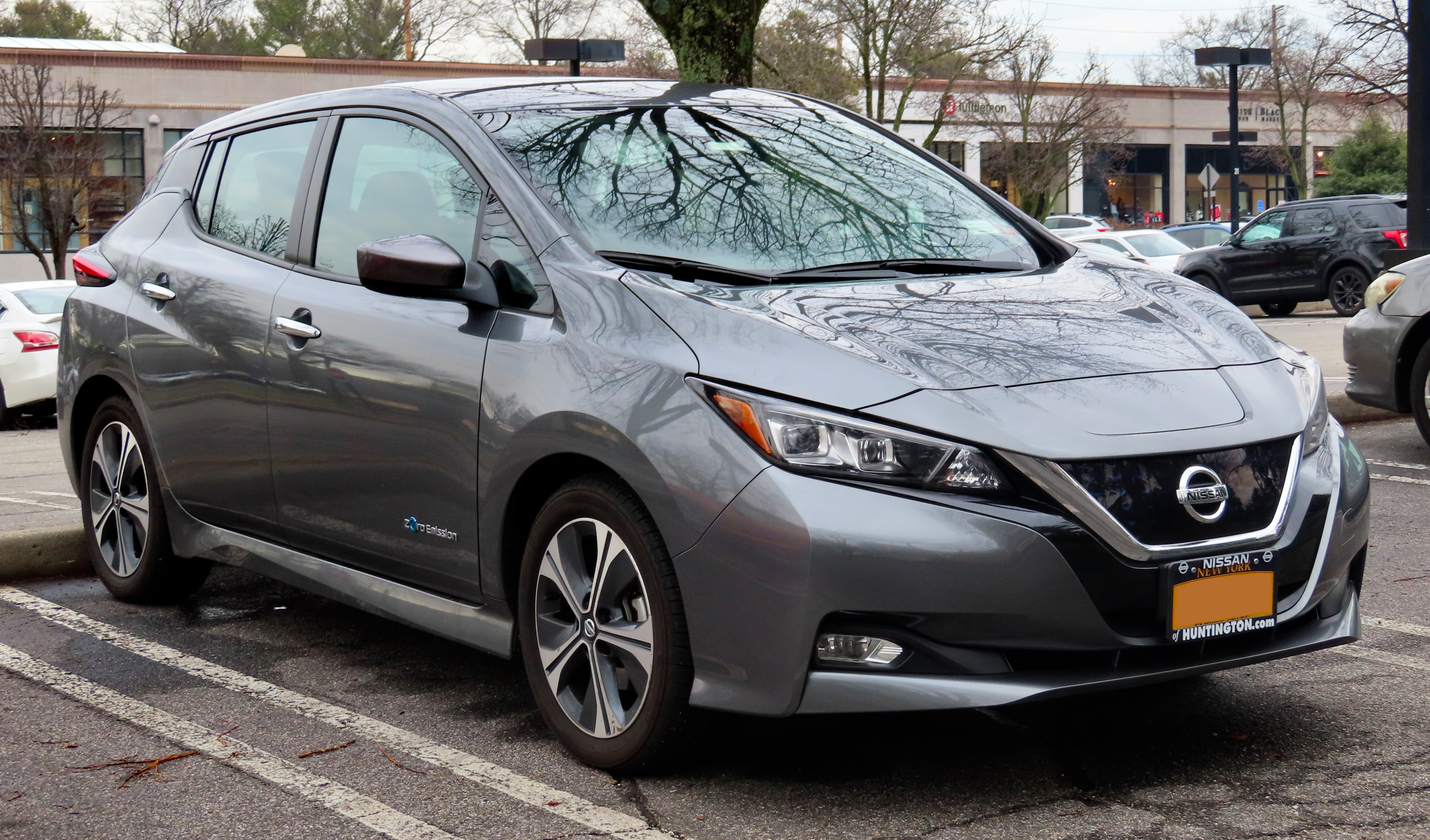
The Nissan Leaf is a popular electric car. Here, the speaker is saying the new EV being discussed will be very similar underneath, but will look different on the outside.
The D-pillar is part of the car’s body frame—basically a structural post near the back of the cabin. Changing it can change the car’s shape and how the body is built.
This “Nax connector” is the other charging plug the car uses. The point is the car can charge using two different plug types, depending on what charger you find.
A dealership is a store where you can buy a car from a specific brand. They often also handle service and repairs, so having more dealerships can make it easier to own the car.
Sodium-ion batteries are like EV batteries, but they use sodium instead of lithium. People are interested because sodium can be cheaper and easier to source, and they may work well for storing electricity.
Vehicle-to-grid means your EV can act like a battery backup for the electric grid. Instead of only charging from the grid, it can also send power back when needed.
Tesla Superchargers are Tesla’s fast public charging stations. The mention here is that GM’s charging app can work with them too, not just other non-Tesla networks.
Electrify America is a company that runs public fast EV charging stations. The episode is saying GM’s app can use that network as part of the same charging experience.
The Chevrolet Equinox is a popular SUV model. Here it’s just mentioned as an example of a car owner who uses EV charging networks and app-based discounts.
A “pass plus account” is a paid membership for a charging network. The idea is that it can reduce what you pay to charge, and the host is wondering if the discount still applies when you use a different app.
GM’s app is the Chevrolet/GMC app used to manage things like charging. The host is asking whether using that app changes the price you pay at charging stations.
Here, “authenticate” means the app proves who you are to the charging network. That matters because the charger may then apply the right membership discount or price.
FordPass is Ford’s connected-vehicle app used to manage vehicle features and services, including charging access and authentication across charging networks. The host compares FordPass’s approach to other ecosystems to illustrate how discounts and pricing can depend on which app you use.
A “cycle” is one round of charging and using the battery. Cycle life is how many of those rounds the battery can handle before it starts losing capacity. The speaker is quoting a durability number—100,000 cycles.
This part is about someone reviewing and challenging claims that a battery technology is what it says it is. The creator argues that the “solid-state” story may not be accurate. It’s more about evaluating evidence than explaining how to build a battery.
A solid-state battery is a type of EV battery that uses a solid material inside instead of a liquid. The idea is that it could be safer and store more energy. The discussion here is about whether a company’s “solid-state” claim is accurate.
A lithium ion battery is the common battery type used in most electric cars. It works by moving lithium ions back and forth inside the battery to store and release energy. The segment suggests the technology being shown may be this more established type.
The Ford Ranger is a popular pickup truck model. The host is saying the Mazda truck they’re showing is basically built on the same basic truck design as the Ranger.
The Ford Maverick is a small pickup truck. It’s meant to be easier to park and drive than bigger trucks, while still having a truck bed. The podcast is comparing older and newer versions based on appearance and features.
The belt line is the line you can see running along the side of the car, usually around the height of the doors. Designers use it to change how the car’s shape looks.
A federal tax credit is money the government gives you for buying certain EVs. It can make the car cost less than the sticker price, so people compare prices after the credit.
The Toyota RAV4 is a popular small SUV. The host is using it as a benchmark to say this vehicle’s interior feels roomy compared with a typical compact SUV.
Term
TELO
“TELO” sounds like the name of a specific EV or EV project. The hosts are basically asking what’s new with it and when it might actually be delivered.
Term
four by eight
“Four by eight” is a way of describing a vehicle’s setup—often how many wheels/axles it has and how it’s meant to be used. Here, it’s being compared to a small “mini Cooper size” package, implying a compact utility EV.
They’re talking about an electric trailer you can tow that’s set up for camping. Instead of running on gas, it uses electricity (usually from batteries) to power things inside.
Towing means pulling a trailer behind the vehicle. With an EV, towing usually cuts range because the trailer makes the car work harder, especially at highway speeds.
Kilowatts tell you how much power the EV can put out. If the car can only provide a limited amount of extra power while towing, it may not be enough to fight the wind resistance, so range suffers.
The Tesla Cybertruck is an electric pickup truck. It’s designed to carry things like a truck, but it uses electricity instead of gasoline. The podcast mentions it when talking about how EV trucks handle towing and hauling.
LIVE
Hello and welcome to the batteries included podcast. It is Friday, June 12th, episode 143. Today, a lot about the R2 because it's been driven, the Rivian R2, of course, at the reveal of the Mitsubishi Eclipse Sportback and GM launching energy pass and much, much more.
I'm your host, Martin Lee from the EV News Daily podcast. Joining us in a bit is the Auguste, Mr. Tom Logany, host of YouTube State of Charge and the premier EV charging news site, evchargingstations.com. Kyle's with us from the majestic practically palatial halls of Outer Specs Studios and on screen, you can see Dominic Yoni, a longtime
EV journalist and the host of YouTube's Drive Electric with Dominic. He's not with us yet, but he hopefully will be later, but let's hear from him now.
The batteries included podcast is sponsored by evchargingstations.com. If you drive an electric vehicle or you're planning to, this site is packed with comprehensive charger reviews, detailed DC fast charging graphs, and the latest news from all of the fast charging networks.
You'll find real world testing, easy to understand comparison and deep dives into how different electric vehicles actually charge. Before you buy an EV charger or plan your next road trip, make sure to bookmark evchargingstations.com and make smarter charging decisions.
Alright, thank you, Tom. Let's get into it then. The R2's been driven, Kyle, just a short two hour video that you put up that I actually, this week, a couple of videos you put up. Let's get straight into it. You've finally driven it. Let's get into your driving impressions of the Rivian R2. Not one for hyperbole, but this vehicle has to succeed for the company to be around in three or five years time. How's that for no hyperbole? It's true, though, isn't it? Rivian R2 absolutely has to work. What did you think when you drove it?
Yeah, it feels like a super important car because it is, of course, the company does ride on it and they seem to be very well equipped to, you know, support their new wave of customers with this car. That's my feeling. They've brought service times down. They have a really nice sales process without any dealers having non-franchised, you know, just direct sales is a really big win for a lot of people looking at a new car.
And then, of course, it comes down to the product, which is what I went there to went to an event in Utah to drive the car for the first time. And it drives really well. They have absolutely got the right mark. If anyone is on the fence, if they're wondering if there's something weird about it, there's little things, of course, through the video that I can nitpick and say, let's get this better. Let's dial this in. Let's make sure it has pet mode and keep climate and things that will come through an over the air software update.
It's clearly not finished yet. But I think Rivian's proven that they're very good with software. They will get it totally dialed in. And even if they delivered it today as it is, so many people would be happy with this car. The driving is comfortable in a daily setting. It's predictable in pretty much everything it does. It's very nice on the highway, relatively quiet other than some tire noise. Way quieter than I was expecting the car to be, actually. And that's not saying it's a Rolls Royce Spector or anything.
It's just for the class of car. It's right up there with the new Model Y, which is a very quiet vehicle. A lot of people who haven't driven the new one, it's great. And then you have the sort of fun to drive and adventure aspects, which is more or less unique in this category.
Because I took it up a mountain road and really enjoyed my time with it. And it's all in the video. A lot of using the back axle does a ton of regen so you can lift off oversteer into corners. It makes a ton of power on the rear axle. So you're coming out of corners with a little bit of opposite lock or a lot of neutral steer. But you can drive the car on the rear axle like a rear biased performance car. And I really appreciated the driving dynamics on a back road.
And then off road, this is still a very adventurous vehicle. It has quite a bit of clearance considering the class and the range that it actually does get in the EPA cycle. And its cross car torque vectoring is tuned, I'd say, seven out of ten still improvements to be done over time.
But you can pretty much wheel this thing wherever you would need to get it to. So as an overall package, considering the fact that it needed to be good on road, off road, in a fun environment on the highway, it's a really nice package. And I could not be more excited about it. I think it is finally competition to the Model Y.
Yeah, because you point out, you have pointed out that the latest Model Y is really is a spectacular vehicle in many ways. And they've just kept on improving it. And where the Model Y has got to, in terms of price performance, value for money, you often point out, you can't overlook it.
But this is a very different vehicle, both in terms of how it's pitched, how it's marketed, styling, stuff like that. And there will inevitably be people who might think, why are you comparing it to a Model Y? Oh, here we go again, comparing it to a Tesla.
It's Model Y best selling electric vehicle in the world. So we have to. Is it going to steal sales from the Model Y?
Almost definitely it will, you know, take some people that were interested and at least allow them to do some cross shopping. At the moment, if you want a really good electric crossover, that's a well sorted package. I mean, in terms of there are some amazing cars out there.
Like, let's just use Hyundai Ioniq 5, for example, very popular electric car here. It is a great driving, wonderful charging electric car that's available in our market. However, when you when you factor in the total vehicle experience, you have to go to a franchise dealer, you
have to go through their service centers, which in most cases is not great. They have a known fault with ICCU problems. They have really annoyingly frustrating software. And it's there are some detriments to the experience.
Now, I'm not here to say Rivian and Tesla offer a perfectly sorted, totally solid experience. But I would say on average, if you look at everything from sales to delivery to ownership to daily living to software updates and functions that come over time.
Those two brands really do a great job of supporting the customer long into the future. And I know that as I own one of the first Rivians that they made and I own one of the first Tesla Model S's that they made and both vehicles are very well supported.
And now it's like, yeah, you can actually start thinking about this versus Model Y without giving up daily annoyances with one major caveat. I know I know this turned into a Model Y comparison conversation, which for some people they just would never consider the Model Y.
And this is so far away from that is a major hurdle for a lot of existing Tesla owners that are reliant and are used to the FSD system, especially in recent months. Rivian has promised that they are going to have level two point to point by the end of this year in this vehicle.
The good news and the bad news. I'm glad to see them working on this. It's exciting that level two autonomy is going to come. And to me, that would make this a perfectly well rounded car. And if this had comparable FSD to Tesla, I would not even consider a Model Y. I would only want to go for this option.
The bad news is that is purely just a timeline that the company is saying and there is no actual proof that there will be level two by the end of this year comparable to FSD in terms of point to point systems. So that's a real detractor at the moment.
Within one years, two years, if Rivian can go on their very aggressive timeline that they claim they're going to be able to do somehow, then why would you buy a Model Y when this exists with level two point to point Nax plug in charge better charging the Model Y similar
efficiency in the EPA cycle. We need to actually do side by side tests. It looks really cool. It drives great. It's fun. It's adventurous. Now you're like, wow, this is a real finally a great choice.
What's the best thing that they got right about this vehicle? Because you are one owner. You followed the development of R2 through the whole story. Now you're driving one on the road. What's the best thing they got right with this vehicle?
It's the overall package. It's the fact that it can do so much for one particular car. It's worthy of a one car solution tagline, which is something Rivians have always been great at. And what I mean by that is it's comfortable on the road.
It's sporty on a back road. It's adventurous off the road. It really is a vehicle that can do it all. And there's very few cars that can do it all without being annoying. And Rivian deserves all the props for properly designing this car, properly packaging it, and I think properly engineering it.
Rivian says they want to bring hands off eyes off in like by late 2027, 18 months, I think from the beginning of the announcement that should level up the playing field somewhat, right?
If they are able to do that, of course it would level up the playing field. We have no competition in the driver assistance space in North America right now. You know, I pushed RJ and James Philbin, who's responsible for that division inside Rivian pretty hard during my time there.
And I'm like, I put a comma AI in my Gen 1 truck. Okay, this is literally a cell phone that drives the car. And it is significantly more capable and significantly more powerful in the user experience that goes into what the vehicle can do.
It recognizes stop lights. It can make turns. I can go through roundabouts now. Like it can do so much. And your system is still locked to premapped roads. And you know, there are a lot of safety considerations when you're building not just an aftermarket cell phone driver assistance that automakers have to build in their car.
So I'm not trying to just like be a little bit dismissive of that. What I am trying to say is up to this point, Rivian has not shown any competency in level two driver assistance systems that's convincing. They have a very aggressive timeline.
They had a very convincing AI day with hardware. I would say a fairly unconvincing test drive during that experience for me compared to what was already on the market as the benchmark.
And so while I think they're putting a lot of money into it, and they've convinced a lot of people that level two point to point is coming, there's been no hard evidence that they have shown anyone as to actually how that's going to look, what the timeline will be.
And that brings me back to what we always talk about on this show, which is buy what you're comfortable with today. If you're not comfortable with that today, don't buy the car. Don't buy it based off future promise.
However, if that's sort of an OK thing with you and you're willing to be maybe flexible on your timeline or maybe Rivian nails it, then go for an R2 and it will get better over time. That's kind of a cool thing with software updates.
But but I will say the fact that, you know, driving around here close to where I live, I can't use universal hands free and gen two vehicles at all on any of my local roads.
But my little comma AI aftermarket system does everything. It just shows that they've got some work to do. And the fact that, you know, Tesla's and other brands in China are just absolutely nailing it.
That's a real differentiator and people are going to make buying decisions off of that.
Whenever we bring up this topic on the show, a lot of our viewers go, Well, I just care about highway ADAS or FSD is silly.
You know, it's responsible for killing X number of people. You get all the different opinions.
Really, if you live with FSD on the current hardware and the current software, you can understand just how far along Tesla is, regardless of whether you want it or not.
And I hope our viewers also understand there is a large percentage of EV buyers that will make a purchasing decision on this, especially the early adopter buyers.
A lot of people reference like a 10 or 12% take rate on FSD.
I don't think we know what the numbers are now that it's subscription only and now that it's gotten significantly better.
I also don't think we know what the numbers are on hardware for equipped vehicles.
I will say anecdotally, I see a bunch of new model wise around where I live 50% maybe more.
I can look into the screen and see they're on FSD.
It's very common during a normal drive in my city to see multiple FSD users on that drive.
These are people that are now relying and they're used to it and that's their benchmark.
I think people want early adopters and we can argue over where EVs are in terms of the adoption curve.
A lot of people just want to go buy a car and it happens to be electric.
Rivian R2 buyers probably are more early adopters.
I think they just want to see improvements because Tesla over for a long time kind of lived on a lot of jam tomorrow.
They had a lot of good will for a lot of good reasons and people went with it.
They bought cars, paid for product, they never got sold the car and they were like, that's okay.
I think putting some of the fandom aside of their charismatic chief exec,
I think Tesla as a company have shown that more often than not, you can fight me in the comments,
they've delivered on a lot of their promises, time scales forgiven.
I think with Rivian, as long as the early adopters can see it's improving, then it's getting better.
I think that's probably enough for the early adopters to take a punt.
For everyone else, I don't know.
I totally agree, Martin.
I'm with you on that.
For me personally, if we could see some meaningful updates to universal hands free, that would be awesome.
I know Tom's here as well.
Welcome, Tom. Good morning.
I just want to mention one last thing, Martin.
Ignoring the FSD major difference in the cars and that's not unique to R2.
That's between Tesla and everyone else.
Rivian put so much attention to detail into everything about this car,
where they placed the heat pump, how they designed the suspension.
They put extra storage in the vehicle.
There's big water bottle holders in the door pockets.
It's big enough to put actual car seats in the back unlike R1S because they bump into the seat in front.
It's just such a well designed, family friendly, adventurous friendly vehicle
that it is so hard and it will be so hard to ignore this car.
When cross shopping anything in the combustion or electric SUV space,
they have absolutely nailed almost every single metric on this car.
Once they get a final round of software on it, which I know they're capable of doing
because they've proven that with their prior products, there's going to be no stop in this thing.
Like Martin said, if it's going to improve with software over time and improve with ADAS over time,
which is never a guarantee but almost a certainty,
this car is going to keep people excited and happy long after the initial delivery day.
You also had some content out about the 45 grand one.
We'll get to that in a minute.
R2 starts at $45,000 next year, rear-wheel drive coming next year.
Launch version is performance trim 3.6 seconds 0-60 and it starts at $57,990.
Dual motor premium trim comes later this year, they say, $54,990
and a rear-wheel drive long range trim launching in the spring.
That's the big range won 345 miles.
Tom, welcome to the podcast. How are you?
Hey, guys. Sorry, I was a little late.
Not to tend to something this morning.
I can imagine Kyle probably told you guys just about everything you needed to know about R2
and I caught the end of that.
I agree with his last points on as far as the complete package
and that's really what I went out there to really try to find out more so
than normal driving events where you spend so much time on the actual driving.
The funny thing is, I know I'll get one as a press loaner at some point
and be able to spend much more time driving it and testing out the ADAS and everything.
If you watched my video years ago, I didn't really focus a lot on driving on the driving event.
I wanted to talk to some of Rivian's SMEs.
I wanted to learn a little bit about what went into the planning and building the vehicle.
I talked to RJ as far as the form factor because it was interesting to me that it really is a mini R1S.
People that don't know the brand will think it's the same vehicle driving by.
It's that close to an appearance.
I was interested if they set out with that goal of saying,
look, R1S looks awesome, which it does. We have one. Love it.
Let's just make a smaller one.
Or if they were like, okay, let's build on what we have, but it doesn't have to look the same.
RJ basically, and I talked to him off-camera and on-camera about this, said that,
no, they didn't intend on making it look like a mini R1S.
They actually had a couple different designs that were different,
but they just kept coming back to that form factor because it fit what they needed to fit,
and it just made it work.
That's what I thought was interesting, but the company had to work on the R2
like it was life or death for the brand, in my opinion.
They had to obsess over every little thing.
Everything had to be perfect because Rivian's been selling vehicles now for about five years.
I think September or October of 21 is when they first launched R1T.
Almost five years. They've sold 175,000 vehicles. That's not good.
They needed this to be their home run.
It seems like they spent the last few years working on it as if they knew it was life or death for the brand.
I quote at the end of Kyle's talking about how it seems like they did everything right,
and that's how I walked away from this saying,
okay, they understood the task that this couldn't just be a very good vehicle.
It had to be a great vehicle.
It had to convince people that haven't driven electric vehicles
that are looking for a $50,000, $55,000 family, midsize SUV.
It had to be able to pull them out of combustion vehicles and put them into their first EV,
and I think it's good enough to do that.
It seems like mission accomplished. Of course, it's not perfect.
The software obviously needs future iterations.
We know Rivian is good at doing that. They'll continue to improve on it.
There's things that they're going to tweak.
It seems like that's the world we live in today.
When vehicles get launched, they're not 100% baked.
We can complain about it.
We can say that shouldn't be the case, but it is the case, and that's the world we live in.
You almost have to accept it.
What vehicle comes out any more day one, that's perfect.
I trust that Rivian will do the things that they said they'll do.
I wanted to learn a little bit more about Autonomy Plus.
I took to James Philbin about that.
I know there was a lot of consternation over the fact that the vehicle is going to launch without the LiDAR,
but they're going to add that later.
I know I had a lot of people talk and leave comments on some of my content saying,
I'm getting an R2, but I'm going to wait for the LiDAR.
I don't want the system to not be as complete or as safe without the LiDAR.
Basically, we talked about this a lot.
He said that customers won't know the difference between the vehicles with LiDAR and without.
He said you won't be able to tell the difference, especially upfront.
He said that the whole thing is going to be long-term.
The vehicles that are equipped with LiDAR, which should start coming out in about eight months or so,
will have the ability down the road to be eyes-off,
and that the vehicles without LiDAR will be hands-off point-to-point navigation,
similar to what FSD does today.
You'd be able to hop in it, give it an address.
It'll go to the destination as long as it's going to do driver monitoring,
but the LiDAR will be able to allow future iterations to have eyes-off.
I still think that's pretty far down the road.
They seem to think it's towards the end of this decade, around 2030-ish, when they might be ready for that.
Basically, the difference between getting the R2 now and getting the R2 once it has LiDAR
is it may make a difference five or six years from now.
I knew that was definitely a sticking point for some people.
I was incredibly impressed.
I think they did what they needed to do.
This had to be a home run.
It couldn't be a double, it couldn't be a triple.
Rivian needed to bring out a vehicle that was so appealing that it brought people into the brand
that maybe weren't even considering an electric vehicle, and I think it will.
Yeah, it's interesting.
You spoke to the chief software officer, Wesson Ben Said, as well.
He's also co-boss of the Rivian Volkswagen joint venture.
He has a lot on his plate.
Where did you get to with your conversations with him about software?
That's what we were talking about as you joined, actually, which was...
I think when people see a forward momentum with software, like stuff is being fixed.
There's a roadmap.
Okay, I'll take a punt. It's going to be getting better.
What did you discuss?
I mean, the whole interview with him is on camera, so I really didn't do a lot of off-camera.
I didn't learn anything other than what you see in my video.
Wesson is always fantastic.
He's one of the people that I think Kyle and I seek out at any event, one of the top people,
and not just the top person willing to talk to us and tell us stuff
that maybe other people in his position from other companies are afraid that their media department might get mad at.
So Wesson rocks.
Yeah, no.
He talked about being able to upgrade and the capability and how fast the new infotainment system is
and how they were able to bring an even better system to market in R2 at a lower cost.
See, that was really what I was so impressed about was, of course, you could take a $90,000 vehicle
and make a $50,000 version of it.
But you can just cut everything out, make the seats just like 2017 bolt seats and all plastic interior
and deep content, just keep cutting stuff out of it.
You could bring the cost down, of course, but they fought so hard to not do that,
to keep the vehicle nearly as content rich as R1, but nearly have the price.
And they did that, and they did that in every little part.
You can go around the vehicle and just look at, well, how did you make this part?
And they'll explain, well, this is how we were able to keep this by cutting this and cutting that.
And they did what they needed to do.
They were able to bring a vehicle that probably outkicks its coverage as far as price.
This is probably for the price, one of the best values you could get today, in my opinion,
because they were able to bring the cost down without removing things.
Of course, it doesn't have air suspension and it doesn't have everything R1 has,
but they were able to put together a tremendous package that is very value-rich, in my opinion.
So did you guys all drive the launch performance trim?
I did.
I don't know if Kyle drove something different earlier, but a couple of things.
If you want to talk about the fact that what we just talked about,
it might launch without having everything that we hoped it had, like pet mode and so forth,
but that's going to come.
We know Rivian's going to bring it.
The only other thing that I will say that if you want to call it a disappointment was,
this was always billed as a $45,000 Rivian, and it's not.
It just isn't.
I know they're going to have a $45,000 version in 14 months, let's say, summer of 2027,
but for about $3,000 less, you're losing 50 miles of range.
I don't see that version really making much of an impact.
I almost wish that they billed this as the $50,000 Rivian because it's not a $45,000 vehicle.
They're going to have that version come out, but I just think for cutting the battery back
as much as they're going to have the 275 miles, but they do say 275 plus.
So maybe that'll surprise us, and it'll come in closer to 300 miles.
If they do, then maybe, but to drop from 330 to 275, that's a big...
Actually, it's dropping more than that because the rear-wheel drive version is what?
345, I think it was?
Yes, it is.
So from 345 down to 275, that's a big jump for $3,000 savings.
So to me, that was the only mess.
It really isn't a $45,000 vehicle.
57, what's the number on screen?
57, 990 before you start picking options, but a good segue, Kyle,
into the other content that you got out online that everyone should go and watch.
If they haven't watched it already and that's your walk around of the $45,000 trim,
what was good and bad about that?
It really doesn't feel like you're losing all that much from a feature account in the $45,000 one.
The biggest thing would be the cooled seats, the rear drop glass doesn't go down,
but I think a lot of people will prefer just the traditional wiper on the back
rather than that weird, crazy mechanism.
That is really impressive that they did that for the drop glass.
Yeah, I mean, it looks okay.
You really don't lose much.
What they're doing with the small battery, it's not confirmed yet,
but from what I could gather is it's not LFP.
I think if it was LFP and you could full charge it every day,
or at least the manufacturer would recommend that.
Maybe I could get away with the less miles because you could use more of it
or more of the battery pack.
This sounds like it'll be similar to how Tesla does their standards in our market
and just depopulate some cells out of the battery pack.
That's going to mean your charging is probably going to be a bit slower,
your range is dropped, but I still think it's going to be fine for most daily use
and especially fleet use.
Don't forget, Rivian sold how many of these things to Uber?
I don't even know, but there's a huge order.
They probably just specced the standard to meet the minimum.
This is all speculation, but probably whatever Uber said was the minimum range.
They're like, okay, cool, well, we got to build a bunch of these.
Let's just make that battery at the lowest cost.
At the end of the day, does it make sense to step up to a bigger one
or a more feature count one?
Well, it's all on the website.
You can go through the different specs and options.
But I was really impressed with the standard offering, still having the glass roof,
still having nice materials.
When you get into a standard Model Y, for example,
especially the new one with the dark headliner, it feels like you're in a dungeon.
There's no ambient lighting.
There's no glass roof.
There's no waterproof front trunk.
It's crazy what they took out of that car.
And here you really kind of get the same car just with a little bit less range.
Kyle, talking about the range, I mean, I agree with for fleet use 100%.
This is a super boxy vehicle.
And let's say EPA is 275.
Highway, it's not going to hit EPA, I don't think.
So that's what I'm talking about.
Really, if the individual buys this and it does come at EPA 275,
it might be a 220 mile highway driver that doesn't charge well.
And that's what I'm saying.
The next step up, the full-size battery standard model, real-world drive, is only what?
I think it's 3,000 more, right?
48, something like that.
So to me, that 45K vehicle is a fleet use vehicle.
Or individuals that really can't scrape the extra $3,000 to get the larger battery standard model.
I don't think it's really relevant to individuals.
I don't think it's going to be a big seller.
Interesting.
Okay.
First, we've covered Rivian R2 pretty well this week.
Anything that I've missed or not asked you or Dom, anything you want to add?
I can't wait to see some drag races between this and Model Y, which is, you know,
I was sort of, these vehicles aren't really necessarily made to do that kind of thing, right?
But just like the numbers between like the Rivian, this performance version and the Model Y performance,
they're so close.
Like the Model Y is a little quicker from 0 to 60.
But listening to Kyle's video and actually talking about how the power just like keeps on coming on
as you keep going, it doesn't kind of let off like it kind of doesn't Tesla.
And then, Tom, you were saying you didn't really do a whole lot of driving stuff,
but you actually have like a 0 to 100.
Apparently, you found a private road somewhere and I think it was 7.7 seconds or something.
Yeah, it was actually a 10 to 100.
I didn't completely stop.
Yeah, I slowed down to 10 miles an hour and ripped it.
It was 7.7 seconds.
So it was a rolling 10 to 100, but still 7.7 seconds is pretty damn good.
Right.
So I think Tesla Model Y performance does that in 11.
Just a little bit more than that.
Or 7.7 seconds.
So 8.15 or in that neighborhood anyway.
So anyway, it's going to be super close.
Like you can imagine, you know, the Tesla coming up, coming out of the gate first,
you know, ahead in about the halfway part, the Rivian is going to speed up and overtake it.
But then the Rivian is limited to 130 miles an hour.
So I don't know if it can hit that actually in the quarter mile.
But if it does, it's going to would give the Tesla, you know, a chance to pass it right at the very end.
So I just look forward to some exciting, you know, drag race videos.
But other than that, I just want to mention this thing that Kyle brought up in his video that I don't, I didn't see anywhere else.
But they have a, so on the rear axle, the motor is, has a silicone carbide inverter.
So the transistors are made with silicone carbide.
It's the more most efficient way we have at the moment.
Because that's the primary drive axle, then the front axle inverter is IGBT, which is, you know, a lot cheaper and stuff.
So this is a, you know, class saving measure.
And, and it doesn't, the car doesn't lose a whole lot of efficiency because as Kyle points out in his video,
you don't, you don't have the, the front axle engaged all that much.
It's a clutch disconnect, I believe, right, Kyle?
Oh, one thing I did want to know is about the off road performance from, from each, because I know, so Tom,
you say you have a video coming out with a lot of the off road footage and I just want to say I'm really looking forward to that.
Because like in your video, you have off road footage, but it's like all sped up.
No, I didn't include it in this because the video was already getting too long.
And, you know, we spent a lot of time off road, you know, I'm trying to judge it in the context of what it is and not comparing it to R1T or R1S.
Because it's half the price.
If you view it in that light and I don't have a lot of experience, let's say off-roading other vehicles in this class,
110000 dollar jeeps and so forth and so on, Kyle, would be much better to talk about, you know, comparing it to that.
But in, in looking through the lens of saying, okay, this is coming to market in this range, I thought it performed exceptionally well.
You know, it did pretty much every task that I was able to give it.
But again, I didn't do extreme off-roading.
I stuck to the course that they gave us and the lanes that our Rivian specialist was telling us in the back.
I'm more curious to hear what Kyle has to say about the off-roading.
I'm sure he spent a lot of time really analyzing that.
But for me, as a, say, a novice off-roader, I thought it did, you know, tremendously well.
Yes, I would largely agree with Tom on the capabilities considering the price point and use case of the vehicle.
If you want a hardcore off-roader and you have a 60000 dollar budget, this is not the car to buy.
You would go and buy a used Jeep with lockers and, you know, all the crazy stuff you can get on there.
When you look at it in the context of what other electric car is available in a 60000 dollar price category,
you go, oh, maybe used R1S, but then it's always hard to compare new versus used.
I think the bigger question is who are the buyers for this and where are they going to take it?
And I think it's very representative to what Tom and I did when we went on this sort of predetermined off-road trail,
which is you live in an urban environment in a town with home charging.
You want to go up to the mountains.
You want to go camping for a couple of days.
There's a trail to get there.
This can pretty much go on most very, you know, green level, low level trails to get to wherever you need to go to.
It has pretty great ground clearance considering how well it handles nine point six inches.
It has pretty OK approach, departure and break over angles.
And I can't remember the angles off, off head, but they're all in the documentation on the vehicle.
And I think more importantly for the off-road review is there is a ton of headroom in this platform for aftermarket modifications.
Two things that you can do to just make this so much better off-road, which would be sway bar disconnects.
That's really easy.
It's two bolts, zip time in.
And that'll give you all a lot more droop because one of the problem is with such a stiff sway bar on the vehicle,
as soon as you lift wheels a lot and in off-roading, you kind of want to keep wheels on the ground for ultimate traction
and really get as much articulation out of the vehicle as you can.
You know, this thing's just all stiff and taut all the time.
It's like waking up with a stiff back because it's like that for a better on-road handling experience.
So that's a very simple something you can do before you hit the trail, zip tie up the end link and you can go.
You just need to do one side really on either side.
Again, I'm not recommending this, but I'm sure there will be aftermarket quick disconnect, reconnect functions that will happen very easily, very quickly.
The next would be a vehicle lift.
There's still quite a bit of droop angle that you can get out of the half shafts.
You know, the CV joints have more room to go.
You can definitely go quite a bit.
And then there's a lot more room in the factory clearance as well.
You might be able to get 18s on this thing.
Then you can go with a pretty big tire.
Rivian, I was talking to Max Coffey who's their chief engineer.
I'm like, what if you took the R1T's 34-inch overall diameter all-terrain tire and put it on here?
Obviously, the wheel won't bolt up.
It's a different hub and bolt pattern.
But actually, the bolt pattern and the hub size and the offset are almost identical to Model Y.
So a lot of, we believe, Model Y aftermarket wheels will fit on this car.
And I'm going to be playing around with that as soon as we get ours.
And Drew's already making Martian wheels for it.
So it'll all be kind of cool to test fit everything and make sure it'll all work.
But you can get quite a bit of droop if you disconnect the sway bars on it.
And that'll be cool.
Then there's quite a, oh, what was I going to say?
34-inch tires.
We think you can fit the OE 34-inch tire on that initial wheel.
It would be really cool.
You need to make sure it works at full tuck and full lock.
But there's quite a bit of room in there.
The next really only disappointment and off-road, which I think is a reasonable omission from this car,
is the lack of locking differentials.
R1 dual motor, which should still be better off-road, does not have differential lockers.
It was not the expectation that this vehicle would have it.
It would have blown people away if they did some sort of mechanical torque vectoring on the rear axle,
which we've seen from many, like Polestar and even Volvo EX90 pre-refresh had that type of technology in it.
And that would allow you to get a mechanical connection between the two wheels on a particular axle
to get you up and over an obstacle.
I did a lot of cross-car loading, so I would put opposite ends of the car with wheels tucked up all the weight,
and you're almost teetering, and then you have to wait to see how long the car will take to clamp down on the brakes
to shuffle torque to the tires with traction.
That system still needs some fine tuning.
It works pretty well in light and slippery environments, and it has a pretty fast response time.
But when you're on a hill, when you're loaded up in a rut, I spent a lot of time just sitting at wide open throttle
waiting for the systems to figure out what to do.
And in all cases, but one, it did figure out what to do, and it clamped down enough and got me up and over.
It was really hard to continue with momentum with that type of drivetrain,
and in one instance, it just couldn't do it.
Like, it almost seemed kind of lame that it couldn't get enough torque to the drive wheels to get me up and over an obstacle.
To be fair, I was beached, but it was enough where you could power through it.
It was just touching the bottom of the pack.
There was still plenty of tire on the ground, and I purposefully got the car in that situation.
I saw that rut, and I said, this is going to be our testing rut.
That's why I backed it in there and did all that testing.
So I would say totally capable, totally fun off-road.
You can go to way more places than any owner would ever dream about going.
Unless you're a real hardcore off-road adventurer, then there's very simple modifications you can do
to really try to keep those tires on the ground, limit the amount of actual traction control,
brake-based cross-car torque loading that you need, and it's going to be so much fun.
This is a fantastic adventure vehicle.
I wouldn't say it's like, let's go take them to Moab and go wheeling.
That's not the purpose.
I think it gives people enough in the marketing, and I love the way they presented it on your first drives.
Just everything about it is together.
It's sorted.
The messaging has always been really consistent from very early days about Rivian,
and they just keep plugging away at that, and I think it's really smart.
The vehicles look the part, and everything from the marketing materials, the paint color choice,
everything just looks, it's already aligned.
It's really good, really good stuff.
A company which perhaps, if I may move on, a company which perhaps might look enviously at Rivian's startup success,
although Rivian's been around a very long time, we'll call him a startup, is Lucid.
I'd love to know in the comments what you think about this story.
So Lucid is going through some times at the moment, some churn.
Let's see if I can show this, first of all, on screen.
That's a friend of the podcast, someone who's been on the podcast to come and talk about how they are engineering their cars.
Imed Dalala, someone who we know very well has been on out of spec, has been on state of charge.
Come on here.
Left the company immediately this week.
That's never good.
So there's a new CEO at Lucid who's been installed, not from within the company.
Imed was there, I think over 10 years, maybe, correct me in the comments.
Very experienced, top level engineer.
To come back to what I mentioned earlier with Rivian, he had a plan.
They weren't saying, the cars are mostly there.
They were saying, look, these are the things that we know as a startup we need to fix.
And here's the plan, and here's how we get there.
And I think that's all you want to know.
Like someone's just not bearing their head in the sand.
It was excellent at communicating the things that Lucid needed to do.
And in terms of a bit of a communication vacuum at Lucid, he's been speaking out lately about the work they were doing.
It's never good when an executive leaves quickly.
What do you think of this?
What do you think of Lucid, the state of Lucid?
I saw the headline and I was like, oh boy, because they're not in a great place right now.
So they have some great product, but the software is really, they're really let down by their software.
And they had come to terms with that.
They've understood that, and they've made an effort under Emod.
He got his position, I believe, changed a little bit so he was in control of more things, had more responsibilities.
And so he could overlook the software part of the equation.
And talking to him, he just gives you a lot of confidence in the company, in the product, what he's doing.
He's just that sort of personality.
He knows what he's talking about.
He's relatively transparent.
He's a good person and you just believe what he says.
And it seemed like he had a vision, a way forward to get them through this.
I don't think it was working out quite as well as he had hoped.
And I'm not sure if that's what the issue is that led to his leaving.
But there's not a whole lot of people names that Lucid that we're super familiar with, right?
At this point, we have Peter Rawlison, the founder.
He left last year, I believe, and we had an interim CEO.
And Emod really kind of stepped into a lot of the public facing roles a bit.
And I think he played a really important part in just calming some nerves.
So now they have a new CEO.
It just came on.
And I don't believe he's an engineer.
I think he's like more of a money guy, a bean counter.
Excuse any derogatory.
We know you don't mean it like that.
But we don't know him.
So we don't have any necessarily confidence in him.
We don't know who this guy is yet because we haven't even, I don't know if we've seen him on.
I don't even know what he looks like.
I mean, I'm sure I've seen this picture, but there's been no video.
There's not a whole lot of front facing, public facing addresses by the guy.
So I think he needs to do something about that soon and actually like to switch right away.
I mean, Rivian needs a face and he's the guy.
So yeah, Lucid.
Do I say Rivian?
That's all right.
That's all right.
Lucid needs a face.
So it's about the confidence, isn't it?
It's the confidence in I'm going to spend $100,000.
Is it going to be a fiska?
That's reasonable for any person to ask.
Right.
So I think, you know, I think customers, you know, had some, you know,
not overwhelming confidence because they had cars with issues, right?
But I'm not sure it gets any better like this way.
And then there's the whole financial side.
You know, I'm not sure what the, so this, the company is Lucid is really backed by the PIA, PIF,
which is the Saudi Saudi Arabia fund, government fund of money that, you know,
they invest in all kinds of things, but, you know, they're kind of, they want some payback.
They've put a lot of money into Lucid over the years.
And I think I kind of feel like they were behind the hiring of this particular CEO,
or I think this is probably who they wanted.
Well, now they got them, but I'm not sure they're going to be happy with this whole equation.
I know we have to see what, hopefully they can turn things around and find somebody with the right credentials
that can step into EMOD's considerable, these large shoes, but yeah.
What do you guys think?
Yeah, not great.
Tom.
Well, you know, since Peter left, EMOD kind of became the public face of the company.
And he was the one that was out there talking.
So, you know, I can understand why a lot of people are kind of like, well, you know,
what is Lucid now?
Who is Lucid now?
Because we don't know anybody else.
You know, and to Dom's point, we really haven't seen anything from Silvio, the new CEO.
Is it disappointing?
You know, I would call it a little disappointing.
We know EMOD well here, as Martin said, you know, he's been on, Kyle and I have spoken with him many, many times,
interviewed him.
A super nice, friendly guy.
I mean, I put, the funny thing is, I don't know if you saw my Rivian R2 video, I actually,
when I'm talking to Wasim, I compliment him and say, you're one of the best in the business.
I said, you and EMOD Delala from Lucid, you know, are my two go-to guys.
I have a picture of them and the next day, EMOD leaves.
So, but that's how I put the two of those guys up on a pedestal.
So, is it a hit to Lucid?
I can't envision it not being like, you know, like they're lesser of a company without EMOD.
But does that mean that they won't pick this up and have somebody fill his shoes and, you know, perhaps,
you know, ride the ship even quicker than they would have with EMOD there?
We don't know that.
I don't imagine that would be the case, but we don't know.
And this happens, you know, when there's new leaders, when there's leadership changes in these companies,
particularly when you have a startup like Lucid that, and you have employees that have been there from the beginning,
because EMOD's basically been there from the beginning.
I think that group of employees that have been there since it started might have this kind of feeling as the company needs me.
You know, I've been here from day one.
They can't, they can't do without me.
And maybe, and this is just pure speculation, maybe that rubbed Sylvia the wrong way.
Maybe his interactions with EMOD was kind of like, I'm bigger and more important than you are.
And the new CEO kind of said, you know what, that's really not how it's going to be around here now that I'm in charge.
Total speculation.
I'm just trying to realize where this came from because, you know, we talked to EMOD not too long ago and everything was fine.
You know, he wasn't, you know, saying, yeah, things are getting tough here.
He was bullish on the future of Lucid and how he was taking over digital now and they were going to write the ship.
Give me a few months.
We're going to push out software updates.
We're going to get gravity where it needs to be.
We're going to look at some of the old nagging air issues.
You know, I mean, everything was, you know, looking up and now this comes out of kind of out of the blue.
So I would imagine there had to be some sort of an interaction between Silvio and EMOD that went sour.
And the two of them just said, we don't want to work with each other or EMOD said, I don't want to work with you or Silvio said, you're not my guy.
I'm going to put, I want somebody in your position.
I would imagine that's what happened.
This probably developed relatively quickly and came to a boil and EMOD tapped out.
Yeah.
Wow.
It's, yeah, I, it is, I think it's a confidence thing when you're spending this much money.
It's, you're not buying a new phone or TV.
It's the second biggest purchase you make behind your house.
Kyle, what do you, before we move on, do you think of this?
Yeah, I was totally shocked.
I think the confidence in Lucid is at an all time low.
And I think everyone feels that way.
I, not that I even know anything about how a company is valued or stock or whatever, but I just pulled up Lucid stock and it's down at least at this time, you know, over the last five days, 17.4%.
And that's just at the time we're recording right now.
Over the last one month, 22%.
Over the last six months, 63%.
Over the last year, 58%.
Over the last one year, 78%.
And 98% loss over the last five years.
Now look, I don't care about any of that.
I want good products and I want good products for our viewers to purchase.
Lucid made great products.
That always had an asterisk because there was always some bug or some glitch or some annoying thing or some drive unit failure or something that would piss us off.
And it would always be like, they're so close in so many areas, but we always had to review the car with a butt.
And Ahmad did more than anyone at that company to instill confidence in us that the future was going to be brighter.
And in all fairness, it has been look at the reviews of the gravity with the newest software update that rolled out a lot of fixes.
A real robust software package for that vehicle.
Now I'm in the owner's forums.
I'm in the groups.
I hear of one-off issues from time to time, but many of my friends who own gravity are now like, you know what?
Now this thing's finally dialed.
It's good.
It works as a car.
Now, a company that's known, there's two different issues I have with Ahmad leaving.
Of course, I would consider him a friend of the show, a friend of ours, someone that I always feel like wasn't going to beat around the bush, was very transparent when he could be.
There was times when Tom and I would ask him stuff.
He's like, I can't tell you, but we always got the vibe that he was just totally transparent.
And I think maybe the most important key player from a product perspective at Lucid for years now, not just since he assumed his recent role.
The problems I have is when you pull up the top management on the Lucid website now, it's CEO, COO, CFO.
This is a company that has been known for and has been respected for their engineering talent.
You should have the top people engineers.
And by the way, Silvio, their new CEO, does have engineering experience.
He was the, you know, we don't need to go into all of it right now.
We don't know anything about him, which is really scary as well, because to me, the cars are reflective of the people who produce them.
And right now we have no idea anything about this guy.
The only thing we can say is, I know some folks at Lucid watch our show.
Let's get him on the podcast.
Let's interview him.
Let's get to know him.
Bring him on.
It's not hard.
Call Dom up and say, look, we want to, we want to meet your new CEO.
Bring him on.
Let's see what's going.
So, so that's one side of thing.
Let's learn who the new company is because first of all, we don't know any of their, you know, the company is clearly not engineering focused right now.
That's how it feels.
And secondly, we don't know anyone there.
And that's not to say that there aren't great people there or fantastic engineering projects that are still happening.
And I'm sure they are, but it's a, it just feels like a totally different company today versus yesterday.
And, and, you know, it sounds like a mod left on his own accord.
I don't know what happened.
It's all speculation.
I have not spoken to a mod yet.
I'm sure I will in the next week.
I'm, I would consider us friends.
I texted him and I said, good luck.
He's like, great, we'll catch up at some point soon.
I also talked to some folks at Lucid briefly and they're like, yeah, we're going to work on.
It was on a totally different topic related to cars, but we're trying to get a long term gravity and our car was just built.
So there's some exciting news there that's still progressing.
It's just scary because like this is a company that we have respected because of the people.
And now we have no idea who the people are.
And it's hard to feel any sort of confidence in their future when all outgoing signs point to bad.
Yeah.
And to Kyle's point, like we don't know any of the people Lucid needs to, in my opinion, somebody has to come out front and be the face of the company.
There is no face of the company anymore.
It was Peter for a long time.
And then Emod slowly evolved into that.
And then when Peter left, he took over.
He was the one that, you know, you saw interviewed all the time and, you know, the guy who me and Kyle saw it out at every Lucid event and was always willing to talk to us and didn't even have to check with press would basically tell us what he wanted to tell us.
And that makes, that gives you confidence in the company.
You know, where, you know, the engineer you're talking to isn't looking at the media boss.
Like, can I say that?
Can I, you know, Emod would tell us what he believed he was, should tell us.
And it just gave us confidence that this guy's in charge, control.
Now, I know we live in a little bit of a fishbowl with the electric vehicle and stuff.
And you might say, well, the average Joe who's just going to buy an electric car or Lucid looks at it doesn't know anything about who the lead engineer is.
Even the CEO, most people could never name the CEO of a company or who the head engineer is of general motors or whatever, you know, even Tesla for that matter.
They just buy the cars because they like them.
Their friends have them and they're good.
So in that respect, it's not the end of the world.
But Lucid needs, in my opinion, just what Kyle just said about having the CEO come on.
Maybe we won't get him to come on.
I think he's going to want to settle in a little bit more soon.
But they need somebody to step up and say, hey, guys, yeah, you know, it's really, it sucks that mud left.
The guy, the guy was a rock, but we're cool.
We're okay.
We've got this, this, this.
We've got this coming down the road.
Very soon you're going to see Cosmos pre-production versions.
You know, where do you see the improvements we have on a next gravity update coming up?
We didn't forget about the old air customers.
We know they're still have some problems with software working on it.
Somebody has to come out and communicate this.
Otherwise, you know, people are going to lose confidence.
Yeah.
I have it.
Go on.
Corey Steuben.
He's with Lucid.
He's the Director of Cross-Engineering at Lucid Motors.
I mean, it's somebody that we know we've spoken to.
And, you know, he's a great guy.
He was with, how about you call it?
Ron Rowe and Associates previous to this.
Yeah.
And this is really well on camera.
Yeah.
Yeah.
It was great.
Yeah.
It was a great camera.
So I, I know I, I'm not part of Lucid, but I nominate Corey.
So there you go.
Yeah.
Honestly, that's a great idea.
Corey needs to just, and he is getting more public by the way, but they need him out there
instilling confidence.
And, you know, I think the Tom's point brings up a good point.
Do general buyers care or no?
I think general buyers rely on, you know, probably a few outside signs and feeling or whether
or not they're going to watch every one of my videos or every one of Tom's videos or,
or this podcast about the show.
I think when you, when you have enough people that learn the vibe of the people that permeates
through the entire community, even buyers, they would be, you know, what's the gut check?
What's the elevator pitch on Lucid?
If you ask one of your friends who's really into this show or, you know, a state of charge
viewer, let's just say, and they go, Hey, I'm thinking about buying a Lucid right now.
I think most people are going to say, you know what, just hold off companies going through
a major transitional period.
You know, they're about to launch a new product.
The software hasn't been great in the past.
There's been buggy issues.
It just, for you to drop $110,000 on a fully loaded gravity, I would just recommend maybe
going with a Rivian or maybe going with the new Cayenne just for, you know, confidence
in the company's sake.
That would be my recommendation right now.
Now let's just say we're like, Oh, okay.
The new CEO is, has this CTO in mind that they're going to bring on.
They have this production level, you know, blah, blah, blah.
Then I think, Oh, we bring them on the show.
We hear whether it's really good or really bad from the outside looking in.
It sounds like a disaster.
I don't know.
It seems, seems sketchy as to all of the changes.
We didn't even mention their chief marketing.
What was it?
I don't think it was marketing.
It was like chief of something else marketing left today or yesterday as well.
So it's like, it's cute.
Another high level exec left and I'm pulling it up right now.
Can't totally find it at the moment, but another person left.
Now, by the way, their marketing sucked.
Well, I tell you what, if you, if you're in them,
if you're in the market for a, if you're in the market for a lucid,
you're going to do your research.
It's a 100000 dollars and the rest and, and you're going to go online
and you're going to start doing your own research.
You're going to start searching and then you're going to come across things online
and you're going to start coming across content online and you'll watch the reviews
from you guys that you do and you'll, but you're going to also go to YouTube
and a video that the channel engineering explained Jason Fenske put out
had almost one and a half million views with all the problems he had.
Then almost a million views on his follow-up saying, hey, they contacted me.
Emma Dalala, like, is a legend and they're fixing the problems.
And then two weeks ago, another video that's almost got a million views
lucid's buying the car back. Like, that's it. I'm done.
Kyle's right. Lucid is having its story told, but it's not the story they want told.
And they've got no, I'm not saying they should try and counter this or come back.
But if you've got a positive story that dominates the narrative
and you've got some good things to go to the market and talk about these things,
you can't stop people making content like this.
Jason's had a bad experience. He'll, you know, he's got a huge audience.
But this is literally the only thing you can find about Lucid
because it comes up on the top of the search results because they've got nothing good to say.
And I just, I feel sorry for them because they've not told their story.
They were, they were good at telling the technical story when Peter was there.
But that's not enough to sell a ton of case enough to sell early adopters on cars.
Lucid's never worked out how to tell their story in the way that as I mentioned
at the beginning of the segment, Rivian have always had their stuff together
in terms of telling that, that adventure story, like it or not.
So yeah, Carl's absolutely right. They're terrible at it.
I just linked the article that shows who's leaving.
It's Bobby Sherlock. He's a former Red Bull marketer who joined Lucid Motors
as head of integrated marketing last August, left the company after less than a year.
Whether or not that matters or not, I don't know.
I don't think it is chief of marketing. It's integrated marketing.
I think it's something different.
But regardless, it just seems like, hey, this, this seems like a real,
Lucid's had its fair share of rough patches.
We've given Lucid our fair share of rough patches, right?
With different copies and content.
And along with some of our other reviewer friends.
It, it's a brand that's so easy to root for because they do so much so well.
And it's an American story and it's kind of a cool thing.
And they are desirable, great driving products.
They are, they build great cars.
But they, there is almost nothing left at the moment for us to feel confident about the brand
until they start rebuilding and telling their story.
So let's, let's see what they do.
I think it really all comes down to how they start proving themselves from this point forward.
You know, if Cosmos is delayed because of this, if, you know, by the way,
when, when I looked at Cosmos, Tom and I both saw Cosmos in the flesh.
Tom, don't you think that they were alluding to the fact that the reveal was right around the corner?
Like we were going to see this thing soon?
No, I, I don't know if this was off the record or not, but I did not get that impression.
I got the impression that it was, no, I don't, I don't know if I should say,
but that date still hasn't come up yet.
Okay.
So I just don't remember, but I just, my feeling was you guys are seeing it early
and everyone else will see it like within a few weeks.
They didn't say that, of course, but that was my feeling.
Now I, the feeling I got was the earliest that we were going to as journalists get a closer look at it
was going to be mid-summer.
That's what I got out of it from, from that.
But that was just the first early look.
You know, the actual, like a bigger reveal is still down the road from there.
That, that's, that's what I got from that event that we were at.
So, okay.
Well, regardless, they have a lot to prove right now.
They've got to tell their people story.
We've got to learn the new company.
And I posted this on social media the other day.
First of all, I think it's a huge loss that Ahmad has gone because I think he was actually writing the ship
that, that was in such a bad place for so long.
And it's fair to say we have no idea what Lucid is and, and who they are anymore.
I think that, I think it's fair to say that.
I think it's very fair.
Totally.
Let's be right with their news.
It will determine everything.
New Lucid.
Here we go.
Big year for them.
All right.
We've got to finish off by talking about Mitsubishi or began with the IMF,
but there's some Mitsubishi news and, and also GM energy as well.
But as we've been going over an hour and I got to go do school pickup,
I'm going to tap out now and leave the party early,
but I will leave the hosting in the capable hands of Dominic.
Thank you for letting me dash off a little bit early.
And I'll see you guys again very soon.
We'll take a quick break in the podcast and we'll come back with Mitsubishi stuff.
And we're back.
So behold, the new Mitsubishi Eclipse Sportback based on the Nissan leaf.
As you can see, let's see.
We have a, we have a rear view of it as well.
So this is the back.
This is the front and it's based on this,
which they admit to in their press release right off in the first paragraph even.
And they release, they don't have a lot of information about this car yet.
It's coming though to the U.S. and Canada later this year.
They just said in the second half of 2026 and that's kind of where we're at now.
So anytime, sometimes very soon, the press release was super light on spec.
So it basically says it's a Nissan leaf with changes to certain elements,
including the front and rear bumpers, front grill headlights and rear combination lamps,
rear gate as well as the D pillars and wheels, of course, D pillars.
So I was hoping that we could get like a side view of this,
but they only have a front and rear photo at the present.
So this is, this is what we have to work with.
At the spectrum, people pretty much the same as the Nissan leaf,
75 kilowatt hours battery for just over 300 miles of range.
Maximum charging speed is 150 kilowatts.
It has a J1772 port on one side of the front fender and the Nax connector on the other side,
just like the Nissan leaf.
So yeah, zero to 60 happens about seven seconds.
So Tom, just real quick, what do you think of the design
and what do you think of this strategy for Mitsubishi?
They launched their first, the IME in 2009 and produced it till 2014.
And this is, this is what they're following up with basically.
Is Mitsubishi still selling cars in the U.S.?
They have, of course, I know that.
They have 297 dealers.
Yeah, that's, I think Ford has that many dealers in New Jersey.
Right, right.
And by the way, all of their dealers are just used supercar dealers.
Have you noticed that?
Like, it's the easiest franchise store you can get.
So they all just are U-stores like George Saliba's thing.
He's a Mitsubishi dealer.
It's just, yeah, it's stupid.
Right.
They have 297 stores.
Nissan, by comparison, has like a thousand and four dealerships.
So, yeah.
Yeah.
So anyway, I think it looks kind of cool.
A sportier version of the leaf.
I don't know how many people are going to go for this over a leaf.
You know, the leaf kind of seems like a happy car.
You look at it and you want to smile.
And this kind of looks like the slightly angrier, more aggressive
brother than the leaf.
But it definitely has more of a sporty look to it.
You know, I mean, that's really all we could say at this point.
We don't, they didn't announce pricing, did they?
I'd imagine it's going to be, they did.
They did.
I think it was, no, they did not.
It's expected to be just over 30,000.
The leaf starts at 29, 99 or whatever.
At that point, just price point, just like the leaf, it seems
like a pretty darn good deal.
You know, so, you know, I can't, I don't know how many, the percentage
of the population that goes out and says, you know, I want to buy
a Mitsubishi today, but if you stumble across a dealership and this
is sitting on the lot, I think it kind of looks, it's a different
version of the leaf.
And if you want something, if you like the leaf, but want something
a little bit with more, slightly more sporty looks, maybe this is
what you go for.
I don't, I don't think it's going to make waves.
I don't think we're going to see anything big, you know, sales wise
numbers, but hey, at least Mitsubishi is getting back in the Bev game.
You know, even if they're not, you know, it's not an in-house
design vehicle, at least they're realizing that they got to get
back in the Bev game because, you know, the IMF was such a cool
vehicle for the time.
Like nobody, nobody was making EVs and they came out with this,
this little like key car that, you know, you could, you know, in the
winter go like 40 miles when it was really cold.
A friend of mine had one and he could barely make it from
Montclair where my restaurant was to New York City and back in the
winter.
And it was only 18 miles each way.
He could barely make it, but it was cool for the time.
You know, it was a, it was an electric car in 2012 when,
2000, oh, even before that when it came out, when did it come out
first like 2008 or something?
I mean, there was no electric cars in 2009 that you could buy.
I mean, the Roadster.
No.
That's the Roadster.
Yeah.
You had this $109,000 EV and this, you know, car you could lease for
$99 a month with no money down.
So anyway, I own two IMFs and I love them.
I literally drive one every day.
Yeah.
We have one turned into like sort of a ranch golf cart thing here.
And it's what we used to get around the property here.
And it's awesome.
So consider me a fan of Mitsubishi electric vehicles.
Also, consider me a fan of badge engineering.
I love a good engineering project to change the bumper.
That's when you really put effort in.
And I love spotting them on the roads.
Deep pillar though.
Yeah.
They call this a sport.
Oh, really?
Okay.
Don't they, don't they have a rear photo of it?
Yes.
I'll pull it up again.
This one didn't look any different.
Is that the rear?
Okay.
I need a rear of the leaf is the thing.
Yeah.
Regardless, it's going to be a fine car.
Just lease whichever one's cheaper.
Right.
Yeah.
I think it's.
Yeah.
I think it's something that just gives a Nissan dealerships
and an electric option.
Just, you know,
but it also may be,
I'm thinking maybe Nissan or Mitsubishi dealerships have more
customer friendly finance terms or can get you into one of these
where maybe the Nissan dealer in town can't get you into the
leaf for whatever reasons, you know, so that might be,
you know,
an opportunity for them in some respect.
I don't know.
It's,
it's,
I don't know.
It's another electric option.
Okay.
It's another EV on a sales floor of another set of dealerships,
albeit only 290 of them or whatever.
But in that,
if you want to look at it in that light,
that's,
I think it's a win.
We can move on now.
Okay.
So last week,
we put out this week,
just a few days ago,
we put out a special episode featuring GM's energy,
GM Energy's chief revenue officer,
Asim Kapur.
He came,
he was with us last year as well.
And so he came back in on Tuesday,
GM Energy held its first empower event and they announced
the energy pass,
which we'll get into in a moment,
but it also announced a partnership with a company called
Peak Energy to develop sodium ion batteries for grid storage.
And it's,
and they give an update on how it's,
how they're progressing with their vehicle to grid technology.
And we spoke about,
we didn't speak about the sodium ion battery in our interview,
Tom and I did,
but we did talk about vehicle to grids somewhat.
So if you haven't caught that episode,
it's right there somewhere.
So check that out.
But GM energy pass,
it's a unified public charging interface integrated into GM's
brand apps that allow EV owners to find,
activate and pay for charging across multiple major networks,
including a single,
using a single account.
So to begin,
it works with Tesla super chargers,
Electrify America and IANA access to charge point and EV go,
I guess is coming shortly.
So Tom as a resident Chevy owner,
I guess Kyle probably owns some Chevys too, probably.
He's got a Nest 10, right?
At least.
And the spark.
But all right.
And spark, spark,
the car of all cars.
I mean,
it's the best charging electric car ever sold in our market.
I mean,
I'm not even joking.
It's 10 to 80 in like,
in like 10 minutes, isn't it?
It could be.
I could never get DC fast charging to work on mine,
but I'll take your word for it.
They took it on a trip up to Maryland and it's coming down today.
and like as long as you only use charge point chargers,
it's a monster charger.
Awesome.
It was only 19 kilowatt hours to charge with,
but just getting back to this.
Yeah.
Tom, a resident Chevy owner.
So how big a deal do you say?
Would you think this is for owners of GM vehicles?
Well,
what I like to see dumb is that what GM is doing,
you know,
they're not just dipping their toe into the whole EV ecosystem.
They're,
they're creating energy storage.
They're doing bi-directional charging now across the,
their brands across the all different vehicles.
They're going to have,
all their vehicles are going to be trans,
transition to next by,
you know, within months,
I think early 2027.
So, you know,
and now we have this,
you know, energy pass where,
you know,
they're trying to make public charging easier
by having one app to control everything.
I don't have all the details.
It's been a super busy week.
I haven't had time to dive into this,
but what concern that I have is,
are you paying top tier pricing
when you go to Electro America,
when you go to EV Go,
when you go to Tesla,
you know,
if you're, let's say,
right now you own a Chevy Equinox or whatever,
and you use a lot of Electro America,
so you pay for their pass plus account,
and you get like a 30% discount.
Now, if you integrate that into the,
your GM app,
and you use,
and you authenticate through that,
are you paying that 30% extra?
I think you are at this point.
I could be wrong.
I got to find out about this,
but that's something that,
in order for,
you know, these,
the one app to manage all,
like Ford has Ford pass,
that kind of does this too.
You authenticate your Ford charging
on a number of networks,
and they've been doing this for years now,
four or five years.
If you can't get any sort of network discounts,
if you're willing to pay for that,
then it's kind of not great,
because if you know that you use a lot of one network,
you know, wherever you go,
and you know, you're going to be using
EVGo or Electro America,
it's a little different with IANA,
you can get the discounts integrated too,
because General Motors is one of the founding members,
and they just integrate through their native apps
the discounts,
unlike what happens when you use the third party networks.
But if they can't figure out a way to get
top lowest tier pricing,
if the customer is willing to pay for it through the app,
then to me, it's a lot.
It's kind of a lot to do about nothing,
because if I'm always stuck paying top tier,
like I paid memberships now
for like almost all the networks,
I probably shouldn't,
it's probably not the smartest,
because I don't use them all enough to do that,
but you know,
if I knew I was going to always use
certain Electro America twice a month
or EVGo,
and I joined that network,
I want to be able,
through my GM Energy app,
to be able to get the lowest pricing.
If I can't,
then that makes no difference from me.
I'm still going to use the third party app.
Somebody asked about this in the comments on the show,
and it's been a few days since we've recorded
actually the show,
so I just went through AI real quick
to come up with an answer,
because I didn't have time to watch the whole video.
And so it said that,
yeah, that's it.
So it said that you get your,
you know, your discounts or whatever,
but I think we should look into that
and maybe pin it to the comments here on this video.
Yeah.
Anything on that,
or anything else you want to say about that, Kyle?
I just can't believe it doesn't work on GM Chargers.
Oh, on the GM Energy Chargers?
I mean, it should work on GM Energy Chargers.
Do we know?
They didn't mention, oh, on EVGo, right?
Yeah.
You'd think that would be ready to go from the,
from the outset,
since they've had a relationship with EVGo for some time, right?
Yeah.
It's just weird to, like,
run something and then it not to work with your own Chargers.
A bit like how the Spark doesn't charge on EVGo GM Chargers,
but that's a topic for another day.
Yeah.
Right.
Really, Spark almost doesn't charge on anything
except ChargePoint.
I mean, you can get lucky,
but most of them it doesn't charge with.
Right.
That was my experience at least.
Before we go,
I think we need to replay this little video that we
made a little while ago.
I don't know if this term is common around the country
or if it's just a New Jersey thing,
but I call bullshit.
And I think my skepticism is rooted in the fact that
I've been doing this a long time, guys.
You know, Dom is probably as long as I have
since 2008, 2009, longer than,
say, most of the people covering the EV industry.
And Dom, how many times have we seen and heard of companies
that are, you know, that they have the God battery,
that this is going to revolutionize the industry,
that everyone's going to want this.
It's, you know, the energy density is off the charts.
East door.
East door number one, you know, with their ultra capacitors,
you know, and, but even the batteries and, you know,
we've just heard it so many times that maybe I'm jaded from,
from just, I won't let my hopes get up anymore.
So that's what we're talking about.
Donut batteries.
And we just bring that up because there was a,
so donut batteries has came out this spring, right?
And said they have this, like Tom called it, a God battery.
Solid state battery that lasts for, you know,
a 100000 cycles and the,
can charge in all kinds of weather and,
and it's fast charging it, whatever.
And so there's,
there's been this gentleman, Ryan, in this,
who has a YouTube channel called Xeroth,
who's been putting out, you know,
a series of videos every time that the donut labs will put
out a video supposedly to prove, you know,
their, their technology is real, et cetera.
He's put out a video kind of tearing it down their arguments
and kind of like, you know, asking like, where's the beef?
To paraphrase like the old Wendy's commercial, you know,
so this week he's put out a video where he,
he doesn't call it a scam.
He quotes somebody else who call us,
calls it a scam and then it looks into all these different aspects
of the company and the, and the battery.
And, and he, he is, he believes firmly that what they've been
showing as a solid state battery is actually just a very good
lithium ion battery.
And, you know, he goes into the whole story behind it.
We don't have to get into all of that here,
but if you're interested in that story,
it's on the Xeroth YouTube channel Z I R O T H.
And yeah, I don't know if people want to say anything about this, Tom.
Just that, you know, I hate it.
I hate it to be so negative back then.
And by the way, we had a lot of people comment that like,
we're like kind of very critical of me saying that,
you know, it was BS, you know,
and that, you know, you don't know anything about it.
And this is, you know, a Nordic company country.
We don't do scams like you see in the US all the time.
You know, you can rely on, on us.
But the fact that all of the claims that they, they said,
you know, like, like I said back in that day,
if it was true and it did everything that they said it did,
the entire industry needs to just stop and reset because everybody's
battery is obsolete now.
You know, and I just couldn't believe that that would be the case.
I mean, you go down the list of things that they said this battery could do.
And I'm not a battery engineer, but I've been doing this a long time.
I saw videos of other, you know, extreme battery engineers talking about
saying that there's no way anything that we have today could do everything they're saying.
Maybe you could do two of the seven things they said and somebody else said,
well, maybe you could do three of the seven things they said,
but not all seven at the same time.
And so, you know, it just seemed like a scam from the beginning.
And, you know, this was they, they came out at CES,
which was in early January of this year.
The motorcycles were going to be out in March.
We were going to be able to tear them down and have third parties,
you know, really verify everything.
Then they put out that series of like videos that, you know,
were supposed to prove that their claims are correct.
And they really didn't prove anything.
Like there was, you know, and this was all videos that they controlled and they put out.
How about giving it to somebody, letting them tear it down, do all the work,
and then let this third party put out a video.
Everything they did just seemed like scammy.
And, you know, it seems like it's starting to unravel now.
It's June, guys.
We still don't have that battery in somebody's hands to give it to a tear down specialist
and, you know, say, you know, it's right.
You know, these guys look what they did.
They did this and this and they created something we've never seen before.
So, you know, it's, if it looks like a fish and smells like a fish,
it's probably a fish.
They, uh, they haven't, uh, they've released a statement of regarding
the recent discussions on the donut battery.
And they just, you know, they kind of standing by their, uh, their claims.
And, you know, they point out that Ryan has a,
some sort of relationship commercial partnership with CATL,
which I don't know the depth of that.
And, uh, in his video, he speaks with this gentleman, Lori Peltola,
who was a former employee of Nordic Nano Group.
Uh, you know, I don't know.
I just go watch the video for yourself and you can make up your own minds at this point.
I mean, the only thing that really makes the matters is them actually having
a battery that works so they can put up or shut up and, you know,
it's real easy. Just give them, give, give,
give a bunch of them out to people to independently test.
It's real easy.
Yeah. I mean, if you can't show the actual, you know,
test of them measuring the capacity of the cell or yeah.
Right. They just failed to release the videos kind of, you know,
proving any of the real key aspects of it, you know,
maybe the charging speed, but you can charge it, charge something one time,
you know, fast. And even then they had some issues, right?
The foil of one of the batteries cells, you know, broke,
possibly because it charges so fast and it was just above its tolerance.
But yeah, anyway, that's a, until they actually deliver something,
there's nothing to even, you know, consider anymore.
There's lots of other great battery technologies out there that are up and coming on their way.
That are very, actually in this video, Brian mentioned a few of them.
So definitely worth mentioning checking that out.
One quick thing I wanted to hit y'all with before we leave though is the,
not these statements, this is the Atopian spotted a version of Ford's new
electric pickup truck coming in camouflage.
You can see it in this shot just here ahead of this Mazda pickup truck,
which is actually this Mazda pickup truck is the same as a Ford Ranger.
Basically, it's the same chassis and the same size.
So you can get kind of an idea that it's very similar.
It looks very similar in size to that.
Here's a side view of it.
Looks like it has a little roof.
That's the old Maverick.
Oh, that's the old Maverick.
Is it?
Let me see.
No, maybe it is the current one.
I know they had some photos of like a Maverick prototype in the article at some point as well,
but nope, that looks like the community.
I'm sorry.
Yep.
No, we're good.
That's okay.
That's kind of a weird side profile, isn't it?
Yeah.
Maybe the, no, I was thinking maybe they have the,
which we call artificially high.
What do you call the tops of the door cells again?
Yeah.
The belt line or whatever.
Yeah.
Belt line.
Yeah.
It seems really high.
And then the roof seems kind of low.
So there's like a, the greenhouse looks really small.
It's kind of a bizarre looking thing.
And there's a lot of rake to the roof,
but it's a lot smaller than I thought it would be.
And I thought I'd show it to you all and see what you guys thought.
I mean, the same $30,000.
How much truck could it be, Don?
You know, it's true.
True.
That's fair.
So
official starting price.
I, if they do, I don't recall what it is.
I think it was 37, 38, something like that.
There's some announcement coming from slate on the.
Oh, from slate.
Right.
A 24th.
On the 24th.
Yeah.
And if this is in the same price category, I mean, just like,
how could you go for slate over this?
This is from Ford dealers everywhere.
It's going to work.
I mean, as a radio, as much as I want slate to succeed and like,
I'm really excited for slate.
If this is in competition, I mean, you're going up against the,
the biggest and the baddest truck manufacturer in the country.
Yeah.
Yeah.
Slate initially said 27 five Kyle, because it was 20,000 with the $7,500
federal tax credit.
So, you know, the Ford sticks to their guns with this and it's 29 nine
and slate is 27 five.
It's not good news for Slate.
I bet it comes with a radio for 29 and power windows.
I don't think that's going to be cranks.
And Ford and seating for four instead of two, you know,
like the interior of this is supposed to be a same larger than
it's a bit like Maverick size inside, which is pretty spacious.
Like a, I think it's like more interior room than the Toyota RAV four.
I think that's how they bill it.
Yeah.
But anyway, this, this came in just a couple of days ago or yesterday
and I thought it was definitely worth taking a look at here.
You can see the old Ford Ranger besides like the newer Ford Ranger.
So I think this new car is going to be like kind of old Ford Ranger
size, which would be kind of pretty cool.
I think actually I think there's a, a good niche for it.
I'm just taking a back because when they were discussing it,
they said midsize to me, this is a compact, you know, that's,
that's the only thing, which I'm good with compact,
especially if it's got midsize spacing on the inside.
Anyway, can't wait for this new, small, relatively inexpensive
electric truck thing to kick off.
Tello, if they end up making something too, would be really cool.
Yeah.
I just think it's so like that's such a useful segment.
That so many people just need as a, you know, I know it's an expensive
extra car, but just as an extra utility vehicle to bomb around town
or do little yard work projects with any of these small electric pickup
trucks will be a life-changing vehicle for so many people that don't
have a giant truck.
I agree.
But you know, if, if Ford does come out with this thing at 30 grand
starting price, Tello and Slater are, I won't say toast,
but they're in trouble because Ford's going to grab such a big percentage
of that potential market.
Of course, the enthusiasts and stuff are going to like the quirkiness
of Slater and Tello, but you know, it's a totally different market
without a $30,000 Ford electric pickup truck than it is with one.
On that topic, what are, what is the recent Tello updates?
Do we know anything about what is, it's just, I heard there's a TELO.
Yeah.
I heard that I think I'm not sure what the target was delivering this year,
but that's not possible.
You know, that's the only thing I've really seen.
I mean, there's still, there's still the, you know, pumping out videos
and you know, showing off what they have.
And you know, I think they really need to attract money.
That's kind of where they're, what they need.
So hopefully that's kind of what they're doing, trying to attract some investment.
I mean, I think they have a wonderful product.
They're in DC.
Yeah.
They're in DC.
They're doing lobbying type stuff, probably investment type stuff.
Oh man.
They're so cool.
Imagine if the Tello existed.
That is just like the coolest freaking thing ever.
It's just like, it's like big truck utility and like the smallest package
in a mini Cooper size package.
Did you four by eight?
She's a plywood.
I think that up to 15 foot two by fours.
I mean, just kind of crazy what you can do with this thing,
just the way they have it configured and everything.
It's engineering, you know, Marvel packaging wise at least.
And it's a real shame that you, yeah.
While we're on the topic of weird electric car stuff,
we don't need to mention it in this show,
but I'm keeping the pebble for another week or two.
And so the pebble is the RV electric towable that we've been using.
And we're going to do it, do more stuff with it.
So stay tuned.
And I'm so thrilled with that unit.
It is so cool.
So yeah, more videos coming.
I watched the first half of your video with that when you slept
overnight and stuff.
And I was really, I could tell you were really impressed because,
you know, everything seemed to work like the first time there was like,
you know, it was like well, well put together.
Yeah.
It really is.
The RV industry is not always the case, you know.
Yeah.
I mean, we have not had a major problem with it yet,
which is impressive because we've been using it pretty much every day for something.
Yeah.
I need to, I need to watch more.
I wanted to hear more about towing like distance distances with it
because it's like the smaller battery, right?
So you like to see how that works.
So you have a towing video with it already, right?
Multiple.
Yes.
The problem with towing is it's sort of designed to go 200 miles with assistance.
And with a small battery pack, you only get 14, 15 kilowatts of assistance on the
highway, which is not enough to offset its drag.
So it really brings on like a Rivian or a Cybertruck.
It brings the truck and the trailer combined to about 200 miles total range.
It's one way to do it, but it would have been awesome with more pushing power, which
I think is going to come in an update and a bigger battery.
But we can talk all about that next week.
All right.
So I guess that will bring us to the end of this show.
If you have any questions or comments, please leave them below in our YouTube comments
section.
Don't forget, if you like the show, please give us a thumbs up, click subscribe, tap
that bell icon for notifications.
Thank you all very much for joining us.
And we'll see you again very soon.
Ciao.
About this episode
Rivian R2 gets a road-test spotlight: a quieter-than-expected ride, strong regen behavior, and a promise of level two point-to-point by year’s end—though hosts question the proof and compare it to competitors. The discussion widens to pricing, trims, and Rivian’s Autonomy Plus plan, including a later LiDAR rollout aimed at eyes-off capability. Off-road limits like missing locking differentials come up, along with broader EV industry talk on Lucid leadership confidence and GM’s Energy Pass charging app.