
152: Rivian R2 Road Tested: The New Face Of EVs In America
About this episode
Rivian R2 gets a road-test spotlight: a quieter-than-expected ride, strong regen behavior, and a promise of level two point-to-point by year’s end—though hosts question the proof and compare it to competitors. The discussion widens to pricing, trims, and Rivian’s Autonomy Plus plan, including a later LiDAR rollout aimed at eyes-off capability. Off-road limits like missing locking differentials come up, along with broader EV industry talk on Lucid leadership confidence and GM’s Energy Pass charging app.
We drive the new Rivian R2
Mitsubishi Eclipse Sportback reveal
GM launches Energy Pass
And much, much more!

Mitsubishi Eclipse
"...an R2, of course, at the reveal of the Mitsubishi Eclipse Sportback and GM launching energy pass and much, ..."
The Mitsubishi Eclipse mentioned in the podcast is the Eclipse Sportback that was revealed as a new kind of vehicle. The podcast is treating it as part of a shift toward electric technology. It’s being discussed as a new model direction rather than a traditional gas-only car.
The Mitsubishi Eclipse referenced here is the Eclipse Sportback concept/reveal that the podcast ties to an EV platform direction (“reveal of the Mitsubishi Eclipse Sportback”). It’s mentioned alongside other EV-related announcements, suggesting the discussion is about how the Eclipse name is being used for a new kind of vehicle. In this context, it’s relevant because it connects a familiar nameplate to an electrified future.
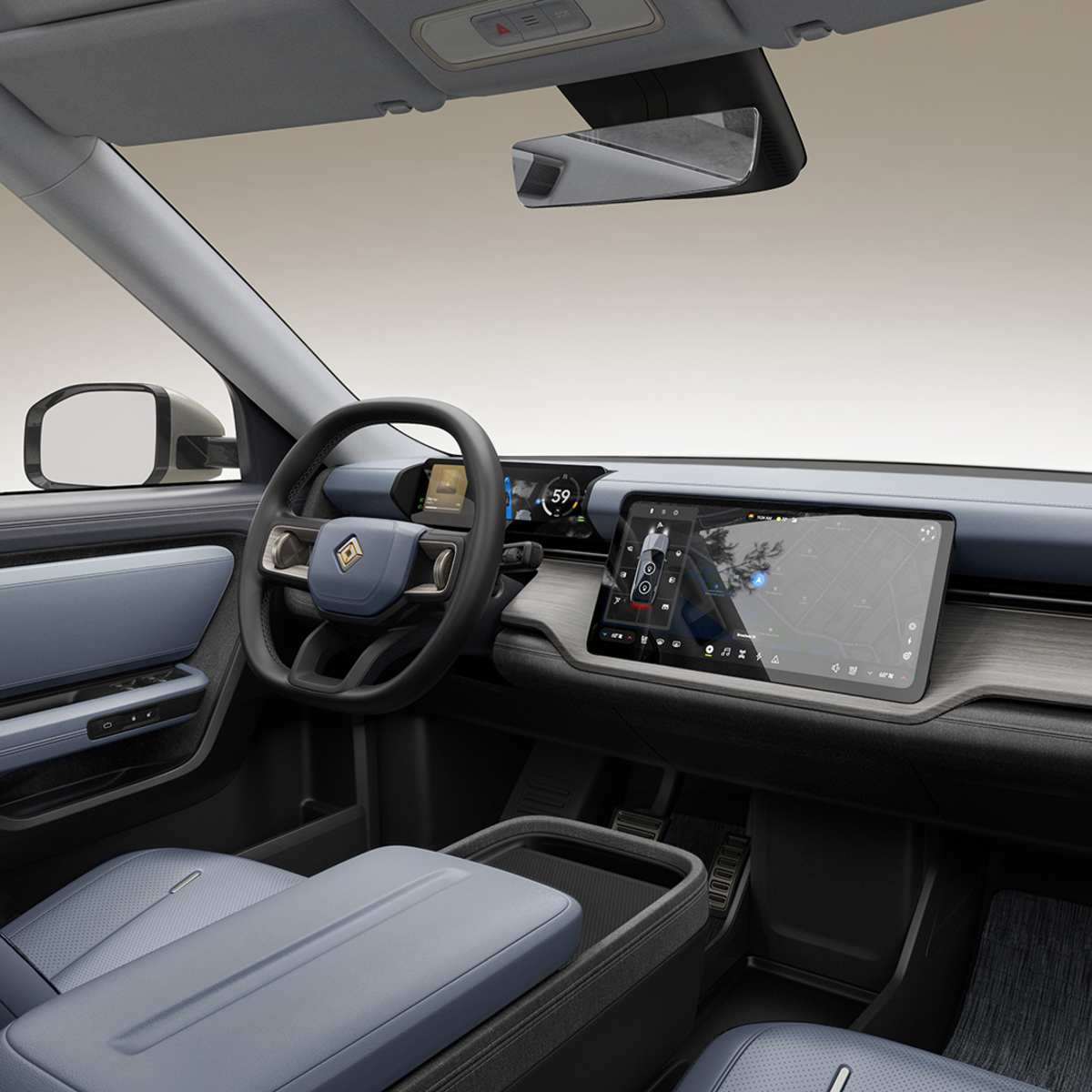
Rivian R2
"And then, of course, it comes down to the product, which is what I went there to went to an event in Utah to drive the car for the first time. And it drives really well. ... It's clearly not finished yet. But I think Rivian's proven that they're very good with software."
The Rivian R2 is an electric SUV/crossover that Rivian wants to sell to a lot of people. The discussion here is about how it feels to drive, how quiet it is, and how software features can improve after you buy it.
The Rivian R2 is Rivian’s next-generation EV positioned as a mainstream, family-friendly crossover that still aims to feel capable off-road. In this segment, the host focuses on how it drives, how it handles highway noise, and how its software features (including over-the-air updates) are expected to mature after launch.
over the air software update
"Let's make sure it has pet mode and keep climate and things that will come through an over the air software update."
An over-the-air update is like updating your phone, but for the car. It lets the manufacturer improve or add features wirelessly after you’ve already bought the vehicle.
An over-the-air (OTA) software update is a wireless download/install of changes to the vehicle’s software, often adding features or improving behavior after delivery. The host suggests Rivian can use OTA updates to “dial in” items like pet mode and climate-related functions.

Tesla Model Y
"...he class of car. It's right up there with the new Model Y, which is a very quiet vehicle. A lot of people w..."
The Tesla Model Y is an electric SUV. It runs on a battery instead of gasoline, and many people notice it’s very quiet while driving. That’s why it’s often talked about when comparing electric cars.
The Tesla Model Y is a compact electric SUV known for being quiet and efficient in everyday driving. It often comes up in discussions because it represents a mainstream, high-volume EV option and is frequently compared across the EV market for comfort and ownership experience. In the podcast context, it’s mentioned as being “right up there” with other top EVs and highlighted for its low noise.
regen
"A lot of using the back axle does a ton of regen so you can lift off oversteer into corners."
Regen is the EV’s way of slowing down while also charging the battery. Instead of wasting speed as heat, the car uses the electric motor to help slow you down and recover energy.
Regen (short for regenerative braking) is how an EV slows down while turning some of its motion back into electricity to recharge the battery. The host says the Rivian R2 uses a lot of regen from the back axle, which affects how the car behaves when you lift off the accelerator.
lift off oversteer
"A lot of using the back axle does a ton of regen so you can lift off oversteer into corners."
Lift-off oversteer is when you take your foot off the gas in a turn and the car’s rear starts to swing outward. It’s a handling behavior that can feel sporty, but it depends on how the car manages power and braking.
Lift-off oversteer is when the car’s rear end tends to rotate outward when you suddenly reduce throttle (lift off) mid-corner. In EVs, torque distribution and regenerative braking can make this more noticeable, and the host ties it to the R2’s rear-axle regen and rear-axle power delivery.
torque vectoring
"And its cross car torque vectoring is tuned, I'd say, seven out of ten still improvements to be done over time."
Torque vectoring is how the car can send more twisting force to one side than the other. That helps the car turn more accurately and feel more stable in corners.
Torque vectoring is a drivetrain control strategy that varies how much torque each wheel (or axle) receives to help the car rotate and track more precisely through corners. The host says the R2’s cross-car torque vectoring is tuned, implying it’s actively shaping handling both on-road and off-road.

Hyundai Ioniq 5
"Like, let's just use Hyundai Ioniq 5, for example, very popular electric car here. It is a great driving, wonderful charging electric car ... you have to go to a franchise dealer, you have to go through their service centers"
The Hyundai Ioniq 5 is another well-liked electric crossover. The point here is that even if it drives and charges well, the host thinks the overall ownership experience can be worse due to service and software frustrations.
The Hyundai Ioniq 5 is referenced as a popular EV crossover that’s strong on driving feel and charging. The host contrasts it with Rivian/Tesla by focusing on the ownership experience—specifically dealer/service requirements and a mention of known ICCU issues.
ICCU
"However, when you when you factor in the total vehicle experience, you have to go to a franchise dealer, you have to go through their service centers, which in most cases is not great. They have a known fault with ICCU problems."
ICCU is a charging-related computer/module in an EV. The host is saying some cars have had problems with that part, which can make ownership more frustrating.
ICCU stands for an EV’s integrated charging control unit, which manages charging-related functions. The host says the Ioniq 5 has known fault/issue history with ICCU problems, using it as an example of how ownership experience can be affected by component reliability.

Tesla Model Ss
"Now, I'm not here to say Rivian and Tesla offer a perfectly sorted, totally solid experience. But I would say on average, if you look at everything from sales to delivery to ownership to daily living to software updates and functions that come over time. Those two brands really do a great job of supporting the customer long into the future. And I know that as I own one of the first Rivians that they made and I own one of the first Tesla Model S's that they made and both vehicles are very well supported. And now it's like, yeah, you can actually start thinking about this versus Model Y without giving up daily annoyances with one major caveat. I know I know this turned into a Model Y comparison conversation, which for some people they just would never consider the Model Y."
The Tesla Model S is an electric car in the sedan category. It’s known for being a premium EV option. The podcast is using it to talk about how ownership and day-to-day experience can compare between EV brands.
The Tesla Model S is a high-end electric sedan that’s often used as a benchmark for EV ownership experience. In the podcast, it’s referenced in a broader comparison of Tesla versus Rivian across “sales to delivery to ownership to daily living,” which frames the Model S as part of an overall ownership discussion. That makes it relevant when evaluating how an EV brand performs beyond just performance specs.
level two point to point
"However, if that's sort of an OK thing with you and you're willing to be maybe flexible on your timeline or maybe Rivian nails it, then go for an R2 and it will get better over time."
This is about how automated the car’s driving help is. “Level two” means the car can do some driving tasks, but you still have to watch and be ready. “Point-to-point” means it’s trying to drive you along a whole route, not just a small part.
“Level two” refers to SAE driving automation where the car can assist with steering and speed, but a human must supervise and be ready to take over. “Point-to-point” implies the system is intended to handle an entire route segment (e.g., from one location to another) rather than only short, well-mapped maneuvers.
EPA cycle
"then why would you buy a Model Y when this exists with level two point to point Nax plug in charge better charging the Model Y similar efficiency in the EPA cycle. We need to actually do side by side tests."
The EPA cycle is a standardized testing method used in the U.S. to estimate how efficient a vehicle is. The host is saying you should compare cars with real tests, not only rely on the official test numbers.
The EPA cycle is the standardized test procedure used by the U.S. Environmental Protection Agency to estimate fuel economy and efficiency. The host mentions it to argue that Rivian’s efficiency should be compared directly to the Model Y using side-by-side real-world testing, not just claims.
driver assistance
"We have no competition in the driver assistance space in North America right now. You know, I pushed RJ and James Philbin, who's responsible for that division inside Rivian pretty hard during my time there."
Driver assistance is the set of features that help the car drive—like keeping you in the lane or controlling speed. The discussion here is whether Rivian’s version is good enough to be convincing.
Driver assistance systems are technologies that help with tasks like lane keeping, adaptive cruise control, and automated steering/braking. In this segment, the host argues Rivian lacks convincing “level two” driver-assistance performance compared with established benchmarks.
premapped roads
"And your system is still locked to premapped roads. And you know, there are a lot of safety considerations when you're building not just an aftermarket cell phone driver assistance that automakers have to build in their car."
Premapped roads means the car’s driving-assist system works best on roads it already knows from detailed maps. The host is saying that relying on that can limit how well the system performs in the real world.
“Premapped roads” means the driving-assistance system relies on pre-existing map data to know where it is and how to behave. The host implies that a system limited to mapped routes is less flexible than one that can handle more general driving scenarios.
FSD
"Whenever we bring up this topic on the show, a lot of our viewers go, Well, I just care about highway ADAS or FSD is silly."
FSD is Tesla’s name for its advanced driving-assist software. It’s meant to do more than basic cruise control, and the host is comparing how far Tesla has gotten versus competitors.
FSD (Full Self-Driving) is Tesla’s marketing name for its advanced driver-assistance software package. The host uses it as a benchmark for how capable Tesla’s system is on current hardware and software, and discusses how many customers choose it.
take rate
"A lot of people reference like a 10 or 12% take rate on FSD. I don't think we know what the numbers are now that it's subscription only"
Take rate is how many people actually choose an optional feature when it’s offered. The host is saying we may not know the exact current take rate because the pricing model changed.
Take rate is the percentage of eligible customers who choose to buy or subscribe to a feature. Here, the host references a take rate estimate for FSD and notes that the numbers may have changed since FSD became subscription-only.
universal hands free
"For me personally, if we could see some meaningful updates to universal hands free, that would be awesome. I know Tom's here as well."
“Hands free” means the car tries to drive while you don’t have to keep your hands on the wheel. Even then, the system usually still expects you to pay attention and take over if it can’t handle something.
“Universal hands free” refers to a higher level of driver-assistance where the system can manage driving tasks without the driver needing to keep their hands on the wheel. It’s essentially a marketing/feature category for hands-off operation, typically still with monitoring and conditions where the driver must intervene.
heat pump
"Rivian put so much attention to detail into everything about this car, where they placed the heat pump, how they designed the suspension."
A heat pump is how the car warms the cabin (and sometimes other parts) more efficiently. In cold weather, it can help the EV use less energy so you lose less range.
A heat pump is an HVAC system component that moves heat rather than generating it directly, improving efficiency—especially in cold weather. In EVs, placing the heat pump well (and integrating it with the battery and cabin heating strategy) can help preserve range when temperatures drop.
suspension
"Rivian put so much attention to detail into everything about this car, where they placed the heat pump, how they designed the suspension."
Suspension is what helps the car handle bumps and stay stable. It affects how smooth the ride feels and how well the car grips the road.
Suspension is the set of components that connects the wheels to the car’s body and controls ride comfort and handling by managing how the wheels move over bumps. EVs often tune suspension differently than gas cars to balance efficiency, stability, and how the vehicle feels during acceleration and braking.
software over time
"Once they get a final round of software on it, which I know they're capable of doing because they've proven that with their prior products, there's going to be no stop in this thing."
“Software over time” means the car can receive updates after you buy it. Those updates might add features or improve how the car behaves, as long as the car’s hardware can support it.
“Software over time” refers to the idea that an EV’s features can be updated after purchase, typically through over-the-air updates. In practice, that can mean improved infotainment, efficiency, or even added/updated driver-assistance behavior—depending on hardware support.
rear-wheel drive
"R2 starts at $45,000 next year, rear-wheel drive coming next year. Launch version is performance trim 3.6 seconds 0-60 and it starts at $57,990."
Rear-wheel drive means the power goes to the back wheels. It’s one way EVs can be set up, and it can help keep the car efficient and less expensive.
Rear-wheel drive (RWD) means the electric motors send torque to the rear axle, so the rear wheels do the work of moving the vehicle. In EVs, RWD is often used as a baseline configuration for efficiency and cost, while other trims may add additional motors.
0-60
"Launch version is performance trim 3.6 seconds 0-60 and it starts at $57,990. Dual motor premium trim comes later this year, they say, $54,990"
0-60 is how many seconds it takes the car to go from 0 to 60 miles per hour. Lower numbers generally mean the car accelerates faster.
0-60 time is the elapsed time it takes a vehicle to accelerate from 0 mph to 60 mph. It’s a common performance metric used to compare how quickly cars feel responsive, especially for EVs where instant torque can make launches quick.
Dual motor
"Dual motor premium trim comes later this year, they say, $54,990 and a rear-wheel drive long range trim launching in the spring."
Dual motor means the car has two electric motors. Usually that helps with quicker acceleration and better grip, especially when roads are slippery.
Dual motor means the EV uses two electric motors—typically one driving the front axle and one driving the rear axle. That setup can improve acceleration and traction, and it enables features like torque distribution between axles.
345 miles
"and a rear-wheel drive long range trim launching in the spring. That's the big range won 345 miles."
345 miles is how far the car is expected to go on a full battery charge. More range usually means fewer charging stops on longer trips.
345 miles is the stated driving range for the Rivian R2 long-range configuration. Range is how far the EV can travel on a full charge under a standardized test cycle, and it’s one of the biggest decision factors when cross-shopping EVs.
press loaner
"The funny thing is, I know I'll get one as a press loaner at some point [984.0s] and be able to spend much more time driving it and testing out the ADAS and everything."
A press loaner is a car a company gives to a reviewer to use for a while. It helps the reviewer test the car more thoroughly than a short event would allow.
A press loaner is a vehicle provided to journalists or reviewers for evaluation before (or around) its release. It’s a common way to get more time behind the wheel than you’d have at a short driving event.
ADAS
"and be able to spend much more time driving it and testing out the ADAS and everything. [988.8s] If you watched my video years ago, I didn't really focus a lot on driving on the driving event."
ADAS is the set of driver-assist features in a car—things like keeping you in your lane or helping you avoid crashes. The host wants to test how well those systems work.
ADAS stands for Advanced Driver-Assistance Systems, which are the suite of sensors and software that help with tasks like lane keeping, adaptive cruise control, and collision warnings. The host mentions testing ADAS because it’s a major part of how modern EVs behave in daily driving.

R1S
"I talked to RJ as far as the form factor because it was interesting to me that it really is a mini R1S. [1009.1s] People that don't know the brand will think it's the same vehicle driving by."
The Rivian R1S is Rivian’s electric SUV. The host is comparing it to the R2 to explain why the new car’s shape and size feel closely related.
Rivian R1S is an electric SUV that serves as a design and packaging reference point for the R2. The host says the R2’s “form factor” is intentionally similar enough that people might mistake it for a smaller version of the R1S.
not 100% baked
"When vehicles get launched, they're not 100% baked. [1143.1s] We can complain about it. [1144.5s] We can say that shouldn't be the case, but it is the case, and that's the world we live in."
The host is saying the car’s software isn’t fully finished when it ships. Instead, the company plans to improve it later with updates, which is becoming normal for modern vehicles.
“Not 100% baked” is a common automotive/tech way to describe vehicles that launch with software that still needs refinement. The idea is that features are improved over time through updates rather than being fully finished at the start.
Autonomy Plus
"I wanted to learn a little bit more about Autonomy Plus. [1165.7s] I took to James Philbin about that. [1168.4s] I know there was a lot of consternation over the fact that the vehicle is going to launch without the LiDAR, [1173.6s] but they're going to add that later."
Autonomy Plus is a software package that’s meant to make the car’s driving-assist features more capable. The host is saying Rivian plans to roll it out with some pieces missing at first, then improve it later.
Autonomy Plus is Rivian’s higher-level driver-assistance package aimed at more automated driving features than the base setup. In this segment, it’s discussed in the context of what the vehicle will have at launch and what will be added later via updates.
LiDAR
"I'm getting an R2, but I'm going to wait for the LiDAR. I don't want the system to not be as complete or as safe without the LiDAR."
LiDAR is a sensor that uses lasers to measure distances and build a detailed 3D picture of what’s around the car. In this discussion, it’s treated as a key ingredient for making future driving-assist features more capable.
LiDAR (Light Detection and Ranging) uses laser pulses to map the road and nearby objects in 3D with high precision. For EVs and driver-assistance systems, it can improve how the car “sees” its environment, which is why the discussion ties LiDAR-equipped vehicles to later “eyes-off” capability.
eyes-off
"will have the ability down the road to be eyes-off, and that the vehicles without LiDAR will be hands-off point-to-point navigation,"
“Eyes-off” refers to a driver-assistance mode where the system can handle driving without the driver needing to keep their eyes on the road continuously. The segment contrasts this with earlier limitations, implying LiDAR-equipped vehicles can support a future step toward reduced driver monitoring.
hands-off
"and that the vehicles without LiDAR will be hands-off point-to-point navigation, similar to what FSD does today."
“Hands-off” means you don’t have to keep your hands on the steering wheel. The host is implying it may still require you to pay attention, even if the car is doing the driving.
“Hands-off” describes a driver-assistance capability where the system can steer and drive without the driver holding the steering wheel. In this segment, “hands-off point-to-point navigation” is positioned as less advanced than “eyes-off,” suggesting the driver may still need to monitor the situation.
point-to-point navigation
"and that the vehicles without LiDAR will be hands-off point-to-point navigation, similar to what FSD does today."
Point-to-point navigation means you pick where you want to go, and the car guides you the whole way. Here they’re saying some versions may do that without you touching the wheel, but not necessarily without you watching the road.
Point-to-point navigation is an automation concept where you enter a destination and the car handles the full route from start to finish. The segment frames it as a “hands-off” capability for non-LiDAR vehicles, implying it’s route-based autonomy rather than full “eyes-off” driving.
driver monitoring
"It'll go to the destination as long as it's going to do driver monitoring, but the LiDAR will be able to allow future iterations to have eyes-off."
Driver monitoring means the car checks whether you’re paying attention, usually with sensors or cameras. In this discussion, it’s part of how the car decides whether it can safely do more of the driving.
Driver monitoring is the system that watches the driver’s behavior—often using cameras—to confirm they’re attentive and taking responsibility when needed. The segment suggests LiDAR-equipped vehicles could eventually reduce how much the driver must actively monitor (“eyes-off”), while still using monitoring as part of the safety strategy.
upgrade
"He talked about being able to upgrade and the capability and how fast the new infotainment system is [1350.7s] and how they were able to bring an even better system to market in R2 at a lower cost."
Here, “upgrade” means the car can get better over time through software updates. Instead of needing new parts, the car’s features can improve after you buy it.
In modern EVs, “upgrade” usually refers to improving the car’s software after purchase—adding features or improving performance through updates. This matters because EVs can change behavior and user experience without hardware swaps.
infotainment system
"He talked about being able to upgrade and the capability and how fast the new infotainment system is [1350.7s] and how they were able to bring an even better system to market in R2 at a lower cost."
An infotainment system is the car’s combined media and information interface—typically the touchscreen, navigation, audio controls, and vehicle settings. When the hosts say the new infotainment system is “fast,” they’re talking about responsiveness and how quickly the UI and functions react.
cut everything out
"But you can just cut everything out, make the seats just like 2017 bolt seats and all plastic interior [1377.5s] and deep content, just keep cutting stuff out of it. [1382.0s] You could bring the cost down, of course, but they fought so hard to not do that,"
This is basically a “make it cheaper” approach—remove features or use simpler materials to reduce cost. The host is saying Rivian didn’t just strip everything away; they tried to keep important parts of the experience.
“Cut everything out” describes a cost-reduction strategy: removing features, materials, or complexity to hit a lower target price. The host contrasts this with Rivian’s approach of lowering cost while still keeping key user-facing elements (like software/infotainment) strong.

R1
"to keep the vehicle nearly as content rich as R1, but nearly have the price... Of course, it doesn't have air suspension and it doesn't have everything R1 has"
R1 is Rivian’s earlier, bigger EV lineup. In this discussion, they’re using it as the benchmark for what features you get, and saying the newer R2 doesn’t include everything the R1 does.
Rivian R1 refers to Rivian’s earlier, larger EV platform (the R1T pickup and R1S SUV). Here it’s used as the comparison point for “content rich” features, with the R2 described as missing some R1 equipment like air suspension.
launch performance trim
"So did you guys all drive the launch performance trim? I did."
A launch performance trim is the first early version of a model that’s aimed at driving feel and performance. It can include different hardware or settings than other versions.
Launch performance trim refers to the specific early production configuration focused on performance-oriented equipment and tuning. The hosts ask whether everyone drove that launch variant, implying it may differ from other trims available earlier or later.
pet mode
"it might launch without having everything that we hoped it had, like pet mode and so forth, but that's going to come."
Pet mode is a setting that helps keep the car’s inside temperature controlled while the car is parked. It’s meant to keep pets comfortable without you having to leave the car running manually.
Pet mode is an EV feature that keeps the cabin climate running while the vehicle is parked, helping maintain a comfortable temperature for pets. The hosts mention it as a missing capability on the launch configuration that Rivian plans to add later.
cooled seats
"The biggest thing would be the cooled seats, the rear drop glass doesn't go down, but I think a lot of people will prefer just the traditional wiper on the back rather than that weird, crazy mechanism."
Cooled seats are seats with built-in cooling, usually with fans. They help keep you comfortable in hot weather, but they use electricity like other accessories.
Cooled seats use fans and/or a refrigeration-like system to pull heat away from the seat surface. In EVs, they’re often powered electrically and can be a noticeable comfort feature that affects perceived value versus range.
rear drop glass
"The biggest thing would be the cooled seats, the rear drop glass doesn't go down, but I think a lot of people will prefer just the traditional wiper on the back rather than that weird, crazy mechanism."
Rear drop glass is a rear window panel that can lower independently of the rest of the tailgate or hatch. It’s a convenience feature that can improve ventilation, but it changes how the rear wiper and sealing surfaces are packaged.
LFP
"What they're doing with the small battery, it's not confirmed yet, but from what I could gather is it's not LFP. I think if it was LFP and you could full charge it every day, or at least the manufacturer would recommend that."
LFP is a type of EV battery. It usually lasts a long time and is considered safer, but it can be a bit different in how much energy it stores compared with other battery types.
LFP stands for lithium iron phosphate, a common EV battery chemistry. It’s known for long cycle life and safety, but it typically has different energy density than other chemistries, which can affect range and charging behavior.
battery pack
"or more of the battery pack. [1603.1s] This sounds like it'll be similar to how Tesla does their standards in our market"
An EV’s battery pack is the whole battery system inside the car. It’s made of many smaller battery cells, and its size helps determine how far you can drive.
A battery pack is the full assembly of many individual battery cells, plus the electronics and structure needed to manage and protect them. In EVs, changing the battery pack’s size (or how many cells are installed) directly affects range and charging behavior.
charging
"That's going to mean your charging is probably going to be a bit slower, [1615.6s] your range is dropped, but I still think it's going to be fine for most daily use"
Charging is plugging the EV in to add electricity back into the battery. A smaller battery setup can sometimes mean you don’t get the same charging speed or total energy as quickly.
Charging is how an EV replenishes energy from an external power source. The host is linking slower charging to a smaller battery configuration, which can happen if the car is limited in how much power it can accept or if the pack is physically smaller.
range
"your charging is probably going to be a bit slower, [1615.6s] your range is dropped, but I still think it's going to be fine for most daily use"
Range is how far the EV can drive on one full charge. If the battery is smaller, the car usually can’t go as far before needing to charge again.
Range is the distance an EV can travel on a full charge under specified conditions. Here, the speaker connects reduced battery capacity (fewer cells) to a lower range, while still arguing it’s adequate for daily driving and fleet operations.
glass roof
"I was really impressed with the standard offering, still having the glass roof, [1655.6s] still having nice materials."
A glass roof is a roof panel made of glass. It lets more light into the cabin, so the interior feels brighter and more open.
A glass roof is a panoramic roof section made of glass, typically used to increase natural light and improve the cabin’s open, airy feel. The speaker contrasts having a glass roof on the “standard” Rivian with versions of other EVs that omit it.
ambient lighting
"it feels like you're in a dungeon. [1664.8s] There's no ambient lighting. [1666.4s] There's no glass roof."
Ambient lighting is soft, background lighting inside the car. It’s mainly there to make the cabin feel nicer, not to help you see better.
Ambient lighting refers to low-level, decorative interior lights used to set mood rather than provide direct illumination. The speaker uses it as a “premium feel” feature that’s missing in the compared Model Y configuration.
waterproof front trunk
"There's no glass roof. [1668.1s] There's no waterproof front trunk. [1671.3s] It's crazy what they took out of that car."
A front trunk (frunk) is the storage compartment in the front of an EV. If it’s “waterproof,” it’s designed to keep water out when it rains so you can store things more safely.
A front trunk (often called a frunk) is storage space at the front of an EV, where the engine bay would be on a gas car. Calling it “waterproof” implies the frunk is sealed and designed to resist water intrusion, which matters for everyday use and wet-weather storage.
fleet use
"So to me, that 45K vehicle is a fleet use vehicle. Or individuals that really can't scrape the extra $3,000 to get the larger battery standard model. I don't think it's really relevant to individuals."
“Fleet use” means a company or organization uses a bunch of vehicles for work. Here, they’re saying the smaller battery/range version makes the most sense for fleets, because those buyers can plan charging and don’t necessarily need the longest range.
“Fleet use” means vehicles are purchased and operated in volume for organizations—often with predictable routes and charging access. In this segment, the hosts argue the lower-range Rivian R2 configuration is best suited to fleet buyers because they can manage charging and don’t need the maximum battery option.
0 to 60
"But just like the numbers between like the Rivian, this performance version and the Model Y performance, they're so close. Like the Model Y is a little quicker from 0 to 60."
“0 to 60” means how fast the car goes from standing still to 60 mph. It’s a common way to compare acceleration between two cars, like a drag-race-style metric.
“0 to 60” is shorthand for how quickly a vehicle accelerates from 0 mph to 60 mph, usually measured in seconds. The hosts use it to compare the Rivian R2 performance version versus the Tesla Model Y performance, noting the Model Y is “a little quicker.”
0 to 100
"[1776.4s] And then, Tom, you were saying you didn't really do a whole lot of driving stuff, [1779.9s] but you actually have like a 0 to 100. [1782.4s] Apparently, you found a private road somewhere and I think it was 7.7 seconds or something."
“0 to 100” means how fast a car can accelerate from a standstill to 100 mph. It’s a simple way to compare straight-line speed between cars.
“0 to 100” is shorthand for acceleration from 0 mph to 100 mph, a common performance metric used to compare how quickly different cars build speed. In this segment, they’re discussing a measured time and how it stacks up between vehicles.
quarter mile
"[1829.3s] But then the Rivian is limited to 130 miles an hour. [1831.8s] So I don't know if it can hit that actually in the quarter mile. [1834.8s] But if it does, it's going to would give the Tesla, you know, a chance to pass it right at the very end."
The “quarter mile” is a drag-race distance—one quarter of a mile. People use it to compare how quickly cars accelerate in a short straight-line sprint.
The “quarter mile” is a drag-racing distance (0.25 miles) commonly used to compare straight-line acceleration. EVs and performance cars are often discussed in terms of quarter-mile times because it captures how quickly they build speed over a short, repeatable run.
silicone carbide inverter
"[1842.4s] But other than that, I just want to mention this thing that Kyle brought up in his video that I don't, I didn't see anywhere else. [1849.6s] But they have a, so on the rear axle, the motor is, has a silicone carbide inverter. [1858.0s] So the transistors are made with silicone carbide."
In an EV, the battery sends power as DC, but the motor needs AC. An inverter is the electronics that does that conversion, and “silicon carbide” is a material that can make the inverter work more efficiently and handle heat better.
An inverter converts the EV battery’s DC electricity into AC power for the electric motor. A “silicon carbide (SiC) inverter” uses silicon-carbide transistors, which can switch more efficiently and handle higher temperatures, helping improve performance and efficiency in EV drivetrains.
IGBT
"Because that's the primary drive axle, then the front axle inverter is IGBT, which is, you know, a lot cheaper and stuff."
IGBT is an electronic switch used in EVs to control power. It helps turn battery power into the right kind of electricity for the electric motors. In this case, the car uses it in a way meant to keep costs down.
IGBT stands for insulated-gate bipolar transistor, a type of power semiconductor used in EV inverters. In an EV drivetrain, it helps convert the battery’s DC power into the AC power the motors need. The speaker notes using IGBT on the front axle inverter as a cost-saving measure.
front axle inverter
"Because that's the primary drive axle, then the front axle inverter is IGBT, which is, you know, a lot cheaper and stuff."
An inverter is the EV’s power converter. It changes battery power into the electricity the front motor needs to move the car. Different inverter setups can change how efficiently the car drives.
An inverter is the power electronics that converts DC battery power into AC for an electric motor. Saying “front axle inverter” implies the EV has a dedicated inverter controlling the front-drive motor(s). This matters because inverter design and cost can affect efficiency and overall drivetrain behavior.
clutch disconnect
"It's a clutch disconnect, I believe, right, Kyle?"
A clutch disconnect is a way to temporarily “turn off” part of the drivetrain. If the car doesn’t need the front wheels to be powered, it can disengage them to save energy. That helps the EV stay efficient.
A clutch disconnect is a drivetrain feature that can disengage a driven axle or motor when it’s not needed. In EVs with multiple drive units, this can reduce losses by preventing the front axle from being “engaged all that much.” The speaker connects it to maintaining efficiency while using a cheaper inverter setup.
off road performance
"Oh, one thing I did want to know is about the off road performance from, from each, because I know, so Tom,"
Off-road performance is how well a vehicle can handle dirt, rocks, and uneven trails. It’s not just about power—traction and how the drivetrain responds matter a lot. The hosts are judging it based on the routes they were given.
Off-road performance is how well a vehicle handles low-traction surfaces and uneven terrain, which depends on traction control behavior, drivetrain engagement, ground clearance, and tire capability. In this segment, the hosts discuss how the Rivian R2’s system behaves on off-road routes without doing “extreme off-roading.”
price point
"Because it's half the price... If you view it in that light... this is coming to market in this range, I thought it performed exceptionally well."
“Price point” means the budget level the car is aimed at. The hosts are saying you should judge the vehicle’s off-road ability based on what it costs, not against the most expensive off-road setups.
“Price point” here is used to frame how much off-road capability you should expect from a vehicle. The hosts argue that the R2’s performance is strong for its target market range, and that buyers who want maximum off-road hardware should consider different options.

Jeep
"If you want a hardcore off-roader and you have a 60000 dollar budget, this is not the car to buy. You would go and buy a used Jeep with lockers and, you know, all the crazy stuff you can get on there."
They’re talking about Jeep as a brand that’s common for serious off-roading. The idea is that with a similar budget, you can buy a used Jeep and add trail-focused upgrades like lockers.
Jeep is referenced as an alternative for hardcore off-road buyers, specifically mentioning “used Jeep” and adding aftermarket-style off-road features. The point is that at a similar budget, some Jeep configurations can be equipped with locking differentials (“lockers”) and other trail-focused hardware.
lockers
"You would go and buy a used Jeep with lockers and, you know, all the crazy stuff you can get on there."
“Lockers” are traction devices that help both wheels on an axle spin together. That prevents one wheel from just spinning uselessly when it loses grip. It’s a common upgrade for serious off-roading.
“Lockers” refers to locking differentials (or differential lockers) that force both wheels on an axle to rotate together. This improves traction when one wheel loses grip on loose surfaces. The speaker contrasts this with the EV’s approach, implying the Jeep’s mechanical traction aids can be more straightforward for extreme off-road use.
ground clearance
"This can pretty much go on most very, you know, green level, low level trails to get to wherever you need to go to. It has pretty great ground clearance considering how well it handles nine point six inches."
Ground clearance is how much space there is between the bottom of the vehicle and the ground. More of it helps you drive over bumps and rocks without getting stuck or scraping the underside.
Ground clearance is the distance between the vehicle’s lowest point and the ground. More ground clearance helps an EV (like the Rivian R2 in this discussion) avoid scraping the battery/skid surfaces and makes it easier to roll over rocks and uneven trail sections.
approach, departure and break over angles
"It has pretty great ground clearance considering how well it handles nine point six inches. It has pretty OK approach, departure and break over angles. And I can't remember the angles off, off head, but they're all in the documentation on the vehicle."
These are measurements that describe how well a vehicle can handle hills and bumps. Bigger angles generally mean less chance of the front, rear, or middle of the car hitting the ground on a trail.
Approach angle, departure angle, and breakover angle are off-road geometry measurements that describe how easily a vehicle can climb a slope, descend a slope, and clear a crest without the front or rear bumping the ground. The hosts reference these because they directly affect whether the vehicle can traverse uneven terrain without getting hung up.
aftermarket modifications
"And I think more importantly for the off-road review is there is a ton of headroom in this platform for aftermarket modifications. Two things that you can do to just make this so much better off-road, which would be sway bar disconnects."
Aftermarket modifications are upgrades you add after buying the vehicle using third-party parts. They’re talking about how the R2 is set up so owners can add off-road upgrades later.
Aftermarket modifications are changes made using parts not installed by the original manufacturer. Here, the hosts argue the Rivian R2 platform has enough space and design flexibility to add off-road equipment to improve capability beyond stock configuration.
sway bar disconnects
"Two things that you can do to just make this so much better off-road, which would be sway bar disconnects. That's really easy. It's two bolts, zip time in."
Sway bar disconnects are a way to loosen the suspension’s “link” between the left and right wheels. Off-road, that lets each wheel move more on bumps so you can keep better tire contact and grip.
Sway bar disconnects let you decouple the anti-roll (sway) bar so the suspension can move more independently. On off-road trails, that typically increases wheel droop and articulation, helping keep tires in contact for better traction when one wheel lifts.
droop
"It's two bolts, zip time in. And that'll give you all a lot more droop because one of the problem is with such a stiff sway bar on the vehicle, as soon as you lift wheels a lot and in off-roading, you kind of want to keep wheels on the ground for ultimate traction"
Droop is how much the suspension lets a wheel hang down when you go over a bump. More droop can help the tire stay on the ground for better grip.
Droop is how far a wheel can extend downward as the suspension articulates over uneven ground. More droop generally helps an off-road vehicle maintain traction when a wheel lifts, because the tire can stay closer to the ground.
articulation
"as soon as you lift wheels a lot and in off-roading, you kind of want to keep wheels on the ground for ultimate traction and really get as much articulation out of the vehicle as you can. You know, this thing's just all stiff and taut all the time."
Articulation is how well the suspension can move each wheel to match the ground. Better articulation helps keep tires gripping when the trail twists or has bumps.
Articulation is the suspension’s ability to move so wheels can follow the terrain independently. In off-road driving, higher articulation helps maintain tire contact across ruts, rocks, and uneven surfaces, improving traction and control.
half shafts
"The next would be a vehicle lift. There's still quite a bit of droop angle that you can get out of the half shafts."
Half shafts are parts that send power from the drivetrain out to the wheels. They can limit how much the suspension can move when you go off-road.
Half shafts are the axle shafts that transmit torque from the drivetrain to the wheels. The hosts mention droop being limited by the half shafts, meaning suspension travel can be constrained by how much the axle can move without binding or stressing joints.
CV joints
"You know, the CV joints have more room to go. You can definitely go quite a bit."
CV joints are parts that let the wheels keep turning smoothly even when the suspension moves or the steering turns. If there’s more space around them, the suspension can move more without binding.
CV joints (constant-velocity joints) are the drivetrain joints that let power transfer smoothly while the suspension moves and the wheels turn. More clearance around them can allow greater suspension travel, which helps off-road traction and ride quality.
factory clearance
"And then there's a lot more room in the factory clearance as well. You might be able to get 18s on this thing."
Factory clearance is how much “extra space” the car has so parts don’t hit each other when you steer or the suspension moves. More clearance usually means you can run bigger tires or more suspension movement.
Factory clearance is the space the vehicle has from the factory between moving suspension/drivetrain components and nearby body or frame parts. More clearance typically means you can fit larger tires or allow more suspension travel without rubbing or contacting components.
Rivian R1T
"Rivian, I was talking to Max Coffey who's their chief engineer. I'm like, what if you took the R1T's 34-inch overall diameter all-terrain tire and put it on here?"
The Rivian R1T is an electric pickup. They’re using it as a reference point for how big a tire you can fit when comparing to the newer R2.
The Rivian R1T is an electric pickup that’s used here as the baseline for tire sizing and off-road setup. The host references its 34-inch all-terrain tire size to estimate what the newer R2 can physically accommodate.
bolt pattern
"Obviously, the wheel won't bolt up. It's a different hub and bolt pattern."
Bolt pattern is the arrangement of wheel mounting holes on a hub, typically described by the number of bolts and the diameter of the circle they form. If the bolt pattern matches, wheels can physically mount; if it doesn’t, you need adapters or different wheels.
offset
"But actually, the bolt pattern and the hub size and the offset are almost identical to Model Y. So a lot of, we believe, Model Y aftermarket wheels will fit on this car."
Wheel offset is the distance between the wheel’s mounting surface and its centerline. Offset affects clearance to suspension components and the vehicle’s track width, so matching offset helps avoid rubbing and fitment issues.
sway bars
"But you can get quite a bit of droop if you disconnect the sway bars on it. And that'll be cool."
Sway bars (anti-roll bars) reduce body roll by linking the left and right suspension. Disconnecting them can increase wheel articulation (“droop”), which can improve traction on uneven off-road terrain.
locking differentials
"The next really only disappointment and off-road, which I think is a reasonable omission from this car, is the lack of locking differentials. R1 dual motor, which should still be better off-road, does not have differential lockers."
Locking differentials help both wheels on the same axle turn together. That’s useful off-road when one wheel is on slippery ground—without it, the slipping wheel can spin and the car loses traction.
Locking differentials (differential lockers) force the left and right wheels on an axle to rotate together. That helps when one wheel loses traction, because it prevents the slipping wheel from spinning freely and allows torque to reach the wheel with grip.

Volvo EX90 pre-refresh
"which we've seen from many, like Polestar and even Volvo EX90 pre-refresh had that type of technology in it."
The Volvo EX90 is Volvo’s electric SUV. The host says the earlier (pre-refresh) version had a drivetrain system that could help manage traction by controlling how drive force is applied.
The Volvo EX90 is Volvo’s electric flagship SUV, and the host specifically calls out the pre-refresh version. They’re using it as an example of an EV that previously included mechanical torque-vectoring-style technology.
cross-car loading
"I did a lot of cross-car loading, so I would put opposite ends of the car with wheels tucked up all the weight, and you're almost teetering, and then you have to wait to see how long the car will take to clamp down on the brakes"
Cross-car loading is a test setup where the car is arranged so some wheels are more “stuck” than others. It helps check whether the drivetrain can still move the car when grip is uneven left-to-right.
Cross-car loading is an off-road testing technique where the vehicle is positioned so opposite corners are loaded differently—often with wheels tucked up—so the drivetrain must manage traction with uneven grip. It’s a way to stress how well a vehicle can transfer torque and maintain control when one or more wheels have reduced contact.
shuffle torque
"and you're almost teetering, and then you have to wait to see how long the car will take to clamp down on the brakes to shuffle torque to the tires with traction."
“Shuffle torque” means the car moves power around to the wheels that have grip. If one wheel starts spinning, the car tries to send more drive force to the wheels that can actually pull.
“Shuffle torque” here describes how the vehicle reallocates drive force between wheels to regain traction. In practice, this is typically done by combining drivetrain control with traction/stability systems that can brake a slipping wheel and/or adjust torque delivery.
traction
"to shuffle torque to the tires with traction."
Traction is how well the tires can grip the ground. More traction means the car can push forward without the wheels spinning uselessly.
Traction is the grip between the tires and the surface, which determines how much drive force the vehicle can apply without wheelspin. The host is using it in the context of off-road control—how torque transfer and braking help maintain grip.
wide open throttle
"But when you're on a hill, when you're loaded up in a rut, I spent a lot of time just sitting at wide open throttle waiting for the systems to figure out what to do."
Wide open throttle means you’re flooring the accelerator. The car is asking for maximum power, which is useful for testing whether the traction system can still manage wheelspin and get you moving.
Wide open throttle (WOT) means the accelerator pedal is fully depressed, commanding maximum available torque from the powertrain. In off-road testing, holding WOT can reveal how quickly and effectively the traction and drivetrain controls respond when grip is limited.
brake-based cross-car torque loading
"brake-based cross-car torque loading that you need, and it's going to be so much fun."
This phrase describes a driving-control trick where the car uses braking to help manage how power and grip are shared across the wheels. The goal is to make the car handle better when things get tricky.
“Brake-based cross-car torque loading” refers to using the brakes to transfer torque effects across the vehicle—typically to influence traction and handling by creating different wheel forces left-to-right or front-to-rear. It’s a control strategy that can help the car behave more predictably under demanding conditions.
marketing consistency and brand alignment
"The messaging has always been really consistent from very early days about Rivian... everything from the marketing materials, the paint color choice... everything just looks, it's already aligned."
The host talks about how Rivian keeps its marketing message consistent and makes sure the car’s look matches the intended vibe. They mention things like the paint and overall presentation feeling “aligned.”
The host discusses how Rivian’s messaging and presentation have stayed consistent since the company’s early days. They also point to details like paint color choice and overall visual presentation as evidence that the brand’s look matches the vehicle’s intended purpose.
Lucid
"A company which perhaps might look enviously at Rivian's startup success... is Lucid. So Lucid is going through some times at the moment, some churn."
Lucid is another electric-car company. The host says Lucid is going through some turmoil and has brought in a new CEO from outside the company.
Lucid is an EV company that the host contrasts with Rivian’s startup success. Here, the discussion focuses on Lucid’s internal leadership changes (“churn”), including a new CEO installed from outside the company.
Imed Dalala
"Imed Dalala, someone who we know very well has been on out of spec, has been on state of charge. Come on here. Left the company immediately this week."
Imed Dalala is an engineer at Lucid. The host says he left the company, which is a big deal because he had been there for a long time.
Imed Dalala is described as a senior engineering leader at Lucid who had been there for about a decade. The host says he left the company immediately and frames it as a significant leadership/engineering change.
drive unit failure
"That always had an asterisk because there was always some bug or some glitch or some annoying thing or some drive unit failure or something that would piss us off."
In an EV, the drive unit is the main power system that turns the wheels. A “drive unit failure” means that part broke or malfunctioned and caused the car to act up.
A drive unit in an EV is the integrated system that includes the electric motor(s) and the components that deliver power to the wheels. “Drive unit failure” means that powertrain hardware had a malfunction serious enough to cause noticeable problems for the driver.
gravity
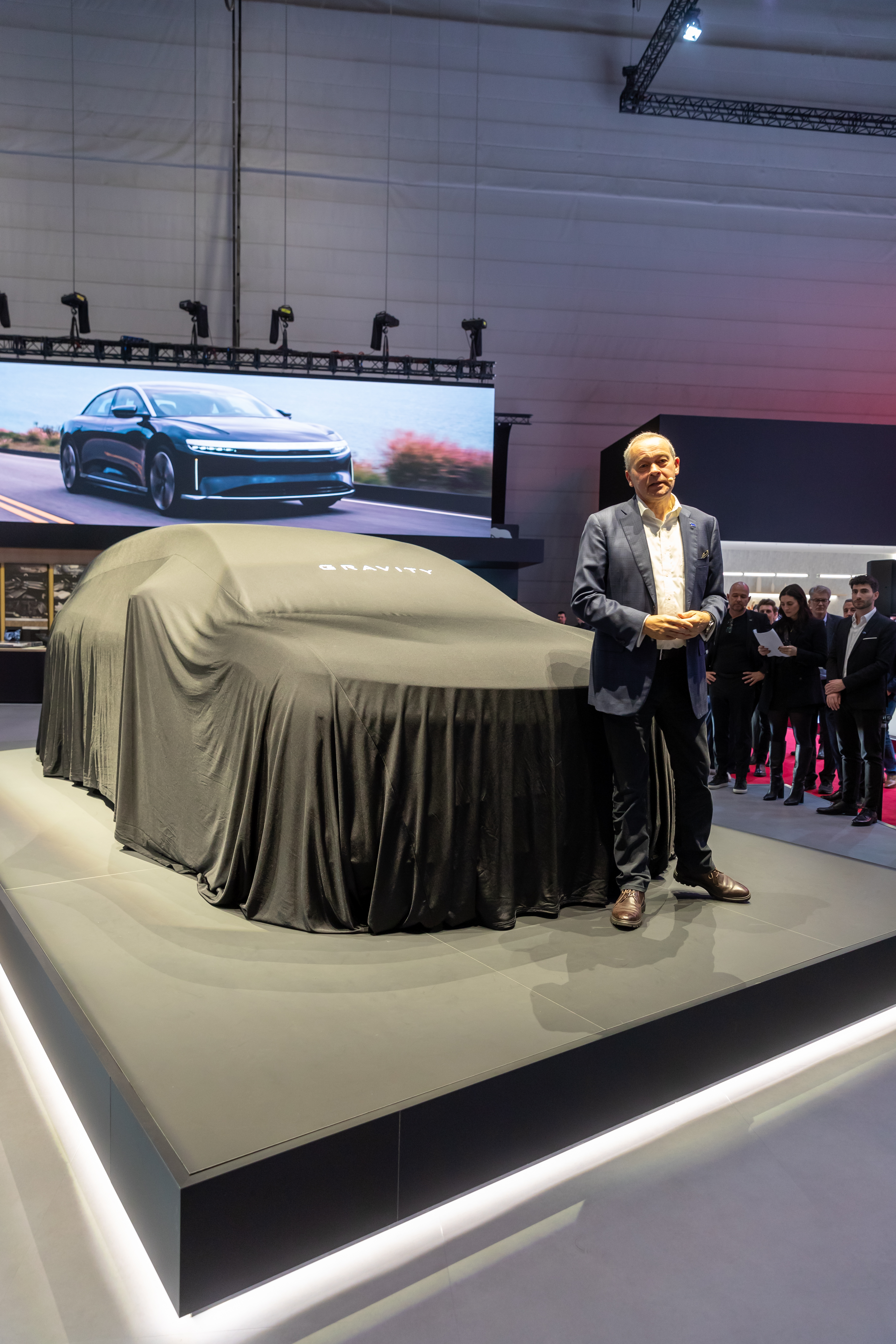
"And in all fairness, it has been look at the reviews of the gravity with the newest software update that rolled out a lot of fixes... I'm in the owner's forums... many of my friends who own gravity are now like, you know what? Now this thing's finally dialed."
Lucid Gravity is Lucid’s electric SUV. The host says a recent software update fixed a lot of problems, and owners feel the car is finally working the way it should.
Lucid Gravity is Lucid’s electric SUV. The host is specifically discussing how the newest software update improved issues reported by owners, and how the vehicle is now “dialed” and works reliably as a car.
owner's forums
"Now I'm in the owner's forums. I'm in the groups."
Owner’s forums are websites where car owners talk about what’s going wrong (or right) with their cars. The host is using that chatter to judge whether the car is improving.
Owner’s forums are online communities where drivers share real-world experiences, including recurring issues and how well fixes work over time. The host uses them as a proxy for whether problems are still happening after updates.
general motors
"Even the CEO, most people could never name the CEO of a company or who the head engineer is of general motors or whatever, you know, even Tesla for that matter."
General Motors is a big car company. They’re just using it as an example to say most people don’t know the top engineers or executives behind the cars.
General Motors (GM) is a legacy automaker with a large engineering and manufacturing footprint. In this segment, it’s mentioned only as an example of how few buyers can name the CEO or head engineer of a car company.
software working on it
"We didn't forget about the old air customers. You know, they're still have some problems with software working on it."
They’re talking about software problems on the car. In an EV, software isn’t just for the screen—it can affect how the car behaves and how features work.
The host is referring to software issues affecting older Lucid customers. For EVs, software can control key systems like infotainment, charging behavior, and driver-assistance features, so “software working” problems can directly impact day-to-day usability.
old air customers
"We didn't forget about the old air customers. We know they're still have some problems with software working on it."
“Air” is Lucid’s car model. They’re saying earlier Air owners still have some issues that need to be addressed with updates.
“Air” refers to Lucid’s vehicle line, and the host distinguishes “old Air customers” as people who already own earlier versions. The segment implies those owners may be waiting on software fixes and future updates.
Corey Steuben
"Corey Steuben. He's with Lucid. He's the Director of Cross-Engineering at Lucid Motors."
Corey Steuben is a leader at Lucid. The title “Director of Cross-Engineering” suggests he helps coordinate different engineering teams so the car’s systems work together properly.
Corey Steuben is identified as a Lucid executive, specifically the Director of Cross-Engineering. In EV development, cross-engineering roles typically coordinate work across powertrain, software, systems integration, and vehicle architecture so updates and hardware changes land correctly.
state of charge
"If you ask one of your friends who's really into this show or, you know, a state of charge viewer..."
State of charge just means how full the battery is—like a fuel gauge for an EV. Higher SoC usually means more driving range.
State of charge (SoC) is the percentage of energy left in an EV’s battery. It’s a key metric for range planning because it directly affects how far the car can drive before needing charging.
transitional period
"just hold off companies going through a major transitional period. They're about to launch a new product."
A transitional period means a company is in the middle of big changes—like launching something new. The host is saying that can lead to problems, so it may be smarter to wait.
A “transitional period” in an automaker context usually means the company is changing products, platforms, or leadership while ramping something new. The host ties this to risk factors like software immaturity and operational uncertainty during launches.
buggy issues
"The software hasn't been great in the past. There's been buggy issues."
“Buggy issues” means the car’s software has glitches. That can make the car act weird or be less reliable day-to-day until updates fix it.
“Buggy issues” refers to software problems—glitches or defects—in the car’s digital systems. For EVs, this can affect infotainment, charging behavior, driver-assist features, and overall usability.

Porsche Cayenne
"...e going with a Rivian or maybe going with the new Cayenne just for, you know, confidence in the company's s..."
The Porsche Cayenne is a luxury SUV. It’s designed to feel sporty to drive, not just comfortable. People bring it up when they’re deciding between different types of vehicles and want a well-established option.
The Porsche Cayenne is a performance-oriented luxury SUV that’s known for strong driving dynamics and a premium interior. It’s discussed in the podcast as an alternative purchase option, with the idea of choosing it for “confidence in the company,” which points to brand familiarity and support. In this context, it’s being weighed against other EV or alternative choices.
Jason Fenske
"and a video that the channel engineering explained Jason Fenske put out had almost one and a half million views with all the problems he had."
Jason Fenske is a car YouTuber. In this segment, they’re pointing to his videos as a big reason people learn about Lucid issues when they search online.
Jason Fenske is an automotive YouTuber whose channel “Engineering Explained” is cited here as a major source of information about Lucid’s problems. The host uses his video view counts to illustrate how influential enthusiast reviewers can dominate what potential buyers learn.
buying the car back
"Then two weeks ago, another video that's almost got a million views lucid's buying the car back. Like, that's it. I'm done."
“Buying the car back” means the company takes the car back from the owner. Here, the host is using it as an example of Lucid trying to fix problems, even though people still talk mostly about the bad experiences.
“Buying the car back” refers to a manufacturer or brand repurchasing a customer’s vehicle, typically as part of a resolution when there are serious issues. In this context, the host cites it as a sign Lucid is addressing problems, but argues the broader narrative is still dominated by negative content.
Bobby Sherlock
"It's Bobby Sherlock. He's a former Red Bull marketer who joined Lucid Motors as head of integrated marketing last August, left the company after less than a year."
Bobby Sherlock is described as a former Red Bull marketer who joined Lucid Motors as head of integrated marketing and left after less than a year. The hosts use his departure as part of their argument that Lucid has had trouble communicating its story effectively.
Red Bull
"It's Bobby Sherlock. He's a former Red Bull marketer who joined Lucid Motors as head of integrated marketing last August, left the company after less than a year."
Red Bull is a well-known brand that markets itself through energetic events and sports. The point here is that someone who worked on Red Bull’s marketing later joined Lucid.
Red Bull is a consumer brand famous for marketing built around energy, extreme sports, and lifestyle storytelling. The host mentions a former Red Bull marketer to highlight how Lucid tried to bring in marketing talent with a strong narrative background.
integrated marketing
"I don't think it is chief of marketing. It's integrated marketing. I think it's something different."
Integrated marketing means using one consistent message across different ways of advertising and promoting a product. The hosts are basically saying Lucid’s marketing role sounded more specific than just “marketing.”
Integrated marketing is a marketing approach that coordinates messaging and campaigns across multiple channels (like ads, social media, events, and PR) so they reinforce one consistent story. In this segment, the hosts debate whether Lucid’s marketing leadership change was truly “marketing” or a more specific integrated-marketing strategy.
Nissan leaf
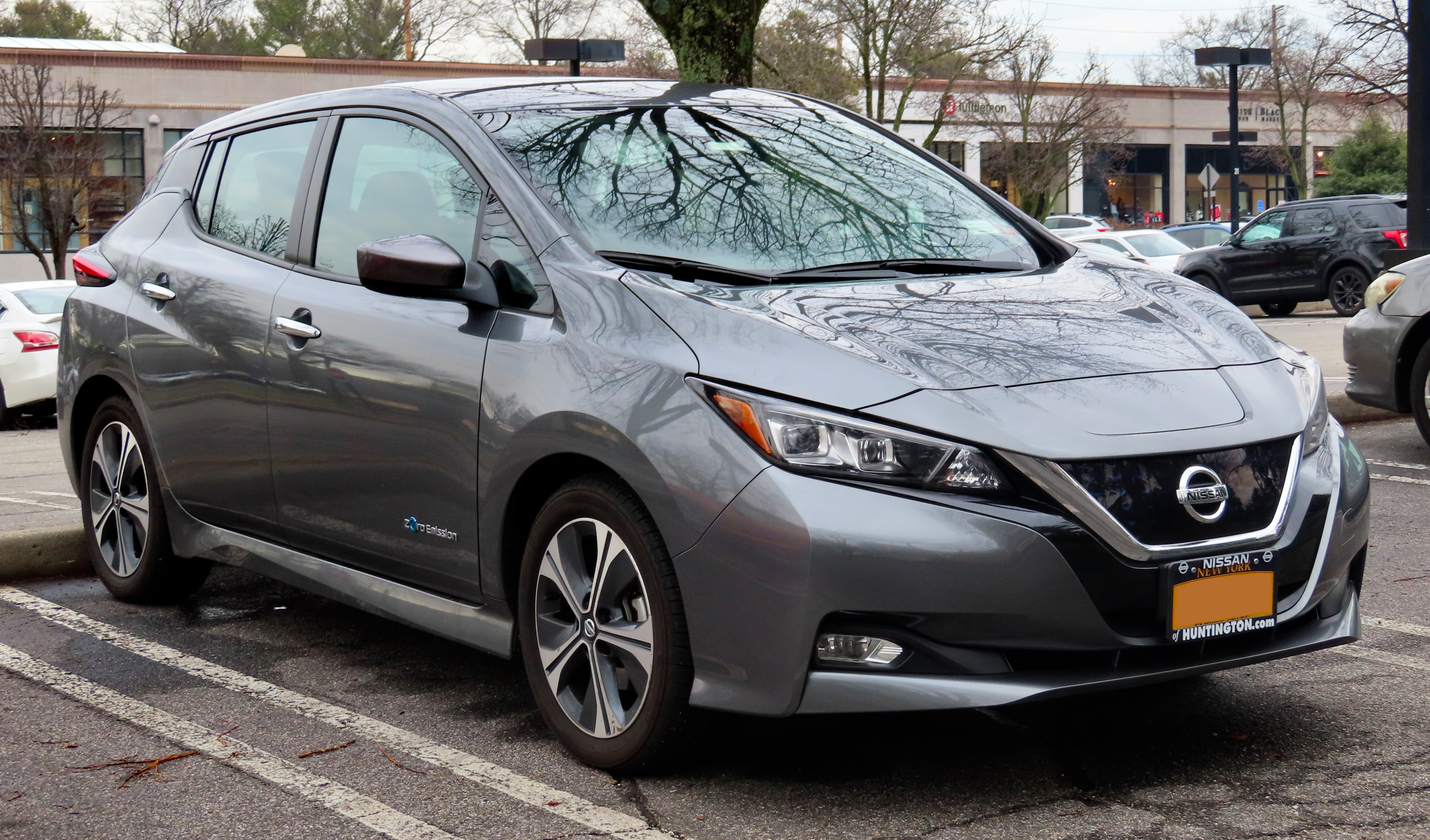
"So it basically says it's a Nissan leaf with changes to certain elements, including the front and rear bumpers, front grill headlights and rear combination lamps, rear gate as well as the D pillars and wheels, of course, D pillars."
The Nissan Leaf is a popular electric car. Here, the speaker is saying the new EV being discussed will be very similar underneath, but will look different on the outside.
The Nissan Leaf is a mainstream, front-wheel-drive EV that’s often used as a baseline for range and charging comparisons. In this segment, the host says the upcoming model is essentially a Nissan Leaf with exterior changes (bumpers, grille, lights, gate, D-pillars, and wheels).
D pillars
"including the front and rear bumpers, front grill headlights and rear combination lamps, rear gate as well as the D pillars and wheels, of course, D pillars."
The D-pillar is part of the car’s body frame—basically a structural post near the back of the cabin. Changing it can change the car’s shape and how the body is built.
The “D-pillar” is the vertical body structure behind the rear side windows (or behind the rear door area on many cars). It matters for EV design because it affects body stiffness, crash structure, and how the rear door/quarter area is shaped.
75 kilowatt hours battery
"At the spectrum, people pretty much the same as the Nissan leaf, 75 kilowatt hours battery for just over 300 miles of range."
That “75 kilowatt hours” number is how big the car’s battery is. Bigger battery usually means you can drive farther before needing to recharge.
“75 kilowatt hours” refers to the size of the EV’s battery pack. A larger battery pack generally allows more energy storage, which usually translates into more driving range under standardized test conditions.
150 kilowatts
"Maximum charging speed is 150 kilowatts. It has a J1772 port on one side of the front fender and the Nax connector on the other side, just like the Nissan leaf."
“150 kilowatts” is how fast the car can charge at a fast charger. In general, higher numbers mean quicker charging, but real-world results can vary.
“150 kilowatts” is the maximum charging power the EV can accept during fast charging. Higher kilowatt ratings typically mean faster charging, though actual speed also depends on battery temperature and charger behavior.
J1772 port
"It has a J1772 port on one side of the front fender and the Nax connector on the other side, just like the Nissan leaf."
J1772 is the standard plug used for most everyday EV charging in the U.S. and Canada, especially at home or slower public chargers.
A J1772 port is the common North American AC charging connector used for Level 1/Level 2 charging. It’s the “everyday” plug many people use at home or at standard public chargers.
Nax connector
"It has a J1772 port on one side of the front fender and the Nax connector on the other side, just like the Nissan leaf."
This “Nax connector” is the other charging plug the car uses. The point is the car can charge using two different plug types, depending on what charger you find.
The “Nax connector” here is being contrasted with the J1772 port, implying a second charging interface for faster charging. The key idea is that the car supports two different plug types—one for standard charging and one for higher-power charging.
zero to 60
"So yeah, zero to 60 happens about seven seconds. So Tom, just real quick, what do you think of the design and what do you think of this strategy for Mitsubishi?"
“Zero to 60” means how many seconds it takes to go from standing still to 60 mph. It’s a simple way to compare acceleration between cars.
“Zero to 60” is shorthand for 0–60 mph acceleration time, a common way to compare how quickly cars reach highway speed. In EVs, it’s often used to highlight instant torque feel, but it’s still just one performance metric.
dealerships
"Nissan, by comparison, has like a thousand and four dealerships."
A dealership is a store where you can buy a car from a specific brand. They often also handle service and repairs, so having more dealerships can make it easier to own the car.
Dealerships are retail locations where a brand sells vehicles and typically handles sales, financing, and service. In this segment, dealership count is used as a proxy for how widely available a brand is to customers.
Bev game
"but hey, at least Mitsubishi is getting back in the Bev game... because, you know, the IMF was such a cool vehicle for the time."
“BEV” means a battery-electric car. It’s the kind of electric vehicle that uses electricity from a battery, not gas.
“BEV” stands for Battery Electric Vehicle—an EV that runs only on electricity stored in a battery, without a gasoline engine. Saying “get back in the BEV game” means returning to the fully electric market with battery-only models.
sodium ion batteries
"but it also announced a partnership with a company called Peak Energy to develop sodium ion batteries for grid storage."
Sodium-ion batteries are like EV batteries, but they use sodium instead of lithium. People are interested because sodium can be cheaper and easier to source, and they may work well for storing electricity.
Sodium-ion batteries are a type of rechargeable battery that uses sodium ions moving between electrodes, instead of the lithium ions used in most EV batteries. They’re often discussed as a potential way to reduce reliance on lithium and improve supply-chain resilience, especially for large-scale storage.
grid storage
"to develop sodium ion batteries for grid storage. And it's, and they give an update on how they're progressing with their vehicle to grid technology."
Grid storage means saving electricity for later. When the grid needs more power, stored energy can be sent back in, helping keep the system stable.
Grid storage is the use of batteries (or other storage systems) to store electricity when it’s abundant and release it when demand is higher. For EV-related tech, this matters because batteries can be used not only for driving but also to support the electric grid.
vehicle to grids
"we did talk about vehicle to grids somewhat. So if you haven't caught that episode, it's right there somewhere."
Vehicle-to-grid means your EV can act like a battery backup for the electric grid. Instead of only charging from the grid, it can also send power back when needed.
Vehicle-to-grid (V2G) is technology that lets an EV send electricity back to the power grid, not just draw power from it. This can help balance renewable energy and demand, and it’s often discussed alongside “vehicle-to-grid” progress updates.
GM energy pass
"But GM energy pass, it's a unified public charging interface integrated into GM's brand apps that allow EV owners to find, activate and pay for charging across multiple major networks, including a single, using a single account."
GM Energy Pass is GM’s app-based system for EV charging. It helps you use different charging networks without juggling multiple apps or accounts.
GM Energy Pass is a GM-branded charging payment and access service that aims to make EV charging simpler across multiple networks. It’s positioned as a unified interface inside GM’s apps so drivers can find, start, and pay for charging with one account.
Tesla super chargers
"So to begin, it works with Tesla super chargers, Electrify America and IANA access to charge point and EV go,"
Tesla Superchargers are Tesla’s fast public charging stations. The mention here is that GM’s charging app can work with them too, not just other non-Tesla networks.
Tesla Superchargers are Tesla’s high-power public fast-charging stations used by EVs that support the relevant charging standard and access method. In the context of GM Energy Pass, the point is that the service can route access/payment to Tesla’s network as well as others.
Electrify America
"it works with Tesla super chargers, Electrify America and IANA access to charge point and EV go,"
Electrify America is a company that runs public fast EV charging stations. The episode is saying GM’s app can use that network as part of the same charging experience.
Electrify America is a major U.S. fast-charging network for EVs. It’s mentioned here because GM Energy Pass is designed to let drivers activate and pay for charging across multiple networks using one account.
EV go
"IANA access to charge point and EV go,"
EVgo runs public fast EV charging stations. The episode is saying GM’s app can use EVgo as part of the same charging/payment setup.
EVgo is a U.S. fast-charging network for EVs. It’s mentioned because GM Energy Pass aims to cover multiple major charging providers with one unified interface.
ChargePoint
"Electrify America and IANA access to charge point and EV go,"
ChargePoint is a network of public EV charging stations. The point here is that GM’s charging app can work with ChargePoint too.
ChargePoint is a public EV charging network that operates charging stations across many locations. In this segment, it’s included as one of the networks GM Energy Pass can integrate with for access and payment.
Electro America
"but what concern that I have is, [4331.8s] are you paying top tier pricing [4333.8s] when you go to Electro America,"
This sounds like a public EV charging company/network. The speaker’s point is that charging there might cost more than you’d expect.
“Electro America” is likely a reference to an EV public-charging network (commonly known as Electrify America). The host is raising a cost concern: whether customers end up paying premium “top tier” pricing when charging there.

Chevrolet Equinox
"if you're, let's say, right now you own a Chevy Equinox or whatever, and you use a lot of Electro America,"
The Chevrolet Equinox is a popular SUV model. Here it’s just mentioned as an example of a car owner who uses EV charging networks and app-based discounts.
The Chevrolet Equinox is a mainstream compact SUV from Chevrolet. In this segment, it’s used as an example of an EV driver who might be using charging networks and apps tied to their vehicle ecosystem.
pass plus account
"so you pay for their pass plus account, and you get like a 30% discount."
A “pass plus account” is a paid membership for a charging network. The idea is that it can reduce what you pay to charge, and the host is wondering if the discount still applies when you use a different app.
A “pass plus account” refers to a paid membership tier offered by a charging network that can lower the per-session charging price. In this segment, the host discusses a potential 30% discount and whether that discount is preserved when charging is managed through a vehicle-maker app.
GM app
"Now, if you integrate that into the, your GM app, and you use, and you authenticate through that,"
GM’s app is the Chevrolet/GMC app used to manage things like charging. The host is asking whether using that app changes the price you pay at charging stations.
GM’s app is the vehicle-maker’s mobile platform for managing charging and related services for GM vehicles. Here, it’s part of a discussion about whether discounts from a third-party charging network still apply when you authenticate through the car-maker’s app.
authenticate
"and you use, and you authenticate through that, are you paying that 30% extra?"
Here, “authenticate” means the app proves who you are to the charging network. That matters because the charger may then apply the right membership discount or price.
In charging-app contexts, “authenticate” means verifying your identity/payment eligibility so the charger can apply the correct pricing, membership discounts, or account rates. The host is questioning whether using GM/Ford apps changes which account the charger recognizes.
Ford pass
"like Ford has Ford pass, that kind of does this too. You authenticate your Ford charging"
FordPass is Ford’s connected-vehicle app used to manage vehicle features and services, including charging access and authentication across charging networks. The host compares FordPass’s approach to other ecosystems to illustrate how discounts and pricing can depend on which app you use.
GM Energy Chargers
"Oh, on the GM Energy Chargers? I mean, it should work on GM Energy Chargers. Do we know?"
This is GM’s branded set of charging stations. They’re wondering if the car/charging setup should work with them automatically.
“GM Energy Chargers” is GM’s branded charging network/hardware. The discussion is about whether a specific EV or charging setup is compatible with GM’s chargers and whether that support was expected from the start.
GM Chargers
"I just can't believe it doesn't work on GM Chargers. Oh, on the GM Energy Chargers?"
They’re talking about charging stations tied to General Motors. The point is whether an EV can use those stations reliably.
“GM Chargers” refers to charging hardware associated with General Motors’ EV charging ecosystem. In practice, listeners should think of it as a specific network/charger compatibility question rather than a single plug type.
100000 cycles
"a 100000 cycles and the, can charge in all kinds of weather and, and it's fast charging it, whatever."
A “cycle” is one round of charging and using the battery. Cycle life is how many of those rounds the battery can handle before it starts losing capacity. The speaker is quoting a durability number—100,000 cycles.
“Cycles” are charge-discharge repetitions; one cycle is roughly charging the battery and then using it until it’s partially or fully discharged. Battery cycle life is often expressed as an expected number of cycles before capacity noticeably degrades. The segment uses “100000 cycles” as a durability claim for the battery technology being discussed.
debunking battery-technology claims
"He's put out a video kind of tearing it down their arguments and kind of like, you know, asking like, where's the beef? ... he believes firmly that what they've been showing as a solid state battery is actually just a very good lithium ion battery."
This part is about someone reviewing and challenging claims that a battery technology is what it says it is. The creator argues that the “solid-state” story may not be accurate. It’s more about evaluating evidence than explaining how to build a battery.
The segment describes a creator (Ryan, Xeroth) producing videos that challenge claims made about a battery technology. The discussion centers on whether the technology shown as “solid state” is actually just a high-performing lithium ion battery. This is essentially a fact-check / teardown-style topic rather than a technical explanation of one specific product.
solid state battery
"he believes firmly that what they've been showing as a solid state battery is actually just a very good lithium ion battery."
A solid-state battery is a type of EV battery that uses a solid material inside instead of a liquid. The idea is that it could be safer and store more energy. The discussion here is about whether a company’s “solid-state” claim is accurate.
A solid-state battery is an EV battery design that replaces the usual liquid electrolyte with a solid material. That can, in theory, improve safety and enable higher energy density, but it’s also harder to manufacture reliably. In this segment, the host is discussing a claim that a “solid state” product may actually be something else.
lithium ion battery
"what they've been showing as a solid state battery is actually just a very good lithium ion battery."
A lithium ion battery is the common battery type used in most electric cars. It works by moving lithium ions back and forth inside the battery to store and release energy. The segment suggests the technology being shown may be this more established type.
A lithium ion battery is the dominant EV battery chemistry today, using lithium ions moving between an anode and cathode through an electrolyte. It’s proven at scale, and performance depends heavily on cell design, thermal management, and charging strategy. Here, it’s used as the alternative explanation to the “solid-state” claim.

Ford Ranger
"which is actually this Mazda pickup truck is the same as a Ford Ranger. [4943.4s] Basically, it's the same chassis and the same size. [4947.4s] So you can get kind of an idea that it's very similar."
The Ford Ranger is a popular pickup truck model. The host is saying the Mazda truck they’re showing is basically built on the same basic truck design as the Ranger.
The Ford Ranger is a midsize pickup known for being widely shared across markets and sometimes shared platforms with other brands’ trucks. Here, the host says the Mazda pickup truck is the same as the Ford Ranger, implying shared chassis architecture and similar overall size.

Ford Maverick
"Looks like it has a little roof. That's the old Maverick. Oh, that's the old Maverick."
The Ford Maverick is a small pickup truck. It’s meant to be easier to park and drive than bigger trucks, while still having a truck bed. The podcast is comparing older and newer versions based on appearance and features.
The Ford Maverick is a compact pickup truck that’s often discussed for its practical size and approachable pricing compared with larger trucks. The podcast mentions the “old Maverick” and a “little roof,” which suggests a comparison between earlier and newer styling or configurations. It’s relevant because it’s a common choice for buyers who want truck utility without full-size dimensions.
belt line
"Maybe the, no, I was thinking maybe they have the, [4981.9s] which we call artificially high. [4984.2s] What do you call the tops of the door cells again? [4986.6s] Yeah. [4987.4s] The belt line or whatever."
The belt line is the line you can see running along the side of the car, usually around the height of the doors. Designers use it to change how the car’s shape looks.
The belt line is the character line running along the side of a vehicle, typically at about the height where the doors meet the body. It’s used by designers to visually “shape” the side profile and can make a truck look more upright, stretched, or sporty depending on where it’s placed.
federal tax credit
"Yeah. Yeah. Slate initially said 27 five Kyle, because it was 20,000 with the $7,500 federal tax credit."
A federal tax credit is money the government gives you for buying certain EVs. It can make the car cost less than the sticker price, so people compare prices after the credit.
A federal tax credit is a government incentive that reduces your tax bill (or can effectively lower the purchase price) for qualifying EVs. In this segment, it’s referenced as part of how the price difference between two EV options is being compared.
power windows
"I bet it comes with a radio for 29 and power windows. I don't think that's going to be cranks."
Power windows are windows you open and close with a button instead of turning a handle.
Power windows are window controls that use electric motors instead of manual cranks. The host is speculating that the cheaper-priced option will still include this convenience feature.
radio
"I bet it comes with a radio for 29 and power windows."
The radio is the car’s audio system for music and talk, usually with AM/FM and sometimes phone connections.
In car context, the radio is the in-cabin audio system, typically including AM/FM and often Bluetooth or other inputs depending on the trim. The host is treating it as a likely included feature at the referenced price point.

Toyota RAV four
"it's a bit like Maverick size inside, which is pretty spacious. ... Like a, I think it's like more interior room than the Toyota RAV four."
The Toyota RAV4 is a popular small SUV. The host is using it as a benchmark to say this vehicle’s interior feels roomy compared with a typical compact SUV.
The Toyota RAV4 is a compact crossover SUV used as a reference point for interior space. Here, the host is saying the EV’s cabin is “Maverick size” and possibly even roomier than a RAV4, which is a common way to communicate practicality without listing exact measurements.
TELO
"[5207.0s] Do we know anything about what is, it's just, I heard there's a TELO. [5213.2s] Yeah. [5213.5s] I heard that I think I'm not sure what the target was delivering this year,"
“TELO” sounds like the name of a specific EV or EV project. The hosts are basically asking what’s new with it and when it might actually be delivered.
“TELO” appears to be a product/program name the hosts are discussing, likely referring to a compact EV concept or vehicle platform. The discussion focuses on what updates are known and whether it can be delivered on a timeline, which is typical of early-stage EV announcements.
four by eight
"[5255.4s] It's just like, it's like big truck utility and like the smallest package [5259.7s] in a mini Cooper size package. [5261.3s] Did you four by eight? [5262.1s] She's a plywood."
“Four by eight” is a way of describing a vehicle’s setup—often how many wheels/axles it has and how it’s meant to be used. Here, it’s being compared to a small “mini Cooper size” package, implying a compact utility EV.
“Four by eight” is shorthand for a 4x8 configuration, commonly used to describe a vehicle’s drive/wheel layout or a platform size in the context of trucks and utility vehicles. In EV/utility talk, it usually signals a small, capable package intended for hauling or work use.
pebble
"we don't need to mention it in this show, [5288.3s] but I'm keeping the pebble for another week or two. [5292.9s] And so the pebble is the RV electric towable that we've been using."
“Pebble” is the name of the electric camping trailer they’ve been using. They’re saying it’s been put together well and has worked reliably so far.
“Pebble” is the name the hosts use for their specific RV electric towable unit. The discussion is about how impressed they are with its build quality and how well it works during overnight use.
RV electric towable
"And so the pebble is the RV electric towable that we've been using. [5297.9s] And we're going to do it, do more stuff with it."
They’re talking about an electric trailer you can tow that’s set up for camping. Instead of running on gas, it uses electricity (usually from batteries) to power things inside.
An “RV electric towable” is a trailer-style recreational vehicle that’s powered electrically (typically via a battery pack) and is meant to be towed by another vehicle. In this segment, the hosts are referring to their electric towable setup used for camping/overnight stays, not a conventional gas RV.
towing
"[5339.4s] I wanted to hear more about towing like distance distances with it [5342.5s] because it's like the smaller battery, right?"
Towing means pulling a trailer behind the vehicle. With an EV, towing usually cuts range because the trailer makes the car work harder, especially at highway speeds.
In EVs, towing is how far you can drive while pulling a trailer. It heavily affects range because the trailer adds aerodynamic drag and rolling resistance, so the battery has to deliver more energy to maintain speed.
kilowatts of assistance
"[5354.8s] And with a small battery pack, you only get 14, 15 kilowatts of assistance on the [5360.4s] highway, which is not enough to offset its drag."
Kilowatts tell you how much power the EV can put out. If the car can only provide a limited amount of extra power while towing, it may not be enough to fight the wind resistance, so range suffers.
Kilowatts (kW) measure power—how quickly energy is delivered. “Assistance” here refers to extra power the EV can provide to help with towing, but with a smaller battery pack the available assisted power (14–15 kW) may not be enough to overcome aerodynamic drag at highway speeds.
drag
"[5360.4s] highway, which is not enough to offset its drag. [5364.0s] So it really brings on like a Rivian or a Cybertruck."
Drag is the wind resistance the vehicle has to push through. At highway speeds (and with a trailer), drag gets worse, so the EV uses more energy.
Drag is the resistance a vehicle experiences as it moves through air, and it rises quickly with speed. With a trailer, drag increases a lot, so the EV needs more power to maintain highway speed—reducing range.

Tesla Cybertruck
"...s drag. So it really brings on like a Rivian or a Cybertruck. It brings the truck and the trailer combined to ..."
The Tesla Cybertruck is an electric pickup truck. It’s designed to carry things like a truck, but it uses electricity instead of gasoline. The podcast mentions it when talking about how EV trucks handle towing and hauling.
The Tesla Cybertruck is an electric pickup truck with a distinctive angular design and a focus on combining truck capability with EV efficiency. In the podcast context, it’s mentioned alongside other EV trucks as part of the idea of “truck and trailer combined,” suggesting discussion about towing and real-world use. It’s a frequent topic because it stands out visually and is often compared on capability and practicality.
Request an Explanation
Heard something you'd like explained? We'll add it to this episode.
Sign in to request explanations for terms you heard.
Want to learn more?
Browse our glossary for plain-English explanations of automotive terms, jargon, and concepts.
Help improve this episode
See something that's not quite right? Our annotations are AI-generated and can sometimes miss the mark. Click the flag icon on any annotation to suggest a correction.