
153: Audi e-Tron Bargains And The Motor Problem You Can’t Ignore
About this episode
Deal-of-the-week rules kick things off: an “800 volt EV under $30,000” with “less than 30,000 miles” and “no more than three years old.” The hosts then spotlight a heavily discounted 2025 Dodge Charger RT EV—while warning that lease deals can fail when “we don't have the tax credit in these dealer discounts.” The conversation pivots to reliability and risk: a listener’s cheap 2019 Audi e-tron is tempting, but the “motor coolant intrusion problem” and expired bumper-to-bumper coverage make inspection critical.
• EV Bargain of the Week!
• An 800-volt EV under $30,000 for Marcus
• Considering the wisdom of Sarah buying a highly depreciated German EV
• Finding an electric pickup truck with decent range for Dale
800 volt EV
"Today, we'll recommend an EV for viewers looking for an 800 volt EV under $30,000,"
Some EVs are built with a higher-voltage electrical system. That can make fast charging easier and sometimes faster, as long as the charging station can provide the right kind of power.
An “800 volt EV” refers to an electric vehicle architecture that uses an 800-volt electrical system instead of the more common ~400 volts. Higher voltage can reduce current for the same power, which helps enable faster charging and more efficient high-power operation (assuming the charger supports it).
depreciated
"a highly depreciated German EV, and an electric pickup truck with good range."
“Depreciated” just means the car’s value has gone down since it was new. That can be good for buyers because you may pay less than you would for a brand-new version.
In car shopping, “depreciated” refers to how much a vehicle’s value drops after purchase. EVs can depreciate quickly, so a “highly depreciated” EV may be available for a lower price than its original MSRP.
Lucid Air
"I see some Acura's. Volvo's Lucid Air for [97.1s] 43.5. That's great. Awesome."
The Lucid Air is an all-electric sedan made by Lucid. It’s one of the brand’s main models, and it often comes up when people talk about EV deals or long-range EVs.
The Lucid Air is Lucid Motors’ flagship electric sedan, known for strong efficiency and long-range positioning in the EV market. When it shows up in a “bargains” list, it usually means the host is highlighting pricing or inventory deals on that model line.
Lucid Motors
"We have a partnership [110.8s] with Lucid Motors. So if you see some more Lucids for sale, a lot of those were purchased directly [116.7s] from Lucid."
Lucid Motors is the company that makes Lucid electric cars. The host is saying Evercars has a partnership with them, so some cars may be bought directly from the manufacturer.
Lucid Motors is the EV manufacturer behind the Lucid brand and its Lucid Air sedan. The host mentions a partnership, implying Evercars may source some inventory directly from Lucid rather than only through third parties.
deal of the week
"But first, I wanted to share with you and our viewers out there our deal of the week. [135.6s] So this segment may evolve further, but I thought we'd put some limits on the mileage, price, [143.0s] and model year."
This is a weekly segment where they choose an EV deal that matches certain rules, like a budget and low mileage. The goal is to make it easier to find a good used EV quickly.
“Deal of the week” is the show’s recurring segment where the hosts pick an EV that fits specific buyer criteria. In this excerpt, they define limits around price, mileage, and model year to qualify.

2025 Dodge Charger RT
"So I present to you a new 2025 Dodge Charger RT. And let me bring it up on the screen for you all to see... So yeah, so it's not the fastest charger they sold, but we're talking zero to 60 in 4.7 seconds. It's got the 93.9 kilowatt hour usable battery and just over 308 miles of EPA range..."
This is a specific Dodge Charger trim (the “RT”) from 2025. The host is talking about it like an EV deal and compares it using things like how fast it accelerates, how big the battery is, how far it can go, and how quickly it can charge.
The Dodge Charger RT is a performance-oriented Charger trim, and this specific one is being discussed as an EV deal. In this segment the host highlights EV-style metrics like 0-60 time, usable battery size, EPA range, and fast-charging speed to judge whether it’s a “bargain” versus other EVs.
Destination
"But yeah, with the MSRP, including Destination, brand new, was $59,990."
Destination is the delivery fee to get the car from the factory to the dealership. It can change the sticker price you’re comparing against discounts.
Destination is the factory-to-dealer shipping charge that’s added to the base price on a vehicle’s sticker. It’s commonly included in MSRP figures, so comparing “out-the-door” deals often requires knowing whether destination is already baked in.
zero to 60
"So yeah, so it's not the fastest charger they sold, but we're talking zero to 60 in 4.7 seconds."
“Zero to 60” means how fast the car can go from standing still to 60 mph. Faster times usually mean quicker acceleration.
“Zero to 60” is shorthand for 0–60 mph acceleration time, a common way to compare how quickly cars build speed from a stop. It’s a performance metric that depends on power, traction, and drivetrain behavior.
93.9 kilowatt hour usable battery
"It's got the 93.9 kilowatt hour usable battery and just over 308 miles of EPA range..."
That number is how much of the battery’s energy the car can actually use to drive. More usable battery capacity generally helps with longer range.
A battery’s “usable” kilowatt-hour (kWh) is the portion of total battery capacity that the car can actually use for driving. Usable kWh is more meaningful than total capacity because manufacturers reserve some capacity for protection and buffer.
183 kilowatts
"So it charges at a high of 183 kilowatts. It's kind of mediocre for 2026..."
That’s how fast the car can charge at a fast charger, measured in kilowatts. In general, higher numbers can mean quicker charging, but it can slow down as the battery gets fuller.
183 kilowatts is the peak charging power the car can accept at a fast charger. Higher kW generally means faster charging, though real time depends on the battery’s state of charge and how the car limits charging as the battery fills.
20 to 80 percent charge in 24 minutes
"...can add 20 to 40, 20 to 80 percent charge in 24 minutes, which is okay."
This is how long it takes to charge the battery from 20% up to 80%. Charging is typically faster in the middle, so this is a common way to compare real-world fast-charging usefulness.
This is a fast-charging time estimate for going from 20% to 80% state of charge (SOC). Charging is usually quickest in the middle of the battery’s range, so 20–80 is often used as a practical benchmark rather than “full to empty.”
tax credit
"Unfortunately, you can't get them anymore, because we don't have the tax credit in these dealer discounts. They just don't work on leases."
A tax credit is money the government can take off your taxes for buying certain EVs. The host is saying it doesn’t help the way they want it to for lease deals in this situation.
In EV pricing, a tax credit can reduce the effective cost of the vehicle, but it may only apply in certain purchase structures. The host’s point is that the credit isn’t available in the dealer discount context they’re discussing, which changes whether leases can be priced attractively.
MSRP
"That was the base price for the 2025 RT. So if you can get it for $30,000, you're getting it for half off MSRP."
MSRP is the “official” price listed by the manufacturer on the car’s sticker. The host is saying the deal is so big that the selling price is roughly half of that sticker number.
MSRP (Manufacturer’s Suggested Retail Price) is the sticker price automakers publish as the baseline. The host is using MSRP to show how large the discount is—claiming the car can be bought for about half of that published price.
junk fees
"If you are going to a regular Dodge dealership, expect that they're going to try to add on the low jack, all that other stupid stuff that is just a bunch of junk fees."
Junk fees are extra charges a dealer tacks on that don’t really help the car. The host is warning to watch for them and ask what they’re for before you sign.
“Junk fees” are extra charges added to a car deal that don’t meaningfully improve the vehicle—often dealer add-ons or administrative items. The host says Dodge dealers are “notorious” for adding these, and recommends asking for documentation/invoice details.
low jack
"If you are going to a regular Dodge dealership, expect that they're going to try to add on the low jack, all that other stupid stuff that is just a bunch of junk fees."
“Low jack” is a theft-recovery/tracking add-on that can be installed on a car. The host is saying dealers may try to charge you for it even if you don’t want it.
“Low jack” here refers to an aftermarket vehicle tracking/recovery system (often a branded theft-recovery setup) that dealers may bundle into the sale. The host lists it as an example of a dealer add-on they consider unnecessary “junk fees.”
invoice
"So I'd say just ask the dealer for an invoice. But yeah, these deals are getting pretty good."
An invoice is the paperwork that shows the dealer’s actual cost and how the deal is built. The host suggests asking for it so you can see what’s being added on.
An “invoice” (dealer invoice) is the document showing what the dealer paid for the vehicle before their markup and add-ons. The host recommends asking for an invoice to understand the real breakdown of fees and pricing.
bricked
"It's a great car on paper and in practice when it's working. And I drove mine for under a thousand miles before it bricked."
“Bricked” means the car stops working properly in a way that makes it unusable. The host is warning that their EV failed so badly that it couldn’t be driven normally.
To “brick” a car means it becomes effectively unusable due to a severe software or control-system failure—often requiring dealer or manufacturer intervention. The host claims their Charger EV “bricked” after under a thousand miles, and warns it could happen while driving.
lemon
"And I was actually looking because since mine got lemon, I got a buyback on mine."
A “lemon” is a vehicle that repeatedly fails to meet quality/safety standards after attempts to repair it, leading to legal remedies under a lemon law. The host says their Charger was declared a lemon and that they received a buyback as a result.
buyback
"since mine got lemon, I got a buyback on mine. I was thinking I'm like, oh, these new prices are coming down."
A buyback is when the company takes the car back and pays you for it. The host says that happened to them after their car was declared a lemon.
A “buyback” is a remedy where the manufacturer or seller repurchases the vehicle from the owner, typically tied to lemon law outcomes or negotiated settlements. The host uses it to explain why they’re now considering a replacement EV at lower prices.
six packs
"So they're doing a lot more six packs. So yeah, it's really interesting. There's some great deals out there."
“Six packs” is used here as dealer shorthand for a specific inventory/ordering strategy (likely referring to how many cars they’re moving or stocking in a batch). It’s not a standard automotive component term in this context, so it’s best understood as a sales/inventory phrase.
factory warranty
"And you want it new too. You want the full factory warranty on this because like you said, things can go wrong."
A factory warranty is the official warranty from the car maker. The host is saying you should want the full coverage, especially if you’re worried the car could have problems.
A factory warranty is the warranty provided by the automaker, not a third-party plan. The host emphasizes wanting the “full factory warranty” when buying a new 2025 Dodge Charger, because it can protect you if major issues appear.
powertrain warranty
"So you have a three year, 36,000 mile basic warranty, five year, 60,000 mile powertrain, eight year, 100,000 mile battery."
A powertrain warranty covers the biggest, most expensive moving parts of the car. The host is saying that if something goes wrong and triggers a warning, you want it to be covered by this warranty so you’re not paying out of pocket.
A powertrain warranty covers the major components that make the car move—typically the engine (if equipped), transmission, and drivetrain. The host quotes a “five year, 60,000 mile powertrain” warranty and suggests that if a warning light appears, it may fall under that coverage.
red wrench of death
"So luckily, if there is something like the some issue, it's a red wrench of death that pops up. And if that pops up in the gauge cluster, which I've seen multiple times in mine, hopefully that will fall underneath that powertrain warranty."
That phrase refers to a scary red warning light on the dashboard (a wrench symbol). It usually means the car thinks something important is wrong, and the host is saying you want warranty coverage in case it happens.
“Red wrench of death” is a nickname for a serious dashboard warning indicator (a red wrench icon) that suggests the vehicle has detected a major fault. The host says they’ve seen it in the gauge cluster and hopes it will be covered under the powertrain warranty.
software was super slow
"Yeah, I just found the software was super slow. Maybe they fixed that. I don't know."
“Software was super slow” means the car’s screen and apps don’t respond quickly. That can make navigation, media, and settings feel annoying day to day.
When an EV’s or car’s software is “super slow,” it usually refers to lag in the user interface—touch response delays, slow menu navigation, or sluggish app/phone integration. This matters because infotainment and vehicle controls increasingly rely on software performance.
infotainment
"The Uconnect system in there for the infotainment you were probably playing around with that one is like just not a great infotainment system."
Infotainment is the car’s main screen and electronics for things like music, navigation, and phone features. If it’s “not great,” it can feel slow or frustrating to operate.
Infotainment is the car’s in-cabin entertainment and information system, typically including the touchscreen, navigation, media playback, and phone integration. When hosts say an infotainment system is “not a great” one, they usually mean it’s slow, buggy, or awkward to use.
Uconnect
"The Uconnect system in there for the infotainment you were probably playing around with that one is like just not a great infotainment system."
Uconnect is the name of the car’s infotainment system—basically the touchscreen and app features. The host is saying it can be slow and not very user-friendly.
Uconnect is a Chrysler/Stellantis infotainment software and hardware platform used across multiple brands. In this segment, the host criticizes it as slow and unpleasant to use, tying it to broader “software issues” they claim to see in these cars.
Stalantis
"So the saw, I mean, yeah, Stalantis is 10 speakers. Yes. Yeah, the sound system is great."
Stalantis is a car company (likely Stellantis) that makes multiple brands. Here it’s mentioned while talking about the car’s audio and software experience.
Stalantis appears to refer to Stellantis, the automaker formed from a merger of Fiat Chrysler Automobiles and PSA. The host mentions it in the context of audio speaker count and broader software/infotainment experiences.

2019 Chevy Bolt EV
"I've been driving a 2019 Chevy Bolt EV for the last three years. It's been an absolute rock for my daily commute, but my job just changed."
The Chevy Bolt EV is an electric car that’s popular for everyday driving. Here, the key issue is that its fast-charging speed isn’t quick enough for the longer, more frequent road trips the driver now needs.
The Chevrolet Bolt EV is a mainstream EV known for practical daily commuting and relatively affordable pricing. In this segment, it’s specifically called out for slow DC fast charging, which becomes a problem once the driver’s commute turns into frequent 250-mile round trips.
DC fast charge
"The slow DC fast charge of the bolt isn't taken entirely too long. And I just can't sit at chargers for an hour anymore."
DC fast charging is a quicker way to recharge an EV at a special charger. It’s the kind of charging you use for road trips because it can add charge much faster than home charging.
DC fast charging is a method of charging an EV that uses direct current from the charger. It bypasses more of the car’s onboard conversion work, so it can add a lot of energy quickly compared with slower charging.
800 volt architecture
"So I want to step up something with true 800 volt architecture for fast highway stops."
It’s how the car’s battery and charging system are wired electrically. Higher voltage can let the charger deliver more power faster, so you spend less time charging on road trips.
“800 volt architecture” is an EV electrical design that allows higher voltage charging and power delivery. In practice, it can enable faster DC fast charging because the system can push more power without as much current, which helps reduce charging time.

2024 Ioniq 5 SEL
"But the interesting thing is for the 2024 model year, the SEL trim has been massively downgraded compared to the 2023 Ioniq 5 SEL. So if you get a 2024 Ioniq 5 SEL, you don't get rear AC vents, you don't get ambient lighting, you get cloth seats, and a few other things."
The Hyundai Ioniq 5 is an electric SUV. This is the SEL version, and for 2024 Hyundai removed a bunch of comfort features compared with the 2023 SEL—so the “same trim name” doesn’t mean the same equipment.
The Hyundai Ioniq 5 is an electric crossover, and the SEL trim is positioned as a mid-level option. In the 2024 model year, the SEL package was cut versus the 2023 Ioniq 5 SEL—so you lose features like rear AC vents, ambient lighting, and even some rear-seat convenience items.
limited Ioniq 5s
"So the Ioniq 5, the affordable ones, are a little downgraded. You can also probably, you can easily find limited Ioniq 5s for under $30,000."
“Limited” is a trim level on the Hyundai Ioniq 5. It usually means the car includes more features than the cheaper versions.
“Limited” here refers to a specific trim level of the Hyundai Ioniq 5. Trim levels bundle different feature sets, so “Limited” typically means more equipment than the base/entry versions.
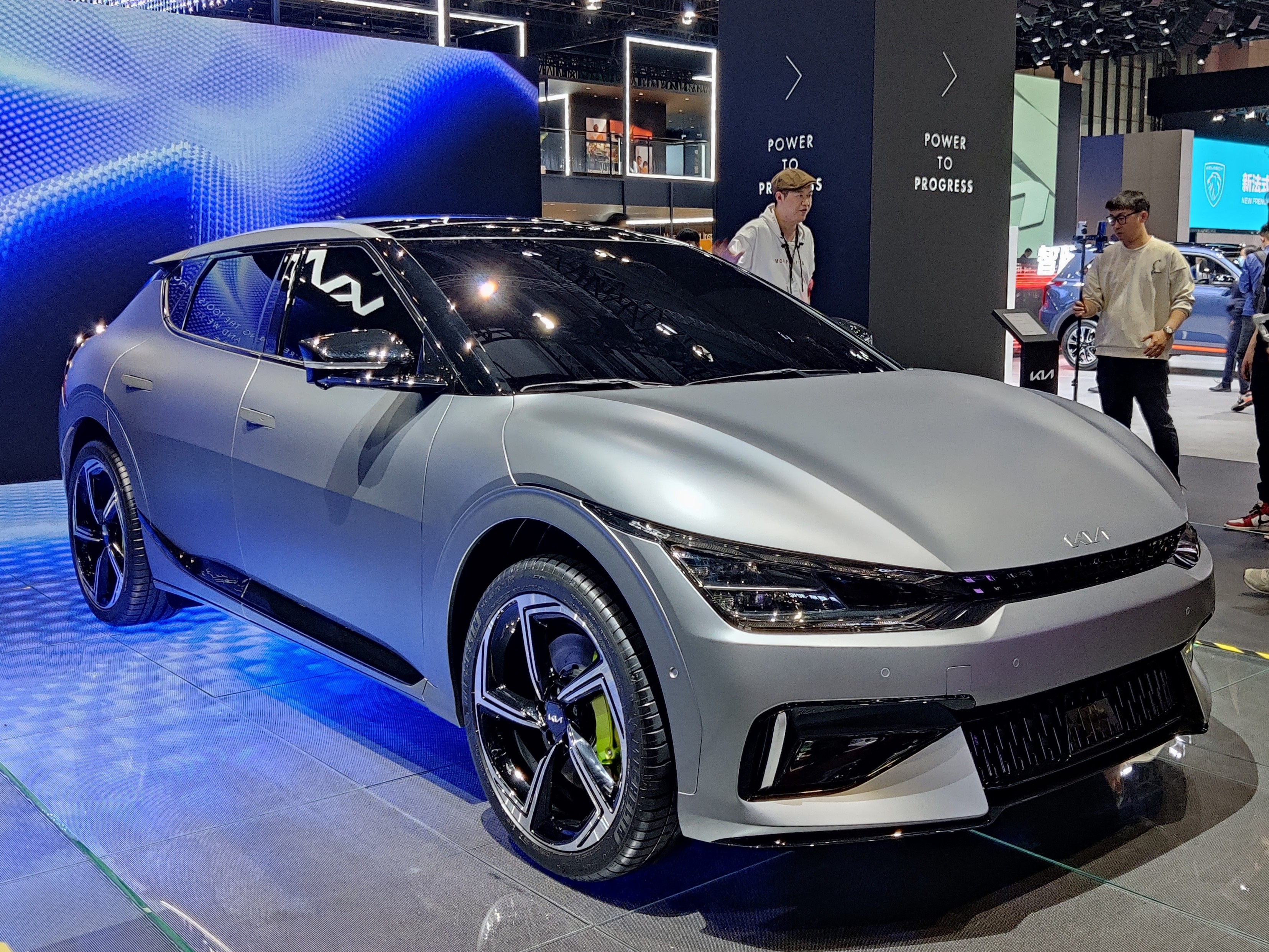
Kia EV6 Wind
"if you're also looking more around that $25,000 mark, I'd recommend the Kia EV6 Wind, because the Kia EV6 Wind has a lot more features than the Ioniq 5 SEL. So on the EV6, you get a meridian sound system, and you also get ventilated front seats."
The Kia EV6 is an electric SUV. The “Wind” trim is a mid-level version that, according to the host, often comes with more comfort tech than the Ioniq 5 SEL—like a premium sound system and seats that help keep you cooler.
The Kia EV6 is an electric crossover, and the Wind trim is a mid-level package. The host highlights that the EV6 Wind tends to include more features than the Ioniq 5 SEL at similar money—specifically a Meridian sound system and ventilated front seats.
ventilated front seats
"So on the EV6, you get a meridian sound system, and you also get ventilated front seats."
Ventilated front seats use small fans to move air through the seat cushions. This helps reduce heat buildup in warm weather and can make long drives more comfortable.
meridian sound system
"So on the EV6, you get a meridian sound system, and you also get ventilated front seats."
Meridian is a company that makes high-end car audio. If your EV6 has a Meridian sound system, it usually means the speakers and tuning are better than the basic setup.
Meridian is an audio brand known for premium in-car sound systems. When a car includes a “Meridian sound system,” it typically means the audio hardware and tuning are upgraded compared with standard stereos.
heated steering wheel
"But the Ioniq 5 SEL does have a heated steering wheel. So if you like that, then you might lean more towards the Ioniq 5."
A heated steering wheel warms the steering wheel so your hands feel less cold in winter. It’s a comfort feature, not a performance upgrade.
A heated steering wheel uses built-in heating elements to warm the wheel surface. It’s a comfort feature that reduces cold-weather numbness during winter driving.

Hyundai Ioniq 6
"Now, the final car is the Hyundai Ioniq 6, which is the long sedan. That car, I really like. It has super spacious back seats... Downside is, you only get 11.3 cubic feet in the trunk."
The Hyundai Ioniq 6 is an electric sedan. It’s great for rear-seat space, but the trunk is smaller than you’d get in the Ioniq 5 or EV6.
The Hyundai Ioniq 6 is an electric sedan known for its long, spacious cabin and “sedan vibe” packaging. The host notes a key tradeoff: it has a relatively small trunk (11.3 cubic feet) compared with the Ioniq 5 and Kia EV6.

Tesla Model
"...r spacious back seats, way more spacious than the Tesla Model 3. A ton of space on the interior. Downside is, y..."
The Tesla Model Y is an all-electric SUV. It’s popular partly because the back seats and cargo area feel bigger than you might expect for its size. People talk about it a lot because it’s practical, and they also mention any drawbacks they’ve noticed.
The Tesla Model Y is a compact electric SUV known for its practical layout and roomy interior, which is why it often comes up when people compare back-seat space. In a discussion like this, it’s typically highlighted for everyday usability, with attention also paid to any downsides the speaker mentions. It’s a common benchmark EV because it balances space, performance, and mainstream availability.

Tesla Model 3
"It has super spacious back seats, way more spacious than the Tesla Model 3. A ton of space on the interior."
The Tesla Model 3 is an electric car. In this segment, it’s mentioned just to compare space—specifically, the host says the Ioniq 6 has more room in the back seats.
The Tesla Model 3 is an electric sedan used here as a comparison point for rear-seat space. The host claims the Ioniq 6 has more back-seat room than the Model 3.
dampers
"It just drives a little sportier. So the dampers on there are a little bit stiffer."
Dampers are shock absorbers that control how the car moves over bumps. If they’re stiffer, the car feels more “sporty,” but the ride can be a bit less smooth.
Dampers are part of the suspension that control how quickly the car’s springs compress and rebound after hitting bumps. Stiffer dampers generally make the ride feel more responsive but can reduce comfort over rough roads.
battery preconditioning
"But it also gained, did it not, and correct me if I'm wrong, preconditioning in that?... But if it does have the battery preconditioning, that's something definitely to consider... Also, yeah, it's 2024. So I'm pretty sure that means it has preconditioning. But double check that, double check that for yourselves, of course."
Battery preconditioning is when the car gets the battery ready before you plug in to charge. This helps the battery charge faster and more reliably, especially when it’s cold outside.
Battery preconditioning is a feature that warms (or otherwise prepares) an EV’s battery before charging. The goal is to improve charging speed and consistency—especially in cold weather—so the car can accept high power more quickly.
no accident history
"Always when I search for cars on these things, I search for no accident history, an exclean title. And I also kept my searches at 20,000 miles."
“No accident history” means the car’s record doesn’t show reported crash damage. That matters because repairs from accidents can sometimes create hidden problems later.
“No accident history” is a screening criterion based on vehicle history reports, indicating the car hasn’t been reported as damaged in crashes. For EVs in particular, prior damage can affect battery systems, charging components, and structural integrity, so buyers often treat this as a risk filter.

Chevrolet Volt
"So yeah, stepping into a Hyundai IONIQ 5 or Kia EV6 from a Chevy Volt is a pretty nice upgrade."
The Chevy Volt is a plug-in hybrid. You can run it on electricity, but it also has a gas engine to help you go farther—so it’s different from a fully electric car.
The Chevrolet Volt is a plug-in hybrid (not a full battery-electric car), meaning it can drive on electricity for a while and then uses an engine to extend range. The host uses it as the baseline comparison point for moving to a true EV like the IONIQ 5 or EV6.
EPA range
"It's got all the fast charging things. Yeah, it's the SCL, so it has big battery with 303 miles of EPA range. So you should be able to do that round trip, your 250 miles round trip without stopping to charge."
EPA range is the official estimate of how far an electric car can go on one charge, based on standardized testing. Your real range may be a bit different depending on weather and how you drive.
EPA range is the estimated distance an EV can travel on a full charge under standardized testing by the U.S. Environmental Protection Agency. It’s a useful apples-to-apples number for shopping, but real-world range can vary with speed, temperature, and driving style.
fast charging
"It's got all the fast charging things. Yeah, it's the SCL, so it has big battery with 303 miles of EPA range... But if you do have to stop, it won't take very much to charge with one of these. It's like 10 to 80% in 18 minutes."
Fast charging means using a high-power charger to add a lot of battery in less time. The car usually charges fastest when the battery isn’t near full yet.
Fast charging refers to using a high-power DC charger to recharge an EV much quicker than standard Level 1/Level 2 charging. Charging speed is typically highest at lower state-of-charge and can slow as the battery approaches full.
10 to 80% in 18 minutes
"But if you do have to stop, it won't take very much to charge with one of these. It's like 10 to 80% in 18 minutes. And if you're stopping for a quick fill up, it won't take you even that long, like 10 minutes maybe."
That phrase is about how quickly the car can add charge on a fast charger. It’s usually fastest from low to around 80%, and then it slows down as the battery gets fuller.
“10 to 80% in 18 minutes” describes a typical DC fast-charging window from a low battery level to a mid-high level. EV charging curves often slow down after about 80% to protect the battery, so 80% is commonly used as a practical “get going again” target.

2019 Audi e-tron prestige
"There is a 2019 Audi e-tron prestige at an independent lot near me for $21,500. It looks brand new, but it has 68,000 miles on it. So the factory bumper to bumper warranty is totally dead."
The Audi e-tron is Audi’s early-generation battery-electric SUV, and the “Prestige” trim is a higher equipment level. This segment focuses on a 2019 example with 68,000 miles and a key concern: whether the expensive-to-repair parts and the end of the bumper-to-bumper warranty make a cheap used one a risky buy.
bumper to bumper warranty
"It looks brand new, but it has 68,000 miles on it. So the factory bumper to bumper warranty is totally dead."
A bumper-to-bumper warranty is the factory coverage that pays for most repairs for a limited time. If it’s expired, you’ll usually have to pay for problems yourself, which can get expensive on luxury cars.
A “bumper-to-bumper warranty” is an all-encompassing factory warranty that covers most vehicle components for a set time or mileage. When it’s “dead” (expired), you’re more likely to pay out of pocket for repairs, which matters a lot on expensive German luxury EVs.
rolling the dice
"Matt's letter about the lemon key is last week got me thinking about rolling the dice. Am I asking for trouble buying an old German luxury car just because it's cheap up front?"
“Rolling the dice” means taking a chance that the deal won’t turn into expensive problems later. In this case, it’s about buying a used luxury EV that’s cheap now but could cost more if something breaks.
“Rolling the dice” here is a buying-risk concept: choosing a used car that seems cheap up front but may have hidden costs later. The host frames it around whether an older German luxury EV is likely to have expensive failures once the warranty is gone.
motor coolant intrusion problem
"titled every e-tron will fail this way. How to check motor coolant intrusion problem. ... coolant will leak somehow into the motor. And the rear motor has ways that you can check on that."
This means the cooling fluid meant to keep the motor at the right temperature can sometimes leak into the motor itself. If that happens, it can cause trouble later, so the car should be checked and serviced if needed.
“Motor coolant intrusion” refers to coolant leaking into the electric motor’s internals. On the Audi e-tron, the host says there are checks for both the rear and front motors, and that it should be checked regularly because it can develop over time.
dealer
"So you kind of can check the reservoir, but the front motor, I think you have to pull us to seal. So I would suggest taking it to a dealer for that..."
A “dealer” is the official service shop for that car brand. The host suggests using an Audi dealer for this specific check because it may be harder to do yourself.
In this segment, “dealer” refers to the manufacturer’s authorized service network (Audi dealerships). The host recommends dealer service for the front motor check because it may require more involved disassembly than a typical DIY inspection.
clean title
"I looked through and I make sure they haven't been in an accident and have a clean title."
A “clean title” means the car’s paperwork doesn’t indicate it was totaled or rebuilt after major damage. The host is saying to only consider cars with clean paperwork when shopping used.
A “clean title” means the vehicle’s ownership paperwork doesn’t show major legal issues like salvage or rebuilt branding. The host uses it as a screening criterion when searching for a used Audi e-tron to avoid cars with serious prior damage histories.
air suspension
"the premium has, it still has air suspension and that stuff, but you don't get ventilated seats."
Air suspension is a suspension system that uses air instead of metal springs. It can make the ride feel softer and more controlled, but it’s more complicated than a basic setup.
Air suspension uses an air-filled spring system instead of steel coils, letting the car automatically adjust ride height and stiffness. On a luxury EV like the Audi e-tron, it can make the ride feel smoother, but it also adds complexity that can raise maintenance costs.
ambient lighting
"The prestige is really nice because you get like ambient lighting, like the aromas in the cabin from the AC event, which is kind of cool."
Ambient lighting is the soft, decorative lighting inside the car. It helps the cabin feel more upscale, even when you’re not looking at the controls.
Ambient lighting is interior lighting designed to create a mood rather than just illuminate controls. On luxury trims, it’s often integrated into the cabin and can be part of the “premium” feel the host is describing for the Audi e-tron.
ventilated seats
"but you don't get ventilated seats. You don't get the bang and all of some sound system."
Ventilated seats have fans that move air through the seat so you don’t get as hot. It’s a comfort feature you usually only see on higher trims.
Ventilated seats have built-in fans and ducts that blow air through the seat cushions to help cool you down. They’re a common luxury feature, and here the host contrasts which Audi e-tron trims include them.
400 volt
"Even though they're 400 volt. So they charge from 10 to 80 to 26 minutes."
“400 volt” is the electrical voltage system inside the EV. Higher voltage can help the car charge faster, and this is part of why the host is talking about charging speed.
“400 volt” refers to the EV’s electrical system voltage, which affects how efficiently the car can accept fast charging. Many modern EVs use higher-voltage architectures (often 800V), so a 400V system can charge quickly but may not match the fastest charging rates of higher-voltage designs.
150 kilowatt peak charge rate
"People like as a 150 kilowatt peak charge rate, which doesn't really sound that great, but it will hold that charge rate for the majority of the charging session."
Peak charge rate is the fastest power the car can take from a fast charger. If the car can keep that high speed for a while, you get more range added in less time.
A “peak charge rate” is the maximum power the EV can draw from a fast charger at the start of charging. The host notes a ~150 kW peak, and that the car can hold a high rate for much of the session, which is what makes the charging experience feel quick.
95 kilowatt
"So these cars actually charge really quick. And it's a big battery too. It's a 95 kilowatt"
This is the size of the car’s battery—how much energy it can store. Bigger battery usually means you can drive farther, but it can also change how the car charges.
The host is referring to battery capacity (commonly expressed in kilowatt-hours, kWh), which determines how much energy the EV can store. A larger battery generally means more total driving range, but it can also affect charging behavior and overall vehicle weight.
CPO
"I would definitely, I would lean towards the CPO or getting an extended warranty on one. I just think I like, I just don't think I could recommend like a 2019 to someone for like 17 grand,"
CPO means Certified Pre-Owned. It’s a used car that’s been checked by the dealer and usually comes with extra protection compared to buying a random used car.
CPO stands for Certified Pre-Owned. It’s a used-car program where the vehicle is inspected and backed by additional coverage, which can reduce the risk of buying a used car with unknown history.
extended warranty
"I would definitely, I would lean towards the CPO or getting an extended warranty on one."
An extended warranty is extra coverage purchased beyond the original factory warranty period. For used EVs, it can matter because repairs to major components can be expensive, and coverage can reduce out-of-pocket risk.
Audi e-tron S
"there was an e-tron S, which has the 496 horsepower tri-motor set up to get true torque vectoring on the rear axle. Super cool."
The Audi e-tron S is a faster, sportier electric SUV than the regular e-tron. It uses multiple electric motors, and it can help steer the car by changing how much power goes to the rear wheels.
The Audi e-tron S is a performance-focused version of Audi’s electric SUV, known for higher output and sportier driving behavior than the base e-tron. In this segment, the host highlights its tri-motor setup and how it can use torque vectoring on the rear axle for more responsive handling.
tri-motor
"there was an e-tron S, which has the 496 horsepower tri-motor set up to get true torque vectoring on the rear axle."
Tri-motor means the electric vehicle has three electric motors working together. More motors can help the car accelerate harder and manage power to the wheels more precisely.
A tri-motor setup means the vehicle uses three electric motors to drive the wheels. That can improve acceleration and allow more advanced control strategies, like distributing torque across axles and wheels for better traction and handling.
torque vectoring
"to get true torque vectoring on the rear axle."
Torque vectoring is when the car can change how much power it sends to different wheels. That helps the car turn more smoothly and grip better, especially when you’re accelerating out of a corner.
Torque vectoring is a drivetrain control method that varies how much twisting force (torque) is sent to individual wheels. By sending more torque to one side or axle, it can help the car rotate more predictably through turns and improve traction.

Ford F150
"I've been holding out right now. I have a 2011 F 150 EcoBoost with almost 200,000 miles on the clock."
This is a 2011 Ford F-150 with an EcoBoost turbo engine. The host is using it as an example of a work truck that’s getting worn out and costing more to run.
The 2011 Ford F-150 EcoBoost is a gasoline pickup that uses Ford’s turbocharged engine family to deliver strong power for towing. In this segment, it’s used as the baseline example of a high-mileage truck that’s starting to have problems and is getting poor fuel economy.

Ford Lightnings
"I see used F 150 lightnings getting down around mid 30k range right now, but I'm worried the standard battery won't get enough range if I'm toying anything."
The Ford F-150 Lightning is the electric F-150 pickup. The key issue discussed is that the standard battery may not have enough range for long towing trips.
The Ford F-150 Lightning is an electric version of the F-150 pickup, aimed at buyers who want truck capability with EV running costs. Here, the host focuses on the standard-range model’s limited range for towing, including the stated 230-mile range figure.
standard range
"I'm worried the standard battery won't get enough range if I'm toying anything."
Standard range means the EV has the smaller battery. Smaller batteries usually go fewer miles on a full charge, which can be a problem for long towing trips.
Standard range refers to the smaller battery configuration offered on some EVs, which typically provides less driving distance per charge than the larger-battery version. In this segment, it’s the reason the host says towing long distances could be problematic.

Rivian R1T
"Should I look for an early Rivian R1T instead or are electric trucks just too expensive right now?"
The Rivian R1T is an electric pickup designed for adventure and rough roads. The question here is whether it’s a better choice than the Ford Lightning for towing and range.
The Rivian R1T is an electric pickup truck known for its off-road capability and adventure-focused design. In this segment, it’s brought up as an alternative to the Ford F-150 Lightning if the buyer needs more range or better suitability for towing.
extended range
"The Silverado is a great car, especially if you get the extended range or the larger battery in there, you get like 400 miles of range."
“Extended range” means the truck has a bigger battery so it can drive farther on a single charge. The host is saying that version gets you much more range than the basic setup.
“Extended range” refers to a higher-capacity battery configuration that’s designed to increase driving distance per charge. In this segment, it’s tied to the host’s claim that the Silverado can reach around 400 miles of range with the larger battery.
work truck spec
"But it is the work truck spec. It's not very nice at all. You're going to get vinyl seats. You don't even have the same main display you get in the more expensive ones."
A “work truck spec” is a more basic version of a truck meant for getting the job done cheaply. The host is saying it often has simpler seats and fewer features than the nicer trims.
A “work truck spec” is a trim level aimed at utility and cost savings rather than comfort or tech. The host points out examples like vinyl seats and a simpler infotainment/display setup, which makes the cabin feel more like a tool than a lifestyle vehicle.

Silverado work truck
"So the best deal I could find for something bigger, like you mentioned, the Silverado work truck, if you want like a truck with vinyl seats, tough interior, you can wash that out with a hose."
The Chevrolet Silverado is a big pickup truck. A “work truck” version is meant for practical, everyday use—less fancy, more durable—so it’s being compared here to an EV for towing and utility.
The Chevrolet Silverado is a full-size pickup, and the “work truck” trim is aimed at utility and durability rather than luxury. In this segment, it’s used as a comparison point for EV towing and practicality (like easy-to-clean vinyl seats).
frunk
"They have a huge frunk on them. That's just a huge back seat, just a, you know, very utilitarian vehicle."
A “frunk” is storage space in the front of the car. Because EVs don’t have a normal engine in the front, there’s room there for things like groceries or tools.
A “frunk” is the front trunk space on many EVs (and some other cars) created because there’s no traditional engine up front. It’s often used for storage and can make the vehicle feel more practical for daily errands.
universal EV platform
"you can get the new Ford pickup truck that's coming out next year in 2027 on the universal EV platform. It's going to be small."
An “EV platform” is the basic design that multiple electric cars can share. If it’s “universal,” it means the company plans to use the same core setup for several different EV models.
An “EV platform” is the shared engineering foundation (battery placement, wiring architecture, chassis layout) used across multiple electric vehicles. Calling it “universal” suggests the same core design can underpin different models, helping manufacturers reduce cost and speed up development.

Ford Maverick
"It's like, it's like the Maverick or somewhere between the Maverick and the old Ranger, you know... Like if we look at Maverick resale values... you can't even get used Mavericks like use Mavericks are like almost as expensive as they are now"
The Ford Maverick is a smaller pickup truck. The hosts are saying people keep paying a lot for used ones, so it holds its value pretty well.
The Ford Maverick is a compact pickup known for being relatively affordable compared with full-size trucks. In this segment, the hosts discuss how Maverick resale values stay high, implying strong demand and good value retention for early buyers.

Ford Ranger
"It's like, it's like the Maverick or somewhere between the Maverick and the old Ranger, you know,"
The Ford Ranger is a pickup truck that’s bigger than the smallest trucks. In this clip, it’s used just to help describe the size of another truck.
The Ford Ranger is a midsize pickup that’s often used as a reference point for truck size and positioning. Here, it’s mentioned as a comparison for how big the new compact truck being discussed feels.
resale values
"Like if we look at Maverick resale values, and we also look at Ford F-150 resale values for like the first two years, they're probably going to really hold on to their value."
Resale value is how much your car is worth after you’ve owned it for a while. If resale values stay high, it usually means the used market is still paying good money for that model.
Resale values are what a vehicle is worth when you sell it later, usually measured by the price you can get for used examples. The hosts use resale values to argue that these trucks have strong demand and therefore may be a “good buy” even after purchase.
mid $30,000 range
"And I think this new that at that price point in the mid $30,000 range is going to be like"
They’re talking about the truck’s price being around the middle of the $30,000s. Their point is that this price makes it a good deal compared with what similar used trucks cost.
The mid $30,000 range is a pricing bracket the hosts use to frame the truck’s value proposition versus alternatives. In this context, they’re implying that at that price point, the vehicle should be a strong bargain relative to what buyers can pay for used versions.
Request an Explanation
Heard something you'd like explained? We'll add it to this episode.
Sign in to request explanations for terms you heard.
Want to learn more?
Browse our glossary for plain-English explanations of automotive terms, jargon, and concepts.
Help improve this episode
See something that's not quite right? Our annotations are AI-generated and can sometimes miss the mark. Click the flag icon on any annotation to suggest a correction.