
156: Slate is America's Cheapest EV Truck: No One Will Buy the Base
About this episode
Slate’s $24,950 “blank slate” EV truck sparks debate: hosts weigh its bare-bones setup, 120 kW charging, and how low running costs could appeal to fleets and municipalities. They also dig into the real-world charging math—users want route-planning that avoids dead chargers and lets you compare nearby prices, especially after hearing about $25/kWh public rates. Wraps and accessories may turn the base truck into a customizable platform, while the conversation pivots to Lucid and Rivian updates.
- Slate reveals official truck price, opens orders
- Lucid cuts large chunk of employees. Again.
- Rivian kills cheapest R1 trims
- Much, much more!
Regular cohosts:
Tom Moloughney from State of Charge and EVchargingstations.com
https://evchargingstations.com/ https://www.youtube.com/StateOfChargeWithTomMoloughney
Kyle Conner from Out of Spec Studios
https://outofspecstudios.com/
Martyn Lee from EV News Daily
https://www.evnewsdaily.com/
Domenick Yoney from Drive Electric with Domenick
https://www.youtube.com/@DriveElectricWithDomenick
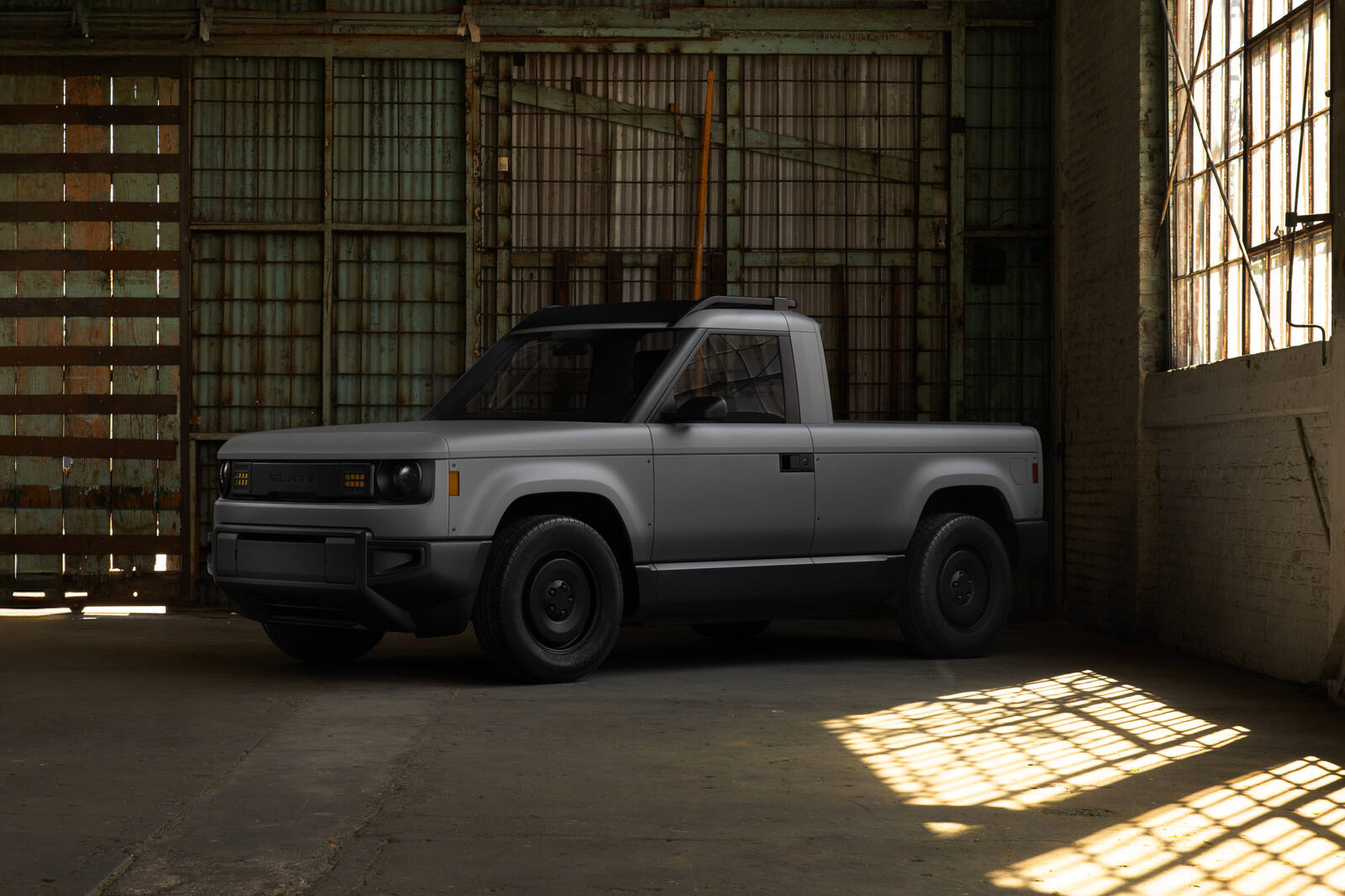
Truck Slate Truck
"...e 26th episode 145 if you keep in count today The slate truck has official pricing and opening orders lucid cut..."
The podcast is talking about an electric truck that has official pricing and is starting orders. The main reason it’s mentioned is to help people understand what it will cost and when they can buy it. The exact truck model name isn’t clear from the excerpt.
In the podcast context, “Truck” appears to refer to a specific electric truck offering with official pricing and opening orders mentioned alongside other vehicles. Because the name isn’t clearly provided, the key point is that it’s being discussed as a new or newly priced option in the electric truck market. It’s likely raised to compare availability, cost, and timing for buyers.
Reliability
"Reliability thing. I think we're gonna start to put behind us Worrying about get arriving to a site and plugging. It's still here."
In this context, “reliability” means whether the charging stations actually work when you show up. If chargers are often broken, you can end up waiting a long time.
Here, “reliability” is about whether public chargers are consistently working when drivers arrive. The segment frames early non-Tesla networks as having too few chargers and enough failures to create long waits, and argues that newer deployments reduce that risk.
Tesla
"All right, we always have to put tesla in its own box because they just got it from day one But the many of the sites that started with dc fast charging"
Tesla is mentioned because its charging network has been around for a long time. The host is comparing Tesla’s approach to charging with earlier public networks that had fewer chargers.
Tesla is referenced here as the benchmark for EV charging infrastructure, because its network has been in place since early in the company’s EV rollout. The host contrasts Tesla’s “own box” with earlier non-Tesla networks that started with fewer chargers per site.
dc fast charging
"But the many of the sites that started with dc fast charging 789 years ago. I had one charger two"
DC fast charging is the “quick” way to charge an EV at public stations. Instead of using the car’s slower charging hardware, the station delivers power in a way that lets the car charge faster.
DC fast charging is a type of EV charging that sends direct current straight to the vehicle (bypassing the car’s onboard AC charger). It’s designed for quicker top-ups than standard Level 2 charging, which is why it’s common at highway stops and public charging sites.
Electrify America
"Maybe three, you know when electrify america first started putting chargers in 10 years ago They had four I think in many of their locations"
Electrify America is a company that runs public fast-charging stations for EVs. The host is saying that early on, some locations had too few chargers, so people could end up waiting.
Electrify America is a major U.S. EV fast-charging network. In the segment, the host uses it as an example of early “gen one” deployments that had only a handful of chargers per location, which could lead to long waits when chargers failed or multiple drivers arrived at once.
charging experience
"But that that gen one Electric vehicle charging experience. We're putting it behind us"
“Charging experience” means how easy it is to actually charge your EV in real life. It includes whether stations have enough working chargers so you’re not stuck waiting.
The “charging experience” refers to the real-world usability of EV charging—things like how many stalls are available, how often chargers are out of service, and how long you might wait. In this segment, the host contrasts early “gen one” public charging setups with newer sites that add more stalls and redundancy.
ion network
"We've got these sites opening up like the ion network like walmart where they're for the most part 10 is the minimum amount of stalls that you'll get eight sometimes but for most of them"
The “ION network” is a set of public EV charging stations. The host is saying newer ION sites tend to have more charging spots, so you’re less likely to show up and find everything taken or broken.
The “ION network” is a U.S. EV fast-charging network referenced as an example of newer charging sites. The host points out that these sites are opening with a larger minimum number of stalls, improving the odds that at least some chargers are available.
walmart
"We've got these sites opening up like the ion network like walmart where they're for the most part 10 is the minimum amount of stalls that you'll get eight sometimes but for most of them"
Walmart is mentioned because some EV chargers are being added at retail stores. The host’s point is that these newer locations often have enough charging spots to reduce waiting.
Walmart is mentioned as a common retail location where EV charging sites are being installed. The point in this segment is that these chargers are increasingly deployed at places with predictable foot traffic and larger stall counts.
stalls
"10 is the minimum amount of stalls that you'll get eight sometimes but for most of them Eight to ten is the minimum and they work in addition to tesla"
“Stalls” are the separate spots at a charging station where you can plug in. More stalls usually means more cars can charge at the same time, so fewer people have to wait.
In EV charging, “stalls” are the individual parking/charging positions at a station (each stall typically has its own connector and power delivery). The number of stalls matters because if multiple stalls are down or occupied, wait times can stretch to an hour or more.

Dodge Charger
"...hat we don't really have this issue as far as the charger anxiety As much anymore, but one of the things th..."
The Dodge Charger is a large car made by Dodge. It’s usually built for power and sporty driving. It may come up in a discussion about how easy it is to keep the car running day to day.
The Dodge Charger is a full-size American sedan that’s known for strong performance and a long-running muscle-car heritage. In a podcast about “charger anxiety,” it’s likely mentioned because people may be thinking about how practical it is to own and drive a Charger in everyday life, including charging or fueling considerations depending on the specific powertrain discussed. It’s a recognizable name that often comes up when talking about modern driving costs and convenience.
charger anxiety
"But I I worry that we don't really have this issue as far as the charger anxiety [470.3s] As much anymore, but one of the things that would be really cool is cost comparison"
“Charger anxiety” means being nervous that you won’t be able to charge your EV when you need to. People worry about finding a charger, whether it’ll work, or whether it’ll be available.
“Charger anxiety” is the worry that you won’t find a public charger when you need one, or that the charger will be occupied or unreliable. It’s especially common for EV drivers planning trips where charging options are uncertain.
kilowatt hour
"I mean if I can pay [477.5s] 42 cents a kilowatt hour versus 52 cents a kilowatt hour within a three or four mile radius"
A “kilowatt hour” (kWh) is a measure of how much energy you’re getting. When charging is priced in kWh, you pay based on how much electricity your EV pulls into the battery.
A “kilowatt hour” (kWh) is the unit of energy. For EV charging, the price is often quoted per kWh, meaning you pay based on how much electrical energy you add to the battery.
time of use
"It's relatively consistent [513.7s] There's time of use where during the day you're going to pay a lot more and site by site it's going to change"
“Time of use” pricing means the cost changes depending on when you charge. So charging at one time of day can cost more than charging at another time.
“Time of use” pricing means electricity (or charging) costs different amounts depending on the time of day. For EV charging, this can make the same charger cheaper or more expensive at different hours.

Ford F-150 Lightning
"... was going to make a video this week. I drove the lightning down to 10 percent"
The Ford F-150 Lightning is an electric pickup truck. It uses a battery instead of gasoline, but it’s still meant to do typical truck jobs like hauling and towing. The podcast mentions it in relation to how far it can go before you need to charge.
The Ford F-150 Lightning is Ford’s electric version of the F-150 pickup. It’s often discussed because it brings EV technology into a truck shape people already associate with towing and work use. In the podcast context, it’s specifically mentioned after a drive down to 10% battery, which highlights real-world range and charging planning.
10 percent
"I drove the lightning down to [544.7s] 10 percent [545.4s] I went to a charger in new jersey at max on hunday"
“10 percent” means the battery is at about 10% charge left. It’s a realistic situation because you may need to find a charger quickly when you’re that low.
“10 percent” here refers to the battery state of charge (SOC), meaning the EV is near empty. Charging near low SOC is a common real-world test for how quickly and how expensively you’ll need to charge on the road.
dollar a minute
"For public charging. So, um, the the the prices get this it's 25 dollars per kilowatt hour [563.7s] per kilowatt hour and [565.3s] End a dollar a minute while you're charging"
Some chargers charge you by how long you’re plugged in, like “a dollar a minute.” That can be confusing because the charging speed often slows down as the battery gets fuller.
Some public charging pricing uses a time-based rate (e.g., “a dollar a minute”) instead of only charging energy (kWh). Time-based pricing can make costs harder to predict because charging speed can change as the battery fills.
route yourself to a charger
"Before you route yourself to a charger to understand how expensive it is. So I did I pull up"
They’re talking about how EV navigation picks charging stops for you. Their advice is to think about how much the charging will cost, not just where the car tells you to go.
This refers to EV trip planning—choosing which charger to stop at based on navigation and battery needs. The speaker’s point is that you should consider charging price and availability before relying on the route suggestion.
state of charge
"My video it flopped, but now I'm at the charger. I'm at two percent state of charge"
State of charge is basically the battery percentage in an EV. “Two percent” means the battery is almost out, so you need to find a charger quickly.
State of charge (SoC) is the percentage of energy currently stored in an EV’s battery. When the speaker says they’re at “two percent state of charge,” it means the battery is nearly empty, which strongly affects charging urgency and available options.
route planning
"So so there should be that dave worked into the uh, the route planning where you know, it says like, okay Well, you know how google does it with the maps take this route"
EV route planning helps you pick the best route, including where you’ll stop to charge. It can choose cheaper chargers, even if they’re a bit farther away.
Route planning for EVs isn’t just about distance—it also factors in charging stops and their cost. A good EV route planner can choose between chargers based on price and availability, even if that means driving a little farther to reach cheaper charging.
Gas Buddy
"So gas buddy for ebbs, right? I've been using gas buddy. I saved a dollar A dollar ten a gallon"
Gas Buddy is an app that helps you find cheaper gas prices. The host is saying a similar approach could help EV drivers find cheaper charging.
Gas Buddy is a consumer fuel-price app that crowdsources gas prices and helps drivers find cheaper stations. The host compares it to what could be done for EV charging—using similar data-driven pricing and routing inside EV tools.
in-car pricing
"I like to see that built-in pricing built into the yes on on in-car, you know systems like yeah, 100 great Yeah, it's all online in theory"
In-car pricing refers to showing the expected charging cost directly inside the vehicle’s navigation/infotainment system. The idea is to pull up-to-date rates from charging networks so drivers can compare options without relying on separate apps.
dynamic pricing
"It's just be an api that you connect to someone and because it changes through the day obviously A lot of networks do dynamic pricing."
Dynamic pricing means the charging price isn’t always the same. It can go up or down depending on how busy the chargers are and when you plug in.
Dynamic pricing means the cost to use an EV charging network can change over time, often based on demand, time of day, or grid conditions. Instead of a fixed per-kWh or per-session rate, the price can be higher when many drivers are charging and lower when there’s more capacity.
Slate truck 24 950
"Now it's real gotta be honest. I'm a bit excited about this slate truck 24 950 I got some details and I hand it over to the gang. So lfp battery pack"
This is an electric pickup truck called the Slate truck 24 950. The host is saying it’s designed to be cheaper to buy and easier to live with, mainly because it has a smaller battery and can still charge fairly quickly.
The Slate truck 24 950 is an EV pickup positioned around an affordable entry price, using a relatively small lithium iron phosphate (LFP) battery pack. In this segment the host highlights its usable battery capacity, rear-wheel-drive layout, and charging capability as the key reasons it’s meant to be practical for everyday driving.
lfp battery pack
"So lfp battery pack So charge that to 100 and fill your boots, which you'll want to it's not massive"
“LFP” is a type of battery chemistry. It’s known for being pretty stable and safe, and it’s often used in EVs that want good everyday charging behavior.
An LFP battery pack uses lithium iron phosphate chemistry. It’s commonly chosen for EVs because it’s generally more thermally stable and can be easier to manage for frequent charging, even though it may have lower energy density than some other lithium chemistries.
rear wheel drive
"That's the battery rear wheel drive. That's the drivetrain 205 miles 181 horsepower."
Rear-wheel drive means the power goes to the back wheels. It can be simpler and cheaper than all-wheel drive, but it may not grip as well as AWD on snow or wet roads.
Rear-wheel drive (RWD) means the electric motors send power to the rear axle. Compared with all-wheel drive, it typically simplifies the drivetrain and can reduce cost and weight, though it may offer less traction in slippery conditions.
120 kilowatt charging
"Payload 1550 pounds max towing 2000 pounds an acs port obviously 120 kilowatt charging"
“120 kilowatt charging” is how fast the truck can charge on a fast charger. Faster charging usually means you spend less time at the station, though the speed can slow down as the battery fills up.
120 kW charging refers to the maximum power the EV can accept from a fast charger, which strongly influences how quickly the battery can refill. Higher kW generally means faster charging up to the point where the car’s battery management tapers the current to protect the cells.
acs port
"1550 pounds max towing 2000 pounds an acs port obviously 120 kilowatt charging"
The “port” is the plug on the truck for charging. Different EVs use different plug types, so this affects what charging stations you can use.
An “ACs port” here is almost certainly referring to the EV charging connector standard used by the truck. Connector type matters because it determines which chargers you can use without adapters.
80 charge in 30 minutes
"I'm not going to blame out the water. I think it's all good enough 80 charge in 30 minutes pre-orders open now"
This is the claim about how quickly the truck can charge—about 30 minutes to get to around 80% battery. Actual time can be different depending on the charger and battery temperature.
“80 charge in 30 minutes” is a shorthand for a fast-charging target, typically meaning the battery reaches about 80% state of charge in roughly half an hour under ideal conditions. Real-world results vary based on charger power, battery temperature, and how the car limits charging as it fills up.
pre-orders open now
"80 charge in 30 minutes pre-orders open now Um, and if you haven't reserved you can pay 300 dollars to get on the list"
A pre-order is when you reserve the car before it’s delivered. It’s basically a way to get in line for the first production runs.
Pre-orders are an early purchase commitment made before deliveries begin. For EVs, pre-order timing can affect production allocation and when you can realistically expect your vehicle.
take the cream off the top of the coffee
"How much can you lose they're probably going to be way more demand for this at least initially [929.3s] To you know kind of take the cream off the top of the coffee"
It means they’ll sell the easiest-to-sell, most appealing versions first. Later they’ll probably have to deal with the harder-to-sell, cheaper options.
This is a metaphor for selling the most attractive, highest-demand versions first—typically the higher-margin or easiest-to-sell configurations. In EV pricing discussions, it often implies the company will start with a more compelling package before broader, lower-margin sales.
vehicle dynamics and testing for safety standpoint
"I think it would be very interesting especially from a vehicle dynamics and testing for safety standpoint [951.1s] Some of the things that you may be able to change. I don't know how that would impact, you know"
Vehicle dynamics is how a car behaves—handling, stability, braking feel, and how it responds to steering inputs. When people talk about safety testing alongside customization, they’re usually referring to how changes (like body panels, seating, or mounting points) could affect crash performance and stability during tests.
customization
"The safety ratings so you see all these different changes that go on there, but the concept itself [962.0s] Is of customization is something that is very intriguing and very interesting to me"
Customization means you can change parts of the vehicle to fit your preferences. The tricky part is that changing things can also change how the car performs in safety tests.
In an EV context, customization usually means the buyer can configure certain aspects of the vehicle—often including interior/exterior components or software-enabled features. The key point here is that customization can affect safety ratings and how the vehicle performs in standardized tests.
fast back
"There's also a fast back and a more square back as well [997.8s] The airbags come built in to the whole unit that bolts on"
A fastback is a car shape where the roof smoothly slopes down to the back. It’s usually more streamlined than a boxier rear design.
A fastback is a body style where the roofline slopes continuously down toward the rear, creating a more streamlined profile than a traditional notchback. The transcript contrasts it with a more square-back shape, implying different packaging and aerodynamics.
square back
"There's also a fast back and a more square back as well [997.8s] The airbags come built in to the whole unit that bolts on"
“Square back” just means the rear end is more upright and boxy. That can change how the car looks and sometimes how it fits cargo and how efficiently it moves through the air.
“Square back” is an informal description of a boxier rear body shape, typically implying a more upright tail. Compared with a fastback, this can affect aerodynamics, interior space, and how the vehicle’s rear packaging works.
airbags
"The airbags come built in to the whole unit that bolts on [1001.7s] And those rear bench kind of seats in the back as well"
Airbags are safety cushions that pop out during a crash to help protect your body. Where they’re mounted and how they deploy is important for them to work correctly.
Airbags are inflatable safety cushions designed to rapidly deploy in a crash to reduce head and chest injuries. The transcript suggests the airbags are integrated into a modular unit, which matters because deployment timing and mounting locations are tightly controlled for safety compliance.
Regen
"you would want in an EV anyway because of [1019.7s] state of charge and [1021.4s] Regen and and but there's no settings really"
Regen is when the EV slows down and also charges the battery. Instead of wasting energy as heat, the car turns some of that energy back into electricity.
Regen (short for regenerative braking) is when an EV uses its electric motor as a generator during deceleration. That converts some of the car’s kinetic energy back into electrical energy to recharge the battery.
one pedal driving
"It's one pedal driving and it's on you know, there's no sport mode or what not [1028.14s]"
One-pedal driving means you can slow down mostly by lifting your foot off the accelerator. The car uses its electric system to slow down and recharge the battery at the same time.
One-pedal driving is an EV driving style where lifting off the accelerator slows the car using regenerative braking, so the driver can modulate speed mostly with a single pedal. It changes the feel of braking and can reduce brake usage in everyday driving.

Tesla Model S
"[1150.5s] Is it if you remember tesla? [1152.3s] They brought out the model s and it was a really expensive vehicle, right?"
The Tesla Model S is one of Tesla’s main electric cars. The hosts are using it as an example of how a company can start expensive and then lower the price later.
The Tesla Model S is a flagship electric sedan from Tesla, known for showing how far battery-electric performance and tech could go. In this segment, it’s used as an example of how Tesla started with a high price and then reduced pricing over time.
base model
"[1159.1s] These guys are coming out with the basey base model and you'll be able to build it up [1163.4s] And the fact that you also have the ability to customize it in your back pocket"
A “base model” is the cheapest version of a car. You get the essentials first, and then you can add extra features later if you want them.
A “base model” is the lowest-priced version of a vehicle, typically with fewer features included from the factory. The segment argues that starting with a base price and then adding options later can be a smarter sales strategy for EV trucks.

Lucid
"[1155.2s] And then they came down in price lucid brought out the really expensive one then came down in price [1159.1s] These guys are coming out with the basey base model and you'll be able to build it up"
Lucid is a company that makes electric cars. The point being made is that they started with expensive models and then lowered prices, similar to Tesla.
Lucid is an EV brand that entered the market with higher-priced models and then moved toward more accessible pricing. Here, the host compares Lucid’s pricing strategy to Tesla’s, as a way to argue that “base” versions can make EVs more attainable.
3d printers
"[1179.3s] Marketplace that crops up around this vehicle if the vehicle is popular [1182.3s] There is bound to be a bunch of hobbyists and 3d printers and whatnot"
The host is talking about hobbyists making custom accessories using 3D printers. If lots of people buy the truck, more custom parts will likely show up.
In the context of EV trucks, “3d printers” refers to hobbyists using desktop manufacturing to create custom parts or accessories. The host is predicting an ecosystem of third-party add-ons around the vehicle if it becomes popular.
add-ons
"[1189.8s] But to go officially to slate do you want to get the add-ons and stuff? [1192.9s] That's the big thing that they're going with which is"
“Add-ons” are extra features or accessories you can buy on top of the basic truck. The idea is you don’t pay for everything upfront.
“Add-ons” are optional accessories or features that can be purchased after the base vehicle is built. The host frames this as Slate’s key strategy: you can start with the essentials and then add items later as your needs change.
five foot bed
"[1205.0s] Or I really want this accessory for the bed or I'm doing more time [1209.4s] The bare bones of it literally which is the five foot bed"
On a pickup truck, the “bed” is the cargo area. A “five foot bed” means the truck’s cargo area is about five feet long, which changes what you can carry.
A “five foot bed” refers to the length of the truck’s cargo bed, which affects how much you can haul and what kinds of items fit. The host calls it part of the “bare bones” configuration for Slate’s base truck.

Porsche Mans Porsche
"They love there. Oh, yeah The poor man's Porsche So there's things like that or you can just add like decals, you know decals"

Renault Wind
"...ross and touch the other the other like literally wind the other door up? It's it's that small"
The Renault Wind is a small car made by Renault. It’s designed to be compact and has a convertible-like setup. The podcast mentions it because it’s very small and the door design/layout is unusual.
The Renault Wind is a small car from Renault that’s known for its compact size and convertible-style design. It’s the kind of vehicle that often comes up when discussing unusual body styles or very small dimensions. In the podcast context, it sounds like the conversation is focused on how small it is and how its doors or layout work.
trailer receiver
"There was a trailer receiver [1751.3s] I didn't let a hitch just the receiver part because I like the idea of being able to put like a [1756.9s] Like a special kind of bike bicycle"
It’s the metal hitch opening on the back of a vehicle. You can plug in different attachments—like a bike rack or a towing hitch—without needing a custom mount each time.
A trailer receiver is the standardized hitch receiver tube mounted to a vehicle’s frame or bumper area. It’s the part you slide a hitch into, letting you attach accessories like bike racks or towing setups.
hitch receiver
"Like a special kind of bike bicycle [1760.0s] Mount on the back or sometimes they have like bed extenders you can plug into the hitch receiver [1765.7s] So that's another way of carrying kayaks or long pieces of lumber or what have you, you know"
Think of it as the universal connector on the back of the truck. Different attachments can slide in and lock up there.
A hitch receiver is the standardized mounting interface (the receiver tube) that accepts hitch-mounted accessories. Using the receiver instead of a full hitch can make it easier to swap between towing and cargo-carrying attachments.
2000 pound maximum towing capacity
"So that's another way of carrying kayaks or long pieces of lumber or what have you, you know [1772.1s] Very handy. It's only a 2000 pound maximum towing capacity. So that's not great [1778.1s] so, um"
This is the biggest weight the truck is rated to pull. If you exceed it, you can overwork the drivetrain and brakes, which can be unsafe.
Maximum towing capacity is the highest weight the vehicle is rated to tow safely under specified conditions. It’s limited by factors like cooling, drivetrain strength, and braking, and it directly affects what trailers or cargo setups you can use.
payload
"better they just extend they extend the bed and and use it because it's got like a [1786.1s] 1550 pounds of payload [1788.7s] That's pretty substantial for a small vehicle. That's like"
Payload is how much weight you can put in the truck bed (and how much people can be in the vehicle) before you hit the vehicle’s limit. It’s different from how much it can tow behind it.
Payload is the maximum weight of people and cargo a vehicle can carry in addition to its own weight. It’s often expressed in pounds and is separate from towing capacity—so a vehicle can have limited towing but still carry a lot in the bed.

Tesla Cybertruck
"... a small vehicle. That's like Almost as much as a cybertruck, right? I think it's like 400 pounds five with th..."
The Tesla Cybertruck is an electric pickup truck. Instead of using gasoline, it runs on a battery and an electric motor. It’s known for its unusual shape and is often compared to other trucks by size and cost.
The Tesla Cybertruck is an electric pickup truck with a distinctive angular design and a focus on battery-electric performance. It’s often discussed because it represents a major shift in what a pickup can be—using electricity instead of a traditional engine. In the podcast context, it’s referenced in relation to size, weight, and pricing comparisons.
demand vectors
"But I think there's um [1802.0s] And then we can jump to the next topic [1804.1s] But I think there's two demand vectors for this vehicle, which could be interesting first. It's an attainable [1810.5s] Um, affordable brand new EV"
This means there are different kinds of buyers who want the same vehicle for different reasons. The speaker is saying the truck could attract people for more than one main motivation.
“Demand vectors” is a business/market way to describe different groups of buyers with different motivations. Here, it frames the EV truck’s sales as coming from at least two distinct buyer “directions,” such as affordability and novelty.
attainable affordable brand new EV
"But I think there's two demand vectors for this vehicle, which could be interesting first. It's an attainable [1810.5s] Um, affordable brand new EV [1814.0s] That's something that's new and unique like remember when cybertruck came out, right?"
The speaker is basically saying the truck is aimed at people who can actually afford a new electric vehicle, not just early adopters with big budgets.
This phrase is about market positioning: making an electric vehicle “attainable” by lowering the price barrier so more buyers can purchase it new. In the segment, it’s contrasted with the idea that some EVs (like the Cybertruck) launched with higher barriers and demand came from people “stretching” financially.
fleet type demand
"Distribution standpoint that fleet type demand a lot of people are just going to say well [1849.2s] I can get this thing and you've got that wow factor [1852.6s] Then there's the other demand factor"
A “fleet” is a bunch of vehicles a business uses for work. When the host says fleet demand, they mean businesses buying EVs in volume and caring a lot about cost and practicality.
“Fleet” demand means businesses buying vehicles in quantity for a specific operational purpose (like deliveries or service routes). Fleet buyers often prioritize total cost of ownership and uptime over flashy features, which can strongly influence which EV trims sell.

Zevo Bright Drop
"... year And and he's he's looking at getting like a bright drop or something like that He's spending $50,000 a ye..."
Zevo is mentioned as something someone is thinking about buying. The discussion focuses on how much it costs per year and how it fits into a budget. The exact type of Zevo vehicle isn’t clear from the excerpt.
“Zevo” in the podcast context appears to refer to a vehicle or product being considered as a purchase, with the discussion centered on annual cost and budgeting. Without a clearer model name, the most relevant takeaway is that it’s being compared or evaluated as an option in a broader conversation about what people spend on vehicles. It’s mentioned alongside other purchase ideas and costs.
hardcore towing hardcore hauling
"Any any business that needs to do anything with a vehicle that apart from hardcore towing hardcore hauling [1942.2s] "
The host is saying that EVs may be good for most business driving needs, unless the job regularly involves very heavy towing or hauling. In other words, some work demands more than typical driving.
This phrase contrasts everyday vehicle use with heavy-duty work. The host is implying that for many business use cases, EVs can handle the job without needing the extreme capabilities associated with frequent towing and hauling.
level two chargers
"Running costs are going to be nothing, you know, I mean, they just have to install a bank of level two chargers outside the municipal complex where they park the vehicles and"
Level 2 chargers are EV chargers that plug into a stronger power setup than a normal wall outlet. They charge your EV faster and are common at workplaces and public parking lots.
“Level 2” is a common home/office EV charging standard that uses higher power than a typical outlet. It’s usually installed with dedicated electrical wiring and can recharge an EV much faster than Level 1 charging.

Chevy bolts
"Tell the house he has a fleet of Chevy bolts Further further like municipal, you know meter maze and all that kind of stuff"
The Chevrolet Bolt is an electric car that’s designed to be affordable and practical. When people say “Bolt” in a fleet context, they mean using lots of these EVs for everyday driving.
The Chevrolet Bolt is an EV built around a practical, mass-market battery-electric layout—meant for everyday driving rather than high-end performance. In fleet talk, the Bolt name usually refers to the affordable EVs that can be deployed in large numbers.
bolt-on bits
"I wonder about slates if if genuinely like all the bits are bolt-on bits And someone dings your rear quarter or someone rear ends your web and you and it's it's"
“Bolt-on” means parts are attached with bolts instead of being permanently joined. If a car’s panels are bolt-on, it can make small repairs quicker and potentially cheaper after a bump.
“Bolt-on” parts are components designed to be removed and installed using fasteners (like bolts) rather than complex disassembly or specialized welding. The host is suggesting that if the Slate’s body/trim pieces are truly bolt-on, repairs after minor impacts could be faster and cheaper.
front wing
"Uh next day me that front wing and it arrived because it's got you can see the bolts where it's holding it on"
A front wing is a body panel near the front wheel. It’s the part that can get damaged in parking-lot scrapes and needs replacement or repair.
A “front wing” is a body panel at the front of the car—typically the fender/side panel that covers the wheel area. Hosts often discuss it because it’s a common collision repair part and it affects how well the surrounding panels align.
panel gaps
"It's not a beautiful fit and finish we just give tesla hell about you know panel gaps"
Panel gaps are the small lines of space between parts of the car’s body. If they’re uneven, the car can look poorly put together.
“Panel gaps” are the visible spacing between body panels (like doors, fenders, and front fascia). Tight, even gaps are a sign of good bodywork alignment and manufacturing quality; uneven gaps can make a car look less refined.
insurance costs
"Panel on and i'm done like does that bring insurance costs down? For big fleets things like that."
Insurance costs are what you pay for your car insurance. The host is wondering if avoiding an insurance claim could keep your rates from going up.
Insurance costs refer to what you pay to insure the vehicle, which can rise after a claim or accident. The host is discussing whether doing a simple panel swap yourself (or outside a claim) could avoid increasing premiums.
repainting
"That's a good point. Yeah, they have the plastic panels. So maybe yeah, there's no repainting"
Repainting is when a shop fixes the car’s paint after damage. It’s often needed to make the repaired area match the rest of the car.
Repainting is the process of removing damaged paint and applying new paint to restore the car’s finish. Collision repairs often require repainting to match color and blend the surface, which can be expensive and time-consuming.
Silvio Napoli
"We have another update from lucid this week under the direction of a new ceo silvio napoli [2415.6s] The company is now cutting 18 percent of their workforce in the us 1500 jobs"
Silvio Napoli is the person the host says is Lucid’s new CEO. The CEO is the top leader, so leadership changes can affect what the company does next.
Silvio Napoli is identified here as Lucid’s new CEO. A CEO change matters because it often signals a shift in strategy, priorities, and cost structure—especially during periods of workforce reductions.
cutting 18 percent of their workforce
"[2415.6s] The company is now cutting 18 percent of their workforce in the us 1500 jobs [2420.2s] That's full-time roles contractors and production workers as well. This is not great news"
This is the company reducing how many people work there to save money. For an EV company, fewer employees can mean slower progress on software updates and production.
Workforce cuts are a cost-reduction move that can affect EV development timelines, software iteration, and production ramp-up. For EV makers, reducing engineering and production staffing can slow feature updates and increase execution risk.
chief operating officer
"They've eliminated roles like chief operating officer and they've taken out a second production shift at the cast of ground a facility [2445.2s] I felt like we're flogging a dead horse there here"
A chief operating officer is a top manager who helps run the company day to day. Removing that role can mean the company is reorganizing how it operates.
A chief operating officer (COO) is an executive responsible for day-to-day operations and execution. Eliminating that role can indicate a restructuring of how the EV company manages production, staffing, and operational priorities.
software standpoint
"Been challenged over the years from a software standpoint. It's sad to see them having to do this [2477.9s] But it's a reality check, right?"
EVs run a lot of important functions through software, not just hardware. The host is saying Lucid has had trouble getting the software to where it needs to be.
In modern EVs, “software” includes the vehicle’s control systems and user experience (like infotainment and driver-assistance behavior). The host frames Lucid as being “challenged…from a software standpoint,” implying that software maturity and reliability can be as critical as hardware.
Software in their cars
"From a lot of viewers about challenges. They've had with [2513.4s] Software in their cars even in the gravities"
EVs don’t just run on electricity—they also depend on computer software. If that software has problems, the car can feel less reliable or less smooth to use until updates fix it.
Modern EVs rely heavily on in-car software to manage everything from driving functions to infotainment and system updates. When the host mentions “software challenges,” they’re pointing to the risk that bugs, slow fixes, or update issues can hurt the ownership experience.
reset
"Hopefully what this is is a reset [2535.7s] You know everything coming up. Maybe they have to scale it back and then they can rebuild with with some new"
Here, “reset” means the company may need to step back and reorganize to fix what’s going wrong. The idea is to regroup and then move forward better.
In this context, “reset” means a strategic restart—scaling back, reorganizing leadership, and rebuilding processes to address problems. It’s a business/operations concept applied to how an automaker might recover from product or software issues.
tank[ed] in value
"because they've just completely tanked in value [2586.6s] but"
The host is saying these EVs lost a lot of resale value. When that happens, used buyers may find good deals because the market price dropped.
“Tank in value” refers to a sharp drop in resale value, which is often driven by market perception, incentives, and how well the product holds up over time. For EVs, software reputation and update reliability can influence buyer confidence and therefore residual value.
endless flow of money
"Um, you know that that that endless flow of money wherever it's coming from is eventually gonna [2682.4s] If not dry up the people that are writing those checks are gonna say"
They’re talking about how new car companies may need ongoing financial support for years before they make enough money from sales. If sales stay too low, the funding can run out.
The hosts are describing how EV startups often rely on continuous funding to cover losses while they develop new platforms and vehicles. The idea is that if sales don’t ramp up, the external funding eventually stops.

Lucid Air
"You know an air over a model s and I know that's not what everybody might feel but I've driven both extensively Um, and I think that the air drives better than model s Uh, but uh, and I like the interior."
The Lucid Air is an electric car (a sedan) made to be efficient and nice to drive. Here, the host says it feels better to drive than a Tesla Model S and that they like the cabin.
The Lucid Air is a premium electric sedan known for its efficiency and strong real-world driving feel. In this segment, the host compares it directly to the Tesla Model S, praising the Air’s driving dynamics and interior.

Fisker
"And confidence is a big thing when you're buying a car. So ask any fiska. Oh no the struggling with Yeah Being part of a facebook community to try and work out problems and the the owners of those fiskers"
Fisker is an electric-car brand. The host is saying that when things go wrong, owners may have to rely on each other (like online communities) to figure out repairs and fixes.
Fisker is an EV brand referenced here in the context of owner confidence and real-world problem-solving. The host points to Fisker owners forming communities to work out issues, implying that service and support can be a deciding factor for buyers.
confidence is a big thing when you're buying a car
"And confidence is a big thing when you're buying a car. So ask any fiska. Oh no the struggling with"
The host is talking about buyer confidence—whether you feel safe buying the car long-term. It’s about whether there will be places that can fix it and help you if problems show up.
This is a buyer-focused concept: “confidence” means believing the car will be supportable after purchase—especially if something breaks. In the segment, the host links confidence to the availability of repair options, parts, and knowledgeable shops.
base spec
"All right. Let's let's talk a little bit about rivian. They've discontinued their [2838.3s] base spec [2839.4s] so [2840.7s] they are making [2842.2s] an adjustment to their r1 t and r1 s"
“Base spec” is the cheapest version of a car model. Here, Rivian stopped selling that lowest version and changed what the entry-level truck/SUV includes.
“Base spec” means the lowest, most stripped-down configuration in a model lineup. In this segment, Rivian discontinued its base spec and then reworked the entry-level R1T/R1S powertrain and battery pairing.

R1T
"But yeah, so anyway, hopefully that's not the case [2831.4s] But as I said, yeah, it doesn't look good. All right. Let's let's talk a little bit about rivian. They've discontinued their [2838.3s] base spec [2839.4s] so [2840.7s] they are making [2842.2s] an adjustment to their r1 t and r1 s"
R1T is Rivian’s all-electric pickup. Here, they’re changing the “starting” version so the cheapest configuration doesn’t come with the same powertrain/range as before.
R1T is Rivian’s electric pickup truck. In this segment, the host discusses Rivian adjusting the R1T’s base specification by changing the motor setup and battery/range pairing to move buyers up the lineup.

R1S
"Let's let's talk a little bit about rivian. They've discontinued their [2838.3s] base spec [2839.4s] so [2840.7s] they are making [2842.2s] an adjustment to their r1 t and r1 s [2846.3s] the they've removed dual motor standard"
R1S is Rivian’s electric SUV. The host says Rivian changed the cheapest version so it no longer includes the same dual-motor setup as before.
R1S is Rivian’s electric SUV. The discussion here is about Rivian discontinuing the base spec and then revising the R1S/R1T entry configurations—specifically removing a dual-motor standard setup from the lowest trim.
dual motor
"[2846.3s] the they've removed dual motor standard [2850.1s] That paired the entry level battery pack with a dual motor powertrain [2853.7s] 270 miles of range the baseline jumps by about 7000 dollars to get into one now"
“Dual motor” means the EV has two electric motors working together, usually one for the front and one for the rear. In this segment, Rivian stopped including that setup on the cheapest version.
A dual-motor EV uses two electric motors (typically one per axle) instead of a single motor. The host says Rivian removed the dual-motor standard pairing from the entry level, which changes both performance feel and how the battery/range is packaged.
range
"That paired the entry level battery pack with a dual motor powertrain [2853.7s] 270 miles of range the baseline jumps by about 7000 dollars to get into one now [2858.0s] Uh, 321 miles dual motor configuration the new entry point."
For EVs, “range” is how far the car says it can drive on one full charge. The segment compares the old entry setup’s range to the new entry point’s range.
In EV context, “range” is the estimated distance the vehicle can travel on a full charge under standardized testing. The host uses range numbers (270 miles, then 321 miles) to explain how Rivian’s entry-level changes effectively force buyers into a higher-spec battery/motor combination.
differentiated
"I mean, I thought it was a smart move. I think uh, I'm [2877.3s] like very much like the idea nothing to have their the r2 out there the more affordable model. I think it's [2884.3s] I think it's smart to keep them differentiated [2886.5s] so keep your premium products premium and you know part of that is"
“Differentiated” means the company wants the different versions to feel meaningfully different from each other. The host thinks Rivian should avoid making the cheapest version too similar to the more expensive one.
“Differentiated” here means keeping the product lineup distinct so the cheaper model doesn’t feel like a watered-down version of the higher-end one. The host argues Rivian should keep premium trims “premium,” which is why removing dual-motor from the base spec can make the higher trims more meaningfully better.

Tesla Model 3
"... tesla like are they were talked about the 35 000 model 3 and they did it but Like no, he said most people ..."
The Tesla Model 3 is an electric car that looks like a regular sedan. It uses a battery instead of gasoline. The podcast mentions it because people often talk about whether a lower-priced version is actually available or affordable for most people.
The Tesla Model 3 is a compact electric sedan that became one of Tesla’s most important mass-market models. It’s frequently discussed in terms of pricing and how accessible an electric car can be, including talk about a lower-cost version. In the podcast context, it sounds like the conversation is about whether the “around $35,000” idea is realistic for most buyers.
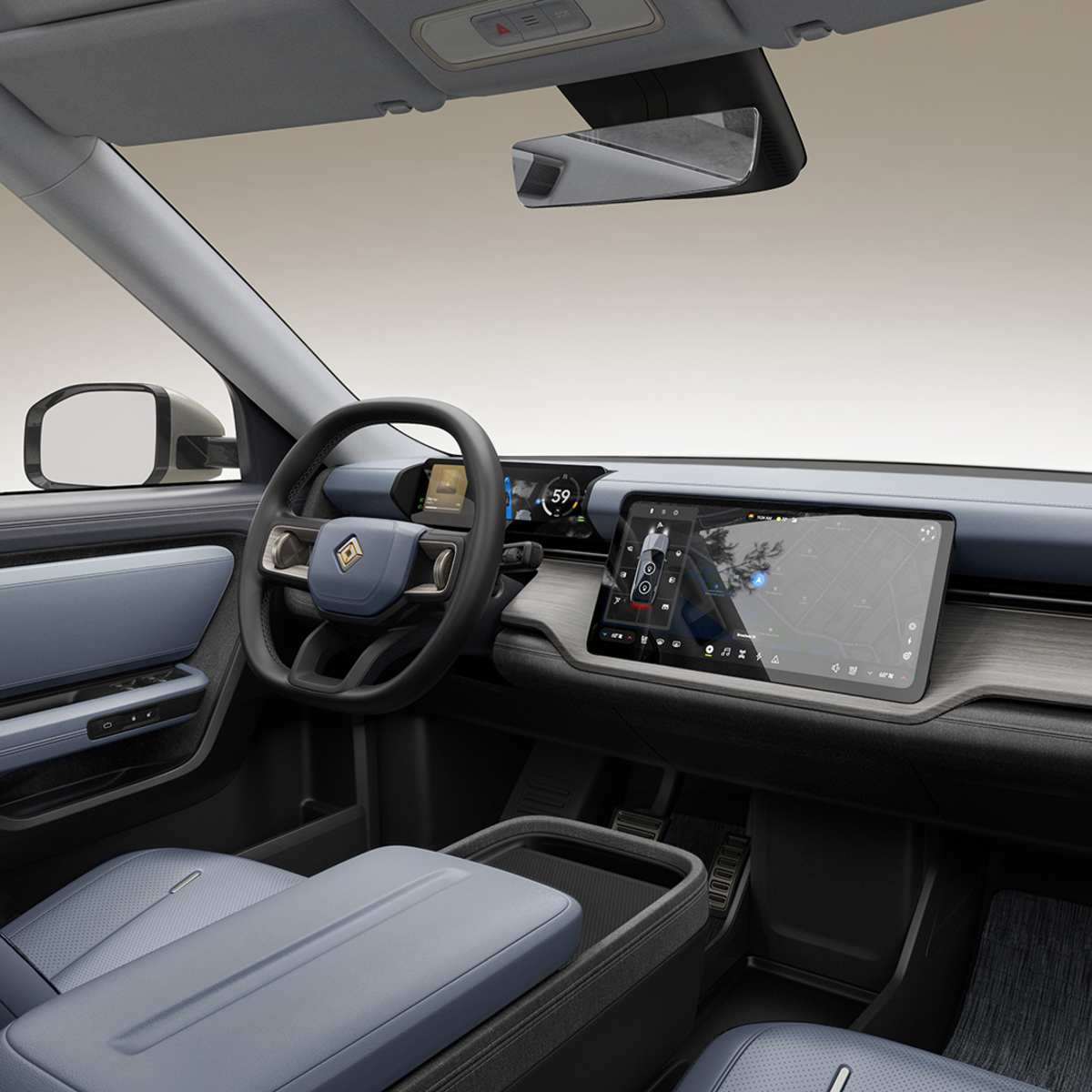
r2
"Uh gun watch tom's videos on that the off-road portion. We we heard from kyle who was pretty impressed And I think things went you know went well with you taking this thing off-road as well the r2"
R2 is Rivian’s newer electric vehicle. Here they’re talking about how it handles off-road, not just regular city driving.
The Rivian R2 is Rivian’s smaller, more affordable electric SUV/truck platform compared with the larger R1 models. In this segment, they’re specifically talking about how the R2 performs off-road during early “first drive” events.
first drive events
"But number two, I thought it would be kind of cool to give people a behind the scenes look at These first drive events, you know, so I I basically recorded we did two type of driving"
“First drive events” are controlled media/early customer experiences where journalists and influencers test a new vehicle before it’s widely available. They’re often used to gather feedback on real-world behavior—like off-road capability—while the automaker can still adjust messaging and sometimes software settings.
jake molinowski
"But the off-road portion that every all the journalists had Somebody from rivian and sme in the vehicle. I had jake molinowski who's the vp of vehicle dynamics for r2 And they're there to answer any questions"
Jake Molinowski is a Rivian engineer/executive responsible for how the R2 drives and handles. That includes making sure it feels stable and predictable when you’re turning, braking, or driving off-road.
Jake Molinowski is Rivian’s VP of vehicle dynamics for the R2. “Vehicle dynamics” is the engineering side of how the car behaves—things like handling balance, stability control behavior, and how the suspension/traction systems respond to different driving conditions.
electric braking
"…No physical lockers, but instead they use uh kind of the electric braking [3488.8s] Which is instantaneous even faster than r1 because they have more compute power"
Here, “electric braking” means the truck can slow the wheels using its electric motors and computer control. That lets it react very fast when the road is slippery or bumpy, helping the tires keep grip.
In this context, “electric braking” means the truck uses its electric drive system and motor control to slow individual wheels quickly. Instead of relying only on traditional friction brakes, the software can apply braking forces in a split-second to help maintain traction on uneven surfaces.
routes torque to the wheels
"…it immediately routes torque to the wheels with maximum traction [3498.8s] And that really helps in like ruts and loose gravel and so forth"
This means the truck’s computer decides how much “push” (power) each wheel gets. If one wheel is slipping, it can reduce that wheel’s power and send more to the wheels that have grip.
“Routing torque to the wheels” refers to the vehicle’s control system deciding how much twisting force each driven wheel gets. On an EV truck, that can be adjusted rapidly to match traction—sending more torque to wheels with grip and reducing it where traction is poor.
maximum traction
"…routes torque to the wheels with maximum traction [3498.8s] And that really helps in like ruts and loose gravel and so forth"
“Maximum traction” means getting the tires to grip as hard as possible. On dirt or gravel, the truck tries to prevent wheel spin so it can keep moving steadily.
“Maximum traction” is the goal of keeping the tires from slipping while still delivering drive and braking forces effectively. In off-road conditions like ruts and loose gravel, the control system tries to keep each wheel operating near the grip limit so the truck can move without spinning.
balance that... compliant on-road but very capable off-road
"…Most r2 owners… are more concerned about on-road [3533.1s] driving characteristics [3534.1s] So how do you balance that… because it’s kind of a push and a pull… [3545.5s] Was very compliant on-road but very capable off-road"
They’re talking about making the truck drive nicely on regular roads while still being able to handle dirt and rough trails. That’s hard because the best setup for one usually isn’t the best setup for the other.
This describes the engineering trade-off between on-road ride/handling and off-road capability. The vehicle needs to be stable and predictable at highway speeds while also managing traction, wheel slip, and ground clearance demands on rough terrain—often requiring different control strategies and hardware tuning.
air suspension
"Air suspension like r1 has, you know, so um"
Air suspension is a suspension system that uses air-filled bags instead of metal springs. It can raise or lower the car and help it ride better over bumps.
Air suspension uses airbags instead of traditional steel springs. It can automatically adjust ride height and stiffness to improve comfort and handling, especially over uneven roads.
brakes will be automatically applied to the inside wheels in a corner
"They'll the the brakes will be automatically applied to the inside wheels in a corner [3575.6s] Um, and that reduces rotation"
Some cars use the brakes to help the car stay stable while turning. If the car is starting to rotate the wrong way, the system can lightly brake specific wheels to help it follow the turn.
Applying the brakes to the inside wheels in a turn is a stability/traction control strategy used to help the car rotate and track through the corner. By selectively braking one side, the system can reduce unwanted rotation (oversteer) and improve cornering behavior.
reduces rotation
"Um, and that reduces rotation [3577.5s] And the vehicle felt extremely nimble"
When you turn, the car can either rotate too much or stay balanced. “Reducing rotation” means the car is being kept from turning more than it should, so it feels more controlled.
In cornering, “rotation” refers to how much the car yaws (turns its nose) relative to the direction of travel. Reducing rotation typically means the car is being kept from over-rotating, which helps prevent instability like oversteer.
Pirelli scorpion tires
"the uh, Pirelli scorpion tires that they gave I mean, they were [3588.5s] You know, they were they were given in as I was really trying to carve up the the long winding roads"
Pirelli Scorpion is a brand/model of tire. Tires are a huge part of how well the car grips the road and how confident it feels in turns.
Pirelli Scorpion is a tire line commonly associated with performance-oriented all-season and SUV/off-road-capable tires. Tire choice strongly affects grip on pavement and how predictable the vehicle feels when you “carve up” winding roads.

Wrangler Rubicon
"...road it was very capable. Look, this isn't a Jeep Rubicon It's it's a 45 000 vehicle that they had to make ..."
The Wrangler is a tough SUV made for off-road driving. It’s often sold in different versions, and the podcast is comparing one version to another. The point is usually what capability and features you get for the money.
The Wrangler is a rugged off-road-focused SUV known for its capability and customization options. In the podcast context, it’s referenced with a specific trim/value comparison—described as not being a “Rubicon” and tied to a stated price—suggesting the conversation is about what you get at different price points. It’s commonly discussed because people buy Wranglers specifically for off-road use and durability.
price class
"But I think it's more than capable for what people would expect out of a vehicle in this price class [3624.4s] Great. All right"
“Price class” just means the budget tier the vehicle is competing in. The host is saying the car makes trade-offs that make sense for what people pay for in that range.
“Price class” is a way of judging a vehicle relative to what buyers typically expect at that budget level. The host is arguing the compromises are reasonable for the GV90’s target cost, even if it’s not the most extreme off-road option.

new gv90 from genesis
"This is the new gv90 from genesis. Uh, it's gonna launch in september a hundred k vehicle [3641.5s] And uh, I mean you guys are both retired now."
The host is talking about Genesis’ new EV truck called the GV90. They mention it’s launching in September and that it’s meant to be a lower-cost option in the EV truck space.
Genesis’ GV90 is positioned as a new flagship electric vehicle, and the host frames it as a major entry in the EV truck conversation. The key details here are the model name (GV90), its planned launch timing, and its intended price point.

Hyundai Ioniq
"It's not just the kia rev9 or an Ioniq nine with the genesis badge on this is the first one on humbay's new ev platform the em"
They mention the Ioniq Nine as another EV option people might be thinking about. The discussion is basically comparing different upcoming EVs and who’s launching what first.
The host references the Ioniq Nine as another EV being compared in the same discussion. Here, it’s used to set up a contrast with a Genesis-badged vehicle on a new EV platform.
modular architecture
"Corpilla of their new modular architecture [3684.1s] Standalizing components even further like battery packs and electric motors"
It means the car is built from reusable building blocks. By using the same key parts (like battery and motor designs) across different models, companies can make cars cheaper and easier to adapt.
A modular architecture is a vehicle design strategy where manufacturers build multiple models using shared “modules” like battery packs and electric motors. The goal is to standardize parts across platforms, which can lower manufacturing costs and make it easier to create different vehicle variants.
battery packs
"Standalizing components even further like battery packs and electric motors [3688.4s] To cut manufacturing costs boost flexibility and and things like that."
A battery pack is the EV’s main battery assembly. It’s made up of lots of smaller battery cells, and standardizing it can help automakers build different EVs more efficiently.
Battery packs are the assembled battery units in an EV, typically made from many individual cells arranged into modules and protected by a casing. In modular EV platforms, standardizing battery packs helps manufacturers reduce cost and speed up production across multiple models.
electric motors
"Standalizing components even further like battery packs and electric motors [3688.4s] To cut manufacturing costs boost flexibility and and things like that."
An electric motor is what actually drives the wheels using electricity from the battery. Standardizing motor designs can make it cheaper and easier for the company to build different EVs.
Electric motors are the propulsion units that convert electrical energy from the battery into motion. When EV platforms standardize electric motor designs across models, it can reduce complexity and manufacturing cost.
800 volt architectures
"What they do with this because e gmp platform from the the koreans really introduced 800 volt architectures to the masses [3730.7s] Uh, genesis isn't a cheap vehicle."
This is about how an EV’s electrical system is set up. A higher-voltage design (like 800 volts) can help the car charge faster and deliver power more efficiently, especially with the right charging equipment.
“800 volt architectures” refers to EV electrical systems designed around an 800-volt high-voltage battery and powertrain. Higher voltage can reduce current for the same power, which helps enable faster charging and more efficient power delivery (assuming compatible chargers and components).

Ford F150
"And I just don't have the pulse on that But you know, you think about the f-150 lightnings and time I know you've had one and we've that's an amazing vehicle, right? And and so what what can you buy?"
The Ford F-150 is a popular pickup truck. It’s built for everyday driving but can also handle towing and hauling. It comes up in EV conversations because there’s an electric version people compare against it.
The Ford F-150 is a widely sold full-size pickup truck known for being practical, capable, and available in many configurations. It’s significant in EV discussions because Ford also offers an electric version, and the podcast compares what you can buy depending on your needs. The F-150 is likely brought up to frame the broader pickup market and what alternatives exist.
Request an Explanation
Heard something you'd like explained? We'll add it to this episode.
Sign in to request explanations for terms you heard.
Want to learn more?
Browse our glossary for plain-English explanations of automotive terms, jargon, and concepts.
Help improve this episode
See something that's not quite right? Our annotations are AI-generated and can sometimes miss the mark. Click the flag icon on any annotation to suggest a correction.