
154: Porsche Taycan Gains Virtual Gears and a Bigger Battery, Loses US Wagons
About this episode
Porsche Taycan takes center stage with 2027 updates: simulated paddle-shift “virtual gears,” a bigger standard Performance Battery Plus (97 kWh usable), refreshed Porsche Electric Sport Sound, and revised charging-port hardware. The hosts also dig into Taycan software and pricing, arguing the wagon lineup is ending while U.S. buyers may not even know wagons exist—raising resale-value questions. The rest of the show bounces through EV charging confusion, steer-by-wire complaints, and other EV/tech news.
- 2027 Porsche Taycan updates and goodbye to Cross Turismo
- BMW M concept revealed
- Slate Truck’s official price leaks
- Much, much more!
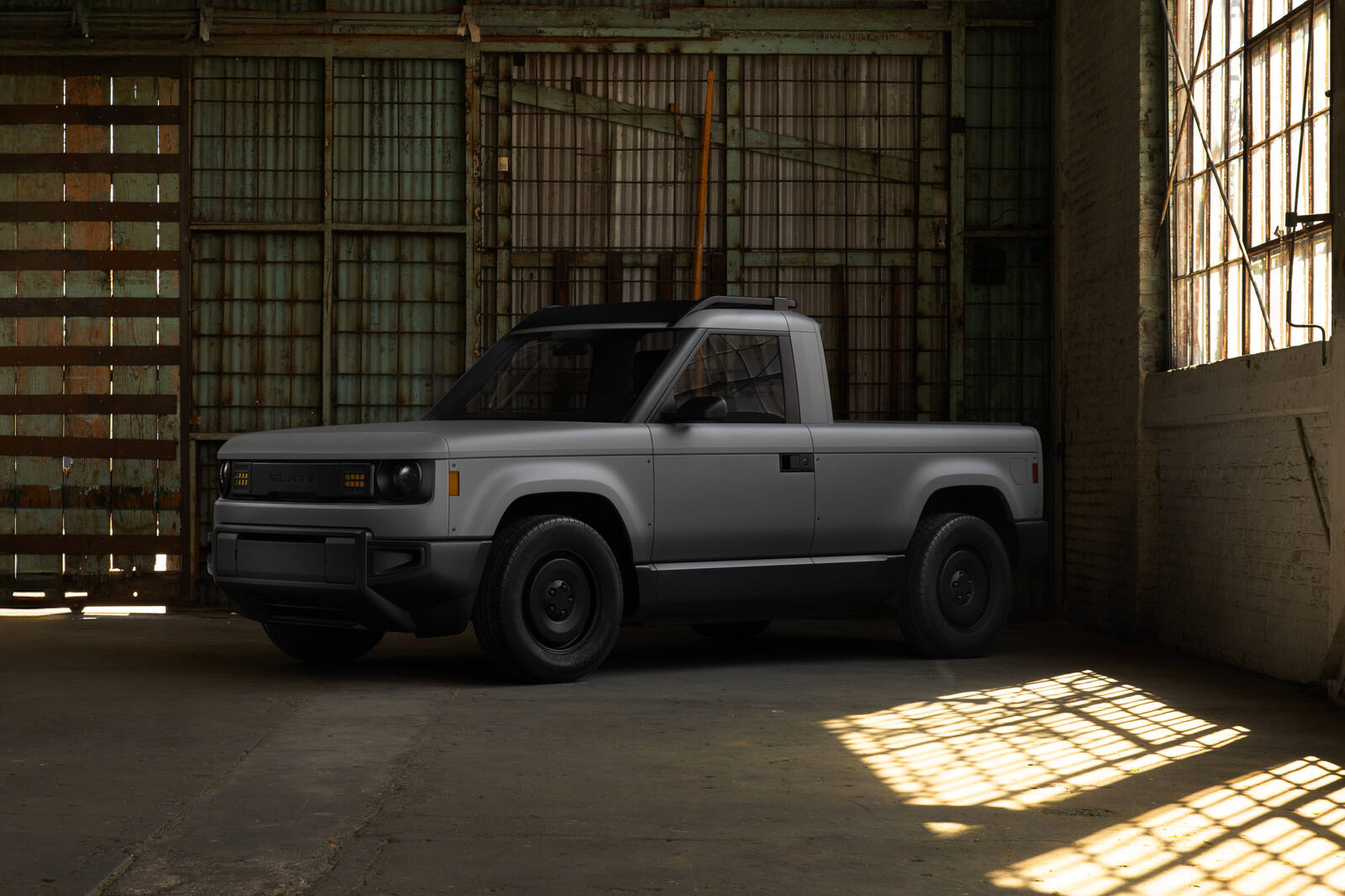
Truck Slate Trucks
"On today's show, we'll be talking about Porsche Taycan getting some new updates for 2027, the reveal of the new AM concept, and the leak of Slate Truck's official price. And of course, much, much more, I'm your host, Damle Kioni."
In this podcast, “Truck” is used to refer to news about a truck model called Slate Truck. The episode mentions a leaked price, which matters because it helps people estimate cost before buying. It’s part of the show’s updates on upcoming vehicles.
In the podcast, “Truck” appears as a general reference tied to the show’s topics, including a leak of Slate Truck’s official price. This indicates the episode is covering news about an electric truck product and its pricing information. It’s discussed because pricing and availability are major factors for buyers considering new electric trucks.
how different electric vehicles actually charge
"and deep dives into how different electric vehicles actually charge. [117.9s] Before you buy an EV charger or plan your next road trip,"
This segment is setting up a discussion about charging behavior across different EVs. Different cars can charge at different speeds and in different ways depending on battery size, charging standards, and how the car manages power during a session.
EV charger
"Before you buy an EV charger or plan your next road trip, [122.2s] make sure to bookmark evchargingstations.com and make smarter charging decisions."
An EV charger is the device you use to charge an electric car. The point here is that not all chargers are the same, so it’s smart to check what you’ll be able to use before you plan a trip or buy one.
An EV charger is the equipment that supplies electricity to an electric vehicle for charging. The segment frames it as something you should research before buying, because charger availability, charging speed, and compatibility can strongly affect real-world road-trip convenience.

Tesla Cybertruck
"...orrect me if I'm wrong on this, but it's the base Cybertruck, which I think is all-wheel drive, or is it rear-..."
The Tesla Cybertruck is an electric pickup truck made by Tesla. The “base” version can be set up with different drive systems, like rear-wheel drive or all-wheel drive, which changes how it handles on different roads. People talk about it a lot because it’s a new, unusual-looking electric truck.
The Tesla Cybertruck is an all-electric pickup known for its angular, stainless-steel body and futuristic design. In the podcast, it comes up in the context of whether the base version is rear-wheel drive or all-wheel drive, which matters for traction and how it feels to drive. It’s also a frequent topic because it’s a high-profile electric truck with a lot of attention around its configuration.

Hyundai Ioniq
"... dive into why here in a minute. We've also had a Hyundai Ioniq 9, and I drove that for about a week. It's a Hyun..."
The Hyundai Ioniq 5 is an electric crossover SUV. It’s meant for everyday driving and charging at home or on the road. The podcast brings it up because the host is comparing it to other Hyundai electric vehicles.
The Hyundai Ioniq 5 is an all-electric crossover designed around modern styling and practical daily usability. In the podcast, it’s mentioned as part of a broader Hyundai EV discussion, including other Ioniq models the host has driven. It’s relevant because the Ioniq 5 is a common “go-to” EV for people comparing different electric options.

Hyundai Ioniq 9
"...to why here in a minute. We've also had a Hyundai Ioniq 9, and I drove that for about a week. It's a Hyunda..."
The Hyundai Ioniq 9 is an electric vehicle made by Hyundai. The podcast says the host drove it for about a week, which is meant to share real-world impressions. It’s brought up because it’s part of Hyundai’s electric Ioniq lineup.
The Hyundai Ioniq 9 is an electric vehicle model from Hyundai that the host says they drove for about a week. In the podcast, it’s mentioned as part of a sequence of Ioniq EV experiences, which helps listeners understand how different Ioniq models compare in real use. It’s discussed because it’s a newer addition to the Ioniq lineup and is being evaluated firsthand.

McLaren Sabre
"...a tester, and that's it. So, let's go back to the Sabre truck real quick. Is that pulled up? See, dual-wh..."
The McLaren Sabre is a very high-performance sports car made by McLaren. It’s designed for extreme driving performance rather than everyday commuting. The podcast mentions it while talking about other vehicle topics, but it’s still treated as a standout car.
The McLaren Sabre is a high-performance, track-focused supercar from McLaren. In the podcast, it’s referenced in a conversation that also mentions a “Sabre truck,” but the key car being discussed is the Sabre as a unique, limited, performance-oriented model. It’s brought up because it’s notable enough to be discussed even when the show is covering other vehicle news.
dual-wheel motor
"Right, they'll have to build another test unit, I guess. [242.8s] I guess. Well, hopefully, they're all set up to build more of these. [247.4s] I mean, that's kind of like the business, right? Build Pebbles. [254.5s] The business wasn't to build a tester, and that's it. [259.6s] So, let's go back to the Sabre truck real quick. [262.6s] Is that pulled up? See, dual-wheel motor, all-wheel drive."
It means the electric power is handled by motors that are tied closely to the wheels. That can help the car put power down better and adjust traction more easily.
A dual-wheel motor setup means the vehicle uses electric motors mounted at the wheels (or one motor per axle/wheel pair) to drive the vehicle. This can help with traction and torque control because the car can manage power delivery more precisely than a single centralized motor.
all-wheel drive
"[259.6s] So, let's go back to the Sabre truck real quick. [262.6s] Is that pulled up? See, dual-wheel motor, all-wheel drive. [265.9s] Yeah, there are all-wheel drive. [267.1s] How many see all-wheel drive motors on the..."
All-wheel drive means the car can send power to more than just the rear wheels. That helps it grip better on slippery roads or uneven surfaces.
All-wheel drive (AWD) means power is sent to more than one axle so the vehicle can maintain traction in different conditions. On electric vehicles, AWD is often implemented with multiple motors, which makes it easier to vary torque between axles.
steer-by-wire
"[305.3s] I'm actually getting completely used to seeing them on the road, [307.9s] and I'm not as offended by the exterior at all. [312.9s] It's... I do not like the steer-by-wire. [316.5s] I cannot get used to it. [318.3s] I have tried."
Steer-by-wire means the steering wheel isn’t mechanically linked to the front wheels. It uses sensors and electronics to turn the wheels, and some people don’t like the way it feels compared to normal steering.
Steer-by-wire replaces the traditional mechanical connection between the steering wheel and the wheels with electronic controls. Instead of a direct linkage, sensors and actuators coordinate steering, which can enable features like different steering ratios or driver-assistance integration—but some drivers dislike the feel or response.
FSD
"I do like that it has FSD, so then I don't have to drive it, because I just don't enjoy it."
FSD means “Full Self-Driving,” which is software that helps the car drive more of the time. In this conversation, the host likes it because it reduces how much they have to drive themselves.
FSD stands for Full Self-Driving, a driver-assistance software package that aims to automate more driving tasks than basic cruise control. Here, the host says having FSD makes the vehicle easier to live with because they don’t have to do as much manual driving.

Lightning
"I could stack about 20 bales of horse hay in an F-1T, or a Lightning, or a Silverado EV, or a Sierra."
“Lightning” is the name people use for the Ford electric F-150 pickup. They’re talking about whether it’s practical for hauling hay bales.
“Lightning” here refers to the Ford F-150 Lightning, Ford’s all-electric version of the F-150 pickup. The host is using it to compare real-world utility—specifically how many hay bales can fit in the bed.

Chevrolet Silverado EV
"...les of horse hay in an F-1T, or a Lightning, or a Silverado EV, or a Sierra. Like, all of those electric trucks,..."
The Chevrolet Silverado EV is an electric pickup truck. It’s built on the Silverado truck platform, but it uses an electric power system instead of a traditional engine. The podcast mentions it while talking about electric trucks in general.
The Chevrolet Silverado EV is an all-electric version of the Silverado pickup line, aimed at bringing electric power to a full-size truck platform. The podcast groups it with other electric trucks, implying a comparison of how different EV pickups fit into real-world use. It’s discussed because it represents one of the major mainstream electric truck options.

Rivian R-1T
"Yeah, and I can compare with that, Scott. You know I have the Lightning, and I previously owned a Rivian R-1T."
The Rivian R-1T is an electric pickup truck. Here it’s mentioned because the host is comparing how practical it is for hauling things like hay bales.
The Rivian R-1T is an all-electric pickup truck known for its off-road focus and large battery pack. In this segment, it’s used as a comparison point for how much cargo (like bales of hay) can fit in the bed.
four-wheel steering
"I got used to this year by Y-Driving, the four-wheel steering, I thought was really an improvement over the R-1T and the Lightning, but the utility end of it."
Four-wheel steering means the car can steer with both the front and rear wheels. That can make it easier to turn and park, and the host thinks it drives better than some other electric trucks.
Four-wheel steering is a chassis system where both the front and rear wheels can steer, improving low-speed maneuvering and high-speed stability. The host says they got used to it and found it an improvement over other electric pickups like the Rivian R-1T and the Lightning.

Rivian R1S
"Kyle tried to get me to compare it to my Rivian R1S, and they're just not really comfortable in my mind, but I like the low entry point."
The Rivian R1S is an electric SUV with room for a family. Here, they’re comparing how comfortable it feels and how easy it is to get in and out.
The Rivian R1S is a three-row electric SUV from Rivian, known for its spacious interior and off-road-capable design. In this segment, it’s used as a comparison point for comfort and “low entry” practicality versus another SUV.
low entry point
"but I like the low entry point. The seats were relatively comfortable."
“Low entry point” means the car’s floor and seats are closer to the ground. That usually makes it easier to get in and out without stepping up as much.
“Low entry point” refers to how high (or low) the seat and floor are relative to the ground, affecting how easily you can get in and out. A lower entry can feel more accessible, especially for passengers who don’t want to climb up.
software
"I think the buttons and everything in the software was a little bit much. It seemed busy to me."
In modern EVs and tech-heavy cars, “software” covers the infotainment and vehicle control interfaces—menus, settings, and how functions are accessed. When the host says the buttons and software feel “busy,” they’re criticizing how the UI is laid out and how quickly you can use it while driving.
charges fine
"The sound system is fine. It charges fine. It's just not nothing special."
“Charges fine” means the car charges without problems. They’re basically saying the charging process worked well for them.
“Charges fine” refers to the EV charging experience—how smoothly the car connects to a charger, negotiates power, and completes a charge without issues. It’s a practical ownership metric because charging reliability and usability can vary between vehicles and charging networks.

Porsche Taycan
"So the Porsche Taycan we all know and love is getting some new features and other changes for 2027. So really quickly, what's new?"
The Porsche Taycan is Porsche’s fully electric car. This episode segment explains that for 2027 it gets software features that mimic shifting gears, plus a bigger battery as standard. They also mention updates to the charging ports and the new starting price.
The Porsche Taycan is Porsche’s all-electric performance sedan, known for its electric drivetrain and fast charging. In this segment, Porsche updates it for 2027 with new “virtual” driving behaviors and a larger standard battery pack. The host also notes changes to charging hardware and pricing for the U.S. market.
simulated gear shifting
"They have a simulated gear shifting controlled by the paddle shifters. Simulates an eight-speed gearbox, virtual rev limiter, and a gear-specific drag torque"
Because electric cars don’t shift like gas cars, this feature uses software to fake the feeling of gear changes. The Taycan uses the paddle shifters to trigger that “shift” sensation. It’s meant to make the driving feel more like a traditional performance car.
Simulated gear shifting is a software feature that makes an electric car feel like it’s changing gears. On the Taycan, it’s controlled by the paddle shifters and is designed to mimic the sensation of a multi-speed transmission. This helps drivers get familiar feedback even though the drivetrain is not using a traditional gearbox.
gear-specific drag torque
"Simulates an eight-speed gearbox, virtual rev limiter, and a gear-specific drag torque when changing gears."
When you lift off the accelerator, cars slow down a bit because the drivetrain resists motion—this is often called engine braking. This feature makes that resistance change depending on the simulated gear, so the car feels more like it’s actually in different gears. It’s designed to improve the driving feel.
Gear-specific drag torque refers to how the car’s drivetrain resists motion when you lift off the accelerator, and it’s tuned to feel like different gears. In a traditional manual or automatic, engine braking changes depending on the gear you’re in. The Taycan’s simulated shifting uses software to reproduce that varying “coast/engine braking” sensation.
Porsche Electric Sport Sound
"That sounds pretty interesting. Pairs with Porsche's updated Porsche Electric Sport Sound feature, which adapts to the accelerator and brake pedals,"
This is a Porsche feature that creates and adjusts sound for an electric car. Instead of relying on a real engine noise, it changes the audio based on how you’re driving—like when you press the gas or the brakes. The goal is to make the car feel more engaging.
Porsche Electric Sport Sound is Porsche’s active sound feature for electric vehicles. It changes the audio output in real time based on driving inputs, including the accelerator and brake pedals. In this segment, the host says it adapts both inside and outside the car to match what you’re doing.
larger battery pack
"It's got a larger battery pack with the base car. So every Taycan now comes equipped with the previously optional Performance Battery Plus."
A bigger battery pack stores more electricity. That usually means you can drive farther before needing to charge. In this update, Porsche makes a higher-capacity battery standard on all Taycans.
A larger battery pack means more stored electrical energy, which typically translates to more usable driving range. Here, the segment says the Taycan’s base model now includes the previously optional Performance Battery Plus. The host also provides the usable capacity figure, emphasizing that this is a meaningful hardware change, not just software.
Performance Battery Plus
"So every Taycan now comes equipped with the previously optional Performance Battery Plus. Used to cost $5,780, and it offers 97 kilowatt hours of usable capacity."
Performance Battery Plus is a higher-capacity battery option for the Taycan. The episode says Porsche is making it standard on all Taycans going forward. They also mention the usable capacity number to show how much bigger it is.
Performance Battery Plus is a specific Taycan battery option that provides more usable capacity than the standard battery. In this segment, the host says it becomes standard equipment on every Taycan for 2027. They also quantify it as 97 kilowatt-hours of usable capacity.
kilowatt hours of usable capacity
"Used to cost $5,780, and it offers 97 kilowatt hours of usable capacity. That's up from the $83.7."
Kilowatt-hours (kWh) are a way to measure how much energy is in the battery. “Usable capacity” means the part of that energy the car can actually use for driving. It’s the number that’s most relevant to real-world range.
Kilowatt-hours (kWh) measure how much electrical energy a battery can store. “Usable capacity” is the portion of that stored energy the car can actually use for driving, rather than the full theoretical capacity. This matters because two batteries with the same total size can still differ in how much energy is available to the driver.
AC J1772 port
"Native Nax now on the passenger side charging port, because Nax will, 1277.3s] the driver side still has the AC J1772 port."
J1772 is the common plug shape used for home and many public AC charging stations. The episode says the Taycan keeps this on the driver side. AC charging is usually slower than fast charging, so the port layout affects how you charge day to day.
The AC J1772 port is a standardized connector used for alternating-current (AC) charging in many markets, including the U.S. The segment says the driver-side port remains an AC J1772, while the passenger-side port gains a new connector. This distinction matters because AC charging is typically slower than high-power DC fast charging.
Native Nax
"Native Nax now on the passenger side charging port, because Nax will, 1277.3s] the driver side still has the AC J1772 port."
“Native Nax” sounds like a specific type of charging connection built into the car. The host is saying the passenger-side port gets this, while the driver-side keeps the more common J1772 plug. It likely changes what kinds of chargers you can use and how fast you can charge.
“Native Nax” appears to refer to a specific charging standard/connector integrated into the Taycan’s charging hardware. The host contrasts it with the driver-side AC J1772 port, implying the passenger side is set up for a different (likely faster or more compatible) charging method. Because the transcript doesn’t define Nax, listeners may need clarification on what connector/standard it represents.
Smartphone charging
"Let's see, what else? Smartphone charging is a lot faster."
Smartphone charging means the car can charge your phone. The host says it’s faster than before, so you should be able to top up your phone more quickly while driving. It’s a convenience upgrade.
Smartphone charging refers to built-in charging capability for a phone, typically via USB or wireless charging. In this context, the host says it’s “a lot faster,” implying the Taycan’s charging system has been upgraded to deliver more power to the phone. This is a convenience feature rather than a drivetrain change.
magnetic ring technology
"And it now supports the magnetic ring technology."
This is a tech idea that uses magnets arranged in a ring shape. The goal is usually to help the car “measure” what’s happening more accurately so it can control the drive system better.
“Magnetic ring technology” refers to using a ring-shaped magnetic component to improve how a system senses or controls motion. In EVs, similar magnetic-ring approaches are often used to make motor/inverter control more precise and efficient, which can help performance and drivability.
intelligent navigation
"There's new infotainment software with AI voice control and intelligent navigation."
This is navigation that tries to think ahead using real-time information. Instead of just giving one fixed route, it can update guidance when traffic or conditions change.
Intelligent navigation uses live data (like traffic and routing conditions) to choose routes and adjust guidance as conditions change. It typically aims to reduce delays and improve ETA accuracy compared with basic GPS routing.
AI voice control
"There's new infotainment software with AI voice control and intelligent navigation."
It’s the car’s voice assistant, but powered by AI. You can talk to it more naturally, and it tries to understand what you mean to do things like navigation or music.
AI voice control is an in-car system that uses machine learning to understand spoken commands and carry out tasks like navigation or media control. Compared with older voice systems, AI-based approaches typically handle more natural phrasing and reduce the need for rigid command wording.
Manthey kit
"And it now supports the magnetic ring technology. There's new infotainment software with AI voice control and intelligent navigation. And they're also offering a Manthey kit with aerodynamic chassis and powertrain modifications"
A Manthey kit is a performance upgrade package. It adds track-focused parts—often aero pieces and related tweaks—so the car handles better and looks more aggressive.
A “Manthey kit” refers to a Porsche-backed performance package associated with Manthey, a motorsport-focused tuning and development partner. The kit typically includes aerodynamic hardware and other changes intended to improve downforce, cooling, and overall track-oriented behavior.
aerodynamic chassis
"And they're also offering a Manthey kit with aerodynamic chassis and powertrain modifications available directly from the factory for the first time."
This phrase means the car’s shape and airflow are being tuned. The goal is usually to make the car stick better at speed by increasing downforce and reducing unwanted lift.
“Aerodynamic chassis” here means the car’s body and underbody are modified to manage airflow for better downforce and stability. In practice, that usually involves adding aero elements (like fins, splitters, and diffusers) that change how the car is pushed onto the road at speed.
wheel arch
"I'm just talking about just the wheel. The word is slipping my mind is all. But the wheel, the wheel arch."
The wheel arch is the bodywork that frames the wheel opening. When a kit adds parts like flares or fins around the wheel arch, it’s usually to manage airflow and/or accommodate wider tires while keeping the tire covered.
fender flare
"But the wheel, the wheel arch. The fender flare. The fender flare."
A fender flare is the plastic or metal “extension” around the wheel. It helps cover the tire and can also make room for wider wheels so everything fits properly.
A fender flare is an extended panel around the wheel opening that covers more of the tire. It’s commonly used to improve tire coverage (helping with splash and debris) and to create clearance for wider wheels/tires or aero/track setups.
aerodynamic upgrade
"Yeah, so you got the aerodynamic upgrade. So you have a big rear wing on the back with enlarged end plates. That's got an optimized front diffuser, high performance rear diffuser,"
An aerodynamic upgrade means changing the car’s shape and add-ons so air flows better around it. The goal is usually to make the car stick to the road more at high speed.
An aerodynamic upgrade is a set of body and airflow changes designed to improve how the car moves through air. Here it’s described with a rear wing, diffuser work, and other aero details that increase downforce and stability at speed.
rear wing
"So you have a big rear wing on the back with enlarged end plates. That's got an optimized front diffuser, high performance rear diffuser,"
A rear wing is a spoiler on the back of the car. It helps push the car down onto the road so it feels more stable when you’re going fast.
A rear wing is an aerodynamic device mounted at the back that creates downforce by redirecting airflow. More downforce helps keep the car stable and planted, especially during hard cornering and high-speed runs.
rear diffuser
"That's got an optimized front diffuser, high performance rear diffuser, with extended fins, lightweight wheels and track tires,"
A rear diffuser is an aerodynamic piece under the back of the car. It helps the car stay planted by improving how air leaves the underside at speed.
A rear diffuser is the diffuser section at the back of the underbody. In performance cars, it’s used to generate downforce and improve stability by controlling how air expands and exits behind the car.
front diffuser
"That's got an optimized front diffuser, high performance rear diffuser, with extended fins, lightweight wheels and track tires,"
A diffuser is a part under the car that helps air flow smoothly underneath. Better airflow can make the car grip more and feel more stable at speed.
A diffuser is an underbody aerodynamic section that helps manage airflow under the car. An optimized front diffuser can improve downforce and reduce drag by accelerating and smoothing the air as it exits underneath.
track tires
"with extended fins, lightweight wheels and track tires, 20 kilowatts more power. And so you can get up to 730 kilowatts in attack mode."
Track tires are performance tires designed for higher grip and better heat tolerance during aggressive driving. They typically offer stronger traction for lap times, but may wear faster and be less comfortable than normal street tires.
attack mode
"And so you can get up to 730 kilowatts in attack mode. This is the spec, I believe, that set the Nurburgring record recently."
Attack mode is a “go faster now” setting. It lets the electric car use extra power for quicker acceleration and harder driving for a limited time.
Attack mode is a performance setting that temporarily increases the car’s output for faster acceleration and lap-time pace. In an EV, it typically means allowing higher peak power and more aggressive control of traction and power delivery.
Nurburgring
"This is the spec, I believe, that set the Nurburgring record recently. I think it was just like six minutes and 55 seconds, something like that. So is that the production electric car record?"
The Nürburgring is a well-known race track in Germany. Car makers use it to test and compare how fast and capable their cars are.
The Nürburgring is a famous German motorsport venue, often used as a benchmark for performance cars. Because it includes the long Nordschleife layout, it’s a common place to compare lap times and claim “record” runs.
production electric car record
"So is that the production electric car record? Yes. Yep, it's faster than the Remak, Yang Wang."
A production EV record is a “fastest lap” claim using a car that’s meant to be a real, sellable model. It’s not just a custom prototype built for one run.
A production electric car record refers to a lap-time claim made by a car that’s considered production (not a one-off prototype). The key point is that the rules usually require a car that’s street-legal or available to customers, which makes the record more comparable.
MR kit
"And if you look at the number of turbo GT Vysox, those owners that need an MR kit [1501.6s] or the Manthey Racing kit, it's like less than one person."
An “MR kit” is a performance upgrade package for track-focused use. The host’s point is that very few Taycan owners would actually need it.
An “MR kit” refers to a motorsport-style modification package aimed at improving lap-time performance, typically by changing aerodynamic and/or cooling behavior to suit track use. In this context, the host is saying only a tiny number of owners would need that kind of kit.
Manthey Racing
"or the Manthey Racing kit, it's like less than one person. [1506.4s] So it's cool."
Manthey Racing is a company that works with Porsche cars, especially for track performance. In this segment they’re brought up as a kit option for people who want a more serious performance setup.
Manthey Racing is a Porsche-focused motorsport and tuning company known for developing track-oriented upgrades and race-prepped versions of Porsche models. Here, it’s mentioned as an aftermarket kit option for high-performance Taycan owners.
production car
"But it's purely just for the lap time to call it a production car [1512.9s] so that they can hold the record is my guess."
A “production car” is a vehicle that’s built for regular sale to customers, not a one-off prototype. Lap-time record categories often require cars to meet specific production/availability rules so the comparison between automakers is more meaningful.
Nuremberg
"you know, to say we have the record at Nuremberg. [1524.9s] So I understand why they would invest the money into it."
They’re talking about the Nürburgring, a very famous race track in Germany. Car companies use it to measure lap times, so having a record there is a big marketing brag.
“Nuremberg” here refers to the Nürburgring, the famous German race circuit used for performance testing and record attempts. Automakers often cite lap times from Nürburgring events to support claims about a car’s speed and handling.
cross-terismo
"And that's what you get when you try to look at the Porsche Taycan cross-terismo. [1552.3s] There is not one."
“Cross-terismo” is Porsche’s name for the Taycan wagon-style version. They’re saying Porsche is stopping that wagon variant (and the related Sport Turismo) for future model years.
“Cross-terismo” is Porsche’s naming for a Taycan wagon-style body variant (a crossover-like estate concept). In this segment, the hosts say Porsche is ending the Cross Turismo and Sport Turismo versions, implying the wagon-like Taycan is being discontinued.
sport-terismo
"So it looks like they're, they're ending the cross-terismo and the sport-terismo, [1564.7s] but like the street version of it, right?"
“Sport Turismo” is Porsche’s name for a sporty version of the Taycan wagon. The hosts are saying Porsche is ending these wagon-style variants.
“Sport Turismo” is Porsche’s name for a more performance-leaning Taycan wagon-style variant. The segment suggests Porsche is ending both the Cross Turismo and Sport Turismo lines, likely keeping only other Taycan body styles.
Porsche Taycan Cross Turismo
"but I'm guessing it was the sport-terismo and particularly the cross-terismo. The two of them represented a tremendously small percentage, I think, of overall Taycans. ... In Colorado, there were a ton, of course. The cross-terismos were pretty common to see."
The Taycan Cross Turismo is the Taycan’s wagon-style electric Porsche with a more rugged, crossover vibe. They’re saying you don’t see many of them in some places, but you might see more in certain states.
The Porsche Taycan Cross Turismo is the Taycan wagon variant with a more rugged, crossover-like positioning. In this segment, the hosts discuss how Cross Turismo examples are uncommon in some regions but more common in others (like Colorado), and they connect that to how many were sold and how dealers were allowed to order them.
dealership's allocations
"I always get confused when automakers are like, OK, people aren't buying the wagons, but they're also not giving the dealership's allocations to spec the wagons for people to buy."
Allocations are the limited number of cars a dealership is allowed to order from the factory. If the dealer can’t get enough cars in the right configuration, fewer customers will end up buying them—even if they would have wanted that version.
Dealer allocations are the limited number of vehicles a manufacturer assigns to a dealership for a given period. If a model isn’t selling well, but dealers aren’t being given enough allocations to order the exact spec customers want, it can look like demand is low when it’s actually supply/spec availability.
premium pack
"So you get a gray, you put premium pack on there, you don't put much else,"
A “premium pack” is a bundle of nicer features you can add to a car. The host is saying people often choose that bundle and then don’t add much else.
A “premium pack” is an option bundle that typically groups higher-end comfort, convenience, and technology features into one selectable package. The host’s example implies a common ordering pattern: choosing a popular package while not adding many other options.
wagon
"And a lot of people that want to go enthusiast for a Taycan wagon really want to custom spec it, want to make it their own, do something really cool, do something exciting. ... And I wonder if that problem of the unexciting cars with this being an enthusiast choice led to its downfall."
Here, “wagon” means a car with a longer, more cargo-friendly rear than a normal sedan. The point being made is that many people in the U.S. don’t see or hear about the Taycan wagon versions, so they don’t consider them.
In this context, “wagon” refers to the Taycan Cross Turismo / Sport Turismo body style, which combines a station-wagon-like roofline with an SUV-like stance and more cargo practicality than a sedan. The hosts argue that U.S. dealers don’t stock these “wagon” Taycans, so fewer buyers even realize they exist.
custom spec it
"And a lot of people that want to go enthusiast for a Taycan wagon really want to custom spec it, want to make it their own, do something really cool, do something exciting. ... And the dealers just don't stock exciting cars."
“Custom spec” means choosing the factory options and configuration (trim, battery/drive details, interior, and equipment) to build a personalized car. The host suggests that enthusiasts want to do this with the Taycan wagon, but dealers don’t stock enough “exciting” configurations to spark demand.
used values
"So with the cross-terismo and the sport-terismo, incredible cars, but it's that 1% slower around a track. ... And I'll be really curious to see what this does to the used values."
“Used values” means what the car is worth after it’s been sold new. The host is wondering whether the Taycan wagon will hold its resale value well if fewer people bought or even knew about it.
“Used values” refers to what a car sells for on the pre-owned market. The host is predicting that if the Taycan wagon variants were overlooked in marketing and dealer stocking, their resale prices could be affected compared with more visible sedan versions.
320 kilowatt
"which is the big boy crazy charging 320 kilowatt, great cooling, the newest generation."
This “320 kilowatt” number is about how fast the car can charge. In general, higher power means you can add energy quicker, but the actual speed can change depending on the battery’s condition and temperature.
“320 kilowatt” refers to the peak charging power discussed for the Porsche Taycan’s fast-charging capability. Higher kilowatt numbers generally mean the battery can accept more energy per unit time, reducing time spent at a charger (though real-world results depend on battery temperature and state of charge).
GTS sport-terismo
"GTS sport-terismo, not in red, because like 90% of them are in car mind red. And that'll be the car to have in the future,"
This is a Porsche Taycan version called the GTS Sport Turismo. It’s basically a higher-performance Taycan with a wagon-style body, and the host thinks it’ll be a sought-after model for a short time.
The Porsche Taycan GTS Sport Turismo is a Taycan variant that combines the GTS performance positioning with the wagon-like Sport Turismo body style. The host is talking about it as a limited U.S. availability window and a likely “buy and hold” model, implying it may be especially desirable for enthusiasts.
matching revs
"where part of the whole experience, Kyle, and you know this as well as anybody, is being physically connected to the car, is changing gears, is listening, matching revs, really involved in the driving."
Matching revs means timing the engine speed so the car is ready for the next gear. Done right, the shift feels smoother and less jerky.
Matching revs is the technique of bringing the engine speed (RPM) up to the level needed for the next gear before engaging it. It helps smooth shifting and reduces driveline shock, which is why it’s often emphasized in driving instruction for manual or enthusiast-focused driving.
audible feedback
"And listen, getting that audible feedback, whereas as great of a driving experience as electric vehicles are on a track, they might be able to perform as well."
Audible feedback is the sound you hear from the car while you drive. The hosts are saying electric cars can be fast, but they may not give the same “sound cues” that make driving feel engaging like a gas car does.
Audible feedback is the sound cues a driver gets from the powertrain—like engine noise and drivetrain changes—during acceleration and shifting. The hosts argue that electric cars can be great on track, but they may lack some of this “sound-based” involvement compared with combustion cars.
linear power curve
"And it's not that linear power curve of the electric, just the motor wind. So that's understandable."
A linear power curve means the car’s power feels like it builds in a smooth, consistent way. They’re saying electric cars often deliver power more steadily than gas cars, which can feel more “RPM-based.”
A linear power curve describes how power delivery rises in a more steady, predictable way as you press the accelerator. The hosts contrast this with combustion cars, noting that electric motors can feel different because the power comes on differently—less tied to engine RPM changes.
motor wind
"And it's not that linear power curve of the electric, just the motor wind. So that's understandable."
“Motor wind” is the whirring sound electric motors make when they’re working. The hosts are contrasting that sound with the richer noises you get from a gas car’s engine and shifting.
“Motor wind” is the audible whirring/whining sound from an electric motor as it spins under load. In this segment, it’s used to describe the kind of sound electric cars provide instead of engine-and-gear sounds from combustion cars.
hybrid 911s
"Although I will say a lot of the modern stuff that were part of this driving experience were the new hybrid 911s."
A hybrid 911 is a 911 that uses both a gas engine and an electric motor. That can make the driving feel and sound different from a regular gas-only 911.
“Hybrid 911s” refers to Porsche 911 variants that combine an internal-combustion engine with an electric motor. The segment frames them as part of the driving experience at the school, implying they can change the sound and feel compared with a purely gas 911.
in drive the whole time
"The instructor has literally said, just keep them in drive the whole time, so you're not actually shifting."
“In drive the whole time” means you leave the car in its automatic gear mode. The instructor is basically saying don’t worry about shifting—let the car handle it.
Keeping the car “in drive the whole time” means using the automatic transmission mode so the car handles gear selection without the driver manually shifting. The instructor’s instruction here highlights how the driving-school experience is being adapted for modern (including hybrid) cars where shifting isn’t the main interaction.
simulated sound
"the 5N is the only vehicle that I've driven that really had like simulated sound [1991.3s] and simulated gear shifting that actually works. [1994.9s] And I remember when I got it on loan, I was wholeheartedly thinking,"
Electric cars are usually very quiet, so some of them add fake engine noise through the speakers. The host says this particular car’s fake sound actually worked for them.
“Simulated sound” refers to an EV generating artificial engine-like audio through speakers to mimic the auditory cues of a combustion car. The host credits this—along with simulated shifting—for making the experience feel more natural and fun, rather than annoying.
user interface
"So it seems like a refreshed version of the user interface, [2036.6s] "
The “user interface” is the car’s on-screen and control layout—menus, graphics, and how you interact with settings. In EVs, UI design matters because it’s where you access driving modes, feedback features, and any simulated-audio/shift settings.
PCM
"more powerful chipsets, which is really needed because that's always been a Taycan pain point is PCM is fine. But that screen layout, everything, that isn't really changing much here."
PCM is Porsche’s main infotainment system—the screen and controls for things like navigation, media, and settings. The host is saying the system itself is okay, but the overall screen setup and user experience still aren’t great.
PCM here refers to Porsche Communication Management, Porsche’s infotainment system. The host is saying the PCM is “fine,” but other parts of the interface—like screen layout and how features are presented—aren’t changing much.

Tesla Model 3
"And like the performance compared to a Model 3 performance and the software experience is pretty far back."
The Tesla Model 3 Performance is a faster, sportier electric version of the Model 3. The host is comparing it to the Taycan to say Tesla’s software and user experience are more advanced.
The Tesla Model 3 Performance is a high-performance version of Tesla’s Model 3 electric sedan. The host uses it as a benchmark for software experience and overall “feel,” arguing the Taycan’s software is still behind compared to Tesla.

Cayenne
"It seems like the Cayenne will fix that because the Cayenne seems to have pretty good software, nice screens... Hopefully the Taycans in that same realm..."
The Porsche Cayenne is Porsche’s SUV. The host is saying the Cayenne’s infotainment and screen experience seems better than the Taycan’s, and that the Taycan might benefit from similar improvements.
The Porsche Cayenne is Porsche’s SUV, and in this segment it’s brought up as a contrast to the Taycan. The host claims the Cayenne has better software and screen experience, and suggests the Taycan could improve if it matches that approach.

Rivian
"pretty good software, nice screens, not, you know, it's actually probably more confusing than a Rivian or a Tesla or something like that."
Rivian is an electric-vehicle brand. The host is comparing Porsche’s screens/software to Rivian’s and suggesting Rivian feels more straightforward.
Rivian is referenced as a benchmark for software and screen usability in electric vehicles. The host implies Rivian’s user experience is simpler or more intuitive than what they see in the Porsche interface.

Tesla
"pretty good software, nice screens, not, you know, it's actually probably more confusing than a Rivian or a Tesla or something like that."
Tesla is an electric-car maker. The host is saying Tesla’s screens and software tend to be easier to use than Porsche’s.
Tesla is mentioned as another electric-vehicle benchmark for software experience. The host is contrasting Tesla’s interface with Porsche’s, suggesting Porsche’s system can feel more confusing.
lose 70% of your value
"But I really think the biggest problem here in Dominic, I know you want to chat as well. The biggest problem with the Taycan is when you buy one, you will lose 70% of your value"
This is about how much money the car is worth later. The host is saying the Taycan may drop in value a lot after you buy it, which makes it a tougher deal.
This is about residual value—how much of a car’s purchase price it retains over time. The host’s point is that buying a Taycan can lead to a steep depreciation hit, which can outweigh the car’s driving appeal.
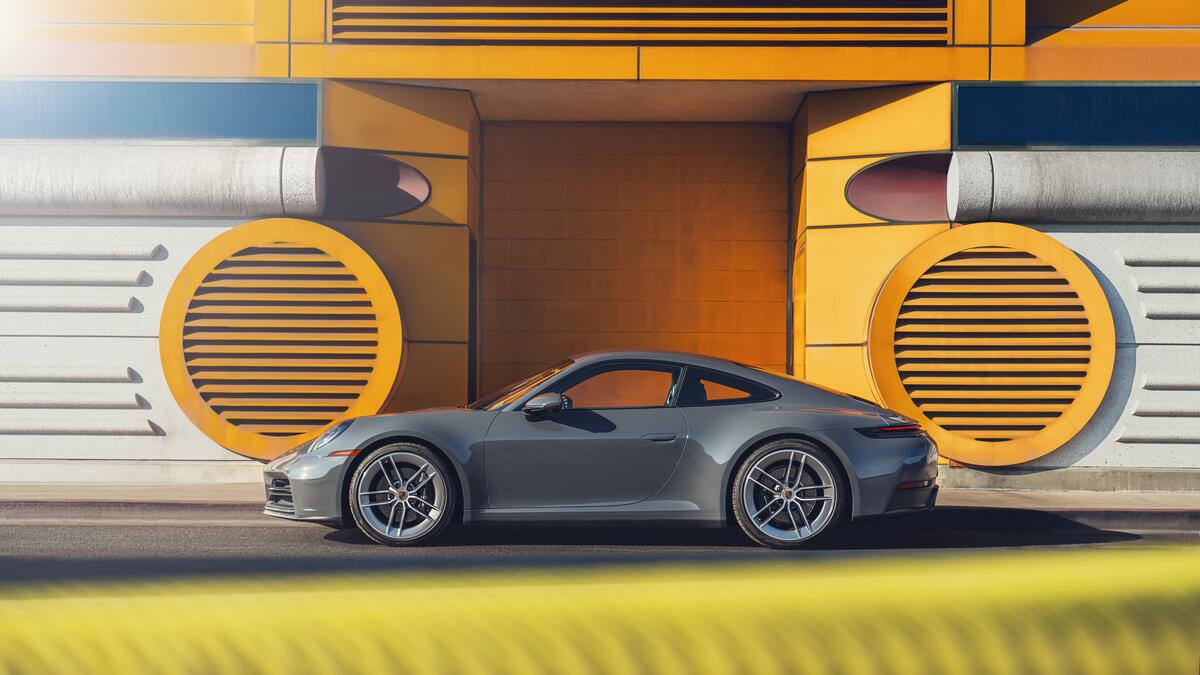
911
"if you could buy a Taycan and it would hold its value or even gain value like a 911 does in some cases, people would be buying them."
The Porsche 911 is a long-running sports car line known for strong enthusiast demand and, in many cases, better resale value than newer or more niche models. Here it’s used as a comparison point: the hosts say people would buy a Taycan if it held value the way a 911 can in some situations.
virtual rev limiter
"the gear shifting thing is just very taken by the fact besides the virtual rev limiter, they have a gear specific drag torque when changing gears."
A rev limiter is a safety feature that stops an engine from spinning too fast. On an electric car, a “virtual rev limiter” is software that imitates that behavior so the car feels more like a gas car when you shift or push it.
A rev limiter is a control system that prevents an engine from exceeding safe RPM. In an electric car like the Taycan, a “virtual rev limiter” uses software to mimic the feel of an engine hitting its RPM limit, often by cutting power briefly during certain driving events.
engine braking
"Okay, well, I took it as something, you know, I thought it was more like engine braking. You know, you have a different amount of engine braking depending on what gear you're up shifting to basically, right?"
Engine braking is when the car slows down because the engine and drivetrain are resisting motion after you take your foot off the gas. Different gears can make it feel stronger or weaker.
Engine braking is the deceleration you feel when you lift off the throttle and the engine (and drivetrain) resists rotation, slowing the car. The hosts connect it to gear choice—different gears can produce different levels of engine braking, which is part of what the Taycan’s shift simulation is trying to mimic.
regen
"And yes, it's very possible that when the revs are higher, [2244.4s] you'll get more regen than when the revs are lower."
Regen is how an electric car recovers energy when you slow down. Instead of wasting that energy as heat, the car stores some of it back in the battery.
Regen (regenerative braking) is when an EV uses its electric motor as a generator to slow the car and send energy back to the battery. The host suggests regen can be stronger at higher revs/speeds than at lower ones, which affects how deceleration and “one-pedal” feel changes with driving conditions.
depreciation
"But to your point about that depreciation, that's really one of the biggest complaints I see. [2253.8s] I mean, a Tycon group on Facebook or something."
Depreciation just means the car becomes worth less as time goes on. The host is saying EVs can lose value faster than some people expect.
Depreciation is the loss of a car’s value over time. The host is specifically talking about how expensive EVs (like the Taycan) can drop in price quickly, which affects used-car buying decisions.
DCfast
"I hate that it has the two charging standards. I hate when the manufacturers do this, you know, Naxx for DCfast and J1772 on the left side panel for level two charging."
DC fast charging is the “quick charge” option for electric cars. It can refill the battery faster, but you need the right charger and the right plug type.
“DC fast” refers to DC fast charging, which uses direct current to charge an EV at much higher power than standard AC charging. It’s designed for quicker top-ups on trips, but it requires the correct connector and compatible charging equipment.
Naxx
"I hate when the manufacturers do this, you know, Naxx for DCfast and J1772 on the left side panel for level two charging."
“Naxx” sounds like the host meant a fast-charging plug/standard. The important takeaway is that the car uses different plugs for fast charging versus regular charging, and that can trip people up.
“Naxx” appears to be a mis-transcription of a DC fast-charging standard/connector name (commonly CCS for many EVs). The host’s point is that the car has one plug/standard for DC fast charging and a different one for AC Level 2, which can confuse new EV buyers.
level two charging
"I hate when the manufacturers do this, you know, Naxx for DCfast and J1772 on the left side panel for level two charging."
Level 2 charging is the common “regular” charging speed for electric cars. It’s faster than plugging into a basic outlet, and it’s what you’d use for overnight charging—just not as fast as DC fast charging.
Level 2 charging is an EV charging tier that uses AC power at higher power than basic “Level 1” charging. It’s typically what you use for overnight charging at home or at many public stations, and it’s slower than DC fast charging.
DC adapter
"But they were using a DC adapter. Yeah, you know, so it really does confuse people."
A DC adapter is a device used to make one charging connector/standard work with another charging setup. Adapters can help in some situations, but they don’t eliminate the core issue: the EV and charger still have to be compatible for the charging type being attempted.

Cadillac Escalade
"And besides, since you're mentioning that, my like second cousin had a Cadillac Escalade [2409.9s] and he had the gas version. [2412.2s] And you know, the 6.2 liter motors that are all getting recalled, whatever,"
The Cadillac Escalade is a large luxury SUV. Here, the host is talking about a gas version that had serious engine issues and had to deal with the dealership.
The Cadillac Escalade is a full-size luxury SUV known for its big size, comfort, and tech-heavy cabin. In this segment, it’s specifically discussed in the context of a gas-powered Escalade having major engine problems and recalls.
6.2 liter motors
"And you know, the 6.2 liter motors that are all getting recalled, whatever, [2415.6s] he blew two engines in one year."
“6.2 liters” is the engine size. It’s a way of describing how big the engine is, and in this story it’s tied to problems that led to recalls and engine failures.
“6.2 liter” refers to engine displacement—how much air/fuel the engine can move per cycle. Larger displacement engines often have more torque, but they can also be more sensitive to specific design or maintenance issues, which is why recalls and failures get discussed in this context.

Tesla Model Y
"...Q until his vehicle was done. Now, his wife has a Model Y. So great, I've got the charger in the garage."
The Tesla Model Y is an electric SUV. It’s built for regular daily driving and has room for passengers and cargo. The podcast brings it up because owning one can make it easier to charge at home.
The Tesla Model Y is a compact electric SUV designed for everyday use, with seating and cargo space that fit typical family needs. The podcast mentions it because having a Model Y in the household can make charging at home more convenient. It’s a common reference point in conversations about electric vehicle ownership and charging logistics.

Dodge Charger
"...w, his wife has a Model Y. So great, I've got the charger in the garage. Give me, you know, give me the IQ."
The Dodge Charger is a car that’s known for performance and a bold look. In the podcast, it’s mentioned in the same conversation as an electric vehicle, which is about how people manage driving and charging. It’s being used as a reference to what someone drives besides an EV.
The Dodge Charger is a full-size, performance-focused sedan known for its muscle-car heritage and strong styling. In the podcast context, it’s mentioned alongside the idea of home charging, which highlights how electric vehicles can change day-to-day ownership routines. It’s likely being referenced as a contrast point to an electric vehicle in the same household.
charger in the garage
"Now, his wife has a Model Y. [2429.1s] So great, I've got the charger in the garage. [2431.3s] Give me, you know, give me the IQ."
This just means the charging setup at home. Even at home, you still need the right plug/adapter so the car can actually connect and charge.
A home “charger in the garage” usually means an EVSE (electric vehicle supply equipment) installed at the house. The key point here is that home charging still depends on the correct connector/standard and any required adapters.
CCS1
"So he goes online and buys a Naxx to CCS1 adapter. [2438.0s] And you know, he calls me up."
CCS1 is a common electric-car fast-charging plug standard in the U.S. If your adapter or charger doesn’t match CCS1, you can end up unable to charge or charging slower than expected.
CCS1 stands for “Combined Charging System” in the North American configuration. It’s a standardized connector used for DC fast charging, and it’s different from other plug types—so the car and charger have to match the correct standard (or use the correct adapter).
DC
"What I read was that it was DC only, but let me. Yeah, I don't want to say I'm 100%."
DC means the electricity flows in one direction. Some EV charging systems can charge using DC directly, which is often faster than other types.
DC (direct current) is one of the two main types of electricity used for charging EVs. Some charging setups are DC-only, meaning they rely on fast-charging hardware that converts grid power into DC suitable for the battery.
AC
"And the J plug was just for AC. That way, like, off your existing customers."
AC is the type of electricity most homes and public outlets provide. EVs usually need to convert AC into the DC form their battery uses.
AC (alternating current) is the other main type of electricity from the grid. EVs typically use AC chargers for slower charging, while the car’s onboard electronics convert AC into the DC the battery actually needs.
switcher box
"Because Naxx uses the same lines for AC and DC, you need a switcher box."
A switcher box is like an electrical controller that helps the car or charger handle different kinds of charging power. It’s used to make sure the right electricity goes to the right place for charging.
A switcher box is an electrical power-management component used to route or convert power between different charging modes (like AC vs DC) and connector types. In EV charging hardware, it’s often needed when the same internal cabling/lines must support multiple electrical standards.

Lucid Air
"you have the exact same footprint of a lucid air with like 1% of the interior space."
They’re comparing the Lucid Air’s space to the Taycan’s space. The point is that if Lucid can fit the charging hardware, the Taycan should be able to find room as well.
Lucid Air is an EV whose interior packaging is being used as a comparison point for where charging electronics could fit. The speaker claims the Lucid Air has a similar “footprint” but far more usable interior space, implying the Taycan should be able to fit the needed hardware too.

Bmw M
"Apparently, maybe not. Okay, let's talk about the BMW M concept, Neue Class."
The BMW M Coupe (E36) is a sporty two-door BMW made for performance. It’s based on the E36 generation, which is a specific model generation from BMW’s past. The podcast brings it up as part of a conversation about BMW’s newer plans and how they relate to older performance cars.
The BMW M Coupe (E36) refers to a specific BMW M model based on the E36 generation, known for being a compact, performance-focused coupe. The podcast mentions it in a discussion that also touches on BMW’s “Neue Klasse” direction, suggesting it’s being used as a reference point for BMW’s performance heritage. It’s relevant because it represents a particular era of BMW M engineering and design.
Neue Class
"Neue Class. It's just debuted. Actually, it debuted on Friday after our show aired."
“Neue Class” is BMW’s name for a new generation of how they want to build cars. The hosts are connecting it to a BMW concept so you can guess what future production cars might look like.
“Neue Class” is BMW’s branding for a new generation of vehicle architecture and technology direction. In this segment, it’s tied to the BMW M concept and used to suggest design cues that may carry into production cars.

Neue Class
"Okay, let's talk about the BMW M concept, Neue Class. It's just debuted."
“Neue Klasse” is BMW’s plan for a new way to build future cars. The podcast mentions it because it’s newly introduced and is connected to BMW’s performance ideas. It matters because a new platform can change how the car is designed and built.
“Neue Klasse” is BMW’s new vehicle platform direction, referenced in the podcast alongside the “BMW M concept.” The discussion frames it as something that has just debuted, implying it’s a major step in how BMW plans to build future cars. It’s relevant because platform changes typically affect packaging, driving feel, and how EV systems are integrated.
door handles
"I mentioned the production vehicle will have door handles. Right now, if you look on your screen, you can see like the little video there."
Door handles are the outside handles you use to open the car. The hosts are pointing out that the new BMW concept uses a distinctive handle design and placement.
Door handles are a body exterior feature, but their shape and placement can be a design signature on modern EVs and concept cars. Here, the hosts discuss how the BMW M concept’s door handles are positioned and shaped like “winglets,” referencing the Neue X5 styling cue.

BMW X5
"They're little winglets like the Neue X5. Oh, true, true."
The BMW X5 is BMW’s midsize luxury SUV, and “Neue X5” here is being used as a shorthand for the newer X5 design. The hosts reference it to compare exterior styling—specifically the “winglet” look of the door handles.
one motor for each wheel
"So one motor for each wheel, probably put over 1,000 horsepower."
It means the car has a separate electric motor driving each wheel. Because the car can control each wheel individually, it can grip the road better and adjust how it accelerates and turns.
This describes an all-wheel-drive EV layout where each wheel has its own electric motor. That setup can improve traction and allow more precise control of torque at each axle and wheel, which helps with acceleration and handling.
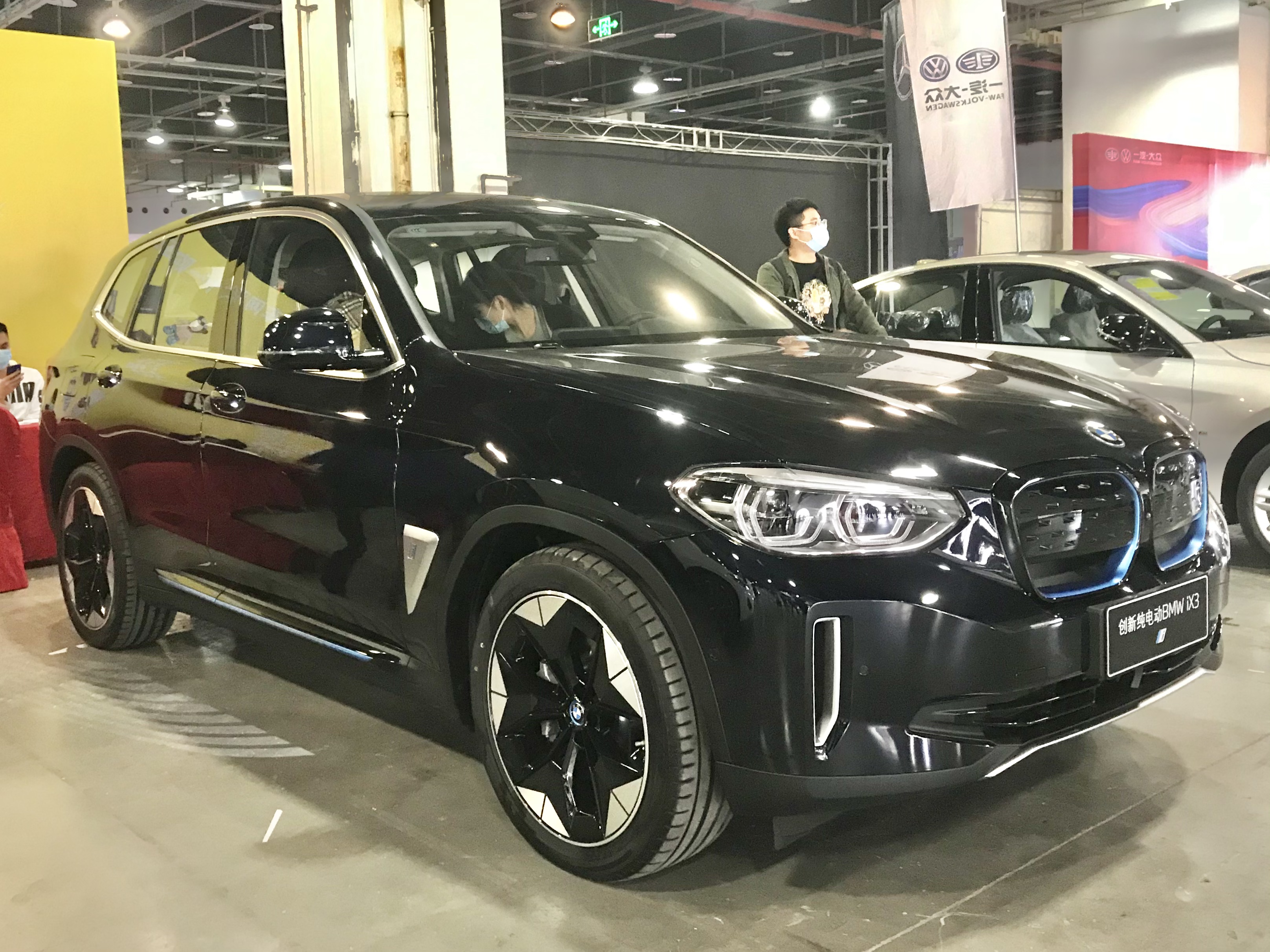
iX3 (G08)
"...hey call the Gen 6 batteries, like the I3 and the IX3. It's got all that stuff, but I don't know what's..."
The BMW iX3 (G08) is an electric SUV based on the X3 model line. The podcast talks about it while discussing newer battery versions, like “Gen 6 batteries.” It’s mentioned because battery improvements can affect charging and driving range.
The BMW iX3 (G08) is an electric version of the X3 family, with “G08” indicating its generation/chassis code. The podcast references it in the context of “Gen 6 batteries,” suggesting discussion about BMW’s battery technology progression. It’s mentioned because the iX3 is a practical EV option within BMW’s lineup and is tied to ongoing battery updates.
more power dense cell
"It will use the same form factor cell with a more power dense cell, so less energy than the I3, but more power, more thermal endurance, less resistance in the cells."
A more power-dense battery cell stores more usable power (and typically energy) in the same physical size. In practice, that can mean more performance and better thermal behavior, because the pack can deliver higher output without needing as much volume.
thermal endurance
"It will use the same form factor cell with a more power dense cell, so less energy than the I3, but more power, more thermal endurance, less resistance in the cells. It's going to be able to handle track work without overheating."
Thermal endurance is how well the battery can handle heat when you drive hard for a while. If it has good thermal endurance, it can keep making power without overheating and backing off.
Thermal endurance is how well a battery (or powertrain) can keep performing while resisting heat buildup. For EVs, better thermal endurance helps prevent power limiting during repeated hard acceleration or track driving.
less resistance in the cells
"It will use the same form factor cell with a more power dense cell, so less energy than the I3, but more power, more thermal endurance, less resistance in the cells."
Inside the battery, resistance is what makes energy turn into heat instead of useful power. Lower resistance means the battery runs cooler and can deliver power more effectively.
Battery cell resistance refers to how much the cell resists electrical current flow, which turns into heat under load. Lower resistance generally improves efficiency and reduces heat generation during high-power use.
multi-motor system
"It's really hard to tune a multi-motor system correctly. And almost no one has done it properly."
A multi-motor system means the car uses multiple electric motors at once. The car’s computer has to coordinate them carefully so the car accelerates and handles smoothly instead of feeling jerky or unstable.
A multi-motor system is an EV drivetrain that uses more than one motor to propel the vehicle, often to distribute torque across wheels. Tuning such systems is complex because the control software must coordinate torque delivery to maintain stability and predictable handling.
virtual gears
"Even the Sapphire, I had some wheel flares that we had to get into check. And so it's not, you know, when you have multiple motors,"
Electric cars don’t shift gears the way gas cars do, but some simulate gear changes to make the driving feel more familiar. The episode is about an update that adds or improves that simulated shifting behavior.
“Virtual gears” are an EV feature where the car simulates gear changes (often for driver feel, noise, or control mapping) even though electric drivetrains don’t need traditional gearboxes. The episode’s theme suggests the Taycan update uses this to make acceleration and drivability feel more like a conventional performance car.
wheel flares
"Even the Sapphire, I had some wheel flares that we had to get into check. And so it's not, you know, when you have multiple motors,"
Wheel flares are the parts of the body that wrap over the wheel area. They’re often added when tires are wider, and the host is saying they had to check them for proper fit.
Wheel flares are body panels that extend over the wheel area, often used to cover wider tires or to manage airflow and fitment. The host mentions checking wheel flares on the “Sapphire,” implying fitment or clearance issues that can affect appearance and function.
multiple motors
"And so it's not, you know, when you have multiple motors, it's really hard to make it drive appropriately, in my opinion."
Some electric cars use more than one electric motor. The host is saying that having multiple motors can make the car’s driving behavior harder to tune so it feels smooth and predictable.
“Multiple motors” refers to electric vehicles that use more than one electric motor, often to drive different axles or wheels. The host is arguing that coordinating multiple motors can make it difficult to get the car to feel “right” in how it drives.
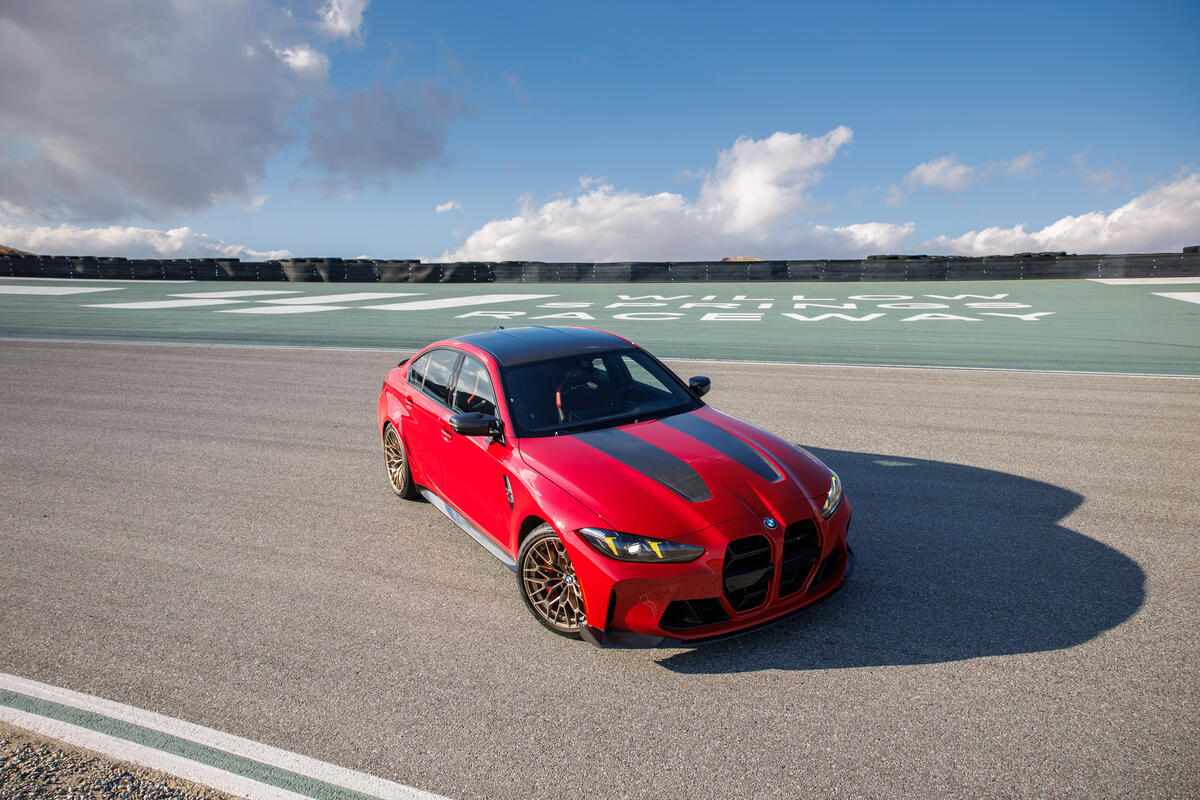
BMW M3
"It should be priced relatively similar to M3s. The design looks really good. There still will be a combustion M3, is my guess, coming following this,"
The BMW M3 is a famous high-performance BMW that enthusiasts buy for its driving feel. Here, the host is saying the electric BMW should cost about like an M3 and be aimed at the same kind of buyers.
The BMW M3 is BMW’s performance sedan/driver’s-car icon, known for its M division engineering and track-capable dynamics. In this segment, the host uses it as a pricing and enthusiast benchmark for an upcoming BMW electric performance sedan.
BMW IX3
"some of the amazing basis of engineering, the core of Neue Classe that we all experienced in IX3, put it in a sedan, dial it up to 11,"
The BMW iX3 is an electric BMW SUV. The host is saying the new electric sedan is built on the same kind of engineering foundation BMW learned from the iX3.
The BMW iX3 is BMW’s electric SUV built on the company’s newer electric-focused platform work. The host references it as the “basis of engineering” and “core” of BMW’s Neue Klasse approach, implying the same underlying tech philosophy is being applied to a new electric sedan.

BMW i3
"But we talked about, the I3 wasn't even out yet, [2942.4s] and talked about M. And I was like, when are we going to see, [2945.5s] you know, are we going to see a BMW I3M?"
The BMW i3 is BMW’s early electric car. It’s the kind of EV people wondered could get a high-performance “M” version, but the executive says that idea wouldn’t happen.
The BMW i3 is BMW’s early mass-market electric hatchback, known for its carbon-fiber passenger cell and city-focused EV design. In this segment, the host brings it up as a potential base for an M-badged performance version (an “I3M”).
true M car
"And he said, BMW will never make an electric M car, true M car. [2964.8s] He said, that conflicts. [2966.9s] He said, electric drive can't be an M division."
“True M car” is basically the executive’s way of saying an M car should feel and be built the “real” M way. He’s arguing that, at the time, BMW didn’t want EVs to become part of that identity.
“True M car” is the idea that BMW’s M brand should stay tied to its traditional performance identity—typically associated with combustion-engine dynamics and M-specific engineering. In the conversation, the executive argues that EVs and M would “never converge” because the underlying drivetrain character is fundamentally different.
electric drive
"BMW will never make an electric M car, true M car. [2964.8s] He said, that conflicts. [2966.9s] He said, electric drive can't be an M division."
“Electric drive” just means the way an electric car moves—its electric motor(s) and how they control power to the wheels. The speaker is saying that BMW’s M division, as they defined it then, wouldn’t mix with that EV setup.
“Electric drive” refers to the propulsion system in an EV—electric motors and the control electronics that deliver torque to the wheels. The BMW executive’s point here is that he believed the M performance philosophy couldn’t be applied to EV hardware without changing what “true M” means.

M vehicle
"That you could never have a true M vehicle be electric."
“M” is BMW’s performance line—think faster, sportier versions of BMWs. They’re talking about whether an electric car can still feel like a true BMW M car.
“M” is BMW’s performance sub-brand, used for higher-output, track-focused versions of regular models. The hosts are debating whether BMW’s “M” identity can translate to an electric powertrain, which is a big cultural shift for enthusiasts.
scion
"From the side, it looks like a scion. From the side, it has the same like round box."
Scion was a Toyota brand known for stylish, youth-oriented cars. They’re just saying the car looks similar to a Scion from the side.
Scion was a Toyota-owned brand focused on youthful, affordable cars and distinctive styling cues. Here, the speaker uses “Scion” as a visual comparison—saying the car’s side profile resembles the “round box” look of a Scion coupe.
C pillar
"It doesn't look C pillar back. [3088.1s] Thank you."
The C-pillar is the vertical support behind the rear door window—part of the car’s roof structure. People talk about it because its shape affects how the car’s roof and rear end look together.
The C-pillar is the structural support between the rear side window and the rear roof area on a car. Designers often shape the C-pillar to influence how “boxy” or flowing the roofline looks from the side and rear.
Slate Auto
"That conversation turned towards Slate Auto because it's also bringing a truck to market in that under $30,000 space."
They mention Slate Auto as another company trying to sell a truck in the cheaper electric-truck price range. The point is that multiple brands are aiming at the same budget buyers.
Slate Auto is mentioned as a company bringing a truck to market in the under-$30,000 electric-truck space. The comparison is about who’s targeting the same budget segment.
production debut coming next week on the 24th
"And this week, we're going to talk about a little bit more because ahead of its big production debut coming next week on the 24th, a couple of cats have been out of the bag."
They’re saying a new vehicle is about to be officially revealed soon—on the 24th. The discussion is about what’s already been leaked before that date.
This segment is setting up a near-term reveal: a production debut scheduled for the 24th. It frames the discussion around pre-release information (“a couple of cats have been out of the bag”).
reservations
"So they have like $160,000 something or more reservations apparently Slate does, but those are like $50 reservations. And we saw in the case of the Cybertruck, those can evaporate."
A reservation is basically an early “I’m interested” sign-up, often with a small deposit. It helps companies estimate demand, but people can still back out later.
In EV and truck launches, reservations are deposits or sign-ups that indicate early customer interest before final pricing and production. They can be useful for gauging demand, but they’re not the same as firm orders—deposits can be small and may later be canceled.
LFP battery
"So a report into the Detroit Free Press claims the Slate truck has an LFP battery now. Originally we were told it would have a 52.7 kilowatt hour NMC battery for 150 miles of range"
LFP is a type of EV battery. It uses a different chemical recipe than some other batteries, and it’s often chosen because it’s safer and can be cheaper to make.
LFP stands for lithium iron phosphate, a battery chemistry used in some EVs. Compared with nickel-based chemistries, LFP batteries are typically more thermally stable and can be cheaper, though they may have different energy density and performance characteristics.
NMC battery
"Originally we were told it would have a 52.7 kilowatt hour NMC battery for 150 miles of range"
NMC is another kind of EV battery chemistry. It’s made with different materials than LFP, and it’s often used when the goal is more energy in the same battery size.
NMC refers to nickel manganese cobalt, another common lithium-ion EV battery chemistry. It’s often used when manufacturers want higher energy density, but it can come with different cost and thermal characteristics compared with LFP.
range
"or an 84.3 kilowatt hour battery for 250 miles of range."
Range is how far an EV can drive before the battery runs out. It’s usually measured in a standardized way, so your real-world distance can be higher or lower depending on how you drive and the weather. Bigger batteries often help, but efficiency matters too.
In EV discussions, “range” means how far the vehicle can drive on a full charge. It’s typically estimated under standardized test conditions, so real-world results can vary with speed, temperature, and driving style. Battery capacity (kWh) and vehicle efficiency both strongly influence range.
LFP vs pricing for an affordable EV pickup
"LFP is awesome... for the cheap version especially, I think that makes sense. So use the LFP for that. Maybe that's how they're bringing the price down... to the $25,000 mark."
They talk about how the battery type (LFP) might be used to make an electric pickup cheaper. Then they discuss whether that lower price is enough to convince people who aren’t hardcore EV fans. The main idea is: cheaper batteries can help lower the sticker price, but buyers still want enough range.
The hosts discuss how using LFP battery chemistry could reduce costs for a lower-priced electric pickup. They connect battery choice to pricing strategy (moving from a higher target price down toward a lower one) and debate whether the resulting price and range are compelling to mainstream buyers.
800 volt battery
"800 volt battery that uses a split pack approach so it can charge quickly on 400 volt chargers,"
This means the car’s battery system runs at a higher electrical voltage. Higher voltage can let the car take in more power from a fast charger, so charging can be quicker.
An 800-volt battery system is designed to deliver higher electrical power to the motor and to the charger. Higher voltage can reduce current for the same power, which helps enable faster charging and less heat in the charging path.
split pack approach
"800 volt battery that uses a split pack approach so it can charge quickly on 400 volt chargers,"
Instead of treating the whole battery as one unit, the car splits it into sections. That helps the car “talk” to both 800-volt and 400-volt chargers for faster charging.
A split pack approach divides the battery into sections so the car can adapt its charging behavior. The goal is to make an 800-volt battery compatible with 400-volt charging infrastructure while still achieving fast charging.

Chevrolet Volt
"...orth announced that the truck will feature an 800 volt battery that uses a split pack approach so it can..."
The Chevrolet Volt is a car that can drive using electricity, and it also has a gasoline engine for when the battery runs low. The podcast talks about battery design, like higher-voltage systems, which can affect how the car charges and delivers power. It’s mentioned because the battery setup is an important part of how the Volt works.
The Chevrolet Volt is a plug-in hybrid electric vehicle that can run on electricity for a range, then switch to a gasoline engine when needed. The podcast context mentions an “800 volt battery” with a split-pack approach, which relates to how the battery system is engineered for performance and charging. It’s discussed because battery architecture is a key part of how plug-in vehicles deliver power and efficiency.
400 volt chargers
"800 volt battery that uses a split pack approach so it can charge quickly on 400 volt chargers,"
These are fast chargers that provide electricity at about 400 volts. Even if a car uses a higher-voltage battery, it can be designed to charge well on these common chargers.
400-volt chargers are common fast-charging stations that supply power at a nominal 400V. Cars with higher-voltage architectures (like 800V) often use internal switching or pack-splitting to charge efficiently on these existing chargers.
400 kilowatts
"He also claimed that it will have, it will charge at 400 kilowatts, right? So, and not just briefly but like sustained."
Kilowatts measure how fast the charger can deliver energy. If the car can take 400 kW for a while (not just for a few minutes), it should charge faster.
400 kilowatts is the peak charging power the car can accept from a fast charger. The key point in the segment is that it’s described as sustained (not just a brief spike), which would translate to faster real-world charging.
new cells
"So the high energy level, he says, is made possible because according to him, they've started working with some new cells"
Cells are the battery’s core building blocks. Newer cells can store more energy and handle fast charging with less heat.
Battery “cells” are the individual electrochemical units inside the pack. Using new cells with higher capacity and lower internal resistance is a common way manufacturers improve both range and fast-charging performance.
internal resistance
"But more importantly, importantly, they have one fifth of the internal resistance. So less resistance means less heat, which means higher power levels are possible and shorter charge times."
Inside the battery, there’s some “resistance” to current flow. Less internal resistance means less heat and better ability to charge quickly.
Internal resistance is how much the battery resists the flow of current inside the pack. Lower internal resistance reduces heat generation (I²R losses), allowing higher power delivery and potentially shorter charging times.
Tello MT1
"they hired a gentleman named Madden Gopal, who spent 16 years at Tesla, mainly as a safety engineer. So it will be his job to make sure the Tello MT1 is up to passing, you know, the crash safety test or whatever,"
The Tello MT1 is a small electric truck being talked about in terms of safety and price. The hosts mention that people will wonder how safe it is in a crash because the front end is short.
The Tello MT1 is discussed here as a small, cheap truck whose short front raises questions about crash safety. The segment focuses on battery/vehicle engineering work to pass crash safety testing, and it also touches on pricing expectations for the MT1.
Madden Gopal
"a couple months ago, they hired a gentleman named Madden Gopal, who spent 16 years at Tesla, mainly as a safety engineer."
Madden Gopal is a safety engineer with a long background at Tesla. The segment says he was hired to help make sure the Tello MT1 passes crash-safety tests.
Madden Gopal is described as having spent 16 years at Tesla, mainly as a safety engineer. In this segment, he’s hired to help ensure the Tello MT1 meets crash-safety testing requirements.
crash safety test
"his job to make sure the Tello MT1 is up to passing, you know, the crash safety test or whatever, because people look at the Tello"
Crash safety tests are official checks to see how well a vehicle protects people during an accident. The segment says the Tello MT1 needs to pass those tests.
A crash safety test is a standardized evaluation of how a vehicle protects occupants in collisions. The segment frames it as a key hurdle for the Tello MT1, especially given the host’s concern about the short front end.
MSRP
"Well, yeah. Well, that's their estimated starting MSRP is 42 grand."
MSRP is the price number the manufacturer puts on the car before extra costs like taxes and dealer fees. The hosts use it to estimate what the truck might cost at launch.
MSRP (Manufacturer’s Suggested Retail Price) is the sticker price a manufacturer recommends before taxes, registration, and dealer fees. The segment uses an “estimated starting MSRP” to discuss how expensive the Tello MT1 is expected to be.
body in white
"They just found a supplier to manufacture the body in white. Okay, well, that's one out of the next 4000000 things you need to do."
“Body in white” means the car’s metal body is fully welded together, but it hasn’t been painted yet. It’s an early-but-important step in building a car because the structure has to be right before finishing everything else.
“Body in white” (BIW) is the car’s unpainted body structure after welding and assembly, but before paint and final interior/exterior fitment. It’s a major manufacturing milestone because it determines the car’s structural quality and how the rest of the build can proceed.
right hand drive
"He bought like a 1985 Honda Acti and had it imported it from Japan and totally restored it. It's a right hand drive and that's his daily driver."
Right-hand drive (RHD) means the steering wheel is on the right side of the vehicle, which is common in Japan and other countries. It affects driving feel, visibility, and even how the car fits local traffic patterns when imported.
EV conversion
"I wanted to buy one of these things and convert it to electric myself at some point... if I get you an Acti, will you convert it?"
An EV conversion means turning a regular gas vehicle into an electric one. You swap in an electric motor and battery, and you have to make all the systems work together safely.
An EV conversion is the process of taking a non-electric vehicle and replacing its powertrain with an electric drivetrain and battery pack. It usually involves engineering the battery mounting, wiring, motor/controller integration, and safety systems.
EV9 modules
"Tom, we could put Tesla modules in it. We can make EV9 modules."
They mean battery modules from an EV9. Those modules are chunks of the battery that you can combine to make a working electric battery pack.
“EV9 modules” likely means battery modules sourced from a Kia EV9 (the EV9 is Kia’s three-row electric SUV). In an EV conversion, modules are the standardized battery sections you can assemble into a larger pack.

Kia EV9
"...om, we could put Tesla modules in it. We can make EV9 modules. I can buy one in decent shape for like s..."
The Kia EV9 is an electric SUV with room for more passengers, including a third row. The podcast mentions it while discussing battery parts and how EVs are built. It’s brought up because the EV9 is a well-known electric SUV option.
The Kia EV9 is a three-row, all-electric SUV designed to offer more space than a typical two-row EV. In the podcast, it’s mentioned in the context of battery modules and the idea of using or making EV9 modules, which points to discussion about EV hardware and serviceability. It’s relevant because EV9 is a prominent EV model with a focus on family-friendly packaging.
importing
"You can probably import one for maybe 20... My Greg did it and he went with a broker and there was still all kind of issues like it got held up because we're sitting at the port for two months."
They’re talking about bringing vehicles or parts in from overseas. It can be slow because of paperwork and shipping delays, like waiting at the port.
“Importing” here refers to bringing vehicles or parts from outside the country, which can add delays and paperwork. The hosts mention port holds as a common bottleneck, which can affect cost and timelines for EV projects.

Jeep Recon
"I love me a Sambar. All right. So 126 Jeep Recon Moab. So the Jeep Recon, sorry? Anyway. Speaking of, the Jeep Recon range and energy consumption numbers have just been listed by the EPA..."
The Jeep Recon is an upcoming electric Jeep SUV. They’re talking about how far it can drive on a charge (range) and how big its battery is, which are the two biggest things EV shoppers care about.
The Jeep Recon is an upcoming Jeep-branded electric SUV. In this segment, the hosts focus on its EPA-rated range and the size of its battery pack, which are key specs for EV buyers comparing real-world usability.
EPA
"Anyway. Speaking of, the Jeep Recon range and energy consumption numbers have just been listed by the EPA, but unfortunately, the results are slightly lower than initially anticipated."
EPA is a U.S. agency that tests and publishes official EV range numbers. It’s meant to make it easier to compare different electric cars on the same kind of test.
EPA refers to the U.S. Environmental Protection Agency, which publishes standardized EV range and energy-consumption ratings. These numbers are based on controlled testing so shoppers can compare vehicles consistently, even though real-world results can vary.
kilowatt hour battery
"So originally, Jeep hoped to get 230 miles of range out of this thing. It has 100.5 kilowatt hour battery. So huge battery inside this thing. Hope for 230 miles of range."
A kilowatt-hour (kWh) is the unit used to describe how much energy is stored in an EV battery. More kWh often means more potential driving range, but how efficiently the car uses that energy still matters.
A kilowatt-hour (kWh) battery is a measure of how much electrical energy the EV can store. In this segment, the Jeep Recon is described as having a 100.5 kWh battery pack, which helps explain why it’s expected to deliver a certain range—though efficiency also matters.
overpromised and under-delivered
"But still, it just went in the opposite direction. They overpromised and under-delivered. And I mean, think about this."
This phrase means the company’s original promise was too optimistic, and the final tested result came in worse. They’re comparing the expected range to the official EPA number.
“Overpromised and under-delivered” describes a situation where a manufacturer’s initial EV range estimate ends up lower than the final standardized rating. Here, the host contrasts Jeep’s hoped-for 230 miles with the EPA’s official 222-mile rating.
Stalantis
"It weighs a lot less. And it's much less efficient. It's like, what is Stalantis doing? It's less efficient than my lightning."
“Stalantis” is the host’s way of referring to Stellantis, the big car company that owns brands like Jeep. They’re blaming the company for the EV not meeting the expected range.
Stalantis is a misspoken reference to Stellantis, the automaker behind brands like Jeep. In this segment, the host uses the company name to criticize how the Jeep Recon’s efficiency and EPA range results compare to expectations.
real world
"it'll be pretty hard to undercut those numbers in the real world. I think you're actually going to get a pretty expected range out of this thing."
“Real world” in this context means how the EV performs outside the standardized test cycle—especially at specific speeds like 70 mph. It’s used to contrast with official range estimates, which may not reflect real highway conditions.
AC and DC charging
"And just to add insult to injury, CCS-1 charging inlet for AC and DC charging, simple. But we're still on the old standard, the next standard."
AC charging is usually slower and common at home or basic chargers. DC charging is fast charging you use on trips, so it can add range much quicker.
AC charging uses alternating current, typically found at home or slower public chargers, while DC charging uses direct current for faster charging. EVs handle DC fast charging differently (often with higher power delivery), so the charging type strongly affects how quickly you can add range.
supercharger network
"Didn't you expect them to do that? I did, and I'll tell you why. I know Tesla made deals with the manufacturers that new vehicles, like all new vehicles coming out in 2026 or later, had to have next."
The “supercharger network” is Tesla’s fast-charging network. The host is saying that partnerships around access to those chargers influenced what charging ports new EVs had to include.
The “supercharger network” refers to Tesla’s branded fast-charging stations. In the segment, the host argues that Tesla’s agreements with automakers helped determine which charging standards new EVs would need to support to gain access.
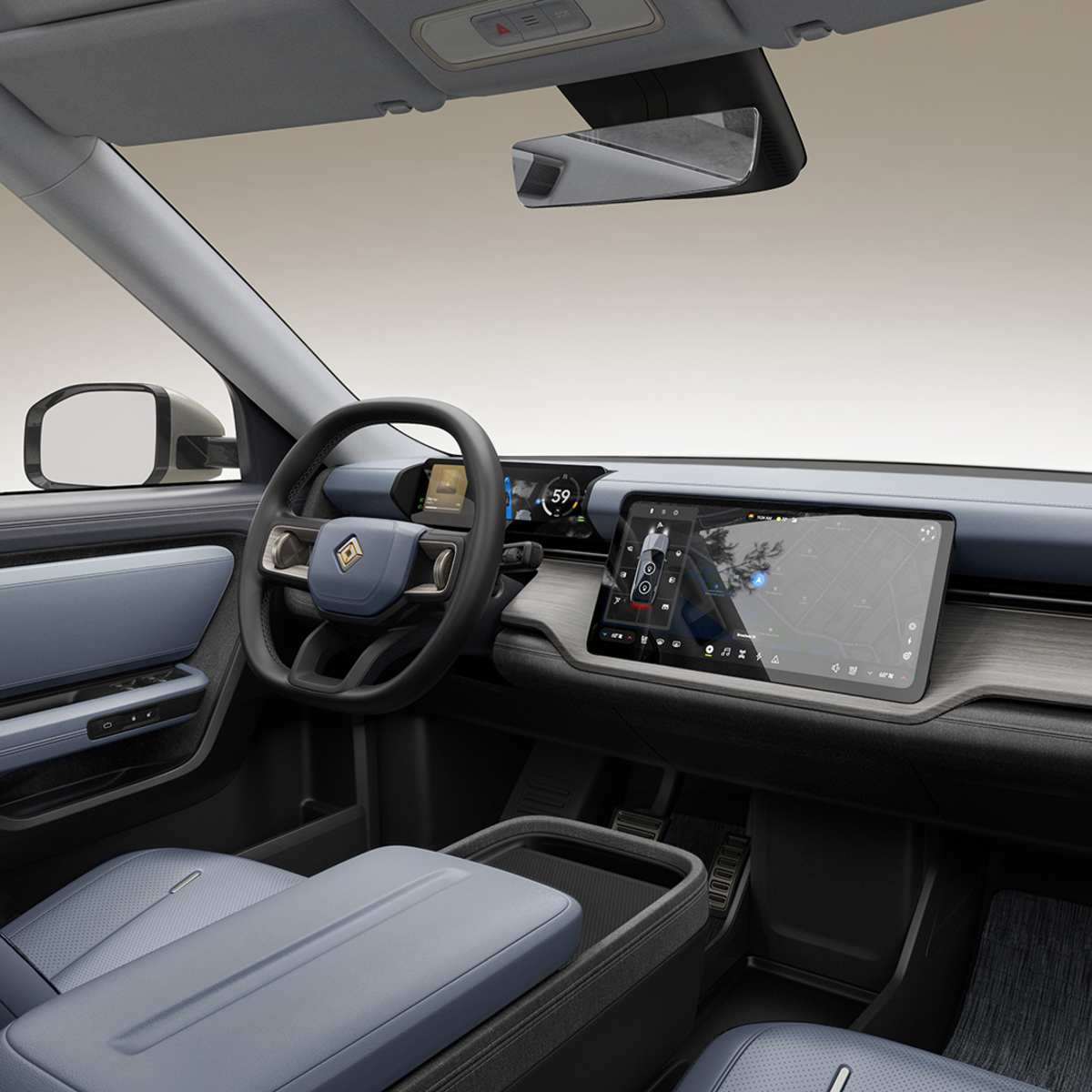
Rivian R2
"... know money for, I mean, so you compare it to the R2 right here, you know, at such a price that the Je..."
The Rivian R2 is an electric vehicle from Rivian that’s meant to cost less than their bigger models. The podcast mentions it while talking about pricing and value. It’s part of Rivian’s plan to offer more choices in electric vehicles.
The Rivian R2 is an upcoming or newer Rivian electric vehicle positioned as a smaller, more affordable option compared with the brand’s larger trucks. In the podcast, it’s referenced in a pricing comparison context, implying the discussion is about value and what you get for the money. It’s discussed because it helps define Rivian’s broader strategy for expanding its EV lineup.
flash charging
"BYD prepares flash charging launch in Canada. So someone spotted on LinkedIn, BYD is advertising, was it, or they were advertising for a flash charging business develop manager."
Flash charging means charging an EV very quickly. It usually needs special fast-charging stations and the car’s battery has to be able to handle the high charging power safely.
Flash charging is a marketing term for very fast EV charging that aims to add a meaningful amount of range in a short time. It typically requires high-power charging hardware and a battery that can accept high charge rates without overheating.
BYD
"BYD prepares flash charging launch in Canada... BYD is setting up at least 20 dealerships in Canada."
BYD is a company that makes electric cars and EV batteries. Here, they’re talking about building fast-charging services and selling cars through dealerships in Canada.
BYD is a major Chinese EV and battery manufacturer that’s expanding charging and retail presence in other countries. In this segment, BYD is discussed in the context of launching fast-charging services and setting up dealerships in Canada.
state of charge
"but just real quickly, for stated Tom, Tom fans, state of charge fans, check out his electron factory tour."
State of charge is how full the EV battery is right now, usually shown as a percent. It affects how the car drives and how fast it can charge.
State of charge (SoC) is the battery’s current charge level, usually shown as a percentage. SoC strongly affects EV performance and charging behavior—especially how quickly the battery can accept power.
Request an Explanation
Heard something you'd like explained? We'll add it to this episode.
Sign in to request explanations for terms you heard.
Want to learn more?
Browse our glossary for plain-English explanations of automotive terms, jargon, and concepts.
Help improve this episode
See something that's not quite right? Our annotations are AI-generated and can sometimes miss the mark. Click the flag icon on any annotation to suggest a correction.