
#156 Bring a Trailer best buys from people who don’t know anything
About this episode
NASCAR on a naval base, loud enough to worry about hearing, and cars getting airborne over rough track set the tone before the hosts pivot to Cars and Coffee sightings and a Bring a Trailer best-deal breakdown. They explain how the auction works—buyer’s fees, the two-minute rule, reserves vs “No Reserve,” and “Premium” longer listings—then work through pricing guesses and condition tells. The conversation keeps drifting into real-world ownership stories (dogs, rust, originality) and ends with a Porsche-focused close.
This week Andrew goes full Born in the USA with stories from NASCAR San Diego. Then the three of us show how little we know about classic car prices (except for Steve) and attempt to give advice on the best values on BAT. Veronica finds her dream Gucci spec car and leaves us all wondering what in the world “bunky” means. Who did the best?
full throttle
"So I got to see NASCARs going full throttle down these roads, and right after turn one, [147.3s] they would get air."
Full throttle means the gas pedal is fully pressed. It tells the engine to deliver as much power as it can at that time.
“Full throttle” means the driver is requesting maximum engine power by opening the throttle fully. In racing terms, it usually corresponds to the highest torque/power delivery the engine can make at that moment.
NASCARs
"So I got to see NASCARs going full throttle down these roads, and right after turn one, [147.3s] they would get air."
NASCAR is a type of American race series with stock-car style race cars. Here, they’re talking about those race cars driving very hard down rough roads.
NASCAR refers to stock-car racing in the United States, where purpose-built race cars run on oval tracks and road courses. In this context, “NASCARs” means the race cars they saw being driven aggressively on rough roads.
redline
"right after turn one, [147.3s] they would get air. [148.7s] And the engines would redline."
Redline is the engine’s “maximum safe speed” measured by RPM. If you keep it there, the engine is working extremely hard and can be risky if it’s sustained.
“Redline” is the upper limit of an engine’s safe operating range, marked on the tachometer. When the engine is at or near redline, it’s spinning at very high RPM, where power may peak but the engine is also under the most stress.
lose traction
"What is the tires would leave the ground, you know, lose traction? [153.7s] It was amazing."
Lose traction means the tires aren’t gripping the road anymore. When that happens, the car can slide or spin because the wheels can’t “bite” into the surface.
“Lose traction” happens when the tires can’t grip the road surface well enough to transmit acceleration, braking, or cornering forces. On rough roads, hitting bumps can unload the tires, making them slip and reducing control.
Abarth
"Is it Abarth to some people? ... Or is there one proper pronunciation? I call it an Abarth."
Abarth is a car brand from Italy that makes small, sporty performance cars. The hosts are mainly arguing about the correct way to say the name.
Abarth is an Italian performance brand best known for small, turbocharged cars and tuning-focused engineering. In the U.S., people often debate how to pronounce the name, but it’s the same marque regardless of pronunciation.
Porsches
"I gave you guys three categories, four by fours, wagons and Porsches. Oh, shit. Porsches."
“Porsches” refers to vehicles made by Porsche, a German brand known for performance engineering and distinctive handling. In auction contexts, Porsche models often attract strong demand because of their enthusiast following and parts support.
wagons
"I gave you guys three categories, four by fours, wagons and Porsches."
A wagon is a car with extra space behind the seats for cargo. It’s basically a station wagon—often chosen because it’s practical.
“Wagons” are passenger cars with an extended roofline and a rear cargo area, often used for practicality. In enthusiast circles, wagon choices can be performance-oriented (e.g., turbocharged models) or simply valued for their utility.
active auctions
"So these are all currently active auctions. So there are listeners can get your expert advice and your POV to help make them a decision"
“Active auctions” means listings currently in progress, where bids can still change the final sale price. For buyers, the timing matters because you’re competing in real time rather than shopping a fixed-price listing.
four by fours
"We'll do four by fours first. And I think Steve, you should take us away with your choice."
“Four by fours” means vehicles that can drive all four wheels at once. People usually pick them for better traction on dirt, snow, or rough roads.
“Four by fours” refers to off-road-oriented vehicles that use four-wheel drive (4WD). In auction discussions, it usually means trucks/SUVs chosen for traction and capability rather than just commuting.
bring a trailer
"Do you want to talk about how bring a trailer works at all? Oh, sure. Would you like me to do that?"
Bring a Trailer is an enthusiast-focused online auction platform where cars are sold to bidders in a timed auction format. It’s known for detailed listing descriptions and a community that often values condition, originality, and documentation.
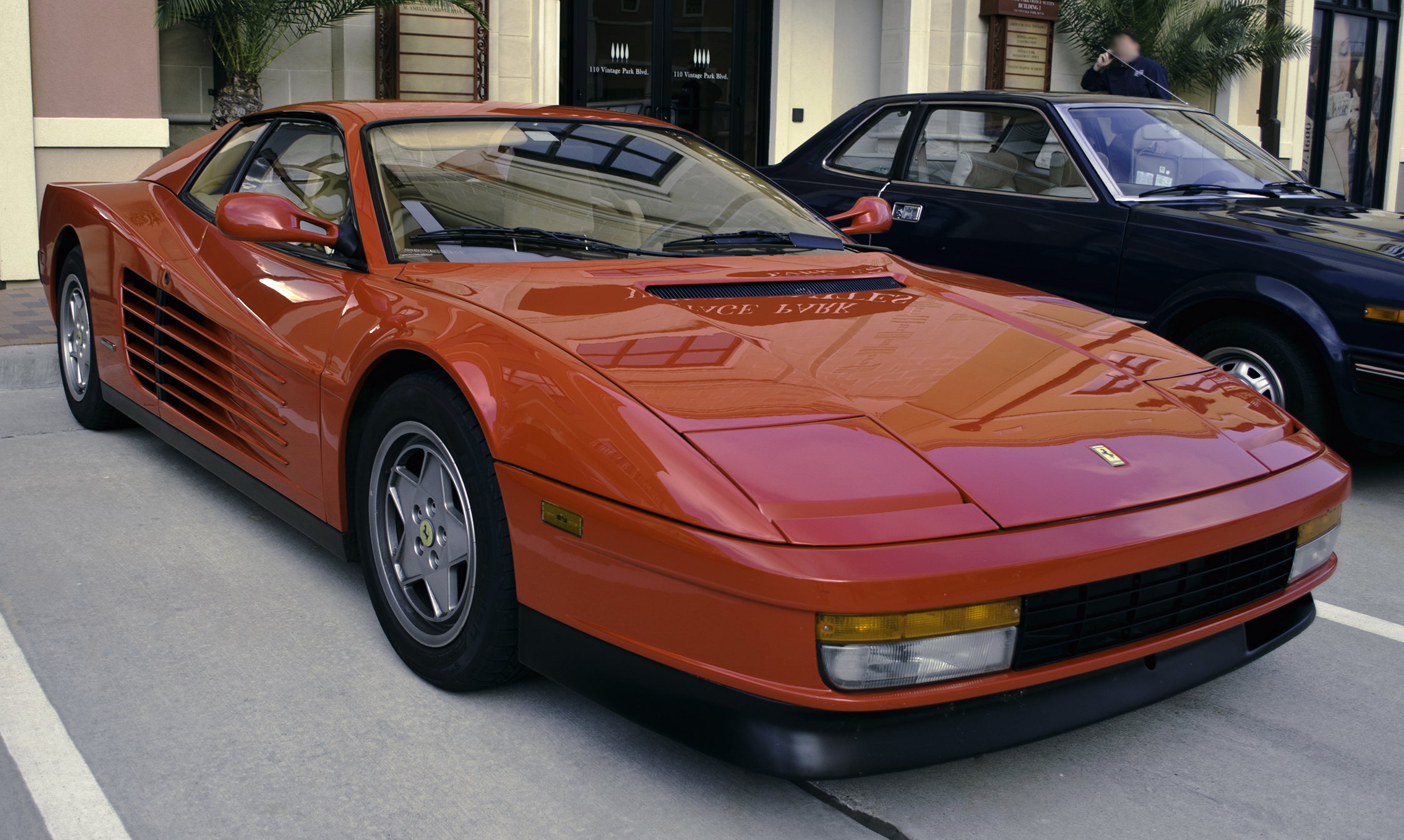
Testarossa Testarosa
"Good. Testarosa, two words? What?"
The Testarossa is a supercar made by Ferrari. It’s well known for its distinctive look and for being a fast, special-occasion kind of car. The podcast is basically confirming the name because it’s so recognizable.
The Ferrari Testarossa is a famous supercar model known for its distinctive styling and strong performance reputation. In the podcast, it’s referenced in a quick “two words” way, which highlights how iconic the name is among enthusiasts. It’s commonly discussed as a classic example of 1980s-era Ferrari design and presence.

Ferrari LaFerrari
"Okay. All right. I didn't want to get you guys upset. I made three for it. Yeah. Yeah. A Ferrari, LaFerrari. Oh. Sold for four and a half million dollars."
The Ferrari LaFerrari is a super rare Ferrari that uses both a gas engine and an electric motor. Because so few were made, people pay huge money for it at auctions.
The Ferrari LaFerrari is Ferrari’s limited-run hybrid supercar, known for pairing a high-revving V12 with an electric motor for extra boost and efficiency. It’s a modern “halo” car that’s become famous for its rarity and collector demand, which is why auction prices can get extreme.

Ferrari 288 GTO
"However, in celebration of their 250,000th listing, they have a 288 GTO. [598.6s] That has already surpassed the $4 million. [602.6s] You're talking about a Ferrari. [604.6s] 288 GTO. [605.6s] Just making sure."
The Ferrari 288 GTO is a very rare, very expensive Ferrari from the 1980s. It’s known for being a turbocharged, high-performance car that collectors chase, so when it shows up at auction it can sell for millions.
The Ferrari 288 GTO is a mid-engine Ferrari built for high-performance road use and homologation-era racing. It’s famous for its turbocharged V8 and for being one of the most collectible “GTO” Ferraris, with extreme rarity and auction prices that can reach multi-millions.
auction site
"[625.6s] It's an auction site, of course. [628.6s] Well, can you tell us what their fee is? [630.6s] Do they make fee?"
An auction site is where cars are sold through bidding. The final price depends on what buyers are willing to bid, which is why rare cars can jump to very high numbers.
An auction site is a marketplace where cars are listed for bidding, and the final price is set by competitive bids rather than a fixed sticker price. That bidding dynamic is why rare cars like the Ferrari 288 GTO can quickly surpass large price thresholds.
reserve
"So when you put a reserve on the car, that prohibits you from losing money on it essentially."
A reserve is the lowest price the seller will accept. If the bidding doesn’t hit that number, the car won’t be sold at that auction price.
In online car auctions, a reserve is the minimum price the seller is willing to accept. If bidding doesn’t reach that threshold, the car doesn’t sell (or the seller can choose not to complete the deal), which helps prevent selling for “too little.”
premium
"And then there's premium, right? Premium means you get, it's like a two week long listing. Usually they're a week."
“Premium” here means the listing runs longer and gets more attention. The longer auction can give more people time to see it and bid.
On Bring a Trailer, “Premium” refers to a longer, featured auction format (described here as roughly a two-week listing). The idea is that more time and visibility can attract more bidders, which may help the final price.
transmission fluid
"You can't get parts, can't get transmission fluid. [942.3s] I'm thinking that."
Transmission fluid is the oil that keeps the car’s gearbox working smoothly. It helps prevent wear and, in many automatic cars, it also helps the transmission shift correctly.
Transmission fluid is the lubricant and hydraulic fluid used inside an automatic (and some manual) transmission. It helps reduce wear and heat, and in many automatics it also provides the hydraulic pressure that moves clutches and bands.
Carpathian Edition
"And it's the Carpathian Edition. [956.2s] Carpathian, I had to look up."
A “Carpathian Edition” is a special version of a vehicle with extra features and styling. It’s more than just a paint color—it usually bundles extra equipment.
The "Carpathian Edition" is a specific special-edition trim/package that adds distinctive styling and equipment beyond the base model. In this segment, the hosts connect it to color cues but emphasize it includes additional “bits” and options.
slobber
"All the, oh, also if you look at the comments on it and you look at the photos, there's a bunch of slobber on the seats."
Here “slobber” means dog saliva. It can stain and smell up the seats, and that can make a used car harder to sell or cost money to clean.
In this context, “slobber” refers to pet saliva damage on the car’s interior—especially seats. It’s relevant because upholstery stains and odors can be expensive to fix and can affect a used car’s condition and buyer confidence.
Land Rover
"Do you know who designed this Land Rover? The same guy that designed, he just retired. The CCO of Land Rover?"
Land Rover is the car brand being discussed. The hosts are talking about the company’s design leadership and who designed a Land Rover.
Land Rover is the British automaker known for building rugged off-road vehicles that also compete in the luxury SUV market. Here, the brand is central because the discussion is about who designed a Land Rover and the designer’s role at the company.
CCO
"The CCO of Land Rover? Yeah, he's no longer there."
CCO means Chief Creative Officer. It’s a top job that oversees the company’s creative direction, like design and brand look. Here, they’re saying the person was the CCO at Land Rover.
CCO stands for Chief Creative Officer, an executive role responsible for overseeing a company’s creative direction—often including design, brand identity, and related creative teams. In this segment, it’s used to describe a senior design leadership position at Land Rover.
Jerry McGovern
"Jerry McGovern? Yeah, he's no longer there. Jerry McGovern? Yeah, I met him. Did you? Yeah, I met him."
Jerry McGovern is a designer connected to Land Rover. The speakers are talking about who designed a Land Rover and mention that they met him.
Jerry McGovern is a designer associated with Land Rover, credited with shaping the brand’s modern design language. In this segment, he’s referenced as the person who designed the Land Rover in question and as someone the speaker personally met.

1997 Ford F-250 HD XLT SuperCab Powerstroke 4x4 5-speed manual
"And you know what my dream is? A 1997 Ford F-250 HD XLT SuperCab Powerstroke 4x4 5-speed manual."
This is a heavy-duty Ford pickup with a diesel engine (Powerstroke) and 4-wheel drive. The speaker also likes that it’s a manual transmission, and they’re pointing out it’s a very desirable, specific setup.
This is a 1997 Ford F-250 HD (heavy-duty) XLT with a SuperCab body, 4x4 drivetrain, and a 5-speed manual—an enthusiast-friendly spec. The standout detail is the Powerstroke diesel, specifically the 7.3L mentioned right after, which is known for its durability and strong aftermarket support.
Toreador red metallic paint
"Tell them what that color is. I got to scroll up here. Toreador red metallic paint."
Toreador red metallic paint is a specific factory color name used on some Ford trucks. Mentioning the exact color matters to enthusiasts because it helps identify the correct trim/paint code and can affect how desirable the truck is.
7.3 Powerstroke
"Toreador red metallic paint. Oh. And I mean, gosh, it only has 113,000 miles and for a 7.3 Powerstroke, that's absolutely nothing."
That means the truck has a 7.3-liter diesel engine. The host is saying the mileage is low for that particular diesel, which makes the truck more appealing.
The 7.3L Powerstroke refers to Ford’s 7.3-liter diesel engine used in certain F-Series trucks. It’s commonly discussed because it has a reputation for being robust, and the speaker is emphasizing that 113,000 miles is low for that engine.
7.3 V8
"The 7.3 V8 was engineered by International Harvester, not Ford. Is that right?"
That “7.3 V8” is a big 7.3-liter engine with eight cylinders arranged in a V shape. It’s the kind of engine used in heavy-duty Ford trucks, and it’s built to pull and last.
The “7.3 V8” refers to a 7.3-liter V8 diesel engine used in Ford Super Duty trucks. In this conversation it’s specifically tied to the Powerstroke family, which is known for heavy-duty torque and durability.
International Harvester
"The 7.3 V8 was engineered by International Harvester, not Ford. Is that right? Yeah. Well, that's, I know a little bit about the IH."
International Harvester (IH) was a company that made heavy-duty equipment like tractors. Here they’re being credited with designing the diesel engine that later showed up in Ford trucks.
International Harvester (IH) was a major American manufacturer best known for tractors and heavy equipment, and it also developed diesel engines used in trucks. In this segment, the claim is that IH engineered the 7.3 V8 that later became associated with Ford’s Powerstroke.
Mack trucks
"By the 90s, International Harvester, well, they weren't making cars in the 90s. I know that. I wonder why. Well, because they tell, well, you know, it's a low blow, Andrew, and it's the first time we've gotten into an argument, but it, you know, they were continuing to make the Mack trucks."
Mack Trucks is a company that makes heavy commercial trucks. The point here is that International Harvester was focused on that kind of truck work, not making cars.
Mack Trucks is a heavy-duty truck brand known for commercial diesel trucks. The speaker contrasts International Harvester’s focus on continuing to build Mack trucks rather than passenger cars in the 1990s.
6.0 liter
"The 7.3 Powerstroke was much better than the 6.0 liter that followed it, although a little less smooth. And I, you know, the ground clearance in this truck, currently it's at $7,500"
That “6.0 liter” is a later, smaller-displacement diesel engine that came after the 7.3. They’re saying it wasn’t as good in their view, especially in how smooth it feels.
The “6.0 liter” here refers to the later 6.0L diesel V8 that followed the 7.3L in Ford’s Powerstroke lineup. The hosts are contrasting it with the 7.3 by feel (smoothness) and overall reputation.
ground clearance
"And I, you know, the ground clearance in this truck, currently it's at $7,500 and it ends in four days."
Ground clearance means how much space there is between the ground and the bottom of the truck. More clearance helps when roads are bumpy or uneven and reduces the chance of scraping.
Ground clearance is the distance between the road surface and the lowest part of the vehicle. Higher ground clearance helps with rough roads, snow, and avoiding damage from obstacles—especially relevant for trucks used off pavement.

Jeep Wrangler
"... around my dirt bike with it. Would you swap your Wrangler for this? In a heartbeat."
The Jeep Wrangler is a type of SUV made for off-road driving. People like it for outdoor trips because it can handle dirt roads and rough ground. It’s the kind of vehicle you’d choose if you want to take a hobby like dirt biking to places regular cars can’t go.
The Jeep Wrangler is a rugged off-road SUV known for its go-anywhere capability and simple, durable design. It’s often discussed in the context of using a vehicle for outdoor activities like dirt biking because it’s built to handle rough terrain. In a podcast, it commonly comes up when comparing real-world utility and “swap it for this in a heartbeat” type preferences.
bed hitch
"[1461.8s] I see there's a, there's a, what's it called a latch, a hook, a ball chain. [1467.6s] What is that thing called? [1468.6s] Oh, the bed hitch."
A “bed hitch” is a towing attachment on the back of a pickup truck. It lets you hook up a trailer so you can tow things behind the truck.
A “bed hitch” is a trailer-hitch receiver mounted to a pickup’s bed (or frame) so the truck can tow. It’s typically used with a hitch ball or coupler and is designed to be strong and easy to access for towing tasks like hauling a small trailer or gear.
fifth wheel
"For the fifth wheel. Oh, it's a big wheel. For the fifth wheel down in there, you get better weight distribution. It's, you know, you can't jackknife the trailer, stuff like that."
A fifth wheel is a special hitch setup for towing a trailer. Instead of a ball on the bumper, the trailer connects to a plate in the truck bed, which helps the trailer tow more stably. That can make it less likely to swing in an unsafe way while turning or braking.
A fifth wheel is a trailer hitch type used with a pickup or semi that uses a pivoting plate mounted in the truck bed. The trailer “kingpin” sits in that plate, which typically improves stability and weight distribution compared with a conventional ball hitch. It can also help reduce jackknifing behavior when braking or maneuvering.
weight distribution
"For the fifth wheel down in there, you get better weight distribution. It's, you know, you can't jackknife the trailer, stuff like that."
Weight distribution means how the trailer’s load is shared between the truck and the trailer. If the weight is balanced better, the truck and trailer feel more stable together. That usually makes turning and stopping less sketchy.
Weight distribution is how the load is spread between the truck and trailer axles. With a fifth wheel, more of the trailer’s weight can be carried through the truck’s bed area, which helps keep the combination stable. Better distribution generally improves handling and reduces unwanted trailer movement.
jackknife
"It's, you know, you can't jackknife the trailer, stuff like that. And I mean, gosh, it's got such a perfect rugged liner that goes above it."
A jackknife is when the trailer swings around toward the truck like it’s folding in half. It’s dangerous because you can lose control. The right hitch and properly loaded trailer help prevent it.
Jackknife is when a trailer swings sharply toward the truck, forming a “V” shape, often due to braking imbalance or loss of control. It’s a key towing risk because it can lead to loss of steering and potential rollover or collision. Hitch type and load placement (like fifth-wheel setups) can reduce the likelihood.
trailer brake
"It's got a trailer brake already installed. I mean, I'm getting excited just looking at this."
A trailer brake is a brake system on the trailer, not just on the truck. When you brake, the trailer can slow down too, which helps everything stop more smoothly. That can make towing safer and easier on the truck.
A trailer brake is a braking system on the trailer itself, typically activated when the truck brakes. It helps the trailer slow down in sync with the tow vehicle, reducing stopping distance and strain on the truck’s brakes. Many trailers use electric or hydraulic brake setups depending on the hitch and trailer design.
old body style
"What does the old boy style mean? So it's actually old body style. Oh. Yeah, old boy style."
“Old body style” just means the earlier look of a vehicle model, before the newer redesign. People use it to tell which generation you’re dealing with. The newer one may look very different even if it’s the same general model line.
“Old body style” here refers to an earlier generation exterior design of the vehicle being discussed, contrasted with a newer generation that changed the shape. Body-style changes often reflect redesigns to aerodynamics, packaging, and styling cues. In enthusiast listings, this kind of shorthand helps buyers identify which generation they’re looking at.
ice cold AC
"You get ice cold AC. [1612.2s] You get great electronic reliability. [1614.3s] I mean, this is the perfect, as I said in the last podcast with nice electronics."
“AC” here refers to the vehicle’s air conditioning system, and “ice cold” is a casual way of saying it cools the cabin effectively. It’s mentioned as a practical comfort/feature point rather than a technical deep dive.
OBS
"the OBS, I'll tell you, I had a buddy when I was really young. [1641.0s] We were in the Boy Scouts together and his dad had an OBS F-250 crew cab long bed. [1646.4s] Do I know what OBS means? [1648.6s] This body style."
“OBS” means “Old Body Style.” It’s a nickname people use for an older generation of a truck—here, they’re talking about an older Ford F-250 look from the late 80s/90s.
“OBS” stands for “Old Body Style,” a fan shorthand used to describe older generations of certain trucks—most commonly the late-1980s through 1990s Ford F-Series. It’s a way enthusiasts refer to the look and platform of that era without listing the exact year.
crew cab
"We were in the Boy Scouts together and his dad had an OBS F-250 crew cab long bed. [1646.4s] Do I know what OBS means?"
A “crew cab” means the truck has four doors, so people can sit in the back seat too. It’s the more passenger-friendly cab style compared with a basic two-door setup.
A “crew cab” is a pickup configuration with four full-size doors, allowing rear-seat access for passengers. It’s contrasted with two-door cab styles (like regular cab) and is often chosen for family or work crews that need more seating.
long bed
"his dad had an OBS F-250 crew cab long bed. [1646.4s] Do I know what OBS means? [1647.6s] I have no idea."
A “long bed” means the truck’s cargo area is longer, so you can carry bigger or more stuff. People pick it when they need maximum space in the back.
A “long bed” is the longer cargo-box length on a pickup, giving more room for tools, equipment, or hauling bulky items. Pickup buyers often choose between long bed and shorter bed sizes based on how they plan to use the truck.
frame
"I gotta say, I gotta say for the, for where this car was, the frame is just perfect too. It's got a little bit of surface rust, but yeah, nothing serious."
In truck and body-on-frame designs, the frame is the main structural “skeleton” that carries the suspension, drivetrain, and body. Rust or damage to the frame is a major buying concern because it can affect safety and repair cost.
surface rust
"Okay. All right. That's a safe guesstimation. It's a big jump. We got you to come down. Yeah. What's your guess gonna be on it? I don't even know what this thing is. I mean, I don't know. I wouldn't even go to $7,500. Yeah. Like that's my problem. I gotta say, I gotta say for the, for where this car was, the frame is just perfect too. It's got a little bit of surface rust, but yeah, nothing serious."
Surface rust is the early stage of rust—just on the outside of the metal. It can often be cleaned up and treated, but it’s still something you should check carefully so it doesn’t turn into deeper damage.
Surface rust is light corrosion that forms on top of the metal, usually from moisture and road salt. It’s often fixable (cleaning, rust treatment, and repainting), but it’s a warning sign that deeper rust could exist if it’s been allowed to spread.
stock wheels and tires
"But you know what? Are those stock wheels and tires that's what came on that thing? I believe so. Yeah. Yeah. Okay. Looks small."
“Stock” means the wheels and tires are the same ones the car came with from the factory. If they’re still stock, it usually makes the vehicle simpler to judge and can help keep the car’s original look and behavior.
“Stock” wheels and tires are the original factory components that came on the vehicle. Enthusiasts often care because aftermarket wheels/tires can change ride quality, grip, and even the vehicle’s value—especially on trucks where tire size and wheel offset affect fitment.

1988 Jeep Grand Wagoneer
"I chose, where is my truck? ... I chose a 1988 Jeep Grand Wagoneer, which I feel like Andrew, you are a fan of."
The 1988 Jeep Grand Wagoneer is a big older Jeep SUV that people remember for feeling more “luxury” than a typical truck. A big part of its look is the classic wood paneling inside and around the cabin.
The Jeep Grand Wagoneer (1988) is a late-1980s full-size luxury SUV known for its upscale interior and classic “American woodie” styling. It’s especially recognizable for the traditional wood paneling look that many buyers associate with the model’s premium vibe.

Jeep Grand
"Oh, here it is. I chose a 1988 Jeep Grand Wagoneer, which I feel like Andrew, you are a fan..."
The Jeep Grand Cherokee is a family-sized SUV that can be used for normal driving and also for tougher roads. The podcast mentions an older Jeep model from the late 1980s, which is why it’s part of the conversation. It’s often discussed because it’s a well-known Jeep SUV platform.
The Jeep Grand Cherokee is a midsize SUV that blends everyday comfort with off-road ability. It’s significant in discussions because it has been offered across many generations and trims, including classic models like the 1988 Grand Wagoneer mentioned in the context. That makes it a frequent topic for enthusiasts comparing older Jeep history and design.
wood paneling
"Where's the wood paneling? Oh yeah, there's no, this one is just a clean, beauty girl."
Wood paneling is the decorative trim inside (or on the cabin) that looks like wood. On some classic luxury SUVs, it’s part of the car’s signature style.
“Wood paneling” refers to the faux-wood or real-wood trim used on older luxury SUVs and wagons to give the interior a higher-end, traditional look. On vehicles like the Jeep Grand Wagoneer, it’s a signature styling cue that many buyers expect to see.
grill
"I do have to say, real quick, this wagon here has the wrong grill on it. This grill is wrong, like an 83 or an 84 wagon here and then it's supposed to have a different"
They mean the grille: the front part of the car with the openings/mesh. The point is that the grille doesn’t match the car’s correct year.
In car talk, the “grill” usually means the grille—the front opening and its slats/mesh. Grilles often change by model year, so matching the correct grille is part of keeping a car visually “correct,” especially for older collector cars.

Lincoln Town car
"[1989.8s] your lock, your left, your right front, you can lock the front doors, the back doors. [1994.1s] They feel amazing when you toggle them. [1996.2s] Just like an old Lincoln Town car from the 80s."
The Lincoln Town Car is a classic luxury car from Lincoln. The hosts are saying the door buttons feel similar to what you’d find on an older Town Car.
The Lincoln Town Car is a long-running full-size luxury sedan known for its “land yacht” comfort and lots of convenience features. Mentioning it here is a comparison point for the feel of the door controls and the overall electronics/fit-and-finish vibe.

AMC 360
"No, it's an AMC 360, so we're already starting pretty low. But the frame looks great."
“AMC 360” refers to a V8 engine made by AMC with a 360 cubic-inch size. People mention it because it tells you what kind of engine the car has and what kind of swap or repair options you might have.
An AMC 360 is a 360 cubic-inch V8 engine from American Motors (AMC). In the context of a project car, it’s often discussed as a baseline powerplant because it’s a known displacement and parts ecosystem, even if the car’s value is driven more by condition than by the engine alone.
starting pretty low
"No, it's an AMC 360, so we're already starting pretty low. But the frame looks great."
They mean the car’s price is starting low compared to what you’d expect. That usually happens when buyers think something about the car isn’t as valuable, even if other parts of it look good.
“Starting pretty low” is a valuation concept in auctions/listings: it means the bidding or asking price begins at a relatively low level compared with what the car might be worth. In this context, it suggests the market is discounting the car due to factors like engine choice, while other attributes (like the frame) may still be strong.
six-liter Chevrolet V8
"The frame looks great, and you can always put a six-liter Chevrolet V8 in it and it'd be all good."
They’re talking about swapping in a big V8 engine from Chevrolet that’s about 6.0 liters. The idea is: if the frame is solid, you can put a different (often easier-to-find) engine in it and the project becomes much more feasible.
A “six-liter Chevrolet V8” refers to a V8 engine with roughly 6.0 liters of displacement, commonly associated with Chevrolet’s small-block V8 family. The point here is that the chassis/frame is in good shape, so an engine swap to a more common, easier-to-source powerplant could make the build “work” without fighting a bad foundation.

Grand Wagoneer
"That was a low end of a Grand Wag in your range? Yes."
The Grand Wagoneer is a big, older AMC SUV that people associate with a more upscale style. Here it’s mentioned because the hosts are comparing what they think one should cost.
The Grand Wagoneer is a full-size SUV model line associated with AMC, known for its classic, upscale “luxury SUV” positioning. In this segment, it’s used as a reference point for pricing—what the speaker thinks the low end of the market should be for a similar vehicle.

Wagoneer
"OK, here's the question. Because you love a Wagoneer, even though this doesn't have the wood paneling between the Wagoneer and the pickup, which of these two would you go for?"
The Jeep Wagoneer is a big, old-school SUV that people associate with comfort and “made it in life” status. The host is basically saying that if you’re driving one, you’re already living the good life—at least in their opinion.
The Jeep Wagoneer is a classic American full-size SUV known for its rugged, luxury-leaning vibe and long-running reputation as a “go-anywhere” family hauler. In this segment, the host contrasts it with a pickup variant, focusing on the ownership experience and costs of running it.
diesel
"The diesel. Diesel's diesel. Yeah. Good efficiency."
Diesel is a type of engine that works differently than gasoline. People often talk about diesel for better fuel economy and the idea that it can last a long time if it’s maintained.
Diesel refers to an engine type that uses compression ignition instead of spark plugs. Diesel engines are often discussed in terms of fuel economy and long-term durability, which is why the host brings it up when comparing running costs and expectations.

Subaru 360
"Good efficiency. And I just, these AMC 360s don't have the greatest reputation for reliabilit..."
The Subaru 360 is a very small car designed to be efficient and easy to drive. The podcast mentions reliability concerns in the broader conversation, but the Subaru 360 itself is mainly known for being compact and economical. It’s the kind of car people bring up when talking about small, efficient vehicles.
The Subaru 360 is a small, early kei-class style car that’s remembered for its compact size and efficiency. In the podcast, it’s brought up alongside a concern about reliability, with the speaker noting that some “AMC 360s” don’t have the greatest reputation—though the key takeaway for the Subaru 360 is its focus on economical, lightweight transportation. It’s a common “small classic” reference point in automotive discussions.
power strokes
"And those power strokes, you get them right, they'll treat you well for a million miles."
“Power Stroke” is a name for Ford’s diesel engines. The host is saying that if you maintain them properly, they can be very durable and last a very long time.
“Power strokes” here is shorthand for Ford’s Power Stroke diesel engines, which are known in enthusiast circles for strong torque and, when maintained, long service life. The host contrasts them with the AMC 360 reliability concern, claiming that “you get them right” and they’ll “treat you well for a million miles.”
V8
"I think a V8 Defender is cool. I would win the Country Club, because it's a Carpathian."
A V8 is an engine with eight cylinders. It generally provides strong power and a smooth feel when you drive.
A V8 is an engine with eight cylinders arranged in a “V” shape. In practice, it usually means smoother power delivery and strong acceleration potential compared with smaller multi-cylinder engines.

1960 Ford Country sedan
"However, this is a 1960 Ford Country sedan that obviously has been heavily modified. They painted it in like Jaguar and Porsche colors and retro V8."
This is a vintage 1960 Ford from the Country line. The speaker says it’s been customized a lot—painted in a fancy color style and updated with a modern-style V8—so it looks like a show car rather than a stock classic.
The 1960 Ford Country sedan is a classic full-size Ford from the early 1960s, known for its big, comfortable body and period styling. In this segment, the host notes it’s been heavily modified with a retro V8 and a custom paint scheme inspired by Jaguar and Porsche colors.
retro V8
"They painted it in like Jaguar and Porsche colors and retro V8. And all the things you want, but it looks so slick."
A “retro V8” is a V8 engine in a classic-style build. It’s meant to look and feel like it belongs in an older car, even if parts of it may be newer.
A “retro V8” means a V8 engine setup that’s styled or configured to feel period-correct—matching the classic look and vibe of an older car. Even when the engine is modern or updated, the goal is often to keep the car’s presentation “classic.”
one of a kind money
"I mean, these are very rare. We're approaching one of a kind money. And I think whatever you pay for it will be a deal."
They mean the car is so rare or unique that it could sell for a higher price than normal. When there aren’t many like it, people often pay more.
“One of a kind money” is a slang way to say the price will reflect extreme rarity—like a unique or near-unique build where there aren’t many comparable cars to set the market. In auctions or collector sales, uniqueness can push pricing beyond what a typical “similar car” would cost.
modern radio
"The only thing that bums me out is they put a modern radio in it. And why would you do that?"
They’re complaining that the car has a newer stereo system instead of a period-correct one. Some people prefer the original-style interior even if a modern radio is easier to use.
A “modern radio” in a classic car usually means the factory-era head unit was replaced with a newer infotainment/audio system. Purists sometimes dislike this because it can break the original look or feel of the interior, even if it improves usability.
restomod
"The workmanship. What is the true definition of restomod? Because this, is this a restomod? As is, I think this is a full restoration."
A restomod is an older car that’s been restored, but also updated with newer parts. The goal is usually to keep the classic look while making it handle and stop better like a modern car.
Restomod is short for "restoration" plus "modification". It describes a classic car that’s been brought back cosmetically and mechanically, but with modernized upgrades (often brakes, suspension, and driveline tweaks) so it drives more like a newer car.
disc brakes
"When I hear restomod, I think of a, like, an old muscle car that you've put disc brakes on and some suspension work."
Disc brakes are a braking system where pads squeeze a metal rotor to slow the car. They usually work better and stay consistent when you brake more than once.
Disc brakes use brake pads clamping onto a spinning rotor to slow the car down. Compared with older drum brakes, they generally offer stronger, more consistent stopping—especially with repeated braking.
drivetrain
"Does that mean that there's, is that the engine and then the drivetrain? Is that?"
Your drivetrain is the power path that takes engine power and delivers it to the wheels. When people talk about updating a classic car, they may upgrade parts of this system too.
Drivetrain is the set of components that send power from the engine to the wheels. In the context of restomods, people often modernize parts of the drivetrain so the car not only looks restored, but also drives and shifts more reliably.
automator products incorporated
"If you zoom in on the gauges, it's an automator products incorporated. 2008. I feel like this is the definition of a restomod."
That phrase sounds like the company that made the gauges. If the gauges are from a different year than the rest of the car, it can suggest the car has been modified.
“Automator Products Incorporated” appears to be the manufacturer of the gauge cluster being discussed. In a restomod context, swapping in gauges from a different era can be a clue that the car has been modified beyond stock instrumentation.
kit car
"The singers are gorgeous. But it's a kit car. But I can't speak to it because I don't know anything about Porsche."
A kit car is a car you build from parts supplied as a kit, instead of buying a finished car from the factory. The hosts are debating whether that kind of build should be called a restomod.
A kit car is a vehicle assembled from a kit rather than built as a complete factory car. In the context of this segment, the hosts are contrasting a kit car with the idea of a restomod—i.e., whether the modifications are “resto” (classic) plus “mod” (modernization) or simply a non-factory build.
carbon fiber
"[2626.2s] No, none of it has. [2627.2s] Oh, the body is not even the original body. [2629.2s] It's carbon fiber."
Carbon fiber is a strong but very light material used in some cars. It’s made from carbon strands and is often used to make parts lighter and stiffer.
Carbon fiber is a lightweight, high-strength composite material made from carbon strands woven into a fabric and bonded with resin. In cars, it’s often used for body panels or structural components to reduce weight and improve stiffness compared with traditional materials.
VIN number
"[2650.6s] Then it's just a new build. [2653.3s] Not according to the VIN number. [2655.2s] Yeah. [2656.2s] The VIN that is no longer really working."
The VIN number is like a car’s fingerprint used for registration and legal records. If a car is rebuilt or reconstructed, the VIN can affect what the paperwork says the car “is.”
VIN (Vehicle Identification Number) is the unique 17-character code used to identify a specific vehicle for registration, insurance, and legal ownership. The hosts mention the VIN number because it can determine whether a heavily rebuilt car is treated as the original vehicle or effectively as a new build for paperwork purposes.
restoration
"It's just a restoration. It's a restoration. Yeah."
In enthusiast usage, a restoration usually means returning a car to its original condition—often focusing on stock appearance and factory-correct components. It’s contrasted here with a restomod, where updates go beyond “as-delivered” specs.
drum brakes
"Yeah. You have drum brakes, you have a very like original interior. Do I have drum brakes?"
Drum brakes are an older type of braking system where pads press against a drum. They’re common on older cars, and many people prefer disc brakes for stronger, more consistent stopping.
Drum brakes use brake shoes that press outward against a rotating drum to slow the car. They’re common on older vehicles and are often considered less effective and less consistent than disc brakes, especially under repeated hard use.
front discs
"Oh, maybe they have front discs. I think I have front discs. Oh, international arms are very fancy."
“Front discs” means the front wheels use disc brakes. Disc brakes usually stop more consistently and handle heat better than drum brakes, especially when you brake repeatedly.
“Front discs” refers to disc brakes on the front axle, where a rotor is squeezed by calipers to create stopping force. Front disc brakes are a common upgrade on older cars because they generally provide better heat handling and more consistent braking than drums.
retro radio
"The only update was my radio. What's a radio? A retro radio. Retro sound?"
A retro radio is a newer car stereo that’s styled to look old-school. It’s basically “modern inside, vintage-looking outside.”
A retro radio is a modern head unit designed to look period-correct (often with classic knobs/buttons or styling) while providing contemporary features like Bluetooth or digital audio. The hosts are using it as an example of a small modification that may not turn a restoration into a restomod.
1970 Ford Country Squire
"I got to pull it up. I got a 1970 Ford Country Squire. Just a little newer this steep. But this one's got the wood paneling that I'm looking for. It's got a 390 CI V8."
This is a classic Ford station wagon from 1970. It’s the kind of car people buy for the old-school look and feel, and this one has a large V8 engine.
The 1970 Ford Country Squire is a full-size station wagon known for its classic American styling and family-hauler practicality. In this case, the host highlights a 390 cubic-inch V8, which is a big-displacement engine that fits the era’s “big motor” character.
390 CI V8
"It's got the wood paneling that I'm looking for. It's got a 390 CI V8. And that's the big motor, the big FE block."
“390 CI” is how big the engine is, measured in cubic inches. A 390 V8 is a big engine, usually chosen for strong pulling power and classic muscle-car vibes.
“390 CI” means a 390 cubic-inch displacement V8—an engine size measurement common in older American cars. It indicates a large, torque-focused powerplant rather than a small, efficient modern engine.

A390
"But this one's got the wood paneling that I'm looking for. It's got a 390 CI V8. And that's the big motor, the big FE block."
The A390 is a car that’s being described with classic wood paneling and a large V8 engine. The “390” refers to the engine size, and it’s meant to be a powerful, big-motor setup. The podcast is focusing on the look and the engine choice.
The A390 is being discussed as a muscle-car style build with “wood paneling” and a big 390 cubic-inch V8 engine. The podcast emphasizes that the 390 CI V8 is the “big motor” and references an FE block, which points to a specific engine family used in that era. It’s mentioned because the combination of classic styling and a large-displacement engine is the appeal.
FE block
"It's got a 390 CI V8. And that's the big motor, the big FE block. And I just have to say, this car looks like the best time in the world for a cross-country road trip."
“FE block” is Ford’s name for a particular generation of big V8 engines. It’s basically the engine’s design family, and in this case it’s the larger “big-block” style.
“FE block” refers to Ford’s FE engine family (often associated with the 1960s–early 1970s big-block V8s). Saying it’s the “big FE block” is shorthand for a larger, heavier-duty engine architecture used in many classic Ford performance and cruiser applications.
Wimbledon White
"Or is it just it was acquired in 2020? Oh, Wimbledon White. Very nice. Yeah, Wimbledon White. This is gorgeous."
“Wimbledon White” is the name of a specific white paint color. It’s useful because it can indicate the car’s original color choice.
“Wimbledon White” is a specific paint color name used by Ford. Color names like this matter to enthusiasts because they can help verify originality and match the car’s period-correct look.

Renault Wind
"...just feel like he's, he's throwing caution to the wind. Yeah."
The Renault Wind is a small car that’s designed for open-air driving. The podcast is using a phrase about being carefree, which matches the idea of driving with the top down. It’s generally the kind of car people choose for fun and simplicity.
The Renault Wind is a small, open-top style car designed to deliver an “easy fun” driving experience. The podcast’s phrase “throwing caution to the wind” fits the idea of a car that’s about open-air driving and relaxed enjoyment. It’s typically discussed as a compact alternative for people who want the feel of a convertible without a large, heavy vehicle.
fuel economy
"I mean, he's throwing fuel economy to the wind with that. And also, why would you put black plates on it?"
Fuel economy is how far the car can go on a gallon (or per a certain amount of fuel). If it’s worse, you have to refuel more often.
Fuel economy is how efficiently a vehicle uses fuel, commonly measured as miles per gallon (MPG) or liters per 100 km. Larger, heavier, or less aerodynamic cars—like many wagons—often have worse fuel economy than smaller sedans.
black plates
"And also, why would you put black plates on it? 2957.9s Black modern. 2958.9s Are those modern?"
“Black plates” are license plates that are styled or colored black instead of the standard look. People argue about them because they can change the car’s appearance.
“Black plates” refers to aftermarket or styled license plates, often used to change the look of the car’s front/rear identification. Enthusiasts may dislike them because they can look overly “modern” or aftermarket compared to OEM (factory) plate setups.
Knudsen
"[3034.8s] But the Bunky Beak is what this is referred to as, which was designed by a semen Bunky [3040.0s] Knudsen, also known as the Knudsen Nose Grill. [3044.4s] And he was GM's head of Pontiac before becoming president of Ford."
William “Bill” Knudsen is credited here with designing the grille styling the hosts call the “Knudsen Nose Grill.” The segment also notes his career path through GM leadership at Pontiac and later becoming president of Ford, framing him as a key figure behind certain period styling cues.

Ford Thunderbird
"[3054.4s] I feel like one you grew up with at one point. [3055.4s] What? [3059.2s] Oh, the Thunderbird, the Mustang and the Cougar."
The Ford Thunderbird is a classic Ford model that was popular as a stylish, personal luxury car. Here it’s being used as an example of a car from around 1970 with a recognizable front grille and lighting design.
The Ford Thunderbird is a long-running personal-luxury coupe/convertible line that became especially iconic in the late-1960s/early-1970s era. In this segment, it’s mentioned as an example of a 1970-era front-end look with distinctive grille/headlight styling.

Mercury Cougar
"[3054.4s] I feel like one you grew up with at one point. [3055.4s] What? [3059.2s] Oh, the Thunderbird, the Mustang and the Cougar."
The Mercury Cougar is a classic car from Ford’s Mercury brand. In this segment, it’s brought up because it had a similar bold front-end/grille style to other cars from around 1970.
The Mercury Cougar is a personal-luxury/pony-car cousin within Ford’s Mercury brand lineup, especially associated with the late-1960s and early-1970s styling. It’s mentioned here as another example of that period’s distinctive grille and front-end look.

Ford Mustang
"[3054.4s] I feel like one you grew up with at one point. [3055.4s] What? [3059.2s] Oh, the Thunderbird, the Mustang and the Cougar."
The Ford Mustang is one of the most famous American cars ever, and it’s known for its sporty look. Here it’s mentioned because it shares a similar kind of front grille styling from that era.
The Ford Mustang is Ford’s iconic pony car, known for its sporty styling and broad range of engines and trims across decades. In this discussion, it’s grouped with other 1970-era models as having a similar “grille”/front-end design language.

Mercury Marauder
"[3069.8s] I was looking at Bunky. [3070.8s] The grill of the car. [3072.8s] I think the Mercury Marauder had the same style headlights and all that."
The host is saying a Mercury model (the Marauder) might have had a similar front design. The point is that several cars from that era looked like they shared the same kind of grille/headlight style.
The speaker suggests the Mercury Marauder had a similar front-end look, including headlights and grille styling. This is being used as an example of how multiple 1970-era cars shared related “face” design cues.
hideaway lights
"is the grill doors that slide open for the hideaway lights. [3089.2s] This has hideaway lights? [3090.8s] Yeah."
Hideaway lights are headlights that can disappear behind the car’s front grille. When you turn them on, doors open and the lights pop out.
“Hideaway lights” are headlights (or headlight units) that retract or slide out from the body when you activate them, instead of being permanently exposed. In this case, the “grill doors” open to reveal the lights, which is a distinctive styling and packaging feature.
vacuum activated
"So, those are vacuum activated, is that right? [3108.9s] Yeah, that's pretty cool. [3109.9s] Can you speak to that a little bit about? [3111.4s] Well, it just uses, you know, engine vacuum to do it."
“Vacuum activated” means the car uses suction from the engine to move the headlight doors. Instead of a motor, the vacuum pressure pushes/pulls the parts when you turn the lights on.
“Vacuum activated” means the mechanism is powered by engine vacuum pressure rather than an electric motor. Here, the car uses engine vacuum to move the headlight doors/lights, which was common on older designs and can feel very “mechanical” in operation.
engine vacuum
"Well, it just uses, you know, engine vacuum to do it. [3116.0s] There's a good description. [3117.0s] No, I can't really."
Engine vacuum is the negative pressure created in the intake system (especially at idle and light throttle). Some cars route that vacuum to operate accessories like headlight doors, HVAC controls, or other actuators that need a force to move parts.

Toyota Supra
"Like a Toyota Supra. No, I'm not."
The Toyota Supra is a famous sports car. Here, they’re using it as an example of how the driver’s area inside the car can feel focused and easy to use.
The Toyota Supra is a well-known sports car, and the speaker uses it as a reference point for a driver-focused interior layout. In this context, they’re comparing the “cockpit” feel—where controls are positioned toward the driver—to the Supra’s ergonomics.
owner's manual
"Look at the key ring, the owner's manual. Well, something this car has that not many other modern cars, especially modern wagons, they could never do something as cool as the three-way tailgate."
The owner’s manual is the booklet that tells you how to use the car and what maintenance it needs. It’s the official guide from the manufacturer.
An owner’s manual is the manufacturer’s guide for operating and maintaining a vehicle, including controls, maintenance schedules, and safety information. The hosts mention it alongside the key ring to emphasize “stuff you get” with the purchase, not just the car itself.
three-way tailgate
"Well, something this car has that not many other modern cars, especially modern wagons, they could never do something as cool as the three-way tailgate. Yeah. Well, you can pull it down like a normal truck."
It’s a special back door that can open in more than one way. Instead of only lifting up like a hatch, it can also drop down like a truck tailgate, which makes loading stuff easier.
A three-way tailgate is a rear door design that can be operated in multiple ways—typically swinging out like a conventional hatch, lowering like a pickup tailgate, and sometimes opening in another configuration. In this segment, the hosts highlight how it can be used like a normal truck and also swing out, even with the window up or down.
child in the back without a seatbelt on
"So as a child in the back without a seatbelt on, you could just dangle your body out there. Yeah. Yeah."
They’re describing riding in the back without wearing a seatbelt. That’s dangerous because seatbelts help protect you during a crash.
This describes an unsafe seating scenario: riding in the rear without a seatbelt. Modern vehicle safety design assumes occupants are restrained, and not using seatbelts dramatically increases injury risk in a crash.
barn door
"Because you got a barn door in the back, as opposed to opening like a hatch where like you open it up and they jump out."
A barn door is a back door that opens like two separate panels. It can make it easier to load things and get in and out compared with a hatch that lifts up.
A barn door is a rear cargo access setup where the tailgate opens outward in two hinged sections, like doors on a barn. It’s common on older utility vehicles because it can make loading and unloading easier and more controlled than a single lift-up hatch.
hatch
"Because you got a barn door in the back, as opposed to opening like a hatch where like you open it up and they jump out."
A hatch is the back door that opens upward. It can be different from a split rear door because it changes how you access the trunk area.
A hatch is a rear door that swings upward to open the cargo area, usually as a single lift-up panel. Compared with a barn door, it changes how much space you need behind the vehicle and how people can climb in or out.
SST Sport
"which is the 1972 AMC Hornet SST Sport About Gucci Edition."
“SST Sport” is basically a name for a specific version of the car. It usually means that particular Hornet came with certain styling and equipment choices meant to feel more “sporty.”
“SST Sport” refers to a trim/appearance package level on the AMC Hornet. Trim packages typically bundle specific styling cues and equipment so buyers could choose a more “sporty” or more feature-rich version without changing the core model.

Dodge Hornet
"...and now I'm obsessing over, which is the 1972 AMC Hornet SST Sport About Gucci Edition. Hornet made a Gucc..."
The Dodge Hornet is a car model name that the podcast brings up while talking about Hornet-related vehicles. The conversation is focused on a specific classic Hornet from 1972, but the name “Hornet” is the common link. It’s basically part of the speaker’s interest in that model line.
The Dodge Hornet is being referenced in the context of the speaker’s obsession with a different “Hornet” variant, specifically a 1972 AMC Hornet SST. That means the podcast mention is likely about the Hornet nameplate and how it connects to different years and versions. In discussions like this, the Hornet label often comes up as a shorthand for a particular classic compact/muscle-car era.
Gucci Edition
"Hornet made a Gucci Edition? What? In the 70s?"
“Gucci Edition” means the car was sold with Gucci branding and styling. It’s like a limited, themed version meant to feel more special than a regular model.
A “Gucci Edition” is a branded special edition where a car is marketed with a fashion-house identity rather than just standard performance or luxury trim. In the 1970s, these kinds of collaborations were a way to make a mass-market model feel more exclusive and collectible.
Dick Teague
"[3403.6s] The stylist was Dick Teague. [3431.3s] And I just have to mention my favorite Dick Teague design. [3457.8s] I was just saying Dick Teague designed it."
Dick Teague was a car designer. The hosts are saying he helped design the car’s exterior styling.
Dick Teague was a prominent American automotive designer known for shaping the look of multiple production vehicles. In this segment, the hosts credit him with designing the vehicle’s exterior styling and note it as one of his final well-known designs.
Aldo Gucci
"[3411.3s] Yeah. [3411.3s] But the interior was designed by Aldo Gucci in 1972. [3424.1s] green lines of the leather ceases."
Aldo Gucci is mentioned as the person who designed the car’s interior style. The hosts describe it as a special “Gucci Edition” look with colored leather accents.
Aldo Gucci is credited here as the designer of the vehicle’s interior styling in 1972. The segment frames it as a “Gucci Edition” cabin theme with distinctive red and cream leather line accents.

Jeep Cherokee
"[3435.1s] I'm curious if you guys can see the similarities between this and the Cherokee XJ, the four [3439.6s] liter Cherokee XJ. [3440.8s] Dick Teague, that was one of his final designs."
“Cherokee XJ” is a Jeep Cherokee generation (the XJ body style). The hosts are comparing the car’s shape to this Jeep to point out similar design cues.
The “Cherokee XJ” refers to the Jeep Cherokee with the XJ body code, a compact SUV platform that became especially well known in the 1980s and 1990s. Here, the hosts use it as a styling comparison point to discuss similarities with the Dick Teague design they’re talking about.
original miles
"So this car does have a little bit of paint, chips and issues, et cetera, but it only has around what was it, 45 K miles, original miles."
It means the car’s mileage is thought to be the real mileage from when it was new. Sellers use it to show the car hasn’t had its odometer tampered with and that the wear matches the stated miles.
“Original miles” means the odometer reading is believed to be the car’s genuine, unaltered mileage since new. In collector-car listings, it’s a credibility signal because mileage affects value and helps confirm the car’s condition claims.
paint, chips and issues
"So this car does have a little bit of paint, chips and issues, et cetera, but it only has around what was it, 45 K miles, original miles."
“Paint chips and issues” refers to visible cosmetic defects like stone chips, clear-coat peeling, or small surface damage. In used/collector cars, these details matter because they can indicate prior driving conditions and affect how much restoration work is needed.
rusted into the ground
"I mean, guys, you can be rusted into the ground like five years after. Well, yeah, but that's just like an eat off that engine."
They’re saying the car can rot badly over time. Rust can get so bad it damages the body and even the car’s structure.
“Rusted into the ground” is enthusiast shorthand for severe corrosion that compromises the car’s structure and body panels. It highlights how quickly some cars can deteriorate if they’re exposed to moisture, road salt, or poor storage conditions.

AMC Hornet
"At the end of the day, it is an AMC Hornet. But look at it, though."
The AMC Hornet is an older American compact car made by AMC. Here, the interesting part is the idea of dressing up a regular American car with a fancy, designer-style interior to make it feel more premium.
The AMC Hornet is a compact car from American Motors Corporation (AMC), best known as a late-1960s/early-1970s platform. In this segment, it’s notable because the hosts are discussing how a mainstream American model could be paired with a luxury-fashion brand to make it feel more “Italian” or upscale via interior design.
special edition cars
"Oh, well, I mean, we'll have to do a pod on special edition cars. That'll be fun."
“Special edition cars” are limited or themed variants where the manufacturer (or a partner) changes styling, trim, and often interior materials to create a more distinctive package. The hosts are teeing up a discussion about how these editions are marketed and why buyers go for them even when the base car is something more mainstream.

2012 Fiat 500 Gucci
"This does say this and a 2012 Fiat 500 Gucci on bring a trailer at the same time."
Fiat 500 is a tiny Italian car. The “Gucci” part means it’s a special edition with Gucci-themed design inside and out, which makes it more of a collectible than a performance upgrade.
The Fiat 500 is a small Italian city car, and the “Gucci” version is a special edition tied to the fashion brand. It’s typically recognized by unique styling details and interior/trim themes, making it a collector-friendly, personality-driven variant rather than a performance-focused one.

Porsche 356 pre-A coupé
"So this is a 1953, 356 pre-A coupé. I'm sorry. Did you say coupé?"
This is a very early Porsche 356, from before the later “356A” version. The “coupé” part just means the car has a fixed roof and usually two doors.
The Porsche 356 is the original sports car that kicked off Porsche’s legacy, and the “pre-A” refers to early production before the later 356A update. A “coupé” is a specific body style with a fixed roof and typically two doors, and it’s being used here to describe the car’s shape and configuration.
bent window
"[4363.8s] I was just... [4365.4s] What makes it unique is that it's got this bent window. [4371.4s] Very early car."
A “bent window” means the glass is curved or shaped instead of flat. That kind of detail can be a recognizable styling feature on certain older cars.
A “bent window” usually means a distinctive curved or shaped glass panel rather than a flat one. On older cars, that kind of body-glass shape can be a styling signature and can also affect how the car is identified and valued by collectors.
all the papers, all the things
"[4381.1s] Yeah. [4382.1s] Yeah. [4383.1s] Well maintained. [4384.1s] It's got all the papers, all the things."
“All the papers” usually means the car comes with records and paperwork that prove its history. Collectors often care a lot because it helps confirm what the car is and what’s been done to it.
When sellers say a car has “all the papers,” they typically mean documentation that supports the car’s history—like prior ownership records, service records, and sometimes original purchase or restoration paperwork. For collector cars, having complete documentation can make the car easier to verify and can increase buyer confidence.
original color
"[4389.4s] I think it's going to go for a lot more money than I have any. [4392.8s] It's not the original color."
“Original color” means the paint color is the same as it was when the car was first made. If it’s not the original color, some collectors may value it less because it’s not as original.
“Original color” refers to whether the car’s paint matches how it left the factory (or how it was originally finished). Collector value often depends on originality—if the color isn’t original, it can reduce how “correct” the car is to purists, even if it looks good.
fog lamps
"And I think you've got fog lamps. And I think everyone's going to come up and be like, oh, what happened to the window?"
Fog lamps are extra headlights that sit lower on the car. They help you see the road better in fog or bad weather by shining light closer to the ground.
Fog lamps are auxiliary lights mounted lower on the car, aimed to cut through mist, fog, or heavy rain. They’re designed to reduce glare and improve visibility close to the road surface.
red interior
"It's been, you know, this is a red interior. The red interior is perfect."
“Red interior” just means the car’s cabin is upholstered in red. For older cars, the interior color can make the car more or less desirable to collectors.
An interior color like a “red interior” is a specific trim/appearance choice that can affect both desirability and resale value. In auctions and collector listings, color matching (and whether it’s original vs. restored) often matters to buyers.
restored
"But this it's been restored. It's been, I mean, yeah, it's everything has been done to it."
“Restored” means the car was repaired and refurbished to look and work like it’s in much better shape. With older cars, the quality of the restoration can make a big difference in what it’s worth.
“Restored” means the car has been taken apart and rebuilt or refinished to return it to a better-than-original condition, often including bodywork, interior refurbishment, and mechanical refreshes. In collector-car talk, restoration quality can strongly affect value and how much risk you’re taking on.
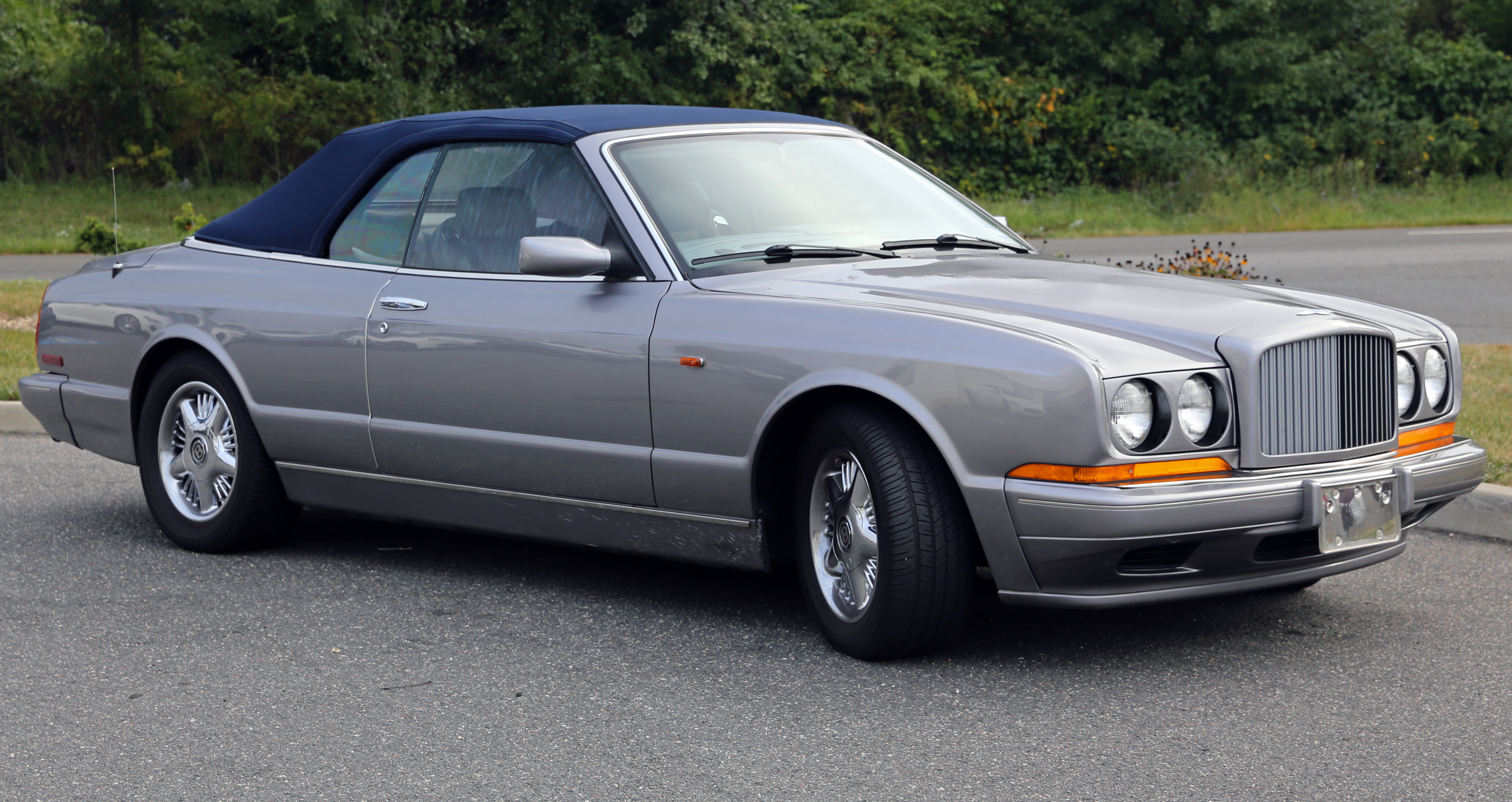
Bentley Azure
"Blue or something. Azure blue, which from what I understand is kind of sou..."
The Bentley Azure is a luxury car made for comfort and a high-end driving experience. The podcast talks about “Azure blue,” which sounds similar to the car’s name. The key point is that the Azure is a premium Bentley model.
The Bentley Azure is a luxury grand tourer-style car known for high-end comfort and a premium, upscale presence. The podcast mentions “Azure blue” and connects it to the car’s name, which is a common point of confusion because the color and model name sound related. It’s discussed as a distinctive luxury vehicle rather than a performance-focused mainstream car.
fuel gauge
"Yeah. It's like Porsche ruler for $50, but it tells you your fuel level because in the early 50s, the 356 never came with a fuel gauge."
A fuel gauge is the dashboard indicator that tells you how much gas is left. The point here is that some early cars didn’t have that, so people had to estimate another way.
A fuel gauge is the dashboard instrument that shows how much fuel is in the tank. The host is contrasting early Porsche 356s—where it wasn’t standard—with a later-added method to estimate fuel level.
hidden little thing
"So basically, I picked two cars with a hidden little thing. So that's my huge upgrade."
They’re talking about a small tool or accessory that’s tucked away in the car. It’s not something you’d notice immediately, but it’s there for a reason.
In this context, a “hidden little thing” refers to an accessory or tool kept out of sight (like in the glove compartment) that serves a practical purpose. The host is using it as an example of how some owners add period-correct or clever solutions that aren’t obvious at first glance.
engine bay
"I do have to say the engine bay looks very well kept. It does have the original early A356 fuel pump..."
The engine bay is the space under the hood. People look at it to see if the car has been cared for and whether parts look original.
The engine bay is the compartment under the hood where the engine and related components live. In used-car judging, it’s a quick way to spot whether things look original, clean, and properly maintained.
original early A356 fuel pump
"It does have the original early A356 fuel pump, and it even has the hard line coming out of it..."
A fuel pump moves fuel from the tank to the engine. The host is saying this car still has its original early version of that pump, which is a good sign for originality and proper setup.
A356 fuel pump refers to a specific fuel-pump part number/variant the speaker says is original and from an early production run. Keeping the original pump (and its associated lines) can matter because it suggests the car hasn’t been heavily modified and may preserve correct fitment and authenticity.
hard line
"...and it even has the hard line coming out of it, which is quite often changed for a rubber line, but it's always nice to see the original lines."
A hard line is a rigid fuel pipe, usually metal. Rubber lines are more flexible, but they’re also more likely to be replaced as they age or if there’s any seepage.
A hard line is a rigid fuel line (typically metal) that routes fuel between components. The speaker contrasts it with rubber lines, which are more flexible but are often replaced over time due to age, leaks, or service history.

1988 Porsche 944
"41,000 mile, 1988, 944. Is that high or low? That's very low miles."
This is a Porsche 944 from 1988. It’s a classic Porsche sports car from the 1980s, and people like it because it handles really well and feels very “Porsche” to drive.
The Porsche 944 is a front-engine, rear-transaxle sports coupe known for its near-50/50 balance and classic 1980s Porsche feel. In 1988, the 944 is part of the original 944 generation and is often discussed by enthusiasts for how it drives compared with other entry-level 911-era Porsches.
sports seats
"I mean, it's got sports seats. So the significance of the sports seat, the side bolsters. Look at that license plate."
Sports seats are designed to hold you more firmly in place when you corner. They usually have thicker side padding so you don’t slide around as much.
“Sports seats” are performance-oriented seats with extra shaping to support your body during spirited driving. The key feature mentioned here is the side bolsters, which help keep you positioned laterally like a bucket.
side bolsters
"So the significance of the sports seat, the side bolsters. The side bolsters on sports seats come out like four or five more inches. So it holds you in like a bucket."
Side bolsters are the padded parts on the sides of the seat. They help keep you from sliding sideways when the car turns.
Side bolsters are the padded “wings” on a seat that press against your torso. In this segment, the host explains that the sports-seat bolsters extend farther than normal seats, which increases lateral support and helps you stay “in the bucket” during cornering.
Porsche wheel
"And I mean, it's got the the Porsche wheel that you can actually buy from the dealership. It's got Porsche written in the side of the Momo Pro to Tepo."
They’re talking about a wheel design that’s associated with Porsche and available through Porsche dealers. It’s meant to look right for the car, not just be any aftermarket wheel.
A “Porsche wheel” here refers to a factory-style wheel design associated with Porsche that the owner can buy through Porsche’s dealer parts channels. The point is that it’s not a random aftermarket wheel—it’s a period-correct, brand-linked option.
Momo
"It's got Porsche written in the side of the Momo Pro to Tepo. And it also has a nice. Good idea."
MOMO is a company that makes performance car parts and accessories. In this case, they’re mentioning a MOMO-branded item that’s part of the car’s interior/exterior look.
MOMO is an Italian motorsports and steering-wheel/aftermarket-parts brand that’s commonly associated with performance interiors. The host mentions “Porsche written” on a MOMO-branded component, implying a specific, enthusiast-oriented upgrade or matching accessory.

Porsche 912
"Good idea. I have this radio in my 912, actually. OK."
The Porsche 912 is an older classic Porsche from the 1960s. The host is basically saying they’ve got the same radio in their own vintage Porsche.
The Porsche 912 is a classic early-1960s Porsche 911-era model, known for using a smaller engine than the 911. Mentioning it here is relevant because the host says they have the same radio in their 912, tying the accessory to older Porsche ownership.
current mileage
"OK, I think this is a with how nice it is in the current mileage. Yeah, I think this is a $40,000 car."
Mileage is how many miles the car has been driven. Generally, lower mileage cars are worth more because they’ve been used less.
In used-car pricing, “mileage” is a key proxy for wear and how much the car has been used. Lower mileage often supports a higher asking price, especially for collectible or enthusiast cars where condition matters as much as the odometer reading.
fuel injectors
"OK, now that's. [4783.4s] I did the fuel injectors. [4784.2s] OK."
Fuel injectors are the parts that spray gas into the engine. If they’re worn out or clogged, the car can run badly, so replacing them can make the engine behave correctly again.
Fuel injectors are the electronically controlled valves that spray pressurized fuel into the engine. Replacing or “doing” fuel injectors is a common maintenance/repair item because clogged or failing injectors can cause rough running, poor fuel economy, or misfires.
pop up headlights
"Is when they stopped allowing the pop up headlights. Was that what the C5, the C6?"
Pop-up headlights are headlamps that are hidden behind the car’s bodywork and then lift up when you turn the lights on. They were popular on certain sports cars because they let designers keep a cleaner, lower front profile when the lights are off.

Chevrolet C5
"...allowing the pop up headlights. Was that what the C5, the C6? I think so."
The Chevrolet Corvette is a sports car designed for fast driving and good handling. Some versions have pop-up headlights, which helps identify certain model years. The podcast is basically trying to match that feature to the right Corvette generation.
The Chevrolet Corvette is a performance sports car from Chevrolet, built for speed, handling, and driver-focused driving. The podcast references pop-up headlights and asks about which generation (C5/C6), which is a key visual and engineering cue for those eras. Corvettes are commonly discussed because each generation brings distinct styling and performance changes.
Gordon Viewing
"But those were originally designed by Gordon Viewing in and it was first seen in the 1936 cord 810, which I've had to look up."
They’re crediting a specific designer for the look and engineering behind the headlights. It’s a reminder that car styling features often come from named people, not just the brand.
Gordon Murray Viewing is mentioned as the designer associated with the pop-up headlight design. In car history terms, this points to the role of specific designers/engineers in shaping iconic exterior features on performance cars.
Dusenberg Arbor and Cord Museum
"I'd just like to say if anybody has a chance to go to the Dusenberg Arbor and Cord Museum. In Ohio? In Dusenberg, Ohio."
This is a car museum focused on famous early American brands like Duesenberg and Cord. The hosts are recommending it as a great place to see those cars in real life.
The Dusenberg (often spelled Duesenberg) and Cord Museum is a museum dedicated to early American luxury and racing-era brands. In this segment, the hosts mention it as a destination to see the cars in person, tying it to the Auburn/Cord/Duesenberg heritage.
disappearing headlights
"Well, he is the godfather of the disappearing headlights. I just want to mention."
Disappearing headlights are headlights that slide or retract into the car when you’re not using them. They’re often used to make the car look sleeker and sometimes to help airflow.
“Disappearing headlights” are headlights that retract into the bodywork when not in use, usually to improve aerodynamics and preserve a cleaner front-end look. The host’s “godfather” comment frames this as a signature design feature associated with a particular designer or era of styling.

Porsche 924
"Yeah, OK. The body is a beautiful silhouette designed by Harm Lagae. Harm Lagae. And that was he actually designed the 924."
The Porsche 924 is a classic Porsche sports car from the 1970s. Here, the hosts are saying the designer Harm Lagae was involved in designing the 924.
The Porsche 924 is a front-engine, rear-transaxle sports car that helped establish Porsche’s entry-level performance lineup in the late 1970s. In this segment, Harm Lagae is credited with designing the 924, connecting the car to a specific designer’s influence on the brand’s shape and packaging.
fender flares
"No, so the 924, it didn't have those box simulators. You know, the fender flares. So he designed that in 1978."
Fender flares are the extra pieces around the wheel openings. They can make the car look wider and help cover tires, especially if the setup is wider than stock.
Fender flares are body panels that extend outward over the wheel area. They’re often used to visually widen the car and can also help cover wider tires or suspension movement.
facelift
"Because you get in the interior of a facelift 944, and it feels like a Japanese interior from the early 2000s."
A facelift is when a car gets updated partway through its production run. It usually means changes to the look and sometimes the interior, but it’s still the same overall model.
A facelift is a mid-cycle refresh where a car’s styling and sometimes equipment are updated without changing to a completely new generation. In this context, “facelift 944” refers to a later version of the Porsche 944 with interior and exterior updates compared with earlier cars.
rear glass
"And everything, you know, nothing creaks. Well, maybe the rear glass. The rear glass."
“Rear glass” means the rear window. The speaker is saying that while most of the cabin doesn’t rattle, the rear window area might be where some noise or looseness shows up over time.
“Rear glass” here refers to the rear window area, which can develop problems with age such as fitment issues, leaks, or damage that affects how the car seals and feels. The host mentions it as a possible source of creaks or noises.
dash
"Well, maybe the rear glass. The rear glass. And the dash has got a couple problems."
The dash is the dashboard—the part with the gauges and controls. The speaker is saying the dashboard has a couple problems, likely meaning it can rattle or show wear as the car gets older.
The dash is the dashboard assembly, including the upper panel and instrument area. Older cars can develop issues like cracks, loose trim, or rattles in the dash as materials age.

Porsche 928
"So somebody's selling a Porsche 928 V8 done up to be a coffee table. And I just think this is the coolest thing in the world."
The Porsche 928 is a classic Porsche coupe that uses a V8 engine. Here, someone turned that V8 into a coffee table, which is a quirky way to display the engine.
The Porsche 928 is a grand touring coupe known for its front-mounted V8 engine layout and long-distance comfort focus. In this segment, the hosts are talking about a Porsche 928 V8 that’s been repurposed into a coffee table—an unusual “engine-as-furniture” restyle.
engine coffee table
"What makes a good engine coffee table? Well, I thought about this because I'm a big 944 guy,"
An “engine coffee table” is when someone takes an engine and turns it into a decorative table. It’s a custom, mostly for looks, not something you’d normally do to a car.
An “engine coffee table” is a custom display piece where an engine (or engine components) are mounted and finished like furniture. It’s not a standard automotive modification; it’s more of a novelty/collector display that repurposes a powertrain as decor.
five-speed manual
"It's a five-speed manual. It's not even an automatic."
A five-speed manual means you have to shift gears yourself using a clutch. It’s different from an automatic because the car doesn’t pick the gears for you.
A five-speed manual is a gearbox where the driver uses a clutch pedal and manually selects gears. Compared with an automatic, it typically gives more direct control over engine speed and gear choice, which many enthusiasts prefer for feel.
Peterson Italian show
"Andrew, are you going to come to the Peterson? Oh, Peterson Italian show on Saturday."
This is a car show event centered on Italian cars, tied to the Petersen Automotive Museum. It’s a place where people go to see cool cars and talk about them.
The Peterson Italian show is an event associated with the Petersen Automotive Museum, focused on Italian cars. It’s the kind of show where you’ll see curated displays and enthusiasts discussing specific marques and models.
launch show
"Can somebody give me like a launch show to drive to it? I want something really."
They’re talking about a special preview event you can drive to or attend. It sounds like something you buy tickets for so you can get there with the right vibe.
A “launch show” here appears to mean a pre-event or promotional driving/preview event you can attend. In this context it’s about getting to the show with a specific kind of car experience.
Delta
"I want something really. There is a launch show available to purchase right now at Delta."
They say you can buy the event/preview thing through “Delta.” It sounds like a booking or ticket source, not something related to the car itself.
“Delta” is mentioned as the place where a “launch show” is available to purchase. In the transcript context, it’s likely a ticketing/booking platform or venue partner rather than an automotive brand.
R3350 duplex cyclone
"Well, I just got to say, if I could have any engine in the world to make a table out of, [5315.9s] it would be a right R3350 duplex cyclone. [5320.2s] And let me just tell you what that is."
That “R3350 Duplex-Cyclone” is a type of airplane engine. It’s a big, air-cooled engine with cylinders arranged in a circle around the crankshaft, and it uses a supercharger to help it make more power.
The “R3350 Duplex-Cyclone” is a specific radial aircraft engine family (commonly associated with the Wright Cyclone line) known for its large displacement and multi-row cylinder layout. In the segment, it’s described as a twin-row, supercharged, air-cooled radial—i.e., an engine designed for aircraft power and cooling in flight.
twin row supercharged, air cooled, radial aircraft engine
"And let me just tell you what that is. [5321.5s] I can totally see that right now. [5322.8s] That was a vacuum. [5323.6s] It's a twin row supercharged, air cooled, radial aircraft engine."
This describes an airplane engine design. The cylinders are arranged like a circle (radial), it doesn’t use liquid coolant (air-cooled), and a supercharger helps it make more power.
A “radial” aircraft engine places cylinders in a circle around the crankshaft, which helps with cooling because air can flow over many fins. “Air-cooled” means it relies on airflow and cylinder fins instead of a liquid coolant system, while “supercharged” adds forced induction to increase power output.
350 cubic inches
"Nearly three at the present. [5331.8s] I'd say 350 cubic inches. [5335.3s] No."
Cubic inches is a way to measure engine size. Bigger displacement usually means the engine can move more air/fuel per cycle, which often helps with power.
“Cubic inches” is a displacement measurement—how much volume the engine’s cylinders can move through in one cycle. The host is estimating the engine’s displacement (roughly “350 cubic inches”), which is a way enthusiasts compare engine size and potential power.
B29 Superfortress
"It's a twin row supercharged, air cooled, radial aircraft engine. [5327.9s] They were in cylinders. [5329.6s] That's what he's saying. [5338.6s] It powered the B29 Superfortress."
The B-29 Superfortress was a famous WWII bomber aircraft. The hosts are saying the engine they’re talking about was used on that plane.
The Boeing B-29 Superfortress is a WWII-era heavy bomber that helped define the U.S. strategic bombing campaign. The segment ties the R3350 Duplex-Cyclone engine to the B-29, using it as a credibility anchor for why the engine is so iconic and powerful.
Request an Explanation
Heard something you'd like explained? We'll add it to this episode.
Sign in to request explanations for terms you heard.
Want to learn more?
Browse our glossary for plain-English explanations of automotive terms, jargon, and concepts.
Help improve this episode
See something that's not quite right? Our annotations are AI-generated and can sometimes miss the mark. Click the flag icon on any annotation to suggest a correction.