
#155 Building the Ultimate 90s Garage with a House to Match
About this episode
Palisades Motor Classic weekend chatter and local Malibu driving enforcement set the stage for a bigger theme: building a 90s “ultimate garage” that matches the house. The conversation bounces through 90s nostalgia, then gets specific on car-era ideas—pop-up headlights, homologation, and why 90s cars feel reliable. From dream lineups (Miata, NSX, Supra, F50, McLaren F1) to real-world garage logistics (no garage in Joshua Tree, $30M budgets, rare-car fears), they end up debating use vs display and what it takes to drive the Countach.
Happy Father's Day! This week we take you back to the 90s, an era that Andrew was never a part of. We each choose three cars from the 90s and battle over why Steve chose the best ones. Veronica shares her approach to classic car non-driving, Andrew chooses a dream house without a garage, and Steve shares what he would call his pet Cheetah. Get your votes in and let us know what you think of our choices.
nanny controls
"So a lot of the stuff was the last time before we got all what they call like nanny controls."
“Nanny controls” is a nickname people use for car systems that step in to control what the driver is doing. The idea is that newer cars do more of the driving-safety work automatically.
“Nanny controls” is an enthusiast phrase for modern driver-assist and safety systems that intervene automatically. The host is contrasting 1990s cars—often with fewer mandatory electronic aids—with later cars that use more automated traction, stability, and safety features.

viper
"So the 90s, like kind of a sports car was you had the viper that didn't have much things like safety, no airbags or traction control."
The Dodge Viper is a famous 1990s muscle/sports car. The point here is that it was built with fewer safety and driving-assist features than newer cars, so it feels more raw and old-school.
The Dodge Viper is a 1990s American sports car known for its raw, analog feel—big power with relatively few modern driver aids. In this segment, the host highlights that it lacked features like airbags and traction control, which were becoming common later.
traction control
"So the 90s, like kind of a sports car was you had the viper that didn't have much things like safety, no airbags or traction control."
Traction control helps prevent the wheels from spinning when the road is slippery. It can automatically slow things down or adjust power so you keep grip.
Traction control is a driver-assist system that reduces wheel spin when the car detects low grip. It typically uses sensors and the brakes (and sometimes engine torque) to keep the tires from slipping.
airbags
"So the 90s, like kind of a sports car was you had the viper that didn't have much things like safety, no airbags or traction control."
Airbags are safety cushions that pop out in a crash to help protect your body. They started becoming common in the 1990s as car safety rules increased.
Airbags are inflatable safety cushions designed to deploy rapidly in a crash to help reduce injury. They became increasingly standard through the 1990s as regulations tightened.
pop-up headlights
"The 90s were the last era. 99% of it for pop-up headlights."
Pop-up headlights are headlights that rise out of the front of the car when you turn them on. When they’re off, they sit flush with the body for a cleaner look.
Pop-up headlights are headlight units that move up from the front of the car when activated, instead of staying fixed in place. They were common in many 1990s designs because they let the car have a smoother front profile when the lights were off.
pedestrian crash safety
"[668.3s] Yeah, it's for pedestrian crash safety. [672.1s] Because you could chop off a person's hand or something."
Pedestrian crash safety means the car is designed to be less dangerous to people outside the car if there’s a crash. Designers try to make parts of the front end less likely to cause serious injuries.
Pedestrian crash safety refers to design choices that reduce the chance and severity of injuries to people outside the vehicle during a collision. In the 1990s context, it often comes up with front-end features like pop-up headlights that were shaped to be less harmful on impact.
headlights popped up
"[674.1s] Well, you know, the top lip when the headlights popped up, it creates a blade that could potentially [679.8s] injure someone. [682.8s] That's how they design it."
Pop-up headlights are headlights that pop up from the front of the car when you turn them on. The way they sit and the edges around them can matter for how safe the front end is to pedestrians.
“Pop-up” headlights are headlights that rise from the front of the car when activated, rather than staying fixed in the bodywork. Their shape and the way the front end transitions can affect pedestrian injury risk, which is why the discussion focuses on the “top lip” creating a blade-like edge.
cup holders
"[690.8s] 90s were the last time that kind of, you didn't have cup holders. [699.8s] Yeah, After that, they just became like standard."
Cup holders are the built-in spots in a car where you can put a drink so it doesn’t spill. The hosts are pointing out that some 1990s cars didn’t include them.
Cup holders are the built-in storage features that secure drinks while driving. The hosts are using them as a marker of 1990s-era interior design, contrasting earlier cars (like the first Boxster) with later mainstream adoption.

Porsche Boxster
"...ans really didn't think we needed them. The first Boxster had no cup holders. But you know what, I bet it d..."
The Porsche Boxster is a small two-seat sports car with the engine placed closer to the middle of the car. People talk about it because it’s fun to drive and because early models were more basic than later ones. It’s the kind of car you’d choose for weekend driving.
The Porsche Boxster is a mid-engine two-seat sports car known for its balanced handling and open-top driving. It’s often discussed because it helped define Porsche’s modern “entry” sports-car formula, and early versions are remembered for simple interior details like the lack of cup holders. In a podcast, it comes up as a classic example of how the brand’s usability and refinement evolved over time.

Porsche 911
"[712.8s] Do the current 911s have ashtrays in them? [716.8s] It's a good question. [719.7s] It's a cup holder."
The Porsche 911 is Porsche’s famous sports car. The hosts are talking about whether newer 911s still have ashtrays or if they’ve replaced that space with cup holders.
The Porsche 911 is the iconic rear-engine sports car line from Porsche, and it’s known for evolving interior and comfort features over time. Here the hosts debate whether current 911s have ashtrays or instead use cup holders, highlighting how “standard” convenience items changed across generations.
car bras
"[730.8s] Do you remember car bras? [731.8s] I'm sorry? [732.8s] Yeah. [733.8s] Say it again? [734.8s] Car bras that you would put in the front of the car to protect it from chips."
“Car bras” are covers you put on the front of a car to help protect the paint from small rocks and road debris. They’re like a temporary shield for the hood area.
“Car bras” are protective covers (often made of fabric or vinyl) that you fit over the front of a car to help reduce paint damage from small road debris like chips. They’re a simple, accessory-level way to protect the leading edge of the hood and front fascia.
homologation cars
"[748.8s] Also, the 90s was kind of the golden age of the homologation cars. [755.8s] So those are the ones that they were going racing and they had to make a certain amount [758.8s] of them."
Homologation cars are race cars that automakers had to make and sell in limited numbers so they could compete in certain racing categories. That rule is why some race-inspired cars from the 1990s were so extreme.
Homologation cars are production-based race cars that manufacturers had to build in limited numbers to qualify for a racing series. In the 1990s, this led to some unusually wild “street-legal race” models because the rules forced companies to sell them to the public.

Bugatti EB110
"Well, the EB110 is probably not a sexy car. Oh, God. Well, now we're going deep and now I have to know. That's a Bugatti. Oh, a Bugatti."
The Bugatti EB110 is a famous, very expensive supercar from the 1990s. The hosts mention it because they’re debating which 1990s cars are “unsexy,” and then they point out that this one is actually a real Bugatti.
The Bugatti EB110 is a 1990s supercar known for its exotic, high-performance engineering and for being one of Bugatti’s most famous modern-era revivals. In the context of the discussion, it’s brought up as an example of a “not sexy” 90s car—then corrected to emphasize it’s actually a Bugatti.
electronics
"You know, something that's, you know, because they just had, they had just enough electronics to create a really reliable car."
Here, “electronics” means the car’s computer systems that help control things like how the engine runs. The host is saying 1990s cars had a reasonable amount of that tech, which helped reliability.
In this context, “electronics” refers to the car’s computer-controlled systems (engine management and related controls) that became more common in the 1980s and especially the 1990s. The host’s point is that 1990s cars had “just enough” electronics to improve drivability and reliability without the complexity they fear from later decades.
fuel injection
"They had fuel injection and everything that the 80s and 70s didn't have. Okay. So, the Americans have brought us too much technology..."
Fuel injection is how a car meters gas into the engine using valves controlled by the car’s computer. The idea here is that 1990s cars used it more, which can make them run more consistently than older carbureted setups.
Fuel injection is a system that delivers gasoline to the engine using electronically controlled injectors instead of a carburetor. The hosts connect it to 1990s cars being more reliable than many 1970s/1980s designs because it helps with more consistent fueling and easier starting.

Ford Taurus
"I think, I think it's a Ford Taurus. Okay. I think it's a Ford Taurus. Oh, interesting. I'm going to go with Celica. Oh, interesting. Okay. Uh, Taurus, you're correct."
A Ford Taurus is a regular passenger sedan made by Ford. It’s the kind of car people associate with the 1990s because it was common and comfortable.
The Ford Taurus is a mainstream American sedan that became especially well-known in the 1990s for being a comfortable, practical family car. In enthusiast circles, it often shows up as a “90s garage” staple because it represents that era’s big, front-wheel-drive sedan design.

Toyota Celica
"Oh, interesting. I'm going to go with Celica. Oh, interesting."
The Toyota Celica is a smaller car that’s meant to feel sporty. It’s not a luxury supercar, but it’s designed to be more fun than a basic commuter. People mention it when they’re talking about classic sporty Toyota models.
The Toyota Celica is a compact sports coupe that has historically offered sporty styling and driving dynamics. It’s often discussed because it represents a more affordable way to get a “sporty” Toyota experience. In this podcast context, it’s mentioned as a car choice someone is considering or comparing.
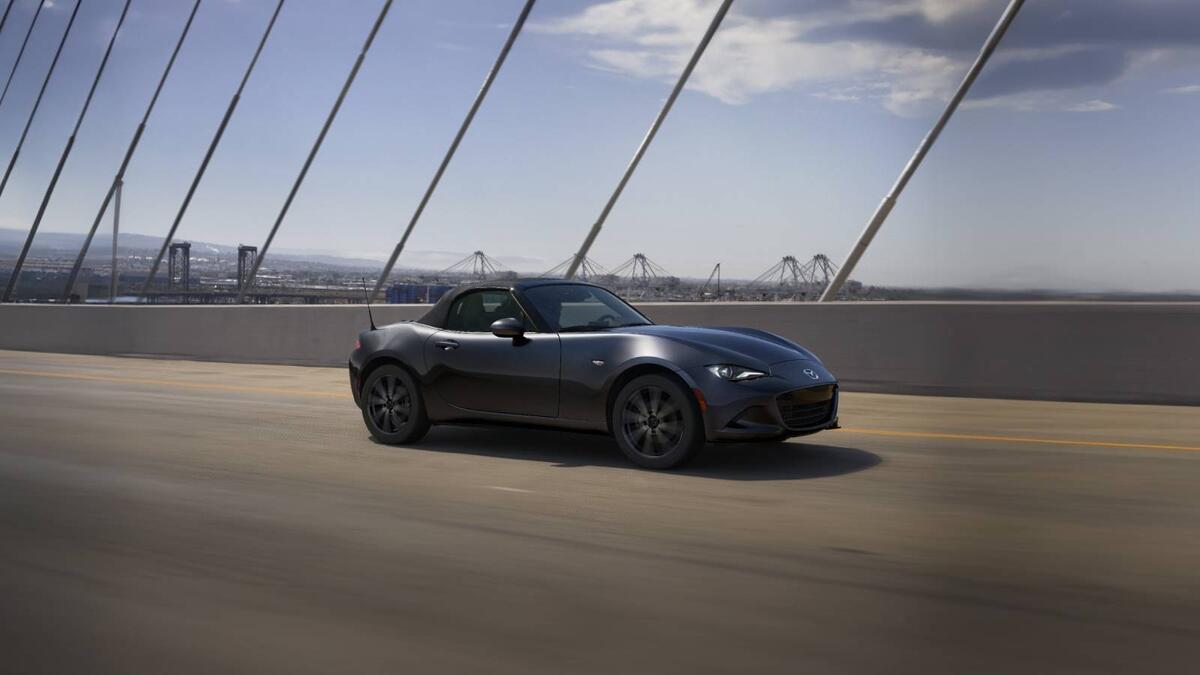
Mazda MX-5 / Miata
"...answers. Your weekend Cruiser Canyon Carver was a Miata. I'm a very classic car."
The Miata (MX-5) is a small two-seat convertible designed for fun driving. It’s usually easy to live with and focuses on handling rather than power. That’s why it’s often picked for weekend trips.
The Mazda MX-5, commonly called the Miata, is a lightweight, rear-wheel-drive roadster built for simple, engaging driving. It’s frequently mentioned as a “weekend cruiser” because it’s affordable to own and delivers a lot of driving feel for the money. In a conversation, it’s a go-to example of a classic, straightforward sports car.

Miata
"And a Miata specifically. I am not a Miata fan. No, no, neither am I. But a lot of people like them. Great cars."
The Mazda Miata is a small, light sports car meant for driving fun. People like it because it’s easy to handle and doesn’t cost as much as many other sports cars.
The Mazda Miata is a lightweight, rear-wheel-drive roadster that became a 1990s-era “driver’s car” icon. Its popularity comes from being simple, fun to toss around, and relatively affordable compared with many sports cars.

Acura NSX
"...And then the like track weapon or what it was, an NSX, right? An, okay."
The Acura NSX is a fast sports car made by Acura. It’s designed to drive well both on normal roads and on a track. People mention it because it’s a serious performance car, not just a look-alike.
The Acura NSX is a high-performance sports car built to combine everyday usability with supercar-level performance. It’s significant because it’s known as a “track-capable” car that still feels refined for normal driving. Podcasts bring it up when discussing standout performance cars and the idea of a practical supercar.

Toyota Supra
"And then your kind of analog car was your Supra Turbo, which, yeah. I think the internet likes Japanese cars."
The Toyota Supra Turbo is a version of the Supra that uses a turbocharger. Turbochargers help the engine make more power, which is why people get excited about this model.
The Toyota Supra Turbo refers to the turbocharged Supra, a 1990s JDM legend associated with strong performance and a huge enthusiast following. The “Turbo” part matters because it’s the forced-induction version, typically making it much more potent than naturally aspirated trims.
JDM cars
"I think the internet likes Japanese cars. Yeah. It does. It does. Maybe it's my history or, well, I think during the 90s is when we saw a lot of JDM cars kind"
JDM means “Japanese cars made for the Japanese market.” Enthusiasts like them because they often have interesting features and performance, and many became famous in the 1990s.
JDM (Japanese Domestic Market) cars are models that were originally sold in Japan, often with specs and trims tailored to Japanese rules and customer preferences. In the 1990s, JDM became a big deal in enthusiast circles because many of those cars were seen as affordable, high-quality, and performance-focused.

Ferrari F50
"First one, Ferrari F50. Great car. Get out of a Ferrari in there. And that's like basically an F1 car that, and I can take the roof off."
The Ferrari F50 is a famous 1990s Ferrari supercar. It’s known for its high-revving V12 and for feeling very “race car” compared to normal road cars. The host is also pointing out that you can remove the roof, which makes it feel even more special.
The Ferrari F50 is a 1990s supercar built around a race-bred, high-revving V12 formula—its whole identity is about being an analog, driver-focused halo car. In this segment, the host also highlights the F50’s “F1 car” vibe and the ability to remove the roof, which points to its extreme, track-inspired packaging.

Lamborghini Lm002
"... wonder, I bet you a cheetah has been inside of a LM002. Oh, totally."
The Lamborghini LM 002 is a Lamborghini SUV, not a typical sports car. It was made to handle rough terrain while still using very powerful engineering. People mention it because it’s a rare and surprising Lamborghini model.
The Lamborghini LM 002 is a rare, high-performance off-road SUV built by Lamborghini. It’s significant because it’s an unusual blend: a rugged vehicle concept powered by a supercar-style engine approach. In a podcast, it’s brought up as a surprising “what if” Lamborghini that stands out from typical lineup expectations.

Ford Falcon
"Yeah. I was going to pick like a falcon that I could just have, circle around and then he..."
The Ford Falcon is an older Ford car model. In this conversation, it’s being talked about as something you could drive around for fun. It’s the kind of classic car people choose for casual cruising.
The Ford Falcon is a model line of cars that’s often associated with classic American muscle and casual “cruising” culture. In the podcast context, it’s mentioned as a car someone could use for simple driving around. That makes it a relevant example when talking about choosing a fun, easy-to-live-with classic.

Ferrari Off Ferrari
"...that I can bring friends. And then I have my roof off Ferrari. I feel like I went really practical in these cho..."
The Ferrari FF is a Ferrari designed for longer trips and carrying more people than a typical supercar. It has four-wheel drive, which helps it grip better in different conditions. People mention it when they want a Ferrari that’s more practical for everyday use.
The Ferrari FF is a grand touring Ferrari that stands out for offering four-wheel drive and a more practical layout than many other Ferraris. It’s significant because it’s designed to bring friends and luggage along while still delivering Ferrari performance. In a podcast, it’s referenced when someone talks about choosing a Ferrari that feels more “usable” for real-world trips.
roof off
"I've got my McLaren that I can bring friends. And then I have my roof off Ferrari. I feel like I went really practical in these choices."
“Roof off” means the car’s convertible top is down. It’s basically the open-air version of driving the same car.
“Roof off” refers to driving a convertible with the top removed or retracted, turning the car into an open-air experience. It’s a common enthusiast shorthand for enjoying the weather and the sound/feel of an open cockpit.

1998 Lexus LS400
"So I got my daily driver of choice would be a 1998 Lexus LS400. But specifically. We got to talk about your dreams. Specifically with the Nakamichi sound system."
The Lexus LS400 is a comfortable, quiet luxury car that became famous in the 1990s. This episode’s host is talking about a 1998 version and pairing it with a specific premium sound system.
The Lexus LS400 is a 1990s luxury sedan known for its smooth, quiet ride and reputation for refinement. In 1998, Lexus refreshed the LS400 and the speaker highlights the car’s audio setup as part of the “ultimate 90s garage” dream build.
Nakamichi sound system
"Specifically with the Nakamichi sound system. Have you ever heard of the Nakamichi sound system? No, but I want to. ...the big thing about it, the Nakamichi sound system is the greatest sound system I've ever heard in a car."
Nakamichi is a company that makes high-end car audio. If a car has a “Nakamichi sound system,” it typically means the stereo and speakers are upgraded beyond the normal factory setup.
Nakamichi is an audio brand known for high-end car stereos and speaker systems. When someone says a car has the “Nakamichi sound system,” they’re usually referring to a factory-installed premium setup tuned for strong sound quality and clarity.
VVTI
"Well, in the 90s, I think the LS400, 1998 refresh. ...So it came out with the VVTI. It went from 260 to 290."
This is an engine technology that helps the car make better power depending on how fast the engine is spinning. The idea is that the engine can adjust valve timing instead of using one fixed setting.
“VVTI” is the speaker’s reference to Toyota’s variable valve timing technology (commonly written as VVT-i). It changes the timing of the engine’s intake valves to improve efficiency and power across different RPM ranges.
Burmeisters or Bermesters
"Compared to modern Burmeisters or Bermesters and Porsches or Mercedes S-classes, they don't compare to the Nakamichi sound system."
The host is comparing Nakamichi to other luxury car audio brands. They’re basically saying those other premium systems don’t sound as good as the Nakamichi setup they’re praising.
This appears to be a misspoken or mis-transcribed reference to premium audio brands (likely “Burmester,” which is associated with high-end Mercedes audio systems). The speaker is using these brands as a comparison point to argue Nakamichi sounds better.

Mercedes S-classes
"Compared to modern Burmeisters or Bermesters and Porsches or Mercedes S-classes, they don't compare to the Nakamichi sound system."
Mercedes S-Class is a top-tier luxury car line. The speaker is bringing it up because it’s known for expensive, high-quality options—including audio systems.
The Mercedes-Benz S-Class is the brand’s flagship luxury sedan line, often used as a benchmark for comfort and high-end features. Here it’s mentioned as another example of a modern luxury car with premium audio, compared against the speaker’s praise for Nakamichi.

1991 Jeep Grand Wagoneer
"OK, what are the other two cars? So I'd have to have a truck, something I can take off roading, and it's got to be a 1991 Jeep Grand Wagoneer,"
The 1991 Jeep Grand Wagoneer is a big, old-school SUV. It’s known for being comfortable like a luxury vehicle, but it was also meant to go off-road.
The 1991 Jeep Grand Wagoneer is a full-size SUV famous for its classic, upscale “wood-and-leather” vibe and its ability to handle off-road use for its era. It’s a standout 90s-garage choice because it combines big, comfortable cruising with genuine trail capability.

Jeep Grand
"...I can take off roading, and it's got to be a 1991 Jeep Grand Wagoneer, the final year of the Jeep Grand Wagone..."
The Grand Cherokee is a Jeep SUV that can handle more than just regular roads. It’s built to be comfortable for daily driving but still capable on rough trails. That’s why it’s a common choice for people who want one vehicle for both uses.
The Jeep Grand Cherokee is a midsize SUV known for combining everyday comfort with real off-road capability. It’s often discussed in the context of Jeep’s long history of rugged vehicles and trail-ready trims. In a podcast, it can come up when someone wants an SUV that can handle both road trips and off-roading.
off road
"Well, they're not an off road. It's not going to make it."
“Off road” just means driving on unpaved or rough ground instead of regular pavement. It’s where tires, suspension, and traction become more important.
In automotive talk, “off road” refers to driving on surfaces that aren’t paved—like dirt, gravel, mud, or rocks—where traction and suspension travel matter more than on-road grip. The host is using it to set expectations about what kind of terrain the vehicle is actually meant for.
fire road
"It's more of a fire road type off road vehicle, you know. ... But the wood paneling."
A “fire road” is a dirt road in the woods or mountains that’s meant for access, not racing or rock crawling. The point here is that the Jeep is more suited to simpler dirt-road driving than hardcore trails.
A “fire road” is a rough, unpaved service road commonly found in forests or mountainous areas, typically used for emergency access and maintenance. The host uses it to contrast with more serious off-road trails, implying the Grand Wagoneer is better suited to easier dirt-road use.
carbureted 360 CI V8
"Absolutely nothing out of a carbureted 360 CI V8."
“Carbureted” means the engine uses a carburetor to deliver the fuel-air mix, instead of electronic fuel injection. “360 CI” is just a way of saying the engine is a big V8 with 360 cubic inches of displacement.
A carbureted engine uses a carburetor to mix fuel and air before it enters the cylinders, rather than using modern fuel injection. “360 CI” refers to 360 cubic inches of displacement, and in this context it’s describing the Jeep’s V8 as an older, carbureted setup.
torquey
"But they're pretty torquey. They're pretty torquey."
“Torquey” means the engine has strong pulling power. It usually feels easier to accelerate and move heavy weight without needing to rev the engine as high.
“Torquey” is shorthand for an engine that produces strong torque, especially at lower engine speeds. Torque is what helps a vehicle feel like it pulls hard—useful for heavy SUVs and off-road or towing situations.

Porsche 968 Turbo S
"Well, my third choice is a little more rare. [1639.6s] They only made 14 of them ever. [1642.0s] OK. [1642.5s] And it's the Porsche 968 Turbo S, which is a very similar car"
This is a very rare Porsche “Turbo S” version of the 968. The big deal is that it’s not just a normal production car—it’s tied to racing rules, which is why it was made in tiny numbers.
The Porsche 968 Turbo S is a rare, turbocharged 968 variant that’s notable for being a homologation-style racing special rather than a mass-market street car. In this segment, the host also compares it to the Porsche 944 Turbo, highlighting how it shares the general front-engine, 2+2 sports-car layout while using distinct styling cues.

Porsche 944 Turbo
"And it's the Porsche 968 Turbo S, which is a very similar car [1648.7s] to the 944 Turbo, just in the 1968. [1651.6s] Well, it's got 928 style headlights."
The Porsche 944 Turbo is an older Porsche that uses a turbocharged engine and is known as a driver-focused sports car. Here it’s mentioned mainly to help you understand what the 968 Turbo S is like in spirit and layout.
The Porsche 944 Turbo is a classic 1980s/early-1990s Porsche with a front-mounted, turbocharged inline-four. The host uses it as a reference point to explain how the Porsche 968 Turbo S is “very similar” in overall concept, even though the 968 Turbo S is positioned as a rarer, racing-related special.

Porsche 928
"...o the 944 Turbo, just in the 1968. Well, it's got 928 style headlights. OK."
The Porsche 928 is a two-door Porsche coupe designed for comfortable long drives. It uses a V8 engine and has a distinctive look, including its headlight shape. People bring it up as an older Porsche that’s more about grand touring than pure track racing.
The Porsche 928 is a grand touring coupe that’s known for its V8 power and long-distance comfort. It’s a notable part of Porsche history because it represents a different direction than the brand’s more traditional sports-car lineup. In a podcast, it may be referenced for styling details like its distinctive headlight design.
Joshua Tree
"And it's in Joshua Tree right outside of the National Park. And I don't know. I was looking up cool looking houses."
Joshua Tree is a hot, dry desert area in California. If you park cars outside there, the sun and dust can be harder on paint and finishes than in a garage.
Joshua Tree is a desert area in Southern California known for dry air, intense sun, and big day-to-night temperature swings. Those conditions can be rough on cars left outdoors because of UV exposure and dust.
no garage
"This house doesn't even have a garage. OK. So you pick the house with no garage to put your dream cars in."
Leaving cars without a garage shifts the protection burden to covers, sealants, and regular cleaning. Outdoor storage increases exposure to UV, dust, and temperature cycling, which can accelerate wear on exterior surfaces and some rubber/plastic components.
value of your cars
"OK. I got a quick question. Do you have any idea on the value of your cars, if you're buying them today, by your three cars?"
They’re asking what the cars would cost to buy right now. For older cars, price depends a lot on how rare they are and how good they are in real life.
They’re discussing how much the cars are worth if you were buying them today, which is essentially today’s market pricing for specific cars and their condition/spec. For collectors, “value” can swing dramatically based on rarity, trim, and how well the car has been maintained.

1994 Lancia Delta HF Integral Evolutione
"But my daily is going to be a 1994 Lancia Delta HF Integral Evolutione."
This is a special 1990s Lancia rally car that was built to be fast and grip well, especially in corners. The “Integrale” part is the famous performance version, and “Evolutione” means it’s a later, improved iteration.
The 1994 Lancia Delta HF Integral Evolutione is a 1990s rally-bred hot hatch known for its high-performance all-wheel-drive setup and turbocharged character. The “HF Integrale” name is strongly associated with Lancia’s Group A rally heritage, and the “Evolutione” denotes an updated, more developed version of that platform.
street legal
"Is it street legal? Can you get a lawns here over here?"
“Street legal” means the car is allowed to drive on public roads. It usually has to meet legal requirements like lights, tires, and emissions rules (depending on where you live).
“Street legal” means the vehicle is compliant with local laws to be driven on public roads. That typically requires things like approved lighting, mirrors, tires, emissions equipment (where applicable), and proper registration/inspection.

G-Class Gwagon
"I'll do that next. Is a 1990 Mercedes-Benz G-Wagon Wolf? OK."
The G-Class is a Mercedes-Benz SUV with a very recognizable boxy shape. It’s built to handle off-road driving while still being comfortable. People talk about it because it’s both tough and luxurious.
The Mercedes-Benz G-Class (often called the G-Wagon) is a boxy, rugged luxury SUV known for its off-road capability and distinctive styling. It’s frequently discussed because it combines serious trail hardware with high-end comfort. In the podcast context, it’s referenced as a specific kind of classic G-Wagon variant.

Chevrolet Malibu
"That's right. Sounds like Malibu to me. Let's not forget that the G-Wagon's"
The Chevrolet Malibu is a regular, everyday car (a mid-size sedan). It’s meant for comfortable commuting and normal driving. People mention it because it’s a well-known model name.
The Chevrolet Malibu is a mainstream mid-size sedan known for being practical and widely used as a daily driver. It comes up in podcasts because it’s a familiar nameplate and often tied to the idea of “normal” cars versus exotic performance vehicles. In this context, it’s likely mentioned as part of a list of cars people recognize or would consider.
G-Wagon
"So I'll clean up nicely in the G-Wagon. Well, it'll be out the back."
“G-Wagon” is a nickname for a Mercedes-Benz off-road SUV. It’s the kind of vehicle people use when they want something tough and dependable to drive to an event.
“G-Wagon” is the common nickname for the Mercedes-Benz G-Class, a boxy, body-on-frame off-road SUV known for its rugged, go-anywhere reputation. In this segment, the host mentions cleaning up “nicely in the G-Wagon,” implying it’s the vehicle they’ll use for an event or arrival rather than the more fragile/valuable car.
power steering
"Yeah, but you're doing great. No power steering."
Power steering is what makes it easier to turn the steering wheel. Without it, turning—especially when the car is stopped or moving slowly—takes a lot more effort.
Power steering is the system that uses a pump and hydraulic assist (or an electric motor in some cars) to reduce the effort needed to turn the steering wheel. The host saying “No power steering” suggests the car they’re talking about is harder to steer, especially at low speeds.
gearbox
"What about the gearbox, Andrew? The fact that the gearbox is ahead of the engine, what does that do for?"
The gearbox is the part that changes gears so the engine can work efficiently at different speeds. Here, they’re talking about where it sits in the car compared to the engine. That placement can affect packaging and visibility, not just driving.
The gearbox (transmission) is the component that selects gear ratios to match engine speed to road speed. In this segment, the hosts focus on its physical placement—specifically that it’s “ahead of the engine”—as part of the mid-engine packaging discussion. Placement can matter for how the drivetrain fits and for how the cabin is laid out, even if it doesn’t directly change drivability.
mid-engine
"Well, that's just because it's a mid-engine car. So the 308 is the same way with the transmission in the front of the engine, right?"
A mid-engine car puts the engine closer to the middle of the car instead of the front. That can help the car feel more balanced. It also affects how the car is built, including where the transmission/gearbox can fit.
A mid-engine car places the engine near the center of the vehicle, typically behind the driver but ahead of the rear axle. This helps weight distribution and can improve balance, but it also drives packaging decisions—like where the gearbox goes. In this segment, they connect the mid-engine layout to why the gearbox might be positioned ahead of the engine.
transverse
"Didn't they? Or is it transverse? It's transverse in that way that could fit the, just made it easier to fit the engine in, I think."
“Transverse” means the engine and gearbox are turned sideways in the car. That can make it easier to fit everything into the space the car has. They’re using it to explain different ways mid-engine cars can be packaged.
“Transverse” describes an engine/transmission orientation where the power unit is mounted sideways relative to the car’s direction of travel. The hosts suggest that a transverse layout can make packaging easier—allowing the engine to fit in the chassis. They’re contrasting this with the idea of the gearbox being ahead of the engine to explain why the drivetrain arrangement might differ between cars.
visibility
"But it doesn't change the drivability of the car. I think the main thing with the Kuntosh would be visibility. Yeah, visibility."
Visibility is how easy it is for the driver to see out of the car. Some mid-engine sports cars have a lower, more tightly packaged cabin, which can make sightlines worse. They’re saying that might be the biggest difference for the car they’re discussing.
Visibility refers to how well a driver can see the road and surroundings from the seating position. In low-slung, mid-engine supercars, packaging choices (engine/gearbox placement, body shape, and seating position) can reduce outward sightlines. The hosts suggest that, for the “Kuntosh,” visibility is the main practical impact of the layout rather than drivability.

Kia Niro
"Goodness. Was it Robert De Niro? They have amazing cars."
The Kia Niro is a small SUV-style car that’s built to use less fuel. Many versions are hybrid or plug-in hybrid, which helps reduce gas use. It’s the kind of car people choose for practical everyday driving.
The Kia Niro is a compact crossover designed to be efficient, typically offered in hybrid and plug-in hybrid configurations depending on the model year. It’s discussed because it targets drivers who want SUV practicality with lower fuel use. In a podcast, it may come up as a modern, sensible alternative to more performance-focused vehicles.

LS 400
"If I rolled up in the LS 400, I would park on the other side of the parking lot. You wouldn't be allowed to."
The Lexus LS 400 is a big, comfortable luxury car that became famous for being very smooth and dependable. Here, the host is joking that if someone showed up with one, the car guys might not let it park with the more enthusiast cars.
The Lexus LS 400 is a late-1980s/1990s luxury sedan known for its smooth, quiet ride and reputation for durability. In this segment, it’s used as an example of a “non-enthusiast” car that would still draw attention at a Cars and Coffee-style meet—enough that the group might not even let it park with the rest.
body kit
"In the 90 Countach, you know? So it's got the body kit on it."
A body kit is a set of add-on parts that changes how a car looks from the outside. It can make the car look more aggressive and sometimes help with airflow.
A body kit is an aftermarket set of exterior parts—like bumpers, side skirts, and spoilers—used to change a car’s appearance and sometimes its aerodynamics. On a Countach, it typically means the car looks more aggressive and “wide” than stock.
Marcelo Gandini
"Also designed by Marcelo Gandini, who designed the Ferrari Dino 78 from the last conversation"
Marcelo Gandini was a famous car designer in Italy. He helped create the look of some of the most recognizable supercars, including the Countach.
Marcelo Gandini is a renowned Italian automotive designer associated with some of the most iconic supercar shapes. He’s credited here with designing the Lamborghini Countach’s look, and the segment also links him to other famous designs.

Ferrari Dino
"...lso designed by Marcelo Gandini, who designed the Ferrari Dino 78 from the last conversation that we had that yo..."
The Ferrari Dino 208 GT4 is a small, sporty Ferrari made for driving excitement. It’s mid-engine, meaning the engine is placed closer to the middle of the car. People talk about it because it’s a special Ferrari model with a strong design and performance focus.
The Ferrari Dino 208 GT4 is a mid-engine sports car from Ferrari’s Dino line, known for its compact size and racing-inspired design. It’s often discussed in enthusiast circles because it connects Ferrari’s performance heritage with a more approachable, smaller platform. In the podcast context, it’s mentioned alongside design history and notable designers.
Dana 60
"The Jeep Grand Wagoneer would have Dana 60 axles swapped in from a heavy duty truck. And it'd have a GM 6-liter V8 in it."
Dana 60 is the name of a strong, heavy-duty axle used on many trucks. Putting Dana 60 axles under a vehicle is meant to make it tougher for off-road or high-stress driving.
Dana 60 refers to a specific heavy-duty axle model used in many trucks and off-road builds. Swapping in Dana 60 axles is a common way to increase strength and durability when you want a Jeep to handle bigger tires, harder use, or higher torque.
GM 6-liter V8
"The Jeep Grand Wagoneer would have Dana 60 axles swapped in from a heavy duty truck. And it'd have a GM 6-liter V8 in it. And I call it a 60-60 build."
“GM 6-liter V8” is a big V8 engine from General Motors, about 6.0 liters. The host is saying they’d put that kind of engine in the Jeep to make it stronger and more powerful for real-world driving.
“GM 6-liter V8” means a V8 engine from General Motors with a displacement around 6.0 liters, typically chosen for its torque and swap-friendly aftermarket support. In a build like this, the goal is usually to pair a stronger axle setup with an engine that can deliver effortless low-end pulling power.
60-60 build
"And it'd have a GM 6-liter V8 in it. And I call it a 60-60 build."
“60-60 build” is just the host’s nickname for their planned swap. It comes from using Dana 60 axles and a 6.0-liter V8—two “60s” in the build.
“60-60 build” is a nickname for this hypothetical swap: using Dana 60 axles (the “60” part) and a GM 6-liter V8 (the other “60”). It’s a shorthand way enthusiasts label a specific recipe of components rather than a formal engineering term.
drive train
"Because you know, modern V8, modern axles, modern drive [2780.3s] train, modern brakes."
“Drive train” (drivetrain) is the set of components that delivers power from the engine to the wheels, including things like the transmission, driveshafts, differentials, and axles. In this context, they’re listing what would be modernized to make the SUV feel “perfectly modern.”

Countach
"a Countach and drive it to like Ohio, you're like, no. [2936.6s] From Malibu to Ohio, you're still not good."
The Lamborghini Countach is a famous Italian supercar. In this conversation, they’re saying they wouldn’t drive it much because it’s more of a showpiece/collector car than something you drive around.
The Lamborghini Countach is a legendary 1970s–1990s Italian supercar famous for its wedge shape, dramatic styling, and extreme driving feel. Here, the host treats it more like a display piece than a daily driver—something you’d show at events rather than “use,” which matches how many owners think about the Countach as a collectible.
Cars and Coffee
"It's a collector's item that I'm going to show at Cars and Coffee, [2969.8s] put it in the Palisades Motor Classic next year"
Cars and Coffee is a casual car meetup where people bring cars to show them off and hang out. The host is saying they’d bring the Countach there to be seen.
Cars and Coffee is a popular recurring car meet format where enthusiasts gather to show cars, talk, and network. The host mentions it as a venue to display the Countach, which signals the car’s “show” role in their garage plan.
Palisades Motor Classic
"put it in the Palisades Motor Classic next year [2972.0s] to win Best of Class."
The Palisades Motor Classic is a named car show/event referenced as a place to compete for awards. The host’s plan is to enter the Countach there “to win Best of Class,” framing the car as a judged, display-focused entry rather than a driver.
Pin and Ferrena Magazine
"Pin and Ferrena Magazine from Italy that my dad had."
This sounds like a car magazine from Italy that the speaker’s dad had. It’s being used to show how deep the family’s car interest goes.
“Pin and Ferrena Magazine” is referenced as an Italy-based magazine that the speaker’s dad owned. It’s not a car model, but it’s a brand/publication mention that helps set the 90s-enthusiast garage vibe of the episode.

Ferrari Testarosa
"And I believe that his favorite car was either a Testerosa [3313.1s] or an F40."
The Ferrari Testarosa is a famous Italian supercar from the late 1980s and 1990s. It’s known for its mid-engine design and the bold styling that made it a pop-culture icon.
The Ferrari Testarosa is a late-1980s/1990s supercar known for its distinctive side strakes and mid-engine layout. It became an icon of 1980s Italian design and pop-culture, which is why it still gets name-dropped as a “favorite Ferrari” choice.

Ferrari F40
"And I believe that his favorite car was either a Testerosa [3313.1s] or an F40."
The Ferrari F40 is one of the most legendary Ferraris ever made. It’s known for its aggressive, lightweight design and a powerful turbo V8.
The Ferrari F40 is a 1980s supercar famous for being a lightweight, no-nonsense, track-focused “last of the old-school” Ferrari era. It’s powered by a turbocharged V8 and is widely treated as one of the defining 1990s-era supercars.
Coventry
"But he'd be like, that's too fancy. We're Northerners. We're not like that. So probably because he grew up in your coventry where they made Jags."
Coventry is a place in the UK that’s known for making cars. The host mentions it to explain the family’s connection to British cars.
Coventry is a UK city strongly associated with British car manufacturing, especially historically with Jaguar and other marques. In the segment, it’s used as context for why the speaker’s dad would prefer British cars.

XJ6L
"So probably because he grew up in your coventry where they made Jags. So it would have to be like an old, not the E-type. An XJ6L, something like that. No, it would be older than that."
This is a Jaguar XJ6 in a longer-wheelbase “L” form. It’s basically a classic Jaguar sedan that’s stretched for extra rear-seat space and a more stately feel.
The Jaguar XJ6L is a long-wheelbase version of the Jaguar XJ6 sedan. It’s a classic British executive car layout—smooth, comfortable, and typically associated with traditional Jaguar styling and road manners rather than modern performance tech.

Jaguar Etype
"So it would have to be like an old, not the E-type. An XJ6L, something like that. No, it would be older than that."
The E-Type is a legendary Jaguar sports car. In this conversation, it’s brought up as the fancy option they’re trying to avoid.
The Jaguar E-Type (often called the “E-type”) is one of the most famous British sports cars ever made, known for its sleek styling and lightweight feel. Here it’s mentioned as something the dad would *not* want—“not the E-type”—implying a preference for a more understated Jaguar.

Cupra Born
"Yeah. But then when I was born, he had a 1987. Isn't this one of them?"
The Cupra Born is a small electric car (a hatchback). It runs on electricity instead of using gas. People mention it because it’s a practical size while still aiming to feel sporty.
The Cupra Born is a compact electric hatchback designed for everyday driving with an EV powertrain. It’s discussed as part of the shift toward performance-oriented electric cars in smaller, practical body styles. In the podcast context, it’s mentioned in a quick back-and-forth about what model year or variant someone is thinking of.

Porsche 356
"Because he bought the Porsche 356 that we have in 1980. Oh, wow."
The Porsche 356 is an early Porsche sports car from the company’s classic era. It’s a rear-engine design and is now considered a highly collectible classic.
The Porsche 356 is the early, air-cooled sports car that helped establish Porsche’s identity. It’s especially notable because it’s a classic rear-engine design and a major collector car, so owning one in the 1980s would have been a big deal.
stick
"And I learned how to drive stick in that car. Cool."
“Stick” means a manual transmission. You have to use the clutch and shift gears yourself instead of letting the car do it automatically.
“Stick” here means learning to drive a manual-transmission car. It’s a key enthusiast skill because it requires coordinating the clutch and gear changes, rather than relying on an automatic gearbox.

Porsche 912
"And then the 912 he bought in 1990 as a spare motor for the 356. And then when I was in high school, we restored that."
The Porsche 912 is a classic Porsche from the same family as the 911. Here it’s mentioned as a spare engine source, which shows how people used extra parts to keep their older Porsches going.
The Porsche 912 is a classic 911-era Porsche that uses a smaller engine than the 911, but keeps the same basic rear-engine sports-car layout. In this story, it’s described as being bought as a spare motor for the Porsche 356, which highlights how these cars were often kept running long-term with parts and spares.

635 CSI
"What was your first manual vehicle? [3535.5s] The car that I learned how to drive on was a 635 CSI. [3540.2s] Wow."
A BMW 635 CSI is an older BMW coupe with a traditional layout—engine up front and power going to the back wheels. It’s the kind of car people often learn to drive a manual in because it’s mechanically simple and predictable.
The BMW 635 CSI is a 1980s-era BMW 6 Series coupe known for its inline-six engine and classic rear-wheel-drive layout. In enthusiast circles, it’s remembered as a relatively straightforward “driver’s” BMW to learn on, especially compared with more modern, electronically assisted cars.
downshift
"[3571.7s] I was just so nervous. [3572.6s] During the driver's test? [3573.8s] Yeah, because my dad taught me how to downshift. [3576.6s] He would never allow me to go into neutral."
Downshifting means choosing a lower gear. It helps slow the car by using the engine, not just the brakes.
A downshift is when you select a lower gear to slow the car using engine braking. In a manual transmission, it also helps keep the engine in the right rev range for smoother acceleration afterward.
neutral
"[3573.8s] Yeah, because my dad taught me how to downshift. [3576.6s] He would never allow me to go into neutral. [3578.9s] So if I was coming to a stop, I was downshifting. [3582.3s] You were?"
Neutral is when the engine isn’t connected to the wheels. The car mostly coasts, instead of slowing down with help from the engine.
Neutral is the transmission state where the engine is disconnected from the drive wheels, so the car coasts with little engine braking. Avoiding neutral can increase engine braking use, but it changes how much wear you put on the clutch and drivetrain.
brake pads
"[3588.2s] not the brake. [3588.9s] He was like, you're preserving my brake pads. [3590.8s] Yeah. [3591.2s] I'm last."
Brake pads are the parts that squeeze against the brake discs to slow the car down. If you slow with the engine more, the pads may wear more slowly.
Brake pads are the friction material that clamp onto the brake rotors to create stopping power. Using more engine braking can reduce how often the pads are used, potentially extending their service life.
clutch
"[3591.2s] I'm last. [3591.6s] Yeah. [3592.1s] OK. [3592.9s] But you're destroying my clutch. [3593.2s] But I'm going to destroy the clutch."
The clutch is what lets a manual-transmission car change gears. If you use it a lot while slowing down, it can wear out faster.
The clutch connects and disconnects the engine from the transmission in a manual car. Frequent downshifts and stopping techniques can increase clutch wear if the clutch is used aggressively or not released smoothly.
Brentwood
"[3595.2s] That's right. [3595.6s] OK. [3595.8s] OK. [3597.0s] Clearly, money was no object in Brentwood. [3599.3s] Well, when you're a factory owner,"
Brentwood is a well-known area in the Los Angeles region. They’re joking that in a wealthy place, replacing worn parts wasn’t a big deal.
Brentwood is a neighborhood in the Los Angeles area often associated with higher-income communities. In the transcript, it’s used as a punchline to imply money wasn’t a concern for wear items like the clutch or brakes.

Volkswagen Passat
"...ecause you can stall. I took mine in an automatic Passat. I didn't even think during the driving test."
The Volkswagen Passat is a regular mid-size car meant for everyday commuting. In the conversation, it’s being used as an example of a car that’s straightforward to drive. It’s not a sports car—more about comfort and practicality.
The Volkswagen Passat is a mid-size sedan/wagon platform known for being practical and comfortable for everyday driving. In the podcast context, it’s referenced during a driving test story, highlighting how it can be easy to manage in normal traffic. It’s a common “real-world” car choice compared to more exotic vehicles.
California stop
"I didn't stop all the way to make a right on red. Wow. California stop."
A “California stop” means you slow down at a red light or stop sign, but you don’t fully stop before going. People call it that because it’s something drivers are often known for doing in California. It’s usually not the correct/legal way to drive.
A “California stop” is when a driver slows down at a red light or stop sign but doesn’t come to a full stop before proceeding. It’s a common real-world driving behavior that’s technically illegal in many places, but widely recognized by drivers. In this segment, it’s used to explain why the speaker “didn’t stop all the way.”
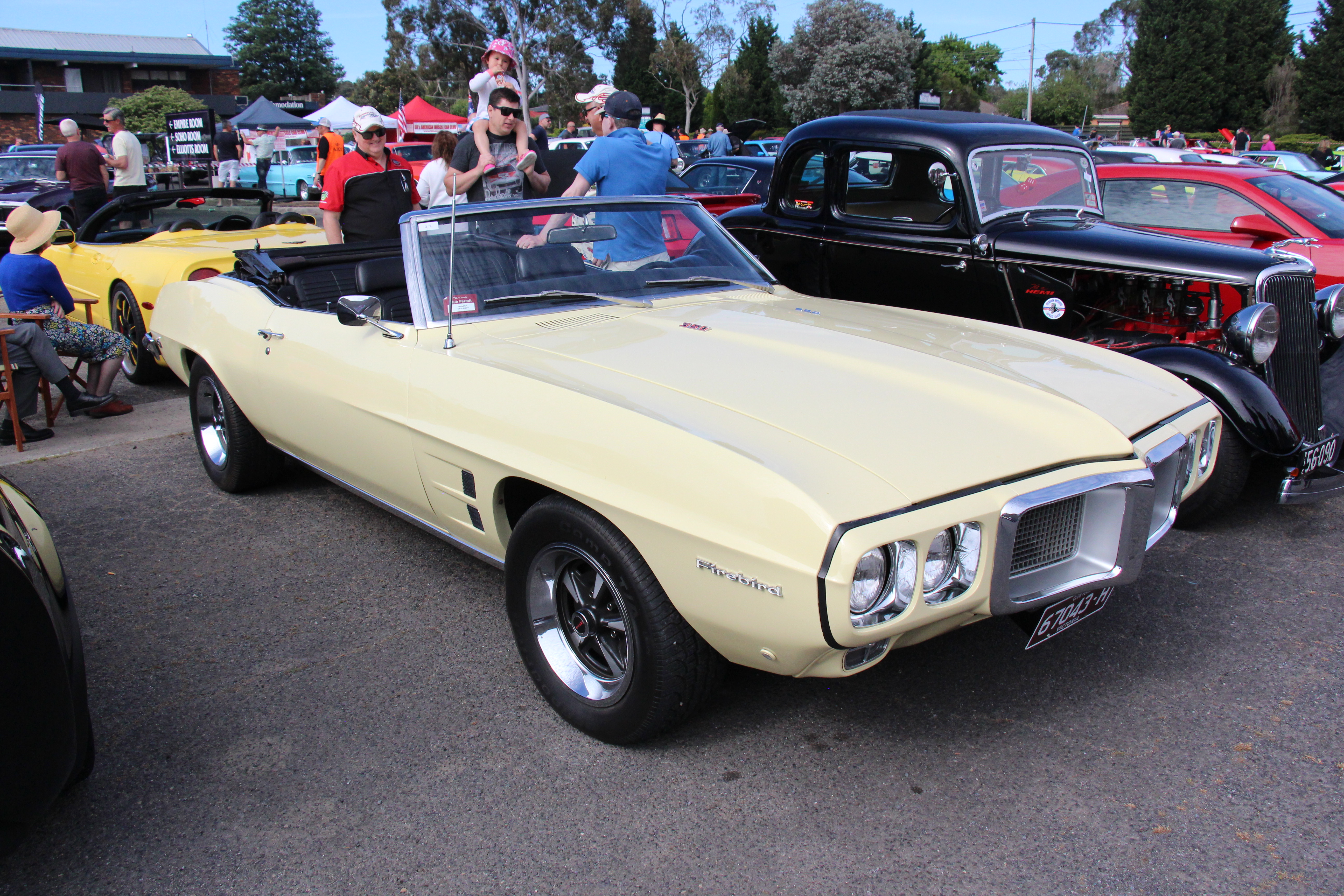
Trans Am
"So my dad, when I grew up, had the Trans Am. Ooh, cool. So he had the Trans Am smoking the band."
The Pontiac Trans Am is a classic American muscle car. It’s known for being loud and powerful, and people often remember them for their style and sound. Here, the speaker is saying his dad owned one when he was growing up.
The Pontiac Trans Am is a famous 1970s American muscle car line known for its V8 power and “street/track” image. In this segment, the host connects it to a personal memory—his dad had one and it was “smoking the band,” emphasizing how it sounded and looked in motion. The mention also sets up a 90s garage vibe by anchoring the story in a classic car.
Automatic
"Automatic. Hell yeah. Yeah, automatic."
“Automatic” means the car changes gears by itself. You don’t have to use a clutch pedal to shift. The speaker is pointing out that his dad’s car was set up this way.
“Automatic” here refers to an automatic transmission, meaning the car shifts gears without the driver using a clutch pedal. In muscle-car context, it’s often noted because many enthusiasts associate performance with manual gearboxes, so an automatic can be a deliberate choice for easier driving. The speaker repeats it to emphasize the dad’s Trans Am setup.
Teetops off
"Took the driver's test in that. Teetops off. Driver's test was the driver's test guy was probably like,"
“Teetops off” means taking off the roof panels so you can drive with the top open. It’s a fun, open-air feeling. The speaker is saying they even took a driving test in that kind of car.
“Teetops off” is slang for removing the roof panels on a car with a removable roof section (commonly a T-top setup). It describes the experience of driving with the roof open, which was a popular styling and fun feature on some 1970s/80s cars. In this segment, it’s tied to taking the driver’s test in the Trans Am.
60s design
"Yeah. [3773.9s] It's got that 60s design. [3777.1s] OK."
They’re describing the car’s look as “from the 1960s.” That usually means classic styling like older shapes and chrome details.
“60s design” refers to styling cues associated with the 1960s—often boxier proportions, chrome-heavy trim, and simpler, more dramatic body shapes. Here it’s used to describe the look of the vehicle being discussed.
drive them on the regs
"You think that these gentlemen and ladies [3801.7s] who have garages of hundreds of cars [3803.8s] get to drive them on the regs?"
They mean “drive them all the time.” The point is that some collectors keep cars mostly for collecting, not for regular driving.
“Drive them on the regs” is slang for using the cars regularly. In collector-car culture, it contrasts with the idea of keeping cars as display pieces that are collected but not driven much.
drive everything to the limit
"Andrew, would you drive the Countache? With any car, my take is drive everything to the limit."
This is an enthusiast mindset that says you should actually use a car the way it was meant to be used. Instead of keeping it perfect and barely driving it, you drive it hard enough to enjoy what it can do.
“Drive everything to the limit” is a car-enthusiast philosophy: use the car as intended and explore its performance rather than treating it as an investment artifact. In the segment, it’s contrasted with the idea of preserving an exotic by putting on minimal miles.
Ferruccio
"Really? Because like Ferruccio, Lamborghini, would be pissed."
Ferruccio Lamborghini was the person who started Lamborghini. The joke is that he’d be upset if you treated a Lamborghini like a museum piece instead of driving it.
Ferruccio Lamborghini (often referenced as “Ferruccio”) was the founder of Lamborghini. Mentioning him in this context signals the idea that Lamborghini’s original intent was to build cars for spirited use, not careful preservation.
built to run
"The thing is, these cars were built to run."
“Built to run” means the car is designed to be used, not just stored. Driving it regularly helps keep the engine and fuel system from getting dirty or clogged.
“Built to run” is the idea that certain older performance cars (especially carbureted, high-compression, or otherwise sensitive engines) are happiest when they’re periodically driven and brought through their operating range. The underlying point is that regular use helps prevent fuel system deposits and combustion-related buildup.
V12
"And if you don't wring out that Italian bowl of a V12, it's going to have carbon buildup."
A V12 is an engine with 12 cylinders arranged in a V shape. More importantly here: the host is saying you need to actually drive it so the engine stays clean instead of building up deposits.
A V12 is an engine with 12 cylinders arranged in a “V” shape, typically producing smooth power and strong high-RPM character. In this segment, the host specifically connects V12 operation to preventing carbon buildup when the engine is used properly.
carbon buildup
"And if you don't wring out that Italian bowl of a V12, it's going to have carbon buildup."
Carbon buildup is gunk that forms inside the engine over time. If you don’t drive the car enough (or don’t get it up to proper operating conditions), that gunk can build up and hurt how well the engine runs.
Carbon buildup refers to deposits that form inside an engine from combustion byproducts, especially when an engine isn’t run hard enough or frequently. These deposits can affect airflow and combustion efficiency, which is why enthusiasts often recommend periodic spirited use for older carbureted setups.
carburetor
"it's going to have carbon buildup. The carburetor's going to get gummed up."
A carburetor is the part that mixes fuel with air so the engine can burn it. If the car sits or isn’t driven, the fuel can leave residue and the carburetor can get clogged or sticky.
A carburetor is a fuel-metering device that mixes air and fuel before it enters the engine, using mechanical settings rather than electronic fuel injection. The host is warning that if you don’t drive a carbureted car enough, fuel can leave deposits and the carburetor can get gummed up.
fear of fucking it up
"I think that it's the fear of fucking it up. I think I'm the kind of person that"
It’s basically the fear of damaging something expensive and rare. If you care a lot about keeping it perfect, you may hesitate to drive it because you don’t want scratches or other problems.
This is the mindset of “collectible preservation,” where the owner’s biggest risk isn’t mechanical failure—it’s cosmetic damage or wear that reduces the car’s specialness. With rare, limited cars, even small incidents (scratches, shipping damage, repairs) can feel like losing value or authenticity.
Request an Explanation
Heard something you'd like explained? We'll add it to this episode.
Sign in to request explanations for terms you heard.
Want to learn more?
Browse our glossary for plain-English explanations of automotive terms, jargon, and concepts.
Help improve this episode
See something that's not quite right? Our annotations are AI-generated and can sometimes miss the mark. Click the flag icon on any annotation to suggest a correction.