158: BMW iX5 Debuts: A 435-Mile Spec Monster Built in the USA
Batteries Included
158: BMW iX5 Debuts: A 435-Mile Spec Monster Built in the USABatteries Included · Jul 3, 2026
Annotations will appear as you listen
0:00
63:43
Car
BMW iX5
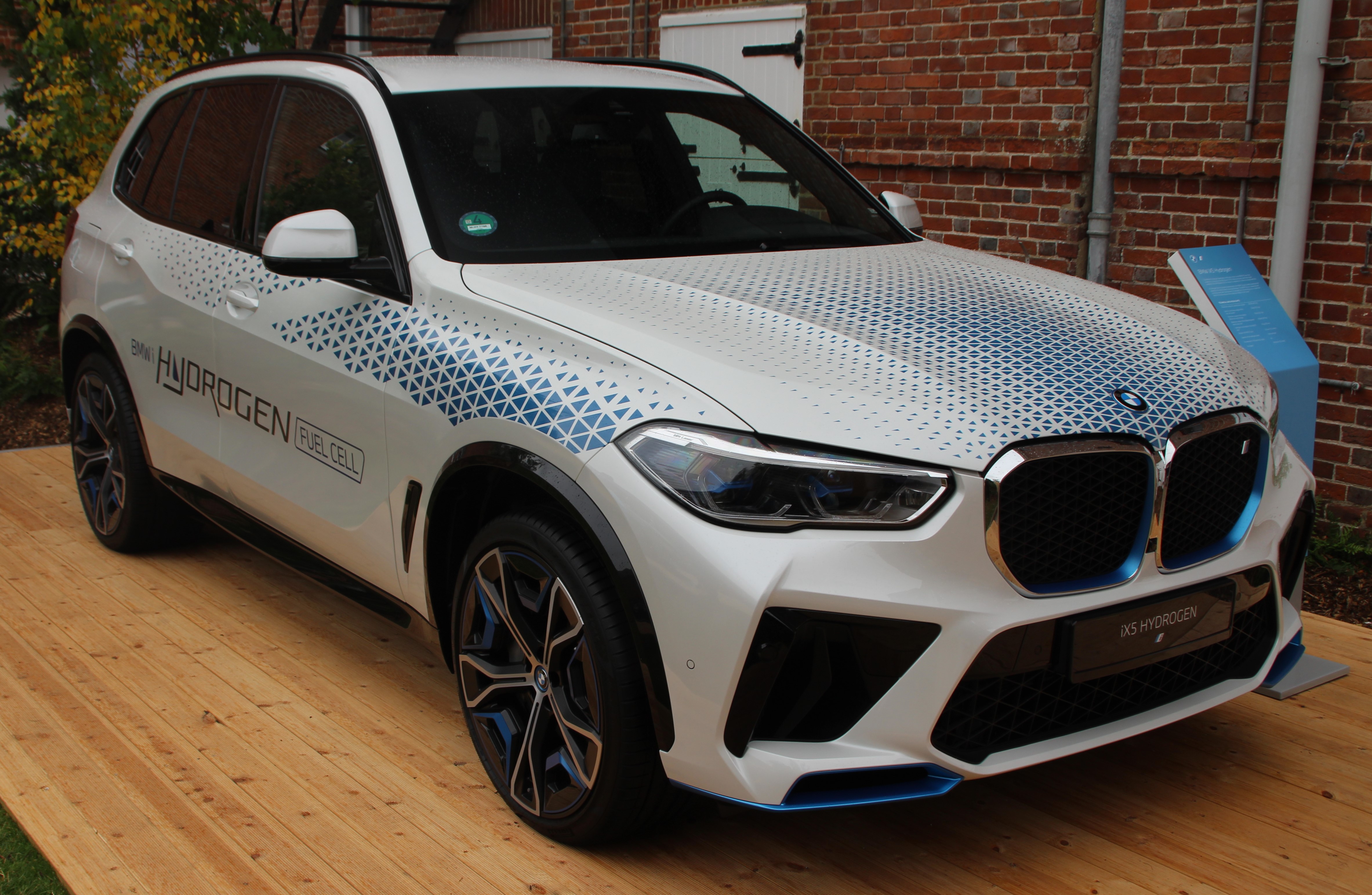
BMW is planning an electric SUV called the iX5. It’s meant to be in the same general category as the regular BMW X5, but powered by electricity instead of a gas engine.
EVChargingStations.com is a website for EV drivers. It reviews charging stations and shares real-world info so you can pick chargers that work well on road trips.
Neue Klasse is BMW’s plan for a newer generation of electric-car design. It’s basically the “new platform” ideas BMW is rolling out to improve how their EVs are built and perform.
Neue Klasse is BMW’s plan for a new generation of electric-car design and building. The podcast is saying that a particular concept or car isn’t exactly the full new plan, but it still points toward it. It matters because the way a car is built can affect things like space and efficiency.
Kilowatt-hours (kWh) measure how much energy is stored in the battery. “Usable” means the part the car can actually use to drive, which helps determine how far it can go.
Car
X-Drive
X-Drive means the car sends power to all four wheels. That can help it grip the road better, especially in rain or snow, and can make acceleration feel stronger.
EPA estimates are the official range numbers you see for cars in the U.S. They come from standardized testing, so different EVs can be compared more fairly.
An 800-volt system is how the car’s electricity is set up. Higher voltage can help the car accept faster charging at compatible fast chargers.
Term
BYD flash charging
BYD flash charging is BYD’s way of doing very fast EV charging. The key idea is that the charger and the car have to be compatible for the fastest recharge speeds.
A battery pack is the full set of EV battery cells, modules, and the electronics that manage them. Its size (capacity) strongly influences range, while its thermal management affects how fast it can charge.
For EVs, “faster charging” means you can add more electricity to the battery in less time. It depends on how strong the charger is and how well the car’s battery can accept that power.
“Neue Klasse” is BMW’s plan for a new generation of electric-car design. It’s the basic “car layout” BMW will use to make future EVs more efficient and easier to build.
The BMW Vision Neue Klasse is a concept car, meaning it’s shown to preview ideas for future BMW electric vehicles. It helps indicate what BMW wants to change or improve in upcoming EVs. The podcast is basically saying it’s a good preview even if it’s not exactly the final production plan.
“Spec sheet battles” means comparing cars using the official numbers—like range and charging speed. It’s basically arguing about who looks better on paper.
CLAR is BMW’s shared “car foundation” that they use for multiple models. Here, it means the EV is built using an existing BMW platform idea, adapted for electric use.
This means the same basic car platform is meant to work with different kinds of powertrains. In this case, BMW is trying to make one platform that can do EVs and other fuel types, but earlier versions had drawbacks for EVs.
DC charging limits are how fast your EV can charge on a fast charger. If the car “tapers off” or can’t pull much power, it takes longer to fill the battery.
This is when an EV gets too hot, especially during hard use like fast charging. When things overheat, the car may slow down charging or reduce power to protect itself.
Term
46 120
They’re referencing a specific battery spec number for the car. It’s meant to tell you something concrete about the battery setup, not just general EV talk.
Term
sell to pack, pack to body
This is about how the battery is built and installed. Cells go into a battery pack, and then that pack is designed to fit into the car’s structure as a whole.
One-pedal drive means you can slow down mostly by lifting your foot off the accelerator. The car uses the electric motor to slow you down and recharge the battery at the same time.
A front trunk is extra storage in the front of the car. Since EVs don’t need an engine in that spot, there’s room for luggage—but here it’s smaller than you might want.
This is the charging speed number. More kilowatts usually means you can add energy faster, but only if the car and the charger can handle it.
Term
Naxx
This sounds like a specific charging network or setup the host is using as a reference. They’re basically asking what charging speed you can get there.
These are Tesla fast chargers designed to be extremely powerful. But the podcast notes that non-Tesla cars may not be allowed to pull the full rated power.
Amps are how much electricity is flowing. If there’s a limit on amps, the car can’t charge as fast as the charger’s maximum power rating might suggest.
This is a higher current limit for charging. If the car can handle it, more current can mean faster charging.
Term
10 to 80 in 22 minutes
This is a common charging test: start at 10% battery and charge up to 80%. The time tells you how long it takes to add a lot of usable energy, not just a full battery.
This means the fastest charger available for that setup. Your actual charging time can still be slower if the battery can’t accept full power or if the station is limited.
Term
charger can just sit flat out
They mean the car can keep charging at a strong rate for longer. Instead of slowing down right away, it should stay efficient for more of the charging session.
The Dodge Charger is a performance car that’s built for quick driving and strong power. The podcast talks about a charging feature that can keep working at a high level for longer. That matters because it can reduce how long you spend at a charger.
EPA range is the official mileage number EVs are tested to. Your real-world range can be higher or lower depending on how you drive and the conditions.
The Rivian R1S is another electric SUV. They’re using it as a comparison point to argue the BMW iX5 should be more efficient and go farther for the same kind of battery size.
Term
EESM
EESM is the name for the electric drive hardware at the back of the car. It’s part of what helps the EV move efficiently and smoothly.
Term
point to point level two autonomy
This is a type of semi-automated driving. The car can help steer and control speed, but you still have to pay attention and be ready to take over.
An over-the-air update is like updating your phone, but for the car. It lets the automaker add or improve features wirelessly after you buy the vehicle.
Bidirectional charging means the car can not only charge from the wall—it can also send electricity back out. That can be useful for things like backup power at home.
An inverter is a device that converts the car’s battery power into the type of electricity your home uses. It’s often required for the car to act like backup power.
The Tesla Model 3 is an electric car that’s designed for everyday driving. The podcast mentions it because it became a standard that other electric cars are compared against. It’s a big deal because it helped make EVs more common and practical.
Driver assistance is technology that helps you drive—like keeping the car in lane or controlling speed. The host thinks BMW still needs to make it better so the car can do more of the work.
L2 means the car can do some driving tasks like steering and speed, but you still have to watch and be ready to take over. “Point to point” suggests it’s meant to help with the whole trip from one place to another, not just a small part of it.
This is a feature that keeps the car’s heating or A/C running while you’re away. The host thinks the time limit is annoying and that it should instead stop based on how much battery is left.
Dog mode is a special setting for keeping the cabin comfortable for your dog while you’re away. The host is saying BMW doesn’t have this kind of feature, which could affect whether people choose the car.
Pet mode is a setting that helps keep the cabin comfortable for a dog while the car is parked. The host says it matters because it makes it easier and more reliable than a simple fixed timer.
This is BMW’s electric take on the X5. The big point here is that it’s meant to go a long distance on a charge, which is supposed to make it easier to choose over the gas version.
Term
Gen 6 tech
“Gen 6 tech” means BMW’s sixth generation of a particular technology. The point is that BMW is building this newer tech in the US, and that could affect how competitive the cars are.
This means BMW’s plan for how it will sell and build cars in the US and Canada. The hosts are asking whether making the new tech in the US really matters for BMW’s future there.
The X3 is another BMW SUV. The hosts mention it because it briefly became the top seller in the US, showing how important it is for BMW to keep the X5 relevant.
A powertrain is what makes the car move. It includes the engine or electric motors and the parts that send that power to the wheels.
Term
B58
B58 is BMW’s name for a specific type of gas engine (an inline-six). The hosts use it as the comparison point for what you’d otherwise buy instead of the electric version.
A mild hybrid is a hybrid system where the electric motor assists the engine but typically cannot drive the car on electricity alone for long distances. The segment groups the lineup as starting with mild hybrid, then moving to plug-in hybrid and up.
Lease deals are agreements to drive a car for a period of time with monthly payments. The hosts are saying the lease cost could make the electric version a better deal.
A range test is how far an electric car can go on one battery charge. They’re talking about testing it at a steady highway speed to estimate real driving range.
They bring up the Porsche Cayenne as a benchmark for how much you might pay for a similarly equipped SUV. The takeaway is that some non-EV options can be much more expensive.
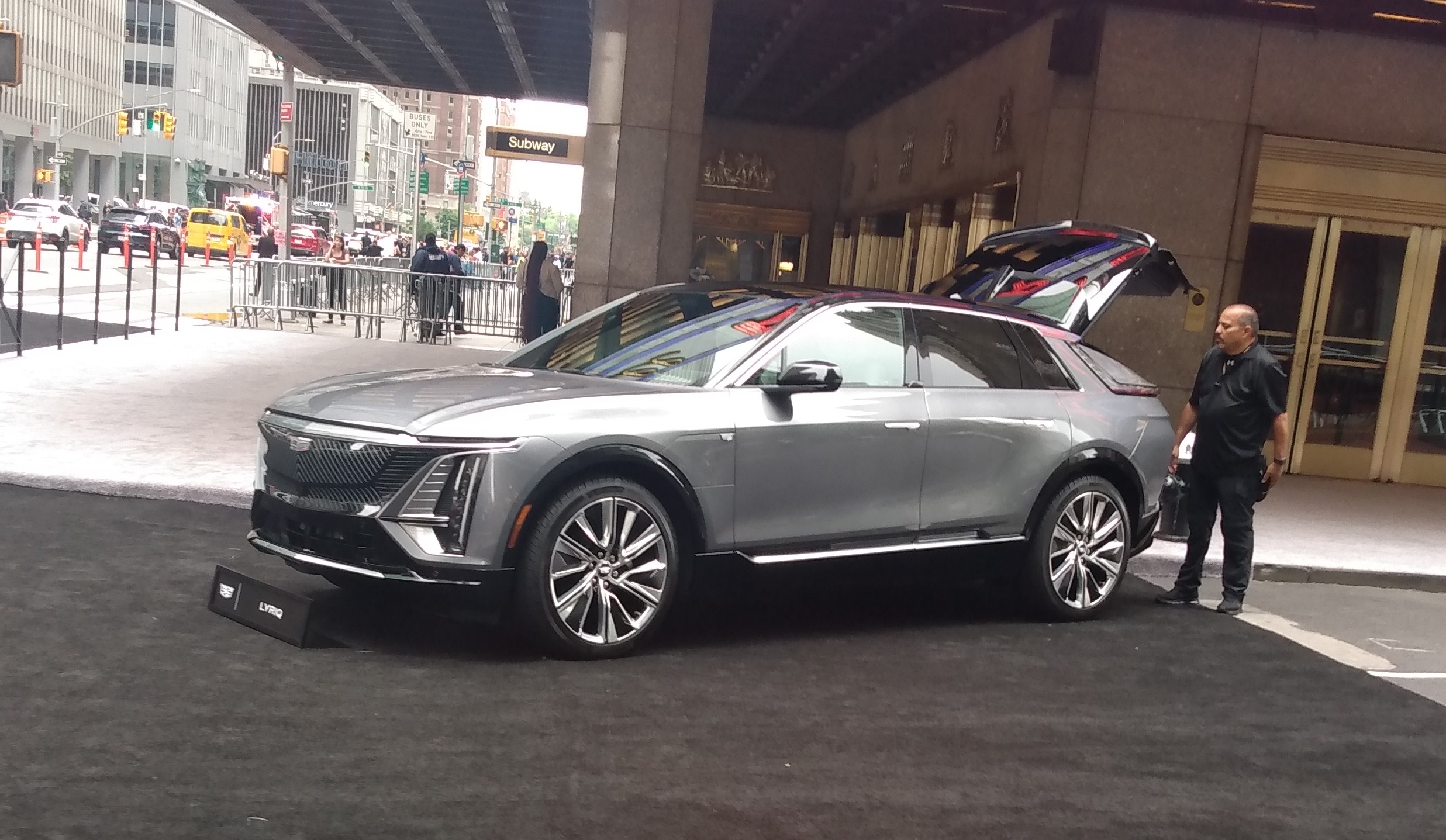
The Cadillac Lyriq is an electric SUV made by Cadillac. The podcast mentions it in the context of other electric vehicles from the same general group and talks about options like how many rows of seats it can have. It’s relevant because it’s one of Cadillac’s EV models for everyday use.
Vehicle-to-home means the EV can send electricity back to your house. The idea is useful for backup power, but it can be complicated because it depends on your utility setup and compatible gear.
Term
structures leases
Lease structuring is how the monthly lease price is calculated and packaged. The host’s point is that if the lease payment is too much higher than a similar gas SUV, people won’t choose it.
“Delta” here just means the difference in price between two options. They’re saying the electric version costs about $10,000 more, which can be hard to justify.
Residual value is what the lease company expects the car will be worth when the lease ends. If they expect it to be worth more, your lease payment is often lower.
An autonomous driving suite is the package of software that helps a car drive itself in certain situations. It’s more than one feature—it's the whole system working together.
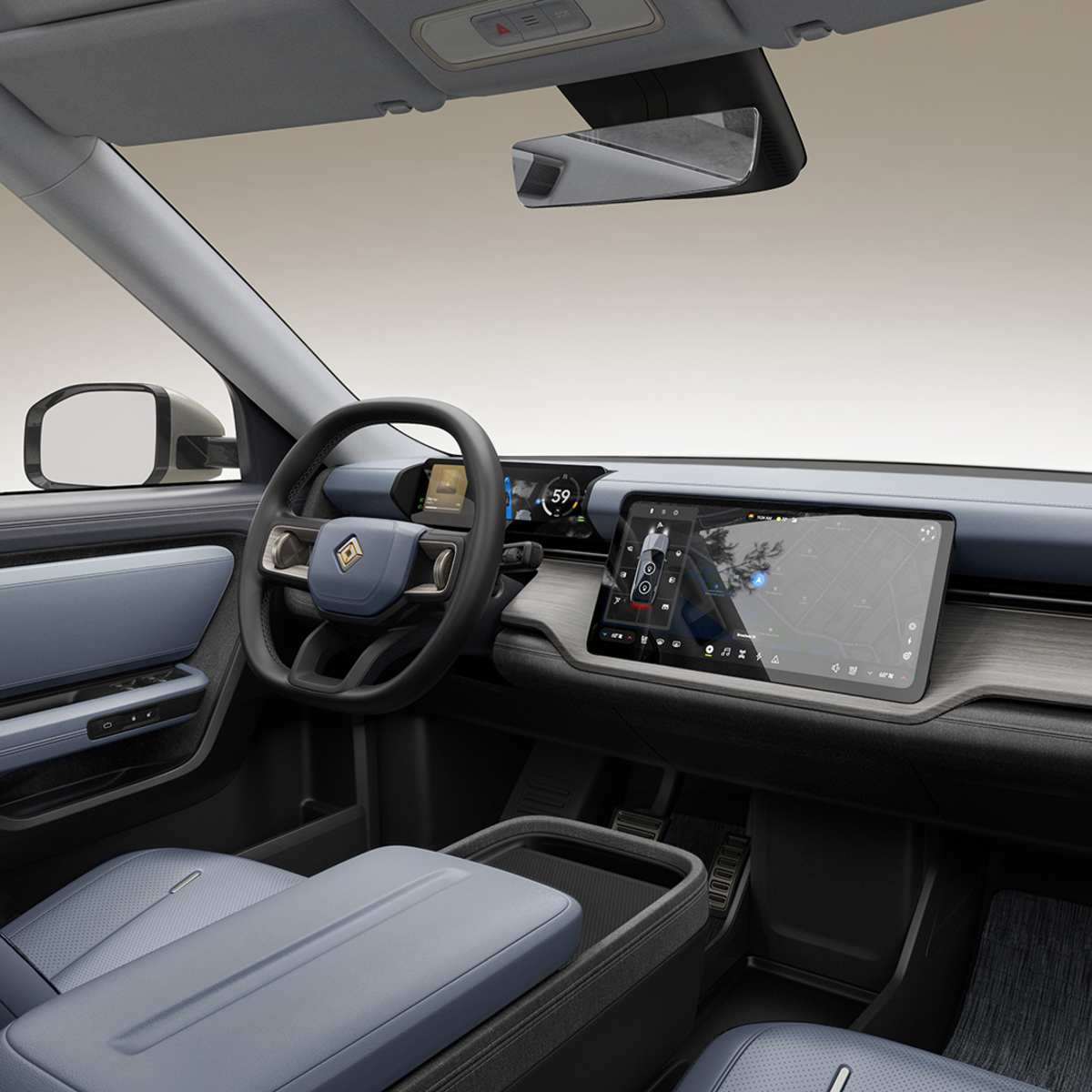
The Rivian R2 is an all-electric Rivian vehicle. They’re using it as the subject for early tests to see how much range it gets and how well it charges.
Charging tests are when you check how fast and how smoothly an EV charges in practice. It’s not just “does it charge,” but “how well does it charge over time.”
They did the EV testing near Colorado Springs. Where you test matters because driving conditions like altitude and roads can change how much range you get.
Recuperation is how an EV “gets some energy back” when you slow down. When you brake or coast, the car uses that motion to help recharge the battery instead of wasting it.
All-season tires are made to work reasonably well in many weather conditions. On an EV, they can sometimes help the car go farther because they may create less drag than more rugged tires.
This is the official EPA estimate of how far the EV should go in a mixed driving scenario. Real driving can be better or worse depending on things like hills, wind, and how fast you drive.
It’s the EV’s advertised “how far it should go” number when you drive mostly on highways. In real life, cold weather or heavy heating can make the car use more energy, so you may not hit that number.
Autonomy Plus is the car’s “hands-off-ish” driving assistance mode. It can handle more than normal cruise control, but it may still have limits—like not doing lane changes the way you expect.
BlueCruise is Ford’s advanced driver-assistance system. It can help with steering and driving on certain roads, and the host is saying it does lane changes more effectively than the system they were testing.
Super Cruise is GM’s advanced driving-assist feature that can steer and manage parts of driving on supported roads. The host is comparing it to Autonomy Plus, saying Super Cruise can handle lane changes more automatically.
This is a test where you charge the battery from 10% up to 80%. Charging usually speeds up in the middle and slows down near the top, so this window helps compare how the car behaves.
This is a test where you measure charging from 0% all the way to 100%. EVs usually charge quickly at first and then slow down a lot as they get near full.
The charging curve is basically how fast the car charges at different battery percentages. Mapping it helps you see where the car charges quickly and where it slows down.
Derating means the car “turns down” power to protect itself, like slowing charging if the battery is too hot or needs protection. The host is saying their test didn’t show that kind of slowdown.
Amperage is basically how much electricity is flowing during charging. More amps can mean faster charging, but only if the car and charger can handle it safely.
Adapters are the pieces that let you plug your EV into a charger with a different plug type. They also need to be rated for the high charging current, otherwise they can get too hot.
DC fast chargers are the high-speed EV chargers you use to add a lot of range quickly. They work by sending high-power electricity directly to the battery system.
ABB makes EV fast-chargers. In this segment, the host points out that the ABB A400 chargers can deliver different maximum charging speeds depending on which plug you use.
Company
Alpatronics HYC 400s
Alpatronics makes the HYC 400 fast chargers. The host says these can deliver very high charging current through both major plug types, which affects how fast you can charge.
Company
IANA network
The IANA network is a set of EV charging stations. The host says it has chargers capable of delivering the high current they wanted for testing.
Company
Walmart network
This refers to the EV charging stations associated with Walmart. The host mentions it because those stations are the only ones close enough for their testing.
CCS1 is another common EV fast-charging plug standard in North America. Some chargers can deliver more power through one plug than the other, which changes how fast you charge.
“Boost” means the adapter can handle a higher charging current only briefly. If you try to charge longer at that level, it may not be able to keep up safely.
Continuous load is the safe, long-duration charging limit for a part. If a part is only rated for short bursts, it may not be safe for a full charging session.
LIVE
What's going on, everyone? It's Bluff here, and you know what's more American than America's 250th birthday?
Supporting American-owned companies like SpinQuest, America's number one social casino with over 1,000 games like LiveDealer, Blackjack and Craps.
They're offering new users a $30 coin package for just $10.
Go to spinquest.com and sign up today.
SpinQuest is a free to play social casino.
Boyd, we're prohibited. Visit spinquest.com for more details.
Hey, everybody. Lady Luck here, and we're celebrating America's 250th birthday.
Now, all summer long, I'm going to be celebrating by playing on spinquest.com, which is an American-owned social casino.
It obviously features over 1,000 slot games and Live Blackjack, Live Craps, Live Bubble Craps.
Head on over to spinquest.com. Get yourself a $30 coin pack for just $10.
SpinQuest is a free to play social casino. Boyd, we're prohibited. Visit spinquest.com for more details.
Hello, and welcome to the Batteries Included podcast. It's Friday, July 3rd, episode 146.
I know you're keeping count. Today, the reveal of the BMW iX5, Polestar gets booted out of the US,
and Tesla's Model YL looks set to launch, and of course, much, much more.
I'm Mark Inleaf, maybe in news daily. Joining us in a moment should be the vivacious Mr. Tom Logany,
host of State of Charge on YouTube and EVChargingStations.com.
Online, Kyle Connor is with us today from the majestic, practically palatial podcasting halls of OuterSpec studios right now.
And Dominic, your only longtime EV journalist and host of YouTube's Drive Electro with Dominic. Let's get into it.
The Batteries Included podcast is sponsored by EVChargingStations.com.
If you drive an electric vehicle or you're planning to, this site is packed with comprehensive charger reviews,
detailed DC fast charging graphs, and the latest news from all of the fast charging networks.
You'll find real world testing, easy to understand comparison, and deep dives into how different electric vehicles actually charge.
Before you buy an EV charger or plan your next road trip, make sure to bookmark EVChargingStations.com and make smarter charging decisions.
Alright, welcome along to another show another week. We just missed out by, it was almost minutes last week,
or set a couple of hours of the Polestar news with the US, and we'll get into that in a moment.
But first of all, really important car for BMW, and that's the IX5 slash X5,
because this is going to come in many different flavors built in the US.
It's the fifth generation, midsize SAV, sports activity vehicle in the South Carolina.
It's going to be built there at Spartanburg, first introduced over 25 years ago to the US.
And this isn't pure Neue Classe, this is the existing architecture with a Neue Classe topping, if you like.
A nice polish on top, some tech inside, some 46 120 cells, but they're going to go multiple powertrains on this.
How big is the battery? Really big, 144 kilowatt hours usable US, 141 net in Europe for some reason.
Up to 435 miles on that, I think we're talking EPA estimates on that, all-wheel drive, X-Drive motor,
I think comes with 425 kilowatts, that's 578 horsepower, sub five seconds, 0-60, 800-volt architecture,
and it charges really quickly, 460 kilowatts.
So now we're in the territory of, now you can't find the charges that will match the car.
And it's okay, it's all chicken and egg, and there's going to be a time when the charges will be quicker,
and if you're charging on the BYD flash charging stuff in Europe, then you haven't got a car that will match it.
So there's always going to be one ahead of the other, but 460 kilowatts DC fast charging is so fast,
but you need it with a battery that big.
And Kyle, you spent a good long time having a look around this, not just the IX-5, like I say, but we'll focus on that here.
So what did you reckon?
Yeah, I think it's awesome, man. BMW really killed it with this thing.
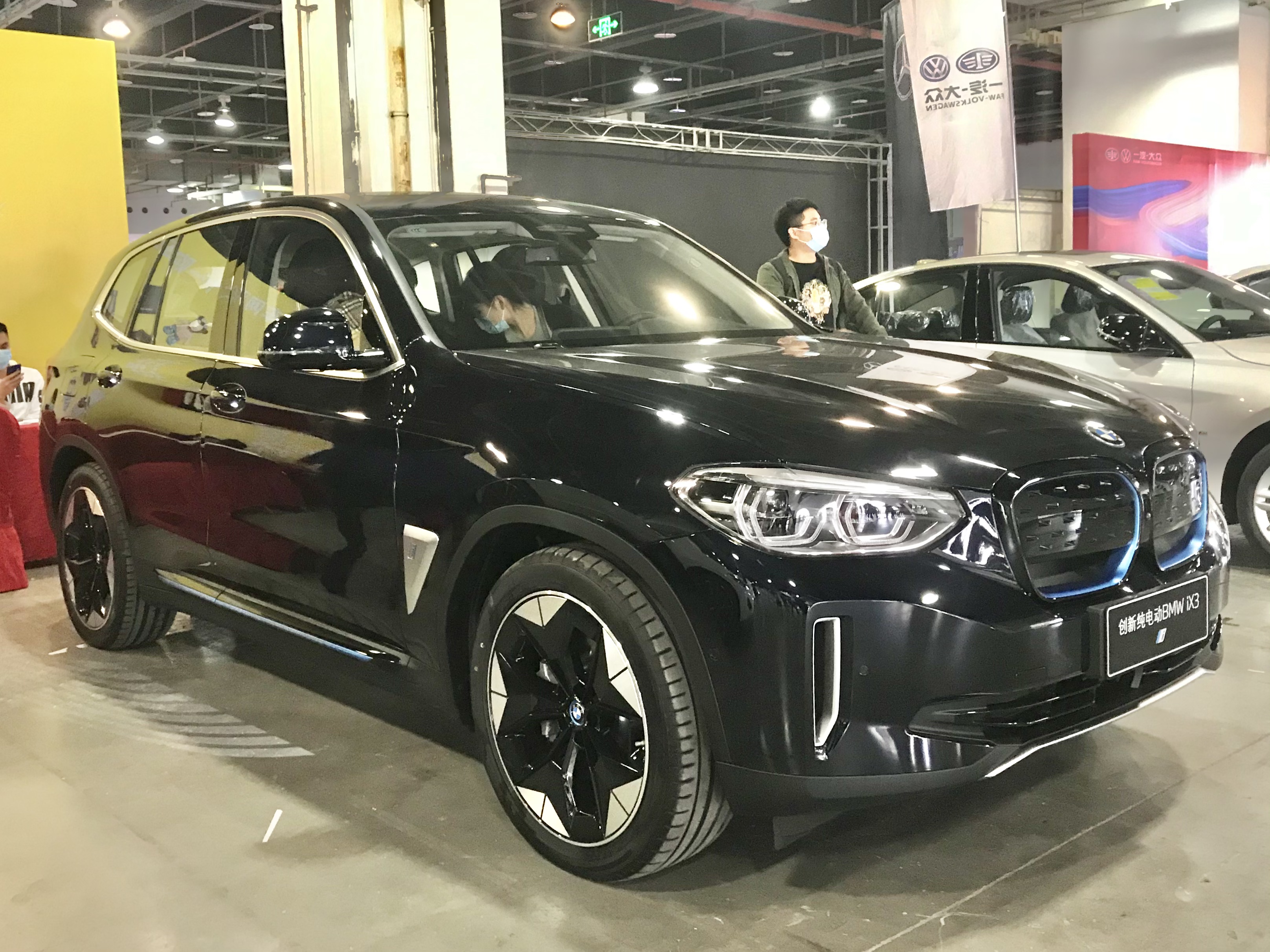
We thought the same thing with the IX-3, and so you basically take the IX-3 and dial it up in every dimension,
including EV specs, and yeah, this thing seems awesome.
What seems most impressive is it's a $80,000 starting price.
If we go by anything BMW has been doing recently, you don't really need that many options,
come standard air suspension, lane centering, stuff like that.
Let's just say it's $90,000 with some options.
Under 100 gets you a wonderful one, and it's going up against cars like the Cayenne.
This has 60 kilowatt faster charging, has a bigger battery pack, significantly more range than that vehicle,
for a significantly less expensive price.
That's a pretty big deal.
It may not have the Porsche driving dynamics, but this is going to have some amazing driving dynamics.
It'll just have that new BMW character, and I'm really excited about it.
I think this is certainly on my shortlist.
Compared to anything we have in the US, really will be the Smackdown SUV in terms of road tripping time.
I know not everyone road trips, but I think you buy an SUV to be the one car solution,
sort of your family holler, do everything.
X5s have always been that for many people, and here's the electric one, which is no compromise over the combustion one.
I'd said at the beginning it's not pure Neue Klasse, but it's plenty.
It's plenty good enough.
It wins the spec sheet battles in so many ways, even though they've had to make some compromises for the multiple difference.
There's going to be a hybrid, and I don't know if everyone gets it.
But I think it is your Neue Klasse, isn't it, Martin?
Well, it's CLAR platform.
Okay, so it is an adaptation of before.
Yeah, rather than being completely ground up, which is like the IX3 and the I3,
but I'm not sure how much it matters though.
I left a comment on the video.
When you first published the video, and I was on YouTube at the time, and it came up within a few minutes.
I was like, oh, BMW smashing out of the park with Neue Klasse platform.
It's awesome.
And then I came back to it a day later.
I'm like, I need to check that.
I actually deleted the comment.
I could have edited it and said, I'm an idiot.
I got it wrong because I was really surprised that it's not pure.
And then I'm like, who cares, right?
Just us here nitpicking.
But I presume from your end, you didn't get any sense that this is a combustion car that's been wedged into an EV.
Well, I guess the biggest thing is in the past, BMW has said we've made our platforms multi energy source and the EVs were well done, but only to a certain extent.
They had DC charging limits, overheating problems.
The list goes on.
We've all spent a lot of time with I5, I7 of that previous generation.
And this, while it may not be Neue Klasse on paper, you know, where it's using the previous generation architecture, it has all the Neue Klasse stuff.
Yeah, right.
It's got the 46 120.
It's got the big can.
It's sell to pack, pack to body.
It's got all the new iDrive X situation in there with everything you would expect.
It's got, you know, only just a handful of ECUs.
It's got the super smooth one pedal drive from IX3.
I mean, I don't know what you would be missing out in this that IX3 doesn't have.
So yeah, it's got a front trunk, a small one.
So have a look.
That's probably the only point of compromise with this vehicle is the small front trunk.
But in general, like, you know, this is a platform that has to house gas, diesel, plug in hybrid, electric and hydrogen.
And the electric one feels purpose built.
It does not feel too compromised.
Yeah.
Whereas I think before not just compliance cars, but even when some of the car companies gave it a shot, there was always some trade-offs.
But they often did it pretty well.
This does seem like it's just going to win, you know, so many, so many ticks.
So where can where can we charge this in the U.S. that gets even reasonably close to 460 kilowatts?
What's the best you've got at the minute if you plug this into Naxx?
Yeah, the best you'll get is 400 kilowatts.
OK, it's not bad.
No.
And they're pretty common.
You can pretty much go on any road trip now, especially on the coast, mostly the East Coast, actually, and get 400 kilowatt charging wherever you go.
There are 500 kilowatt V4 superchargers, but Tesla currently does not deliver more than 500 amps to non-Tesla vehicles.
So you would not get 460 kilowatts on this.
And the Alpetronic split system is going to start becoming prolific in the U.S. within the next one year.
And then we're going to start to see, yeah, stations popping up everywhere that will be able to max this car out.
Yeah, on YouTube, the Norwegian Björn Nuland, a famous EV tester, has had a trio of X-Punks recently.
And he's been, I think he'd been trying to find the neochargers.
There's a couple of them.
And there's some that will go to 600 amps just and then he's getting his 400 and 400 and 5 kilowatts on the X9, which is the big MPV, the six seater and stuff like that.
So even in Norway, it's not like you can immediately plug in and just max out these cars.
I'm not sure what those X-Punks max out at.
This is 10 to 80 in 22 minutes.
Assuming you're using a max power charger.
I would assume 10 to 80 on a 400 kilowatt charger is going to add two to three minutes.
And no one can.
No, it won't make a real usable difference.
The big news is that charger can just sit flat out for longer.
And that's really exciting.
I mean, at the end of the day, most people are going to charge this at home and daily drive it.
But X5 do go on trips.
I see them all the time with families going on a road trip and you just will not have to think about it.
That's the nice thing about having this much range, this much charging, you can choose to stop where you want.
You have a huge battery to get you a big distance.
My guess is close to 500 miles at reasonable speed.
BMWs always go farther than EPA range rating in our market.
Keep in mind this has the same battery capacity as a Rivian Max pack and R1S.
And this is surely going to be much more efficient than an R1S just in terms of shape and motor design.
It uses an EESM on the rear.
So I think it's going to be a really awesome distance car.
But ultimately that just means it's just going to be a great car because it's going to have a wonderful interior.
It's going to have great tech and point to point level two autonomy will come through an over the air update.
The automaker says, I believe it when I see it.
Yeah, yeah, yeah.
Talking of, I believe when I see it.
Again, one of these ones on the spec sheet that says comes with bidirectional charging.
What does that mean in BMW's case?
Well, BMW is kind of interesting because they can do AC and DC bidirectional charging.
They offer all solutions that you can put an inverter in your house.
You can put a backup plug in there.
However you want to do it, this should integrate.
We have not seen that really work in our market yet because IX3 hasn't launched here.
We'll know so much more about how they're tuning these cars for the U.S. market in September when IX3 hits.
And we can start to play around with all of their ancillary stuff.
All I can say is if you've been ignoring BMW over the last four years of EV development, they made good cars.
Nothing extraordinary from an electric standpoint.
They have skipped an entire generation and they are here ready to dominate the market.
The three series used to be the benchmark car until the Model 3 came out.
And now I think BMW is going to regain the benchmark status.
If they can fix a couple things in my opinion, the first would be really has to work, have to work on driver assistance.
They have the highway driver assistance nailed.
But clearly you can go, I always talk about it on every show, but it's true.
You can buy a competitor vehicle that pretty much drives itself from A to B and this doesn't.
BMW should be a technical leadership along with the other brands and they're falling behind with driver assistance.
They have plans to get there.
Whether or not this vehicle will get there will be a big question, but it has the hardware to support L2 point to point.
The next thing, which seems very basic, but again, it's a big thing for a lot of our viewers and myself included.
There's only one climate option when you park the car and it's to keep climate running for 30 minutes,
which is stupid because it should just have a keep climate until the battery is at 20% or 10% or whatever.
And it needs a pet mode, a dog mode.
This does not have something like that, which is a real purchase differentiator for myself and a lot of my friends.
That's, yeah, kind of harks back to such a long time ago when, you know, keep climate on was the only option and it was timed.
And so if you're away from the car, you then got to open, you got to remember to open the app after half an hour and start again.
It shouldn't. Yeah, it's.
Yeah.
So Tom, welcome to the show. Good morning. afternoon. Good evening.
Tom, I know that you've been watching a lot of the I5 content, but also, you know, this is critical.
Oh, how critical I should ask is it for BMW's long term North American strategy building this Gen 6 tech in the US?
Is that, is that important?
Well, the X5 is BMW's best selling vehicle in the US until I think it got beat out by the X3 last year by a few hundred units.
But until before then, it's pretty much, you know, been the top seller.
I think they do like over 70,000 in the last couple of years at least units per year.
So that's that's a big deal, I think.
And then so, of course, they won't be selling 70,000 electric IX5s next year.
So it's pretty important that they have, you know, the powertrain to, you know, to sell to the customers, you know, who want to, they want the combustion engine.
They want a hybrid. They can sell them that.
Kyle also mentioned the hydrogen situation, which was kind of interesting.
Actually, Kyle, in your video at the very end, you show a little bit of the hydrogen arrangement, how they've done the tanks and they've stuck them inside the battery tank, which in the battery pack, which I thought was pretty cool actually.
I don't really think, I think they're wasting a lot of money messing around with hydrogen, but I guess it's theirs to do that.
I think just right now, with everything else going on, with trying to compete with China and get everything else, you know, up to that level of competency and features, I just don't understand why they're spending money on hydrogen, but that's their decision to make, I guess.
But yeah, so they need to, you know, keep on selling these, but it's going to be interesting to see how it does against, I'm not sure who is, whose competitors are right up top of my head.
I'm sure, you know, Mercedes and there's, you know, some in Cadillac, there's some product up there that's pitched against this, but I think really it's biggest competitor might be itself, right?
So this starts at 80. I think Kyle, the gas version starts at 70.
Yeah, it's 10 grand more than the, basically it's, it's like just under 10 grand more than the all wheel drive, you know, B58 powered gas engine one.
They're all mild hybrids, by the way, so they start at mild hybrid, go plug in hybrid and up, but, but you just get so much power and so much functionality with the electric one that it's going to be, especially if there's some lease deals or certain state incentives, it might actually be cheaper to get the electric one.
We'll have to see how that plays out, but it's going to be really interesting to look at the sales mix because if there was ever a car to have, you know, sort of convince someone to go for the electric one versus the gas one, this makes the best case for the electric offering out of anything before it, I think.
I think it's going to come with a standard equipment compared to the gas version.
Yeah, you do get quite a bit more standard equipment and just think about the power and the ease of using this thing. I really think people are going to go for the electric X five because they can hear, you know, they'll hear 435 miles.
That sounds like quite a bit. It's less than gravity. escalate IQ, but this is probably a 470 mile range car would be my guess.
That's looking forward to the range test in a 70 mile per hour test. I think it's going 450 plus just a guess. I don't know. Right. It could be hugely inefficient. I doubt it.
BMWs are always surprisingly efficient even on their shared platforms. I really think the range topic is not a problem anymore. The recharging time and topics not a problem anymore. And the price is right.
I mean, we were all impressed with the I X three price. I specced one out yesterday. I X three starts at basically six grand. I specced one for like a normal daily driver. It was like 67,000.
So $7,000 in options, just over 10%. That's not bad for the Germans. So if you take that same logic here, you're going to be right around 90 grand for a nice X five with everything you can imagine.
It's going to be like, okay, if you don't need the third row, do you go for gravity or do you go for I X five? Or are you going to go Cayenne and spend potentially twice as much money for similar equipment?
Then you can look at the GM stuff. I mean, you're looking at Lyric or Vistik, depending on two or three rows, significantly slower charging. A main competitor, of course, is going to be Rivian.
Actually, Scott and I have been having this conversation because we're like, okay, this could really be a good next car for us. Maybe we wait for I X seven. But the lack of dog mode is the real deal breaker for her.
However, the fact that this has twice more than twice as fast charging as her Rivian is a real draw factor. We even though we don't end up road tripping the R one s a lot.
We do like a lot of extra miles and we find ourselves places and we need quick top ups and having a 20 minute 10 to 80 versus a 40 minute 10 to 80 is a major piece of mind lifestyle change.
And I think it's pretty cool. I really think they nailed this thing from from the quality of the materials to okay, the design maybe isn't beautiful, but I wouldn't say it's as ugly as other BMWs in the past.
It's they really did a great job on this car. And also when you're spending this much money and in this segment of car, you just want a car that's capable of doing it even if you never use it.
Like that's just so important and not to win the battle of the bragging in the golf course changing rooms, but just so that you feel that you've got a lot for your money and that it's a lot of money, but you've got a lot for your money and you may never need 460 kilowatts DC fast charging, but it can do it if you want it.
And that I think it's really important with a you know, for a vehicle like this, the whole vehicle to home or grid is it's so many of the carmakers are still really wooly around.
Well, it's because they haven't got a turnkey solution. Yeah, because there's so many utilities and so many solutions.
But you just kind of want to know that it could do it if I wanted to do it really important that Tom before we move on welcome to the podcast. We're talking IX five. What are your thoughts on this?
So, you know, agree with most of what Kyle has said.
That it's less ugly.
I like that compliment. Yeah.
So the big thing to me as far as how well it's going to be received here.
And Kyle also touched on this was on how BMW structures leases because that $10,000 delta.
To me is a lot. I've always looked at the different pricing for whenever automakers have the same vehicle available in a combustion vehicle and an electric version and they're sitting on the floor next to each other.
And people walk around and look at the sticker price and they're like, OK, you know, 75,000 on this one, they go to the next one, 85,000 and basically the option option doubt the same.
It's always a hard sell if the person is going to buy it. But a lot of people lease today and even the people that buy them frequently will finance them.
So how BMW structures lease deals in particular, I think it's going to make or break the vehicle if it's going to be a hundred hours more a month than a comparably priced combustion X five. It's dead in the water.
No one's going to buy them.
You know, this this price range of the SUVs, the electric electric SUVs, the 80 to $100,000 price range has proven not to be a good place to be for any motor maker.
Nobody sold a lot of them. I mean, Rivian as good as the R1S is. They're topping out. It's been available for four years now.
The most they've ever sold is 23000 and 700 or something like that in a year. They're hovering just above the 20000 unit mark, which is not great.
You know, and Tesla just continued the X because and that's a great vehicle. I mean, the the Model X, I know it was getting a little long in the tooth, but even today, it's a great electric vehicle.
And they couldn't sell more than a few thousand of them. So it all depends on how BMW structures this the leases. If they don't give it any type of favorable, you know, money factor and don't play play around a little bit with the residual value.
These these these are going to nobody's going to buy them. And it's a shame because I think it's a great vehicle.
You know, it's in a price. It's in a tough price category. And you know, if they don't make it look appealing to the customer, they have this other version right there that people are used to that they're familiar with.
They don't have to learn how to charge. You don't have to worry about refueling times. They know it's just a couple of minutes and they can do it anywhere they want really quickly.
And, you know, so that to me, that's going to be the big factor on whether or not this is, you know, moves or not. If BMW has to make the leases look similar to the combustion X5, if they do, then yeah, I think I think it'll do well because it's the complete package.
And I don't I don't think personally, I think it looks good. I know I've read a lot of comments of people not really thrilled with with the appearance.
But I think it looks good. And man, did they pack the tech in here and charging and range and everything BMW. I always knew this and being in BMW's early EV program, their engineers and their electric vehicle division, their team, they got it.
They knew from the beginning what they needed to do. And I always had confidence that once they got really serious with their electric vehicle program that they would nail it and they're proving that they can, you know, they're they can make world class electric vehicles.
So we'll see. Yeah.
All right.
Well, we can move on.
Before we do that, I just wanted to.
So just to address the autonomous driving thing for a second. So BMW signed a deal with Momenta, which is autonomous driving one of the best systems in the world.
Last year in 2025 for in China for China, I think is what they were saying. But Kyle, have you heard anything about them bringing this moment to autonomous driving suite to Europe at least or
Hmm. Okay.
Yeah.
It seems like a bit of a miss.
Does it have the relationship and you know, they don't understand the importance of the technology.
Careful with careful with what you put in the car. If it's if it's been through China, just just saying true. I don't know.
I don't know what that gives. It gives gives me that uneasy feeling at the moment. We'll get onto that in a moment.
Let's, you know, let's talk about charging because it's probably one of the only sticks with which you can hit the Rivian R2.
And I'm not even that bothered because like you say, a few minutes here, there, but it's it's valid.
You know, I can go and spend 45 grand here and get the newly updated X punk G six.
That's a 45 grand car.
That's got 460 kilowatt DC fast charging.
If that's all you care about, but the Rivian R2 is so much more and Tom, you have been doing just your first charge tests and some first range tests.
And those videos aren't out yet.
So people don't need to wonder why they haven't seen them, but we can begin to talk about it.
Where do you want to start Tom?
We'll start with the range test.
And I actually might have that out by the time our show posts.
So I'm working hard to get that going now.
So, yeah, a follower of mine, Brian Yoon lives in Colorado, offered me his R2.
He took delivery just a couple of weeks ago, one of the first deliveries and said, look, I'm out here.
I love what you do.
And, you know, the vehicle is yours if you want to come out and do whatever you want with it.
Drive it, range test it, charge it, which is incredible for somebody to do that to give someone their brand new $60,000 car who we've only known online and say, look, have at it.
Do what you want with it.
So, you know, props to Brian for doing this and really appreciate it.
So I flew out on super short notice to Colorado and I wanted to grab this.
I mean, I haven't seen anybody do independent range tests or charging tests yet like complete range and charging tests.
So I wanted to see if I could be one of the first to do it, if not the first and went out to Colorado and did a range test.
The course I took as well, you know, and Kyle knows better than anybody.
It's hard to get a flat area in Colorado, especially where we were Colorado Springs.
So of course I did was the best that I could find that I was pretty comfortable with being able to drive a constant 70 miles an hour on.
That was another thing I had to worry about not knowing the area.
I didn't know what roads I was looking online.
Some of the roads had 45 and 55 mile an hour speed limits.
So I couldn't do, I couldn't do those.
But I got 25 south and I did the did a full range test with it.
The course had about a 2000 foot altitude change.
So I had to do that twice going and coming, driving backwards, which is an ideal.
You gain a lot of that back when you're going down the hill, but you're only going to recuperate somewhere between two thirds and three quarter of the energy you lost when you're going up the mountain.
So that you have to take that consideration.
I probably cost me 15, 15 ish, maybe 20 miles at most on the range test.
And this was a obviously a launch package or two performance, but it had the 20 inch all terrain tires and wheels, not the all seasons.
So that's EPA range rated combined at 307.
The highway EPA range rating is 276 miles.
You always have to look at that when we do the highway range tests.
I try to really look at the highway EPA range, not the combined.
So I had it out and we had a decent result.
It wasn't great, but I will say at some point we had just about 20 mile an hour winds that were almost a headwind.
So I'm climbing 2000 feet up and down 20 mile an hour winds for maybe 25, 30 minutes.
Then it dropped down to about 15 miles an hour for a while.
So there were factors that that that you know impacted the range test.
I did not reach the 276 mile highway EPA range rating.
Got pretty close, but didn't reach it.
The results will be in the video.
But you know, I think it did okay.
It didn't do fantastic, but I really like the results.
But I really before I really are hard on it, I need to get it in my area here where I know it's flat.
I know the route, usually have relatively little wind and in better, a little bit better temperatures.
I started the range test that was in the middle of the night was in the 5050 degrees ish.
I had to put the heat on for a little while.
So, you know, there were factors that contributed, I think to it not hitting its highway range rating.
I believe if I had this in better conditions, it would have probably done about 280 miles, I think did not reach that.
But got close to it.
It was a it did well.
Autonomy plus did well.
I used the autonomy plus the whole time.
I had no incidences where I had to like take over or anything.
So, you know, but it doesn't even do lane changing at this point.
Autonomy plus, which was kind of annoying.
You know, you have the blue cruise and super cruise blinker on and it will change lanes and the even change super cruise will even do it by itself if you want it to.
So, you know, Remy is a little behind on that.
Hopefully, they're going to catch up and improve the system.
They claim that they're going to really quickly, but companies can claim anything they want.
You know, they got to do it.
We'll see if Waseem delivers on his promises to have frequent updates on the autonomy plus and get it to a point where it's better than the other systems out there because it currently isn't.
But we'll see.
Anyway, that was a range test did well.
Then I did a 10 to 80 percent charge recording and a zero to 100 percent charge recording.
I got pretty good.
I got a completely clean 10 to 80.
So I think I've mapped out the exact charging curve of the vehicle.
I don't think there's any derating.
There was no problem.
I will say I had to use an adapter because the R2 seems to pull a higher amperage than previous Rivians.
I mean, higher amperage than anything else that I've ever tested here in the U.S.
Most of the vehicles have a 500 amp limit, but the R2 seems to pull more than that, maybe even over 600 amps.
I'm waiting on Rivian to give me a clarification.
I've asked them to clarify the exact amperage.
They've been hesitant to come out and talk about that.
But that really impact that could impact your charging because very few chargers DC fast chargers here in America can deliver 600 amps.
The IANA network can, the Alpatronics HYC 400s can, the ABB A400s can, which are on the Walmart network.
And that was the only charger in the area that I could use.
The closest IANA station to where I did my range testing was nearly 100 miles away.
I was 80-something miles away and I just didn't have enough time.
I would have preferred to go to an IANA station and this is why.
Because the Walmart uses the HYC 400s from Alpatronic and also the ABB A400s.
The HYC 400s deliver 600 amps on NACs and CCS1 side, but the ABB A400s deliver 600 amps on the CCS1 side,
but only 375 amps on the NAC side because the connector is limited to 375 amps.
I couldn't use the native NACs connector for my charge recordings even though it has a NACs inlet.
I had to use the CCS side with adapters.
And now I'm worried because none of these adapters are rated at 600 amps.
No adapters are.
I mean even the 500 amps that they're rated at, they're rated at that as like a boost.
Most of the adapters you could buy today on the market, the continuous load is under 400 amps.
But they say they're rated for 500 amps because they'll accept that for like 10 minutes or so.
So I was really worried.
I brought a bunch of my adapters in case I fried them.
So I got a clean 10 to 80.
The 0 to 100 though at around 30% state of charge, which is when the R2 will start to derate the amperage draw.
It'll pull full amps to about 30%.
Right at then it starts, drops off a cliff.
I get the notice on the Rivian dashboard.
Adapter overheating, lower in current.
So I immediately shut the station off in like 20 seconds.
Swap the adapters, put a new adapter on, put it in.
Boom!
Went right up to where it's supposed to be.
So even though I'm going to piece together two charging sessions for the 0 to 100,
it matches perfectly on what the charging curves are based.
So I should have the whole thing mapped up.
Then the second adapter didn't have a problem because at this point we're already dropping our amperage draw.
So it was getting hot, but it didn't derate.
So yeah, those videos will be out next.
The range test video may already be out as I mentioned, but got a bunch of R2 content coming out.
You know, after spending a couple days with it and driving it, you know, probably 350 miles total.
I'm not dissuaded.
I don't now not want to get an R2.
So I have my reservation.
I got the email saying that I think four to eight weeks will be my order window.
And that was a week or two ago.
So I mean, I may be getting mine soon.
So we'll see.
Looking forward to, you know, getting out some R2 content.
Cool.
So looking forward to that.
I was going to ask, I guess you kind of addressed it somewhat there, Tom, but like, how was it just like to be in the car again?
Like, was it like, hi, old friend?
Kind of situation.
Yeah, kind of.
I mean, you know, I think it drives better than my R1S and my first year on R1S.
I think the suspension feels better, which is surprising because it's a less complicated suspension.
It doesn't have the air suspension, but I think it's more compliant.
I think it handles bumps and road like the regularity is better than my R1S does.
It's more tossable.
It feels like it should be because it's smaller.
It feels like I can, you know, drive it easier, let's say on winding roads and so forth.
The R1S kind of lugs a little bit around turns on high speeds.
It just felt a little bit more planted, which I'm surprising because, you know, it's 40% less, smaller vehicle, ways less.
But I like the driving experience of the R2 and that's part of the reason why I want to get one.
Hold on.
You see this?
They had a, someone on Reddit spotted one with the LiDAR in it.
So I thought I'd share this also.
But that's in, is that behind the glass?
Is that behind the front screen?
It looks like it's behind the windscreen.
Yeah.
Have you seen this in person, Tom or Kyle?
Like the LiDAR unit?
No.
I have.
Yes.
Oh, you have.
It's not behind the windscreen.
That's not.
But it's nicer.
They've integrated it way nicer than many LiDARs.
Right.
I thought it was integrated a little bit better than that, like behind the glass, but even looking at that.
It looks way better than some of the Chinese cars though.
Yeah.
It's like every Chinese car, it's like they, okay, this is our LiDAR decision and then they stopped trying to improve it or something, you know?
It's like, okay, every car is going to have this taxi lump on it.
Yeah.
Some of them in China are behind the glass and some of them have a smaller central LiDAR and then they have a couple of these sort of little nostrils that sit on the top of the A-pillars.
But that's really nice.
That's integrated really well.
Cool.
All right.
That's our Rivian R2 stuff.
A lot still to talk about.
Hopefully we'll get onto a bit of Jeep stuff and some Fiat stuff and other things as well.
Now though, let's talk about, and look, imagine you bought a new house.
For a million dollars and you painted it up all nice, the colors that you wanted and you got it just right.
And then the government said, oh, we're changing the locks.
It's still your house, but it's no use to your tool anymore.
Imagine how Polestar dealers, independent dealers, these are businesses that have bottom lines and employ local people.
And these are not sometimes large corporations and sometimes family-run businesses.
You spend all that money having a dealership and then you're told, oh, by the way, you can no longer sell Polestar's.
That's what happened just after we finished recording last week's podcast.
We missed it.
So if you've seen the news, we won't, this isn't breaking, but we'll certainly get the opinions of everyone on the podcast today.
So the US Department of Commerce have said that Polestar cannot sell new vehicles once the current stock and there's someone on a ship heading there.
It's all through with model years cannot sell because they're affiliated with China.
So you can't sell them in the US.
And so one of the reasons I love my Polestar is it's just a Volvo.
I like, I know it was designed at the time to be a Volvo, the Polestar too.
But it, when you sit inside it, it's just a Volvo.
And then people ask me, what's that guys?
Just a Volvo.
I don't even say Polestar sometimes if they're not a car person because that's what Polestar's are.
Now, okay, they are publicly traded separately to Volvo.
They have shared Chinese ownership, but they're made in the United States and they're full of shared systems and a lot of shared things.
Volvo are allowed to carry on trading though, but Polestar aren't.
Now, obviously Volvo pretty terrified that somebody somewhere goes, oh yeah, we missed that.
You can't sell either.
So Volvo very quickly distanced themselves from Polestar and said entirely different.
I understand why they said that.
They're not entirely different.
There are some differences.
So Polestar said we will refocus the business on Europe, which in fairness is probably where they are going to sell more cars anyway.
They're not going to repeal.
They're not going to have a fight with the US.
Obviously I own one.
Kyle, you own a Polestar one.
But more importantly, it's a human story really, isn't it?
Kyle, you talk to a lot of people in the industry, corporate teams and things like that.
I think everyone was left completely surprised by this.
Maybe not everybody, but a lot of people very surprised by this decision as a Polestar owner.
How does it, what do you think?
Well, I think not only just random people, but I think people in the company were surprised.
You know, Volvo got the A-OK, you're good to go.
Polestar kind of assumed, hey, we're good as well.
And, you know, I don't know all of the details as much as maybe, I don't know if anyone knows all of the details, but I think Volvo was sort of preparing for this, maybe a little bit better than Polestar.
They dropped the EX30 from our lineup, for example, which is built on SCA, which has the Chinese backing.
I don't know if that's a deciding factor or a reason, of course.
You know, Polestar, I've heard conflicting reports that if they had canceled the four and just kept making the three, they would have been okay.
I've also heard that no, no matter what three or four, both don't qualify because they run on the same back-end software, which they don't.
They're completely different electrical architectures.
I don't know what the answer would have been there.
I will say they have an American manufacturing hub in South Carolina.
They build Polestar threes here.
No model year 26 Polestar threes ever came for our market.
They were built and then exported.
So we never got the high-voltage Polestar three.
And it sounds like we won't ever go.
Any Polestar three in the market will be the buggy low-voltage one.
Then Polestar four is the SCA thing.
All of our videos were like, it's the closest thing you can get to a Chinese car in the U.S.
And ultimately that's kind of what happened there.
It's really sad and it's sad to hear some of the stories from inside of Polestar as well where people, company executives, company members, dealership folks were just totally taken by surprise at the time the news broke.
This was a real shock to the company.
And of course, Volvo got pretty nervous and had to step away a little bit there.
But they probably could have appealed and pushed and tried to keep selling cars here.
But would that have brought Volvo back into question?
And I think that was the brand that they really wanted to save in the U.S.
And who knows what will happen in the future.
But I will say it's kind of sad as a Polestar owner here to see, you know, a brand that I thought was kind of starting to get it together.
They had totally miscalculated pricing up front.
They changed it very quickly.
They had 12, 15, $20,000 cash on the hood of Polestar three and four, which brought them back into reality.
They had greatly steals on their cars and they got it right.
Like it had decent route planning and pet mode.
And while Polestar four never drove as well as I wanted it to, I thought it was tuned very poorly for a brand that's so focused on tuning.
It was still a really cool, comfortable car.
And I just wish we got the full high voltage one that is sold in China, at least with the
Zika double O one.
So like they were, they had the right product line.
They were working on getting there.
There were some bugs.
There were some issues along the way.
And then, you know, the plug was pulled not to mention they're also out of China.
There's no Polestar retail space in China.
You can only online order them in only a handful of people do.
So now they're out of China and they're out of America and it's just on Europe to hold them forward.
I think the writing's on the wall here.
I mean, I hope I'm wrong, but this is no way to operate a global automaker.
And it's really not their fault in the case of our situation here, but maybe some more foresight and maybe going Europe isn't the only move.
What I really hope hope to see is Volvo just and Polestar merge back together and Polestar becomes the electric performance arm of Volvo,
which is what they always should have been in my opinion.
Yeah, because it was around the time when everyone was going public and billions of dollars being raised just by opening the door and money came in.
And it was around all the time, SPACs and things like that, the kind of, the more heady days the wheel lived through.
And we called out and said, this is just all ridiculous and tiny companies getting huge valuations.
And so I understand it, but you're absolutely right.
Polestar thing underneath the Volvo umbrella could have just retained all of the Swedish stuff.
And Polestar still does. It's traded in London.
It's got its ethos coming out of Sweden.
It's majority owned in China.
And so just keep it as a Volvo.
Now, I get my car serviced at my local Volvo dealership because I, the Southampton, where all the big cruise ferries go is half an hour away from me.
And they've got the big black Polestar box that's in the cool Scandi gray and whatnot, or five minutes away.
I've got a Polestar dealership where I can go and do window shopping on Volvo's.
I can't afford. And so mine goes there.
And so that's, I don't know if that's the answer in the U.S.
But it does sound like there are some regulations against doing warranty work at a different dealership than the automakers car.
Yeah, you got big dealer rules, haven't you?
Yeah, there's a bunch of stuff.
So like my local Volvo dealer will work on my Polestar as long as its customer pay.
Do I bring it in for oil changes?
And they're like, great, you pay the same as a XC 60 customer.
It's like 120 bucks for an oil change.
It's awesome.
And they'll do that.
But if I needed like a battery repair, because my car's still under battery warranty, it's got to go to a Polestar center, which is hours away from where I live.
Yeah, it's on a trailer then.
That's annoying.
Ah, we talked about this back when Paul saw first launch.
I remember us talking about it a lot on the pod.
And I think we all agreed, if I recall correctly, that we thought it was a bad idea that they spun off to its own brand.
And it should have retained like a division of Volvo.
And I know, you know, my, my thoughts on that without nobody knows Polestar except auto enthusiasts.
And, you know, it's just another brand that nobody knows.
And, you know, you could buy an EV from an established automaker or you could take a flyer on this, this news.
People viewed it as like a startup that, you know, might not be around in a few years.
I don't know if Volvo, if they did this, perhaps originally planning or hoping to sell direct, maybe thought that by creating an old brand, they could break free from the dealership model.
Which they ended up kind of not doing anyway.
But, you know, I always found it an odd decision.
Volvo has such a good reputation, such loyal owners.
Everybody knows the name Volvo.
It's, you know, think about it, you think, oh, it's a safe car.
So it was odd that they spun off like this.
And they never really did well in the US.
I think their annual sales here, I don't think ever more than 10 or 11,000.
That they're actually declining.
Last year, I think they sold 6,000 cars in the US in the whole year in 2025.
Yeah.
Six or 7,000.
So, you know, they were losing money here in the US anyway.
And I guess it was an easy decision for them to not fight it, not try to say, well, what can we do to stay there to just, you know, pick up shop and say, all right, you know, this US experiment didn't work.
Yeah.
We'll put that one in the told you so, Pyle.
Just put that one over here.
Another one in the I told you so pile that we can now say is Tesla model YL proper six seats are physically longer coming to the US.
We think anyway, because they put on socials something along the lines of looking forward to the long weekend.
And I'm sure they're not just referencing the fourth of July, although it could be anything.
But yes, we think it's the YL which China's had for a long time now physically longer proper six seats.
And it's it's like it's such a.
Okay.
So it's not going to be like, you know, like a massive SUV or a massive MPV that has, you know, six captain's chairs and whatnot, but a usable third of row and actually some really interesting tech upgrades as well.
A car that they only didn't bring to the US for reasons they will know internal sales and targets.
And here we are brand new quarter H two second half of the year and the model YL is coming very, I think very sensible move.
I'm convinced if it does sell well again, take it out of the I told you so pile, but it back in.
This is going to be a huge seller in the US.
I genuinely think so.
But I have been wrong.
Don, what do you think?
Is it dead, sir?
I'm not positive that it's just all the like the tweet and then I saw somebody else mentioned that they've uploaded all this new imagery into the Tesla gallery for like the media, you know, finds pictures of different products.
And yep, they have their own YL section now.
And yeah, and with a long weekend thing, I think a lot of people, people are just talking about, you know, it's coming.
So I think they probably have a good idea that is coming in.
And yeah, so maybe maybe it'll be up by the time this podcast goes live.
I'm not sure.
I would be surprised if it was this weekend.
Tesla usually updates their website Thursday evenings, which we record on a Thursday and post on Friday.
So it's very possible by the time this show goes live, if they're going to do one for the weekend, it probably will be live at that point.
If it's not, if you haven't heard the news out there, then I doubt it's coming before the weekend.
But who knows?
Will it sell well?
Will it do Americans want this?
Well, I mean, look, they want Model Y's.
Look at Model Y's are selling crazy.
And I just reviewed the YL in China.
Why would you buy a normal Model Y over the YL for, you know, assuming the price is.
Comparable for a premium all wheel drive to one of these.
If it's a couple thousand dollars more, you gain pretty good space.
You gain at least in that market, totally different and smoother suspension.
The list goes on.
So, you know, I think it will sell well.
Is this a proper replacement for a three row SUV that Tesla really should make?
No, they should really leverage the Cybertruck platform and build like a good looking non controversial three row SUV.
That's big and you can put everything in there because Cybertruck drives amazingly well and has some incredible tech.
But it's a pickup truck.
Just make an SUV version.
Don't make it a triangle.
Make it just look normal and that would sell well as well.
I think.
Yeah.
With all the tech that came with Cybertruck, the way of building a vehicle and 48 volts and stuff like that.
Real next gen kind of where Tesla is missing out a little bit of being a leader at the moment.
That would be a very good way to get some money back on their investment.
I think, yeah, I think if you say to most people, would you like, would you like more or less?
Oh, I'll have some more please.
Like it's just more car.
There's just more of everything and the tech is upgraded and it's all it's all good stuff and it's a proper six seater.
So I think the six seat, a lot of people will like the captain's chairs, but I do think they need a bench option.
So you'd give it to a seven seat option as well.
Yeah, it's interesting.
For me, I'd rather have a bench than captain's chairs.
A lot of my friends disagree.
It's more just like putting things in the car with the seats folded down.
And if you have, you know, in our case dogs back there or whatever, they're not flying and falling in the middle.
Can you get it without the third row?
No, not the YL in other markets.
If it launches here, we don't know what the configurations will be.
But my guess is they wouldn't sell the L without the third row.
Yeah.
Well, the extra space is in the wheelbase, basically.
Yeah, it is a physically longer wheelbase.
And I'd be curious what battery they put in it if it does come here.
Yeah.
True.
I was just thinking if it took the third row, then you'd have more room because it's a longer car.
But if the extra room is all in the wheelbase, then that extra bit in the back is probably the same size as the normal one.
So might as well.
It's still a big space anyway in a regular model.
So space isn't an issue in this.
No.
Well, I don't know.
Yeah, space is an issue.
Yeah, exactly.
So have a wonderful weekend.
Whatever we're doing.
We're not done.
I sound like I'm finishing.
I've got a few more minutes left.
Let's get to...
Oh, so Jeep is seen as a very American brand by many, of course.
And the new Jeep, we can talk about that.
The Recon EV, launch edition, 66995, 650 horsepower standard dual motor, all wheel drive, obviously.
3.6 seconds, 0-60 for the top spec.
Big boy battery, 100.5 kilowatt hours.
It's built on a 400-volt architecture there.
And so it's still going to be just under half an hour, 28 minutes.
They give the 5, 280.
If car makers aren't giving us a 10 to 80.
What's that?
5 to 80, really?
Yeah, a 5 to 80, a 5% to 80.
Look, in 2026, if you're not giving us a 10 to 80, where have you been?
250 miles, EPA.
What do you think of this?
250?
I thought it was less.
The number that...
230.
Oh, the launch trim.
Sorry, you know you're right.
The launch trim Moab trim is 230.
Okay, I even thought it was like 220 something.
But I don't...
Yeah, that's the killer, the range on this thing.
You know, especially, you know, people up by Jeep's like to have bigger wheels on them.
That's going to cut the range down even more.
In the winter, driving on the highway, this thing's going to go like 160 miles, 170 miles.
It's...
This is DOA, I think.
I don't see Jeep owners really getting into this at all.
Not with the other options that they...
The combustion options that they can get.
No, this is not going to do well.
Tough spot, isn't it?
Tough spot.
Very tough spot.
Just going by the diesel.
If you want this vehicle to go do stuff in this vehicle.
Right.
Yeah.
What are you really going to do with this?
Where are you going to go with it?
With that type of range.
And, you know, we all know we don't have great charging infrastructure around the areas where
you go deep off-roading.
So, you know, I just don't see...
I don't see Jeep owners really getting excited about this at all.
No, I don't...
I hope I'm wrong, but it just doesn't do it.
No, if you're going to go average specs, then you've got to do something like a BZ4X.
Although that's actually much improved as well, like the Salterra.
Is that the one I'm thinking of?
The sister car, they've improved those cars and are selling reasonably well.
If you're going to go average, then do it on average car, but don't do it on a car this
expensive.
That has the expectations of doing all the things that this car could potentially do,
even though most people won't.
Yeah, this isn't great.
So, I just added one little option here.
It's like $70,000 basically, you know, and I'm sure people would...
There's lots of extra options in here that, you know, you'd want to add.
I don't know who's going to buy this really.
I don't know.
It's like for like people who, the people who buy Broncos would buy this, but I don't know
why you'd buy this over Bronco.
Really?
I don't know.
What do you think?
Kyle?
Am I missing something?
Nope, you're missing nothing.
Just like if you choose not to buy this car, you'll be missing nothing.
Let's finish off then by talking about...
Maybe one thing we should mention.
It does have a locking differential.
It deserves credit for that.
That's important to you.
Yeah.
Right, let's finish off because I've got five minutes before I've got to go.
The Fiat Topolino entered the US a couple of days ago.
The Fiat USA shared a video of a Topolino driving off a boat.
Fiat's version of the little Citroën, Ami.
A two-door...
That's got sound on it, by the way, Dom.
Nice sound, but there we go.
I don't want to get copyright dinged or something.
The Fiat's version of the Ami, a six kilowatt motor on the front axle, 28 miles an hour.
I can drive this at like 14 in France, I think.
5.4 kilowatt hour battery.
And it's cool and it's brilliant.
It's fun, but it's expensive.
I don't know, 12, 13 grand.
I mean, yeah, OK.
It might be even more than that.
We haven't heard the price yet.
Yeah.
It's cool, right?
Yeah, it's cool if you're in Italy.
And everyone's on the outside of cafe drinking an espresso and you'd sail past in one of these.
I don't think it's cool when it costs you, I don't know, $20,000?
I don't know.
That's not by the way the price.
I'm just...
So I've been told, I've just gone back in time with some messages with a Fiat dealer.
Back in 2025, they told me 15,000 starting.
Well, good.
Well, good.
There's a lot of Amis for sale over here, by the way.
It's such a cool little car.
It's like, what are you going to do with it?
It's a neighborhood electric vehicle.
It's a golf cart.
You can get base two seat golf carts for like seven grand, electric golf carts that have
as much range as this.
You can get a really, really good outfitted one for like 15,000, a four seat with cargo
and everything.
So what do you do with this?
It's so cool, but it's cool driving in European streets where it's street legal and you can
drive around a city.
If you could take this, if you lived in New York City and you were allowed to drive this
around the city, you'll live in the city in an apartment.
It would be great, I think, as a real car.
But when it's going against golf carts, it's not so great anymore.
30 miles an hour.
I'm all about use case, because it's the great conversation no one ever has because they
look at an EV and go, well, I can't do a thousand miles with all my children in a horse
box being towed.
And you go, no, that's not the point of combustion cars.
So it's stupid when you say that to about electric cars.
And this use case is awesome.
And the longest journey I do.
So I would want to do in this, which is my mom's like 25 minutes away, but there is a
section of road that is a 70 mile an hour section.
Otherwise I got to do a massive diversion.
And if I try and do 28 miles an hour on that one short piece of road, I would just get
killed.
So it's really difficult.
If you never take in any road where going 28 miles an hour is not going to annoy everyone
behind you, then there's places that you can drive these.
Yeah, but you haven't got to spend much more money to get a car because this isn't a car.
Right.
Well, so Kyle's dad is looking for looking at golf carts right now.
And but then we were talked about, oh, maybe I should get like a used BMW i3 instead, which
is like as Tom was saying, a golf cart is like $15,000.
You want to like a new one.
And then if then then you can stack up, you know, thousands of dollars on top of that.
If you want like the lift kit and the blingy wheels down, Kyle's dad's moved down to Florida
and down there, there's so many like all the all the golf carts, but there's a lot of jacked
up golf carts on blingy wheels.
And it's just what a lot of people do with their cars.
But looking at the the i3 air conditioning doors, in case it rains, you know,
so at 15,000, you know, the the i3, you can find i3s now for depending on how many
miles you want to deal with.
But between five and 12,000, you can find, you know, a pretty decent car with, you know,
a lots of range.
And so I'm I'm not sure if this can really find a niche.
I really like it.
And I expect some people will buy it just because it's, you know, it's cool and quirky and stuff.
But like, I've never really thought that this was a good move anyway, because
this is like Fiat only has like the 500 E and now this.
I just think it's selling a car in a market and to support all dealerships is expensive.
And I don't know if they can make the money on the sales of this to really keep that operation
going. Right.
I don't think it's like six or seven grand.
It'd be awesome, but not a 15.
I mean, you know, it's I don't know.
I don't know who buys this.
Well, like I say, a lot of that means on auto trader over here.
So maybe some buyers remorse, maybe people buy this.
Cool.
I buy one.
I don't want to split now.
So I'm going to carry on, but I'm going to wave the white flag and head off.
But yes, I will see you carry on.
You carry on.
It's fun.
I got to do school pickup.
All right.
Well, there's nothing more than that.
All right.
Thank you.
All right.
But there's not really a whole lot more to talk about other than that.
Is it anything else about the top lanes that we wanted to mention?
I was saying to Kyle earlier that if they were cheaper, he should buy like a dozen
of them and do like a spec race, basically, because did you see the Citroen Ami spec
race that was happening?
I did.
Yeah.
We got to do that.
And they will be cheaper.
So these will be no money in the secondary market in no time.
And I can't wait to pick that.
It's my dream car.
And to me has always been my dream car.
I have my Twizy and I need an Ami.
So what I really want to do is get one of these and put Citroen body panels on it,
which I think looks better than the topolino topolino doesn't do it for me
styling wise.
Yeah.
Okay.
Do you like the Luchavita version with the roll up roof and the door door
ropes instead of doors?
Well, I prefer actual doors, but I don't.
I like the roof.
So maybe I could figure out a way to combine that.
Yeah, probably could.
That's cool.
You got to get like four or five of them and do like a 24 hours out of spec
and have teams and do like a 24 hour race just driving around charging,
driving, have like four or five different members on each team.
Count me in for that one if you do it.
That'd be really fun.
Yep.
We want to do more stuff like that.
So, you know, we're going to let that $15,000 price wear off a little bit.
Hopefully it's less and then maybe we'll get one.
Yeah.
When you can pick them up used for like four grand, that's when it's time to buy
five of them.
Exactly.
I mean, I bought a leaf limo, a spark electric and an I three electric,
all which do over 90 miles an hour, you know, for under five grand apiece.
You have them down in North in North Carolina now, right?
Or did you do still have vehicles out in Colorado?
Everything's in North Carolina now.
I'm going to come visit you again soon.
I haven't been there in a while.
So we got to set that up.
Welcome to.
So cool.
But yeah, what else we got done?
Oh, just one last thing.
Just this is just some good news for our neighbors up North who are getting cool
EVs that we can't get down here in the U.S.
This is up on the screen.
This is announced pricing for the Pica PV five cargo, which is a cargo van.
Like you can see in the picture there.
And yeah, so it comes in at under the $50,000 mark in Canadian.
That's $33,000 American.
It goes on sale in the Q4 of this year and it will be eligible then at this
price for up to $5,000 off the price.
So pretty good.
A sounds pretty good.
That was that was a great car.
I love it.
I love how it looks.
Yeah.
We played around with it quite a bit and it's just awesome.
There's storage everywhere.
It's so well thought out.
It's awesome.
That's cool.
Very cool.
Yeah, it's really it's it's a bit smaller than a full-size van though, right?
Yes.
I'm just wondering why they never did.
I assume that's why they're not selling it in the U.S.
Is it also lower range or something?
Don't remember.
Well, you have a video on it from last year, but I don't remember the specs.
Right, right, right.
I just thought I'd share that and say.
Congratulations.
Yeah, there you go.
All right, so I guess that brings us to the end of our show.
Happy 4th of July, everybody, and happy slightly belated Canada Day for our Canadian friends.
If you have any questions or comments, please leave them below on our YouTube comments section.
Don't forget, if you like the show, please give us a thumbs up, click subscribe, tap that bell icon for notifications.
Thank you all very much for joining us and we'll see you again very soon.
Ciao.
Hey, everybody.
Lady Luck here and we're celebrating America's 250th birthday.
Now, all summer long, I'm going to be celebrating by playing on spinquest.com, which is an American-owned social casino.
It obviously features over a thousand slot games and live blackjack, live craps, live bubble crabs.
Head on over to spinquest.com.
Get yourself a $30 coin pack for just 10 bucks.
SpinQuest is a free to play social casino.
Boydwear prohibited, visit spinquest.com for more details.
Hey, guys.
Lady Luck here.
Are you going on any road trips this summer?
I know I'm going to be going on a bunch of road trips and being that I'm going to be passenger princess,
I love playing on spinquest.com.
SpinQuest has all of my favorite slot games, live blackjack, live craps.
Head on over to spinquest.com right now and get yourself a $30 coin pack for just 10 bucks.
SpinQuest is a free to play social casino.
Boydwear prohibited, visit spinquest.com for more details.
About this episode
BMW’s new iX5 (built in Spartanburg) takes center stage, with hosts breaking down a spec-sheet “spec monster” aimed at road-trip dominance: 144 kWh usable battery, up to 435 miles EPA, 800-volt charging, and up to 460 kW DC fast charging. They compare it to the Porsche Cayenne and other EVs, debate whether it’s truly “Neue Klasse” versus an evolved platform, and discuss real-world charging limits in the U.S. (typically ~400 kW today). The team also touches on bidirectional charging, OTA updates, and BMW’s remaining challenge: driver-assistance competitiveness.
This episode: • The iX5 debuts with the biggest BMW battery ever • Tom’s initial Rivian R2 range and charge testing • Polestar gets the boot from the United States