The Cadillac Cimarron is a Cadillac model that’s smaller than many other Cadillacs. In the podcast, people talk about the name and where it comes from. That’s why it stands out in the conversation.
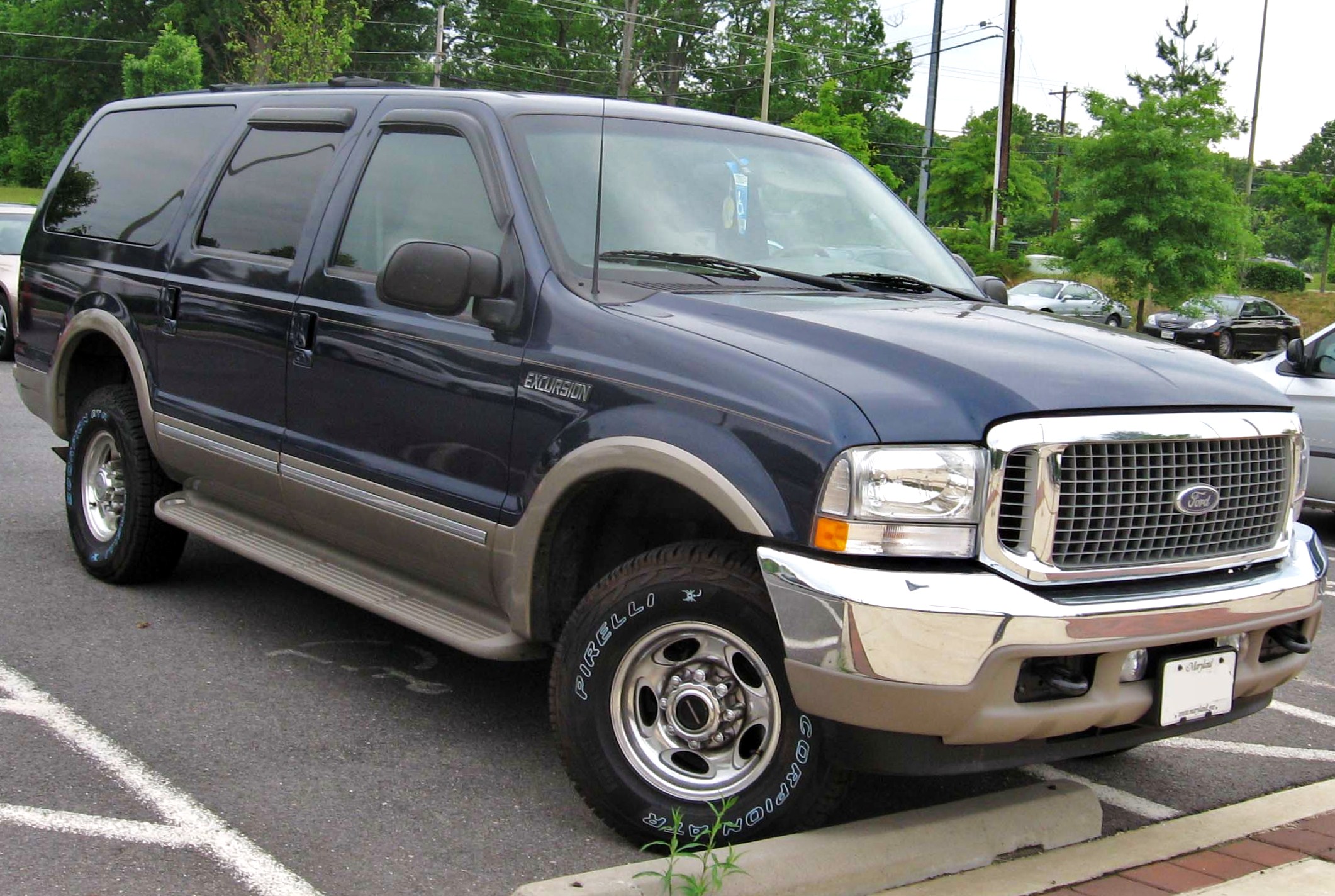
The Ford Excursion is a very large SUV made by Ford. It’s known for being big enough to carry a lot and handle heavy use. The podcast mentions it as part of a story because it’s such a standout, oversized vehicle.
The Shelby GT500 is a performance version of the Ford Mustang made by Shelby. It’s designed to be faster and more powerful than a standard Mustang. The podcast is discussing where the GT350 and GT500 names originate, which is part of understanding what makes these cars special.
A dyno is a test machine that measures how strong a car’s engine is. Instead of guessing from the badge number, they test it on the dyno to see what it really produces. That’s why it matters to their argument.
The Jensen Interceptor is a classic car meant for comfortable, fast driving. In the podcast, it’s mentioned in connection with engine and “interceptor” talk, which is about what kind of power it had and how it was described. That’s why it’s part of the conversation.
A police interceptor is a car setup made for police work—built to handle demanding driving. Here it’s mentioned as part of the story about engine/numbering used for a specific model.
“Numbers matching” means the car’s important parts still have the original identification numbers they left the factory with. Collectors like it because it helps prove the car is authentic.
The Shelby Cobra is a classic sports car that’s known for being fast and exciting to drive. It’s also the kind of car that has dedicated owner groups and clubs. That’s why people talk about it when discussing Shelby-related cars.
Brand
Cobra Club
The “Cobra Club” is mentioned as a group that helps keep track of certain Shelby cars. The point here is that some clubs maintain records, while others rely more on individual experts.
“McNish” is the name of a person who does car checks and certification reports for collectors. The hosts like that his paperwork clearly lists issues instead of just saying the car is fine.
Car certification is when an expert checks a collectible car and writes up what’s correct and what’s wrong. The goal is to document the car so the next owner has trustworthy information.
This is an inspection/certification process tied to Shelby cars. The worry being discussed is that the car might be “set up” with special original parts just for the inspection or award, instead of showing what’s actually on the car all the time.
They’re talking about a potential tactic where special original parts get put on a car just for judging. That could make the car look more authentic than it really is when you’re not looking at it for the inspection.
A “certification report” is the written document produced during a collector-car authentication process, typically listing findings and issues. The hosts’ concern is that the report may not reflect parts that are later removed after the inspection, which can undermine trust in what the certification actually represents.
Car
Porsche 912e
The Porsche 912e is a specific older Porsche model. Here it’s mentioned because the hosts are talking about whether the car’s paperwork and numbers match what it should have from the factory.
COAs are authenticity documents. They’re basically paperwork that helps confirm what a car was originally built with, including the numbers that identify the chassis and engine.
PPS is another type of Porsche paperwork. The point is to help confirm what the car is supposed to be, based on factory records.
Term
Redbook
“Redbook” is referenced as a verification/valuation-style process that involves taking the car to a center and paying a fee. The hosts imply it’s used to validate authenticity/originality, but they’re skeptical about the cost and whether it addresses the underlying issue.
An engine number is a stamped ID on the engine itself. Here it matters because the hosts are talking about whether the engine in the car matches the engine number that the paperwork says it should have.
Re-stamping means putting the identifying numbers back on an engine (or changing them). The worry is that someone could make a replaced engine look like it’s the original one by matching the numbers.
An aluminum block means the engine’s main housing is made of aluminum. The hosts bring it up because it’s harder to redo stamped numbers on aluminum compared to other materials.
Term
KD engines
“KD engines” is a shorthand the hosts use while speculating about why some engines have unusual markings. The key idea is that replacement or differently-sourced engines can make the stamped numbers look “off.”
This is an official-looking Porsche document that lists how a particular car was built. The hosts mention it as a relatively affordable way to check the car’s details against factory records.
“Water cooled” means the engine uses coolant (liquid) to keep it from overheating. The hosts are using it to explain a big difference between older and newer Porsche 911 engines.
Term
996 and later
“996 and later” is a Porsche 911 generation reference. The hosts are saying that from that point onward, the 911s use water cooling instead of the earlier air-cooled setup.
CTC is a type of official certificate for classic cars. It’s meant to confirm details about the car—like whether key parts match what the car originally had.
Water getting into brake fluid is bad because it can make the brakes less effective when things get hot. It can also cause corrosion in the brake system over time.
A brake fluid flush is when the old brake fluid is replaced with new fluid. It helps keep the brakes working consistently and reduces moisture-related problems.
The Porsche 356 is an early Porsche model from the company’s classic era. Here it matters because the discussion is about old Porsche records that can help verify what a car was built with.
A Kardex is Porsche’s old internal paperwork that records how a car was originally built. It’s useful to collectors because it helps confirm the car’s original options and history.
The Ferrari 308 is a well-known older Ferrari model. In this segment, it’s used to illustrate that back in the 1960s, people didn’t always keep the same kind of detailed records collectors rely on today.
Car
Ford GT350
The Ford GT350 is a famous Shelby Mustang from the 1960s that collectors really care about. Here, they’re talking about something disappointing they learned about a GT350.
Car
Ford GT500
The Ford GT500 is a top, high-performance Shelby Mustang. They’re debating whether Carroll Shelby would have signed something on the car while he owned it.
Carroll Shelby was a famous racing driver and the person behind Shelby cars. Here, they’re talking about whether his signature would show up on a car he owned, which matters for proving the car’s history.
The Ford GT40 is a famous race car made by Ford. It’s known for being very low and short compared to many road cars. The podcast mentions it alongside other classic Ford performance cars because they’re all part of that racing history.
The Ford Mustang GT350 is a special, track-oriented version of the Mustang. The hosts are saying it’s one of the most important “Shelby-era” Mustangs to look for.
An “automatic” is a gearbox that changes gears by itself. The hosts are saying that, for some buyers, automatics were what they wanted most.
Concept
huge displacement
“Displacement” is basically the engine’s size. When someone says “huge displacement,” they mean a big engine, which many buyers associate with classic muscle-car character.
This is a drag-race car where the engine is mounted in front of the driver. “Period” means it’s the older, classic style from that era.
Term
topolino body
“Topolino” is a custom body style that takes inspiration from the Fiat Topolino. On a dragster, it’s mainly about the look—how the car’s shape is styled.
Car
68 top fuel dragster
A Top Fuel dragster is a race car built to go as fast as possible in a straight line. The “68” means it’s from the late-1960s era, when these cars had a very recognizable look.
A “cackle fest” is an event where people show off loud drag-racing engines. The cars get fired up so spectators can hear them and see them run briefly.
A “blown hemi” is a V8 engine known for its design, and it’s boosted with forced induction (like a supercharger). That boost helps it make much more power for racing.
On this kind of dragster, the differential (the part that lets the wheels turn at different speeds) is packaged unusually close to the driver. That’s part of the distinctive layout of these cars.
The Dodge Nitro is an SUV made by Dodge for regular driving. The podcast mentions it because someone doesn’t want to work on a car with a certain kind of engine setup. That’s a common ownership topic—who can maintain the vehicle and what it’s like to service.
In racing, “alcohol” means the car uses alcohol-based fuel instead of regular gas. It needs different tuning, but it’s popular in drag racing because it can help the engine make strong power.
They’re describing a race-only setup that doesn’t use a normal cooling system. The car is only run for a short time, so it doesn’t need to stay cool like a daily driver would.
The speaker is saying these old race cars may not have a normal electric starter. Instead, they use a different way to get the engine running for the race.
The “shutdown” is the extra stretch after the finish where drivers slow down safely. So the track might be longer than the race distance you hear about.
A burnout is when the driver briefly spins the tires to warm them up. That can help the tires grip better when the car launches.
Car
62 Plymouth Savoy
This is a Plymouth Savoy from 1962, and the cool part is that it’s been set up for drag racing. The host points out special engine parts and a big V8 that make it stand out from a normal Savoy.
“Max Wedge” is a special drag-racing performance setup from the early 1960s. It usually means the engine and intake/exhaust were built to make strong power for racing in a straight line.
“Cross-ramps” describes a special intake design used on drag-racing engines. Instead of a normal intake, the air paths are shaped to help the engine breathe better for racing.
A “four-barrel” carburetor is a type of fuel system that can supply a lot of fuel when you floor it. Drag-racing engines often use this because they need strong fuel delivery at full throttle.
“Long runners” are the tubes inside the intake system that carry air to the engine. Their length can help the engine make better torque in the RPM range you care about for racing.
This car uses a manual gearbox with three forward gears. The driver uses a clutch and shifts by hand, which can help keep the engine in the right power range for racing.
Headers are a performance exhaust part that helps gases get out of the engine more efficiently. They’re commonly used on race-focused cars to support stronger power.
Term
stock class drag racer
A “stock class” drag racer is built to race under rules that restrict modifications. It’s meant to be closer to what you could call “stock,” compared to the most extreme race builds.
A drag racing package is a set of upgrades meant for straight-line races. The idea is to help the car launch harder and run faster more reliably for drag racing.
A stripper street car is a basic, stripped-down version of a performance car. It’s meant to be lighter and cheaper, while still being legal to drive on the road.
Powertrain is the set of parts that makes the car move—like the engine and the gearbox and how that power gets to the wheels. Bigger powertrain usually means stronger/ more capable mechanical setup.
“Rear end” is the back axle area of the car, including the gears that send power to the rear wheels. For drag racing, the rear gears can make the car launch and accelerate better.
A Hurst shifter is a popular aftermarket gear shifter. People like it because it can make shifting feel more precise and fun.
Car
2024 GT3 R Wrensport
This is a Porsche track car based on the GT3. The important part here is that the version they’re talking about is meant for track days only, not normal street driving.
A “GT3 cup car” is a race car built for organized competition. The point here is that the Wrensport car they’re talking about isn’t meant for that kind of league racing.
The Porsche 935 is a legendary race version of the 911. Here, they’re saying the car they’re discussing looks like a 935, but it’s not the original one.
The Porsche 911 GT2 RS is a very track-oriented 911. The “club sport” version is even more stripped down for track use, and the hosts say this build removes street parts and lets the team tune the engine freely.
A “cup series” is a type of racing where the cars are more similar to each other and the rules keep things fairly even. They’re comparing Porsche’s support series to that kind of setup.
A flat-six is an engine with six cylinders arranged in a sideways layout. The hosts say this car uses a 4.2-liter flat-six, which is a classic Porsche-style engine design.
Air foils are wing-shaped parts that help control airflow over the car. They can help the car stick to the track, and the hosts say this one is less cluttered than typical RS aero.
Term
Nacoducks
“Nacoducks” is a nickname for small air-duct shapes on cars. They’re often used to bring cooling air to parts like brakes, and the hosts say this design has fewer of them.
A track day car is a car people bring to a race track for fun driving. It’s usually set up to handle faster driving and more stress than a normal commute.
Concept
hammering miles
“Hammering miles” just means driving a lot, usually pretty aggressively. Here it suggests the car might be used for serious track-style mileage.
A “white glove car” usually means a super high-end collector car that’s been carefully checked and handled. Think “premium, well-documented, ready to show,” not a rough or mystery car.
Concept
pre-determined collectibility
This phrase is about the idea that some cars are treated like collectibles ahead of time. Instead of being special because of what they are, they’re valued because people expect them to be valuable later.
Here, “speculation” means people buying cars hoping they’ll be worth more later. It’s more about future money than enjoying the car now.
Topic
theoretical rallies
They’re talking through a hypothetical idea about which car started the whole collectible/speculation trend. It’s more of a debate than a factual report.
A “collector’s edition” is basically a special version of a car that’s marketed as limited and likely to be valuable later. The hosts are saying dealers wanted to sell that idea without using the exact phrase.
The Acura NSX is a famous mid-engine supercar from Acura. Here it’s mentioned as an example of a car people thought was ending, which can drive collectors to buy and hold them.
The BMW Z8 is a rare BMW roadster with a very distinctive, classic look. In this segment, it’s brought up as a car people knew wouldn’t be replaced.
LIVE
We go backpacking at Fillmont. It's a huge mass of like quarter million acre preserve
in Fillmont. Yes. Donated to Boy Scouts of America from the founder of Philips 76.
What quadrant of California? No, New Mexico, and some lower Rockies. And because like 20
to 25,000 Scouts go through this every year, they have to be very strict on how you backpack in
the space to be low impact. Otherwise, it'll just ruin it for other people. And so they have
bathrooms set up, you know, quote, big quotes, bathrooms. And there's always two seats. There's
never a divider, but there's always two seats. Okay. And it might be like a nice like enclosed,
you can have some privacy kind of thing, or it might just be like a wooden box just over.
This is private or public land?
Privately owned by the NSA. And the seats are always in one of two orientations.
And they are pilot co-pilot. So you can imagine what that looks like. Yeah.
Or pilot to bond the deer. Oh, yeah, okay. And depending on what you got to do and who you're
going with, who's also there. You have to choose carefully. You might choose carefully which one
you're going to use. Okay. Is this in the pod? This could be in the pod. Sure. Welcome back,
everybody, to the bring a trail podcast. Alex and obviously back coming to you from the
headquarters of bring a trailer talking about bomber deer configuration and outhouses.
Correct. Fillmore spilled. Fillmont. Fillmont. F-I-L-L or P-H-I-L.
P-H-I-L-M-O-N-T. Okay. I love it. It's a great name.
Near Cimarron, New Mexico. Is that with the caverns? Is that like Carl's bad caverns?
Kind of thing. I don't know. We didn't do that. But the headquarters for Fillmont
base camp, it looks like a World War II installation. It probably was.
A frame tents just in a giant grid formation. And it is thousands of scouts who are just arriving
and they're about to go out for the two-week excursion. And thousand scouts who look dirty
and grizzled just coming off for a mountain on their way out. And they're all intermixing and
they're all going to the dining hall at the same time. And it's an interesting space.
You could film Oppenheimer there. Possibly. He loved New Mexico.
That's why he wanted to build Alamogordo out there.
It's hard being a parent. I haven't seen like a movie yet. So long. I have had the Blu-ray copy
of Oppenheimer sitting in front of my television for about a month now.
You haven't had the viewing pleasure? No. I don't have three hours.
Yeah, it's tough. I haven't watched Killers of the Flower Moon for that same reason.
Yeah. Same. Some day. I've watched Oppenheimer twice. It's great. You would love it.
I know. I need to just ruin that. You just sacrifice to enjoy your life.
The other way to enjoy life. The other one...
My wife did not listen to the episode where I said something horrible about...
About what's keeping you married. Yes, that's right. Yeah. I can't even remember totally.
Sorry, you were going to say something. It sounds like we're coming in unprepared.
I actually have real things I want to talk about. Oh, you do? I do.
Oh, wow. My confidence has boosted up dramatically. Oh, is it?
Oh, yeah. I was... You thought we were going to talk voice counts the whole time?
Is that not what this podcast is? Aviation Corner.
Aviation Corner. That was all lunch was Aviation Corner. No, Project Hail Mary. I just saw that.
That was like the first movie theater for years, I think. I actually meant to ask you about that
at lunch because there was some scene I wanted to relate to you, which is great. Oh, because you
were talking about people passing out in airplanes and when they drug him, spoiler alert.
When they drug him, don't put him in the fighter jet. It's so great.
Yes. So it's trying to drug him. Yes. Lands on the air. It doesn't spoil the movie.
That is a book. I can confirm that. Do you want me to hate you with the piece of exciting...
I almost blurted this out to you in the office downstairs. Please, please.
Okay. Do you know where the name for the GT350 and the GT500 came from? It has never occurred to
me in all my time. I've been interested in these cars. Okay. Find out what the heck 350 and 500
mean. Can I say... I promise you, if you don't know, there's no wild guess.
Right. So the one that I know is not right, but it was spread via top gear,
was that it was the horsepower rating. Yes, incorrect. And Richard Hammond puts his GT350
on a dyno. It obviously doesn't put out... It was like a 65 or 66?
Correct, yes. 306, I think, or 350. Yeah, the record just over 300.
And the hypo was 270. So it is more, but not a ton more. Yeah.
And he takes a Sharpie and slashes out the GT350 on the side stripe and writes in
whatever the lower number is. I'm sure it was a dry erase, but still. And that sort of
pervaded for a long time was that that was what it was all about. I do know that the 500,
I believe, correct me if I'm wrong, was purely just because it sounded larger.
Correct. Yes. Because it's not... That's actually what... So first off,
good for you. CarGuy credentials for you can remain. Mine should be revoked,
because I've never thought about it before. Yep. It was just... This one's the bigger one.
Right. So it just needed to be... So that... I guess in the kind of back of my head, I
understood that to be true, and that is true. 500 is just bigger than 350. But how did they
land on 350? Right. The other one I've heard for 350 was some sort of distance issue.
That's exactly what it is. Well, I mean... Distance from one shop to another.
Correct. Okay. So you see, I didn't even get to stump you. I was blown away by this.
You've thought about it, which is great. I had not. I was opening up a car on the site,
which I desired to discuss on this podcast, which is Carole Shelby's own GT500, which is on the
website. Right. And still will be when this goes up in Greece now of all places. Oh, yes.
And then I was like, these are 428 police interceptors, so it's not the cubic inches.
It's not the HP. Correct. I actually like badly want to own one of these cars,
and I can't believe I never thought about it before. And I'm like,
what the hell? Where did the names come from? So thank you AI. I googled it. And then I backed
it up. I did a couple other. I clicked on some legit websites, and I believe what I'm about
to reiterate to you. I believe this to be true. It is the number of steps from the shop,
from the shop where they were originally building these to the fence line at LAX,
which was adjacent to it. Gotcha. And it was 347 steps that Carole Shelby asked one of his
employees to walk, and they rounded it up to 350. And then when it came time for the 500,
they're like, what's a bigger number? Because it's a police interceptor, 428 in the 500.
I'm going to assume I got that information from the Colin Comer book about the Shelby Mustang.
So the first thing I thought of was I was like, Comer would know the answer.
Sure. Yeah. Great book, by the way. I was just called Shelby Mustang has a great GT500 on the
cover of white with blue stripes. He's probably got a whole chapter dedicated to the walking,
the pacing, the pacing story. Certified bases. Yeah. I would imagine that's probably where I
read that from. A great book, though, gives you all the appreciation you need for the first year
of cars, which if you didn't... The 65s, yeah, which I didn't really know about till a couple
of years ago. Yeah. That's a great one. And also a shout out to Howard Pardee, who is a registrar
for 6566. He is just a delight to talk to. I only get to do it so often, and he has no ego. He is
very happy to share information. One of the most delightful things is I'll give him a
VIN. I'll be like calling him up and we'll always talk for 10, 15 minutes of just how
life's going. Then he wants to get to the business. He was like, well, what's the VIN?
And I'll share it with him. And obviously, he won't tell me what it's supposed to be,
right? The stampede on the block, but he'll just tell you if it's right or wrong.
And then he also occasionally has personalized notes from when he's seen the car.
He probably knows all about a lot of the cars. Oh, I saw that in 93 in New Jersey. And my notes
here, the fender may have been replaced. There was firewall damage here. That's awesome.
It's the best. And there are people like that in a number of clubs, right? In various places.
That's happening with my elite right now. What are you doing?
Ostroff, the guy who's the expert in the East Bay. Shout out to him, his buddies with my dad.
He's the elite expert. And my dad reached out to him when I bought the car and he was like,
I know that car. chassis and bring it over. He's in Richmond,
bring it over and we'll bring all the elite guys out. And so again, somebody who has familiarity,
like we need to move the original engine. And he told us exactly how much they weigh.
And he's like, take the transmission off. It's this much lighter. He's like,
this many people can lift it. He's like, you can take the passenger seat out.
And the whole motor will fit in the passenger seat. So he knows like, I love that kind of
knowledge. And you wonder where, all these guys aren't kids, you wonder where that's going to go.
Yeah. And if they're good about it, they're keeping a database. It's not just all in their head,
not just all handwritten, right? To be handed down to somebody else. It's actually some sort of
online database or registration that you can go through. I think probably the Cobra Club for
Shelby's, but there are a few other individuals out there like David Wise, Jerry McNish, who do
their own for profit, understandably, where they're very much holding back the information.
And then you come, they or you pay for them to fly out to you and they certify your car.
And my favorite is when we have like a Z28 come through and it'll have multiple McNish
certifications. I got done like 12 years ago, but like now the time has passed,
you know, 20 miles have been added to the car, but the new owner wants the experience, right?
And also you got to make sure that like, yeah, in 15 years, like that motor may have been swapped
or there's other issues or they've corrected stuff. One thing I really... People learn new
stuff about chassis, yeah, chassis numbers and stuff. Yeah. I also like the McNish ones where
it specifically gives out a whole sheet of all the problems. Like of all the things like this is
wrong, this is wrong. And there'll be people who will say like,
my car is great. They'll admit like, oh, there's all these problems, but that's still relatively
speaking is still quite good. It's the transparency thing, right? People can associate a dollar value
to it. There's one sneaking issue with all this that I have heard rumors of, and I'm sure it's
true actually, is with Shelby inspection specifically, when they go to win awards,
they'll be very rare original parts that they'll rent out to... Oh, yes. Yeah. Right. They want
to... Because you don't actually want to run it day to day because it's actually maybe not a very
good part. Yes. That's true as well. And it's also just super belts, right? Think about all the
disposable stuff, but also just high touch stuff like steering wheels and shift knobs,
things like that, that they'll keep an inventory. Tires, the old tires. Old tires, right. And then
not only will they like bring it out of storage to put on the car to then go compete with,
they'll actually even rent it to each other. Even worse, and I worry about this, for the
certification process. Oh, sure. Right. Then the certification report with that list of what's
wrong doesn't show it, but then those parts come right back off of it. No disrespect to any of
these guys, but all of it has some amount. Because remember, a lot of these people who are certifying
your cars are also buying and selling them. And so there's like money involved in the people who
are the certifiers. Certifying art. We've talked about this. Yeah. Ferrari Redbook, a notorious
bad example. I have it for that white car downstairs. But if you pay a fortune and Ferrari
sends a person out, are they really going to authenticate your car? Is it really going to
like, I mean, no, come on, give me a break. Well, that's where the recent photography
trumps all. Of course. You can have certificates from six months ago, but if the photos are from
five days ago, that's better. Yes. Agreed with her. Completely. Agreed completely.
I had my cords certified in Auburn, as if it's not a real core. You know what I mean? And then
like a lot of you, I didn't have mine judged. I thought, wait, so how many cars do you have that
are certified? Well, the green Porsche, as you know, I got the COA on that and it says that it was
white and I'm like almost positive that's original paint on chunks of the car. Some of it has been
repainted, but like the shell itself, you can see the primer wearing through. We bought that car
when it was only 23 years old with $100 miles. I don't think it had been repainted. And if they
did, they took it down to bare metal, which wouldn't make any sense for a $9,000 912e in 1999.
We also bought it from the second owner. So like it says it's white and also has weird options on
it that don't track with the car. But I think that was maybe, that was early in the Porsche
the specification sheet. That was when they switched from COAs to whatever the newer product
is. Now there's an even newer product. So there's a classic technical certificate
and a PPS. They're trying to get you to do the Redbook thing though, right? They want you to
take it to a center and pay a fortune. What they found was there's similar to the Howard
Party. Is this a real 912e? Did somebody put a four-cylinder in a 911? I don't know.
Four-cylinder powered 911 car in the headline. It's so stupid. I mean, people get Redbooks on
20, 20, or 15 piece does. And it's like, maybe it's a Fioro under there. I don't know. Fioro,
sorry. So they were having the same issue that Howard Party would get worried about,
which was they were putting out documentation that shows what the chassis number was and
what the engine number is supposed to be, when instead now- Which allows you to then
re-stamp. Re-stamp, which is tough with an aluminum block. How are you really going to do it? But
that's the concern. We've seen Porsche's with this. I've seen Porsche engines with weird font.
And then you get into this zone where who knows what Porsche shops were doing 50 years ago. We've
definitely seen blank motors. We've seen motors with extra little stampings on them, which maybe
indicated a replacement engine. KD engines. Yeah, right. But where they would put the original
number on it, I mean, it's fascinating. So the COA, I actually don't know what year specifically
ended. It wasn't that long ago, but they basically split it into two different ways. So you could
no longer just pay and they would put something in the mail that would tell you what all the
numbers and originality was supposed to be. Now you can get a Porsche production specification
sheet. It's like $100. I would say it's probably worth it for any car that engine originality is
not a concern for. So basically, I would say 996 and later, all your water cooled. So that's what
I got for my car and I sent them. Do you have one for the SE? No, I have an original invoice for
the car that has the engine. That's way better. And also the old COAs when they didn't care about
the stuff are so rad. The ones with the script. Whenever I see that on an actual certificate.
Totally. And that's when Porsches were way less of what they are now. So you know that was a head
who loved that car, who ordered that. I did the thing that you're talking about and they ask you
when you're filling in the form I'm trying to remember. This was almost 10 years ago. I did it.
They ask you for the numbers and the photos of them and I sent in, but for some reason,
they wouldn't confirm the engine. So that's blank on mine. But the transmission they say is original
because I sent in the numbers like a photo of it. Did your engine look different because
you'd done a build on it by that point? I'd rebuilt it so many times at that point,
but it was before the fat motor build. That's how long ago this was. And my cars are allegedly,
Robert loves to joke about it. Shout out to him if he listens. He calls it the Grand Prix White.
The Grand Prix White Porsche. Also calls it the Kermit car. Yes. The other one,
the classic technical certificate CTC. That one is like, it's a red book light. It's actually,
I think it's a lot less. It is a lot less. But you still have to take it to a classic sort of
light center, which now has gotten a lot better for a while. It was a really bad news. Like,
78 years ago when I was explaining to people, you really want to get this
COA, but then COA was built. There weren't that many centers. That's the problem. There was only
like five when they first started. And if you were in the Bay Area, the nearest thing was Monterey.
And are you really going to go drive your car all the way on array? And then you have to leave
the car with them all day. They inspect it and everything. And probably offer you a few things
you could do, I would imagine. Yeah, they do a full maintenance inspection and tell you,
because you don't want that to show up, that your brake fluid was at 3% water infiltration.
You don't want that on your CTC, right? So you got to get your brakes flush now.
That one does the thing where it just says, is the engine original? It was a checkbox and just
checks it. It doesn't tell you what it was supposed to be. But I get why Porsche doesn't want to do
that. And I have a lot of respect for the SAC guys and Shelby and all that stuff. But man,
if I was a buyer, I'm like, show me, show me all of that, right? Your car is the ultimate because
I could see your original receipt. That can't be faked. And then you could go look at your engine
and there it is. That's all the evidence you need. There's not all this, you know.
And then there's issue for older cars from 356s all the way until I want to say 1969,
is you can get the original Kardex. And that is what the original COAs were all based off of,
was that they were just basically going to Germany and pulling the Kardex for it. Kardex
looks literally like card stock. It was just a way for them internally to record all the options
and where the car was going and then service warranty work, all that kind of stuff.
Do we know how far those go up? I've never totally understood the end, around 70 something like that.
Oh, it was in 1969. I think it was the last year. So that's why there's some early 911s,
obviously doesn't go on until later than that. But it's all the 356s. And what's really weird,
and there's a story to this, I think I used to know it, I can't read out. There's some guy in
Canada who has copies of all of them. I have it saved as candle languages,
just his name and his email address. And then people reach out.
I mean, it was something that nobody cared about back in the day, right? It was just
an internal Porsche factory thing. It's the same thing of like Marty, like Kevin Marty.
How does he, I'm sure he would love to tell us how he has all the records?
I mean, now when Ferrari builds a car, they know that they want to document everything and it will
have historical significance. But when people were building Ferraris and Porsches in the 60s,
they were like, this car is going to get used up and thrown away.
Sure. You're 308.
Yeah, right. Totally.
They weren't logging it.
Right.
So you can get a copy, a scanned version of your Kardex from this guy. I know his first name is
David. I can't remember his last name. Out of Canada, even those though, we've had it where it's
confusing or things were scratched out and it's not always the most accurate in the world.
But I actually probably would trust that more than a COA. There's people who have pulled COAs
for cars that differ the original Kardex.
That's what I like to see. And they're in German. And I used to, I use Randy to interpret that,
like to do the interpretation. But I think that is why earlier cars have more reliable,
presumably whatever they had to do for my car gets confusing because it's some kind of internal
record that they're checking, but it's not as accurate as a Kardex.
Yeah.
Right. 76.
At some point, it wouldn't be a hard copy anymore. It would be saved in some database.
Right.
So there's no way it's impenetrable.
Right.
Totally.
Totally.
We should talk a little bit. So super disappointing on the GT350 thing. You already knew that.
That was, I was today years old when I learned that.
Do you like 500s? I actually like this car in Greece a lot, but just FYI, not owned by
Carroll Shelby in period, owned by him, bought around 2000 and like modified.
Oh, wow. Interesting. I did see he signed it himself.
Of course. Do you think he signed it when he owned it? When Carroll Shelby gets out of a GT500,
does he have a Carroll Shelby signature in it also?
Did he have a replacement glove box covers or to swap out so he wouldn't have to have his own
signature on there?
Is it weird if you're driving around in a car that you're responsible for and you're sitting
at a stoplight and you look over in your own signature, is there?
Oh, his name's all over the place, man. I think he was probably just fine with it.
Yeah.
I'd like to believe the best version of that story is he bought the car, enjoyed it, drove it,
and then the day he sold it, he signed it for the person to take away.
You know it, baby. Signed glove box door.
It's kind of faded. So maybe it was.
It's about at 99.
To your question, I love GT500s. I think they're kind of the
ultimate understanding of what the customer base actually wanted.
Not a high strong road racer.
Right. And I would say the pinnacle of it is 67, which is so interesting. It's almost like
the Beatles and it's such a flash in the pan. We think about the Shelby timeline.
It's basically 63 is the start of as far as selling cars that we are.
Cobras.
I think, you know, we have early Cobras and then it's 67.
Then it's sold to Ford.
Four years.
Oh, wait, that's it. It's such a short.
And the GT40s are in there. The GT350, yep.
They're all in there and that is such a short amount of time.
And the connective tissue to the modern car doesn't really come back again for a very long time.
They go through a bunch of other iterations of what the most important Mustang is.
And now it's actually, notably, it's gone again.
They've entered the partnership all over again.
So there is no new Shelby Mustang to buy right now.
What's the hot, the dark horse?
The dark horse is a big one. Yes.
And I think they brought out like the GT350 replaced basically.
It's the the car that you might trackiest.
Yeah. But yeah, GT500s, I think are awesome.
A four speed and a fun color would be perfect.
This is also a four speed, which I like.
Although a lot of people, to your point about what the customer base wanted,
they wanted a huge displacement, they wanted an automatic.
Correct. Yes. Most of them are.
Yeah.
This is a great one.
White with the blue stripes.
It is lot number 242464.
It'll still be live when this pod goes live.
We can link to it.
But yeah, in Greece, which is interesting from a repeat seller of ours in Greece.
67, as you pointed out, the kind of preferred year for these.
I always lumped them together, but I've been schooled on why the 6768s are different.
Numerous times.
Great car.
Anything else on your watch list that you wanted to bring up?
I've got a bunch of interesting stuff.
Why don't you start while I bring mine up?
Okay.
Lot of muscle cars, hot rods.
We can move through this quickly, since I know you don't care about all of this stuff very much.
The period front engine dragster, did I show that to you?
I've been talking about wanting one of these forever.
You know, a buddy and I were talking about buying that one that has the topolino body on it.
This is a 68 top fuel dragster.
Oh my God.
I know, it's so dope.
It has the wings in front of the rear wheels, which I like, the little stub wings.
This was, let's see, it was run from 68 to 72.
It's been refurbished.
It's been at cackle fests.
Obviously like blown hemi.
It's super, super cool.
Has like kind of the spindly early cage.
These are the front engine dragsters where the differential's right in between your legs.
I love these.
I, you can't race them down the track anymore.
I've always wanted one though, because I just love the aesthetics of them.
And you can do these cackle fest things where you fire them up and you have to wear the,
you know, the respirator mask because you're behind all the nitro pouring out of the motor.
Again, shout out to my buddy, Jeff, who is like steeped in the lore.
Weren't you in the verge of buying one of these?
Yeah, I was.
And like the deal was I needed him to basically be my mechanic because I,
I'm not going to work on a nitro motored car.
And he's already got his dad's alcohol front engine.
It's actually like a Roadster has like a Model T body on the back dragster that he maintains.
He wisely didn't want to take on another one.
I was going to pay for it and have him kind of maintain it and take it to one cackle fest a year.
We went to one me and him at Famoso down in Bakersfield where
the way they would start these cars, you don't have starters, they don't have cooling systems,
right? You only run them for a couple of minutes.
Have you ever been to a drag strip?
Never.
Oh my God.
Okay. So there's the quarter mile.
They're actually like a half mile because you have the shutdown in place.
And then you exit and there's a return road in between usually the bleachers and the strip.
It's like right there.
And that's where they push the cars back to the staging lanes at start.
And the way they would apparently start these old front engine cars back in the day is
your tow vehicle, like a lot of times a woody wagon or a pickup truck,
would have a plate on the front like for Bonneville and there's a little bar on the back of the
dragster and about halfway down the return road, you'd push startup basically.
And then they'd make a turn, do the burnout, do the run.
And in these cackle fest, sometimes people buy vintage look tow vehicles and they do the push
starts.
And so you're basically simulating everything that you would do at a period race except the
actual quarter mile run.
So you start them up, you run them.
You can sometimes they do burnouts.
You do the push start.
Sometimes it's rad.
Also for vintage cartoon, they would have had a push start as well.
Good video on YouTube.
Landon Norris just did one with Carlos Science Jr.
Where they raced time trials, not head to head in vintage go-karts.
Really?
It's very fun.
I highly recommend.
And they're just basically they start like with a 50s cart and they both try to do their best
time and they're just having a full.
I bet they're having so much fun.
They're freaking out with like, you know, the complete lack of breaks and the vibrations
and hell, there's no arrow at all.
Not that it would be like down.
And those guys started in carts, obviously, right?
And they go through the decades.
They go from the 50s through 60s, 70s, 80s, always to modern carts.
And it's very funny when they get to like the 2010s and they're like, this is the cars that we
were doing when we were little kids.
And they go to that.
And then at the very end, they race Lando's cart that he now is branding at his own that he's.
That's what this is for.
There was a part of it.
It was always a product.
Yeah, of course, landing in there as well.
But that's a few of them have that.
Like Alonzo has, I think, even his own cart series.
It's not even just his own branded cart.
And Lando has his own.
When was the big jump in performance?
70s or 80s?
Yeah, the 80s to 90s was a big one.
I forget exactly.
A big one was a center of gravity for like where the person was sitting versus where the motor is.
For a lot of them, the motor is just behind the driver.
And at some point, they make the realization he's actually be next to the driver and bring
the center of gravity closer to the middle and not so far back.
But other than that, like the technology, there's so many strict limitations on what
you can do with it, right?
There's still no suspension.
It's still a single brake caliber on the rear axle, all that kind of stuff.
Man, I'm going to go watch that video tonight.
That sounds like a hell of a lot of fun.
I'm trying to think of what else on here is interesting.
The only other thing I think that might interest you quite a bit is these are not the prettiest
cars in the world, but this is a 62 Plymouth Savoy, which is like this kind of standard
looking thing, but this is a max wedge three speed.
So it's got, look at this motor.
It's incredible.
It's got a 413 cubic inch max wedge V8.
This is like basically for drag racing with cross-ramps.
I know.
It's really hard to take.
Yeah.
Well, that's cross-ramps.
So there's a four barrel under each one of those with long runners running into each side.
That's got a three speed manual transmission.
I mean, look at it in period.
I mean, with the headers and everything, it was just an absolute monster, like, you know,
stock class drag racer.
So more on the drag racing theme.
Let's see.
This will end the day this comes out.
This is a lot 242650.
Chris Baxter, shout out to our editor of this podcast, Chris Baxter.
He sent this one to me and it is such a rad car.
Is that one of those where there's a Plymouth standard model and then that name is only associated
to the drag racing package?
Max wedge is what that is.
Or I don't know if it's drag racing package specifically, but you're getting kind of a
standard stripper street car.
But then you put the biggest medius powertrain and rear end and manual transmission into it
and take it drag racing.
My favorite of those was the Thunderbolt.
Oh, totally.
Total Thunder.
Loves Thunderbolt.
Were you with me?
We saw one at Barrett Jackson.
That was when we were in.
We were in Scottsdale.
Yeah.
When we had our $14 cans of beer.
Remember that?
Wasn't that there?
I'm pretty sure that was there.
You're right.
You're right.
It was in prep line before.
It was in the staging lines.
Yeah.
That was like my favorite car when we were there.
Yeah.
Those are so rad.
Hurst shifter in this.
I mean, just a rad car.
I have like another hot rod thing too, but tell me a little bit about what's on your list.
All right.
So a few things that they're mostly white glove related as I'm monitoring it for the team.
I don't think we, I don't know if we've had one on the site before.
I have to look it up, but this is a 2024 GT3 R Wrensport.
Oh yeah.
Howard was talking about this.
School me on this.
I don't totally know what this is.
So every time that Porsche, for the most part, every time they've done a Wrensport,
which is their like once every three to four year motorsport festival,
the last four of which have happened at Laguna Seca,
they've usually announced some sort of car there.
Past ones, they have announced like the 911 Speedster there.
They announced the 935, which was kind of the predecessor to this.
It was the twin turbo 991 track car.
So it's not a GT3 cup car.
It's not a car that's meant to be raced in a league.
It's purely a track day toy, not street legal.
We've listed a couple of those, right?
Isn't that the one when they got Times Square all shut down with these amazing photos?
Yeah, okay.
They did do 935 was shot there.
This is obviously not the original 935.
But they look like it.
They've got like a slant nose or no headlights.
It was a throwback for sure.
And it's a GT2.
It's essentially a GT2 RS club sport with even less,
all the street legal parts pulled out of it and then no requirements for engine tuning.
They can do whatever they want.
And in fact, Porsche supported it by doing a GT2 RS club sport slash 935 racing support series,
similar to cup series.
They did that ahead of, I want to say, a few F1 races in Europe.
They're pretty interesting.
I mean, it was essentially a stock car class, if you will,
but they're basically a million dollar track day toy.
And this is the next iteration of that.
So this one is a GT3 R rent sport.
So it's not going to be the same GT2 RS, meaning twin turbo based.
This is going to be just a normal naturally aspirated, but 4.2 liter flat six.
I like how clean the design of it is.
It doesn't have a ton of air foils everywhere.
There's no, like, Nacoducks every five inches.
It's actually less busy than an RS in some ways.
Completely less busy.
Which I wonder what their sort of research goes into when they're thinking about this
high end of a track day car.
Are they looking at drivers who don't want to be bothered with all of those things as much?
It still has, like, these side race fillers.
So, like, clearly you're planning on, hopefully, like,
hammering miles and someone's coming in and dropping some gas on you.
But these just look really clean.
I like how they're not covered in weird ads, obviously,
because they're not a cup car.
Very interesting and unique.
I'm not sure how many does it say.
Only 77 were made.
This has a really good livery on it, too.
For sure.
It's basically a red light blue.
A little bit of a martini-esque.
The 935 is pretty clean as well.
Which is part of why I like that car.
Yeah, this is a great looking car.
I didn't know any of these things from Porsche Nashua,
and it's bid up to ends tomorrow.
So, this will be closed by the time this podcast goes live.
$918,000.
So much, so much money for a car that you can't drive on the street.
Pretty cool, though.
Really, really good looking.
That's a white glove car?
White glove car, yeah. Rollins are doing that one.
It's wild that that market is so seemingly strong.
Then again, is it?
I don't know. There's only 77 of them.
I don't know.
Yeah, you don't know.
But it's being like that, that general track day car.
Yeah, this relates a little bit to the smoke and mirrors
of red books and stuff.
Like, whether Porsche's sold these or not,
I don't know if anyone's going to know the truth.
They're not going to know.
Yeah, right.
For sure.
I mean, the whole million-dollar plus.
But then 30 years from now, when you get a COA on your 2026,
red and sport, it'll tell you all the things that you want to hear
when you're paying for that collectible car.
This is what I was getting up for.
I don't know if I love the predetermined collectibility
of a car era that we're living in now.
Oh, yeah, the speculation.
Here's an interesting question.
I've played with this in my mind a few times.
What do you think was the first speculated car?
Meaning people bought it.
I have a very strong opinion about it.
I think GNX is.
Boom, there it is.
Yeah, is it yours too?
Because there's so many of them that are no mile.
So people put them in a wrapper.
But like, okay, here's a question.
But there was also a big push.
This is going to be it.
This is the big thing.
We've seen the ads for these cars before.
There was a push from dealers from marketing up top that like,
they weren't going to call it a collector's edition,
but they were like, this is going to be an important car someday.
Right.
But people did drive them.
We talked about this last time.
The NSX that was still in the dealer's showroom.
And like, I've been to, yes, I saw that for a big number.
What was it?
Three.
Three something.
I've been to quite a few accurate dealerships that have NSXes
with no miles sitting.
And we talked about this last time,
that the dealer bought new.
So that's kind of speculation.
Like that was done a fair amount.
I bet people did the same with S2000s.
I'm sure there are cars that are earlier than the GNX
where people sat.
I'm like, probably not because people like to drive Porsches,
but would somebody have bought an E9, 930
and just left it in their showroom?
There's a difference between a weirdo who bought the car
and then either they're a weirdo or there was odd circumstances.
It's when people know it's more or not coming, right?
That was what drove probably a lot of the early ones, right?
Because a lot of the NSXes, they're like, oh, this is the end.
Right, so it was like Z8s.
Right, people knew that was a one-off.
There was going to be nothing to replace it.
4GTs.
We didn't know that there was going to be a second.
There's a lot of no-mile 4GTs.
Even if you consider the second gen 4GT as a lineage,
it's not really.
It's a completely different thing.
But we were fully into the speculation on a brand new car zone.
Windows came out and there was even all that lawsuit.
You can't buy it stuff.
And even when they couldn't sell them, right?
First gen 4GTs weren't necessarily selling like crazy.
Second gen seems like they've had no problem with it, right?
It's pretty much the first ones were all allocated to certain people.
GNX, though, I can't think of a car from before then
where we regularly get no-mile versions of it submitted
because there was a culture around investing in it.
Yes, I think that's right.
That's what, 87 is that GNXes?
Oh, yes, 86.
I love GNXes.
I like regular GNs.
I like Regal, Turbo T's.
I like all of them.
Regular GNs, a lot.
Around that same time, early Vipers,
we know people speculated on those like the very first RT-10s.
Those kind of got bought and put in capsules.
Oh, here's one for you.
We see low-mileage special edition Fox bodies sometimes, right?
You've worked on some of those before.
I feel like we see SVOs with very low miles.
Something that's a little bit,
mostly it would be the Cobras from later.
Cobras and Cobras and that kind of stuff.
Although that's early 90s, I guess.
By that point of the early 90s.
Yeah.
But that's the same kind of thing.
You could think of, imagine the speculative market in general
started to go outside of cars as well,
like I'm going to invest in art.
All the things that were not necessarily stocks,
I mean, although there was a stock boom.
And cars, you started, that's,
when's the first fire boom?
It's in the 90s.
So people are sort of to trade cars like commodities.
Whereas in the 70s, I just can't think of a car.
Granted, it was also.
Well, it was pre-war stuff.
So people were restoring Duesenbergs and, you know,
Silver Ghosts, Rolls Royces and stuff.
So there was speculation on that stuff.
And people were buying the significant.
I'm talking about like new cars, speculation.
Yeah.
I don't think anything else.
Like even when you bought a Duesenberg new,
you bought it to drive it and to be seen in it.
Right, for sure.
Yes.
Well, I mean, it's actually kind of amazing
that those pre-war cars survived at all.
I think my dad told me this.
Every single Duesenberg, J and SJ is still around.
Really?
Yep.
That's crazy.
Because they made 400 or something and they're all in existence.
And if they were destroyed, somebody found the chassis
and rebuilt the body.
Well, we heard about this with like 500 Ks, right?
That like all was left was the chassis
and they built a car around it.
Chassis plate.
Find the chassis plate, build a whole car.
The whole concept of architectural preservation
like doesn't even start until like the 60s and 70s after
redevelopment boom, right?
There's this big pushback to tearing down old buildings
and all of a sudden we have this sense of like,
oh no, we should be preserving these things.
And the same kind of goes for cars that's a little lagging.
There's a sense of like, I would say 80s,
really 90s is when we start seeing, at least I did,
obviously I'm younger so that's just what I would have seen it.
But television was showing the big growth
in restoring cars from the 60s and 50s.
But you're not wrong, we've had pre-war cars
that were restored well before that.
But the whole concept of new speculation of buying that car,
we see cars all the time now.
But I feel like 87 was the first year.
I think you might be right.
I can't think of an earlier example.
I mean, probably dealers would buy things one off
and leave them in their showroom.
And so you still do find pre-GNX survivor cars.
But it's some weird circumstance that led to it,
not like a speculative inclination.
It's like the Mini Beach car that's over your right shoulder right here.
That was the Fall V family who owned a British import
car dealership in Michigan.
And that was one of 13 Mini Beach cars
that were sent out to these dealerships.
We've had the second one on the site now.
We've had two of 13 have been on BAT.
But that first one only had a thousand miles on it.
Because it was a display car?
It was given to the family and they just drove it around their property.
And that was it.
It was never really used that much.
But that's those oddball, really weird situations though.
I love the idea of you proposing that there's not a desire
to save things till they start kind of disappearing.
I think about that kind of a lot to even step away from cars
and even grander historical scale.
For so long humans strived to overcome nature,
that there wasn't a desire to conserve anything.
Because there wasn't anything to conserve, right?
You're so worried about like, can I even build a ship
that can get across the ocean?
Can I even build a train line that, who cares if I have to knock over
a couple of the Rockies to build a train line, right?
Man is so small compared to nature and what it is to overcome.
It's only very recently, literally like post-World War II where we're like,
maybe we are having an impact on things and need to preserve things.
And that carries into non-environmental things as well.
Taming nature was the goal, right?
All the way up to about 1900, it was still like, sure,
big question mark about whether we could do it.
So it's so modern, it really makes you think
about the grand scheme of human history.
Also, there's just so many more people now
and there's so many more rich people speculating on cars.
Like the Kord Club was started in the 50s,
when those cars were only not even 20 years old.
They were like 15 years old, but they were such pieces of crap
that a club had to come together to keep them running.
Otherwise, those cars would have all been thrown in the trash.
But they must have saw something in those cars that was important to not just buy them in the 50s.
Very beautiful and very weird.
And so like, there were people who were attracted to them,
including my dad.
The cars are the people.
Well, we can get to that, right?
So the cars excited something and people,
like when you talk to these old Kord guys who are all my dad's age
in their mid-80s or even older in their 90s,
they saw one when they were a kid and they were really attracted to it.
And then as soon as they could buy them, they wanted to.
But then they needed a club to like,
you know how to keep this thing running?
You know what? Because they were so weird.
But to your point, that was weirdos, right?
That was weirdos.
And now there's so many more people in general,
but also so many more rich people.
It can kind of be a normal thing to speculate on a car.
Well, and also now we have a better word for weirdo,
which would just be enthusiast, right?
And that is going to allow for multiple markets to develop,
because you're going to have the same with the Porsche Club of America
started in the 60s purely because people needed basically a way to use this car.
They sure didn't want to use it commensurably with other people as well.
And that then has a trickle down effect continuing on to this day.
Where is your Kord right now?
Which one?
The white one that works is in St. Louis Obispo.
The marine one that does not is down in Riverside.
Where are the...
Oh, both of your cell phones are on.
Yeah, they're both here.
They're both here.
I'm going to try to take the white one to Auburn again this year.
It's running good.
Amazing.
I know.
Ship it out there or drive it out there?
Ship it, it's too far.
There are people, speaking of eccentric people who did crazy things,
people did used to drive from enthusiasts.
My dad got back into Kords in the 90s because a guy named Josh Mulks,
who's now deceased in his cars in the museum in Auburn,
he lived in San Jose.
I think he would drive his gray Westchester every year back to Auburn.
And he broke down outside of Bakersfield and my dad happened to be driving by.
I was like, that's a Kord.
And he stopped and talked to him and it got him back into the club.
And he's been in the club for 35 years again since, something like that.
People often talk about how the current generations
or the generations to come are not nearly as hard-shelled
and they're so much softer than the older generation.
And probably the best example of that
is what you are willing to go through to drive long distances.
Yes.
My mom and dad moved from Chicago to San Francisco.
They drove the Fiat 124 Spyder with no air conditioning.
Amazing.
From Chicago to San Francisco.
That's insane.
I actually think that's sick.
I would like to do it too.
Like I really wanted to take a cross-country trip.
That was like my big goal when I was learning how to drive.
And I wanted to do it in my car, my gear.
And I had planned to do it for many years,
even up to my early 20s and just never got to it.
And then I wanted to do it in the NSX,
which would have been a lot more comfortable.
But I think to a lot of non-car people, they'd be like, that's insane.
You're going to drive a 35-year-old car across the country.
Like what if it breaks?
And it's like whatever, man.
I love long distance driving.
It's my favorite thing.
We talked about this in the last time.
You and I totally had plans for the podcast
about how much we do enjoy the haul on occasion.
I think there's a big generational jump though in the 80s.
And I imagine it was probably Japanese engineering
that caused everyone to have to up their game
because you think about your 308 or my 911
and driving that for, imagine putting a thousand miles in a day on that.
That would be rough.
It would be rough on that.
Which I did.
I did do that.
With my teenage son, Salt and Lace in the next week.
I was done in the 911 as well.
Like it is a rough thing.
We didn't do a thousand miles on any day.
That's too much.
But we were doing 500 a day for four days straight.
But I've done 1200 miles in a modern car before in one day ones.
And sure, it was rough, but I wasn't sweating.
My ears didn't hurt, like all these things, right?
So I'm going to guess it's probably going to be an 80s thing as well, oddly enough.
I actually love that people want to do that.
I mean, I think it was Howard talking about it on this podcast.
He's like, there's old guys who still bring their open cars to vintage rallies.
Many years ago, another Colin Comer reference.
Colin Comer took a Cunningham.
I think it was a C3 or C4R on the Colorado Grand.
That's like a race car with straight pipes.
And he co-drove it with somebody else from Road and Track.
Maybe it was Sam Smith.
I can't remember who.
He told, I asked him about that one time and he's like,
oh yeah, the passenger seat was, the oil tank is there.
It's a dry set motor.
So whoever's on the right side is sitting and it's open pipes, right?
By your ears and you're just out in the sun.
There's no, you know, it's just a little tiny windshield on it.
That's a hardcore doing 1000 miles like that.
I don't know that that's not even racing it.
There's just a drive here for fun.
Is that coming from just extreme enthusiasm?
Or is it because you're exposed to it at a young age,
such that when you get older, it doesn't seem so foreign and so crazy?
Like for example, this is the issue that my wife and I always have,
which is she was never raised around cars.
Cars were an appliance to her when she was a child.
And so there's just no excitement exuberance about it in the same way.
We connect on many other things.
She certainly doesn't want to suffer.
Correct.
Completely.
So I wonder about that.
Like if there's not that exposure earlier on and then having a role model
who appreciates it and explains it to you obviously when you're young.
Or is it purely a generational thing?
Is it just people who sort of raised in that era are okay with it?
I don't know.
I don't mind suffering.
I'm not a masochist at all.
And I don't think it's masochism on a lot of people's parts.
I can't speak for other people, but for myself, it is a desire.
Those people who raced those cars in periods are like giants and heroes.
To me, similar to fighter pilots from World War I or World War II or whatever, right?
Like or even from Korea, people who are like gunfighting migs over the Yalu River.
Like that's fascinating to me and I can never do that.
But to even approach 12% of it is really compelling to me.
So that's what motivates me to do stuff like that.
And there's something to be said for when you've got a goal in mind,
like if you've got the Cal Melee coming up.
Whether or not you've paid whatever money for it, you just know that's your journey,
you're going on this big mission and you can go in your blower Bentley with no roof and just
endure a thousand miles over a week.
That's something that you can sort of preset your mind for.
I have this issue right now where I'm training for the Beta Breakers,
which is this Sunday.
Good for you buddy, seven and a half miles running across the city.
And if I will go for a run and in my mind, I tell myself,
I'm going to do eight miles and do eight miles.
Like at home, I feel fine.
Like I'm a little sore, but like it's totally fine.
If I leave my house and I'm like, I'm doing two miles,
I'll get to one mile and be like, oh, should I push more?
Heck no.
I'm mentally not prepared.
I would be exhausted off of that.
And there's got to be some of that.
It's a mental game.
100%.
I do think like another thing, part of the reason I like rallies and I'm starting to itch to get
back into them is like, you're also, well, for the guy in the blower Bentley,
like, what do you want to drive your blower Bentley around a bunch of Teslas?
Like, yeah, like, like taking that car out or like down 19th Avenue is like nightmare territory.
So not only do you get to do this cool event with cool roads,
but you also are around other like-minded people that are kind of feeding your insanity.
And also, in particular, in some of the vintage events that you and I have done,
you're like, in these low dollar ones, you tend to be around like you're in a 9-11 or
my 9-12 or whatever, and you're around a bunch of other GTVs and 2002s from the same era.
And there are those moments where you're coming around a hill and there's six cars in a row,
and those are the only cars on the road.
And you're like, oh, I can almost imagine I'm in 1970 right now.
Especially if you're in a remote area.
Totally.
Just signed upon some little cute town.
Totally. And those are pretty magical moments.
So they can keep you going. You remember your whole lifetime,
and they can really keep you going for a long time.
If you could set up your own parameters for a, maybe it's a vintage rally,
maybe it's not a vintage rally, right?
Like the road and track stuff is not a vintage rally.
It's all modern cars ago.
So like, what would that envelope be?
The thing I'm obsessed with right now, and this is stolen from Randy,
and I think via Randy back to Howard's dad, is the four-wheel drum brake rally.
Oh, sure. Yes.
You can only come if you have four-wheel drums.
And I would love to get like young people on that.
You know what I mean?
Like get people who are, I have only one car that has four-wheel drums,
and it wouldn't be very good at that.
But Randy's Chrysler could do that.
C2 Corvettes.
I remember Howard's are four-wheel drums.
Telling the story of his dad driving, I want to say in a 300B on a rally,
and that concern of, you know, as you're hitting those brakes, right?
They're heating up.
They're going to work.
Yeah, that's right.
It's harder and harder.
That's right.
I love transitional technology.
The very late C1s and early C2s that have all these fancy things to try to cool the drum.
You know what I mean?
And then the 61300G Chrysler that I love so much,
letter series a little bit later than Randy's,
the wheels have like fans or vents that are directionally milled into them
to try to get more air to the drum.
It's like, dude, just put on a disc, but they're like really stretching drum brakes.
But 300SLs, go-wings, those are four-wheel drum.
Maybe the late ones are discs.
The roadsters have front discs, but the go-wings are four-wheel drum.
That alpha that Howard drives, that's four big fin drums, 356Bs, 356As.
Sure.
I think that would be really fun.
Howard's dad, I believe, I don't want to speak from.
I wish Howard was here.
He liked like big American...
Correct, Catalan.
Yeah, like that kind of stuff.
But there are sporty cars that were four-wheel drum too.
Right.
Man, that would be an interesting one.
Don't think I've heard of a rally that had a mechanical envelope.
Displacement would be interesting too.
You could do all different kinds of stuff.
You could do a GTU category, right?
It's all under three liter.
Carbs only.
Carbs only.
If you have injection.
Ooh, that's good.
Carbs only.
Because people are scared of that, right?
That's one thing I've noticed with a lot of young people.
Sure.
They're like, I'm not going to do carbs.
I'm not going to live with it.
And in fact, carbs are fine.
That Ferrari's fine and has four of them.
It's fine.
Four-speed gearboxes.
Oh, no five-speeds.
No five-speeds.
Wow.
And you would have to pick a route, right?
You're not going to...
Yeah.
No AC.
No AC is one.
No AC in June or whatever.
That would be an interesting...
What you'd get is...
Obviously, you'd get people who might happen to have a car in the 80s that fits in that window.
Man, what else would there be?
It is interesting to think about that.
What about you?
Do you have dreams?
I mean, with our track day, we're talking about
potential run groups from when we do our track day,
which I know we've talked about on the pod before.
And I have kind of a fantasy of having old, slow car run group.
You've never seen that happen before, because it's not very exciting.
But I would love to get people to take cars out on track that they never normally would.
And maybe they'd even be scared of, because even just a base model 2006 Boxster is so much faster
that you don't even want to be on track at the same time.
But you know, bug-eye sprites and stuff, why can't those people go out on track?
We used to race the crap out of those.
In Sycamore, Illinois, where I lived for about a year,
there was a Sycamore race track, Dirt Oval.
And they had like a $500 race class, right?
And there was two divisions within it, similar to 24 Hours of Lemons,
which was your car can't be worth more than $500.
And the way they enforce it is at any point in time,
they can offer to buy your car for $500 and you have to do it.
That's got to be tough.
I don't know how they enforce it now.
But with Sycamore Raceway, the two divisions were just simply a
four-cylinder division and an eight-cylinder division.
And it made for the Dodge Neons, just like going head-to-head on dirt.
And that was pretty sick and awesome.
Now, competitive racing, right?
I've seen a couple of those and they were called, I think, the jammer class.
It was like the cheapest way to get into oval-track dirt racing.
And there's a bunch of people in front-wheel drive economy cars,
but stripped-down cages.
And they were flying and they were bumping.
And front-wheel drive on an oval is weird.
It's cool.
On dirt, it's pretty darn helpful.
Yeah.
That's an interesting way to do it.
But for rallies, every now and then, I'm hearing about a new one that I know existed.
Or did I hear the Del Taco thing?
Was that what you were talking about?
No, there's one that's dying out.
It might be the last one.
Oh, the organizer of...
That's Snowball?
No, it's not Snowball.
Old Jeff is still going strong, from what I understand at least.
Robbie just went on that.
No, it's...
Oh, gosh, it's the one that I went on in the 9-12 one.
It was so freaking hot with Zach and Randy built the black car for.
Oh, the motherload.
Motherload.
Motherload.
The guy who's been organizing it forever is not doing it anymore,
from what I understand after this year.
But that's such a great event.
I would really like to go.
It's already coming up, though.
I'm not sure if I can really get there.
But Mike Barron, shout out to our colleague Mike Barron and Robert,
our former colleague who we love.
They just went on this Del Taco rally and it looked so awesome.
I keep seeing the pictures and I'm like, man, I'm so jealous.
Yeah, Robert following him on Instagram, snapsteer is his username.
Yeah, shout him out.
Shout him out.
He's doing a good job.
Doing a very good job.
He's in the Corolla, I believe.
Doing that one.
I didn't know anything about this rally.
I just saw it.
So it looked like a very eclectic mix.
Well, I grew up on Del Taco being in SoCal
and it's something to do, you either start or end at the original Del Taco,
which is in Barstow.
And Mike took his NK on it.
And gosh, I think might have been his first event that he's taken the NK on.
He kind of bought that to do vintage of it.
Still very jealous of the NK.
He swooped in and got that thing really.
Oh, were you on the list for that car?
No, I saw when it was on the site.
It didn't sell.
It was the whole thing.
I'm like, you don't ever want to be competing with Mike Barron.
Mike Barron will beat you to any car that you're trying to get.
Here it is.
The tour, is this it?
Tour Del Taco or something.
Tour Del Taco, May 2nd and 3rd.
That was it.
Just happened because we were getting all the Instagram stories.
So that's an interesting parameter,
but that's not necessarily an envelope or a formula.
Does it say what it is?
I bet a lot of these are pre-80.
Sure.
Yeah, although Robert's car snuck in.
They give you a little bit of grace.
For a long time, it was pre-75 for a lot of these,
and I had to get special dispensation for the 912,
which is interesting because now a dozen years later,
that restriction kind of still is like,
that's like now a 50-year-old car.
79.
Was there a technical caught off?
Sometimes I could imagine they could make an excuse for if your model was available.
S-season and even Carrera is making into a lot of these.
Sure.
But I don't, just model year is tough because it means,
if you've got to buy this extra car for just these rally events,
unless you're very fortunate and have like a nice beautiful brick building
that you can store the car in, it's tough to warrant buying that old car that,
I'm thinking about this all the time about trying to eventually do a rally car
that I could be comfortable parking on the street.
I know.
Well, it's tough.
Even with the ratty old cars,
I mean, it occurred to me where those visitors in from Donut Media,
a couple, was it last week, I guess, and I was walking them around
and I was like, they were asking about Randy's Julia Ti and I was like,
oh yeah, this is like a rally car and I was like, this green one's a rally car.
And I'm like, neither Randy or I drive these very much,
but that's what we built those cars for kind of and use them for a lot.
And they're both kind of ratty and yet they sit inside,
mine leaking oil.
No, it's not even really leaking that much, but I do want to do more of that stuff.
Okay, we got off on a tangent.
I was going to talk about other cars,
but anything else you wanted to hit either specific cars or results or anything like that?
We had our 300 SL Gullwing in white glove clothes sold at 1.5 mil.
That was kind of unexpected.
We thought it was going to do a little bit less than that, seller was thrilled.
That's one where the car was very much a driver's spec,
but I think because it had been with the owner for so long and he knew the car so well,
people are always afraid of the unknown.
Yes.
So it could have looked twice as good, but the person bought it in 2024 and it would have sold
for less confidence in the car.
Sorted car, you're buying the seller, not the car.
And most people who buy those, speaking of rallies and events,
want to go out and use them.
For sure, completely.
That's like the ultimate car for that.
Completely.
And I love those too, because they get you in anywhere you want to go.
Like that's like a ticket.
Well, it's got the age part of it, right?
And of course, if you submit it to most things, they're just so excited.
Yep, yep, yep, yep.
One last one that I'll mention from Silver Arrows, our buddies,
did you see the blue DB5?
I'm not a huge DB5 guy.
I'm more of a DB4, but come the F on.
Isn't that amazing?
Eight days on this, so this will still be live when this starts.
I've never seen one in this color before.
I mean, that's hard to deny.
This car is like, I know.
I mean, there's a reason it's such an icon.
Anyway, just wanted to shout that out.
I'm very excited for whatever the BAT track day might eventually be.
I've always been...
Will you take the SE?
I mean, where is this?
Do we know where we're doing this yet?
Willow.
Willow.
Interesting.
Yeah, I mean, if I can, I will go.
I'll take it.
Another shocking thing.
I've never driven on track before in my life.
What?
I thought you were autocross though, right?
Autocross.
Yeah, there's plenty of autocross.
In the SE?
In the SE in the 02.
Okay.
But never on an actual track.
Oh, interesting.
Well, we'll have a slow group.
We'll have instructors.
We'll have all kinds of stuff.
We'll be a target group.
Oh, yeah.
That's interesting.
Maybe.
I've been thinking about all kinds of interesting ways to split that up.
What if you had an open top only rally?
Okay.
I like that.
Like no tops.
Like you can't put your top up.
You have to be top down the whole time.
Branding is a problem.
But then the other problem is if it rains,
which is a problem for Cobra guys and stuff.
Yeah, that's true.
And then, but do the people who have tops have to not put them up?
That's what I was thinking.
Yeah.
Well, I mean, you could pick an area where you do it,
where there's no risk of it.
Yeah.
Yeah.
Willow Springs.
Totally.
Totally a desert, which is where I want to be.
That's part of why the Del Taco run makes me so jealous.
Everyone's out in Barstow and I'm like, get me there.
Some words that no one has ever said.
Cool, dude.
Well, we've got our event with our partner McQueen's coming up this weekend.
So big plug for that.
Shout out to Peter and everyone who's doing it.
I heard he made TV ads and they're supposed to be awesome.
I try to find some.
I know our hotel contact was like, just saw your ad.
So that's in Delaware this upcoming weekend.
I hope to see everyone come out for that.
I'm really bummed.
I'm not going to be able to make that one because it sounds great,
but we'll have a bunch of staffers out there.
Should be awesome.
And the next thing coming up after that is going to be Hillsboro Concourse here,
which we're sponsoring.
We'd love people to come, but we're not hosting cars.
We'll just have a tent at the Concourse itself,
although more to announce there and hopefully some discounted tickets for BET fans.
Would you go to that?
Have you been so far?
I've never been.
Oh, dude.
I would love to.
I don't know if it's going to work my schedule, but I will.
We're going to cross some bucket lists off for you.
I know.
Area local.
You've never been.
Come on.
Awesome.
Well, thanks, Beck, for doing this, and thanks to everyone as always for listening.
We are always happy to hear questions, concerns,
or anything else.
Podcast at bringitrailer.com.
Catch you next time.
About this episode
Collectors and enthusiasts get deep on how “genuine” cars are verified: Shelby Mustang naming trivia leads into VIN-based authenticity checks, then into certification reports, COAs/Kardex records, and even concerns about swapped-in parts during inspections. The conversation widens to rare, track-only Porsche Wrensport cars and a 935 auction, then pivots to vintage racing culture—Top Fuel dragsters, theoretical go-kart rallies, and drum-brake rally rules—before ending with event plans and track-day talk.
This week, Alex and Beck open with bathroom strategies for New Mexico's Philmont Scout Ranch, and then discuss long movies that are off-limits due to parenthood; how the GT350 really gots is name; Colin Comer, Howard Pardee, and the other special go-to guys for specific car models; the seedier habits of owners looking for car certification; why recent photos are the end-all, be-all for "correctness"; and when Shelby may have signed his own car.
The pair move on to talk about their watchlists, in the process covering some great muscle on BaT, a refreshingly clean Porsche, and predetermined collectibility. They also touch on what prompts conservation in general, lament today's commitment levels for cross-country driving, expand on the idea of the Drum Brake Rally, and hint at a new kind of BaT event to come later in 2026.
Follow along! Links for the listings discussed in this episode: